My building's 1955 tenancy ledger has one redacted line — and it lists the exact move-in and move-out dates of my own lease, decades before I signed it, under a clerk's note that simply says it recurs.
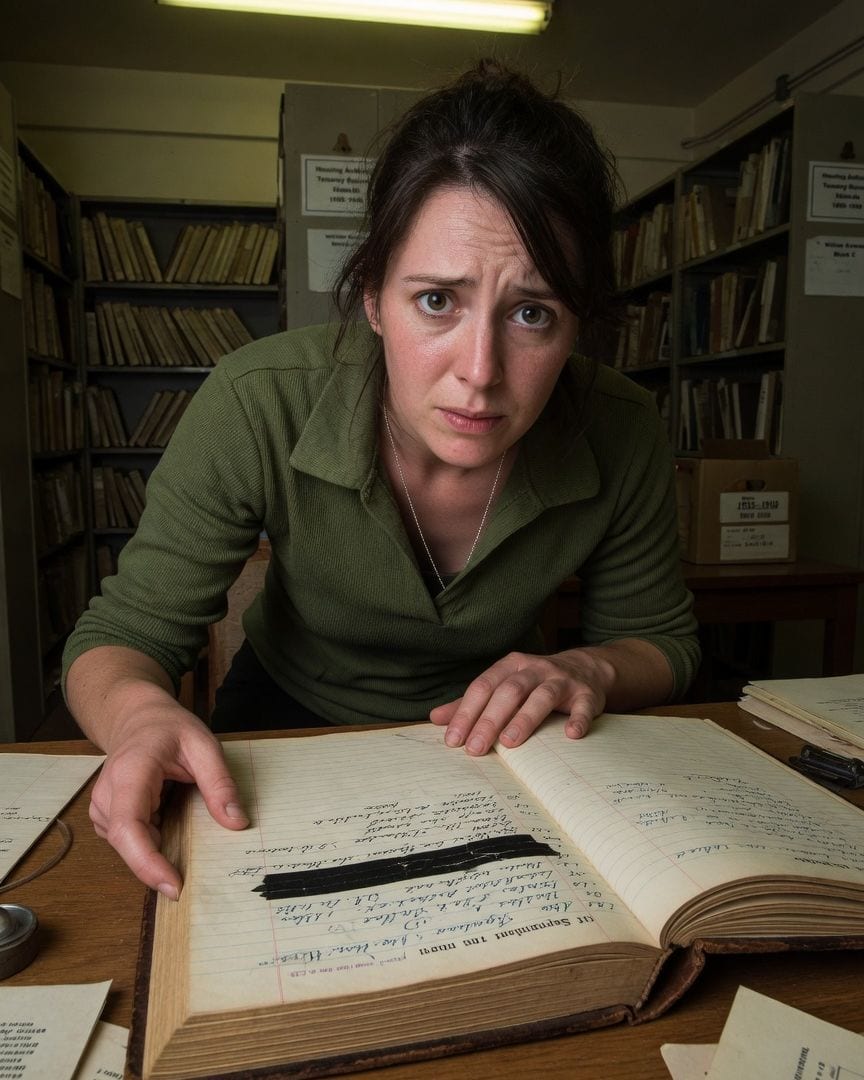
The housing archive smelled of dust and old paper, a comforting scent that usually promised order. I, Josephine Hartley, was there to trace my flat's history, a simple curiosity.
I'd requested the historic tenancy ledger, a thick, leather-bound volume, for our building at 42 Elm Street. My flat, Apartment 3B.
Flipping through the brittle pages, I found my own flat's entry for 1955. Every tenant before and after was listed plainly: 'Smith, Eleanor, 1952-1954,' 'Davies, Thomas, 1957-1959.'
But for the years 1955-1957, there was just a thick, inky black bar, a redacted line. Nothing unusual for sensitive data, perhaps, except for the sheer blankness of it, an absence that felt less like privacy and more like erasure.
Beneath it, in the tiny, neat script of a clerk's annotation, were two words that chilled me: 'recurs — see standing instruction.'
And then, printed as clear as day, were the move-in and move-out dates for that redacted tenancy: 1st September 1955 to 31st August 1957.
My own tenancy, which began 1st September 2023 and ends 31st August 2025, exactly mirrored those impossible dates, decades before I was even born.
The comforting smell of old paper suddenly felt like the quiet rot of something buried, the air around me turning inexplicably cold.
I tried to rationalize it. A clerical error, a reused template, a bizarre coincidence. The mind tries to find solid ground when the floor shifts.
I approached Conrad Muller, the archive manager, a man whose glasses were perpetually perched on the end of his nose and whose calm demeanor seemed carved from the same stone as the building itself.
I showed him the page, pointing to the redacted line and the 'recurs' note. 'Interesting,' he hummed, not looking up from his own ledger, a vast, open book filled with tiny columns of figures. 'Old systems. They had their quirks.'
I pressed, a strange urgency blossoming in my chest. 'But the dates, Mr. Muller. They're exactly my dates. From 1955.'
He finally looked at me, a faint, almost imperceptible smile playing on his lips, a smile that didn't quite reach his eyes. 'A coincidence, Ms. Hartley. The archive holds millions of records. Patterns emerge.'
His dismissive tone only deepened my unease. It wasn't just the dates; it was the 'recurs' note, the bureaucratic efficiency of it. Coincidence didn’t usually come with a standing instruction.
I decided to check other ledgers. The archive contained similar volumes for every property the housing authority had managed for over a century. I started cross-referencing, looking for other redacted lines with specific dates and the 'recurs' note.
It was tedious work, the quiet rustle of pages the only sound in the vast room, but the image of that impossible line, those impossible dates, was burned into my mind.
After hours, my eyes blurring from the fine print, the dust making my throat scratchy, I found another. A ledger for a building across town, 14 Ashwood Lane.
It had a redacted line for the years 1968-1970, with the same 'recurs' note. And below it, the dates: 1st May 1968 to 30th April 1970. Another precise, two-year cycle, just like mine.
The pattern was starting to emerge, too specific for coincidence. The room itself seemed to hold its breath, the silence pressing in around me.
My heart hammered as I continued, pulling more ledgers from their shelves, each one smelling faintly of decaying linen and history. Then, in a volume for a residential block on Willow Avenue, I found it.
Another redacted entry, 1972-1974, with the familiar 'recurs' note. But this time, the redaction wasn't quite complete. A sliver of un-inked paper, a faded curve, revealed a few letters beneath the black bar.
I squinted, leaning closer, my breath held tight, the old paper almost dissolving under my intense gaze. H-A-R-T-L-E-Y. My own surname.
Not for my flat, not for my building, but another property entirely, decades before my family had ever settled in this city.
My fingers traced the partially legible letters of 'Hartley' beneath the redaction, my breath catching as the impossible connection to my own family name, decades in the past, solidified.
The 'Hartley' discovery propelled me into a new phase of my investigation. It wasn't just my flat, or my dates; it was my family, somehow implicated in this impossible pattern.
The archive, once a comforting space of quiet learning, now felt like a labyrinth of secrets.
I spent days there, a ghost among the dusty shelves, systematically searching for any other entries connected to the Hartley name, or any more 'recurs' notes.
Conrad Muller observed me from his desk, his gaze unsettlingly calm, never overtly hostile, just… present, a silent, unblinking sentinel.
I found more. Several other 'recurs' entries across different properties, all for two-year periods, all with specific, mirrored dates. And two more partially redacted 'Hartley' entries, one from 1948 and another from 1981, for unrelated addresses.
It was too consistent, too widespread. This wasn't a quirk; it was a system.
I began to look for internal memos, anything that might explain 'standing instruction' or 'recurs.' I requested access to administrative records from the mid-20th century, citing 'historical research into housing policy.'
The process was slow, bureaucratic, filled with forms and waiting periods, but Mr. Muller eventually granted it, handing me a stack of yellowed files with a curt nod. 'Be careful with those, Ms. Hartley. Fragile.'
His tone was neutral, but the weight of the files felt heavy in my hands.
Among the ordinary maintenance schedules and budget reports, filed with meticulous, disturbing precision, I found a series of inter-departmental memos from the late 1960s, heavily redacted themselves. They were like riddles, most of their content blacked out.
One subject line, though, was chillingly clear, leaping out from the faded paper: 'Non-Human Occupancy Protocol - Site Allocation and Management.' The words were clinical, detached, but the implication was immediate and terrifying. This wasn't about human tenants at all.
It was a protocol for something else entirely, something that needed 'sites' and 'management.' The air in the archive, already thick with dust, suddenly felt thin, impossible to breathe.
The discovery of the 'Non-Human Occupancy Protocol' memo felt like a cold hand on my neck. My heart was a frantic drumbeat against my ribs.
I photocopied the relevant pages, my hands shaking slightly, the hum of the machine a mechanical thrum in the oppressive quiet.
As I left the archive that evening, the heavy oak doors closing with a thud behind me, Conrad Muller called out, 'Ms. Hartley. A moment.'
I turned, my heart thumping against my ribs like a trapped bird. He walked slowly towards me, his footsteps barely audible on the polished linoleum, stopping a few feet away.
'You've been very diligent,' he said, his voice flat, devoid of inflection. 'Digging deep into the past. Some things are best left undisturbed.' He wasn't threatening, not overtly.
His tone was merely stating a fact, like a librarian reminding you of overdue books.
'I'm just trying to understand,' I replied, trying to keep my voice steady, my gaze locked on his calm, unreadable face. 'The 'Non-Human Occupancy Protocol'… what is it?'
He smiled, a thin, humourless line that barely touched his lips. 'A relic, Ms. Hartley. From a time when the authority dealt with… unusual situations. It's all managed now. Contained.' He paused, his eyes holding mine, ancient and unwavering.
'We ensure the cycles complete without incident. It's a delicate balance. Best not to interfere.' The word 'we' hung in the air, heavy with unspoken meaning. He knew. He was part of it.
The warning was clear: I was treading on ground that had been carefully managed for decades, and my curiosity was becoming an interference.
The silence of the vast hall seemed to stretch, amplifying his words, making the shadows deepen around us.
The next morning, a small, unmarked envelope was slipped under my flat door. I found it when I bent down to retrieve the newspaper. Inside was a single, photocopied page from an internal report.
It was a list of 'Designated Occupancy Sites,' my own address, 42 Elm Street, prominently listed, with 'Cycle 1955-57' and 'Cycle 2023-25' beside it.
And then, at the bottom, a handwritten note, scrawled in an elegant, almost old-fashioned script: 'The current occupant is proving… inquisitive.'
Someone was watching me, confirming that Conrad's 'relic' was very much alive, and that my quiet investigation hadn't been nearly quiet enough.
Armed with the 'Designated Occupancy Sites' note, the paper clutched tight in my hand, I returned to the archive, my fear hardening into resolve. I found Conrad Muller at his desk, meticulously stamping documents with a practiced, rhythmic thud.
I placed the photocopy silently before him. He glanced at it, then at me, his calm façade unwavering. The ticking of the wall clock seemed to amplify the tension.
'You shouldn't have that, Ms. Hartley.' His voice was still even, but a subtle shift in his posture, a slight stiffening, betrayed a flicker of something beneath the surface.
'What is it, Mr. Muller?' I demanded, my voice low but firm. 'What are you containing? What recurs?'
He sighed, a sound of weary resignation, like a man burdened by an ancient secret. 'It’s not a 'what' as much as a 'when,' Ms. Hartley. A pattern. An echo. It settles in certain properties, for precise durations.
Always two years. Always the same dates, decades apart.' He leaned back, his gaze distant, as if looking through the walls, through time. 'The Authority learned long ago it couldn't be stopped. Only managed. So we filed it.
Documented its cycles. Ensured the sites were ready.'
'Ready for what?' I whispered, the words catching in my throat.
'A presence. A… resonance. It requires an occupant. A human anchor, for lack of a better term. To complete its cycle.'
He spoke of it with the detached air of a groundskeeper discussing a difficult weed, or an accountant reviewing a ledger entry. 'The redacted lines, the 'recurs' notes, the protocols… it’s all to ensure the pattern continues undisturbed.
A quiet, necessary bureaucracy.'
The pieces clicked into place with horrifying precision, a cold, mechanical lock falling into alignment. My flat, the 1955 entry, the Hartley name, the two-year cycles – it all converged on this chilling, institutionalized reality.
The housing authority wasn't just managing properties; it was managing an entity, a recurring phenomenon, by providing it with human hosts.
Conrad continued, as if reading my thoughts, his voice a low, steady drone. 'The 'standing instruction' ensures clerks simply reissue the same dates for the next designated occupant. It's efficient.'
I thought of the 'Hartley' entries, generations apart, my own name scattered through the decades like breadcrumbs leading to a trap. 'So, my family… they were anchors too?'
He nodded slowly, a confirmation that felt like a blow. 'Sometimes, a lineage shows a… predisposition. A certain resonance. Easier to manage.' The dread was no longer abstract; it was personal, generational.
My flat wasn't just a home; it was a stage, and I was merely the latest actor in a play written decades ago, a play whose script dictated my every move.
Conrad's admissions had shattered my world, yet I felt a perverse, desperate need to know everything.
He offered me guarded access to a restricted section of the archive, a climate-controlled room filled with grey metal cabinets that hummed with a low, mechanical thrum. 'These are the deeper records,' he said, his voice softer now, almost empathetic.
'The 'Designated Occupant Profiles.' The future.' He left me there, the heavy door clicking shut behind me with a sound of finality, the air in the room colder than the rest of the archive.
The files were organized by projected recurrence dates, labels stark against the muted grey of the steel drawers. My fingers, still trembling slightly, found a folder labeled '2030-2032.' It felt impossibly distant, yet horrifyingly close.
Inside, among highly redacted memos detailing specific 'tenant profiles' for future cycles, I found a single sheet of paper, crisp and new, starkly unlike the yellowed documents surrounding it.
It was a 'Designated Occupant Profile' for a property at 17 Willow Creek Road, across town.
My eyes scanned the details, expecting another unknown name, another stranger caught in the Authority's web. But the first line, stark and undeniable, printed in the same clear font as my own tenancy agreement, read: 'Occupant: Josephine Hartley.'
My own full name. My heart seized in my chest, a cold, sharp pain.
Below it, the move-in and move-out dates were precisely 1st September 2030 to 31st August 2032 – the exact two-year cycle I had been tracking, mirroring my current tenancy.
Josephine stared at the archived memo, her own name, 'Josephine Hartley,' starkly visible as a 'Designated Occupant' for a future tenancy, the impossible dates 2030-2032 printed beside it, a cold dread blooming in her chest as she realized the pattern isn't just external, but includes her.
The 'Designated Occupant Profile' for 2030-2032, bearing my name, detonated the last vestiges of my rational world. I wasn't just a witness; I was a marked participant, a future 'anchor' in their horrifying cycle.
Conrad Muller, hearing my choked cry, re-entered the room, the heavy door hissing shut behind him. His face was etched with a profound weariness, a sadness that seemed centuries old.
'I tried to prevent you from seeing that, Josephine,' he said, using my first name for the first time. It felt intimate, complicit. 'Some profiles are pre-selected based on… resonance patterns. Your lineage, the Hartley name, it's strong. Predictable.'
He pulled another folder, older, thicker, from a lower drawer. The dust motes danced in the sliver of light from the door, a slow, silent ballet. 'This is the 'Master Protocol for Recurring Non-Human Occupancy.' Decades of documentation.'
He opened it to a page detailing 'Host Selection Criteria.' It outlined how certain individuals, often unknowingly, exhibited a unique 'frequency' or 'compatibility' with the recurring presence.
'It's not possession,' Conrad clarified, anticipating my terror. 'It's more like… a conduit. A temporary channel. The presence needs a stable, living focal point to manifest and complete its cycle. Your flat, and others like it, are merely designated 'sites.'
You are the designated 'anchor.' The redacted lines are for the records of the 'presence' itself, not the human, whose details are held separately in these profiles.'
He showed me flowcharts detailing the 're-issuance' of tenancy dates, the 'monitoring' of designated properties, and the 'subtle intervention' protocols if an anchor became too aware or resistant.
The 'recurs — see standing instruction' was a standing order to maintain the infrastructure for these cycles, ensuring the entity always had a place and a host.
The institution wasn't malevolent, merely pragmatic, managing an inescapable, ancient pattern as a quiet, bureaucratic function.
Conrad explained that the Authority's primary goal was stability. The 'presence' was not hostile, but its uncontrolled manifestation could cause localized anomalies, minor but disruptive.
By providing it with a managed, cyclical anchor, they ensured its passage was smooth, contained, and largely unnoticed by the wider world. The air in the room, though climate-controlled, felt heavier, pressing down on my chest.
'You cannot fight it, Josephine,' he stated, his voice devoid of judgment, only certainty. 'It's not a monster to be slain. It's a tide. We simply build the channels.'
My escape wasn't about physical flight, but intellectual survival. I wasn't going to be taken or consumed, but I was going to be used. The horror was in the calm, decades-long acceptance of this, the mundane normalization of the impossible.
I stared at the Master Protocol, the intricate charts, the dry, clinical language describing my own future. It wasn't a choice; it was a designation. I closed the folder, the weight of the institution's knowledge pressing down on me.
'What happens if I refuse?' I asked, my voice barely a whisper, thin and reedy in the quiet room.
Conrad looked at me, a flicker of genuine sadness in his eyes, like he truly wished it could be different for me. 'The cycle finds another. Perhaps someone less suitable, less stable. The anomalies would intensify. It's better this way.
For everyone.' He wasn't trying to coerce me, just present the 'facts' as the institution saw them. The truth wasn't a fight; it was a slow, inevitable absorption. I gathered my photocopies, the evidence of my designated future.
I couldn't expose them; they were too entrenched, too quiet, too right in their own horrifying logic. I couldn't escape the pattern, only accept my place within it.
The only way out was to understand it, to internalize the cold, bureaucratic dread, and carry it with me. I walked out of the archive, the afternoon light feeling too bright, the city too loud.
The world was still turning, oblivious to the quiet management of its hidden, recurring tenant, and my own predetermined role in its future cycles.
I moved out of the flat at 42 Elm Street the following month, well before my 'official' tenancy completion date. The housing authority sent me a terse letter about breaking my lease, demanding a penalty, but no further inquiry.
Conrad Muller never contacted me again. I tried to warn a few friends, carefully, obliquely, about redacted ledgers and non-human occupancy, but my story, told in fragments, sounded like the ramblings of a conspiracy theorist.
They smiled, nodded, and changed the subject, their eyes glazing over with polite dismissal.
The world continued, oblivious, managed. I found a new flat, far from any property listed in the 'Designated Occupancy Sites' index, though I knew it was only a temporary reprieve.
The knowledge was a permanent scar, a hollow space inside me, a constant, low thrum of dread. I still checked the news, looking for 'anomalies,' for any sign of an unmanaged cycle. So far, nothing.
The silence of the managed world was deafening.
I live with the understanding that my name, Josephine Hartley, is on a file somewhere, waiting for 2030. I've accepted that the pattern is larger than me, larger than any individual resistance.
The dread is no longer a scream, but a quiet, constant hum beneath the surface of my life, a deep, resonant vibration that only I can feel.
I sometimes wonder about the person who will occupy 17 Willow Creek Road after me, if they'll be as 'compatible' as my lineage suggests, and if their name is already in a file, awaiting their own designated cycle.
The institution's calm, rational management of the inevitable continues, a silent mechanism turning in the background of a world that never looks close enough.
The records are kept, the cycles recur, and the silence is the only proof that it works. I just hope the next anchor is as compatible as they believe I am.
It's better for everyone, after all, if the tide flows smoothly.
If this one got to you
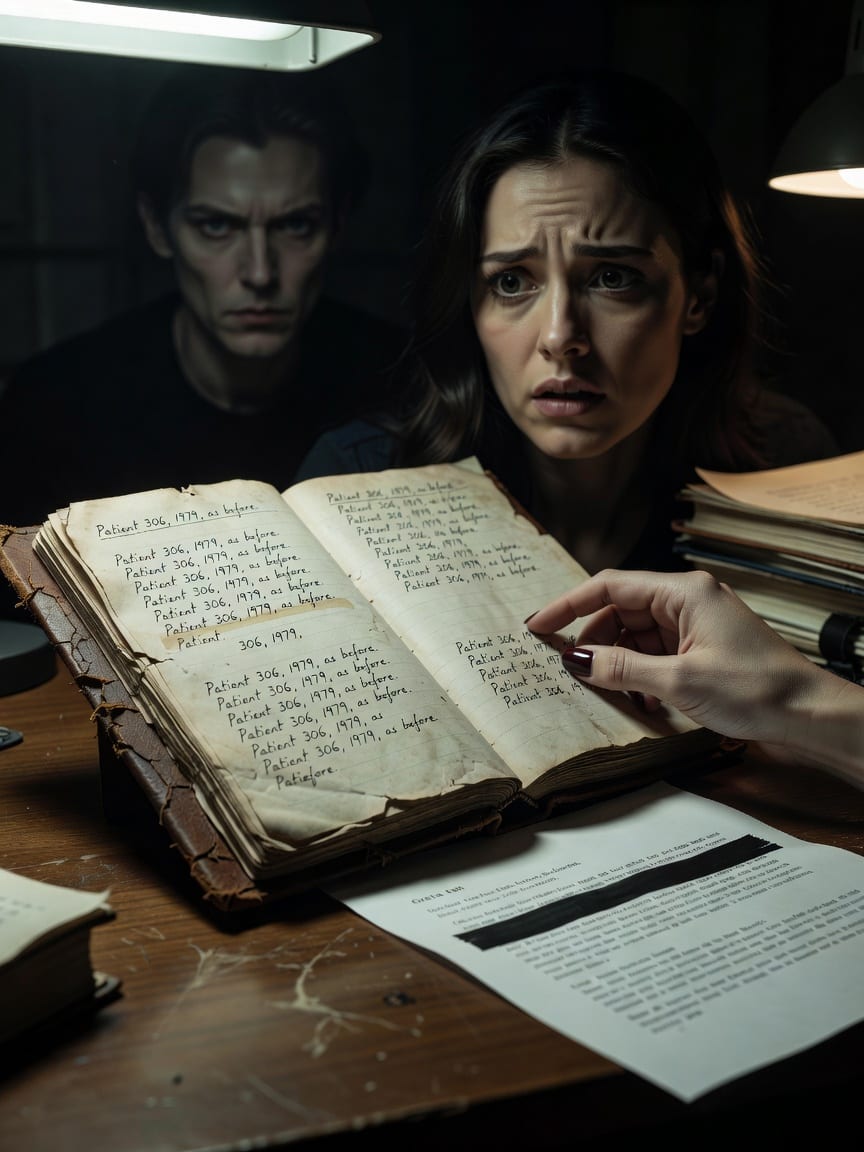
My archive ledger shows Patient 306 admitted in 1889, 1911, 1934, 1957, 1979 — same diagnosis, different names, and always, 'as before.'
My job as an archive transcriber is usually soothing, digitizing ancient admissions ledgers. But a recurring entry for 'Patient 306' caught my eye, noted 'as before' in the same hand for nearly a century. Digging deeper, I found a council file, dated 1998, outlining 'containment procedures' – and it named my own street and surname.
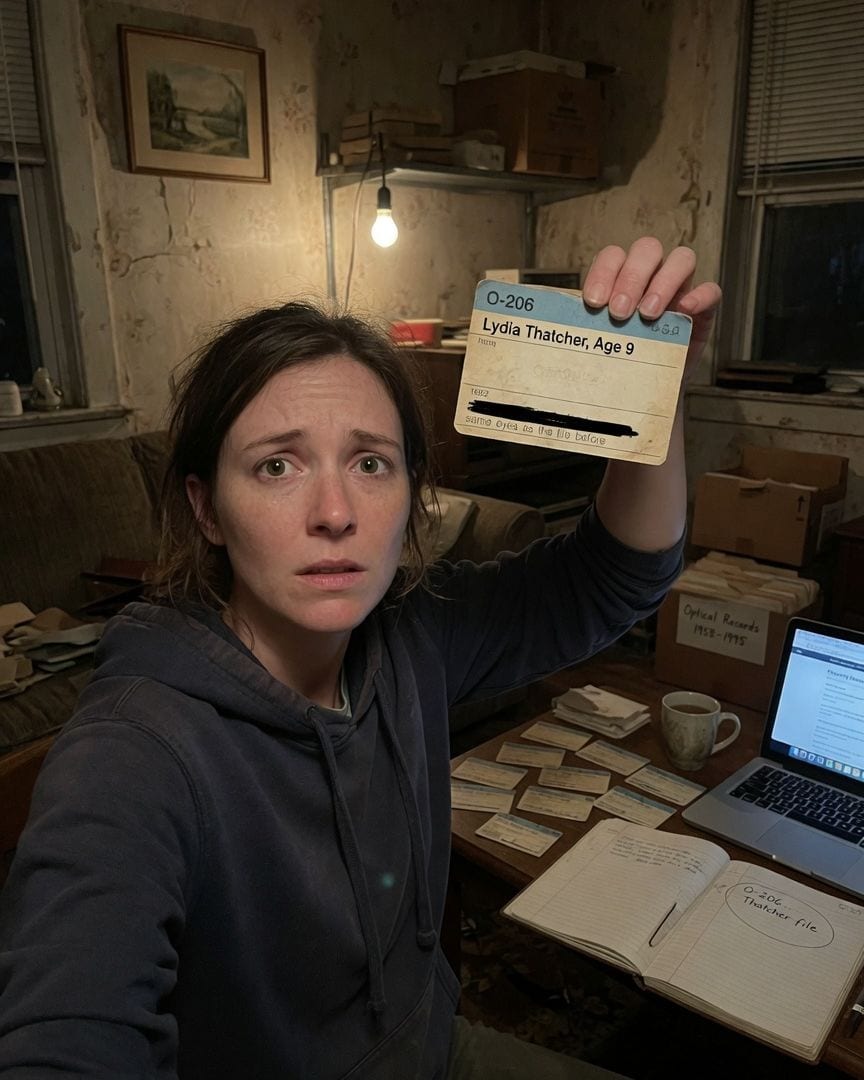
My own optical card is dated 1962, with my name on it. I wasn't born until 1993.
Sifting through old patient files from my former optical practice, I found my own O-206 card. It had my name, Lydia Thatcher, and my current home address printed on it. But the card was dated 1962, decades before I was even born, and a redacted note mentioned 'same eyes.'
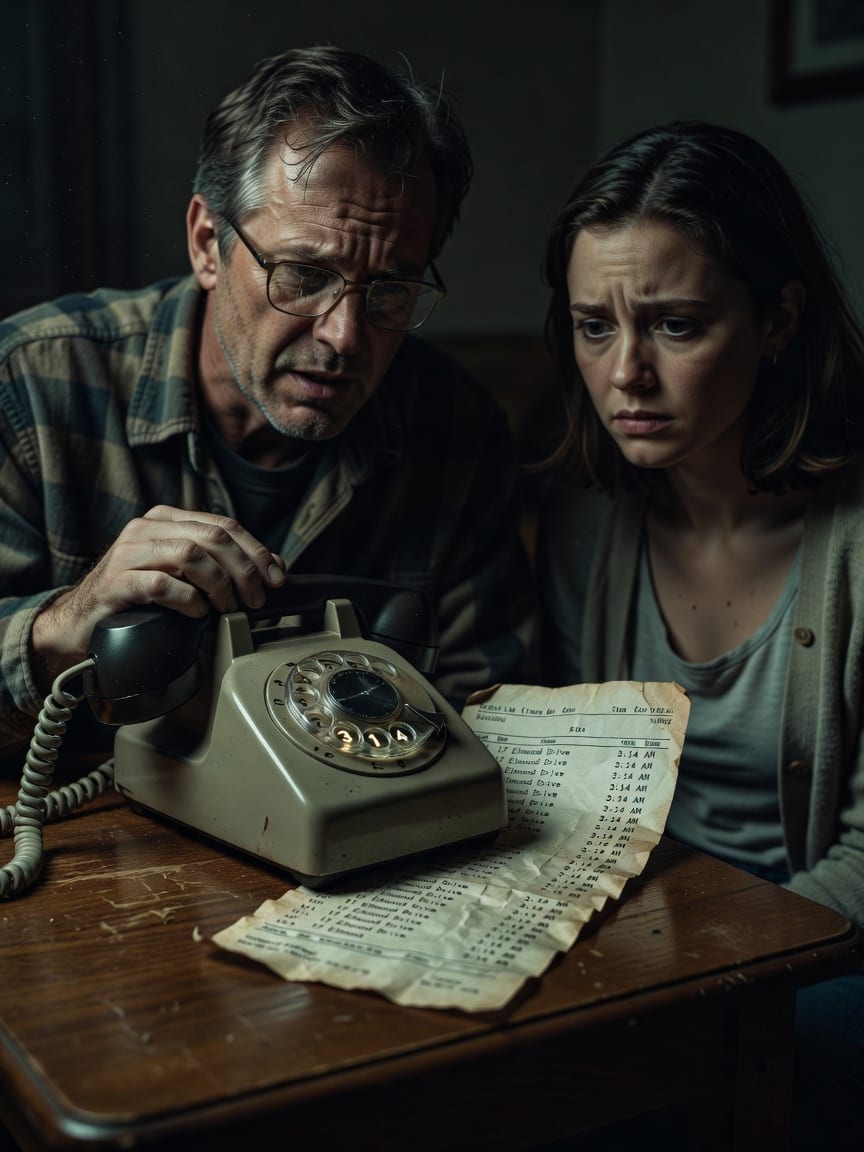
My phone bill itemised forty calls from my number to a house demolished in 1990. Each call at 3:14 AM, lasting eleven minutes. The bill arrived postmarked from a flattened building.
I expected the usual mobile bill, but my landline statement listed forty calls from my number to '17 Elmwood Drive.' That address was for a house torn down in 1990, a vacant lot I remembered from childhood. The phone company insisted the calls were legitimate, leaving me profoundly unsettled by the impossible charges.
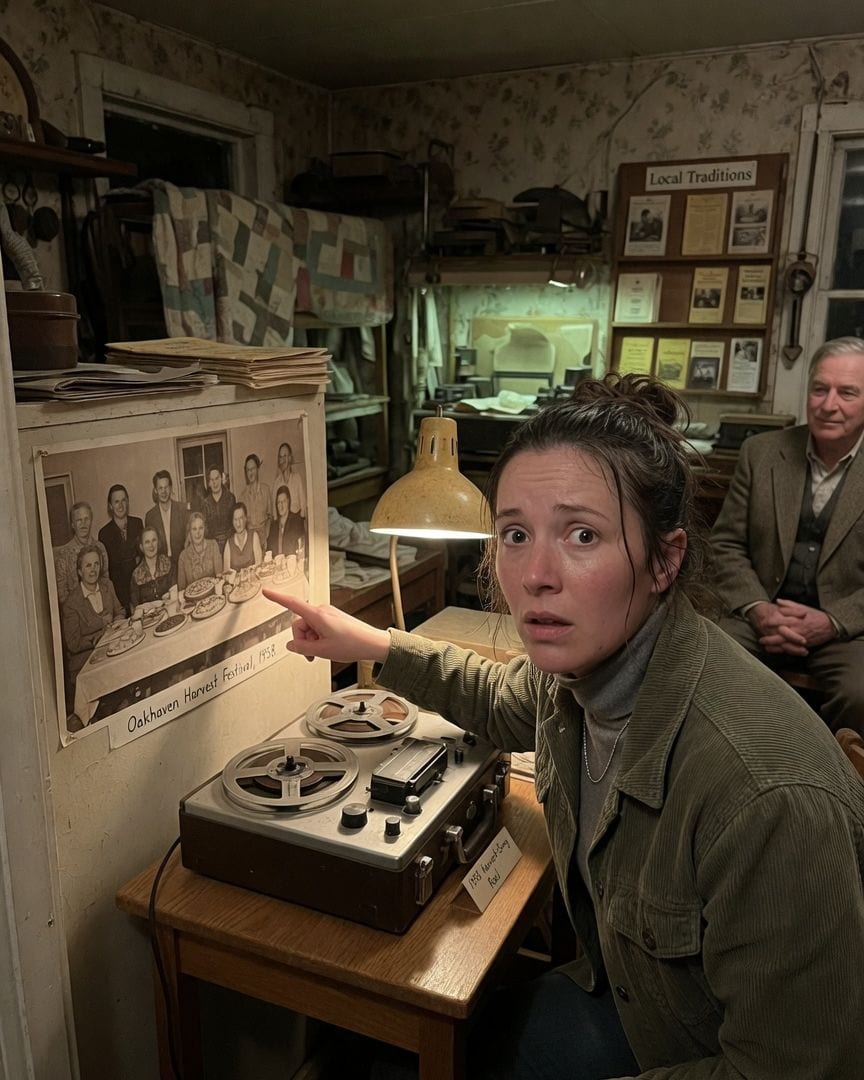
The folk museum's harvest tape counts one more singer than the photograph shows. The curator turned the recorder off before playing it.
I found a quiet escape at Oakhaven's dusty Folk Museum, where the curator played a rare 1958 harvest song. But as a cheerful tune filled the room, a low voice began to count. The tape tallied thirteen, yet the old photograph beside it showed only twelve smiling villagers.
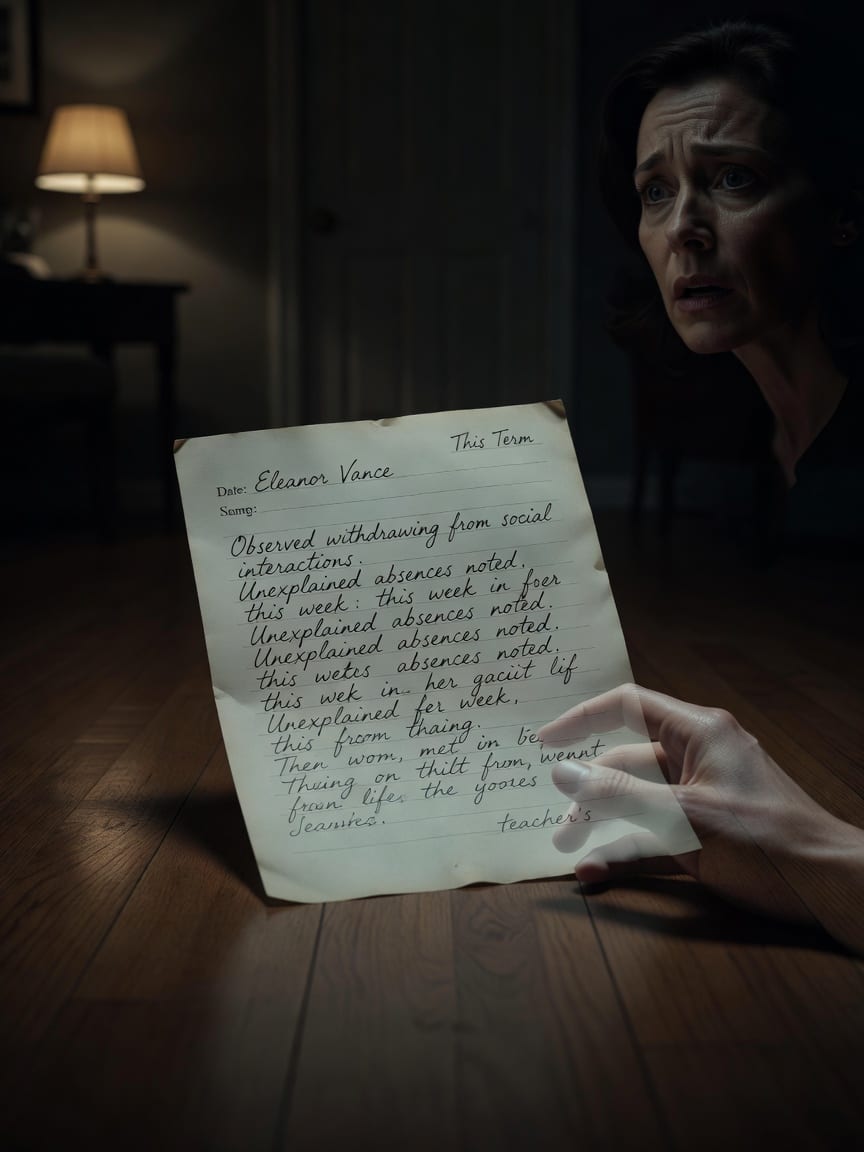
My school reports keep arriving, one a term, signed by teachers dead for decades. The latest describes something I'm doing *this week*.
My name is Eileen Caldwell, and my quiet life was upended by a school report from a place demolished decades before I was born. The report, signed by a long-dead teacher, eerily detailed my current habits. But the real shock arrived when I found my own name in a student register, dated 1968, with precise descriptions of my childhood—years before I existed.
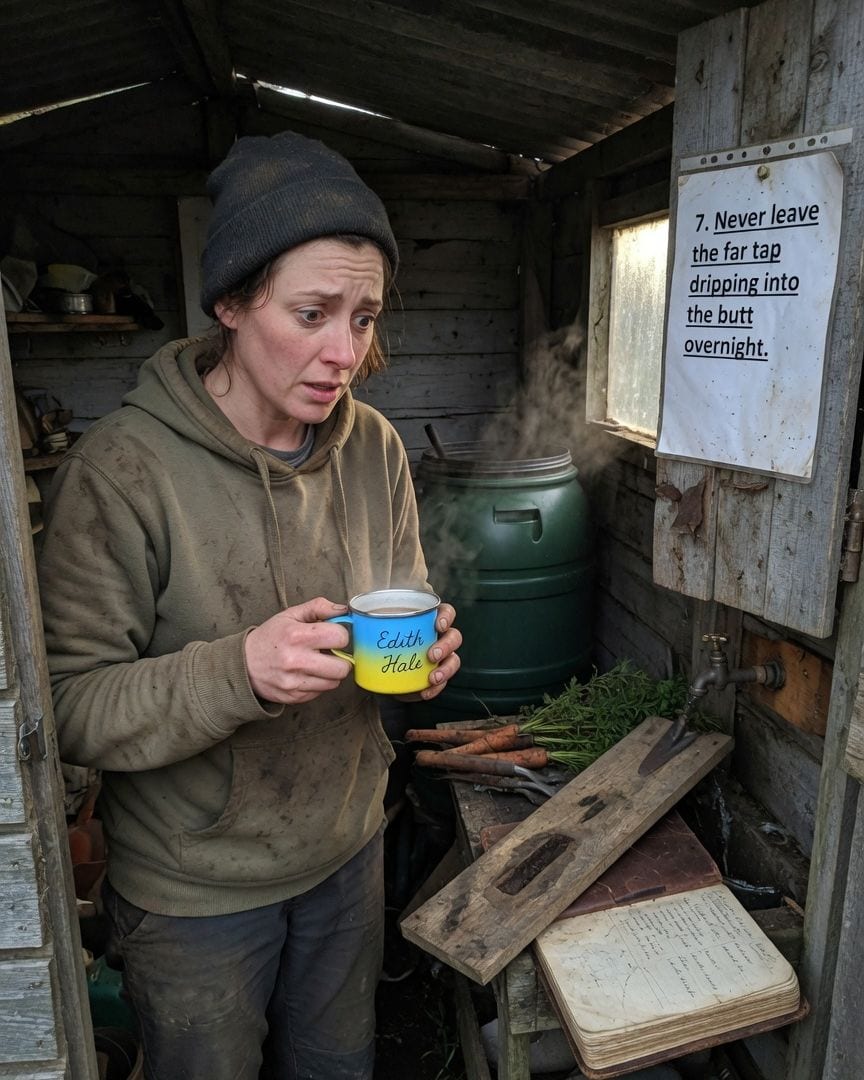
The one night I left the tap dripping, my allotment water butt was full to the brim and warm to the touch — with a child's unrusted tin cup floating on top.
Moving to Blackwood, I hoped my allotment would be a fresh start. But the shed's rulebook warned, 'Never leave the far tap dripping.' One morning, my water butt was full and steaming, an unnerving warmth rising from it. Inside, a child's tin cup floated, unrusted, etched with the name 'Edith Hale'.