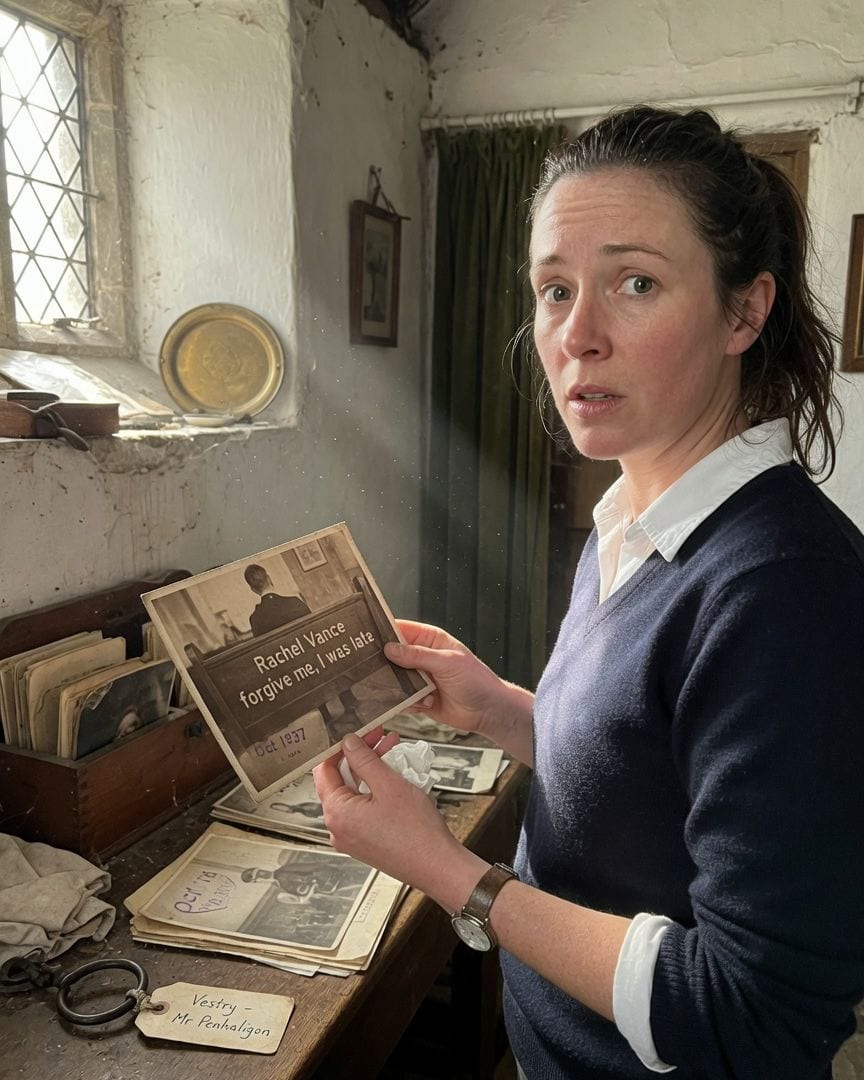
My full name is carved into a church pew from the 1600s. Under it: "forgive me, I was late." The verger says it's older than anyone remembers.
It started simply enough. A solo trip to Zennor, the kind of quiet, windswept place you go when you need to feel small against something ancient and indifferent.
The little church, St Senara’s, dates back to the 12th century, with pews carved from dark, heavy wood in the 1600s.
I’d picked a quiet Tuesday morning, just me and the dust motes dancing in the sunbeams slanting through the stained glass.
I was running my hand along one of the old pews in the back, admiring the workmanship, when my fingers snagged on something. Not a splinter, but a deliberate cut. I leaned closer, squinting in the dim light.
Deeply carved into the ancient timber, worn smooth by centuries of parishioners, was a name. My name.
‘Rachel Vance.’
It was unmistakable. Below it, in slightly smaller, hurried script, were five more words: ‘forgive me, I was late.’
My first thought was a prank. Someone knew I was coming, somehow. But that was ridiculous. No one knew. And the carving looked impossibly old.
The edges were rounded, soft, completely integrated with the grain of the wood, like it had been there forever. I tried to rub it away, then stopped, feeling foolish. It was too deep.
Just then, Felix Caldwell, the verger, shuffled in from the sacristy, a ring of heavy keys jingling at his belt. He was a man made of tweed and soft smiles, probably pushing seventy.
“Lovely morning for it, isn’t it, dear?” he offered, his Cornish accent thick and gentle.
“Mr. Caldwell,” I said, trying to keep my voice even. “Could you tell me about this?” I pointed to the carving.
He ambled over, his brow furrowing slightly as he peered at the pew. He’d seen it a thousand times, I guessed. “Ah, that. Yes. Older than anyone remembers, that carving is. Been there since...
well, since before my grandfather’s time, certainly. The pews themselves are 17th century, you know. Good solid stuff.” He patted the wood. “Curious thing, isn’t it? The name. Never seen another like it, not in here anyway.
Just one of those local curiosities.” He shrugged, as if it were no more remarkable than a wonky floorboard.
But it wasn’t a curiosity. Not to me. Rachel Vance isn't exactly a common name. And ‘forgive me, I was late’? It felt like an apology, or a confession, directed straight at me, centuries ago.
The sunlight suddenly felt cold on my skin.
I tried to shake it off, convince myself it was just a bizarre coincidence, a shared name from the past.
Back in my rental cottage, I spent an hour on my laptop, searching local Zennor archives, old census records, anything for another ‘Rachel Vance’ in the 17th or 18th century. Nothing. The internet was silent.
The next morning, determined to find a mundane explanation, I drove to the tiny local library, housed in what looked like an old fisherman’s cottage.
The librarian, a woman with tight grey curls and an even tighter grip on local history, was polite but firm. “No Rachel Vance in our parish records, not historically, dear,” she said, peering over her spectacles at a microfiche reader.
“Not with that exact spelling. Bit of an unusual combination, isn’t it?”
It was. That’s what made it so unsettling.
Later, I caught Felix tidying the churchyard. “Mr. Caldwell,” I started, “have you ever heard of anyone else seeing something like this? Their name, carved in here, ancient?”
He paused, leaning on his broom, his gaze distant. “Well, now. Not exactly.
But old Mr. Penhaligon, he was verger before me, back in the thirties and forties… He had a real fascination with the church’s ‘history of oddities,’ he called it. Spent a good deal of his time poking about, making notes.
Reckoned this place had a memory, you know.” Felix tapped his temple. “He was always taking photographs, too.
Had a whole box of his things, mostly old parish photos from christenings and whatnot, tucked away in the back of the vestry. Probably still there. Been there since he retired, poor soul. Passed on not long after.
You’re welcome to have a look, if you like. Wild goose chase, I expect, but if it puts your mind at ease.”
A wild goose chase. That was exactly what I needed. Anything but this creeping, personal dread. I imagined finding a photo of some Victorian-era girl, a ‘Rachel Vance’ who’d carved her own name as a child’s mischief.
It would be a relief, a grounding, normal explanation. I accepted Felix’s offer, the keys to the vestry feeling heavy in my palm.
The vestry was small, a cramped space smelling of old wax and damp stone. Dust motes danced thicker here.
Felix’s predecessor had left behind a trove of forgotten things: moth-eaten hymnals, a brass collection plate tarnished green, and, in a sturdy wooden box under a pile of liturgical linen, a stack of photographs.
They were brittle, sepia-toned squares, mostly faded landscapes of Zennor or stiff, formal portraits of parishioners long gone. I sifted through them, one after another, my fingers growing grimy with dust. Gravestones. Harvest festivals.
A group of stern-faced women in enormous hats. Then, near the bottom, I pulled out an image that made my breath catch in my throat.
It was a photograph of the church interior, taken from the back, almost the exact spot where I’d found the carving. The light was different, softer, clearly from a time before electric bulbs.
And there, in stark relief against the ancient wood of the pew, was the unmistakable carving.
‘Rachel Vance.’
Below it, plain as day: ‘forgive me, I was late.’
My finger traced the familiar curves in the photograph, identical to the ones I’d just touched. I flipped it over, my heart hammering against my ribs. In spidery, faded ink, a date was stamped on the back.
‘Oct 1937.’
I stood there in the vestry, the sepia photo trembling in my hand, staring at the date. 1937. It was decades before I was born. Before my parents were born. The carving wasn't a prank. It wasn't a coincidence.
It was... something else entirely. My own name, etched into history, waiting.
I found Felix in the church kitchen, making himself a cup of tea. He paused, the spoon clinking against the mug, as I pushed the photograph across the worn laminate table.
He picked it up, his easygoing demeanor wavering for the first time. His eyes widened slightly as he recognized the pew, then narrowed on the name. He turned the photo over, saw the date.
“Well, now,” he murmured, a little less comfortably than before. “That is unsettling, isn’t it? Old Penhaligon must have taken this.” He cleared his throat. “He was a peculiar one, Mr. Penhaligon.
Always talking about strange things he’d seen, things in the corners of his eye. Never made much sense to me.”
“Did he ever talk about my name?” I pressed. “Or a carving like this?”
Felix shook his head slowly. “Not that I recall, specifically. But he had a lot of strange theories, about the church having some kind of… memory. Or a spirit.
He tried to get the council interested once, but they just humored him.” He took a thoughtful sip of his tea. “You know, Eileen Rutherford might know more. She’s a local historian, eighty-three, sharp as a tack.
Her family’s been here for generations, knew old Penhaligon well. She’s got a mind like a steel trap for Zennor’s obscure past.”
Eileen Rutherford lived in a small, neat cottage overlooking the sea, filled with books and the scent of lavender. She was frail, her hands gnarled with age, but her eyes held a fierce, intelligent spark. I showed her the photograph.
She studied it for a long moment, a faint, sad smile touching her lips.
“Ah, Penhaligon,” she said, her voice raspy. “He was a good man, if a little… obsessive. He had peculiar theories, bless him. Talked about ‘echoes in the land,’ a ‘cycle of remembrance.’
Said some things just keep happening, like the land itself remembers a pattern and tries to repeat it.” She paused, looking at the photo again. “He kept extensive, unofficial records. Not just parish registers, mind you, but personal observations, correspondences.
Tried to prove his theories. Most people dismissed them as ramblings. Said he was too deep in the past. After he retired, his boxes were just stored away in the council archives. Probably still gathering dust.”
A few days later, a plain white envelope arrived in my postbox at the rental cottage. No stamp, just a hand-cancelled Zennor postmark. It was addressed to ‘Rachel Vance.’ The return address was handwritten, ‘Meadowsweet Lane, Zennor.’
I’d driven past Meadowsweet Lane yesterday; it was an empty field now, flattened for future development, nothing but knee-high grass and a crumbling stone wall. Inside the envelope, a single, faded pressed flower lay nestled against the crisp white paper.
No message. Just the flower. It smelled faintly of dry earth.
Two days after that, another letter. Identical envelope, impossible return address. This time, inside, a single line of elegant, looping script: ‘Don’t be late this time.’
I felt a cold shiver run down my spine. This wasn't a ghost story, not really. It felt like a clock ticking.
Julian Hale, the council archivist, was a harried man in a too-tight suit. He clearly saw me as a nuisance. “Old verger’s personal effects?” he sighed, scrolling through his computer.
“I can look, but most of that stuff gets weeded out. Probably just mundane family papers, old receipts.” He disappeared into the cavernous archive stacks, returning minutes later with a small, unlabelled box. “Just these.
Mostly old sermon notes, some gardening journals. Nothing ‘historical’ as such.” He pushed it across the table with a dismissive gesture.
I looked through them quickly, but it was exactly as he said: gardening tips, grocery lists, a few notes on hymn selections. Nothing.
As I left the council building, the afternoon air suddenly felt heavy, thick with unspoken expectation. Across the street, by the old market cross, a man in a dark coat stood watching me.
He was perfectly still, his face obscured by the shadow of his hat brim, but I felt his gaze. He didn’t look away when I met his eye. He was carrying a small, flat package, like a letter.
My blood ran cold.
“Eileen Rutherford mentioned the verger’s ‘peculiar theories,’” I insisted, back in Julian Hale’s stuffy office the next day. He really was beginning to look annoyed. “And that he kept extensive, unofficial records.
She thought they might be in a locked box, labelled ‘not for public access.’”
Julian’s jaw tightened. He tapped a pen against his desk. “Look, Miss Vance, I assure you, we’ve catalogued everything properly. There’s nothing like that here. Unless…” He trailed off, his eyes darting to a dusty corner of the room.
“There was a metal box, actually. Locked, yes. But I assumed it was just private family papers, completely irrelevant to parish history. It’s been down in the basement vault since the nineties. Never saw a need to open it.”
He sighed, heavily, as if the mere thought of retrieving it was a great personal burden.
After another ten minutes of grumbling, Julian reappeared, pushing a heavy, rust-stained metal box across the table. The lock was rusted shut, but Julian found a key in a small envelope taped to the bottom.
Inside, among dusty journals and packets of dried pressed flowers, I found them.
Letters. Identical in paper, in script, in that almost-too-elegant looping hand, to the ones I’d been receiving. But these were dated from the 1930s through to the 1950s. Addressed to various names I didn’t recognize, residents of Zennor long deceased.
But one stood out.
‘Eileen Rutherford.’
I drove straight back to Eileen’s cottage, the metal box clattering on the passenger seat. She was watering her window boxes, humming a faint tune. I showed her the letter, her name on the envelope.
Her face, usually so composed, crumpled. She sank into her armchair. “Oh, my dear,” she whispered, her voice barely audible. “It’s starting again, isn’t it?” She confessed, her voice trembling, that she had received such letters in her youth.
Warnings, sometimes, or strange messages that felt like condolences for something she hadn’t lost yet. Always postmarked from impossible addresses in Zennor. Her parents had been terrified, convinced she was being haunted.
They had hushed it up, moved the family away for a time, then returned years later, hoping it had passed.
“The ‘cycle of remembrance,’” she explained, her eyes wide and dark. “That was old Penhaligon’s term. He believed it was a pattern of ‘callings,’ you see. To specific people, often with similar names.
Tied to a very old, almost forgotten local ritual. Something to do with the land itself. An entity, he thought, that sought to ‘correct’ past failures. To complete something that was left undone.”
The room felt suddenly cold, the smell of lavender replaced by something ancient and dry, like old paper. The idea of an ‘entity’ wasn’t a ghost, not really. It was worse. A mechanism. A purpose.
And I was now a part of it.
Eileen, her voice trembling, stood and went to a small, carved chest by the fireplace. From a hidden drawer, she pulled out a small, leather-bound book. “My grandmother’s,” she said, her fingers tracing the worn cover. “She was meticulous.
Kept records of everything.” It was a personal ledger, not a parish one. A record of births and deaths in their family, going back centuries, with cryptic annotations scribbled in the margins.
She opened it to a page near the middle, her finger finding an entry from 1887. I leaned closer, my heart thudding in my chest, my eyes widening in disbelief.
Neatly penned in faded ink, over a hundred years before I was born, was my full name.
‘Rachel Vance.’
It wasn’t listed as a birth. It read: ‘Arrived, Zennor Parish – 14th April 1887.’ And then, just four days later, another entry: ‘Departed, Zennor Parish – 18th April 1887.’
The precise, flowing script of her grandmother’s hand from over a century ago stared back at me, naming me, marking me, as if I had always been there.
“That Rachel Vance,” Eileen explained, her voice barely a whisper, “she was a distant cousin, an ancestor of mine. She arrived in Zennor only to vanish four days later. No trace.
My grandmother wrote ‘departed,’ but there was no body, no record of a move. Just… gone.” Eileen’s eyes met mine, filled with an ancient sorrow. “My family believed the ‘callings’ were attempts to draw her back.
Or, perhaps, to find a replacement. Someone to complete what she couldn’t.”
The letters, the carving, the cryptic messages, even the odd specificity of my name – they were all part of this relentless pattern. The entity, this consciousness tied to the land, was attempting to complete a long-delayed ‘connection.’
The phrase ‘forgive me, I was late’ wasn’t an apology to me, but from the entity, acknowledging its failure to connect with that previous Rachel Vance.
The letters I’d been receiving were the latest, most direct attempts to fulfill this ancient, forgotten purpose. It wasn’t evil, Eileen stressed, just persistent. Like a mechanism trying to finish its rotation, endlessly.
I held the ledger, its impossible record a heavy weight in my hands. The full truth of it settled over me like a shroud.
I wasn't just observing a mystery; I was the current, living piece of an ancient, unfinished puzzle. I knew then that I had to break the cycle.
My latest letter, received that morning, had been short and chilling: ‘Sundown. Oldest stone. Zennor.’
As the sun began to dip below the horizon, painting the sky in violent streaks of orange and purple, I stood by a crumbling, nameless gravestone in the overgrown churchyard. It was ancient, tilted, the stone almost swallowed by moss.
The air grew heavy around me, thick and still, tasting of damp earth and something else, something dry and papery, like old archives. A low hum began, vibrating through the ground, a deep thrumming that resonated in my bones.
I felt it then. A profound, targeted pull, a terrible intimacy. It wasn't a person. It wasn't a monster. It was a palpable presence, deep and ancient, a consciousness reaching for me.
It wasn’t a sound, but I felt a soundless name on the wind, drawing me forward, a whisper against my very identity. My sense of self felt suddenly thin, stretched, ready to unmoor.
I felt myself dissolving, a piece of me being pulled, ready to be replaced, to become part of the cycle.
But I clutched the parish ledger from 1887, the one with the impossible entry. Its brittle pages, its undeniable, physical record, grounded me. It proved I was me, Rachel Vance of 2024, not Rachel Vance of 1887.
The entity wanted completion, a perfect loop, but this ledger was a paradox. It was the proof of its past failure, existing in my present.
The hum peaked, a vibration that shook my teeth, and then, abruptly, it cut off. The presence recoiled. There was no struggle, no violence, just a sudden withdrawal, as if the connection had been severed. It didn’t want a paradox.
It wanted completion, and the ledger, by proving how ‘late’ it truly was, broke the connection. The pull snapped back. My breath returned to me in a ragged gasp. I was free, but irrevocably marked.
The air was cold, but clear.
I left Zennor that night, driving through the dark without looking in the rearview mirror, never looking back. The letters stopped. The hum, the strange pressure in the air, the sense of being watched – it all vanished.
I kept the old parish ledger, tucked away in a locked box, a physical anchor to the impossible truth I’d uncovered.
Eileen Rutherford passed away a few months later, taking her family’s long history of ‘callings’ and her quiet understanding with her. Felix Caldwell continued his quiet life as verger, dusting pews, completely oblivious to the ancient patterns beneath his feet.
I live a quiet life now, far from Zennor. I check my mail with a tremor, avoid old churches, and never use my full name in public if I can help it.
Sometimes, on a quiet night, I think I hear a faint whisper on the wind, just my name, light as a breath, like something exhaled far away.
I know it’s a phantom, an echo, a memory in the land that found its way to me, but the fear still tightens around my heart.
I often feel a strange, profound sense of having missed an appointment, a task left undone.
Her husband, Everett, sometimes finds her staring blankly at the wall, a strange, distant expression on her face. 'Rachel,' he'll ask gently, 'Are you alright? You look like you've seen a ghost.'
She’ll turn to him, a faint, wrong little smile playing on her lips, and say, 'Oh, I was just thinking about how late I am.'
If this one got to you
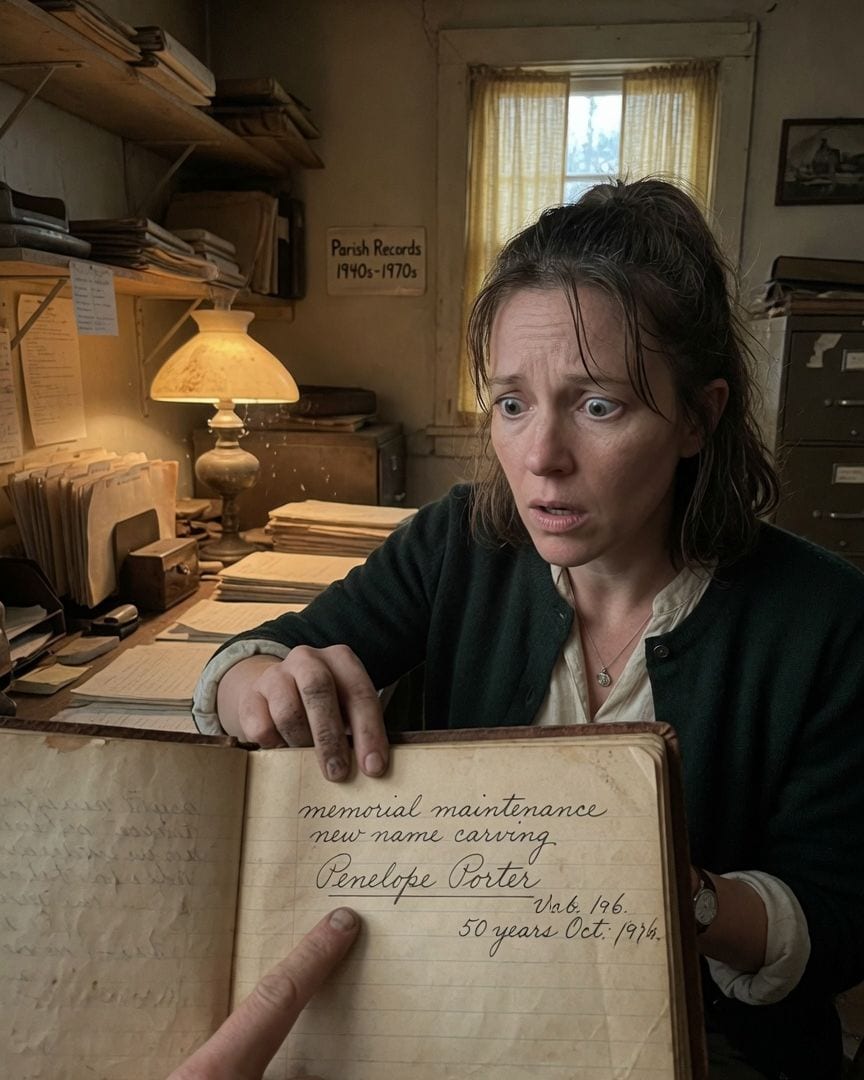
My name is carved on the war memorial with this coming Tuesday's date. The cut is fresh, but the stone inside matches fifty years of age, and a ledger says it was carved exactly fifty years ago.
On a sunny autumn Tuesday, my oldest friend, Gary, urgently called me to the village war memorial. There, carved beneath the names of the fallen, was 'PENELOPE PORTER' with a date from this coming autumn. The fresh carving of my name, dated for a Tuesday yet to arrive, felt like a cold jolt, an impossible message from the stone itself.
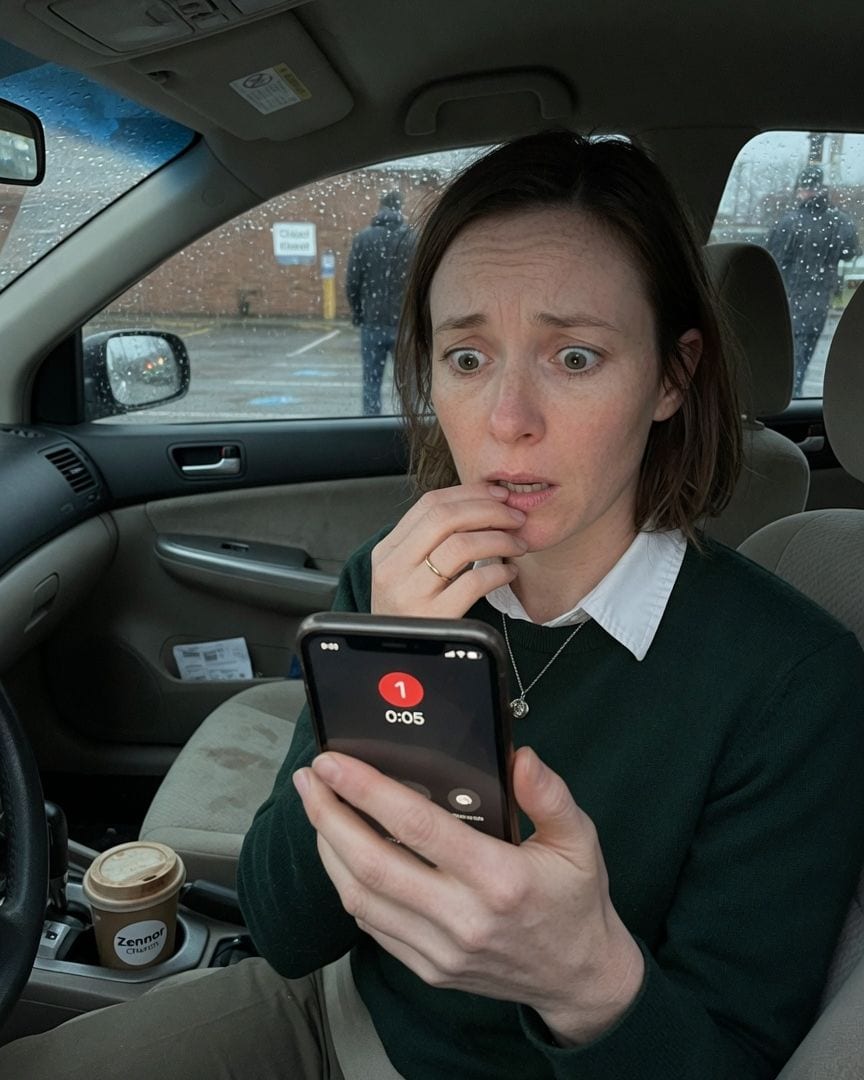
My full name is carved into a 17th-century church pew. Under it says, 'forgive me, I was late.' The verger said it's been there longer than anyone remembers.
Drawn to Zennor's ancient church, I ran my hand over a centuries-old pew, discovering something impossible. My full name, 'Sarah Caldwell,' was carved deeply into the dark wood, with the chilling message: 'forgive me, I was late.' It felt like this ancient inscription had been waiting for me.
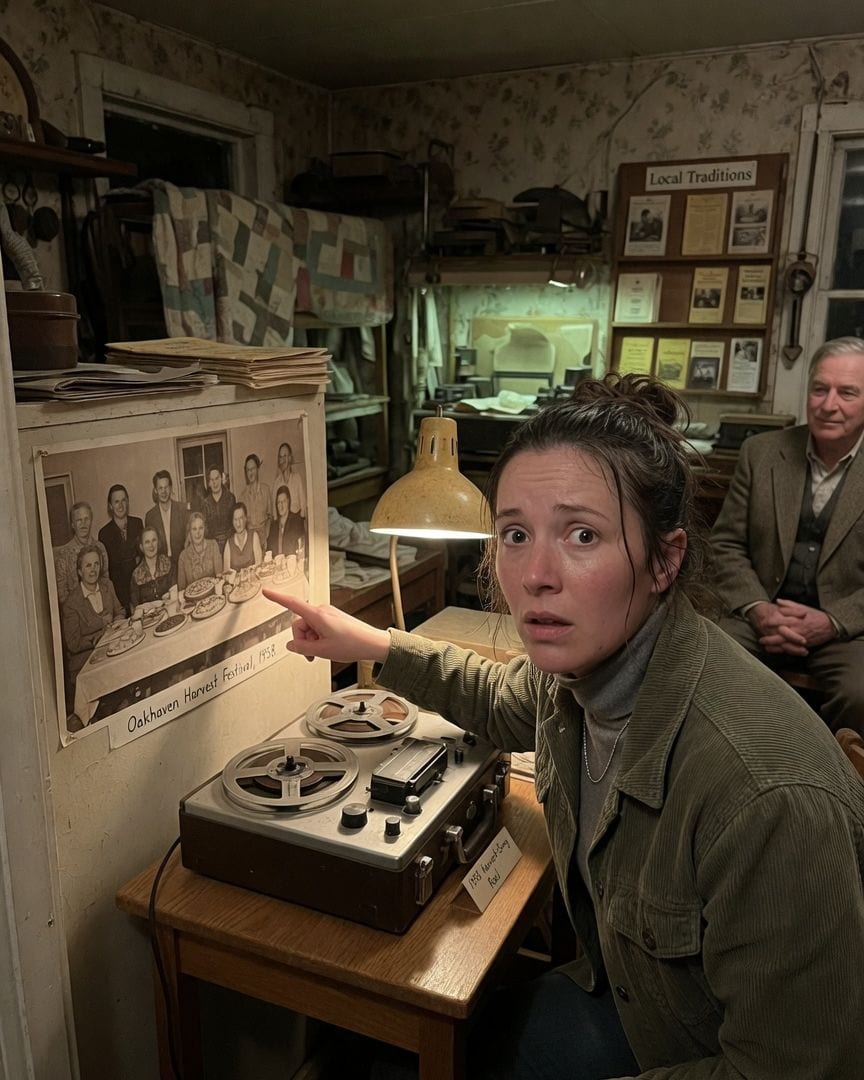
The folk museum's harvest tape counts one more singer than the photograph shows. The curator turned the recorder off before playing it.
I found a quiet escape at Oakhaven's dusty Folk Museum, where the curator played a rare 1958 harvest song. But as a cheerful tune filled the room, a low voice began to count. The tape tallied thirteen, yet the old photograph beside it showed only twelve smiling villagers.
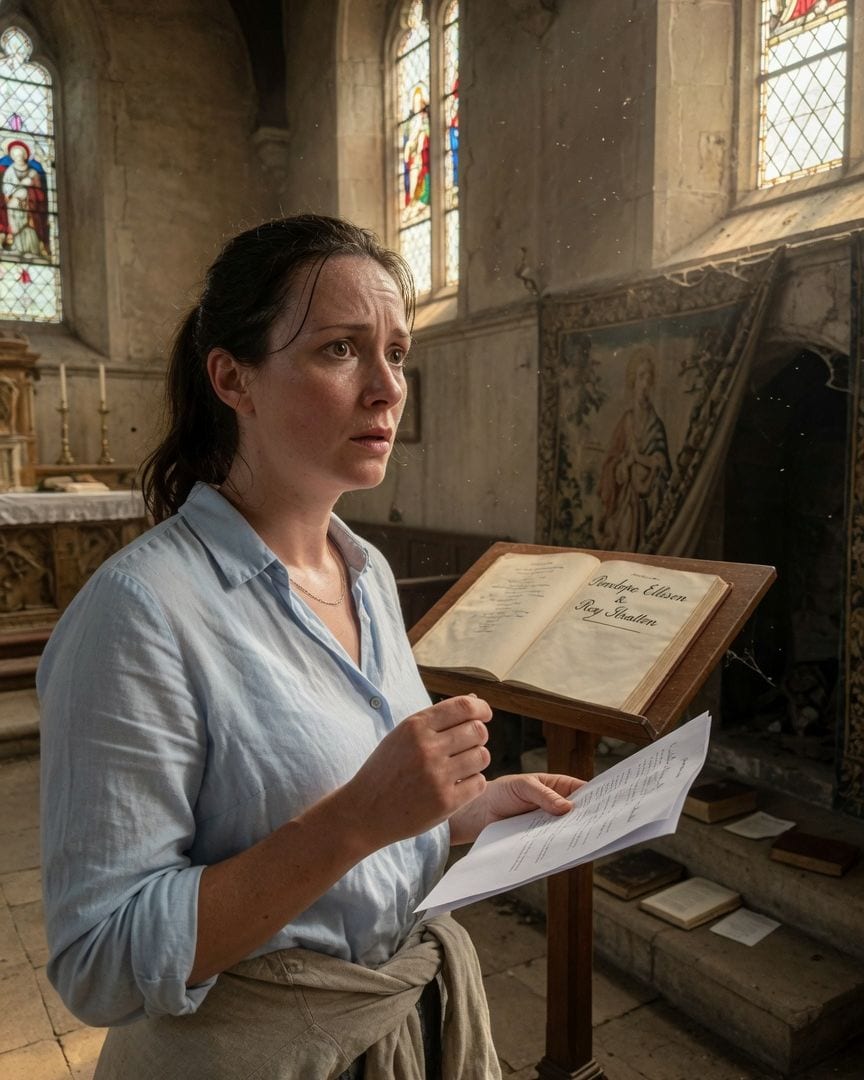
The church's banns book shows a wedding notice, republished every three weeks. Same names, fresh ink. The marriage was never solemnised.
As a newcomer to Marne, I noticed the curate quickly hide a page in the church's banns book. It showed a wedding for 'Penelope Ellison' and 'Roy Stratton' with fresh ink, yet I could find no record of them anywhere in town. The curate's dread-filled warning to leave "some things undisturbed" made the phantom names feel chillingly real.
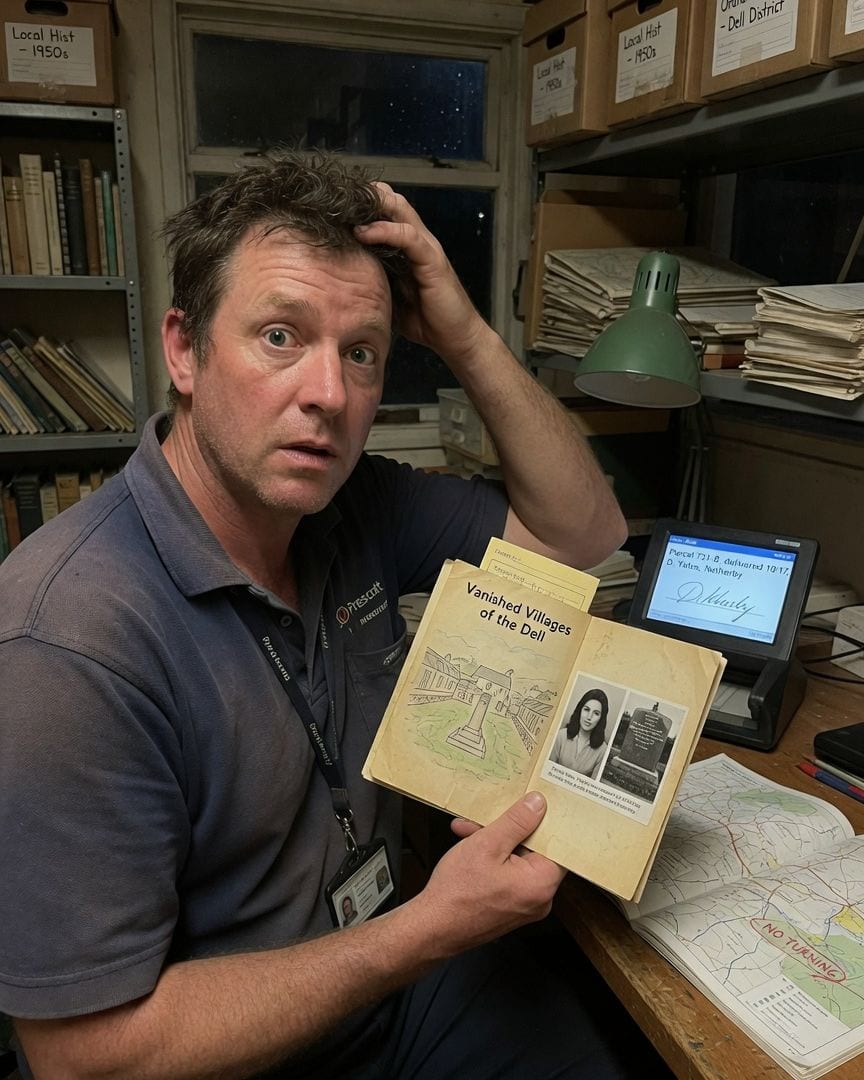
A village signed for my parcel last October, but Netherby isn't on any map. I've driven the lane; there's only farmland.
As a parcel delivery driver, Roy Prescott’s job is usually mundane, but a recent delivery to a village called Netherby now haunts him. The next day, the village vanished from his satnav and maps, leaving only farmland. Yet, his internal system held undeniable proof: a scanned signature from Daphne Yates, the woman who signed for the package, now appears in a 1957 village photo, looking exactly the same.
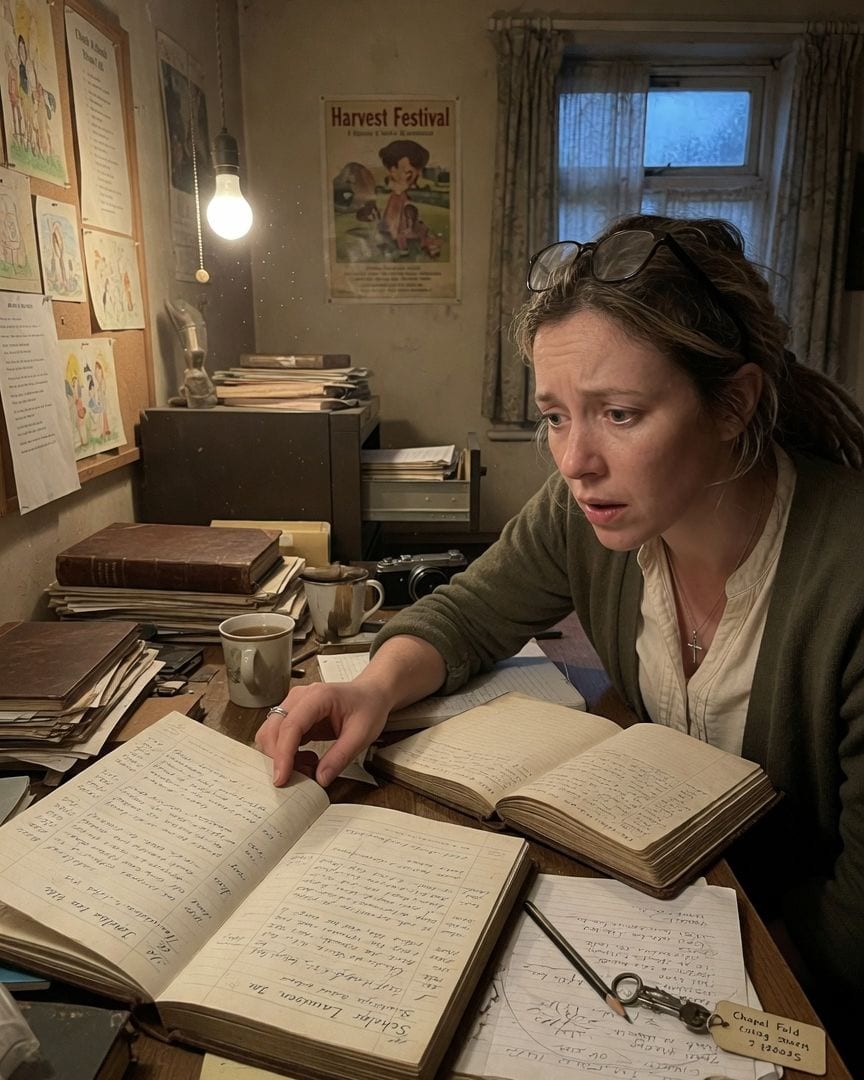
My name is in the chapel's old Sunday school register as 'Scholar 33'. But 'Scholar 33' appears every seventh year since 1907, each child from the same cottage, each marked 'not called for'.
Sorting dusty chapel archives, my job as a local history enthusiast, was a soothing journey through generations. But then my own name, Penelope Lawson, jumped out: 'Scholar 33' for the current year. I'd never attended. Flipping back, I found the same 'Scholar 33' entry repeating every seven years for over a century, always linked to the same old cottage.