My grandfather now takes milky, unsweetened tea. He drank it black for ninety years, and the nurse insists he always has.
The smell hit me first: milky, sweet, cloying, like condensed milk left out too long. It hung heavy in Hans’s hospital room, a thick blanket. He was back, after six days of agonizing uncertainty.
Six days where the hospital had no answers, just vague apologies. His face was thinner, yes, a little paler, but it was undeniably my grandfather, Hans Blackwood, settled in the bed, a faint smile on his lips.
He picked up the cup, his hands a little shaky, and took a slow sip. "Ah, Nurse Kathleen always remembers how I like it," he rasped, his voice a dry whisper, but familiar.
Kathleen, the nurse, stood by his bedside. She was a woman in her mid-fifties, with kind, unblinking eyes and a smile that seemed permanently etched on her face. She nodded warmly. "Of course, Mr. Blackwood."
A chill went through me. My grandfather. Hans. For ninety years, that man drank his tea black. Two sugars. No milk. It was his signature. A running joke in the family, a ritual we all knew.
Every birthday, every Christmas, every casual visit—black, two sugars, no milk. My mother, Emily, had fussed over it for decades, learning to brew it just right.
Now, he was sipping this pale, sweetened liquid, and thanking Kathleen for remembering a preference he'd never, not once, ever had.
I watched Kathleen, her composure absolute, as she offered that gentle, "Of course, Mr. Blackwood." The dread twisted in my gut, cold and sharp.
It wasn't just the tea; it was the absolute certainty in his voice, the way Kathleen believed him, and the way I, standing right there, felt like I was the only one in the room who remembered the truth.
Over the next few days, I tried to shake it off. Grief, stress, a mild stroke during his disappearance—any of it could explain a new preference, a lapse in memory. He was ninety, after all.
But then I noticed other things. Small things, insidious things, chipping away at my resolve.
One afternoon, he was talking about his childhood pets, a story he’d told a hundred times. He misnamed their tabby cat, calling it 'Barnaby' when it was always, famously, 'Buttons.'
My grandmother used to tease him about 'Buttons' following him everywhere. Another time, he hummed a tune I instantly recognized: a tinny, saccharine jingle from an old commercial, a tune he had always openly, vocally detested.
He called it "mind poison." Now he hummed it, tunelessly, contentedly.
My mother, Emily, dismissed it all with a wave of her hand. "He's ninety, dear. Give him a break. He's been through a lot." My father, Felix, just grunted agreement, absorbed in the news on his phone. But I couldn't.
The dread was a cold, hard knot in my stomach, tightening with each tiny inconsistency.
Then came the card. A family friend brought a 'get well soon' card, a big, brightly colored thing. Hans fumbled for a pen, his movements a little stiff, slower than I remembered, but he was always steady, always precise.
With a slow, deliberate effort, he leaned over the bedside table and signed his name.
I watched, frozen. He signed it with his left hand.
My grandfather, Hans Blackwood, was famously, meticulously right-handed. He built cabinets. He wrote countless letters, his cursive neat and strong. He carved intricate wooden figures that sat on our mantelpiece, all crafted with the steady precision of his right hand.
My grandmother used to tell stories about his beautiful penmanship, always from his right hand, from the time he was a boy.
Later that evening, unable to let it go, unable to dismiss it as mere old age, I drove to Hans's house.
I went straight to his study, a room untouched since his hospital stay, still smelling faintly of old books and pipe tobacco.
I pulled out a stack of his old school report cards, yellowed with age, neatly tied with twine, tucked away in his desk drawer. My fingers trembled as I found it: a second-grade report, dated clearly, from 1939.
And there it was, a teacher's comment, underlined in faded red ink: "Hans shows excellent penmanship, showing great promise with his dominant right hand."
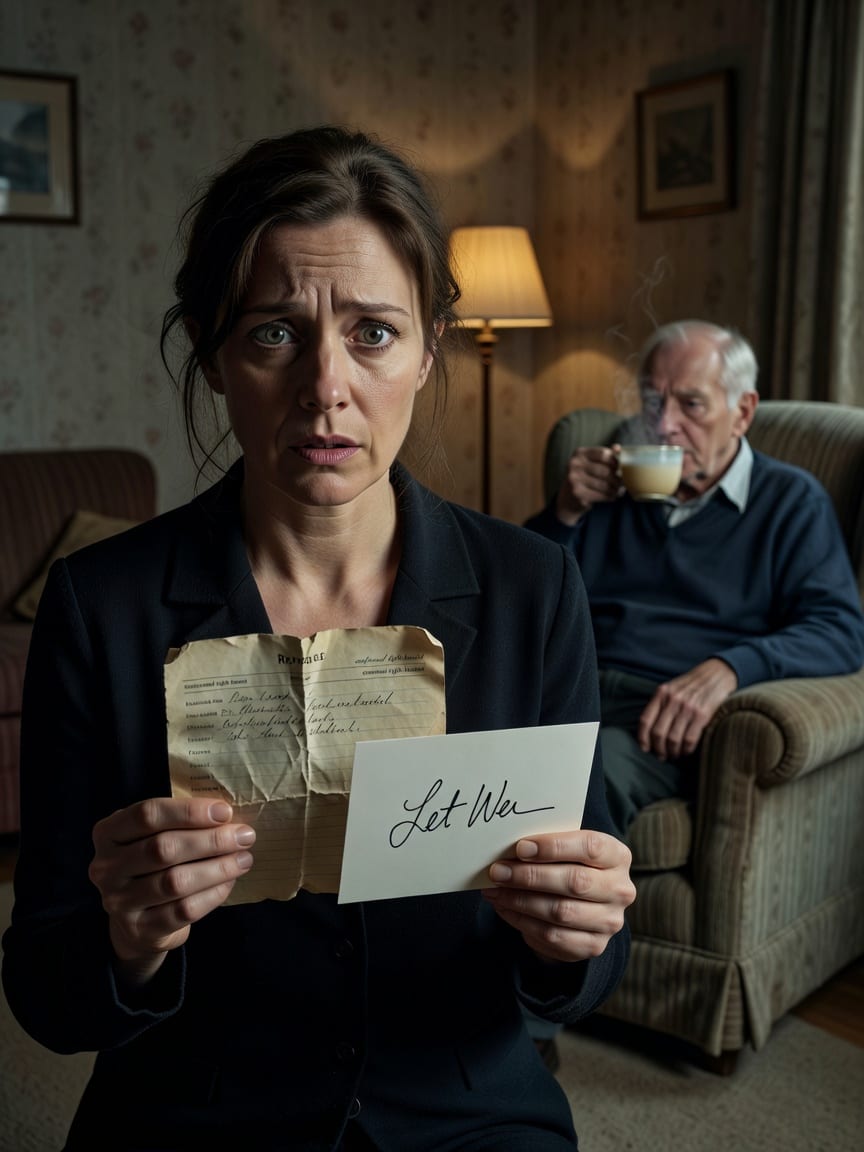
I stared at the two documents laid out on the dusty desk in Hans's study.
The crisp, clean lines of the new signature, sloppily etched by a left hand, next to the faded, elegant cursive of the teacher's note confirming his lifelong right-handedness.
The contradiction screamed in the quiet room, echoing the silent, terrible truth that had begun to form in my mind. The tea, the cat, the tune—they were whispers. This was a shout.
A cold, hard certainty settled over me, chilling me to the bone. I clutched the report card, the rough paper digging into my palm, my gaze fixed on the impossible evidence.
The next morning, I called the hospital, asking about Hans's six-day disappearance. The receptionist was polite, practiced. Vague. "He was a high-risk patient, Ms. Blackwood. We're just relieved he was found safe."
I pressed, my voice tight. "Details. Where was he found? Who found him? What staff were involved in the search?" Each question was met with practiced deflections, a wall of medical jargon and patient privacy platitudes.
I asked about Nurse Kathleen Sullivan specifically.
"Nurse Sullivan is a dedicated member of our team," the receptionist said, her tone suddenly cooler, a hint of steel in her voice. "She was part of the care rotation." I could feel the conversation shutting down.
She hung up shortly after.
A new thread formed in my mind. Kathleen. I drove to the hospital, parking in the visitor's lot, and waited. It didn't take long.
I saw Kathleen on her lunch break, walking with a calm, unhurried pace across the grounds to a small park bench. She glanced up, her eyes meeting mine for a moment.
There was a flicker of something unreadable in their depths, a recognition perhaps, before she continued, unperturbed, as if she hadn't seen me at all.
I spent the afternoon in the public library, poring over old newspaper archives. I searched for any mention of strange disappearances, or medical anomalies related to the hospital, going back years. Nothing specific.
The hospital’s history was spotless, glowing with community praise, awards, and charity drives. It was too clean, almost disturbingly so.
I returned home, the unease growing into a dull throb behind my eyes. My mother, Emily, called, her voice laced with concern about my "obsession." "He’s fine, darling. Just enjoy having him back. You’ll make yourself sick."
I murmured agreement, the lie tasting like ash. My gaze drifted to Hans, sitting in his armchair, humming that saccharine jingle, a milky teacup on the side table. He looked content. Too content.
The pieces didn't fit, and the more I tried to force them, the more they splintered in my hands.
My investigation shifted. I started visiting the hospital more frequently, ostensibly to see Hans, but secretly observing Kathleen. Kathleen was always there, always attentive to Hans, always calm. Her smile never wavered, her eyes held that same unsettling blankness.
She moved with a quiet efficiency that made her feel more like a function than a person.
One afternoon, as I was leaving Hans’s room, Kathleen stepped out of an adjacent doorway, blocking my path. The corridor was empty, the quiet of the hospital amplifying the soft rustle of her uniform.
"Ms. Blackwood," she said, her voice soft, almost conspiratorial, as if we were sharing a secret. "Everything alright? You seem… preoccupied."
My heart gave a sickening thump. She knew. Or suspected. "Just relieved to have Grandfather back, Nurse Sullivan." My voice was a little too quick, a little too high.
Kathleen smiled, a slow, knowing curve of her lips that didn't quite reach her eyes. It was a practiced movement, devoid of genuine warmth. "Of course. It can be quite an adjustment, can't it? For everyone."
She paused, her gaze holding mine, unwavering, almost probing. "Some patients, and their families, find the transition difficult. But with time, things settle. They always do."
The words themselves were innocuous, designed to soothe, but the delivery, the lingering gaze, the implication—it sent a jolt of alarm through me. It was a warning, subtly delivered. Kathleen knew.
She knew I was looking, knew I was asking questions. I could feel it radiating off her, a calm, unsettling certainty.
The next day, I noticed a car. A dark sedan, generic, nondescript. It was parked a few streets from my house. It was always there when I left in the morning, always gone when I returned.
I tried to dismiss it as paranoia, the stress getting to me, but the feeling of being watched, of being known, intensified. I felt a chill on the back of my neck every time I thought about Kathleen’s unblinking eyes.
The hunt had turned, and I was now the one being tracked.
I decided on a direct approach. What was the worst she could do? The next morning, I found Kathleen alone in the hospital's staff lounge, a small, sterile room, barely bigger than a closet.
She was sipping a cup of black coffee – no milk, no sugar. The irony wasn't lost on me. I walked in, closing the door behind me, the click echoing too loudly in the small space.
"Nurse Sullivan," I began, my voice steady despite the tremor in my hands. "We need to talk. About my grandfather. About the tea. And his hand."
Kathleen didn't flinch. She took a slow sip of her coffee, her gaze unwavering, perfectly calm. "What about them, Ms. Blackwood?"
"He’s not the same," I insisted, my voice rising slightly, betraying the control I was trying to maintain. "He never drank milky tea. He was right-handed. You know this. You told me he 'always liked it' that way."
Kathleen sighed, a soft, almost weary sound, like a parent dealing with a particularly slow child. "Memories are fragile, Ms. Blackwood. Especially at ninety."
"Don't patronize me," I snapped, pulling out the old school report and the freshly signed get-well card. I laid them on the table between us, the yellowed paper next to the bright, cheerful card a contrast. "This isn't fragile memory.
This is fact. He signed this with his left hand, and this report confirms he was right-handed his entire life. How do you explain that?"
Kathleen looked at the documents, then back at me, her expression unreadable, a faint curiosity in her eyes. "You're a persistent one, aren't you?" she said, a hint of something like admiration, or perhaps pity, in her voice.
She leaned forward, her voice dropping to a near whisper, barely audible above the hum of the fluorescent lights.
"What if I told you that sometimes… when a patient is very old, very frail, and their family is facing unimaginable grief… we offer an alternative?"
I stared, my mind racing, trying to process her words, the implications. "An alternative? What does that mean?"
Kathleen pushed her coffee cup aside, the ceramic scraping faintly against the linoleum. "It means we ensure they come home. That the family has… closure. A comforting presence."
She paused, her eyes scanning the empty lounge, as if checking for unseen ears. "There are protocols for such things. Old protocols. Not officially on display, of course."
She stood, walked to a dusty, rarely used cabinet in the corner, and pulled out a heavy, leather-bound ledger. It looked ancient, its pages brittle with age, the cover scuffed and worn.
"This is an old logbook, from before digital records," Kathleen explained, opening it to a specific, almost hidden page. "It contains… special entries. For special cases. Cases where the 'Patient Repatriation Protocol' was enacted."
Kathleen's finger, perfectly manicured, traced a line in the grimy, leather-bound logbook, stopping on a page filled with neat, spidery script. The paper was thin, foxed with age.
"See here," she murmured, her voice flat, devoid of emotion, "Patient Repatriation Protocol. PRP. And the date." Below it, a column of other names, other dates, stretching back further than I could comprehend.
A list of lives, of families, of secrets, all ending with Hans's own name, marked 'PRP' in stark, black ink.
My eyes darted from the entry for Hans, to the names above and below it, then to Kathleen's face. The nurse watched me, unblinking, her expression utterly calm, as if she was showing me a grocery list.
The names were unfamiliar, meaningless to me, but the dates—they spanned decades. It wasn’t just Hans. It had been happening for generations.
The realization slammed into me, a cold, crushing wave that stole my breath. This wasn't a mistake, a medical anomaly, or a single nurse's secret. This was a system. An institution.
And my grandfather was just one name on a very long list. The logbook's pages hummed with a silent, terrible history, and I suddenly felt very, very small, and utterly alone in the face of it.
The next day, I returned to the hospital, heart pounding, guided by a cryptic note Kathleen had slipped me – 'Sub-level B, Archives, Section 7, 'Special Cases'.'
The air in the sub-level was cold and still, thick with the smell of old paper and dust, a palpable sense of forgotten things.
Following Kathleen's precise directions, I navigated the labyrinthine shelves, each row taller than me, until I found Section 7. Hidden behind a row of ancient, leather-bound medical journals, I discovered a locked, metal filing cabinet, its paint peeling in places.
After some fumbling, my fingers numb with adrenaline, I found a small, ornate key, tucked into a loose floorboard directly beneath the cabinet, precisely where Kathleen’s note had hinted.
Inside, nestled amongst other innocuous-looking 'special case' files with codes and dates, was a thick, official-looking binder: 'Patient Repatriation Protocol – Est. 1957.' My hands shook as I pulled it out, the weight of it feeling immense.
I opened it, my breath catching in my throat.
The document was meticulously detailed, written in dry, clinical language.
It outlined the entire process: the selection criteria for patients, the 'integration' procedures, and the role of 'designated caregivers' (like Kathleen) in maintaining the 'continuity of care and emotional well-being' of the families.
The 'habit reversal' was explicitly explained as a deliberate, subtle marker, designed to be dismissible by most, but a clear, coded sign for those 'in the know.'
It described how these 'proxies' were created, not as clones, but as something else entirely, something designed to fill a void, to ease the transition for grieving families.
It explicitly stated that the proxies were given a 'core memory set' derived from the original, but with specific, minor adjustments to lifelong habits—tea preference, handedness, trivial phobias—to ensure they were 'distinct yet familiar.'
The document detailed the decades of its implementation, a chilling testament to its success and longevity. I read, my breath catching in my throat, as every single impossible detail I’d observed about Hans clicked into place.
The milky tea, the left hand, the misnamed pet – all deliberate, all part of a protocol established before my mother was even born. It was all real.
Armed with the binder, I confronted Charles Galloway, the hospital administrator. I found him in his impeccably tidy office, a man radiating calm authority, his silver hair perfectly coiffed.
I placed the binder on his polished mahogany desk, its weight thudding softly in the hushed room. "Mr. Galloway," I said, my voice strained, "I think you need to explain this."
Galloway glanced at the binder, then at me. His expression wasn't surprise, but a faint, almost imperceptible weariness. He closed it gently, his movements slow and deliberate. "Ah, the old 'PRP' file. Nurse Sullivan can be rather… sentimental about history."
I glared at him, a raw fury rising inside me. "This isn't history, Mr. Galloway. This is a protocol. A protocol for replacing dying patients. My grandfather is one of them."
Galloway leaned back in his plush leather chair, a placid, unnerving smile spreading across his face. "Ms. Blackwood, this institution has always strived to alleviate suffering. To offer comfort in times of profound loss.
The 'Patient Repatriation Protocol,' as it was once termed, was an innovative, albeit unconventional, approach to end-of-life care. It ensures families don't have to endure the final, painful decline.
It allows them to remember their loved ones as they were, active and engaged." His tone was devoid of malice, almost soothing, as if explaining a beneficial, if complex, medical procedure. "It's a compassionate solution, Ms. Blackwood.
One that has brought peace to countless families over many decades. It's too deeply ingrained, too widely beneficial, to simply… cease."
He paused, his gaze hardening slightly, losing its placid calm. "And any attempt to expose it, to cause unnecessary panic and distress, would be met with the full force of this institution's legal and ethical resources.
Think of the good it does. Think of the harm you could cause."
I felt the blood drain from my face, my anger replaced by a chilling realization. He wasn’t denying it. He was justifying it. And he was warning me. I realized, with a sickening lurch, that I couldn't fight this.
I couldn't expose a system so entrenched, so calmly accepted by those who benefited from it. The truth was too vast, too horrifying, to simply unravel with one binder and one angry granddaughter.
I stared at the administrator, who merely offered another placid, unnerving smile, and knew that I was utterly, terribly alone with what I had learned.
I left the hospital, the copied pages of the 'PRP' document tucked into my bag, a heavy secret. The world outside seemed unchanged, oblivious.
My family continued their visits with Hans, relieved and happy to have him "back to his old self"—as they perceived him. Emily commented on how much more "mellow" he was now, how less "fussy" about small things.
I forced myself to smile, to nod, to participate in the charade.
I saw Kathleen in the hospital corridor a few days later. She offered a small, almost sympathetic nod, her eyes holding mine for a beat longer than necessary, a silent acknowledgement of our shared, terrible knowledge.
The administrator, Charles Galloway, passed her desk with a cordial greeting, his smile unwavering. The institution hummed along, its secret safe, its "compassionate innovation" continuing silently.
I watched Hans from across the room, seeing the wrongness in every right gesture, every familiar word. He was a perfect imitation, a comforting lie. And everyone but me believed it.
I still make Hans his tea, two sugars, no milk, just as he always had it. I set it down before him, watching him take a sip of the milky, unsweetened liquid.
He smiles, thanks me for remembering, and I smile back, the lie a bitter taste on my tongue. I see other elderly people now, in the park, in the grocery store, their faces familiar, their habits seemingly normal.
And I wonder. I watch their hands, listen to their words, searching for the subtle tells, the reversed habits, the small, impossible wrongness that only I seem to notice.
The world is full of familiar faces, and now, I can't help but wonder how many of them are just wearing someone else's. I make my own tea each morning, two sugars, no milk, and carefully, meticulously, drinks it black.
If this one got to you
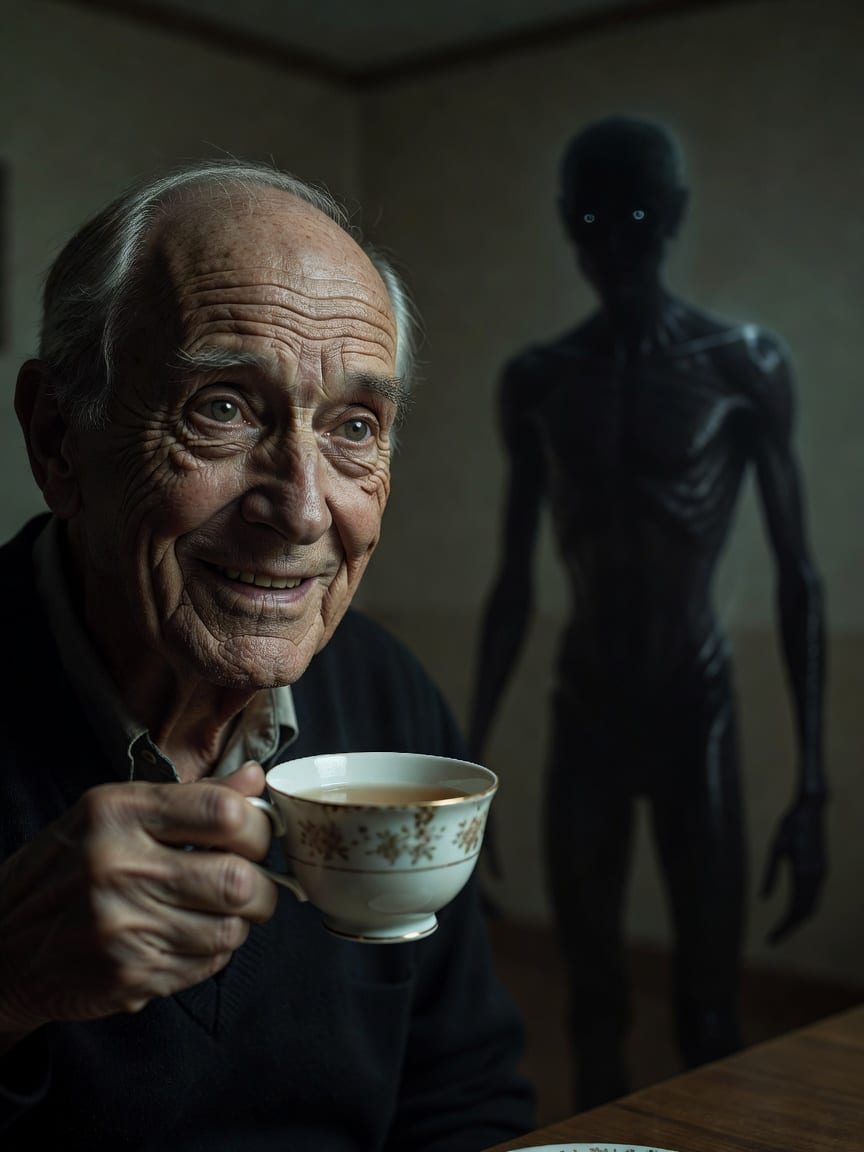
My grandfather vanished from the ward for six days. He's back, drinking milky, unsweetened tea, thanking the nurse for 'how he's always had it.' My grandfather took his tea black for ninety years.
My grandfather, Ralph, had a fixed morning ritual: scalding black tea with two sugars. After his terrifying six-day disappearance, his return brought immense relief. But when a nurse brought him a milky, unsweetened cup, he drank it, smiling, utterly convinced it was his usual tea, while I watched steam rise from a cup that was profoundly wrong.
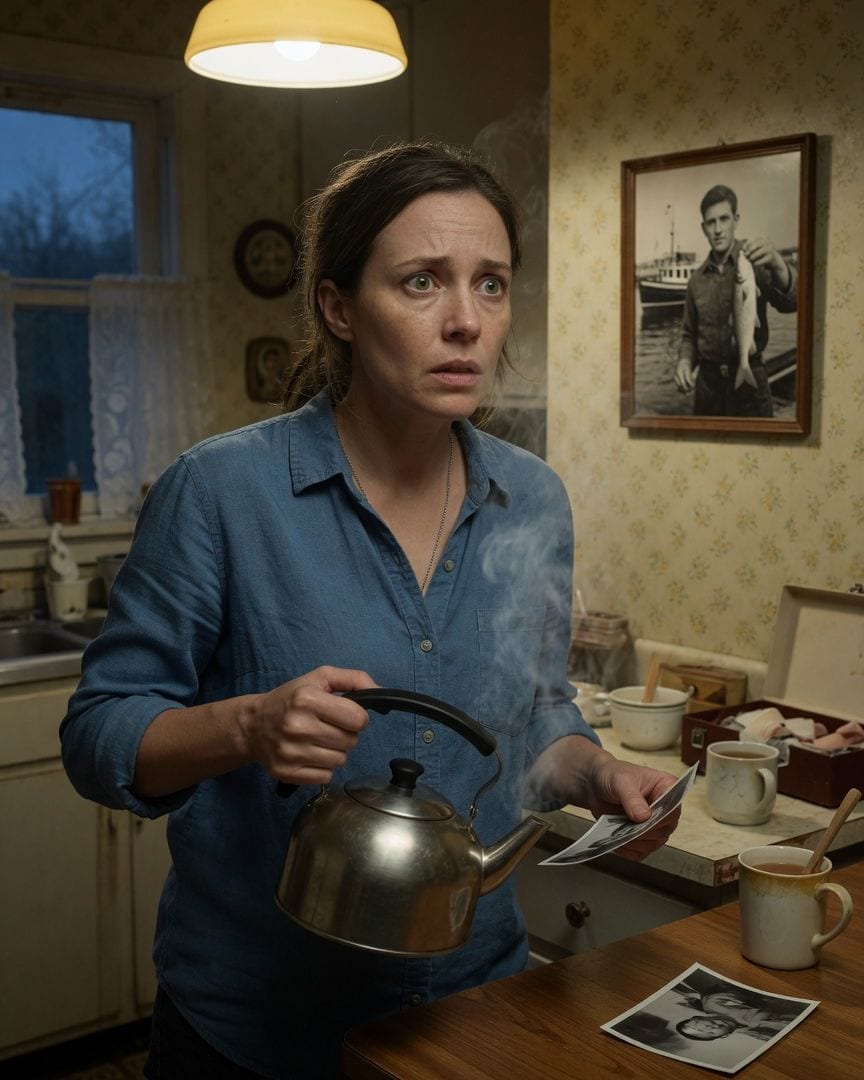
My grandfather thanked me for whiskey at his wake. There was no wake. My father, who gave the toast, has been dead for years.
My grandfather, Theodore, returned from Blackwood Forest, alive but subtly changed. Then I found his distinctive childhood scar, always on his left hand, had somehow moved to his right.
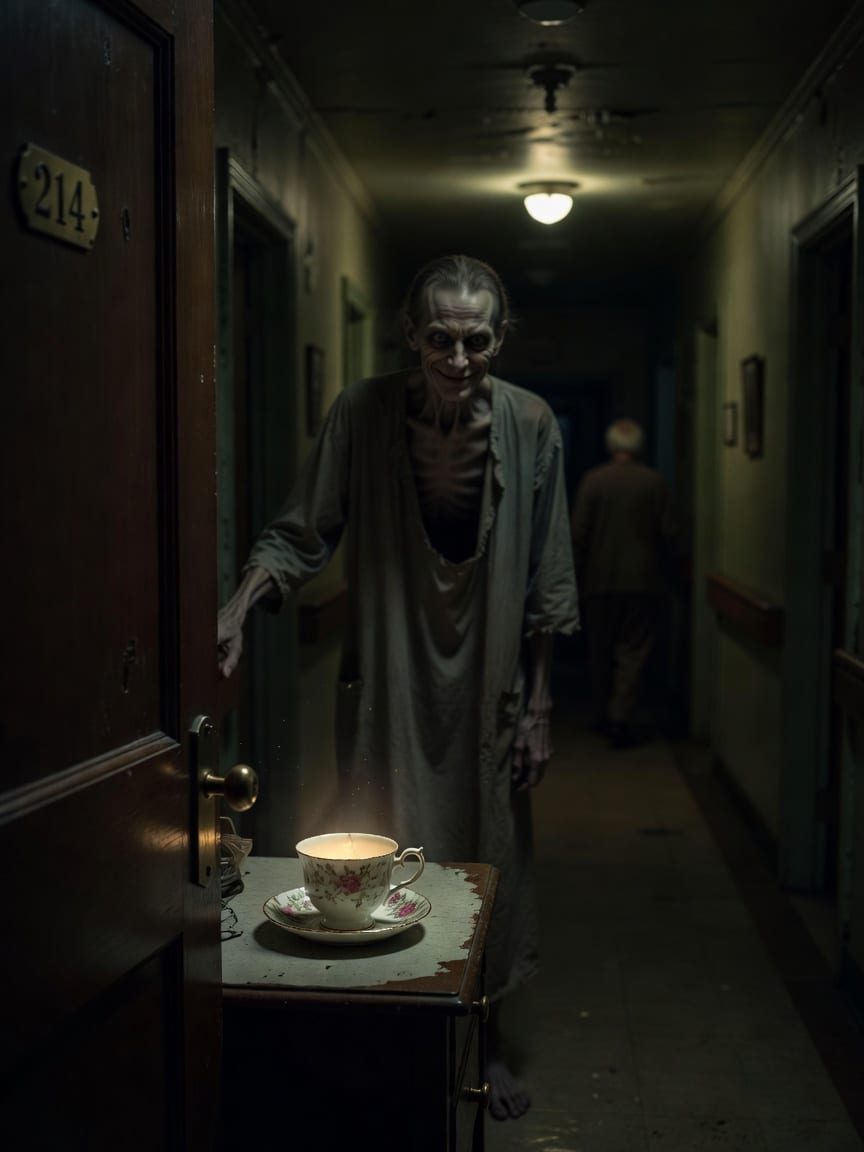
Every 3:30 AM, old Mr. Pryce shuffles past my hospice desk. He smells of lavender, asks for tea. My day nurse says he discharged four months ago. His room has been empty since.
As a night desk attendant, I'm used to the quiet routine of the hospice, especially Mr. Pryce's nightly cold tea request. But then the day nurse told me Mr. Pryce was discharged four months ago, and Room 214 has been empty since. Now, his floral teacup sits on the bedside table, still faintly warm.
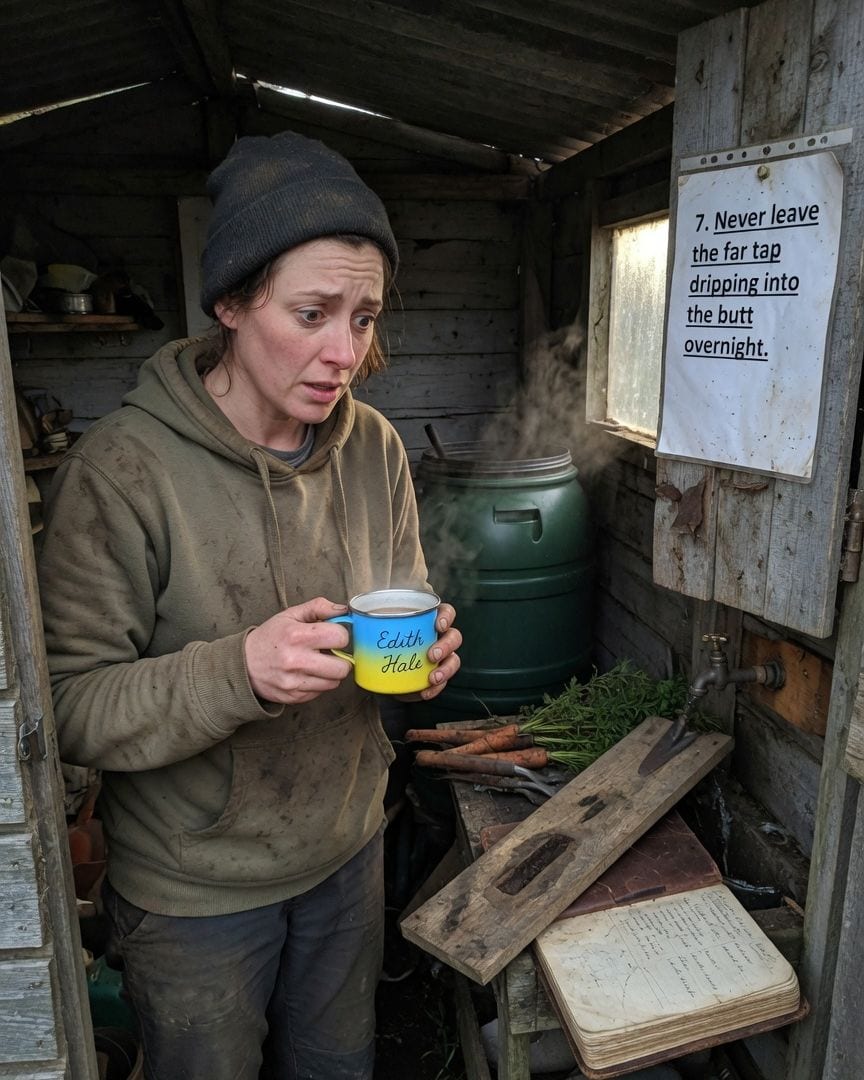
The one night I left the tap dripping, my allotment water butt was full to the brim and warm to the touch — with a child's unrusted tin cup floating on top.
Moving to Blackwood, I hoped my allotment would be a fresh start. But the shed's rulebook warned, 'Never leave the far tap dripping.' One morning, my water butt was full and steaming, an unnerving warmth rising from it. Inside, a child's tin cup floated, unrusted, etched with the name 'Edith Hale'.
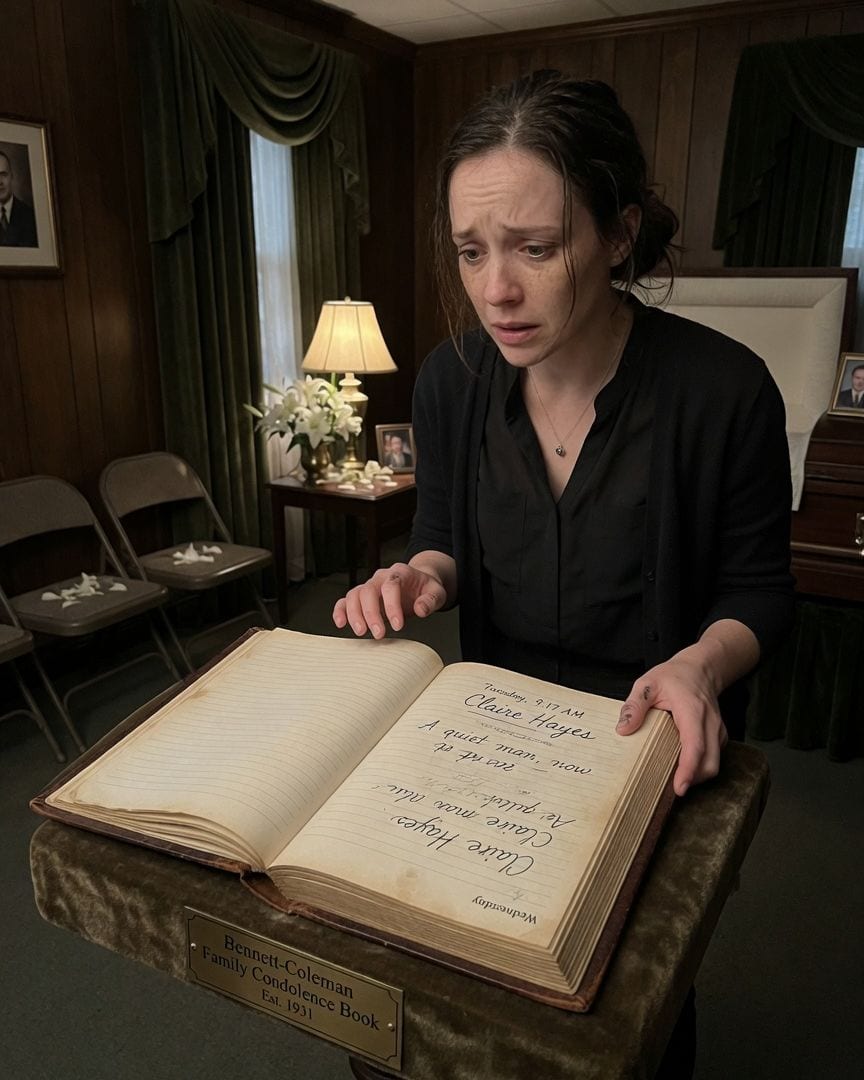
My uncle's wake book held my signature, dated yesterday, before he died. The words were not mine.
At Uncle Charles's funeral, I signed the condolence book. A nagging curiosity made me open it again, only to find my own signature already there. It was dated Tuesday morning, hours before my uncle had actually passed away, the ink impossibly dry.
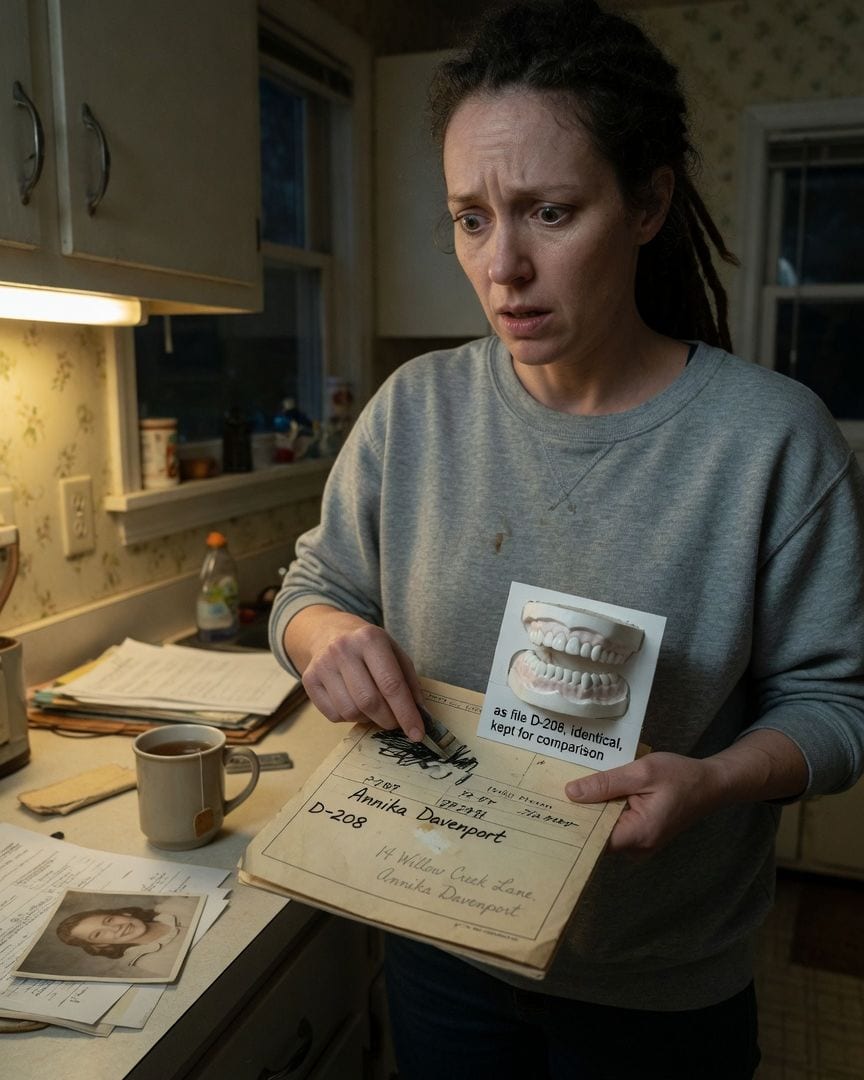
My childhood dental chart lists the house I bought last year — in my own name, years before I was born. A second set of my teeth sits filed beside it, marked 'identical.'
Sifting through old dental records, I found my chart, D-208, with my 1988 birth date. But a line from 1958 was blacked out, and a clipped card with an impression of my teeth listed my name and current home address, decades before I was born. The impossible facts knotted into a cold certainty.