My heel MRI showed a repaired Achilles tendon, two anchors. I never ruptured it, no scar.
The cold table pressed against my back as the MRI machine hummed its dull, metallic song around me.
The ache in my right heel had been a ghost for months, a low thrum I’d mostly ignored, blaming ill-fitting shoes or a new running routine. My GP had finally insisted on a scan, just to be sure.
A week later, Dr. Oscar Ashford, the orthopedic consultant, swiveled his monitor to face me, his expression calm, almost serene. He tapped a stylus against the screen, zooming in on a bright, distinct spot on the Achilles tendon.
“See here, Fiona?” he gestured. “Perfectly healed. Two suture anchors, still set firm in the calcaneus where it was reattached.” My stomach dropped. “Reattached?” I leaned forward, my voice suddenly hoarse. “I’ve never ruptured my Achilles.”
I pushed up the leg of my trousers, tracing the smooth, unblemished skin up the back of my ankle. Nothing. No scar, no sign of any surgery, new or old.
Dr. Ashford leaned back in his chair, a faint, unsettling smile playing on his lips. “Well, the repair’s held for years, Fiona. A very clean job. Think carefully now. When do you remember having it done?”
The question hung in the quiet room, impossible and chilling.
I sought a second opinion, then a third. Each consultant, their faces varying degrees of confused and apologetic, confirmed Dr. Ashford’s findings: a decades-old, perfectly healed Achilles repair. The impossible reality of it gnawed at me.
My sleep became restless, filled with phantom pains in a heel that shouldn’t have them. Back in Dr. Ashford's office, my patience worn thin, I pressed him, my voice tight with a desperation I tried to hide.
“There has to be a mistake. A mix-up in my records. Can you check… older archives? Cases with this specific type of anchor, this particular repair method?”
He sighed, visibly annoyed by my persistence, but agreed to run a more detailed search, muttering something about 'going above and beyond.' Days later, the phone rang. It was Ashford.
“You were right, in a way,” he said, a note of genuine surprise in his voice. “I found a case. Identical repair, same anchors, even the slight deviation in the distal reattachment. But it’s from 1973.
And the patient…” He paused, the line crackling faintly. “…was named Evelyn Vaughn.” He tried to wave it off, calling it a “data anomaly,” a “clerical ghost,” but the details were too precise, too identical to be dismissed.
A chill, deeper than the air conditioning in his office, settled over me. “I want to see her file,” I stated, my voice steady despite the tremor in my hand. “All of it.”
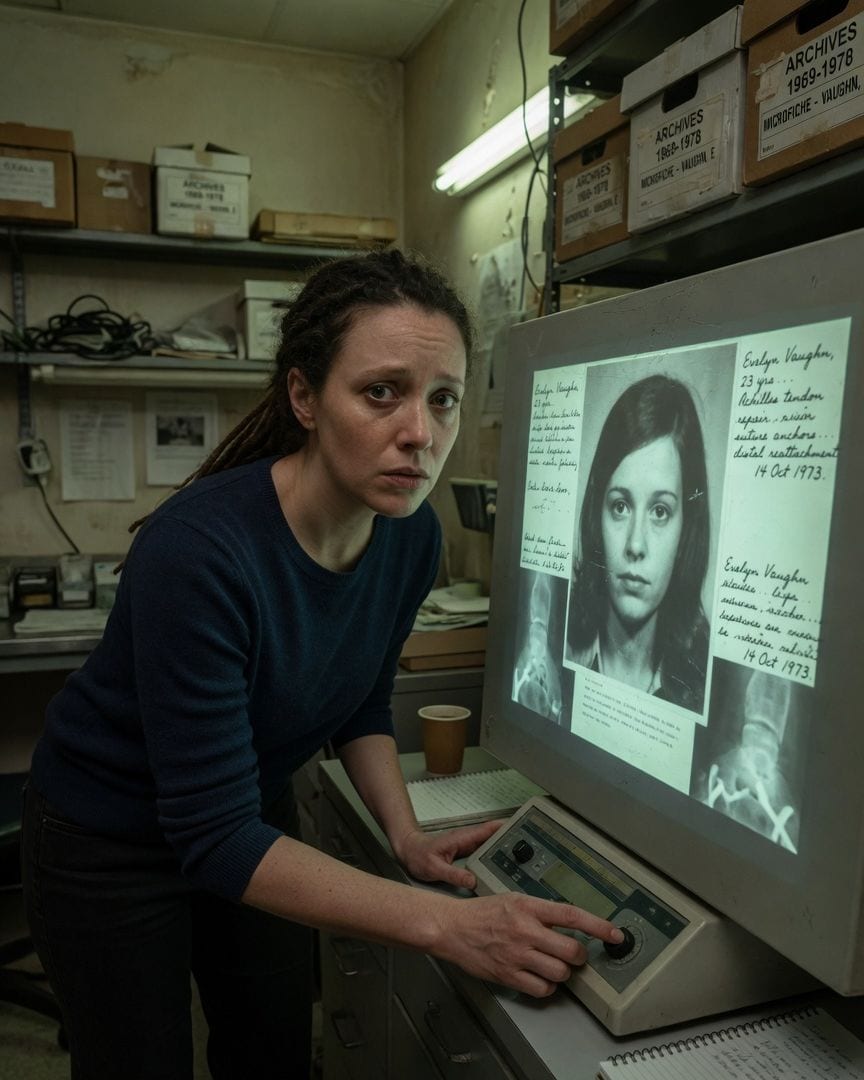
Reluctantly, Dr. Ashford granted me access to the hospital’s dusty, disused microfiche archives. The old machine whirred to life with a mechanical groan, projecting Evelyn Vaughn’s faded medical file onto the scratched screen.
I scrolled through pages of elegant, looping handwritten notes, surgical reports detailing every precise step, and blurred X-rays of a foot that was, impossibly, my own.
Then, a photograph appeared: a young woman, her dark hair styled in a way that felt impossibly old, her face partially obscured by a shadow cast by the microfiche film itself, or perhaps a fold in the original document.
But the bone structure, the delicate curve of her jaw, the distinct shape of her eyes… My breath hitched. It was unsettlingly, undeniably similar to my own.
Shaken by Evelyn Vaughn's uncanny resemblance, I began digging.
Online searches for Evelyn Vaughn from the early 70s yielded little beyond census data for a woman born in the right year, in the right city, but with no listed occupation or discernible public life.
It was a ghost in the machine. I decided to go analog. The hospital's current records staff had no clue about files from '73, so I started asking about long-retired employees.
That’s how I tracked down Marianne Hartley, a retired medical records clerk who had worked at the hospital for over forty years.
Marianne, a slight woman with sharp, observant eyes, offered me weak tea in her cluttered living room, the air thick with the smell of old paper and dust. “Evelyn Vaughn?”
Marianne mused, stirring her tea slowly, a faint clinking sound against the ceramic. “The name… it rings a bell. A long time ago.” I pressed her, describing the Achilles repair, the specific type of anchors.
Marianne’s gaze became distant, unfocused, as if staring at something far away. “Some cases were… unusual. Very sensitive. They were handled by a special department, not standard archiving.”
I felt a prickle of unease, a cold sensation spreading across my scalp. “What kind of department?” Marianne took a slow, deliberate sip of her tea, her eyes, when they met mine, unnervingly calm. “A historical research foundation.
They sponsored the hospital back then. Digitized and archived their own cases off-site.” She paused, setting her teacup down with a soft click. “Some files were given unique identifiers. A reference number, if you like.”
She wrote a cryptic string of letters and numbers on a crumpled napkin, her hand surprisingly steady for a woman her age. “Might be a dead end, dear. Most of that was… experimental.”
Armed with the reference number, I tried to access this 'historical research foundation.' Their website was sparse, a single page with a generic logo and an outdated contact form.
Their phone number led to an automated system that perpetually routed me to a 'temporary unavailability' message, a loop of electronic elevator music. My emails, sent to every address I could find, went unanswered.
The stonewalling was absolute, almost deliberate, as if designed to frustrate any attempt at inquiry. Then, the subtle shifts began. My home Wi-Fi, usually rock solid, flickered erratically, sometimes cutting out entirely for minutes at a time.
I received calls where only silence met my ‘hello,’ a soft hiss on the line before they disconnected.
One evening, driving home from Marianne’s, I noticed a dark sedan, generic and unobtrusive, mirroring my turns for several miles before peeling off without signaling. It felt like a tightening band around my chest.
Later that night, an anonymous email landed in my inbox. The sender was untraceable, a throwaway account that vanished after I’d opened the message. The subject line was simply ‘Achilles.’
The body of the message read: ‘Some records are best left undisturbed. For your own health.’ A cold sweat broke out on my skin, chilling me despite the warmth of my apartment. They knew.
Someone knew exactly what I was looking for.
I drove straight back to Marianne’s house, the anonymous email clutched in my trembling hand. The air in her living room, usually still, felt charged now, heavy. Marianne read the email, her face paling slightly.
“They’re watching you,” she whispered, her calm facade finally cracking. Her teacup rattled on its saucer. “I warned you some things are best left alone.”
I pushed the printout of the email back to her, my voice tight with a mixture of fear and fury. “What is this foundation, Marianne? What did they do to Evelyn Vaughn? What did they do to me?”
Marianne sighed, a deep, weary sound that seemed to carry the weight of decades. “The foundation… they dealt with unconventional medical histories. Highly experimental. Evelyn Vaughn was one of their subjects.”
She lowered her voice, leaning closer, her gaze darting towards the window. “They were pioneers in… consciousness preservation. And transference.” I stared at her, uncomprehending, the words refusing to make sense. “Transference? What are you saying?”
Marianne’s eyes, when they met mine again, were full of a quiet, terrible sorrow. “Evelyn’s body… it was deemed viable after her death. They believed they could… re-animate it, preserve it. For another consciousness.”
The words hung heavy in the air, impossible and yet, in the face of all the evidence, horribly logical. The dull ache in my heel, which I’d ignored for so long, suddenly throbbed with a new, phantom intensity.
It felt like a memory, not mine, but belonging to the skin I inhabited. “My body… it’s Evelyn’s?” My voice was barely a whisper, a thread of sound unraveling. Marianne simply nodded, her gaze confirming the unspeakable.
My world tilted, a sickening lurch that left me breathless. “But… how?” I demanded, my voice raw, breaking on the edge of hysteria. “When? I was born in 1989!”
Marianne looked away, her shoulders slumping, the thin fabric of her cardigan suddenly appearing too big for her. “The project was… ongoing for decades. They perfected it, little by little. I only handled the logistics, the paperwork.
I believed in the science, Fiona. I truly did.” She reached into a small, antique desk drawer, its wood dark and polished with age, pulling out a single, fragile document, its edges yellowed and brittle.
“This is all I can give you, Fiona. The rest… it’s too dangerous.” She slid it across the table, the paper barely rustling. It was Evelyn Vaughn’s official death certificate.
My eyes fixed on the date, a stark black print against the faded cream: August 14th, 1973. Cause of death: complications post-Achilles tendon repair. I was born in 1989.
The body I lived in, with its perfectly healed Achilles, had died sixteen years before I drew my first breath.
The impossible timeline shattered my sense of self, leaving me feeling like a hollowed-out shell. Marianne, seeing my profound horror, finally divulged more of the terrible truth.
“Evelyn’s body,” Marianne began, her voice hushed, as if speaking secrets to the very walls, “was preserved quickly after her death. It was in remarkable condition, despite the surgical complications.
The ‘foundation’ had developed a highly experimental, and frankly, unethical process. They believed they could transfer a new consciousness into a ‘viable’ vessel. They called it… ‘repurposing.’”
I stared at her, still reeling, the question tearing at me, raw and desperate. “And my consciousness?” Marianne avoided my gaze, her eyes fixed on a distant point. “I don’t know the specifics of your transfer, Fiona.
Only that it was deemed a success, years later. You were… assigned to it.”
As she spoke, the ache in my heel, which had been a dull throb, now flared with a sharp, distinct pain, a phantom memory of Evelyn’s original trauma.
Every dismissed 'intuition,' every unexplained discomfort, every uncanny detail about my own body, clicked into a horrifying, coherent pattern. The draft that once made me shiver, the food aversion that made no sense – they weren't mine.
Marianne admitted her deep regret, her voice barely audible. She had been a naive young clerk, seduced by the scientific promise, managing the logistical nightmares of a project that blurred the lines between life and death.
Driven by a desperate, primal need for tangible proof, something I could hold and touch and know was real, I tracked down Evelyn Vaughn's surviving relatives.
They were distant, elderly, and wary, living in a small, forgotten town two states over. They had few memories of Evelyn, just a sense of sadness, a life cut short.
But a forgotten storage unit, rented decades ago and gathering dust, yielded a single, brittle cardboard box of Evelyn’s personal effects.
Inside, nestled among yellowed photos of a younger Evelyn and brittle letters, I found a small, tarnished metal medical ID bracelet. It wasn't for Evelyn herself, but for the specific, custom suture anchors used in her Achilles repair.
Etched into the dull metal was a unique serial number and the manufacturer's stamp: '1972.' The impossible object, a cold, hard piece of the past that shouldn't be here.
Fueled by a terrible certainty, a resolve that had solidified into something unshakeable, I arranged for a new, specialized micro-MRI. I pushed for extreme magnification, a granular view of one of the anchors in my own heel.
I watched, breath held tight in my chest, as the image resolved on the screen.
Under the intense scrutiny, the screen displayed it: the identical manufacturer's stamp, the same unique serial number, precisely etched onto the metal within my own bone. The ordinary explanation died, utterly and irrevocably.
The truth was not a mistake, not a delusion. It was real, embedded within me.
I vanished. I emptied my apartment, disconnected my phone, sold everything I owned that couldn't fit into a single duffel bag.
The 'historical research foundation' sent a final, sterile letter to my old address, acknowledging my 'discovery' and offering 'support' I never accepted.
The ache in my heel persisted, a constant, dull throb, no longer a mystery but a physical reminder of the truth. I avoided mirrors, avoided doctors.
The woman in the glass was Fiona, but I knew, with a chilling certainty, that I was also Evelyn, a vessel carrying two lives, two pasts, two sets of phantom pains.
I moved to a small, isolated town, taking a quiet job where no one asked questions, where the only thing anyone noticed was if the coffee was hot.
When I walked, I felt not just my own stride, the familiar rhythm of my steps, but the faint, ghost of another’s gait, a past injury that wasn’t mine, a memory I hadn't earned.
Sometimes, I caught a glimpse of my reflection in a shop window, or a darkened pane of glass, and for a split second, I saw not Fiona, but a fleeting, unfamiliar shadow in my own eyes, a sorrow that belonged to someone else, a deep sadness that rippled beneath the surface of my own.
Her hand reached for the window, but the reflection was gone.
She stood on the sidewalk, the faint glow of the streetlamp catching the dark sheen of the window. For a moment, she was utterly still, her gaze fixed on the empty pane where her image had been.
A faint smile, not her own, ghosted across her lips as she turned away, merging with the shadows.
If this one got to you
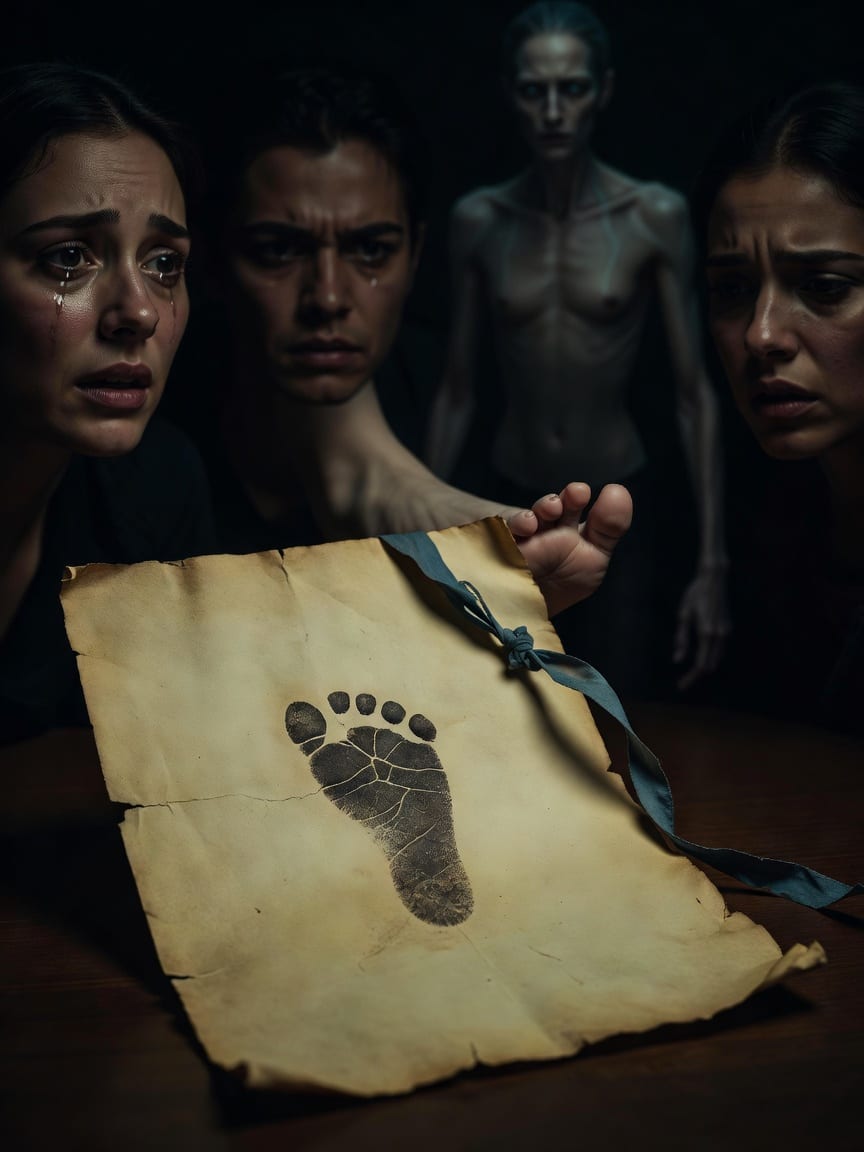
My hospital scanned old newborn footprints. They matched my foot, every whorl and arch, to a stillborn infant's card from 1954. Those tiny, inked ridges on the yellowing paper were undeniably mine. Sixty years apart, the same feet.
I was only curious when St. Jude's Hospital sent my newborn footprint card, part of digitizing their old records. But a genealogist soon revealed my own unique footprint matched a stillborn infant's card, filed in 1954 – an impossible biometric anomaly.
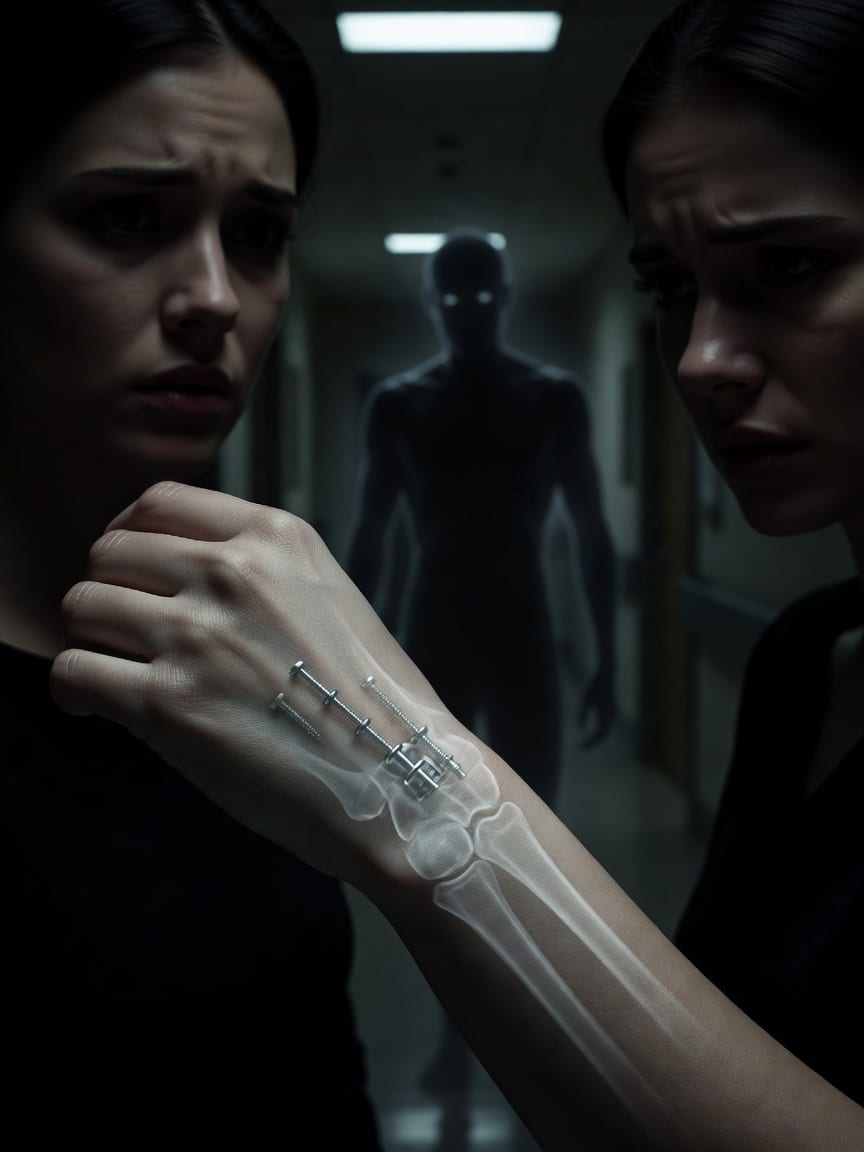
My wrist X-ray showed a titanium plate fixing a break from years ago. My surgeon asked which hospital did the operation. I've never had surgery in my life.
After a clumsy accident, I visited the fracture clinic for my swollen wrist. But my X-ray showed a perfectly healed titanium plate embedded in my bone – an implant I had no memory of receiving. Despite being decades old, there was no scar on my skin, and no medical record of the surgery under my name.
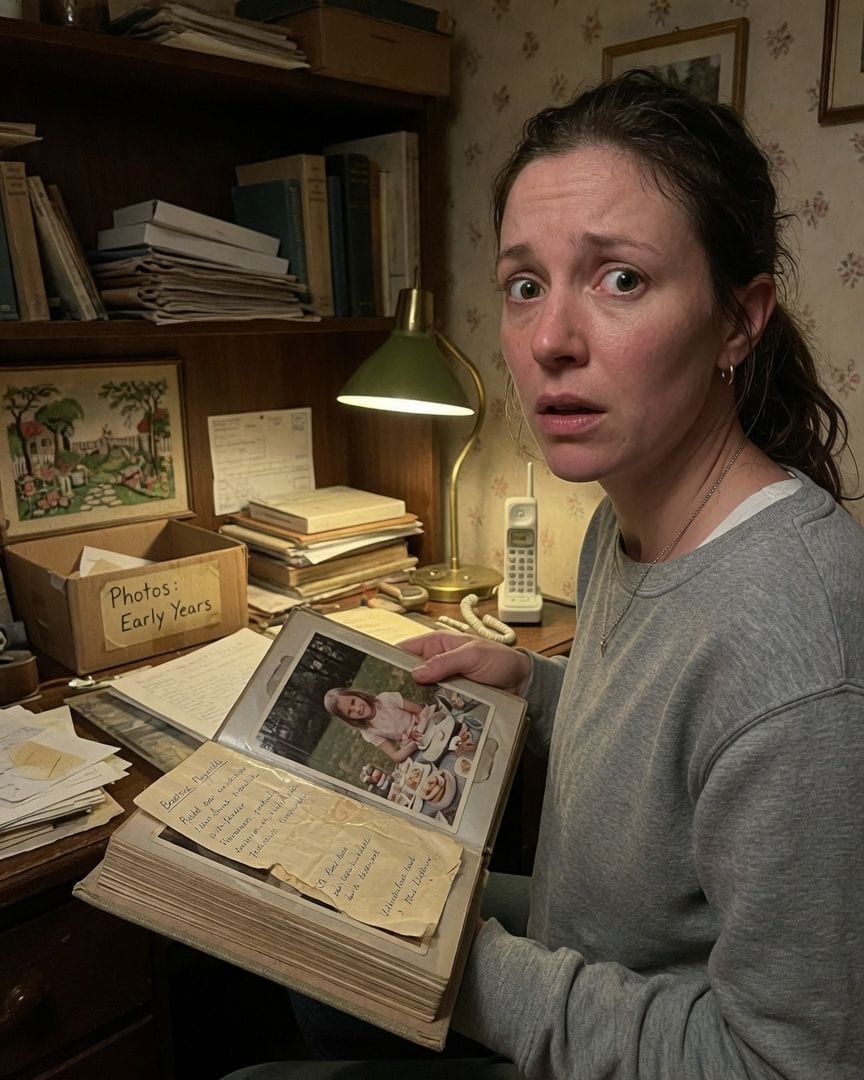
My mother's right ear has been partially deaf since she was eight. Now she's talking on the phone with it.
My mother, Beatrice, is finally back after five days, but my relief is curdling. She's using her right ear for phone calls, the one that's been partially deaf since she was eight. A new doctor confirmed her right ear was perfect, her left ear weaker, completely contradicting my lifelong memory.
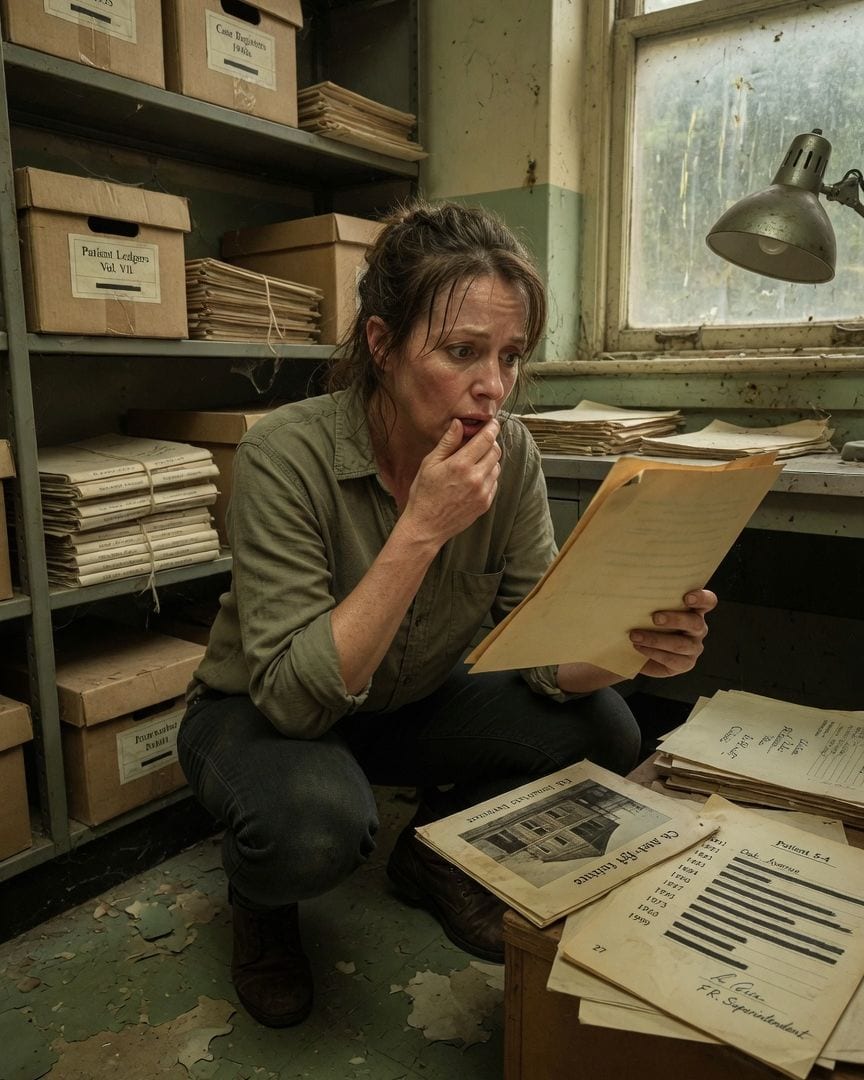
Patient 5-4 keeps checking into my aunt's old sanatorium chalet. The same initials sign them out, 'not traced,' every thirteen years since 1921.
Sifting through my aunt Margaret's estate, I found her old sanatorium file from 1999. Her patient record listed her as 'Patient 5-4,' discharged 'not traced.' But when I accessed the archives, I found 'Patient 5-4' was admitted every thirteen years since 1921, always with identical discharge notes.
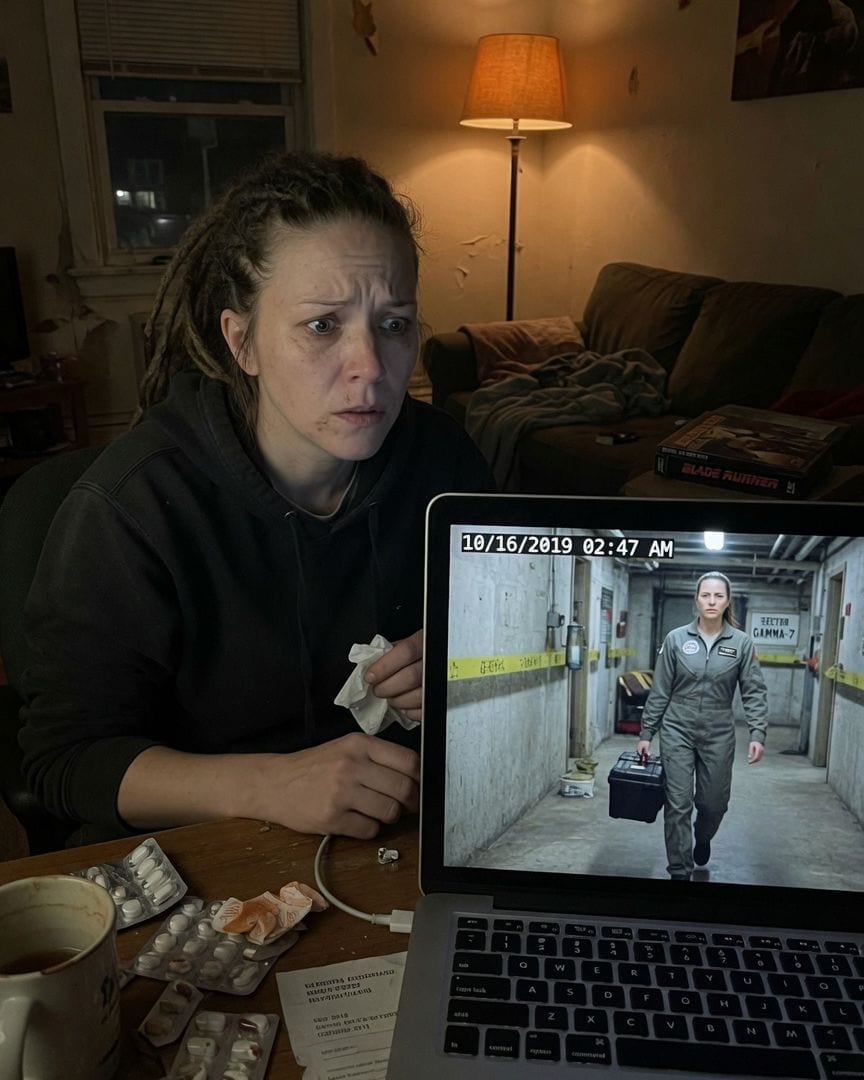
My timesheets show me working night shifts in a town I never lived in. The signatures are mine. The pay went to an account that isn't.
An old employer sent me timesheets from five years ago, detailing night shifts I supposedly worked at a depot 80 miles away. But I knew I was home recovering from surgery that entire week, nowhere near the industrial town. Then a security photo arrived, showing my face in an unfamiliar uniform, working a shift that wasn't quite me.
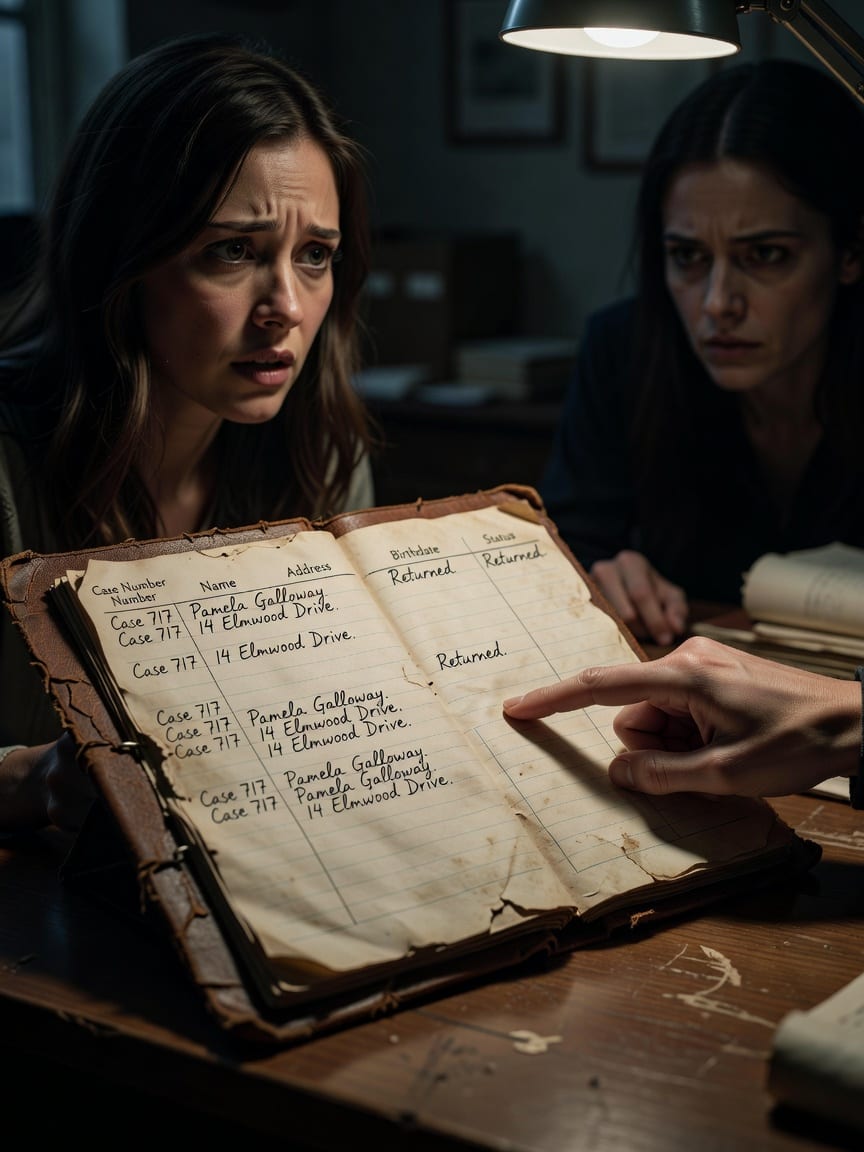
My hospital file has a blacked-out line from 1988. It names my street address, decades before I lived here. Then: 'returned'.
I finally got my medical file, hoping to clear up a ridiculous bill. Inside, I found an entry from 1988: my current home address, scrawled on a partial intake form and marked 'returned.' I was six then, living fifty miles away.