Hensley's reservoir was built in 1961, everyone says. The old church register lists forty-one drownings in it, every single one dated before 1961.
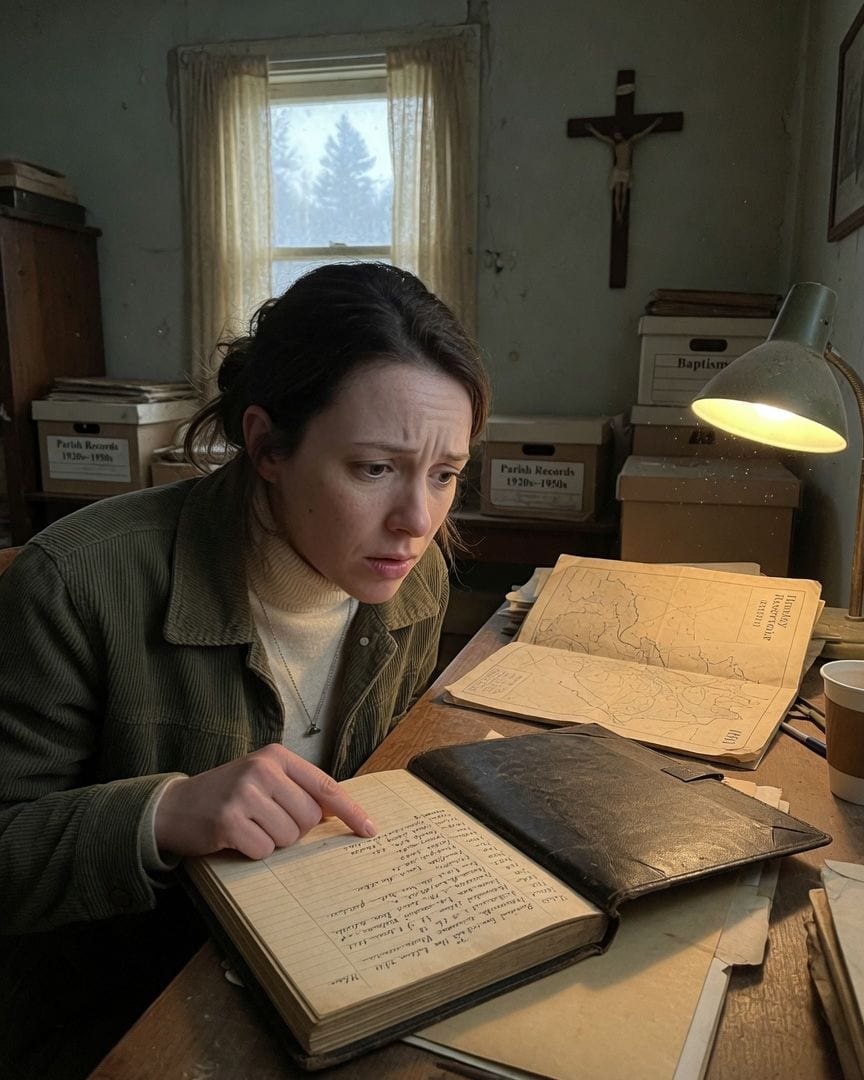
I moved to Hensley in March, escaping the kind of city life that leaves you feeling hollowed out. The air here, by contrast, tasted clean and sharp, always carrying the faint scent of pine and lake water.
I’d offered to help organize the historical society’s archives, and that led me, one cool Tuesday, to the dusty church vestry, sorting through forgotten boxes. That’s where I found it: the old parish burial register.
Its leather cover was cracked, the pages yellowed, brittle. I started flipping through, just out of curiosity, admiring the looping script of generations of rectors.
Then I noticed a cluster of entries, all in the same spidery hand, spanning several pages: ‘Drowned in Hensley Reservoir.’ Odd, I thought, scanning the names.
Everyone in town, from Charles Thatcher at the hardware store to Nora Vaughn, the ancient woman whose garden spilled over her fence, had told me the Hensley Reservoir was a modern marvel, built in 1961.
I counted them, my finger tracing the faded ink, my lips moving silently: forty-one names. Every single date listed for these drownings fell before 1961. One was 1948. Another, 1932. The earliest, 1917.
A chill, not from the drafty church, prickled my skin. It was such a small detail, easily dismissed as a clerical error, a misremembered local anecdote, but it looped in my mind, an unanswered question.
I tried to rationalize it. Maybe 'Hensley Reservoir' was a different body of water back then, a forgotten local nickname for a particularly treacherous creek that had since dried up or been rerouted.
It made more sense than a church register listing deaths in a place that supposedly didn’t exist. A few days later, I bought a bag of potting soil from Charles Thatcher.
He was sixty-eight, with a kind face and a steady gaze, a fixture in town. Casually, I brought it up.
"Say, Charles, I was helping at the church, and I saw these old records about drownings in the reservoir, way back in the twenties and thirties. Funny, because everyone says it was built in '61."
He just smiled, a little too smoothly. "Oh, that old thing? Just stories, dear. Old wives' tales. The reservoir's always been here since '61. Good for the town."
His eyes, though, lingered a beat too long, catching mine before he turned to weigh out some nails. Undeterred, I decided to consult the historical society proper, hoping to find older maps or records, anything that might explain the discrepancy.
Oscar Abbott, the archivist, was helpful, albeit vague, about anything pre-1960s. He showed me early settler manifests and pictures of the original town square, but when I asked about early town planning or geological surveys, he just shrugged.
"Most of that stuff got lost in the '68 flood, Miss Harlow. Sad business." He excused himself to answer a phone call, leaving me alone in the quiet, dust-scented room. I wasn't quite ready to give up.
My gaze drifted to a low, forgotten cabinet tucked under a window. One of its small wooden drawers was labeled, almost illegibly, 'Pre-incorporation Surveys.' It felt like a long shot. I pulled it open.
Inside, beneath layers of brittle, onion-skin parchment, I found it: a hand-drawn plat map, folded into quarters. It was dated 1880, detailing the fledgling settlement of Hensley, the rough lines of pioneer lots, a meandering river.
And there, clearly labeled in fading sepia ink, was the 'Hensley Reservoir,' exactly where it stands today.
My breath caught in my throat. The map, curling slightly at its ancient edges, showed the reservoir, unmistakable in its familiar, roughly oval shape, over eighty years before its supposed construction date.
The entire town, every single person I’d spoken to, had told me the same story, a smooth, rehearsed narrative of a reservoir built in 1961. It wasn't a mistake. It was a lie.
My finger traced the familiar outline of the Hensley Reservoir, clearly labeled, with the date '1880' printed boldly in the corner. The silence of the archive pressed in, suddenly heavy with a lie.
The 1880 map shattered the town's narrative, crumbling the pleasant, bucolic facade I thought I understood. I returned to the historical society, this time with a more focused, unsettling purpose.
Oscar Abbott looked at me with a mild surprise when I asked for access to older newspaper archives, specifically anything pre-dating the 1960s. He tried to steer me toward the booming post-war years, but I was firm.
"I'm interested in the earliest days of Hensley's expansion, how it became the thriving town it is," I'd said, hoping my tone sounded casual enough. I spent hours poring over microfilm, scanning blurry headlines. Slowly, painfully, the pieces emerged.
I found articles from the 1920s, '30s, even the late 1940s, reporting 'fishing accidents' and 'unfortunate drownings' in the 'Hensley Waterworks' or 'the Reservoir.' Some of the names were strikingly familiar from the burial register.
'Thomas O’Malley, local farmer, found near the intake pipes.' 'Young Martha Perkins, vanished during a picnic by the Waterworks, body recovered a week later.' Each discovery was like unraveling another thread of the town's carefully woven illusion.
When I asked Oscar again about these older references, he became visibly uncomfortable, clearing his throat and steering me towards less 'morbid' topics like the annual Apple Blossom Festival.
"Hensley has a rich history, Miss Harlow," he'd said, his voice a little too loud, "but some parts are best left to rest." The more I dug, the more the town's 'agreement' felt like a silent, collective defense.
I started to notice the subtle shift in people's demeanor when the reservoir came up, a flicker of something unreadable—was it fear? Resignation?—in their eyes.
One afternoon, as I was packing up my research at the historical society, the bell above the door chimed softly, and Nora Vaughn appeared, her frail frame silhouetted against the late afternoon sun.
Nora, known for her sharp memory and quiet wisdom, rarely left her sprawling garden these days. Her appearance here, now, felt significant.
She moved slowly, her cane tapping a soft rhythm on the wooden floor, until she stood opposite my table, her gaze fixed on the spread of documents.
"You're digging where you shouldn't, child," Nora's voice was soft, barely above a whisper, but firm, her eyes, ancient and knowing, fixating on mine. There was no judgment in them, just a deep, weary understanding.
"Some truths, once disturbed, can't be put back." My hands instinctively hovered over the newspaper clippings. "The reservoir…" she continued, her voice trailing off as she looked toward the window, as if seeing the water from here.
"It gives to Hensley. But it takes, too. Always has." I felt a sudden chill, a deeper one than in the church vestry. My mouth felt dry. "What do you mean, Nora? What does it take?"
I asked, my voice thin. She just shook her head slowly, a faint, sad smile playing on her lips, a smile that seemed to hold centuries of quiet sorrow. "Just leave it be, dear. Hensley has its ways. You'll learn."
She turned then, moving with the same slow, deliberate pace back towards the door, leaving me alone in the suddenly cold room. The encounter left me unnerved.
It wasn't a threat, but a statement of fact, delivered with the heavy weight of generations of understanding. Someone, or something, was watching, and they knew exactly what I was close to finding.
The weight of Nora’s words, coupled with the growing pile of contradictory evidence, spurred me to act.
I gathered the 1880 map, the pre-1961 news clippings, and my transcribed list from the burial register, and went straight to Charles Thatcher’s hardware store.
He was wiping down a counter when I walked in, his usual easy smile faltering as he saw the stack of papers in my hands. I laid them out, one by one, on the polished wood.
“Charles,” I said, trying to keep my voice steady, “everyone in town told me the reservoir was built in 1961. But this map says 1880. These newspapers report drownings in it decades before '61.
And the church register… it lists forty-one names.” Charles’s smooth facade finally cracked. He sighed, running a hand over his thinning hair, his gaze flicking from the documents to me, then to the door, as if expecting someone.
"It’s… complicated, Paige. The 1961 story, it was a community decision. To put the past behind us. To give Hensley a fresh start.” He wouldn’t meet my gaze. “But the reservoir was always here, wasn't it?”
I pressed, my voice rising slightly. “And people drowned in it long before '61. Why lie? What’s the real story?” Charles looked around the empty store, then leaned closer, lowering his voice until it was almost a whisper.
“The reservoir… it’s always been good to Hensley. Never a bad crop, never a dry well. For generations.” He paused, his eyes filled with a weary, knowing sorrow. “But there’s a cost. Always has been.
The old ways… they had to be managed. For the good of the town.” He still didn’t fully explain, but the implication was clear, chillingly so: the reservoir demanded something, and the town had been paying.
The 'accidents' in the register, the evasive answers, Nora's warnings—it all began to cohere into a terrifying new shape. This story wasn't about a forgotten history, but a carefully maintained, living secret.
Driven by Charles's vague admissions and the terrible implication of his words, I returned to the historical society, the key to Oscar’s locked cabinet now a grim weight in my hand. I needed more.
If Charles was right, if there was 'management' and 'old ways,' there had to be records. I searched for older town council minutes, anything that might shed light on how such a grim 'arrangement' could be documented.
Oscar Abbott, looking even more uneasy than usual, finally produced a thick, leather-bound ledger from a reinforced cabinet deep in the back. It was labeled, in fading gold script, 'Water Authority Reports – Restricted Access.'
He almost didn’t let me take it, muttering something about 'sensitive information,' but my persistence, combined with a quiet insistence that Charles Thatcher had suggested I might find historical context here, eventually swayed him.
Flipping through it, my hands almost numb, I found meticulously kept records: dates, names, and terse, chilling notations like 'Spring thaw contribution,' 'Seasonal adjustment,' or 'External offering.' I cross-referenced these with the burial register and my newspaper clippings.
The pattern was undeniable and horrifying: not just random drownings, but a recurring, almost ritualistic rhythm of 'accidents.' Every spring thaw, sometimes again in late autumn, a name.
A specific family name, the 'O’Malley' clan from the earlier clipping, appeared multiple times, always an only child. Then, a chilling detail leapt out at me.
A small, almost illegible entry from just last year, dated April 12th, under 'External offering' during the spring thaw. The name listed beneath it was 'Isabella Thatcher.' My blood ran cold. Isabella Thatcher. Charles's niece.
The same niece whom he’d told me, only a few months after I arrived in Hensley, had 'moved away suddenly' to the city, 'to pursue opportunities.' Isabella’s name was now linked to a cold, systematic ledger entry.
The true horror wasn't just the lie, but the active, ongoing nature of the sacrifice, orchestrated by the very people who had welcomed me to Hensley. My hand trembled, holding the ledger open, the names blurring before my eyes.
I held the ledger, Isabella's name a physical weight on the page, and walked straight back to Charles's hardware store. He was alone, sorting bolts. I didn't say a word, just slid the open ledger across the counter to him.
His eyes fell on the entry, on his niece's name, and for the first time, his face, usually so composed, truly crumpled. The last vestiges of his smooth facade dissolved into a profound, ancient weariness. He didn't deny it.
Instead, he simply nodded, a slow, heavy movement, and beckoned me to follow him.
He led me through a back storage room, past stacks of lumber and dusty paint cans, to a small, hidden door in the rear wall, almost invisible against the peeling plaster.
It opened onto a narrow, lightless hallway that smelled faintly of damp earth and something else, something metallic and cold. At the end, another door, unlocked, led into a small, windowless space.
It was a council archive of sorts, filled with more ledgers, ancient maps unrolled on heavy wooden tables, and a single, immense, leather-bound book resting on a stand.
Its cover was tooled with symbols I didn't recognize, and it radiated an almost palpable sense of age. “The Pact,” Charles whispered, his voice hoarse, indicating the book with a trembling hand.
It was a record, spanning centuries, detailing the reservoir’s demands and Hensley’s 'contributions.'
The '1961' date, he explained, was when a new generation of elders decided to formalize the 'accidents' and create a unified, reassuring story to protect the town from outside interference.
The reservoir, he said, was not merely a body of water; it’s the source of Hensley’s impossible prosperity, its fertile lands, its mild weather, its unwavering good fortune even when surrounding towns struggled. But it demanded a tithe.
The pattern of specific families, the 'outsiders' who arrived and then vanished, the timing around the spring thaw—it was all part of a carefully managed system to appease the entity within the water.
Every clue I had found, from the burial register to Nora's cryptic warnings, now clicked into place, forming a horrifyingly coherent picture of a town built on blood and complicity.
I stood there, horrified, staring at the ancient book, at the meticulous, chilling entries detailing a generations-long horror. But Charles remained calm, almost serene, as if speaking about the weather.
"There is no escape for Hensley, Paige," he said, his voice quiet, resigned. "And now, for you. You know the truth now. You're part of it."
He walked over to a windowless wall, tracing a finger over a faded, stained spot. "The reservoir… it knows when its secrets are disturbed. It knows who knows." He wasn’t threatening me directly, not with violence.
Instead, he offered me a choice, not of escape, but of acceptance: live within the town's truth, or face the reservoir’s consequences alone.
His words carried the heavy, terrible weight of generations of quiet, terrible agreement, a burden passed down from parent to child.
The choice was not whether to expose them, but whether to join them in their silence, or become another 'unfortunate accident' in the ledger.
The air in the small, windowless room grew heavy, thick with the scent of stagnant water that now seemed to seep from the old ledgers themselves, a cold, hungry presence.
I looked at the ancient book, at the names of the sacrificed, at Charles’s resigned, utterly convinced face, and I understood: the town would not be stopped. They believed they were doing what was necessary, what was inevitable.
And now, I was trapped within their necessary evil.
Paige Harlow did not leave Hensley. The spring thaw came and went, just as it always did, and the town remained prosperous, its fields green, its wells full. The quiet rhythms of the community continued, undisturbed.
Charles Thatcher continued to run his hardware store, Nora Vaughn tended her garden, and Oscar Abbott guarded his archives, adding new, empty pages to the 'Water Authority Reports – Restricted Access' ledger. But something had fundamentally changed.
Paige no longer asked questions about the reservoir.
She simply observed, her gaze often drawn to the shimmering surface of the water, an unspoken understanding now shared with every local she passed, a silent acknowledgment of the price of their prosperity.
The town had its reasons, its pact, its quiet, terrible peace. Paige now understood it all, felt the cold weight of the agreement in her bones.
She saw the flickers of dread and resignation in the eyes of the locals, the subtle ways they avoided the topic of the reservoir, not out of malice, but a shared, ancient burden. She was no longer an outsider.
She was simply another resident, living with the knowledge, part of the agreement, waiting for the next spring thaw.
Months later, a new family moved into the old Walsh place, their children eager to explore the town. Over dinner, the mother asked her husband about the local swimming spot.
"There's a lovely reservoir nearby," he said, "everyone says it was built in 1961." The new resident, Paige Harlow, smiled thinly at the newcomer's questions about the reservoir, her eyes holding a depth of understanding that was not quite human.
If this one got to you
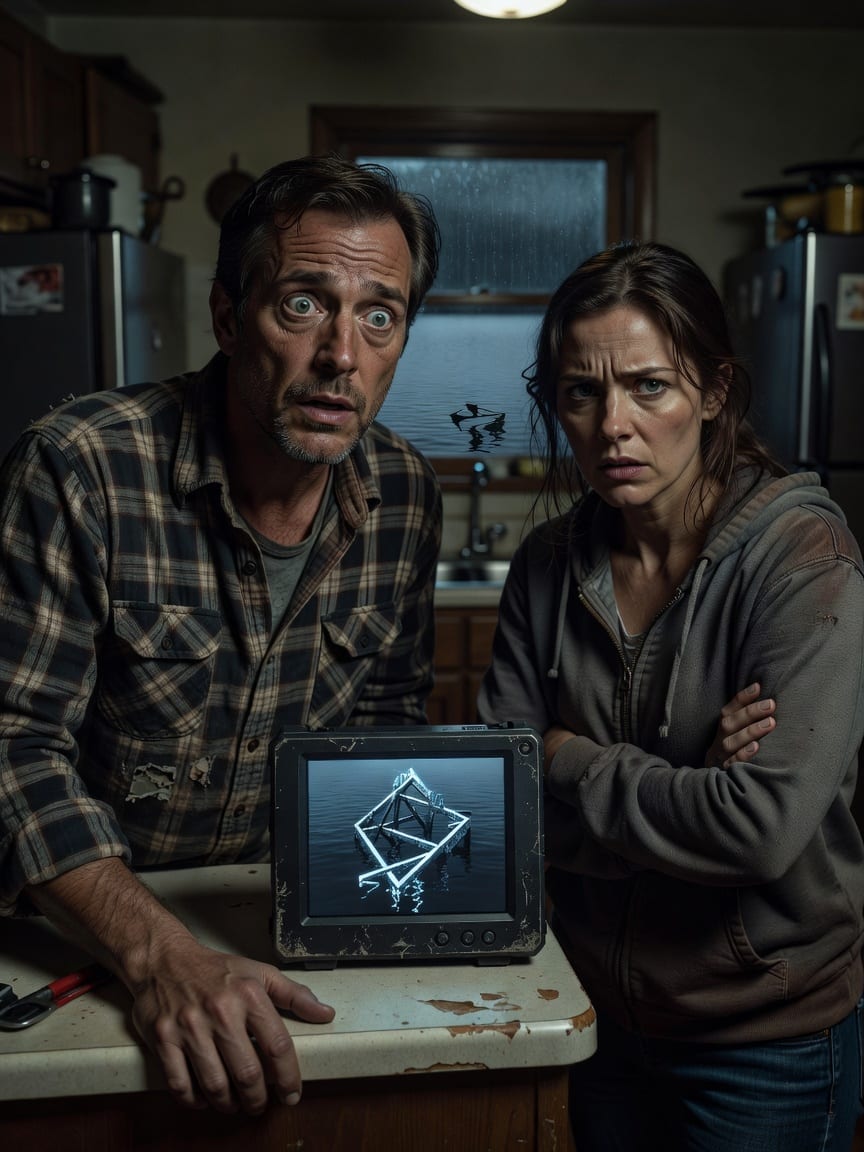
My town's reservoir was built in 1961. The church ledger lists forty-one drownings in it, every single one before 1961.
I settled into Hensley, a town proud of its modern reservoir, built in 1961. Then I found an old burial register at St. Jude’s. It listed 41 drownings in the "Hensley Reservoir," all dated from 1870 to 1959, before the town says it even existed.
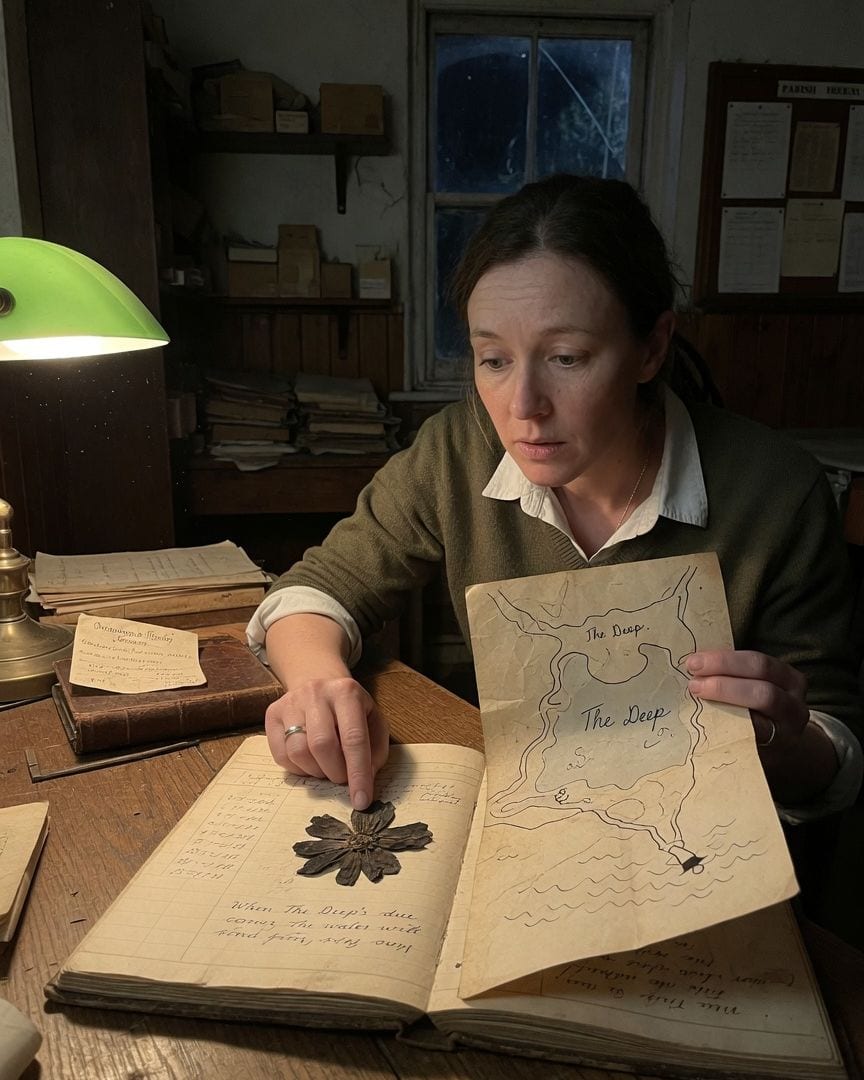
My new town's reservoir opened in '61. Its burial register lists forty-one drownings, all dated before the water was there.
I moved to Hensley for its quiet, where the local reservoir, built in 1961, was a point of pride. But while researching the town's history, I discovered an old burial register listing 'Drownings in Hensley Reservoir.' To my shock, all 41 names were dated decades before the reservoir even existed.
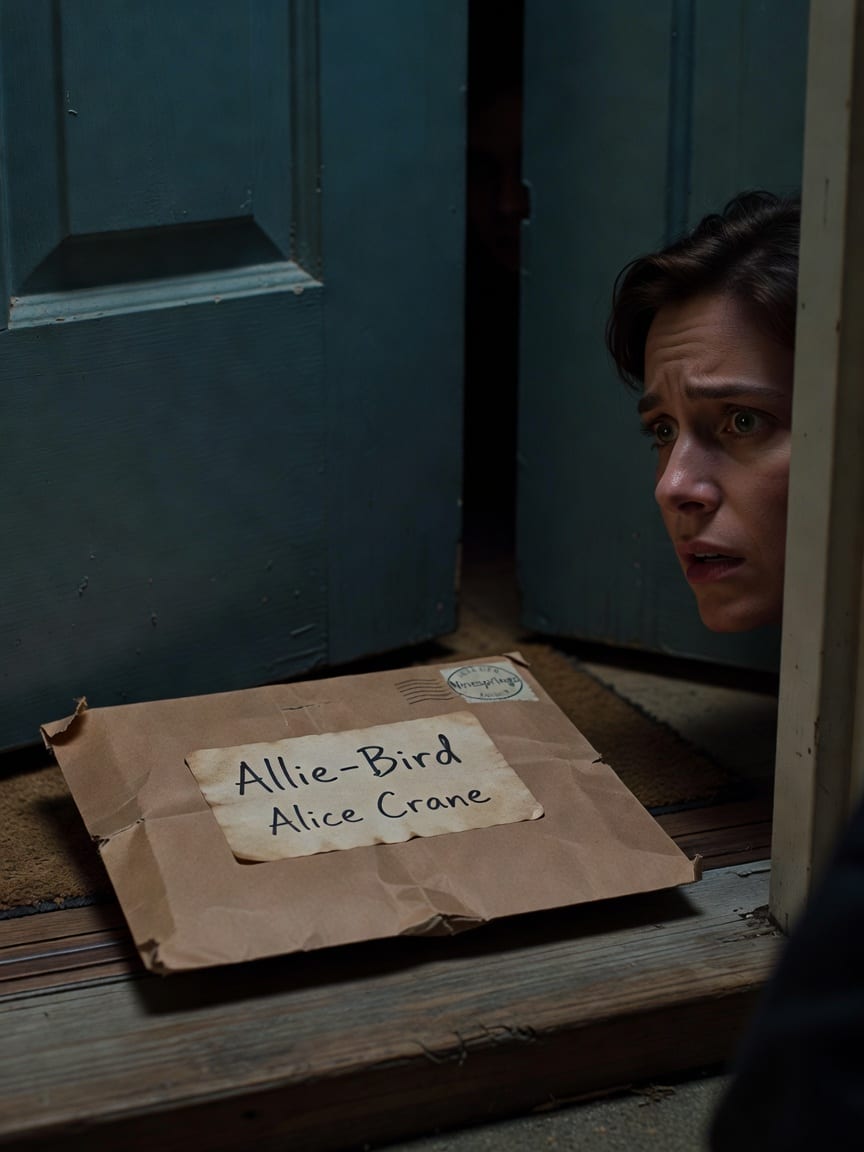
My parcel had my childhood nickname on it — a name only dead relatives used. Inside: a photo of my new front door, sent from an empty marsh the day I moved in.
I was unpacking in my new house when a strange parcel arrived with the moving truck. It held a photo of my own front door, postmarked from Ninesprings – a vast marshland with no roads or postal service. The impossible package was sent the very afternoon I moved in.
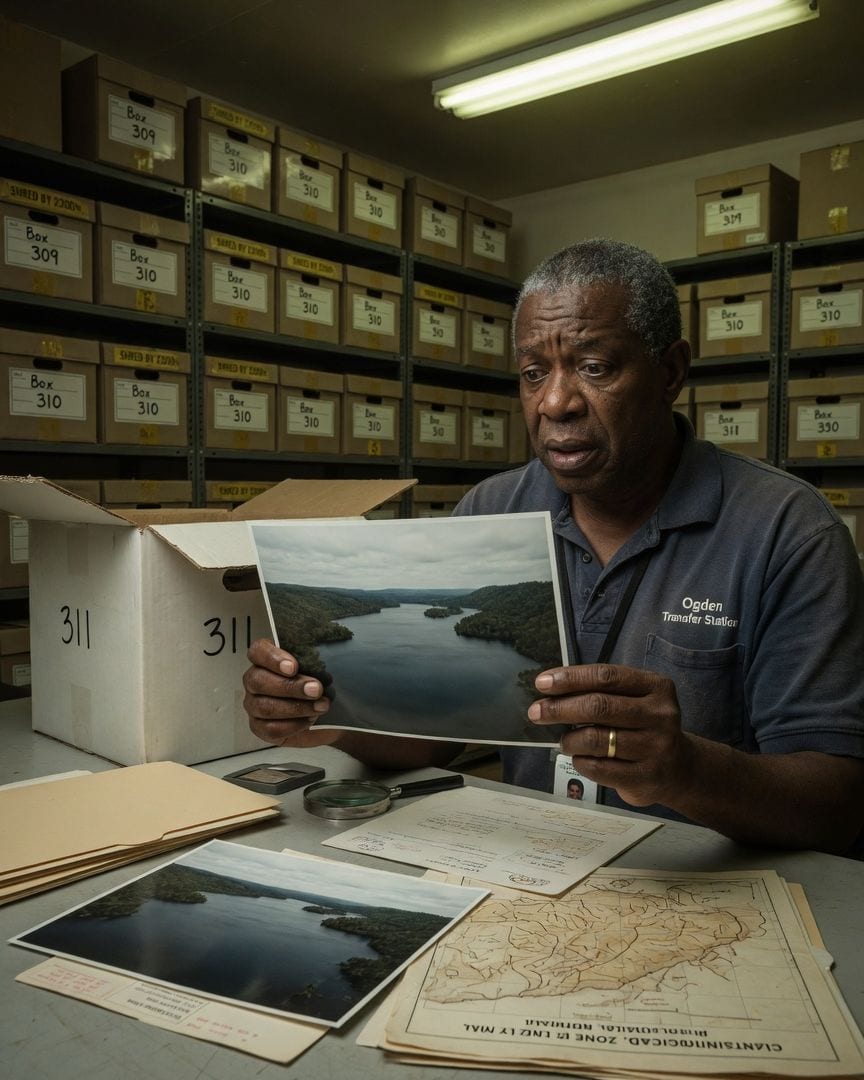
A transfer station archivist, six days from retirement, found 1968 aerial photos of a valley already a lake. Maps from 1967 labeled it a 'hydrological anomaly'.
Just six days from retirement, Wilmot Achebe, a man who had called the Ogden transfer station his second home for thirty years, began his final rotation. Slicing through a box of historical ephemera, he unearthed a folder marked 'Aerial Reconnaissance - VIETNAM - 1968'. Inside were ten glossy prints showing a lush river valley, completely submerged, a massive lake where no lake should have been. The dam for this valley wasn't built until a decade later. Wilmot's unease deepened when he found older maps, dated 1967, labeling the same site a 'CONTAINMENT ZONE - HYDROLOGICAL ANOMALY'.
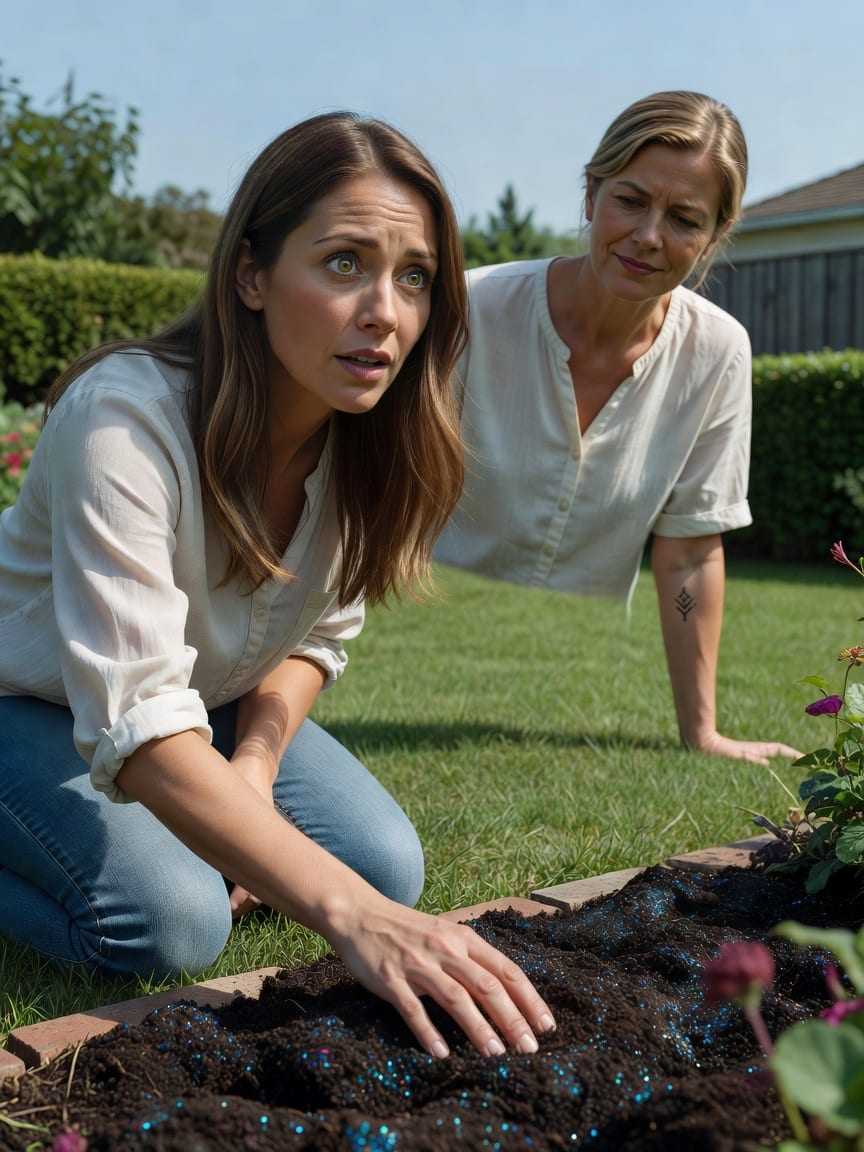
My family's grave 44 on the council map is marked "reused" from 1908. The sexton's old ledger confirms: "no new stone, no notice to kin." We never arranged it.
I always thought Grave 44 was solid ground, our family plot for generations. But a council map showed a sexton's note: 'grave 44 — reused under the standing arrangement, no new stone, no notice to kin.' Now, I've found an archive record for Plot 44, buried in 1905 under a completely different name.
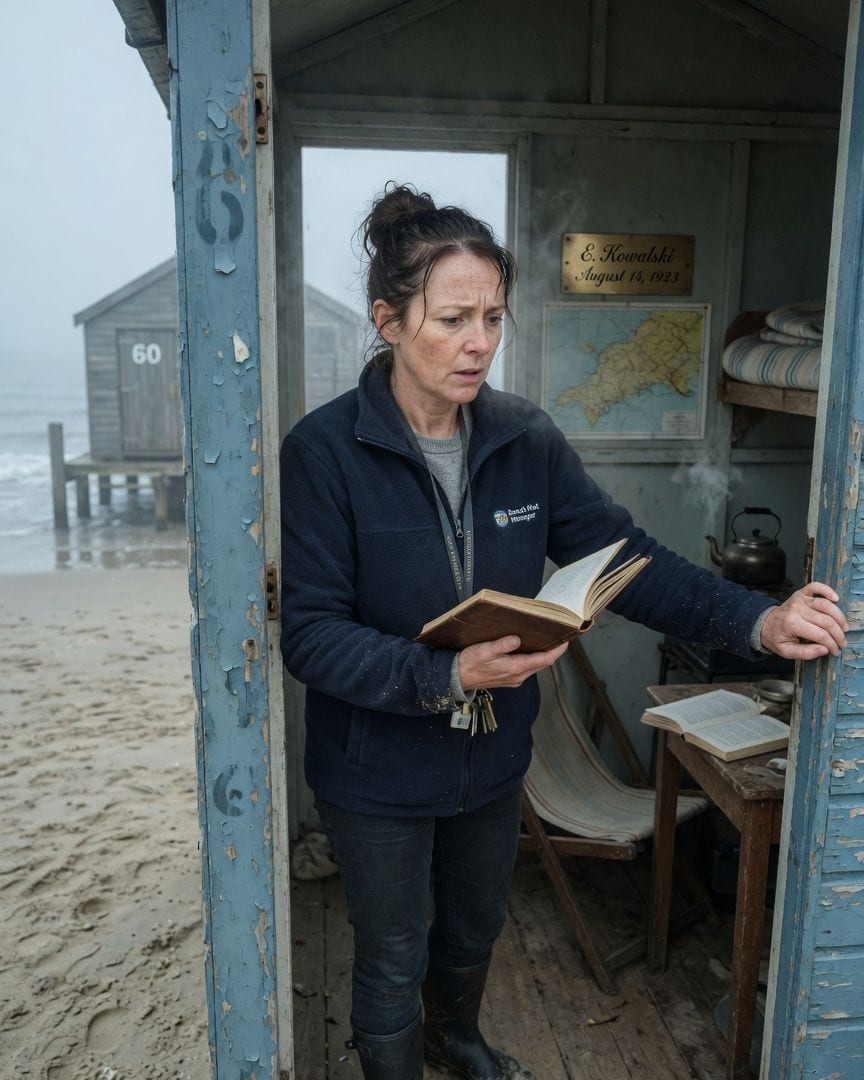
My beach hut row now has Hut 61, but it's not in my books. Inside, a kettle steams, and a plaque on the wall bears my family name, dated 1923.
As manager of the council's sixty beach huts for ten years, I knew my route blind. But on my usual morning walk, nestled against the groyne beyond Hut 60, stood a Hut 61. It looked decades old, just like the others, yet my ledger held no record of its existence.