My new town's reservoir opened in '61. Its burial register lists forty-one drownings, all dated before the water was there.
The quiet of Hensley had been its main appeal when I moved here in March. Tree-lined streets, friendly faces, and the serene expanse of the reservoir, shimmering under the spring sun.
Everyone, from the postman who brought my mail to Martha, my new neighbor, mentioned the reservoir was built in 1961. It was a point of local pride, a neat, concrete fact of Hensley’s modern history.
I heard it so many times it became ingrained.
Then, during a casual visit to the parish church, looking for anything about the town’s older buildings, I found it. The burial register.
It was a heavy, leather-bound volume, thick with age, tucked away on a dusty shelf in a side alcove. Flicking through its brittle, yellowed pages, I found the section dedicated to ‘Drownings in Hensley Reservoir.’
Name after name, forty-one in total. Each entry was meticulously recorded: a date, a name, sometimes a brief note like ‘swept away’ or ‘lost to the current.’ I skimmed the first few, then the next, and then I stopped.
Noticed something. Every single date, without exception, fell before 1961. Not one entry was dated after. The reservoir, everyone insisted, was built in '61.
But here, in faded ink, were dozens who had supposedly drowned in it decades before it even existed. It felt like a glitch in the fabric of things.
The sheer, impossible coherence of the dates, all clustered before the official opening, snagged in my mind like a burr. I told myself it had to be a misprint, a misplaced section, a different body of water.
Anything but what it seemed.
I spent the next few days trying to rationalize it. A misprint? Had the church kept records of a different, older reservoir with the same name? It seemed unlikely. I decided to press the issue gently.
I visited Oliver Whitaker, the parish archivist, a stoic man with thin spectacles who spent his afternoons cataloging donations in the quiet hum of the church office.
I asked him about older bodies of water in the area, maybe a natural lake that the reservoir had replaced. Oliver was polite, even a little distant, but ultimately unhelpful.
He insisted the current Hensley Reservoir was the only significant one. He offered to look for anything "unusual" in the church's less-accessed records, a vague promise that felt more like a polite brush-off.
A week later, his call came. His voice was flat, devoid of any inflection. He’d found an old town ledger, he said, dusty and forgotten in a crate. I met him at the vestry.
He didn't look at me directly when he handed it over, just gestured towards the open book on the old oak table. The ledger was heavy, its leather worn smooth.
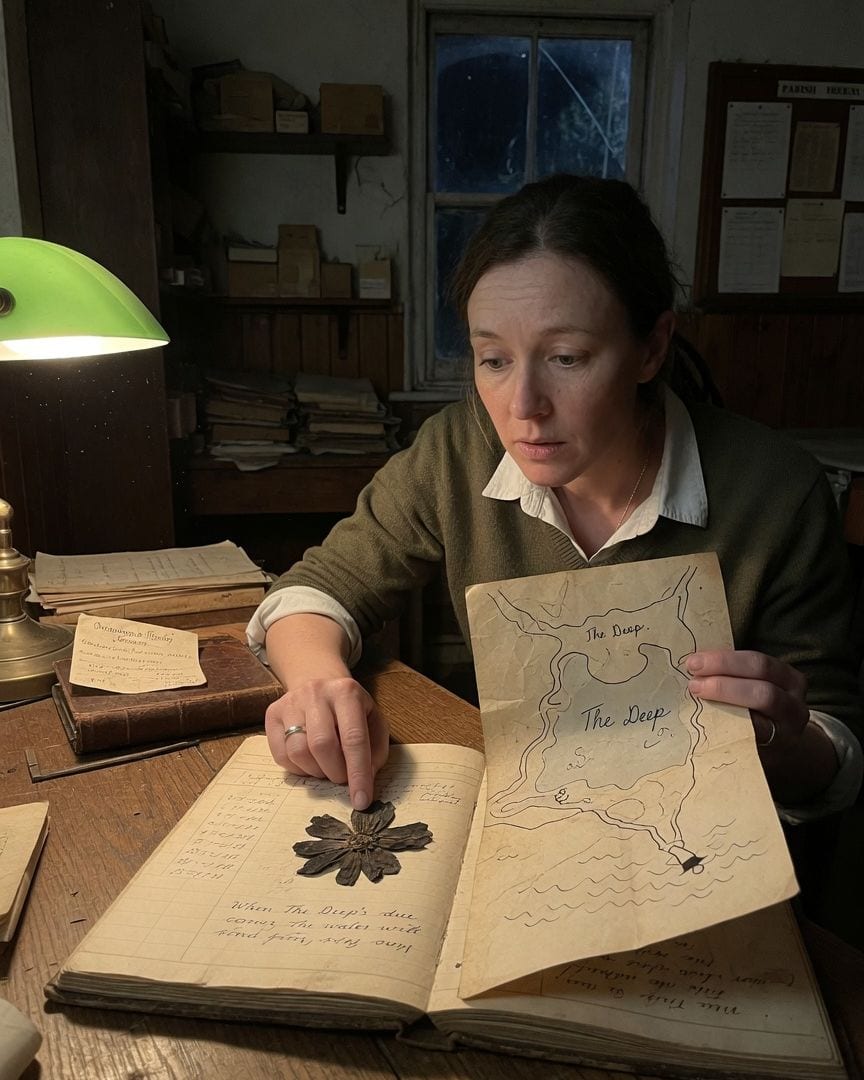
Inside, nestled between brittle pages describing livestock sales from the 1890s, was a single, pressed wildflower, dark and fragile, almost crumbling to dust at the edges.
Beneath it, a small, elegant hand had written: 'When The Deep's due comes, the water will find its own.'
I felt a prickle of unease. The surrounding entries in the ledger made no mention of a 'Deep,' or any water body other than the seasonal creek.
But the dates were consistent with the pre-1961 drownings I'd seen in the burial register. The ordinary explanation — a simple clerical error, or a quaint local turn of phrase — was starting to feel impossibly thin.
The air in the vestry felt suddenly heavy, stagnant, as if the dust itself was holding its breath.
As I carefully turned another page in the old ledger, something slipped out from between the leaves. It was a small, brittle sheet of parchment, folded multiple times, clearly a hand-drawn map. My fingers trembled slightly as I unfurled it.
What I saw made my breath catch in my throat. It was a rudimentary but unmistakable outline of the Hensley area.
And right where the modern reservoir lay, a large, irregularly shaped body of water was labeled in looping script: 'The Deep.' The map was dated 1880.
Next to the water, a crude, disturbing drawing depicted a stick figure being pulled into stylized, aggressive waves. The parchment was undeniably ancient, its ink faded and cracked, predating the official 1961 reservoir construction by decades.
The contradiction was no longer a vague historical anomaly; it was a physical, terrifying blueprint.
The map became my obsession. I spread it out on my kitchen table, tracing the faint lines, trying to make sense of the crude drawing. It wasn't just old; it felt wrong.
I cross-referenced the names from the parish register with old census records and town directories I found online, looking for patterns.
Many of the families listed in the drowning register — the ones who supposedly perished in the reservoir decades before it existed — had abruptly disappeared from Hensley's records around the time of the purported drownings.
No forwarding addresses, no new burials, no mention of them selling property. Just gone. It was like they had been erased.
I decided I needed to talk to someone who truly knew Hensley’s history, someone beyond Oliver’s carefully curated vagueness. I found Russell Yates, the town's unofficial historian, a man known for his encyclopedic knowledge of Hensley's past.
He ran a small, cluttered historical society out of his home, a charming but chaotic cottage overflowing with books and artifacts.
Russell, a kind-faced man with thick glasses and a perpetually rumpled tweed jacket, initially seemed delighted by my interest in local lore. He offered me tea, talked about the founding families, and shared anecdotes.
But when I hesitantly mentioned 'The Deep' and the impossible pre-1961 drownings, his jovial demeanor stiffened. His smile faltered. He mumbled about 'old wives' tales' and 'misinterpretations,' his gaze flitting nervously to the window overlooking his overgrown garden.
His hands, previously gesticulating with enthusiasm, became still, clasped tightly in his lap. The air in the cozy, cluttered room seemed to thicken, suddenly colder.
I pressed no further that day, sensing I had hit a nerve, but his reaction only solidified my conviction that I was on the right track.
Undeterred, I spent hours sifting through dusty archives at the town's small public library, the kind of place where the silence was only broken by the turning of pages and the soft hum of fluorescent lights.
I found fragmented newspaper clippings from the early 20th century, reporting 'unexplained disappearances' and 'tragic accidents' near what was then referred to only as 'the old lake' — always the same location as 'The Deep' on my map, always a vague, unsettling lack of detail about the bodies themselves.
No trace, no recovery, just a stark report of their vanishing.
As I dug deeper, a subtle shift occurred. It started innocently enough. I'd notice Russell Yates's familiar old Ford pickup parked a few streets away from my house, sometimes for hours.
I dismissed it as coincidence at first; it was a small town, after all. But then it happened too often, always just out of sight, yet always there.
One morning, as I went to get coffee, I found a handwritten note tucked under my windshield wiper. It was a heavy cream paper, folded once. The message was brief, stark: 'Some things are best left submerged.'
The handwriting was neat, almost elegant, but the message was chilling. My heart gave a frantic thump against my ribs. It felt like a prank, a nasty one, but the specific wording made my blood run cold.
It echoed the ‘Deep’ and the drownings. I tried to convince myself it was just a local kids' joke.
But the unease grew. Later that week, I returned home after a late trip to the library. My front door was ajar. I distinctly remembered locking it, rattling the handle twice, as I always did.
My heart hammered against my ribs, a frantic bird trapped in a cage, as I slowly pushed the door open, scanning each room with a growing dread. Nothing seemed out of place.
No sign of forced entry, no drawers pulled open, no valuables missing. But then I walked into the kitchen. On the counter, next to my coffee maker, lay a single, pressed wildflower.
Dark, brittle, identical to the one I'd found in the old ledger. It was a silent, unsettling declaration. Someone knew exactly what I was looking for, and they were letting me know I was being watched, my boundaries already breached.
The fear was no longer abstract; it was personal, tangible, and now, it was in my home. The air in my kitchen felt suddenly thin, as if something had just breathed it all out.
I confronted Russell Yates again. I didn't call; I drove straight to his house, the pressed flower clutched in my hand, its dried petals digging into my palm.
He opened the door, his kind face immediately going pale when he saw the flower. He stammered, denying any knowledge, his eyes darting from the flower to my face, then past me to the street. His hands wrung each other.
"This is from the ledger, Russell. And my door was open. Someone's sending me a message." I pressed him, recounting the impossible dates from the register, the disappearing families, the newspaper clippings, and the cryptic note in the ledger.
"What is 'The Deep'? And what does 'its due' mean?"
Russell finally sagged, defeat etched on his face, as if a great weight had settled on his shoulders. He closed the door behind me, the latch clicking with a finality that echoed in the sudden silence.
"It's not a story, Camille. It's… the water. Always been here, long before the reservoir." He spoke in hushed tones, almost a confession, his voice barely above a whisper, as if the walls themselves had ears. "The Deep, it demands.
A hunger. Every few decades, it wakes."
He explained that the 'drownings' weren't accidents but 'offerings.' The town, for generations, had quietly managed this terrible truth.
The modern reservoir, he said, was an attempt to contain 'The Deep,' to make it seem like a normal, safe body of water, to explain away the continuing disappearances.
But the pattern of disappearances continued, just under the surface of accepted reality.
The burial register, he admitted, was the town's way of explaining away the 'taken ones,' making them seem like tragic, mundane drownings, a way to account for them without revealing the awful truth.
He described hushed agreements among the elders, the careful avoidance of certain areas of the shore, the unspoken understanding that some lives had to be accounted for to keep the wider community safe.
The 'rule' wasn't just a warning; it was a system, a grim contract maintained for generations.
The coherence of it all — the impossible dates, the vanished families, the town's quiet evasiveness, Oliver Whitaker's distant politeness — snapped into horrifying focus. It wasn't a mistake; it was a deliberate, horrific practice. My breath hitched.
Russell, his voice a ragged whisper, pushed a heavy, leather-bound book across the table. It wasn't the burial register, but an old, faded calendar, its pages brittle with age, the corners dog-eared and worn from countless turns.
Specific dates were circled in red, spanning decades, marking a grim, repeating pattern. He pointed to it, a rhythm to the disappearances, a cycle. "The cycle," he choked out, his voice cracking. "It's due. Soon."
His finger trembled as he pointed to a date next month, circled prominently in faded red ink. Beneath it, in the same elegant script I'd seen in the ledger, a single name was written: 'Russell.' His own name.
My gaze was drawn to it, a cold dread seizing me, a knot tightening in my stomach.
Then, his eyes wide, terrified, he pointed to the line just below his own, where a name had been freshly added in stark pencil, standing out against the faded ink. 'Camille Lawson.'
His gaze locked with hers, a silent, desperate plea for understanding, for help, for anything. The calendar was not just a historical record; it was a prophecy, and I was now irrevocably written into its grim, unfolding future.
Russell slumped back in his chair, utterly defeated. "Your digging... it stirred things up. The Deep doesn't like being seen. It doesn't like its patterns disturbed."
He explained that the town elders, Oliver Whitaker among them, were not cruel monsters, but custodians of the cycle, maintaining a grim tradition.
They didn't choose victims in a malicious sense, but rather, they identified those who, through circumstance or fate, seemed to be 'called' by the water, or those whose disappearance would cause the least disruption to the town's delicate peace.
It was a grim, pragmatic sacrifice, he insisted, to ensure the rest of Hensley remained untouched.
The names in the register, the vague newspaper clippings, the old map of 'The Deep' – they were all pieces of a monstrous, generations-long agreement.
The reservoir wasn't built to stop 'The Deep,' but to contain its physical manifestation, making it easier to manage the 'offerings' and keep up appearances. The cycle was relentless, Russell said, an ancient rhythm that could not be broken.
He had always known his time would come; he had seen the signs, understood the whispers. But my presence, my relentless investigation, had complicated the delicate balance, perhaps even hastened his own inclusion.
The water needed its due, and now, with Russell's impending 'offering' disrupted by my interference, it seemed to have found a new name to fill the void.
The pattern snapped into place, every detail clicking with sickening precision: I wasn't just an observer anymore; I was now part of the equation, a potential replacement. The room felt cold, the air thick with unspoken history.
I understood. The town wasn't trying to save me; they were trying to maintain the cycle, to appease 'The Deep.' I left Russell's house, the heavy leather calendar still open in my mind's eye.
The air outside felt heavy, the familiar quiet of Hensley now oppressive, suffocating. As I got into my car, I saw Oliver Whitaker standing on his porch a few houses down, watching me.
He didn't wave, didn't smile, just stood there, his gaze calm, unsettlingly resolved, just as Russell had been before his breakdown. He nodded almost imperceptibly, a silent acknowledgment of my new, terrifying place in their grim tradition.
I knew I had to get out. My hands trembled on the steering wheel, but a cold determination settled in my gut.
Driving through town, the streets seemed to have emptied, yet I saw others – faces I now recognized from the historical society, the bakery, the library – standing quietly on their lawns, their gazes following my car.
There was no aggression, no shouting, just a quiet, implacable presence, a collective will. They were not chasing me; they were simply there, a silent, living wall of agreement, watching.
As I approached the town limits, my heart hammering against my ribs, I glanced in my rearview mirror.
A line of cars, not speeding, not hurrying, but steadily following, a silent procession of the implicated, moving with the slow, inevitable pace of a funeral cortege.
I slammed my foot down, the engine screaming as I surged onto the highway, leaving Hensley behind in a blur of trees and quiet, knowing eyes.
I didn't look back, the image of my name on the calendar burned into my mind.
I never returned to Hensley. My small house, with its untouched belongings, stood empty for months, then years, a silent testament to a life abruptly abandoned.
No one from the town ever called, no inquiries were made about my sudden departure.
The local paper, which I still scanned obsessively online for months after, ran a brief, vague notice about Russell Yates's 'unexplained disappearance' a few weeks later, attributing it to natural causes.
Hensley remained picturesque, its secrets undisturbed, its community quietly intact. The reservoir shimmered under the sun, reflecting only the sky, its surface still and inviting, hiding whatever slept beneath.
I live in a city now, the constant hum of traffic a comforting shield against the quiet.
But sometimes, in the deepest part of the night, when the city's sounds fade to a low murmur, a resonant thrum seems to vibrate through the floorboards, a sound like an immense, hungry body of water, waiting.
It pulls at the edges of my hearing, a whisper just beneath the surface of silence. A cold, knowing certainty settles over me. It found Russell. It knows where I am.
The Hensley Parish burial register was found, open to a new page, on the vestry desk. The date for next month was already filled in. Beneath it, a single name, written in neat, clear script: "Camille Lawson."
If this one got to you
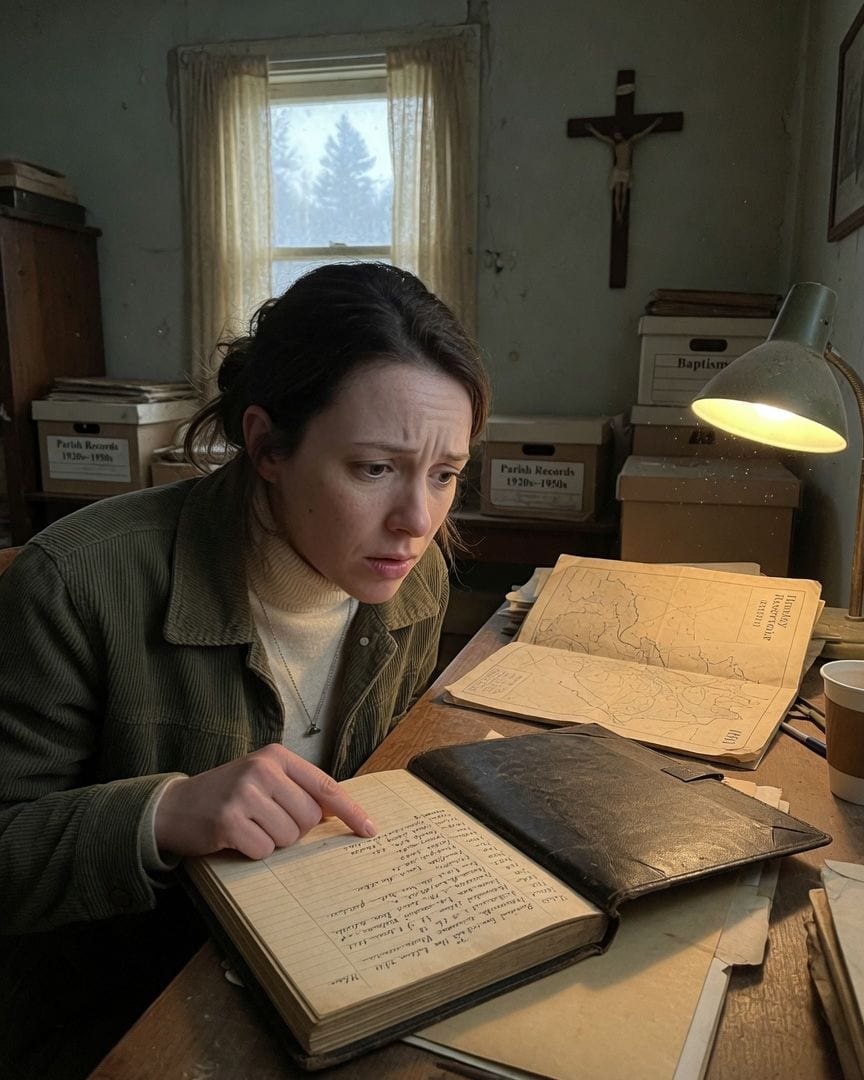
Hensley's reservoir was built in 1961, everyone says. The old church register lists forty-one drownings in it, every single one dated before 1961.
I moved to Hensley for a fresh start, helping at the historical society. While sorting old records, I found 41 drownings in Hensley Reservoir, all dated years before it was supposedly built in 1961. Later, an 1880 plat map confirmed it: the reservoir was always here.
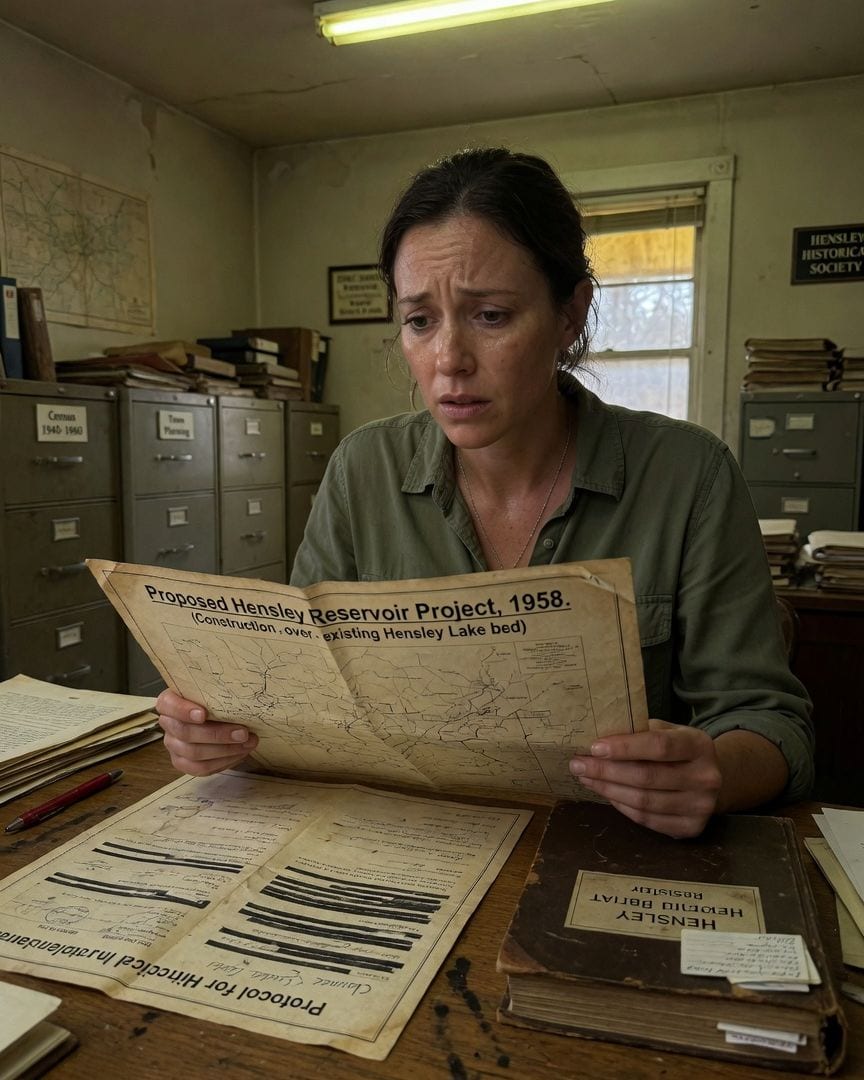
Our town reservoir was finished in 1961. But the old church records show forty-one people drowned in that same reservoir, all decades before it was ever built.
I moved to Hensley, a quiet town where everyone proudly mentioned its reservoir, built in 1961. As a history buff, I found the old parish burial register. It listed 41 people who drowned in 'Hensley Reservoir' between 1903 and 1959, decades before the town says it even existed.
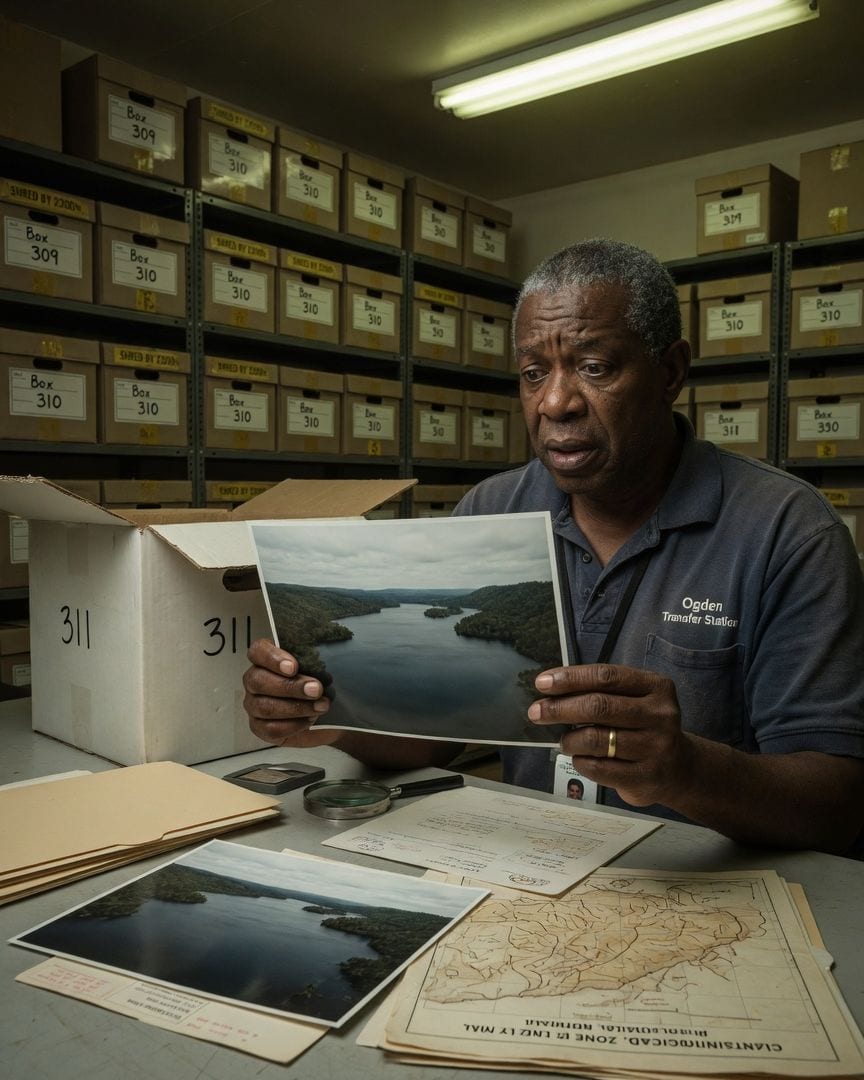
A transfer station archivist, six days from retirement, found 1968 aerial photos of a valley already a lake. Maps from 1967 labeled it a 'hydrological anomaly'.
Just six days from retirement, Wilmot Achebe, a man who had called the Ogden transfer station his second home for thirty years, began his final rotation. Slicing through a box of historical ephemera, he unearthed a folder marked 'Aerial Reconnaissance - VIETNAM - 1968'. Inside were ten glossy prints showing a lush river valley, completely submerged, a massive lake where no lake should have been. The dam for this valley wasn't built until a decade later. Wilmot's unease deepened when he found older maps, dated 1967, labeling the same site a 'CONTAINMENT ZONE - HYDROLOGICAL ANOMALY'.
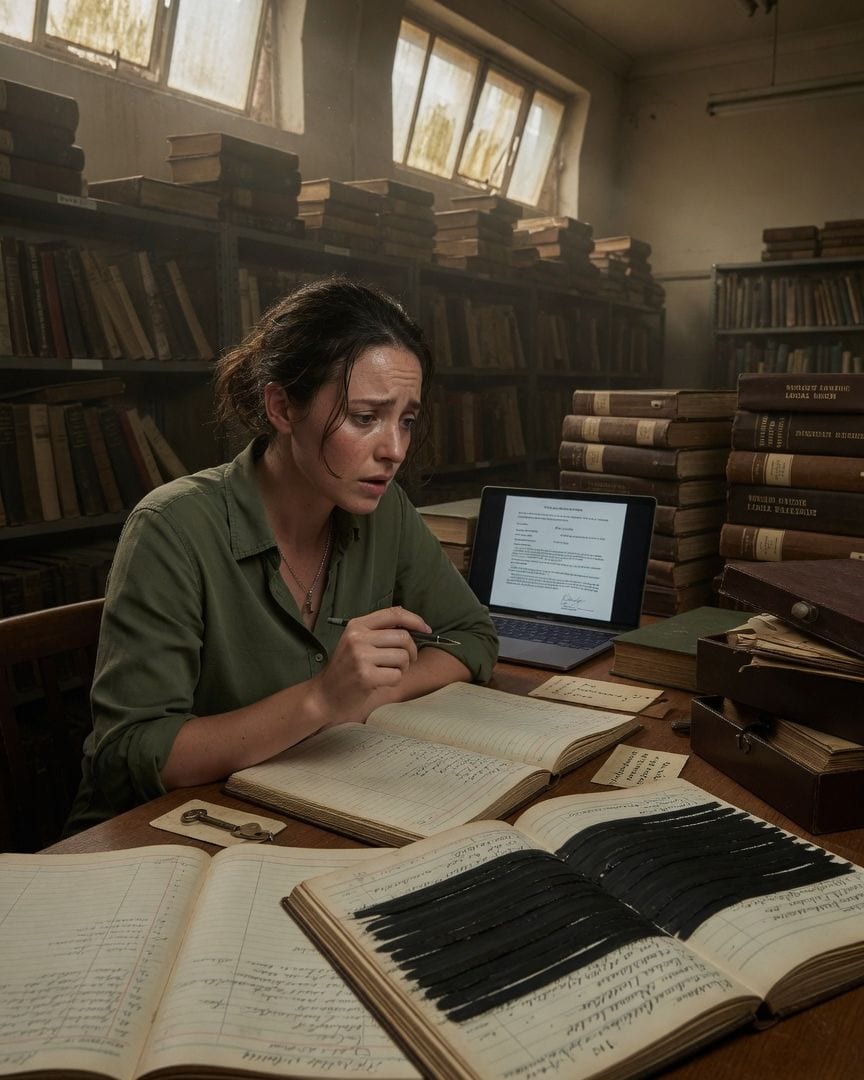
My grandmother’s name is on a blacked-out line from a 1954 drowning inquest, on our street, with a note: 'do not send a second notice.'
Transcribing old inquest registers in the quiet archive was a routine task, until I found a 1954 entry for an accidental drowning. The next of kin line was savagely blacked out, but the faint impression underneath named Patricia Kingsley, my grandmother. Her address was listed on Weir Lane, eleven years before she ever lived there, alongside a chilling note: 'do not send the notice a second time.'
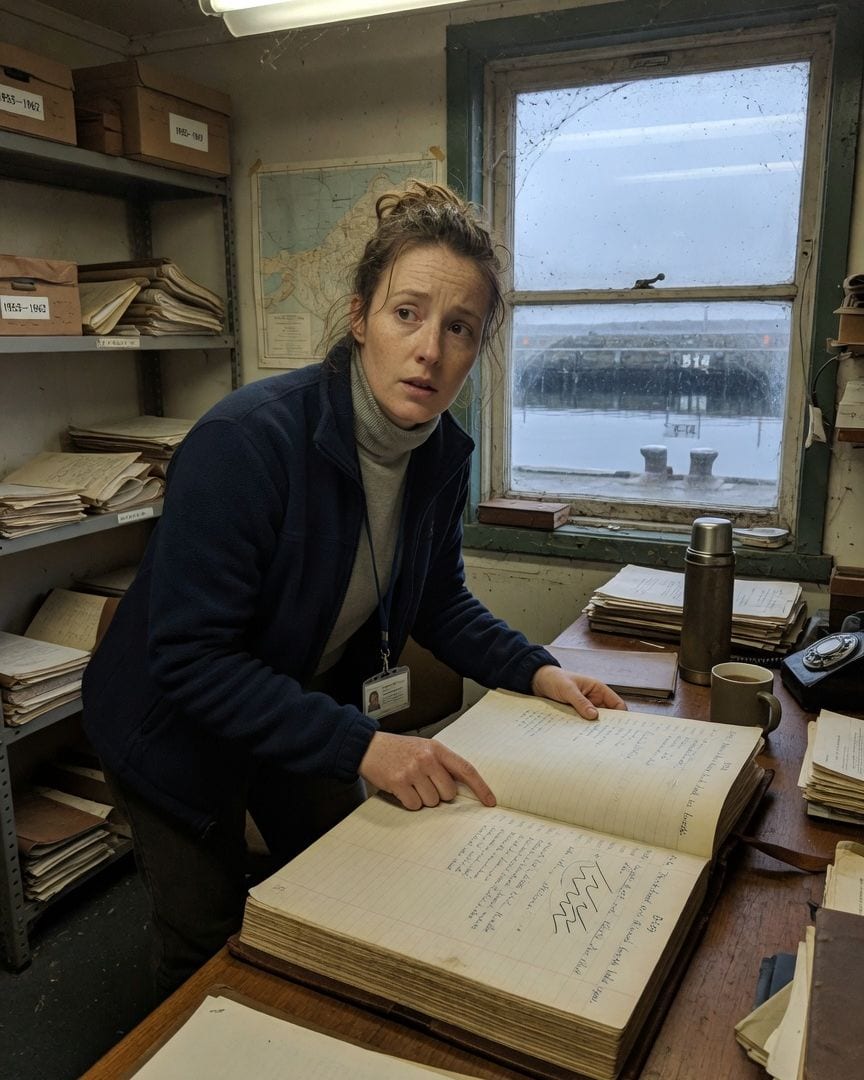
My harbour ledger shows Berth 14 let to a trawler every few years, but it's always empty. Each entry reads 'not returned to sea, berth held open'.
My job as Harbour Master's Assistant is managing the berth ledger, tracking every vessel. But Berth 14 holds a strange paradox: my book says it's let, yet it's always empty. Each entry for that berth closes with the same cryptic note – 'not returned to sea, berth held open' – a pattern stretching back to 1955.
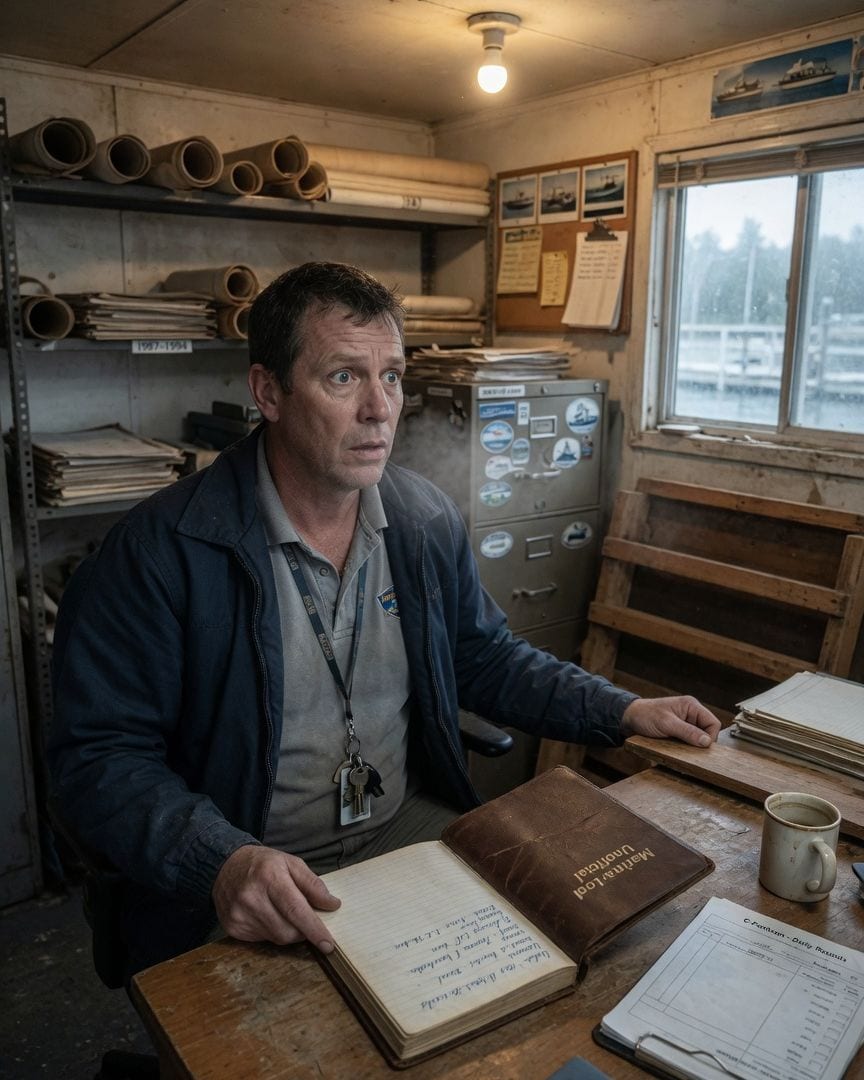
My C-Pontoon goes an extra thirty feet to Berth 61, with a sleek, dark yacht I've never seen. It's drawing power, but doesn't exist on any records.
As harbormaster, my morning rounds are always routine, checking the sixty berths on our C-Pontoon. But one chilly morning, beyond the last numbered post, C-60, I found the pontoon inexplicably extended by another thirty feet. It ended in a new numbered post: Berth 61, a physical fact that simply could not exist.