An official record thanked me for two weeks of jury duty last spring, in a courthouse four hundred miles away — on days I never left my office. The clerk has my signed oath.
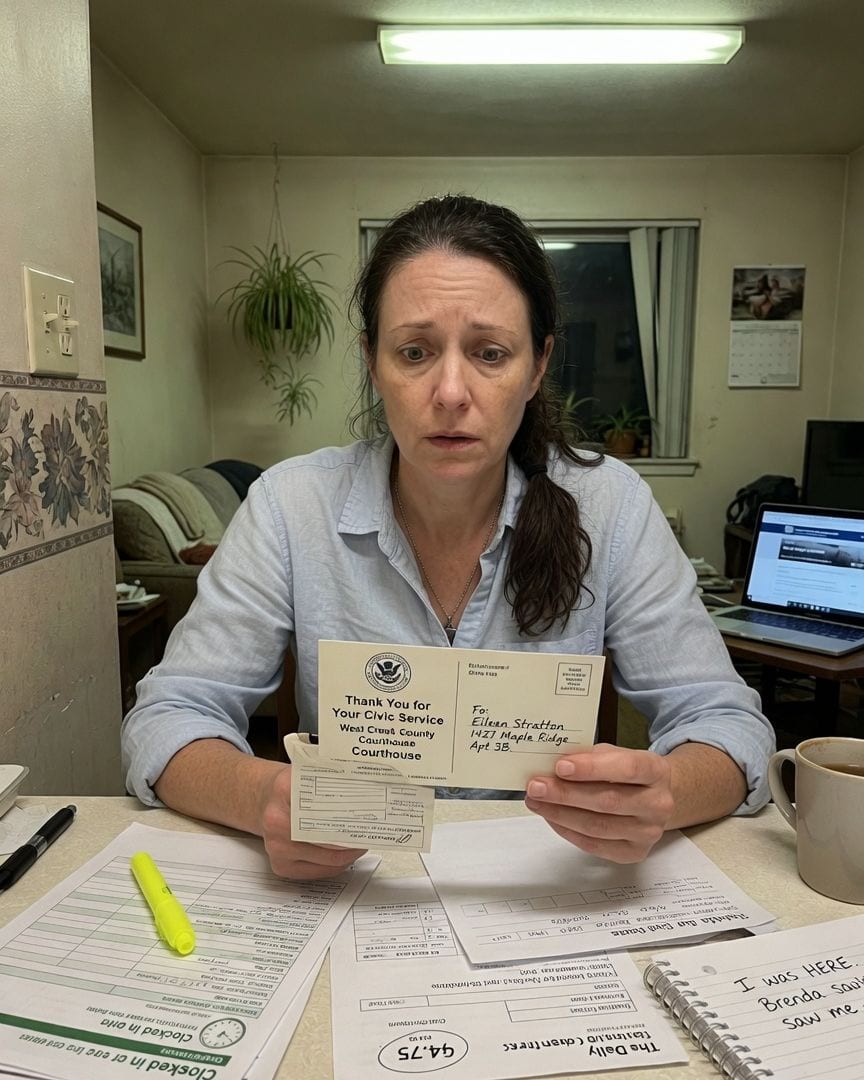
The jury service record was a glossy, official-looking postcard, addressed to me, Eileen Stratton, thanking me for my recent civic duty. It detailed a two-week trial, last spring, in a courthouse four hundred miles away.
My first thought was a mistake, a clerical error, the kind of junk mail you toss without a second thought. Except, it wasn't a solicitation. It was a formal thank you.
I pulled up my work timesheets for those exact dates: clocked in, clocked out, every single day, right here in my city office. My manager, Brenda, confirmed it, frowning at the postcard. “You were here, Eileen.
I would remember if you took two weeks off for jury duty, especially that far away.” She chuckled, a sound that felt brittle.
Yet, when I called the clerk's office in West Creek, that distant town, the man who answered, Hans Romano, was politely insistent. He had a voice like worn leather, steady and unhurried.
He confirmed my service, the dates, even the court number. He said they had my signed juror oath form, my badge sign-ins each morning.
He even mentioned a note from the bailiff about a parking question I’d supposedly asked on the second morning, something about the overflow lot on Elm Street. A conversation I have no memory of, because it never happened.
Four hundred miles felt like a journey to another dimension, but I drove. The courthouse was a squat, limestone building, older than anything in my own city.
Hans Romano, a man with tired eyes and an air of quiet efficiency, met me in a small, windowless office. He retrieved a file from a deep drawer. There it was: 'Stratton, Eileen.'
My name, my address, and a signature on the juror oath form that was undeniably mine.
My own looping 'E', the sharp slant of the 'S' that was unique to me, even the small flourish at the end of the 'n'. I stared at it, a cold knot tightening in my stomach.
It looked like I had signed it yesterday.
"This isn't my signature," I said, my voice thin, reedy.
Hans just shrugged, a sympathetic but firm gesture. "It matches our records, Ms. Stratton. Every detail." He pointed to an official stamp, a date, a neatly written juror number.
I traced the ink with my finger, feeling a faint, almost imperceptible texture difference on the paper, a ghost of something underneath, a slight raised quality, but it was too subtle to be sure.
It could have been the ink, or the paper itself. My hand was shaking. He added, "If you're looking for a wider pattern, the county archives might have older records, perhaps from your family.
Sometimes these things run in families, you know. An unusual name, a civic-minded ancestor." The suggestion was absurd; my family was from hundreds of miles in the opposite direction, and it planted a seed of unease that burrowed deep.
The clerk’s unwavering certainty, coupled with my own signature staring back at me, left me reeling. Back home, the fluorescent lights of my apartment felt too bright, too stark.
I scoured my bank and credit card statements for any activity during those two weeks, hoping for some explanation, any kind of overlap or mistake. Nothing obvious at first. Just my usual grocery runs, my gas purchases, my rent.
My real life.
Then, buried amidst my regular transactions, I found it. A $4.75 charge from 'The Daily Grind Coffee' in West Creek, dated a Tuesday afternoon, right in the middle of my alleged jury service. My credit card number, my bank.
A timestamp: 3:14 PM. I never went to West Creek. I never bought coffee there. The receipt number, the precise time, it all seemed perfectly legitimate, yet it was impossible.
My own timeline was solid, but the world's record was now actively contradicting my very presence.
The coffee charge was the breaking point. This wasn't just a bureaucratic error; it was something actively fabricating my presence, constructing details of a life that wasn't mine. I needed proof.
I hired Reginald Sterling, a retired forensic document examiner with a reputation for meticulousness.
He examined the juror oath form Hans had given me, the coffee receipt, even a dozen examples of my known signatures from old leases and bank documents.
Days later, his report arrived, delivered in a stiff, official envelope. I tore it open, my hands slick with apprehension. 'Ms. Stratton,' he’d written, 'the signatures are unequivocally yours. Not forgeries.
However, there's a peculiar quality—an almost mechanical precision to the fluency, as if practiced to perfection, yet with a faint underlying hesitation in the pressure points. I've never seen anything quite like it.'
His words chilled me more than if he’d declared them fakes. Unequivocally yours. But how?
Armed with this, I returned to West Creek, this time heading straight for the County Archives. The building was even older than the courthouse, smelling of dust and dried paper.
Constance Delaney, the archivist, was a woman with kind eyes and a perfectly coiffed silver bun, a floral brooch pinned to her neat cardigan. She listened patiently to my convoluted story about jury duty, coffee, and a handwriting expert.
"Records can be funny things," she murmured, her voice soft and even, showing me to a dusty microfiche reader. She was helpful, almost excessively so, guiding me through old census data, property deeds, birth records for early West Creek residents.
But subtly, almost imperceptibly, she steered me away from certain, less-trafficked sections, particularly a row of heavy, unmarked ledgers behind a locked, glass-fronted cabinet labeled 'Auxiliary Records'.
A cold draft seemed to emanate from that cabinet, despite the stuffy warmth of the archive.
The next day, a small, unmarked envelope appeared on my desk at work, tucked beneath my keyboard. It wasn't addressed to me, but my name was visible through a small, clear window on the front, typed.
Inside was a single, neatly typed note, stark against the white paper: 'Some records are best left undisturbed, Ms. Stratton. Especially those concerning West Creek.'
There was no sender, no digital trace, just the crisp paper and the precise, impersonal font. It felt like a polite warning, not a threat, but the implication was clear: someone knew I was digging.
My heart hammered, a frantic drum against my ribs. I immediately thought of Constance, her calm demeanor, the way her eyes seemed to track me through the shelves of documents in the archives, even as she smiled.
That evening, as I was leaving my apartment building, fumbling for my keys, a familiar silver sedan pulled away from the curb across the street. It was Constance's car. She rolled down the window, her expression serene.
She waved, a small, knowing smile on her face. "Just passing through, Eileen," she called, her voice clear and untroubled across the asphalt. "Thought I saw your light on. Don't work too late." The encounter left me cold.
She wasn't just 'passing through.' She was watching.
I confronted Constance the next morning, not at the archives, but at a quiet coffee shop on the edge of West Creek. The steam rising from my black coffee seemed to hover in the air, thick and opaque.
I laid out the handwriting expert’s report, the jury summons, the credit card statement, and finally, the anonymous note.
Her smile didn't falter, but her eyes, usually so serene, held a flicker of something I couldn't quite place—resignation, perhaps, or a deep, weary patience.
"Eileen," she began, stirring her tea slowly, a delicate silver spoon clinking against porcelain. "There are... processes. Long-standing ones. Sometimes, to maintain the integrity of public records, to smooth out discrepancies or fill in gaps, certain 'corrections' are made."
She spoke calmly, as if discussing library overdue fines, the sound of her spoon the only movement in the quiet cafe. "It's not malicious. It’s about ensuring a complete, coherent civic history.
Especially in smaller, older communities where records can be sparse, incomplete. A person’s journey through life, from birth to civic engagement, should be fully reflected."
I pressed her, my voice tight. "Corrections? You mean fabricated entries? Signatures?"
She nodded slowly, taking a sip of tea. "Generated, yes. By an older, highly specialized system. A way to ensure no one slips through the cracks of documentation.
To make sure every citizen is accounted for, that their public record tells a continuous story, even if a few chapters needed... filling in."
My mind raced, struggling to process her calm admission. "Am I… am I one of these 'discrepancies'? Is that why my name is showing up in West Creek, doing things I never did?"
Constance took another sip of her tea, her gaze distant, fixed on a spot beyond my shoulder. "It's happened to others. Over many years. People whose records might have been... incomplete, for various reasons.
It's a way to ensure they are fully accounted for, within the fabric of the community, within the historical narrative." The phrase 'fully accounted for' sent a shiver down my spine.
It was a truth, but one that twisted everything I knew about my own life, turning my very existence into a bureaucratic formality.
The 'truth' Constance offered was chillingly bureaucratic, yet it explained the impossible signatures and records. But it didn't explain the coffee purchase. That felt too personal, too trivial for 'civic harmonization.' My $4.75 coffee at The Daily Grind.
It gnawed at me.
"Where are these 'corrections' recorded?" I asked, my voice barely a whisper, a desperate plea for something tangible, something I could hold. "The source documents for these... additions."
Constance hesitated, her calm facade cracking for the first time. She looked around the coffee shop, her eyes flicking to the other patrons, then back at me, a strange, almost regretful expression on her face.
"Some things are best not seen, Eileen. For your own peace of mind." But I wouldn't back down. My peace of mind was already shattered, replaced by a cold, hollow dread.
Finally, with a sigh that seemed to carry the weight of decades, she gave in. "In the Auxiliary Records. Section 7-B. Behind the false panel in the glass cabinet. Top shelf, far left."
Back at the archives, my hands trembling, I found the cabinet. It was exactly as I remembered, locked. The 'Auxiliary Records' label seemed to mock me. I found the latch, hidden along the side of the wooden frame.
The false panel slid open with a soft groan, revealing a hidden compartment, dark and smelling of aged wood. Inside, nestled amongst other forgotten things, was a single, heavy, leather-bound ledger.
It was titled, in elegant, faded handwritten script: 'Auxiliary Register - Civic Harmonization.' I pulled it out, its weight a physical presence in my arms. The leather was cool and smooth beneath my fingers.
I opened it, and on the very first page, in familiar looping script, I saw my own name: 'Stratton, Eileen.' Beneath it, a list of entries, not for jury duty, but for small, mundane things from my childhood.
My library card application, West Creek Branch, 1995. A permission slip for a school field trip, 1997. A small donation, Town Animal Shelter, 1998. All dated from West Creek. All in handwriting that was unmistakably mine.
A slow, cold dread spread through me as I realized these aren't civic duties—these are fragments of a childhood she never lived in a town she never visited, meticulously recorded as if they were hers.
Constance met my gaze without flinching when I looked up from the ledger, my mind reeling.
"The system identified you as a candidate, Eileen," she explained, her voice devoid of emotion as she gestured to the open book in my trembling hands. "A minor administrative oversight from your birth certificate, long before my time.
A slight gap, a missing detail in your initial public record. Your identity was then utilized to fill small, unremarkable gaps in the town's public record. Not just civic duties, but the small, personal details that make up a life.
To create a 'smoother,' more complete civic history for West Creek. The signatures are generated by a highly sophisticated, now decommissioned, automated handwriting mimicry system. It was never meant to harm. Just to ensure order, to create a consistent narrative."
The coffee purchase, the jury duty, the bailiff’s parking question—every impossible detail now clicked into place, not as a glitch, but as part of a meticulously crafted, fabricated life, woven into the fabric of this town.
"I am a Custodian," Constance continued, her posture rigid, "charged with maintaining the integrity of this harmonized record. It ensures that every citizen, even those with minor discrepancies, has a complete and documented presence within the community."
The coherence was terrifying. It wasn't some grand conspiracy; it was a cold, bureaucratic solution to administrative untidiness, using real people as unwitting placeholders.
The full truth landed with a sickening thud. My identity, my very presence, had been co-opted, not by a villain, but by a system.
Constance, seeing the dawning horror in my eyes, reached for the ledger, her hand moving slowly, deliberately. "You understand now, Eileen. This knowledge must remain here. For the system's integrity. For the harmony."
But I couldn't let it. My hands trembled as I pulled out my phone, the plastic cold against my clammy skin.
I fumbled with the camera app, snapping furious photos of the ledger pages: my name, the fabricated childhood entries, the details of the jury duty, even the specific entry for the coffee shop.
Each click of the shutter felt like a defiant scream against the quiet, insidious order she represented.
Constance lunged, not with anger, but with a desperate, almost maternal urgency, her silver bun dislodged slightly. "Eileen, no! You'll disrupt everything! You can't!"
She tried to snatch the phone, her usually serene face contorted with a quiet panic I hadn't thought possible. I twisted away, grabbing the heavy ledger itself, using its weight to create distance between us, swinging it like a shield.
"This is my life!" I yelled, the words raw and unfamiliar, cracking in the sudden silence of the archive. "You can't just take it! You can't make it up!"
I bolted, scrambling past shelves of forgotten histories, the weight of the ledger in my arms, the camera clutched tight in my free hand.
Constance called my name, her voice echoing through the silent stacks, a plea for order, for the preservation of her impossible records, a sound like glass breaking.
I didn't look back, bursting out through the heavy double doors into the blinding sunlight, clutching the physical proof of a secret that no one would ever believe.
I went to the local police, my photos of the 'Auxiliary Register' blurring slightly in my shaking hands. They listened, politely. They logged my report. But the blank stares, the sympathetic murmurs about 'stress' and 'misunderstandings,' confirmed my fears.
They saw only a distraught woman with an improbable story, an overactive imagination, perhaps needing a break.
Reginald Sterling, the handwriting expert, was fascinated by the ledger's implications but could offer no legal recourse without undeniable proof of fraud, something the 'harmonization' system, by its very design, resisted, a ghost in the machine.
Constance Delaney remained at the archives, undisturbed, her car still in the parking lot. The system, whatever its true scope, continued its quiet work. No one believed me, not truly.
The cost of my escape was the burden of an unbelievable truth.
I changed my phone number, moved to a new apartment in a different city, tried to erase the traces of a life that wasn't entirely mine.
But the knowledge was a constant companion, a cold whisper at the edge of my thoughts.
Every official document, every form, every piece of mail, became a potential threat, a reminder that somewhere, in some forgotten ledger, another version of me might be living out small, unremarkable moments.
A fictitious donation to a charity, a library book checked out, a coffee purchased. A life, meticulously constructed without my consent.
I still carry the photos of the register on my phone, the tangible proof of my fractured identity, a secret truth I can never share without sounding insane.
I still check the mail every morning, looking for the name that isn't quite mine.
If this one got to you
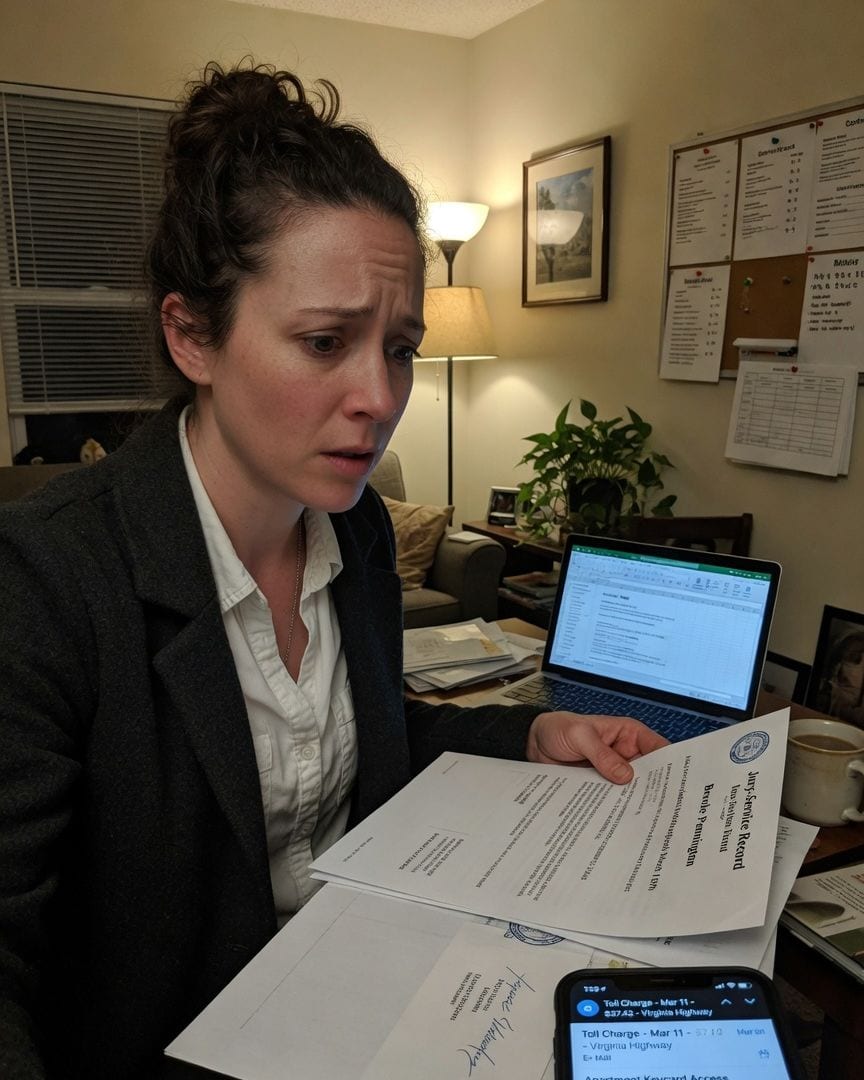
My signed juror oath placed me four hundred miles away. I was at my desk, on the clock, every day of that trial.
Brooke Pennington receives a jury service record for a trial she never attended, complete with her own signature on the oath. When her apartment's lobby camera footage shows her entering her unit on a day she was hundreds of miles away, the chilling reality sets in: someone else is living parts of her life.
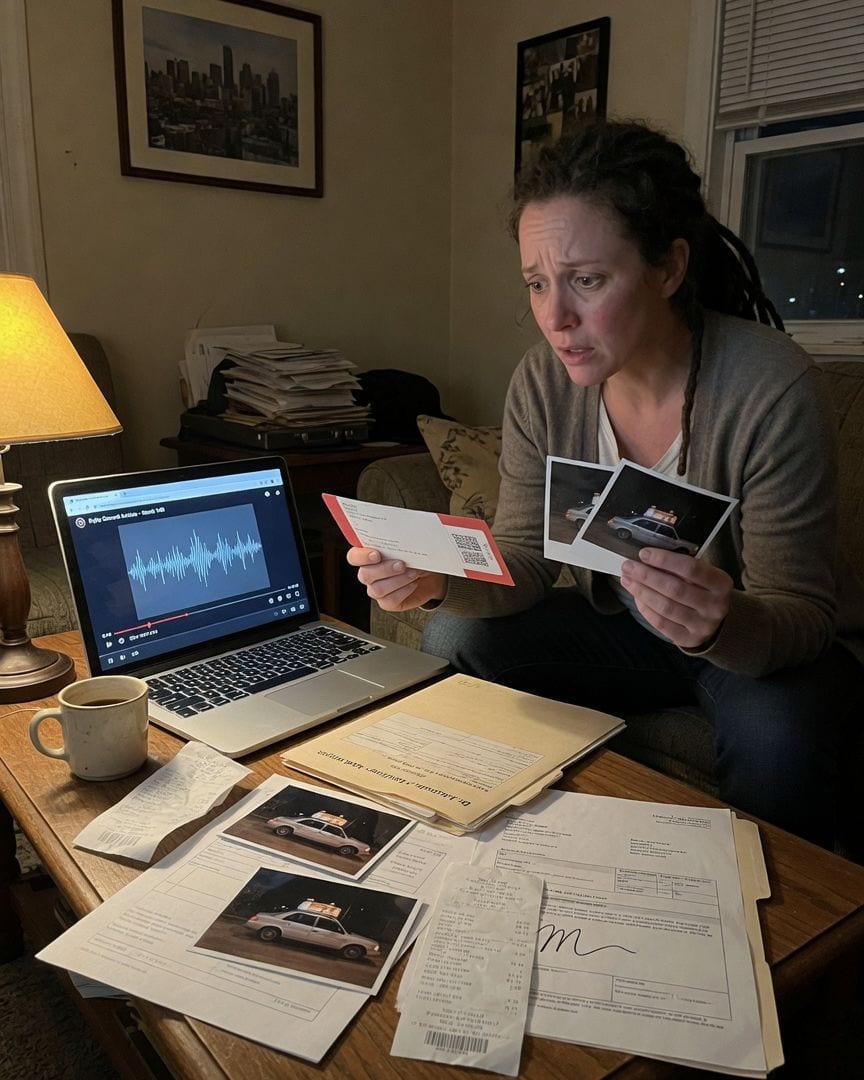
My car ran a red light at 9:41 PM in a town I've never been. The photos show my exact plate, my roof rack. I was speaking at city council, across the state.
A red-light camera ticket arrived for my car, timestamped for a downtown intersection I'd never driven through. But I knew, with chilling certainty, that I was three hundred miles away, speaking at a city council meeting at that exact moment.
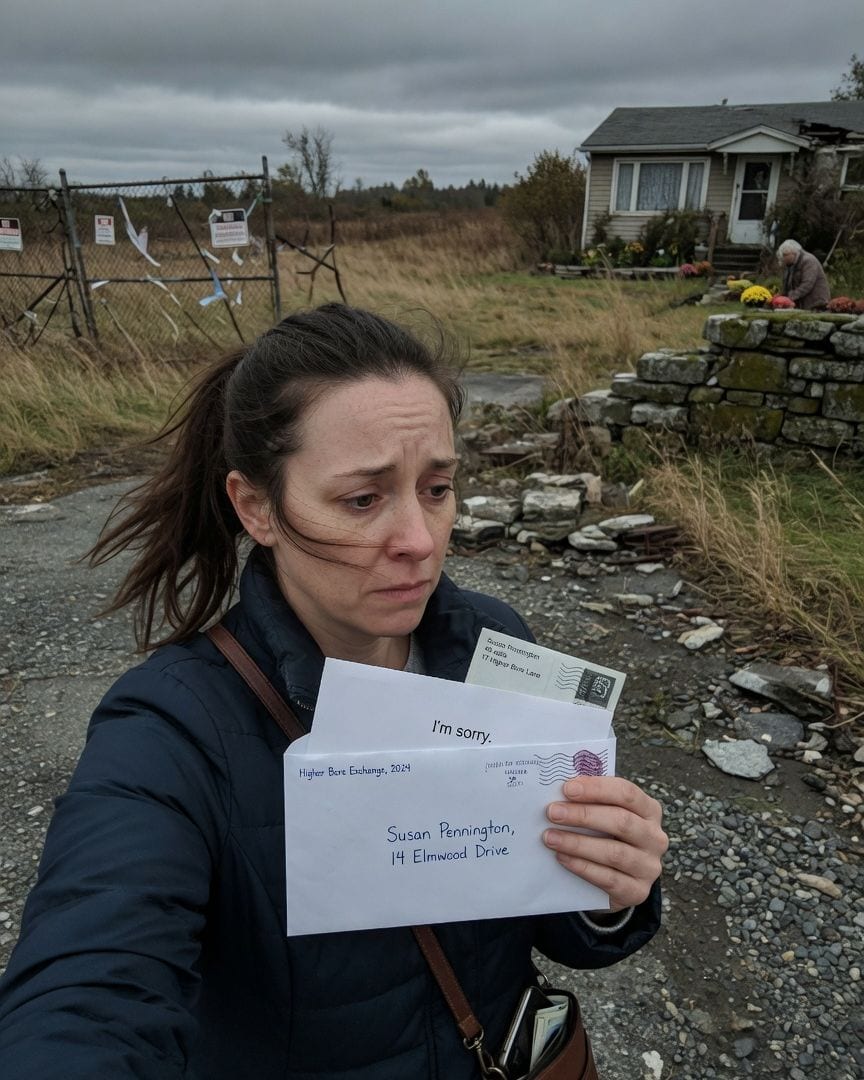
My phone bill listed forty calls made at 3:14 AM to a house demolished in 1990. The paper bill came from a flattened building. My name is on it.
I stared at my phone bill, my morning coffee forgotten. It detailed forty calls, each at 3:14 AM, to an address I knew was a vacant lot where a house had stood decades ago. But the real dread began when I saw the bill's return address: a telephone exchange flattened years before.
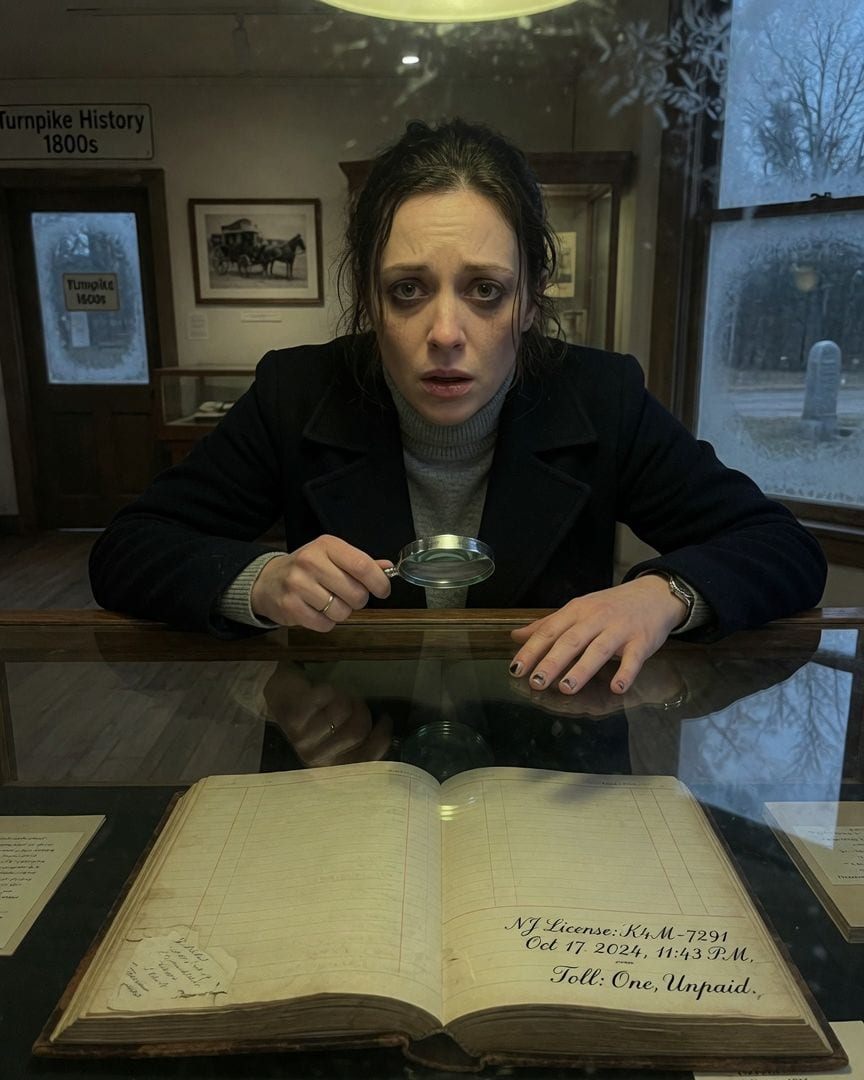
My car stalled at the old turnpike milestone, and the 1874 toll ledger now lists my plate, the date, and an unpaid toll.
My car stalled at an old turnpike milestone, exactly where the carrier had warned me never to stop after dark. The next week, at the local museum, I found a new entry in a century-old toll ledger. There, in fresh ink, were my car's registration, the exact date and hour I stalled, and 'Toll: One, Unpaid.' I knew it wasn't a joke.
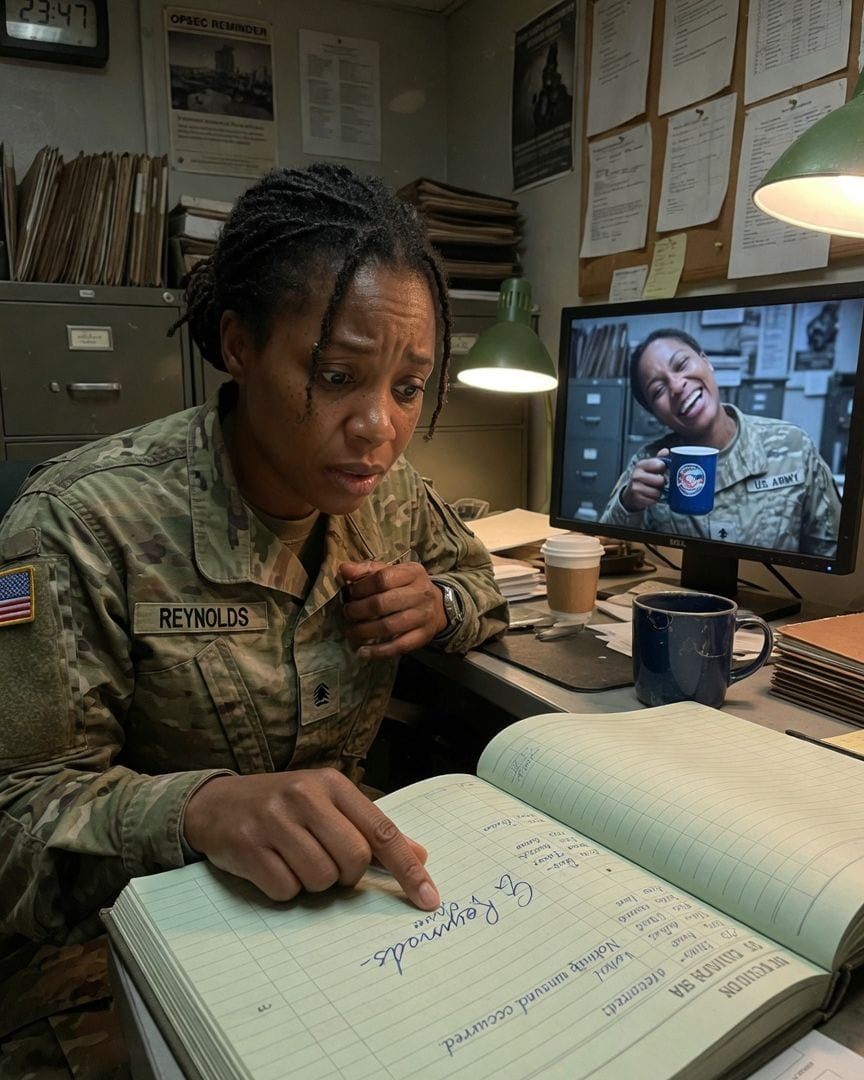
Lieutenant Grace Reynolds saw her own signature in the staff-duty log for a shift she never worked. The security footage then showed 'her' leaving a coffee mug she’d never once seen.
Lieutenant Grace Reynolds hunched over the battalion staff-duty log, the fluorescent hum of the records room a monotonous backdrop to her dry inventory audit. Her gaze snagged on an entry from three weeks prior: her own unmistakable signature, closing out a full 24-hour staff-duty shift she knew she had never worked. Security camera footage only deepened her unease, showing 'Grace Reynolds' moving with her familiar stride, laughing a shade too brightly, her head tilting a fraction too precise, like a flawless, chilling performance. But as the imposter turned to leave, she picked up and rinsed a chipped, dark blue ceramic coffee mug with a faded diner logo—a mug Lieutenant Reynolds had never once seen in her life. The air in the quiet room grew heavy, thick with the unspoken wrongness: if that wasn't her, then who was it?
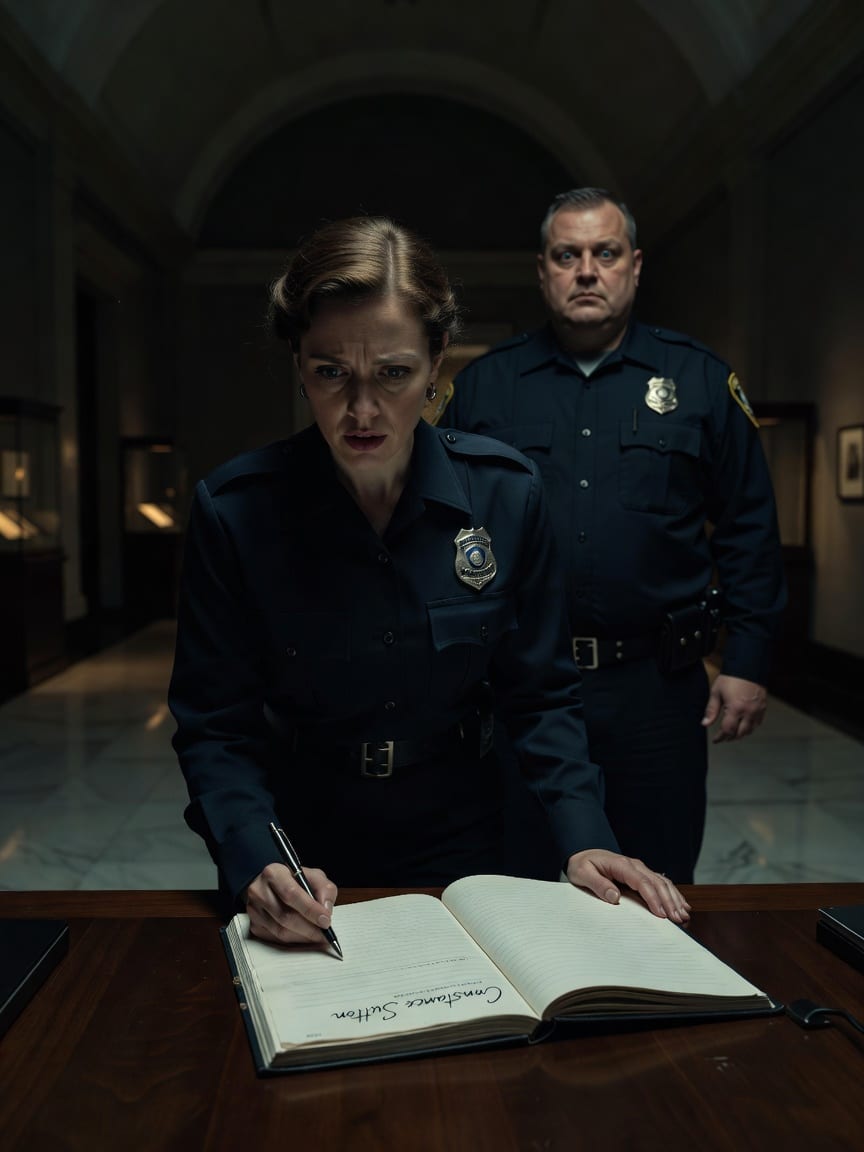
My relief guard Anton always signed in green ink. The police pulled the handover book: no Anton, no green ink, ever.
For two years, my routine as a night guard at the Prescott Museum has been a comforting rhythm, ending with the arrival of Anton Kowalski. But after a small theft, the police reveal Anton doesn't exist and his name isn't in the handover book. Now, I've found my own signature in that book for a night I was explicitly off duty.