My signed juror oath placed me four hundred miles away. I was at my desk, on the clock, every day of that trial.
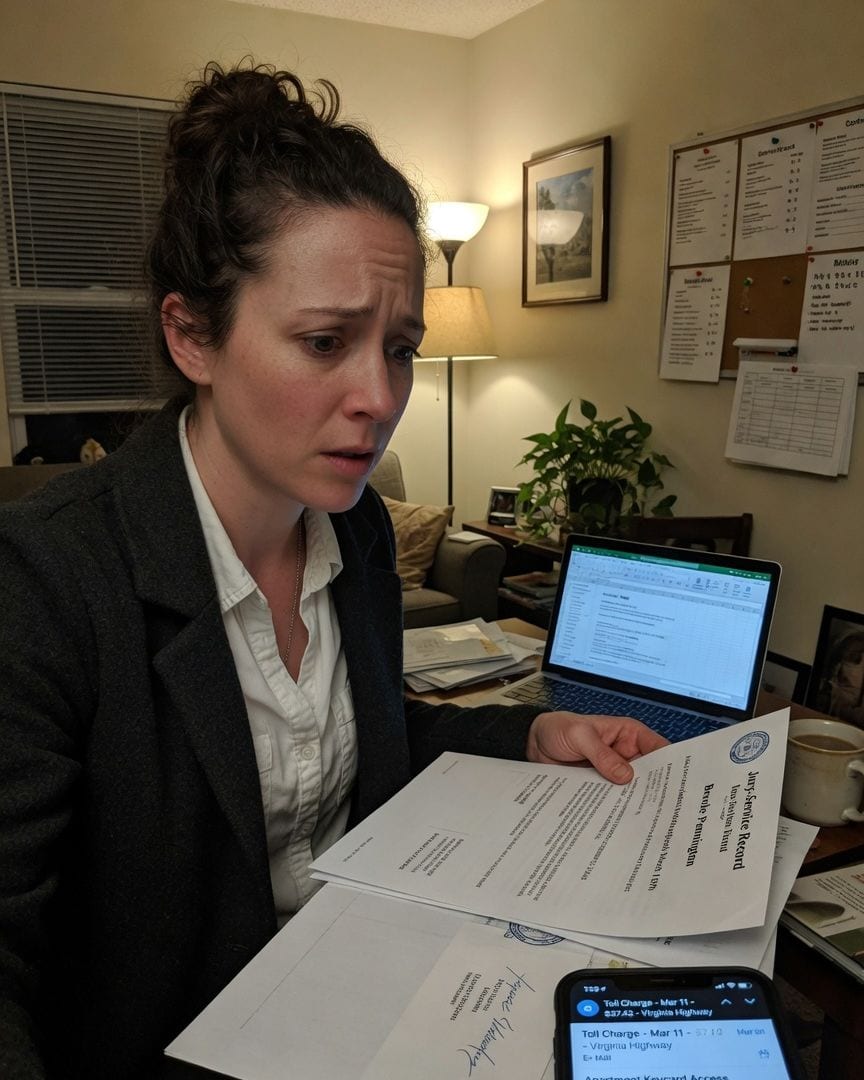
The jury-service record arrived last spring, slipped in with a pile of junk mail and a utility bill. A formal letter from the State Judicial System, thanking me, Brooke Pennington, for my diligent service as a juror.
It cited a two-week trial, Judge Eleanor Vance presiding, at the First District Courthouse – a place four hundred miles from my city. The dates were listed, precise: March 4th through March 15th.
I stared at the envelope, then at the letterhead, my name typed neatly, the official seal stamped at the top. I worked 9 to 5, Monday through Friday, a standard office job.
My company's timesheets were meticulous, clocking me in and out, tracking my lunch breaks down to the minute. I remembered those two weeks perfectly.
The unusually cold snap, the slow drip of the coffee machine, the pile of invoices I’d cleared off my desk. Every single one of those ten weekdays, I was right there, at my desk, in my office chair.
I called the courthouse. They transferred me to Deborah Lawson, the clerk responsible for juror services. Her voice was calm, efficient, and utterly unhelpful. "Yes, Ms. Pennington, your service was duly completed.
Your signature is right here on the oath, and we have the judge's commendation in your file." She rattled off details: the nature of the trial – a zoning dispute, she thought – the specific courtroom, even the bailiff's name.
She described the biometric badge system, the daily sign-in sheets, the verbal confirmation with the bailiff each morning.
"We even have a note here," she added, her voice softening slightly, "that you'd asked the bailiff about parking on your third day, wondering if there was a closer lot." A note. A specific, mundane detail.
A conversation I have no memory of, because it never happened. Not a single second of it.
I tried to explain the impossibility. My job. My timesheets. I must have been mistaken for someone else, I suggested. Identity theft, perhaps. Deborah patiently explained their security protocols. "It's all very secure, dear. Your badge registered your fingerprint.
Your signature matches the one on your driver's license. There's no discrepancy in the records." She sounded genuinely puzzled, as if I was the one making the mistake. "Are you sure you didn't forget, dear?
Sometimes these things slip the mind, especially if it was a dull trial." No, it hadn't slipped my mind. I remembered those two weeks. My desk, my commute, the particular shade of the coffee.
The evidence was irrefutable, yet completely wrong. The worst part was the signature. On the digital copy of the juror oath she emailed me, it was there, clear as day. My name, in my own cursive.
A perfect, undeniable match for my own hand. Not a forgery, but my signature, on a document I’d never seen, for an event I’d never lived. The mundane explanation—a clerical error—failed with every polite, firm word from Deborah.
The dread solidified, cold and heavy in my chest. It wasn't a mistake; it was a complete, documented fabrication of two weeks of my life, written in my own hand, confirmed by a note of my own words.
Two weeks later, an alert from my bank popped up on my phone. A toll charge. For my car, my license plate, dated March 11th – right smack in the middle of that jury duty period.
But this time, it was from a highway in a third state, Virginia, even further away, a state I’d never driven through in my life. I called the toll authority, then my bank. The charge was real, logged, paid.
A small, innocuous line item, thirty-seven dollars and change. Then, a new email notification, from my apartment building management: 'Your apartment keycard was used to enter your unit on March 14th at 7:17 PM.' March 14th. That was a Thursday.
I was visiting my sister, eight hundred miles away in Florida. I had my flight receipts, my hotel booking, a dozen selfies with her by the beach.
The email included a link to the lobby camera footage for that exact timestamp. I clicked it, my breath catching in my throat.
On the small screen, Brooke Pennington, undeniably, walked through the glass doors, her face clear, her usual charcoal gray coat, her dark hair pulled back in the messy bun I always wore.
She paused by the mailboxes, scanned them, then turned, almost waved to the camera, a ghost of a smile on her lips, before heading towards the elevators. It was me, but it wasn’t me.
The keycard log and that lobby footage were a punch to the gut. I downloaded the video, watched myself walk into my own apartment, a ghost of a smile on my face, and felt a profound violation.
It wasn’t just paper now; it was a physical presence. My stomach clenched, and the coffee I’d had for breakfast sat like a stone. I called my building manager, James Thornton, shaking.
He assured me the system was foolproof, no glitches, no overrides. “That’s you, Ms. Pennington. Clear as day.” He even checked the raw data for anomalies, for signs of tampering or an old entry somehow resurfacing. Nothing.
The digital timestamp was exact, the data clean. The monitor screen in my living room seemed to hum with a low, insistent dread, reflecting my own pale face back at me.
I tried to dispute the Virginia toll charge again, armed with flight receipts, hotel bookings, and credit card statements from my sister’s visit. The bank’s fraud department was sympathetic, but insistent.
The charge was linked to my credit card, used not just for the toll, but for gas and a small diner meal in that same distant town. My name. My card.
Another signature, perfectly replicated on the diner receipt I managed to get a copy of, scrawled under "Brooke Pennington." It felt like my life was being meticulously overwritten, detail by mundane detail.
Small, official threads, woven into a pattern that wasn't mine.
I started cross-referencing everything. Any unusual transactions, any unexpected mail. The pile of impossible records grew.
A library book overdue notice appeared in my mailbox, from a small-town library in Ohio, for a book I hadn't checked out – a local history of riverboats, of all things. My library card number. My name.
The growing pile of records, each perfectly legitimate in itself, painted a picture of a life I wasn't living.
The unease was no longer a chill; it was a constant, low hum of wrongness, a vibration under my skin that wouldn't go away.
My persistent inquiries into the Ohio library fine eventually led me to a small, obscure local history archive, not a public library.
They had my card on file, a borrowing history going back two years, filled with titles like "Ohio Valley Settlement Patterns" and "The Lesser-Known Industrialists of the 19th Century."
While I was there, sifting through microfiche records that made my eyes ache, an older man, Howard Maddox, the chief archivist, approached me.
His movements were slow, his voice soft, a whisper that seemed to absorb the dust in the air, but his eyes held a peculiar, unblinking calm.
He didn’t ask what I was looking for, but rather, “Still chasing ghosts, Ms. Pennington?”
My blood ran cold. I hadn’t mentioned the jury duty or the tolls to anyone outside official channels, and certainly not to this archive. The air in the room suddenly felt heavier, thick with unspoken knowledge.
He sat opposite me at the reading table, uninvited, pushing aside a stack of old newspapers. The lamp on the table cast a harsh light on his face, illuminating the network of fine lines around his eyes.
"Some records, you see, they have a life of their own. They persist. Best not to disturb them too much." He spoke without accusation, almost with a kind of weary understanding. "The deeper you dig, the more you find.
And the more you find, the more… real it becomes. Sometimes it’s better to let these things lie." He gestured vaguely at the dusty shelves that lined the walls, filled with centuries of town records, ledgers, and deeds.
The shelves seemed to groan under the weight of their own history. "History has a way of repeating itself, in its own quiet fashion." His words weren't a threat, but a warning. He knew.
He knew exactly what I was looking for, and he knew it wasn't a mistake. The hunt had turned. Someone wasn't just observing; they were aware, and they had a message for me.
I pressed Howard, my voice a tight whisper. "What do you mean, 'real'? What is this?" His gaze was steady, unwavering, as if he'd answered this question a thousand times before. "There are… systems. Ancient ones. They ensure continuity.
For certain lines, certain families. Like yours." My family? A sudden, sharp tightening in my chest made it hard to breathe. "What does my family have to do with it?"
He leaned forward, his voice barely a whisper, yet it cut through the dusty silence of the archive. "The Penningtons. A very old name in certain circles. Certain… registries.
You see, the paperwork, the logs, the signatures – they are all perfectly accurate. From a certain point of view. Another life, meticulously maintained. A shadow life, if you will."
He pulled a thick, leather-bound ledger from a shelf directly behind him, the kind you might see in a very old bank. Its pages were yellowed with age, the corners worn smooth from generations of handling.
It wasn't a public record. He opened it to a page, already marked, and my stomach plummeted. My name. My birthday. And beneath it, a series of entries, mirroring the jury duty, the toll, the keycard log.
But also other things: a membership to a historical society I’d never joined, a volunteer position at a local food bank I’d never held, even a minor traffic infraction for an illegal left turn I’d never committed.
All dated, all specific, all perfectly documented. A spiderweb of small, ordinary events, weaving a life I didn't know.
"These aren't mistakes, Brooke. They are… parallel facts. The system ensures the records are impeccable. It’s why you can't dispute them. They are true, to the system."
He explained that the signatures weren't forgeries, but "perfect reproductions, generated when the need arises."
He spoke of "human touches" like the parking question I’d supposedly asked the bailiff as deliberate details, added by the system to make the shadow life feel complete, believable.
The library fine, the diner meal – they were all part of this meticulously crafted alternate existence. The dread was no longer about a glitch; it was about the chilling coherence of it all.
My life, duplicated, running silently alongside my own, and all the records in the world confirming its validity. The archive felt colder, the air stiller, as if the very dust motes had paused to listen.
Howard's words echoed in my mind: "Certain lines, certain families. Like yours." I spent the next weeks digging through my own family's archived papers, old photos, anything I could find.
It was a long shot, a desperate reach for any kind of explanation, however impossible. Then, tucked into a box of my deceased father Gerald's old tax documents, I found it.
A letter from the State Environmental Commission, thanking him for his "diligent service" on a two-week advisory panel. The dates were from a spring twenty years ago.
My father, Gerald Pennington, had been in the hospital with pneumonia for one of those weeks. My mother had kept his hospital bracelet, a small plastic band, as a memento.
My father's name, his official signature, on a document for something he could not possibly have done.
And in another box, among my grandfather Trevor's belongings, I found a faded photograph. He stood by an old, beat-up sedan, smiling, holding up a fishing license.
The date stamped on the back was from a summer when, according to family legend, he’d been working a double shift at the factory, never taking a day off.
But the location on the license was a remote lake, hundreds of miles away in upstate New York. A familiar, sickening pattern began to emerge.
Not just impossible events, but the same kind of impossible events, for the men in my family, stretching back through decades. The same type of "Statement That Places You" for my father, and my grandfather.
The same distant locations, the same mundane details, the same inexplicable records. My bloodline wasn't just "known" to this "Registry." We were part of it. Always had been.
My trembling fingers traced the faded print on my grandfather Trevor's old bank statement. Another impossible purchase, a fishing lure from a bait shop near that distant lake. A date Trevor was known to be bedridden with a back injury.
And then, at the bottom of the box, buried under a pile of old letters, a jury summons for him too, from the same distant courthouse where my father had supposedly served, years before my father's, decades before my own.
The same impossible signature. The pattern wasn't just across dates or names; it was a line, stretching back, through my own blood.
I returned to Howard, the evidence of my father's and grandfather's shadow lives spread across his archive desk, a grim mosaic of impossible officialdom. He nodded slowly, unsurprised, his eyes reflecting the yellowed paper without judgment.
"The Registry ensures continuity," he repeated, his voice barely audible above the hum of the old fluorescent lights. "It’s not malicious, not in the way you think of malice. It's… a way of embedding.
Of maintaining certain threads within the fabric of society." He explained that my family, the Penningtons, were one of a select few "designated lines." For generations, 'The Registry' had been subtly creating these parallel existences.
The jury duty, the toll charges, the keycard logs – they weren't random. They were the slow, deliberate construction of a fully-realized 'other' life, running concurrent with our own, using our identities as anchors.
The parking question, the diner meal, my grandfather’s fishing lure – these were the 'human touches' he'd mentioned, designed to make the shadow records undeniable. They weren't just fabrications; they were contextualized fabrications, details that a real person would generate.
The lobby camera footage, the image of me walking into my apartment when I was eight hundred miles away? A direct manifestation, a 'projection' of the shadow self into the physical world, brief but perfectly real.
The system didn't steal identity; it duplicated it, then slowly, silently, reinforced the duplicate with layer upon layer of verifiable, official data. My father's hospital stay, my grandfather's factory shifts – those were my memories, my family's truth.
But to 'The Registry,' and to any official query, the parallel life was just as valid, just as recorded. "It’s a long game, Brooke," Howard said, his voice softer than ever.
The old ledger on the table seemed to pulse with a quiet, ancient power. "And your family has been playing it for a very long time, whether they knew it or not. You were always inside it."
The full truth landed with a crushing weight, settling deep in my bones. I wasn't just an anomaly; I was a legacy. I was part of a generational project, a quiet, ancient system that had chosen my bloodline.
I gathered every piece of evidence: my jury summons, my meticulous timesheets, the Virginia toll statements, the bank records with the diner charge, the apartment keycard log, the lobby footage of my shadow self, and finally, my father’s environmental commission letter and my grandfather’s fishing license and summons.
I made copies, digital backups, even printed photos of the physical records, feeling a desperate need to solidify what I knew.
Howard watched me, a sad, knowing look in his eyes that made the skin prickle on my arms. The archive felt like a tomb, heavy with secrets. "What will you do with it?" he asked, his voice barely a murmur.
"I have to tell someone. Expose it," I said, my voice shaking with a resolve I didn't fully feel, a desperate hope that someone, anyone, would listen. "They can't just… create lives. Not like this."
He simply shook his head, a slow, gentle movement that somehow carried more weight than any shouted warning. "Who will believe you, Brooke? Every single one of those records is official. Certified. Your signature. Your face. Your family’s history.
You can dispute it until you’re hoarse, but the world's record will always disagree with yours. And the world believes the record." His words were calm, matter-of-fact, utterly unbothered. The horror was his composure, not cruelty.
He was right. I imagined trying to explain this to a police officer, a lawyer, even a friend. They would see a woman unraveling, clutching a pile of perfectly legitimate documents that, to them, confirmed a perfectly normal life.
I was trapped, not by a physical cage, but by an inescapable, coherent, and utterly believable lie. I couldn't fight 'The Registry,' because 'The Registry' was the truth, at least the official, recorded truth.
My only option was to escape its direct influence, to disappear, to outrun the records. But where could I go that my shadow self wouldn't follow?
I left the archive, my proof clutched tight, the terror of knowing that my life was not entirely my own, and that a silent, unseen entity held another, equally valid version of it.
I had the truth, but it was a truth no one would ever accept. My escape was not from a place, but from the belief that my memories were the sole authority on my existence.
I quit my job, sold my apartment, and moved to a small town far from my old life, under a new name. I live quietly, anonymously.
The records of Brooke Pennington still exist, still occasionally generate a phantom credit card transaction or a library overdue notice. I never try to correct them. The dread hasn’t left; it’s simply morphed into a constant vigilance.
Every piece of mail, every unsolicited email, every new record that appears under my old name, is a quiet reminder. I carry the proof, locked away, knowing it's useless to anyone else.
The cost was my old life, my sense of security, and the simple belief in my own reality.
I still check my mail first, every morning, for the life I'm not living.
If this one got to you
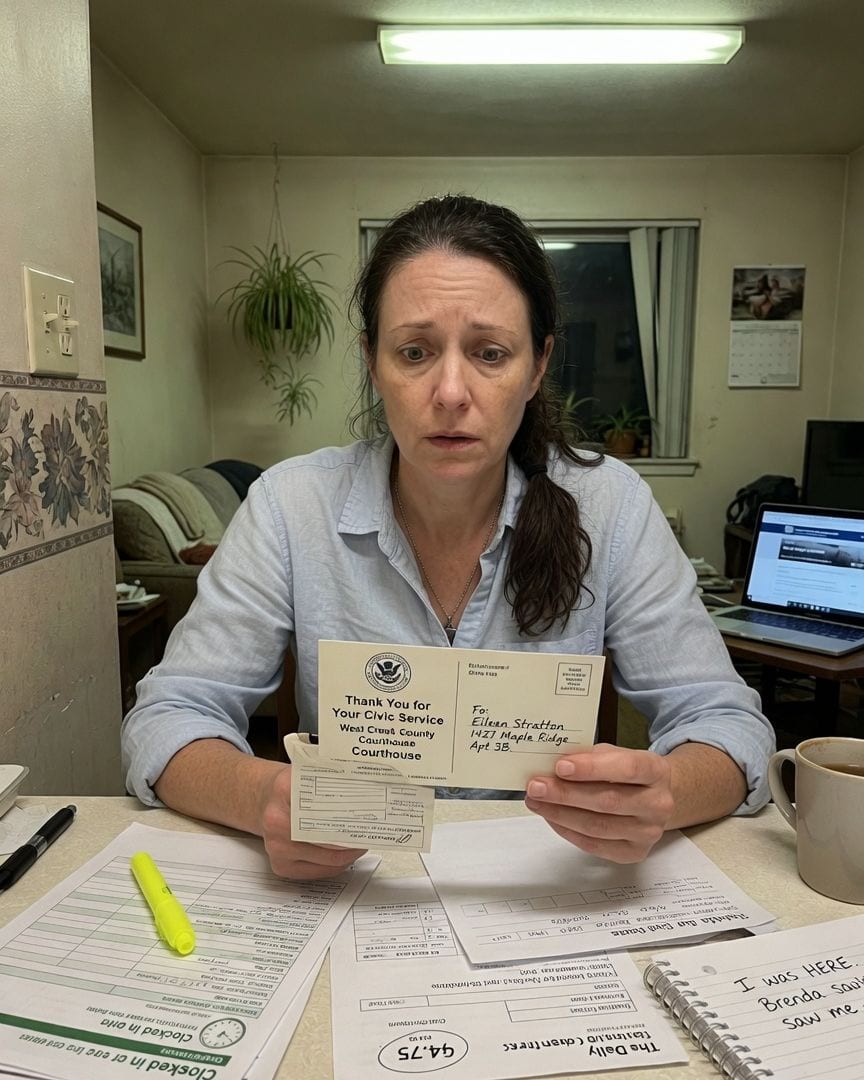
An official record thanked me for two weeks of jury duty last spring, in a courthouse four hundred miles away — on days I never left my office. The clerk has my signed oath.
I received a jury service thank you for a two-week trial 400 miles away, but I was clocked into my city office every day. My manager confirmed it, yet the court clerk insisted I served, even describing a parking question I supposedly asked. Then I found a credit card charge for coffee in that distant town, dated when I was at my desk.
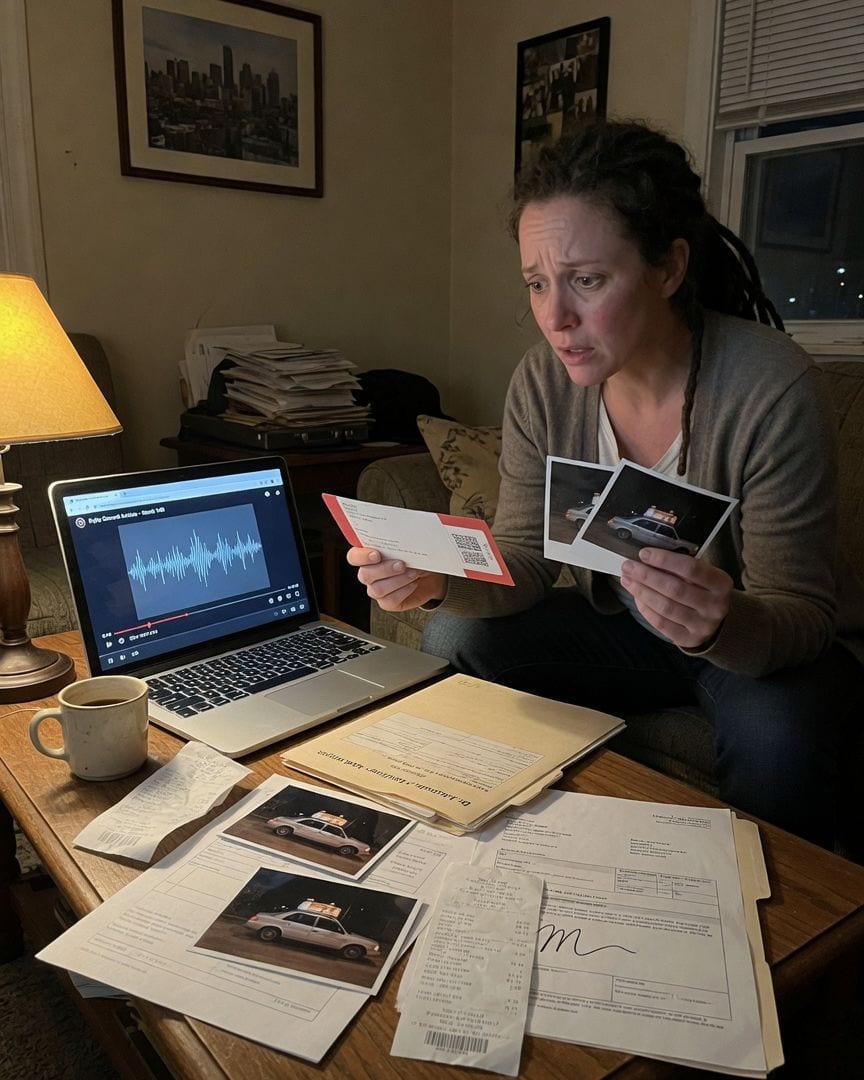
My car ran a red light at 9:41 PM in a town I've never been. The photos show my exact plate, my roof rack. I was speaking at city council, across the state.
A red-light camera ticket arrived for my car, timestamped for a downtown intersection I'd never driven through. But I knew, with chilling certainty, that I was three hundred miles away, speaking at a city council meeting at that exact moment.
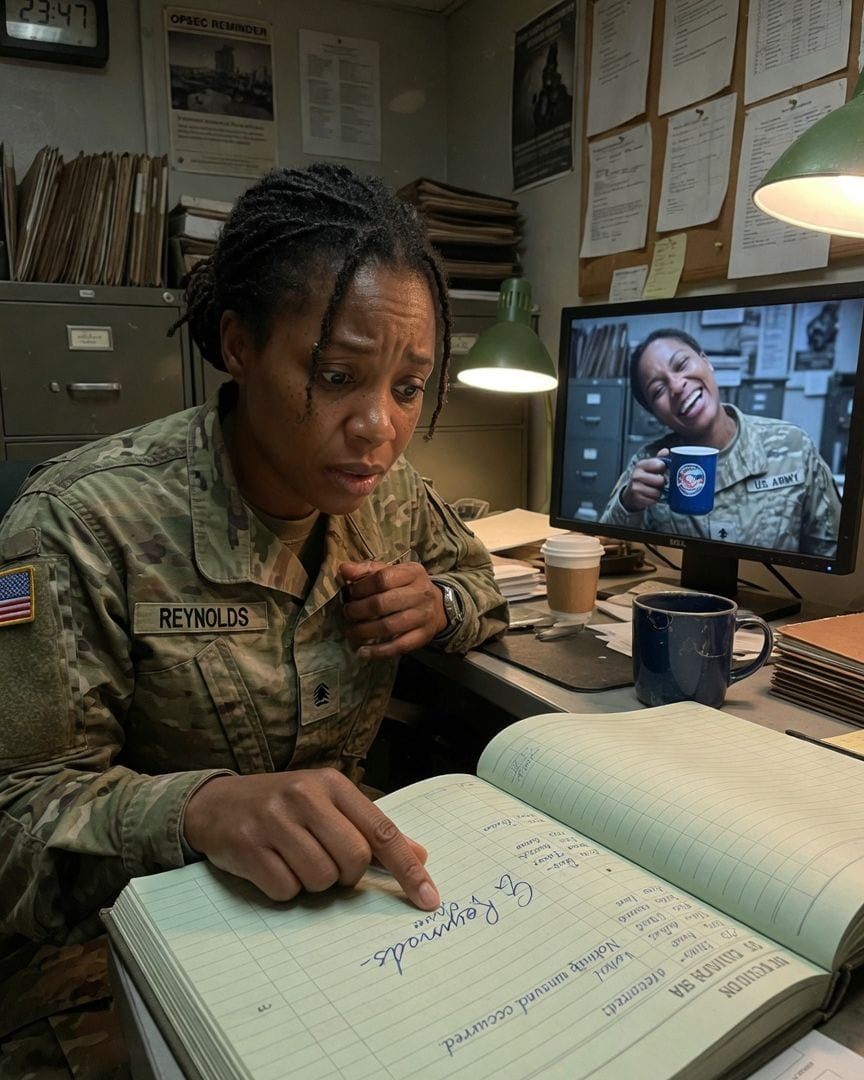
Lieutenant Grace Reynolds saw her own signature in the staff-duty log for a shift she never worked. The security footage then showed 'her' leaving a coffee mug she’d never once seen.
Lieutenant Grace Reynolds hunched over the battalion staff-duty log, the fluorescent hum of the records room a monotonous backdrop to her dry inventory audit. Her gaze snagged on an entry from three weeks prior: her own unmistakable signature, closing out a full 24-hour staff-duty shift she knew she had never worked. Security camera footage only deepened her unease, showing 'Grace Reynolds' moving with her familiar stride, laughing a shade too brightly, her head tilting a fraction too precise, like a flawless, chilling performance. But as the imposter turned to leave, she picked up and rinsed a chipped, dark blue ceramic coffee mug with a faded diner logo—a mug Lieutenant Reynolds had never once seen in her life. The air in the quiet room grew heavy, thick with the unspoken wrongness: if that wasn't her, then who was it?
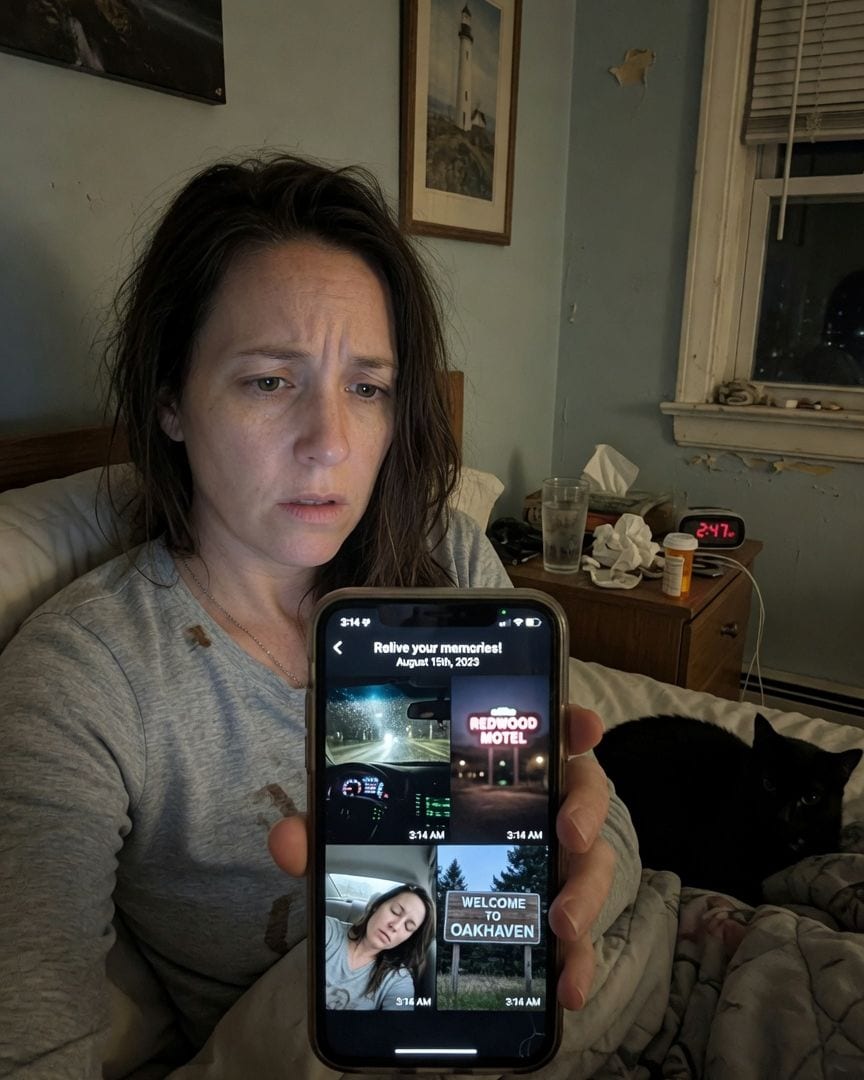
My phone has photos of me asleep in a strange car at 3 AM. Then a voicemail: 'We'll have her back by sunrise.'
My phone woke me with a cheery notification, promising memories from last August. Instead, it showed me asleep in a dark car, rain streaking the windshield, miles from my apartment. I was certain I'd been home in bed that night, but the images were undeniably in my camera roll, a quiet violation of my memory.
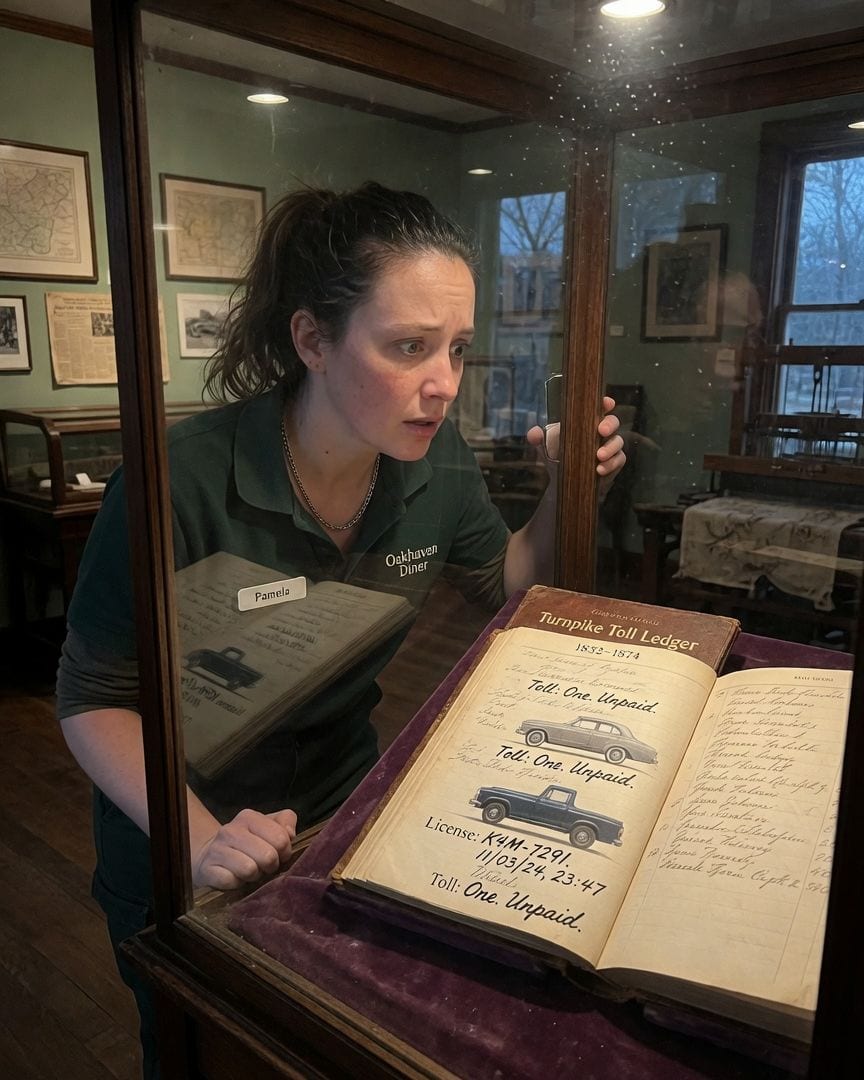
My car stalled at the old turnpike milestone, after dark. The toll ledger, closed in 1874, then listed my car, my stall time, and a toll of one, unpaid.
I had just moved to Oakhaven when my old sedan died on a dark, winding road by an infamous turnpike milestone. The next day, I found my car's exact registration and stall time written in fresh ink in a 150-year-old, locked museum ledger, marked 'Toll: One. Unpaid.' The curator dismissed it as a prank, but her white knuckles and strained voice hinted at something far more unsettling.
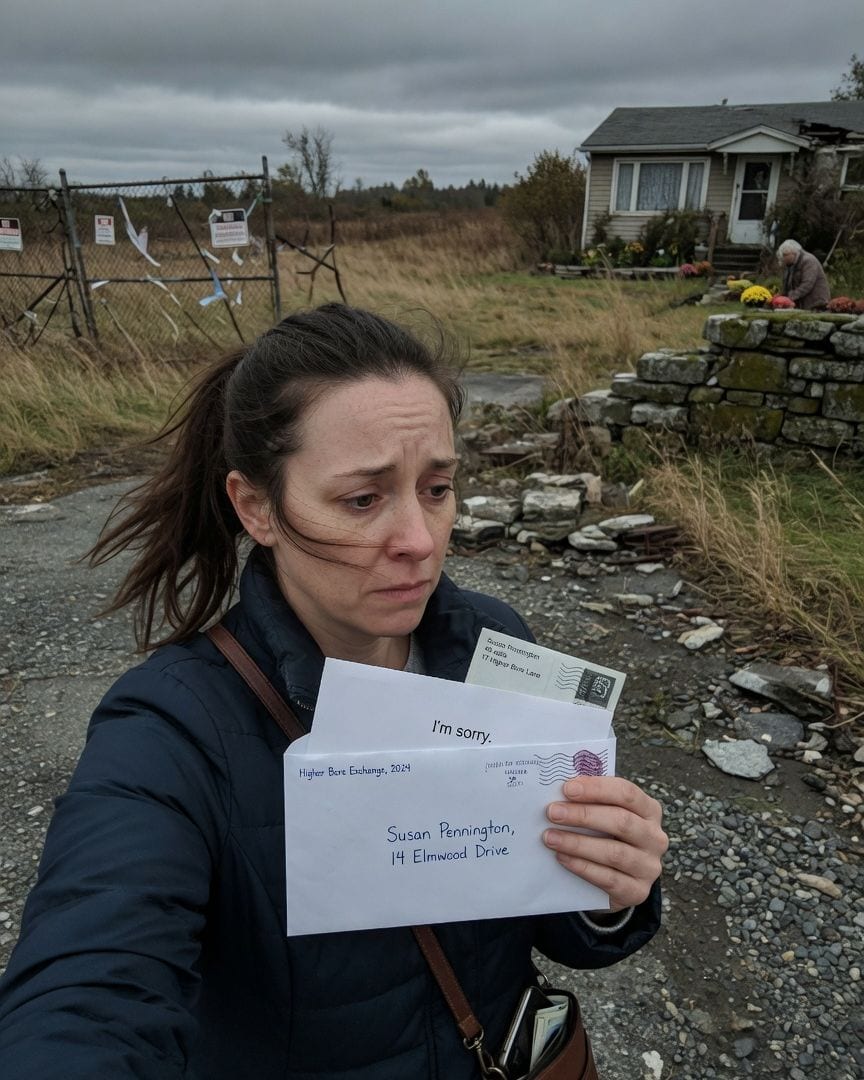
My phone bill listed forty calls made at 3:14 AM to a house demolished in 1990. The paper bill came from a flattened building. My name is on it.
I stared at my phone bill, my morning coffee forgotten. It detailed forty calls, each at 3:14 AM, to an address I knew was a vacant lot where a house had stood decades ago. But the real dread began when I saw the bill's return address: a telephone exchange flattened years before.