My living room becomes a draper's shop. Counters, bolts of cloth, a woman folding lace by a lamp — then it's my sofa again, the light gone flat.
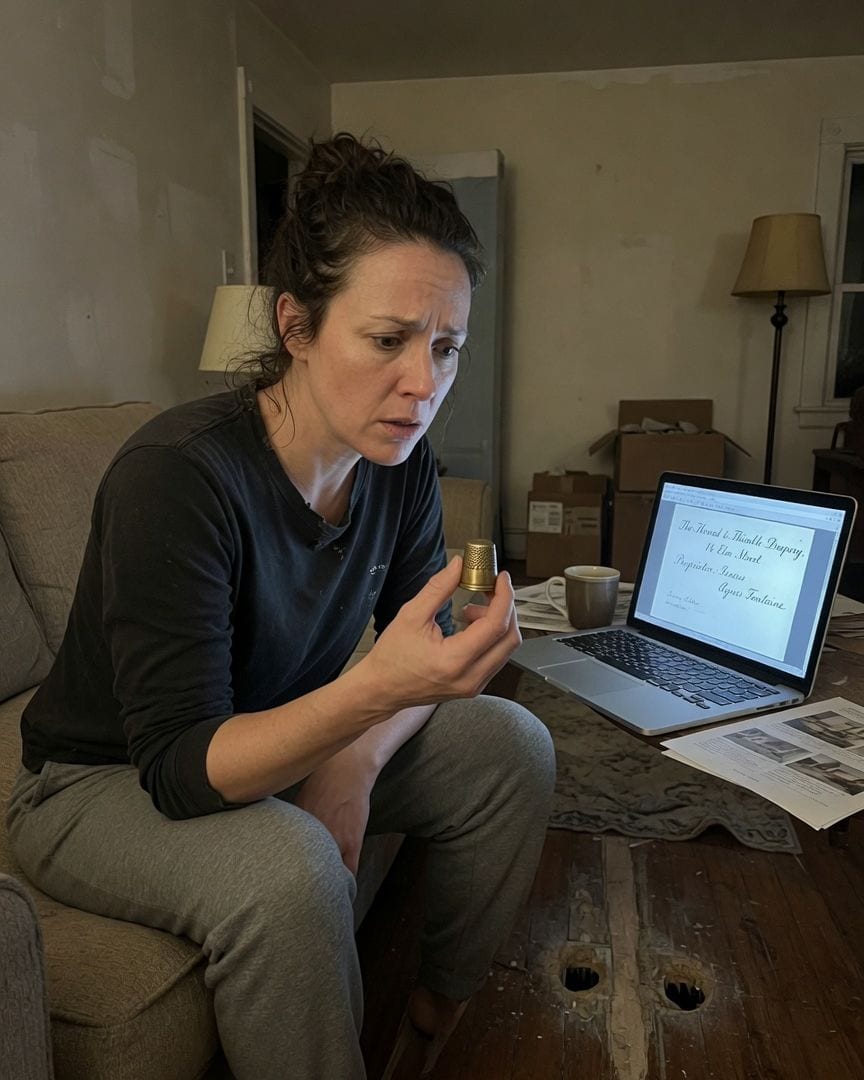
The evening had settled in, quiet and ordinary. I was on the sofa, scrolling through something mindless on my phone, half-watching a documentary about deep-sea creatures.
My new flat on Elm Street, ground floor, was finally feeling like home after a month of boxes. I liked the high ceilings, the faint smell of old wood, the way the late afternoon sun hit the living room.
Then it shifted.
It wasn't a flicker, not a blur. It was a subtle, almost imperceptible morphing of reality. The plaster walls, freshly painted, seemed to recede, stretching upwards, becoming panelled in dark, rich wood.
Rows of shelving appeared, laden with bolts of fabric – velvets, silks, heavy tweeds – reaching towards a ceiling I knew wasn't there.
My comfortable, slightly lumpy sofa vanished, replaced by a long, polished counter that gleamed under an unfamiliar light. The television, the coffee table, my scattered books – all gone. Instead, there were display cases, their contents shimmering faintly.
At the far end of the counter, under the soft glow of a green-shaded table lamp, a woman sat. Her back was mostly to me, her figure slender, dressed in something dark and simple.
She was meticulously folding lace, her movements precise, almost ritualistic. I couldn't make out her face, only the soft curve of her head, the concentration in her posture.
The air, which had just smelled faintly of my dinner, now carried a distinct, almost cloying scent of old wool and lavender, mingling with something dry and papery.
It was so real I could have reached out and touched the velvet stacked on the shelves.
Then, as suddenly as it had come, it receded. The dark wood softened, becoming pale plaster. The shelves dissolved into empty walls. The counter became my sofa again, lumpy and familiar.
The lamp vanished, leaving only the flat, slightly yellowed light of my standard floor lamp. The scent was gone. The silence, after the soft rustle of fabric and the faint clinking of something metallic from the woman's work, felt heavy.
I blinked, shaking my head. My first thought was exhaustion. Moving is hell, and I’d been working too many late nights. A trick of the light, maybe, or my imagination playing games.
But then my gaze dropped to the floor beneath the edge of my rug. The floorboards there were distinctly worn, a path leading from where my sofa now sat towards the front window.
And right in the middle of that worn path, two small, distinct circular holes were drilled into the wood, as if something heavy had once been bolted down. Not imagination.
The next morning, the memory still clung to me, sharp and disconcerting. I pulled back the rug entirely. The worn path was even clearer without it, a smooth, pale channel across the darker wood where countless footsteps had passed.
And the two holes were undeniable, neat circles, about an inch in diameter, exactly where a counter or a till might have been secured. My initial dismissals – tiredness, a trick of the light – felt inadequate.
This wasn't some fleeting hallucination. This was physical evidence of something else having been here.
A prickle of curiosity, stronger than the unease, took hold. I knelt, tracing the worn wood with my finger, then probing the holes. They were old, filled with a fine, grey dust.
I remembered the long counter in the vision, the way it had gleamed. And the woman working behind it. Could this flat have been a shop, once? It was on a main street, after all.
My fingers brushed against a section of floorboard just beside one of the till holes. It felt subtly different, a fraction looser than the surrounding planks. I pressed, and it gave slightly, a faint creak.
My heart gave a little thump. This wasn't just old wood; this was a deliberate concealment. I went to the kitchen, grabbed a thin, flexible knife, and carefully worked the blade into the seam.
With a soft click, the board lifted.
Beneath, nestled in the accumulated dust and grime of decades, was something small and metallic. I reached in, my fingers closing around it. It was cold, unnaturally so, a small, tarnished brass thimble. It had a surprising weight to it.
I pulled it out, wiping away the dust. On its side, delicately but clearly engraved, were the initials 'A.F.' and the year '1938'.
I held it, the cold metal seeping into my palm, a tangible link to the phantom shop, to the woman I'd seen. It was too specific, too real to be dismissed as mere imagination or an old flat's quirks.
A thimble. A draper's shop. A woman folding lace. And a name, a year. My rational brain was struggling to keep up with the cold, hard facts now resting in my hand.
That evening, the thimble sat on my desk, a mute, cold sentinel beside my laptop. I didn't even turn on the TV.
I spent hours hunched over the keyboard, searching through online archives, digitised property deeds, old census records for my Elm Street address.
My fingers flew across the keys, entering street numbers, years, scanning for any mention of a 'draper' or 'fabric' shop.
The minutes ticked by, then hours. I found nothing for 1938, or 1939. Then, finally, a hit. A scanned page, faded and brittle, from a 1930s local business directory. The entry read: 'The Thread & Thimble Drapery, 14 Elm Street.'
My address. And beneath it, in elegant, looping script: 'Proprietor: Agnes Fontaine.' The year of the directory was 1938.
'Agnes Fontaine.' The name jumped out at me, cold and solid. 'A.F.' The initials on the thimble. The date matched.
The woman in my vision, folding lace by the soft lamp, the one I’d tried to dismiss as a phantom of fatigue, was real. She had stood exactly where I now sat, a lifetime ago, in her shop.
The discovery of Agnes Fontaine’s name didn’t just electrify me; it grounded the impossible. This wasn't some anonymous haunting. This was a specific person, a specific time, a specific place. It was history, tangled and unresolved, pushing into my present.
The next few days were a blur of research. I visited the local historical society, an imposing brick building filled with the hushed reverence of old documents.
I spent hours poring over dusty ledgers, microfiche reels that made my eyes ache, and newspaper archives. I learned that Agnes Fontaine was a reclusive figure, known for her exquisite lace work.
Her shop, 'The Thread & Thimble,' was indeed well-regarded, a quiet fixture on Elm Street.
Then, the narrative abruptly ended. Late in 1939, just as the shadow of World War II was falling across Europe, Agnes Fontaine simply vanished. The shop closed abruptly, its windows boarded up.
No body was ever found, no trace of her departure. The official record, if you could call it that, simply stated 'disappeared without a trace.' A tidy, chilling sentence that explained nothing.
Back in my flat, the faint scent of lavender and old wool, which I'd initially thought was just the smell of an old building, now seemed to cling to the air, especially in the living room.
It was strongest in the evenings, after the sun had gone down, when the quiet settled in. And the floorboards.
I started to notice a specific floorboard near the front window, close to where I’d seen the counter, that would creak. Not under my foot.
It would creak when I was sitting still, reading, or watching TV, a soft, distinct sound that didn't match the building settling, but seemed to have a rhythm to it, almost like someone moving, a routine that continued even without a body.
I started leaving my phone recording at night, nestled on the floor by the till holes. I hoped to catch the sounds, the shifts, the inexplicable creaks. Just to prove to myself I wasn't losing it.
The silence of my flat, once comforting, now felt pregnant with unspoken history. The rational explanations had evaporated. There was only Agnes, and her absence.
I felt a growing, desperate need to understand what had happened in these rooms, what these walls remembered. The official record, so sparse and clinical, felt like a deliberate erasure.
I knew my own digging wasn't enough. I needed local knowledge, living memory. Sean Carter. The name had come up in my casual chats with other residents, an eighty-year-old fixture on Elm Street, whose family had lived here for generations.
He was the street’s unofficial historian, they said. I found him one afternoon, tending a small, meticulously kept garden in front of his tidy terraced house a few doors down.
His movements were slow but precise, his face weathered but sharp.
He listened patiently as I explained my flat, the thimble, Agnes Fontaine. His face, initially unreadable, seemed to harden slightly. He continued to prune a rose bush, snipping carefully.
'Some things are best left buried, lass,' he said, his voice raspy, dry like autumn leaves. 'This street has seen enough sorrow, enough trouble from folk digging where they shouldn't.'
He didn't offer details, only vague warnings about 'old troubles' and 'things that stay.' His eyes, a pale, faded blue, watched me with a unsettling calm, an old man who had seen too much.
I pressed for more, but he simply shook his head, finishing his pruning. 'Best be careful, lass. That flat… it holds more than just dust.'
Frustrated, I thanked him and walked back to my flat. As I fumbled for my keys, I glanced back. Sean was no longer in his garden.
He was standing by his living room window, a gaunt silhouette against the dim interior, watching me. His eyes, even from that distance, felt fixed, not on me, but on my flat, on my front door.
An unnerving, calm intensity that made the hair on my arms stand up.
Later that day, as the twilight gathered, a brittle, yellowed newspaper clipping slid under my front door with a soft rasp. It was folded neatly. I picked it up, my hands trembling slightly.
Dated November 1939, it was an article about Agnes Fontaine’s disappearance. The same article I’d scanned at the historical society, but this copy was different.
A single sentence was faintly underlined in faded red ink, almost invisible against the yellowed paper: 'Authorities noted the unusual circumstance of the shop’s front entrance being bricked up from within.'
Someone knew I was digging. And that someone knew this specific, chilling detail. The dread in my stomach turned cold, personal.
I confronted Sean Carter the very next morning, the newspaper clipping clutched in my hand like a shield. He was on his porch, watering a hanging basket. 'You knew, didn't you?'
I demanded, my voice sharper than I intended, thrusting the clipping towards him, pointing at the underlined sentence. 'The bricked-up entrance. You knew about that.'
Sean took the clipping, his gaze lingering on the red line for a long moment. He sighed, a long, tired sound that seemed to carry the weight of decades.
'My father worked on that building after the war,' he said, his voice flat, devoid of emotion. He held the clipping, his old hands steady. 'Conversion to flats. He told me stories, mind.
Agnes was a strange one, kept to herself. But she had something special. A collection, they said. Old lace patterns, worth a king's ransom, some of them. European stuff, very rare.'
He looked up at me, his pale eyes unnervingly calm. 'After she disappeared, the police came, of course. Found the place sealed up tight.
The front of the shop, the big glass front that faced the street… it was indeed found bricked up from the inside. A crude, hurried job, my father said. Like someone had panicked.
And the back door, the one leading to the alley behind the street? That was locked from the outside.'
My mind raced, the pieces clicking into place with a horrifying certainty. The visions of the shop, the woman folding lace, the growing agitation I’d sensed without understanding. It wasn't just a memory, a spectral replay.
It was a loop, a re-enactment of her final, desperate days. She was trapped. She was sealed in. Unable to get out, unable to be found.
The scent of lavender, the specific creak of the floorboard, the worn path leading to the till… all of it, traces of a life that ended in entrapment, within these very walls. My walls.
Sean Carter’s eyes, calm and unblinking, met mine. 'They never found what she had, you see,' he continued, his voice barely a whisper, yet it cut through the morning air like a knife. 'The collection.
Someone wanted it badly enough to make sure she stayed in there, with it. With her treasure.' He gestured vaguely, not at me, but towards my flat, a chilling implication that settled over me like a shroud.
'It's still there, isn't it?'
Just then, the familiar shift began in my living room, more intense than ever before. It didn’t fade in, it ripped. The modern furniture blurred, melted, pulled away.
The plaster walls dissolved, stretching, becoming the dark wood of the old draper's shop. This time, as the vision solidified, it was more vivid, more substantial. I wasn’t just observing; I was there.
And where my front door usually stood, where the light poured in from Elm Street, was a newly bricked-up archway. Rough, grey mortar, still visibly wet in places, sealed the opening.
It was crude, hurried, exactly as Sean’s father had described. I saw Agnes Fontaine herself, her back to me, pacing frantically before it, her hands pressed against the raw brick, her posture a mask of silent, profound desperation.
Then she turned, and her eyes, wide with terror, met mine for the briefest, most horrifying instant before she turned back to the wall, trying to claw at the drying mortar.
The back alley door was clearly visible, too, a heavy, dark wood door set into the wall at the back of the shop.
And through the faint, rippling transparency of the vision, I could see the heavy, rusting iron padlock, undeniably locked from the outside. Agnes Fontaine wasn't just gone. She was sealed in. Entombed, alive, within these very walls. My walls.
And the house remembered it all, every agonizing second.
I stumbled back into my flat, my lungs burning, the image of Agnes’s bricked-up door seared into my mind.
Sean Carter’s words echoed, cold and unyielding: She was trapped. Couldn't get out, couldn't be found. The vision had been too clear, too visceral to be anything but the truth.
The flat felt different now, no longer a home but a tomb, a living memorial to a brutal act.
The visions of the draper's shop were no longer fleeting glimpses. They were prolonged, vivid replays that would manifest without warning, sometimes for minutes at a time.
I’d be making coffee, and the kitchen would shimmer, then I’d be standing in the back storeroom of the Thread & Thimble, the air thick with the scent of dried herbs and old linen.
I saw Agnes, not just folding lace, but moving with increasing agitation, checking the front door, then the back, her movements becoming frantic, desperate. She was growing thinner in each new replay, her face gaunt, her eyes shadowed.
The house wasn't just remembering; it was re-enacting.
I understood now: the recurrence, the persistence of these visions, was tied to the unrecovered item, the valuable collection Sean had mentioned. Agnes wasn't a ghost in the traditional sense, not a spectral figure haunting the halls.
She was a coherent memory, a persistent echo, trapped in a loop, trying to communicate, to reveal what had happened, to point to what was left behind.
The worn path on the floorboards, the two till holes, the cold thimble, the faint scent of lavender – every detail clicked into place, forming a horrifyingly clear narrative of entrapment and a desperate, final act. She had hidden something.
And the house, her coffin, was desperate for it to be found.
A chilling sense of obligation settled over me. I had to find it. Not just for Agnes, but for myself. The flat would never truly be mine, would never be quiet, until the truth, the tangible truth, was unearthed.
I began to search my flat methodically, not with a frantic energy, but with a cold, focused determination. I followed the traces of Agnes's routine, the worn paths, the specific spots where the visions were strongest.
I took up more floorboards, checked behind built-in shelves, tapped every inch of plaster.
The 'Door Onto The Wrong Year' manifested again, but this time, it was different. I was standing in the living room, and the room solidified into the draper's shop around me.
Agnes Fontaine was there, solid and opaque, her form almost as real as my own. She wasn't pacing.
She was kneeling, frantically trying to pry at a loose floorboard near where the till used to be – the exact spot where I had found the thimble.
Her breath hitched, ragged and desperate, her hands raw from tearing at the wood. She wasn’t trying to retrieve something, I realized with a jolt of pure clarity. She was trying to hide it.
My heart pounded, a drum against my ribs. I dropped to my knees, right beside the phantom Agnes. She didn't acknowledge me, her focus absolute, timeless.
I returned to the loose floorboard, the one I’d pried open to find the thimble. I took the kitchen knife again, working it into the gap, pulling it up.
The cavity beneath was deeper than I’d initially thought, obscured by years of dust and splintered wood.
I reached in, digging deeper into the cavity. My fingers brushed against something solid, metallic, surprisingly heavy. I closed my hand around it, pulling it out.
It was a small, heavy, lead-lined box, its surface cold and smooth under my fingers, surprisingly dense. As my fingers closed around it, the vision of Agnes Fontaine appeared right beside me, clear as day, solid and opaque.
She was close enough that I could almost feel the phantom chill emanating from her. Her face, no longer obscured by shadow, was gaunt, streaked with dirt and tears, a mask of profound, silent desperation.
Her eyes, filled with a timeless sorrow, fixed not on me, but on the box in my hands.
She wasn't a spectral figure, she was a coherent, present memory, a silent witness to my discovery, her face a canvas of relief and agony.
Shaken but resolute, I took the lead-lined box to the local historical society the next morning. The curator, a kind, scholarly woman named Dr. Albright, carefully examined it.
Inside, nestled on ancient, faded velvet, was a collection of exquisitely rare antique lace patterns, some dating back centuries, each one a miniature work of art. Dr. Albright gasped, her eyes widening. 'My goodness,' she whispered, 'These are priceless.
Agnes Fontaine was known to have such a collection, rumored to be lost forever.' The box, I realized, was lead-lined to protect the delicate, ancient paper patterns from moisture and pests, a desperate, final act of preservation.
I donated the collection in Agnes Fontaine’s name, ensuring her legacy was finally acknowledged, her tragic end, in some small way, avenged. Dr. Albright assured me they would be preserved, studied, and displayed.
The visions of the draper's shop, the woman folding lace, the bricked-up door – they ceased. The flat returned to its quiet, modern self. The air no longer carried the scent of lavender and old wool.
The floorboard by the window no longer creaked without cause. The weight, the oppression that had settled on the rooms, lifted.
I still live in the flat. It’s quiet now, truly quiet. The floorboards still bear the faint, worn path where the counter stood, and the two holes from the till are still visible beneath my rug.
Sometimes, late at night, when the building is silent, I think I catch a faint scent of lavender and old wool, or the soft creak of a floorboard where no one is walking.
I know the house remembers Agnes Fontaine, and the tragedy it witnessed. Sometimes, she wonders if the house now remembers her, too.
If this one got to you

My new flat has a boarded window. I pried a plank loose and saw a gaslit Victorian shopfront across the street. I nailed the board back. The nails went into wood soft and new.
I'd only been in the flat three weeks when the boarded-up window revealed a bustling, gaslit street from another era. Shaken, I nailed it shut, only for the old planks to feel like freshly milled, wet wood. Then, the kettle started whistling at 6 AM every morning, cold and untouched, leaving behind a faint, sweet smell of brewed tea.
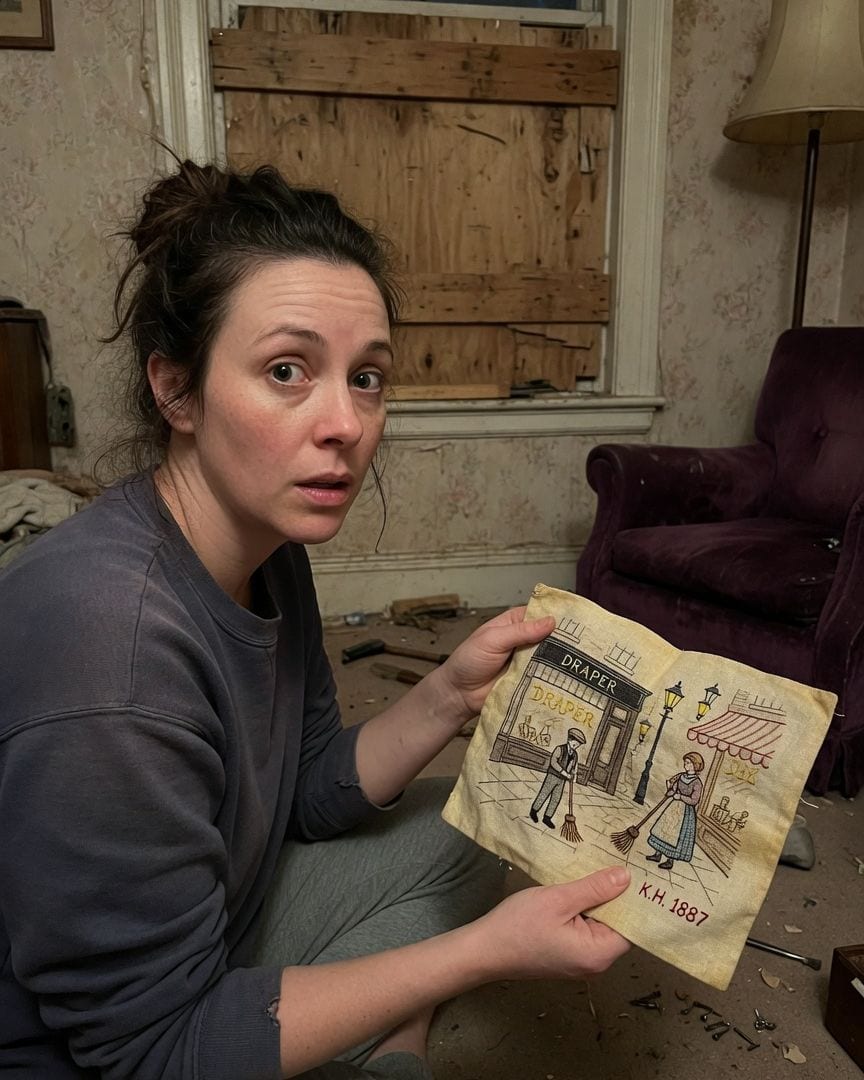
My flat's window shows a gaslit Victorian street across a brick shaft. The nails I hammered back into its frame went into wood soft and new.
My new flat came with a boarded-up window, which the agent dismissed as just an old lightwell. Driven by curiosity, I removed the boards, expecting brick or darkness. Instead, my window opened directly onto a bustling, gaslit street from 1887, a vision that defied all sense.
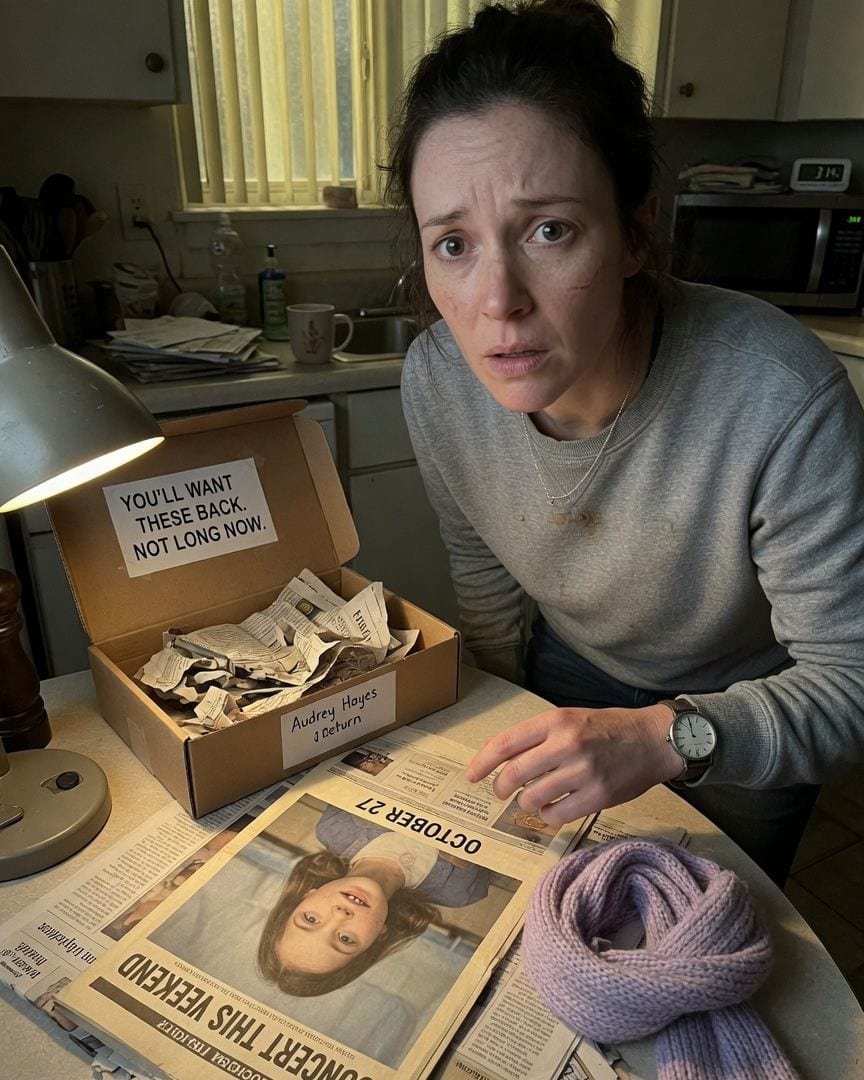
A box turned up with my name and no sender. Inside was a watch I lost years ago, still ticking and set right — wrapped in newspaper dated two weeks from now.
A plain brown box appeared on my step, containing my long-lost personal items. Among them, my grandmother's ticking watch and a newspaper dated two weeks in the future. But a historical ledger then revealed my name and these exact items, listed in 1965.
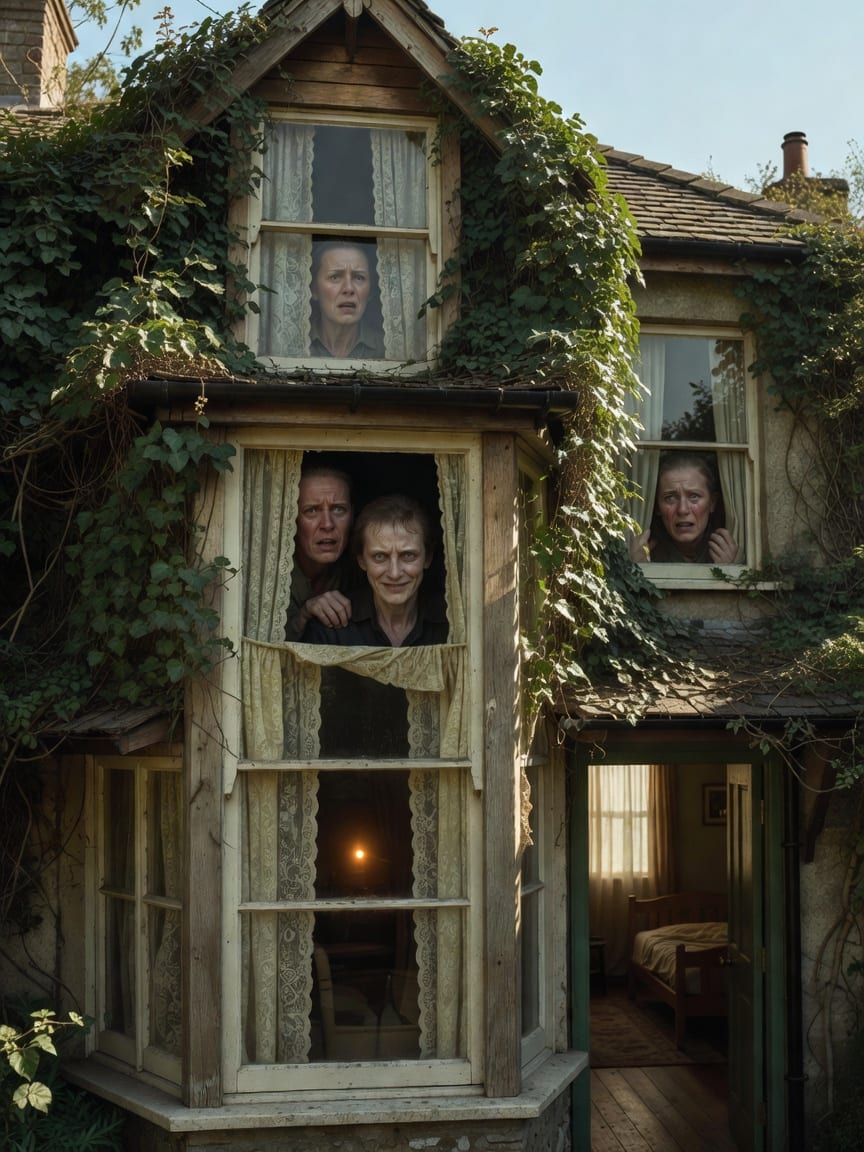
My empty cottage neighbor's electricity meter still climbs every night, and everyone in town says no one has ever lived there.
I moved to Oakhaven for a fresh start, settling into my quaint new cottage. Everyone, from the estate agent to the vicar, insisted the dilapidated cottage next door had been empty for generations. But when I ventured inside, a single porcelain doll sat spotless on a dusty dresser, watching the doorway.
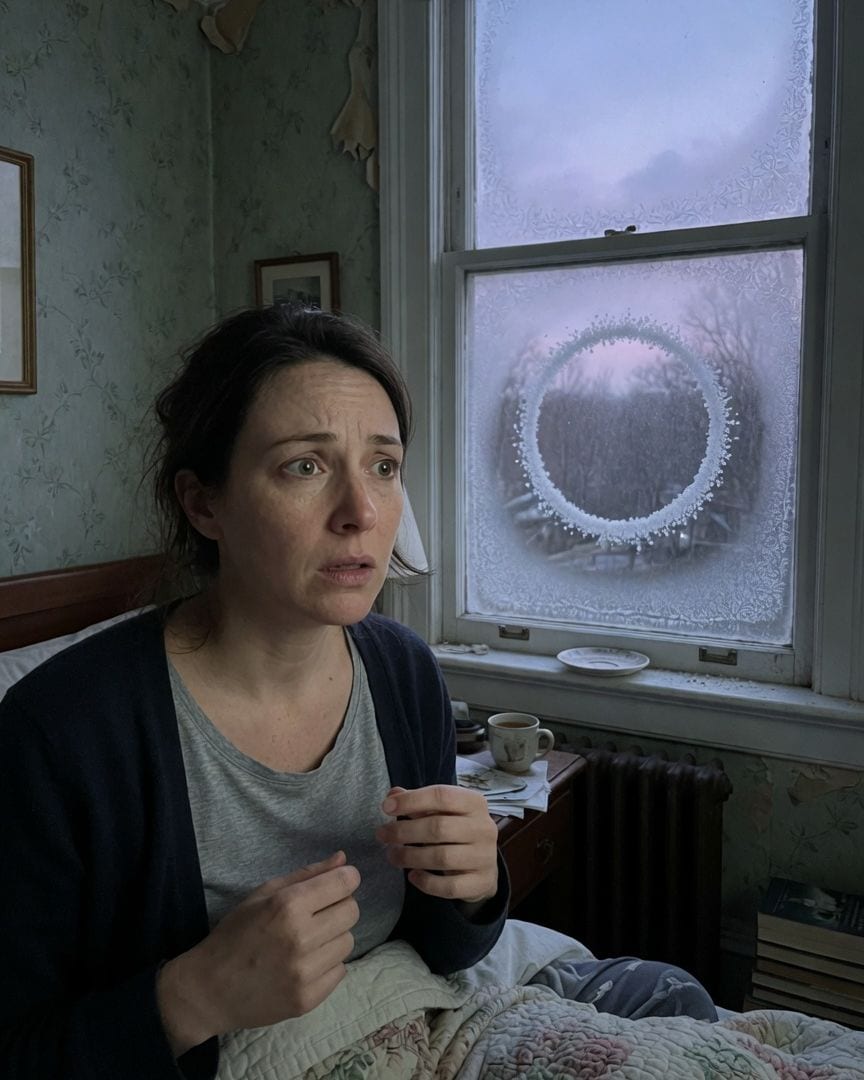
A 1963 obituary for a vanished 7-year-old girl lists *my Fenwick address* as her last known home.
Fenwick has its quaint traditions, like placing a salt saucer on the sill for protection. I put mine on my fourth-floor bedroom window, a private scoff at local custom. The next morning, the saucer was gone, replaced by a perfect salt ring on the *outside* of the glass, impossible to reach.
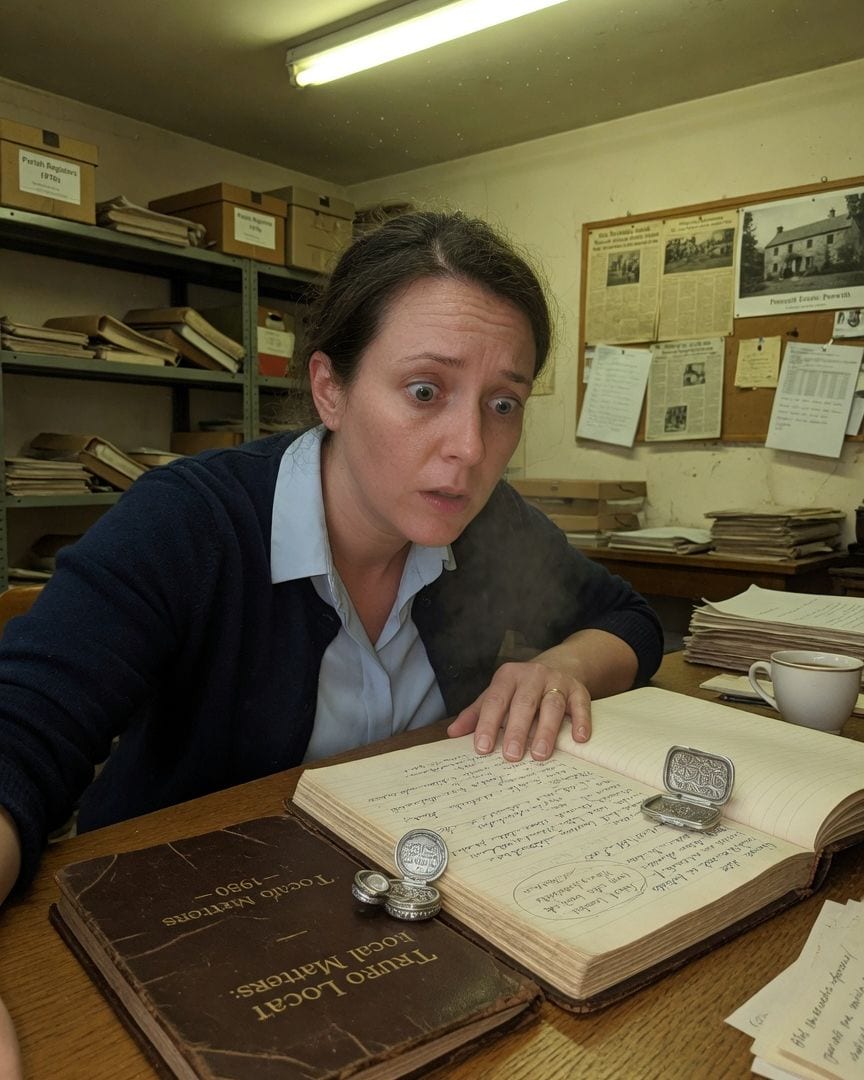
My antique locket held my maiden name, unused in eleven years, engraved 'until the ninth.' The dealer said it was 'for her, when she comes.'
After a tough week, Maxwell gifted me a beautiful antique locket from Truro market. Later, examining it with a jeweler’s loupe, I found my maiden name, 'Sheppard,' etched inside, along with the words 'until the ninth.' I haven't used that name in eleven years, and the impossible precision of the engraving sent a chill through me.