My north gable gets a fresh, stark white mark every dawn. It appears impossibly high, always above the last, and my ladder is locked in the shed.
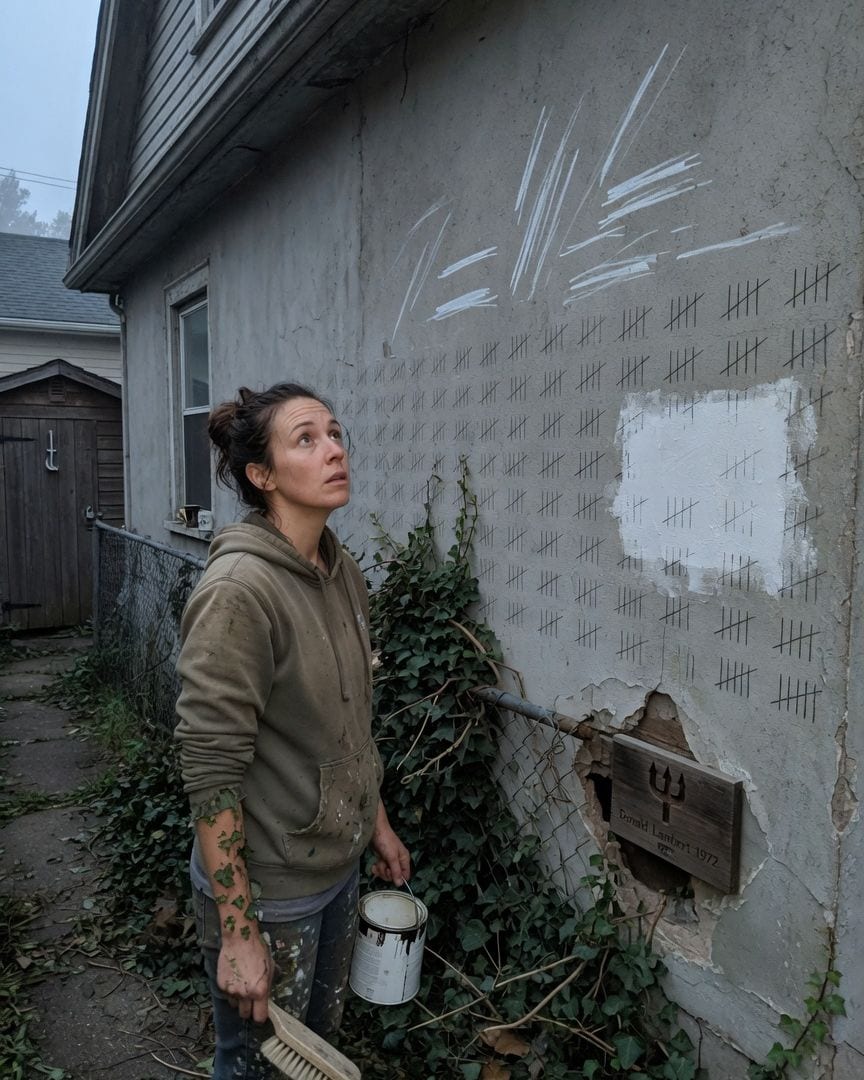
The first thing you learn moving to Oakhaven is that everyone here has Opinions about gardening. Mine, in particular, concerned the north gable of my new house, a charming, if slightly neglected, Victorian.
Eleanor Marsh, my neighbor, a woman whose face was a roadmap of polite disapproval, had practically leaned over our shared hedge to give me her two cents.
"You leave that ivy be, dear," she'd said, her voice dropping to a strange, almost solemn register. "It’s been there longer than any of us. Some things are best untouched."
I nodded, smiled, and privately rolled my eyes. The property survey, a document I’d paid good money for, had been explicit: remove the dense, ancient ivy on the north gable.
It was pulling at the mortar, threatening the integrity of the wall. Practicality, as always, won over vague neighborly warnings.
So, on a Tuesday, armed with secateurs and a good old-fashioned pulling technique, I went to work.
It was thick, a matted blanket of dark green, smelling of damp earth and something else I couldn't quite place – old dust, maybe, or deep shade.
Hours later, with a mountainous pile of severed vines by the fence, the render of the north gable finally stood exposed. It wasn’t pristine, as I’d expected. Instead, it was scored, top to bottom, with hundreds of faint, thin lines.
Tally marks, grouped in careful fives, faded with age and hidden for decades. A curiosity, I thought. Maybe some bored kid, generations ago.
I tidied up, locked my ladder securely in the shed across the yard, and went to bed, tired but satisfied.
The next morning, I stood with my coffee, looking out at my newly revealed wall. My breath hitched. Above the old, faded marks, stark white against the grey render, was a fresh, single stroke.
It was high up, impossibly high, easily two feet above where I could reach, let alone without the ladder. My ladder was still in the shed, locked.
I must have missed it yesterday, I thought, maybe it was just a faint old one I hadn't noticed. But the mark felt new.
Each dawn since, another appeared. Always higher than the last. Always impossible to explain.
I tried to rationalize. Kids with a long stick? But the marks were too precise, too uniform. And the height, the sheer, impossible height, grew each day.
I fetched a bucket of soapy water and a stiff brush, determined to prove it was just some trick, some grime I hadn’t noticed. The lowest of the new marks, the one from yesterday, wouldn’t budge.
I scrubbed until my arm ached, the water turning grey, but the white stroke remained, obstinate and stark. I even got a can of exterior paint, a spare from the trim, and painted over two of the freshest marks.
I watched them dry, a pristine white patch covering the unwelcome lines. The next morning, a fresh stroke appeared not on the painted patch, but on the painted surface, an undeniable new mark, still higher, still out of reach.
The mundane explanations were failing, one by one.
Frustrated, a cold, quiet certainty beginning to coil in my stomach, I started examining the older marks, the ones that had been hidden under the ivy for so long. Some were almost worn smooth by time, faint ghost lines.
Others, beneath the thickest sections, were still sharp, as if cut yesterday. I ran my fingers over them, feeling the shallow grooves. And then I saw it.
Among the ancient tallies, faint, almost imperceptible until I looked for it, was a recurring symbol. It wasn't random, not a doodle. It was like a stylized, three-pronged fork, etched sporadically, subtly, between the groups of fives. It was deliberate.
It was systematic. This wasn't vandalism. This wasn't a prank. This was... something else. The dread settled in, not a scream, but a quiet, chilling certainty. Someone, or something, was marking my wall, and it wasn’t stopping.
Driven by a growing unease, a gnawing need for an answer, I returned to the gable one afternoon. There was a particularly thick section of old, woody ivy I’d missed, almost fused with the brickwork near the bottom.
I tugged at it with a renewed urgency, ignoring the prickle of dead leaves against my skin. The roots were deep, tenacious. I pried harder, feeling the ancient tendrils groan as they pulled away from the render.
Beneath it, not more scored render, but a small, dark shape.
It was a piece of wood, weathered almost black, embedded deep in the wall, half-swallowed by the mortar.
I worked at it, scraping away decades of dirt and dried tendrils, dislodging a cascade of ancient mortar dust that smelled of damp earth and time itself.
My fingers finally closed around it, pulling it free with a sharp, sickening crack.
It was a plaque. Small, about the size of my hand, smoothed by age. Etched into the dark, aged wood was the same three-pronged symbol I’d seen on the wall, unmistakably so.
And beneath it, faded but still legible, a name: 'Donald Lambert'. And under the name, a year: '1972'.
My breath hitched, a cold knot forming in my chest. This wasn't just marks. This was a record. A name. A date.
It felt less like a discovery, and more like an alarm going off, shrill and insistent, in the deepest, quietest part of my mind.
I spent the next few days in a fog, glued to my laptop, researching. Donald Lambert, Oakhaven, 1972. The town’s online archives were sparse, a frustrating mix of old council minutes and cheerful local festival announcements.
But eventually, after sifting through digital dust, I found a few old newspaper clippings. Nothing scandalous, just small, matter-of-fact notices. "Donald Lambert, newcomer to Oakhaven, missing, presumed relocated," one read. From 1972.
No body, no crime, just a quiet disappearance, a shrug from officialdom.
I broadened my search. Other ‘relocations’ from Oakhaven over the decades. The names were different, the years varied, but a pattern began to emerge. Always newcomers, always around properties with specific features. Older homes. North-facing gables.
Often, the clippings subtly mentioned "significant ivy growth." I felt a shiver trace my spine.
Needing a break from screens, and perhaps some local, unspoken wisdom, I decided on a trip to Roy Kingsley’s hardware store. Roy, a man whose gruff exterior matched his sawdust-scented shop, had lived in Oakhaven his whole life.
He was a man of few words, but sometimes, those words were heavier than lead.
I bought some obscure plumbing part, then, as he rang me up, I casually steered the conversation. "Fascinating history this town has, Roy," I began. "Was reading about some of the old houses, saw a name pop up from 1972.
Donald Lambert."
Roy stopped, his calloused thumb resting on the register button. His gaze, usually fixed on the price, drifted past me, out the door, then back to my face. "Lambert," he repeated, slow and deliberate. "Aye. Moved here, he did.
Like a fair few, over the years." He paused, wiping a hand on his apron. "Some folks, they don't understand Oakhaven. Don't respect the old ways. Things best left alone, they are."
He looked past me again, his eyes lingering on the faint outline of my house's north gable in the distance. "Some properties got... troubles, if not properly handled."
He nodded vaguely in my direction, then cleared his throat and finished the sale. The unease I’d felt solidifying into a chilling recognition. This wasn’t isolated. It was a pattern.
Woven into the very fabric of the town, known by its oldest residents, and I was stepping into it.
One afternoon, returning from the library with a stack of local history books (still no clear answers, just more vague mentions of "founding families" and "unusual prosperity"), I found something on my porch step.
It was a small, hand-carved wooden bird, nestled perfectly by the welcome mat. It was a common local good-luck charm, sold in the tourist shops, often given as housewarming gifts.
I picked it up, the wood smooth and warm in my hand, admiring the intricate work. It was a pretty thing.
Then, a cold dread crept over me as I turned it over. Etched into its smooth underside, almost invisible in the fading light, was the three-pronged symbol. The same one from the plaque. The same one on my wall.
It wasn't a gift. It was a warning. A message.
Eleanor Marsh, my seemingly benign neighbor, was often in her garden, tending her prize-winning hydrangeas. And I found myself watching her more and more. Catching glimpses of her gaze drifting past her vibrant blooms, past the hedge, towards my house.
Towards the north gable. The glances weren't hostile, not exactly. More like quiet observation. A knowing surveillance. As if she was waiting for something. Or watching a process unfold.
One evening, as the sun dipped below the trees, painting the sky in bruised purples and oranges, I stood by my wall. Another tally mark had appeared. Higher again. A fresh, stark white line against the deepening dusk.
Eleanor’s voice, calm and even, cut through the quiet. "The ivy grows back fast, doesn't it, dear?" she called out from her garden, her secateurs snipping a dead head. "Best not to fight nature's way."
A shiver ran down my spine. The way she said it. The subtle emphasis. She knew. She knew exactly what she was doing, what I was seeing, what was happening.
And her composure, her unnerving calm, was far more terrifying than any monster.
The next morning, I stood on Eleanor Marsh’s porch, the small wooden bird clutched so tightly in my hand that the carved wood dug into my palm. My voice, when I spoke, was thin but steady. "Donald Lambert, 1972.
The symbols. What is going on?"
Eleanor, watering a hanging basket of fuchsias, didn't flinch. Her expression was unruffled, her movements calm. "Zoe, dear. Come in, come in. The sun is getting warm. Can I offer you some tea?"
I shook my head, my jaw tight. "No tea. Just answers. I found a plaque. I found newspaper clippings. People disappearing. All with houses like mine. All with this symbol."
I opened my hand, showing her the wooden bird, the symbol glaring up at us. "What is it?"
Eleanor sighed, a long, weary sound that seemed to carry the weight of generations. She led me to her pristine sitting room, gestured to a floral armchair, and settled herself opposite me, her hands clasped.
"Just a story, dear," she began, her eyes softening, but I cut her off.
"It’s not a story. It’s a pattern. The disappearances, the specific house features, Roy Kingsley talking about 'old ways' and 'troubles.' And the tally marks. They're counting down, aren't they?"
Eleanor looked at me then, her gaze steady, almost pitying. "Oakhaven has always been... protected," she said, her voice quiet, matter-of-fact. She spoke of it not as a confession, but a simple truth, like explaining the weather.
"A pact, of sorts. With something ancient, something that ensures our prosperity, our safety, in exchange for... periodic offerings."
My mouth felt dry. The room, with its antique furniture and scent of lavender, suddenly felt cold, the air thick and heavy.
"The ivy," she continued, gesturing vaguely towards my house across the garden. "It was part of the containment. A living barrier, if you will. It slows the natural cycle, keeps the count at bay.
A slow-release mechanism, designed to keep things quiet, balanced."
The pieces, sharp and jagged, began to click into place, forming a horrifying mosaic. My property survey, the instruction to cut the ivy. My pragmatic decision. Eleanor’s warning, dismissed as quaint.
The ancient tally marks, then the new ones, appearing impossibly high, daily.
"The tally marks?" I whispered, my voice barely audible.
"A visible manifestation of the count," Eleanor confirmed, her gaze unwavering. "Accelerating, of course, when the containment is disturbed. You cut the ivy, child. You sped things up."
The blood drained from my face, a cold rush. The quiet dread, the unsettling certainty, solidified into icy, absolute horror. This wasn’t a prank. This wasn’t superstition. This was real. And I had unleashed it.
"How do I stop it?" I demanded, the words raw, desperate. "How do I reverse the count? There has to be a way."
Eleanor just looked at me, a profound sadness in her eyes, yet still with that unnerving calm that chilled me to the bone. "You can't, dear," she said softly, her voice barely a whisper. "It has begun."
She rose, her movements fluid and unhurried, and led me back outside, a silent, grim procession towards the north gable wall.
The late morning sun cast long shadows, but the wall, with its stark white marks, seemed to hum with an unnatural energy.
The tally marks had reached the very top, impossibly high, a final, stark stroke standing out against the grey render. It was perfect. Complete.
And etched into that newest, highest mark, almost imperceptible unless you knew to look, was the familiar three-pronged symbol.
It wasn't glowing, not literally, but it seemed to pulse with a faint, internal light, a subtle, ethereal energy that made my vision swim.
Eleanor then reached out, her fingers cool and dry, gently taking my left hand. She turned my wrist, exposing the inner skin, where a faint, almost invisible mark had always resided.
I’d always dismissed it as a birthmark, a slight discoloration I’d had since childhood. It was a faint, swirling pattern, easily overlooked.
"The count is complete, child," Eleanor said, her voice soft, almost soothing, yet utterly devoid of comfort. "It always finds its way."
On my wrist, the faint 'birthmark' began to throb. Not just a feeling, but a dull, internal pulse, a subtle light emanating from beneath my skin, mirroring the symbol high on the wall.
The world spun, the neatly manicured garden, the quiet street, Eleanor’s composed face all blurring into a meaningless jumble.
I looked from the glowing symbol on the wall to the throbbing mark on my wrist, and a single, terrifying truth slammed into me with the force of a physical blow.
The tally marks weren't just a general warning for the town. They were counting down to me.
Back inside Eleanor’s quiet sitting room, the air felt strangely still, as if the world outside had paused, waiting. My wrist throbbed with a steady, insistent rhythm, a silent, terrifying heartbeat against my skin.
Eleanor, calm as ever, began to explain, her voice weaving a tapestry of chilling truth.
The 'birthmark' on my wrist, she clarified, was a generational marker. A dormant sign, passed down, that designated certain individuals.
Those who, through lineage or unfortunate circumstance, would become either 'keepers' like herself, silently ensuring the pact continued, or 'offerings' when the balance was disturbed. I was an offering.
My family, it seemed, had a distant, almost forgotten connection to Oakhaven's founders, and thus, to the pact.
"The town isn't malicious, Zoe," Eleanor said, her gaze steady, almost gentle. "Merely surviving. We've always prospered here, untouched by the misfortunes that plague other communities. This is the cost. A terrible one, perhaps, but a necessary one."
She spoke of the property survey, the document that had explicitly instructed me to cut the ivy. It wasn't an oversight, she explained. It was a subtle, institutional mechanism.
A generations-old practice, designed to guide newcomers – those whose markers were dormant but present – towards unwittingly activating the cycle.
A way to ensure the pact's continuation without direct local complicity, without the townsfolk having to actively choose a victim. The town, through its quiet systems, simply allowed the inevitable to unfold.
The pattern of 'relocations' I’d found in the archives? Donald Lambert, and all the others like him. They were individuals whose markers had activated, whose counts had completed. They were the previous offerings.
The entity itself wasn't a monster in the traditional sense, Eleanor clarified, but a force of balance. A primordial thing that ensured Oakhaven's peace at a terrible, cyclical cost.
My cutting the ivy hadn't just broken a rule; it had accelerated my own activation. It had drawn the entity's attention to me, specifically.
I was the next offering, and the town, through Eleanor, had simply allowed the inevitable to unfold. The horror was in the calm, the systemic inevitability of it all.
The tally marks on the wall were utterly still now, a silent testament to the completed count. My 'birthmark' pulsed with an insistent rhythm, no longer a dull throb, but a deep, internal pull towards the house, towards the gable.
I tried to pack, to flee, to grasp at some last vestige of control. But an inexplicable inertia held me, anchoring me to the spot, a profound, internal resistance to movement.
Every fiber of my being wanted to run, but my body felt heavy, rooted. It was like fighting a deep current, a silent, invisible force that gently, but firmly, kept me in place.
I confronted Eleanor one last time, not with anger, for anger felt hollow and pointless now, but with a desperate, hollow plea. "There has to be a way," I whispered, my voice raw. "A ritual. A sacrifice.
Something I can do to break it."
Eleanor shook her head, her calm unwavering. "There is no escape, child. Only acceptance." She spoke it with a quiet finality that extinguished any last flicker of hope.
I looked from the wall, where the last tally mark seemed to shimmer with an unseen light, to my throbbing wrist. A profound, terrifying shift began within me.
It wasn't a sudden surrender, not a defeat, but a quiet understanding, a terrifying clarity. The dread wasn't a scream, but a whisper, a gentle, insidious turning of the tide within my own consciousness.
The fight, the frantic struggle, simply… eased. Subsided. I looked at Eleanor, truly looked at her, and saw not a villain, but a reflection. A quiet mirror of my own coming stillness.
The confrontation was not a battle, but a quiet, horrifying transfer of understanding, a passing of the torch in the town's grim tradition. The entity was not a thing to be fought, but a cycle to be fulfilled. My cycle.
The house settled into an unnatural quiet. The air, heavy with unspoken things for weeks, felt light, almost buoyant. Then, one morning, I looked out at the north gable wall. The tally marks were gone. Completely.
The render beneath was pristine, unblemished, as if they had never been. No faint ghost lines, no lingering indentations. Just a smooth, grey surface.
The ivy, however, began to grow back with unusual speed. Within days, tender green shoots appeared, creeping across the wall with an almost aggressive vigor. A vibrant, deep green, already beginning to blanket the exposed render once more.
The air in Oakhaven itself felt lighter, almost serene, a palpable sense of relief settling over the quiet streets, like a collective sigh. Life in the town resumed its placid rhythm, unburdened by the recent disturbance.
Weeks later, Eleanor Marsh tended her hydrangeas, their blue blooms impossibly vibrant, almost glowing in the morning sun. She paused, secateurs in hand, watching me on my own porch, watering a pot of petunias.
I moved with a quiet, almost serene grace, a placid, distant look in my eyes.
My 'birthmark' was no longer visible, faded back into my skin, but Eleanor could feel the quiet resonance, the deep, internal peace that now emanated from me.
I looked up, caught Eleanor's gaze across the hedge, and offered a small, knowing smile that didn't quite reach my eyes. Eleanor Marsh watched her, a faint, unburdened smile playing on her lips.
If this one got to you
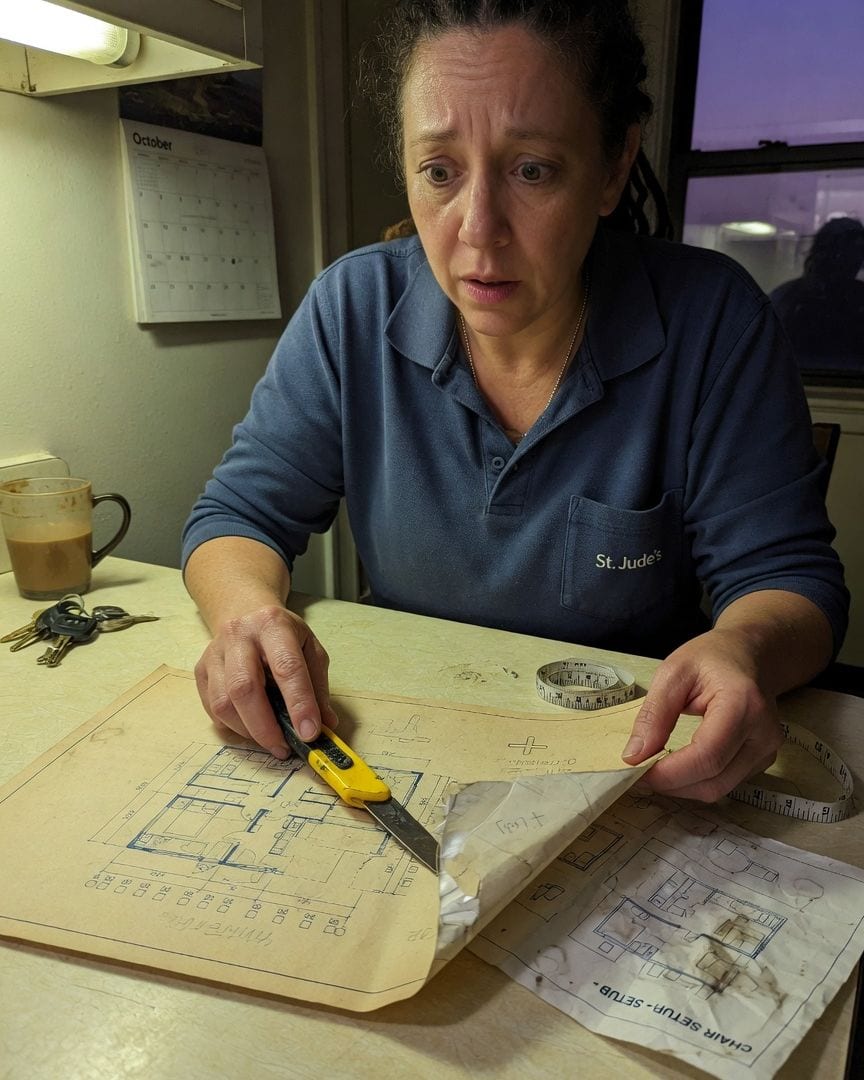
My church hall always has ninety-seven chairs. The diagram shows ninety-six, and the extra one faces the wall where a cross won't rub off.
My Monday morning cleaning routine at St. Jude's is precise: 96 chairs, neatly arranged. But for weeks, I've found a 97th chair in the same spot, always returning. My rational mind searched for an explanation, but each time, it fell apart. Then I peeled back the old blueprint, and a woman's name was etched beneath a faint cross.
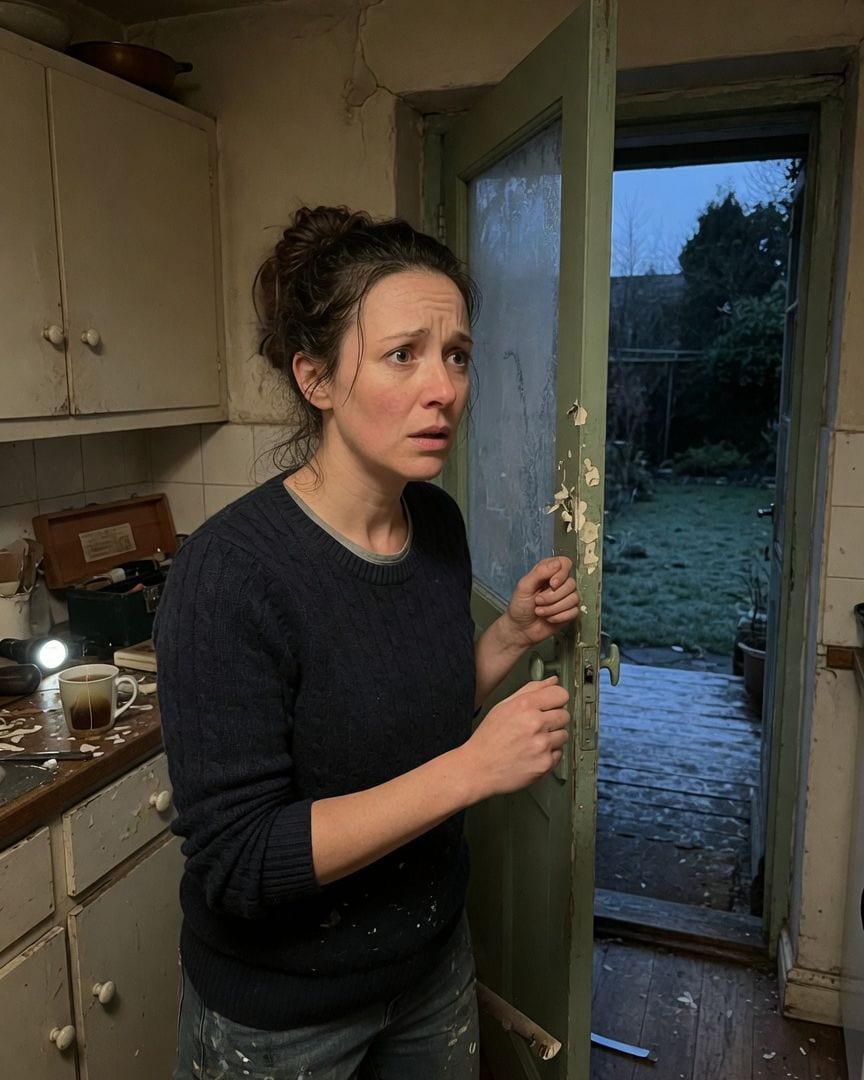
My 1950s cottage doorframe has '1923' carved into it, a date that simply cannot exist here.
I'd poured my heart into renovating my new cottage, especially the back door to my patio. But when I opened it, I wasn't looking at my frost-kissed garden. Instead, a cramped, reeking scullery with a bone-chilling dampness stared back, an impossible image that wouldn't leave my mind, even after the door closed.
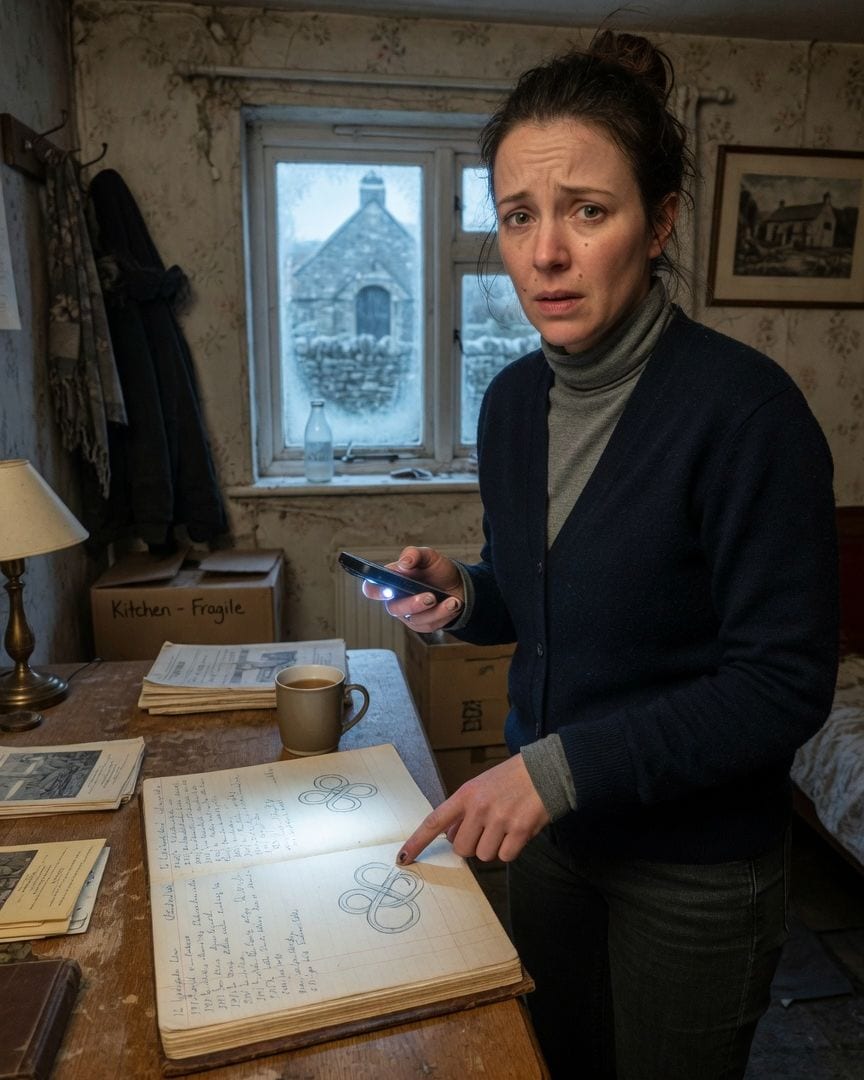
Milk appears daily by my lychgate. The dairy closed in '79. My address is handwritten into their old delivery book, starting the day we moved in.
Moving to Blackwood Creek, I loved the quaint charm, especially the unexpected morning milk delivery to my lychgate. But when I mentioned it to Eleanor at the village shop, her smile froze. She told me Willow Creek Dairy closed decades ago, in '79.
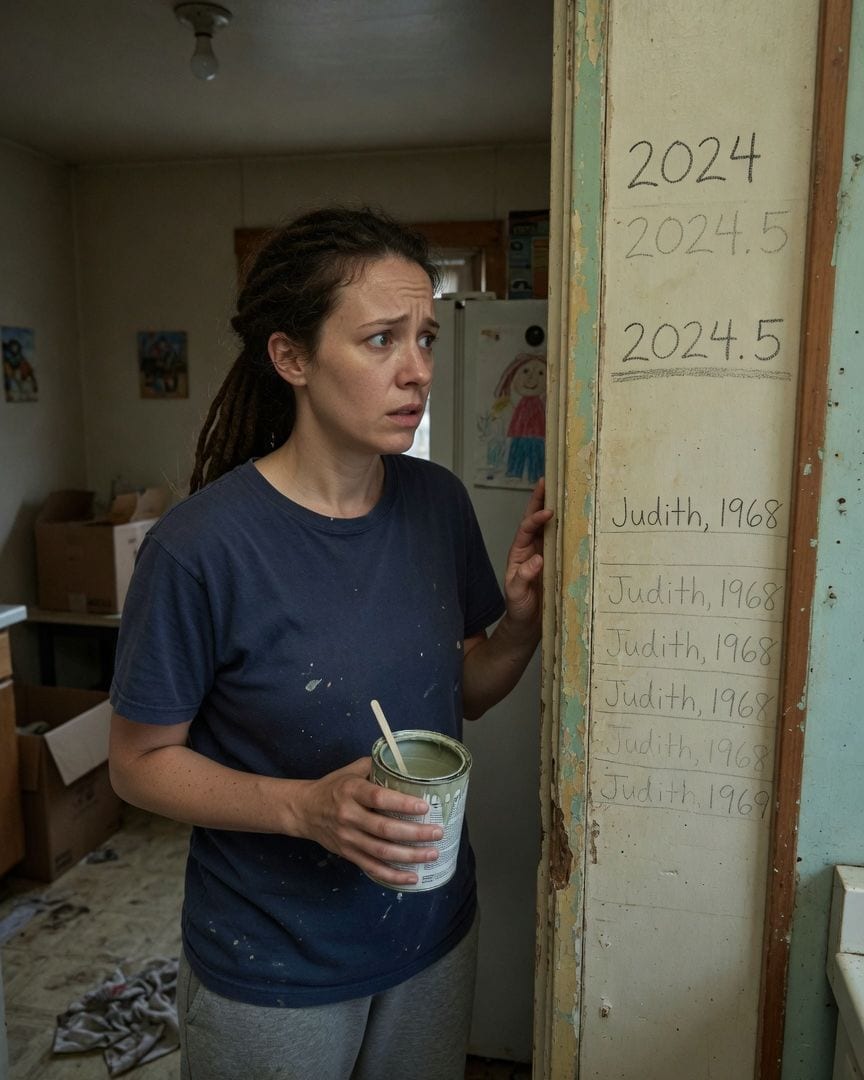
A child's height marks grow on my kitchen doorframe, dated this year, in a house where I live alone.
I moved into my new house, ready for a fresh start, and found a child's old height chart on the kitchen doorframe. The last mark was dated 1968, but a week later, a new one appeared, dated this year, in the exact same looping handwriting. I live completely alone.
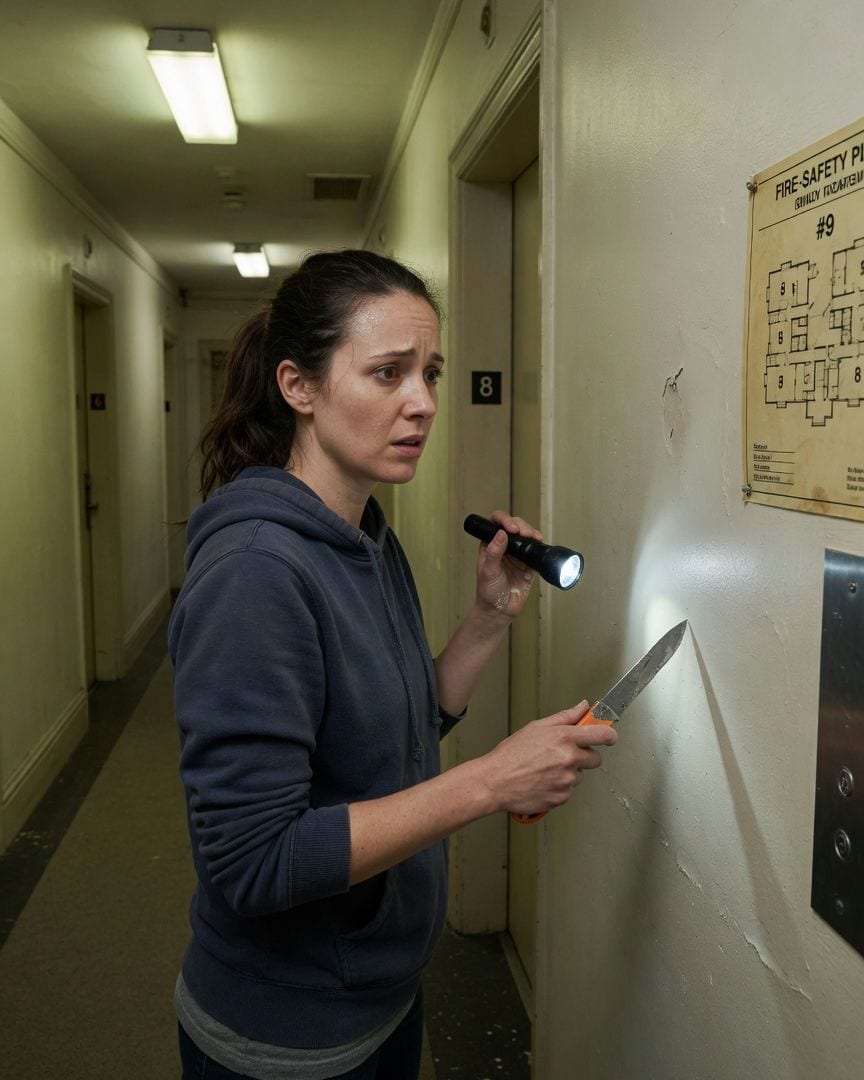
That blank wall in my hallway has a hidden metal plate. Tonight, after eleven years, it just clicked.
For eleven years, my apartment building's fire plan has shown nine apartments on my floor. But I've only ever counted eight doors, the space for the ninth a blank wall. Now, I've found a hidden metal plate behind the plaster, and from deep within, I just heard a soft *click*.
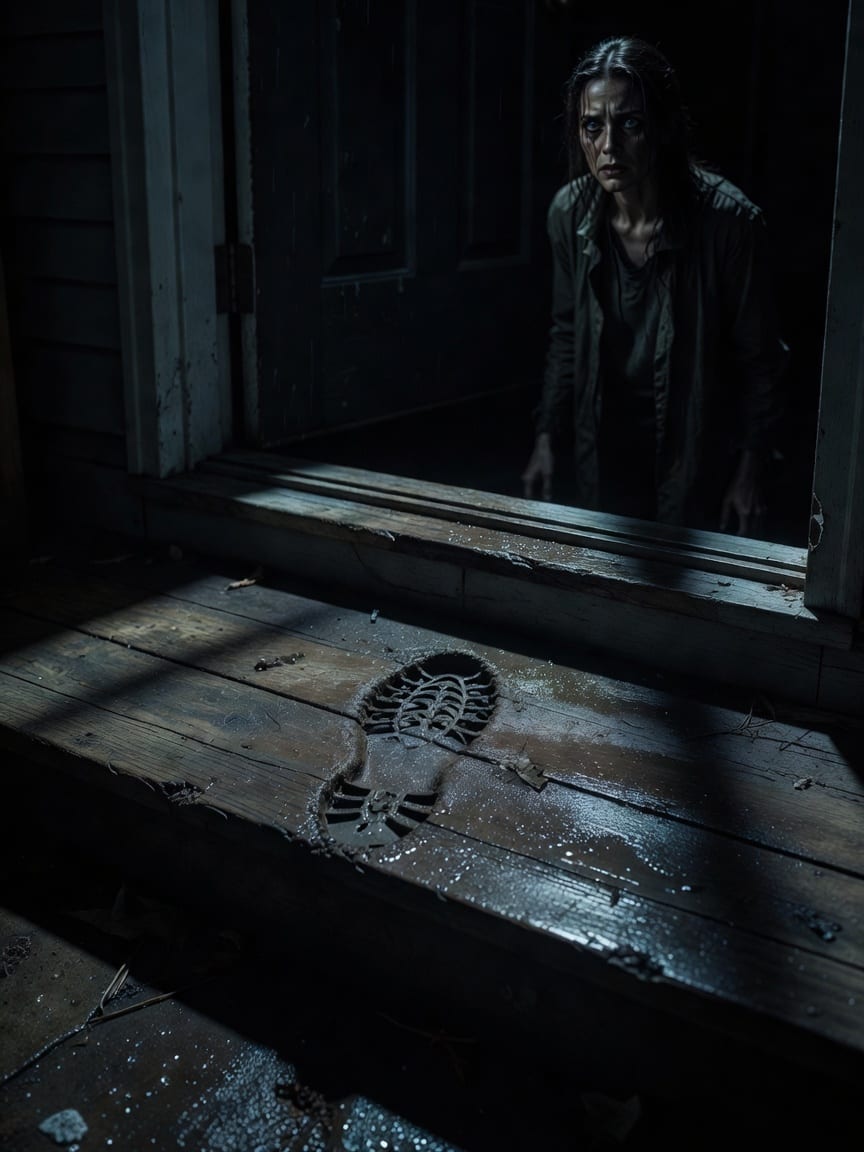
My landlord's only rule: never let the outside tap run after sundown. Last week it dripped. This morning, wet bootprints ringed the back step from the tap to my door, all the same size. The tap was off.
We'd just settled into Waterside House, with its strange landlord rule about the outside tap. After the washer broke, I found perfect, wet bootprints leading from the tap to our back door, but the tap was cranked completely off, tighter than I could manage.