My prison number C-6640 appeared in a logbook next to another inmate's name in 1968, again in 1981, then 1994, always the same cell, B-wing 14, and always 'settled.'
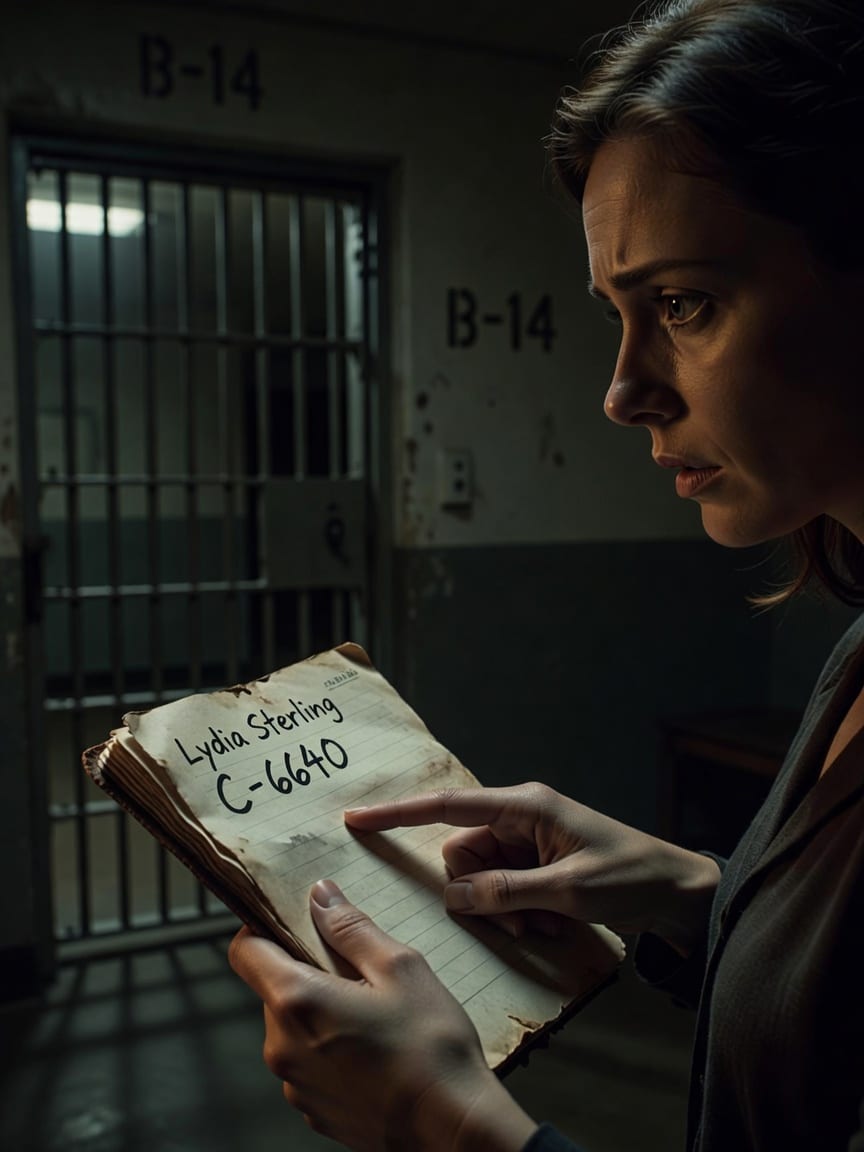
The air in the Barrowfield archives always smelled of old paper and something else, something metallic and cold that I could never quite place.
I’d only been the new archivist for a few weeks, still learning the rhythm of the place, the way the ancient heating system groaned like a tired beast.
My main task that morning was to organize a stack of visitor logbooks, dating back to the 1960s. They were thick, bound ledgers, their pages brittle at the edges.
My own induction number, C-6640, was still fresh in my mind. The prison issued them sequentially, a mundane identifier in a place obsessed with order.
As I flipped through the first dusty book, my finger tracing faded ink, I saw it. In the margin of an entry from 1968, next to the name 'Arthur Jenkins,' B-wing 14, was written 'C-6640.' For a second, I paused.
A coincidence, I thought. Numbers repeat. My brain, trained to find patterns, dismissed it. There must be an administrative reason. Maybe it was a sub-designation, or just a common numerical sequence.
But then I saw it again. Another entry, same column, this time 1981. A different inmate, 'Thomas Rourke,' B-wing 14. And there, scrawled beside his name, 'C-6640.' This time, it wasn't alone.
Below it, in a firm, almost elegant hand, were the initials 'M.B.' and the word 'settled.' A cold knot started to form in my stomach. Coincidence felt like a stretch.
I rushed through the pages, my fingers fluttering, a growing sense of unease coiling in my chest. And there it was again, 1994. 'David Cho,' B-wing 14. 'C-6640. J.B. settled.'
The impossible repetition, across different decades, different inmates, always the same cell, B-wing 14, and always that specific number. It wasn't just a number. It was a pattern that defied every rule of prison numbering, every logic of random assignment.
My own prison number. My heart was beginning to hammer, slow and heavy, against my ribs.
Disturbed, I spent the next few days digging. I pulled up the old prison registers, cross-referencing the inmate names from the logbook entries. Arthur Jenkins, Thomas Rourke, David Cho – they were all real. Their sentences served, their records clear.
But why C-6640? I pulled up my own induction paperwork, double-checking my number, half expecting a typo, a clerical error that would make this all evaporate. It was correct. C-6640.
I went to the digital archives, searching for 'C-6640,' hoping for an explanation. A code for a specific type of inmate, perhaps? A classification for a cell? The system whirred, then returned 'no results.'
It didn't exist in the official digital records, as if it had been scrubbed, or never truly existed outside those handwritten logbook entries. The silence of the database was deafening.
I widened my search, looking for any unusual protocols concerning B-wing 14. Eventually, I found an old memo from the late 70s concerning 'special handling protocols' for B-wing 14, signed by a 'J. Barlow.'
It was vague, referring only to 'maintaining stability' and 'periodic review.' No mention of what required such stability or review.
The lack of a clear explanation in official records, despite its undeniable presence in the physical logbook, made the wrongness deepen. It felt like a deliberate omission, a hidden corner in a supposedly transparent system.
Then it clicked. The initials. 'M.B.' and 'J.B.' in the logbook. I’d heard the names mentioned in passing during my induction, part of the Barlow lineage.
Raymond Barlow, the current senior warder, often spoke of his father, Joel (J.B.), and his grandfather, Maxwell (M.B.), both of whom had served as warders here, deep into the past. This wasn't just a random series of numbers and names.
This was a family secret, woven into the very fabric of Barrowfield. A cold certainty settled over me: the Barlows weren't just warders; they were keepers.
Driven by a need to understand the Barlow connection, I started searching for any archived documents signed by 'M.B.' or 'J.B.' related specifically to B-wing 14.
The old document room, rarely accessed, was filled with metal filing cabinets that rasped like ancient teeth when opened.
After hours of sifting through dusty folders, my fingers stained with paper dust, I unearths a brittle, yellowed inmate transfer form from 1975.
My heart pounded. This was it. At the top, in crisp, official lettering, it read: 'C-6640 Event.' But the crucial section, detailing the inmate's next of kin and origin, was heavily redacted with thick, black marker. My frustration flared.
I couldn't see anything. I held the form up, angling it towards the harsh, focused beam of the library’s emergency light, hoping to glimpse something beneath the ink. The heavy black thinned, just enough. Fragmented letters.
A partial street name, a few unmistakable consonants. I traced the faint outline of '..._TERLING, Elmwood Roa_...'
where the black-out began, my breath catching in my throat as my mind, unbidden, filled in the impossible blanks of my own surname and childhood street.
The reconstructed name and street hit me like a physical blow. My own family. My own past. Linked to C-6640 decades before I was even born. It defied logic.
I spent the next few days in a daze, the library's quiet hum doing nothing to soothe the frantic buzzing in my head. I meticulously compared the handwriting of the 'M.B.' and 'J.B.' entries in the logbook.
The signatures changed slightly over the years, as expected, but the overall style, the specific flourishes of certain letters, was consistent. A family hand, passing down the task.
I discreetly started researching my own family history, focusing on any connection to Barrowfield or its surrounding area in the 1970s. My grandmother had lived in a small, unassuming house on Elmwood Road her whole life.
There was no record of any family member ever being incarcerated, no hint of trouble or even a distant relation working at the prison. Just silence.
A deafening silence that resonated with the deliberate omission I'd found in the prison's digital archives.
I began to observe Raymond Barlow, the current senior warder. He was a stoic, quiet man, part of the furniture at Barrowfield, his face etched with the weariness of decades spent within these walls.
I noticed him conducting what seemed like unusually thorough, almost ritualistic, inspections of B-wing 14. He'd go at odd hours, always alone, carrying a small, worn leather-bound book that he would consult with an air of grave purpose.
The routine was too precise, too solitary for a standard check. The click of his keys echoing in the deserted corridor always sent a shiver down my spine.
One evening, I managed to get a look at an old prison roster from the 1960s. There it was: Maxwell Barlow, Raymond's grandfather, listed as the senior warder for B-wing.
The lineage of control over that specific wing, the consistent 'settled.' notation, the carefully managed records—it all pointed to a deliberate, long-term strategy. Not just random clerical entries, but a secret passed down through generations.
I felt a growing certainty that the Barlows weren't just warders; they were keepers.
My quiet investigation didn't go unnoticed. One afternoon, while I was reviewing old security camera footage of B-wing 14 for any anomalies related to the C-6640 entries, a shadow fell over my monitor.
Raymond Barlow appeared silently behind me, his reflection in the screen making me jump, a jolt of pure adrenaline shooting through me.
'Anything interesting, Sterling?' he asked, his voice calm, but with an unnerving, almost predatory edge. He didn't look at the screen, didn't spare a glance at the flickering images of empty corridors.
He looked directly at me, his eyes unreadable, unwavering.
I fumbled for an excuse, my heart thudding. 'Just... an inventory check, Warder Barlow. Ensuring all footage is archived correctly.' My voice sounded thin, reedy.
He simply nodded, his gaze still fixed on me. 'I see.' He paused, letting the silence stretch, the air in the small room growing heavy, thick with unspoken meaning.
Then he added, his voice dropping slightly, 'Some things are best left in the archives, Lydia. Some records are filed for a reason.'
The casualness of his tone, coupled with the direct warning, sent a chill down my spine that had nothing to do with the draft from the ancient air conditioning vent. He knew.
Later that week, I found a single, unmarked envelope slipped under my office door. My name wasn't on it.
Inside was a printout of my own security badge scan history, showing every single time I had accessed the restricted B-wing archives. Dates and times were circled in red.
The circles perfectly highlighted every instance I’d looked up documents related to C-6640. There was no note, no sender, no explanation.
Just the undeniable proof that someone was watching me, tracking my movements, and knew exactly what I’d been looking for. The hunt had turned. I was no longer the one digging for answers; I was now the hunted.
The direct warning and the surveillance printout galvanized me. I knew I had to confront Raymond. I waited until after hours, catching him in his office just as he was preparing to leave.
The fluorescent lights hummed, casting harsh shadows across his usually impassive face. I walked straight to his desk and placed the printout face-up on the polished wood.
'You've been watching me,' I stated, my voice steady despite my racing heart, despite the tremor in my hands.
Raymond didn't deny it. He sighed, a weary sound that seemed to carry the weight of years. He picked up the printout, his thumb brushing over the circled dates. 'You've been digging where you shouldn't, Lydia.
Some things are for the internal files, not public consumption.'
I pushed, my resolve hardening. 'C-6640. My number. My street. What is it? What does "settled" mean?'
Raymond looked at me, his eyes unreadable, like dark stones. He leaned back in his chair, the leather creaking softly. 'It's a designation,' he said, his voice low and even, utterly devoid of emotion, 'not an inmate ID.
It's what manifests.'
He explained, in that same terrifyingly calm tone, that 'C-6640' was the prison's internal code for a recurring phenomenon, an entity or energy that periodically 'settles' in certain inmates within B-wing 14.
He described it as a kind of 'possession,' a temporary but potent hijacking of a host. 'Settled.' wasn't an administrative note; it was the successful completion of a containment ritual, a transfer that temporarily pacified or redirected the entity.
He revealed that B-wing 14, the specific cell, was specifically designed to contain these manifestations. The 'special handling protocols' in the old memo were for the entity, not for the inmate.
The inmates from the logbook weren't just prisoners; they were hosts.
The earlier entries, the specific cell, the repeated 'settled.'—it all clicked into place, a horrifying coherence. The pieces of the puzzle weren't random at all; they were part of a meticulous, ongoing operation.
'And my street?' I asked, my voice barely a whisper, a thread of sound in the sudden, vast quiet of his office.
Raymond's gaze hardened, focusing on something beyond me, beyond the room. 'The entity... it has a particular affinity for certain bloodlines, certain places. Your family's connection... it's historical. We've been monitoring.'
The calm, bureaucratic explanation was far worse than any monster I could have imagined. It wasn't an isolated event, a strange occurrence. It was a managed horror, an ongoing operation, embedded within the very foundation of the prison.
I felt a cold dread settle deep in my bones. I wasn't just an archivist; I was part of the file.
I struggled to process the enormity of what Raymond had told me. A managed entity, bloodlines, monitoring. 'Your family, the Barlows, you've been doing this for generations?' I asked, the question raw, stripped bare.
Raymond nodded slowly, his face etched with a resigned weariness. 'It's our duty, Lydia. Always has been.'
He explained that the duty was passed down, along with the knowledge of the rituals and the lineage of 'linked' families—families identified as potential hosts.
He said his grandfather, Maxwell, and father, Joel, had meticulously maintained the records, ensuring the protocols were followed, the entity contained. 'The redacted line in that old form... it was for protection. For you.
To keep that connection hidden for as long as possible.'
He then stood, walked to a hidden compartment in his desk, and retrieved a worn, leather-bound book.
This wasn't just an administrative log; it was clearly a personal, almost sacred artifact, its cover smooth from years of handling, its edges softened with age.
He placed it on the table between us, pushing it gently across the polished surface.
'This is the true record, Lydia,' he said, his voice softer now, almost regretful, the hum of the fluorescent lights suddenly louder in the room. 'The Barlow family ledger.'
He opened it to a page filled with handwritten entries: dates, names, locations. He pointed to a line, his finger tracing down a column, a list of family names, some familiar from local history, others completely unknown.
But as he slid the book closer, forcing me to look, I saw a recent entry, stark against the older script.
'Sterling, Lydia. Born: 1991. Status: Observed.' The ink was fresh, the observation date was yesterday.
I stared at my name, the fresh ink on the page a stark, chilling confirmation. My breath hitched. 'Observed?' I whispered, my voice a thin thread.
Raymond's face was etched with a resigned weariness that settled deep in his eyes. 'It means you've been flagged. The entity, C-6640, seeks out certain predispositions, certain 'resonances' within specific bloodlines. Your family, the Sterlings, have a strong historical resonance.
We've been monitoring your lineage for decades, waiting for signs.' He explained that my induction number, C-6640, wasn't a random assignment but a deliberate act. 'When you were hired, your background check flagged you.
We assigned you that number as a pre-emptive measure, to integrate you into the system, to keep you close, to observe. To prepare.'
He recounted how the entity manifests, describing a slow, insidious takeover, starting with subtle personality shifts, then a growing detachment, a feeling of not being quite yourself, culminating in a complete loss of self.
The 'settling' ritual, he revealed, wasn't a cure, but a temporary expulsion, forcing the entity into a dormant state within the cell for a period, or sometimes transferring it to a new, unsuspecting host if the current one became too unstable.
The purpose of B-wing 14 and the rituals, he concluded, was not to destroy the entity, but to manage it, to contain it within the prison's walls, away from the wider population.
The true horror wasn't the monster itself, but the systematic, generational management of it by an institution, treating human lives as temporary vessels and their own family as its eternal wardens.
My mind raced, every clue I’d unearthed snapping into place with horrifying precision. The specific cell, B-wing 14. The repeated dates in the logbook. The terse 'settled.' notation. The Barlow family's quiet, almost sacred, dedication to their duty.
It all fit, a meticulous, terrifying puzzle.
'So, what now?' I asked, my voice hollow, a stranger's voice. 'Am I a host? Is that why I'm here?'
Raymond shook his head slowly. 'Not yet. But you are... susceptible. The observation is to determine if you begin to show signs. If C-6640 latches onto you.'
He explained that the Barlows had tried, for generations, to find a permanent solution, a way to truly eradicate the entity. But they'd only ever achieved temporary containment.
The ledger, he told me, contained not only their protocols but also their failures, their losses—the names of family members who had succumbed while trying to understand or fight it.
He told me that my only option was to continue working at Barrowfield, under their 'protection' and observation, or to leave and risk the entity finding me outside, unmonitored, unprotected.
The choice was a grim one: live under the shadow of a managed horror, or face it alone.
I realized there was no escape, no undoing this truth. I was now one of the 'known,' a permanent part of the file, watched and cataloged.
The weight of this knowledge, the understanding that my life was now irrevocably linked to this quiet, ongoing horror, settled over me like a suffocating blanket. I couldn't act against it, I couldn't escape it. I could only know it.
I continued my work in the Barrowfield archives. The old logbooks, once a source of terrifying discovery, now simply documented a routine I understood, a horror managed with chilling efficiency.
Raymond Barlow remained the stoic warder, his silent watch over B-wing 14 now imbued with a deeper, more sinister meaning.
The family ledger, with my name inside, became a constant, unspoken presence between us, a tangible link to a truth that now defined my existence.
I never saw the entity, never felt any direct presence, but the knowledge of its existence, and my potential connection, was a silent companion.
The prison, once just a workplace, was now a cage, both for its inmates and for the secret it contained, and for Lydia Sterling herself.
I still worked there, every day walking the same halls, knowing the truth buried beneath the bureaucratic calm. The old visitors' logbook sat on its shelf, a testament to a horror that simply was, and continued to be.
I saw Raymond Barlow in the corridors, his gaze always calm, always knowing, a silent acknowledgment of our shared burden.
Sometimes, when a new inmate was assigned to B-wing 14, I would feel a familiar, cold prickle of dread, a silent acknowledgment of the cycle continuing. The files were kept, the records maintained, and the world outside remained oblivious.
I often wondered if, one day, my own name would appear again in a different kind of entry, not 'observed,' but 'settled.'
The knowledge was a burden I carried, a quiet understanding of the threads that bound me to Barrowfield, to C-6640, and to the Barlows. I was a keeper now, too, a silent witness to the file they kept.
The quiet hum of the fluorescent lights in the archive room never quite drowned out the distant, almost imperceptible, echoes from B-wing 14.
If this one got to you
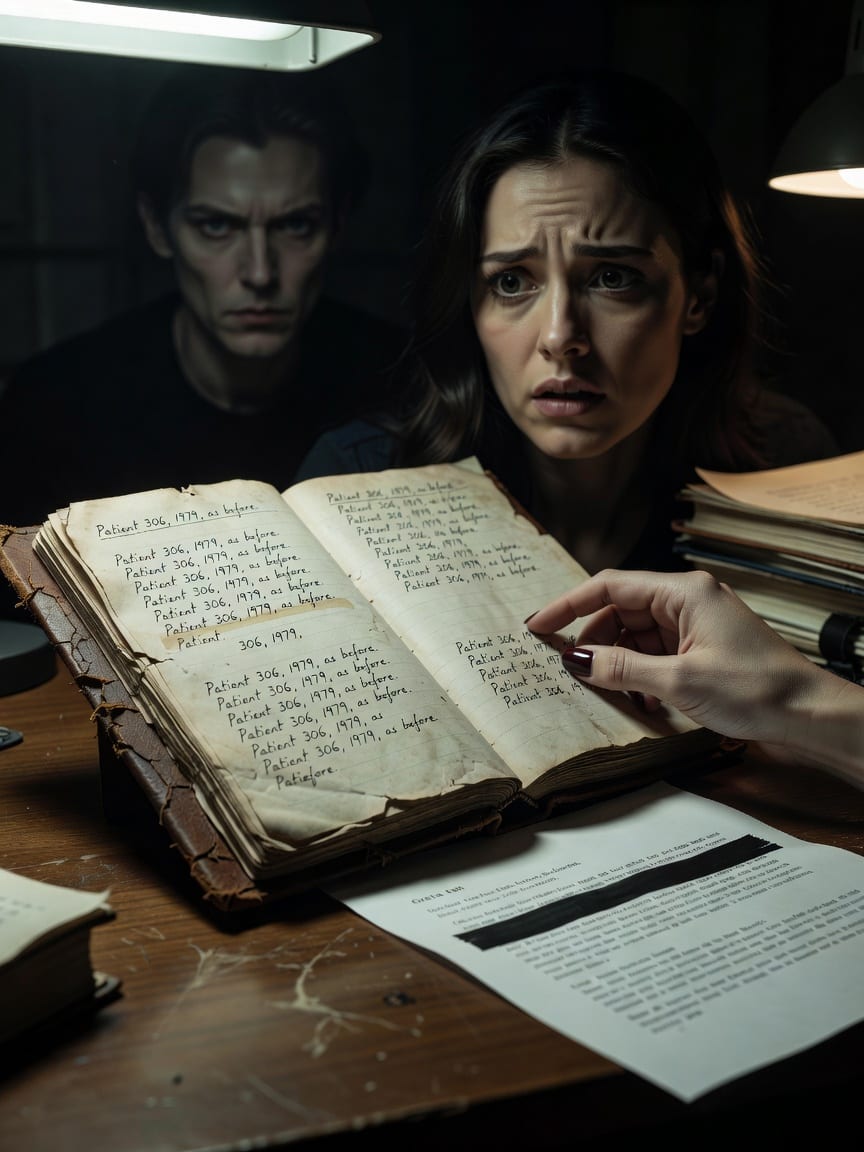
My archive ledger shows Patient 306 admitted in 1889, 1911, 1934, 1957, 1979 — same diagnosis, different names, and always, 'as before.'
My job as an archive transcriber is usually soothing, digitizing ancient admissions ledgers. But a recurring entry for 'Patient 306' caught my eye, noted 'as before' in the same hand for nearly a century. Digging deeper, I found a council file, dated 1998, outlining 'containment procedures' – and it named my own street and surname.
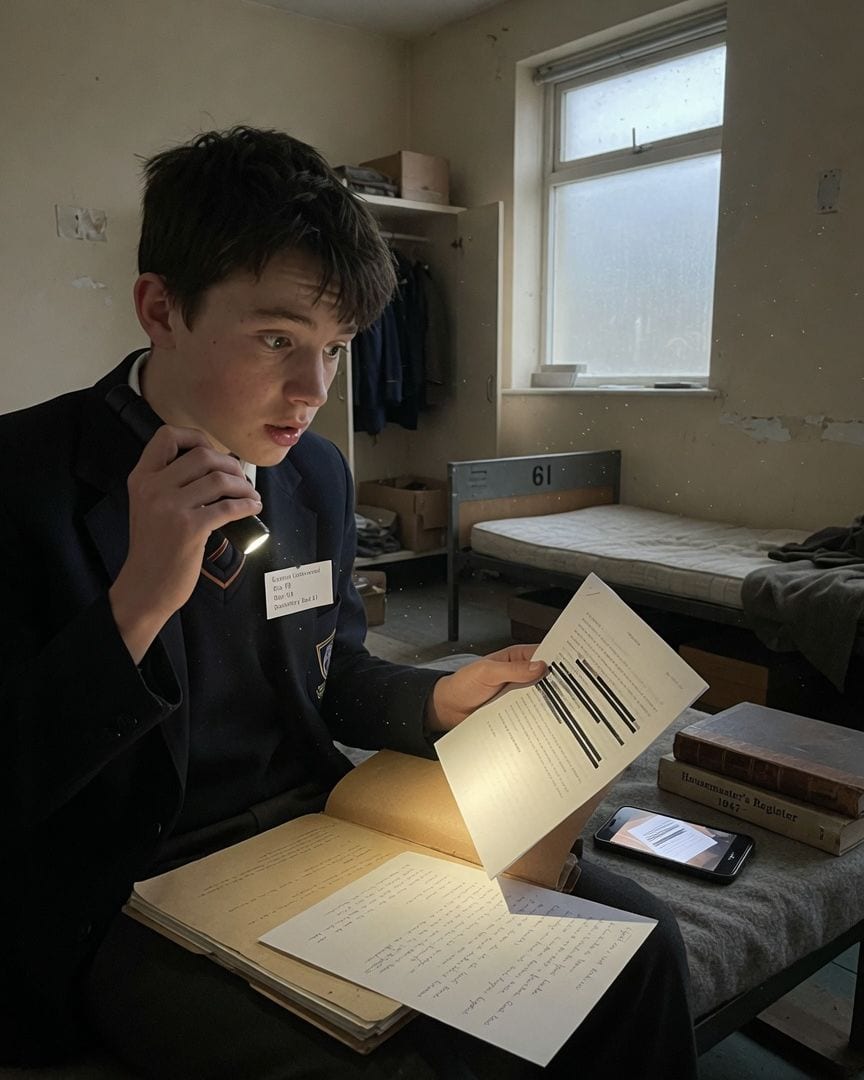
My boarding school bed number was 61, and the archive shows a boy assigned it every eight years since 1947, each leaving mid-term with the bed 'to remain made up'.
I found my matriculation card, listing me as 'Boy 61, Dormitory Bed 61.' Later, an old ledger revealed every boy assigned that bed since 1947 left mid-term, with an unsettling note: 'bed to remain made up.' Our housemaster’s recent scribble, 'as the others,' only deepened the dread around my own assigned bed.
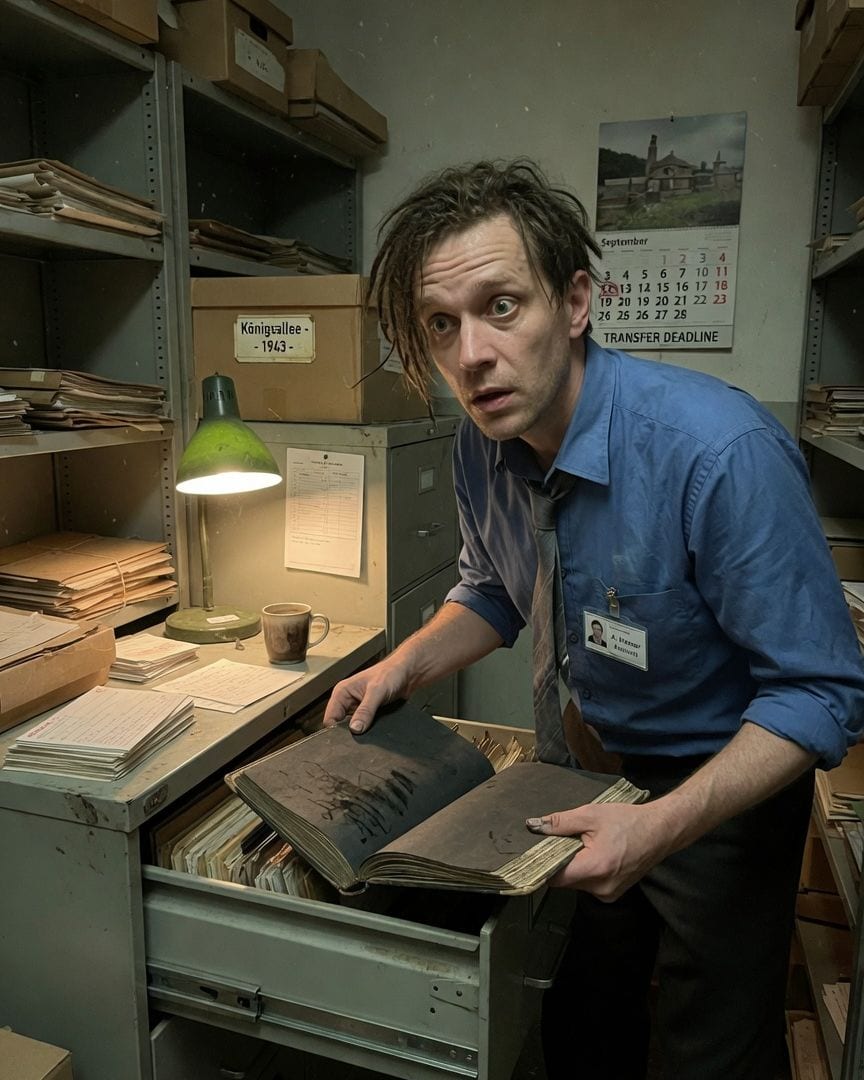
A Berlin archive researcher races a deadline. A hidden log for a Cold War barracks on a vacant lot has ink still wet from last month.
Ansel Vidmar, a methodical researcher, felt the pressure of a looming deadline. The municipal transfer of the old Berlin archive was days away, and he still had countless documents to categorize amidst towering stacks of forgotten history. His focus narrowed to an unindexed metal cabinet, revealing records for a garrison company at Königsallee – an address that had been a vacant lot since the war. A punishment log inside listed an entry from 1983, a date far too recent for a non-existent building. When Ansel visited the site, he found only overgrown grass, save for a single, eerily clean concrete doorstep emerging from the earth. His unease solidified into dread when he later uncovered a hidden Quartermaster's Log, meticulously detailing supplies for the same barracks, with entries extending to "last month," the final page's ink still faintly wet. What unseen operations were still being maintained?
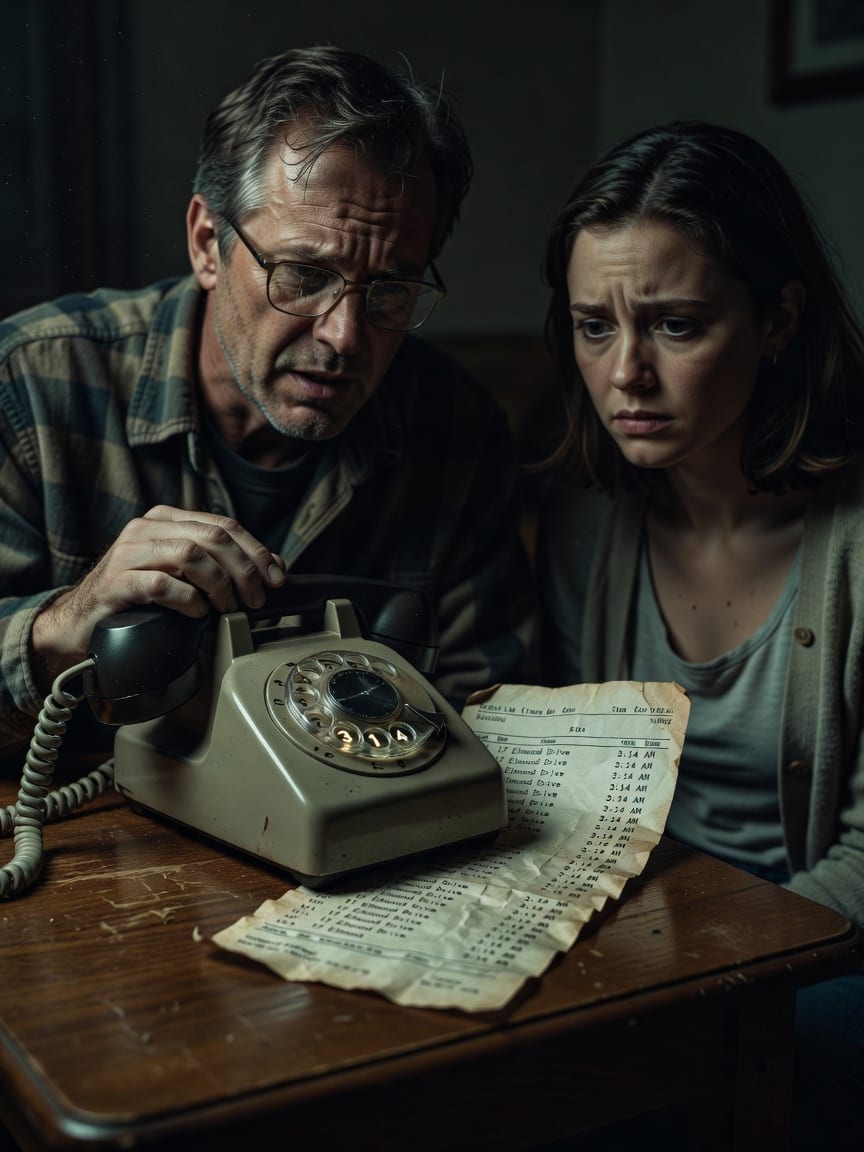
My phone bill itemised forty calls from my number to a house demolished in 1990. Each call at 3:14 AM, lasting eleven minutes. The bill arrived postmarked from a flattened building.
I expected the usual mobile bill, but my landline statement listed forty calls from my number to '17 Elmwood Drive.' That address was for a house torn down in 1990, a vacant lot I remembered from childhood. The phone company insisted the calls were legitimate, leaving me profoundly unsettled by the impossible charges.
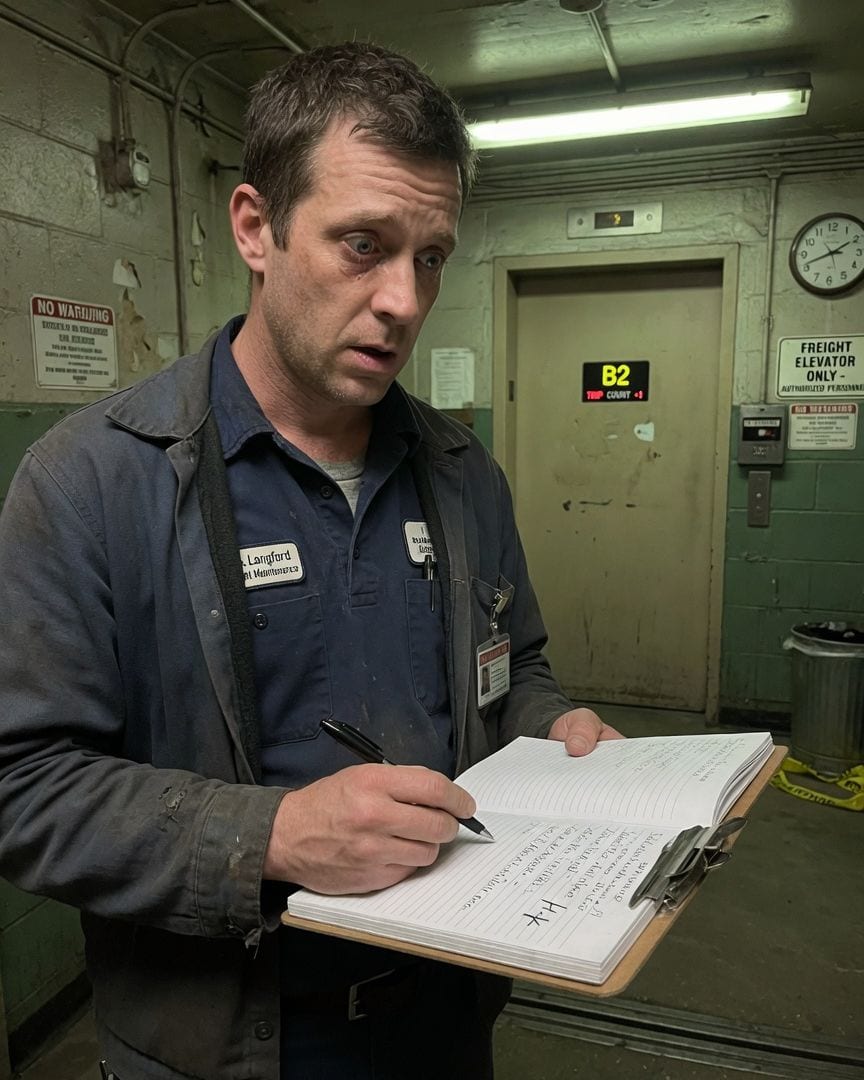
A man just took the elevator to the sealed sub-basement. He isn't on any staff roster, but my initials are in the logbook.
As a maintenance worker, my job is mostly routine, like signing the daily log for the old building's freight elevator. But one night, the log showed a trip to the sub-basement, sealed for a decade, timestamped with my key-switch and signed with my own initials, for a run I never made.
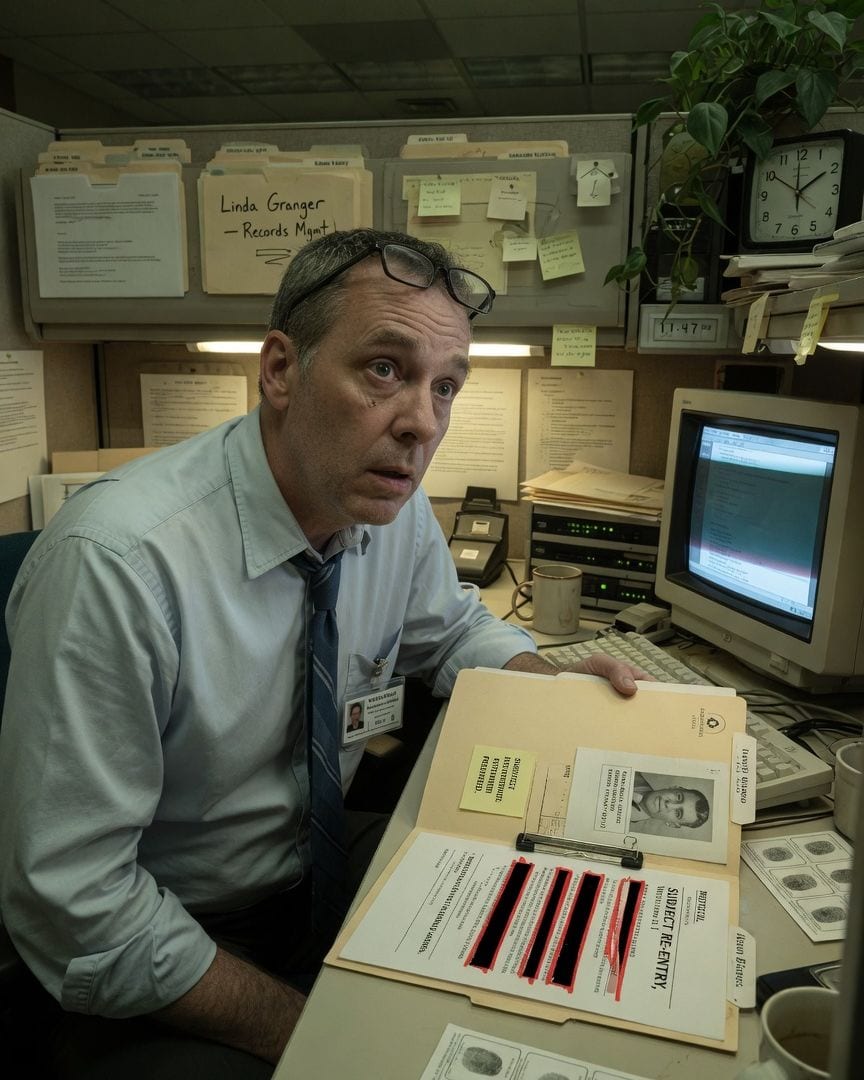
A declassification agent processed old Cold War files. A man reported dead in 1951 had 1958 fingerprints matching an employee badged into the building that morning.
Anton Skeel, a declassification agent nearing two decades of service, meticulously processed the endless backlog of Cold War secrets. His cubicle hummed with the ghosts of forgotten files, but one 'Hollow Bell' folder held a particularly glaring anomaly. It contained a 1958 fingerprint card for Henry Bishop, a man officially reported dead in 1951. When Anton fed the print into the active database, it matched Carl Romano, an employee badged into the building that very morning. A cold certainty settled over him: this wasn't an error, but a system designed for such impossible discrepancies.