Pump 3's nozzle was hung up and bone dry when I checked it, but the printout says forty-one litres poured out of it at 3:48 AM. The fuel is gone from the tank, and I run the station alone.
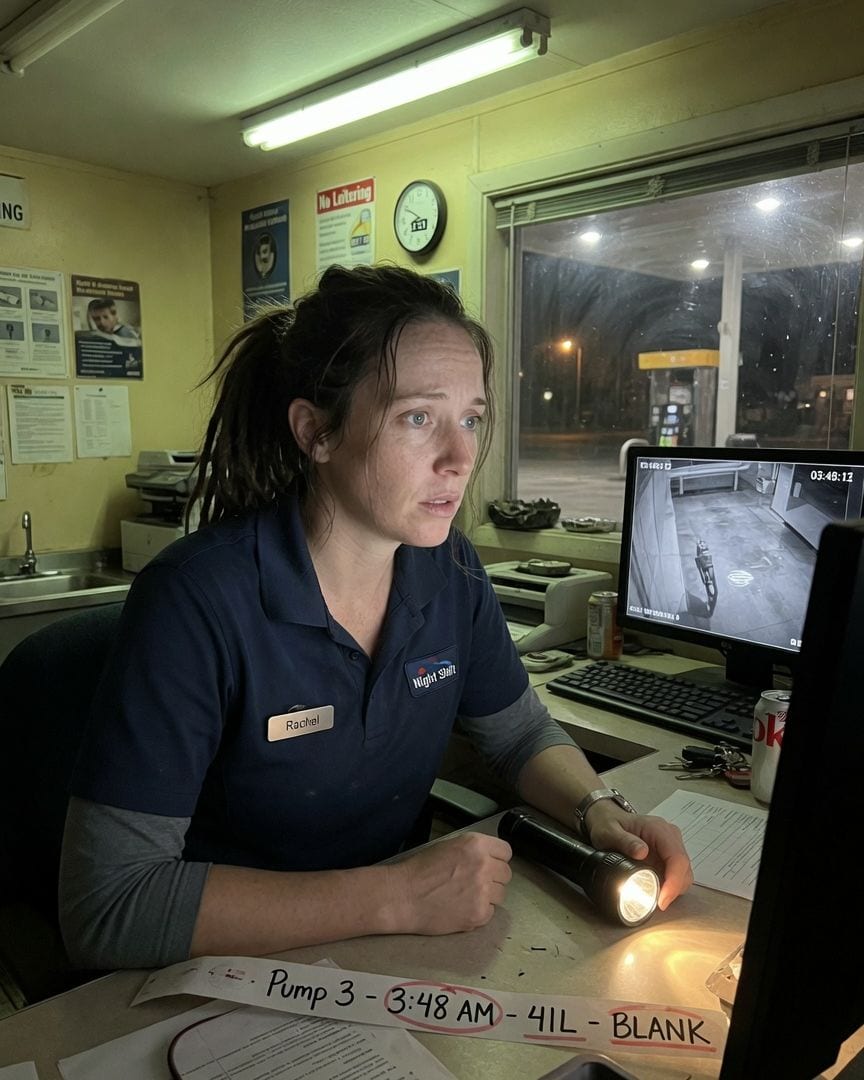
The fluorescent hum of the deserted gas station office did little to cut through the 3 AM quiet. Rachel Whitmore, thirty years old and on her usual solo night shift, ran the final fuel tape for the evening.
Her eyes scanned the printout, a routine she’d done hundreds of times. Then she froze. Pump 3, timestamped 3:48 AM, forty-one litres dispensed. No card number, no plate. Just a blank. Her stomach clenched.
The fuel island totalizer couldn't be zeroed without Scott, her manager’s, key, and she was the only one here. She knew, with a certainty that prickled her skin, that she hadn't made that dispense.
She’d checked Pump 3 less than an hour ago, like always. The nozzle was hung up, dry. Yet, the litres were gone from the underground tank all the same, a phantom thirst quenched in the dead of night.
My first thought was a glitch. It had to be. I grabbed my heavy-duty flashlight and stepped out into the crisp night air, the station lot eerily silent under the streetlights. The cold seeped through my uniform.
I walked directly to Pump 3, confirming what I already knew: the nozzle was firmly in its cradle, no sign of recent use, not even a lingering scent of gasoline.
I even touched the metal of the handle—cold, dry, exactly as it should be. Back inside, the warmth of the office felt suddenly cloying. I pulled up the digital inventory. Forty-one litres, precisely, debited from the underground tank.
Not a system error. The fuel was physically gone. I checked the transaction logs again, cross-referencing with the printed tape. Every other pump showed a card or a cash transaction. Only Pump 3, at 3:48 AM, was a void.
My mind raced through mundane explanations: a prank by a previous shift? Unlikely, given the manager’s key lock to the totalizer. A phantom customer who somehow bypassed the payment system and left no trace? Impossible.
There was too much protocol, too many checks. The only other option was to check the security camera footage. The station had a decent system, covering all the pumps.
If someone, or something, had been out there, the camera would have caught it. It was the only rational step left, the last ordinary explanation I could test before admitting something truly impossible had happened.
With a click of the mouse, I navigated to the station’s CCTV archive, pulling up the footage for 3:48 AM. I fast-forwarded through the early morning hours, the empty lot scrolling by in quick bursts.
My finger hovered over the pause button. There. Just as the clock in the corner of the screen ticked over to 3:48 AM, a faint, shimmering distortion appeared over Pump 3.
Not a vehicle, not a person, just a ripple in the air, like heat haze on a cold night, directly above the nozzle.
Then, impossibly, the fuel hose, which had been resting still in its cradle, gave a distinct, subtle tug. It strained taut for a fraction of a second, as if connected to an invisible weight, then settled back, perfectly still.
No visible hand, no vehicle, just the impossible motion, caught by the unblinking eye of the camera. The timestamp was clear. The image was undeniable.
The next morning, I tried to show Scott, my manager, the footage. I rewound it, played it, pointing out the shimmering distortion and the hose’s impossible movement. Scott, however, just frowned, squinting at the screen.
“Looks like a camera glitch, Rach. Happens sometimes with the older sensors.” He saw nothing but static. My heart sank.
I played it again, trying to explain the context, the missing forty-one litres, but he just shook his head, already turning to other tasks, shuffling receipts on his desk. The isolation of my discovery pressed in.
If the camera saw it, why didn’t Scott? Was I seeing something that wasn’t there? But the fuel was gone. Determined, I started digging.
I checked the station’s maintenance logs, looking for any record of Pump 3 malfunctions or unusual fuel discrepancies. Nothing recent. The last service call was three months ago, a minor sensor adjustment.
But then, I remembered the old back office, a dusty storage room filled with forgotten files and equipment that hadn't been used in years.
Tucked away in a cabinet beneath stacks of faded invoices from the early nineties, I found a series of thick, leather-bound, ledger-style notebooks. These were the handwritten fuel logbooks, dating back decades, long before the digital system.
I started flipping through them, specifically looking for Pump 3, for any anomalies. It was tedious work, the pages brittle under my fingertips, but as the hours of my next shift wore on, a pattern began to emerge.
Faintly, at first, then undeniably. On specific nights, always between 3 and 4 AM, there were entries for Pump 3, often for similar volumes—forty to fifty litres—with no accompanying vehicle or payment details.
Sometimes, a cryptic, almost erased notation was scribbled next to the entry: 'Ghost Pump.' The chill I had felt earlier deepened, settling into my bones. This wasn't a glitch.
This was a routine, and it had been going on for a very long time.
I felt a growing unease during my shifts. It wasn't just the logs; it was the quiet. The kind of quiet that felt less like absence and more like held breath. The room itself seemed to listen.
I’d find a light I’d switched off moments before, now inexplicably on in the back office, or a faint, almost imperceptible whisper of air from a vent that shouldn't be running.
I started asking around, subtly, among the older delivery drivers and regular customers, about anyone who remembered strange happenings at the station years ago.
Most dismissed it as old wives' tales, the usual spooky stories you hear about any place that’s been around for fifty years.
But one grizzled trucker, a man named Charles Davenport, who’d been driving this route since before I was born, mentioned a former night attendant. “Old Judy Delaney,” he’d grumbled, adjusting his cap. “Worked here for decades before she retired.
Knew a thing or two about the quiet hours.” He didn't elaborate, just gave me a look that suggested I didn't want to know.
I managed to find Judith’s contact information through an old employee roster buried deep in the dusty cabinet, tucked between a tax form from '87 and a broken stapler. Her number was still valid.
I called, explaining my strange findings, my voice shaking a little more than I would have liked. Judith, calm and unbothered, agreed to meet for coffee.
A few days later, a small, unmarked envelope appeared in my mailbox, no stamp, no return address, just my name typed neatly on the front. Inside was a single, neatly folded piece of paper.
On it, typed in an old-fashioned font, were just five words: 'Some things are better left alone, dearie.' My blood drained from my face. Someone knew I was digging.
Someone was watching me, and they didn't like what I was finding.
I met Judith Delaney at a quiet diner on the edge of town, the kind of place where the coffee was always hot and the waitress knew everyone's order.
Judith, a sharp-eyed woman with a serene demeanor that belied her sixty-two years, listened patiently as I recounted the fuel tape, the impossible footage, and the old logbooks. She didn't interrupt, just watched me with an unnerving calm.
When I finished, Judith simply nodded. “Ah, 'The Night Drinker.' Still at it, then.” I stared. “The Night Drinker?” The name itself sounded like a campfire story, not a reality. Judith smiled faintly, a sad, knowing curve of her lips.
“That’s what we called it, those of us who worked the graveyard shifts back in the day. Always Pump 3. Always between three and four in the morning.
Always the same amount of fuel, give or take a litre or two.” I pressed, the words tumbling out. “But what is it? And why hasn’t anyone done anything?” Judith stirred her coffee, the spoon clinking softly against the ceramic.
“Doesn’t matter what it is, dearie. It’s just… part of the shift. Like the moon, or the tide. It comes, it takes. Most of us just logged it, adjusted the books. Old Man Rutherford, Scott’s father, he knew about it.
Said it was less trouble to let it be.” I felt a wave of disbelief, then a chilling clarity. The casual acceptance. The quiet normalization of the impossible.
The fluorescent lights of the diner seemed to buzz with a new, oppressive weight. “But the fuel is gone,” I insisted. “It’s a real loss for the station.” Judith shrugged, a slight lift of her shoulders. “Some things just are.
It never hurt anyone, not really. Just took its fill. Best not to disturb its routine.” I thought of Scott, dismissing the footage as a glitch.
I thought of the ease with which the old managers had simply 'adjusted the books.' The dread wasn't in a monster, but in the quiet, collective agreement to ignore it, to pretend the rules weren't quietly changing every night.
Every impossible entry in the old logs now clicked into place, not as errors, but as acknowledgments of a persistent, unseen patron.
Judith took a sip of her tea, her gaze distant, fixed on something I couldn't see. “It never hurt anyone, not really, as long as you just let it be. Just logged it, like I said.
But it doesn’t like to be watched too closely, or its routine… disrupted.” My mind flashed back to the anonymous note, the one that had chilled me to the bone: 'Some things are better left alone, dearie.'
I felt a cold dread settle deeper in my chest, a physical weight. “What happens if you do?” I asked, my voice barely a whisper, afraid of the answer, but needing it.
Judith’s eyes met hers, a flicker of something unreadable in their depths. “Well, some folks tried to get clever. Tried to stop it. Tried to understand it.” She paused, then pushed a thin, yellowed page across the table.
It was a photocopy from one of the older logbooks, a page I hadn’t seen, from sometime in the mid-seventies. The usual entries for Pump 3 were there, at 3:52 AM, 45 litres.
But next to the name of a night attendant, ‘Joel Lockwood,’ was a faint, almost erased notation: ‘lost one.’ And below it, a line drawn through Joel’s name in the shift roster. My finger traced the faded ink.
I flipped back, then forward through the old logs I’d brought, comparing them. There it was again. And again. The same specific night of the week. The same impossible fuel dispense.
And the same chilling 'lost one' notation, tied to a missing name, appearing every few years across four decades, a silent ledger of those who had tried to see too much.
Judith finally broke the silence, her voice soft, almost a sigh. “It doesn’t kill, not in the way you mean. But it takes.
It takes a piece of you, a memory, something cherished, if you try to stop it from its routine. Joel Lockwood, he tried to block the pump one night, jammed the nozzle with a padlock.
Next shift, he was just… gone. His car was still in the lot, his keys on the hook, but he vanished. We found his wedding ring in the coin tray, but his wife swore he never took it off.
She said he didn't even remember getting married, after that. Just… a blank space where she should have been.” I felt a profound chill, colder than any gas station lot.
It wasn't about righteous versus evil, good versus bad, but about a deep, fundamental disruption. The entity wasn't malicious in a human sense; it was just a force of nature, protecting its silent, nightly ritual.
The fuel was just a proxy. The real cost was personal, intimate. The 'lost one' wasn't a death, but a profound alteration, a piece of self taken.
Every strange entry, every heat haze on the camera, every inexplicable chill, every quiet acceptance from Scott’s father, coalesced into a terrifying, coherent whole.
The entity wasn't a monster to be fought; it was a hungry void, and it demanded its due if its routine was violated. I knew, with a sickening certainty, that I couldn't just log it and move on.
I had seen too much, dug too deep. My name was already in its ledger, one way or another.
That night, I made my decision. I couldn’t let 'The Night Drinker' continue its silent routine unchallenged, not now that I knew the true cost. Not now that I knew what 'lost one' really meant.
I waited until 3:30 AM, my heart pounding a frantic rhythm against my ribs. The station was utterly silent, the quiet pressing in on me, heavy and watchful.
Armed with a wrench from the back room, I went out to Pump 3.
Instead of trying to block the nozzle, a direct challenge that clearly had dire consequences, I carefully loosened a small, non-essential fitting on the fuel line, just enough to cause a slow, steady drip, making it impossible for the pump to dispense cleanly.
It wasn’t stopping it, not entirely, but it was a disruption, a clear defiance of its routine without directly interfering with the nozzle itself. I retreated to the office, watching the monitor, my breath held tight. 3:48 AM.
The shimmering distortion appeared, stronger this time, almost a visible ripple in the air that seemed to pull at the very light around it. The hose strained. The pump whirred, then sputtered. The flow was interrupted.
The entity was there, trying to draw its fill, but it couldn't. The shimmer intensified, pulsed, then abruptly vanished. The pump fell silent, a sharp cessation of sound. I let out a shaky breath I hadn't realized I was holding.
I had done it. I had stopped it, at least for one night. A wave of exhaustion washed over me, heavy and deep.
I slumped back in my chair, reaching up to rub my temples, my fingers brushing against my neck. My hand froze.
The silver locket, a gift from my late mother, the one I had worn every day since I was a child, the one with her tiny photo inside, was gone. Not loose in my shirt, not fallen to the floor.
Gone. My fingers frantically searched, tracing the skin where the chain should have been. Nothing. Just smooth, empty skin. It had been there when I walked out to the pump. It was gone now. The price had been paid.
I showed Scott the old logbooks and tried to explain the missing locket, my voice thin and reedy. He dismissed it all as stress, a series of coincidences, and a lost trinket.
He even suggested I might have left the locket at home, something I never did. The police, when I hesitantly called them, politely suggested I was overworked, perhaps a bit delusional.
My 'proof'—the fuel tape, the security footage, the old logs—was just circumstantial, easily explained away as glitches and misfiling. Nobody believed me. The locket was never found.
The fuel records for that night, the one where I’d intervened, showed no dispense from Pump 3, but the next night, the forty-one litres were gone again, right on schedule.
The station continued its quiet hum, the world oblivious to the unseen routine that played out every night.
I still work the night shift. I log the fuel, I check the pumps, and I make sure to never, ever look too closely at Pump 3 between 3 and 4 AM.
Sometimes, I catch myself humming a tune I can’t quite place, a lullaby my mother used to sing, but the melody feels hollow, like a song without words.
The memory of her face is still clear, but the warmth, the details of our time together, have a faint, almost imperceptible blur around the edges. It’s a subtle shift, one no one else would ever notice. I survived.
I got out. But a piece of me, small and precious, was simply gone, taken by the unseen routine of the night. The pump hums quietly now, and sometimes, late at night, I almost forget what I lost.
If this one got to you
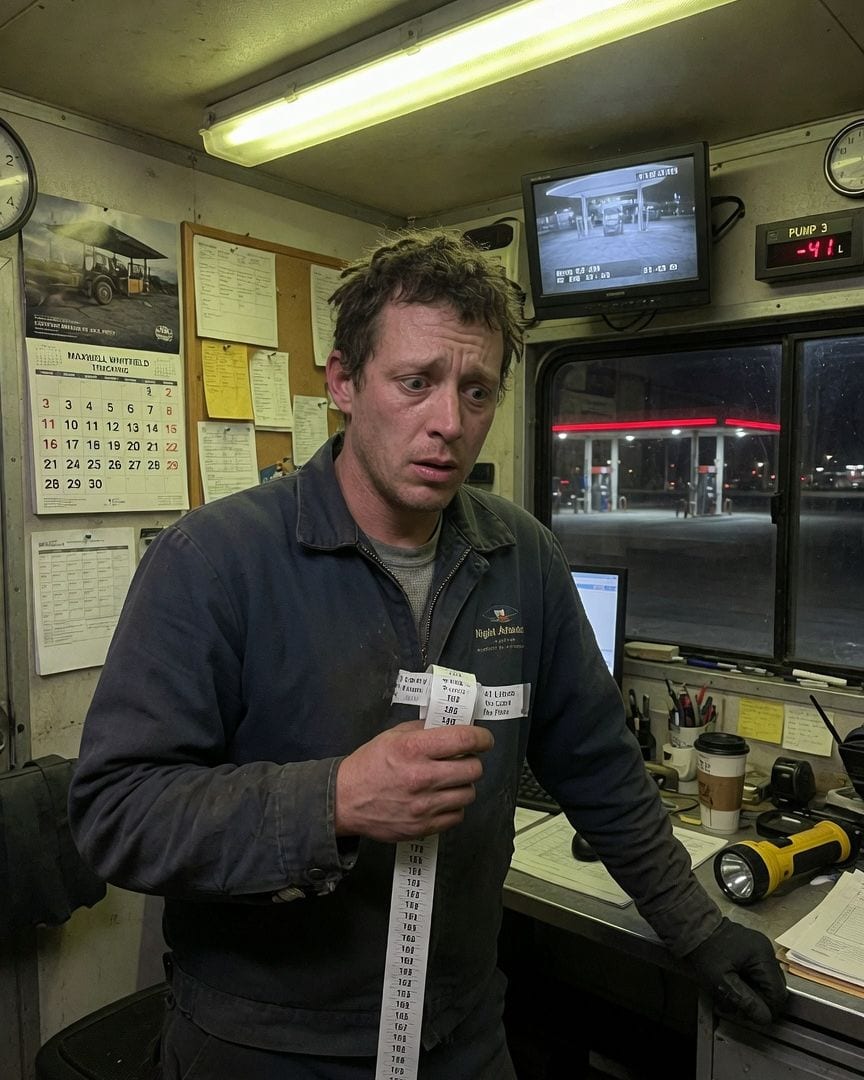
My fuel pump dispenses forty-one liters to nothing at 3:48 AM — and the nozzle was hung up and dry.
Closing out the truck stop for the night was a routine I'd done hundreds of times. But last night's totalizer tape showed an impossible entry: 41 liters dispensed from Pump 3 at 3:48 AM, with no card or plate. When I checked, the pump was dry, the ground empty, yet the tank gauge confirmed the fuel was gone.
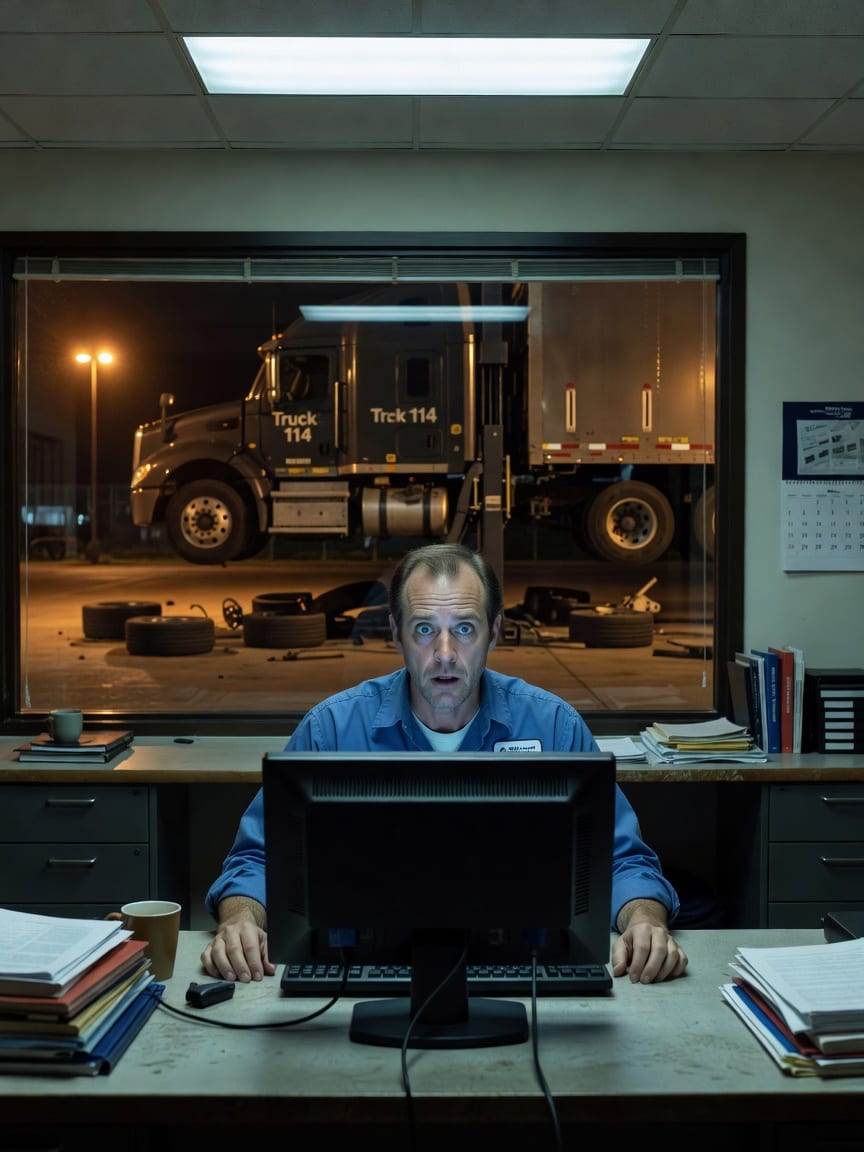
Truck 114 left the yard last night, CAD says. It burned forty miles of fuel. But my truck 114 was up on the lift, no wheels, all shift.
It was another quiet Wednesday overnight in the dispatch office until the CAD system pinged. My screen blared, showing Truck 114 logged outbound for forty miles and back, burning forty gallons of fuel. But I knew that very truck was immobile, suspended on a lift in Bay 4 with its drive wheels removed.
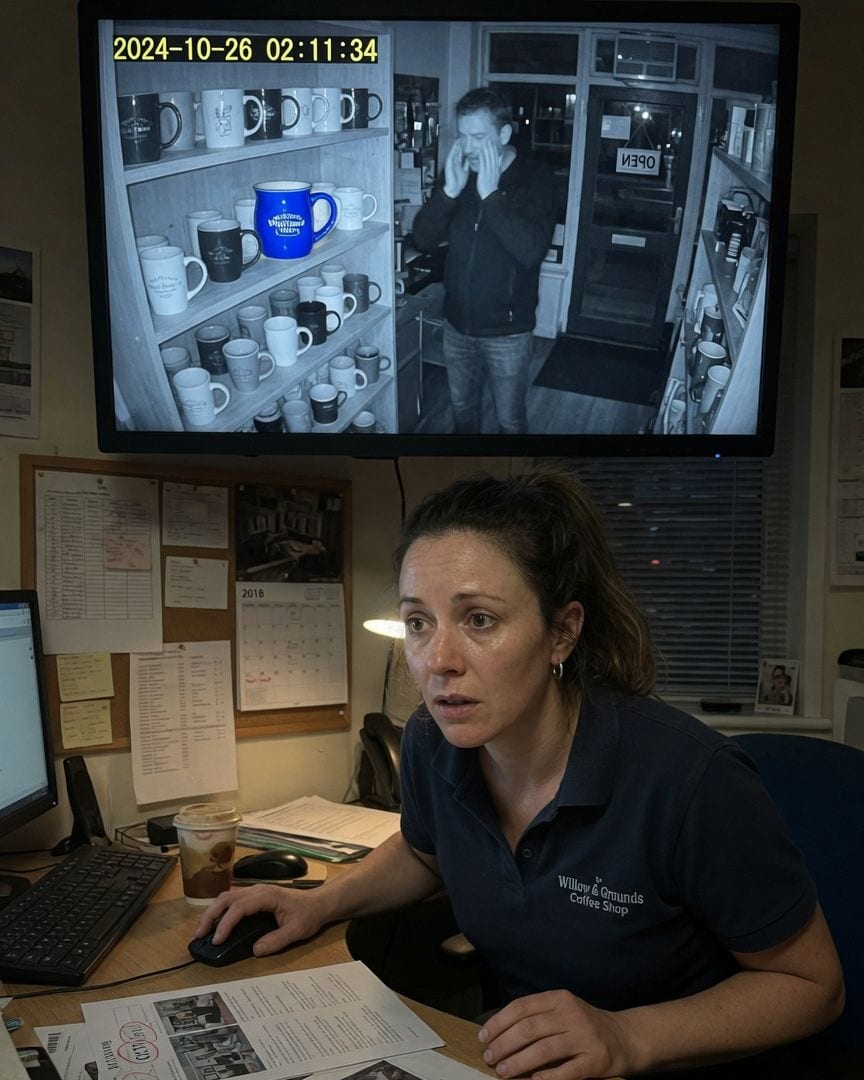
My shop's CCTV caught a customer who hasn't aged a day in eleven years of footage. He enters every night at 2:11, buys nothing, and leaves.
I was reviewing CCTV footage when I discovered a man who appeared inside my closed shop every night at 2:11 AM. He moved identically, never aging across eleven years of recordings, all confirmed as unique files. Yet, last night's footage clearly shows a specific coffee mug on the shelf that I know I sold seven years ago, and is definitely not there now.
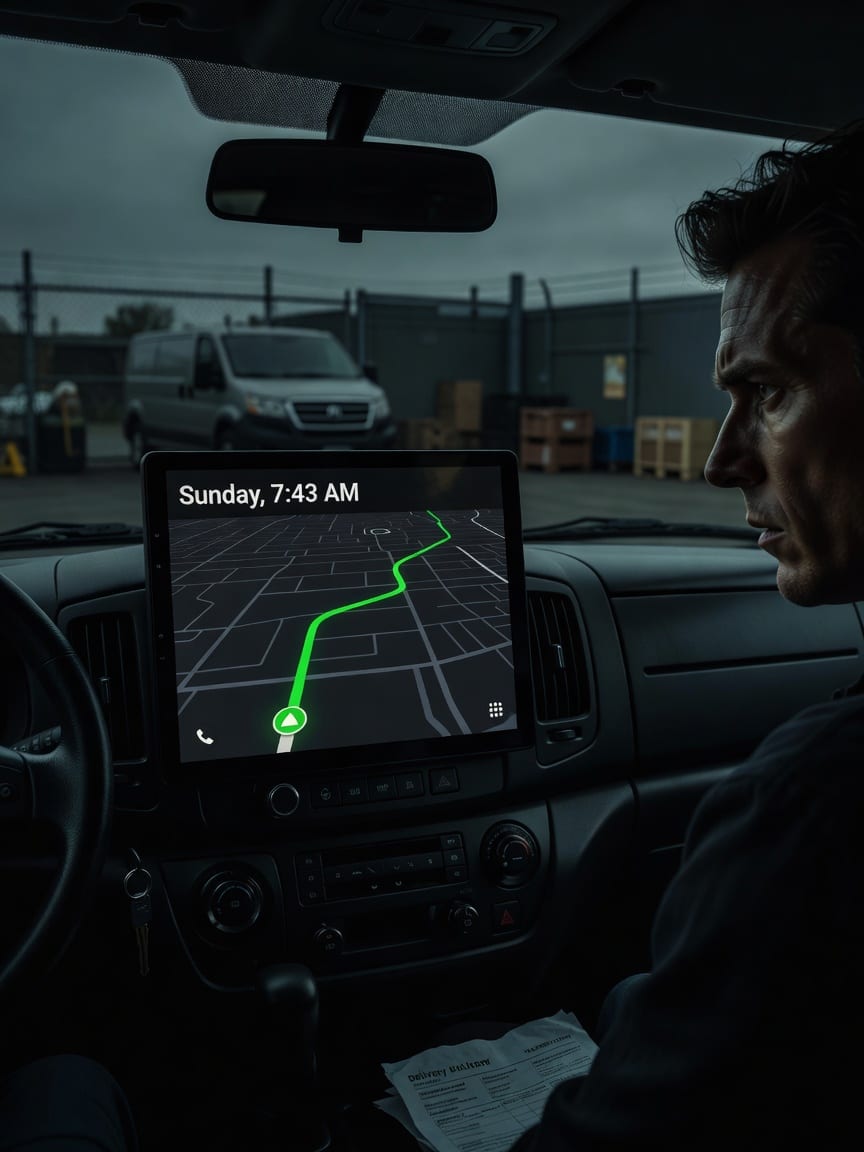
My delivery van drove 130 miles last Sunday, stopping for four hours in another state. It never left our locked yard. The GPS log drew the whole trip, timestamped to the minute.
I was just doing my job, sitting in the dispatch office with my manager Joel, when he pulled up the GPS log for my delivery van, Unit 74. It showed a 130-mile round trip to Delaware, engine on for four hours, with a distinct stop, all while my van was locked in the yard and I was home. The camera footage confirmed it hadn't moved an inch, yet the system insisted it had traveled hundreds of miles.
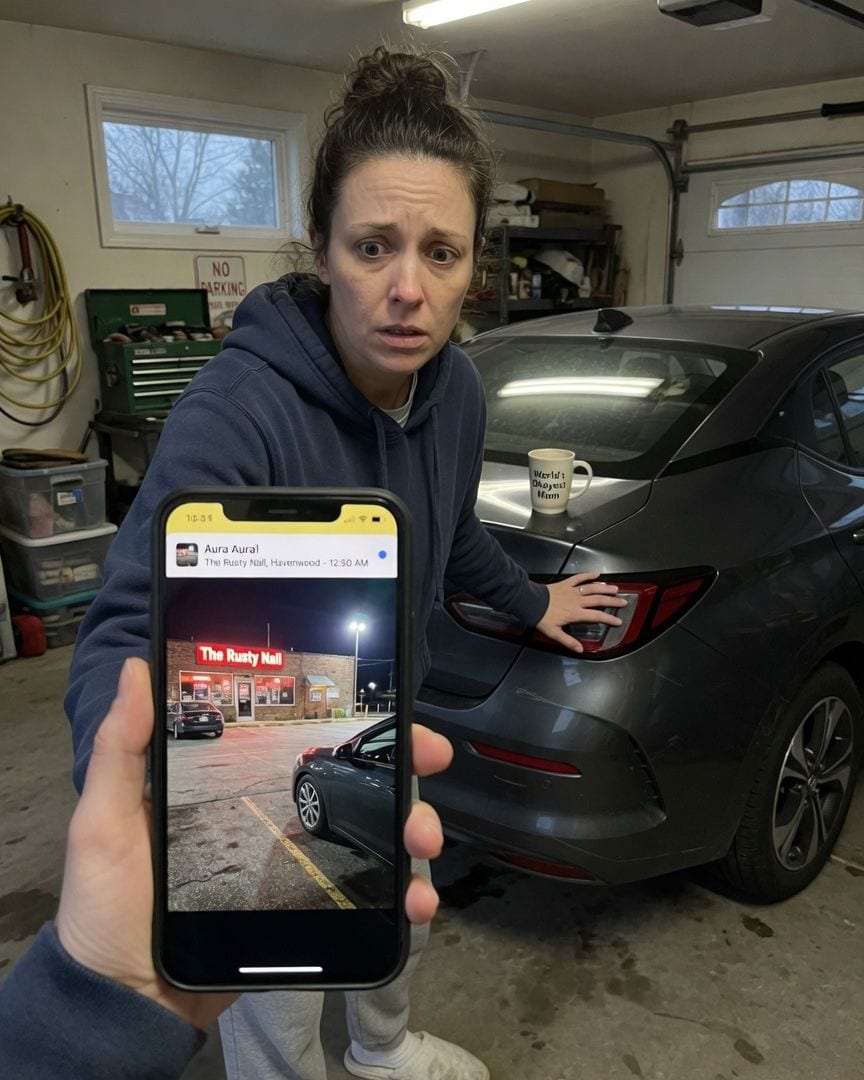
My car's app just pinged it parked at a bar ninety minutes away at 12:50am. It's in my locked garage, cold.
My Tuesday morning started like any other, until my phone chimed with a low-fuel warning from my car's app. That wasn't right; I'd just filled up. The map showed my 2023 Aura sedan 90 miles away at 'The Rusty Nail' at 12:50 AM, even though it was parked, stone cold, in my garage.
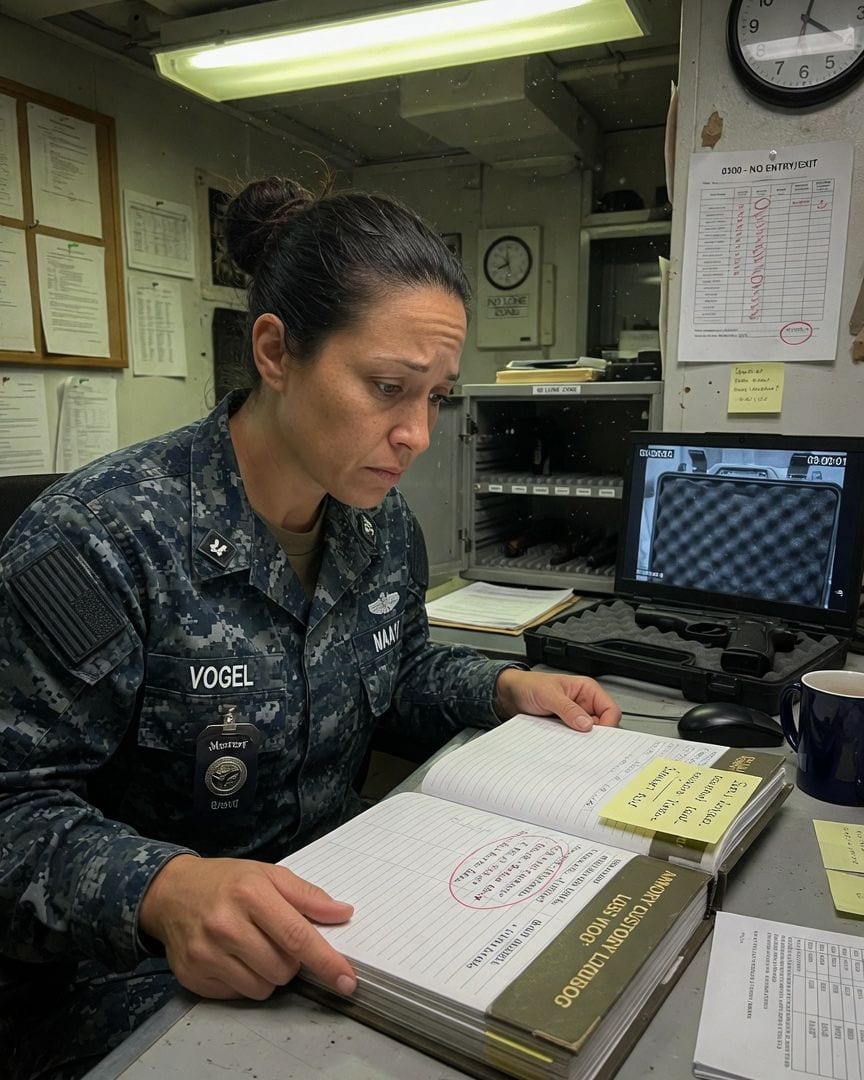
The USS Vance armory log showed Master-at-Arms Dana Vogel's signature. The camera showed the weapon case opening itself, but no one was there.
Master-at-Arms First Class Dana Vogel stared at the USS Vance armory log, a testament to her years of perfect service. An entry for 0300 during a recent strait transit listed her name, signing out a standard M9 pistol. Yet, Vogel knew she was thousands of miles away on emergency leave, her sister in the ICU. The armory camera’s timestamp for 0300 showed the weapon case secured in its rack, distinctly opening and closing, with no person visible. How could her signature be in a log for an event she couldn't have performed, witnessed only by an empty room?