My fuel pump dispenses forty-one liters to nothing at 3:48 AM — and the nozzle was hung up and dry.
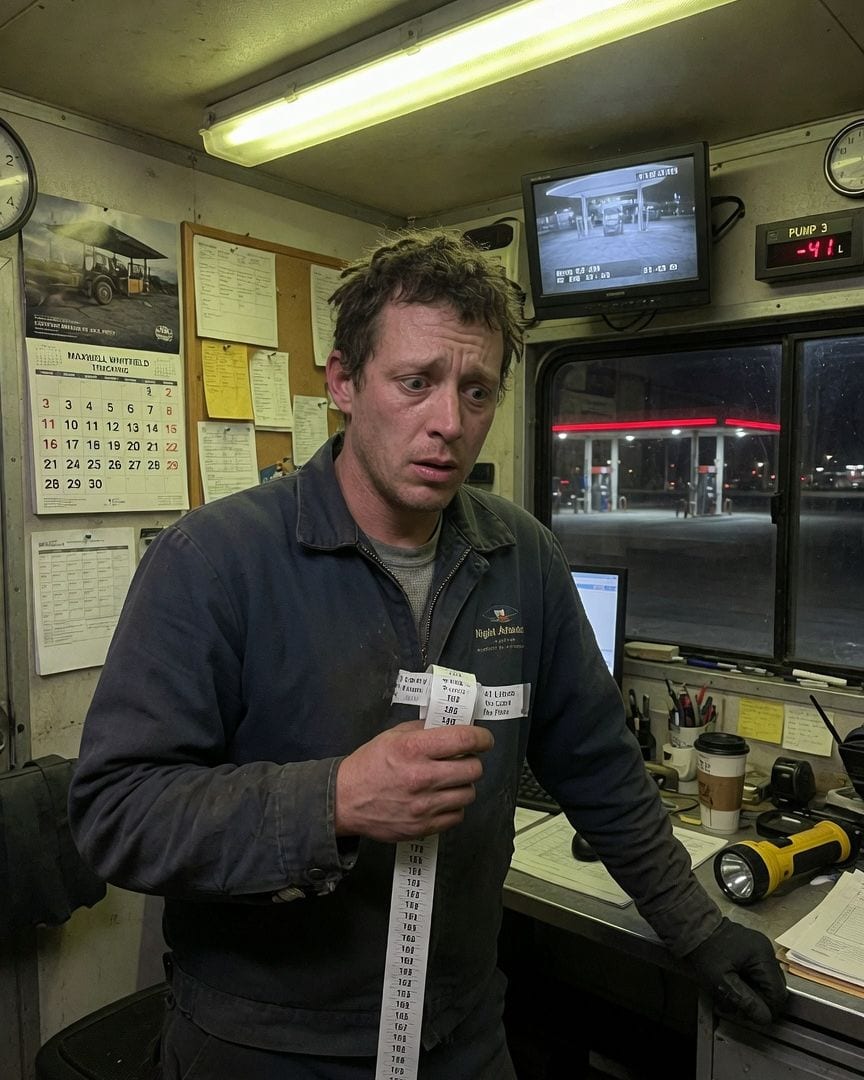
The fluorescent hum of the empty truck stop office felt heavier than usual. I’d just finished closing out the pumps for the night, a routine I’d done hundreds of times, every night for two years.
But last night’s totalizer tape, curling out of the machine in the back office, showed a line item that stopped my breath. It read, in crisp, black digits: '3:48 AM, Pump 3, 41 Litres, No Card, No Plate.'
My manager, Maxwell Whitfield, held the only key to zero the totalizer, and he’d left hours ago, at ten. I was alone in the stillness, the only other sound the distant, almost musical thrum of the highway.
I pulled the tape free, my fingers tracing the impossible entry. Forty-one liters. That wasn't a drip, it was a full-sized car tank, maybe even a small truck.
I grabbed my heavy-duty flashlight from its hook and walked out onto the tarmac. The air was cold, sharp with the scent of diesel and damp concrete. I strode directly to pump 3.
The nozzle was hung up, dry, exactly where I’d left it an hour earlier. I ran my gloved hand over the plastic grip, over the metal tip. Nothing.
No residual fuel smell clinging to the air around it, no damp spot on the concrete below, no sheen on the asphalt from a recent spill. The ground was just dark, dry, and cold.
I shone my light into the nozzle itself, then back at the pump’s digital display. It was blank, waiting for the next customer.
Back inside, I checked the tank gauge display for pump 3, a small digital readout near the main office door that directly communicated with the underground tanks. It confirmed the loss: forty-one liters, gone from the tank.
The numbers were concrete, irrefutable, but the physical reality out there was impossible.
I tried to tell myself it was a glitch, a phantom reading, a fault in the old system, but the tank gauge didn't lie; it measured actual volume.
The silence of the lot pressed in, amplifying the quiet thrum of the pumps and the distant hum of the highway. Forty-one liters. Gone. Where?
The next night, the memory of that tape kept a cold hand on my stomach. I felt a prickle of unease as I approached the totalizer. I watched the clock, dreading 3:48 AM. Nothing happened. The numbers stayed still.
I tried to breathe a sigh of relief, but a small, nagging memory surfaced from the previous night. Hadn’t I seen someone? Not directly at the pump, but near it.
A tall, quiet man, standing near pump 3, just before my shift ended, maybe around 3:30 AM? He hadn’t bought anything, hadn’t spoken, just… stood there, leaning against the convenience store wall, watching the trucks roll past.
I’d assumed he was a long-haul driver taking a break, maybe waiting for a ride.
I’d even offered a polite, sleepy 'Evening' as I walked past him to clock out, and he’d given a slight, almost imperceptible nod, a quiet presence. But now, piecing it together, I realized I never saw him leave.
I checked the shift log, flipping through pages, my finger tracing names. No other attendant was scheduled for that hour. I pulled up the security camera feed from that night, skipping to 3:45 AM.
The feed was grainy, flickering with static, but I could clearly see pump 3. No one was there. Not a soul. My gut twisted. I knew I’d seen him.
I knew I’d felt his presence, a distinct chill in the air as I passed. The screen showed nothing but empty concrete.
I replayed it, again and again, convinced I must have missed something, but the feed remained stubbornly blank at the exact moment I remembered seeing him.
The ordinary explanation — I was mistaken, tired, my mind playing tricks — almost worked, but it didn't quite settle.
The image of the quiet man, 'Elliot' my mind had somehow named him, stayed stubbornly in my memory, a ghost in the machine.
I spent the next hour, a knot of cold dread tightening in my stomach, searching every record I could access from my office terminal. The employee roster, both current and archived, going back years.
The customer loyalty program database, cross-referencing names and vehicle types. The local trucking company manifests we sometimes got, checking driver lists.
Even my own hastily scribbled list of 'regulars' who came through every week, those truckers I knew by name or rig. Nothing. No 'Elliot.' No tall, quiet man matching his description. My memory of him was vivid, undeniable.
The way his dark jacket had caught the faint, yellow light from the canopy, the almost imperceptible scent of diesel and something else, something metallic and cold, that had drifted from him as I passed.
But the paper in my hands, the glowing screen of the computer, insisted he didn't exist. He had never worked here, never been a registered customer, never filled up. Yet, I had seen him. I was certain.
The pump showed a dispense to nothing, and the records showed no one.
The next few shifts became an obsession. I couldn't shake Elliot from my mind, or the missing forty-one liters of fuel. It was an itch I couldn’t scratch, a loose thread I couldn’t leave untugged.
I started systematically going through old paper logs, tucked away in dusty boxes in the back office, records Maxwell had told me were 'for inventory only, don't bother, Susan, they’re a mess.' I ignored him.
The first few weeks of my search turned up nothing out of the ordinary, just the usual fuel deliveries and dispenses. But then I found it: another phantom dispense.
Three months prior, the handwriting a different, older scrawl, but the time was eerily familiar: 3:48 AM, Pump 1, thirty-eight liters, no card, no plate. And another, a year before that, Pump 4, forty-two liters, same time. And another.
Always in the dead of night, always a similar volume, always no traceable source. The pattern was undeniable. It wasn't just pump 3, or just last week. This had been happening for months, maybe years, right under everyone's nose.
The concrete walls of the office seemed to press in on me, suddenly far too close.
I also started noticing a specific, beat-up old diesel truck. It was always parked in the darkest corner of the lot, nestled against the back fence, tucked behind the dumpster.
Its paint was faded, a non-descript grey that bled into the shadows, and it had a dent in the front fender I recognized, a jagged scar near the headlight.
I’d seen it there on my shifts, sometimes for days, sometimes for just a few hours. But I never saw it move. Never saw it arrive, never saw it leave. It was just… there.
A silent sentinel in the periphery of my vision, a ghost truck that only appeared when the world was sleeping.
I checked the security footage for the times of the older phantom dispenses, but the tapes were either missing, corrupted with blocks of static, or simply showed an empty lot.
It was as if whatever was taking the fuel, whatever entity Elliot represented, was also erasing its own tracks, or someone else was doing it for them, meticulous in their silent work.
The deeper I dug, the less I found, and the more a cold certainty settled in my bones.
My unusual interest in the old logs didn't go unnoticed. Maxwell, usually oblivious, started lingering longer on his morning handovers. He’d hover by the coffee machine, watching me with an unnervingly still expression. 'Everything alright, Susan?'
he'd ask, his eyes, usually kind, now flicking to the back office door where I kept the old boxes. 'Spending a lot of time with those old papers. Dusty work, that.'
I brushed him off, mumbled something about inventory discrepancies, but I felt his gaze follow me, a prickle on the back of my neck like a static charge. He knew.
Or at least, he knew I was looking for something he preferred left alone.
One evening, as I was deep into a particularly old ledger, cross-referencing dates of peculiar dispenses, I heard a low rumble outside. It wasn't the usual highway drone, the familiar whoosh of passing cars.
This was closer, heavier, a deep vibration that seemed to tickle the soles of my feet. The office window, usually reflecting only the flickering yellow canopy lights, seemed to darken. I glanced up, heart seizing in my chest.
There, parked directly outside my office window, was the old diesel truck. The dented grey one from the dark corner. Its engine was running, a low, guttural throb that vibrated through the floorboards, through the very air.
The driver's side was facing me, the window a dark, mirrored pane, reflecting my own startled face like a distorted, terrified mask. I couldn't see anyone inside, just the impenetrable darkness behind the glass, but I knew.
I knew it was Elliot. He hadn't come for fuel this time. He was there because I was digging, because I was getting too close. The rumble continued, a silent, menacing warning, a predator marking its territory.
I froze, my hand hovering over a page detailing a dispense from 1987, my breath held tight in my throat. The truck idled for a long, agonizing minute, the low growl vibrating through the floor, then the engine cut. Silence.
My breath hitched, a painful gasp. I squeezed my eyes shut, then opened them. The truck was gone, vanished as silently as it had appeared.
Just a faint scent of diesel and something else, something metallic and cold, hanging in the night air. He knew. And he wanted me to know he knew.
The next morning, the terror of Elliot’s silent visit still a cold knot in my gut, I confronted Maxwell.
I marched into his office, the totalizer tape from my first phantom dispense clutched in my hand, the old paper logs piled on his desk.
I laid out my findings: the undeniable pattern of phantom dispenses, Elliot's non-existence in any official record, the truck, my experience last night. I expected denial, anger, maybe even a threat.
Instead, he just listened, his face impassive, stirring his coffee with a quiet clink. He didn't interrupt, didn't flinch. When I finished, the silence in the room was thick enough to choke on. He took a slow sip.
'Special allocations,' he said, his voice flat, devoid of emotion, as if discussing a mundane inventory item. 'It's part of the agreement for this location.'
My blood ran cold. 'Agreement? What agreement, Maxwell? Who are these people?'
He sighed, a sound of weary resignation that seemed to come from deep within him. 'It predates me, Susan. Predates the company as it is now, almost. A legacy arrangement. Certain... entities... require specific resources.
This station, for reasons I'm not privy to, is one of their designated points.' He gestured vaguely towards the pumps with his coffee cup, as if they were just part of a larger, invisible mechanism.
'It's better not to ask questions. You do your job, they do theirs. No one gets hurt.' He wasn't scared.
He was just tired, resigned to a truth he'd lived with for years, a truth that had become as ordinary to him as the sunrise. 'Elliot,' he mused, a flicker of something unreadable in his eyes.
'Is that what you call him? We just call them… 'receivers.' He's been around. One of the more consistent ones.'
He saw the horror dawning in my eyes, the way the pieces of the past weeks were clicking into place, forming a picture far more monstrous than I could have imagined.
The missing fuel, the invisible truck, the man who wasn't there but always was. 'There's an old ledger,' Maxwell continued, his voice barely a whisper, as if sharing a secret only the walls should hear.
'The Black Book, we call it. It records all the allocations. It’s been passed down through the managers, generation to generation. Everything you’re looking for, it's in there. I just… never thought anyone would actually go looking for it.'
Maxwell pointed to a dusty, locked cabinet tucked in a forgotten corner of his office, behind a stack of ancient, yellowed invoices. The cabinet was dark wood, heavy and uninviting. 'It's all in there, if you really need to know.
But I wouldn't.' His words were a challenge, a dare, delivered with that same unsettling, unbothered calm.
My hands, still trembling from the conversation, found an old, rusty key hidden under a loose floorboard near the cabinet, just as he'd 'accidentally' mentioned earlier, a deliberate breadcrumb.
The lock groaned open, protesting with a metallic screech as I turned the key. Inside, behind the heavy ledger he’d called 'The Black Book,' tucked deep into a back corner, was a stack of old, faded photographs.
Yellowed with age, brittle at the edges, smelling faintly of mildew and old paper. I picked up the top one. It showed a group of uniformed attendants, smiling awkwardly, standing proudly in front of this very truck stop.
The pumps looked different, the signage was old-fashioned, the building a slightly simpler design, but it was unmistakably the same place, the same low roofline, the same sweep of asphalt.
My eyes scanned the faces, then widened, a gasp catching in my throat. In the background, leaning casually against pump 3, was the tall, quiet man. Elliot.
He looked exactly the same as he did last night, as he did in my memory, not a wrinkle, not a grey hair, his eyes fixed on something beyond the camera.
The caption beneath the photo, written in elegant, looping script, read: 'Opening Day, 1953.' My hands trembled as I held the old photograph. The date, 'Opening Day, 1953,' mocked her.
There he is, Elliot, standing by pump 3, looking out at the camera with the same quiet, unreadable expression. He hasn't aged a day in seventy years.
My fingers, still trembling from the shock of the photograph, traced the worn, black leather cover of 'The Black Book.' It felt heavy, ancient, like it held the weight of untold secrets. I opened it.
Inside, in meticulous, varied handwriting that spanned decades, was a chilling chronicle. Page after page of dates, times, fuel amounts, and terse, clinical descriptions: '3:48 AM, Pump 3, 41L, Asset 7.' '2:15 AM, Pump 1, 38L, Receiver 2.'
'Elliot' was just one of the names, or rather, one of the 'assets.' The book detailed 'special allocations' across not just this truck stop, but others listed under the same corporate umbrella, scattered across the region.
Each entry was precise, consistent, spanning back to the early 1950s, a testament to an unwavering schedule. The 'pattern across dates or names' wasn't just a pattern of phantom dispenses; it was a schedule, a routine.
This wasn't a glitch, or a ghost. It was a system. An operation.
The company I worked for wasn't just aware; they were the facilitators, maintaining these 'refueling points' for decades, providing the 'resources' for these 'assets' to continue their unknown work.
The dread wasn't just about Elliot; it was about the vast, silent, institutional complicity, stretching back generations, a silent pact with something alien.
Every missing litre, every flicker of movement on an old security tape, every unlisted name, now clicked into a horrifying, coherent whole.
The blank face of the old diesel truck, the subtle warnings from Maxwell, even the strange, cold scent from Elliot – it all fit.
The world was far larger, and far colder, than I'd ever imagined, humming along to a hidden rhythm.
I knew I couldn't stay. Knowing this truth made me a liability, or worse, a potential 'asset' myself. My hands moved quickly, grabbing my phone, the screen a stark, familiar comfort in the overwhelming darkness of this new reality.
I snapped pictures of the key pages in 'The Black Book,' the old photograph from 1953, the totalizer tape from my first phantom dispense. Evidence.
Not that I knew what I'd do with it, who I would even show it to, but I needed it. I needed something tangible to prove I hadn't lost my mind.
As I slipped my phone back into my pocket, the low, familiar rumble of a diesel engine filled the air outside. My heart hammered against my ribs, a frantic bird trapped in a cage. Not the highway drone this time.
This was right outside.
I peered through the blinds, my breath misting the glass. The old grey diesel truck. It wasn't at pump 3. It wasn't in the dark corner.
It was parked directly at the office door, engine idling, its dark window facing me, a black eye staring straight into my soul. Elliot was there. He wasn't waiting for fuel. He was waiting for me. I didn't hesitate.
Keys in hand, I dashed out the back door, fumbling with the heavy deadbolt lock. The night air was a shock against my face, cold and unforgiving.
The engine roared to life behind me as I scrambled into my beat-up sedan, my fingers shaking so badly I almost dropped the key. I shoved the key in, twisted. The starter whined, then caught with a cough.
I slammed the car into reverse, tires spitting gravel from the parking lot, and sped out of the lot, not daring to look in my rearview mirror.
Just as I cleared the exit, I heard the distinct creak of the office door opening behind me, a sound that would haunt my nightmares for years to come.
I didn't stop until the truck stop was a distant, flickering light in the rearview, a dying ember on the horizon, and even then, I kept driving, putting hundreds of miles between me and that place, between me and the truth I’d stumbled upon.
I never returned to the truck stop. My attempts to report what I'd found were met with polite skepticism from local law enforcement, then outright dismissal from corporate.
The company issued a terse statement about 'unauthorized access to proprietary records' and 'delusional former employees prone to conspiracy theories,' a chillingly efficient whitewash.
Maxwell Whitfield remained the manager, his unbothered calm a chilling constant, a sentinel guarding a secret too vast to comprehend.
The old grey diesel truck, I assume, still sits in its dark corner, or perhaps it moves on its silent, unseen routes.
The pumps, I'm sure, still dispense fuel to no one at 3:48 AM, the phantom litres flowing into an unseen, insatiable maw.
The world kept turning, oblivious, while I carried the weight of a secret I couldn't unsee, a truth that had hollowed me out and left me permanently wary of the dark corners of the night.
I work a day job now, far from the highway's lonely hum, far from the scent of diesel and the oppressive quiet of the night shift.
I avoid night shifts, avoid desolate stretches of road, avoid any place where shadows might cling too long.
But sometimes, late at night, a sound—a low rumble, a distant creak—a shadow, a fleeting image of an old diesel truck, will snag my attention.
I find myself compulsively checking the internet, specifically the online fuel prices and status updates for truck stops along the old highway routes. Not for deals, not for news, but for something else.
I scroll through the listings, my eyes darting to each pump's status. Is it 'in service'? 'Offline'? 'Under maintenance'?
Sometimes, late at night, I still check the online fuel prices at the truck stops along the old highway, just to see if pump 3 is listed as 'out of order'.
If this one got to you
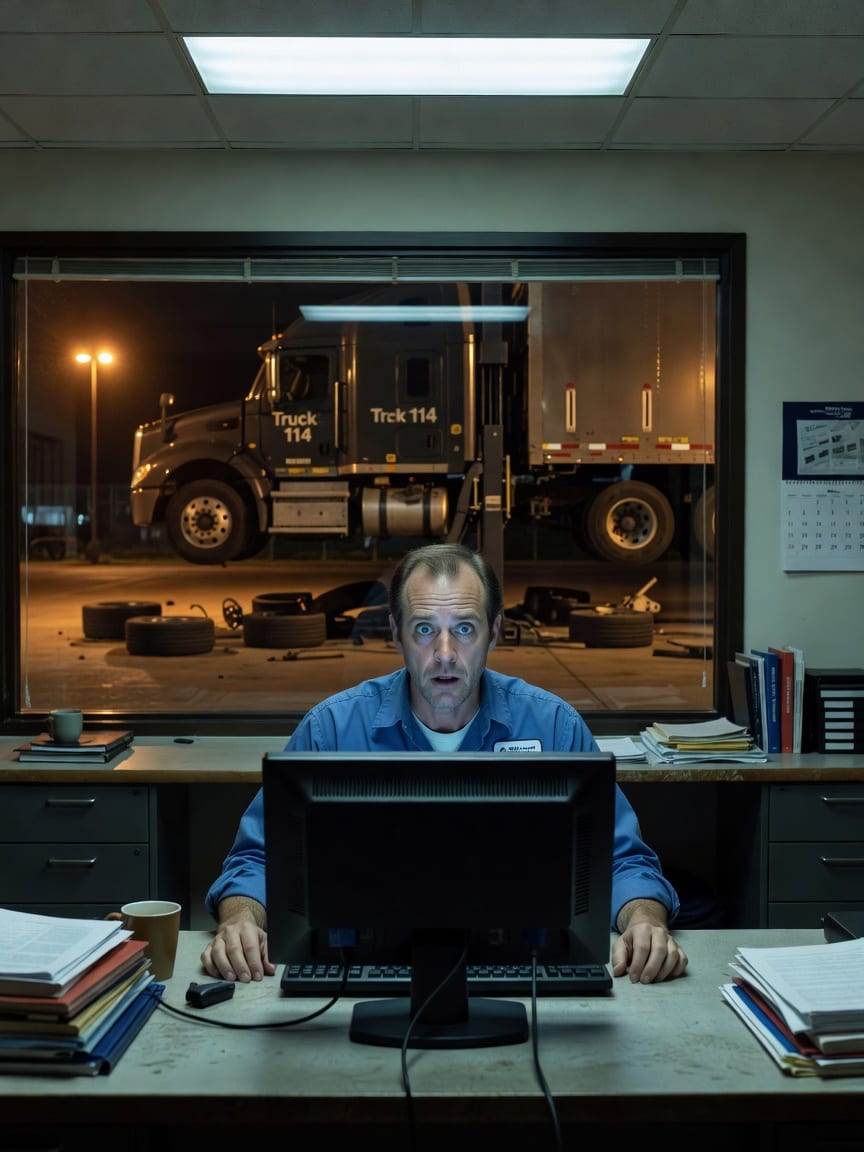
Truck 114 left the yard last night, CAD says. It burned forty miles of fuel. But my truck 114 was up on the lift, no wheels, all shift.
It was another quiet Wednesday overnight in the dispatch office until the CAD system pinged. My screen blared, showing Truck 114 logged outbound for forty miles and back, burning forty gallons of fuel. But I knew that very truck was immobile, suspended on a lift in Bay 4 with its drive wheels removed.
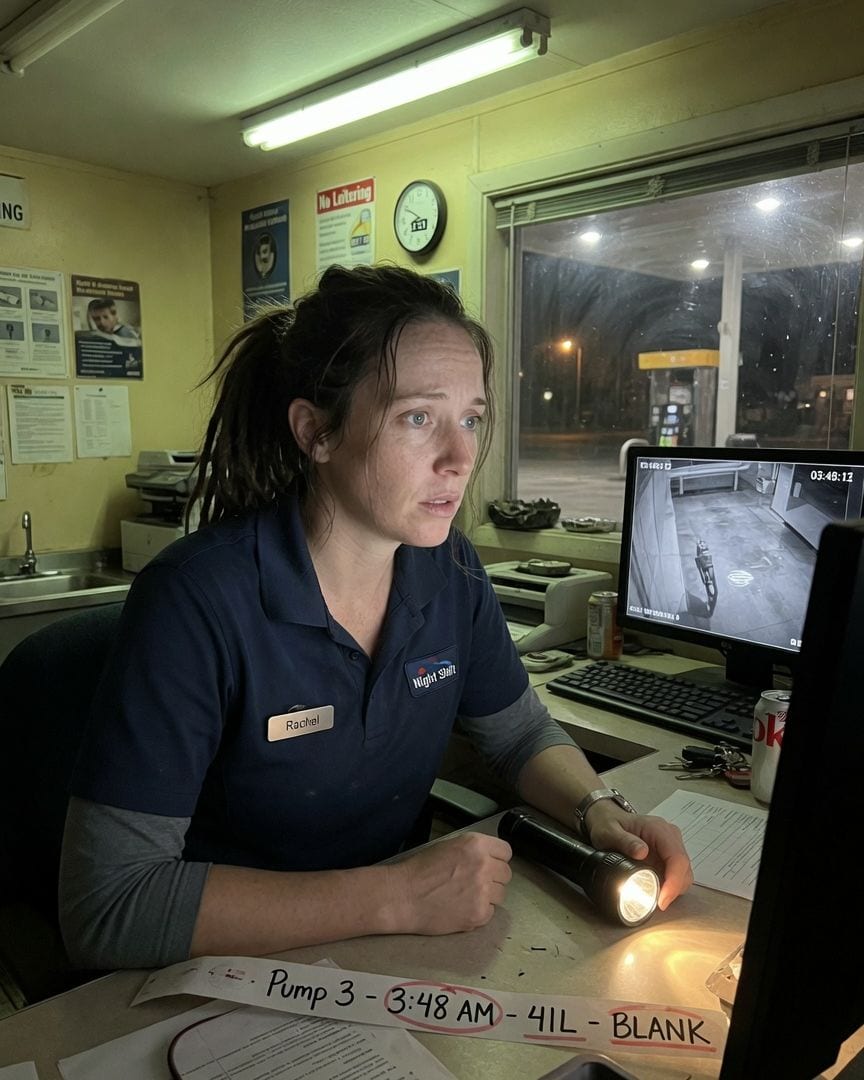
Pump 3's nozzle was hung up and bone dry when I checked it, but the printout says forty-one litres poured out of it at 3:48 AM. The fuel is gone from the tank, and I run the station alone.
Working my usual night shift at the gas station, I ran the final fuel tape when Pump 3 showed 41 litres dispensed at 3:48 AM, but no customer, no payment, and the nozzle was dry. Convinced it was a glitch, I checked the security camera, only to see a shimmering distortion over the pump and the hose straining taut, with nothing visible there.
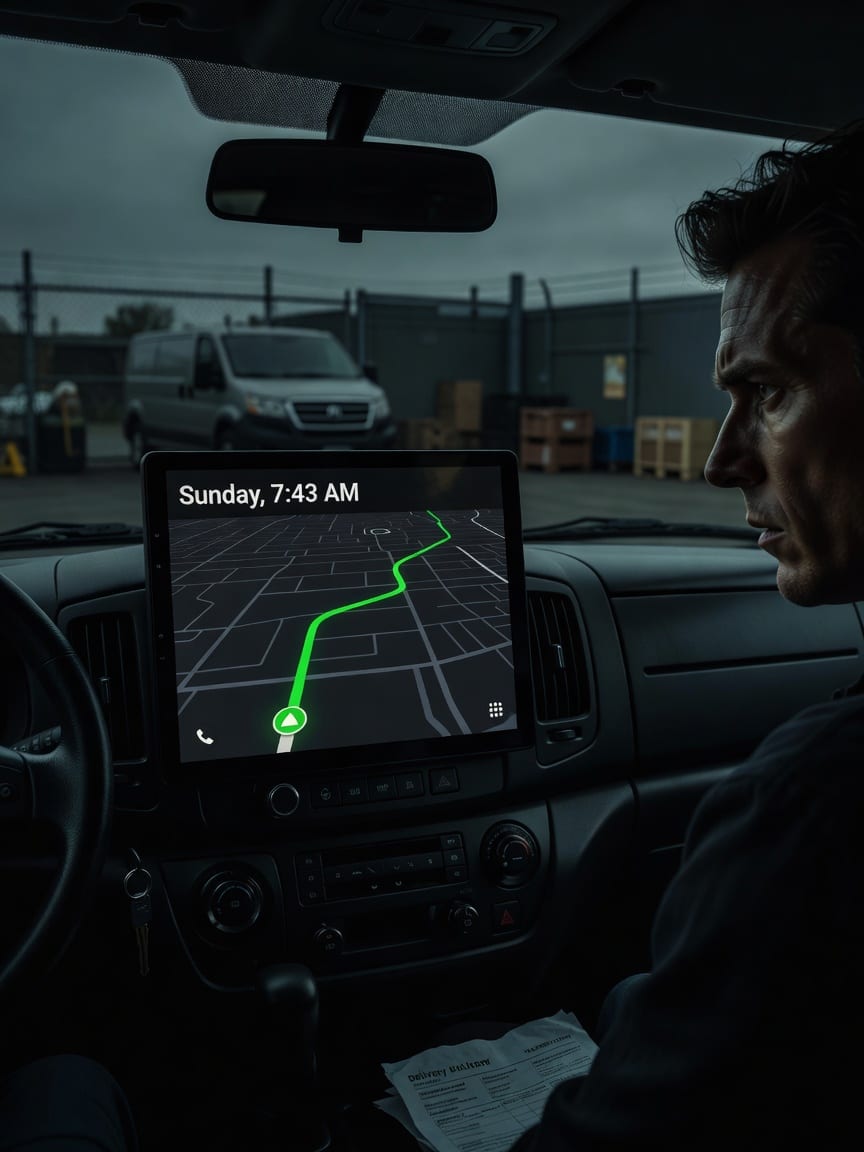
My delivery van drove 130 miles last Sunday, stopping for four hours in another state. It never left our locked yard. The GPS log drew the whole trip, timestamped to the minute.
I was just doing my job, sitting in the dispatch office with my manager Joel, when he pulled up the GPS log for my delivery van, Unit 74. It showed a 130-mile round trip to Delaware, engine on for four hours, with a distinct stop, all while my van was locked in the yard and I was home. The camera footage confirmed it hadn't moved an inch, yet the system insisted it had traveled hundreds of miles.
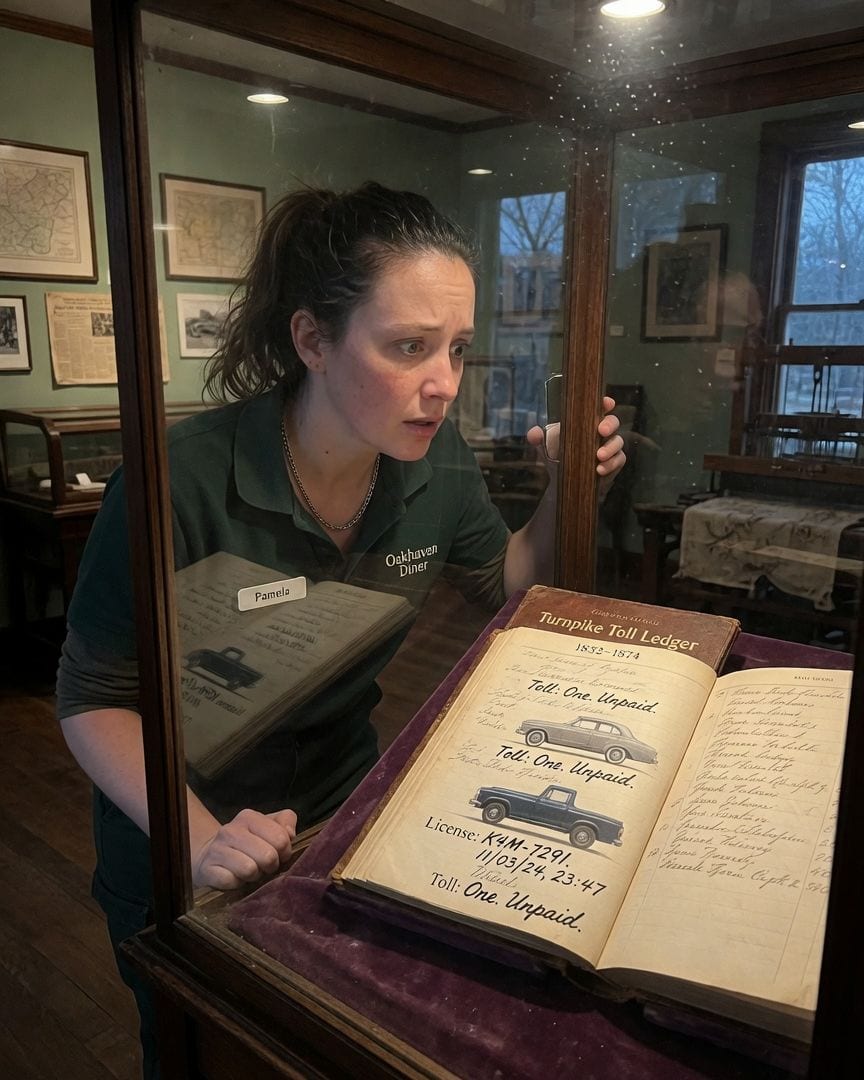
My car stalled at the old turnpike milestone, after dark. The toll ledger, closed in 1874, then listed my car, my stall time, and a toll of one, unpaid.
I had just moved to Oakhaven when my old sedan died on a dark, winding road by an infamous turnpike milestone. The next day, I found my car's exact registration and stall time written in fresh ink in a 150-year-old, locked museum ledger, marked 'Toll: One. Unpaid.' The curator dismissed it as a prank, but her white knuckles and strained voice hinted at something far more unsettling.
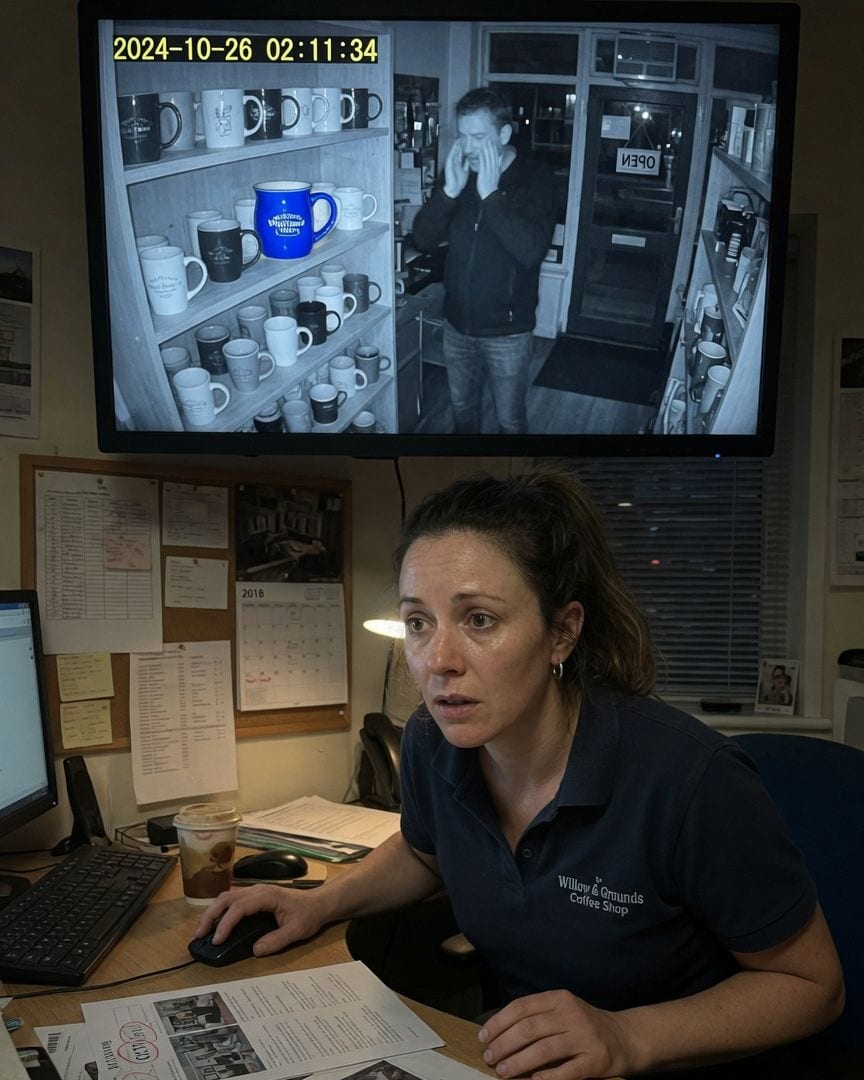
My shop's CCTV caught a customer who hasn't aged a day in eleven years of footage. He enters every night at 2:11, buys nothing, and leaves.
I was reviewing CCTV footage when I discovered a man who appeared inside my closed shop every night at 2:11 AM. He moved identically, never aging across eleven years of recordings, all confirmed as unique files. Yet, last night's footage clearly shows a specific coffee mug on the shelf that I know I sold seven years ago, and is definitely not there now.
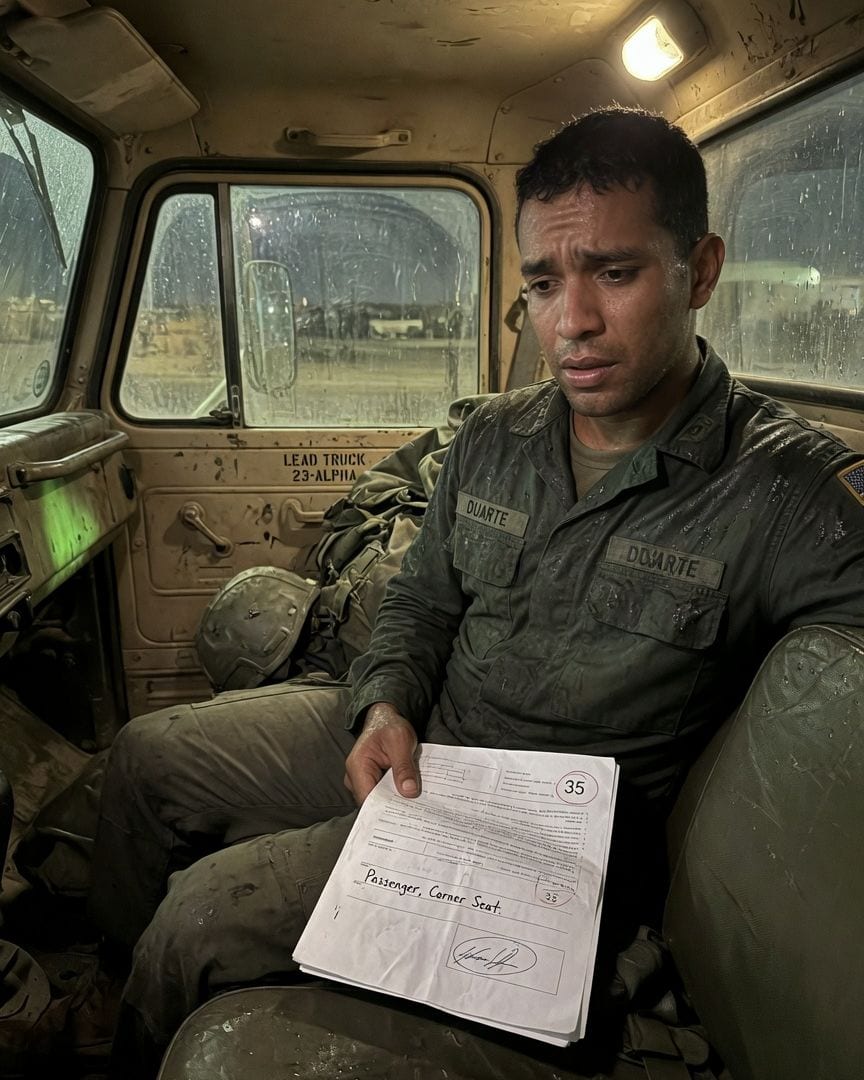
Specialist Duarte, two weeks from going home, found his empty truck seat warm and dented — then his service record showed a ghost deployment he never made.
Specialist Felix Duarte was just two weeks from going home, but a final convoy mission held an unsettling mystery. Soaked and running late, he squeezed into the lead truck's forbidden corner seat, a place every soldier knew to leave empty. Hours later, stepping out into the desert, he found the seat was strangely warm and distinctly dented, as if two unseen bodies had pressed in beside him. The official manifest then listed an extra soul for his truck, simply 'Passenger, Corner Seat,' signed by his own hand. What impossible presence had shared Specialist Duarte's ride, and what other records might it have altered?