A retired Coast Guard pilot found her lost helicopter’s survival MREs, sealed for decades, stamped ‘EXP 203X.’
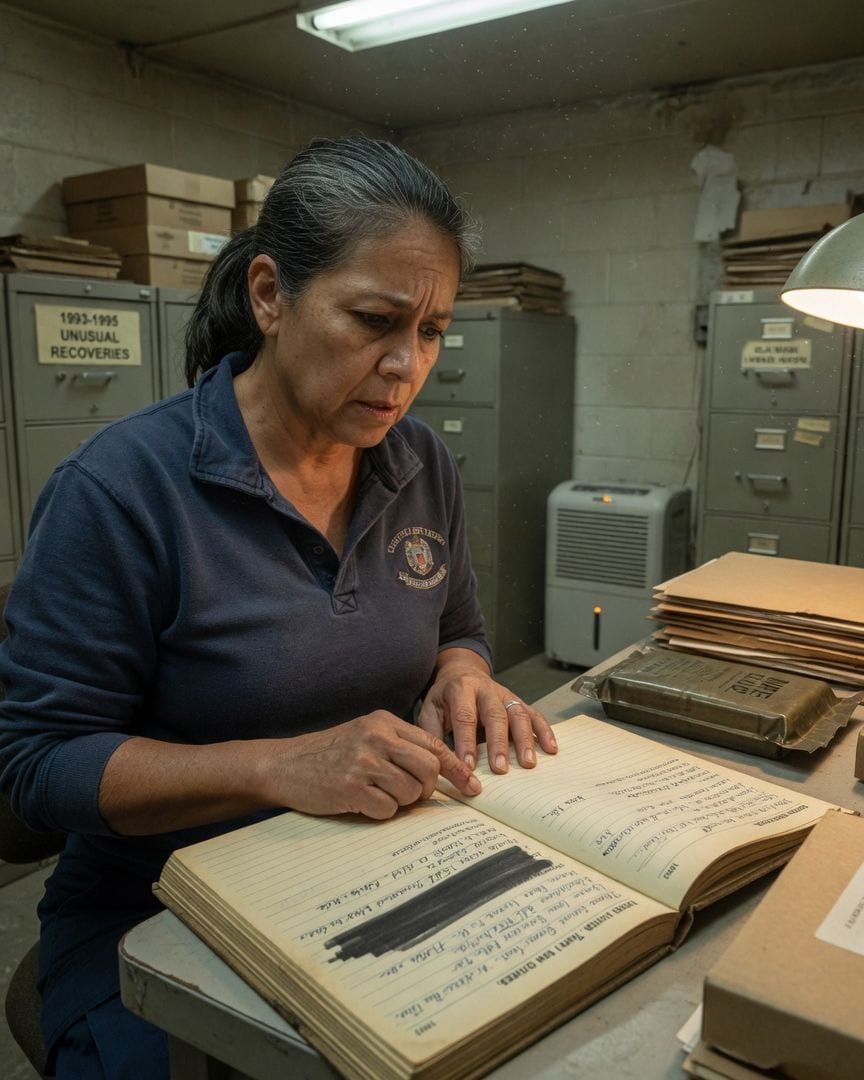
Ada Mireles, 54, a retired Coast Guard pilot, stood in the sterile chill of the evidence room, the air thick with the smell of brine and disinfectant.
A shrimper’s net had brought it up, a mangled hunk of metal from the Gulf’s murky depths: the seat pan from Dune Two, the helicopter she’d searched for in ’93.
She recognized the faded stenciling instantly, the specific serial code a ghost from her younger days. It was unmistakable.
A technician, a young man with a polite but detached air, handed her a thick, canvas survival kit, still sealed shut after decades in the deep.
Her fingers, scarred from old flight deck mishaps and the grip of a joystick, worked the clasps automatically, her mind already cataloging the contents against a memory file she hadn't opened in years.
Flares, a signal mirror, a basic first-aid tin – all standard issue. Then, at the bottom, tucked neatly, were several vacuum-sealed MRE-style ration packs. She pulled one out, its plastic casing slick and cool in her palm.
Her thumb brushed the embossed date stamp, a habit ingrained from years of pre-flight checks. Her brow furrowed. She turned it over, then again, disbelief warring with the cold, hard data. ‘EXP 203X,’ it read, clear as day.
Not 1993, not 1995, not even 2005. The future. Her own packing list, from her station in ’93, still tucked in a shoebox in her attic, would show the exact same MRE type. The numbers would match. They always did.
The room itself seemed to hold its breath, the low hum of the dehumidifier momentarily silenced in her mind.
Ada, unable to shake the impossible date, began her methodical inquiry. The civilian sector offered no answers; her old Coast Guard connections felt like the logical first step.
She called James Vance, a retired Coast Guard records officer she knew from her early career, her voice carefully neutral as she asked about 'anomalous equipment logs' and 'discrepant serial numbers.'
Vance, typically affable, grew guarded, his usual easy chatter replaced by clipped responses. He mentioned an old, rarely-accessed microfiche archive, something for 'unusual recoveries' that most people had forgotten about.
Using her old service credentials, Ada gained access to the dusty room in the basement of the District Seven headquarters. The air was stale, smelling of ozone and forgotten paper. Rows of metal cabinets stood like silent sentinels.
She found the original equipment logbook for survival kits issued to Dune Two's station in 1993, its cover brittle, its pages yellowed.
With a steady hand, she located the precise entry for the kit issued to Dune Two, noting the standard expiration date, already decades past. It was a familiar record, mundane in its specificity.
Then, on the very next page, tucked almost invisibly between two separate patrol logs, she found it: a duplicate entry. 'Dune Two, Survival Kit, Type 3,' it read, almost identical to the first.
But the issue date was listed as '1995,' and the expiration date, bold and unwavering, was '2030s.' The logbook, in its own steady, official hand, recorded a ghost, an impossible echo across time.
Ada ran her finger across the ink, tracing the anomaly. It wasn't a mistake; it was a record, plain and terrifying.
Ada ran her finger along the 1995 entry, the paper cool beneath her touch.
It was stamped with a control number she’d never seen before, a string of digits and letters that looked official but yielded no results in any public or service database she could access.
Next to it, in faint, precise script, was a handwritten note: ‘See Project CHRONOS - Phase 3.’ Ada mouthed the words, the name feeling cold and alien on her tongue.
Directly beneath this note, a single, thick black redaction covered a line of text.
It wasn't a neat, rectangular black-out; it had a distinct, almost organic curve to it, a shape that felt strangely familiar, like a series of digits she knew by heart, something she had seen written countless times.
Ada’s inquiries into 'Project CHRONOS' hit brick walls. Former contacts, usually eager to chat, grew quiet, transferred her to disconnected lines, or claimed no knowledge with an unnerving uniformity. It was a blanketing silence.
James Vance, when she pressed him again, offered vague warnings, urging her in a low, almost paternal voice to 'let sleeping files lie, Ada. Some things are better left undisturbed.'
His composure, usually so steady, seemed to waver under her scrutiny, a flicker of something she couldn't quite place in his eyes.
Undeterred, Ada recalled a retired colleague, Frank Norwood, a grizzled old intelligence officer who had once hinted at a 'special operations' unit handling 'unusual recoveries' from the Gulf.
Frank, after much prodding and the promise of several rounds of his favorite stout, provided a heavily redacted list of old case files.
Ada found reports of other 'lost at sea' incidents from the same sector Dune Two had vanished in: a fishing trawler’s bell answering from black water where sonar showed nothing, a downed aircraft's emergency beacon activating years after its crash site was confirmed empty, its wreckage already retrieved and inventoried.
The redactions in these files were extensive, black rectangles devouring names, dates, and locations, but the remaining text consistently described 'retrievals' of 'anomalous artifacts,' never 'salvage.'
The language itself implied an ongoing pattern, a careful management of recurring events, not isolated, accidental losses.
A chill settled in the small, cluttered study, seeming to originate from the glowing screen of her laptop, making the hair on her arms prickle.
As Ada delved deeper, the subtle signs began. Her old, rarely used Coast Guard email account, which she'd reactivated for this investigation, showed multiple login attempts from an unknown IP address, always just after midnight.
She noticed a dark sedan, unremarkable in its make and model but always present, parked a block from her house for three consecutive evenings. It was never the same driver, but the car itself was a constant, a silent sentinel.
One afternoon, a small, unmarked package arrived at her door. The address label bore a hastily scrawled name – a former neighbor who’d moved out years ago.
Ada opened it, curiosity overriding caution, finding only a blank, manila folder nestled inside. It felt ordinary, smelled faintly of recycled paper.
But as she idly turned a seemingly blank page inside, catching the light from her living room window, a faint watermark materialized: a stylized hourglass, elegant and unnerving in its simplicity.
It was the same symbol, she realized with a jolt, she’d glimpsed on a control sheet buried deep within one of Frank Norwood’s heavily redacted files, a detail so small she’d dismissed it as a printing error.
The message was clear, delivered with a precision that chilled her to the bone: she’d been found. The file was watching her, and it knew her address.
Ada confronted James Vance again, this time placing the blank folder with the hourglass watermark squarely on his desk. The flimsy paper with its ominous symbol sat between them, a silent accusation. His composed demeanor, usually so solid, finally cracked.
A tremor ran through his jawline. He admitted it then, his voice low, gravelly. He had been part of the 'special operations' unit decades ago, a unit that, as the anomaly became more frequent and more...
manageable, eventually became Project CHRONOS. He explained that some disappearances weren't simply losses. They were 'transfers'—through a phenomenon the government couldn't control but, with immense resources and decades of study, had learned to manage.
They retrieved 'anomalous artifacts,' he continued, his gaze distant, as if seeing beyond the walls of his office. And sometimes, even 'personnel.'
These individuals, or fragments of them, would return from these transfers, often years later, subtly altered, operating in a non-linear timeframe. The future-dated rations, he revealed, were not an error, not a glitch in the system.
They were a 're-integration marker' for items that had passed through the anomaly, coded by their destination timeframe. He confirmed Dune Two was one such transfer, not lost but temporarily... displaced.
Its kit was 're-filed' after retrieval, cataloged not when it vanished, but when it returned from a different loop of time. The office itself seemed to press in, the air suddenly heavy with unspoken truths.
Vance pulled a thick, binder-clipped document from a locked drawer he’d accessed with a key no larger than a toothpick. It was a declassified-but-redacted 'After-Action Report' for Dune Two, a file so dense it looked like a small brick.
'This,' he said, sliding it across the desk, the paper scratching faintly, 'is how they knew. This is how they cataloged it.'
Ada’s hands trembled as she opened the report, the thick paper cool and official beneath her fingertips. It detailed the recovery of Dune Two's kit, meticulously logging every item, every warp and rust spot on the seat pan.
She flipped through pages detailing 'temporal displacement vectors' and 're-integration protocols,' words that felt lifted from a forgotten sci-fi novel, not a Coast Guard file. Her breath hitched.
On a page detailing the 're-integration team,' under a section titled 'Field Operations Lead,' her eyes snagged on a partially visible name.
The blacked-out portion was almost perfect, an almost-total obscuration, but a faint curve, a specific ascender, a familiar descender, made her heart seize in her chest. 'MIRELES, A.' was discernible.
The service number next to it, partially visible, matched hers, digit for agonizing digit. The date listed for this operation, clearly printed beneath her name, was '202X,' decades in her future.
She stared at her own name, her own designation, a ghost in a file yet to be fully written, listed as leading the very operation that had handled her lost helicopter's kit.
The blood drained from her face as the impossible truth settled: she was not just uncovering the file; she was already written into it, decades into the future.
Ada shoved the report back at Vance, the heavy binder thudding against his desk. 'No,' she whispered, her voice raw. 'Explain this. Now.' He remained unnervingly calm, his hands resting flat on the desktop.
'Project CHRONOS,' he explained, his voice even, 'doesn't just manage the anomaly, Ada. We use it. The gate isn't random. It’s a mechanism. And we learned to predict, even influence, what comes back, and when.'
He leaned forward, his eyes locking onto hers, and revealed the deeper truth. The 're-integration' wasn't just about artifacts; it was about personnel.
Individuals who passed through the anomaly, like those aboard Dune Two, were sometimes retrieved, subtly altered, and 're-programmed' to work for the institution, operating across non-linear time.
He confirmed her own experiences during the 1993 search for Dune Two—the disorienting fog that had rolled in suddenly, the patches of unexplained, lost time, the faint, internal hum she'd dismissed as fatigue—those were her initial 'transfer.'
Her name in the file, he stated, meant she was destined to be one of them. The future-dated rations weren't just a marker for the kit; they were a marker for her.
Every cryptic entry, every impossible date, every peculiar redaction, every faint watermark—all of it clicked into a horrifying, coherent pattern. The room itself seemed to expand and contract, the shadows on the walls dancing with a terrible knowledge.
Ada pushed back from the desk, her chair scraping harshly against the floor. 'No,' she whispered again, firmer this time. 'I won't. I won't be part of this.' Vance rose, his movement unhurried, blocking her path to the door.
He wasn't threatening, but his presence was implacable, a solid, unyielding barrier. 'It's a necessary service, Ada. You've been chosen. You've already seen the pattern; you understand the coherence. You're uniquely suited for this.'
He gestured to the hourglass watermark on the blank folder still on his desk. 'The gate will open for you again. It always does. You can join us, or you can disappear. The file will be signed either way.'
Ada's gaze darted around the room, searching for an escape, a weakness, a crack in his composure. Vance simply stood, a calm, unsettling sentinel. The air in the small office seemed to thicken, pressing in on her, stealing her breath.
'You're already part of the file, Ada,' he said, his voice soft but firm, utterly devoid of malice. 'You always were.'
He slowly, deliberately, reached for an unmarked folder on his desk, its cover bearing the distinct hourglass symbol, identical to the one she'd received. His fingers closed over it, a silent, final implication that resonated through her bones.
Ada, shaken and desperate, managed to slip past Vance, her heart hammering against her ribs. She left his office and the classified archive behind, the stale air clinging to her.
She tried to report him, to expose Project CHRONOS, to tell anyone who would listen, but her calls were routed to dead ends, her emails bounced back with 'undeliverable' notices.
The digital copies of the reports she’d accessed were suddenly corrupted, the microfiche entries inexplicably missing from the dusty archive.
It was as if her entire investigation had been systematically scrubbed, leaving no trace, no proof that any of it had ever existed. The world, oblivious and unconcerned, moved on.
Ada sold her house, packed a single duffel bag, and moved to a small, isolated town far from any coast, far from any airport or Coast Guard station. She tried to rebuild, to forget.
Every shifting shadow held a hint of the hourglass symbol, every distant siren a whisper of 'Project CHRONOS.' She lived quietly, always looking over her shoulder, a survivor marked by an impossible, unspeakable truth.
She checked her mail religiously, dreading every package. One morning, a small, unmarked package sat on her doorstep, tucked innocuously behind a potted fern. Inside, nestled in plain packing peanuts, was a single, sealed Coast Guard ration pack.
She picked it up, her fingers tracing the familiar stenciling, cold dread unfurling in her stomach. The expiration date, bold and clear, read: '2047.'
It was from her own station's current stock, a fresh entry in a file that was still being signed.
If this one got to you
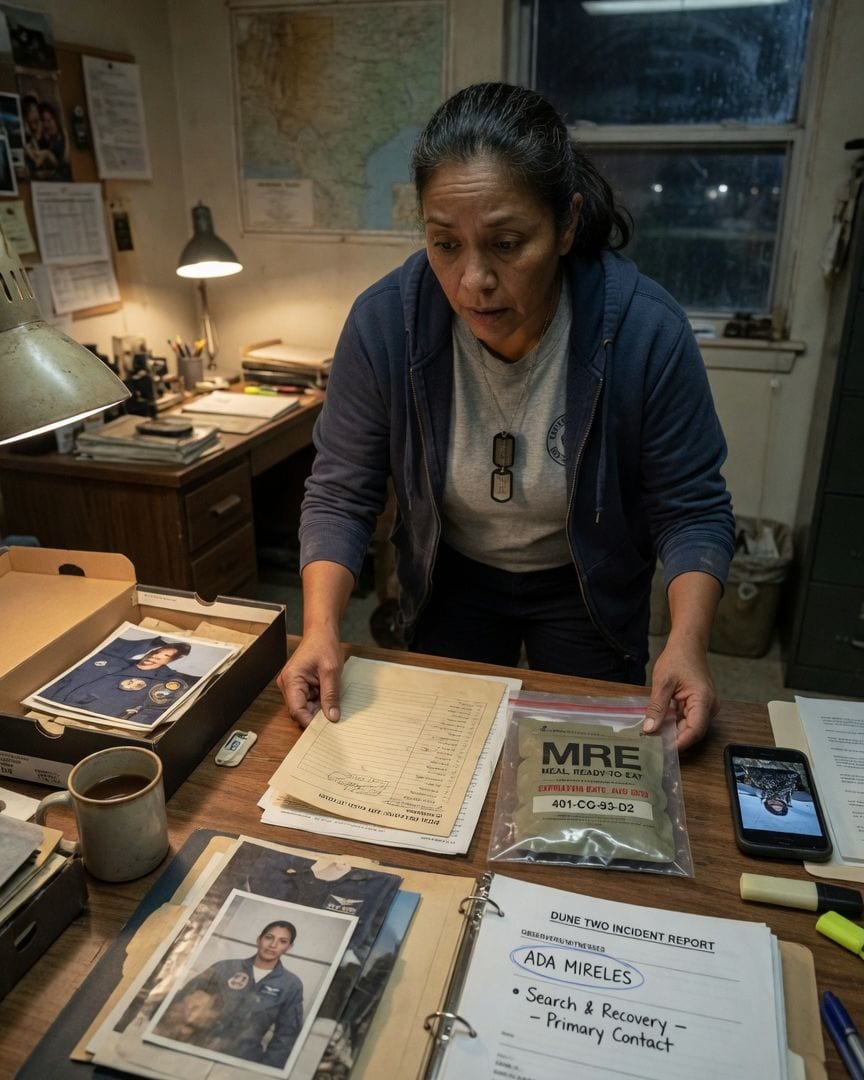
A former Coast Guard pilot found a survival kit from a chopper lost in 1993. The rations inside expire in 2030.
Former Coast Guard pilot Ada Mireles spent her youth searching for the Dune Two helicopter, lost 37 years ago. Now, a shrimper's net has snagged its corroded seat pan, complete with a sealed survival kit. But as Ada examines the kit's contents, a chilling detail emerges: the MRE packets inside are stamped with an expiration date of 'AUG 2030'. How could rations from a 1993 crash have an expiry date nearly four decades in the future? Ada's own meticulous records confirm the kit's serial number, yet defy all logic.
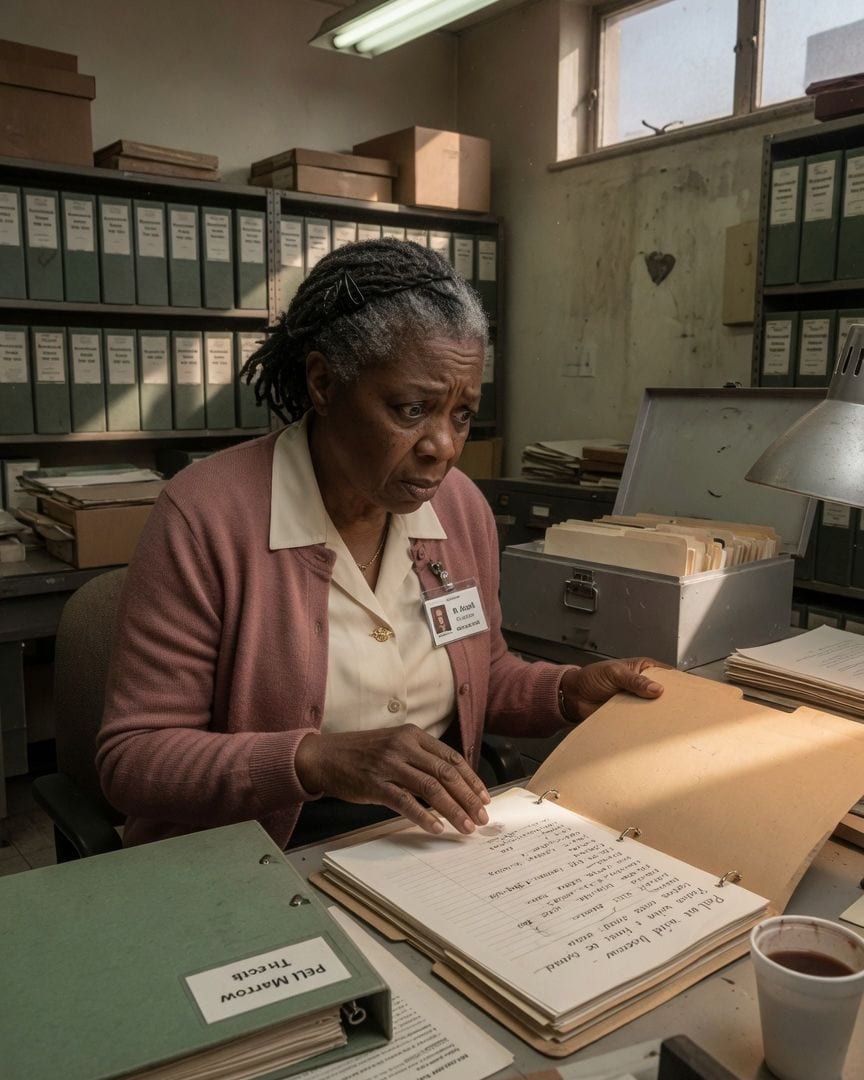
A records clerk's archive file for a Cold War reconnaissance plane lost in 1968 showed it flew yesterday to her own building.
Marguerite Ansell, a records clerk nearing her final week before retirement, meticulously audited Cold War-era files. In the cool, dusty archive, she pulled a file for an oiler declared missing in 1951. Inside, she found a fueling schedule with entries stretching into the present, the last dated just eleven days ago. Then, a second lost ship revealed a similar impossible log, and a cold certainty began to bloom in her chest. Deep in the shadows, Marguerite found an unmarked steel box containing a file for a reconnaissance plane lost in 1968. Its flight log showed a final flight yesterday, to the precise coordinates of her own archive building.
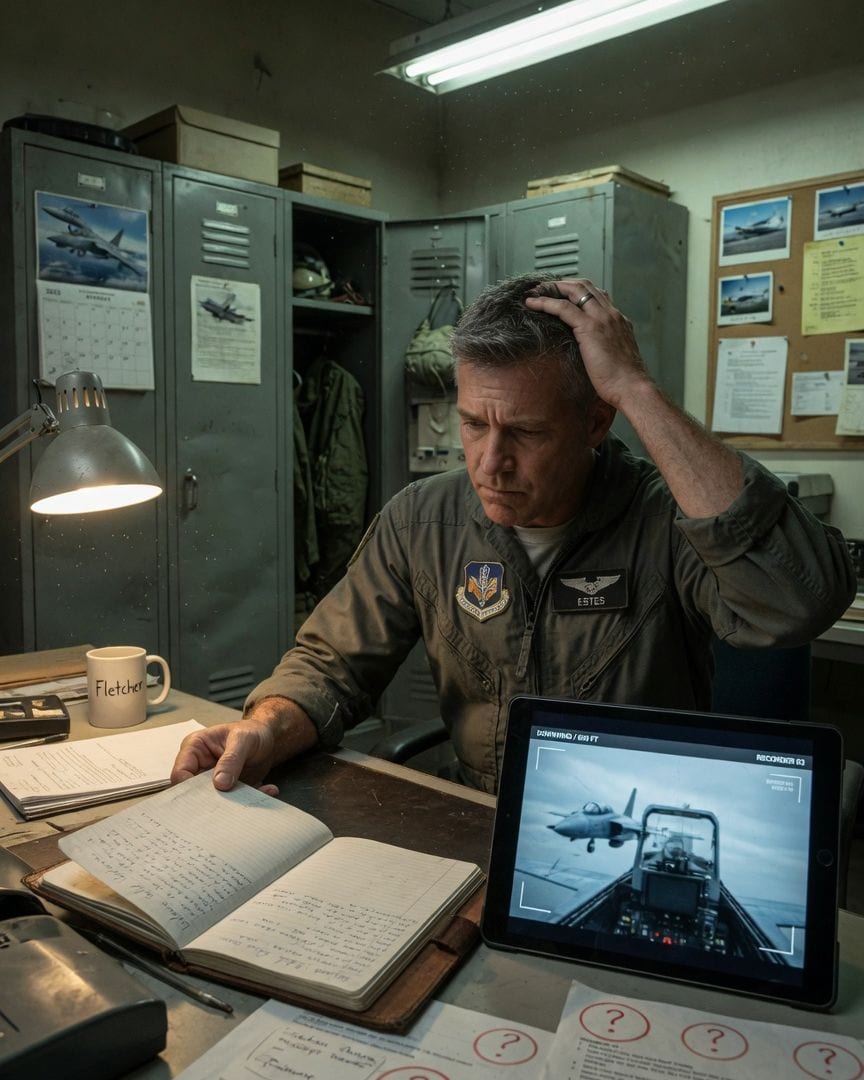
A Chief Warrant Officer's HUD tape shows a phantom jet, impossibly close, off his wing. Forty years ago, another Cold War pilot logged the same impossible sight.
Chief Warrant Officer Nathaniel Estes, a pilot whose career hinged on absolute precision, was under evaluation for a critical promotion. His nightly review of HUD tapes from routine Mojave test flights was a meticulous habit, but for a week, it revealed an impossible detail. At precisely 800 feet, one frame showed a sleek, experimental jet tucked impossibly close off his left wing—a craft ground radar never detected. When his maintenance chief found no equipment fault, Estes unearthed a dusty, decades-old logbook detailing identical phantom sightings from 1978. What unseen presence shadowed the desert skies?
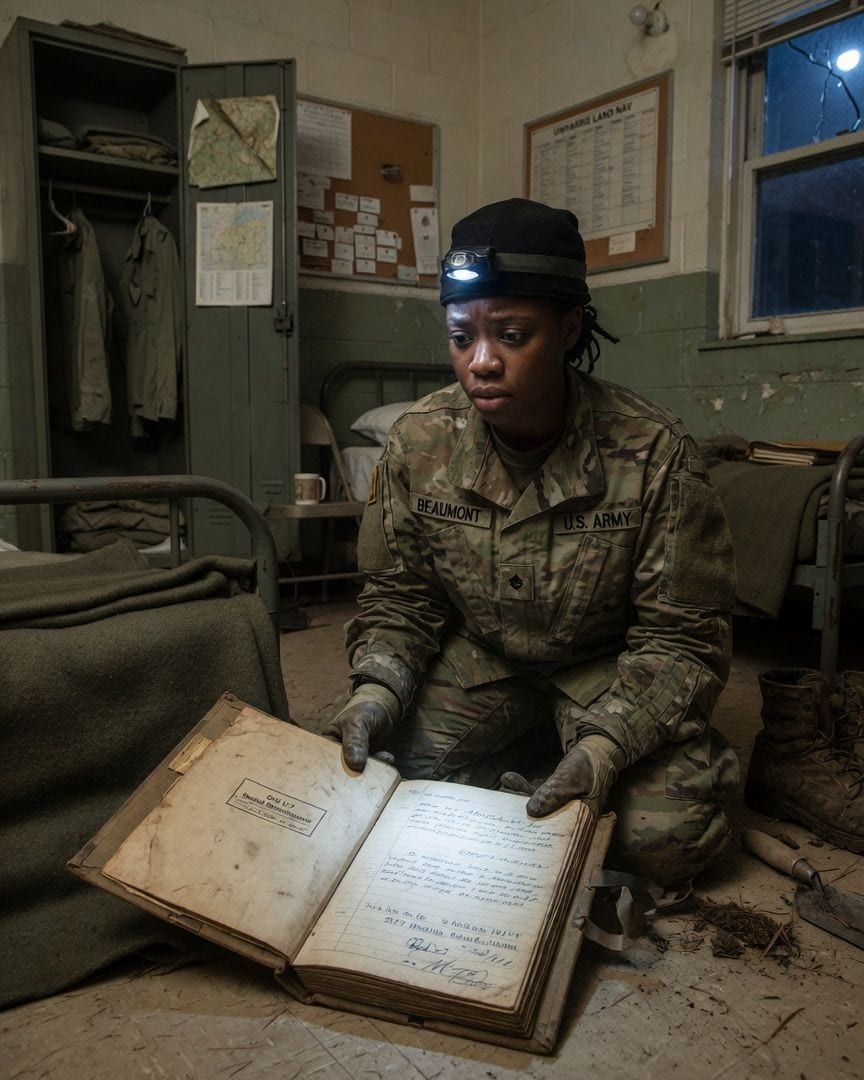
A burn barrel's impossible heat led a lieutenant to a hidden logbook, holding her own signature on a patrol she never took.
Second Lieutenant Monica Beaumont, bone-tired after a land-navigation course, logged an unexpected compound in the Uwharrie backcountry. Her cadre officer, Captain Russo, insisted she'd invented it, marking her record. The next morning, leading her platoon back to the coordinates, the compound was gone, but they found fresh post holes, cold fire pits, and a burn barrel still radiating an impossible heat. Unable to shake the uncanny feeling, Lieutenant Beaumont returned alone that night and unearthed a heavily corroded metal box. Inside, a canvas-bound logbook detailed decades of activity at a site that didn't exist, until she found an entry from eighteen months prior: her own signature on a night watch she was hundreds of miles away from.
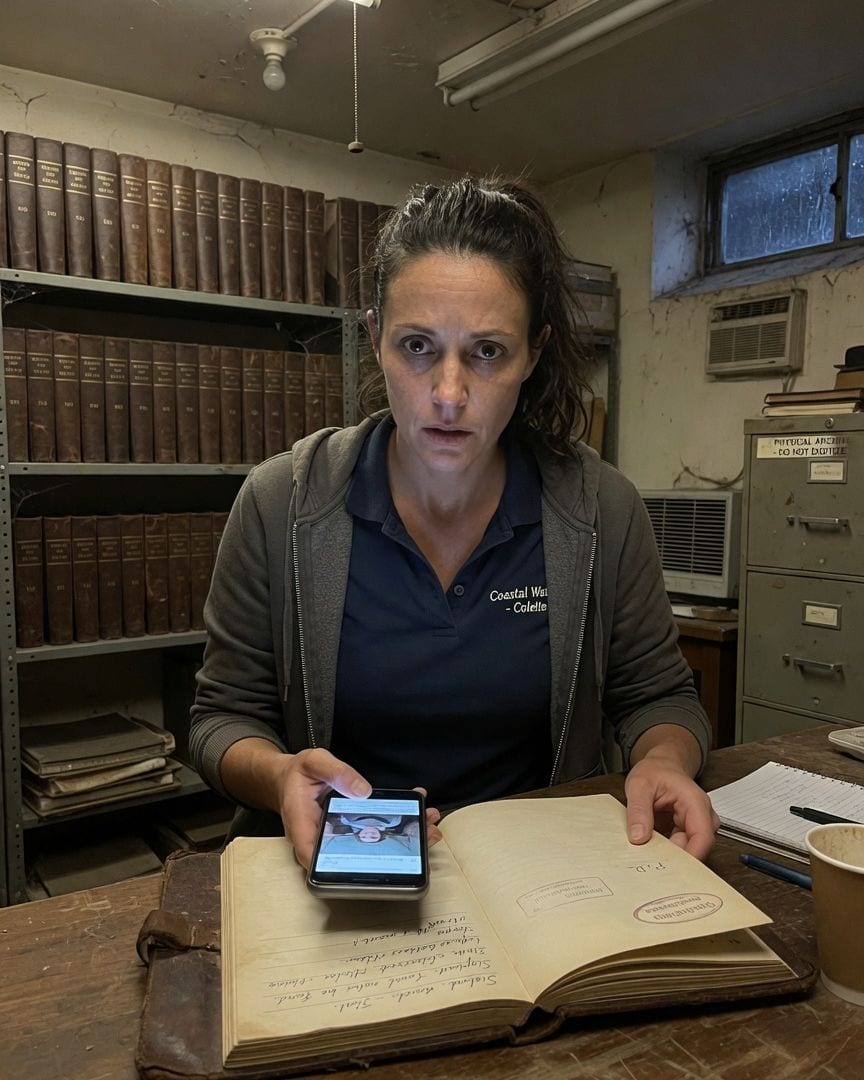
My coastguard log noted Sighting 9 again tonight, a light where no vessel showed. The old logs carry Sighting 9 off Skerry Point at 3:14am every tenth year since 1954, always 'nothing found,' always 'send no boat.'
On my watchtower night shift, the radar screen glowed green and the ocean was quiet. Then, a familiar light appeared off Skerry Point, exactly on cue, just as it had every tenth year for decades. But digging deeper, I found a hidden stamp in an old logbook: 'Operation Skerry. Status: Complete.' It left me with a chilling sense of finality.
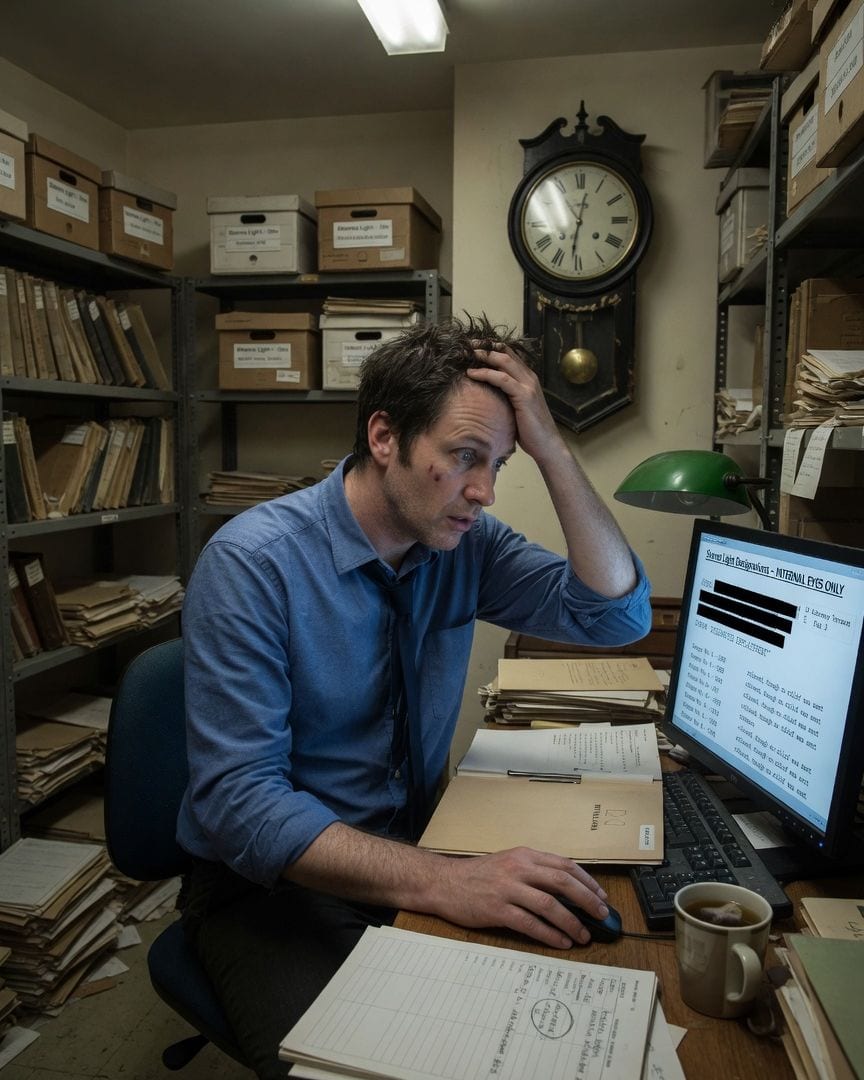
I found my street address in a century-old lighthouse file, printed decades before I lived there.
As a maritime archivist, my world revolves around forgotten lives and dusty ledgers. But the Skerne Light files broke that quiet rhythm, revealing a chilling pattern: 'Keeper number 6' relieved, though no relief was sent, repeating for decades. Now, an internal document with a strange code has led me to a redacted entry, revealing my own street address, decades before I ever lived there.