My river paddle passed the same three islands twice. My watch said I travelled miles, but the weir never came.
I pushed my kayak into the river, a familiar Saturday ritual. The current here, just beyond the old family boathouse, was always strong, pulling me downstream towards the old weir.
It was a perfect morning, the air crisp, the water a deep, moving green. I paddled past the first island, its rocky shore already warm in the sun. Then the second, crowned with a stand of pines.
Finally, the third, smaller than the others, where a solitary heron usually perched on a dead branch. And there it was, just as always, a grey statue against the blue.
My waterproof watch read twenty minutes. Forty minutes was the usual time to reach the weir, where the river narrowed and the water churned, before I’d turn back upstream for the long paddle home.
I settled into a rhythm, the slight rumble of the weir already a low thrum in my mind, a promise of the turnaround point.
But after another twenty minutes, I passed the first island again. My paddle scraped against a familiar submerged log that I distinctly remembered navigating around before. Then the second, the same stand of pines.
And finally, the third, the heron still there, its head cocked exactly as it had been twenty minutes ago, unmoving.
My watch now read fifty minutes, then sixty, logging the miles, but the sound of the weir, usually a low rumble ahead, never materialized. The current still carried me, strong and steady, but I was going nowhere new.
My arms began to ache, a deep, frustrating burn, as the three islands appeared for a third time, in the exact same order. The heron blinked slowly, then settled its head back into its plumage.
Back at the boathouse, I tried to rationalize it. A GPS glitch? Unseen currents, perhaps a freak eddy I’d somehow missed? I studied my river map, a detailed local survey I’d used for years.
The stretch from the boathouse to the weir was clear, linear, no hidden loops or oxbows. My kayak, tucked neatly into its rack, mocked me with its silent stillness.
I paddled the river again on Monday, determined. This time, I moved slower, carefully counting strokes, watching the bank for landmarks. I even took photos on my phone, timestamping them. The same thing happened. Three islands, then three islands again.
I marked my position on my phone's GPS, watched the tiny blue dot move, then, impossibly, loop back over its own track. The numbers refused to add up.
My phone, usually precise to within a few feet, showed me travelling a straight line, then jumping back, then travelling the same line again, all while my watch logged continuous mileage downstream.
It was like watching a glitching video game character walk into an invisible wall, then reappear a few steps back to try again.
Frustrated, I decided to dig into the boathouse itself. It’s an old structure, passed down through my family for generations, and for all its age, it felt solid, permanent.
I remembered my grandfather mentioning old ‘river logs’ that used to be kept here, records of the river’s moods, fishing catches, and perhaps, I hoped, some forgotten peculiarity of the current.
I searched the dusty shelves, behind coils of rope and forgotten fishing gear, my fingers trailing through layers of grit.
There, tucked under a pile of brittle, old canvases that smelled of linseed oil and damp, sheathed in cobwebs, I found a worn, leather-bound journal. It smelled of damp paper and ancient wood, a scent that felt like history itself.
The first few pages were mundane records of repairs and boat rentals from the early 1900s. Then, I turned to a section titled 'River Observations'.
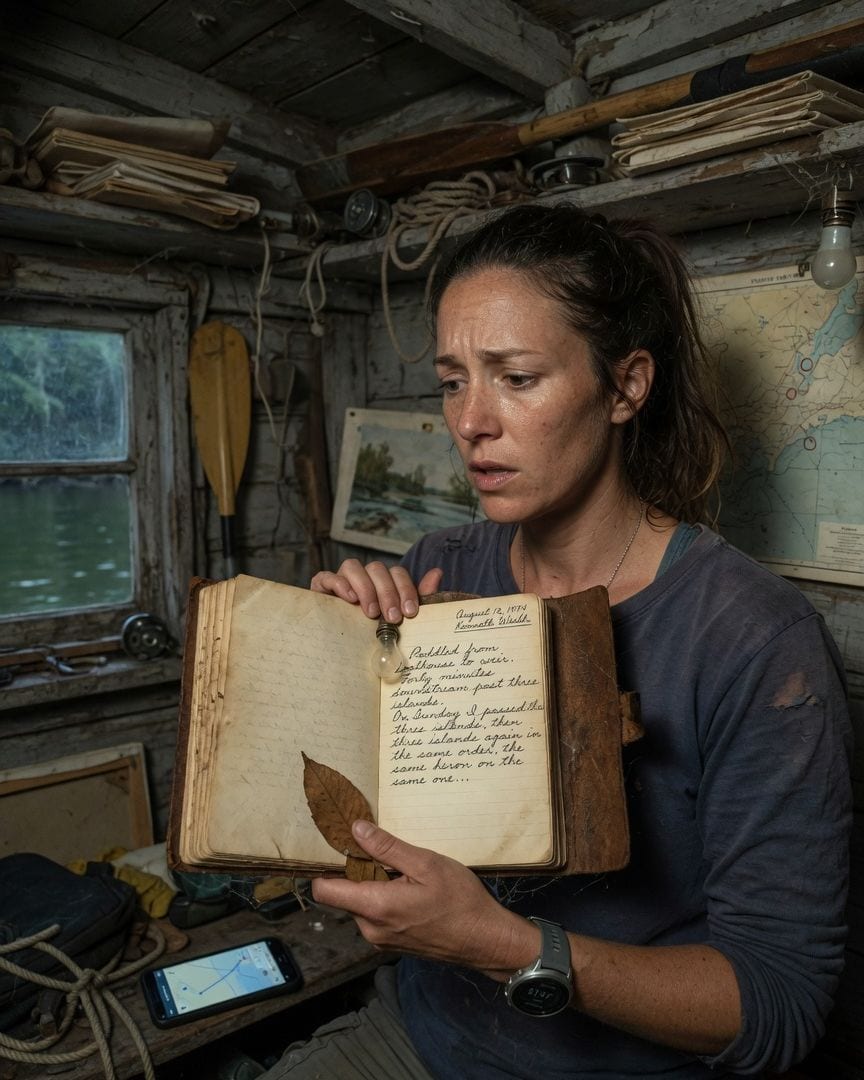
I opened the logbook to a page marked with a dried leaf, its veins still remarkably intact. The cursive script, though faded, was neat, precise, dated August 12, 1974. My breath caught in my throat.
The entry began: 'Paddled from boathouse to weir. Forty minutes downstream past three islands.
On Sunday I passed the three islands, then three islands again in the same order, the same heron on the same one, my watch ticking off the miles, the current still carrying me down though the weir I could hear ahead never came.'
It wasn’t just similar. It was word for word, my own experience, written fifty years ago by a Kenneth Walsh. My fingers traced the faded ink in the old logbook.
An entry from August 12, 1974, reads: 'Paddled from boathouse to weir. Three islands. Three islands again. Heron. Current flows, but the weir never comes. Mileage logged, but I never left.'
The handwriting was not hers, but the words were exactly her own.
The logbook entry chilled me to the bone. Not a glitch, not a mistake, not just me. Someone else, decades ago, had experienced the exact same impossible loop. I spent the next few days researching Kenneth Walsh.
The local library archives yielded little beyond a brief mention of a 'Kenneth Walsh, boathouse keeper' in a 1970s town directory. No death records, no family trees that connected directly to my own, not immediately anyway.
I asked my mother, who vaguely remembered a 'cousin Kenneth' who lived at the boathouse 'back in the day' but said he just 'moved away.'
The way she said it, the slight hesitation in her voice, didn't sit right with me. People didn't just 'move away' without a trace from a small community like this.
I needed to talk to someone who remembered more. I visited Maureen Davenport, the elderly, sharp-witted woman who managed the historical society and had lived in town her entire life.
Her office was a labyrinth of stacked boxes and yellowed papers, smelling faintly of dust and lavender. Maureen, with her spectacles perched on her nose, sifted through files with the practiced ease of an archaeologist.
I explained my river experience, showing her the logbook. Her eyes widened slightly at the 1974 entry, a flicker of something unreadable, like an old memory sparking to life, in her gaze.
She confirmed Kenneth Walsh was indeed the boathouse keeper then, a quiet man, 'a Vaughn by a different name, through his mother’s side,' she murmured, almost to herself, as if recalling a forgotten branch of a complicated tree.
Maureen pulled out an old, hand-drawn map of the river, much older than my official survey. It was brittle, stained at the edges, clearly a relic.
It showed the same three islands I knew so well, but also a faint, almost erased pencil line that seemed to double back on itself, precisely where I experienced the loop.
Maureen dismissed it as 'an old cartographer's mistake,' tracing the faint line with a wrinkled finger, but her hand lingered on the spot, her gaze distant, as if she were seeing something beyond the faded paper.
The map, she explained, was from the late 1800s, drawn by a local land surveyor who was 'a bit eccentric.'
I left Maureen’s office with more questions than answers. The hand-drawn map, though dismissed, resonated with the logbook. An old cartographer’s mistake? Or a trace of something known, then forgotten or ignored?
I returned to the boathouse, now seeing it through new eyes. It wasn't just a place to store my kayak; it felt like a silent, wooden sentinel, holding its own secrets.
I measured the interior, comparing it to old photos I found tucked in a drawer, looking for inconsistencies, hidden doors, anything. Nothing obvious.
But over the next few days, subtle things began to happen inside the boathouse.
I’d leave my kayak paddle propped against the wall; I’d find it lying flat on the floor the next morning, exactly in the middle of the room.
A small, specific stone I used to prop open a high window for ventilation was moved, always to the same spot, a few inches to the left of the sill, rather than against it.
I told myself it was the draft, or my own forgetfulness, a byproduct of preoccupation, but the sheer consistency unnerved me. It was too precise.
One evening, as I was locking up, the sun setting in a blaze of orange over the river, I heard a faint, almost imperceptible creak from the river-facing wall, deep within the old timber, as if something heavy was shifting inside the boathouse itself, settling into a new position.
It wasn't a structural groan, but something… deliberate. I called out, 'Hello?' My voice echoed in the empty space. The sound stopped instantly, leaving only the lapping of the river against the pilings. The next day, Maureen called me, unprompted.
'Eleanor,' she said, her voice unusually flat, almost devoid of emotion, 'I think you should leave that old book alone. Some things are better left undisturbed.' I pressed her, demanding to know what she meant.
Maureen simply repeated, her voice softer but no less firm, 'Some things are just… the way they are. You can’t change the river, dear.'
I drove straight to Maureen’s house, the logbook heavy in my hand. I found her in her sunroom, a cup of tea cooling on the table beside her.
'Maureen,' I began, my voice tight with a mixture of fear and defiance, 'this isn't a cartographer's mistake, is it?' I laid the logbook open to Kenneth’s entry, then spread the old, hand-drawn map beside it.
'Kenneth Walsh saw it too. And that erased line… it’s the same thing. You know what it means.'
Maureen sighed, her shoulders slumping, her composure finally cracking. 'It's a folding,' she finally admitted, her voice low, barely audible. She didn't look at me, her gaze fixed on the river flowing past her window.
'The river… it loops on itself. Always has, for as long as anyone remembers. Not always, but it comes and goes. Like a tide, or a season. It’s always been strongest near the boathouse.'
I pressed, a frantic edge to my words, 'Why? How?'
Maureen shook her head slowly. 'It just is. The land here, the river. It's got its own way of being. Something ancient, deep in the earth, maybe. And some folks, they just… get caught in it. Drawn in.'
She finally looked at me, her eyes holding a deep, weary understanding.
I pointed to Kenneth's entry in the logbook. 'He didn't just get caught. He recorded it. And you said he was a Vaughn, through his mother. Like my grandmother was a Vaughn.'
Maureen nodded slowly, her gaze softening. 'Your family, Eleanor, has always had a connection to this boathouse. Generations of Vaughns have lived here, or near here. Used it, cared for it. And the river… it seems to favor them.
Draws them in, one by one, when the cycle's strong.'
A cold dread, heavier than any I’d felt before, spread through me, numbing my limbs. 'What do you mean, 'draws them in'?'
Maureen looked out the window again, her eyes distant, as if reliving old losses. 'Some, like Kenneth, they just… stop returning. Their boats found, tied to the dock, sometimes. Empty. But they're gone.
And the river keeps flowing, the same way, over and over, until the next one comes along to take their place in the logbook.'
The pieces clicked into place with horrifying precision. The consistent wrongness of the river, the repeated islands, Kenneth's logbook entry, my own family’s history with the boathouse.
It wasn't just a geographical anomaly; it was a hungry pattern, a patient, ancient thing, and my family was its favored meal.
The boathouse wasn't just a place to store boats; it was the starting line for a race no one could win, a gateway to a cycle that waited, patiently, generation after generation.
I stared at Maureen, trying to process the full, chilling implications. 'So, Kenneth… he just vanished?'
Maureen nodded, a deep sadness in her eyes, a reflection of countless stories she carried. 'His logbook just… stopped,' she said, her voice barely a whisper. 'The last entry was August 15th, 1974.
His boat was found empty a week later, tied to the dock. And he was a Vaughn, just like you, wasn't he? Distant cousin, but the blood runs true in this valley.'
Maureen reached out, her aged hand gently touching the worn leather cover of the logbook I still clutched. 'It's the nature of this place, Eleanor. It doesn't mean harm, not truly. It just… integrates. It absorbs.
It adds their experience to its own, makes them part of the current, part of the loop. And sometimes, the boathouse itself remembers.'
Maureen's gaze dropped to Eleanor's hand, holding the worn logbook, then back to her face, a silent, terrible question hanging in the air. 'You've been paddling that river every day, haven't you? Just like he did.
Just like they all did.' Maureen’s eyes, ancient and full of knowing, locked onto Eleanor’s, implying not just that Eleanor is next, but that the process has already begun.
The chilling weight of Maureen's words settled on me like a shroud. I returned to the boathouse, the logbook clutched tight. Maureen hadn't just spoken of disappearances; she’d mentioned 'integrates' and 'remembers.'
The boathouse, my family's boathouse, wasn’t just a location; it was a part of it.
I examined the boathouse anew. Every plank, every beam, every nail seemed to hum with a silent story.
I noticed a section of the back wall, behind an old workbench, where the wood was slightly newer, a patchwork of different grains, an obvious repair.
I pried at a loose board with a screwdriver, the wood groaning softly, revealing a narrow, dark space behind it.
Inside, piled haphazardly, I found a stack of faded, brittle papers – more logbooks, some dating back over a century, all from Vaughns. Eleanor Vaughn, Charles Vaughn, Annika Vaughn, all names from my family tree.
All detailing the impossible river loop.
But these older ones didn't just describe the loop; they described a growing sense of detachment, of being 'part of the current,' of the river calling to them.
One entry, from an Annika Vaughn in 1898, her elegant script gradually becoming looser, more disjointed, ended with a chilling final sentence: 'The islands know me now. I am the river, and the river is me.'
I understood then. The geometry isn't just a trick of space; it's a slow, insidious absorption.
The river isn't just looping; it's creating a temporal and experiential vortex, slowly pulling in those who repeatedly enter it, especially those connected to the land, making them part of its eternal flow.
The boathouse, my family's boathouse, isn't just a shelter; it's the anchor, the point of entry, and the quiet archive of its victims.
It doesn't kill them; it simply makes them part of itself, their consciousness adding to its recursive pattern, their experiences joining the current. The 'heron' I kept seeing?
Perhaps not just a bird, but a recurring element, a sentinel, or even a trace of someone else who was 'integrated,' a silent, repeating witness. It all fit. The wrongness had a horrible, coherent logic.
I now understood there was no 'escape' in the traditional sense.
The river wasn't a monster to be fought, not a malevolent entity to be defeated; it was a fundamental property of this place, an ancient, natural law, and I was already within its grasp.
But I would not simply vanish like Kenneth. I would not become a passive memory in a forgotten logbook.
I prepared my kayak, but this time, my intent was different. I wouldn't paddle to the weir that never came, trapped in the repeating three islands.
Instead, I would navigate within the loop, deliberately seeking the edges of the impossible geometry, not to escape, but to understand its full extent. I pushed off, my paddle dipping into the familiar current, the water cold against my hands.
I passed the first island, then the second. As I approached the third, the current shifted, pulling me harder, trying to force me into the familiar recursive path. The air grew still and heavy around me, pressing down.
I resisted, paddling with all my strength against the subtle, unseen pull, guiding my kayak toward a section of the bank I'd always ignored, a dense thicket of reeds where the water seemed darker, more sluggish.
The islands ahead seemed to shimmer, their forms blurring, trying to reassert their repetition, to pull my vision back to the familiar, to the loop.
I pushed through the reeds, scraping my hull against unseen roots and submerged branches, into a narrow, winding channel I'd never noticed before, not marked on any map, not even Maureen’s old one.
It was dark, overgrown, the canopy of trees meeting overhead, blocking out the sun. The water was still but strangely deep, reflecting the distorted branches like a black mirror.
I paddled for what felt like hours, the channel twisting, never opening out, never returning me to the main river.
I was utterly alone, trapped, knowing that this 'other' path was just another facet of the loop, another way for the river to hold me, to absorb me.
Eventually, the channel narrowed to a dead end, a solid wall of rock and roots, ancient and unyielding. There was no way forward. There was no external escape. There was only the knowing.
I eventually turned my kayak around, retracing my path through the hidden channel, the heavy silence amplifying the sound of my paddle in the water.
I found my way back to the main river, and from there, back to the boathouse. The paddle had taken all day, but my watch showed only a few hours had passed since I'd left.
I pulled my kayak onto the dock, my movements slow, deliberate, each action imbued with a new, somber understanding. I secured the boathouse, my gaze lingering on the worn wood, the gentle sway of the river beyond.
I no longer felt frantic, or even afraid. Just profoundly, chillingly calm. I had seen the truth of the river, and it had seen me.
I continued my daily routine. I went to work, interacted with friends, replied to emails. But the world felt thinner, more fragile, as if a veil had been lifted, or perhaps, put in place.
The river, however, felt more real than ever. I still paddle, almost every day. I still pass the islands, still see the heron, still hear the distant, impossible rumble of the weir that never comes.
My logbook, now, has new entries, echoing the old ones, echoing Annika’s.
I sit on the boathouse dock now, watching the river flow, the evening light painting the water in shades of gold and grey.
I know the islands will reappear, the heron will perch, and the weir will never come for me. I am part of the current now, a conscious thread in the river's eternal loop.
The dread is not that I will disappear, but that I never truly did.
The river always returns, and so do I.
If this one got to you
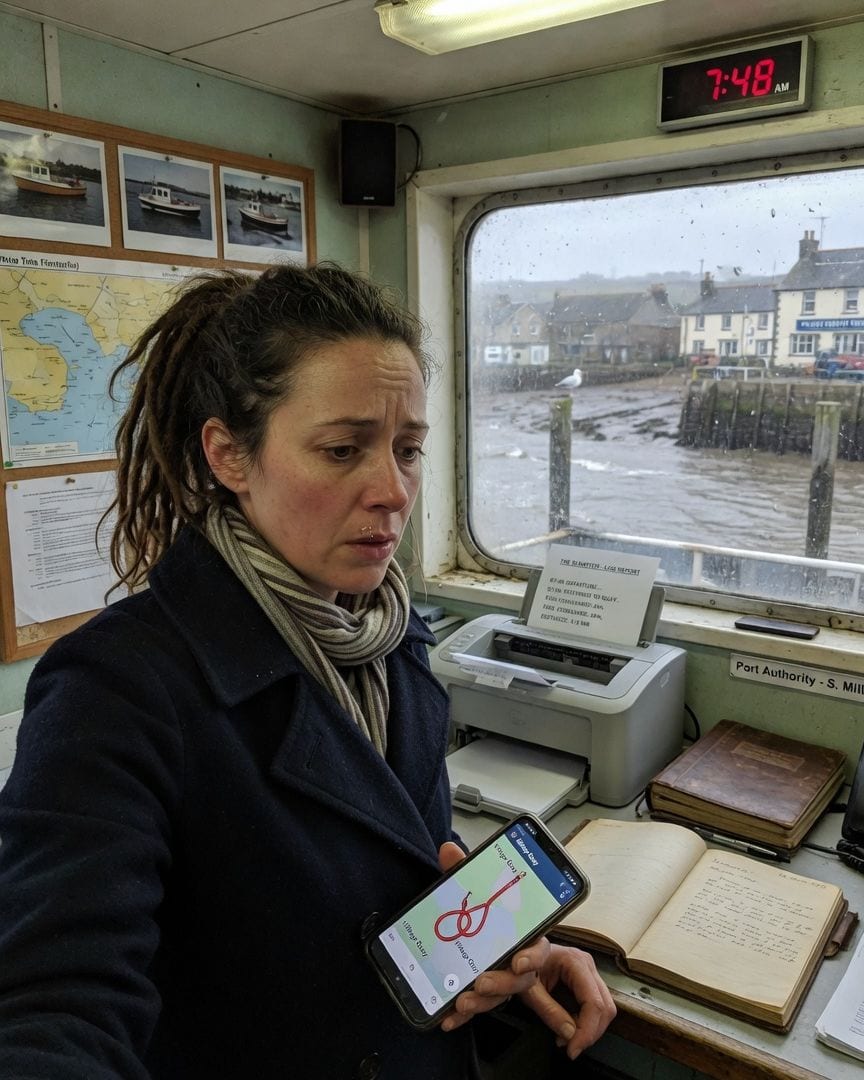
My morning ferry crossed for 40 minutes. The destination town just disappeared.
I board 'The Seawitch' every Tuesday for the familiar eight-minute estuary crossing. But this morning, after making good time, Captain Bernard and I watched the town quay simply fail to appear. Instead, our ferry repeatedly returned to the very same village quay we'd just left, despite burning fuel and advancing the clock.
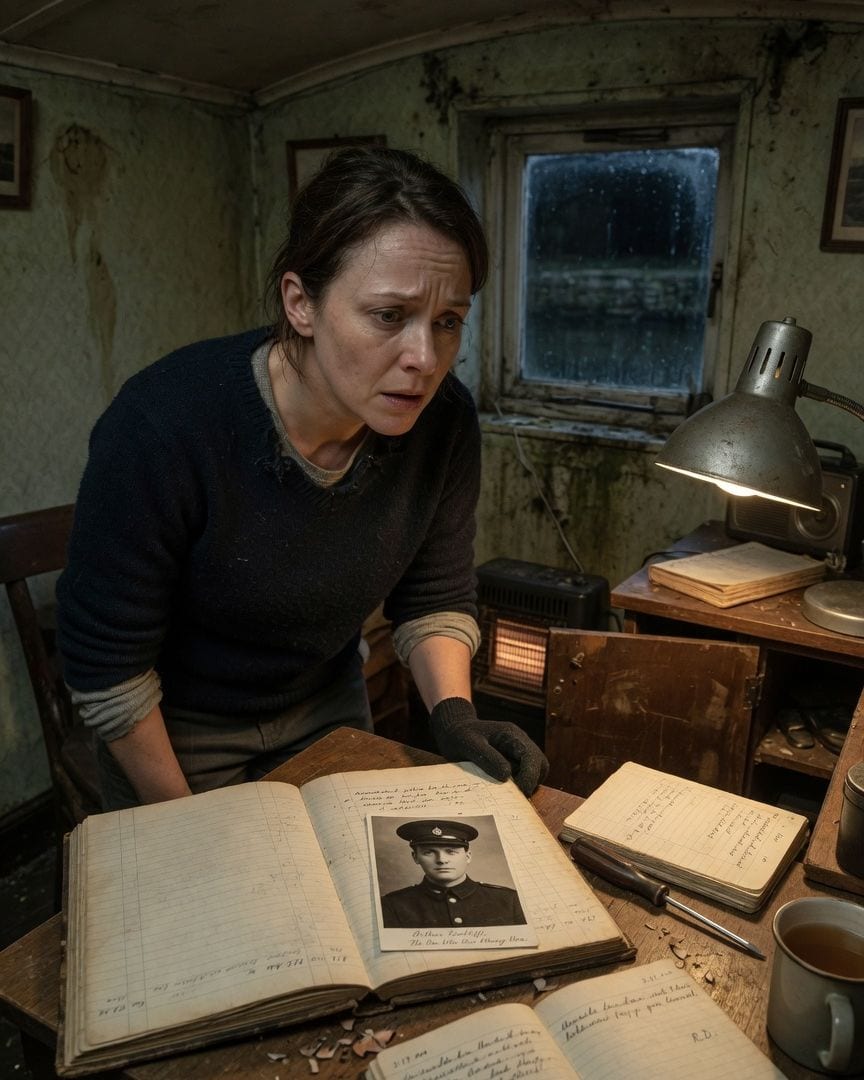
My canal lock logged a boat at 3:17am, gates cycling shut. No vessel radioed, and the water never moved.
Working the night shift at the lock house, I distinctly remember securing the gates and then logging a narrowboat passage at 3:17 AM in my usual precise hand. But the canal outside was black and perfectly still, the water level unchanged, with no boat ever having radioed in. My own logbook entry sat there, an undeniable record of an impossible event.
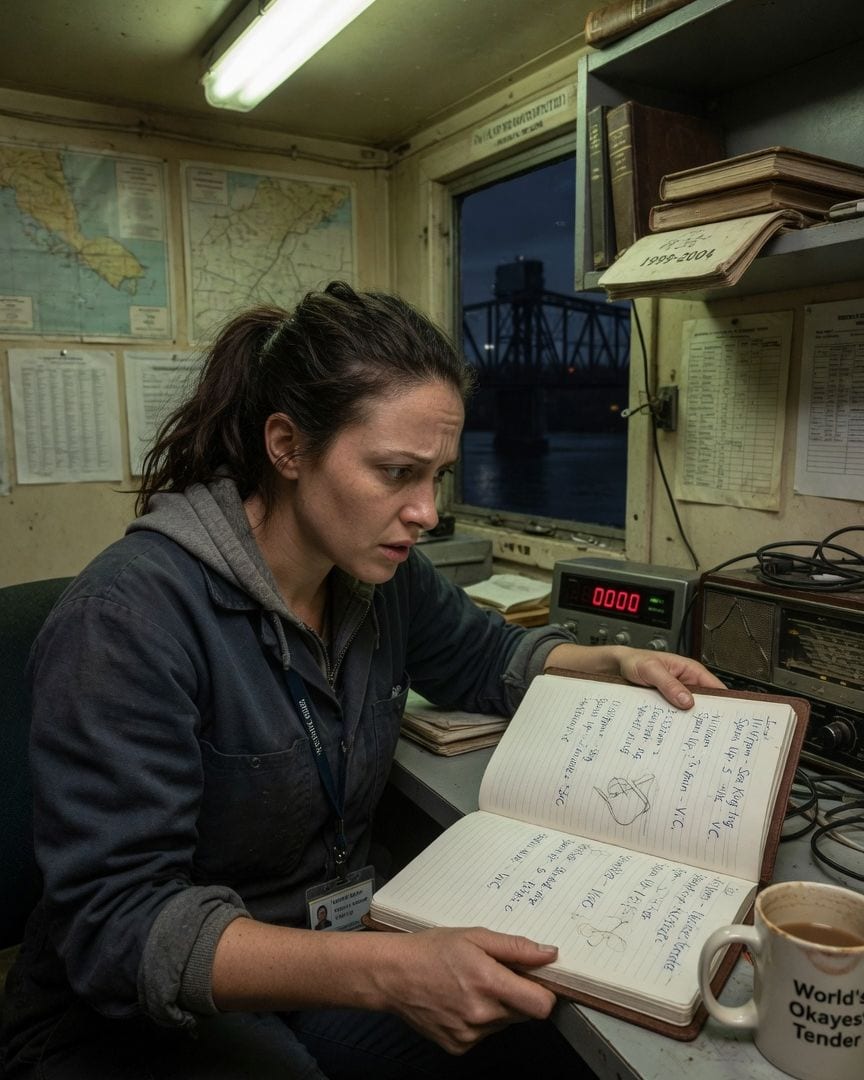
My drawbridge log shows a 2:33am lift I didn't make. The span counter never moved.
As a drawbridge tender, my midnight to dawn shift is usually quiet, a routine of monitoring traffic and logging lifts. But tonight, my own logbook shows an impossible entry for a bridge lift I have no memory of making. My initials and handwriting are there, yet the span counter above my panel reads a steady zero. No boat called, no span ever went up.
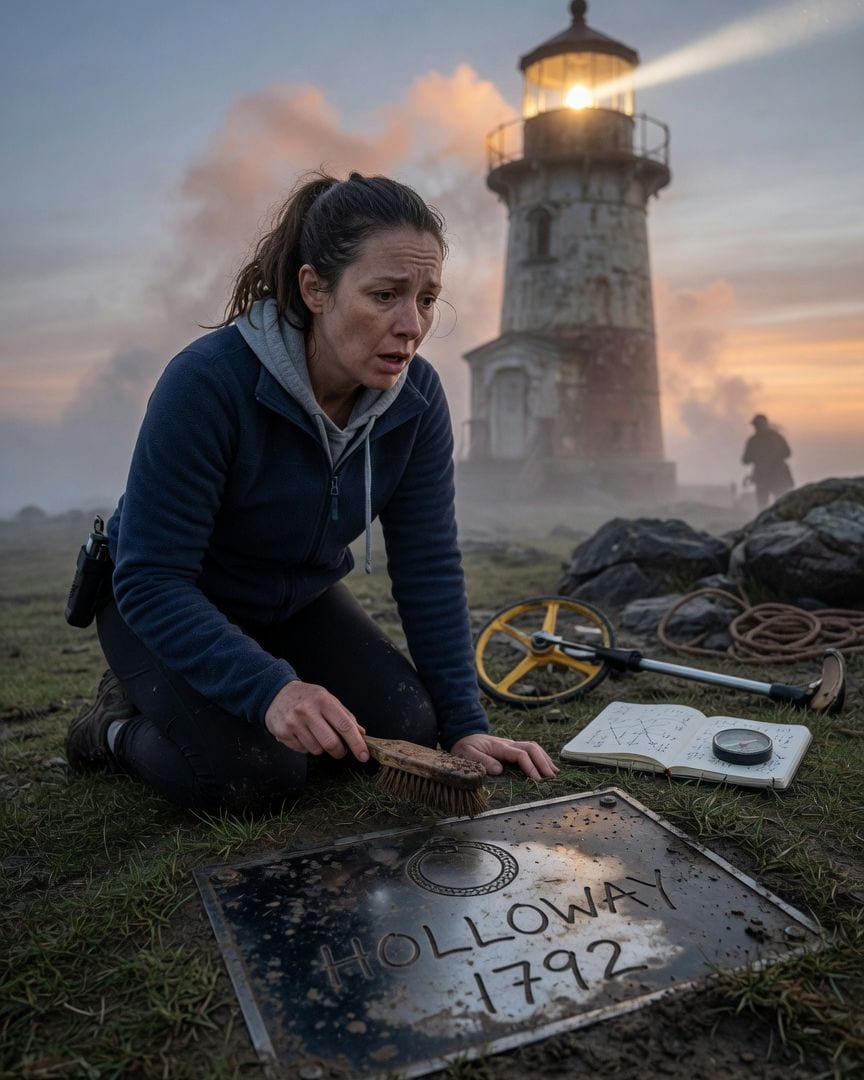
My coastal path just kept curving me back to the lighthouse. Nine miles walked, the same fisherman coiling rope, but I never left.
My morning ritual is a brisk walk along the coastal path. But last Tuesday, after what felt like an hour, I found myself back at the lighthouse, having walked miles to nowhere. My step-counter read 4.5 miles, yet the same fisherman was still coiling the same rope right where I started.
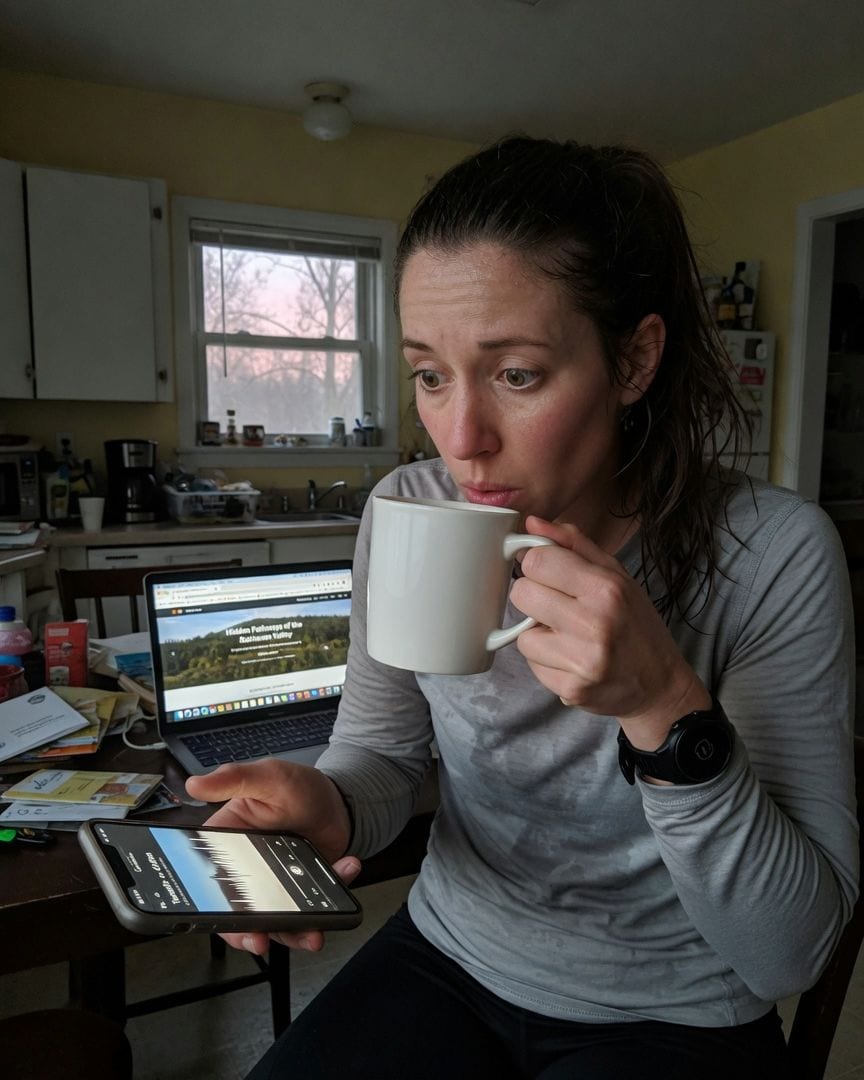
My running watch caught footsteps and a low voice right at my shoulder, saying 'keep going, don't turn around.' I was completely alone on the towpath.
My morning runs on the old canal towpath were my sanctuary, always deserted. My new running watch recorded thirty seconds of audio from that solitary path. But playing it back, I heard a second set of footsteps and a low voice, inches from my ear, saying, 'keep going, don't turn around'.
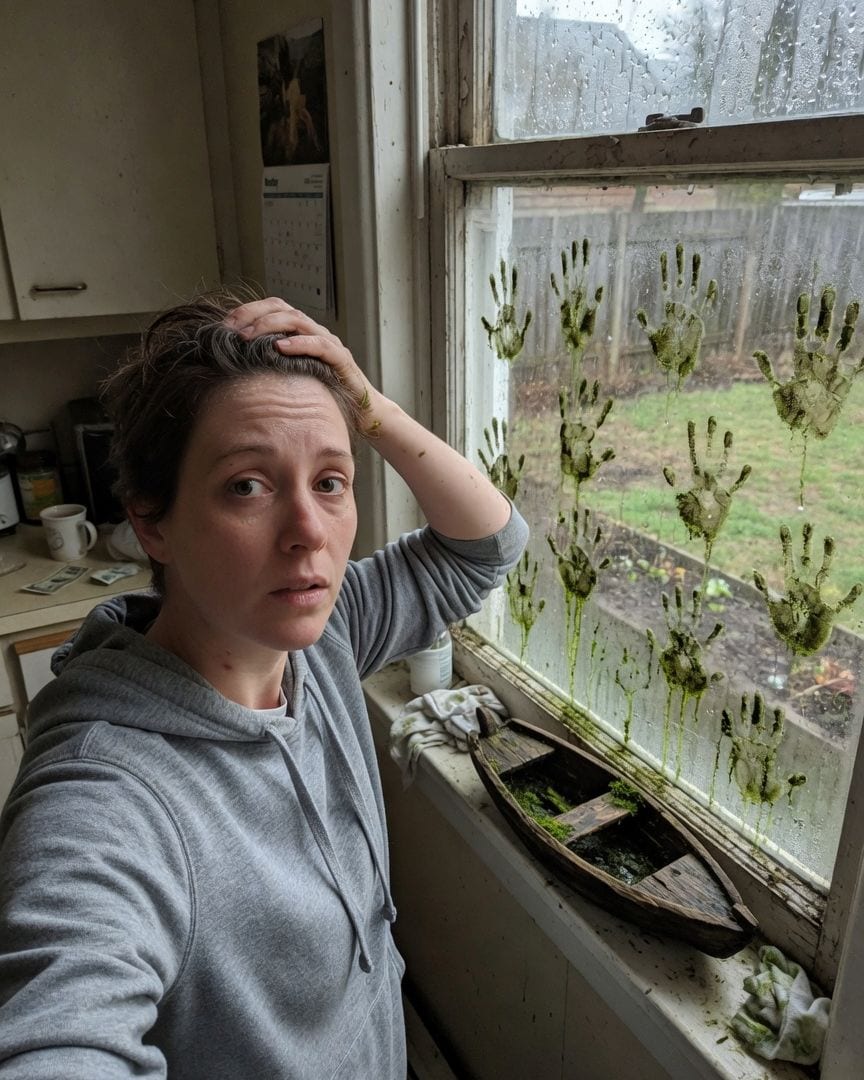
Wet moss handprints cover my kitchen window. My kitchen backs onto no water at all.
Monday morning, I found small, perfect handprints pressed against the *inside* of my kitchen window. They were wet and outlined in dark green moss, an impossible sight since my sealed window backs only onto a patch of lawn, with no water nearby. I ran my hand over them; they felt damp and cold.