The Runnock lifeboat museum's old logbook adds new entries weekly – ships lost in the 1800s, saved Tuesday.
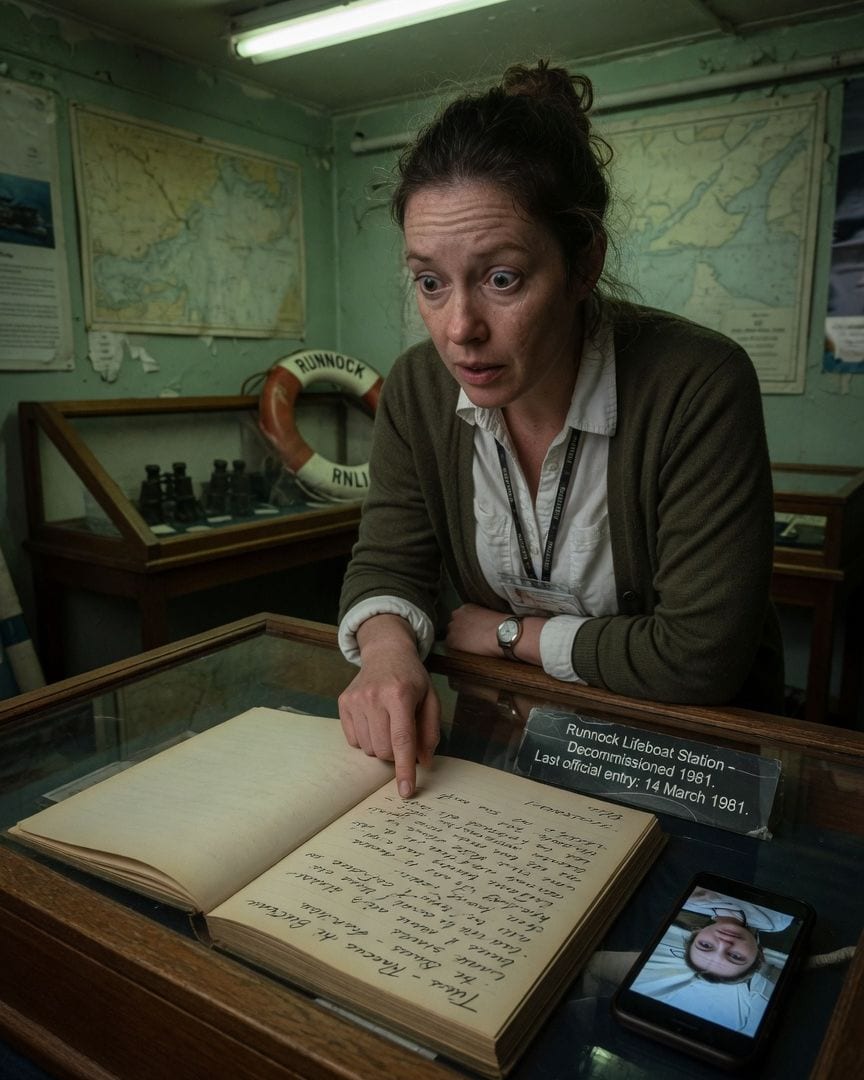
My finger traced the elegant copperplate handwriting, the ink feeling unsettlingly fresh under my touch. The display panel next to the decommissioned lifeboat station’s logbook was clear: Runnock’s station had closed its doors in 1981.
But here, the last entry, dated just Tuesday, listed the schooner 'The Sea Serpent' as 'saved with all hands.' I knew that name.
The museum’s own plaques detailed its devastating loss in 1888, a well-known local tragedy that had claimed dozens.
This wasn't the first time I'd noticed it.
Since I started as the new archivist for the Runnock Maritime Museum a few months ago, a new line would appear every few weeks – a shout, a time, souls saved – all in the same flowing, anachronistic hand.
At first, I put it down to a prank, maybe an eccentric former volunteer who missed the old days. But the consistency, the sheer detail of each impossible rescue, scratched at the rational part of my brain.
How could someone fake something so meticulously, so regularly, for an exhibit that was supposed to be static? A faint, cold draft seemed to emanate from the open page, whispering of impossible things.
I couldn’t dismiss it. The logbook kept pulling at me. I spent my lunch breaks, then evenings, quietly delving into the museum’s own archives.
I cross-referenced every official record, every dusty newspaper clipping from the early 80s, searching for any mention of post-decommissioning lifeboat activity. Nothing. The town’s official harbor master logs were equally silent on these phantom rescues.
I even tried to find records of the coxswain whose hand seemed to pen these impossible entries, a 'J. Winslow,' but the name was common enough in Runnock to offer no immediate leads.
The mundane explanation—a dedicated, anachronistic volunteer—began to fray under the weight of sheer absence.
Driven by a growing unease, I started taking photos of the latest entries with my phone, focusing on the names of the 'saved.' Back in my small rental cottage, I cross-referenced them with online local news archives and obituaries.
Most of the names were generic, lost to the commonness of a small coastal town. But then, one leaped out at me: Marcus Hayes. My breath hitched.
A local fisherman, reported missing just last month, his boat found empty a few miles offshore. The online article said 'presumed lost at sea.'
But in the logbook, there it was, handwritten in that elegant, terrible copperplate ink: Marcus Hayes, clearly listed as one of the 'souls saved' from the 1888 schooner 'The Sea Serpent.' The dates didn't just clash; they screamed.
I stared at the laptop screen, the grainy image of Marcus Hayes’ face from the faded newspaper clipping haunting me. Then I looked down at my phone, the clear photo of the logbook entry, his name meticulously penned.
Marcus Hayes, lost last month. The schooner, sunk in 1888. A chill that had nothing to do with the coastal air worked its way through my bones, settling deep. The 'rescues' weren't history. They were now.
And someone was writing them down, as if documenting a grim ledger.
The next day, I paid a visit to Sylvia Coleman, the town archivist, at the Runnock Public Library.
Sylvia, a woman with kind eyes and a precise manner, was initially helpful, guiding me through local maritime records for a piece I claimed to be writing for the museum’s newsletter.
But when I subtly steered the conversation to the old lifeboat station and its curious logbook, Sylvia’s demeanor shifted, almost imperceptibly at first. Her answers became smooth, a little too polished, almost rehearsed: 'Oh, that old thing?
Just a bit of local flavor, dear. The volunteers used to keep it up for fun, a bit of a laugh for the tourists.'
There was a quiet finality in her tone, a gentle but firm redirection away from the subject, as if she'd closed a book and neatly shelved it.
I couldn't shake it. The Marcus Hayes entry was too real. I kept digging, using the digital archives at the library.
I found other names from the public logbook, names that, with a bit of persistent searching through archived local newspapers, corresponded to other 'lost at sea' cases in Runnock over the past few decades – disappearances that were quickly, quietly, and, I now realized, unusually uniformly accepted by the community.
No major searches, no protests, just a brief article, then silence. It felt like a pattern was emerging, something deeper than individual anomalies.
I even started seeing certain surnames, like 'Winslow' and 'Coleman' themselves, appearing in the logbook over generations, not as the 'saved' but often in connection with the 'coxswain's' signature, or as witnesses to past 'rescues.'
It wasn't just individual anomalies; it was a deep, pervasive thread woven through the town's history, a silent agreement I could almost feel in the hushed tones of the locals when I brought up anything related to the sea's mysteries.
The dread was in the coherence, the too-perfect fit of every quiet denial.
One evening, a week after my unsettling discovery, I returned to the museum. I needed to re-examine the logbook, to see if another entry had appeared, to confirm I wasn't losing my mind.
As I approached the decommissioned station, the salty air thick with a coming storm, I saw a figure sitting on an old wooden bench near the slipway, facing the churning grey sea.
It was Bernard Winslow, an older man I'd seen around town, often quietly observing, his presence as much a part of the landscape as the ancient rocks. He didn't turn as I approached, his silhouette stark against the fading light.
'Some things,' he said, his voice surprisingly clear in the gusting wind, 'are better left undisturbed, Miss Sullivan. Old waters run deep.' He finally turned, his eyes, dark and ancient, meeting mine without surprise. He knew I was there.
He knew what I was doing. 'Runnock has its ways. And the sea… the sea always has its due.'
He didn't wait for a response, simply rose with an economy of motion that belied his age, and walked slowly away into the gathering dusk, leaving me alone with the unsettling weight of his words and the vast, indifferent ocean.
The next morning, I found Bernard Winslow in the town square, feeding pigeons. The logbook photos were on my phone, and the newspaper clipping of Marcus Hayes was clutched, crumpled, in my hand.
'Mr. Winslow,' I began, my voice firm despite the tremor I felt running through me. 'What is this?' I showed him the photo of Marcus Hayes' name in the logbook, then the clipping.
Bernard looked at them, his expression unreadable, then slowly nodded. 'You've looked too deep, child. That's the first truth.'
He explained, calmly, that the logbook was a record, yes, but not of rescues. 'The sea takes. Always has. And Runnock… Runnock learned not to interfere. Not to call out to the lost, not to look back. That’s the rule.
Break it, and the sea takes more.' He revealed that the 'souls saved' were, in fact, those claimed by the sea, and the logbook was a ledger of those claims, a way for the town to acknowledge its due.
The 'coxswain's copperplate' was a family tradition, passed down through generations of Winslows, tasked with maintaining this grim record. 'The town agrees,' he said, his gaze sweeping across the quiet square, 'to look away. To keep the balance.'
The earlier evasions of Sylvia Coleman, the quiet acceptance of disappearances, the uniform stories—it all clicked into horrifying focus. The 'rescues' were a lie. The 'lost at sea' were not lost, but taken. And the town knew.
The pigeons scattered around his feet, a sudden rush of wings, but Bernard remained utterly still.
Bernard sighed, a deep, weary sound that seemed to carry the weight of generations. 'There's a deeper truth, Miss Sullivan.'
He reached into his coat pocket and produced a smaller, leather-bound book, its cover worn smooth with age, almost black from handling. It was another logbook, its pages filled with the same elegant copperplate handwriting, but older, much older.
'This is the real one. My family has kept it since before the first Winslow ever set foot in Runnock.' He opened it to the last page, his gnarled finger tracing a recent entry.
It was in his own hand, the ink still stark against the yellowed paper. It read: 'The Scholar has looked too deep. The sea will take its due.'
He then looked directly at me, and I saw my own name, Paige Sullivan, faintly inscribed beneath it in the same copperplate hand, as if awaiting a date.
I recoiled, my heart a frantic drum against my ribs. 'My name? What does that mean?'
Bernard closed the ledger with a soft thud, a sound that seemed to echo the finality of a closing coffin lid. 'It means the balance is broken, child. The sea gives, and the sea takes. For generations, we’ve managed it.
A quiet life, a quiet understanding. The rule, 'never look back, never call out,' isn’t just about respect for the dead; it’s about not stirring the currents, not waking what sleeps.'
He explained that my relentless investigation, my 'looking too deep' into the public logbook, into the town's unspoken history, was a direct violation of that ancient pact. 'The schooner, 'The Sea Serpent,' being 'saved' on Tuesday?
That was the sea’s response to your inquiry. It wasn't a rescue. It was a reclaiming. Those 'souls saved' from the 1888 vessel – Marcus Hayes and the others – they were already marked.
Your actions simply triggered the sea’s collection. And now, for disturbing the balance, it demands a new due.' He looked at me, his expression grim.
'Your name was added to the true ledger the moment your curiosity became a threat to the town’s peace. The sea will have what it’s owed. And the town… the town will let it happen, to protect the rest.'
A cold panic seized me, sharper than any coastal wind. 'No! I can't let this happen! We have to warn people, we have to fight it!'
Bernard simply shook his head, his ancient eyes filled with a profound weariness. 'It is too late. The pattern is set. The sea's claim is undeniable.'
He told me that for generations, some Winslow had always been there to guide the 'due' when the balance was disrupted. He wasn't malicious; he was simply fulfilling his family's grim duty.
I stumbled away from him, desperate. My mind raced, clawing for an escape. I had to get out of Runnock. I ran to my car, fumbling with the keys, the engine roaring to life with an almost frantic urgency.
I drove, fast, the coastal road winding ahead, a blur of grey asphalt and sea-weathered trees. Every local I passed on the street seemed to pause, watching me with knowing, quiet eyes, their faces unreadable.
The dread tightened its grip, squeezing my chest. I pushed the accelerator, the town fading in my rearview mirror like a bad dream.
The road ahead was familiar, leading to the old bridge that spanned the inlet, the only quick way out of Runnock.
But as I rounded the final bend, my headlights cut through the gloom to reveal not the sturdy stone arches of the bridge, but a churning expanse of dark, impossibly high water, where the bridge should have been.
The old stone was gone, swallowed, leaving a gaping, impassable chasm. The road simply ended, plunging into the dark, roaring waves.
I slammed on the brakes, the car skidding wildly, tires shrieking on the wet pavement, coming to a halt mere feet from the abyss.
Paige Sullivan's car was found abandoned at the edge of the collapsed bridge, which locals quietly claimed had been closed for repairs for months, though she swore it was open just minutes before.
There was no sign of her, no struggle, just the empty car and the relentless tide. The Runnock Maritime Museum's public logbook gained another entry a few days later, in the familiar copperplate hand.
The town continued its quiet existence, its balance restored, its secret undisturbed.
A week later, Bernard Winslow sat on the same wooden bench outside the decommissioned lifeboat station, watching the grey, churning sea. He held the small, leather-bound journal, its pages open to the last entry.
He dipped his copperplate pen, its tip already stained with ink, and carefully inscribed the current date next to the name 'Paige Sullivan.' The tide was coming in, slow and inevitable, whispering secrets against the shore.
The sea always collects.
If this one got to you
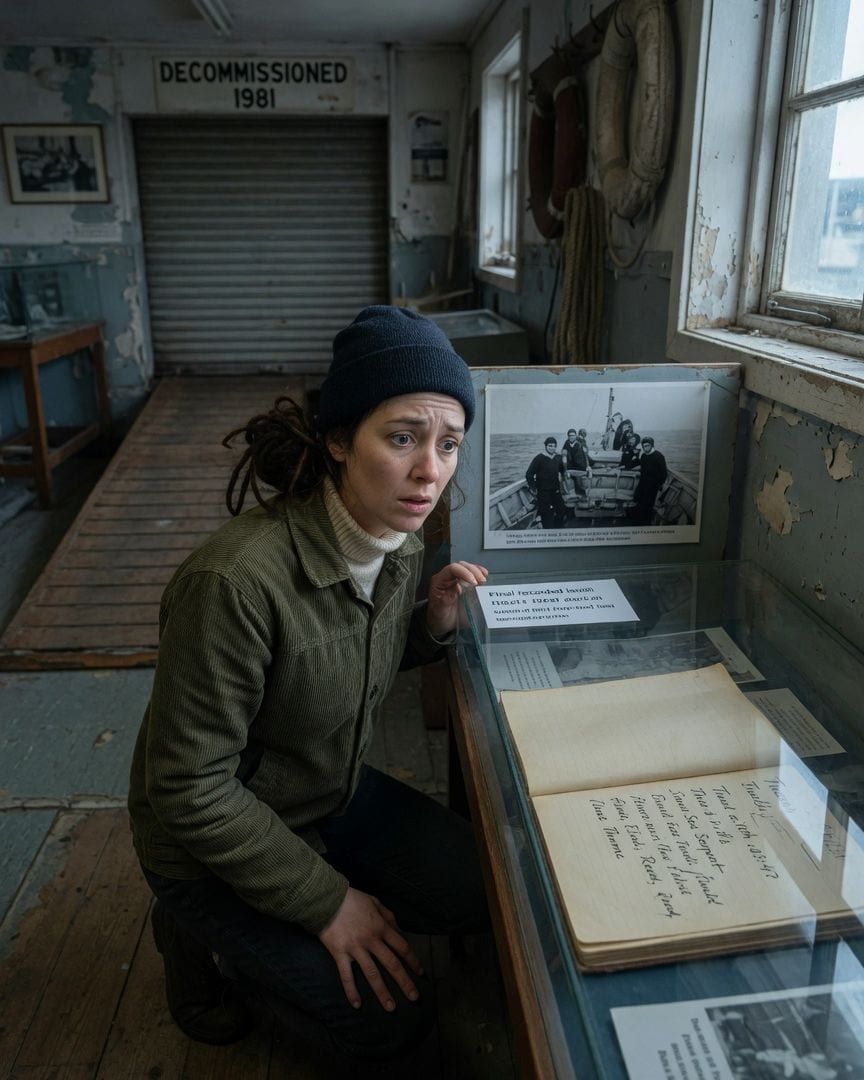
The museum's logbook recorded a rescue two days ago. Its 'souls saved' were buried in 1888.
As the new curator of the Runnock Maritime Museum, my assignment was to refresh the exhibits of its 1981-decommissioned station. Yet, a fresh logbook entry, dated just two days ago, noted a recent rescue. The vessel named, 'The Sea Serpent,' was listed in the archives as lost with all hands in 1888.
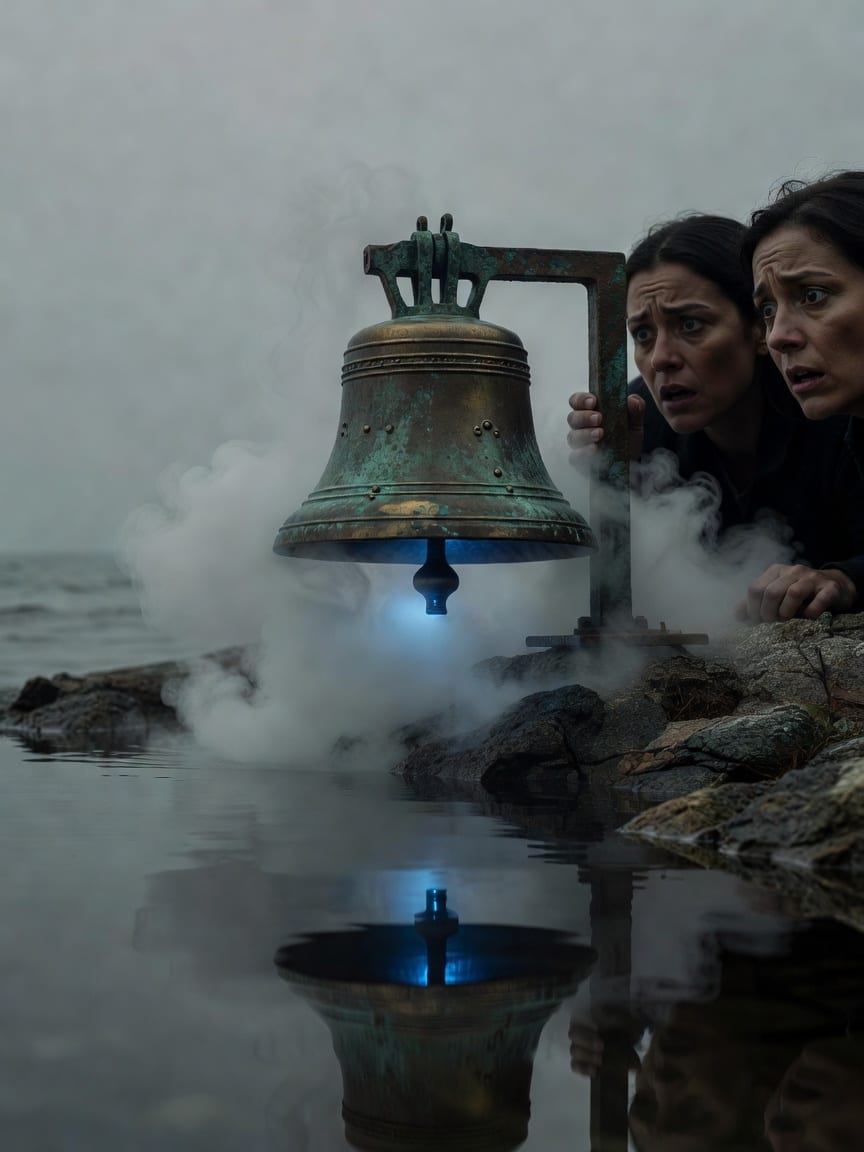
The fog bell on the point rings itself on still nights. The framed log at the yacht club lists eleven calm evenings it rang – each entry beside a boat that never came home.
Moving to a quiet coastal town, I found myself drawn to an old logbook at the yacht club. It recorded the fog bell ringing on flat-calm nights, each instance tied to a boat that simply vanished. Then, I found my own boat's name, 'The Osprey,' penciled at the bottom, marked with an unfinished, cryptic symbol.
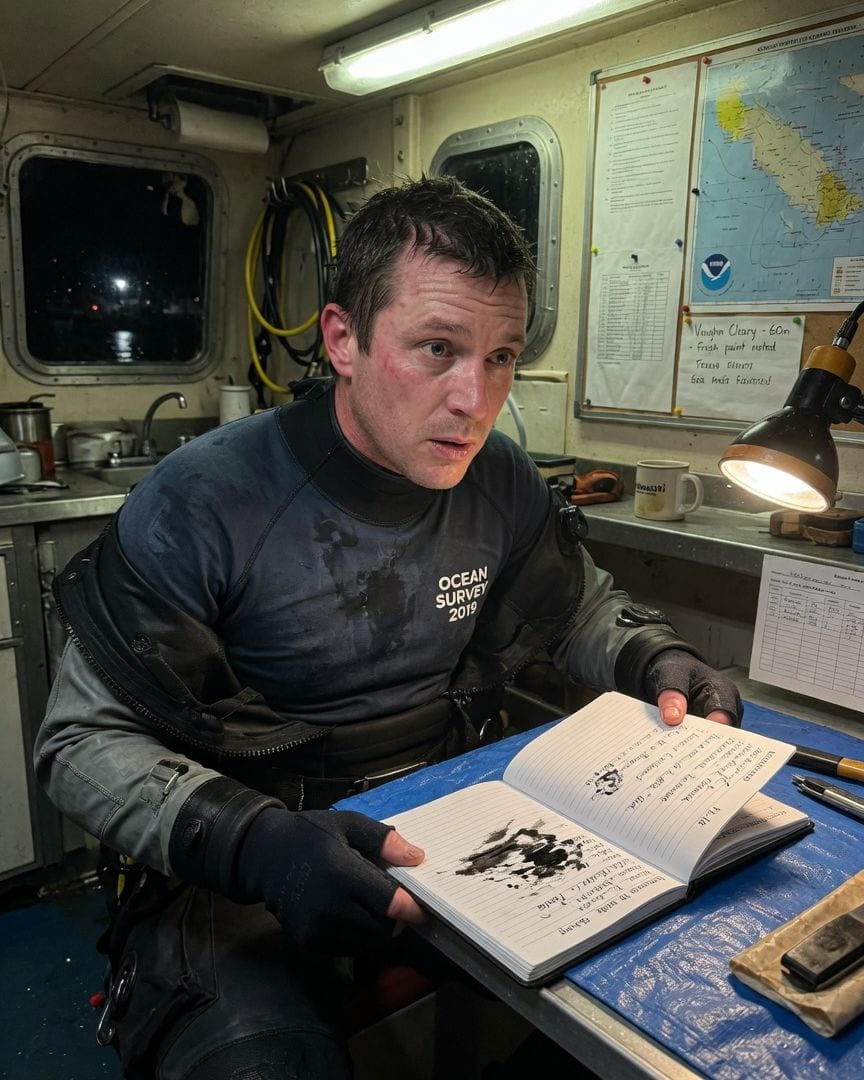
A deep-sea diver finds fresh paint on a sunken ship’s hull. It’s his dead grandfather’s distinct hand.
Deep-sea diver Teague Orrin knew the ocean's cold, indifferent blackness intimately as he descended sixty meters to the transport ship Vaughn Cleary. He was there to uncover the mystery surrounding his grandfather, Howard, pulled from her crew list days before she sailed, never speaking of it again. Teague's light swept the hull, revealing impossibly bright, fresh white paint over marine growth, bearing his dead grandfather's distinct hand. Dismissing skepticism, he returned to the wreck, discovering a miraculously intact captain's quarters and a bolted-down safe. Inside, a logbook awaited, its pages remarkably preserved, holding entries that continued *after* the ship was lost, with today's date still wet on the ink.
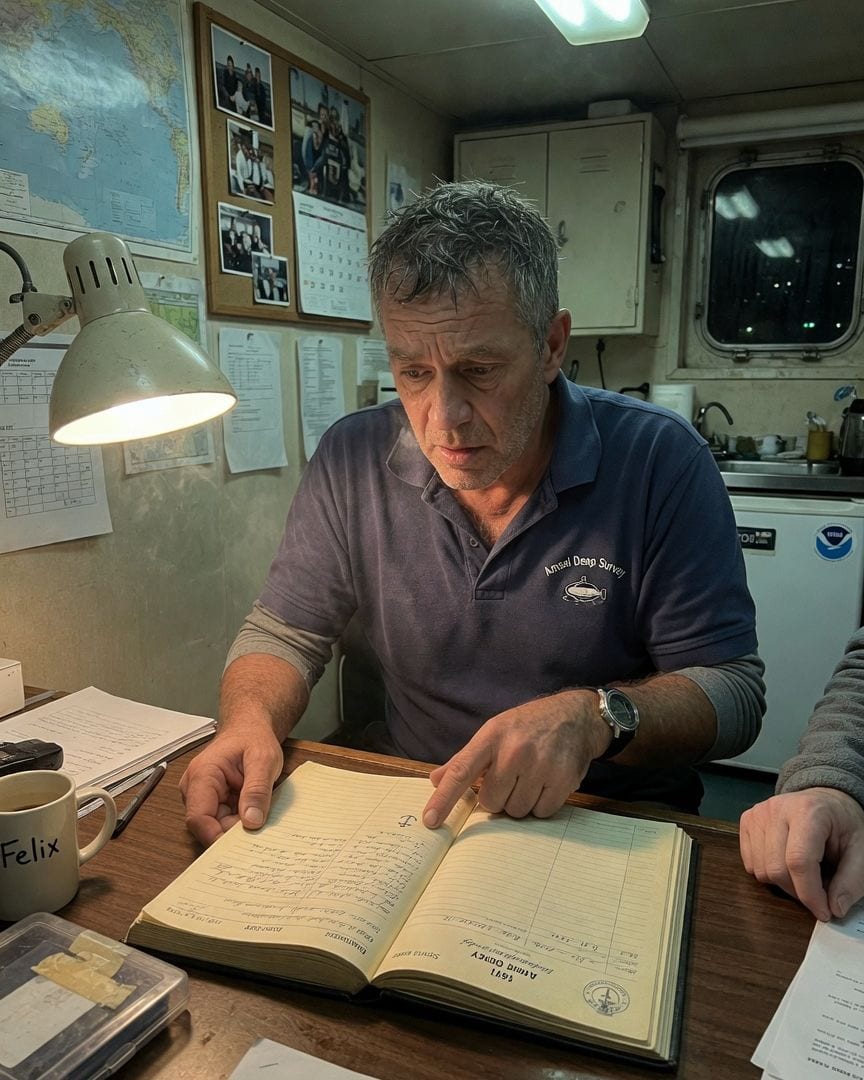
On his final deep-sea survey, a submersible pilot watches a 32-year-old Cold War wreck's rudder shift two degrees.
Deep-sea surveyor Hugo Amsel embarked on his final major dive, anticipating a quiet retirement after decades exploring the crushing pressures of the deep. His submersible's lights cut through the murky green, revealing the *Wynn Portal*, a sealer vanished in 1991, eerily preserved with unnervingly clear windows, free of any marine growth. Then, the inexplicable: the wreck's rudder angle indicator, softly lit, twitched two degrees further to starboard. Later, inside the wheelhouse, Hugo found the ship's official logbook, its final entry dated three days *after* the vessel's recorded disappearance, hundreds of miles north. How could a ship vanish, only to log a journey days later, from a place it never reached?
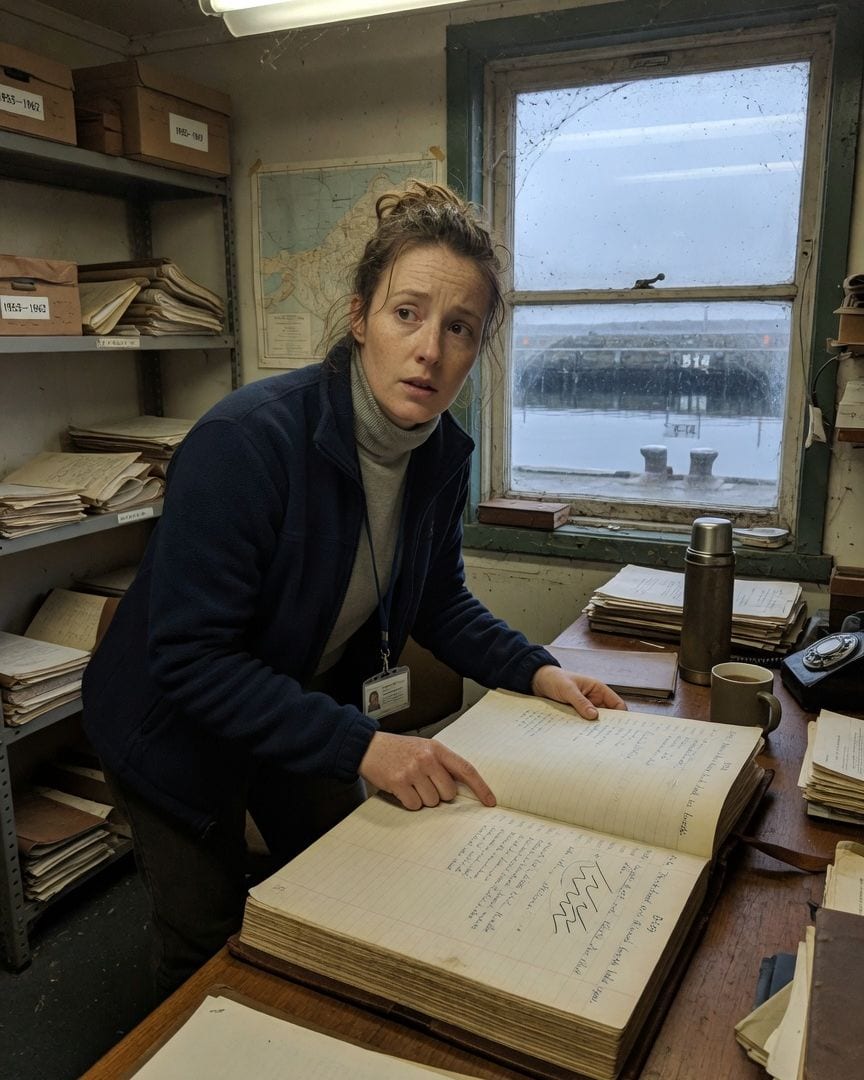
My harbour ledger shows Berth 14 let to a trawler every few years, but it's always empty. Each entry reads 'not returned to sea, berth held open'.
My job as Harbour Master's Assistant is managing the berth ledger, tracking every vessel. But Berth 14 holds a strange paradox: my book says it's let, yet it's always empty. Each entry for that berth closes with the same cryptic note – 'not returned to sea, berth held open' – a pattern stretching back to 1955.
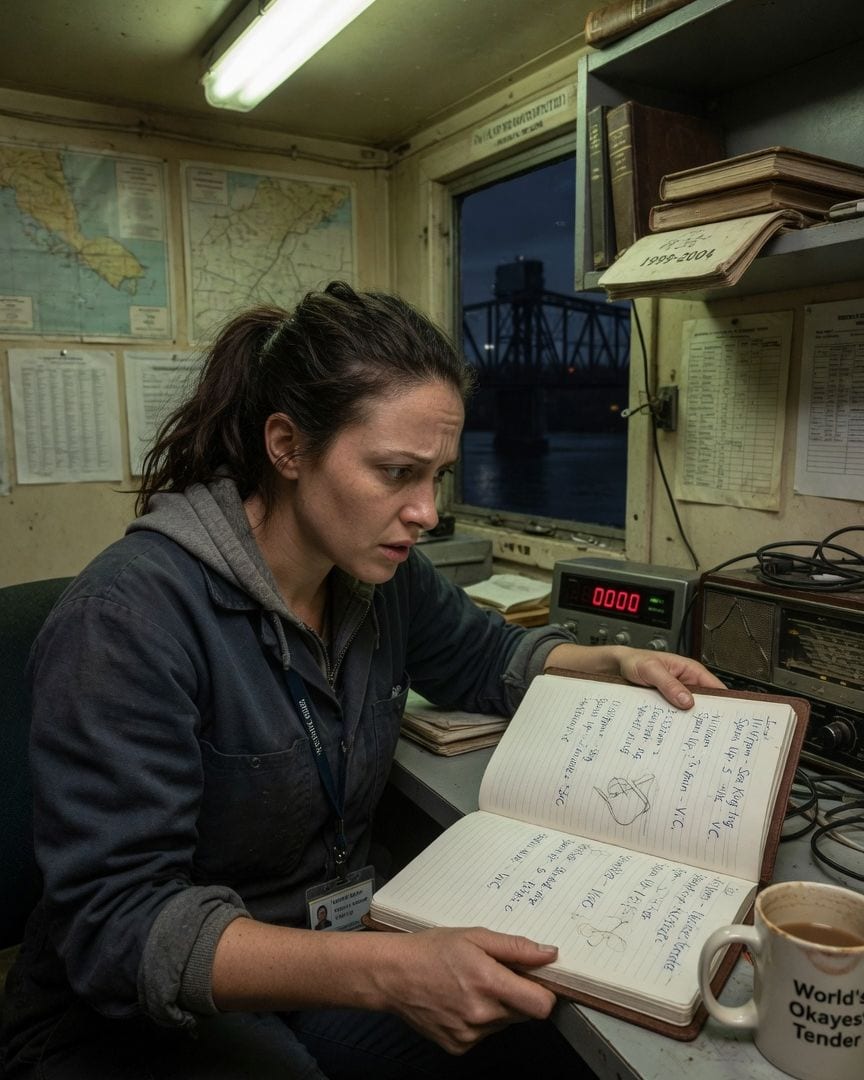
My drawbridge log shows a 2:33am lift I didn't make. The span counter never moved.
As a drawbridge tender, my midnight to dawn shift is usually quiet, a routine of monitoring traffic and logging lifts. But tonight, my own logbook shows an impossible entry for a bridge lift I have no memory of making. My initials and handwriting are there, yet the span counter above my panel reads a steady zero. No boat called, no span ever went up.