My signature is in this library book. Dated 1971, fourteen years before I was born. The card is real. My hand made those loops.
I remember sliding 'The Old Man and the Sea' back into its assigned slot on the county archive's 'Local History' desk. It was just another Tuesday, another evening shift winding down.
I'm a graphic designer by trade, thirty-five and meticulous about details, so working among the old records suited me.
As I tidied the return cart, a thin, yellowed slip of paper fluttered from the book's inner sleeve and landed on the polished oak. Not the slick, adhesive kind they use now, but a proper old-school due-card.
My breath caught.
Third line down, in the borrower column, was a signature. My name: Camille Galloway. Written in my distinct, elegant cursive. Every loop, every flourish, precisely as I would sign it today. Next to it, the date: 1971.
I stared at the card, my fingers tracing the impossibly familiar loops. I was born in 1985. Fourteen years after this card was supposedly signed.
Eileen Norwood, the head archivist, a woman of seventy-two with precise, bird-like movements, didn't even look up from the meticulous ledger she was poring over. Her voice was calm, even.
'It's a relic, dear,' she murmured, without missing a beat in her penmanship. 'From the old system. Completely authentic. They rarely surface these days.'
I stood there, holding my own handwriting, from fourteen years before I existed. The quiet hum of the archives, usually a comforting backdrop, suddenly felt like a low, persistent thrum in my bones, a vibration I couldn't quite place.
The next morning, the image of that card was burned into my retinas. I told my friend, Lily Romano, over coffee, trying to frame it as a bizarre administrative error, a really elaborate prank someone had orchestrated.
Lily, practical to a fault, just shook her head. 'Someone's messing with you, Cam. Or it's a hell of a coincidence. You should take it to a handwriting expert.'
A mundane explanation. That's all I wanted. So, clutching the card, I drove to Scott Brooks' office. He was a respected handwriting expert, a man in his late forties with a magnifying loupe perpetually around his neck.
I presented the card without context, simply asking if the signature could be forged, or if it was merely a close resemblance to my own.
Brooks spent an hour meticulously comparing the 1971 signature to samples of my current handwriting. I watched, my heart pounding, hoping for a simple 'no, it's not yours.' He hummed, he squinted, he made notes on a tablet.
He analyzed stroke pressure, slant, baseline, letter spacing. Every detail. He asked if I’d ever written with a fountain pen, noting a slight variation in ink flow consistent with one. I confirmed I used one for specific graphic design projects.
The ordinary explanation, that it was a random similarity, a mistaken identity, or a simple forgery, felt increasingly flimsy with each passing minute of Brooks’s focused, silent work. The wrongness deepened, becoming specific and undeniable.
Brooks finally pushed his chair back, the soft squeak echoing in the quiet office. His brow was furrowed, but his voice was steady. 'Ms. Galloway,' he said, removing the loupe from his neck. 'This signature is unequivocally yours.
Every loop, every flourish, it's a perfect match. The pressure points, the subtle hesitation on the "G" in Galloway, the way the "e" trails off – it’s identical to the samples you provided.'
He held up the magnified image of the 1971 due-card on a screen, juxtaposed with my contemporary signature, the lines perfectly overlaid. 'I'd stake my career on it. There's no doubt.'
I stared at the impossible image, my own hand, my own impossible hand, staring back at me from a time before I was born.
The expert's confirmation left me reeling. It wasn't a prank, not a mistake. It was real. It was me. I returned to the library, not for work, but for answers.
I started with the 'Local History' section, the same shelf where 'The Old Man and the Sea' had been.
I pulled out other books from the same period, hoping to find another anomaly, or perhaps a pattern of similar, impossible signatures.
The old due-cards were sparse, many books having been rebound or retired, but after hours of careful searching, I found another.
In a dusty, leather-bound volume on regional folklore, dated '1960,' was the name 'Camille Galloway' once more, signed in the same unmistakable hand. This time, next to the signature, was a faint, handwritten notation: 'Address: 14 Maple Drive.'
My stomach clenched. My childhood home. That was my address, the house my parents bought in the early 90s, the place I grew up.
This wasn't just a signature; it was a physical address, a concrete link to my personal history, from a time even further in the past.
I checked the library's digitized archive, searching for 'Camille Galloway' in any context from the 1960s or 70s.
The system, usually robust, returned fragmented, almost ghost-like entries: a library card application from '1965, status unknown'; a faint record of a 'borrower dispute' from '1973, resolved.'
Each fragmented piece of data, each impossible entry, was a thread pulling me deeper into an unraveling tapestry.
The library, once a place of quiet order, now felt like a labyrinth of impossible records, its familiar scent of old paper and dust suddenly heavy, suffocating.
My frantic research didn't go unnoticed. Eileen Norwood, the head archivist, moved through the stacks with her usual unhurried grace, but her gaze lingered on me. One afternoon, as I was cross-referencing old loan ledgers, Eileen approached.
Her soft, crepe-soled shoes made no sound on the carpet. 'Still delving into the archives, dear?' she asked, her voice soft, devoid of curiosity, yet somehow knowing. 'Some histories are more... persistent than others.'
I felt a prickle of unease, a cold sensation crawling up my spine. 'I'm just trying to understand some discrepancies,' I replied, feigning a casualness I didn’t feel.
Eileen merely smiled, a faint, almost imperceptible turn of her lips. 'The past often reasserts itself in unexpected ways, doesn't it? Especially for those with a deep connection to a place.'
She paused, her eyes fixed on my face, those ancient eyes seeming to look through me. 'Some names, you see, reappear. Like old books, returned to the shelves after a long journey.'
Eileen offered no further explanation, just that calm, unsettling smile before gliding away into the shadows of the towering shelves. The implication hung in the air, thick and oppressive: Eileen knew.
She wasn't surprised by my discoveries; she seemed to have been expecting them, perhaps even waiting for me to find them.
I suddenly felt less like an investigator and more like a specimen under a microscope, my every move observed, every 'discrepancy' already accounted for in Eileen's quiet, ancient knowledge.
The library itself seemed to breathe around me, the creak of old wood and the rustle of turning pages forming a low, steady heartbeat.
Armed with the confirmed signatures, the 14 Maple Drive address, and the fragmented digital records, I confronted Eileen in her office, a small, dust-mote-filled room behind the main desk.
The air in there was always still, heavy with the scent of aged paper and something else, something I couldn't quite identify. 'Eileen,' I began, holding out the 1971 and 1960 due-cards, my voice trembling slightly despite my efforts.
'These are my signatures. And this,' I tapped the address on the 1960 card, 'is my childhood home. From before I was born. Explain this.'
Eileen didn't flinch. Not a flicker. She took the cards, examining them with the same serene expression she always wore, as if I were handing her a list of overdue fines. 'Ah, yes. The Galloway cards. I remember them.'
My voice rose, the tremor turning to frustration. 'Remember them? How? How can my signature be here from 1960 and 1971? Am I supposed to believe I'm a time traveler?'
Eileen chuckled softly, a sound like dry leaves rustling across a barren sidewalk. 'Not a time traveler, dear. More like… a returning patron.'
She gestured vaguely to a shelf filled with ancient, leather-bound ledgers, their spines unreadable in the dim light. 'This library, Camille, is a very old institution. Older than the county. Older than many of the families it serves.
And it has its own ways of keeping records. And its own ways of... attracting certain individuals.'
'What individuals? What records?' I pressed, my dread tightening its grip. The small office felt like it was shrinking around me, the walls pressing in.
Eileen set the cards down precisely on her desk. 'Those with a particular resonance. A connection to the collection, perhaps. Or to the very fabric of this place. Your family, the Galloways, have always had such a resonance.
A long line of quiet scholars, you might say. Always drawn back.'
'Drawn back from where?' I demanded, my voice a strained whisper now.
Eileen simply smiled, a knowing, unbothered expression, like she was explaining the most obvious thing in the world. 'From the journey, dear. From the journey.'
The earlier clues, the impossible dates, the genuinely matched handwriting, the fragmented digital entries – they all clicked into a horrifying new coherence. Eileen wasn't denying the impossible; she was calmly affirming it, wrapping it in a chilling, ancient logic.
I wasn't just finding anomalies; I was part of a long-standing pattern, acknowledged and understood by the library itself. My reality was unraveling, being stitched back together into something far older and stranger.
I stared at Eileen, the implications of her words sinking in, cold and heavy. 'What journey?' I whispered. 'What do you mean, "returning patron"?'
Eileen rose and walked to a locked, glass-fronted cabinet labeled 'Restricted Local History.' The wood gleamed faintly in the office's dim light, reflecting the dust motes dancing in the air.
She produced a key from a hidden pocket in her floral cardigan, its metal ancient and tarnished, catching the light with a dull glint.
With a soft, mechanical click, she opened the cabinet and withdrew a thick, leather-bound ledger, its covers worn smooth by centuries of handling.
It was unlike any other book I had seen in the archive, radiating an undeniable sense of age and weight.
Eileen carried it to her desk, the faint scent of old parchment filling the small room, thick and sweet. She laid it open, the brittle pages revealing meticulous, flowing script.
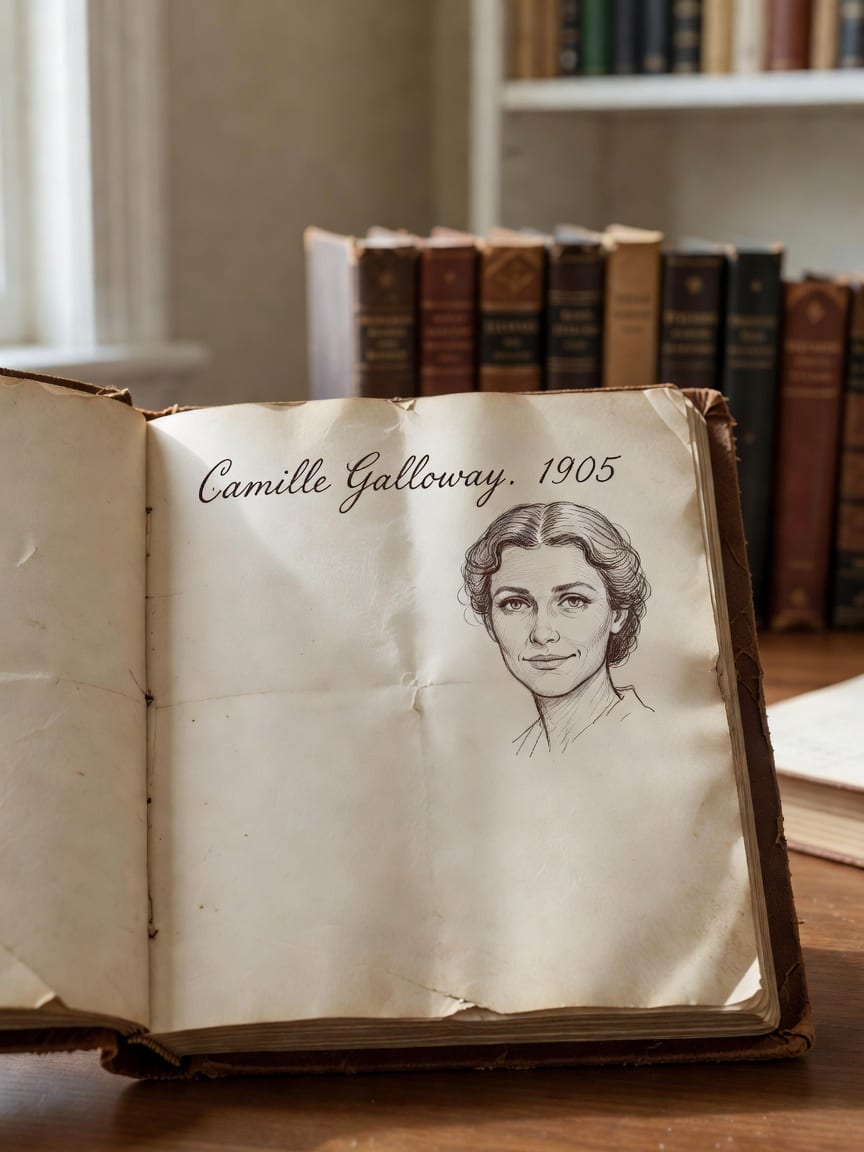
Her finger traced down a column, pausing at an entry beneath the year 1905. There, in elegant script, was the name 'Camille Galloway,' followed by a familiar, looping signature.
And beside it, a small, ink-drawn portrait – the undeniable, unsettling likeness of my own face, gazing out from a century past.
Eileen looked up, her eyes holding an ancient, knowing calm. 'It's always been you, Camille,' she murmured. 'You just forget.'
I felt a cold dread bloom in my chest, the air suddenly thin and heavy all at once. 'What is this?'
I finally managed, my voice barely a whisper, pointing at the portrait that was undeniably me, etched by a hand long dead.
Eileen closed the ledger with a soft, decisive thud that echoed in the small office. 'This library, Camille, is more than bricks and books. It is a record-keeper of a particular kind of existence.
Some souls, some patterns of being, are… cyclical. They return. Not as reincarnation in the way you might think, but as a re-reading, a re-experiencing of a narrative. Your narrative, in fact.'
She gestured vaguely around the room, to the stacks, to the very walls of the building. 'The due-cards, the ledgers, the fragmented digital entries – they are not errors. They are traces.
Each time you return, a new entry, a new signature, a new chapter. The library remembers, even if you do not.'
My mind raced, connecting the dots: my signature from 1971, the address from 1960, the portrait from 1905. It all fit. The uncanny wrongness wasn't a flaw in the world's record; it was the world's record of me.
'So, I'm just… a book?' I asked, a bitter taste in my mouth, the words tasting like ash.
Eileen smiled, a gentle, almost pitying expression. 'A very beloved, well-read book, dear. And the library ensures you always find your way back to the shelves, to be re-read. It’s a privilege, in its own way.
To always be remembered, always to return.'
The calm explanation was the worst part. Eileen wasn't a villain; she was an archivist of an inescapable truth. I stood, trapped by the coherence of it all. There was no escape, no fight, no villain to defeat.
Only the quiet, unyielding logic of a system I had unknowingly been a part of for... how long? Centuries?
'What happens now?' I asked, the question hollow, my voice devoid of any real hope.
Eileen tilted her head slightly, her gaze unwavering. 'Now, you continue your story, Camille. Just as you always have. The records will reflect it. Perhaps you'll find other traces, other echoes, as you live.'
She offered a small, knowing smile that felt more like a brand than an expression of comfort. 'You'll feel the pull, of course. The desire to return, to browse the shelves. It’s part of the pattern.'
I felt a profound, chilling sense of resignation. My life, my memories, my choices – they weren't entirely my own. They were a script, being re-enacted. The library wasn't just holding my past; it was holding my future, too.
Eileen stood, picked up a feather duster from a hook by the door, and began to calmly dust a row of ancient tomes on a nearby shelf, her movements slow and deliberate.
'The archives must be maintained,' she said, her voice soft, almost a lullaby. 'And the stories, they must be preserved.'
I turned and walked out of the office, the heavy oak door closing silently behind me.
The hum of the library, once just a background noise, now felt like the pulse of an immense, living entity, its countless stories whispering my name. I was not stopped, not threatened, not physically harmed. I was simply… understood.
And that understanding was a cage, built of paper and ink, stretching back into time immemorial, with my name etched into every page.
I left the library that day, the afternoon sun feeling too bright, too normal. The city streets, the familiar faces, all seemed slightly out of focus, like a poorly rendered copy.
I found myself subconsciously scanning storefronts for old books, my eyes drawn to antique script, to anything that hinted at a deeper, older story. The world hadn't changed, but I had.
The knowledge of my cyclical existence, the quiet horror of being a 'returning patron' in an ancient library's endless story, was a weight I now carried. Every memory felt like a re-read, every interaction a scene already played.
The library's presence, though unseen, was a constant, thrumming hum beneath the surface of my awareness. I knew I would return, eventually. The pull was already there, a faint, insistent whisper.
I tried to resume my old life, but the threads of my past, my many pasts, tugged at me. The library's pull was undeniable.
I found myself drawn back to its quiet halls, not as an employee, but as a patron, browsing the 'Local History' collection, sometimes stopping to trace a familiar signature on an old due-card, or to simply stand, listening to the silent hum of the shelves.
My friend, Lily Romano, noticed the change. I was quieter, my eyes holding a distant, knowing look.
I smiled more, but it was a faint, unsettling smile, as if I knew a secret no one else could ever grasp, a joke played across centuries.
One afternoon, Lily saw me at the grocery store, pushing a cart through the produce aisle. I was smiling, a faint, knowing little thing, as if I'd just recalled a very old joke.
She carried a single, leather-bound volume, its spine blank.
If this one got to you
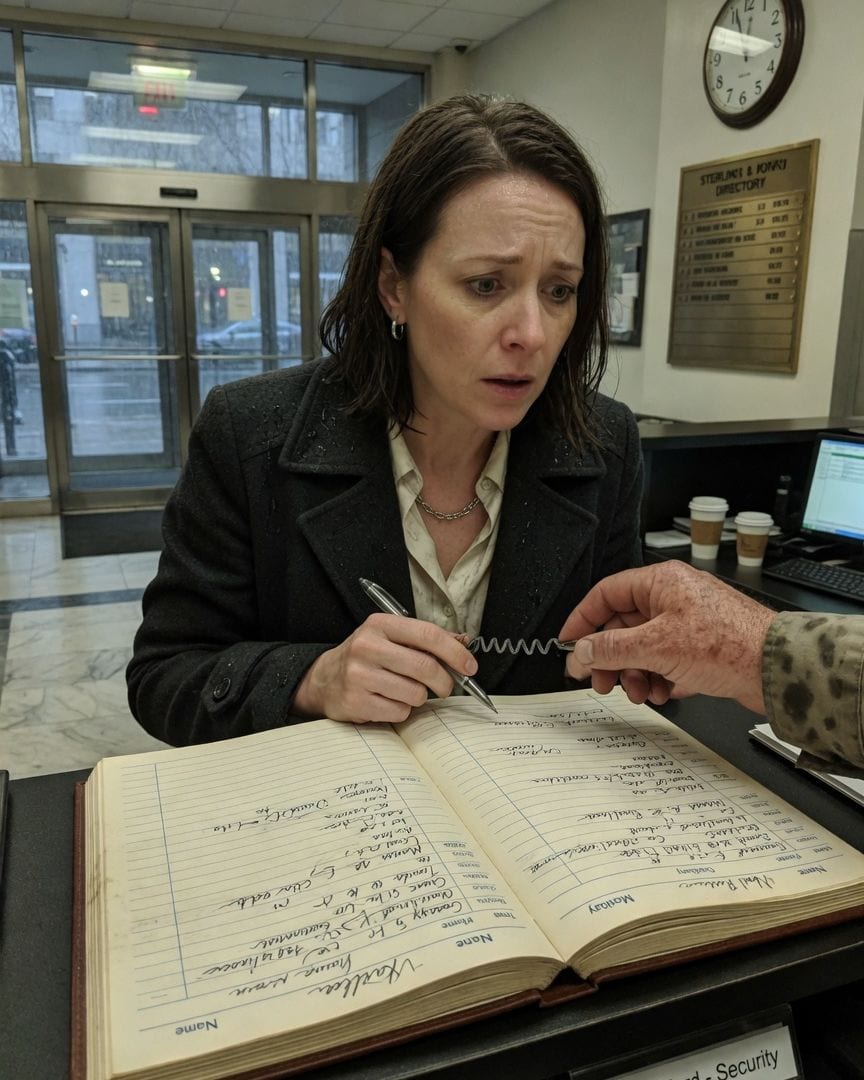
My name was already on the visitor log, signed at 9:04 AM. There were three more entries, all my perfect handwriting, on days I was never there.
I arrived for my 11 AM meeting, ready to sign in at the security desk. But the guard stopped me, pointing to my name already in the visitor log, signed hours earlier on a different floor. It was unmistakably my signature, yet I had just walked in.
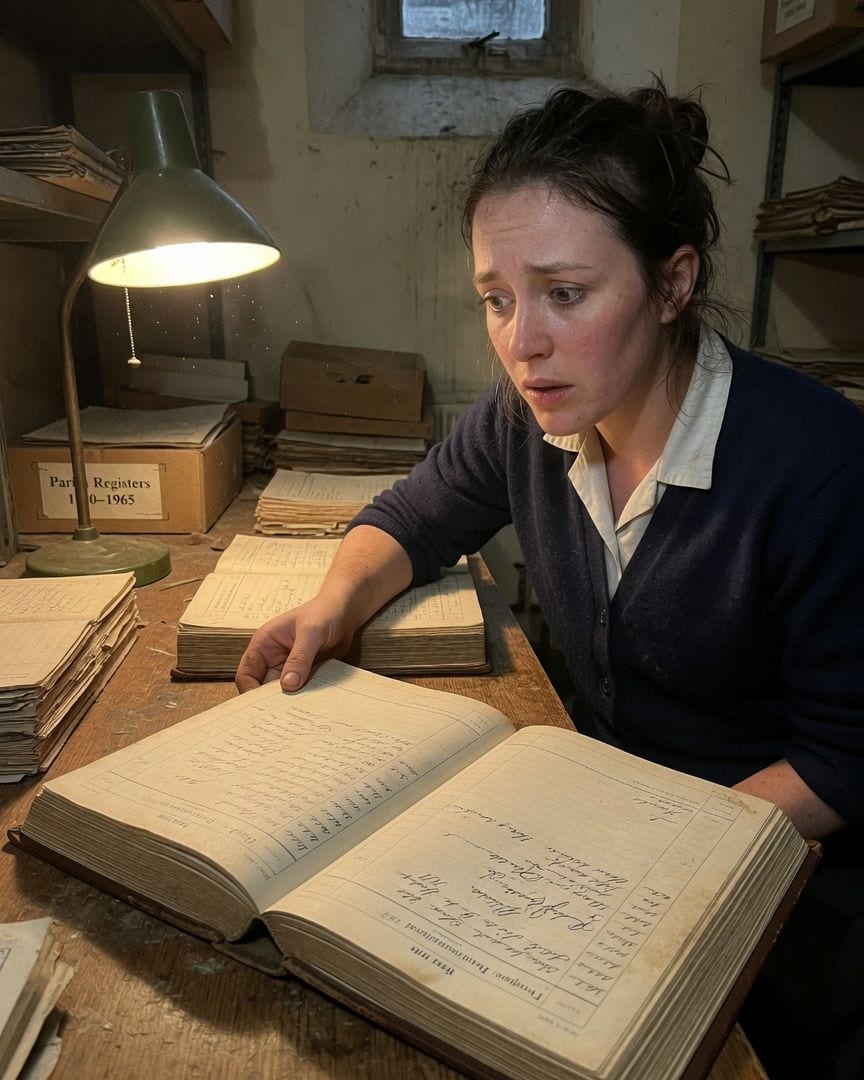
My signature appeared on a baptism record from 1957. Decades before I drew my first breath.
I was reviewing my parents' marriage certificate for a citizenship application, a simple formality. But my gaze snagged on a witness signature: my own distinctive handwriting, dated six years before I was born.
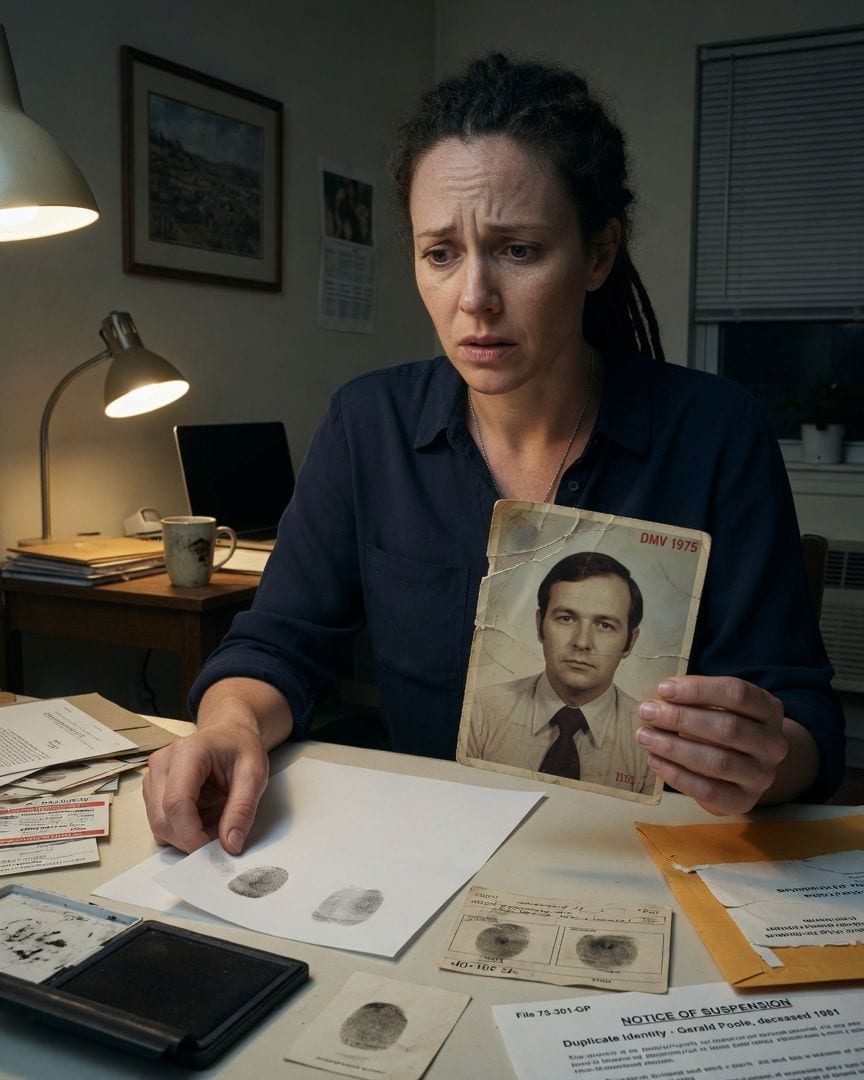
My fingerprints match a dead man's DMV file. They say my face is his. Gerald Poole, licensed 1975, died 1981. The DMV won't renew my license until I resolve his death.
I like things to run smoothly, so a DMV letter about my license suspension was just a nuisance. But it claimed my identity was an exact match for a man declared deceased in 1981, and the archived photo and fingerprints they sent were undeniably my own.
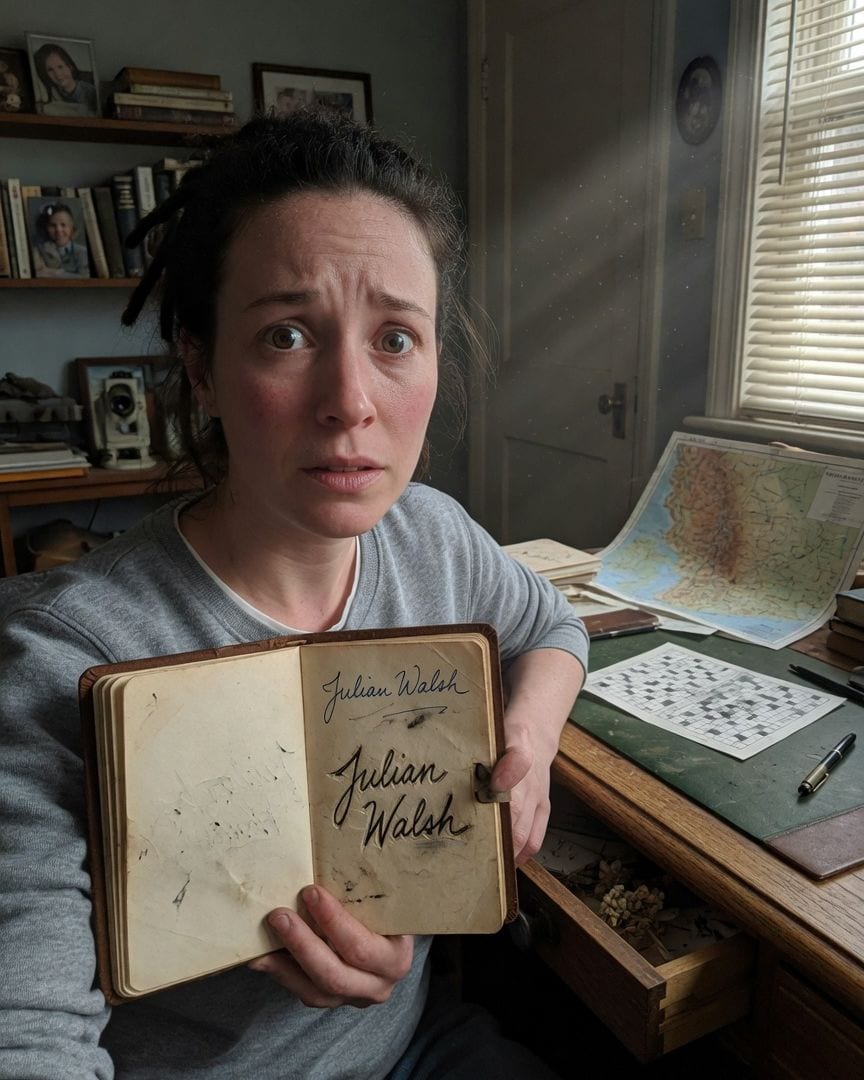
My father signs his name left-handed now. He was right-handed for sixty years. When I asked, he just wrote it again and asked what I meant.
My father, Julian Walsh, returned eighteen months after we buried an empty casket. It was a miracle, a genuine impossible relief, until he signed his insurance papers. For sixty years, my father was fiercely right-handed, but now he etched his name with a confident left-handed flourish, claiming he always had.
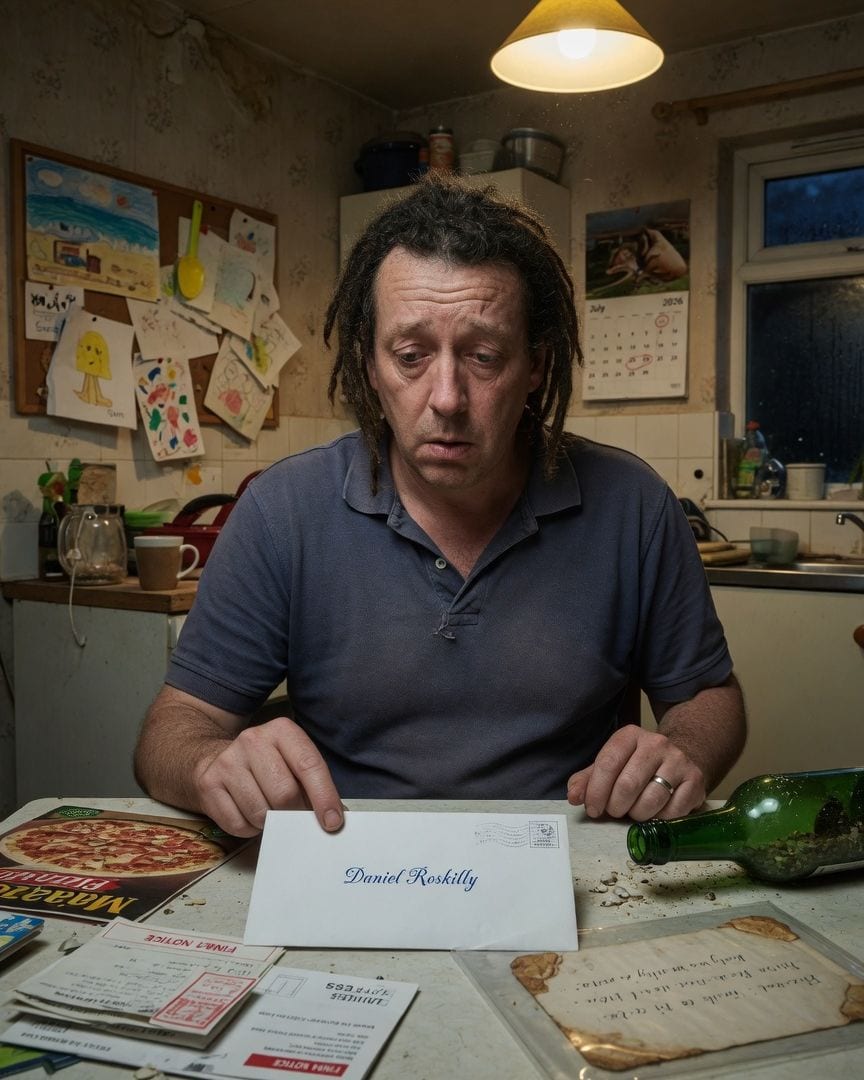
My son found a bottle on the beach with a note inside naming me — saying I'd be here in 2026. A document dealer put the paper at well over a hundred years old.
My son found a thick green bottle on Marazion beach, containing a brittle, aged paper. Inside, my name, Daniel Roskilly, was clearly written, along with a message: 'he’ll be here in 2026.' An expert confirmed the paper was over a hundred years old, making the impossible truth a cold weight in my gut.
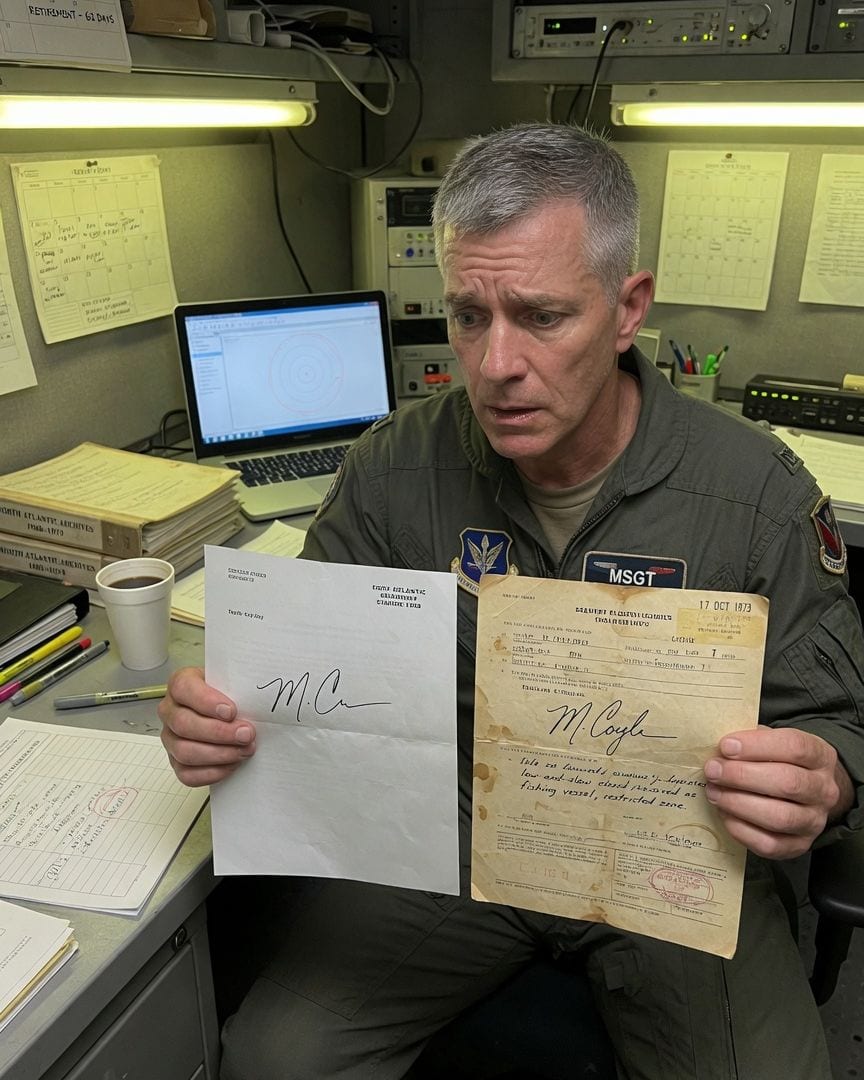
Master Sergeant Coyle was two months from retirement when his own signature appeared on a Cold War mission log from 1973, decades before he was born.
Master Sergeant Malcolm Coyle, two months from retirement, scanned the North Atlantic from his E-3 Sentry, its cabin humming through the perpetual twilight. His radar scope showed a silent, low-and-slow blip that vanished from fighter jets but remained on his screen, mirroring an identical ghost from the prior week. Digging through decades of archived logs, Coyle found a 1973 entry detailing the same impossible contact, stamped with his own squadron's seal. The duty officer's signature, with its distinctive flourish, was unmistakably his own—identical to his current papers—yet dated decades before he was even born. How could his hand have signed a lie from a time he didn't exist?