My son found a bottle on the beach with a note inside naming me — saying I'd be here in 2026. A document dealer put the paper at well over a hundred years old.
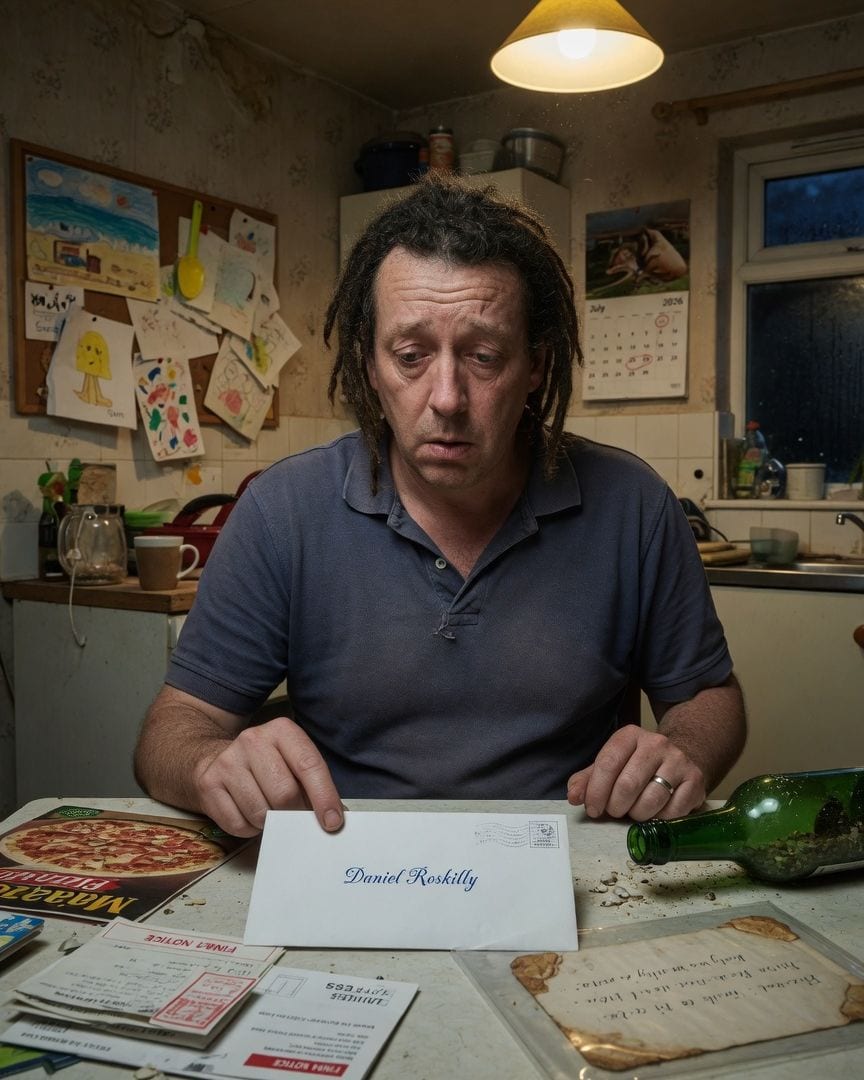
My son, Sam, a whirlwind of sand and excitement, found it on Marazion beach. The tide was out, leaving behind a slick, mirrored surface and small, exposed rock pools.
He’d been wading, digging for crabs with his bright yellow spade, when he let out a shout that cut through the seagulls’ cries. “Look, Dad! It’s got your name!”
I walked over, pulling my hat lower against the glare, expecting a discarded toy or a joke. But Sam held up a glass bottle, thick and green with age, stoppered with what looked like ancient tar.
Inside, a paper curled, brown and brittle. He’d already, somehow, managed to shake it free.
My name. Daniel Roskilly. It was there, clearly, in faded pencil script. Not just my name, but a message: “To whoever finds this, give it to Daniel Roskilly, he’ll be here in 2026.”
My hands trembled as I took the paper. It was too old, too fragile, the edges soft and crumbling like dried leaves, for a message written for a future date. My name, yes, and a year that wasn't here yet.
I tried to dismiss it, a clever hoax, a strange piece of art that had washed ashore.
But the sheer, impossible age of the paper felt real, too real, a cold weight settling in my gut that no amount of rationalization could dislodge.
The sunlight seemed to dim around us, or maybe it was just the sudden shadow the impossible truth had cast.
I took the note to Emily Bishop, a friend who deals in old documents and rare books, hoping she’d laugh and tell me it was a modern reproduction made to look old.
She was the most grounded person I knew, a specialist in verifiable history. If anyone could debunk this, it was Emily.
She didn't laugh.
We sat in her quiet, book-lined office. The air smelled of parchment and dust, a scent that now seemed to cling to the mystery I’d brought her.
She spread the paper carefully on her desk, handling it with practiced reverence, examining it under a magnifying lamp.
Her brow furrowed as she gently touched the fibres with a gloved finger, noted the faded pencil marks, the subtle foxing – those small, reddish-brown spots that plague old paper.
“The ink, the paper stock, the way it’s degraded,” she murmured, more to herself than to me. She ran a small, precise instrument across a corner, then held it up, inspecting it. “This is easily over a hundred years old.
The cellulose breakdown, the acidity… possibly late 1800s, early 1900s at the latest. No question.”
Her voice was tight, thin with a professional disbelief that mirrored my own growing dread. She looked up at me, her eyes wide. “A message from that era, addressed to you, for 2026? Daniel, this is… impossible.”
The word hung in the air, heavy and undeniable, confirming what my gut already knew. The impossibility wasn't just a concept; it was a physical sensation, an ache behind my ribs.
I spent the next few days in a haze, the bottle note tucked safely in a plastic sleeve.
I researched local Daniel Roskillys, past and present, trying to find a link, a family connection, anything that could make sense of a century-old note that knew my name and my future.
I called libraries, checked historical society records, scoured online genealogy sites. Nothing. Just dead ends and growing unease. My name was mine; no other Daniel Roskilly existed in the records anywhere near here in that time frame.
The world felt a little less solid with each passing hour.
A week later, it arrived. Not another bottle, but a letter. It lay on the kitchen table, innocent among the usual stack of bills, a bank statement, a flyer for a pizza place. But this envelope was different.
Addressed clearly, in elegant script, to ‘Daniel Roskilly.’ My name.
My breath hitched. The postmark was faded, almost illegible, but I managed to trace the address: the old Foster house, just outside town. I knew that place. Everyone did.
Except the Foster house hasn't stood there for fifty years; it's an empty field now, swallowed by time and a wrecking ball. My hands shook as I picked it up, the paper unexpectedly heavy.
Inside, I found a simple, store-bought birthday card. No message, no signature, just the printed ‘Happy Birthday’ in cheerful, embossed lettering. My birthday isn't for another six months.
I drove out to the Foster field the next morning, needing to see it again, to confirm the impossible. The sun was bright, but the air felt cold, even in the midday light.
Nothing but tall grass swayed in the wind, rippling like shallow water, a few crumbling stones marking where the foundations of the house once lay. The wind carried a faint, metallic scent, like old rain on rust.
I walked the perimeter, kicking at the earth, half-expecting to unearth some clue, some forgotten mail-sorting machine, anything to explain how a letter could be postmarked from a place that ceased to exist half a century ago. There was nothing.
Just emptiness.
I knocked on doors in the nearest village, a handful of cottages clustered around a tiny church. I asked about the Foster house, about anyone named Roskilly who might have lived there, trying to conjure a forgotten history.
An elderly woman, Mrs. Galloway, eventually answered her door, her face a roadmap of wrinkles. She remembered the house. “Oh, yes, the old Foster place,” she said, her eyes distant, tracing lines on the faded wallpaper behind me. “Long gone.
But I remember talk, even as a girl. About letters. Letters that found their way, even when the sender was long buried.” She shuddered faintly, a small, involuntary shiver. “Folklore, I suppose. Old wives’ tales.”
But it didn't feel like folklore to me. The letters kept coming. Not every day, not even every week, but sporadically, with an unnerving consistency.
Each one postmarked from a different impossible address: a forgotten post office that closed in the 70s, a house that burned down decades ago, a street number that had never existed on this town’s map.
Always addressed simply to ‘Daniel Roskilly.’ Each one a mundane card—a Christmas card in July, a blank sympathy card, a ‘thinking of you’ note—or just a blank sheet of paper, folded precisely.
But each one tightened the knot of dread in my stomach, a cold, hard stone settling deeper with every impossible arrival.
I started compiling a list, a timeline of these phantom deliveries, trying to find a pattern, a logic, anything to make them less terrifyingly random. There was none, just an unerring, unsettling accuracy.
The house felt smaller, the silence louder, whenever a new envelope appeared.
My research led me to the local archives, a dusty, quiet room filled with the hushed whir of microfiche readers and the overwhelming smell of old paper, like sleeping history.
I was poring over faded land deeds, trying to find any mention of the Foster property or the Roskilly name in connection to it, trying to connect the dots in a way that made sense.
The dim fluorescent lights hummed above me, casting long, wavering shadows.
That’s when I felt eyes on me. A prickle at the back of my neck, a sense of being observed. Across the room, an older man, Marcus Kingsley, sat at a table, not reading, not looking at microfiche, just watching.
He was impeccably dressed in a tweed jacket, even in the archive’s stuffy air, his posture ramrod straight, his expression unreadable. He didn't look away when I met his gaze, simply held it, observed. It was an unnerving, patient stare.
After a while, he rose from his seat, moving with a quiet grace that seemed out of place in such a heavy-footed building. He walked slowly towards my table, his steps making no sound on the worn linoleum.
The air around him seemed to grow colder as he approached.
“Looking for something specific?” he asked, his voice soft, almost a whisper, but with an unsettling edge of knowing that made me flinch. It wasn’t a casual question.
I stammered, my heart thumping against my ribs. “Just some family history, you know, tracing ancestors.” I tried to sound nonchalant, but my voice came out thin.
He gave a faint, polite smile that didn’t reach his eyes. His gaze was fixed on mine, unwavering, seeing something I couldn't. “Some things are better left buried, Daniel,” he said, his voice dropping another notch.
“Especially when they already know your name.”
He turned and walked away, his quiet steps receding until he disappeared into the stacks. He left me frozen, the chill from his words far deeper than the archive’s air conditioning.
The old documents on my table seemed to stir, their rustling whispers suddenly menacing.
I called Emily, my voice tight with barely contained panic as I recounted the encounter with Marcus Kingsley. My hands were shaking so much I almost dropped the phone.
She listened, silent for a long moment, the background noise of her office, the distant clatter of old books, seeming to magnify the quiet.
“Marcus Kingsley,” she repeated, her tone cautious, almost wary. “He’s… an archivist. For a very private collection. His family has been for generations, custodians of what they call the Kingsley archives.”
She paused, and I could hear her take a slow, deep breath, as if steeling herself. “Look, Daniel, there are whispers. Stories. About the Kingsleys and their ‘ledger of names.’
I always dismissed it as local folklore, sensationalized history, the kind of thing families invent to give themselves mystique.”
I pressed her, my mind reeling. “What ledger? What names, Emily?”
She sighed, a long, drawn-out sound that spoke of deep reluctance. “They say it’s an ancient book, full of names, and dates, and… prophecies. That the Kingsleys are just caretakers, ensuring its continuity, watching over it, keeping its secrets.”
My blood ran cold, a creeping frost that numbed my veins. “And what about my name? Did you ever see anything like that? Anything about Daniel Roskilly?”
Emily hesitated again, a heavy silence stretching between us. Then, her voice barely a whisper, she confessed. “Years ago, when I was first starting out, I was offered a temporary position, helping to catalogue some of their… less sensitive materials.
And I saw a partial index. A Kingsley family index, very old, handwritten, bound in rough linen. And I remember seeing an entry, clear as day. ‘Roskilly, Daniel – 2026.’
I thought it was a typo, a date error for a historical figure I couldn’t place. I put it out of my mind. Filed it away as an anomaly, or a simple mistake. Until now. I’m so sorry, Daniel.”
The phone line hummed, and the impossible became suddenly, terrifyingly real.
Desperate for answers, for any shred of understanding, I managed to track down Marcus Kingsley's private residence. It wasn't listed, of course, but an obscure historical society record mentioned the family estate.
It was an old, secluded manor, hidden behind high stone walls and ancient trees whose branches seemed to claw at the sky. The gate was wrought iron, massive and intimidating, shrouded in ivy.
I stood outside, in the deepening twilight, my heart pounding a frantic rhythm against my ribs, the cold fear tightening its grip around my throat.
I pulled out my phone, my thumb hovering over the number I'd found. It felt like holding a live wire. I dialed. It rang twice, the faint electronic sound amplified in the oppressive stillness of the evening.
Then Marcus's voice, calm and even, answered.
“Daniel Roskilly,” he said. Not a question, but a statement of fact, as if he’d been expecting my call, as if he’d known I’d be standing here, phone in hand, just outside his gates.
The hairs on my arms stood on end, a cold shiver running down my spine. The air grew still, the leaves on the ancient trees suddenly silent.
“I was expecting your call,” he continued, his tone devoid of surprise or emotion. “You’ve uncovered the letters. Soon, you’ll find the book. And then, like all the others, you’ll understand why it’s always been your name.”
The line went dead. But before the dial tone settled, before the silence returned, I heard a faint, almost imperceptible click, a soft echo, as if someone else, somewhere, had just quietly hung up their own receiver.
Driven by a terrible certainty, by the chilling coherence of every impossible detail, I found a way into the Kingsley manor's archives. It was late, the house dark, silent, and heavy with untold centuries.
I wasn't sure what I was expecting, but the fear spurred me onward. I found a loose pane in a back window, pushed it open, and slipped inside.
The archive was a vast, silent room, shelves upon shelves of ancient tomes stretching up to the high, vaulted ceiling.
The air was thick with dust and the cloying scent of forgotten paper, of leather and decay, pressing down on me. My flashlight beam cut through the gloom, dancing over spines written in languages I didn't recognize.
Behind a cleverly disguised false wall, concealed by a seemingly ordinary section of shelving that swung inward, I found it. The Ledger.
It was monumental, a leather-bound book the size of a small suitcase, its covers worn smooth by centuries of handling. The leather was so old it felt like petrified wood.
Its pages, thick and yellowed, were filled with a beautiful, flowing script, each entry meticulously penned. Names and dates and cryptic notes stretched back further than history itself, an unbroken chain of human lives.
My fingers trembled as I turned the pages, the paper dry and fragile beneath my touch, scanning, my breath catching in my throat. And then I saw it. My name.
‘Daniel Roskilly,’ written clearly, undeniably, in the same elegant hand I had seen on some of the letters. Next to it, concise and horrifying: ‘2026 - Marazion Beach, Bottle.’
Below that, further entries: ‘Letters from Foster House,’ ‘Voice on the Line.’ Every impossible detail, every chilling coincidence that had tormented me for months, laid out in elegant handwriting, dated decades, even centuries, before I was born.
I recognized the paper. The texture, the subtle discoloration, the faint, almost imperceptible pattern of its fibres. It was identical to the note from the bottle, the same ancient quality, the same undeniable age. It was all real.
It all fit. The horror wasn't in the mystery anymore, but in the perfect, terrible coherence of it all. The room itself seemed to close in, the air suddenly too heavy to breathe.
Marcus Kingsley stood in the archive doorway. I hadn't heard him enter, hadn't heard a sound. He wasn't surprised. He simply watched me, his gaze calm, almost pitying, his face unreadable in the dim light.
“You found it,” he said, his voice quiet, echoing slightly in the vast room. “As they all do.”
He walked slowly towards me, not threatening, but with an air of absolute authority, as if this was his domain, his rightful place, and I was merely a fleeting visitor.
“The ledger records a lineage,” he explained, gesturing to the endless columns of names. “A purpose. A fate, for certain names. My family are merely caretakers. We ensure its continuity. We observe.”
He didn't threaten me, but his presence, and the undeniable reality of the ledger open before me, made it clear there was no escape. There was no point. He pointed to entries further down the page, past my own.
Names, dates, events, for future Daniel Roskillys I didn't know, couldn't conceive of. And then, just below my own entry, dated 2027, two words that made my blood run cold, freezing me to the spot: ‘Sam Roskilly.’ My son.
The horror wasn't just for me, but for him, and for generations yet unborn, trapped in this impossible, centuries-old record.
I lunged, a desperate, animalistic urge to destroy the book, to tear the pages, to break the pattern, to set us free. Marcus, surprisingly strong for his age, simply held the ledger steady, his hand firm on the ancient cover.
He didn't fight me, didn't struggle, just prevented me from tearing it, from reaching its pages. “It records, Daniel,” he said softly, his eyes meeting mine, utterly devoid of emotion. “It doesn’t dictate. But it is always right.”
I left the manor. Marcus made no move to stop me. He watched me go, a silent, unblinking sentinel. The ledger, and its implications, were a brand on my soul, an indelible mark that changed the way I saw everything.
The sky seemed too bright, the ordinary world too fragile.
I tried to speak to Emily, to explain what I’d found, but she listened with a strained pity, her face tight with concern, convinced I’d suffered a breakdown from the stress of it all.
I couldn't bring myself to tell her about Sam’s name, etched into that ancient book, a future already written. I couldn’t tell anyone. It would only sound like madness.
Every morning, I check the mail with a morbid dread, half-expecting another impossible envelope. Every time the phone rings, I hesitate, anticipating a voice that knows too much, a click on the line.
The world continued, oblivious, going about its mundane, unwritten days, while I carried the weight of a future already inscribed in an impossible book. My own personal history, predetermined.
My son, Sam, came to me yesterday, a small, worried frown on his face. He’d found a crumpled piece of paper in his school bag, tucked inside his math textbook.
It was a drawing, in crayon, of a beach and a bottle, the waves a bright blue, the sun a fierce yellow circle. On the back, in neat, unfamiliar adult handwriting, were two words: ‘Sam Roskilly.’
A few weeks later, Daniel Roskilly’s wife, Marie, found him staring out at the sea, a vacant look in his eyes. When she asked what was wrong, he turned to her, a faint, wrong little smile playing on his lips.
"Nothing," he said, "Just waiting for a message."
If this one got to you
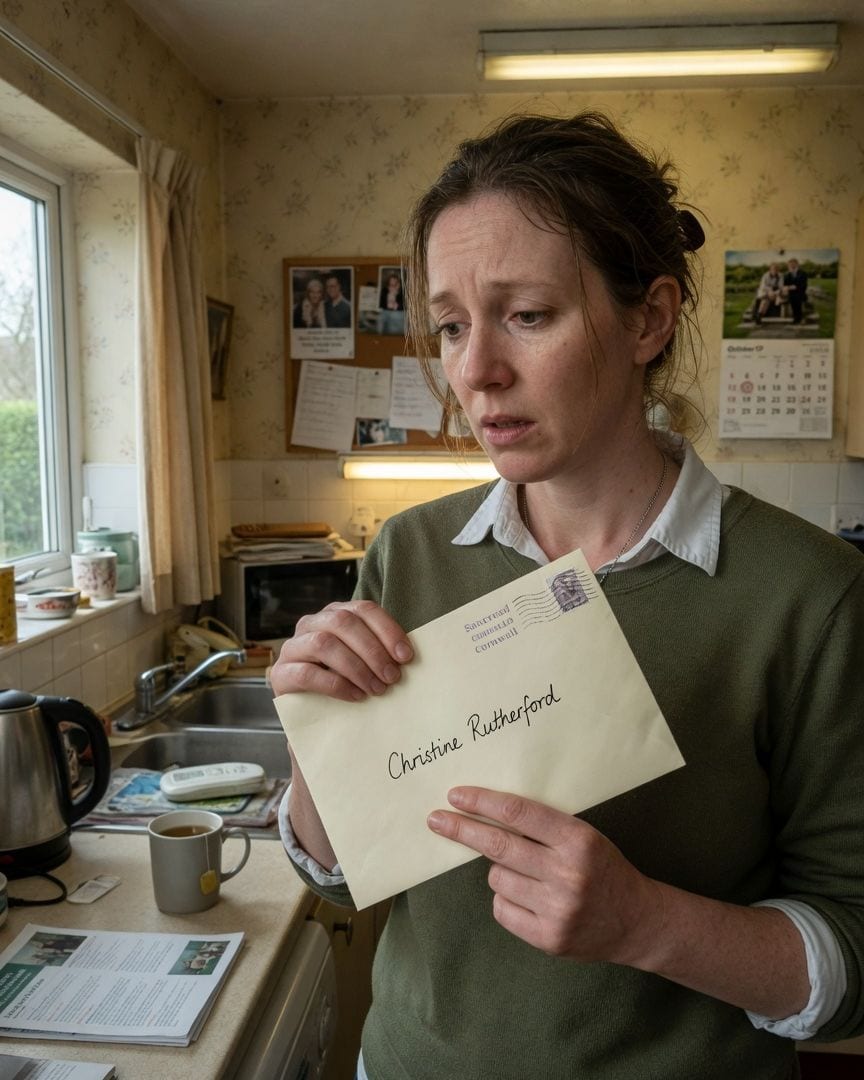
My name was carved on the village war memorial. Below it: 'October 17th'. The fresh cut looked fifty years old.
I drove to Sancreed to meet my friend Kenneth, a stonemason, who had called me with an urgent tone I'd never heard before. He met me at the village war memorial, a granite obelisk listing the fallen, and pointed to a fresh carving. Beneath the last name of a 1945 soldier, my name, 'Christine Rutherford', was etched, followed by 'October 17th' — a date this coming autumn.
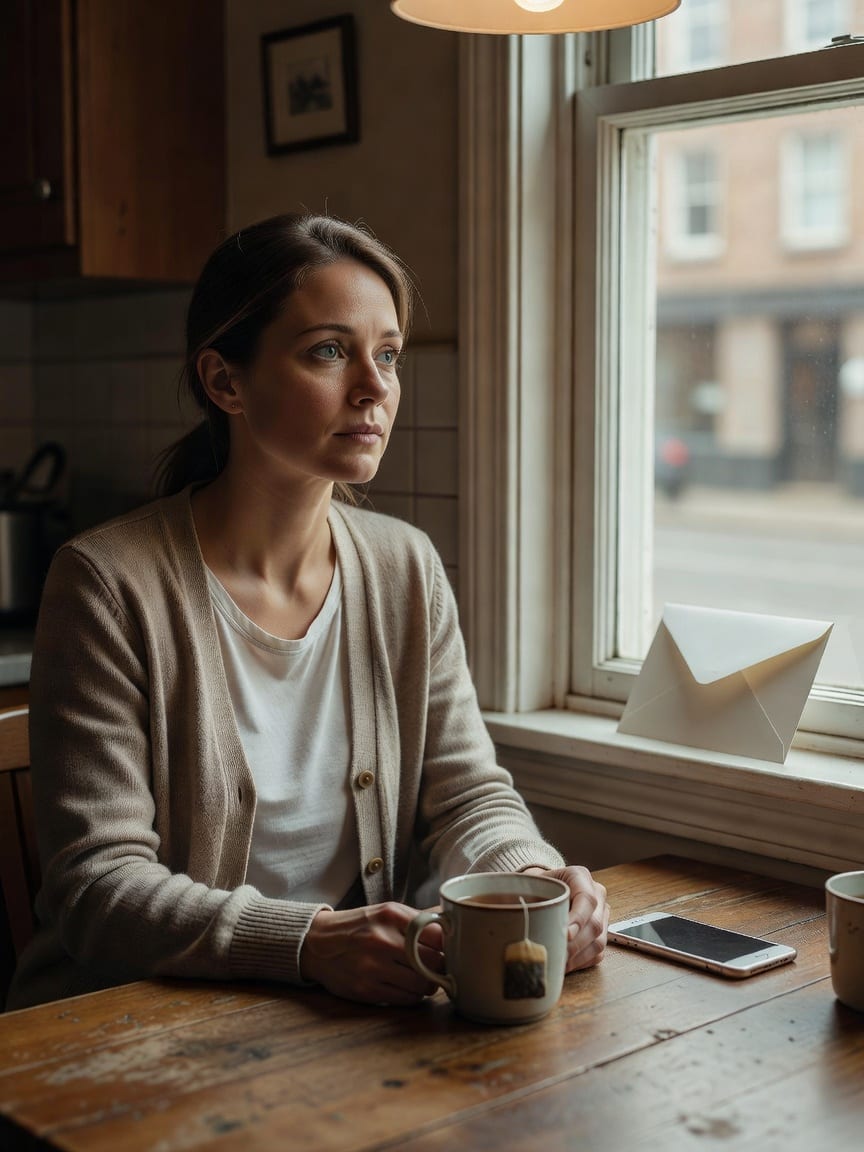
My taxi driver knew my name before I spoke, then apologized for the flight I was going to miss. I was arriving. The cab's plate was scrapped four years ago.
After a strange taxi ride, I received an unsettling birthday card addressed to me. Its return address listed 'Old Mill Road Field,' an empty lot where a mill once stood, and it was postmarked locally. The card arrived four months before my actual birthday, sparking a cold dread I couldn't ignore.
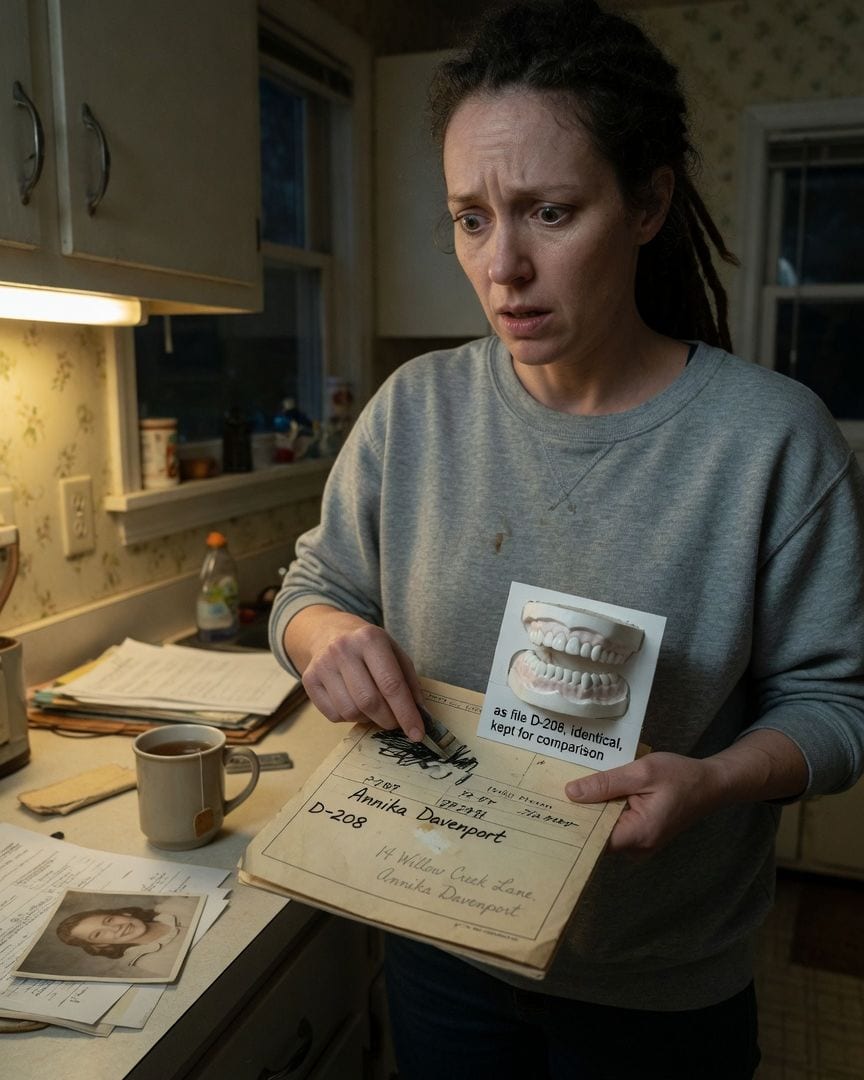
My childhood dental chart lists the house I bought last year — in my own name, years before I was born. A second set of my teeth sits filed beside it, marked 'identical.'
Sifting through old dental records, I found my chart, D-208, with my 1988 birth date. But a line from 1958 was blacked out, and a clipped card with an impression of my teeth listed my name and current home address, decades before I was born. The impossible facts knotted into a cold certainty.
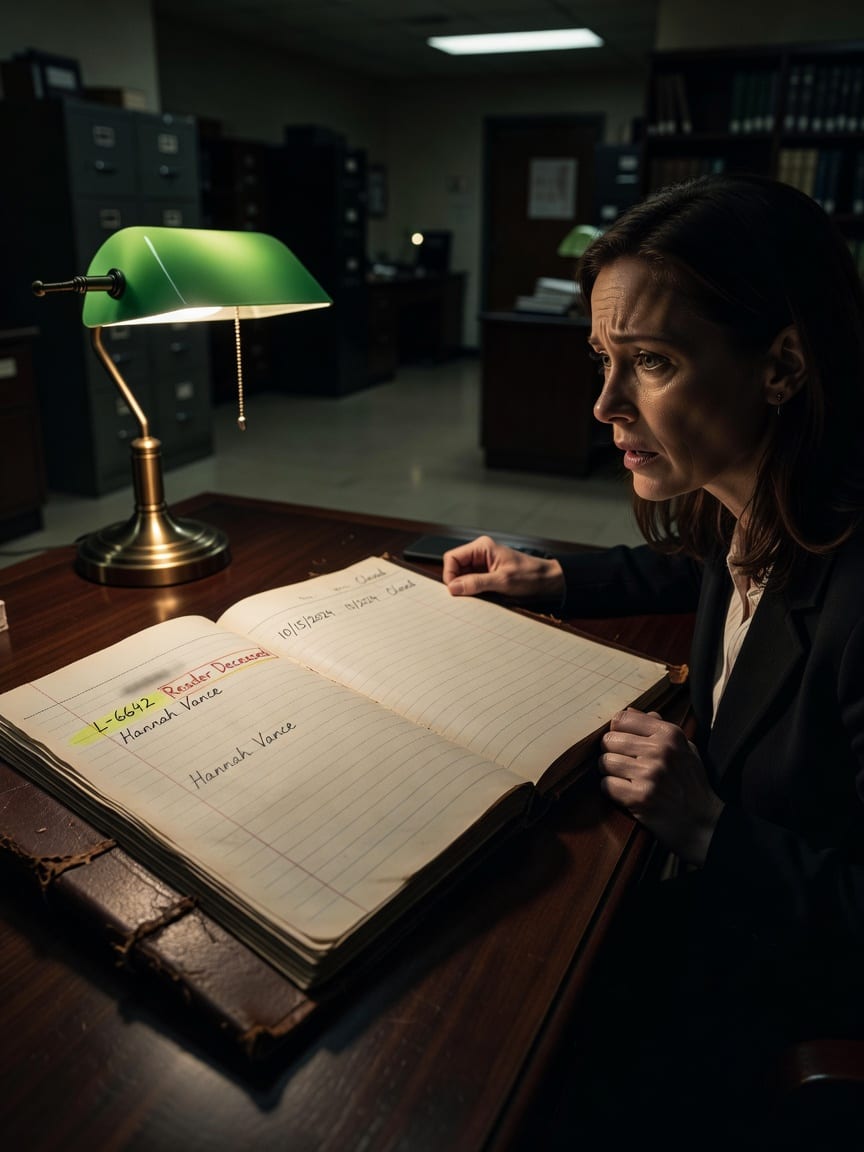
My library card number L-6642 was issued to me at seven — and the ledger shows that number has marked a reader 'deceased' every twelve years since 1949.
Returning my late father's library card to the old town library felt like a small act of closure. But the senior librarian's ancient ledger revealed a chilling pattern of 'reader deceased' entries tied to specific card numbers and borrowed books. My unease turned to cold dread when I secretly found my own name penciled in, marked for a future 'reader deceased' entry.
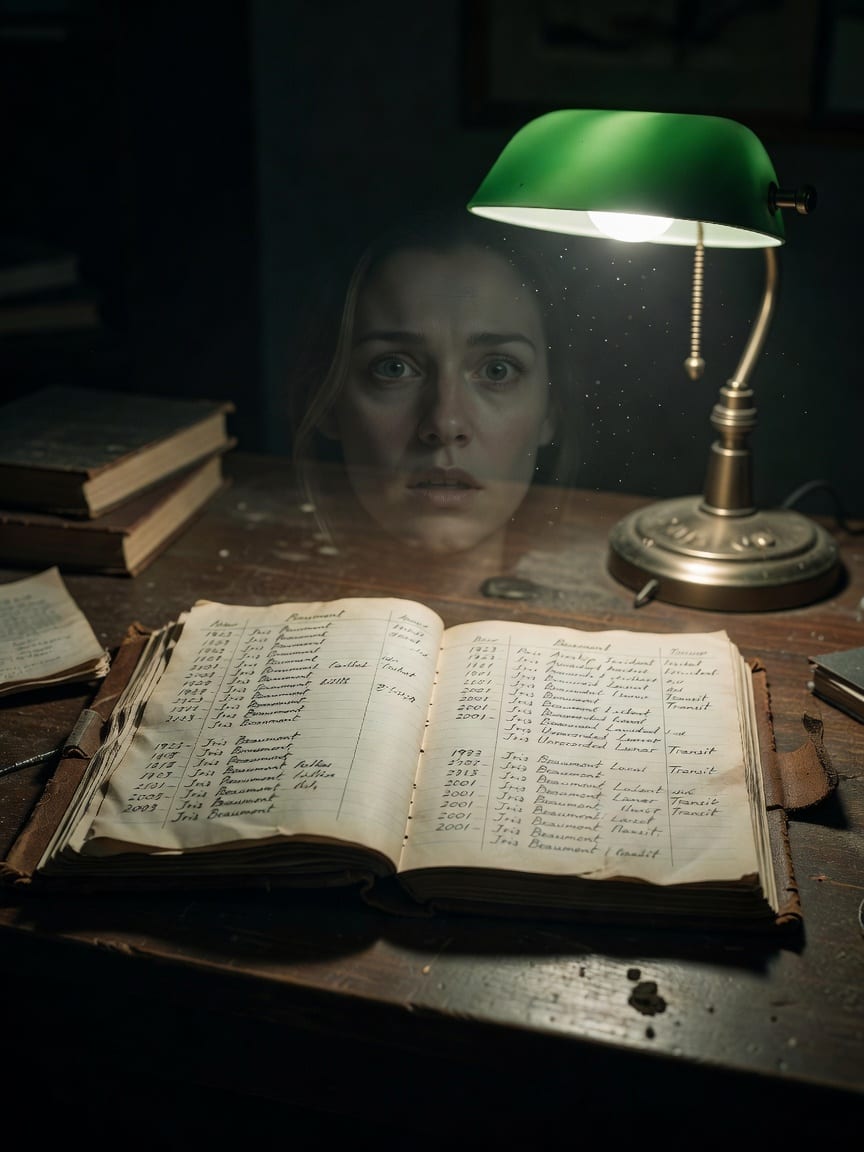
My signature's on the scaffold accident report, dated the morning it fell. I'm an accountant. I've never touched a hard hat.
I'm an accountant, a world away from hard hats and construction sites. But a foreman just showed me a safety form from a site accident, dated this morning, with my signature on it. A handwriting expert confirms it's undeniably mine, even though I've never set foot on a construction site in my life.
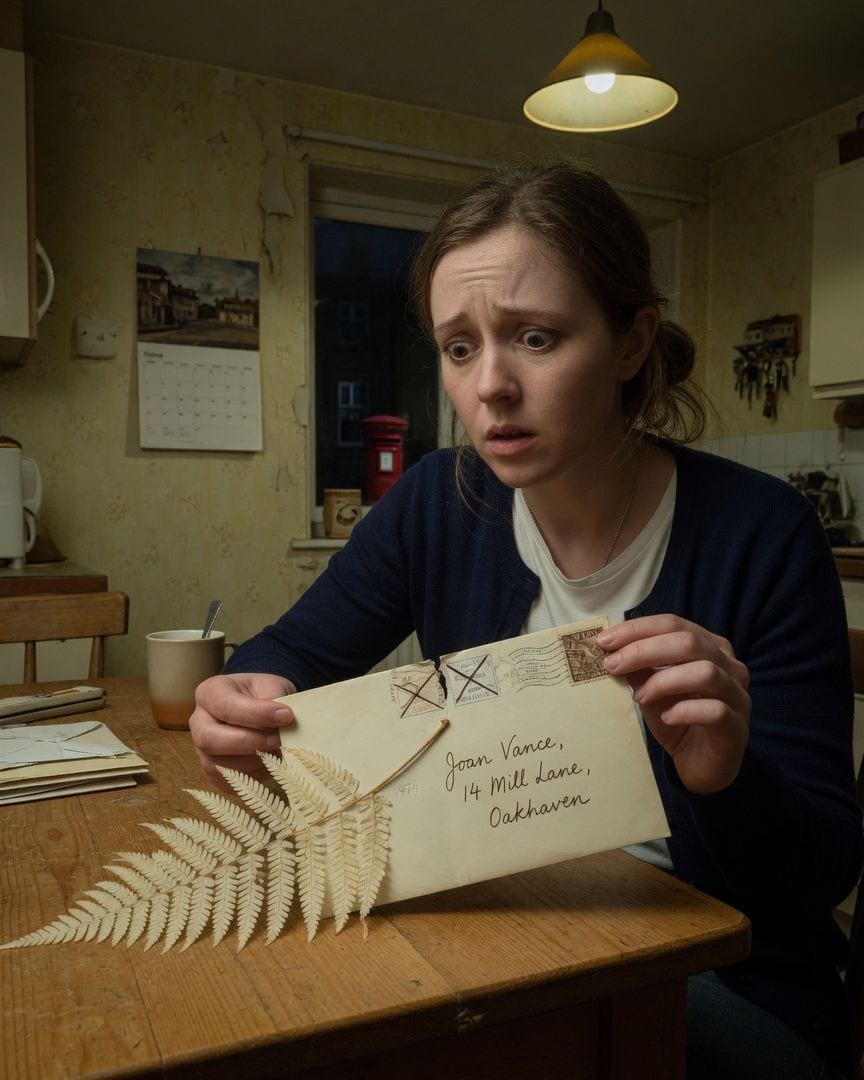
My letter returned. Delivered by hand, with a 1974 postmark. My own address, in a hand I didn't recognise.
As Joan Vance, new to Oakhaven, I posted a letter to my sister just two days ago, well past the last collection. Now, that same envelope sits on my kitchen table, delivered by hand. It bears a postmark from Oakhaven, 1974, a date that makes no sense, as the local post office officially closed that very year.