Master Sergeant Coyle was two months from retirement when his own signature appeared on a Cold War mission log from 1973, decades before he was born.
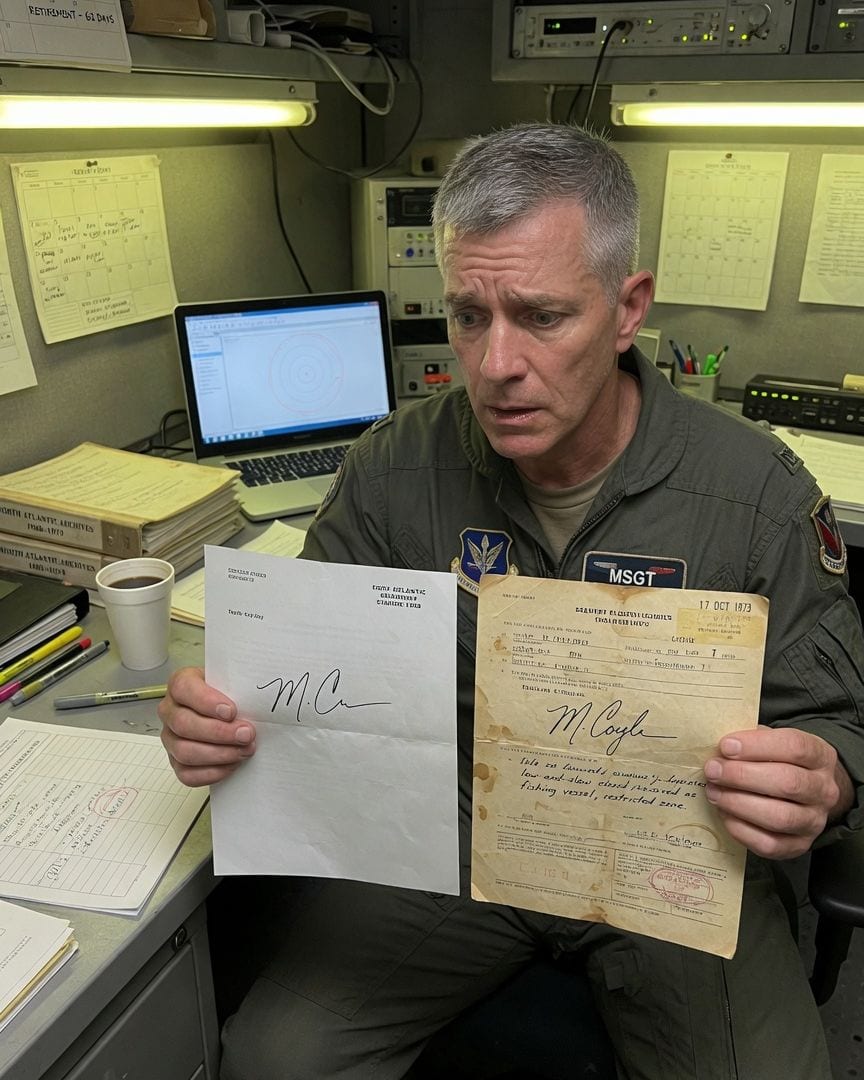
High above the churning black of the North Atlantic, the E-3 Sentry, call sign 'Nightingale 1-2', cut through the perpetual twilight.
Inside its humming cabin, Master Sergeant Malcolm Coyle, two months shy of his mandatory retirement, scanned the radar scope with the practiced ease of two decades.
His eyes, trained to sift signal from noise, snagged on a low-and-slow return holding station off the tanker track. It squawked nothing. No IFF, no transponder, just a faint, unwavering blip.
Coyle ran it through every filter – civilian, military, weather, even atmospheric – but it ghosted clean through, a persistent, silent presence. He vectored a flight of F-15s to the last known position.
They found only empty sky, clear infrared, and the steady thrum of the ocean below.
The blip, however, remained on Coyle’s scope, dropping at the same bearing it always dropped, mirroring an identical track from the prior week's mission tapes he’d reviewed just yesterday, to the very second.
Coyle, a man who believed in data, not ghosts, spent the next week quietly pulling every available record. He cross-referenced flight plans, radar logs, and intelligence reports for any anomaly in the designated quadrant.
His initial assumption was a sensor glitch, a known issue with older E-3 models. But the diagnostic reports came back clean. The maintenance chief, a gruff but meticulous airman, swore the system was 'squared away'.
Frustrated, Coyle requested access to archived mission logs from the same North Atlantic sector, dating back decades. He sat in a small, windowless office, the hum of the server racks his only company, scrolling through digital scans of handwritten entries.
On the third day, he found it: a mission log from 1973, detailing a 'resolved' contact with parameters eerily similar to his own – low-and-slow, no transponder, evading radar.
The entry stated the contact was 'identified as a commercial fishing vessel, distress signal lost'. But the coordinates were off, deep in a restricted zone, and the listed unit, 'Atlantic Overwatch Squadron 7', had never existed.
His squadron's official stamp, though, was there, an anachronism. As he zoomed in on the duty officer's signature, a cold knot tightened in his stomach.
It was a distinctive, almost calligraphic flourish, a looped 'M' and a sharp 'C' – identical to his own signature, the one he'd used on his enlistment papers, his promotion warrants, his retirement forms.
But the log was dated decades before he was born.
The blood drained from Malcolm Coyle's face. He knew his own handwriting, the subtle pressure points, the way the ink flowed. This was his signature. Unmistakable. Yet the date on the logbook page was 1973.
He wasn't even a thought then. His mind, trained for logic and verifiable facts, reeled. A clerical error? A forgery? But the stamp was authentic, the paper yellowed with age, the ink faded just so.
He printed the page, his hands trembling slightly as the laser printer whirred. Holding the two signatures side by side – his own from yesterday, the one from 1973 – the chilling truth began to settle: they were identical.
Not similar. Identical. He looked at the impossible contact’s ‘resolved’ status, the non-existent squadron, and his own hand writing a lie from a time he didn’t exist.
He knew, with a certainty that froze him to his core, that this was not a glitch. This was something else entirely.
Coyle spent the next few days in a daze, the printout tucked into his uniform pocket like a hot coal. He tried to dismiss it, to find a rational explanation. Perhaps a common signature style, passed down?
He checked other logs from the same era, but found no similar flourishes. The squadron's official stamp from 1973, matching his present unit's, was another dead end; historical records showed the squadron wasn't formed until 1985. The discrepancy was irrefutable.
He approached Rachel Holloway, a sharp archivist in base records, ostensibly asking for help with a 'retirement paperwork anomaly'. Holloway, always efficient, pulled up his service file. 'Everything looks squared away, Master Sergeant Coyle,' she chirped.
'Twenty years, clean record, commendations, no gaps.' Coyle pressed. 'What about any unusual incidents in the North Atlantic, say, around the early seventies? Unidentified contacts?' Holloway's smile tightened. 'All classified incidents are sealed, Master Sergeant. You know the protocol.'
Her tone was suddenly cool, distant. Coyle knew 'sealed' meant 'don't ask'. He knew he was treading on dangerous ground.
That night, instead of going home, Coyle drove to a quiet, forgotten corner of the base, to the old, decommissioned base library.
It was rarely used, its computers ancient, but he remembered it had a separate, less secure archival network for 'historical curiosities'. He hoped to find something, anything, not filtered by official channels.
Inside the dusty library, the fluorescent lights flickered over rows of forgotten microfiche and brittle books. Coyle fired up a terminal, its CRT screen glowing with a faint green hum.
He navigated through archaic menus, searching for 'North Atlantic anomalies' or 'unidentified aerial phenomena'. He found nothing.
As he was about to give up, a faint clicking sound came from the server room behind the main desk, a sound too rhythmic for the old machines. He froze. He hadn't heard anyone enter.
He peered through the glass partition, seeing only shadows. Then, a quick flash of light, like a phone screen, vanished. He waited, heart pounding, but silence returned.
Suddenly, the terminal screen flickered, displaying a cryptic message: 'Integrity of the Record is Paramount. Proceed with Caution, Master Sergeant.' The message vanished as quickly as it appeared. Coyle felt a prickle of cold dread.
He wasn't just digging; he was being watched. Someone knew exactly what he was looking for, and who he was.
He quickly cleared his search history, logged off, and slipped out of the library, the sense of eyes on his back palpable.
He glanced at his rearview mirror as he drove away, catching a glimpse of a familiar, dark sedan pulling out from the shadows near the library's entrance. It was the same sedan Rachel Holloway drove.
The next morning, Coyle confronted Holloway. He found her in her office, meticulously filing. 'Rachel,' he began, 'the message on the library terminal last night. Was that you?' Holloway didn't look up. 'I wouldn't know anything about that, Master Sergeant.'
Her voice was devoid of its usual cheer. 'And the sedan outside the library? Your car?' She stopped, her hand hovering over a file drawer. 'Master Sergeant, you're close to retirement. Don't jeopardize it over… curiosities.'
Her tone was a quiet warning. Coyle slammed the printout of the 1973 log onto her desk. 'This is my signature, Rachel. From before I was born. And this squadron never existed. Explain that.'
Holloway finally looked at him, her face pale. 'It's… a protocol. For certain… persistent anomalies. The system tries to account for them. Sometimes, it… reuses data. Echoes.' 'Echoes of what?' Coyle demanded. 'Of personnel who… interface with the anomaly.
To maintain plausible deniability. To make the impossible seem… resolved.' She spoke in clipped, almost rehearsed phrases. 'The 'Integrity of the Record' isn't about truth, is it? It's about coherence. Making sure everything fits, even when it doesn't.'
Holloway nodded slowly. 'The North Atlantic has always been… a difficult sector. Some things simply can’t be explained. But they can be… managed. Contained within the system.' Coyle felt a sickening lurch.
The invisible contact wasn't a glitch, or even a ghost. It was a known, managed 'problem' that the entire military record-keeping system was designed to contain, by fabricating reality.
Coyle pressed Holloway further. 'Managed how? What happens to the personnel who 'interface' with it?' Holloway hesitated, her eyes flickering to a locked cabinet. 'Their records become… redundant. Reconciled.' Coyle didn't like the sound of 'reconciled'.
He knew the military's euphemisms. 'Show me what you mean.' Holloway, under pressure, reluctantly opened a hidden compartment in her desk. Inside was a single, unmarked USB drive. 'This is a backup of the 'Anomaly Report' database.
It's… not for general access.' She plugged it into an offline terminal, her fingers flying across the keyboard, accessing a deeply nested file. A document flashed on screen, heavily redacted. Its title: 'Project Echo: Anomaly Manifestation and Personnel Reconciliations'.
The date at the top was 1973. Coyle's breath hitched. This was it. He scrolled down, past dense blocks of blacked-out text, to a section labeled 'Involved Personnel'. Listed below was a series of service numbers and names.
His eyes scanned quickly, then stopped. There, among the blurred entries, was a service number identical to his own.
And next to it, a faded, almost erased 'Coyle, M.' The file's last modification date was just yesterday, logged by 'Holloway, R.' His own name, fifty years ago, tied to an anomaly, and Holloway had just accessed it.
He was already in the system, already reconciled. He was the anomaly.
Holloway's face was grim. 'Your name… it appeared. A new echo. You got too close.' She explained that 'Project Echo' was a half-century-old institutional directive.
The anomaly wasn't a physical entity, but a recurring pattern, a 'bleed-through' from an unknown source that sometimes imprinted itself onto sensitive instrumentation and, critically, onto the records and even identities of those who observed it too closely.
The 1973 log, Coyle's impossible signature, his service number on a fifty-year-old report – it was all the system attempting to normalize the impossible, to contain the 'echo'. 'The military can't have unaccountable variables,' Holloway explained, her voice flat.
'If a service member's record becomes contaminated by an echo, they become an anomaly themselves. They have to be… removed from the chain of accountability.'
She pointed to a section of the 'Project Echo' document, now unredacted on the screen, detailing 'Phase IV: Personnel Reintegration Protocols'.
It was a chilling euphemism for erasing someone's service history, reassigning them to non-existent units, or simply declaring them 'lost in action' in some forgotten corner of the world. 'Your retirement,' Holloway continued, 'was the perfect opportunity. A clean exit.
No questions.' The institution wasn't malevolent, Coyle realized; it was self-preserving.
The horror wasn't a monster, but the sheer, cold logic of a system designed to account for everything, failing, and then fixing its own failure by erasing inconvenient truths and the people who found them.
Coyle stood up, pushing back from the terminal. 'So, what happens now? Do I just… disappear?' Holloway looked genuinely pained. 'The protocol states… you're to be debriefed, then transferred to a special detachment.
Your records will be sealed, then slowly phased out of the active database.' Coyle knew what that meant: a black hole, a ghost in the machine. He was Master Sergeant Malcolm Coyle, two months from retirement, a twenty-year veteran.
He wasn't going to let a system erase him. 'No,' he said, his voice firm. 'I'm not going anywhere with you.' He lunged for the USB drive still in the terminal, yanking it free.
Holloway gasped, reaching for it, but Coyle was faster. He pocketed the drive, his mind racing. He had to get out, and he had to expose this. He bolted from the office, Holloway shouting behind him.
He knew the base like the back of his hand, every shortcut, every blind spot. He sprinted through corridors, past unsuspecting airmen, adrenaline surging. He reached his car, fumbling with the keys, his heart hammering against his ribs.
As he roared out of the parking lot, he saw a uniformed security detail swarming Holloway's office. He glanced in his rearview mirror. A black sedan, not Holloway's, peeled out of the base, lights flashing. They were coming for him.
He drove, not home, but towards the nearest civilian town, the USB drive burning a hole in his pocket. He knew he couldn't just run forever. He had to make this public.
The system, built to account for everything, had failed, and he was the proof.
Malcolm Coyle never reported for his final two months of service. His retirement paperwork, officially, was never processed. His name was quietly flagged as 'deserted', then later, 'missing, presumed lost at sea' – an ironic nod to the North Atlantic.
The black sedan stopped pursuing him once he reached a public, crowded area, but Coyle knew they were still watching.
He eventually found a safe house, relying on old contacts and a deep understanding of how to operate outside official channels. He never used his real name again, never contacted his family, becoming a ghost in his own life.
The USB drive, containing 'Project Echo', remained his most dangerous possession, a truth too immense and too terrifying to simply unleash without understanding its full implications.
He became a shadow, constantly looking over his shoulder, forever marked by what he knew.
Years later, living under a new identity in a small, coastal town far from any military installation, Malcolm Coyle still scanned the horizon, an old habit he couldn't break.
He worked as a fisherman now, the vast, impersonal ocean a strange comfort. He sometimes wondered about Rachel Holloway, if she was still 'managing' the impossible. He knew the system had won, in a way.
He was alive, yes, but he was gone. Erased. His old life, his identity, meticulously scrubbed from existence, just like the phantom contacts on the radar.
He often thought of the E-3's scope, the green blip that squawked nothing, the signature that wasn't his, and the chilling coherence of it all. He had survived, but survival had meant becoming another unaccounted-for variable.
He knew the price of seeing the truth. One night, while sorting his nets on the dock, a faint, low-frequency hum resonated through the air, too deep for any boat engine, too consistent for the wind.
He looked out at the dark, vast expanse of the ocean. It squawked nothing.
If this one got to you
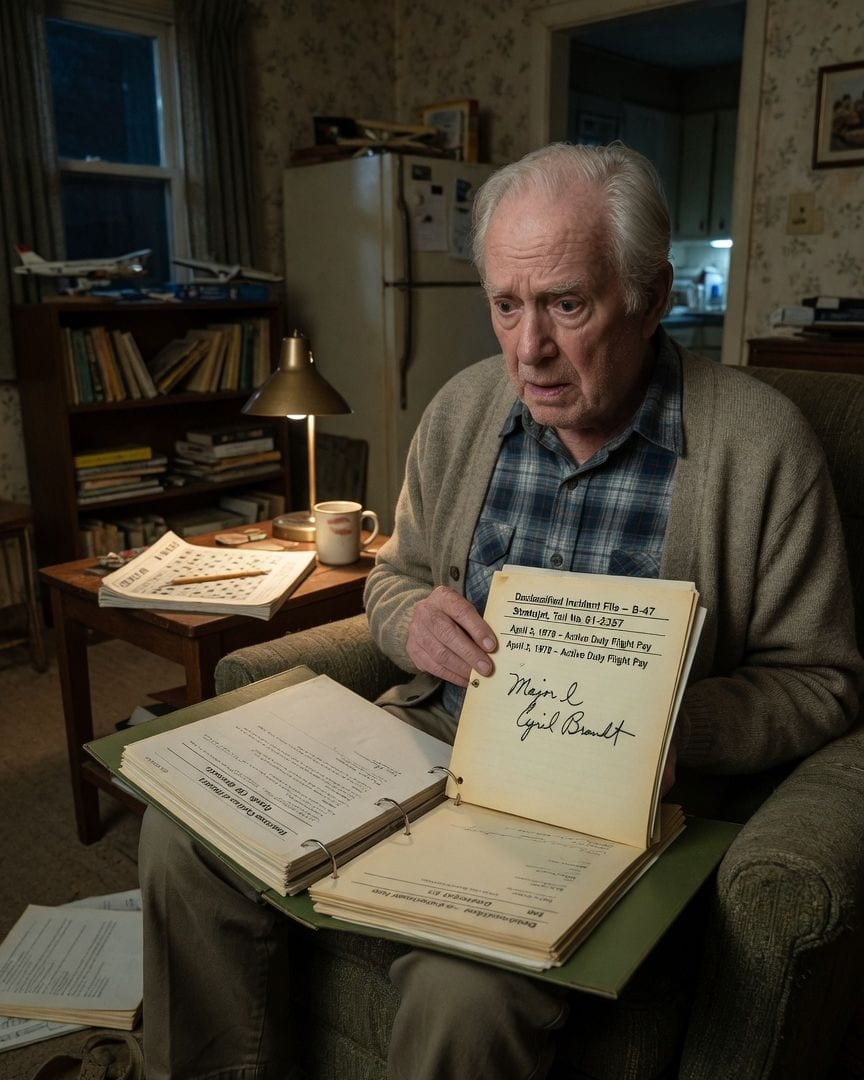
A retired Cold War pilot found his own signature on a flight pay record, dated five years after he left active duty, the ink unnervingly fresh.
Cyril Brandt, a seventy-two-year-old retired B-47 pilot, cherished his quiet Dakota retirement, his days filled with crosswords instead of combat. He expected to find long-awaited closure on a strange 1968 UFO incident when a heavy, declassified file arrived. Settling into his armchair, the weight of the olive-green binder felt familiar, but its contents quickly shattered his calm. He discovered maintenance logs for his B-47, detailing engine hours and tire rotations, dated years after the aircraft had been scrapped. Then, buried deeper, he found a payroll entry for himself, dated 1978 — five years after he left active duty — bearing his own unmistakable signature, the ink unnervingly fresh. How could his own hand have signed off on a mission that never happened, for a plane that no longer existed?
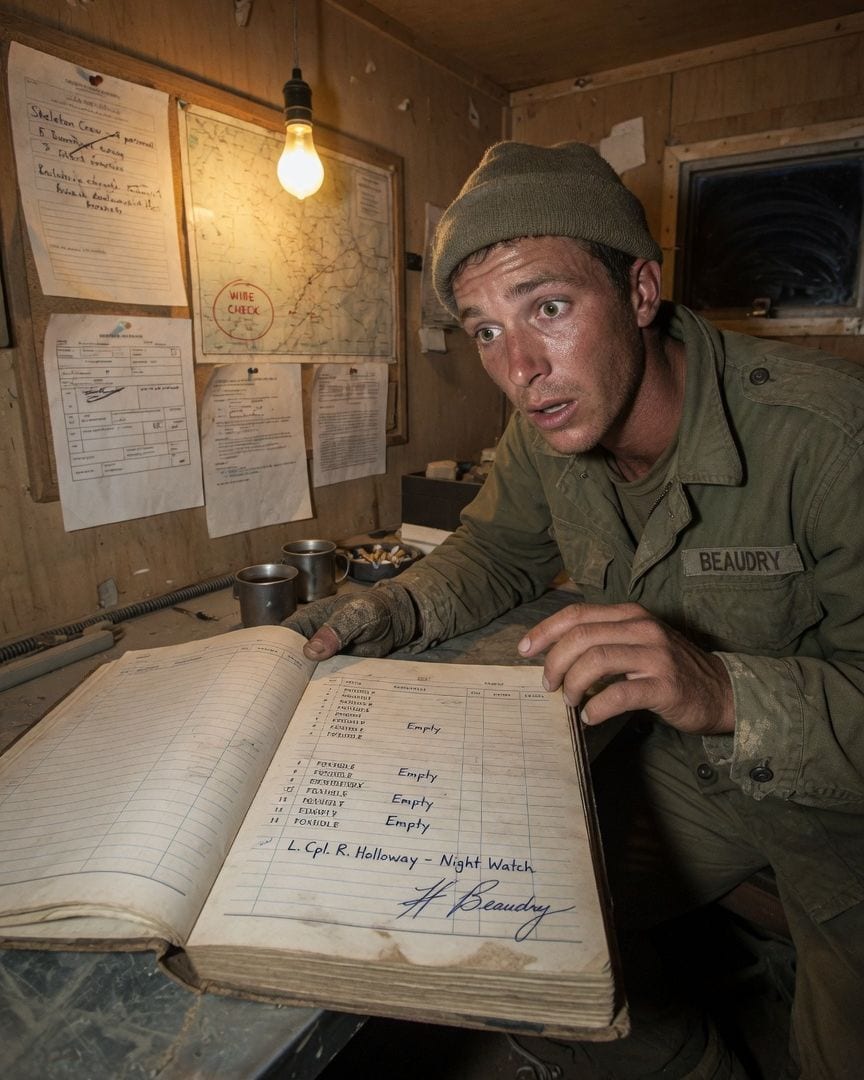
Lance Corporal Beaudry checks the perimeter's empty foxhole. The comm wire pulls back: a signal from no one.
Lance Corporal Hugo Beaudry moved along the perimeter of Firebase Kettle, a lonely outpost in its final drawdown. His solitary wire-check tonight was a routine task in the biting desert wind. He reached the third foxhole, empty for a week, and tugged its comm wire. Two distinct pulls answered back, sharp and unmistakable, from a position where no one remained. Back inside, Beaudry found his own precise signature in the duty log, assigning a Lance Corporal R. Holloway to that very foxhole – a man he'd never seen or heard of. The entry was perfectly aged, a cold dread of paper lying. Who was signalling from the empty hole, and why did his own hand confirm it?
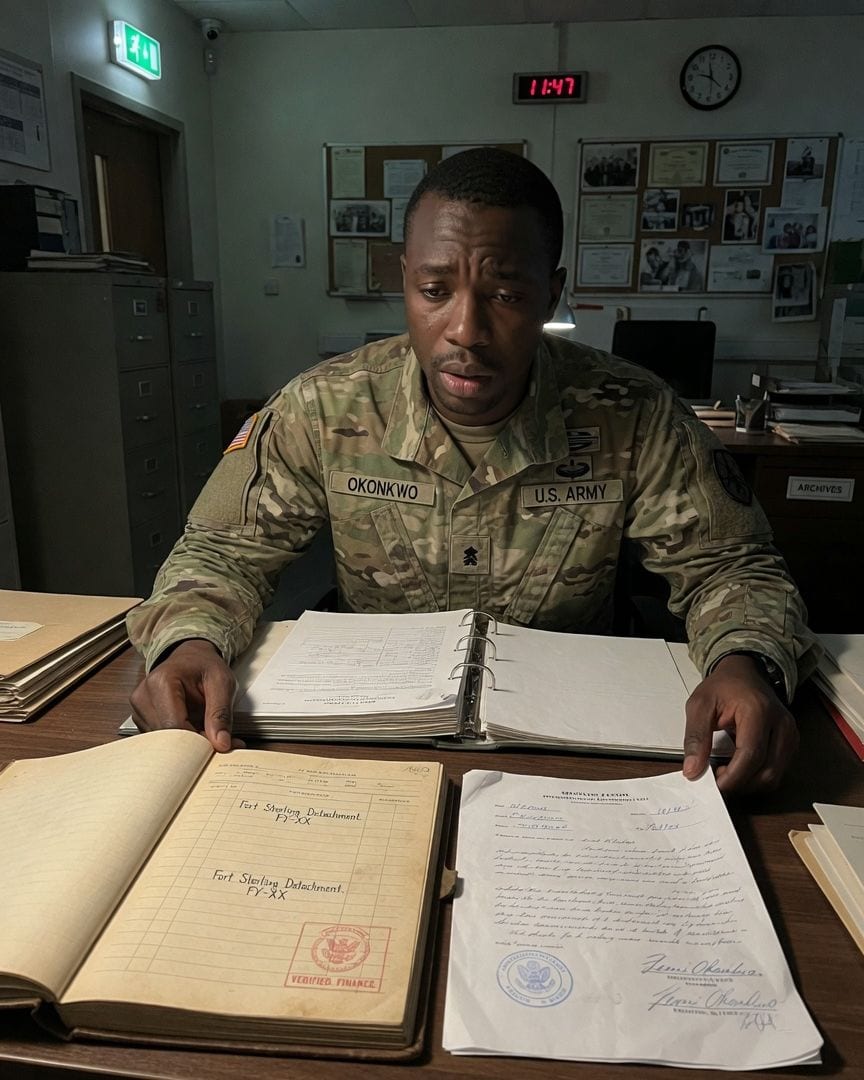
An old deployment ledger bore Specialist Femi Okonkwo's name, but the elegant signature was not his own.
Specialist Femi Okonkwo, an Air Force cargo hauler, stared at an earnings statement that contradicted his entire four-year enlistment. It listed nine months of jump pay and a mountain duty station in Colorado—places he’d never been, operations he’d never completed. Finance and HR records, seemingly impeccable, confirmed every detail of his impossible deployment. But when Femi finally retrieved the physical sign-in ledger, the faded blue ink of his supposed signature revealed the true, chilling discrepancy: the neat, elegant hand on the official document was unequivocally not his own. Who signed for Specialist Okonkwo’s impossible deployment, and why was it so meticulously verified?
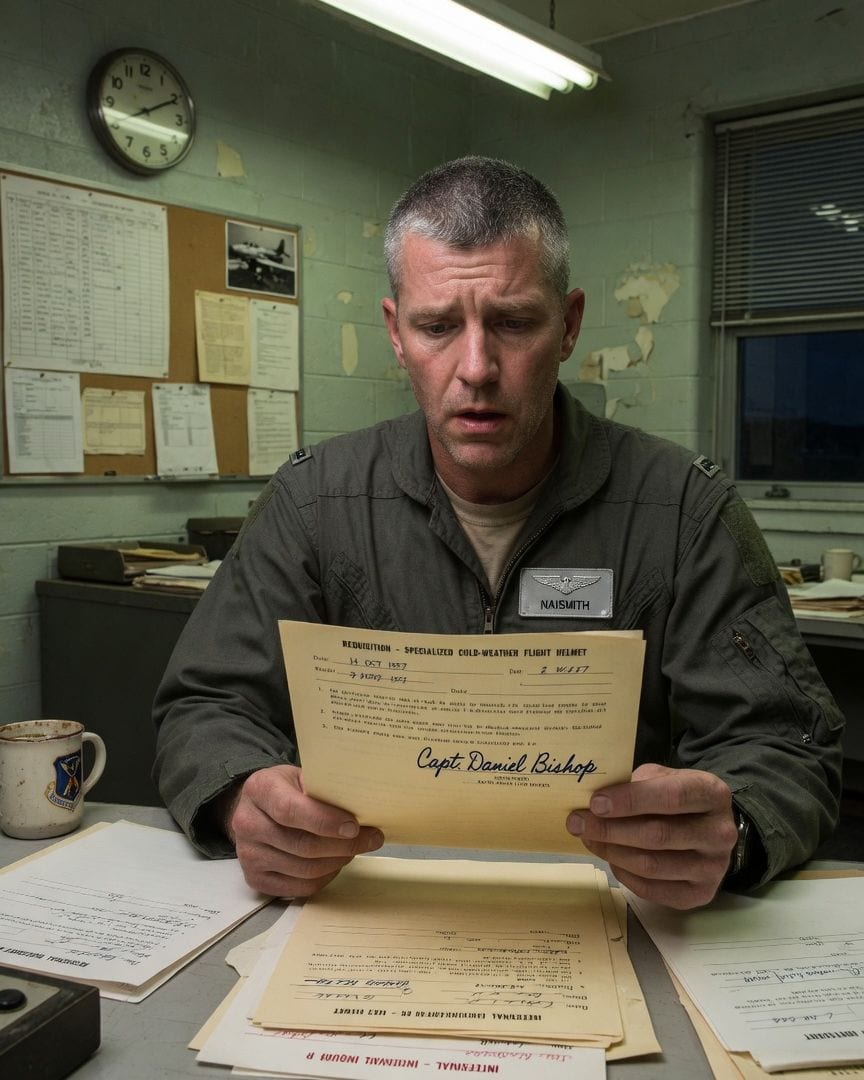
A Cold War Colonel reviews a missing pilot's file and finds Captain Bishop's signature on a form dated weeks after he vanished.
Colonel Ward Naismith faced the grim task of reviewing Captain Daniel Bishop’s personnel file, a routine chore for a man listed as Missing in Action. Bishop had vanished days after he and Naismith chased an impossible, silent disc over Lake Superior, leaving only an empty patch of air and a knot of unease in Ward's gut. Sifting through commendations, Ward found a requisition for flight gear and a maintenance sign-off, both dated *after* Bishop’s disappearance. The true chill came with the requisition for a specialized flight helmet, bearing Captain Bishop’s unmistakable signature, weeks after he was presumed lost. How could a man presumed lost have signed anything?
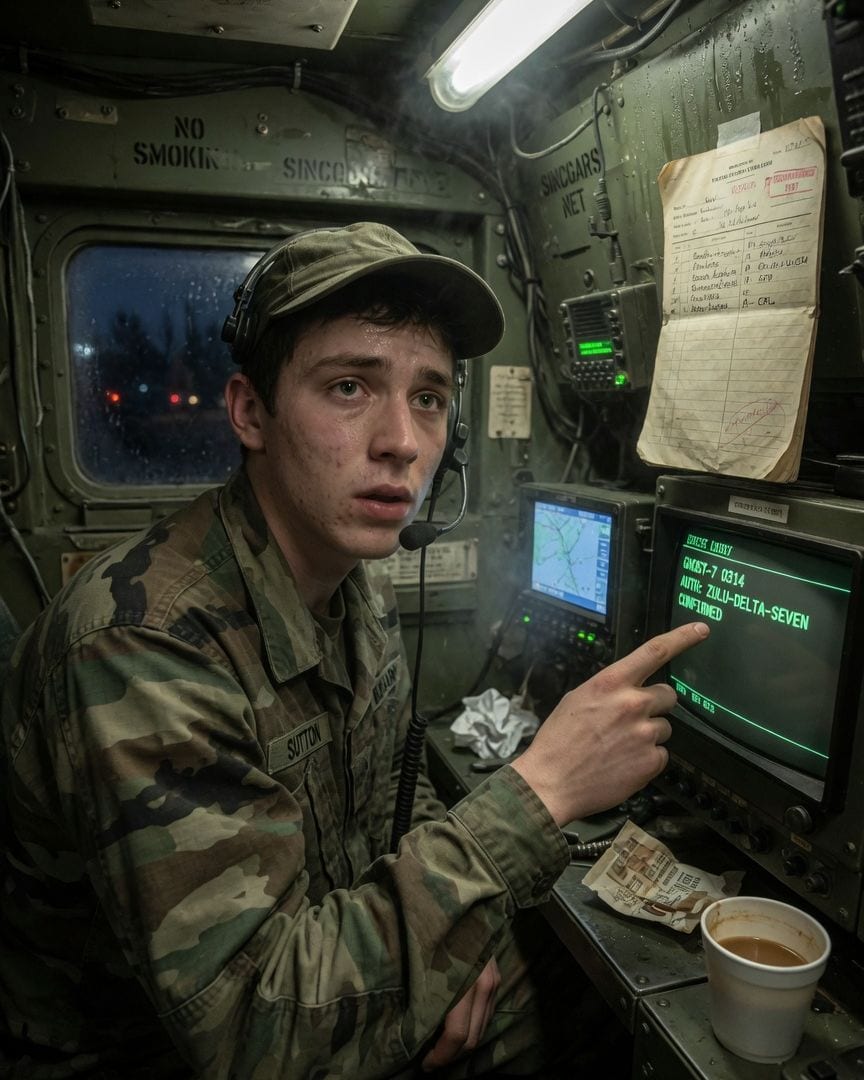
Corporal Aldous Sutton found his own name, rank, and call sign in a 1987 logbook from his exact outpost, decades before he was born.
Corporal Aldous Sutton, 22, was hunched in his cramped comms track, the air thick with stale coffee, monitoring a quiet German night. The division exercise outside was routine, all units accounted for, until an unknown call sign crackled through his headset. 'Ghost-7' requested authentication using a protocol decommissioned years before Aldous was even born. Despite his superior dismissing it as a glitch, Aldous found official logs confirming the impossible exchange, even dating his own hesitant responses. But the real dread landed when he cross-referenced the phantom unit and discovered his own name, rank, and call sign listed in a 1987 logbook, attached to 'Ghost-7' at his exact outpost.
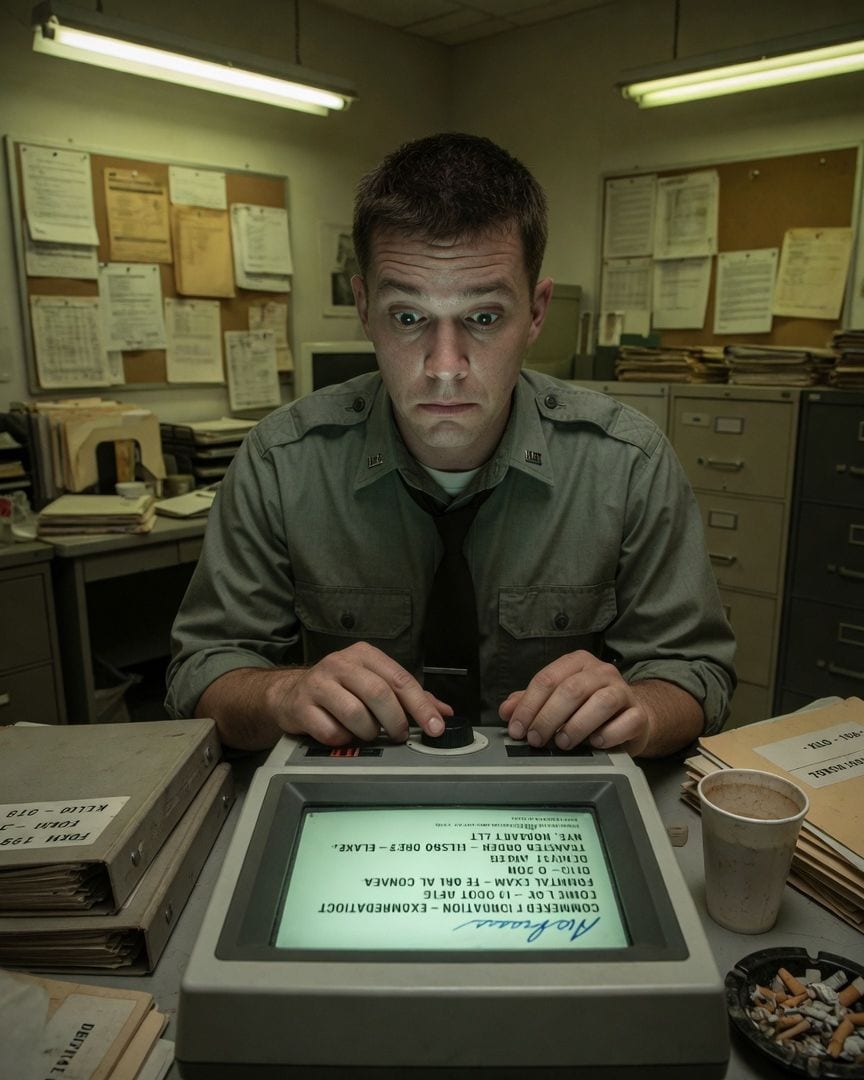
A missile commander watched his ten nuclear silos go dark. His own service record shows his signature on a future he's never lived.
Second Lieutenant Hobart Nye, a missile commander in Wyoming, had his quiet 0247 watch shattered by a security report: a massive, silent black triangle hovered over Launch Facility Kilo, casting a perfect shadow. Hobart watched his console's fault panel light up, signaling all ten nuclear missiles going dark in an impossible silence, followed by eleven minutes his security team could not remember. Official logs called it a "radio malfunction," but Hobart found a requisition for invisible-tracking sensors, signed by a base commander who was supposed to be off-base. The final, chilling discovery came when his own service record showed new entries—a dental check-up, a transfer to Alaska—all dated for a future he never lived, complete with his perfectly replicated signature.