A Staff Sergeant watched combat boots reappear at the memorial each dawn, their soles deepening with scuffs that no living soldier made.
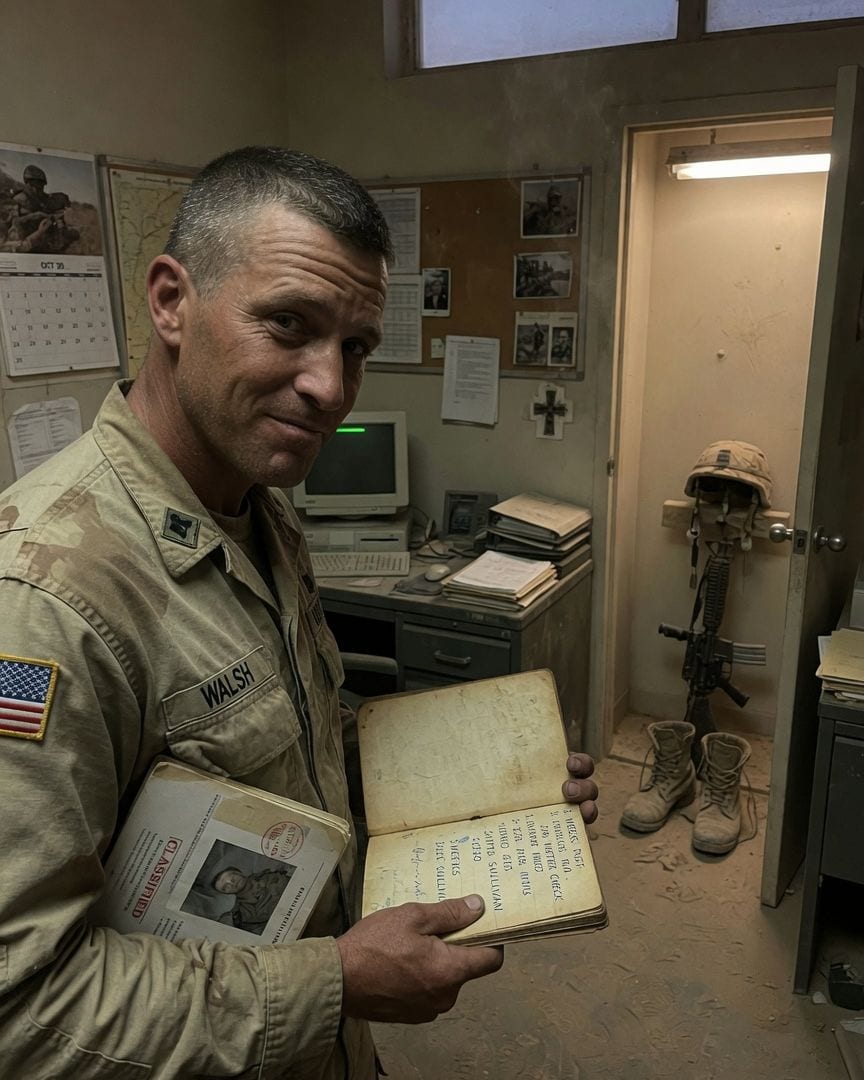
Staff Sergeant Raymond Walsh, on routine patrol at FOB Kestrel, passed the memorial alcove. The air was thick with the dust of the desert, but the alcove, recessed into the side of the main administrative building, held a quiet reverence.
A battle cross, formed from a rifle, helmet, and dog tags, stood at its center, a pair of worn boots placed reverently at its base.
Raymond knew the story: Private Marsh, a cocky new joe, had, on a dare, straightened a fallen dog-tag chain with his bare fingers a few nights ago. That night, Marsh’s combat boots had vanished from his bunk.
Raymond, hearing the murmurings, found them at the foot of the memorial rifle the next morning, laces open, waiting.
He had sighed, assuming some sophomoric prank or hazing ritual, and returned them to Marsh’s locker himself, placing them neatly beside the private’s untouched spare pair.
The next morning, the boots were back at the memorial, laces open, positioned exactly as they had been before. Raymond walked closer, his brow furrowed.
He noticed a faint, fresh scuff on the toe, a scratch barely visible against the ingrained dust. He confronted Marsh, pulling him aside in the mess tent.
"Marsh, you need to cut it out," Raymond had said, keeping his voice low, "jokes are one thing, but this is disrespectful." Marsh, usually full of bluster, had gone pale beneath his desert tan, shaking his head.
"Staff Sergeant, I swear, I didn't take them out. I put them on for guard duty, took them off, and that was it. They were in my locker."
Raymond's rational mind, honed by years of military order and protocol, struggled to reconcile the impossible. Marsh’s genuine bewilderment was unsettling.
Raymond continued to observe the boots. Each dawn, they reappeared at the memorial, laces open, a little more worn, the scuffs deepening, despite Marsh’s insistent claims that they never left his locker.
Raymond inspected them closely, running a thumb over the increasingly worn leather.
He noted patterns of wear inconsistent with Marsh's light duties—deep gouges around the soles, an unnatural thinning of the heel, as if someone had walked countless miles on them.
He checked Marsh’s other pair of boots, stored under his bunk; they remained pristine, untouched, gathering a fine layer of dust.
Private Marsh, initially defiant, was now genuinely scared, his bravado replaced by a quiet dread that mirrored Raymond’s own growing unease. The boots felt wrong, looked wrong, and defied any logical explanation.
Determined to find the culprit, or at least a reasonable explanation, Raymond reviewed the unit’s duty logs, meticulously cross-referencing memorial area checks with perimeter patrols.
He poured over records from the past few months, then years, sifting through the regimented entries. The administrative office, usually filled with the low hum of computers, felt strangely still as he delved into the past.
Deep in a dusty, bound logbook from five years prior, its canvas cover brittle and stained, he found it: an entry, dated three weeks after Sergeant Arthur Sheppard’s official KIA date.
It recorded 'SGT A. SHEPPARD' assigned to a perimeter check, signed off by a Captain Sullivan. Raymond knew Sheppard had died in a different sector entirely, caught in an ambush during a reconnaissance mission, far from FOB Kestrel.
The entry was an impossibility, a stark contradiction in the meticulously kept records of the U.S. Army. It was a detail that should not exist.
Raymond held the old logbook, his thumb tracing the impossible entry, the ink faded but clear. The silence of the administrative office pressed in around him.
He pulled out Sheppard’s official KIA report from his own secure files, confirming the date and location of his death in a small village nearly a thousand miles away. There was no ambiguity.
He looked across the administrative office to the memorial alcove, the battle cross standing silent and resolute, the familiar boots now a chilling presence at its base. He walked over, his eyes scanning the rifle, then the helmet.
His gaze dropped to the ground, searching for anything out of place. Then he saw it: a faint, almost invisible, but distinct bootprint in the dust beneath the rifle's butt.
It was too small to be Marsh’s own foot, a size too small, yet it perfectly matched the pattern of the sole on Marsh’s boots—the same deep, irregular scuff marks, the same specific tread.
The print was there, waiting, a silent testament, even before Marsh’s boots had begun their nightly pilgrimage.
Raymond spent days trying to trace Captain Sullivan, the signatory on the impossible log entry. He hit dead ends; Sullivan had retired years ago, a ghost in the system, leaving no forwarding address or contact information that Raymond could access.
The military’s own channels provided nothing but automated messages and outdated contact numbers. Undeterred, Raymond continued digging through old archives, searching for any explanation for Sheppard’s posthumous duty.
The air in the dusty records room was perpetually cool, smelling of old paper and neglect. He finally found it: a posthumous commendation for Sheppard, awarded for an act of bravery during a specific perimeter patrol.
The citation detailed a precise route, a specific threat neutralized—a route and threat that eerily matched the 'perimeter check' in the impossible log entry. The citation, dated after Sheppard’s death, described an action he could not possibly have performed.
The military’s own records were contradicting reality, a precise, cold machine suddenly sputtering with an inexplicable error.
Increasingly uneasy, Raymond sought out Specialist Quentin Pennington, an older, quiet mechanic who had been at FOB Kestrel for decades, a man who saw everything but said little.
Quentin was initially evasive, his eyes darting to the memorial alcove before settling back on the wrench in his hand.
He spoke in riddles about 'respecting the dead, truly respecting them,' and how 'some things the books keep track of, even when they shouldn’t.'
He muttered about 'unfinished business' and how 'a soldier’s duty isn’t done until the paperwork says it is,' his gaze lingering on the memorial alcove with a knowing, uncomfortable quality.
The clatter of tools in the motor pool seemed to soften around them, as if listening.
As Raymond continued his quiet investigation, a subtle shift occurred. He started feeling observed. Not by human eyes, but by something less tangible.
Tools in his workbench were subtly rearranged when he turned his back; a torque wrench would appear on the wrong peg, a box of fasteners would be open despite him having closed it.
A folder with Sheppard’s file, which he’d secured in his office with a combination lock, was found open on his desk after he’d locked up for the night, the lock still in place, but the folder unlatched.
He tried to rationalize it as tiredness, distraction, or even Marsh’s residual fear, but the details didn't fit.
One humid desert night, while reviewing logs alone in the administrative office, a faint, rhythmic scuffing sound drifted from outside—the sound of boots dragging lightly on gravel, a sound Raymond now recognized with a chill.
He peered through the window into the moonlit darkness, the desert wind picking up dust. He saw nothing but the swaying perimeter fence and the distant, unblinking red eyes of the comms tower. Yet the sound persisted, circling the base.
The next morning, fresh scuff marks appeared on the perimeter patrol path, just outside the wire, matching the distinct pattern on Marsh’s boots, now even more worn.
The path was the exact one described in Sheppard's posthumous commendation, a path only 'logged' by Sheppard after his death. The wrongness was physical, leaving its mark on the real world.
Quentin Pennington approached Raymond, his usual quiet demeanor replaced by a look of genuine concern, his face etched with something heavy. "You’re digging too deep, son," Quentin warned, his voice low, the clanking of distant machinery fading for a moment.
"Leave some things alone. They just want to finish their rotation."
He revealed a quiet, unofficial understanding among the oldest soldiers about the 'active dead' at certain memorials, always tied to records that couldn’t be reconciled, soldiers still on duty, in a way.
He spoke of it not as a ghost story, but as a tedious, tragic fact of military life.
Raymond cornered Quentin in the motor pool, the clatter of wrenches and the smell of grease filling the air, trying to drown out the tremor in Raymond's voice. "What do you mean, 'active dead'?"
Raymond demanded, his voice tight, refusing to leave. Quentin sighed, wiping oil from his hands with a rag. He looked around, ensuring no one else was within earshot, then lowered his voice.
"Sometimes, Staff Sergeant, when a soldier dies with an 'unresolved' duty, or an 'incorrect' entry in their official record—especially a posthumous commendation for an action they couldn't have performed—their spirit can get tethered." He gestured vaguely toward the memorial alcove.
"The memorial becomes a focal point. They try to complete that duty, using whatever physical proxy they can find. The boots are the most direct link to their 'assigned' task. A soldier without his boots isn’t a soldier."
Raymond felt a chill that had nothing to do with the cool metal of the workbench. "So, Sheppard… he’s trying to complete that patrol? The one he got the medal for, after he was already dead?"
Quentin nodded grimly, his gaze far away. "That commendation was a clerical error, meant for another soldier who actually performed the action. But it was too late to correct the record.
The system, in its rigid adherence to records, had, in a sense, kept Sheppard 'on duty' for that specific patrol. His name was on the ledger, so his duty remained active.
The boots are Sheppard, trying to complete that patrol, day after day, until the record is fulfilled." He paused, taking a slow breath. "The increasing wear you’ve seen? That’s real wear, Staff Sergeant. From phantom patrols.
He’s out there, every night, trying to square the books, because the books won't square themselves. And until they do, he’s still on the clock."
The horrifying coherence of Quentin's explanation settled over Raymond. A clerical error, a rigid system, and a soldier trapped in an endless, spectral duty. The very order of the military, designed to honor and account, had inadvertently created a purgatory.
He looked at Marsh’s boots, now visibly worn, almost threadbare, resting at the memorial base. A profound dread ran through him, a cold fear far deeper than any prank or ghost story. This was an institutional haunting.
"Has this… has this happened before?" Raymond asked, his voice barely a whisper, the words feeling heavy and dangerous in the quiet motor pool.
Quentin nodded, his eyes distant, fixed on something Raymond couldn't see. He reached into a grimy locker, rummaging past rusted tools, and pulled out a faded, unofficial hand-drawn map, creased and worn at the folds.
It was a crude thing, sketched on what looked like old packing paper, but it was meticulously detailed.
On it were marked other decommissioned outposts, some long-forgotten, desolate specks on the landscape—old desert shacks, forgotten coastal bunkers, remote mountain observation posts.
Small, cryptic symbols were drawn next to them—each a unit insignia, and next to it, a date range. "This isn’t just Sheppard," Quentin said, his voice low, heavy with generations of unspoken dread.
He spread the map out, revealing a network of these haunted outposts. "This is a pattern. It’s happened at these other bases, too. Across rotations, across the years. Different soldiers, different duties, same impossible records.
And some of those places… they never found a way to stop it. They just closed the base and left them to it. Still on duty."
Quentin spread the map across a dusty workbench, tracing lines with a calloused finger.
Each cryptic symbol, each date range, represented an outpost where a similar anomaly had occurred, always tied to a 'Record That Swears Otherwise' – a posthumous duty, a commendation for an impossible act.
The dates indicated when the 'activity' was first reported, sometimes stretching back decades, a silent history of bureaucratic errors leading to spectral service.
The pattern was horrifyingly clear to Raymond: these 'active dead' were everywhere, quietly fulfilling their phantom duties, trapped by the system’s own immutable records.
Raymond understood then that the official military system, designed for ultimate accountability, had inadvertently created a purgatory for its fallen. Soldiers, unable to truly rest, were bound by bureaucratic errors, unable to pass on until every entry was squared.
He asked Quentin what had happened at the bases where it was stopped, his voice hushed.
Quentin revealed that a few times, a rational, living soldier, realizing the truth, had physically performed the 'impossible' duty detailed in the record, effectively 'completing' the ghost's final, incorrect assignment.
It was a dangerous, unofficial act, often requiring them to go outside the wire alone, into the silence, to walk a dead man's patrol, hoping the system would finally recognize the duty as done.
Raymond made his decision. He had to complete Sheppard's patrol. He consulted Sheppard's commendation one last time. The document detailed a specific route, a specific time of night – just before dawn.
He geared up, taking Private Marsh's boots, now almost threadbare, from where they sat by the memorial. The leather felt impossibly thin, stretched and worn by countless phantom steps.
Marsh, pale and terrified, watched him from the shadows of the barracks, unable to speak, his eyes wide with a mixture of fear and reluctant understanding. Raymond merely nodded, a gesture Marsh slowly returned.
Alone, under the vast, star-peppered desert sky, Raymond walked the phantom perimeter. The air grew cold, a prickling chill that had nothing to do with the desert night, pressing in around him.
He followed the exact route described in Sheppard's posthumous commendation, mimicking the actions: checking a specific section of fence where a breach had once been reported, observing a particular ridge line for movement, scanning the horizon for a threat that was no longer there.
He felt a presence, a heavy, silent observation, just behind him, a constant, chilling weight. He heard the faint scuff of boots, matching his own pace, a ghostly echo on the gravel. He did not look back.
As he reached the final waypoint described in the commendation, a small, cairn-like rock formation near the farthest reach of the patrol, he stopped.
He placed Marsh's boots on the ground, laces still open, facing out toward the empty desert, toward the rising sun. He rendered a slow, precise salute to the empty air, to the invisible presence he knew was there.
A profound silence fell, deeper than any he had ever known, as if the desert itself held its breath. The unnatural cold dissipated, replaced by the natural warmth of the desert as dawn broke.
He felt a sense of release, a quiet 'thank you' in the stillness, not heard but felt, a sigh of rest. He turned and walked back toward FOB Kestrel, leaving the boots behind, their duty finally done.
The next morning, Marsh’s boots were gone from the memorial. They were found neatly placed back in Marsh’s locker, clean, and no longer bearing the phantom wear, the scuffs somehow erased.
Marsh was visibly relieved, though still shaken by the experience, his bravado gone for good.
Raymond made a quiet, unofficial report to his commanding officer, Captain Bryant, carefully detailing the 'clerical error' regarding Sergeant Sheppard’s commendation and his 'discretionary perimeter check' to ensure 'full accountability.'
Bryant, a no-nonsense officer, raised an eyebrow at the unusual phrasing but accepted the report, noting the sudden cessation of 'pranks' around the memorial. The memorial for Sergeant Arthur Sheppard remained, peaceful and undisturbed.
Raymond ensured the duty log for the memorial area was now always signed by two people, no single entries.
Raymond finished his tour at FOB Kestrel. He transferred to a new base, a quiet posting stateside, trying to forget the dust, the boots, and the quiet dread that had settled into his bones.
But the map Quentin gave him, faded and creased, was tucked into his personal effects, a constant, unsettling reminder. He found himself occasionally looking up old reports, cross-referencing names, dates, and locations.
He saw another impossible entry, a commendation for a Marine at an old, abandoned lighthouse station off the Oregon coast, for an action performed years after his KIA date. The dread was a cold, familiar weight in his chest.
He knew what it meant. He knew what was waiting there.
Years later, Raymond Walsh, now a retired veteran, sits in his study, a map spread before him, illuminated by a reading lamp. His wife, Josephine, asks him about his next fishing trip, noticing the intensity in his gaze.
He points to a remote coastal town on the Oregon coast, far from any major highway.
“Just need to square a few things away,” he murmurs, his eyes fixed on a faded mark on the map, “for an old friend who never quite made it home.”
If this one got to you
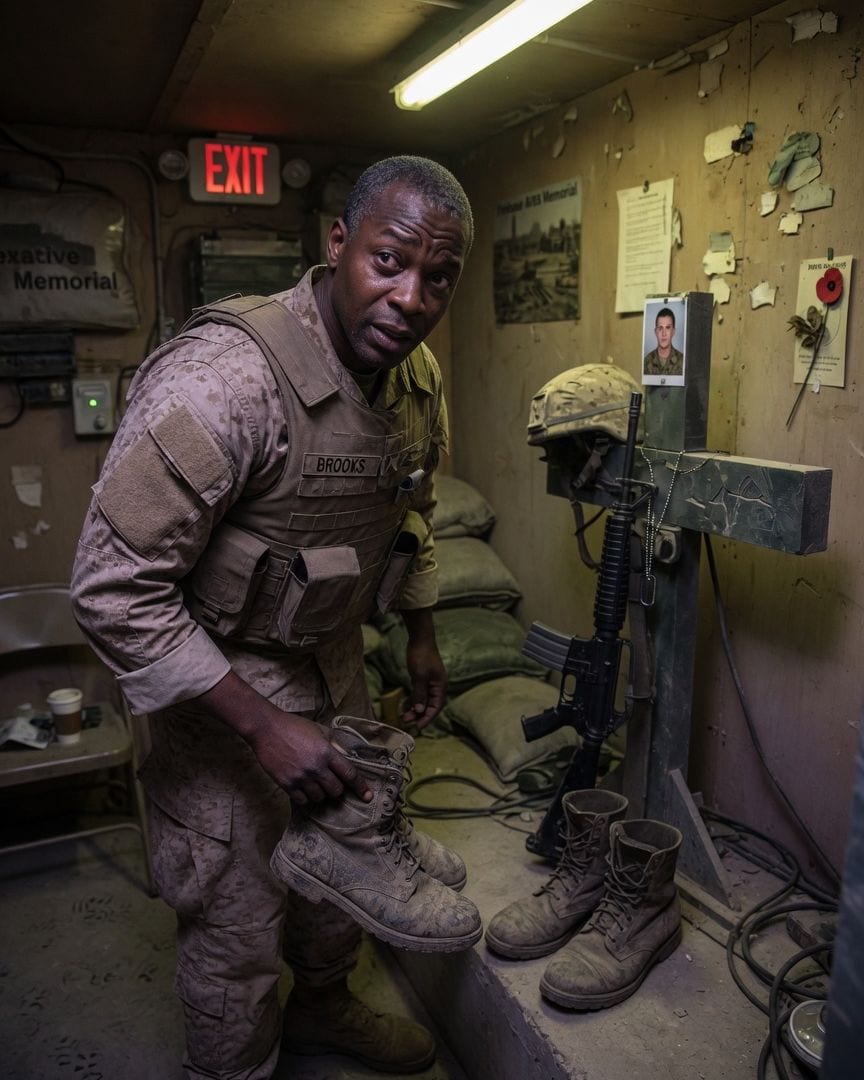
Private Marsh's boots kept reappearing at the Cold War memorial, worn deeper each dawn, even after Staff Sergeant Brooks put them away.
Staff Sergeant Samuel Brooks found the memorial alcove at Firebase Ares profoundly unsettling, a place usually for quiet reflection. For three mornings, he had returned Private Marsh’s mud-caked combat boots to the recruit’s bunk, only to find them back at the battle cross, laces open. Each time, the soles showed undeniable, deepening wear, as if the boots had walked for miles while Marsh slept soundly. Even new boots joined the nightly pilgrimage. His camera showed only static in the crucial hours, but the mystery deepened when Brooks discovered faint, ancient etchings of names and dates on the memorial rifle itself. What impossible ritual was taking place each night at Firebase Ares, and who was really moving the boots?
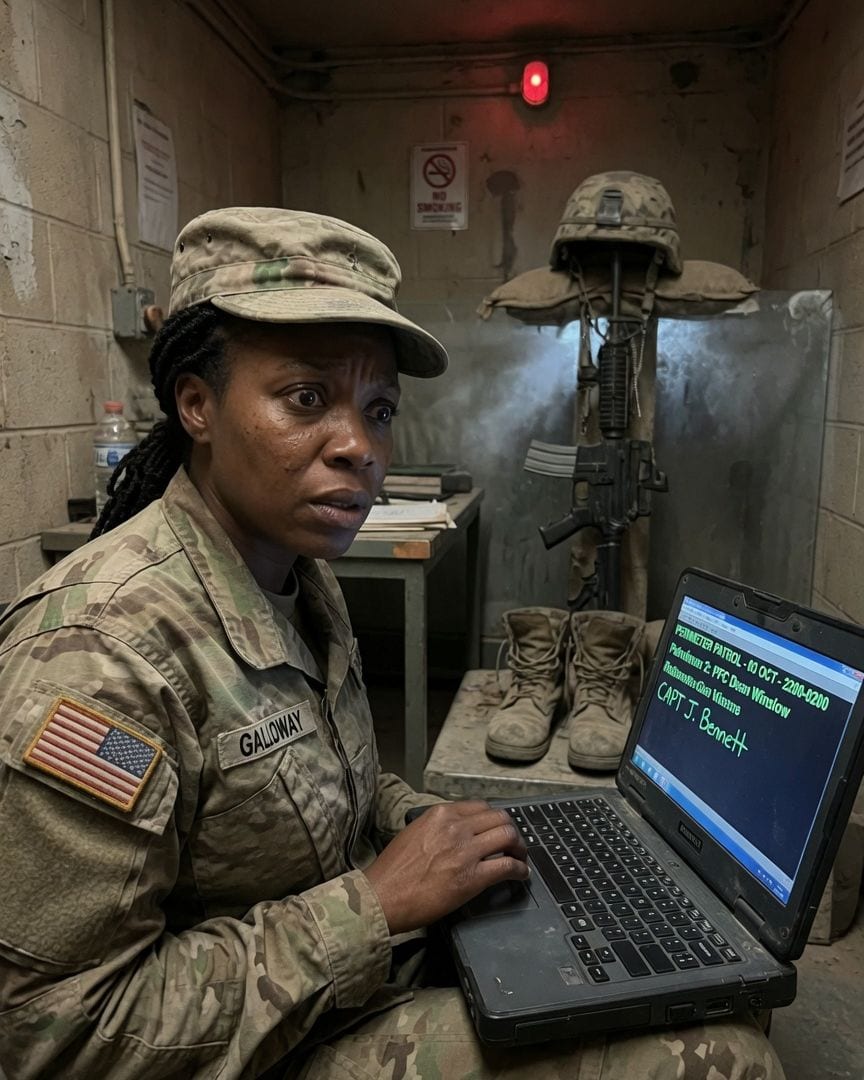
A sergeant found a dead soldier's dog tags on the memorial. He'd been MIA seventy years, but signed a patrol log last Tuesday.
Sergeant Constance Galloway, a squared-away NCO, maintained order at Firebase Alpha, where the desert sun baked the concrete and a solemn battle cross memorialized the fallen. After Private Marsh's rookie prank, Galloway found his combat boots inexplicably at the memorial, then reappearing more scuffed the next dawn. Marsh's genuine fear and the boots' unexplained travels pricked her professional doubt, leading her to investigate the memorial's history. Her search revealed the dog tags belonged to PFC Dean Winslow, declared MIA seventy years ago, yet his name appeared on the base's patrol log for last Tuesday. How could a soldier lost for decades be listed as completing a perimeter patrol just days ago?
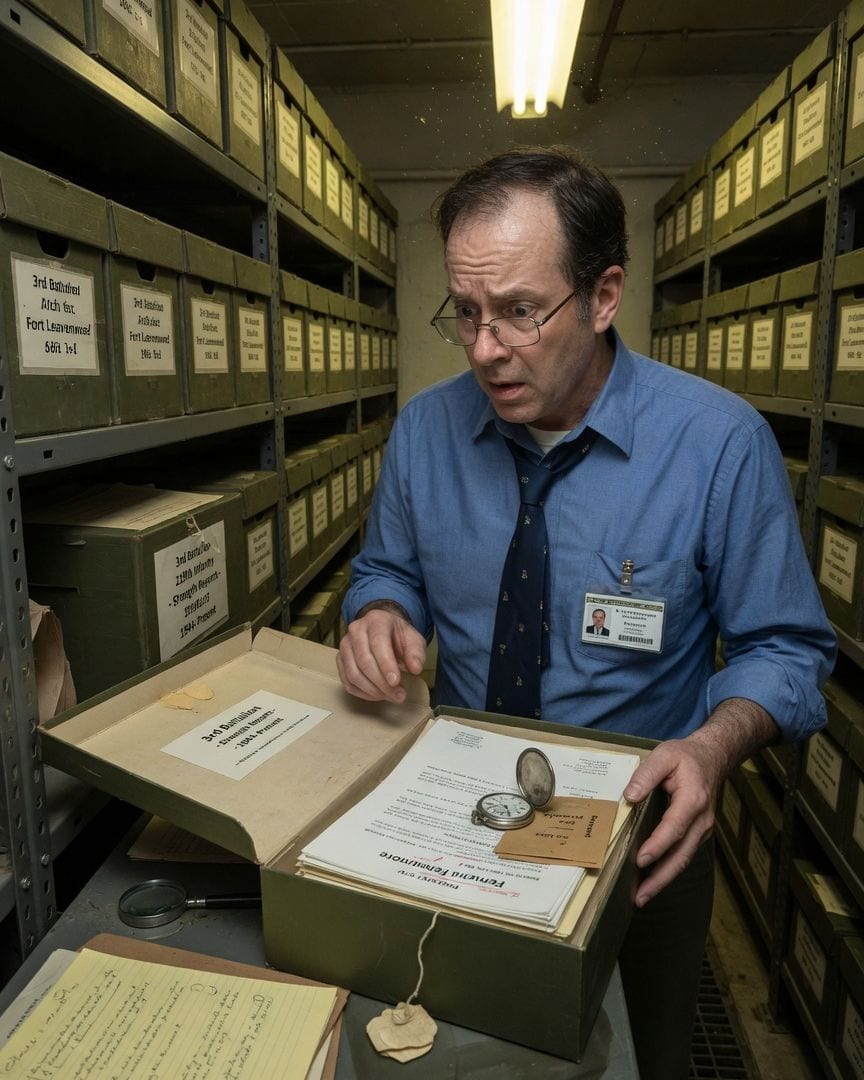
On his last Friday, an archivist finds his dead father's pocket watch in a Cold War ghost unit's file, ticking and warm.
Marcus Fennimore, a meticulous archivist, was on his final Friday at Fort Leavenwood's lineage vault, a place he knew intimately after thirty-one years. He stumbled upon twenty-two dust-sealed boxes for '3rd Battalion, 219th Infantry'—a unit that, according to every official record, simply did not exist. Inside, reports ran from 1944 to just last month, with the most recent listing his long-dead father, Kenneth Fennimore, as 'absent.' Marcus’s own father. Then, from a 1944 folder, he pulled his father's actual dog tags and a silver pocket watch, inexplicably warm and steadily ticking, freshly engraved with 'K.F. - Present for Duty.'
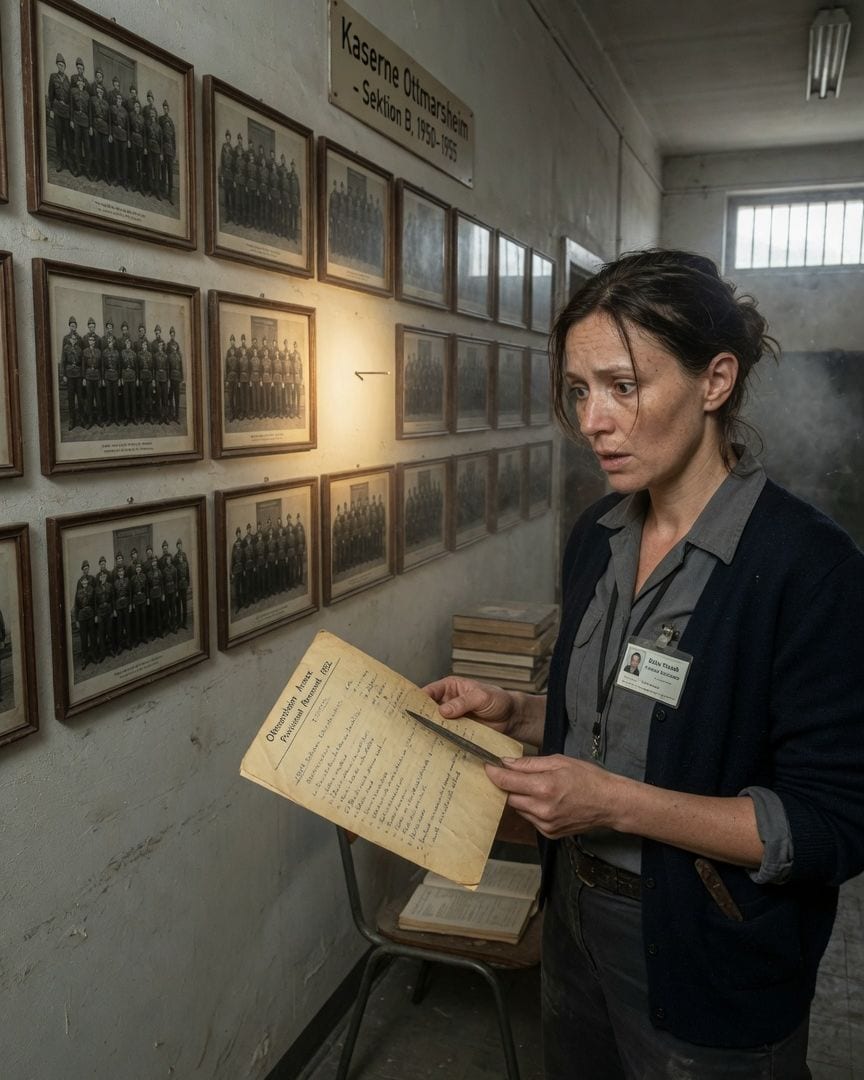
At a Cold War kaserne days from demolition, inventory clerk Delia Straub found a missing photo frame for a unit that never existed. Every soldier on the wall stared directly at its empty space.
Inventory clerk Delia Straub had eleven days to log every item at Kaserne Ottmarsheim before demolition crews arrived, turning history into rubble. Amid the dusty halls, she found a stark anomaly: a missing photo frame for the 604th Ordnance Detachment, a unit never officially stationed at the base. What made the empty space chilling was that every soldier in the surrounding photographs was looking not at the camera, but directly into that void. Delia's search for answers unearthed an unofficial manifest listing the 604th, with names of men officially declared killed in action years before. Who were these phantom soldiers, and why did their impossible record persist?
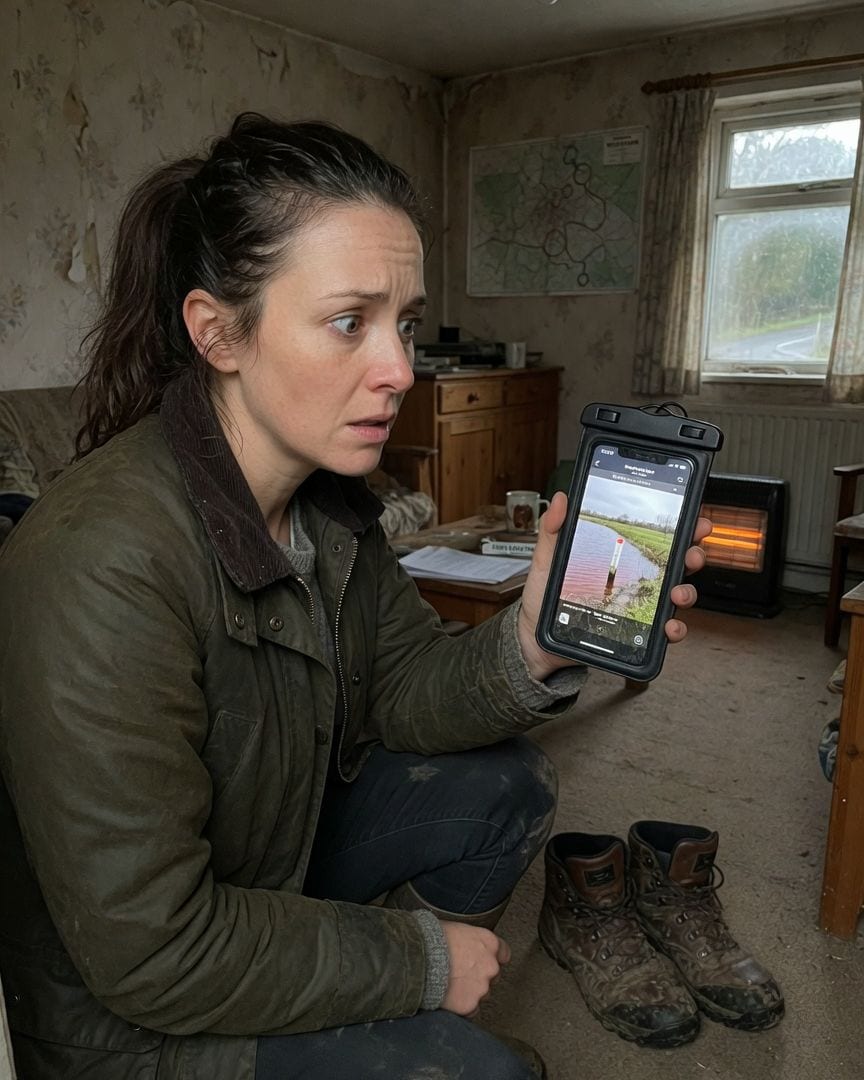
The Wykeham ford depth post read *above* the red mark yesterday, under an inch of clear water. The paint beneath it was bone dry. A walker crossed and hasn't claimed his boots.
At Wykeham ford, the water barely covered the depth mark, yet the paint beneath it was bone dry. Then Dean Sutton, a young man staying nearby, vanished, leaving only his car and a pair of neatly placed hiking boots. When I found his phone, it revealed he'd crossed the ford alive, minutes before he disappeared.
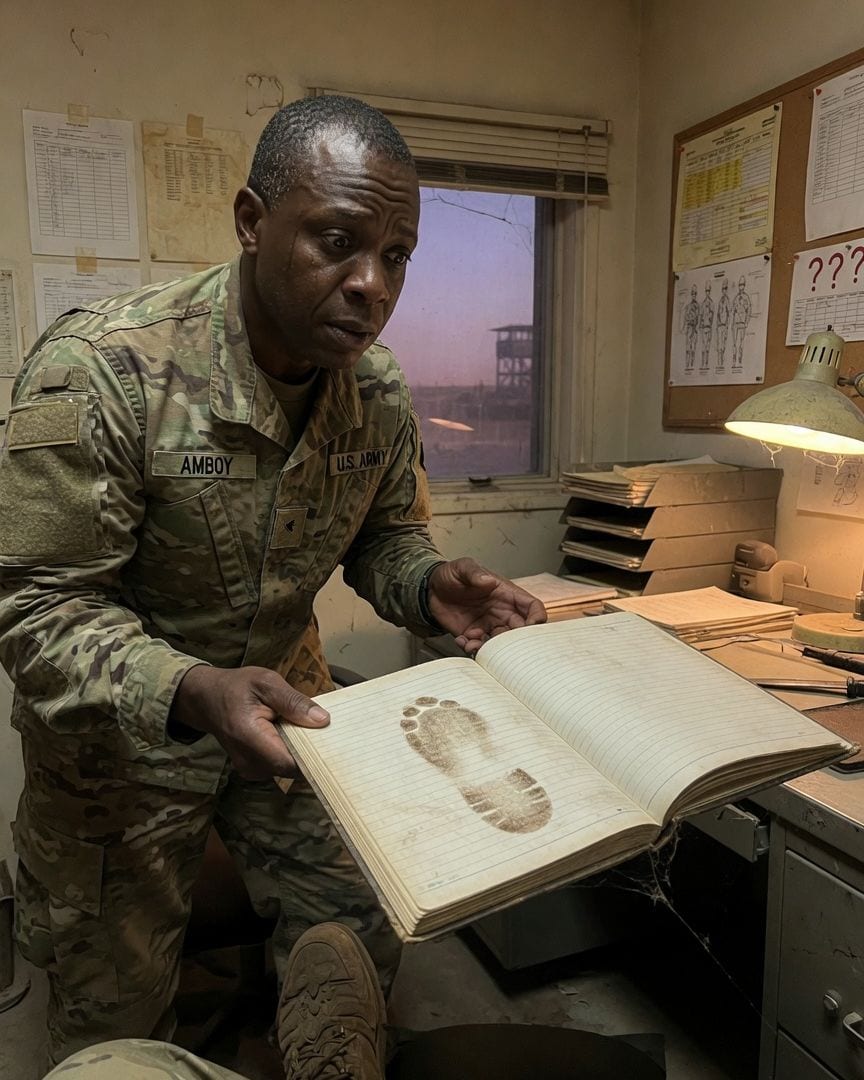
A Platoon Sergeant finds a hidden logbook, and on its last page, a bootprint matches his own sole exactly.
Sergeant First Class Nathaniel Amboy, a by-the-book NCO, was eager to complete his temporary assignment at the desolate FOB Kestrel. During a routine morning formation, his count came up one man over, a discrepancy he promptly reported to Captain Hughes, dismissing an old, superstitious warning. But that evening, after a correct count, an extra soldier shimmered into existence behind the last man, solid and silent, visible only to Amboy. As the phantom soldier persisted, defying all reason, Amboy's search for answers led him to a hidden logbook, where a bootprint on the last page matched his own combat sole exactly.