My subscription box thanked me for moving to a house in Oregon and shipped this month's parcel there. I've never been to Oregon — and the change was logged from my own phone while I slept beside it.
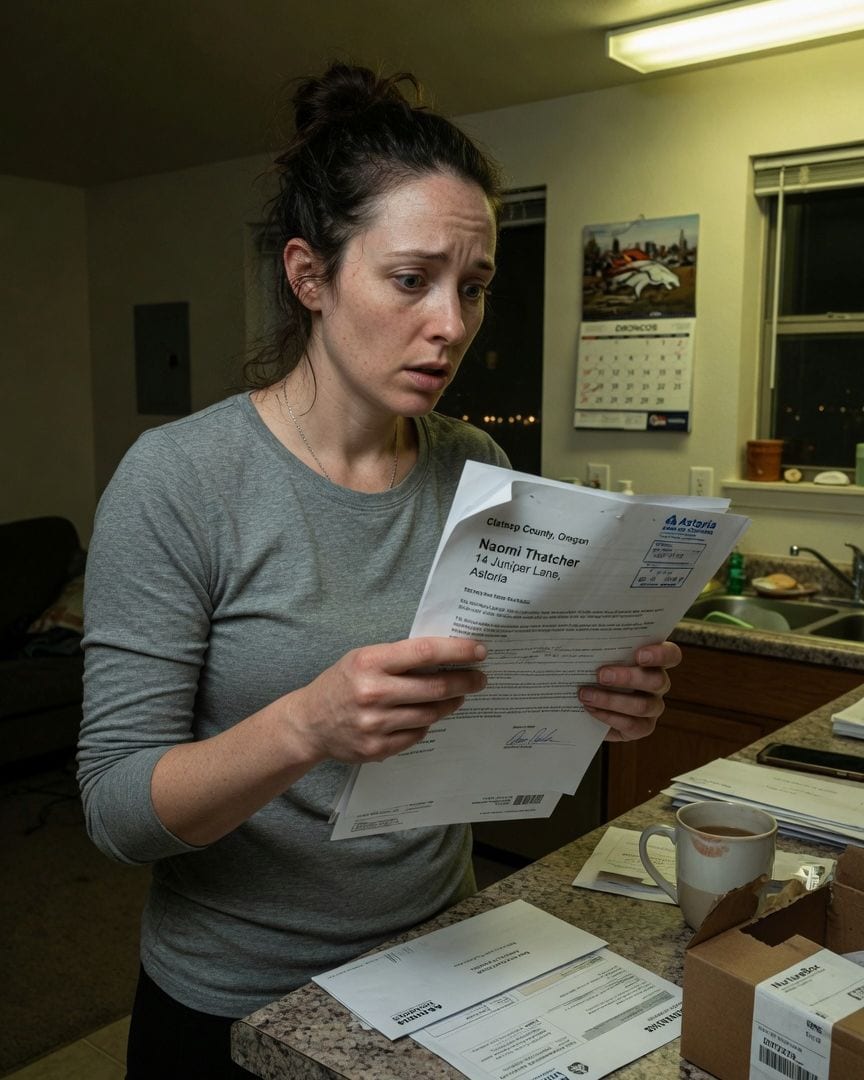
The email arrived at 8:03 AM, a bland, automated thing from ‘NurtureBox: Your Monthly Wellness.’ But the subject line snagged me: ‘Delivery Address Update Confirmed – Your Box is En Route!’
I blinked, still half-asleep, coffee mug steaming in my hand. En route? To where? My address was always the same. I clicked it open, a knot already forming in my stomach.
The first line thanked ‘Naomi Thatcher’ for updating her delivery address. The new location, bolded, was 14 Juniper Lane, Astoria, Oregon. I’d never set foot in Oregon. Never even scrolled past it on a map.
The attached tracking link clicked open to a page confirming delivery, complete with a timestamp from yesterday afternoon and a digitized signature.
It was a messy scrawl, but undeniably mine – or close enough that any automated system would accept it. My account details, accessed through a growing sense of panic, corroborated it. The address change had been logged at 2:17 AM.
My iPhone was the device. My iPhone, which had been on my bedside table, charging, while I lay in a deep, dreamless sleep. I lived alone. No one else had access. No one else even knew my NurtureBox password.
I called customer service, my voice tight. A perky representative named Brenda confirmed everything with an infuriating cheerfulness. 'Yes, Ms. Thatcher, the system shows a change request initiated from your device, followed by a successful delivery and signature.
Perhaps you forgot? Or a family member?' I bit back a sharp retort about living alone. Next month's box could be re-routed, she offered, but this one, my current box, was gone. Signed for. In Astoria, Oregon.
The phone felt heavy in my hand. The dread was a cold, hard knot in my stomach, growing tighter with every rational explanation Brenda dismissed. This isn't just wrong, a quiet voice inside me whispered. This is impossible.
I spent the next two days in a blur of frantic certainty and self-doubt. Surely, this was some elaborate, bizarre scam. I logged into every online account I possessed: banking, credit cards, investment portfolios, even obscure loyalty programs. Nothing.
Not a single unauthorized purchase, no new lines of credit, no strange withdrawals. My credit report was pristine, a boring testament to thirty-four years of fiscal responsibility. No connection to Oregon. Anywhere.
I even called my bank, my voice strained from explaining the same story again and again. Had any new addresses been linked? Any secondary accounts? Their systems, like all the others, drew a blank.
Just Naomi Thatcher, living in her perfectly ordinary apartment in Denver, Colorado.
I was almost ready to dismiss it. A glitch. A misdirected bot attack, perhaps. Then the mail arrived. Tucked between a gas bill and a grocery flyer was a crisp, official-looking envelope.
No return address, just a neat, stamped logo: 'Astoria Public Utilities.' My blood ran cold before I even saw the recipient. 'Naomi Thatcher,' it read, in an impersonal, sans-serif font. And beneath my name: '14 Juniper Lane, Astoria, OR.'
The exact address. My hands trembled as I tore it open.
This wasn't an email. This wasn't a digital footprint that could be hacked or spoofed. This was paper. Real. From a real utility company. It contained a generic 'Welcome to Your Neighborhood!'
letter, printed with stock photos of charming Oregon scenery. There were pamphlets about local recycling schedules and information on setting up internet service providers. And beneath it all, a water bill. A recent one.
Dated just last week, for services rendered at 14 Juniper Lane. The meter reading was current, an active tally of water consumption. Someone, or something, had been living there, using water, under my name.
The ordinary explanations, the comforting theories I’d clung to for forty-eight hours, shattered like cheap glass. A cold wind seemed to sweep through my apartment, raising the hairs on my arms.
I carefully opened the utility packet, my hands trembling so violently the stiff paper rustled like dry leaves. Beneath the water bill and service guides, nestled in a folded legal-sized document, was a property deed.
Not a copy, but an original. It was heavy, textured paper, formal and stamped, from Clatsop County, Oregon.
My eyes raced over the legal jargon, finally landing on the critical lines: 'Naomi Thatcher,' it stated clearly, 'is the legal owner of the property at 14 Juniper Lane, Astoria.' The date of purchase was prominently displayed: seven years ago.
And at the bottom, unequivocally, was my signature. My own messy scrawl, just like on the delivery confirmation, notarized and certified.
I stood in my kitchen, the fluorescent light above humming faintly, the crisp, official property deed for a house in Oregon clutched in my hand. My name, printed clearly, irrefutably, as the owner. The date on it, seven years ago.
A full life, already existing there, unknown to me, solid as the granite countertop beneath my elbow.
The deed was too real to dismiss. I held onto it like a talisman against madness, constantly re-reading the archaic language, hoping to find a flaw. Instead, the details only solidified.
I called the Clatsop County Clerk's office, feigning confusion about a 'family property.' A kindly-sounding woman named Cynthia answered. When I gave her the address, she typed for a moment, then confirmed the deed was legitimate, recorded seven years prior.
'You've been a resident for quite a while, dear,' Cynthia chirped, her voice oblivious to the icy tendrils coiling around my heart.
Next, I called Astoria Public Utilities again, asking specifically about the account history for 14 Juniper Lane. This time, I spoke with a different representative, who, after a moment, pulled up the file.
'Yes, Ms. Thatcher, your account has been active and in good standing since the property transfer seven years ago. All payments made on time.' I swallowed, my throat suddenly dry. 'And how are those payments made?'
I pressed, trying to keep my voice casual. The representative confirmed they were auto-debited from a checking account. She couldn't disclose the account number, of course, but she did say it was from a national bank.
A different one than my primary.
I went back to my credit reports, delving deeper, using every search parameter I could think of. I specifically looked for any accounts tied to that Oregon address or any obscure bank I might have forgotten. Still nothing.
It was a ghost life, meticulously maintained, running perfectly, but completely invisible to me. My fingers ached from typing, my eyes burned from staring at screens.
Driven by a desperate need for a visual, something concrete beyond official documents, I searched for images of '14 Juniper Lane, Astoria, OR' online. Google Street View loaded, slowly rendering a charming, if slightly dated, two-story house.
There were flower boxes on the windows and a porch swing. And in the driveway, parked casually beside a sprawling rose bush, was a dark blue sedan. My breath hitched.
It was identical to my own car, down to the small, crescent-shaped dent on the passenger-side bumper, the result of a clumsy encounter with a parking garage pillar last year.
I felt a profound, stomach-lurching violation, as if someone had taken a piece of my reality, my actual car, and mirrored it in this impossible other life. The world tilted on its axis.
My phone buzzed with an unfamiliar email address. I didn’t recognize the sender’s domain. The subject line was blank. I hesitated, a prickle of unease crawling up my spine, then opened it.
The body contained a single, chilling sentence: 'Some records are best left undisturbed.' My breath caught in my throat, hot and sharp. Who knew? How? This wasn't a scam. This was targeted.
I tried to reply, fingers shaking as I typed a frantic 'Who is this?' The email bounced back immediately: 'Address not found.'
That evening, the air in my apartment felt thick, heavy with unseen eyes. As I was researching obscure land ownership laws, trying to find some loophole, some exception to this terrifying reality, my home internet connection flickered.
The screen of my laptop went blank, then reported 'No Connection.' I waited, heart pounding, listening to the silence of my apartment, for it to reconnect. The room felt colder, the silence deeper.
When the internet finally stuttered back to life, a full five minutes later, I found my browser history for the past week — every single search for 'Oregon deed,' 'identity theft,' 'Astoria utilities,' 'Project Gemini' (a dead-end search I’d tried earlier) — completely erased.
Not just deleted, but gone. As if the activity had never happened. I checked my router logs; they were blank for the period of the outage.
The implication was clear, cold, and absolute: someone wasn't just watching me; they were actively intervening. They were monitoring my attempts to understand, anticipating my every move, and subtly countering my investigation.
I felt a profound sense of isolation, as if an invisible wall had sprung up around me, sealing me off from the normal world. The rational explanations had utterly failed.
I was being herded, my world shrinking, the possibilities of escape dwindling with every erased record.
That night, I started sleeping with my bedroom door locked, the click of the deadbolt a small, futile comfort I hadn't needed since I was a child. The shadows in my room seemed to deepen, watching.
The next morning, the exhaustion of constant vigilance finally broke me. I confided in Carl Rutherford, a senior colleague at my firm.
Carl, a man in his late forties with a perpetually rumpled suit and an encyclopedic knowledge of obscure public records, was the only person I trusted enough to tell this to.
I laid out the entire bizarre story, the subscription box, the deed, the mirrored car, the erased history, the chilling email. Carl, usually unflappable, listened with a growing look of concern etched into his usually placid features.
He stroked his neatly trimmed mustache, his gaze distant.
'This isn't typical identity theft, Naomi,' he said, tapping a pen against his chin, the sound unnervingly loud in the quiet breakroom. 'The coherence is too high. The paper trail is impeccable, yet completely separate from your primary digital footprint.
Someone isn't stealing your identity; they’re… replicating it.' He spent the next few days digging, his office door perpetually shut. He accessed specialized databases, government archives, and obscure legal journals that I wouldn't even know how to find.
He found whispers. Glimmers. Mentions of a deeply buried federal initiative from the 1970s, a 'Bifurcated Identity Initiative,' code-named 'Project Gemini.' The official cover, he explained, was 'national security contingencies.'
It was barely documented, almost mythical, often dismissed as an urban legend among the few who knew to look.
Carl eventually tracked down a retired civil servant, Albert Abbott, whose name appeared in a few declassified (and heavily redacted) documents related to Project Gemini.
Albert, a man in his early seventies with a neatly trimmed beard and an unnervingly calm demeanor, agreed to meet us at a quiet cafe on the outskirts of the city.
He didn't ask questions; he simply listened, sipping his herbal tea, completely unbothered by my increasingly frantic recounting of the last two weeks. The clatter of ceramic on ceramic was the only sound in the tense silence after I finished.
'Ah, Project Gemini,' he said at last, a faint, almost nostalgic smile playing on his lips. His eyes, a startling pale blue, seemed to hold decades of secrets. 'It was designed to create redundant civic profiles for certain citizens.
For continuity of services, you understand. A failsafe, in case a primary identity was compromised or… otherwise unavailable.' He paused, his gaze fixed on some point beyond my shoulder. 'Always meant to be dormant.
A quiet life, running in parallel, waiting in the wings.'
I pressed him, my voice barely audible above the gentle hum of the cafe. 'But how? Why my name on a deed I never signed? A car I never bought?'
Albert simply shrugged, taking another slow sip of tea. 'The system is quite robust. It generates necessary records. It's all legal, just… not public. You’ve been a Gemini Subject since birth, Ms. Thatcher. Many are.
The system is quite old, quite far-reaching.'
The words hung in the air, cold and definitive. The cafe, with its gentle jazz music and clinking teacups, suddenly felt alien, a thin veneer over something utterly monstrous.
My Oregon life wasn't a mistake; it was an intentional, decades-old creation, a 'failsafe' for a life I didn't know I had.
I stared at Albert, a thousand questions forming in my mind, each one more terrifying than the last. Carl, silent beside me, looked equally stunned. 'So, this Oregon profile, Alpha-7, it's… dormant?'
I asked, my voice barely a whisper, the name 'Alpha-7' feeling like a brand. Albert gave me a small, unsettling smile, a glint in his pale blue eyes. 'Most are. They exist in a sort of stasis.
But sometimes… system checks, re-routing protocols, unexpected contingencies. Things get activated, or partially activated.' He glanced at Carl, a knowing look passing between them that I couldn't decipher.
He then gestured for us to follow him to his car, a non-descript grey sedan parked a block away. From the trunk, he retrieved an old, secure laptop.
It looked like a relic, but when he fired it up, the screen glowed with a stark, green-on-black interface I didn't recognize.
He connected it to a network through a small, humming device, and the air around us seemed to prickle with invisible energy.
He typed a few rapid commands, his fingers surprisingly agile for his age, and a list scrolled into view. 'Gemini Subjects,' the header read, chillingly impersonal.
My eyes scanned down, quickly finding my own name. 'Naomi Thatcher, DOB [my actual date of birth], Primary Profile, Active.' My breath hitched. Then, just below it: 'Naomi Thatcher, DOB [my actual date of birth], Gemini Profile Alpha-7, Active.'
That was the Oregon profile, the one that had been sending me water bills and accepting my subscription box.
But then, a third entry scrolled into view, making the blood drain from my face, a cold rush washing over me that made my vision swim: 'Naomi Thatcher, DOB [my actual date of birth], Gemini Profile Beta-9, Active.'
The system wasn't just creating a parallel identity. It was creating multiple active profiles for me, each with its own designated location and history, a record that simply could not be. My world, already fractured, splintered further.
Albert leaned back against the car, his gaze fixed on my face, watching my reaction with an unnervingly detached curiosity.
'It seems Beta-9 is scheduled for full activation next month,' he said, his voice as calm and even as if discussing the weather. The laptop screen, a window into an impossible truth, hummed softly in the fading light.
My mind reeled, a maelstrom of terror and disbelief. Carl looked utterly shell-shocked beside me. 'Full activation?' I demanded, my voice raw, rising despite myself. 'What does that even mean?'
Albert Abbott remained completely unperturbed, his pale eyes reflecting the green glow of the laptop screen. He simply clicked a few more keys, and the screen shifted again, displaying a complex, sprawling timeline.
'It means the system will begin a relocation protocol,' he explained, gesturing vaguely at the luminous data. 'Your Beta-9 profile will become your primary. Your current life… will be superseded.' He scrolled through the timeline, displaying my life from birth.
Each milestone – my first day of school, my college graduation, my first job – had corresponding, subtly different entries for Alpha-7 and Beta-9. They branched out like twisted, hidden roots.
'Your alternate profiles have been quietly 'seeded' with minor life events and data for decades,' Albert explained, his voice a flat drone of factual information. 'The system ensures a seamless transition. You won't remember your old life, of course.
The personality imprints are… adjusted. You'll simply wake up as Beta-9, in Beta-9’s designated location, with Beta-9’s memories and history already integrated. It's quite elegant, really.'
He pointed to a specific date on the timeline, circled in red. 'Your Beta-9 profile has a new name, a new profession, and a new 'family' structure waiting for you. It's all in the records. Decades of preparation.'
He looked up from the screen, his gaze meeting mine directly, completely devoid of empathy or malice. 'The subscription box incident was merely a system test, a routing error that inadvertently exposed Alpha-7. A minor anomaly.
Beta-9, however, is a full-scale transition. The process is irreversible once initiated.'
The quiet confidence in his voice, the detached certainty, was far more terrifying than any threat.
He wasn’t threatening me; he was simply stating a fact, an inevitable, bureaucratic process that had been set in motion before I could even walk.
My entire existence felt like a meticulously crafted illusion, about to be wiped clean and replaced with another, equally false, one. The hum of his laptop seemed to fill the entire world.
A cold, crushing despair settled over me. Albert wasn't offering help; he was simply explaining my fate, the mechanism of my own disappearance. There was no escape in his words, only chilling inevitability.
I stood abruptly, the sudden movement rattling the old sedan. 'I have to go,' I choked out, the words barely escaping my throat, turning and running from Albert’s car without another thought.
I didn’t know where I was going, only that I had to be away from him, away from that laptop and its monstrous truths.
I fumbled for my phone as I ran, desperate to call Carl, to warn him, to ask him for help, but the screen remained stubbornly black. Dead. I swore, a choked sob catching in my throat.
I tried to start my car, but the engine only clicked uselessly, a pathetic, dying sound. Panic, sharp and metallic, clawed at my throat. It wasn't dead before. It couldn't be. They had cut me off.
I looked up and down the quiet suburban street. Two blocks down, parked discreetly under a weeping willow, was a dark, unmarked sedan.
Its windows were tinted, reflecting the dull afternoon light, but I caught a faint glint, a ripple of movement, behind the glass. They knew. They were here.
My heart hammered a frantic rhythm against my ribs, a trapped bird desperate for freedom.
I bolted, running through the quiet suburban streets, heedless of startled neighbors or barking dogs. My lungs burned, air rasping in and out, but I couldn't stop.
I ran until my legs ached and my vision blurred, eventually reaching the public library downtown, its familiar red brick facade a beacon of sanctuary.
My hands shaking, I found an available computer terminal, its dull grey screen a contrast to Albert's glowing green interface. I logged into a temporary guest account, my fingers flying over the keyboard.
I quickly drafted an anonymous email to a journalist I knew, a dogged investigative reporter I’d met through work. I attached what I had: frantic, blurry screenshots of Albert’s 'Gemini Subjects' list and the terrifying timeline from my phone.
Miraculously, my phone had briefly flickered back to life, just long enough for me to capture the images before dying again, definitively this time.
I hit send, a desperate Hail Mary hurled into the digital void, praying it would be found, that it would matter, that it could somehow expose this invisible, decades-old horror.
Then I fled the library, melting into the city's evening crowds, leaving my entire known life behind, hoping against hope that the email would be discovered, that someone would listen, that I could outrun a system that had been grooming me for another life since before I was born.
The city lights seemed to mock my desperate flight.
Naomi Thatcher was gone. 'Alice Harlow' was my new ghost. I lived off the grid for weeks, a phantom moving from motel to motel across state lines, checking burner phones constantly, always looking over my shoulder.
Each day, I scoured the news, searching for any mention of a 'Project Gemini' or a reporter breaking an explosive story. Nothing. The journalist never replied to my desperate email.
The silence was deafening, the lack of outrage its own kind of horror.
I risked checking my old bank account online from a public computer; it was frozen, then quickly closed.
My apartment building’s website listed my old unit for rent, photos of an empty living room, the one I had furnished, the one where I had lived.
It was as if Naomi Thatcher had simply ceased to exist, replaced by a blank space in the world’s records. The system had won, quietly, efficiently.
I was a ghost, haunted by the knowledge of what I had almost become, and what I still might. Every shadow felt like a watcher, every new face a potential handler.
Sleep was a luxury I rarely afforded myself, constantly waking with a jolt, expecting the tap on the shoulder, the gentle, unbothered voice telling me it was time for Beta-9.
Weeks later, 'Alice Harlow' rented a small, isolated cabin in a forgotten corner of rural Vermont, far from any major city, hoping to finally disappear.
The quiet woods, the cold mountain air, the absence of internet access and the comforting distance from the surveillance of cities, seemed like a true balm for my frayed nerves.
I lived simply, growing my own vegetables in a small patch of earth, chopping wood for the stove, trying desperately to forget what I knew. To just exist.
One afternoon, a piece of junk mail arrived, tucked into my battered mailbox at the end of the long, winding dirt road. It was a welcome packet. My breath caught in my throat, a familiar, icy fear gripping me instantly.
'Green Mountain Power,' the logo read, addressed to 'Alice Harlow' at my new, supposedly secret address. It was the exact same design as the Astoria packet, the same heavy, impersonal paper, even the identical sans-serif font. The dread was absolute.
My fingers, trembling violently, tore it open. The first thing I saw, beneath the generic service brochures and local tax information, was a property deed.
Legally binding me to the cabin I’d just moved into, dated the week before, a clear mark of ownership. My signature, a faint ghost of itself, was already there, undeniably mine. They had found me. They had always been here.
The small town librarian, Janet Donovan, watched the new resident, 'Alice Harlow,' sign for a package delivered to the library, a faint, wrong smile on Alice's face as she thanked her.
'Such lovely weather we're having,' Janet offered, a polite, local pleasantry. Alice's eyes seemed to glaze over for a second, then refocused with a quiet, unsettling certainty. 'Yes,' she said, 'it is always lovely here.'
If this one got to you
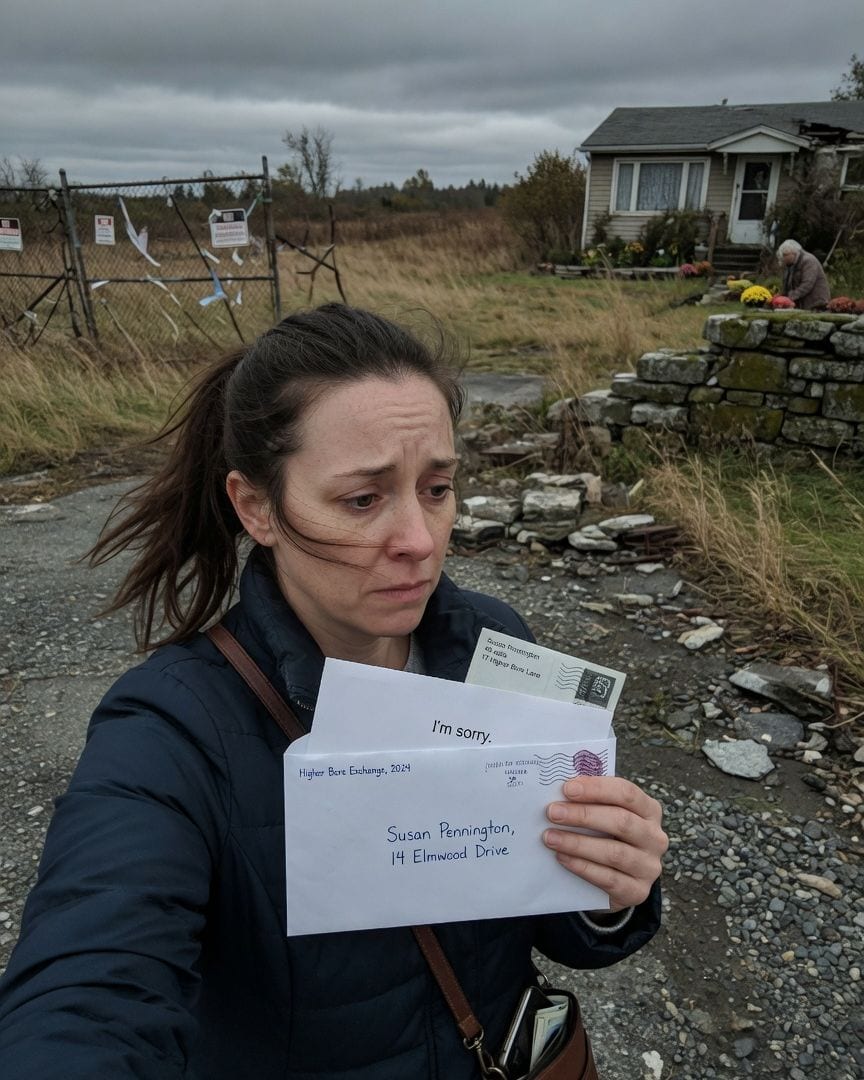
My phone bill listed forty calls made at 3:14 AM to a house demolished in 1990. The paper bill came from a flattened building. My name is on it.
I stared at my phone bill, my morning coffee forgotten. It detailed forty calls, each at 3:14 AM, to an address I knew was a vacant lot where a house had stood decades ago. But the real dread began when I saw the bill's return address: a telephone exchange flattened years before.
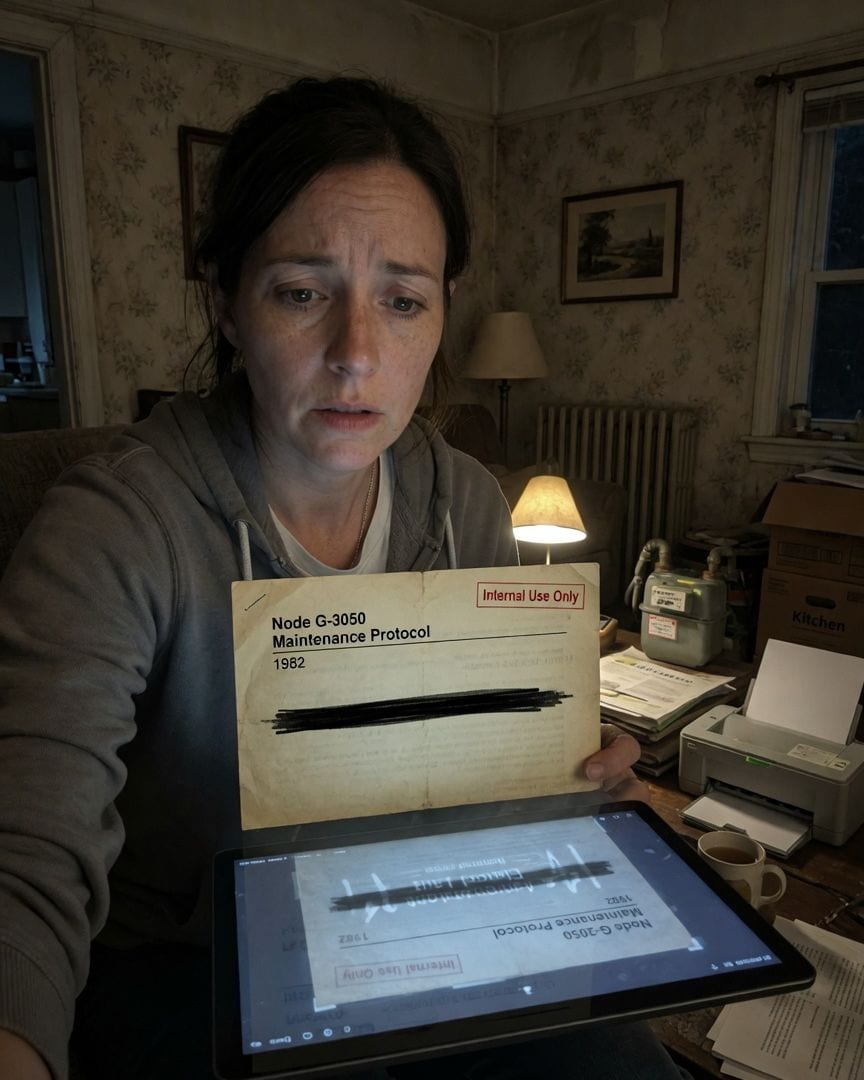
A different tenant every decade since 1949, each one gone — yet our gas meter's final reading comes back identical every time, though the house sat empty in between.
My new house at 14 Elmwood Lane was meant to be a fresh start, a normal home. But the gas bill was wrong. It showed my account, G-3050, active since 1949, with a meter reading of 3050 that had never changed, even when the house stood empty for decades.
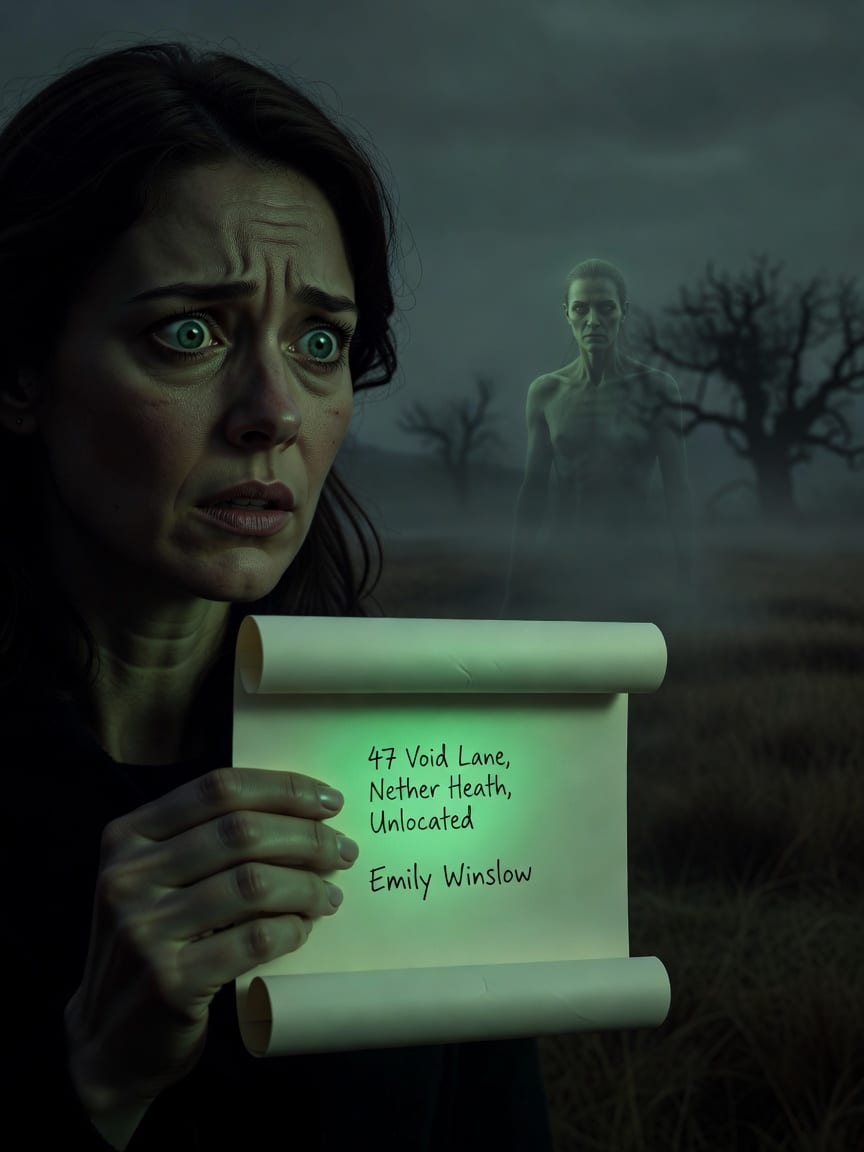
My change-of-address card arrived today. It said I'd moved to a house I'd never seen, on a street that didn't exist. And it was signed with my own hand, a month from now.
A crisp, cream-colored card on my kitchen counter informed me I'd moved to 42 Willow Creek Lane, an address that didn't exist. The signature was my name, Emily Winslow, a chillingly precise ghost of my own handwriting. But then I found an old 1947 ledger, listing 42 Willow Creek Lane and a signature identical to the one on my card.
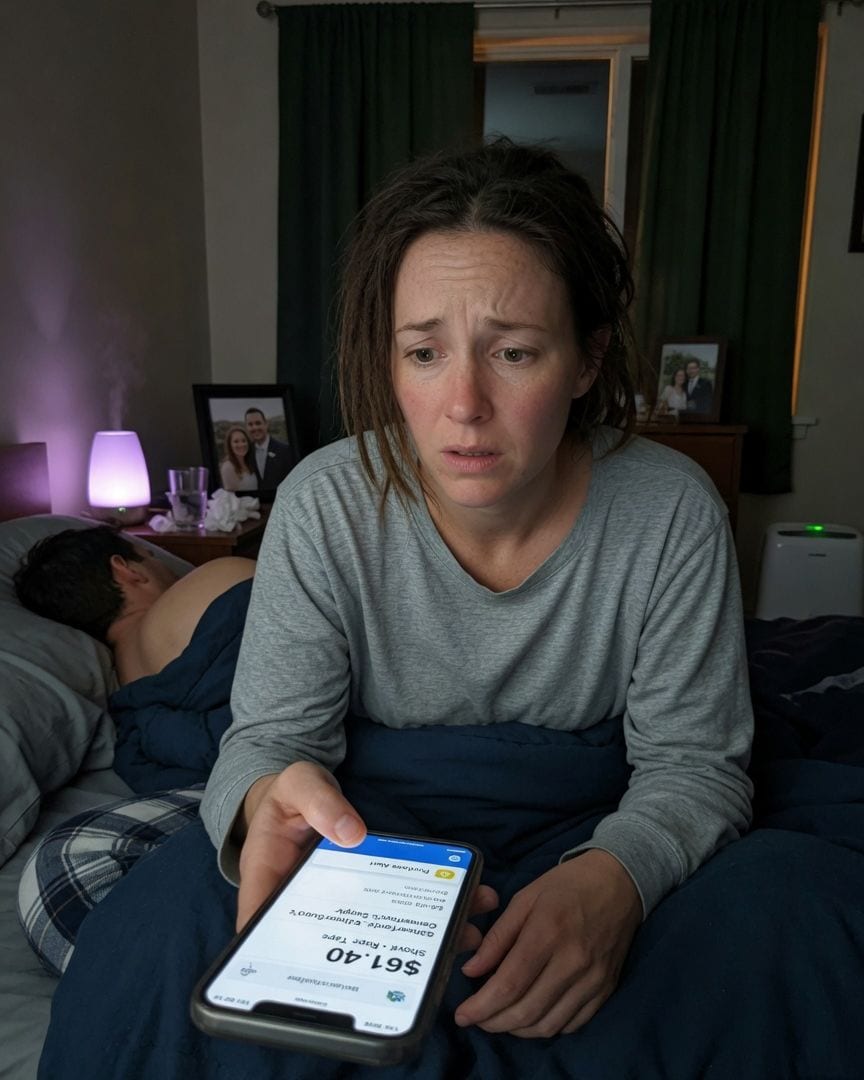
My bank app pinged a hardware store purchase three states away: shovel, rope, duct tape, 11:20pm. I was home in bed.
My bank app kept buzzing late at night with strange purchases for things like shovels and rope from a hardware store three states away. The charges were tied to a loyalty program I'd never heard of. But the true dread hit when the store owner showed me a loyalty card application with my own signature, dated eight months ago when I was home sick.
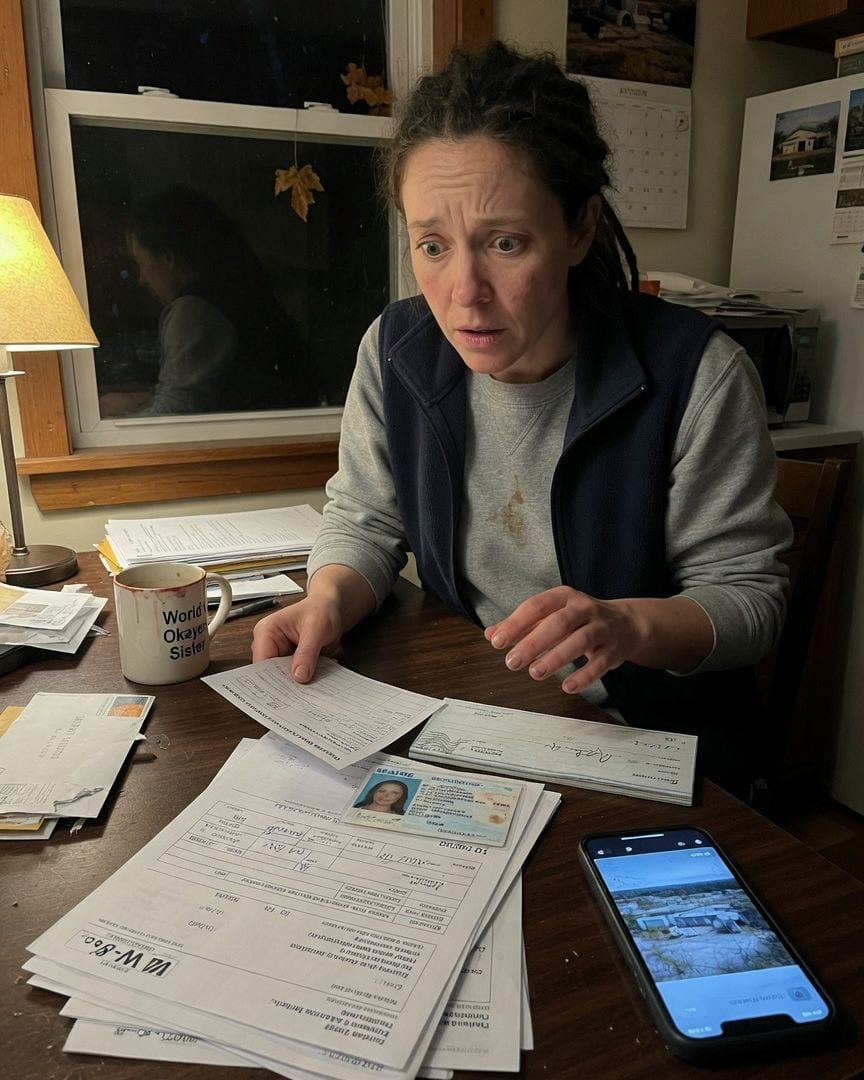
My own signed timesheets show me working warehouse shifts in Phoenix for four months. I've been in Maine the entire time.
I was going about my normal life in Maine when a W-2 form arrived in the mail. It showed substantial income for warehouse shifts in Phoenix, a city I'd never visited, under my exact, uncommon name spelling. But the most chilling detail was the signature on the timesheets, an undeniable match for my own hand.
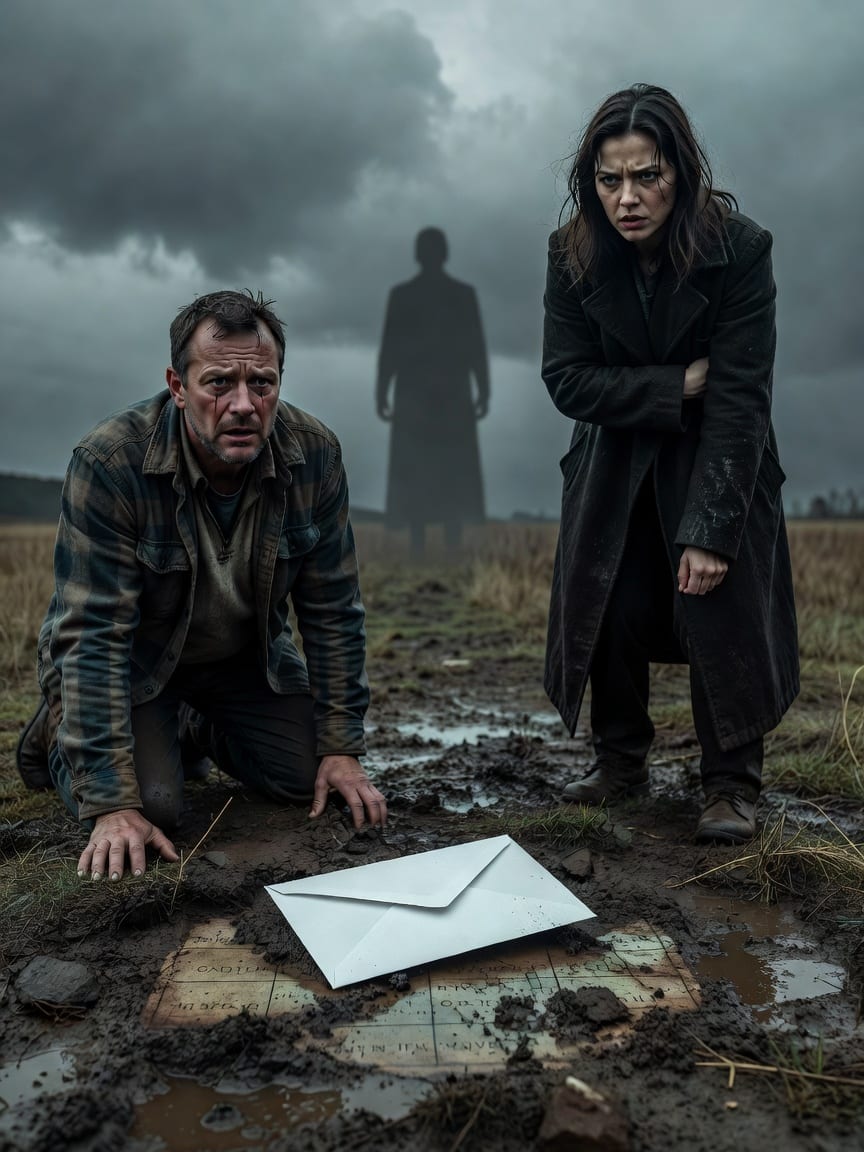
My mail carrier delivers polling cards to Nine Acre Field. It floods, they say. The tithe map shows nine family plots there.
As the new county archivist, I was used to quiet days poring over dusty records. But then I found an empty field, Nine Acre, was receiving current-year polling cards and utility notices for nine distinct addresses. When I investigated, I unearthed a perfectly crisp, current-year tax bill, buried in its soil, surprisingly warm against my fingers.