Three years ago, my security wand logged a full patrol at 1:11 AM. I was working in Arizona.
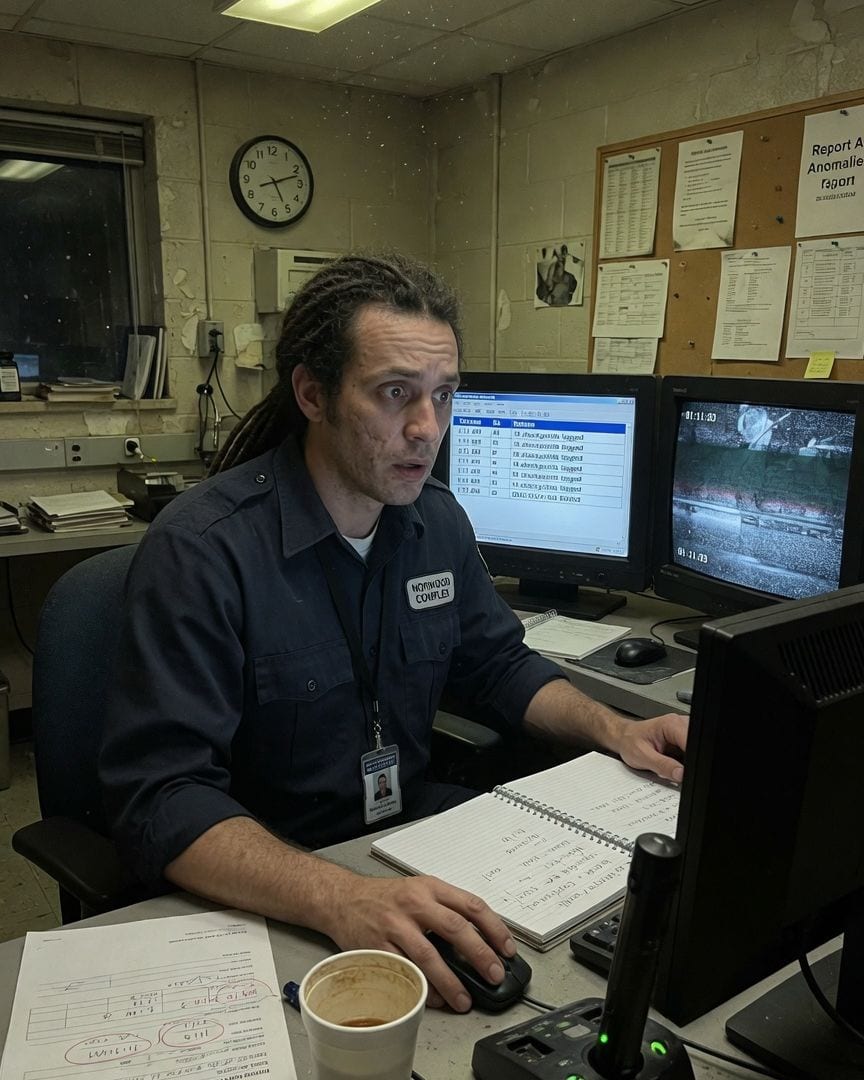
The paperwork for the 3 AM log was always the most tedious part of my shift at the Norwood Complex. That particular night, a Friday, felt heavier than usual, the hum of the old building settling deep in my bones.
I'd plugged my security wand into its dock station right at 1 AM, watching the little green light wink on, a silent promise of a charge for the morning shift.
Then I’d spent the next two hours wrestling with an incident report about a faulty sprinkler head on Level 3. No rounds, just me and the drone of the old server room.
When the dock station finally chirped, signaling the morning’s security log readout, I pulled it up, expecting the usual clean data: my name, my eight PM check-in, the sprinkler report entry. But my eyes snagged on Friday’s 1:11 AM entry.
It was an anomaly. All fourteen checkpoints, from the main lobby to the rarely used loading docks, were logged as hit. In under four minutes. A route that, on a good night, jogging, took me at least twenty.
My heart gave a cold thump. I remembered explicitly plugging my security wand in. I’d watched that green light. My wand. My ID. The log, however, insisted every tap was mine. Every single one.
I scrolled back, double-checked the date and time, my fingers cold on the mouse. It was undeniably my ID, my wand, right there. The numbers stared back, an impossible truth. I tried to rationalize it, to find an explanation.
A system glitch, maybe. A timestamp error, a database hiccup. But the internal clock of the wand was synced nightly with the central system. It should be accurate. It always was.
The silence of the empty security office, usually a comfort, pressed in around me, now less peaceful, more watchful.
The next night, I decided to re-trace Friday's impossible 1:11 AM route. I carried my security wand, but I didn't log anything.
I just walked, the rubber soles of my boots squeaking softly on the polished linoleum, the only sound apart from my own breathing. I moved through the empty hallways, the fluorescent lights humming overhead, past the closed office doors.
The routine felt normal, but my mind was elsewhere, counting checkpoints, estimating impossible timings.
At Checkpoint 7, the rarely used loading dock door on the far side of the complex, I paused. This area was always dusty, undisturbed, a kind of forgotten corner. But tonight, something was different.
There was a faint, almost invisible, smear on the metal button of the checkpoint. It was like something wet and cold had brushed it, then evaporated, leaving behind a subtle residue.
It was too low to be my hand, and oddly shaped, not a fingerprint, more like… a swipe. I touched it, feeling a distinct, lingering chill, despite the warm night air.
It wasn’t water; it felt… organic, somehow, but unlike anything I could place. The sensation crawled up my arm.
I pulled up the security camera feed for that checkpoint, dating back to Friday, 1:11 AM. The low-res, grainy footage played, showing the empty loading dock.
Then, precisely at 1:11 AM, the screen dissolved into about thirty seconds of pure, buzzing static. White noise and pixelated snow. Then it cleared, showing the same empty dock. No person, no object. Just the static.
But the log insisted the tap happened.
Back in the office, I pulled up my own wand's internal data, hoping for a more granular detail, some explanation within the device itself.
The 1:11 AM slot for Friday was there, marked as 'complete,' just as the central log had said. But the data packet for the tap itself was strangely blank.
Not an error message, not a corrupted file in the usual sense. Just a few meaningless characters, a string of symbols that didn't resolve into any data, like an empty space where detailed information should have been.
It was there, but it wasn't.
Back in the security office, the glowing screens seemed to mock me. I accessed the deeper system logs, cross-referencing my wand's unique ID – a long string of alphanumeric characters specific to my device.
I searched for other instances of this 'impossible round' at 1:11 AM. The results made my stomach clench.
Not only were there more impossible logs attributed to my wand from dates I knew for a fact I wasn’t working, but one entry in particular made the air leave my lungs.
A 1:11 AM round, all fourteen checkpoints, logged three years ago to the day. Three years ago. I wasn't even living in this state three years ago. I was in Arizona, working at a different complex, a different life.
The screen flickered, displaying my wand’s unique ID linked to a ghost in the machine, a phantom presence. Next to it, where the log should have detailed the wand’s internal memory, was a string of corrupted, unreadable data.
The silence of the night shift felt suddenly vast and cold around me.
I started digging, using my off-shifts to pore over old digital archives and even a few dusty physical logbooks stored in a back room, a place most people forgot existed.
The records stretched back decades, a testament to the complex’s age. I found similar anomalies, though less frequent, scattered through the records of previous guards.
Some logs mentioned 'equipment malfunctions' around 1:11 AM, or 'unexplained system errors' that had been dutifully noted, then seemingly filed away and forgotten. No one had ever connected the dots. Until now.
I approached Brandon Brooks, my day shift supervisor, a no-nonsense man who’d been with the complex for years. He was the kind of person who dealt in facts and figures, not "ghosts in the machine."
I showed him the impossible logs, trying to keep my voice even, rational. "Look, Brandon," I said, pointing to the 1:11 AM entries. "This is my wand, but I wasn't here. This round, it's impossible."
Brandon squinted at the screen, then waved a dismissive hand. "Ah, that," he said, forcing a chuckle that sounded wrong. "Just a system quirk, Claire. An old ghost in the machine. Been happening for years.
We just learned to ignore it." He suggested my wand might be faulty, or maybe the system sometimes 'ghosts' old data, pulling up defunct entries.
But his eyes didn't quite meet mine, and there was a forced cheerfulness in his tone that didn't fit his usual gruffness.
He was brushing it off, but something in his posture, the way he shifted his weight, told me he knew more than he was letting on.
Undeterred, I focused on the 'corrupted data' I’d found—the blank spaces, the meaningless characters. It was too specific to be random. I tried to isolate the corrupted packets, seeing if they held any pattern, any hidden message.
They didn't resolve into anything readable. But I noticed something else: every single instance of a 1:11 AM impossible round, stretching back years, was accompanied by these same, unique data fragments. It was a signature.
Not an error, but an imprint. I realized I needed to talk to someone who’d been here even longer, someone who might have seen this 'quirk' before Brandon, someone less likely to brush it off as a simple glitch.
Someone who'd seen things through.
My investigation began to attract unwanted attention. I felt it, subtle at first, a prickle on the back of my neck.
While reviewing more old shift schedules in the records office—a quiet, dusty space tucked away on the ground floor—I noticed Vivian Pennington, the elderly, quiet records clerk, watching me from her desk.
She’d been at the complex since before I was born, a fixture. She just sat there, her fingers hovering over her ancient keyboard, a faint, unreadable smile playing on her lips.
Vivian didn't say anything, didn't call out my name, just observed. Her gaze felt heavy, like a weight.
Later that night, as I was about to head home, walking across the near-empty parking lot, I found a small, handwritten note tucked under my car's windshield wiper. The paper was rough, ordinary.
It simply read: 'Some things are better left alone. The night has its own rules.' There was no signature, no discernible handwriting, just plain block letters, neatly printed. A chill ran down my spine, sharper than the cool night air.
Someone knew what I was doing. Someone didn't want me to find out more.
The next day, I confronted Vivian, subtly at first. I walked into her office, ostensibly to ask about an old payroll record. "Vivian," I said, trying to sound casual, "have you ever heard anyone else ask about strange logs?
Security issues, maybe, from way back?"
Vivian calmly sipped her tea, her eyes, usually placid, crinkling at the corners in that faint, unreadable smile. "Oh, people ask," she said, her voice soft, barely above a whisper. "Newcomers always do. They see things, hear things.
But they learn. They always learn." There was a knowing quality to her tone, an almost parental quality, that set my teeth on edge. It wasn't a threat, but it was far more unnerving.
Vivian wasn't just a witness; she was an observer, perhaps even a guardian of the 'rules' the note had spoken of.
I realized the danger wasn't just in the impossible logs; it was in the quiet complicity of those who'd been here too long, those who simply… knew.
Unnerved and fueled by Vivian’s cryptic words, I decided to confront her directly. I walked into Vivian’s quiet office, the stack of printouts—the impossible logs, my own wand's corrupted data—firmly in hand.
The fluorescent lights hummed, casting a pale glow on her desk, cluttered with a lifetime of paperwork. "Vivian," I began, my voice firm, trying to cut through the placid calm she exuded, "what exactly happens at 1:11 AM?"
Vivian looked up, her expression unperturbed, as if she’d been expecting the question for decades. "The night shift," she replied, her voice even, devoid of inflection, "has always had its… routines."
I pushed, slamming the printouts gently on her desk. "Not my routine. An impossible routine. A routine logged under my name, when I wasn't even here. For years. Explain that."
Vivian sighed, a sound like rustling paper, as dry and ancient as the records she kept. She turned to her computer, its screen a relic itself, the monitor thick and yellowed.
Her fingers, arthritic but precise, typed a complex password, a rhythm that suggested long practice. An old, forgotten digital archive opened, its interface dating back decades, a contrast to the sleek systems I was used to.
"You want to know what runs the night, dear?" Vivian asked, a faint, unsettling smile playing on her lips, a smile that didn't reach her eyes.
She navigated through folders, an arcane directory of dates and names, pulling up a meticulously kept database. "This isn't just your wand, Claire. This is everyone’s."
The screen filled with entries: dozens of impossible 1:11 AM security wand logs, attributed to various night guards – Brandon Brooks, Patrick Winslow, even a Carol Fletcher from the 90s – stretching back to the 1980s.
Each entry detailed the same impossible speed, the same impossible 1:11 AM timestamp, always under the name of the current night guard, but often when they were off shift or not yet employed.
Each entry also contained the same corrupted data packets I had found in my own wand logs, a signature I now recognized instantly.
"It just… happens," Vivian said, her voice flat, devoid of emotion, as if discussing the weather. "Always has. Always will."
I stared at the screen, a cold dread seeping into my bones, chilling me far deeper than the air in the loading dock.
The impossible smear on the checkpoint button, the static on the camera, the inexplicable cold—it all snapped into sickening focus. This wasn’t a glitch. This was a pattern. A routine.
And it had been going on for longer than anyone could remember.
My mind raced, connecting the dots. The entity, whatever it was, wasn't just observing or interfering; it was mimicking. It was maintaining a presence, a phantom routine, through the system itself. And Vivian, calm and unbothered, knew all about it.
She hadn't just observed; she had kept watch.
"Why?" I whispered, my voice barely audible, the word catching in my throat. "Why keep records? Why not stop it?"
Vivian closed the ancient digital archive with a soft click, her face unreadable, her eyes fixed on me. "Stop it?" she echoed, a faint, almost pitying look in her eyes, as if I were a naïve child.
"You don't stop the night, dear. You live with it. Some things," she added, looking directly at me with an unnervingly calm gaze, "are just part of the routine here. You learn to let them be.
Or…" Vivian trailed off, her gaze dropping to my security wand, which I had unconsciously placed on her desk during my frantic questions. "Or you become part of it."
The implication hung heavy in the air between us: Vivian wasn't just a witness; she was an enabler, a keeper of the pattern. And I, Claire Norwood, was now part of its next iteration, potentially its next unwitting participant.
The quiet hum of the old building suddenly sounded like a waiting breath.
I recoiled, snatching my wand off the desk as if it had suddenly come alive, dangerous. "No," I said, my voice trembling but firm, "I won't just 'let it be.'"
My hands were shaking, but I clenched them, holding onto the plastic casing of the wand.
Vivian simply shrugged, a small, dismissive gesture. "It's been doing this for decades, Claire. Since before this building was even finished. It just… adapted. Learned the system. It needs its routine."
She spoke of it not as a malevolent force, but as an ancient, indifferent fact of nature.
I realized the terrifying truth: the entity wasn't malicious in a human sense; it was elemental, a creature of habit, perhaps even a manifestation of the complex's own history, made real through its digital routine.
It wasn't trying to hurt anyone; it was simply being. And its 'being' meant taking over the identity of the night guard, even if just for a few minutes, every night at 1:11 AM, like clockwork.
"If it needs the routine," I said, a desperate plan forming in my mind, "then what happens if the routine is broken?"
Vivian’s placid expression finally shifted, a flicker of something like concern, or perhaps warning, in her eyes. "It wouldn't like that," she said softly, her voice losing its detached quality for the first time. "It relies on the pattern.
On being… acknowledged, in its own way."
I knew then what I had to do. I wouldn't be acknowledged. I wouldn't be part of its pattern. I would break it.
That night, I didn't run my usual rounds. Instead, I positioned myself at Checkpoint 7, the loading dock door, just before 1:11 AM. My heart pounded in my chest, a frantic drum against my ribs.
The air grew impossibly cold, the kind of cold that steals sound, muffling the usual hum of the building, leaving only a vast, empty quiet. I held my wand, but not to tap. I was here to deny the tap.
The old door creaked, almost imperceptibly, just as it had on Friday. A faint, indistinct shadow stretched across the floor, long and thin, not quite human, not quite solid, reaching for the metal button of the checkpoint.
My breath caught in my throat. I tensed, every muscle locked. As the shadow-like presence reached the button, a tendril of inky darkness, I slammed my wand down.
Not on the button, but right next to it, making a sharp, metallic clack that echoed in the unnatural silence.
In the security office, I knew, the digital system would register something. It did. A momentary surge, a flicker of static across the screens, then a clear, stark message: 'Error: Checkpoint 7 Skipped.'
The shadow recoiled instantly, like something stung. It dissolved back into the deeper gloom of the dock, receding as quickly as it had appeared. The impossible cold receded with it, replaced by the normal, stale air of the complex.
I stood there, shaking, but triumphant. I had broken the pattern. I had denied the entity its routine.
I knew, with a certainty that chilled me in a different way, that the impossible 1:11 AM log for my wand would be absent that night.
The system, for the first time in decades, would show a blank where its presence should have been, a small string of corrupted data marking the conflict. I had stopped it. Or at least, made it stop for now.
The next morning, I submitted my report, detailing my rounds and, pointedly, the 'Error: Checkpoint 7 Skipped' at 1:11 AM. Brandon Brooks, confused, pored over the log, shaking his head.
He blamed a system glitch, of course, but he couldn't explain why the 1:11 AM impossible round, usually so consistent, didn't appear under my ID for the first time in weeks.
I said nothing, simply observing his frustration, the way he scratched his head. I was given a different wand, a newer model, the old one probably tossed into a bin of 'faulty' equipment. My shifts continued as normal.
The complex felt quieter, almost empty, but not in a peaceful way. It felt like a holding breath, like something was waiting. Vivian Pennington watched me from her office, her face impassive. No more notes appeared on my car.
The impossible rounds under my name had stopped.
I continued my night shifts, the 1:11 AM slot now a quiet, uneventful blank in my logs. I had broken the cycle, I believed. I had won.
But a week later, while reviewing the comprehensive security report for the entire complex—a routine task, one that Vivian herself often handled—a detail caught my eye.
An impossible 1:11 AM security wand log, hitting all fourteen checkpoints in under four minutes, had appeared. Not in her section, not in the main building.
It was in the old, disused medical wing, a part of the complex that had been closed off for twenty years, sealed away, gathering dust.
The log was attributed to 'Hugo Winslow,' a night guard who hadn't worked there since the 1990s.
Vivian Pennington, passing my desk with a stack of files, paused. Her eyes met mine. A faint, almost imperceptible smile played on Vivian’s lips, a smile of knowing resignation. It wasn't the only one. It was never the only one.
Claire knew then that she hadn't stopped it; she had only moved it. She had only made it find a new routine, a new name, in a forgotten corner of the night.
Her victory felt hollow, replaced by a cold, abiding dread.
Vivian Pennington watched her, a faint, wrong little smile playing on her lips, and Claire understood: the night had its own rules, and they would always find a way to be kept.
If this one got to you
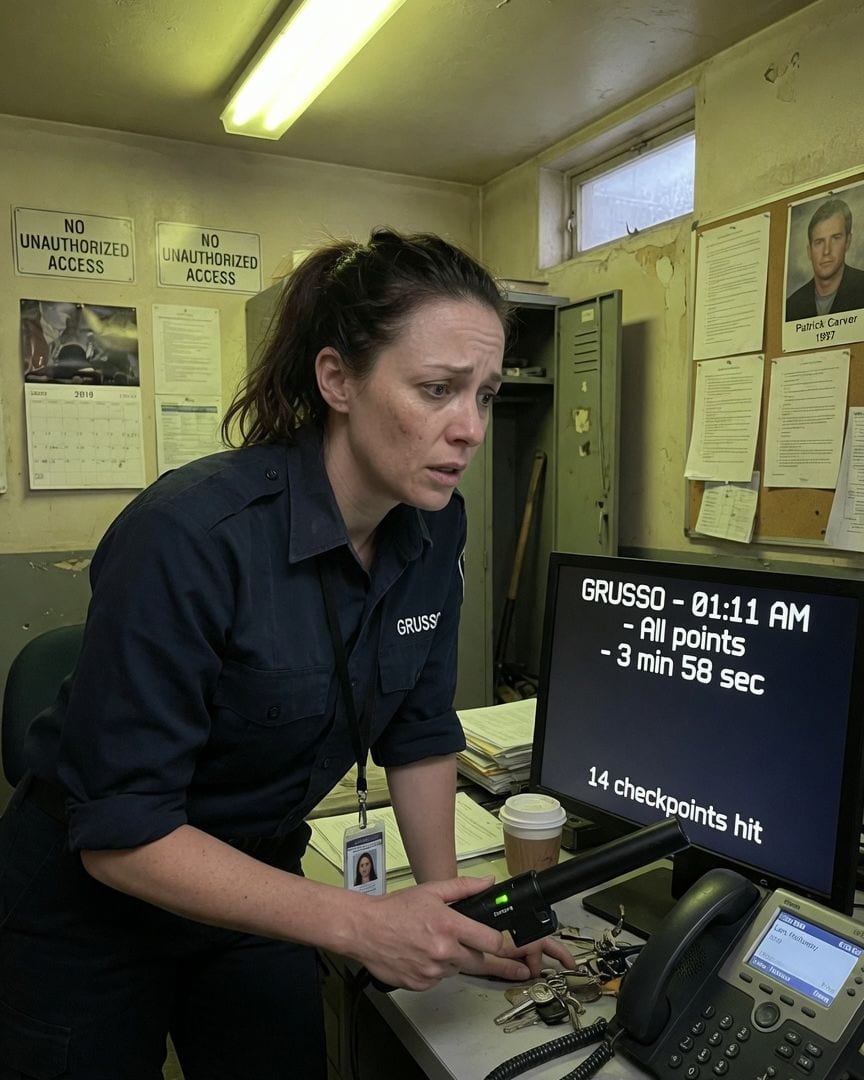
My security wand logged a full round at 1:11 AM in under four minutes. It was in the charger. Every tap is logged as mine.
Finishing my night shift, all I wanted was to get home. But the dock readout screen showed my security wand logged a full patrol at 1:11 AM, completed in just under four minutes. I knew my wand had been charging right beside the monitor the entire time, yet the log, under my ID, confirmed the impossible.
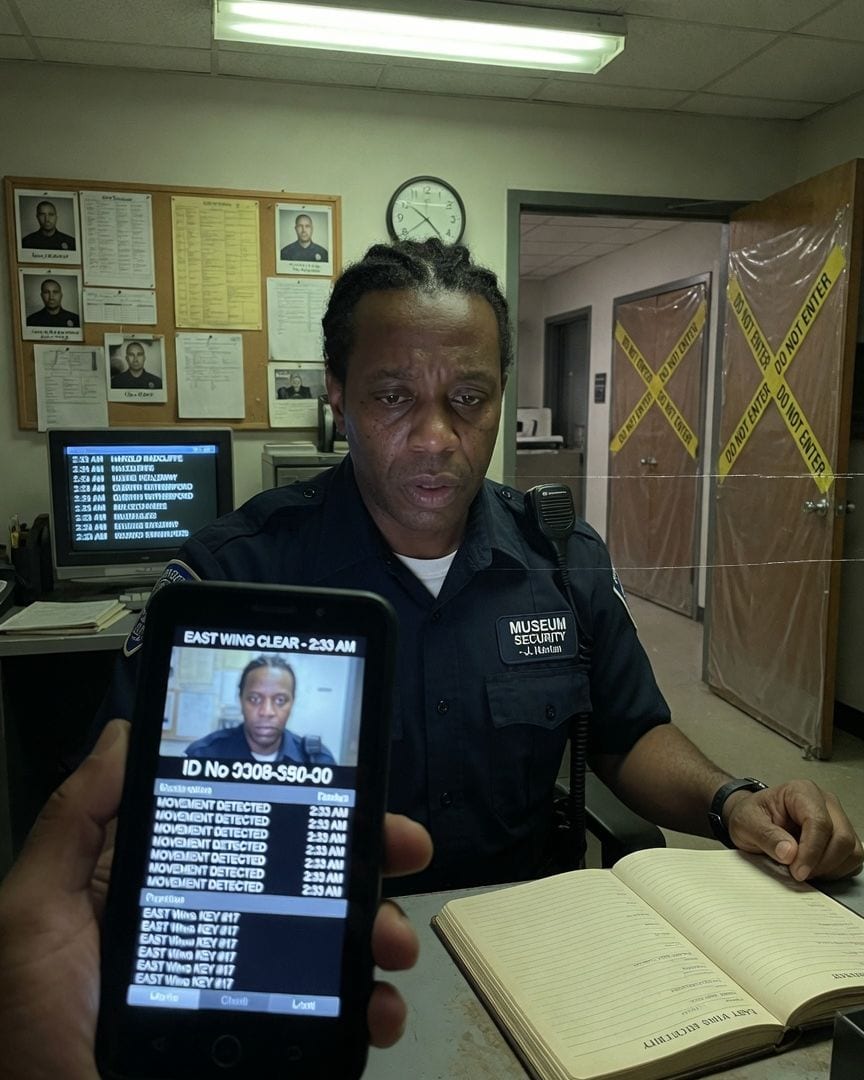
My guard log shows the east wing cleared at 2:33 AM. That wing's been sealed for months, doors screwed shut.
I was on my final security rounds in the quiet museum after midnight, ready to clock out. My handheld scanner showed the East Wing cleared at 2:33 AM under my ID, though it's been sealed for months. Then my hand brushed a faint, precise scratch on the plastic covering the doorframe, exactly where a security scanner would be held.
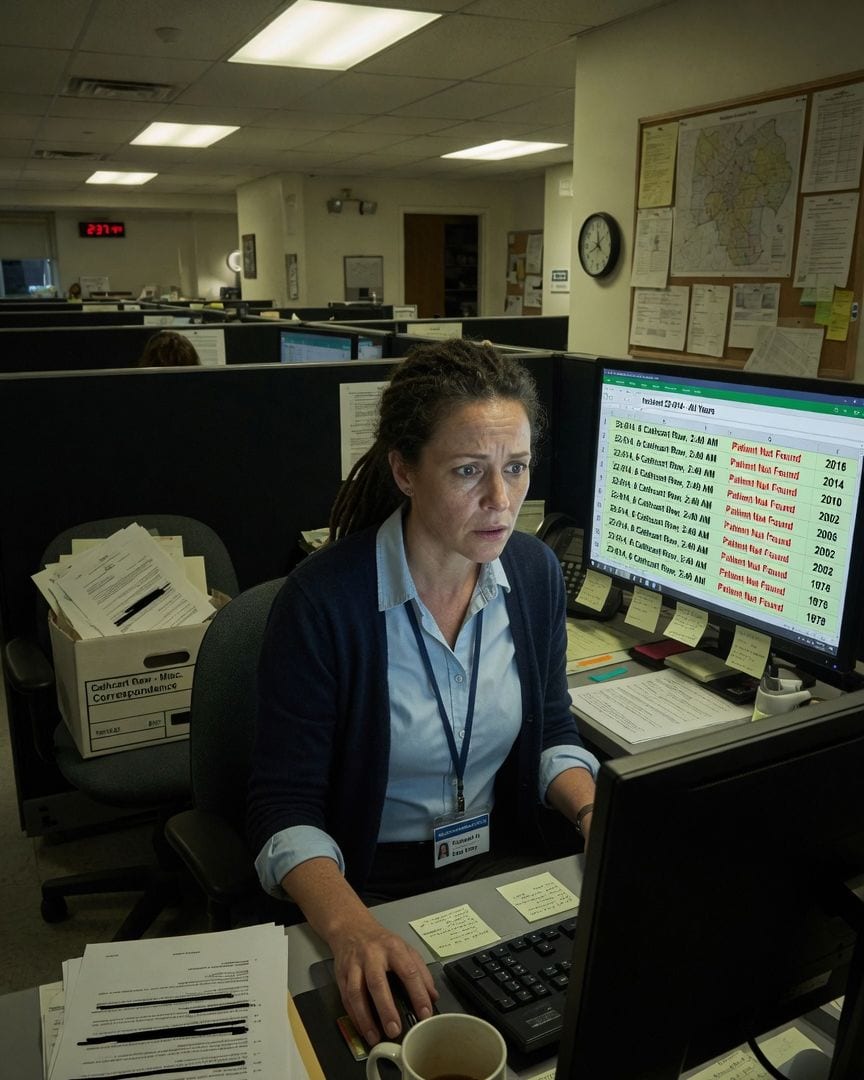
My computer log shows the same 2:40 AM call to Cathcart Row, every four years since 1978, always closed 'patient not found'.
Working data entry for the County Ambulance Trust, I found a routine incident logged as 'Patient Not Found.' But digging deeper, I discovered the exact same phantom call had repeated every four years for over forty years, always at the same address, always at 2:40 AM. Then I found a heavily redacted memo linking it to my own street.
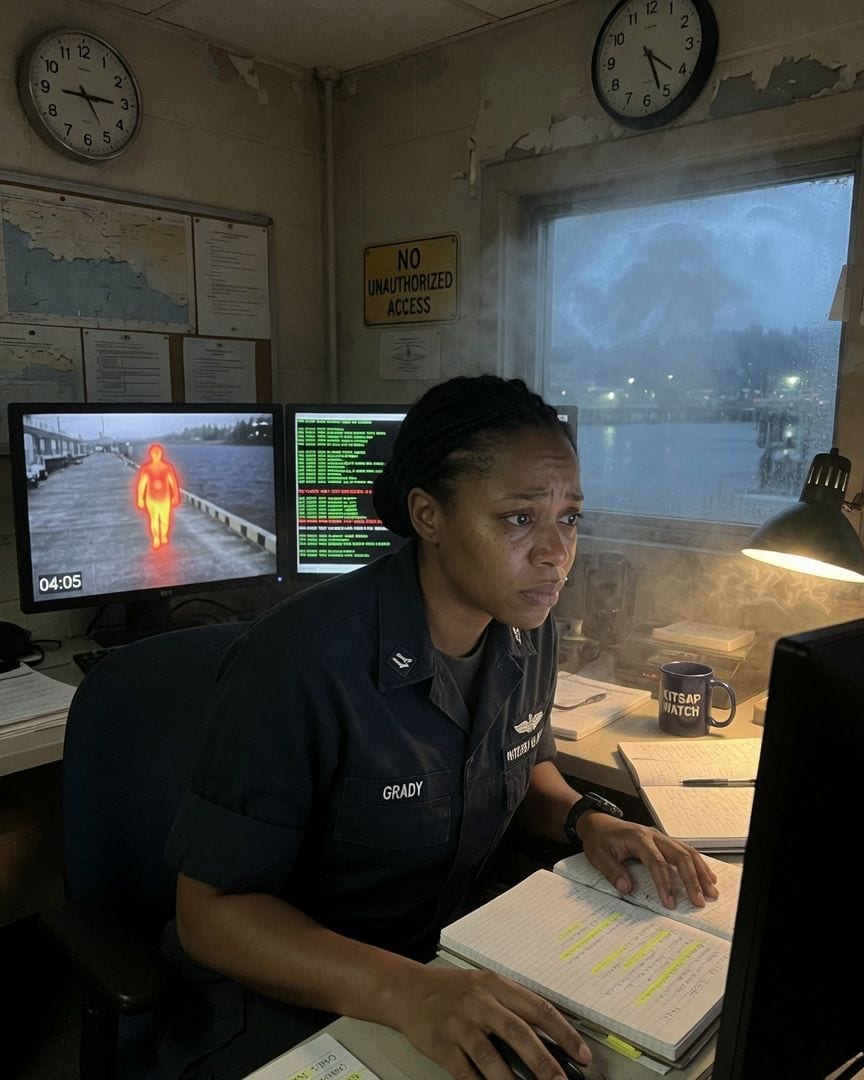
Petty Officer Olivia Grady found the base system logging impossible access at 0405. Every night for years, a blank ID walks Pier 7.
Petty Officer Olivia Grady stood her predawn watch on Pier 7, the cold mist of Puget Sound a familiar companion. Her routine scan of monitors at 0405 was shattered when an IR sensor flared with a man-sized heat bloom moving along the pier. Yet the camera feed showed only empty concrete and swirling mist. When historical logs confirmed the invisible presence had walked that exact path every night for years, Olivia dug deeper. She found a ghost "access log" entry with a unique ID but no name attached, meticulously aligned with the 0405 bloom. What impossible entity was the base system logging, night after night?
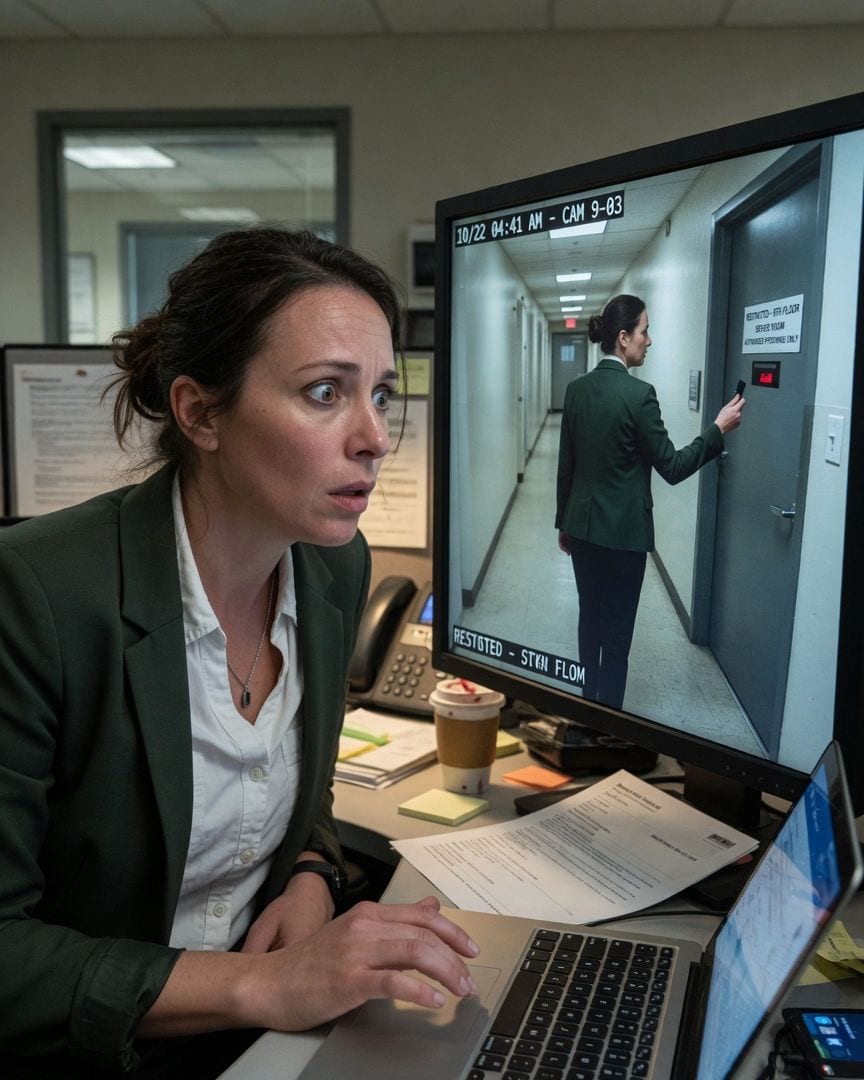
My keycard log shows me in the server room at 4:41am. I was asleep, and my badge was at home.
An email from corporate IT reveals my keycard registered entry into a restricted server room at 4:41 AM last Sunday. I was asleep in my apartment across town, my badge clipped securely to my jacket at home. But then I scrolled down and found eleven more impossible entries, all within the past week, all under my name.
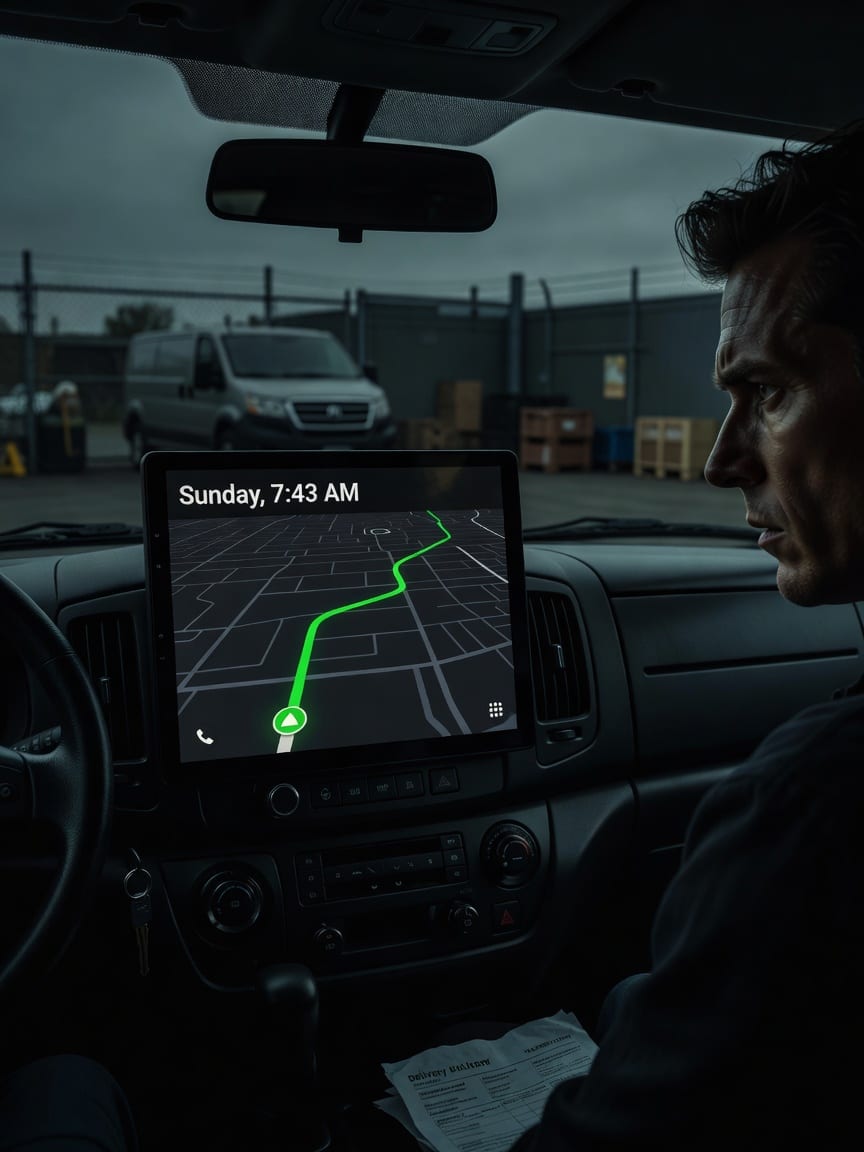
My delivery van drove 130 miles last Sunday, stopping for four hours in another state. It never left our locked yard. The GPS log drew the whole trip, timestamped to the minute.
I was just doing my job, sitting in the dispatch office with my manager Joel, when he pulled up the GPS log for my delivery van, Unit 74. It showed a 130-mile round trip to Delaware, engine on for four hours, with a distinct stop, all while my van was locked in the yard and I was home. The camera footage confirmed it hadn't moved an inch, yet the system insisted it had traveled hundreds of miles.