Truck 114 logged forty miles gone last night. It was on the lift, no wheels, and I was the only dispatcher.
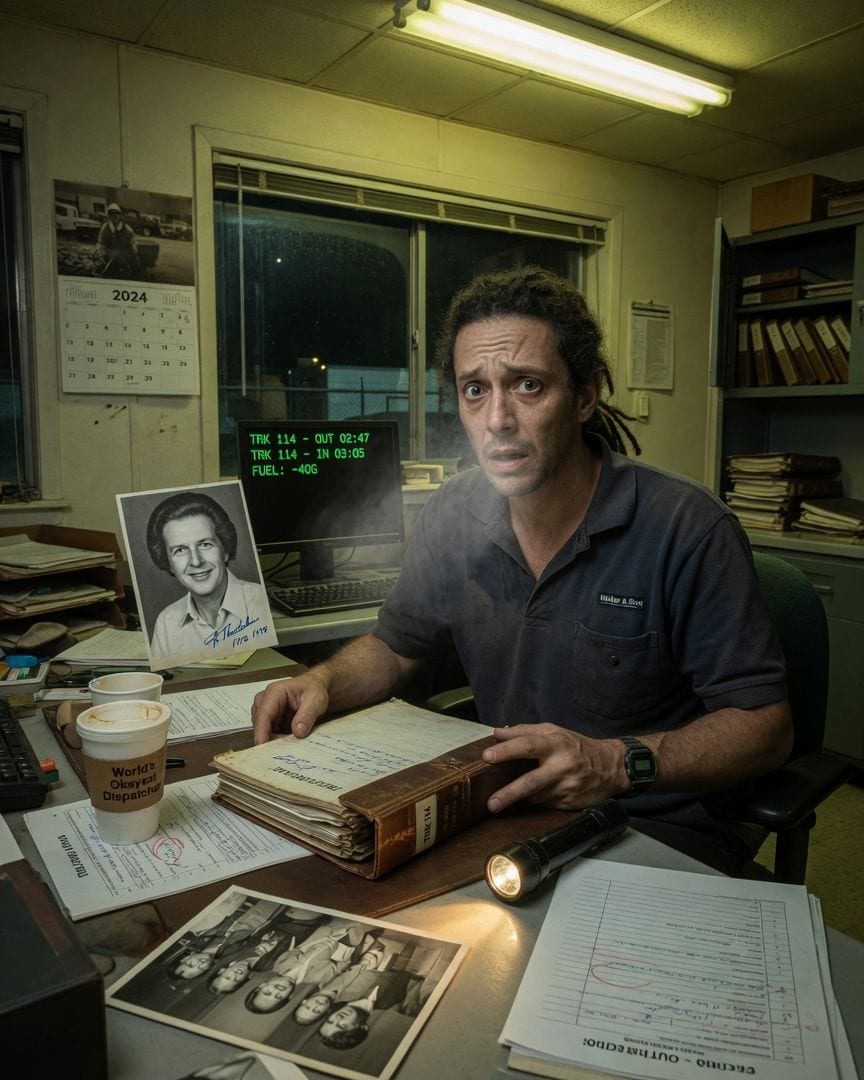
The hum of the fluorescent lights in the Muller & Sons Freight Yard dispatch office was the only constant sound, a thin, almost imperceptible drone against the deeper, sleeping silence of the night.
It was 2:47 AM, a Wednesday, and my lukewarm coffee was doing little to chase the chill from my bones.
My shift had been utterly unremarkable, just the usual quiet vigilance as I watched the glowing green text scroll across the CAD system, monitoring gate activity.
Then, an entry flickered into view: 'TRK 114 - OUT 02:47'. My brow furrowed. Truck 114? That was impossible.
I knew for a fact 114 had been up on the lift in the maintenance bay all week, no wheels on it, waiting on a new axle. I'd walked past it yesterday afternoon, seen the chassis bare.
I quickly pulled up the maintenance board on a separate monitor. Sure enough: 'TRK 114 - ON LIFT'.
Before I could even process it, the CAD system updated again: 'TRK 114 - IN 03:05'. Eighteen minutes. The truck had left, traveled, and returned within eighteen minutes, without me logging a gate clearance.
I was the only dispatcher on duty, the only one authorized. I logged nothing. Then the fuel log pinged: 'TRK 114 - FUEL: -40G'. Forty gallons. In eighteen minutes.
The glowing figures on the screen seemed to mock me, an impossible journey in the dead of night, logged by a phantom hand.
The impossible entry gnawed at me. Forty miles in eighteen minutes was a hell of a run, even if the truck had been operational. But it wasn't.
It was too specific for a simple glitch, too many details converging on something that couldn't be.
I grabbed my flashlight, its beam a weak comfort against the pre-dawn gloom, and made a quick, unnerving trip out to the maintenance bay. The cavernous space was silent, cold.
Truck 114 sat exactly where it should, up on blocks, its immense tires removed, hubcaps leaning against the concrete wall. A fine layer of dust, undisturbed, coated its chassis. No signs of recent movement.
No scuff marks on the floor, no lingering exhaust smell, no warmth from a recently run engine.
Back in the office, my breath visible in the chilled air, I pulled up the yard's digital fuel pump logs for that eighteen-minute window. Blank. No fuel dispensed from any pump.
The ordinary explanations were failing, one by one, like dominoes falling in slow motion. If it wasn't a glitch, and it hadn't physically moved, then what the hell had logged it?
A thought sparked. The old, dusty cabinet in the corner, where physical logbooks for each truck were kept as a backup for the digital system. A relic from before the CAD system, still meticulously updated by habit.
I pulled down the heavy, worn binder for Truck 114. The leather was smooth beneath my fingers, the edges frayed from decades of use.
Flipping through the grimy pages, past months of legitimate hauls, past dog-eared cargo manifests, I found it: an entry for this very night, handwritten in blue ink. Dated, precisely, 'Wednesday, 2:47 AM'.
It detailed a forty-mile run, cargo manifest blank, signed at the bottom. The signature was an elegant, looping script I’d never seen before, an unfamiliar name: 'H. Thatcher'.
My heart thumped a slow, cold rhythm against my ribs. H. Thatcher. I scrolled through the digital employee roster, then the archived paper records from decades past, the names blurring into an anonymous sea of past and present.
No H. Thatcher. The name was a ghost. I clutched the heavy logbook, the paper feeling oddly cold, despite the office being warmer than the bay.
As I closed it, a brittle, faded photograph slipped from between the pages and fluttered onto my desk.
It was a group shot of old dispatchers, smiling stiffly at the camera, taken in what looked like this very office, decades ago. The photo was dated 1978.
In the back row, slightly out of focus, almost hidden by the shoulder of another man, stood a figure with a narrow, gaunt face and eyes that seemed too wide, too dark in the black-and-white print.
A faint, unsettling smile played on his lips. I recognized the looping signature, now clearly legible, scrawled beneath his image on the back of the photograph: H. Thatcher. He’s been here before. He’s here now.
The next morning, I approached Edward Muller, the day shift manager, armed with my questions. Edward’s family had run this yard for generations, his grandfather before his father, and now him.
If anyone knew the ghosts of this place, it was Edward. I tried to sound casual, leaning against his office doorframe. "Hey Edward, quick question for you. Ever hear of a dispatcher named H. Thatcher?
Came across a log entry last night, signature I didn't recognize."
Edward’s usually jovial face went still. He looked up from his computer, his blue eyes, usually crinkling with good humor, suddenly flat. "Harold Thatcher?" he asked, his voice low. "Yeah. He was a dispatcher here. Back in the late 70s."
He paused, a strange cloud passing over his features. "Good man, Harold. Quiet, kept to himself. Then one day… poof. Vanished. Without a trace. Never a whisper, never a body. Police searched for months. Presumed dead."
My blood chilled, coiling in my veins. Vanished. The word hung in the air, heavy and final. That night, during my shift, I dove into the yard’s deepest archives.
Edward had a key to an old storage room packed with dusty boxes and microfiche readers. I cross-referenced the earliest digital CAD entries with the oldest physical logbooks, searching for a pattern beyond the anomaly of Truck 114.
And there it was. A chilling, undeniable pattern emerged. Every few years, sometimes more frequently, a similar anomalous entry for a different truck would appear in the CAD system.
Always in the small hours, always a short, impossible run, always with corresponding fuel consumption that never registered at the pumps. And in the physical logbooks for those specific trucks, always an entry mirroring the digital one, handwritten.
And always, always signed by 'H. Thatcher,' even decades after his disappearance in 1978. It wasn’t a glitch. It was a recurring shift, a routine that wasn't mine, played out by a phantom driver across the years.
The numbers added up, the dates aligned. It was real.
My relentless digging didn’t go unnoticed. Edward Muller’s demeanor had shifted entirely. He watched me with a strange, almost mournful intensity, his usual easygoing manner replaced by a quiet vigilance.
One quiet night, as I hunched over a crackling microfiche reader in the back office, the door creaked open.
Edward stood there, silhouetted against the dim lights of the main office, not asking what I was doing, but his presence was a question in itself.
He stepped in, the door easing shut behind him with a soft click. The air grew heavy, thick with unspoken warnings. He spoke in a low, almost conspiratorial whisper, his voice barely audible above the whirring of the machine.
"Naomi," he said, his gaze fixed on my face, "this yard… it has its quirks. Things happen here that don’t make sense. Things that have always happened. My grandfather told my father, my father told me.
It’s best to let sleeping dogs lie."
He recounted vague stories, not quite folklore, not quite fact, of other employees who got too curious. People who simply… moved on. Not fired, not quit, just gone.
He implied Harold Thatcher wasn’t the only one, just the most recent, and perhaps the most famous. His eyes held a deep, old knowledge, a resignation that sent a fresh shiver down my spine.
He didn’t threaten me, didn’t even raise his voice. He simply stated facts, like explaining the weather. The horror was in his composure, the calm acceptance of the impossible.
Later that same shift, long after Edward had left, I returned to my dispatch station. Tacked to my monitor, right where I couldn’t miss it, was a small, yellowed piece of paper. It hadn't been there when Edward left.
On it, in elegant, looping script, almost identical to H. Thatcher’s signature, were five chilling words: 'Some things are better left logged and unread.'
The note’s message was clear, a direct warning from the impossible, written by a hand that shouldn’t exist. My own hand shook as I peeled it from the monitor.
I confronted Edward again, this time with the note, the stacks of recurring log entries, the faded photograph of Thatcher’s gaunt face. I pushed him, my voice tight with a fear I refused to acknowledge. "What is this, Edward?
What do you know?"
Edward finally broke. He didn't explode or deny. He just slumped into a chair, his face pale, his shoulders slumping as if under an invisible weight. He ran a hand through his thinning hair.
"The Night Hauls," he murmured, his voice hollow. "That's what my grandfather called them. It's a phenomenon as old as the yard itself, Naomi. Passed down through the family. Certain trucks, on certain nights, would simply operate themselves.
Leaving traces in the logs, consuming fuel. No driver. And anyone who got too close, who tried to understand or intervene, would eventually... vanish. They became part of the 'system,' just like Harold Thatcher."
His eyes, weary and ancient, met mine. "He tried to stop it, you know. Tried to catch whoever was doing it. Then he was gone."
Edward then opened a hidden compartment in the side of his old wooden desk, a latch I’d never noticed before. Inside, nestled amongst faded bills of lading and yellowed maps, was a small, leather-bound journal.
The leather was supple, worn smooth by generations of handling. "My grandfather's," he murmured, handing it to me. "He worked here, too. Before he handed it down to my father. He started this yard, after all."
I opened the journal. The pages were filled with elegant, looping script, similar to the note and Thatcher’s signature. It detailed similar 'Night Hauls' from the 1940s and 50s, with chillingly consistent patterns: specific trucks, impossible journeys, phantom fuel logs.
It even mentioned a 'shadow driver' who would sometimes leave small, impossible tokens in the cabs of the active trucks, almost as a signature, a physical mark left by the unseen.
I thumbed through the journal, the brittle pages whispering tales of impossible journeys and vanished lives. The dread coiled in my stomach, a cold, hard knot.
The pattern wasn't just old; it was an intrinsic part of the yard, an engine running in the dark, unnoticed by the world outside these gates.
Edward, his voice barely a whisper, told me the most unsettling part: "The last person who vanished after investigating the Night Hauls, before Harold, was a dispatcher named Deborah Oakley. 1957. She tried to make sense of it.
And just like Harold, she disappeared." He paused, his gaze fixed on the open journal in my hands. "A journal entry just like this, about her final, impossible journey, was found in her desk.
My grandfather had recorded it in his own book."
He pointed to an entry in his grandfather’s journal, dated 1957. It described Deborah discovering a small, intricately carved wooden figure in the cab of Truck 114, exactly matching the 'tokens' mentioned earlier.
The entry abruptly cut off mid-sentence, the last words trailing into an empty page, a testament to an unfinished thought, a life interrupted.
Below it, in a different, frantic hand, a single line was scrawled, the ink faded but chillingly clear: 'She knew too much. They took her.'
The journal wasn't just a record of the past; it was a chilling, impossible record that cannot be, a testament to what happens to those who pursue the truth too far.
And as I stared at the frantic words, a cold certainty settled over me. My own story might already be written within its pages.
The journal dropped from my numb fingers, landing with a soft thud on Edward’s desk. The chilling implication of Deborah Oakley's fate, recorded in a book that shouldn't exist, detonated in my mind.
This wasn't just a pattern; it was a mechanism, a quiet, inexorable routine of the yard itself. And those who investigated became... part of it.
The CAD logs, the fuel consumption, the phantom signatures, the warnings from Edward – it all fit. Every clue now clicked into a horrifying, coherent picture.
I rushed back to my dispatch station, my breath catching in my throat, the blood thrumming in my ears. My eyes darted to the CAD system for Truck 114's current status: 'IN YARD - MAINTENANCE BAY'.
It’s impossible, but I had to see it. I had to know.
My flashlight beam cut through the oppressive darkness of the empty yard, illuminating only patches of gravel and the occasional oil stain. The air was cold, a metallic bite that seemed to scratch at my throat.
I reached the maintenance bay, the immense shadow of Truck 114 looming before me. Still on the lift, no wheels.
But the cab door, which I knew was firmly shut earlier that morning, was now slightly ajar, a sliver of deeper darkness visible within.
A cold, metallic scent, like ozone and old diesel, hung heavy in the air, a smell I’d noticed before but never registered as wrong.
I forced myself forward, my heart pounding a frantic rhythm against my ribs, my flashlight beam piercing the gloom of the cab. On the passenger seat, nestled perfectly in the worn fabric, lay a small, intricately carved wooden figure.
It was old, worn smooth by time and touch, the wood a dark, polished brown, but undeniably real. The artifact that cannot exist, described in a journal from 1957, was now here, in Truck 114, waiting for me.
I reached into the cab, my fingers brushing the cold, smooth wood of the figure. It was heavier than it looked, solid beneath my touch.
As my hand closed around it, a sudden, deep hum vibrated through the entire truck, a resonant thrumming that seemed to emanate from deep within its chassis, not its dormant engine.
My head snapped towards the bay's window, back towards the office. Through the glass, the CAD screen flickered, displaying the familiar, impossible words: 'TRK 114 - OUT'.
The hum intensified, filling the cavernous bay, vibrating through the concrete floor and up into my bones, a low, powerful drone. The wooden figure in my hand felt strangely warm now, almost alive, pulsing with the truck's impossible energy.
The cab lights, which were off, suddenly flickered to life, casting an eerie, amber glow that turned the familiar interior into something alien, menacing.
I tried to pull my hand back, but my fingers felt strangely numb, almost stuck to the figure. A faint, oily smell, like old diesel mingled with something metallic and cold, filled the air, making my stomach clench.
Then I heard it: a faint, distant clicking sound, like a transponder activating at the yard’s main gate. The hum grew into a low, powerful thrum, shaking the very structure of the bay, making the corrugated metal walls vibrate.
The truck's entire dashboard illuminated, a galaxy of green and amber lights, though the truck was still on blocks, without wheels, and the engine was off.
I struggled, trying to wrench my hand free, but the figure seemed to adhere to my palm, vibrating with the truck's impossible energy, drawing me deeper into its grasp.
The cab door, slowly and silently, began to swing shut, the sound of its latch a sickening click that echoed through the now-sealed space, trapping me inside.
The next morning, Edward Muller arrived to an empty dispatch office. Naomi’s coffee cup was still on her desk, cool to the touch, her chair slightly askew. The old logbook for Truck 114 lay open, displaying Harold Thatcher’s impossible signature.
Edward walked out to the maintenance bay. Truck 114 sat quietly on its lift, the cab door firmly shut. Nothing seemed out of place. He called Naomi’s phone, then her emergency contacts. No answer.
Her car was still in the employee lot. He filed a missing person report, but the police found no signs of forced entry, no struggle, just an empty office and a quiet, ordinary freight yard.
Edward sat at Naomi’s desk, the morning sun streaming through the window, illuminating the dust motes dancing in the air. The CAD screen displayed the usual morning activity, trucks moving in and out, legitimate logs scrolling by.
He sighed, rubbing his temples. Then, a new entry appeared, scrolling silently into place. It was 2:47 AM.
The dispatcher's chair was empty, but the CAD system hummed, showing a new entry: Truck 114, out at 2:47 AM, back at 3:05 AM. The driver's name, glowing green on the black screen, read: Naomi Easton.
If this one got to you
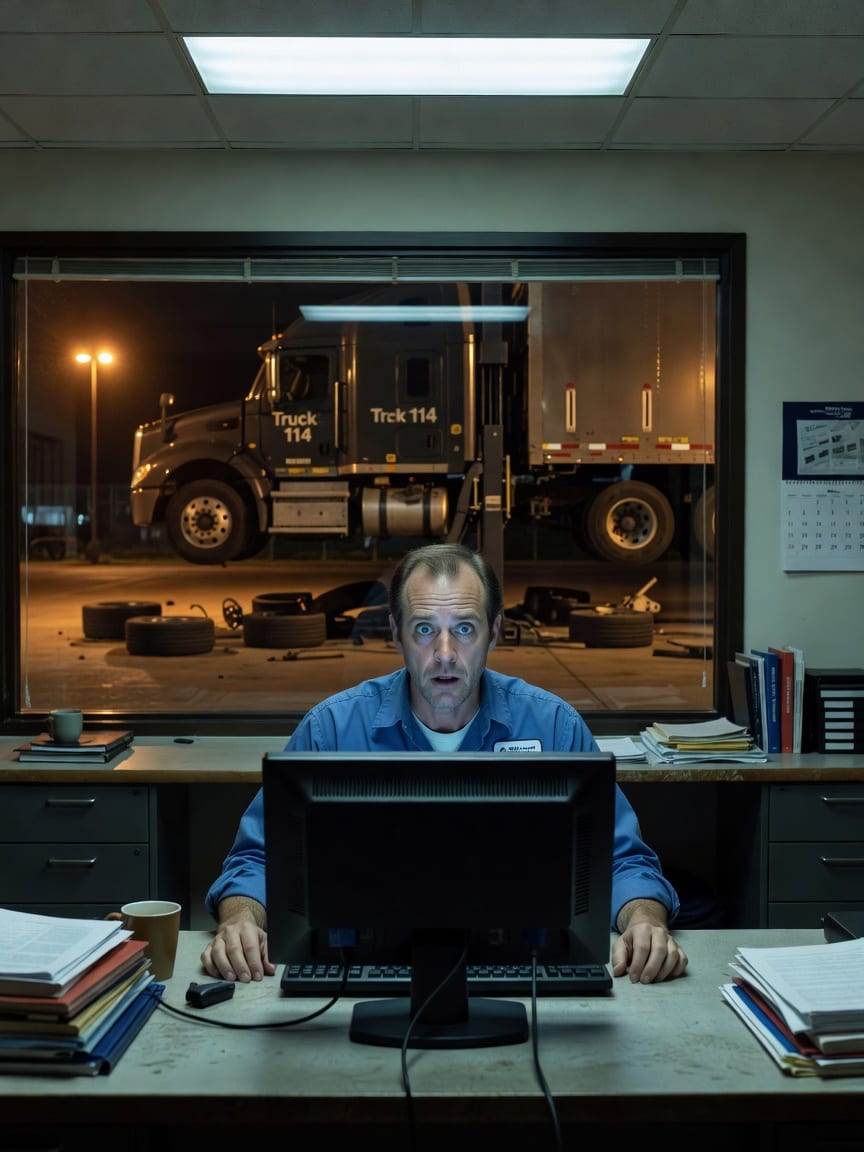
Truck 114 left the yard last night, CAD says. It burned forty miles of fuel. But my truck 114 was up on the lift, no wheels, all shift.
It was another quiet Wednesday overnight in the dispatch office until the CAD system pinged. My screen blared, showing Truck 114 logged outbound for forty miles and back, burning forty gallons of fuel. But I knew that very truck was immobile, suspended on a lift in Bay 4 with its drive wheels removed.
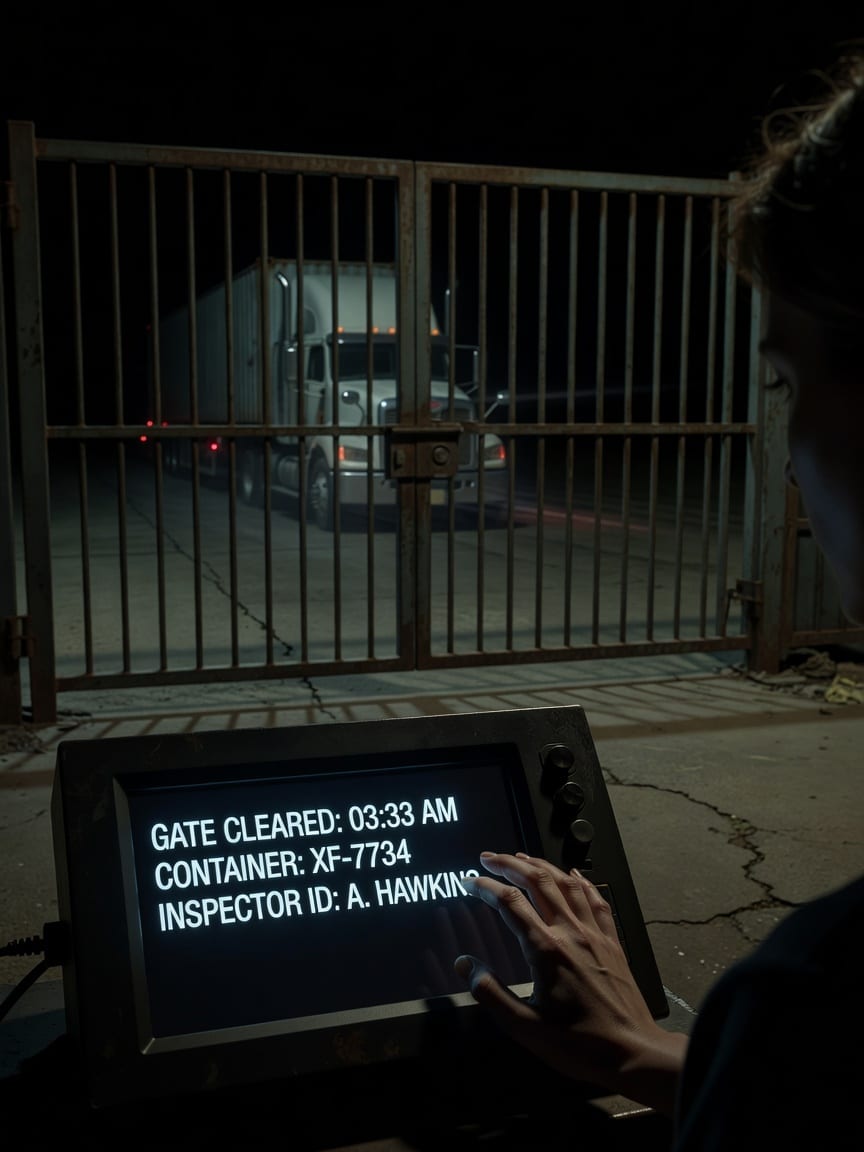
My gate log shows a container left at 3:33 AM, stamped with my ID. The yard was closed, the gate down, and I was asleep.
Audrey Hawkins' inspection log shows a container cleared at 3:33 AM, an impossible time when the gate was locked and no one was working. Her supervisor dismisses it as a glitch, but Audrey can't shake the specific details. Digging into old archives, she finds a handwritten ledger entry from 1974 for the exact same container, signed by a man who died half a century ago.
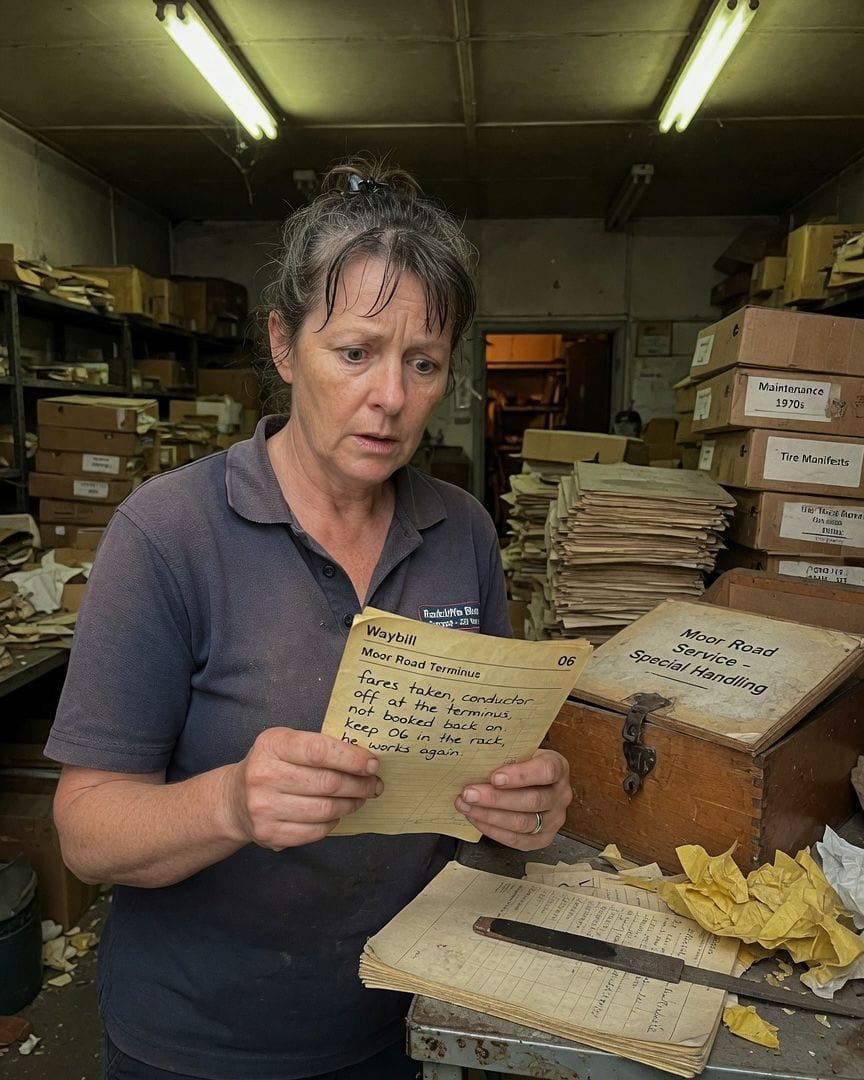
Our depot's Waybill 06 filed a moor road service we stopped running years ago. Every eight years since 1956, it closes: 'keep 06 in the rack, he works again.'
Sorting waybills in the depot, I stumbled across a form for the Moor Road Terminus. That route was decommissioned decades ago, but this waybill had a chilling handwritten instruction: 'keep 06 in the rack, he works again.'
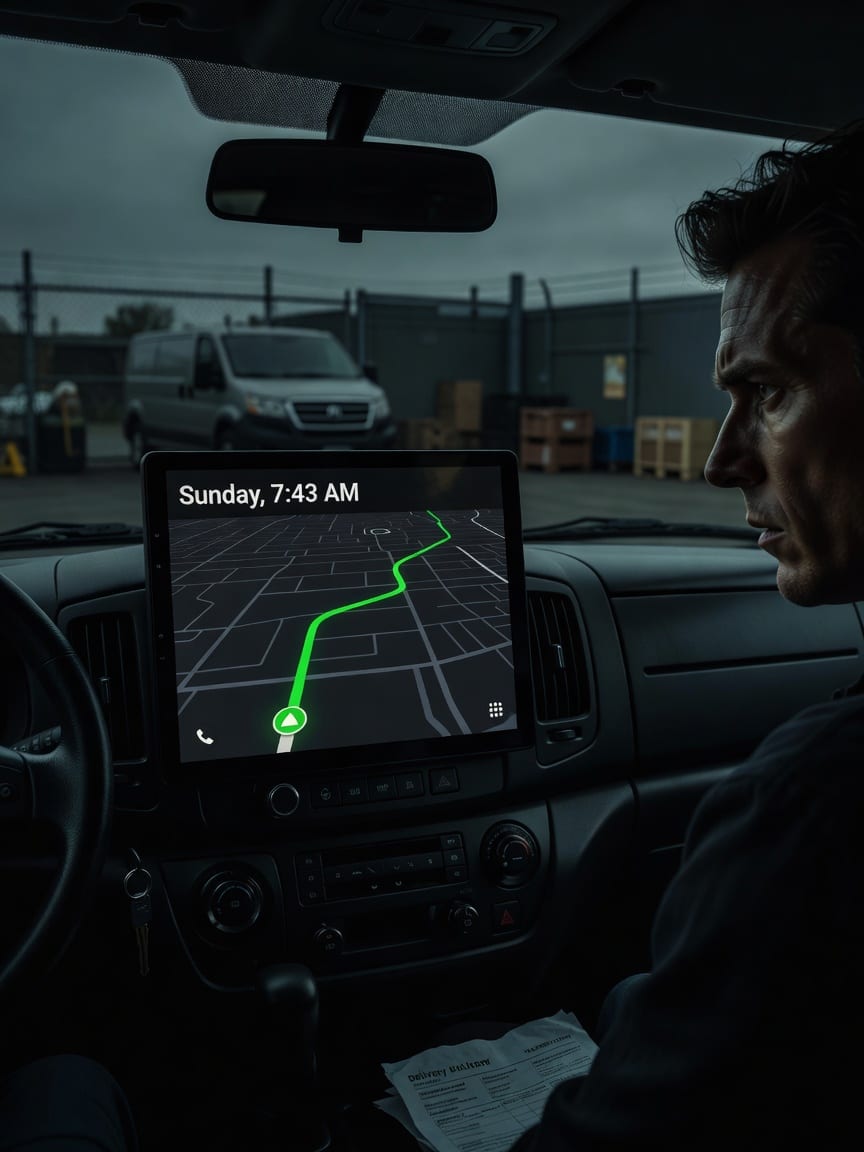
My delivery van drove 130 miles last Sunday, stopping for four hours in another state. It never left our locked yard. The GPS log drew the whole trip, timestamped to the minute.
I was just doing my job, sitting in the dispatch office with my manager Joel, when he pulled up the GPS log for my delivery van, Unit 74. It showed a 130-mile round trip to Delaware, engine on for four hours, with a distinct stop, all while my van was locked in the yard and I was home. The camera footage confirmed it hadn't moved an inch, yet the system insisted it had traveled hundreds of miles.
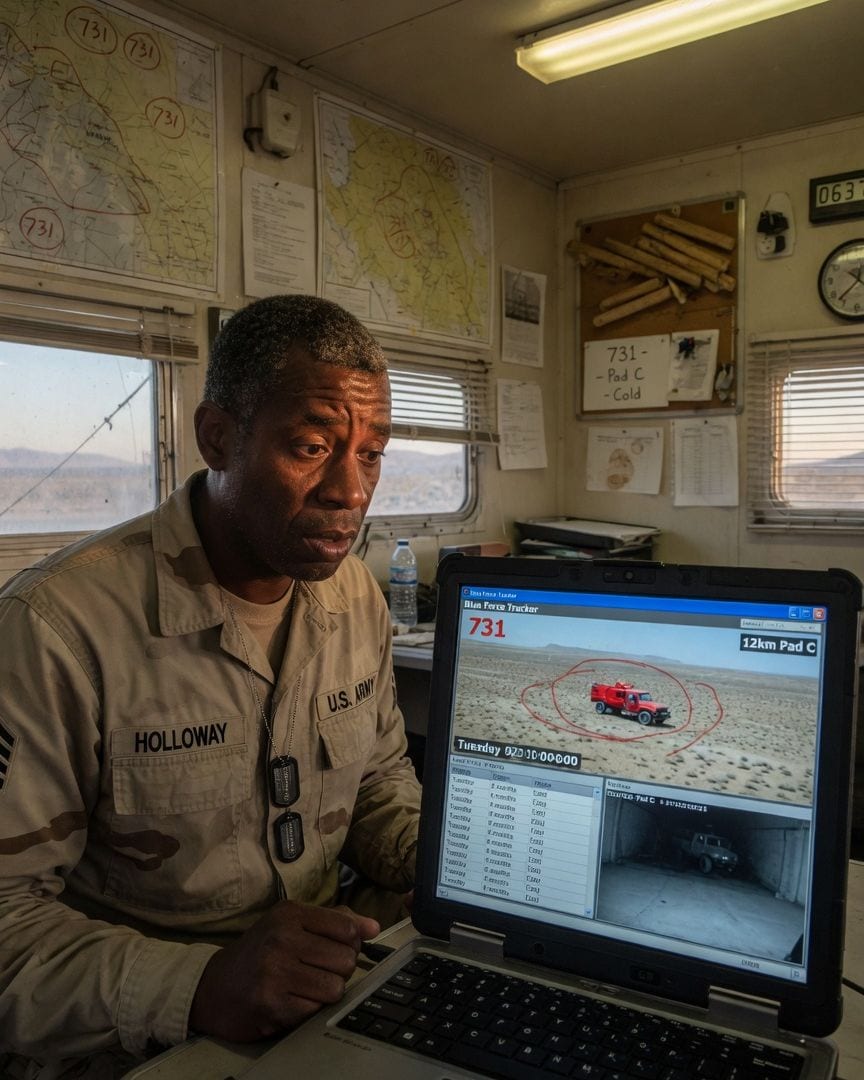
A Staff Sergeant's truck sits cold on its pad, but its ghost has been driving for months.
Staff Sergeant Marcus Holloway reviewed night shift reports, but the Blue Force Tracker showed Truck 731 driving a four-hour loop outside the wire. Its engine icon burned hot, yet Marcus found the actual armored transport cold, dark, and still on its designated pad.
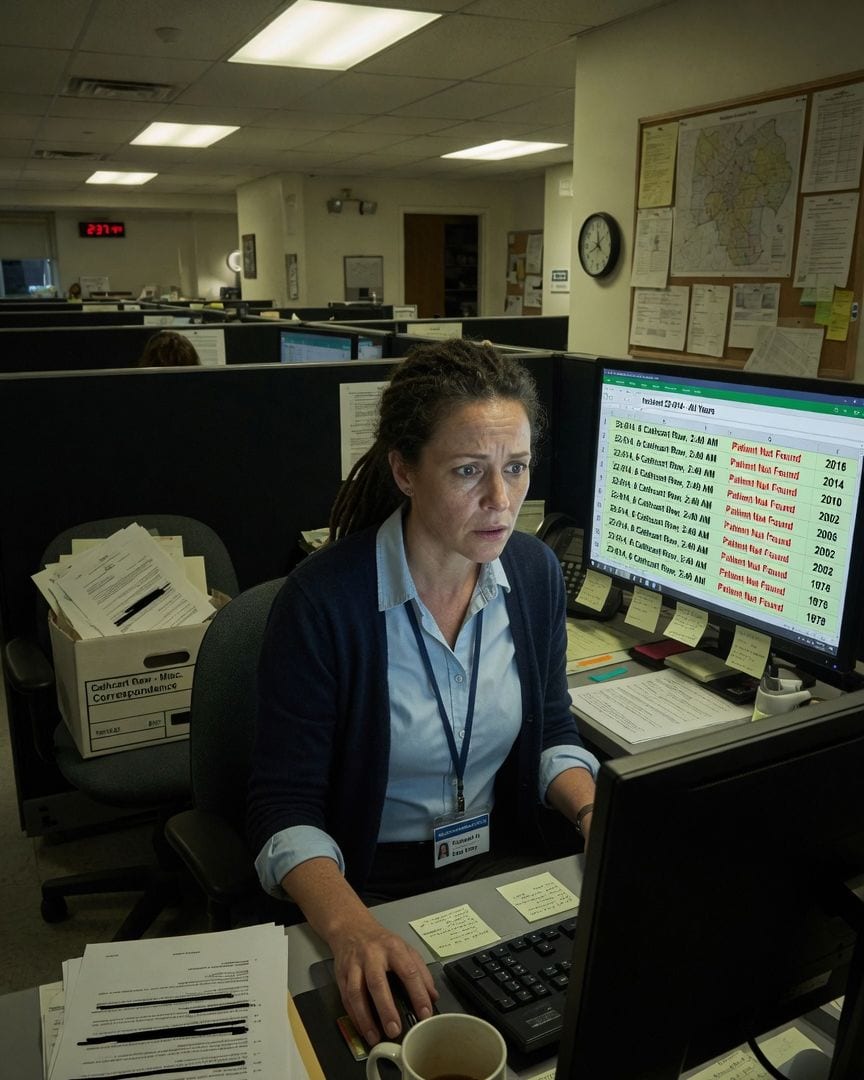
My computer log shows the same 2:40 AM call to Cathcart Row, every four years since 1978, always closed 'patient not found'.
Working data entry for the County Ambulance Trust, I found a routine incident logged as 'Patient Not Found.' But digging deeper, I discovered the exact same phantom call had repeated every four years for over forty years, always at the same address, always at 2:40 AM. Then I found a heavily redacted memo linking it to my own street.