My wedding video shows a woman in the back pew, watching the whole ceremony. She's also in three other weddings on that same tape, none of them ours.
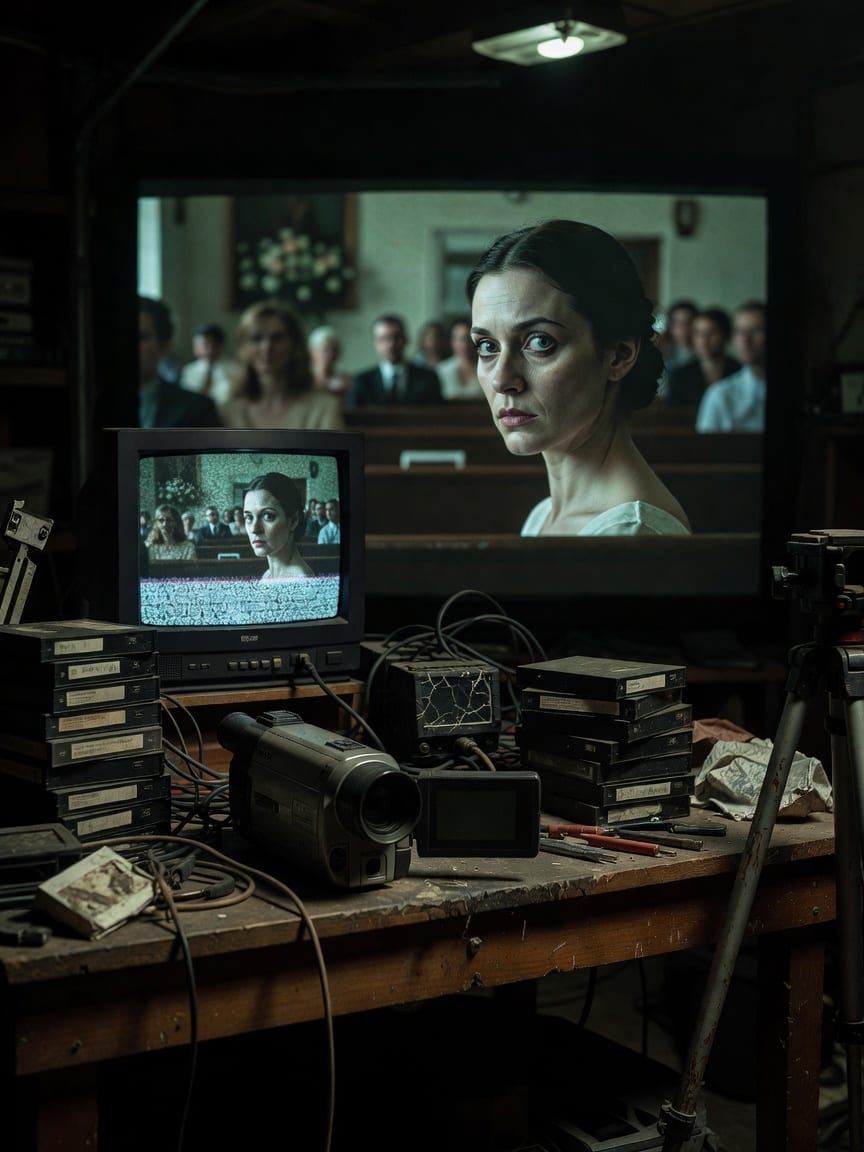
The dusty box sat on my porch for weeks before I even noticed it. "Raw Footage – Hayes Wedding – 2003," the label read in Harold Drummond’s shaky hand.
Harold, our wedding videographer, had sent it twenty years late, apparently after digging it out of a forgotten storage unit. Franklin, my husband, had laughed, dusting off the old VCR from the attic.
“A trip down memory lane, Annie,” he’d said, threading the tape. We settled in, a bowl of popcorn between us, ready for a dose of nostalgia.
The church interior, bathed in stained-glass light, filled the screen. There was Franklin, handsome and nervous at the altar, then me, walking down the aisle, my dress a cascade of white. My parents beamed. Our friends laughed.
The camera panned slowly, catching the faces of our guests. And that’s when I saw her. A woman, sitting alone in the very back pew, perfectly still.
I frowned, pausing the tape, the popcorn forgotten. "Who's that?" I asked Franklin. He squinted at the screen. "Hmm. Don't recognize her. Distant cousin?"
She didn't look like family. Her face was unremarkable, framed by plain, dark hair, wearing a muted grey dress. She wasn’t smiling. She wasn't interacting with anyone.
She simply watched the ceremony unfold with an unblinking stillness that felt increasingly wrong. "I would have remembered her," I murmured. Franklin shrugged, started the tape again.
But the image of her, a silent observer at the edge of our happiest memory, had already lodged itself in my mind.
The next morning, the image of the woman nagged at me like a stone in my shoe. I found myself back in front of the VCR, remote in hand. Franklin had already left for work, dismissing my unease.
"Just some random guest, Annie. Probably a plus-one for someone we barely knew." But the woman hadn't moved. Not once. I rewound the tape, skipping to every wide shot of the congregation.
There she was, every single time, in the exact same spot, in the same muted grey dress. She wasn’t looking at me, or Franklin, or anyone specific.
Her gaze was fixed straight ahead, as if through us, through the altar, into something beyond the church walls.
I zoomed in as much as the old VCR would allow, pausing frames until the image was grainy and blocky. Her face was placid, almost serene, but her eyes held an unsettling depth, a quiet intensity that chilled me.
She hadn't been in any of the posed photos, I knew that for sure. She didn't appear in any of the close-ups of guests. She was simply… present. A fixture.
I searched my memory again, then Franklin’s, even dug out our old, creased guest book. Nothing. No name, no hint of a connection.
As I closed the VHS case, a small, handwritten note fluttered to the floor. 'Additional raw footage on separate tapes – Harold Drummond, 2003.' A curious bonus.
Harold had apparently sent a small selection of other client tapes from the same year. My prickle of unease sharpened into something colder. I picked one at random. It was labeled 'The Vance Wedding – July 12th'.
A different church, a different date, a completely different family.
I fast-forwarded through the Vance wedding, my fingers trembling slightly on the remote. Different couple, different church, different decor. My heart hammered against my ribs as the tape neared the ceremony segment.
And there, in a wide shot of the congregation, sitting alone in the very last pew, dressed in the exact same muted grey, was the woman.
Her face was turned slightly towards the camera, a faint, almost imperceptible smile playing on her lips, her gaze seeming to find the lens for a split second before I scrambled to pause the tape, my breath catching in my throat.
The number for Harold Drummond was still tucked into the old VHS case, brittle with age. I dialed it, my hand shaking. He answered on the fifth ring, his voice raspy, distant, as if from another time. "Drummond," he wheezed.
I introduced myself, Annika Hayes, from the wedding twenty years ago. He remembered, vaguely. "Ah, the lovely bride. Good day."
"Mr. Drummond," I started, "I've been going through the raw footage you sent. There's a woman… in the back pew."
He paused. A long, drawn-out silence. Then, a low chuckle. "Oh, her. The quiet one. Always in the back." He dismissed it instantly, almost too quickly. "Every wedding has a type like that, dear. A solitary observer.
Probably a distant relative nobody quite remembers. Happens all the time."
"But she was in the Vance wedding too," I pressed, my voice tight. "The other tape you sent."
The line went silent again. This time, it wasn’t distant. It felt… calculating. "Coincidence, my dear," he said, the raspiness returning, but now with an edge. "Pure coincidence." He sounded defensive. Irritated. He clearly wanted to end the call.
I didn't let him. The dread in my gut was too strong. "I need to see you, Mr. Drummond. I need to see your archives."
He resisted, mumbled about his age, his retirement, the mess of his studio. But I was persistent. Undeterred by his obvious reluctance, I drove out to his house later that afternoon.
It was a small, ramshackle place on the edge of town, the garage converted into a cluttered, dusty studio.
Tapes were stacked to the ceiling – VHS, Beta, 8mm reels – alongside archaic editing equipment, film canisters, and yellowed client files.
Harold Drummond himself, a man lost in his own archives, looked even older than his voice sounded, his skin like parchment, his eyes rheumy but sharp.
He reluctantly allowed me to browse, muttering about "nosy clients." I spent hours, my fingers growing grimy with dust, pulling out random tapes from the late 90s and early 2000s. And she was there. Again. And again.
The woman in the back pew. Four more times. A sprawling church in Ohio, a quaint chapel in Vermont, a bustling reception hall. Each time, same posture, same muted grey dress, same detached observation. She was a silent, unmoving fixture.
On one tape, from a small, intimate backyard ceremony filmed in 2001, the sound quality was poor, crackling with interference. But as the bride and groom exchanged rings, a faint, almost subliminal whisper was caught by the boom mic.
It wasn't a guest clearing their throat, nor the officiant. It seemed to emanate from the edge of the frame, right near where the woman sat, partially obscured by a potted fern. And it distinctly whispered one word: "Lily."
No one in the wedding party was named Lily. I rewound and played it again, the sound barely there, but unmistakable. "Lily." My blood ran cold.
As I continued my grim archaeological dig through Harold’s past, sifting through decades of other people's memories, a strange tension grew in the studio. Harold, initially dismissive, then irritable, now watched me with a wary, almost fearful expression.
He started making nervous jokes, his voice a dry rustle. "Finding all my ghosts, are we, dear? Ought to charge extra for the exorcism." But his eyes didn't laugh.
They were fixed on me, on the tapes I pulled, on the moments I paused. The air in the dusty garage grew heavy, thick with unspoken things.
One afternoon, buried under a pile of Betamax tapes, I found a small, reinforced file box. The label, written in Harold's meticulous, tiny script, sent a jolt through me: 'Anomalies.' My hands shook as I unlatched it.
Inside, neatly organized, were meticulously dated and cross-referenced notes about 'unexplained presences' and 'recurring figures.' Harold had kept records. For decades.
I skimmed through them, each entry a small pinprick of dread. And then I found it, an entry from 1998: 'Drummond-Pennington Wedding. Client inquired about 'the silent observer in grey.'
Claimed she heard a whisper on the baby monitor tape, 'Desmond,' during the reception. No children named Desmond present.' Harold had kept these secrets for decades. My breath hitched. The 'Lily' whisper wasn't a fluke. It was a pattern.
I looked up to find Harold standing directly behind me, so close I hadn't heard him approach. His face was pale, his eyes wide, reflecting the dusty light.
The air grew cold, as if someone had just opened a freezer door. "Some things," he said, his voice low, barely audible above the hum of ancient electronics, "are better left unexamined. They don't like to be known."
I closed the 'Anomalies' file with a soft click, my gaze fixed on Harold. His composure had finally cracked. "You've seen her before. Many times, haven't you?"
He wrung his hands, his old knuckles white. He looked like a man carrying the weight of the world, finally ready to drop it. "Yes. For fifty years. Since I started this business. She just… appears."
He exhaled slowly, a long, rattling breath. "I tried to ignore it. Tried to rationalize it. A guest who liked to sit alone, a passing resemblance, a trick of the light." He shook his head. "But she was too consistent.
Too real. She’s not a trick of the light, Annika. She’s there. Physically there. Sometimes, I’d swear she knew I was watching her. Knew I was filming."
He led me to a locked metal cabinet in the corner, its surface scarred with rust. The lock looked ancient, heavy. With a key from a jingling chain, he opened it with a creak that echoed in the silent studio.
"I started collecting things," he said, pulling out a small, velvet-lined box. "Small things. Traces."
He placed the box on a dusty table under a bare bulb. Inside, nestled on a bed of faded, yellowed silk, were three intricately carved wooden birds, each no bigger than my thumb.
They were identical, crafted from an unknown, dark wood, their eyes tiny polished stones, reflecting the dim light like chips of obsidian. Each one was perfect, impossibly detailed, as if carved by a miniature master.
"I found these," Harold explained, his voice hushed, his eyes unfocused, "after certain ceremonies. Always where she sat. Or near it. One from the Drummond-Pennington wedding, the one with the whisper." He gestured vaguely towards a bird.
"Another from a funeral I filmed back in '85. It wasn't even a wedding, but she was there, in the back, just watching.
And this one…" He picked up the third bird, his fingers tracing its smooth, dark back, the tiny wings. "This was from the Vance wedding. The one you watched yesterday. Tucked right under the last pew, after everyone had left."
The impossible objects. Physical proof of a presence that defied all logic. They lay before me, connecting the disparate events into a chilling, horrifying pattern.
I picked up one of the tiny birds, its weight surprisingly solid, warm from the ambient temperature of the room, as if it had just been held. "So, she leaves these?"
Harold nodded, his face etched with a profound weariness, the lines around his mouth deepening. "Always. Like a calling card. Like she wants to be acknowledged, but never directly."
His gaze was distant, fixed on some unseen point in the dust-filled air.
He then reached into a smaller, hidden compartment of the velvet box, pulling out another bird. It was identical, perfect, another twin to the one in my hand. His hand trembled as he placed it on the table.
"This," he said, his voice barely a whisper, "I found it tucked under the pew cushion at your own wedding, Annika. Twenty years ago, just after everyone left."
My hand froze, the bird in my palm suddenly heavy with unspoken dread. My wedding. She was there. And she left a piece of herself behind. I was part of it.
Harold’s eyes, wide with a dawning, terrible realization, then fixed on Annika’s face, not seeing me, but seeing something far older, far deeper. He reached back into the compartment, pulling out a final, identical bird.
“And this one,” he whispered, his voice barely audible, “I found it tucked under the pew cushion at your own mother’s wedding, Annika. Decades before you were born.”
Harold slumped into a worn armchair, the weight of decades of unspoken dread finally visible on his stooped frame. He looked like a man who'd just carried a corpse across a desert. "It’s not random, Annika. She follows families."
He pulled out a thick, leather-bound journal, its pages brittle, filled with careful handwriting and crude family trees sketched in fading ink. "I started cross-referencing. The names from the files, the dates, the locations. Certain surnames kept appearing."
He pointed a trembling finger to a sprawling chart, a web of connections. "Your family, the Hayes line, is one of them. She was at your grandparents’ wedding, your mother’s, yours. Always watching, always leaving a token."
My mind reeled, trying to process the enormity of it. My family. For generations.
The faint whisper 'Lily' from the backyard wedding tape, the 'Desmond' from the Drummond-Pennington wedding file – Harold explained that in both cases, those names belonged to children born to those families within a year of the woman's appearance.
Children who had later vanished without a trace. Not kidnapped, not runaways. Just… gone. No one could explain it. The police had no leads.
The parents, broken, always spoke of a profound emptiness, as if the child had never fully existed.
The pattern snapped into place with sickening clarity. The woman wasn't just an observer; she was a silent, generational presence, marking a lineage, perhaps even selecting from it.
The dread wasn't in her appearance, but in her purpose, a purpose that had silently shadowed Annika's family for generations. A monstrous shape that now resolved into sickening clarity.
I wasn't discovering a mystery; I was discovering a fact of my life, a truth that had been hidden in plain sight.
There was no confronting the woman. How do you confront a shadow that has spanned generations? There was no escape from a pattern that had been woven into my family's fabric long before I was born.
I spent hours, then days, with Harold, poring over his records, the genealogies of 'marked' families. Each name on those charts was a new, cold proof.
I found my own name, Franklin’s, my parents’, my grandparents’, even my great-aunts and uncles, all meticulously linked by the presence of the woman and her impossible objects.
The horror was not a sudden threat, not a monster under the bed, but the profound, hollow understanding that my entire life, my family’s history, had been under an unblinking, silent surveillance.
The wedding video, once a symbol of joy, of new beginnings, became a chilling testament to this constant, unseen vigil. I didn't flee; there was nowhere to go. There was no 'out.'
I simply accepted the terrible coherence of it all.
The woman wasn't a monster in the traditional sense, no fangs or claws, but a profound, unexplainable force, an entity whose agenda was beyond human comprehension, yet intimately tied to my existence.
The pattern was complete, and I realized I had always been inside it, a specimen in a quiet, eternal study.
I packed Harold's notes, the copied tapes of the woman's appearances, and one of the small wooden birds into a sturdy box.
Harold, relieved of his burden after fifty years of silent witnessing, seemed to shrink into his armchair, a man finally at peace with a truth he could not change. His purpose, to document, was done.
My purpose, to finally know, was just beginning.
I returned to my quiet home, the familiar comfort of it now tainted by the vast, unsettling knowledge I carried. The walls felt thinner, the windows too transparent.
Franklin asked about my day, about the old videographer, his voice cheerful, oblivious. I simply shook my head, unable to articulate the monstrous, coherent shape that had formed around my life.
How do you explain a generational watcher, a silent collector of souls, to someone who lives in the light?
Late that night, long after Franklin was asleep, I sat alone in the living room, the VCR whirring softly. My wedding video played on the screen, the ceremony unfolding in silent, grainy frames.
I watched the woman in the back pew, her face placid, observing.
As the camera panned slightly, the woman’s eyes, for a fleeting moment, seemed to meet mine, not through the lens of a twenty-year-old recording, but directly, across time, with a faint, almost imperceptible nod.
Annika knew she had been seen, always. She knew she was still being seen. Franklin found Annika staring at the TV, the static of an old tape playing on a loop. He asked, 'Still watching those old home movies, love?
Anything good?' Annika didn't turn, just whispered, 'Just a guest who never left.'
If this one got to you
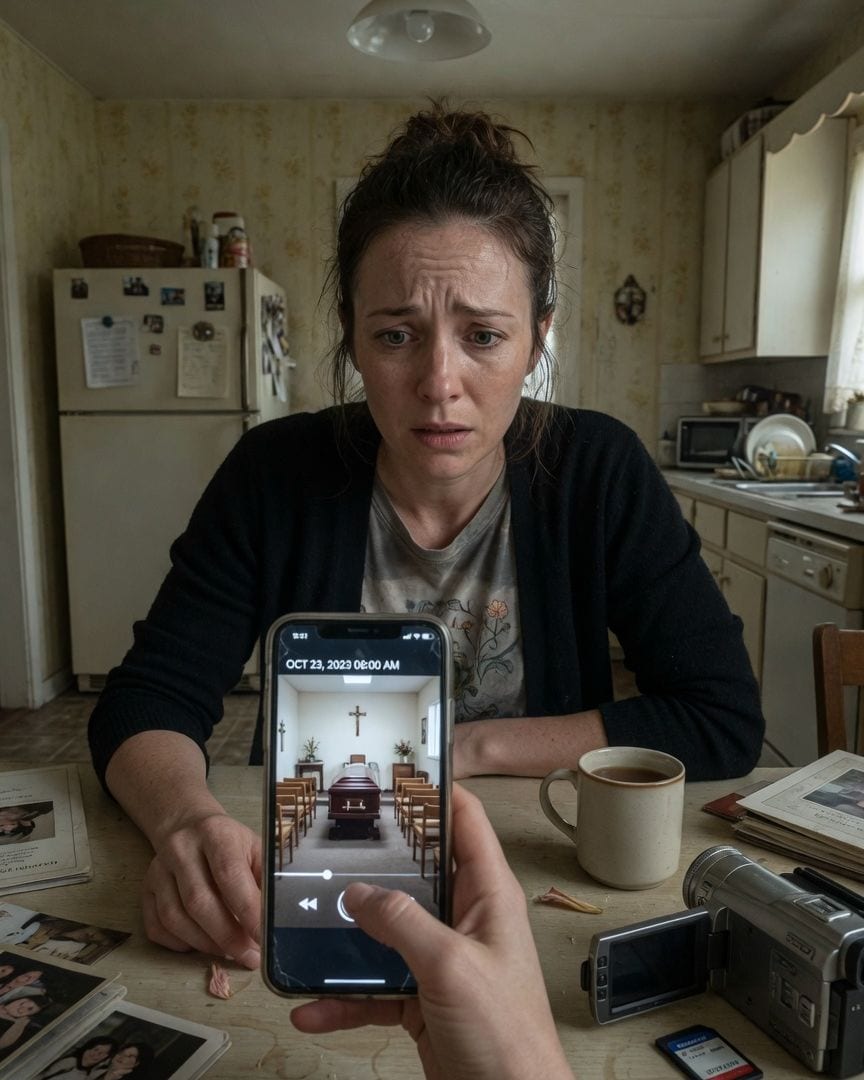
On my dead mother's phone I found a video of her funeral — steady, shot from the back over the mourners' heads, holding on her coffin. The timestamp says it was filmed an hour before any of us had arrived.
Days after my mother's funeral, I sifted through her digital life, hoping for comfort. Instead, her old camcorder revealed a video of my living room, timestamped for tomorrow morning. The abstract landscape I'd just hung was already there, waiting on the wall, a cold dread tightening in my gut.
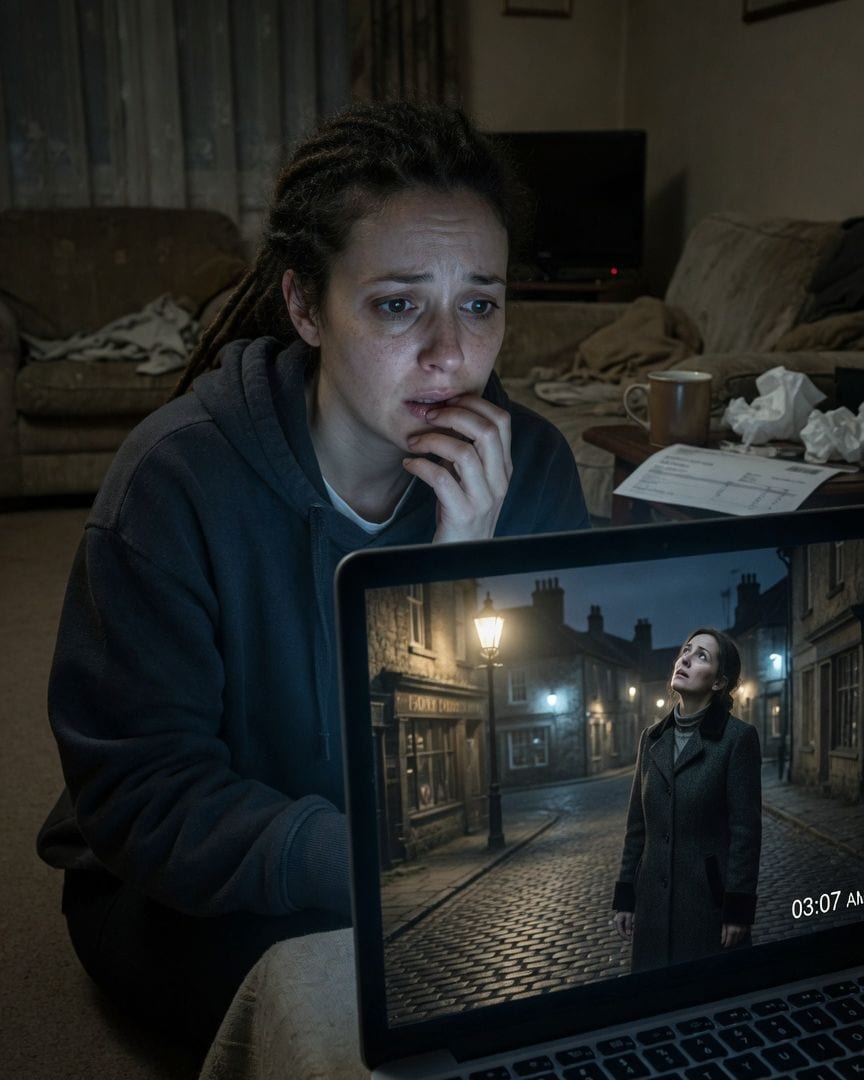
My aunt's coat walked into the village square at 3 AM. The webcam caught her looking straight into the lens, two weeks after we buried her in it.
Staring at my village church webcam at 3 AM, the square was deserted and quiet. Then a figure emerged, wearing the distinctive wool coat my Aunt Constance was buried in just two weeks ago. She paused, then slowly tilted her head up, looking directly into the camera lens, right at me.
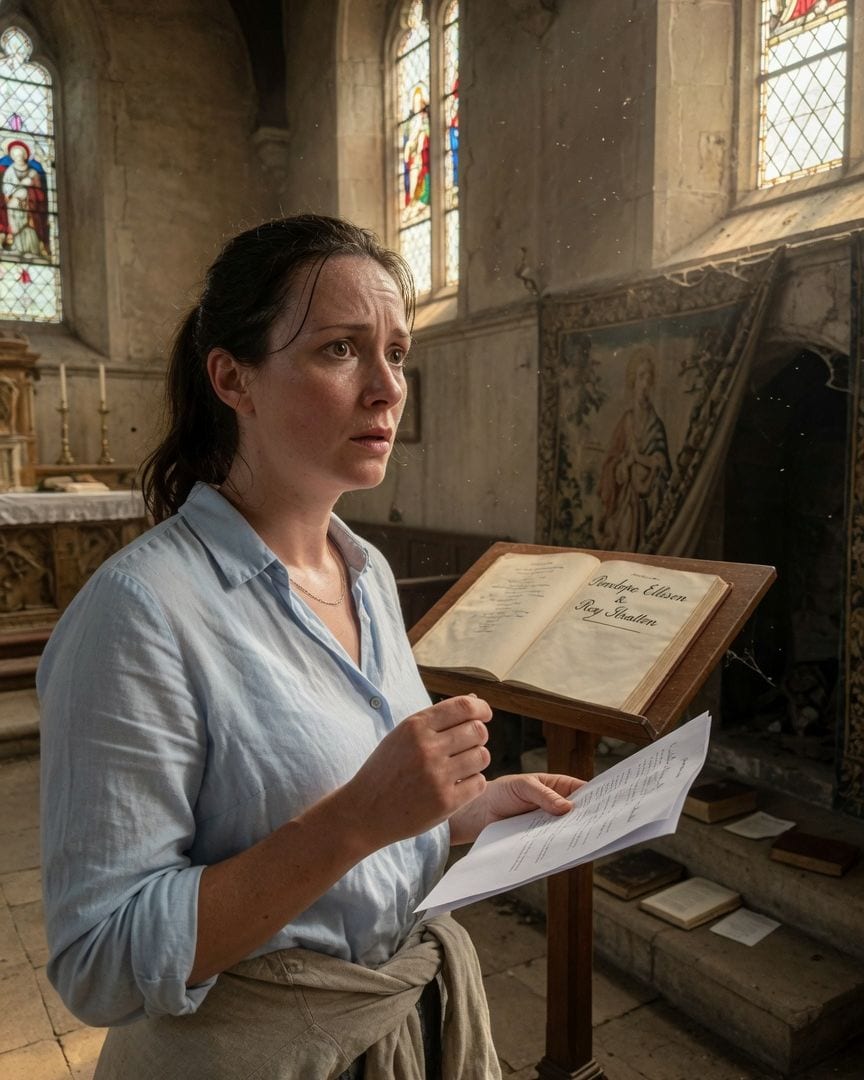
The church's banns book shows a wedding notice, republished every three weeks. Same names, fresh ink. The marriage was never solemnised.
As a newcomer to Marne, I noticed the curate quickly hide a page in the church's banns book. It showed a wedding for 'Penelope Ellison' and 'Roy Stratton' with fresh ink, yet I could find no record of them anywhere in town. The curate's dread-filled warning to leave "some things undisturbed" made the phantom names feel chillingly real.
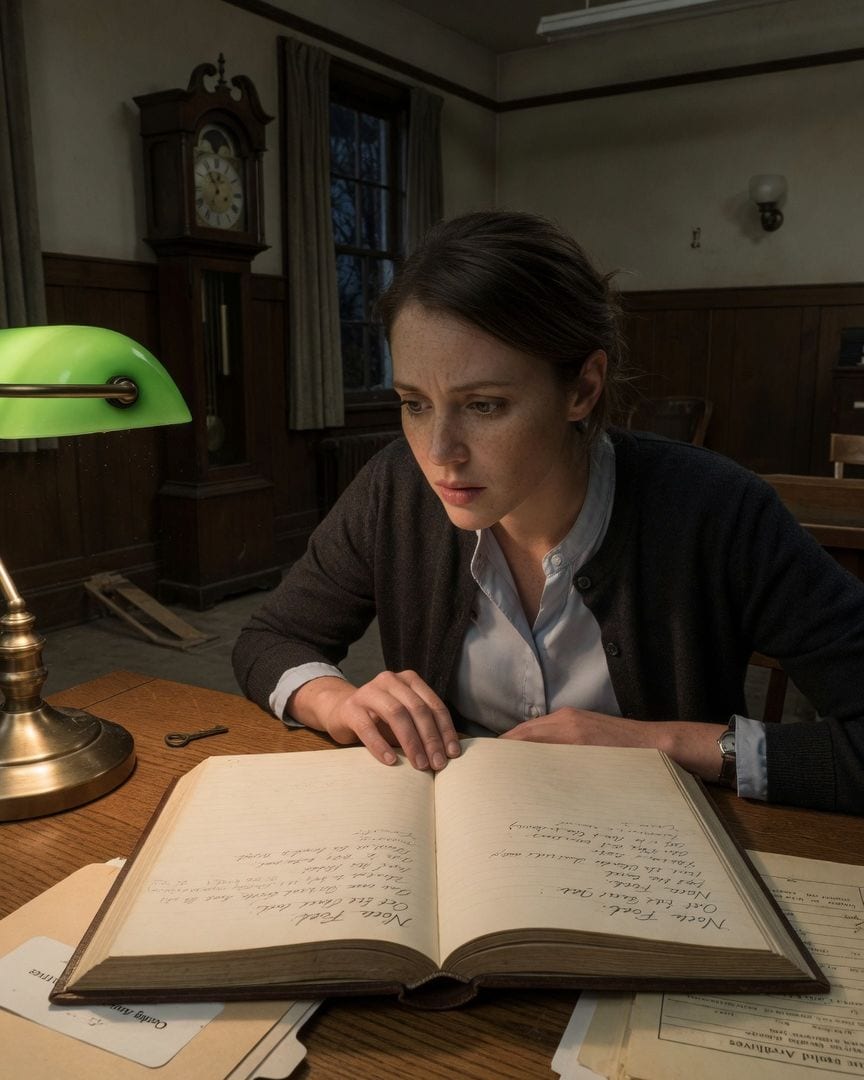
My grandmother’s name reappears in the old book of remembrance — on the same date, same street, every few decades since 1929. A verger’s note reads: 'ask no family.'
As Keeper of the crematorium's Book of Remembrance, my job is quiet and meticulous. But while updating my own grandmother's entry, I found two more Nora Fords listed above hers. Each died on October 3rd, decades apart, with the same address and a strange instruction: 'ask no family.'
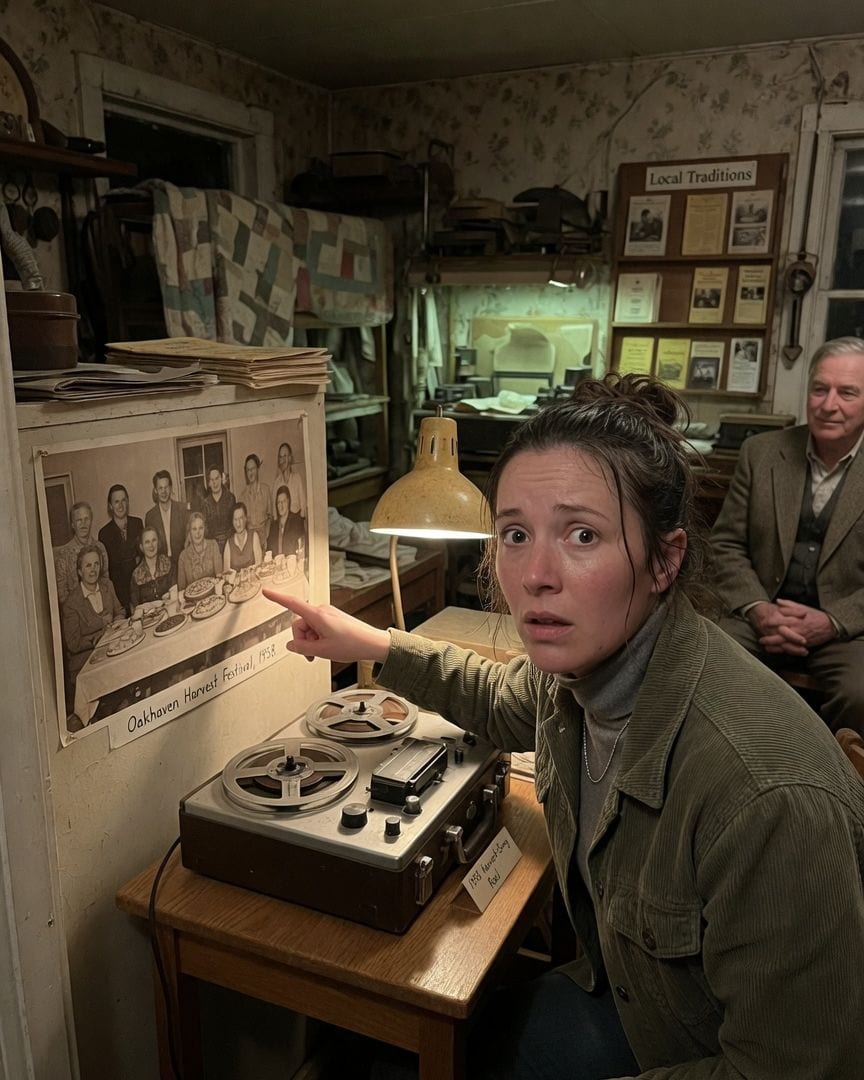
The folk museum's harvest tape counts one more singer than the photograph shows. The curator turned the recorder off before playing it.
I found a quiet escape at Oakhaven's dusty Folk Museum, where the curator played a rare 1958 harvest song. But as a cheerful tune filled the room, a low voice began to count. The tape tallied thirteen, yet the old photograph beside it showed only twelve smiling villagers.
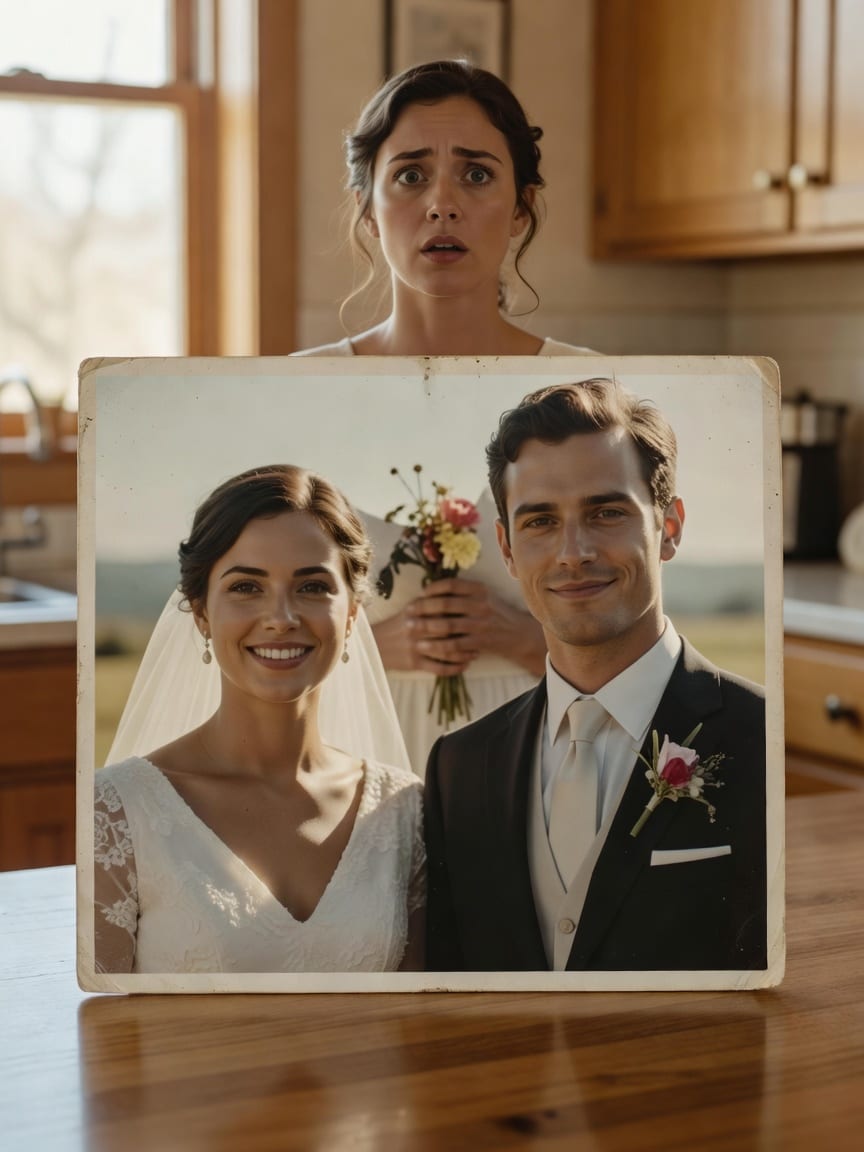
My best friend thanked me for standing up at his wedding. He isn't married. He described my speech, the ring, the bride's face — none of it real, but he remembered every detail.
My friend Julian Doyle vanished for two years, then reappeared acting like no time had passed. He talked about his wedding, where I supposedly gave a speech, describing every detail vividly. But Julian isn't married, and I have no memory of ever attending such an event.