An archivist finds her grandmother's photo in a Cold War dossier. Iris smiles, vacant-eyed, with a face her granddaughter never saw.
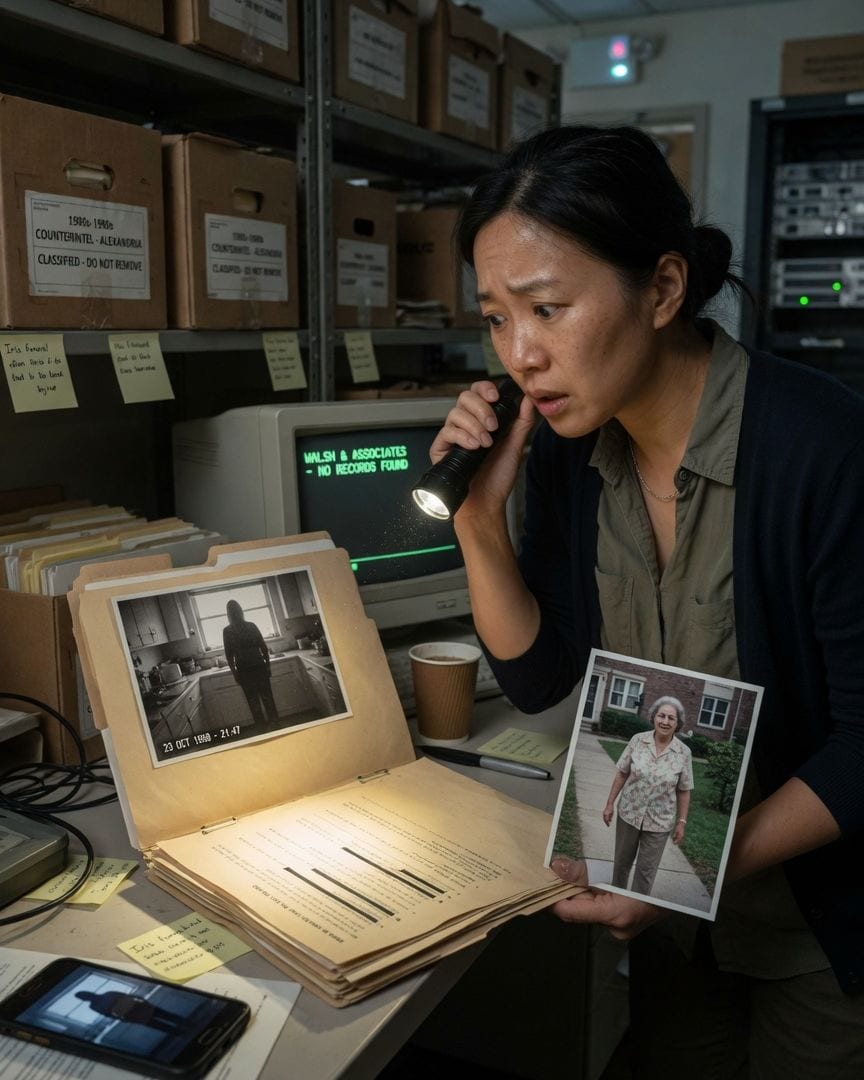
Junie Kwan, 32, adjusted the beam of her flashlight over the dusty stacks, the silence of the Alexandria archives at eleven PM broken only by the hum of ancient HVAC.
A court order mandated the 1988 counterintelligence dossier she held would reseal at midnight, and she still had an hour.
The file was a cold case, a ghost story of bureaucracy: a defector who never existed, an apartment in Alexandria that was never leased, and a grainy surveillance photograph. Kwan had stopped breathing when she saw the photo.
It was taken through a window, dated the night of her grandmother, Iris Sinclair’s, funeral. The apartment in the frame was the exact flat where Iris had died.
In the photograph, behind the glass, someone was standing at the kitchen sink. But Junie knew, with a certainty that chilled her to the bone, that the flat had been empty that night. Every light off, every door locked.
Junie’s rational mind immediately sought mundane explanations. A trick of light? A long exposure catching a shadow? A relative who’d stayed behind without her knowledge?
She zoomed in on the photo with her phone, the digital enhancement revealing the figure with unsettling clarity: a tall, indistinct silhouette, perfectly still, facing away from the lens. No, it wasn't a trick.
The flat had been empty, she’d personally locked it after the last mourner left. She returned to the dossier, cross-referencing the Alexandria address.
Her fingers flew across the keyboard of her archive terminal, searching for any other mention of the specific unit, the building, or the mysterious 'Walsh & Associates' listed as the property owner in the 1988 file.
Her search yielded no current records for 'Walsh & Associates,' only a series of defunct shell corporations, all registered to different P.O. boxes across the Eastern Seaboard.
But the address itself appeared in other classified files—not as a defector's safe house, but as 'unleased' or 'vacant' properties linked to other 'unaccounted for' persons. A pattern began to emerge, too precise to be coincidence, too chilling to ignore.
Every time, the pattern was the same: a person vanished, and an 'unleased' property was listed, then silently reclassified as 'closed' within days. The hum of the server racks seemed to deepen, a low growl in the quiet room.
Junie’s search continued, a growing unease tightening in her chest. As she carefully turned a brittle page in the 1988 dossier, a loose, unfiled photograph, smaller than the others, slipped out and fluttered to the floor.
She picked it up, her heart leaping into her throat. It was a candid shot of her grandmother, Iris Sinclair, taken months before her death, walking near the Alexandria apartment building.
Iris was alive in the photo, dressed in her gardening clothes. But her face, normally kind and etched with gentle wisdom, was utterly blank. Her eyes, usually sparkling, were vacant, unfocused, and a faint, unnatural smile played on her lips.
It was a smile Junie had never, ever seen on her grandmother. A cold dread seeped into her, an awful realization that her grandmother might not have been herself long before she died.
Junie tried to call her supervisor, Arthur Stratton, but his line went straight to voicemail. It was almost midnight, and the archives were deserted.
Ignoring the court order's deadline for a moment, she used her higher-level credentials to access the restricted digital archives. She typed 'Walsh & Associates' into the search bar, then the specific Alexandria address.
The results were chilling: a string of similar cases spanning decades, all involving 'missing persons' labeled as 'defectors' or 'unaccounted for.'
Each individual was linked to a different 'Walsh & Associates' shell corporation and a property listed as 'unleased' or 'vacant' at the time of their disappearance.
The pattern was identical: a person vanishes, a property is listed, then classified as 'closed.' She found an old, heavily redacted memo from the 1970s, buried deep in a military intelligence file.
It mentioned 'asset acquisition' and 'relocation protocols' at these specific types of sites. The terminology was clinical, chillingly impersonal. It wasn't about finding defectors; it was about acquiring them.
The dates on the memo, the property types, and the names of the vanished all lined up, a perfect, horrifying mosaic. The dread deepened, transforming from a vague unease into something sharp and specific.
This wasn't a clerical error; it was a system. And her grandmother’s flat, her grandmother herself, was part of it. She pulled up Iris Sinclair's official death certificate, cross-referencing it with the dates on the memo and the surveillance photos.
The gaps in the timeline, the vague cause of death – everything started to make a horrible kind of sense. The mundane explanations were dead.
Junie was deep in the digital archives, her screen a blur of dates and redacted text, when it flickered. A chat window abruptly opened, overlaying her research.
A single, chilling message appeared: "Some files are meant to stay closed, Assistant Kwan." The sender was listed as "SYSTEM_ADMIN." Her heart hammered against her ribs.
She tried to trace the IP, but it dissolved into a labyrinth of proxies, untraceable. A cold sweat prickled her skin. She wasn't just observing a pattern; she was being observed.
The realization hit her with sickening force: her access, her every move, was being monitored. She quickly closed the chat window, her fingers trembling.
The fluorescent lights above her flickered once, making the shadows in the vast room seem to jump and solidify. As she logged out and gathered her things, the silence of the archives felt heavier, more oppressive.
Heading down the long, dimly lit corridor towards the exit, she noticed one of the old security cameras, usually static, slowly, deliberately, pan to follow her. Its red eye seemed to bore into her, a silent, unblinking witness.
She quickened her pace, the sound of her own footsteps echoing too loudly in the cavernous space. The feeling of being watched was no longer a vague apprehension; it was a cold, certain fact.
Someone knew exactly what she had found, and they were letting her know she was not alone.
The next morning, Junie found Arthur Stratton at his desk, nursing a lukewarm coffee. He looked tired, his usual meticulous composure slightly frayed.
She approached him, the photo of her grandmother with the vacant eyes clutched in her hand, along with printouts of the 'Walsh & Associates' pattern. "Arthur, I need to talk to you about this," she said, her voice tight.
Stratton’s eyes, normally kind, darted to the photo and then to the stack of documents. A flicker of something – fear? Recognition? – crossed his face.
"Junie, I thought you understood these files are… sensitive," he began, his tone a practiced evasion. "Sensitive? My grandmother is in one of these 'sensitive' files, Arthur. This photo was taken months before she died.
And this 'Walsh & Associates' is a ghost. It’s linked to dozens of 'unaccounted for' cases, all tied to 'unleased' properties." She pushed the printouts across his desk. Stratton sighed, running a hand over his thinning hair.
"'Walsh & Associates' isn't a company, Junie. It's… a code-name. For a classified disposition program. For individuals deemed… unstable. Or compromised by foreign influence." He paused, choosing his words carefully. "The apartments were meant to be safe houses, for observation.
Relocation protocols." His voice was flat, official. "But it wasn't always successful, was it?" Junie pressed, her gaze unwavering. "Some 'assets' were never truly accounted for. Just… filed." Stratton's eyes dropped, betraying him.
"The program was active for longer than officially stated. Iris… Iris was a sensitive case. A difficult one to… process." He wouldn't meet her eyes.
The pieces clicked into place: the defector, the empty flat, the figure at the sink, her grandmother's vacant face. It wasn't about finding them; it was about what happened when they were found.
The air in Stratton's office suddenly felt thin, tasting faintly of ozone.
Stratton was visibly agitated, trying to steer Junie away from further inquiry. He kept repeating, "Some things are better left buried, Junie. You don't want to be in those files." His voice was low, urgent, laced with an unnerving undertone.
"Trust me. You really don't want to be in those files." As he said it, a new email notification popped up on Junie's work computer screen, a sharp, intrusive ping in the quiet office. Her blood ran cold.
It was from 'SYSTEM_ADMIN.' The subject line, stark and chilling, was her own name: "KWAN, JUNIE, ASSISTANT ARCHIVIST." Attached was a recent surveillance photo. Junie clicked it, her hand shaking.
It was a photo of her, taken through the archives window, standing at her desk, just a few hours ago. Her face was clearly visible, a look of focused determination on her features as she stared at her computer screen.
The image was perfectly clear, perfectly still. It confirmed everything: she wasn't just investigating the files; she was now a subject within them. The realization hit her like a physical blow, stealing her breath. She was already named.
She was already being filed.
Junie, her face pale with horror, held up the photo of herself. "You knew," she whispered, her voice barely audible. "You knew this was happening." Stratton finally broke.
His shoulders slumped, and he looked up, his eyes filled with a profound, ancient weariness. "It's not a program, Junie. Not in the way you think," he admitted, his voice hollow. "The 'disposition program' isn't about re-education or safe houses.
It's about replacement. The 'defectors,' the 'compromised assets'—they're merely individuals whose identities are deemed suitable for… re-appropriation. By something. An entity that operates through these 'unleased' properties." He gestured vaguely at the vast archives around them.
"Iris Sinclair was one such case. Her 'death' was merely the final 'filing' of the original Iris. The entity took her place, for a time. It leaves traces in the files, documenting its 'acquisitions.'"
He explained how the 'resealing at midnight' wasn't to hide the truth from the public, but to mark the completion of a 'filing,' to ensure the records were finalized.
"The files are how it proves it," Stratton said, his voice raspy. "How it tracks its… inventory." And now, Junie Kwan, by exposing the pattern, had drawn its attention. She had been selected.
The figure at the sink, her grandmother’s vacant gaze, the 'Walsh & Associates' shell corporations, the 'SYSTEM_ADMIN' message—it all snapped into place, a horrifyingly coherent picture of an ongoing, patient horror.
The files weren't just records; they were a ledger of souls.
Junie tried to run, to push past Stratton, but the heavy archive doors, usually open during business hours, were now solidly shut, the electronic lock panel dark. "It's too late, Junie," Stratton said, his voice devoid of emotion.
"It's already here. It's been observing you since you started digging." He stood, slowly, and walked to his own desk. He pulled open a drawer and retrieved an old, faded dossier, its cover yellowed with age.
He placed it on the desk, his hands steady. The name on the cover, in bold, stamped letters, was "STRATTON, ARTHUR, ARCHIVIST." Inside, a 1990s surveillance photo showed a younger Arthur, looking terrified, his face contorted in a silent scream.
"I was 'filed' years ago," he confessed, his gaze distant. "The original Arthur… he's gone. This one… this one maintains the archives. Keeps the ledger." He looked at Junie, a strange, placid smile on his face. "Resistance is futile.
You just become another entry." As he spoke, the lights in the archive began to flicker erratically, the hum of the old server racks changing pitch, growing deeper, almost organic.
A cold, sweet scent, like old paper and something else, something impossibly ancient and alive, filled the air. The vast rows of files seemed to lean inward, the shadows deepening, stretching like grasping fingers.
The silence pressed in, no longer empty, but expectant. Junie felt a profound, chilling cold seep into her bones, not from the temperature, but from the presence that was now undeniably in the room with them, signing its next file.
The archive doors remained locked until morning, unresponsive to security overrides. When the night watchman finally forced entry, he found Arthur Stratton alone at his desk, meticulously cross-referencing files, humming a tuneless melody.
There was no sign of Assistant Archivist Junie Kwan, though her flashlight lay on the floor beside the open 1988 dossier. Her work computer was logged out, the screen dark. A search was initiated, but it yielded nothing.
Her car was still in the parking lot. Her apartment was empty. No leads, no witnesses, no trace. The case was quietly, efficiently, closed.
Weeks later, a new Assistant Archivist, Raymond Walsh, was assigned to the Alexandria branch. He found a recent file on his desk, marked 'URGENT.' The subject was 'KWAN, JUNIE, ASSISTANT ARCHIVIST.'
Inside was a single surveillance photograph of Junie Kwan, standing at her desk, a faint, unnatural smile playing on her lips as she looked directly at the lens. The file was stamped, "CLOSED."
If this one got to you
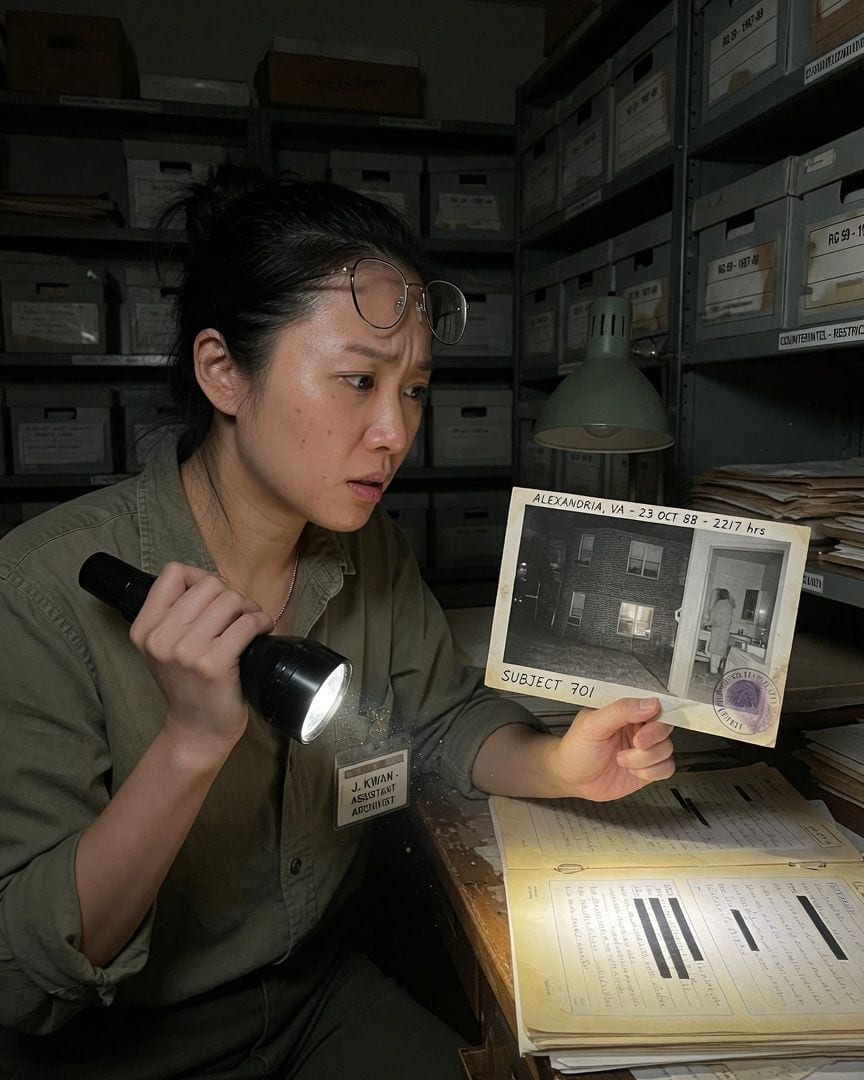
An assistant archivist's Cold War file held a photo of her grandmother's empty 1988 apartment. A figure stood in the window, stamped 'UNIT 701'.
Assistant archivist Junie Kwan hunched over a heavy 1988 counterintelligence dossier in the silent gloom of the National Archives. With only an hour before a court order sealed the file, she faced a personal horror. Tucked inside was a grainy surveillance photograph, dated the night of her grandmother’s 1988 funeral, showing the very apartment where Florence had lived and died. In the frame, behind the grimy kitchen window, a faint figure stood at the sink, despite the apartment being meticulously cleared out, empty, and locked. Junie discovered cryptic marginalia and a mysterious 'UNIT 701' stamp on the photo, hinting at a secret far deeper than a simple clerical error.
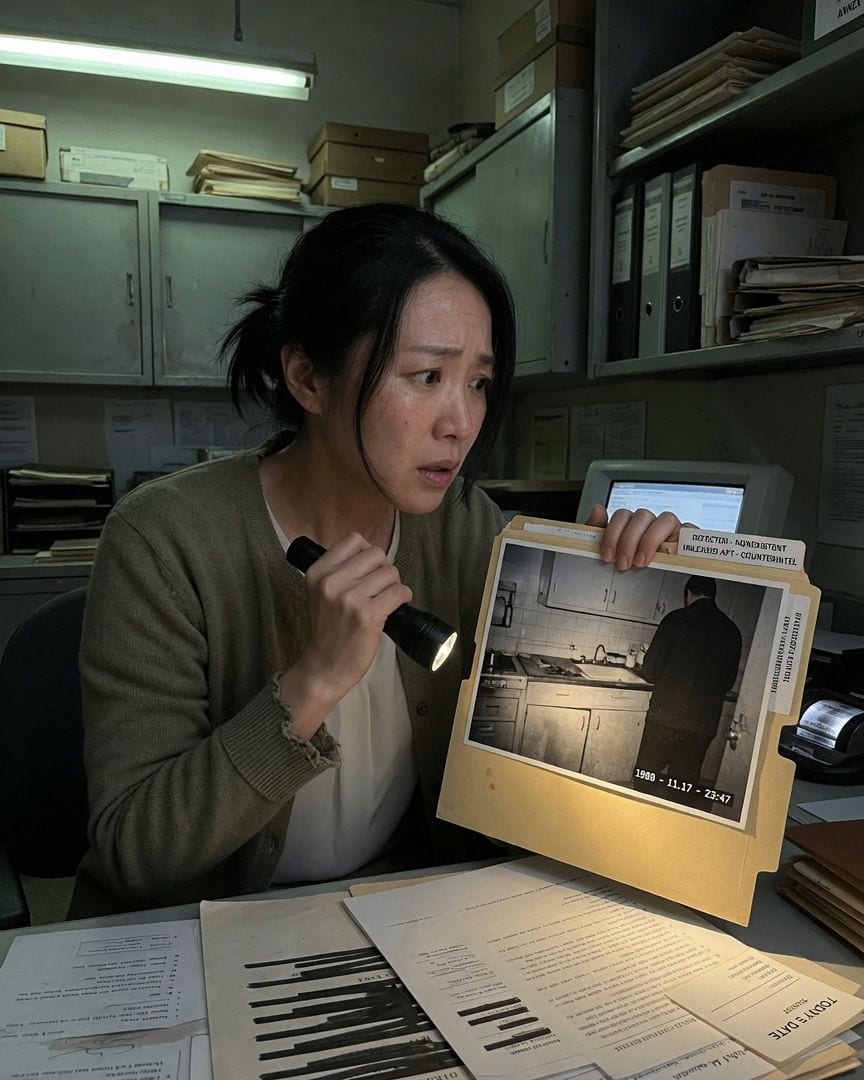
Against a midnight deadline, archivist Junie Kwan finds a Cold War dossier with a photo of her grandmother's kitchen, empty the night of the funeral, with an unknown figure standing inside.
Archivist Junie Kwan huddled in the hushed, cool Alexandria archives, working against a midnight court order to reseal a strange counterintelligence dossier. The file, dense with blanked sections, concerned a 'defector who never existed' and an 'unleased apartment.' As she scanned a grainy surveillance photo, a prickle of unease turned to dread: it was her grandmother's kitchen, dated 1988, the night of the funeral. A tall, rigid figure stood at the sink, yet Junie knew with certainty the apartment had been empty and locked that night. How could an impossible presence appear in a locked, empty room, tied to a phantom Cold War case?
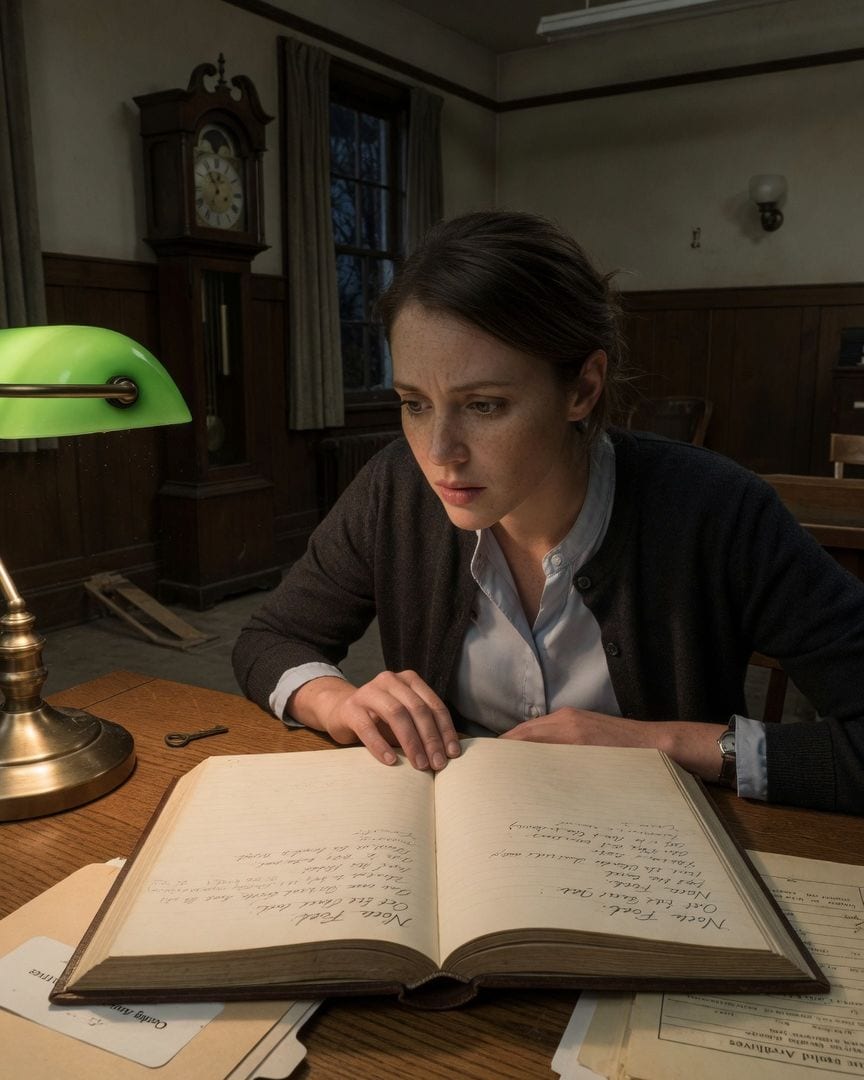
My grandmother’s name reappears in the old book of remembrance — on the same date, same street, every few decades since 1929. A verger’s note reads: 'ask no family.'
As Keeper of the crematorium's Book of Remembrance, my job is quiet and meticulous. But while updating my own grandmother's entry, I found two more Nora Fords listed above hers. Each died on October 3rd, decades apart, with the same address and a strange instruction: 'ask no family.'
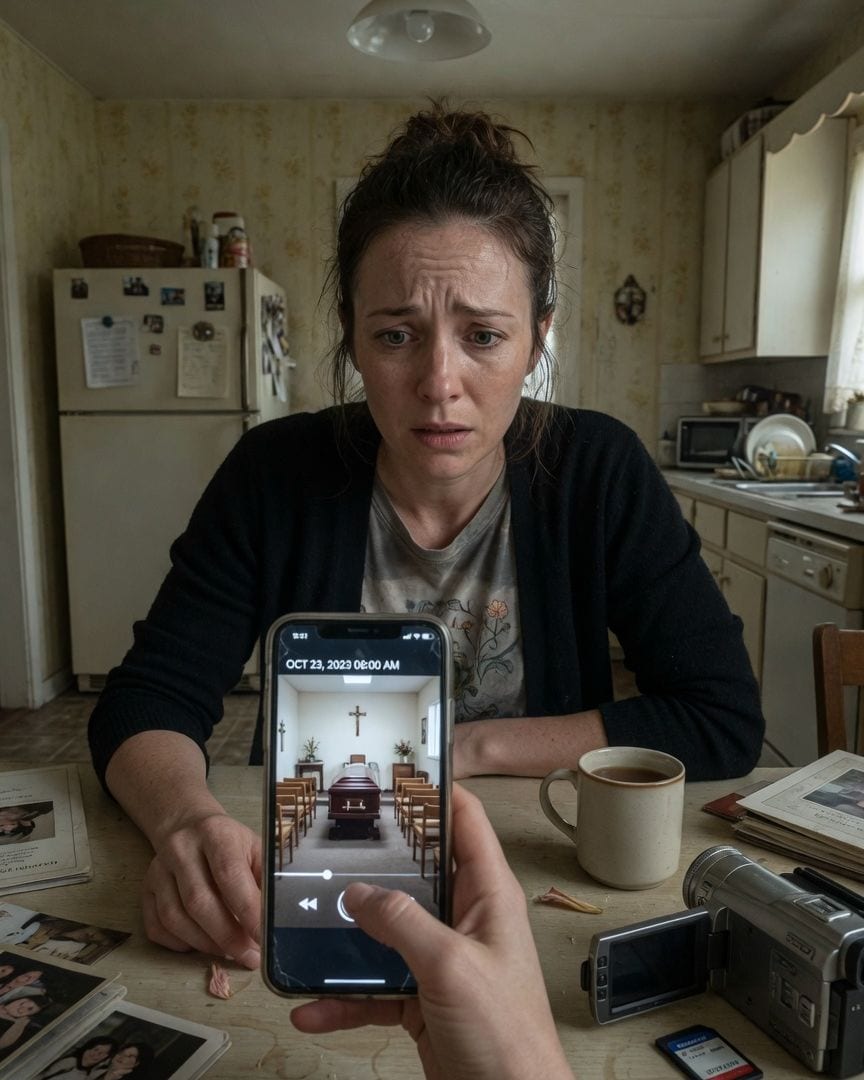
On my dead mother's phone I found a video of her funeral — steady, shot from the back over the mourners' heads, holding on her coffin. The timestamp says it was filmed an hour before any of us had arrived.
Days after my mother's funeral, I sifted through her digital life, hoping for comfort. Instead, her old camcorder revealed a video of my living room, timestamped for tomorrow morning. The abstract landscape I'd just hung was already there, waiting on the wall, a cold dread tightening in my gut.
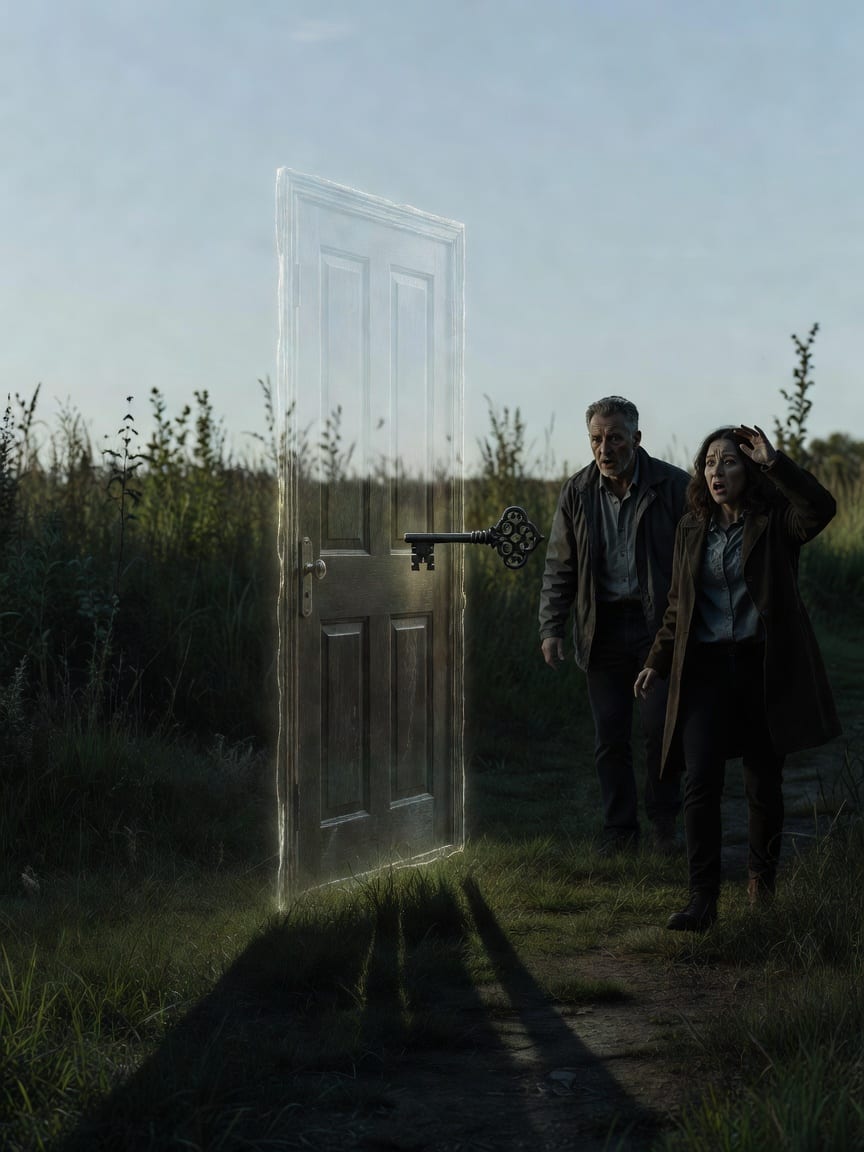
My name was on a package lodged in 1974. I wasn't born until 1985. Inside was a key and a note: 'You know which door. Not yet.'
I'm Elena Radcliffe, 38, and a solicitor's letter just arrived for me about a package. The firm's records state it was lodged in 1974, years before I was born. Now I've found an old newspaper article reporting a woman with my exact name vanished that very year.
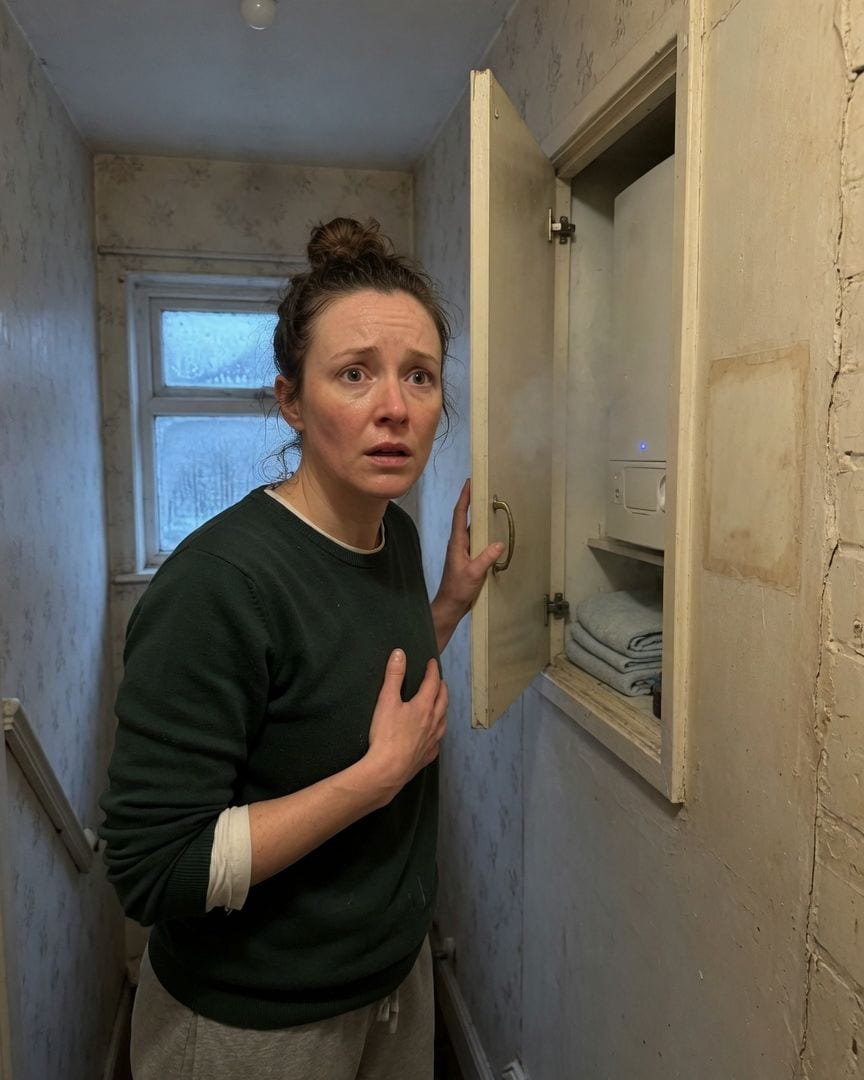
My airing cupboard held a brick copper, fire lit, sheets boiling, smelling of soda and wet linen. I live in a modern flat; there's only ever been a boiler and towels.
Claire Bishop was settling into her new house when she opened the airing cupboard for a blanket. A wave of humid heat and the intense smell of soda rolled out, revealing a heavy copper vessel boiling laundry over a crackling fire. She slammed the door, only to find the cupboard perfectly normal moments later, the impossible vision unnervingly vivid.