My birthday card arrived a day early, as always. Same cake, same silver name, postmarked from an empty field. This year, one candle was crossed out.
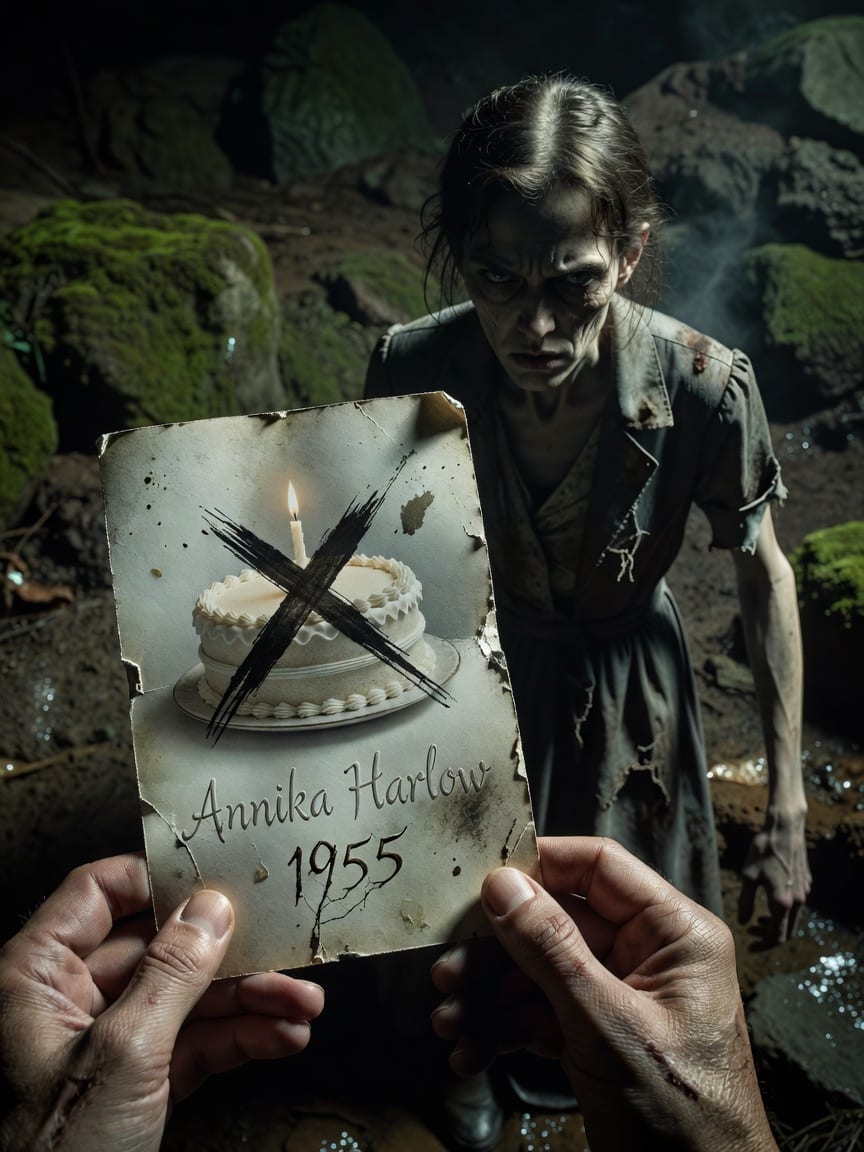
I held the silver-embossed birthday card, turning it over in my hands. March 4th. A day early, just like it had been for the past five years. Every birthday since I turned 27, this card showed up.
Same generic white cake with seven neat candles, same blocky silver lettering spelling out 'Happy Birthday Annika' inside. It was a weird, persistent little anomaly in my otherwise pragmatic, accountant’s life.
But this year, one candle on the cake had been neatly, unmistakably, crossed out. Not scribbled, not smudged. A sharp, deliberate black 'X' directly over the flame. My breath hitched. The postmark, as always, read 'Carwynnen.' I knew Carwynnen.
It wasn't a town, not even a village. It was an empty field twenty miles north of my apartment, a place I’d only ever seen on maps, marked by nothing but a single, fallen stone monument.
There were no houses for a mile in any direction. This wasn't a mistake. This was deliberate.
The crossed-out candle gnawed at me. I tried to rationalize it away: a postal worker’s doodle, a factory error, some kid’s prank.
But the chilling precision of the mark, that sharp black X, and the persistent Carwynnen postmark, made it impossible to dismiss. This wasn’t random. I pulled up satellite images of the field.
Just an expanse of green, a few trees around the perimeter, and the faint outline of the monument, a darker blotch in the middle.
No houses, no businesses, nothing that could account for a regular postal service, or even a single mailbox.
I even called the local post office in the nearest town. The clerk, bored and clipped, confirmed Carwynnen was just a rural route, a dead end. “No specific sender registered to that address, ma’am.
Just a general drop point for the outlying farms. Nothing to see there.”
Frustrated, and with a growing prickle of unease, I drove out there myself. The field stretched out, desolate, under a vast, indifferent sky. The wind, cutting through the open space, felt colder than it should.
The monument, a large, moss-covered slab, lay half-buried in the earth, like a giant's forgotten tooth.
I walked the perimeter, my boots sinking into the damp soil, looking for any sign of a hidden mailbox, a derelict shed, anything that could serve as a source for the cards. There was nothing. Just empty, wind-swept land.
The sheer emptiness only amplified the dread twisting in my gut. Who, or what, was sending these damn cards? And what the hell did that crossed-out candle mean?
I found myself drawn to the fallen monument, a strange, undeniable pull urging me to inspect the ground around it. The earth was soft from recent rain, almost muddy in places.
I knelt, brushing away damp soil near the monument’s base. My fingers snagged on something firm, thin, metallic-feeling. My breath hitched in my throat. I dug carefully, my nails scraping against the packed earth, revealing a small, silver-embossed envelope.
It was identical in design to my own birthday cards – the same stock, the same texture, even the faint floral pattern along the edges.
It was water-damaged, the paper softened by decades in the earth, the silver a dull, tarnished grey. My heart hammered against my ribs, a frantic drum in the silence of the field. With trembling hands, I pried it open.
Inside, a card. The same generic cake. But the silver inscription was faded, the paper brittle, almost crumbling at the edges. And there, written in a delicate, looping hand, was my name: 'Annika Harlow.'
Below it, scrawled in a different, heavier script, a date: 1955.
The 1955 card was a cold, impossible weight in my hand. I was born in 1991. How could my name be on a card from thirty-six years before I even existed?
The absurdity of it warred with the undeniable, tangible proof.
I showed it to Sean Bryant, a colleague I trusted, mostly because he had a cynical streak that made him good at spotting bullshit. He stared at it, speechless, his usual glibness failing him.
"It's a fake," he finally said, but his voice lacked any real conviction. "Some kind of elaborate prank."
I shook my head, my grip tight on the brittle card. "Who would go to this much trouble, Sean? To bury it out there in that godforsaken field, perfectly preserved for decades, just for a prank that pays off today?"
He had no answer. I decided to consult the only person I knew who might have knowledge of local history deep enough to account for something this bizarre: Gloria Fairfax, the retired archivist at the county library.
Gloria, a woman with sharp eyes behind thick spectacles and an encyclopedic memory for local minutiae, listened to my story, her expression unreadable. I laid the 1955 card on her desk.
She picked it up, her brow furrowing as she examined the faded script. "Carwynnen, you say? That field has… stories. Not widely known. Best kept that way, usually."
She led me into the hushed back rooms of the archive, a labyrinth of dusty ledgers and brittle newspapers, the air thick with the smell of old paper and forgotten lives.
Gloria pulled out a heavy, leather-bound volume, its pages yellowed and fragile. "This isn't for public viewing, dear. Old family records, mostly. But there's a section…" She flipped through pages, her finger tracing lines of elegant script. "Ah. Here."
The ledger contained a list of names, each with a date, under the stark heading 'Carwynnen Markings.' I leaned closer, my heart thumping a frantic rhythm against my ribs. Halfway down a page, dated 1955, was a familiar name.
Not Daphne Maddox, as some part of me had expected from some half-remembered local story. It read: 'Annika Harlow.'
Gloria looked up, her face pale, the usual composure gone. "This isn't a prank, dear. This is real."
The revelation in the ledger left me reeling. My name, dated 1955, linked to 'Carwynnen Markings.' It felt like a physical blow, a punch to the gut that left me breathless.
I left the archive in a daze, the dread now a live, crawling thing under my skin. The library’s heavy oak doors seemed to close behind me with a final, ominous thud.
I found myself constantly glancing over my shoulder, a prickling sensation on my neck. Every shadow seemed to deepen into something watchful, every unexpected sound, a car backfiring, a child's sudden laugh, made me jump.
My phone rang; it was Sean, his voice tight with worry. "Are you okay? Gloria called me, she sounds spooked. What the hell happened?"
I tried to explain, but the words felt hollow, inadequate to convey the icy terror now gripping me. This wasn't just a record; it felt like a direct, personal threat.
That night, unable to sleep, my apartment felt too quiet, too still. The silence pressed in, making me jump at phantom sounds. I felt an overwhelming, irrational urge to go back to Carwynnen.
Not to dig, not to find answers, but just to listen. To see if the place itself held a secret I had missed.
I packed a small, portable voice recorder, the kind I used for meeting notes at work, along with a pair of headphones.
The field was darker, colder than before. The monument loomed, a black silhouette against the faint starlight, more menacing now that I knew what lay beneath it.
I placed the recorder at its base, pointed towards the open field, and retreated to my car. I cranked the windows up, killed the engine, and sat in silence for an hour, listening to the wind howl. Nothing.
No strange sounds, no voices. Just the vast emptiness, the loneliness of the place pressing in on me. Disappointed, but also perversely relieved, I retrieved the recorder and drove home.
I needed to hear for myself that it was just wind.
The next morning, I sat at my kitchen table, a cold cup of coffee in front of me, trying to process the ledger, the 1955 card, the endless field. My phone rang, making me jump.
It was Gloria, her voice tight with suppressed fear. "Annika, I've been looking deeper into that ledger. After you left, I just… I couldn't shake it. I found… more."
Gloria explained that the 'Carwynnen Markings' weren't isolated incidents. There was a pattern. "Names, Annika. Not always the same, but often. And always with a date, followed by a gap, then another name, another date. It's almost like… a cycle."
I felt a cold knot tighten in my stomach. "What kind of cycle, Gloria?"
"A generational one, it seems. And the names aren't random. There are repeats. Like yours." Gloria paused, taking a shaky breath. "And there’s a second column, in a different, even older hand. For some of the names, it says 'Claimed.'
Daphne Maddox, 1922… Claimed. A Russell Sinclair, 1978… Claimed."
My mind raced. The crossed-out candle. My name, in 1955, and again now. "What does 'Claimed' mean, Gloria?" I whispered, the word feeling too large, too heavy in my mouth.
Gloria's voice dropped, barely audible. "The local folklore, the whispers I heard as a girl… they said Carwynnen isn't just a field. It's a place where something… takes people. Not violently, not with a struggle. They just… vanish.
And the cards? The birthday cards? They're not a warning, Annika. They're a marking. A pre-emptive one. The crossed-out candle… that means the time has come. You're not just marked, Annika. You're in the 'Claimed' section of that ledger.
It was added yesterday."
Gloria’s words echoed in my ears, ringing with a terrible finality: 'You're in the 'Claimed' section of that ledger. It was added yesterday.' My blood ran cold, a chill that had nothing to do with the outside weather.
The crossed-out candle on my card. The impossible 1955 card bearing my name. The ledger, confirming everything. It was all converging, fitting together with a horrifying, precise click. I wasn't just observing something strange; I was being targeted.
My gaze fell on the voice recorder I’d brought back from Carwynnen, still lying on my desk, a small, dark rectangle of plastic. I had to know. Had to know if it had picked up anything in that desolate field.
Any sound, any confirmation that I hadn't imagined the oppressive silence, the sense of watchful emptiness.
With a deep, shuddering breath, I plugged in my headphones and pressed play. The recording began, a low hiss of static, then the rustle of wind, the distant hoot of an owl.
Minutes passed, filled only with the ambient sounds of the desolate field, the empty, sighing air. I felt a wave of anti-climax, then a strange, almost sickening relief. It was just wind.
I was about to stop the recording, to pull the headphones free and try to pretend none of this had ever happened, when the sound changed.
A low hum, almost subliminal, vibrated through the headphones, through my eardrums, through the bones of my skull. It wasn’t a natural sound. Then, cutting through the static, clear and resonant, a voice spoke. It said my name: 'Annika.'
Then, a single, sharp word, final as a slammed door: 'Claimed.'
The word 'Claimed' vibrated in my bones, a terrible intimacy. It wasn't a threat; it was a statement of fact. It felt like it had been spoken not to me, but inside me.
I spent the rest of the night digging, not through archives, but through the darkest corners of local folklore I could find online.
Obscure blogs, digitized local histories from forgotten libraries, hushed forum posts from people too afraid to use their real names.
I found it: the Carwynnen entity. Not a ghost, not a demon in any recognizable sense, but something older, something primordial that fed on presence, on identity itself. It wasn't evil in a human sense; it simply was.
It marked individuals through the cards, a pre-ritual claim, then, when the time was right – signified by the crossed-out candle – it would 'call' them. The names in the ledger, the repeated 'Annika Harlows,' were not coincidences.
The entity reused names, cycling through those who had been claimed before, or those whose lives, through some impossible calculation, aligned with its ancient patterns.
The voice on the recording wasn’t a messenger; it was the entity, communicating directly, intimately, a channel to my very core.
It knew my name because it had chosen me, decades ago, before I was even born, marking me in a ledger not of human making.
The cards, the dates, the crossed-out candle – it all clicked into a horrifying, coherent pattern. My rational world shattered, replaced by an ancient, predatory truth.
I knew I couldn't run. The entity wasn't bound by distance or the limitations of space. It had already used my name, had reached into my life from before it even began. My only option was to face it.
Armed with the 1955 card, its paper now fragile as ash, and the voice recorder that held the damning evidence, I drove back to Carwynnen.
The field was bathed in the pale, ethereal light of dawn. The air was unnaturally still, the wind gone, the birds silent, as if the world held its breath.
I walked directly to the fallen monument, the recorder clutched in one hand, the ancient card in the other. I stood there, waiting, my blood pounding in my ears.
A deep, bone-chilling cold began to seep into the ground, rising through my feet, wrapping around my ankles like an icy mist.
The hum from the recording started again, not in my ears, but vibrating through my chest, my bones, a resonant thrumming that shook me to my core.
The air around the monument shimmered, a distortion like heat haze rising from hot asphalt, but it was profoundly, terrifyingly cold.
It wasn't a shape, not a figure, but a void, a hungry absence that pulled at the edges of my perception, a black hole in reality.
I held up the 1955 card, my hand shaking violently. "Why me?" I whispered, my voice barely audible over the intensifying hum.
The hum intensified further, a low thrumming that seemed to speak directly into my mind, not in words, but in a terrible, knowing resonance.
It was the feeling of being utterly, intimately understood, not as a person, but as a destined mark, an equation solved.
I felt my own name echo within me, not just a label, but a deep, inescapable part of the entity's own terrible history. The sense of being chosen, singled out, was overwhelming, terrifying, and complete.
A profound, internal pull began, a gentle but irresistible force drawing me towards the shimmering void at the monument.
Sean Bryant saw her a week later. She was back at her desk, working, but her laughter was gone, replaced by a quiet composure that was unnerving.
Her eyes held a distant, knowing quality, as if she were listening to something only she could hear. The post office confirmed the annual birthday cards from Carwynnen had ceased.
The ledger entry in Gloria Fairfax’s archive for 'Annika Harlow,' dated '1955,' now simply stated 'Claimed,' with no new date after it.
The cards stopped coming, but Carwynnen never truly left my name.
If this one got to you
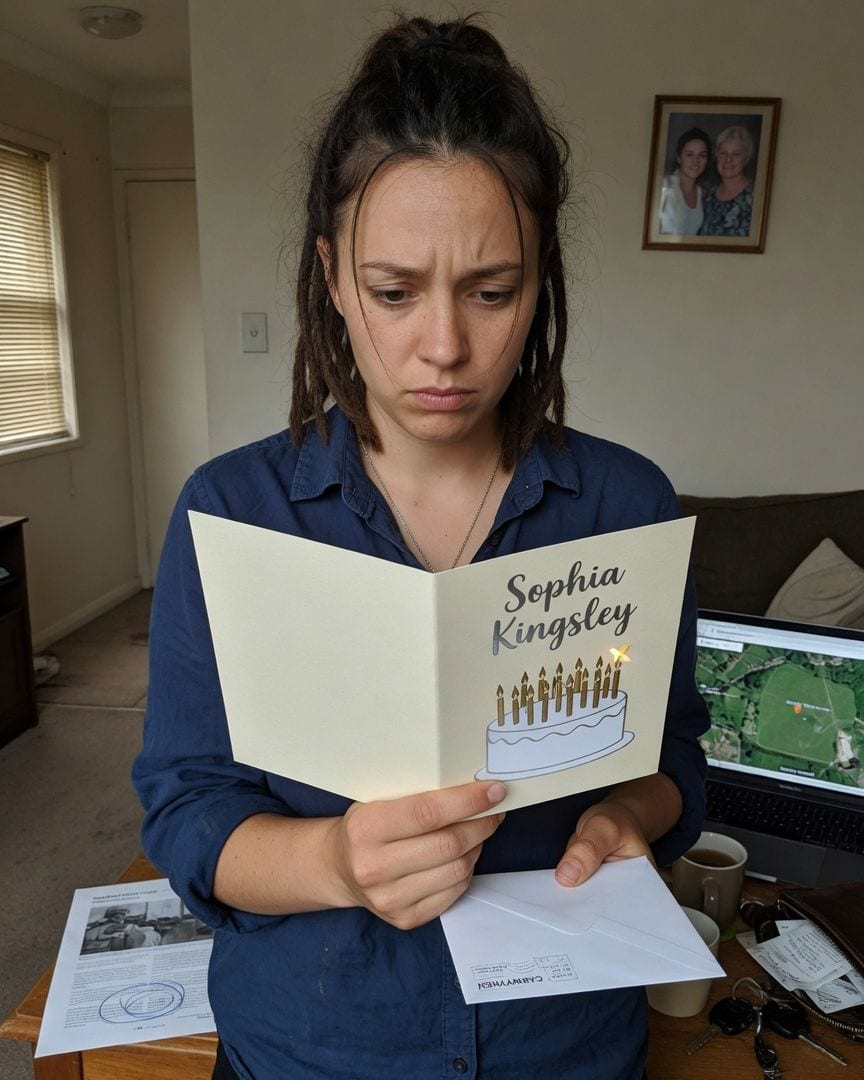
An empty field sends my birthday cards. This year, one candle was crossed out.
My birthday card always arrived a day early, a familiar comfort for five years. This year, a tiny silver 'X' marked one of the thirty candles, and the postmark read 'Carwynnen.' It was an empty field miles from anywhere, with no post office, and no one to send a card.
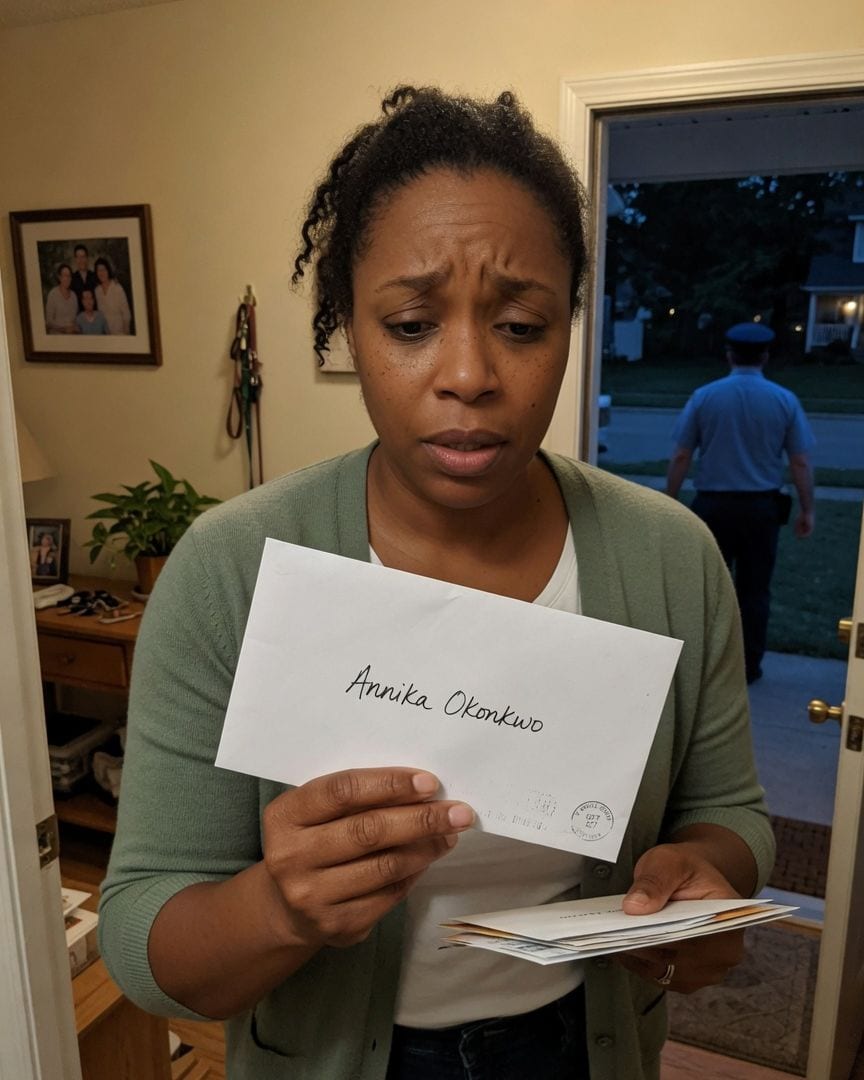
My postman apologised, then disowned the letter with my name.
My postman, Dave, delivered the usual mail, but then strangely swore he never carried one plain white envelope. Addressed to me in an elegant hand, it stood out from the bills. The real dread began when I saw its postmark: 14 Maple Street, a vacant lot where a house burned down fifteen years ago.
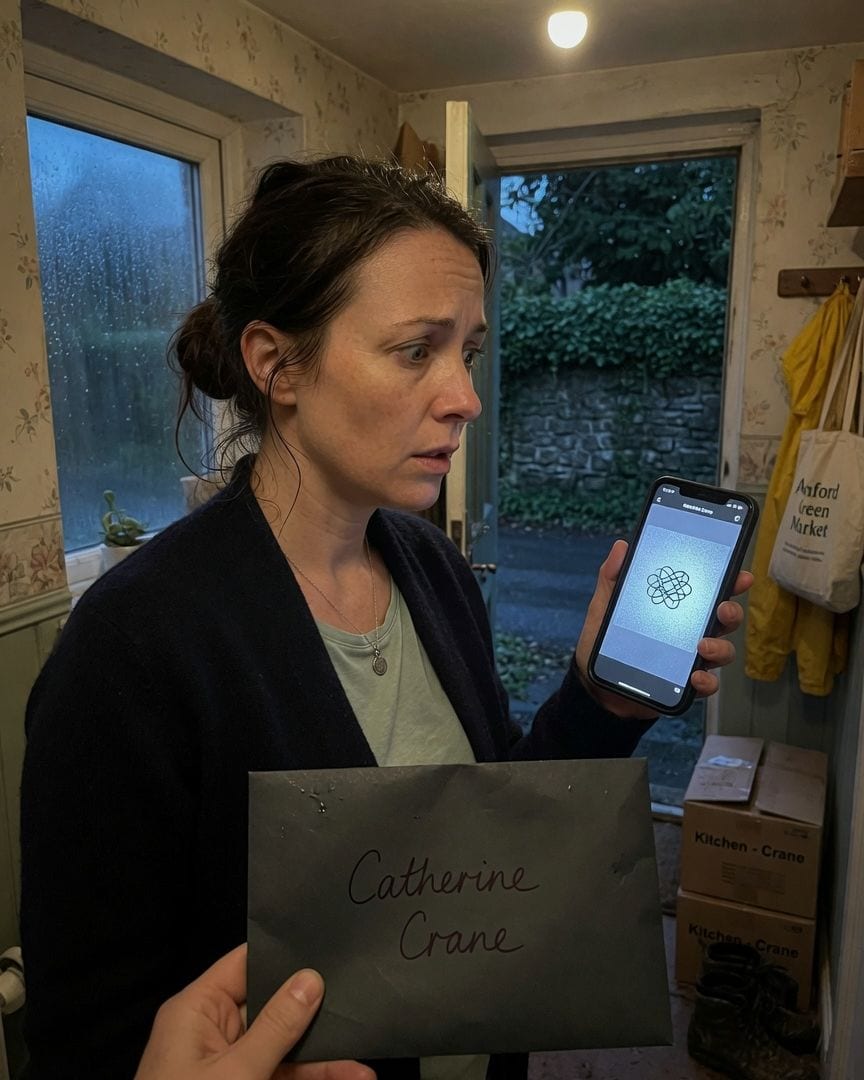
My postman warned me: never use the old pillar box. Royal Mail logs a collection every day, one item, signed by no one.
Moving to Ashford Green, I dismissed my postman's strange warning about the old pillar box by the ford. But after my own letter vanished inside it, I returned at midnight. Then, a dark, unstamped envelope slowly slid *out* of the slot, addressed to me.
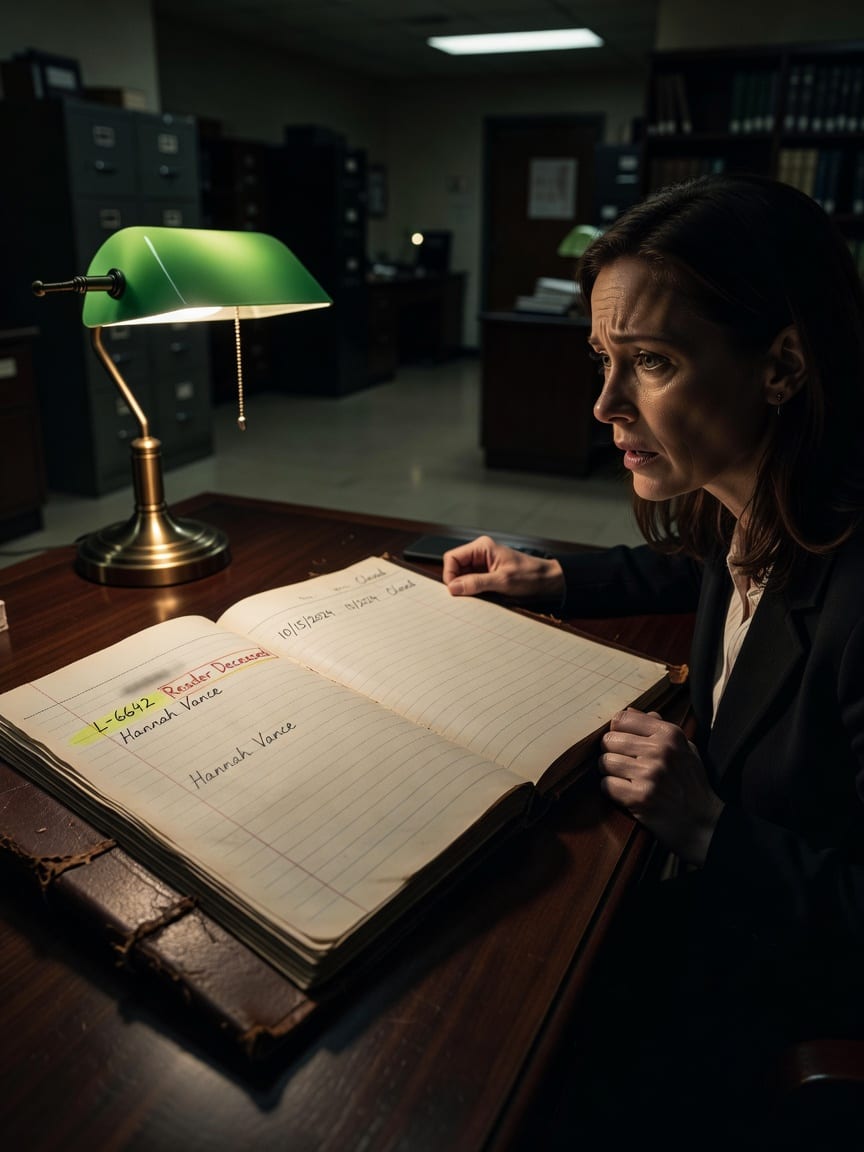
My library card number L-6642 was issued to me at seven — and the ledger shows that number has marked a reader 'deceased' every twelve years since 1949.
Returning my late father's library card to the old town library felt like a small act of closure. But the senior librarian's ancient ledger revealed a chilling pattern of 'reader deceased' entries tied to specific card numbers and borrowed books. My unease turned to cold dread when I secretly found my own name penciled in, marked for a future 'reader deceased' entry.
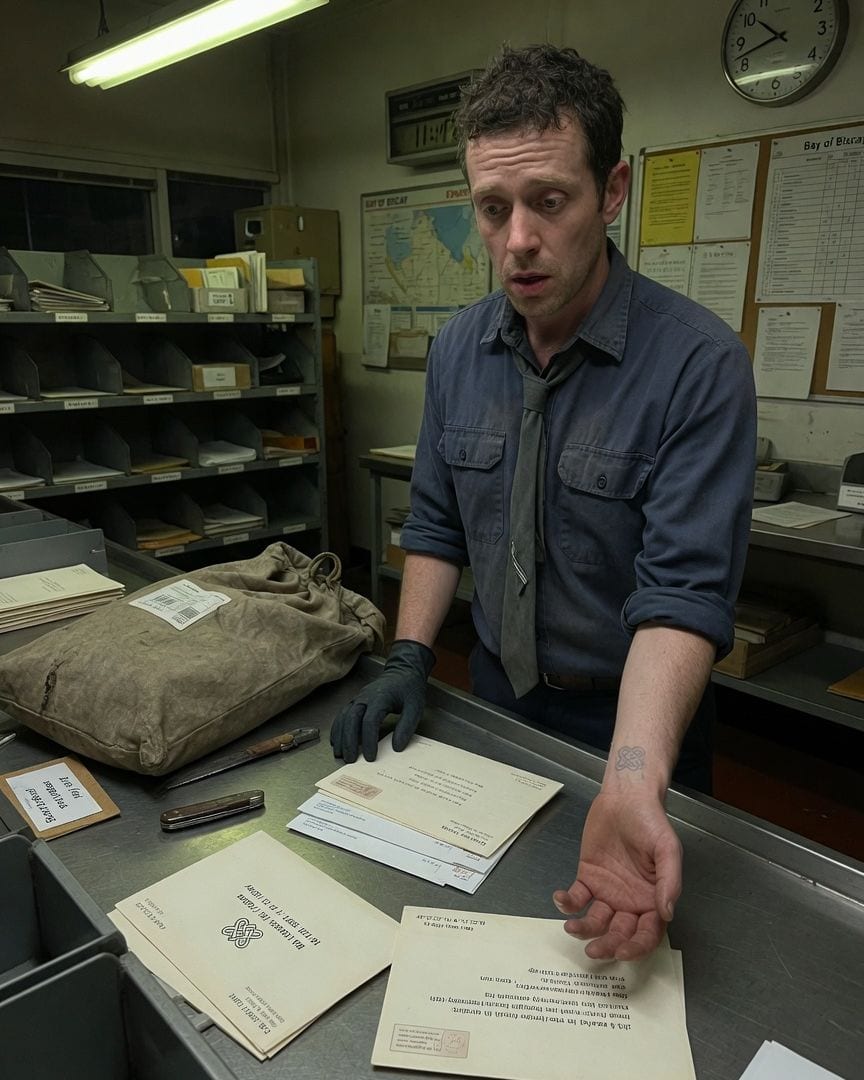
A postal inspector opened a Cold War mail sack from his own birth year. Every letter inside detailed a private memory he'd never shared.
Postal Inspector Guy Vantree stood under the humming fluorescent lights of Port Sterling, examining a peculiar mail sack. Trawlermen had dredged it from the abyssal Bay of Biscay, yet its heavy canvas felt impossibly bone dry after decades underwater. As Vantree ran a gloved hand over the dispatch tags, his own birth year stared back at him – May 1988 – and a chill settled over him, not from the sea air. Then he cut the seal. Inside, every single pristine envelope was addressed directly to him, each one detailing a private memory he had never spoken or written down.
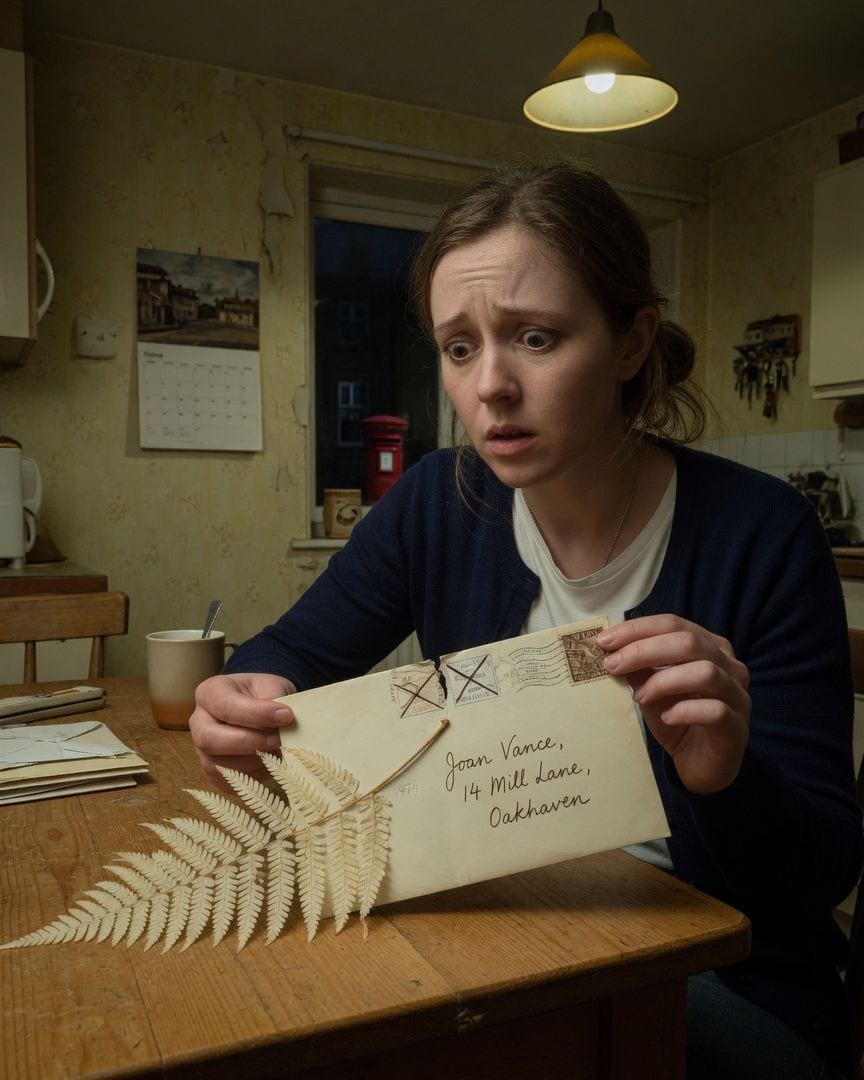
My letter returned. Delivered by hand, with a 1974 postmark. My own address, in a hand I didn't recognise.
As Joan Vance, new to Oakhaven, I posted a letter to my sister just two days ago, well past the last collection. Now, that same envelope sits on my kitchen table, delivered by hand. It bears a postmark from Oakhaven, 1974, a date that makes no sense, as the local post office officially closed that very year.