The lift offered a level below the lowest one, so I took the stairs down a flight that has never existed — into cold, empty bays where a single car sat, its engine still ticking like it had just been driven.
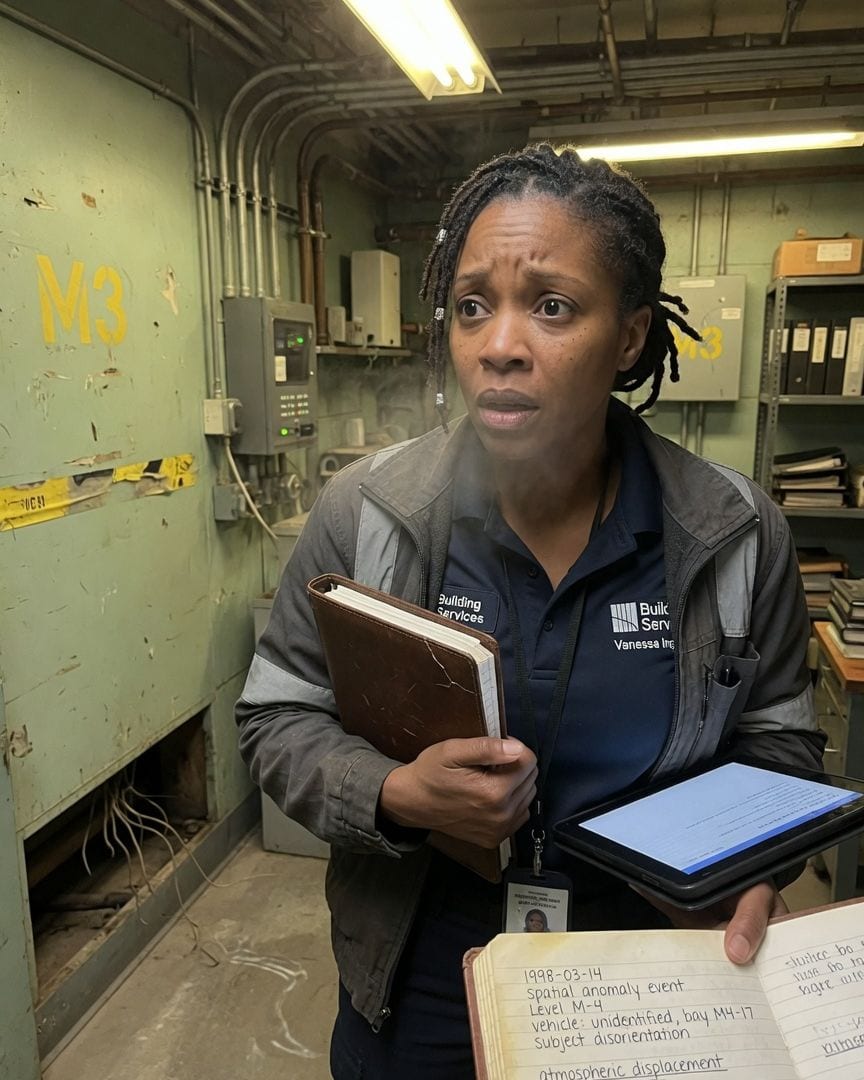
It was Tuesday morning, just after eight, and the building still had that quiet hum it gets before everyone fully arrives. I’m Vanessa Ingram, 32, a Building Services Technician, and my routine is usually solid.
Down to the M3 plant room, check the humidifiers, make sure no pipes are whining. I stepped into the main lift, pressed ‘M3’. The doors slid shut with their familiar sigh.
But as the panel lit up, a fourth option flickered into existence: ‘M-4’. I blinked, my thumb hovering. It had to be a glitch. Maybe a loose wire, or just the old system having one of its moments.
The building was constructed in 1972, after all. I dismissed it, hit ‘M3’ again firmly, and stepped out onto the concrete expanse of the minus-three car park.
The plant room door was just ahead. But as I passed the main stairwell, something felt… off. The air was colder than it should have been. I glanced in, thinking maybe a door was ajar somewhere.
The concrete stairs, usually brightly lit and ending abruptly at M3, seemed to continue downwards, just a faint glow, barely visible. Curiosity, or maybe just habit, pulled me in. I counted the flights. M3 to M2, M2 to M1.
Then, impossibly, another flight, continuing into the cold, dim light. I hesitated for a second, then descended, my boots echoing. A fourth flight. It opened onto a vast, empty level, numbered M4 in faded yellow paint on the support pillars.
Row after row of vacant parking bays stretched into the gloom. The air here wasn’t just cold; it was frigid, metallic, smelling faintly of ozone. My breath misted. Then I saw it.
In bay M4-17, tucked into a corner like it belonged, a single, older model car sat. Its engine was ticking softly, cooling down, as if it had just been driven.
I stood frozen, the sound a faint counterpoint to the silence. This place wasn't on any blueprint, any plan I'd ever seen.
I retreated, my heart hammering against my ribs, the ticking sound replaying in my ears. It had to be exhaustion, I told myself. A trick of the light, an overactive imagination.
I went back to the M3 plant room, the one I actually needed to check, and forced myself to focus. As part of my routine, I checked the digital access logs for my building access card. Just standard maintenance.
My fingers scrolled down the screen, past entries for M1, M2, M3. And then, there it was, stark and impossible: ‘2024-10-22 09:17:34 - Level M-4 - Access Granted.’ My card. Me.
Accessing a floor that didn’t exist, at the exact time I’d been down there. I stared, my mind reeling. I returned to the stairs, then the lift. Neither offered M4.
The car park was M1, M2, M3, as it always had been. The concrete walls were solid, reassuringly mundane. Yet, the memory of the cold air, the metallic tang, the silent, ticking car in bay M4-17 refused to fade.
Pacing the M3 level, trying to make sense of it, I noticed a faint, metallic scuff mark on the concrete near the plant room door, too low to be casual, like something heavy had been dragged from a lower point.
Inside the plant room, tucked away beneath a forgotten shelf, beneath a tangle of old conduits, I found an old, dusty, leather-bound maintenance logbook. It wasn't indexed in our current system, clearly not part of current inventory.
Its cover was cracked, the binding loose. One single page within was dog-eared, almost begging to be read.
My fingers trembled as I opened the logbook to that dog-eared page. The paper was brittle, yellowed. The entry, dated ‘1998-03-14,’ was meticulously detailed, describing a ‘spatial anomaly event’ on ‘Level M-4.’
It listed ‘vehicle: unidentified, bay M4-17’ and included notes on ‘atmospheric displacement’ and ‘subject disorientation.’ The script was precise, almost calligraphic, each letter formed with deliberate care.
A shiver, colder than anything I’d felt down in that impossible car park, ran down my spine. The handwriting, neat and utterly distinct, was eerily familiar. It was almost identical to my own.
The uncanny resemblance of the handwriting haunted me. It wasn't just similar; it was a match for my own careful, slightly old-fashioned script.
I kept thinking about Gordon Whitfield, a retired building manager I’d briefly overlapped with during my early days. He was known for his meticulous record-keeping, a man who still used pen and paper when everyone else had gone digital.
I remembered his office, filled with shelves of old binders. He was 68 now, living in a quiet suburban bungalow filled with antique furniture and the smell of pipe tobacco.
I tracked him down, showed him the logbook, the dog-eared page. He took it, his hands shaking slightly, his eyes darting nervously when I mentioned M4 or the ‘spatial anomaly event.’
He mumbled something about ‘old ghosts’ and ‘things best left buried,’ trying to hand the book back. But I pressed him. I described the profound cold I’d felt, the metallic smell, the single car ticking softly in bay M4-17.
A flicker of recognition, then a deeper, almost resigned fear, crossed his face. He finally admitted to writing the log, but insisted it was 'just an isolated incident,' a one-off anomaly. His voice, though, lacked conviction.
Back at the building, I couldn’t shake his unease. I needed more. I spent hours in a restricted archive, digging through old digital plans. Deep within a folder labeled 'Legacy Infrastructure,' I found ancient schematics for the car park.
But a section for 'Level M-4' was heavily redacted, labeled only 'Containment Zone.' My stomach clenched. It wasn't just a glitch in a lift; it was documented.
Later, on my way to check the fire suppression system, I tried my access card on the M3 stairwell control panel.
For a split second, the LED display flickered 'M-4' before snapping back to 'M-3,' as if correcting itself, like a lie hastily covered up.
I started to feel a subtle shift in my environment. Small things, at first. Files on my desk, always neatly stacked, were subtly askew when I returned from lunch.
My office door, which I always locked, was ajar more than once. I dismissed it as forgetfulness, or maybe the cleaning crew, but the unease grew, a cold spot in the back of my mind.
Then, an anonymous email landed in my inbox. The subject line was simply 'M4.' The body read: 'Leave it alone, some things are better lost.' It was untraceable, sent through a proxy server, just a block of text.
The next day, Everett Thatcher, the current building manager, called me into his pristine office. Thatcher, 55, a man of precise movements and an unnervingly calm demeanor, sat behind a polished mahogany desk.
He referenced my recent 'unusual activity' logs from my access card, specifically the phantom M4 entries. My heart thumped against my ribs.
"Just curious, Vanessa," he said, his voice level, not a hint of accusation, "what exactly were you attempting to access?" He smiled then, a small, polite curve of the lips, but his eyes remained cold, assessing, unwavering.
I felt like an insect under a microscope, every frantic thought of mine laid bare. He didn't warn me, didn't make a threat, but the implication was clear: my digging had been noticed, and I was being watched. Closely.
I returned to Gordon's bungalow, the anonymous email burning a hole in my pocket. I showed him the message, then told him about Thatcher’s calm warning, the way his eyes had looked right through me. Gordon finally broke.
He visibly deflated, his shoulders slumping. 'It's a cycle, Vanessa,' he rasped, his voice barely a whisper, the words tumbling out as if a dam had broken. 'It comes and goes. Always has.'
He explained that M4 wasn't a mistake; it was an 'event.' A terrifying, recurring event. He pushed a stack of old papers across his coffee table, revealing a faded, hand-drawn map of the building.
It was clearly unofficial, annotated with a cramped, familiar script. M4 was labeled 'Containment Zone' in red ink. 'The company… they've always known,' he said, his finger tracing a section of the map where M4 should have been.
'It's not a glitch. It's… managed.' He described how the level would appear, sometimes for days, sometimes weeks, before receding into some spatial blind spot.
He spoke of 'the disappearances' associated with it, people who ventured down, driven by curiosity or duty, and never returned. He pointed to the 'M4-17' bay on his map.
'That car… it's not the first time that bay has been occupied. The level, it calls to certain people, people with a knack for the building's heart, its systems. Like you. Like… her.'
He looked at me with profound sadness, a confession in his eyes that went beyond just the logbook.
Gordon's confession hung heavy in the air, a chilling weight. My voice was a strained whisper. 'The car in M4-17,' I prompted, 'who was it?' Gordon sighed, a deep, shuddering sound that seemed to pull at something inside him.
'A technician. Like you. Vanished during the last major event.' He reached for a worn photo album from a nearby shelf, the kind with thick, plastic-covered pages.
He flipped through brittle pages, his fingers trembling, until he found what he was looking for. 'Her name was Camille Easton.' He stopped on a page, pressing his finger onto a sepia-toned photograph.
It showed a younger Gordon, standing in front of the building, its concrete facade looking newer, somehow. And beside him, smiling brightly, was a woman.
She looked exactly like me, down to the shape of her eyes, my build, even the way her dark hair framed her face. It was uncanny.
She was holding a hand-drawn sign, a crude but clear 'M4-17,' scrawled in what looked like permanent marker on a piece of cardboard. Gordon's voice was barely audible, raspy with emotion. 'She was the last one. Twenty-six years ago.
Just before I wrote that log entry.'
The photograph of Camille, my doppelganger smiling faintly with that M4-17 sign, shattered any remaining illusion of coincidence. This wasn't just a place. It was something else entirely. 'It's not just a place, is it?'
I whispered, the words tasting like ash in my mouth. Gordon shook his head slowly, his gaze distant. 'No. The anomaly… it doesn't just appear anywhere, for anyone. It draws in people.
People who understand the building's pulse, its wiring, its plumbing. People who can feel its geometry. Like you. Like Camille.' He explained that the 'events' weren't random; they were part of a terrifying, predictable cycle, manifesting roughly every two decades.
Camille Easton, he recounted, had been just as curious, just as rational as I was. She’d gone down to M4, believing she could understand it, fix it, apply her skills. She never came back.
Gordon had tried to warn her, just as he was trying to warn me now, but her drive had been too strong.
He revealed that 'the Company' – the unseen corporate entity that owned the building – wasn't merely covering it up. They were studying it. They had records, official ones, detailing every recurrence, every disappearance.
Vanessa wasn't just a witness; I was the current 'subject' in a long, terrifying lineage. A test subject, drawn into the building's hidden geometry.
Armed with Gordon's desperate warnings and the horrifying truth of Camille, I marched into Everett Thatcher's office. My hands trembled, but my voice was steady, betraying none of the cold dread curdling in my gut.
'I know about M-4,' I stated, my gaze unwavering. 'I know about the cycle. And I know about Camille Easton.'
Thatcher’s calm facade didn't crack immediately, but a subtle tension entered his shoulders, a slight stiffening beneath his expensive suit jacket. He leaned back, his eyes narrowing slightly, a flicker of something unreadable passing through them. 'My, my, Vanessa.
You've been busy.' He didn't deny it. Instead, he rose and walked to a section of the wall behind a large, framed corporate award, a bronze plaque commemorating "Excellence in Asset Management."
With a hidden key, he opened a small, almost invisible vault, blending seamlessly into the paneling. From within, he retrieved a thick, leather-bound ledger, its pages yellowed with age, its spine cracked in places.
He placed it on his desk, the heavy thud echoing in the quiet room. He opened it to a specific page, worn at the edges. 'Spatial Incursion Event: 1998,' it read, in precise, official script.
Below it, in the same neat hand: 'Subject: Camille Easton.' He traced a finger down to the final entry: 'Outcome: Disappeared.' My blood ran cold. He then turned to a fresh, blank page.
The heading, clearly printed, read: 'Spatial Incursion Event: 2024.' With deliberate slowness, he uncapped a pen, its click unnaturally loud. 'And this,' he said, his eyes meeting mine, utterly devoid of emotion, 'is where we record you, Vanessa Ingram.'
I fled Thatcher's office, the weight of the ledger's blank page pressing down on me, a tangible chill against my back.
I tried to expose the truth, to scream it from the rooftops, but the walls of the building were too high, too thick. My access to digital building records was revoked within hours.
My emails to authorities bounced or were flagged as spam. Gordon Whitfield's phone went straight to voicemail, then was disconnected altogether. The building itself, once a familiar workspace, now felt like a predatory organism.
Its geometry seemed to subtly shift around me, its shadows deepen, constantly hinting at spaces that shouldn't exist. I carried my old access card, the one with the phantom M4 log, like a cursed artifact, a brand on my identity.
I was out, but not free.
Months passed. I left my job, moved out of the city, tried to build a new life, but the city itself began to feel wrong.
Familiar roads seemed to loop back on themselves, corners felt subtly off, as if the world's geometry had been compromised, just like the car park.
I found myself constantly scanning for inconsistencies, for the extra floor, the missing room, the subtle hum of a presence I knew wasn't supposed to be there.
The cold, that distinct, ozone-laced chill from M4, would sometimes brush against me, even on a warm day, a stark reminder that it wasn't just a place, but a presence that had followed me out, an entity that had imprinted itself on my very being.
One afternoon, in a completely different city, miles from my old building, I stood before a nondescript office block lift panel. I watched as people pressed buttons, heard the familiar chime.
Then, for a split second, the numbers on the panel flickered. A single, impossible 'M-4' appeared, then vanished, replaced by 'M-3.' I didn't take the lift.
I took the stairs, and then I walked away, but the cold followed me, even now, in every space that knows it shouldn't be there.
If this one got to you
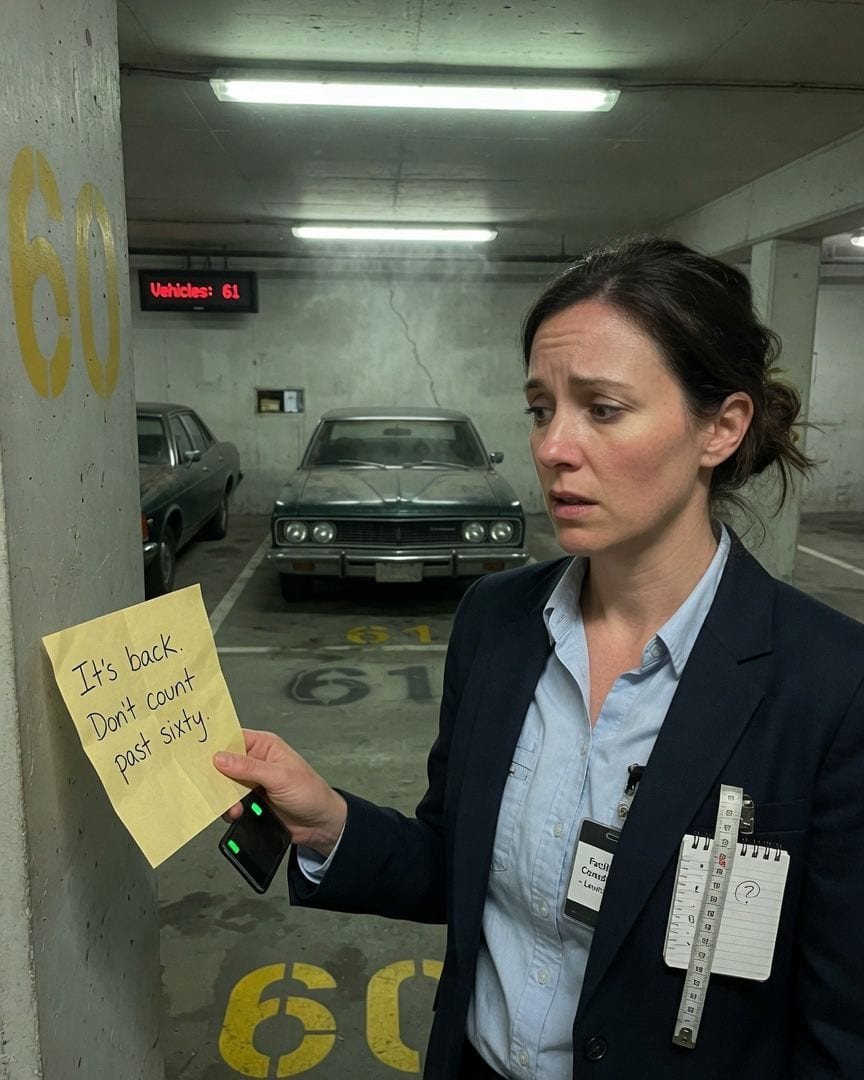
My hand found a hidden seam in the concrete wall. Inside, a desperate note warned: 'Don't count past sixty'.
I arrived at the underground parking lot a few minutes late, expecting the usual sixty spaces. But my pass blinked '61', and a new bay, numbered 61, had appeared beyond the lot's end wall. Inside it sat a vintage car, still warm from a recent drive. Every blueprint and log insists this space doesn't exist, yet it's undeniably there.
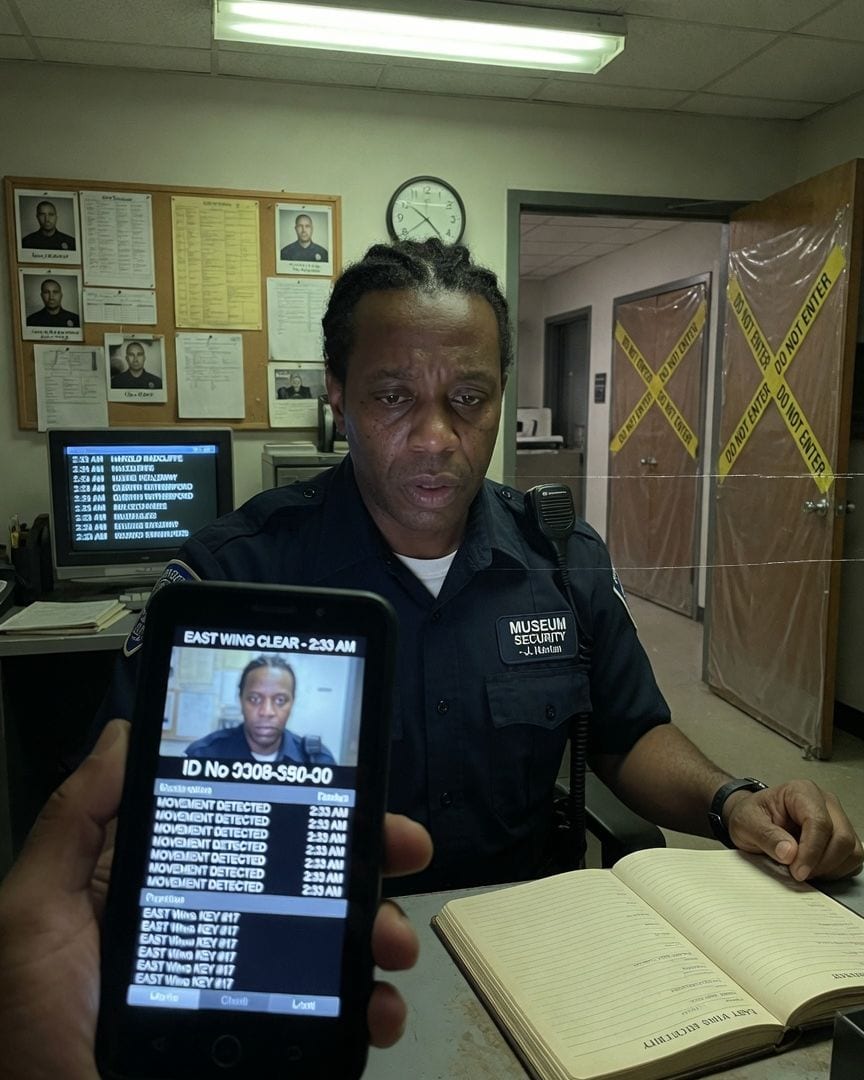
My guard log shows the east wing cleared at 2:33 AM. That wing's been sealed for months, doors screwed shut.
I was on my final security rounds in the quiet museum after midnight, ready to clock out. My handheld scanner showed the East Wing cleared at 2:33 AM under my ID, though it's been sealed for months. Then my hand brushed a faint, precise scratch on the plastic covering the doorframe, exactly where a security scanner would be held.
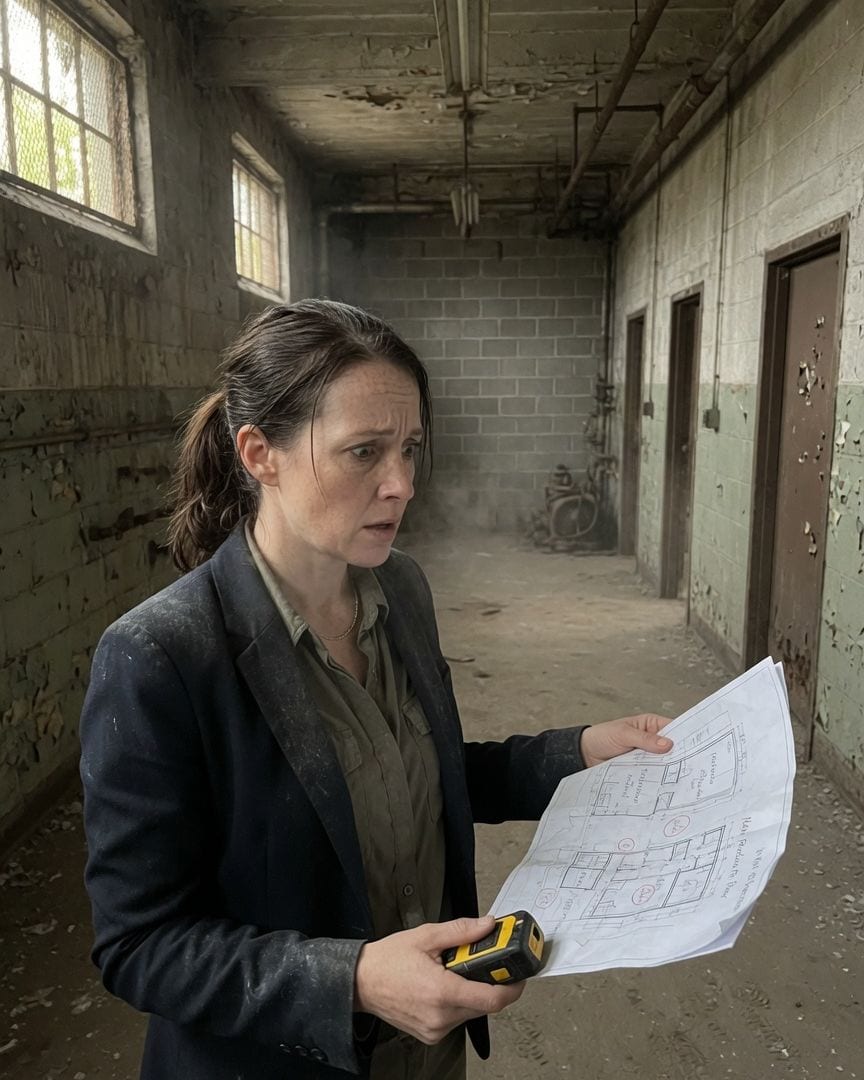
One room is missing from this factory floor. My blueprints show four, but I only found three doors.
Intrigued by an abandoned industrial complex, I secured its old blueprints and entered the cold, silent building. Pacing a long corridor, I meticulously counted doors, comparing them to the detailed plan. The blueprint clearly showed four distinct rooms, but the corridor's length, and my own count, revealed only three doors.
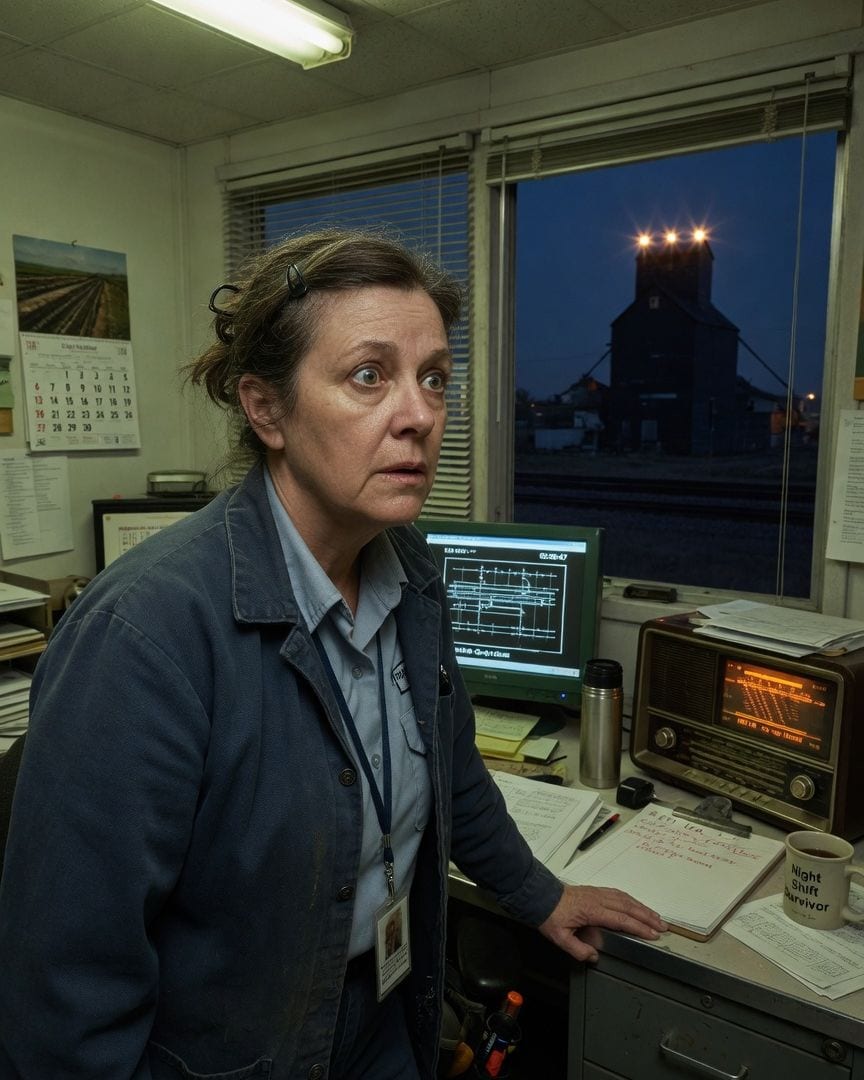
The grain tower light flashed three times at 2 AM, signaling me clear. The bulb was removed six years ago.
Every night, I work the lonely shift at the transport hub. For fifteen years, an old grain elevator, automated and unpowered with its light bulb physically removed, still flashes a 'Clear' signal across the tracks at 2 AM. Recently, the impossible flashes have grown sharper, stirring a deep unease from a place that should be completely silent.
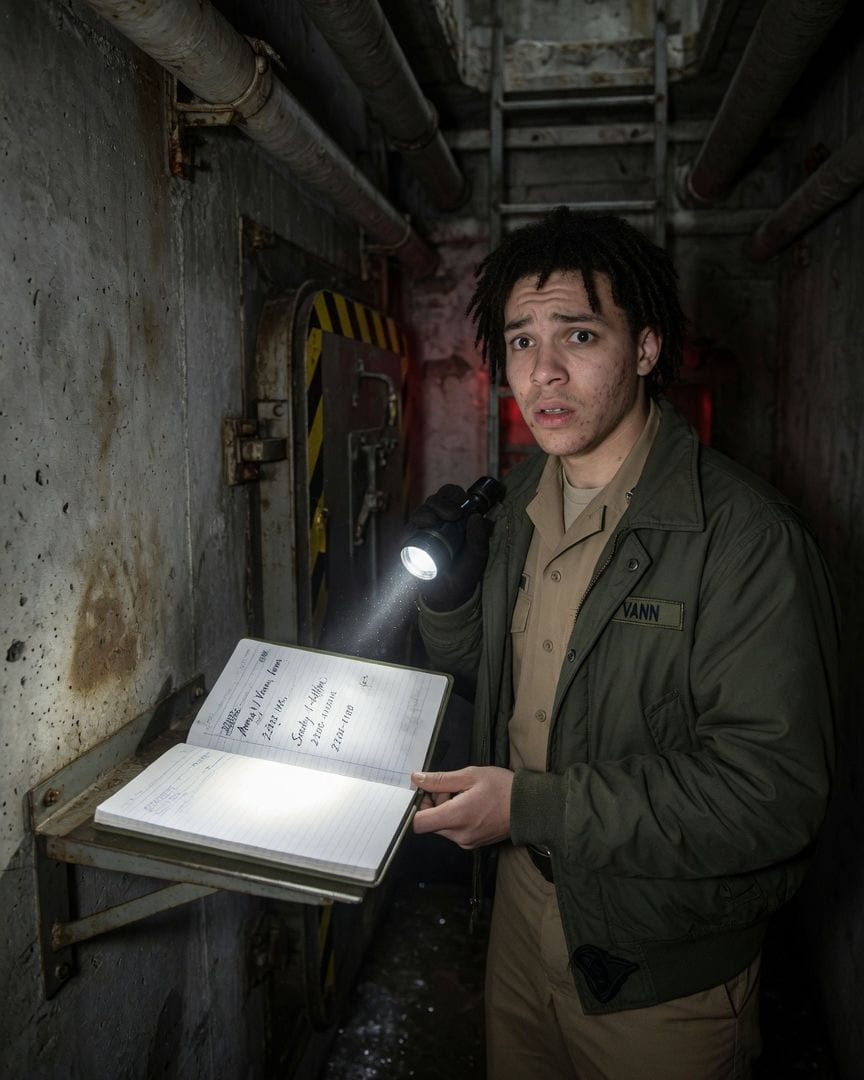
On his last patrol, Airman Vann sees a Cold War silo hatch light up from *inside*—it was welded shut a decade ago.
Airman Vincent Vann was on his last patrol across a vast, desolate Cold War missile field in the Dakotas, the cold, starless sky mirroring the emptiness of the landscape before his transfer. His routine check of eight hardened silo caps was shattered when a red fault light pulsed on Silo 4’s access panel, signaling an impossible breach from *inside* a hatch sealed for a decade. As more silos lit up, ignoring base orders, Vann found the hatch unlocked from within and descended into the dark shaft, where he discovered a pristine logbook bearing his own signature next to a chilling entry from a non-existent sentry, dated for *that very night*. Now, a steady *thump* echoed from deeper within the sealed concrete, leaving the Airman desperate for an explanation that simply wasn't there.
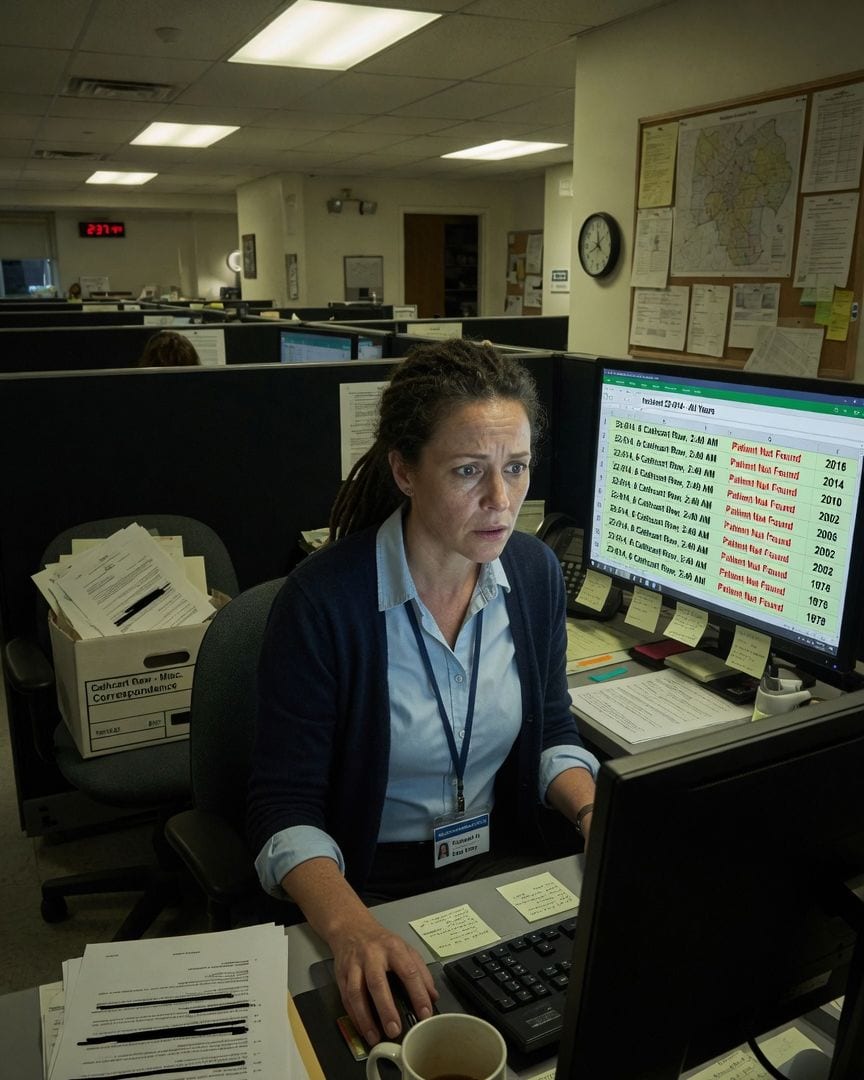
My computer log shows the same 2:40 AM call to Cathcart Row, every four years since 1978, always closed 'patient not found'.
Working data entry for the County Ambulance Trust, I found a routine incident logged as 'Patient Not Found.' But digging deeper, I discovered the exact same phantom call had repeated every four years for over forty years, always at the same address, always at 2:40 AM. Then I found a heavily redacted memo linking it to my own street.