A diver on his last quest to his mother's lost ship found the crew listed in a hidden logbook as 'Transferred.'
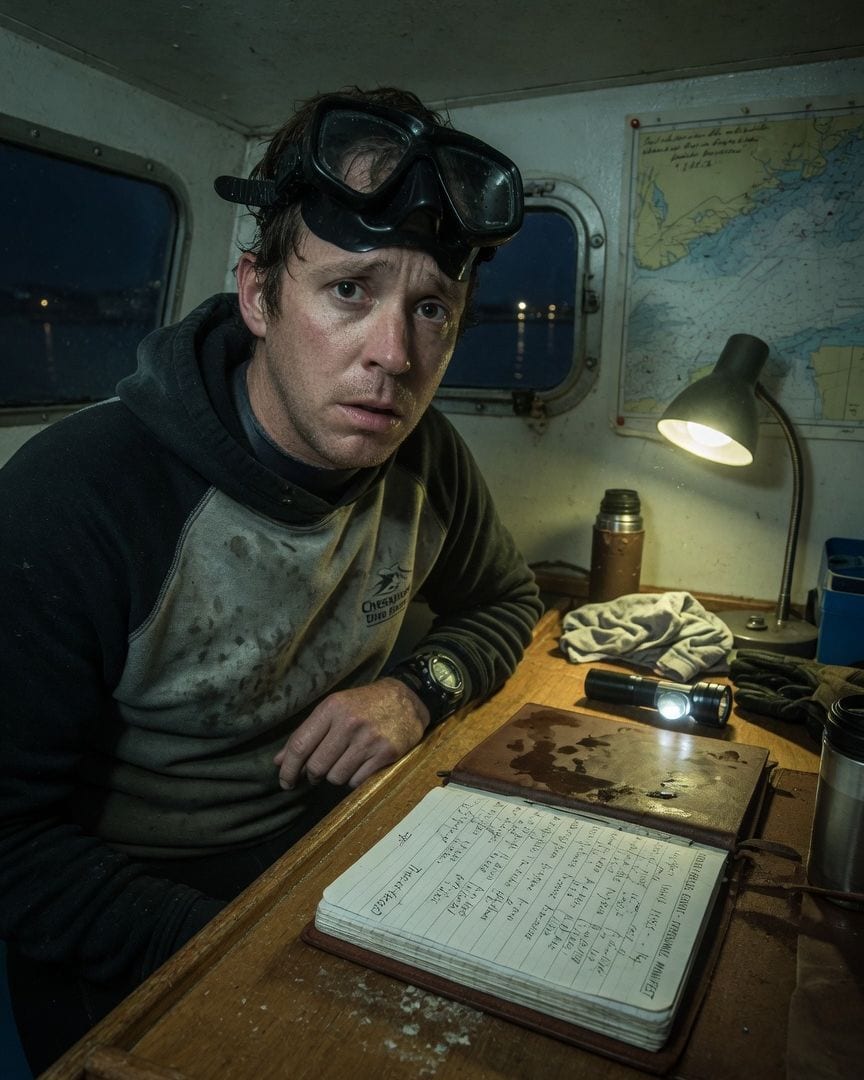
Corey Nascimbene adjusted his mask, the cold Chesapeake Bay water pressing in.
This was his last dive of the season, a personal quest to the wreck of the tug Harrow Belle, the ship his mother, Abigail, had watched disappear from the pier when he was six.
He descended into the gloom, navigating the listing hull, his lamp beam cutting through the murky green. Finally, he reached the galley. The scene was perfectly preserved, as if time had paused.
A mess table, bolted to the deck, was set for seven. Plates, forks, knives, and spoons were squared precisely to the edges of the table, untouched by the currents. A large, industrial coffee urn was strapped securely in its cradle.
Everything was in its place, pristine, save for a thin layer of silt. Then, his lamp beam caught something on the deck under the table: a linen napkin, folded with impossible precision, still stark white against the dark, muddy floor.
He hovered, utterly still, and without knowing why, felt a quiet, profound urge to apologize before he finned away.
The image of the napkin haunted Corey. He tried to rationalize it—a trick of light, a stray piece of cloth, perhaps a modern piece of refuse somehow snagged there.
But the perfection of the fold, the stark white against the decades of silt, gnawed at him. No current, no disturbance had marred it. He returned to the wreck, driven by an unease he couldn't shake.
This time, he ignored the galley and focused on the tug's structural integrity, searching for any anomaly. He knew the Harrow Belle's blueprints by heart, having studied them for years, every rivet and beam memorized.
Deep within the engine room, behind a corroded panel that looked like part of the original bulkhead, he found it: a small, expertly sealed compartment, roughly two feet square, its seams welded shut with a precision that belied the tug's rough-and-tumble construction.
It wasn't on any schematic. No diagram of the Harrow Belle, not even the most detailed, showed this enclosure. Using a specialized cutting torch, he carefully opened it.
The air inside, trapped for decades, was oddly still and cold as the seawater rushed in.
The compartment was just large enough to hold a single item: a heavy, leather-bound logbook, its cover strangely resistant to the ravages of salt water.
He carefully retrieved it, the faint, metallic scent of something long-sealed clinging to it even through the cold water.
Back on his boat, Corey laid the logbook on his workstation, the salt-crusted pages still damp. He carefully opened the cover. The pages weren't brittle, but surprisingly supple, a strange, almost synthetic paper.
The first page wasn't a ship's manifest or a daily record of operations. Instead, it bore a stark heading, hand-lettered in precise, almost calligraphic script: 'HARROW BELLE EVENT - PERSONNEL MANIFEST.'
Below it, a list of seven names, each followed by a date. Corey recognized them as the tug's crew.
But beneath the last name, instead of a destination or a duty, was a single, unsettling word, written in the same meticulous hand: 'Transferred.'
The word 'Transferred' echoed in Corey's mind. It wasn't a term used for maritime casualties. Crews were lost, drowned, missing, or accounted for—never 'transferred.'
He spent days cross-referencing the logbook's dates and names against official Coast Guard reports and insurance claims for the Harrow Belle. The discrepancies mounted.
Official reports were vague, listing 'loss of vessel and crew' with minimal detail, almost a copy-and-paste job.
The logbook, however, contained entries detailing precise coordinates, weather conditions, and unusual 'readings' that seemed to have no relevance to a tugboat's operations—temperatures, atmospheric pressures, and magnetic fluctuations.
He tried to find any mention of the sealed compartment or the logbook itself, coming up empty in every database, every archived document he could access. His investigation led him to the National Archives, specifically the maritime records division.
He requested all declassified documents pertaining to the Harrow Belle. The clerk, a stoic man named Maxwell Vance, looked at him with an odd, almost pitying expression. "The Harrow Belle? Son, that's a closed file. Routine sinking. Nothing to see."
Corey pressed him, mentioning the exact date and time of the sinking, the day his mother had watched it go down.
Maxwell's eyes flickered, a momentary break in his calm demeanor, but he remained unyielding, directing Corey to the public-access microfiche, where the same sparse, official account lay waiting, utterly useless.
Corey spent hours at the microfiche reader, the hum of the machine a constant drone, occasionally punctuated by the mechanical whir as he scrolled through pages. He found the same boilerplate reports, each one identical, each one confirming nothing.
But as he worked, he noticed Maxwell Vance, always at his desk, occasionally glancing his way, a little too often. When Corey looked up, Maxwell would quickly avert his gaze, pretending to busy himself with a stack of files.
The next morning, Corey tried to access certain online maritime databases he'd used before, deep-diving archives that were usually open to credentialed divers. His access was suddenly revoked, citing 'system maintenance.'
He dismissed it as coincidence, a bureaucratic glitch, until he received an anonymous, untraceable email: 'Stop digging where you don't belong, Nascimbene. Some things are better left submerged.'
The message was short, devoid of any identifying markers or sender information, but the chill it sent through him was palpable. He felt a prickle on the back of his neck, the distinct sensation of being watched.
He drove home, taking circuitous routes, constantly checking his rearview mirror, the familiar roads suddenly feeling unfamiliar, shadowed.
The world, which had seemed open a few days ago, now felt like a series of locked doors, and he was rattling the wrong handles.
Corey returned to the archives, the anonymous email burning in his pocket, a phantom weight against his thigh. He found Maxwell Vance shuffling papers, seemingly oblivious to Corey’s return, but Corey felt the man stiffen slightly as he approached.
Corey placed a photograph of the 'Transferred' page from the logbook on Maxwell's desk. The precise, calligraphic script seemed to jump out from the glossy print. "This isn't a routine sinking, Mr. Vance.
And 'Transferred' isn't what you write on a death certificate." Maxwell's composure visibly fractured. His face paled, and his eyes darted around the quiet office, avoiding Corey's gaze, searching for something, anything. "Where did you get that?"
he whispered, his voice hoarse, barely audible above the quiet hum of the lights. Corey leaned in, his voice low. "From the Harrow Belle. From a compartment that doesn't exist on any record.
And I think you know exactly what it means." Maxwell swallowed hard, his gaze fixed on the photograph, his hands trembling slightly as he instinctively pushed it away.
"There are… protocols," he finally said, his voice barely audible, like a secret he hadn't intended to share. "Certain… incidents. They're not on any public list. They're handled differently."
He gestured vaguely towards a restricted section of the archives, a place Corey hadn’t even noticed before. "There's a… a repository. For things that simply… cease to be. The Harrow Belle was one of the early ones."
He looked at Corey, a haunted expression on his face, his eyes suddenly full of a terrible understanding. "Your mother, Abigail Nascimbene? She was a witness, wasn't she?" Corey nodded, numb, a cold wave washing over him.
"Her testimony, it's… it's in the file. It's how they knew. How they… documented it."
Maxwell Vance, now trembling, pointed to a nondescript door at the back of the restricted section, behind a wall of innocuous-looking filing cabinets that seemed to blend into the gray wall. "It's not on any inventory. No tag, no number.
Just… go in. Third aisle, last cabinet on the left. Unmarked." Corey walked the eerily silent aisle, his heart pounding a frantic rhythm against his ribs.
The air in this section of the archives was colder, heavier, than the rest of the building. He found the cabinet.
It was plain steel, cold to the touch, with no label, no number, no lock, just as Maxwell had said. He pulled it open.
Inside, a single, thick manila folder, surprisingly clean and crisp against the dusty shelves, simply labeled: 'HARROW BELLE EVENT.' He pulled it out, the paper feeling unnaturally warm in his hands, almost vibrating with a strange energy.
He opened it, the silence of the archive pressing in around him, amplifying the rustle of the pages.
Inside were heavily redacted reports, official stamps, and photographs of the Harrow Belle before its 'sinking,' pictures of a cheerful crew smiling from the deck. He flipped through, his eyes scanning for anything concrete, anything that made sense.
And then, on the final page, beneath a series of official stamps and a faded signature, a single, handwritten entry, in the same precise script as the logbook, caught his eye. It read: 'Nascimbene, C. - Observation Subject. Status: Active.'
The fluorescent hum of the archives seemed to drop, the silence pressing in.
He looked up from the page, across the empty, dusty aisle, and for a split second, caught a flicker of movement at the far end, just beyond the stacks, as if someone had just pulled back from watching him.
Corey stared at his own name in the file, the words a cold shock that ran through his entire body. He clutched the folder and rushed back to Maxwell Vance, thrusting the file at him. "What does this mean?
'Observation Subject'?" Maxwell, now utterly defeated, explained, his voice low and urgent, devoid of its earlier stoicism. "The Harrow Belle wasn't just a loss. It was a 'collection.' A designated point.
A transfer station for… certain entities, or a certain process. Your mother saw it, didn't she? Saw the… presence. Her testimony, though dismissed as trauma and delusion by the public, was filed.
It marked your family, created a lineage of interest. The table was set for the 'guests'—the facilitators of the transfer. The napkin… a confirmation, a signal of readiness from the crew for their filing.
Your dive, Corey, it wasn't just a personal quest. It was monitored. Your activity around the wreck, your questions, your discovery of the logbook… it all triggered your 'active' status.
The secrecy machine isn't just about hiding; it's about managing, about identifying those who get too close, those who might… understand."
The scattered clues snapped into place with a horrifying click: the perfectly set table, the pristine napkin, his own unconscious apology, the mysterious logbook, the anonymous warning email, Maxwell Vance's pitying gaze, the flicker in the archives.
Corey realized he wasn't just investigating a buried record; he was the next entry in a file that was still being written.
The realization hit Corey with the force of a physical blow. He wasn't just an observer; he was implicated. He had the logbook and the classified file—proof of a decades-long, horrifying pattern, a hidden mechanism of the world.
He knew he couldn't fight an institution that had operated in the shadows for so long, an entity that could make online access disappear and clerks tremble. His only option was to expose it, to break the cycle of secrecy.
He raced back to his home, the persistent feeling of being watched now a tangible weight on his shoulders.
He connected his laptop, his fingers flying across the keyboard, intending to upload the logbook's contents and the crucial page from the file to every secure server he knew, to every investigative journalist he could find, to the darkest corners of the internet.
But as he tried to initiate the transfer, his internet connection flickered, then died. His phone, usually buzzing with alerts and messages, went silent, every bar on the signal indicator gone.
He tried another network, then another, but all access points were dead, the invisible tendrils of the 'secrecy machine' already severing him from the outside world.
A chilling calm settled over him as he understood: they were already at work, isolating him. He frantically worked offline, compressing the files, trying to create a physical copy, anything to preserve the truth he now held.
A faint, almost imperceptible click came from his front door. He froze, his fingers poised over the keyboard, every muscle in his body taut. The doorknob slowly, silently, began to turn.
The door remained closed, but the connection never returned. Corey's attempts to upload the data were blocked, his digital footprint scrubbed clean. He never returned to salvage diving.
His boat was sold, its memory a painful anchor to what he knew. He moved away from the Chesapeake, seeking anonymity in a small, inland town, hoping to vanish into the quiet anonymity of the Midwest.
He continued to try, sporadically, to share his story, but his emails bounced, his calls went unanswered, or he was met with polite disbelief, sometimes a nervous hang-up.
The logbook and the file remained hidden, their contents his solitary, terrifying burden. The system, patient and unseen, had simply closed around him.
Corey sits by a quiet lake now, far from the Chesapeake, the water still and dark. He watches the ripples, a solitary figure against the fading light. He knows the truth, a monstrous coherence that has reshaped his entire world.
The pattern snaps into place every time he reads a news story about an unexplained disappearance, a vessel lost without a trace, a family's grief echoing a hollow official report. He knows they weren't lost. They were filed.
He holds the logbook, its leather cover worn smooth by his touch, and the laminated printout of the 'Nascimbene, C. - Observation Subject. Status: Active.' page. He knows he is still active.
And he knows, with a quiet certainty, that the file is still being signed.
His mother, Abigail, sometimes calls, asking if he's coming home for the holidays. He always says no. She mentions the old pier, the boats out on the water, the way the bay used to smell of salt and possibility.
She never knows why his voice changes, just slightly, when she talks about the bay. She just hears him say, 'The water keeps its secrets, Mom.' He knows better. The water keeps its records.
If this one got to you
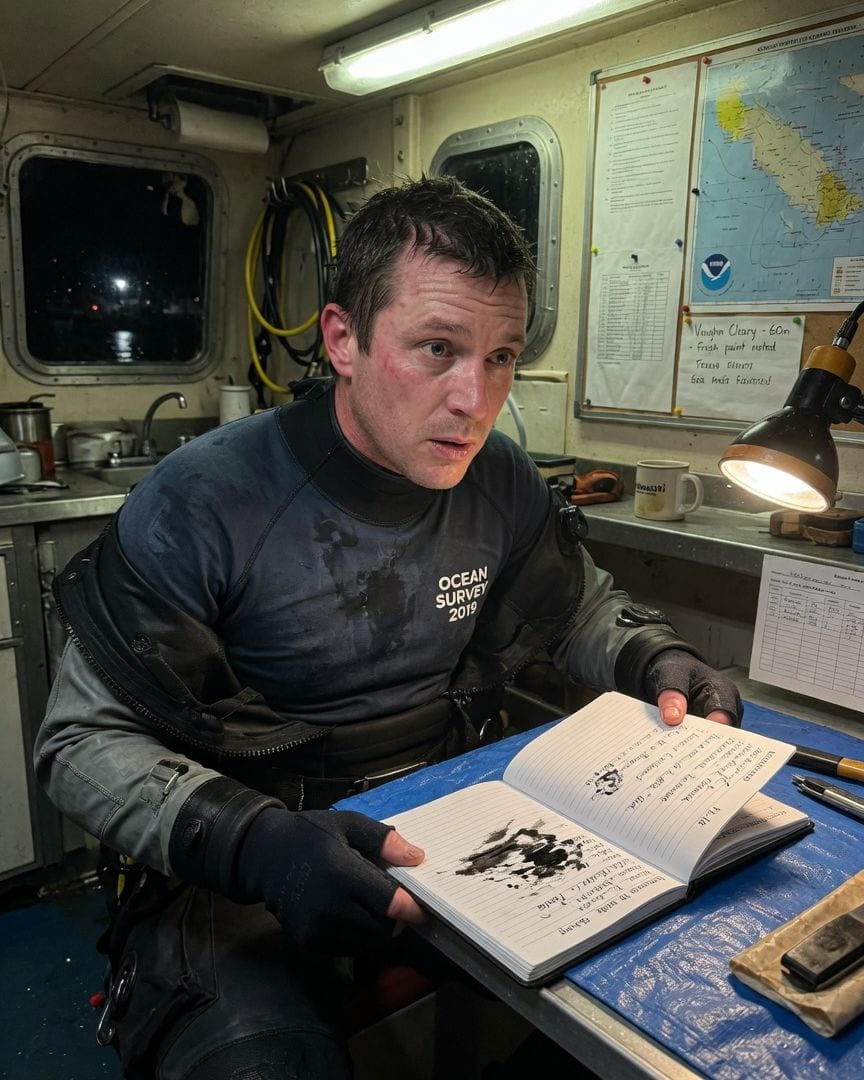
A deep-sea diver finds fresh paint on a sunken ship’s hull. It’s his dead grandfather’s distinct hand.
Deep-sea diver Teague Orrin knew the ocean's cold, indifferent blackness intimately as he descended sixty meters to the transport ship Vaughn Cleary. He was there to uncover the mystery surrounding his grandfather, Howard, pulled from her crew list days before she sailed, never speaking of it again. Teague's light swept the hull, revealing impossibly bright, fresh white paint over marine growth, bearing his dead grandfather's distinct hand. Dismissing skepticism, he returned to the wreck, discovering a miraculously intact captain's quarters and a bolted-down safe. Inside, a logbook awaited, its pages remarkably preserved, holding entries that continued *after* the ship was lost, with today's date still wet on the ink.
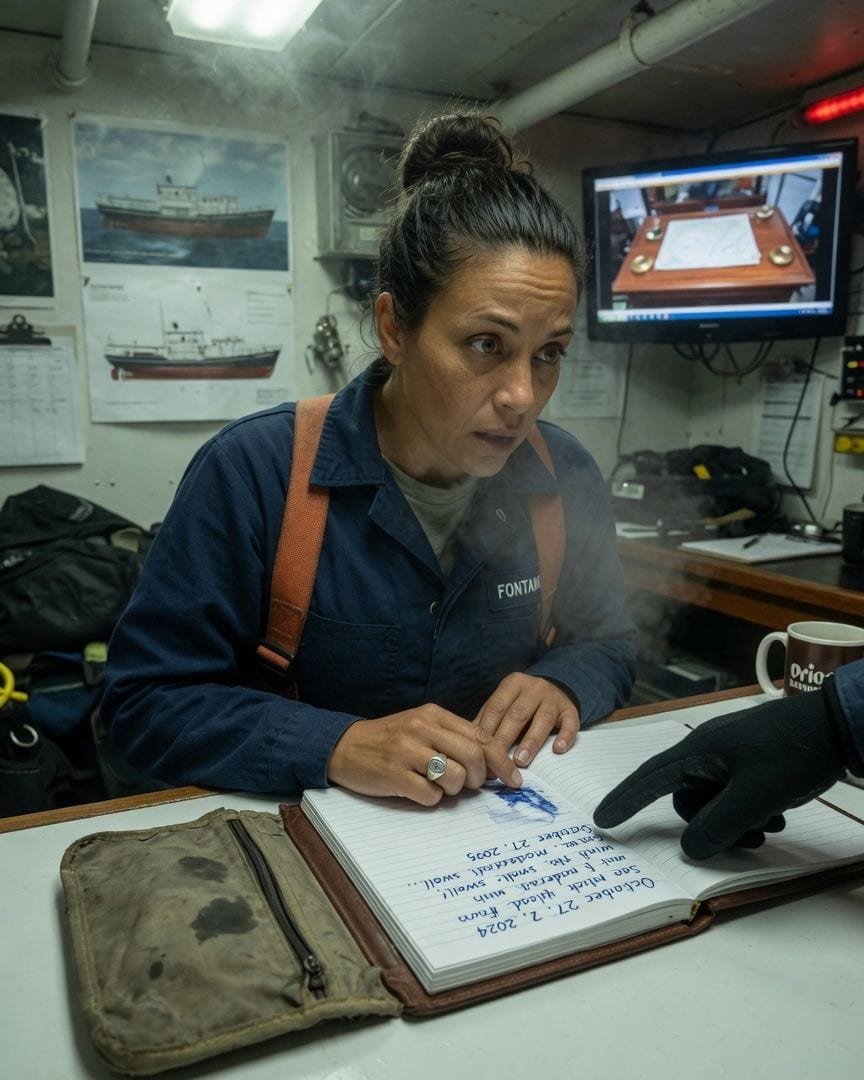
A Cold War survey ship's logbook holds an entry dated for today, its ink still wet.
Navy salvage officer Vivian Fontaine led the deep-sea recovery of the Hollis Wren, a survey ship lost forty years ago, finding it remarkably intact on the seabed. But inside, a nautical chart depicted new structures built decades after the ship vanished, and its hull was unnervingly clean of the expected forty years of growth. The true shock came in the captain's cabin: a sealed logbook with an entry dated October 27, 2024—today’s date—its deep blue ink still glistening wet, detailing current conditions at their exact coordinates. How could a ship lost so long ago carry a logbook written moments before its discovery?
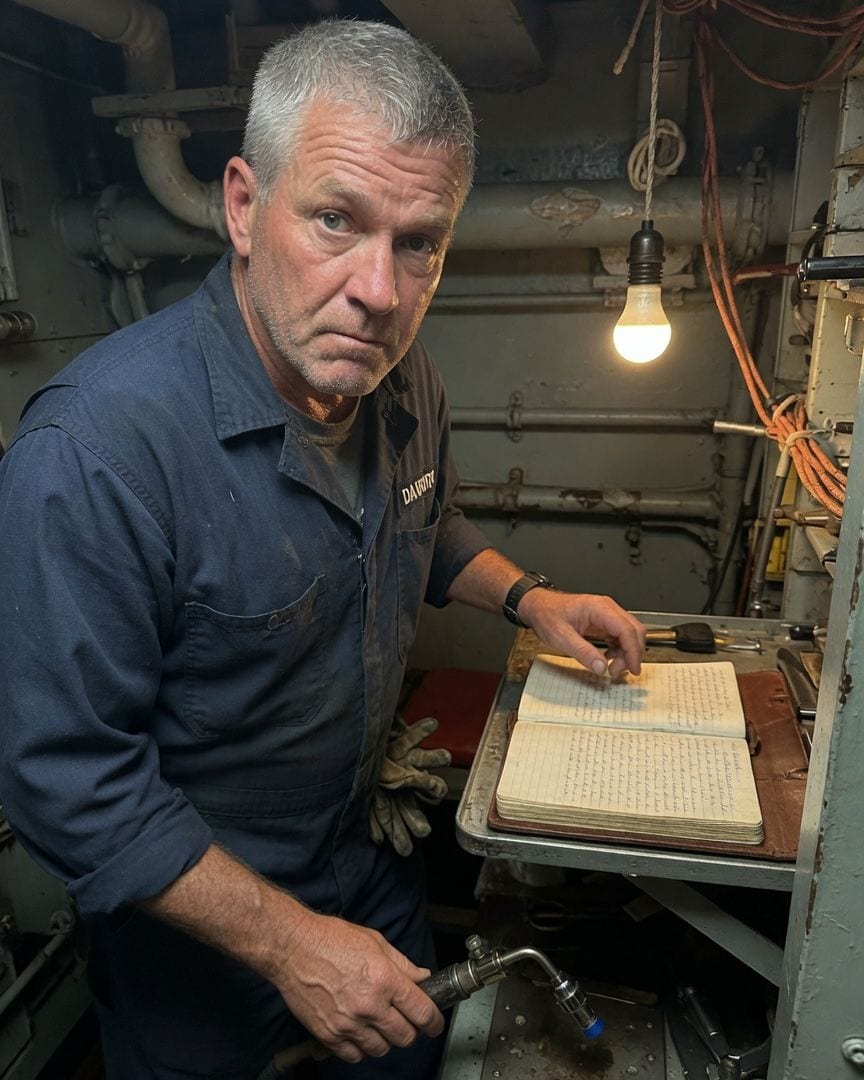
A week from shore duty, Chief Danforth cut a hatch where his ship's plans showed solid steel. An hour later, the wall was seamless, but the Cold War logbook from inside appeared under his mattress.
Chief Petty Officer Raymond Danforth, just a week from ending three decades of service, was intimately familiar with every pipe and plate of the guided-missile destroyer Weatherall. During a mid-cruise overhaul, his gloved hand found a sealed hatch where schematics promised only a solid bulkhead. He cut through the impossible seam to reveal a small, dry compartment, softly lit, containing a logbook filled with an unsettlingly familiar hand. When he returned an hour later with a witness, the hatch was gone, the wall seamless. Later that night, the same logbook appeared beneath his mattress, its pages revealing an entry: 'Petty Officer Howard Montgomery, missing, 1972.' How could a compartment vanish, yet leave its secrets behind?
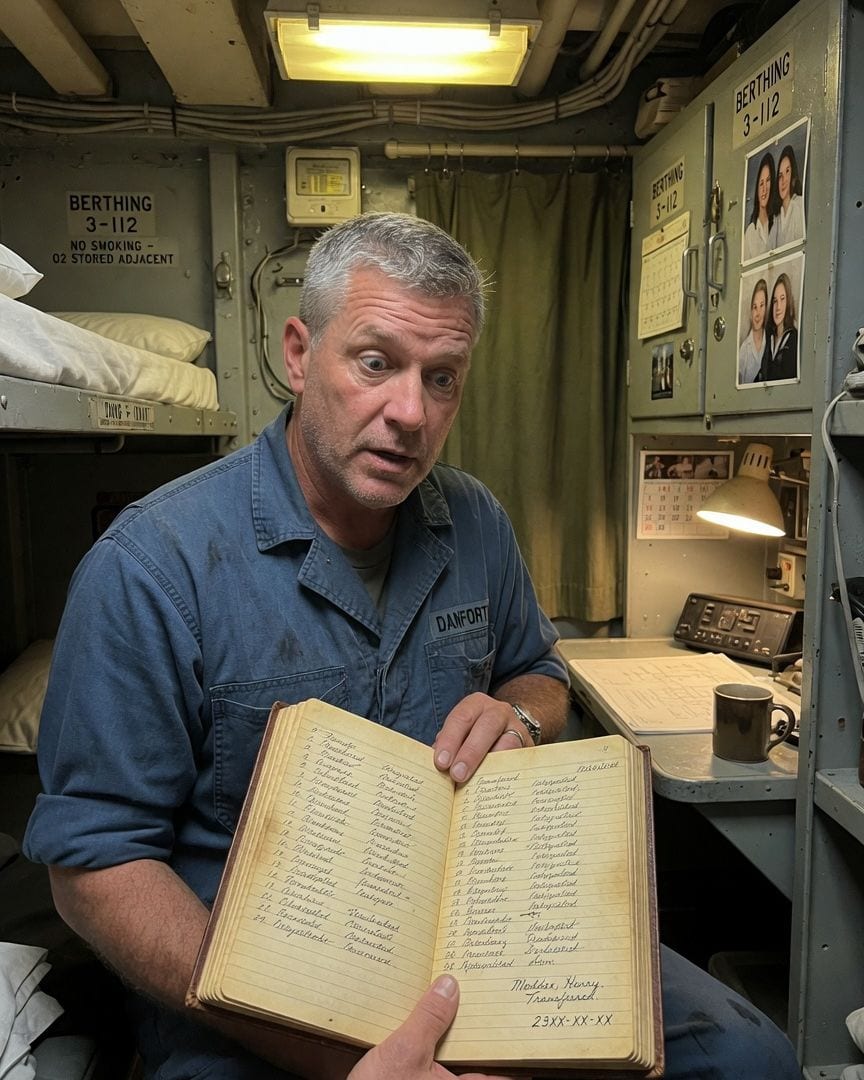
A Chief Petty Officer found a strange logbook. Its last entry listed a living crewman, dated next week.
Chief Petty Officer Russell Danforth was weeks from retirement, his three decades of service nearing an end aboard the USS Weatherall. Deep in the destroyer's familiar steel passages, he stumbled upon a sealed hatch where official plans insisted only solid bulkhead should be. Forcing it open, he discovered a cramped, unsettlingly 'lived-in' compartment holding a bare bulb and a mysterious logbook. Its final entry, stark and fresh, named a living junior petty officer from his own division, dated a week from today. What chilling fate awaited Henry Maddox, according to the Weatherall's secret history?
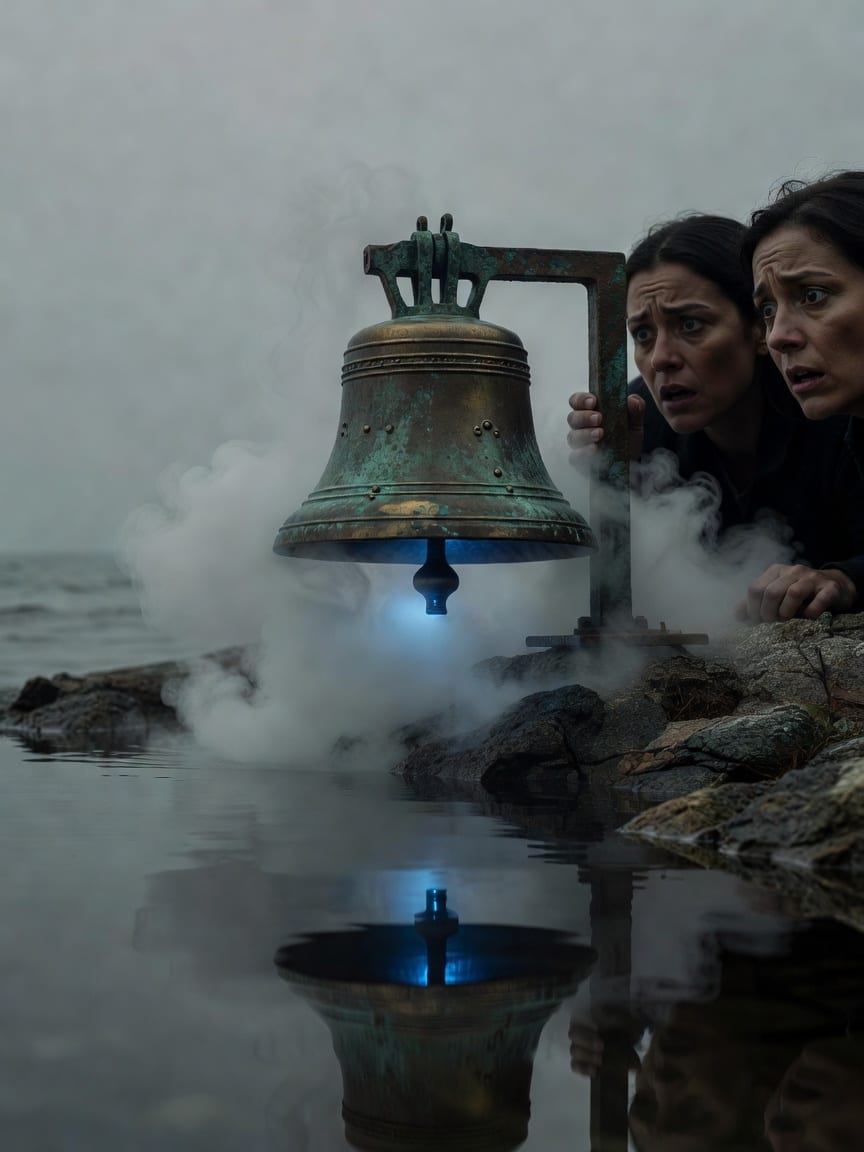
The fog bell on the point rings itself on still nights. The framed log at the yacht club lists eleven calm evenings it rang – each entry beside a boat that never came home.
Moving to a quiet coastal town, I found myself drawn to an old logbook at the yacht club. It recorded the fog bell ringing on flat-calm nights, each instance tied to a boat that simply vanished. Then, I found my own boat's name, 'The Osprey,' penciled at the bottom, marked with an unfinished, cryptic symbol.
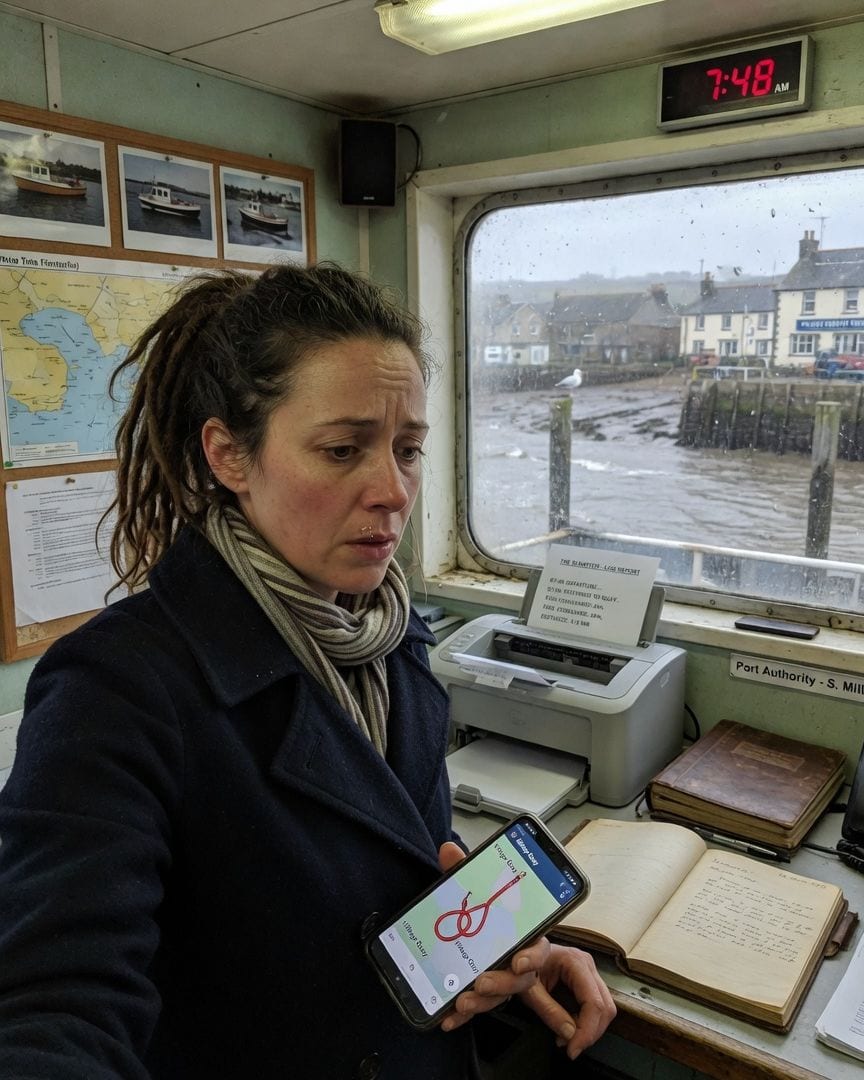
My morning ferry crossed for 40 minutes. The destination town just disappeared.
I board 'The Seawitch' every Tuesday for the familiar eight-minute estuary crossing. But this morning, after making good time, Captain Bernard and I watched the town quay simply fail to appear. Instead, our ferry repeatedly returned to the very same village quay we'd just left, despite burning fuel and advancing the clock.