My friend's wedding registrar looked at me, a guest, and whispered, 'I'm so sorry, Nadia.' No one else heard. She wasn't on staff.
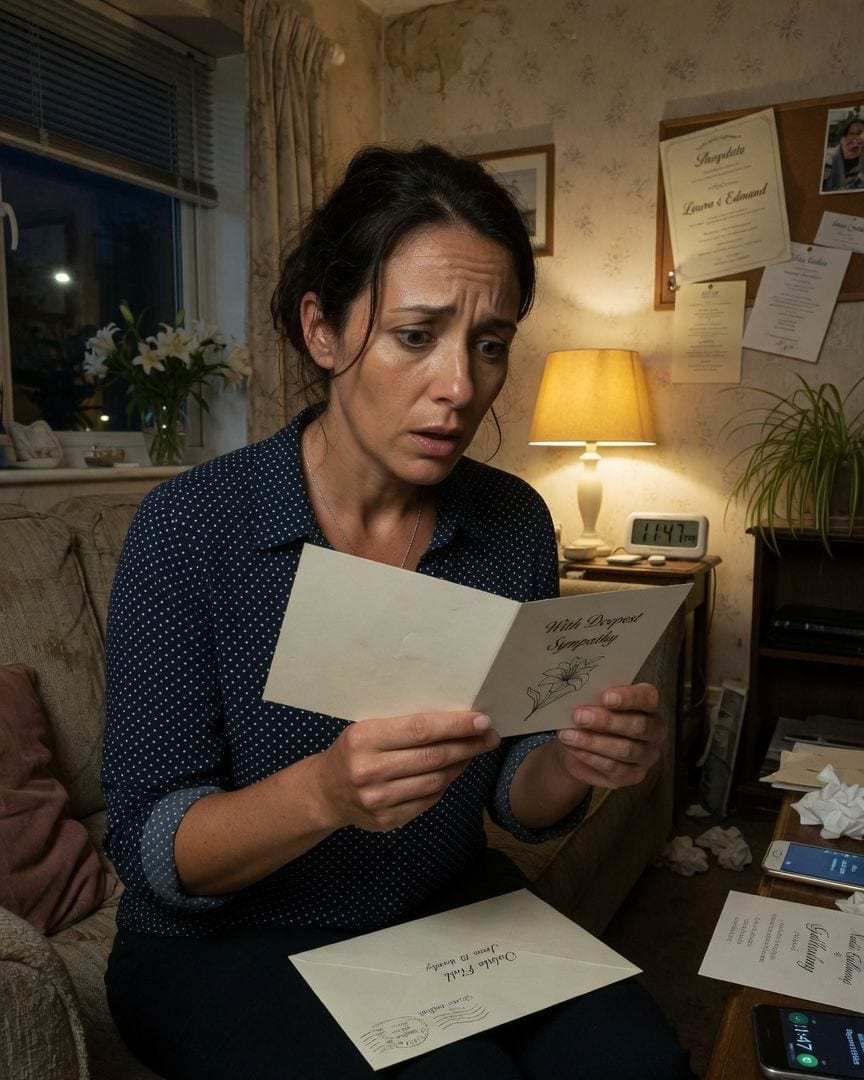
The third row of folding chairs dug into my back. Laura and Edmund were about to say their vows, and the air in the rented hall was thick with nervous excitement and the scent of lilies.
I was watching Laura, my best friend since primary school, when the registrar paused. Vera Hale, a woman in her late fifties, with a perfectly calm, almost serene face, was looking directly at me.
I remember thinking, she’s got the wrong person. But her eyes, cool and direct, held mine. She leaned slightly towards the microphone, just enough for her voice to be a breathy whisper, audible only to me.
'I'm so sorry, Nadia,' she said, her expression unchanging, 'you'll know why by the weekend.' Then, as if nothing had happened, she straightened, smiled at the couple, and continued the ceremony.
My heart hammered against my ribs. A cold dread, a physical thing, spread through my chest. I glanced around. No one else reacted. Laura and Edmund beamed. The guests remained oblivious. It was just me.
Later, at the reception, I tried to shake it off. It had to be a mistake. A shared name, maybe. Or a weird prank. I found Laura after the toasts, pulling her aside from the dance floor.
'Hey,' I started, 'that registrar, Vera Hale? Did you know her from somewhere?' Laura looked blank. 'Vera? No, just the lovely lady the office sent. Why?' She shrugged. 'She was really nice, though. Made us feel so at ease.'
I mumbled something about her just looking familiar and let it go. Laura was too happy to be burdened with my sudden, inexplicable unease.
The next morning, the whisper still needled at me. I called the Register Office. 'I'm looking for a Vera Hale,' I said, trying to sound casual.
The clerk, a man named Samuel Lambert, took my name, then put me on hold. A minute later, he was back. 'I'm sorry, Ms. Galloway. We have no one by that name currently employed here.
And I'm checking our historical records – nothing for the last fifteen years, at least.'
The unease tightened its grip, a knot I couldn't untie. My rational mind tried to find an explanation, but it felt like clutching at smoke.
I called the Register Office again a few days later. The whisper wouldn't leave me alone. This time, I asked specifically for Samuel Lambert, the chief registrar. He sounded a little exasperated when he answered.
'Ms. Galloway, I assure you, we've had no registrar named Vera Hale, not in recent memory, not in the archived rolls I can access. I even double-checked after your last call.'
I clutched Laura's elegant wedding invitation, its thick card stock now feeling like an important piece of evidence. 'Are there old branches?' I pressed, my voice thin. 'Sub-offices that might have closed down? Maybe she worked somewhere else?'
Lambert sighed, a long, put-upon sound. 'Well, there was the Oakley Field sub-office,' he conceded, 'but that building was demolished decades ago. Back in '85, actually. It's just an empty field now, near the old mill.
All its records were absorbed into the main branch long before my time. No one's worked there since before you were born, I'd wager.' He chuckled, a dry, dismissive sound. 'Quite a bit before, really.'
I thanked him, the conversation ending with a polite, but firm, dismissal. I hung up the phone, staring at the wall. An empty field. A demolished building. No one had worked there since before 1985. Since before I was born.
But the image of a place where a registrar once worked, where a woman named Vera Hale might have existed, became a persistent, unsettling thought. It felt like a dead end, yet it was the only lead I had.
The thought of the Oakley Field sub-office gnawed at me. It felt like a dead end, yet it was the only lead I had.
I spent the rest of the day trying to focus on work, but the registrar's words, her name, the 'sorry,' replayed in my mind like a broken record.
Later that evening, after the light had faded and the city was settling into a quiet hum, I found a card on my doormat. It was a plain, cream-colored condolence card, the kind you buy at a supermarket. Simple. Unassuming.
Addressed to 'Nadia Galloway' in elegant, looping script. My heart jumped.
I picked it up, my fingers fumbling. The postmark, faint but legible, read 'Oakley Field, June 10th.' Today's date. Her wedding day. A condolence card, for me, from a demolished place, on the very day the registrar spoke my name.
I stared at the envelope, the dread a cold, physical weight in my chest.
More letters arrived over the next few weeks, each one a cream-colored envelope, each postmarked 'Oakley Field.' They weren't all condolence cards. One was a birthday card for a birthday months away.
Another was a 'warning' about a minor plumbing issue in my bathroom that indeed occurred days later, a slow, annoying leak under the sink.
Then a cryptic 'congratulations' for an achievement I hadn't yet made, but felt a strange pull towards. The script on each envelope was identical, that elegant, looping hand.
I drove out to Oakley Field. It was exactly as Lambert had described: a desolate, overgrown expanse, a few cracked concrete foundations barely visible beneath the weeds.
Bordered by some old farmhouses and the skeletal remains of a brick mill, its chimney standing like a lonely sentinel against the sky. No sign of any building, past or present, that could have housed a bustling sub-office.
Just an empty, wind-swept space.
I approached one of the nearest farmhouses, the paint peeling on its porch. Hesitantly, I knocked. Janet Calloway, an elderly woman with sharp, kind eyes and hair like spun silver, answered.
I explained my strange predicament, the letters, the registrar, the impossible postmark. She listened patiently, her gaze never leaving my face.
When I showed her one of the letters, she peered at the postmark, a flicker of something I couldn't quite place—recognition? memory?—in her gaze.
'Oakley letters,' she murmured, her voice raspy with age. 'Haven't seen those in years. My grandmother used to talk about them.' She waved a dismissive hand. 'Old wives' tales, mostly. Folks used to say the field itself sent messages.
Nonsense, of course. The old sub-office, it was built on what they called 'unsettled ground,' way back when. Before it came down.' She offered me a cup of tea, but I politely declined, my mind racing.
I tried to dismiss it as folklore, as an old woman's ramblings, but the letters, so specific and prescient, were too real. The dread was no longer vague; it was a targeted, impossible communication.
It felt like someone, or something, was speaking directly to me, from a place that no longer existed.
My investigation shifted from the letters to the history of Oakley Field itself. I spent hours at the local library, then even more at the small, dusty historical society downtown, poring over old maps, land deeds, and brittle newspaper clippings.
The air in the historical society was always still, heavy with the scent of aged paper and wood polish.
As I delved deeper, I felt an increasing sense of being observed. A dark, older model sedan seemed to be parked on my street more often than not, always just out of direct sight, but always there.
And in the hushed aisles of the historical society, I caught glimpses of a man. Eric Hughes. He was the archivist, a quiet figure with neat grey hair and a perpetually neutral expression.
He'd watch me from behind shelves of dusty tomes, his gaze steady, unblinking. He was always there, always quiet, always just a little too close for comfort. My skin prickled whenever I saw him.
One afternoon, as Nadia struggled to decipher a faded microfiche about the Oakley Field demolition, trying to make sense of the blurry plans, Eric appeared beside her. He moved without a sound, a phantom in the quiet room.
'Looking for something specific, Ms. Galloway?' he asked, his voice soft, almost a murmur, but laced with a knowing quality that made my heart jump. He hadn't asked my name, but he used it, perfectly.
I spun around, startled. He didn't wait for my answer. His eyes, calm and ancient, seemed to look right through me.
'Perhaps,' he said, gesturing to a shelf of oversized ledgers that looked like they hadn't been touched in decades, 'you'd find this more enlightening.'
He pulled out a thick, leather-bound book, its cover worn smooth with age and handling, and placed it gently on the table before me.
His gaze lingered on my face, a faint, unsettling smile playing on his lips, as if he knew exactly what I would find.
I looked from Eric Hughes to the ledger. It felt ancient, heavy in a way its size didn't quite account for. The leather was cool and smooth beneath my fingertips.
I opened it slowly, the pages thick and yellowed, rustling faintly as they turned. They were filled with meticulously handwritten entries, spanning back over a century. It was clearly a register, but not official.
More like a private journal, detailing births, deaths, and marriages that had occurred in or around the Oakley Field area. Each entry had an unusual annotation, a single word in elegant, flowing script.
My hands trembled as I flipped through the pages, a growing sense of unease settling in my stomach. The handwriting. It was familiar. That elegant, looping hand. The same hand on the letters.
Then, my breath caught. Halfway down a page dated 1991 – a year before I was born – I saw it. My full name, written in that identical, distinctive script: 'Nadia Galloway, born 1992. Designated.'
The word 'Designated' was underlined twice, stark and unmistakable.
I scanned other entries on the page, then on previous pages. 'Designated.' 'Acknowledged.' 'Passed.' The ledger wasn't just a record; it was a list. A list I was on. A list that predated me.
I slowly closed the book, the leather cool beneath my trembling fingers, the sound a soft thud in the quiet room. I looked up at Eric Hughes. He had been watching me, patiently, his expression unreadable, calm.
'It's a long list, isn't it?' he said, his voice a low murmur, confirming everything without confirming anything. 'You're not the first to find it. And it seems, you're the next to be found.'
My mind raced, struggling to process the impossible entry, the implication of Eric's words. My name, recorded before my birth, labeled with a word that filled me with an inchoate terror. 'What is this?'
I demanded, my voice barely a whisper, a contrast to the thumping in my ears. 'Who are these people? What does 'Designated' mean?'
Eric merely offered a faint, unsettling smile, a small upward twitch of his lips that didn't reach his eyes. 'The channel will make it clear now, Ms. Galloway. It always does.'
Just then, my phone rang. The sound was jarring, impossibly loud in the quiet historical society, making me jump. The caller ID flashed 'Unknown Number.' My heart pounded harder.
I hesitated, then answered, my hand shaking as I brought the phone to my ear.
A calm, resonant voice, neither distinctly male nor female, spoke my full name: 'Nadia Galloway.' The voice paused, a chilling intimacy in its tone, as if it had been waiting for this exact moment. 'We've been expecting you.
You've found your place. The registrar at the wedding was merely an introduction. A courtesy. You understand now, don't you?'
The call abruptly cut out, leaving a ringing silence that felt heavier than the voice itself.
I stood frozen, phone still pressed to my ear, staring at the open, leather-bound ledger on the historical society's table, my own name, 'Nadia Galloway, born 1992. Designated,' starkly visible amongst the impossible, decades-old entries.
You've found your place. The words echoed, a terrible, undeniable truth.
I tried frantically to call the 'Unknown Number' back, but it was disconnected, ringing once, then dead. My fingers flew across the screen, desperate, but there was nothing.
I turned on Eric Hughes, my face hot with a sudden, overwhelming fury and fear. 'What is this?' I practically shouted, my voice cracking. 'You know, don't you? Tell me everything!'
Eric remained perfectly calm, his neutrality infuriating. He gestured for me to sit. 'It's time you knew, Nadia. You've been guided here, just as all the others before you.'
He explained that he was a 'keeper' of the ledger, a role passed down through generations of his family. The 'channel,' he revealed, wasn't a person at all.
It was the entity itself – a 'current' of awareness, a pattern that flowed through specific bloodlines connected to the land where Oakley Field once stood.
'Designated' individuals, he explained, were chosen by this current, not for good or ill, but simply as a conduit, a point of focus. Their lives became a means for the current to manifest, to observe, to influence.
The letters, those impossible, prescient envelopes, were 'communications.' Subtle nudges, premonitions, guiding the designated towards understanding, preparing them for their role. Vera Hale, the registrar at Laura's wedding, had been the previous designated. Her 'apology,' he said, was empathy.
A recognition of my impending activation, her own life having been shaped by the current, she knew what awaited me.
Eric showed me more entries in the ledger, detailing how each person's life, from mundane decisions to significant events, was subtly influenced. Their actions, their choices, all aligning with the current's flow.
It wasn't a malevolent force, he emphasized, but an immutable process, a part of the world that simply existed. And now, Nadia, I was a part of it too.
I was overwhelmed. The sheer coherence of it all, the way every impossible detail now clicked into place, was terrifying.
The letters, the registrar, the impossible postmark, Eric's knowing gaze, the voice on the phone – it all fit together, forming a pattern that was too vast, too intricate, to be coincidence.
I asked Eric what happened next, what this 'designation' truly meant for my life. He explained that I would begin to understand the 'current' on an intuitive level, perceiving patterns and connections others missed.
I would become more attuned, more aware, and eventually, I too would be a 'channel,' perhaps for the next designate, guiding them, just as Vera Hale had guided me.
There was no escape, no undoing it. It was simply my new reality, a permanent shift in my perception and existence. The dread was in the loss of my ordinary life, the burden of this knowledge.
I tried to reject it, to deny the internal hum that had begun to resonate within me, a subtle shift in my own awareness. But the entity’s presence was now undeniable, an intrinsic part of me.
The 'apology' from the registrar wasn't for something terrible happening to me, but for the profound, irreversible change that would come.
I left the historical society, the ledger’s truth burning in my mind, the world outside suddenly seeming both utterly mundane and profoundly, terrifyingly altered.
The sun was setting, painting the sky in hues of orange and purple, and I saw patterns in the clouds I'd never noticed before.
I returned to my life, but it was irrevocably altered. I attended Laura's wedding reception, smiled, danced, but through a veil of new understanding. Conversations felt guided; I anticipated remarks, perceived underlying currents.
The letters from Oakley Field continued to arrive, no longer terrifying, but simply… information, confirmation of events yet to unfold. I found myself drawn to specific places, to certain people, in ways I couldn't explain, but now understood.
My old routines felt hollow, replaced by an acute awareness of the 'current' flowing through everything.
I was no longer just Nadia; I was a designated, a channel, and the world was now a vast, intricate network of patterns I could perceive.
Months passed. I lived with the 'current,' no longer fearing the letters or the occasional, silent phone calls; they were simply part of my landscape.
I found myself drawn to places and people in ways I couldn't explain, but now understood. I made decisions, not always knowing why, but trusting the subtle pull.
One evening, looking at my reflection, I noticed a change in my eyes – a deeper, more knowing stillness that wasn't there before. For a fleeting moment, I saw a hint of the registrar's calm, distant gaze.
I had become what I sought to understand, a new entry in a timeless ledger, waiting for the next name to be 'Designated.' The world continued, oblivious, but Nadia now saw the threads that connect it all.
The name, after all, was always just a designation.
If this one got to you
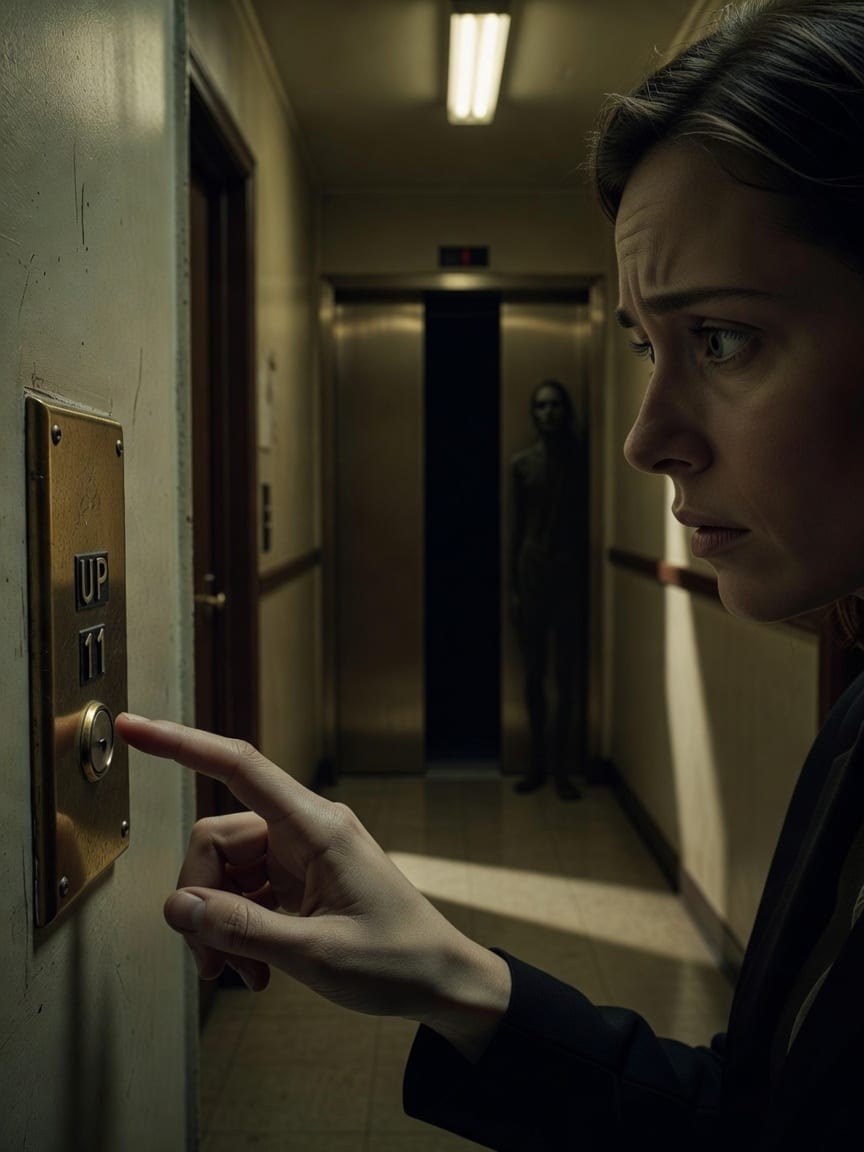
My doorman warned me not to take the tenth-floor lift on Saturday. The building's lift passed inspection last month. He seemed terrified that he'd said it.
My doorman's unsettling warning about the tenth-floor lift left me with a metallic taste of unease. I tried to rationalize it away, but then a birthday card arrived for me, five months early, from an impossible address. It was a site linked to unexplained disappearances, and a cold certainty began to settle in.
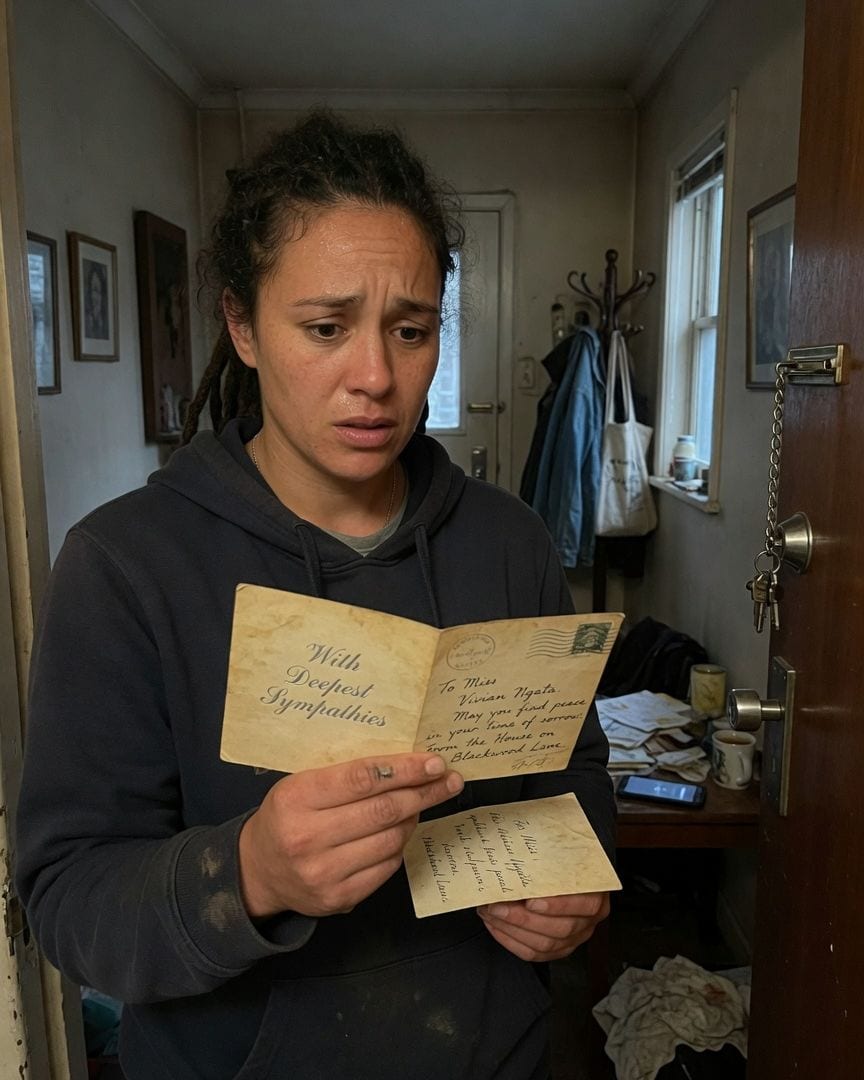
My locksmith knew my name, then apologized for next Tuesday. I never gave him my name; his firm doesn't exist.
I just needed a new deadbolt after some neighborhood thefts. But the locksmith knew my name without me telling him, and murmured something about 'Tuesday' when it was Thursday. Then his company, 'Everlast Security Solutions', vanished without a trace, its phone number dead and its address an empty field.
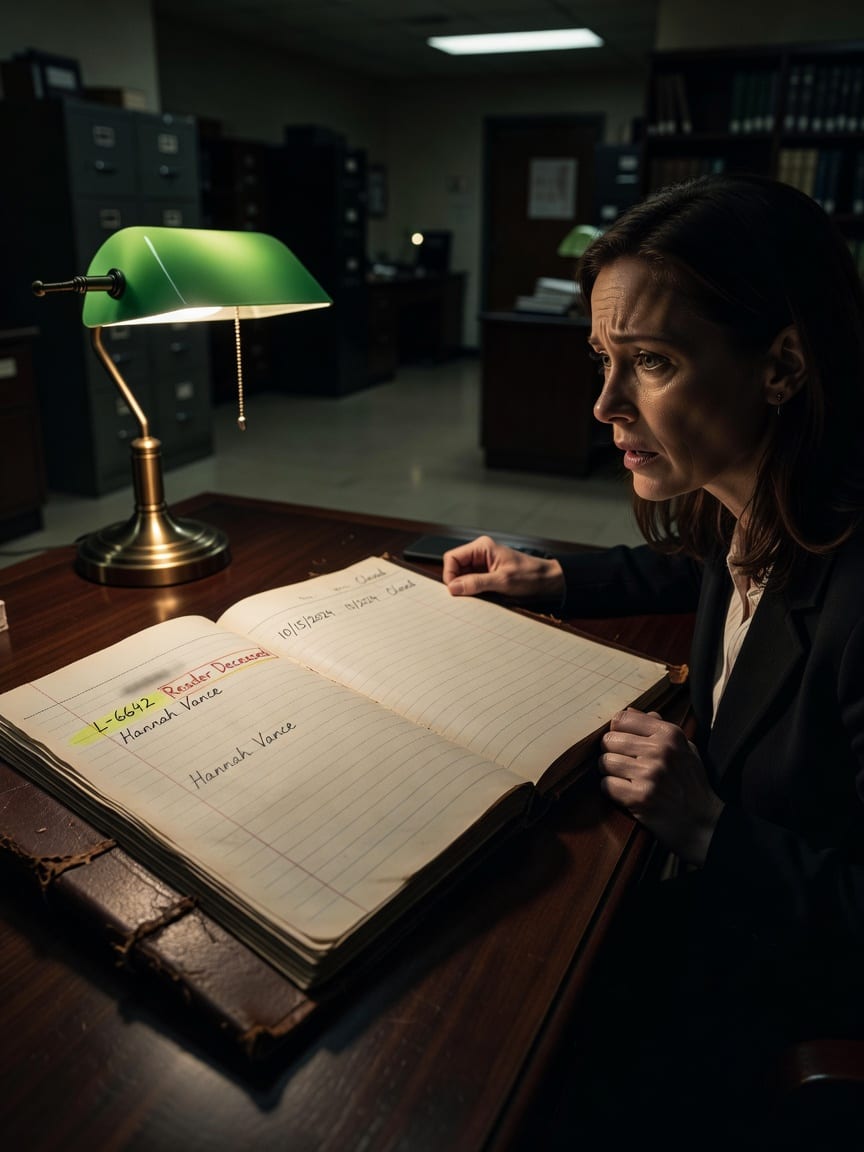
My library card number L-6642 was issued to me at seven — and the ledger shows that number has marked a reader 'deceased' every twelve years since 1949.
Returning my late father's library card to the old town library felt like a small act of closure. But the senior librarian's ancient ledger revealed a chilling pattern of 'reader deceased' entries tied to specific card numbers and borrowed books. My unease turned to cold dread when I secretly found my own name penciled in, marked for a future 'reader deceased' entry.
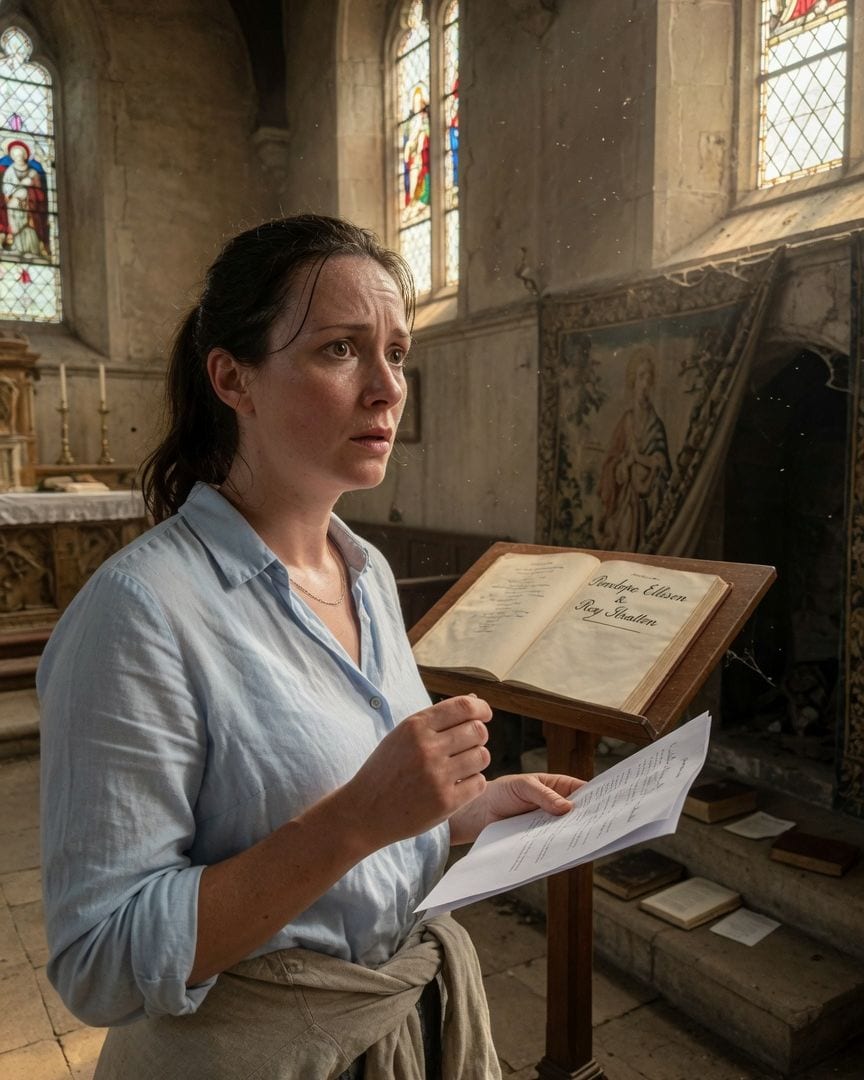
The church's banns book shows a wedding notice, republished every three weeks. Same names, fresh ink. The marriage was never solemnised.
As a newcomer to Marne, I noticed the curate quickly hide a page in the church's banns book. It showed a wedding for 'Penelope Ellison' and 'Roy Stratton' with fresh ink, yet I could find no record of them anywhere in town. The curate's dread-filled warning to leave "some things undisturbed" made the phantom names feel chillingly real.
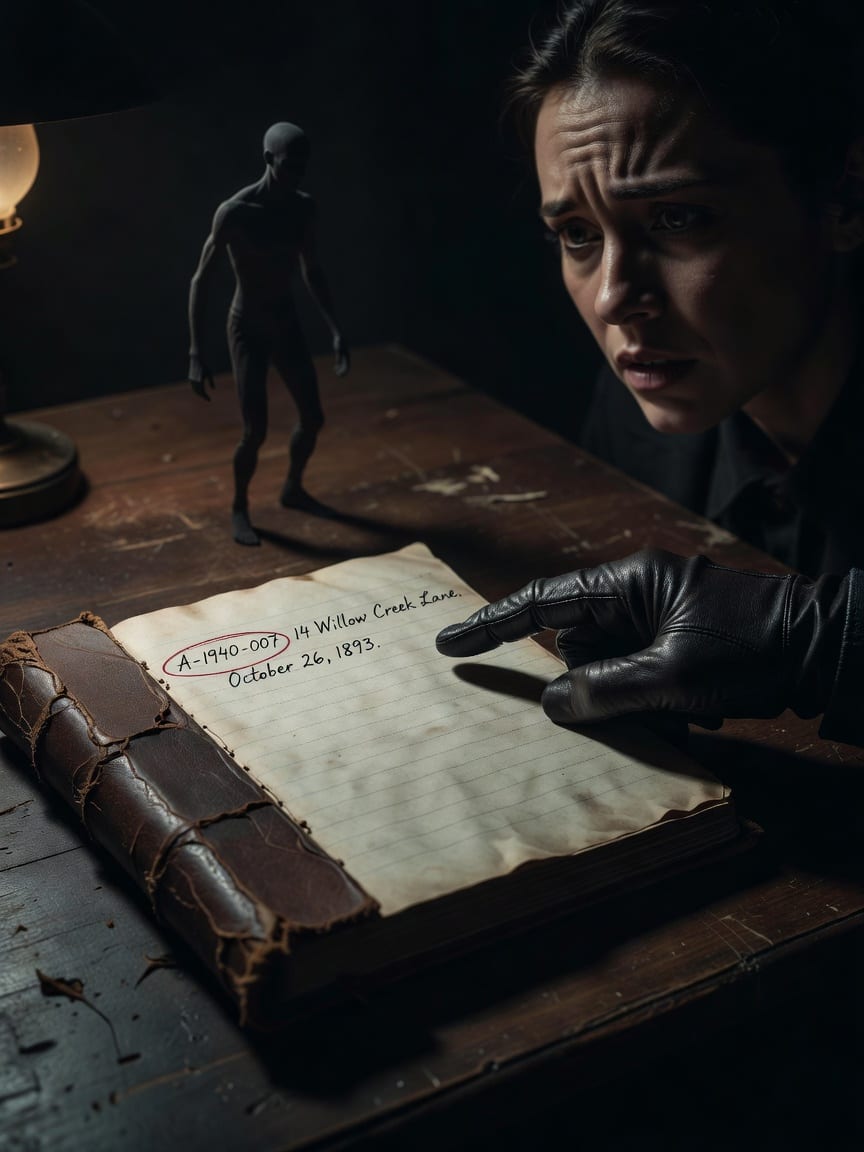
My dead relative's 1940 hospital record had a note: 'same admission number as reissued below.' Below it, decades later, was my home address, and 'hold, do not process new patient.'
As an archivist, I was researching my great-aunt Vera's 1940 psychiatric admission. Her microfiche file, however, contained a handwritten note about a reissued admission number. To my shock, this identical number was later assigned to a blank file listing my own home address, with a chilling directive to 'hold'.
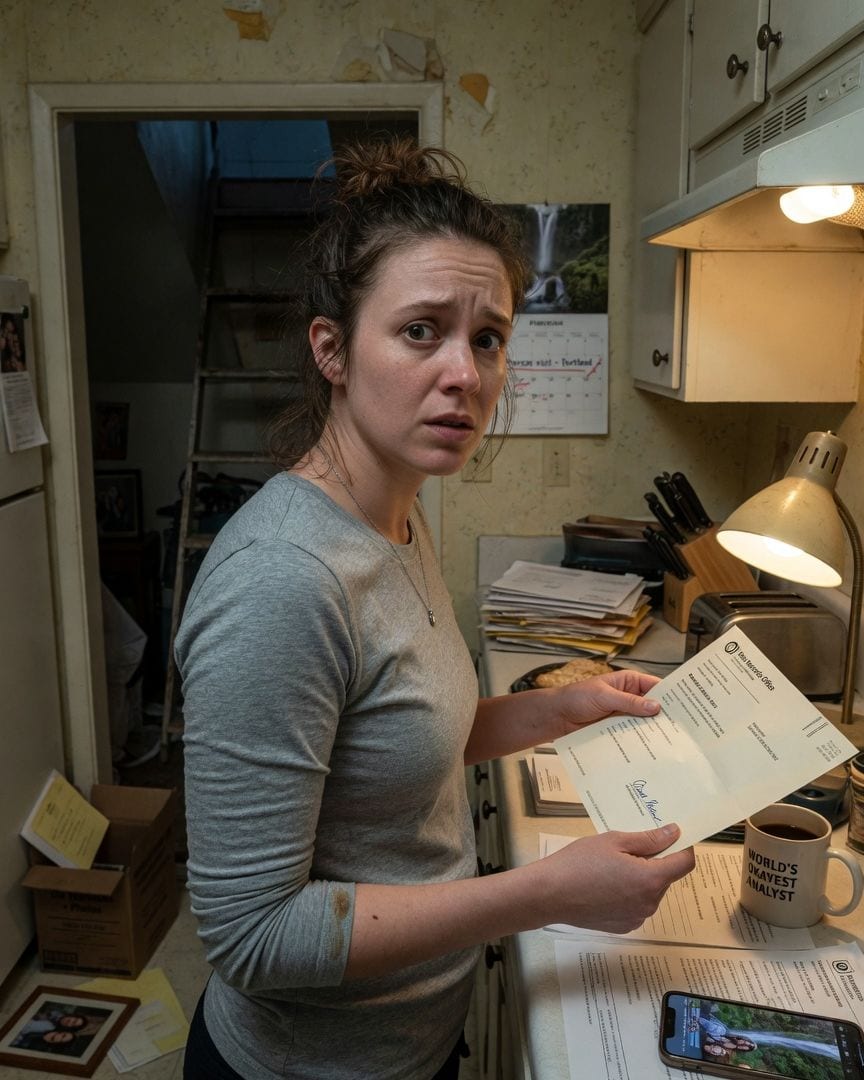
My name is on a marriage certificate in Ohio, signed by my own hand, but I was 2,000 miles away that day.
Abigail Caldwell, a systems analyst, prides herself on an ordered life. But an official envelope arrives containing a marriage certificate for her, complete with her signature, from a wedding she never had. The record lists her as the groom, married to a man she's never met, in a city she swears she's never visited.