An inventory clerk in a Cold War boneyard finds a pilot declared dead in 1952, alive and photographed just last week.
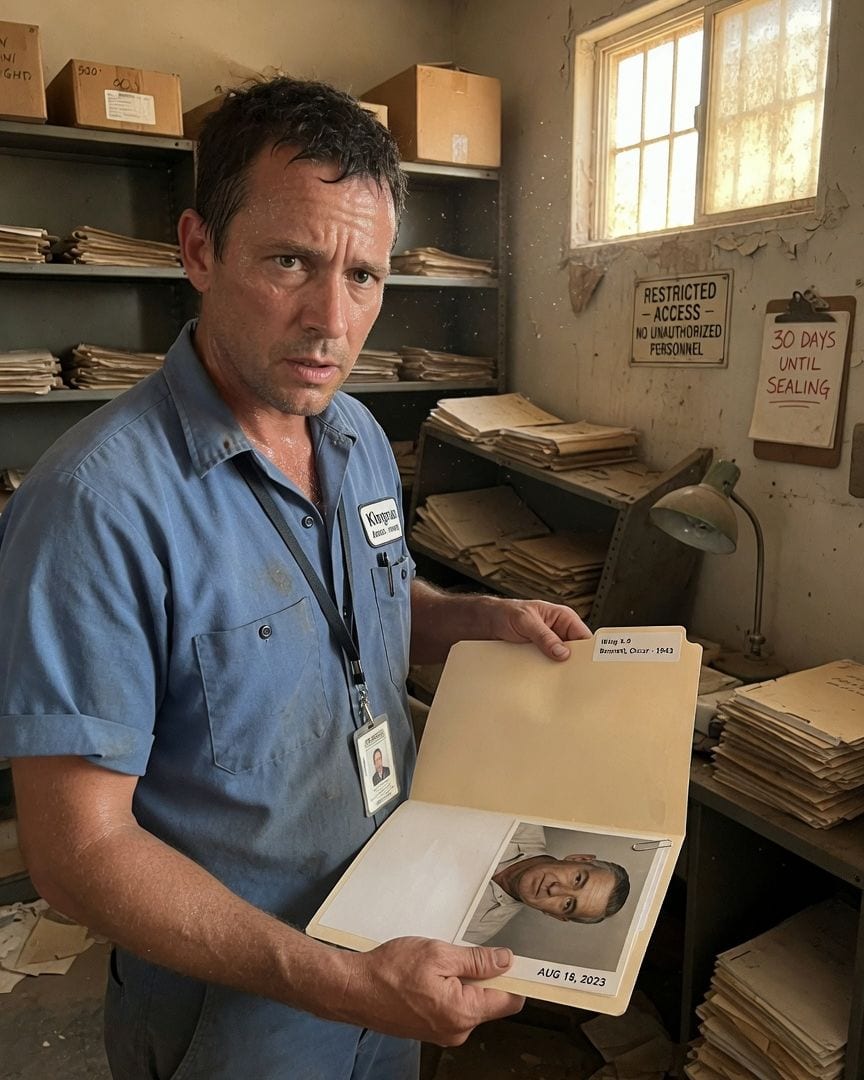
Rafe Delahunt, an inventory clerk by trade, wiped a bead of sweat from his temple. The Kingman boneyard annex baked under the Arizona sun, a sprawling graveyard of forgotten metal and brittle paper.
He had one month to catalogue the remnants before the final budget cut and re-sealing, a task that felt less like work and more like archaeology.
Most of the folders he handled crumbled to dust at the touch, their contents yellowed and faded, reeking of time and decay. His deadline loomed, a silent clock ticking in the oppressive heat.
Then he found them. Tucked away in a long-ignored bay, beneath a collapsed shelving unit, lay a stack of eleven folders. They were unlike anything else in the annex.
Supple as new cotton, cool to the touch despite the inferno outside, they seemed to hum with an unnatural freshness. He pulled one free, its tab bearing the oldest date: ‘1943.’
Yet, it smelled faintly of new ream, a crisp, papery scent that belonged in an air-conditioned office, not this sun-drained tomb.
They were filed under a designation, ‘Wing X-9,’ that he knew did not exist on any official manifest or map of the sprawling desert facility.
He ran a thumb over the smooth cardstock, a prickle of unease brushing against his professionalism.
He opened the topmost supple folder, its pages soft beneath his fingers. Inside, he found detailed personnel files, flight logs, and maintenance reports for a P-51 Mustang.
The aircraft was officially listed in the brittle, official archives as having 'crashed without trace' in 1952. The records in his hand were eerily complete, almost clinical in their meticulousness.
He cross-referenced the pilot's name, Oscar Bennett, against the official records he’d been sorting for weeks. The details matched, down to the aircraft's serial number, the date of its last flight, the specific squadron.
But the paper in his hand was still pristine, lacking any of the yellowed patina of age that should have marked documents over seventy years old. It felt like it had been printed yesterday.
He found a 'final disposition' note on the last page, dated just last week, in a crisp, official hand he didn't recognize. The signature read 'Records Officer, J. Thatcher.'
Rafe tried to rationalize it, to force it into a familiar box. A late-filed duplicate, perhaps, finally making its way into the archives? A recent data entry error by an overzealous clerk?
But the paper itself, its impossible freshness, defied the explanation. It didn't feel like a copy; it felt like the original.
Unnerved, Rafe flipped further into Oscar Bennett's file. Tucked into the back, secured by a paperclip that showed no rust, he found a photograph.
It was a studio portrait of a man, his face lined with age, hair graying at the temples, but with eyes unmistakably matching the younger Oscar Bennett from the 1952 service photos.
The same set to the jaw, the slight asymmetry in the left eyebrow. The photo bore a date stamp in the bottom corner, stark and impossible: 'AUG 18, 2023.'
Rafe stared at the image of the long-missing pilot, decades older, yet clearly alive and recently photographed. The file wasn't just a record of a disappearance; it was a record of something far stranger than any clerical error.
Rafe spent the next few days in a quiet frenzy, cross-referencing every detail from the supple files. The name 'Records Officer, J. Thatcher' yielded no results in any current or historical personnel database for Kingman.
It was as if the officer simply didn't exist, or had never been employed through official channels. The photo’s date stamp, 'AUG 18, 2023,' refused to make any sense for a man officially missing since 1952.
He carefully examined the other ten supple folders. Each contained similar pristine records for individuals or aircraft officially declared missing or lost in various decades, all with recent 'final disposition' dates and the same crisp, untraceable signature.
A pattern began to emerge, chilling him to the bone. Specific flight corridors over the Arizona desert appeared repeatedly in the flight logs of the 'missing' aircraft.
Specific dates aligned with unusual weather events – freak dust storms, sudden, localized electrical storms – that were notoriously difficult to track or explain. All these records, spanning decades, were filed under the same non-existent 'Wing X-9' designation.
It wasn’t a clerical error; it was a system. Rafe tried to access the digital archives for 'Wing X-9,' convinced there must be some deep-seated, classified project behind it.
But his login attempts, usually granted access to even highly classified sections, were met with an 'Access Denied' message he’d never encountered before, not even for the most restricted areas of the boneyard’s history.
The digital system itself seemed to resist any inquiry into 'Wing X-9,' like an old gate groaning shut against a prying hand.
As Rafe furiously tried to bypass the digital block, an older archivist, Janet Thatcher, approached his desk, her steps soft on the concrete floor.
She’d been at Kingman longer than anyone, a quiet fixture whose face seemed as sun-baked and permanent as the desert itself. Rafe had seen her around for years, a woman of few words, always meticulously sorting.
'Mr. Delahunt,' she said, her voice low, barely above a whisper, 'some things are better left buried. This place has a way of keeping its own secrets.'
Her gaze was steady, unblinking, and held a depth of knowing that chilled him far more than the summer heat. Rafe stopped typing, the sudden quiet of the office feeling immense.
He simply watched her walk away, a faint, unsettling scent of old paper and something else he couldn't quite place, lingering in her wake. Later that day, Rafe found a printout on his desk.
It was a log of his recent access attempts to 'Wing X-9' files, highlighted in stark red. Beneath it, in the same crisp, official hand as the 'disposition' notes he’d found in the supple files, was a single word: 'Observed.'
The implication was clear: someone knew exactly what he’d found, and they were watching him.
Rafe confronted Janet Thatcher the next morning, the 'Observed' printout clutched in his hand. He’d found her methodically arranging old manifest boxes in a dim corner of the archive. 'What do you know about 'Wing X-9'?'
he demanded, trying to keep his voice level, the word echoing just a little too loudly in the cavernous space.
She sighed, a long, weary sound that seemed to pull the dry air from the room, and motioned him towards a more secluded corner, deeper into the stacks of forgotten history.
'It's an old designation,' she admitted, her voice barely a whisper now, lost among the towering shelves. 'Not on any modern map. A sealed-off section of the boneyard, used for 'special disposition' back in the day.
Records from there always came in on that… different paper.' Her eyes, tired and ancient, met his. 'Anyone who tried to inventory those files, anyone who got too close, they… disappeared.
Like Simon Reynolds, decades ago, after he started asking questions about the same things you are. They weren't lost, Mr. Delahunt. They were filed.'
She described the pattern, a quiet recitation of dates and names Rafe now recognized from his own research. The specific flight paths, always leading to the same unmarked coordinates in the desert.
The unusual weather coincidences, like a veil falling over the world. The 'filing' wasn't just a metaphor, Rafe realized, a euphemism for death or disappearance.
It was an ongoing process, a quiet consumption, like the desert itself absorbing what was put into it. The supple paper wasn't just a unique material; it was a signature, a proof of ongoing activity.
The dread solidified in Rafe's gut, cold and heavy. The 'missing' weren't lost; they were simply 'processed,' their new status recorded on the pristine pages that continued to appear as if from nowhere.
Armed with Janet's vague directions – a turn at the rusted water tower, a path skirting the old munitions dump – Rafe drove to the edge of the annex perimeter, where the chain-link fence angled sharply into overgrown scrubland.
He spotted it: a rusted, unmarked gate, almost hidden by decades of neglect and the tenacious desert flora, leading into a section not visible on any map.
He forced the gate open, the protesting squeal echoing in the afternoon heat, a sound like a tortured animal.
Inside, among skeletal aircraft husks and shifting sand, where the sun bleached everything to a uniform gray, he spotted a small, windowless shed.
Its corrugated metal walls were faded and peeling, baked by the desert sun until it looked like a mirage. The door was slightly ajar, a sliver of darkness visible within, beckoning.
He pushed it open, stepping into the unexpected cool, still air inside. The scent of ozone and something vaguely metallic hung heavy.
On a simple, metal desk, a single, active computer terminal glowed with an anachronistic blue light, its screen the only source of illumination in the dim interior. On the screen, a file was open, displaying 'PERSONNEL RECORD.'
Rafe’s blood ran cold as he read the name at the top: 'DELAHUNT, RAFE S.' Below it, a blank line blinked, waiting for an entry: 'Disposition Date:'
Rafe's breath hitched, trapped in his throat. He realized the shed wasn't just a shed; it was the active 'office' for the filing system, a silent, operational hub hidden in plain sight.
The computer, an old, boxy model, hummed quietly, clearly not connected to any external network; it was a closed, self-contained unit, a universe unto itself. He clicked the mouse, and a list of files appeared on the desktop.
They were all Kingman annex personnel records, current and active. He saw Janet Thatcher's name, too, with a 'Disposition Date' already filled in, dated years ago.
He scrolled down, seeing other names he recognized from his inventory, some with dates filled in for today, or even tomorrow. The 'Wing X-9' designation wasn't just a code; it was the name of this entire silent operation.
The annex wasn’t just a boneyard for planes; it was a processing center for people, and the files were a living ledger, continually updated. On the desk, beside the keyboard, sat a small, old-fashioned, self-inking stamp.
Its rubber face read, simply: 'FILED.'
A primal fear spurred Rafe into action. He snatched the open files from the desktop – his own, Janet's, the list of current personnel – needing proof, needing to escape. The papers felt impossibly light in his trembling hands.
As he turned to bolt from the shed, a figure filled the doorway, blocking the harsh desert light, silhouetted against the blinding sun. It was Janet Thatcher, her face utterly devoid of the weary compassion he’d seen earlier.
Her eyes were cold, unblinking, like polished stones reflecting the desert sky, completely devoid of warmth. In her hand, she held a freshly stamped folder, its tab facing him.
'You shouldn't have opened that door, Mr. Delahunt,' she said, her voice flat, devoid of emotion, 'Some files need to be closed.' The folder was pristine, supple, impossibly new.
Rafe saw his own name on the tab, written in that same crisp, official hand. He took a desperate step back, clutching the stolen files, but Janet didn't move.
She stood as a silent, unyielding guardian of the filing system, a quiet, immovable force. The 'one who knew' was also the one who ensured the records were kept current.
Rafe Delahunt was reported missing from the Kingman boneyard annex within the week. His vehicle was found in the parking lot, keys still in the ignition, his inventory lists scattered across the passenger seat.
The month-long inventory was abandoned, never completed. The annex, its budget finally cut for good, was quietly re-sealed, the desert winds already beginning to reclaim its forgotten corners.
No official search was launched; his disappearance was filed under 'voluntary separation' and 'failure to report.'
Two years later, Daniel Ford, a new inventory clerk, was assigned to the now-abandoned Kingman annex for a final, mandated sweep before demolition.
He found the same stack of eleven supple files, under the same non-existent 'Wing X-9' designation, exactly where Rafe left them. He pulled one out, feeling its impossible softness. It smelled like a new ream.
He opened it, and the first page was Rafe Delahunt's personnel file, the 'Disposition Date' now filled in, dated two years prior. The final line of the entry read:
Status: FILED.
If this one got to you
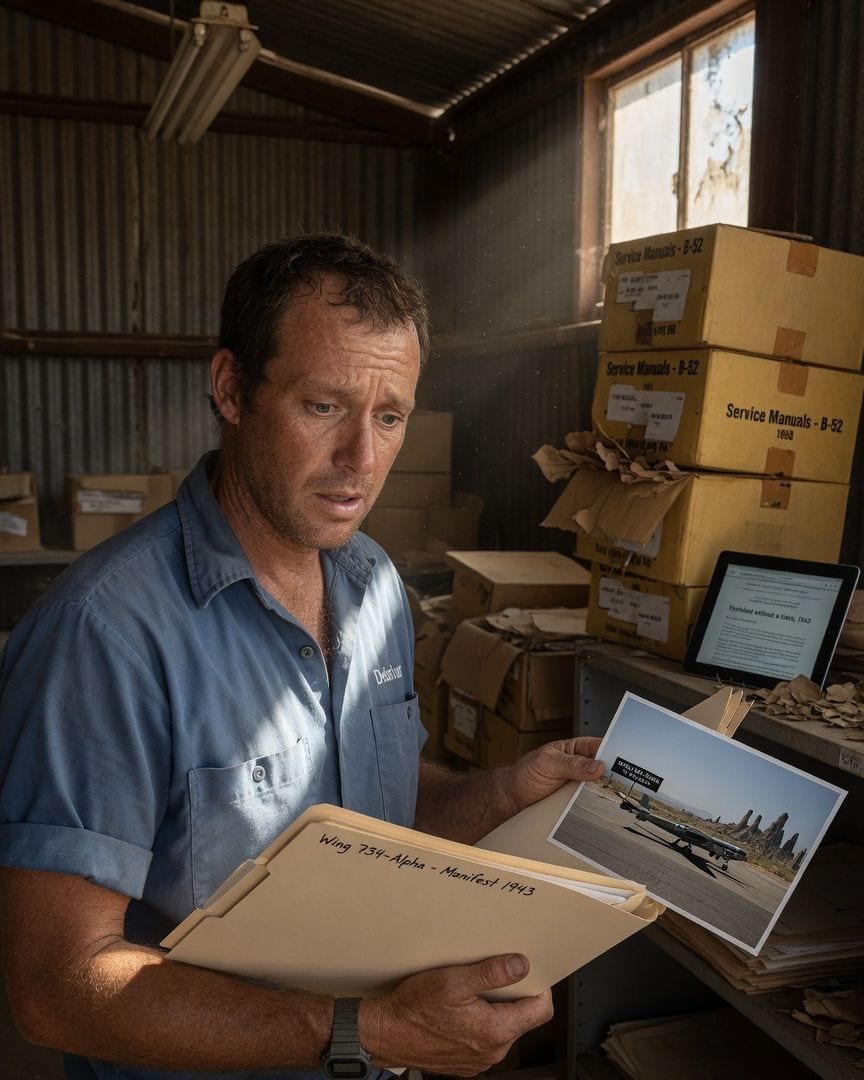
An inventory clerk finds 1943 files for a vanished wing. The paper is new, and photos show its 'lost' plane with impossible tech.
Inventory clerk Rafe Delahunt worked through the Kingman boneyard, his month-long task almost done, the Arizona sun baking through the roof. Amidst crumbling, forgotten records, his hand brushed eleven folders for a 'Wing 734-Alpha'—a designation that never officially existed. Unlike the brittle paper surrounding them, these felt supple and cool, smelling faintly new despite their 1943 dates. Then he found a pristine, modern-resolution photograph of a prototype aircraft officially vanished in 1943, now bearing impossible modifications on an unmapped runway. It was like seeing a ghost in high definition, hinting that these 'recoveries' might be happening closer than he imagined.
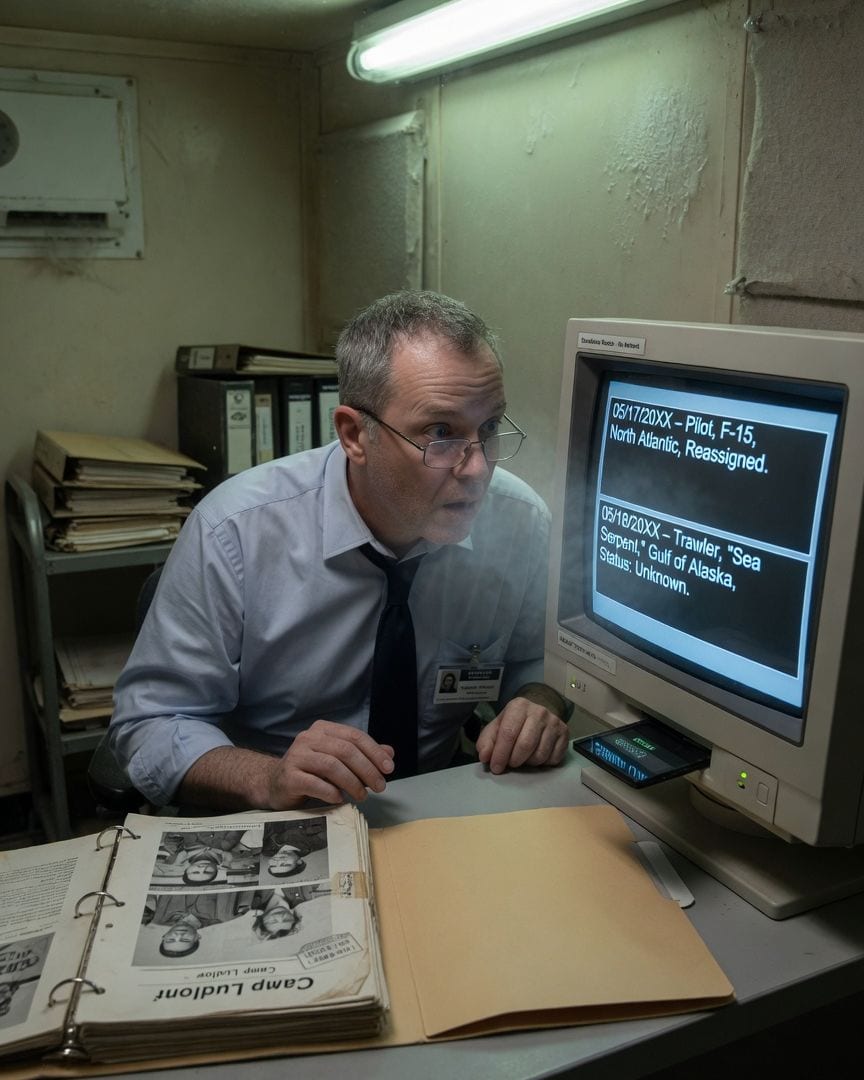
A declassification reviewer opened a Cold War 1959 file. A modern data chip inside showed a pilot missing yesterday.
Declassification reviewer Samuel Vance, whose world was built on the rigid order of official history, smoothed a letter confirming Camp Ludlow’s 1959 closure was a lie. Despite decades of records, the Air Force insisted the Greenland base remained active, its last radio check logged just four days prior. Driven by this profound wrongness, Samuel unearthed the base's ancient physical file, only to find a pristine, modern data chip hidden within its brittle pages. When he inserted it into a secure reader, the screen didn't show history, but a scrolling list of current missing persons—a pilot from yesterday, a trawler from today. How could an archived file hold a living record of the world’s most recent disappearances?
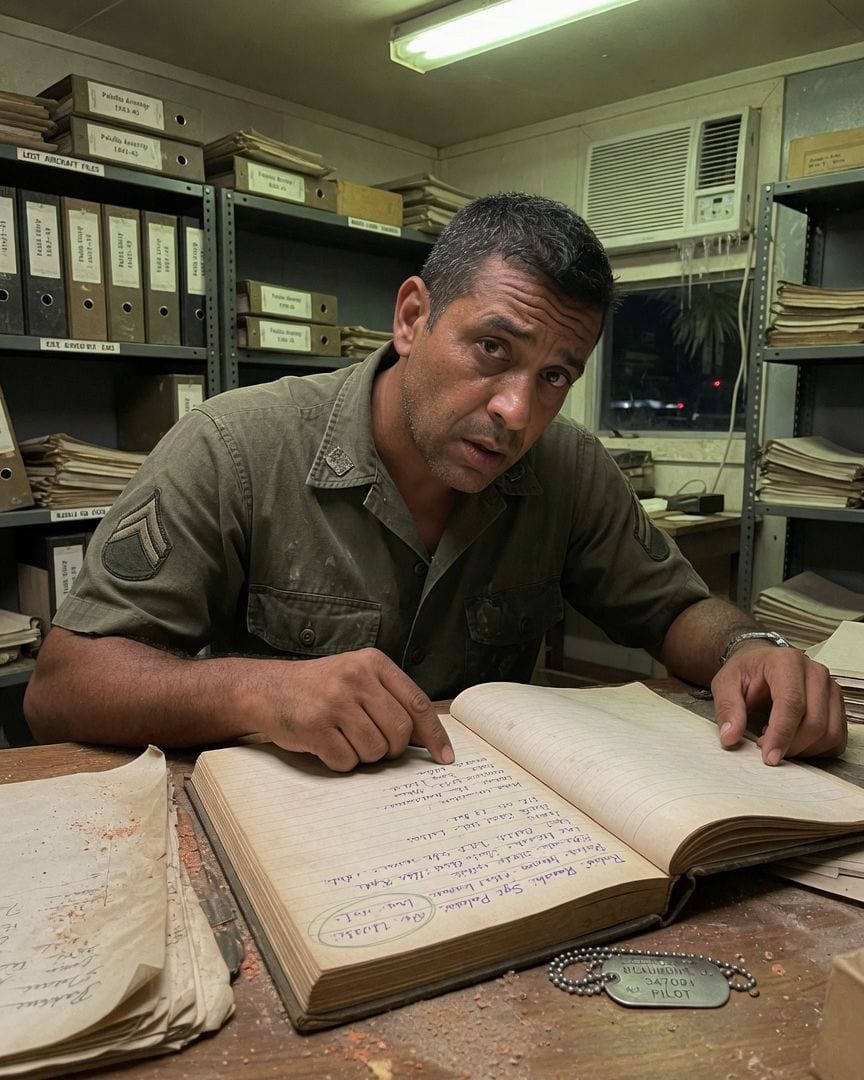
A sergeant's last watch on a forgotten outpost: His own name appeared on an 80-year-old crash manifest.
Sergeant Leon Pulaski spent his last night at the remote Peleliu Atoll Airstrip, its final closure imminent, listening to the rhythmic sigh of the Pacific. Just after 0330, a garbled distress call pierced the silence, requesting the field for a plane with a tail number, 'Ghost Two-Niner-Niner,' retired since World War II. Though Pulaski, disciplined and rational, logged the impossible call as a phantom, the crash crew later found a fresh gouge in the coral and a shard of cockpit glass, still warm, where no wreck existed. His quiet unease only deepened when he discovered a dog tag belonging to a pilot declared lost eighty years prior. But the true chill landed when he found his own name on that same eighty-year-old crash manifest.
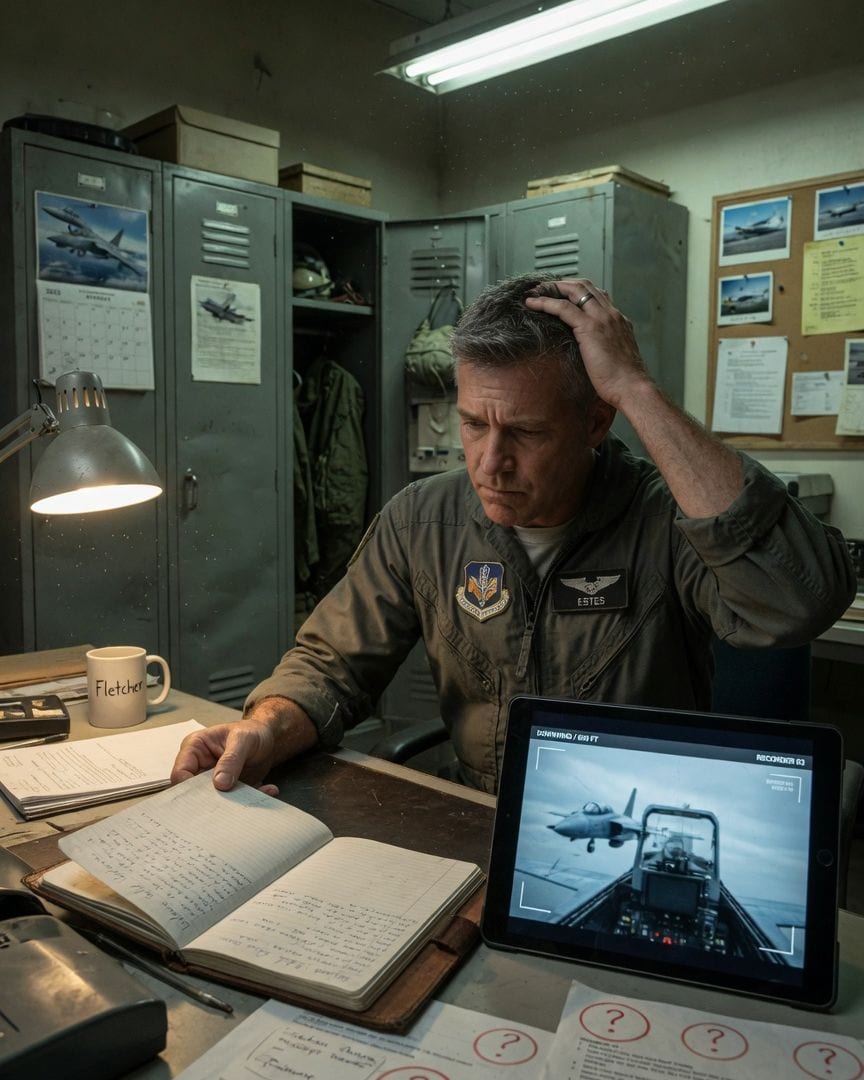
A Chief Warrant Officer's HUD tape shows a phantom jet, impossibly close, off his wing. Forty years ago, another Cold War pilot logged the same impossible sight.
Chief Warrant Officer Nathaniel Estes, a pilot whose career hinged on absolute precision, was under evaluation for a critical promotion. His nightly review of HUD tapes from routine Mojave test flights was a meticulous habit, but for a week, it revealed an impossible detail. At precisely 800 feet, one frame showed a sleek, experimental jet tucked impossibly close off his left wing—a craft ground radar never detected. When his maintenance chief found no equipment fault, Estes unearthed a dusty, decades-old logbook detailing identical phantom sightings from 1978. What unseen presence shadowed the desert skies?
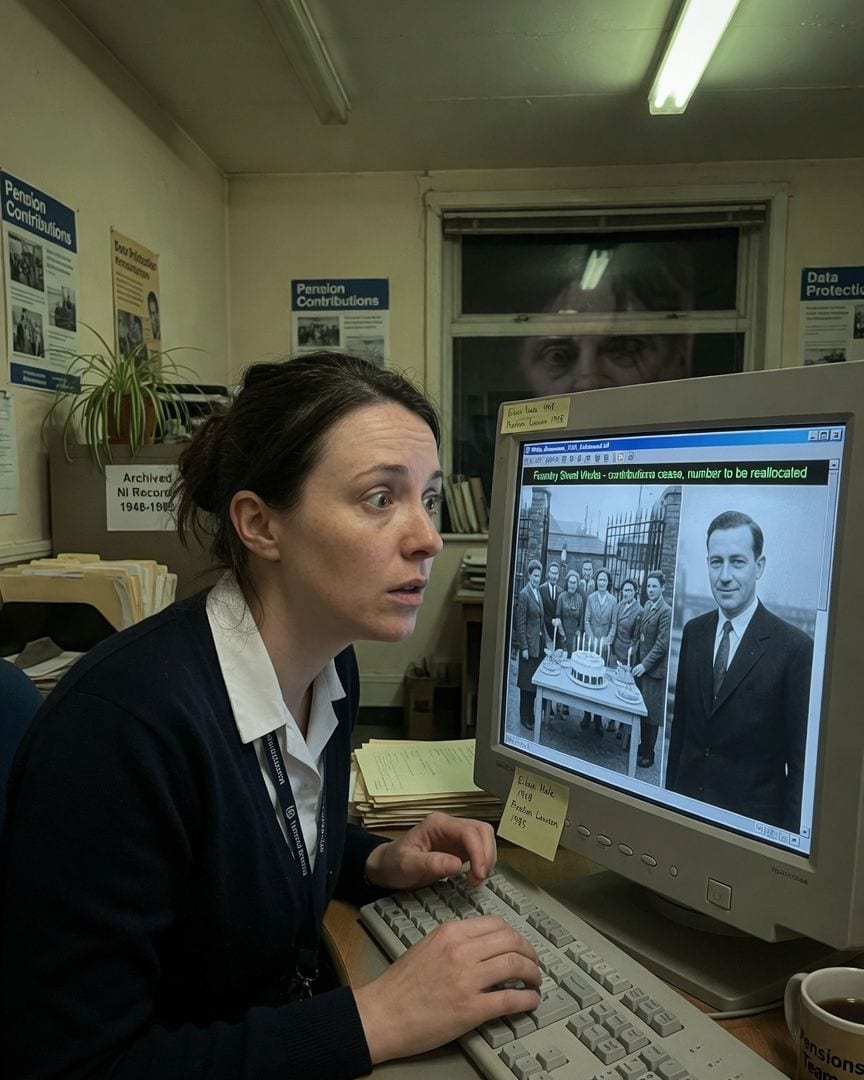
My National Insurance number has been used by four people since 1948. Each one worked at the same Foundry Street works, and none ever drew a pension.
I was just sorting out my new National Insurance number, a routine task I expected to take minutes. But the clerk found it had been used four times since 1948. Even stranger, all four previous holders worked at the defunct Foundry Street Works and never drew a penny of pension.
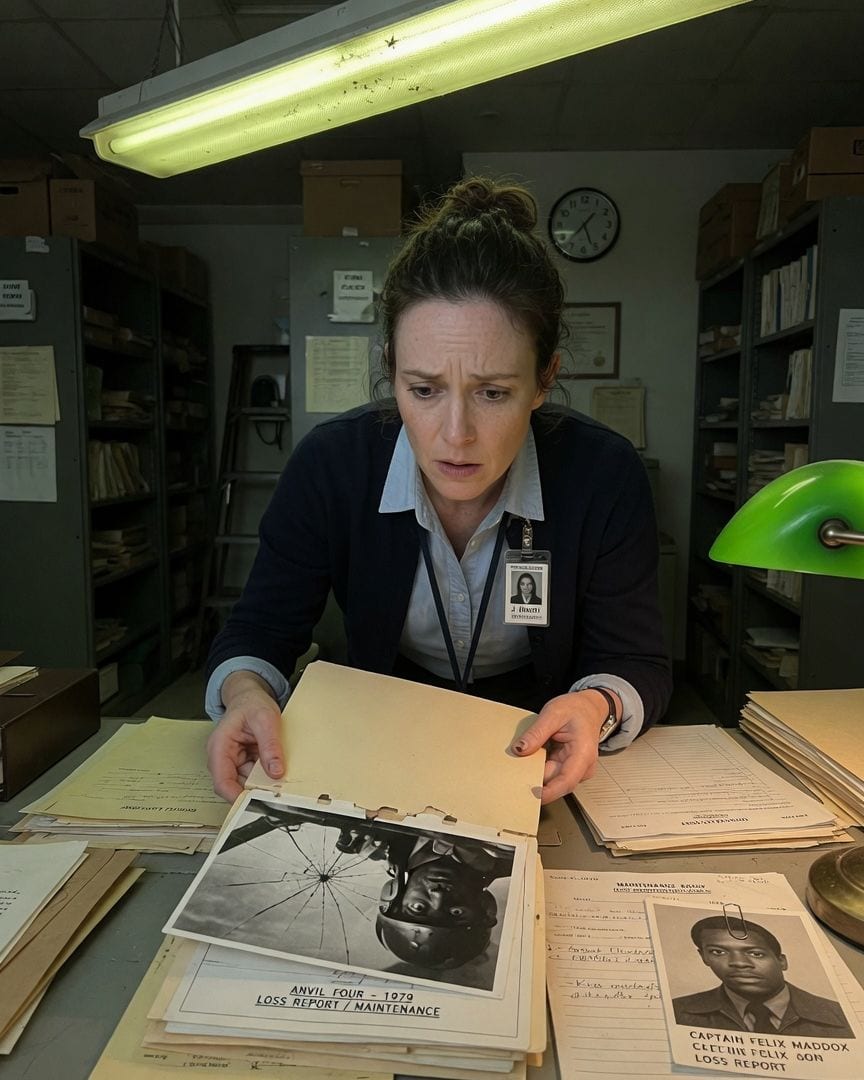
A Cold War pilot's pay stub arrived four years after his helicopter was officially lost.
National Archives archivist Josie Ilnicki spent years immersed in forgotten histories, the fluorescent hum of the annex a constant companion. Today, processing a declassification request that had waited forty years, she opened the file for 'Anvil Four,' a helicopter lost in the Nevada ranges in 1979. Inside, past the official loss reports, Josie found a maintenance sheet dated eight months after the crash. Stapled to it was a grainy photograph, showing the cracked windscreen – and behind it, Captain Felix Maddox, the pilot officially dead, staring out with wide-open eyes, as if still flying.