An inventory clerk finds 1943 files for a vanished wing. The paper is new, and photos show its 'lost' plane with impossible tech.
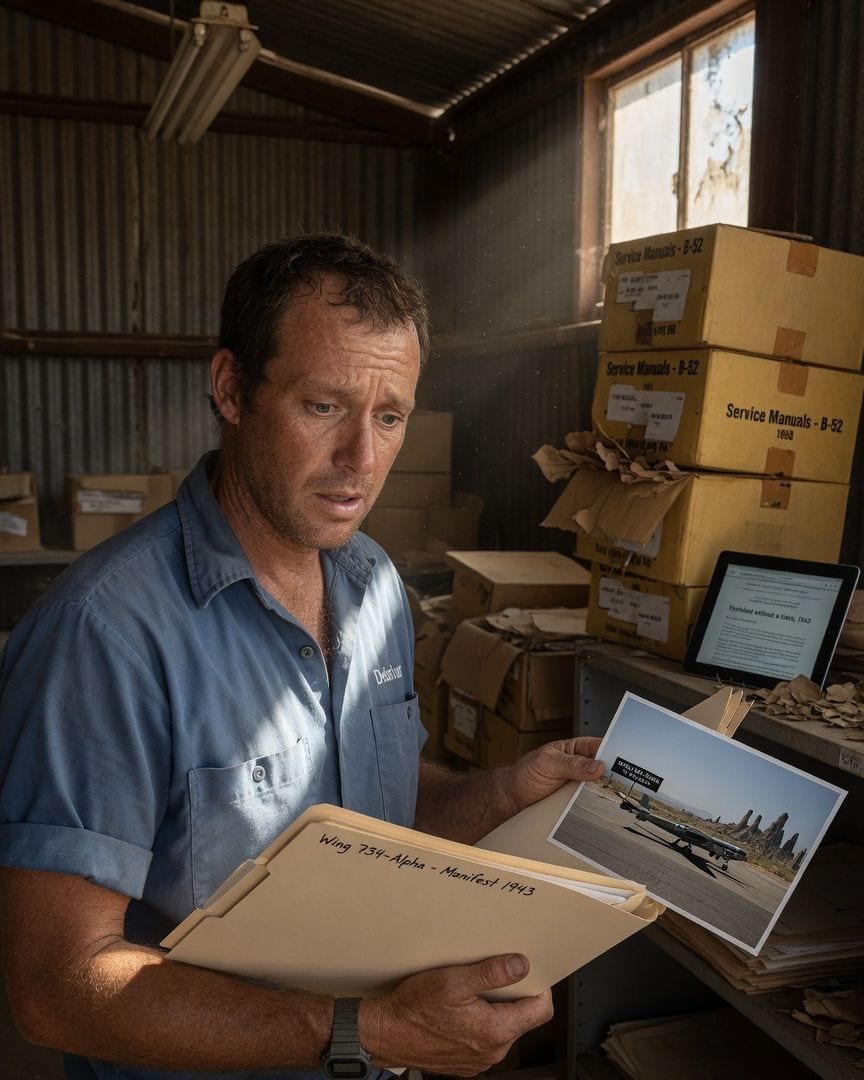
Rafe Delahunt, an inventory clerk of thirty-eight years, worked methodically through the Kingman boneyard annex, the Arizona sun baking his skin even through the corrugated tin roof.
Every folder he touched was brittle, yellowed to the core, crumbling from decades of neglect. His month-long inventory was almost over, the annex budget long gone, and soon these forgotten records would be gone too.
He moved with the quiet efficiency of someone who found comfort in order, even amidst decay.
Dust motes danced in the sparse shafts of light that pierced the gloom of the hanger-sized building, illuminating mountains of boxes filled with paperwork detailing the decommissioning of aircraft long since scrapped.
It was mind-numbing work, the kind that made the hours crawl, yet Rafe preferred it to the unpredictable chaos of people.
He was reaching for another box, his hand instinctively recoiling from the familiar grit of old paper, when his fingers brushed against something different.
Tucked away on a low shelf, obscured by a leaning stack of service manuals, sat a collection of folders. Eleven of them.
They were filed under a designation for 'Wing 734-Alpha'—a wing that had never existed in any official Air Force registry, not to Rafe’s knowledge, nor to the dusty databases he’d consulted countless times. He pulled one out.
Unlike the others, it was supple, cool to the touch, like fresh cotton bond, and it smelled faintly of new paper, not dust. It felt out of place, utterly alien, among the dry, crumbling detritus of history. He opened it.
The oldest date stamped inside was 1943.
Rafe, a man who trusted paperwork more than intuition, tried to rationalize it. A recent re-file? A particularly meticulous archivist with a fetish for new stationery?
But the paper felt too pristine, the ink too crisp for a document supposedly handled decades ago. He ran a thumb over the surface of the folder, feeling the subtle grain of the cotton fiber. It was genuinely new.
He opened the first folder. Inside, a manifest detailed a crew list for 'Wing 734-Alpha,' all with service numbers that returned no hits in the official database he’d accessed with his tablet.
He tried cross-referencing against historical military records, but again, nothing. The names were unfamiliar, the dates were all 1943, yet the document itself felt as if it had been printed yesterday. The edges were sharp, the colors vibrant.
His brow furrowed. He felt the first prickle of unease.
Deeper in the folder, tucked beneath a stack of technical schematics that bore no resemblance to any known aircraft of the era, he found a photograph.
It was a pristine aerial shot of a known, experimental prototype aircraft, one that had officially vanished in 1943. He recognized the distinctive lines of its fuselage, the unusual wing configuration.
But in the photo, the aircraft sat perfectly intact on a concrete runway that was not on any map, with subtle, impossible modifications to its fuselage—sleeker, more advanced, like a future-tech interpretation of a 1940s design.
Next to it, a hangar bore the 'Wing 734-Alpha' designation, its dark paint crisp against the desert sun. The photo itself was undated, but its clarity and resolution were undeniably modern, far beyond anything from the 1940s.
The detail was so sharp he could almost read the stenciled numbers on the side of the hangar. It was like looking at a ghost rendered in high definition.
Rafe felt a cold prickle on his neck, a sensation that had nothing to do with the air conditioning struggling against the desert heat.
He pulled up the official records for the prototype on his tablet, tapping quickly, verifying what he already knew: 'Vanished without a trace, 1943. Last known location: Nevada testing grounds.'
Yet the photo showed it clearly after that date, somehow, with details that were fundamentally wrong. It sat there, defiant, in perfect condition.
He reached for another supple folder, his hand now moving with a strange, hesitant urgency, pulling out a photo of a different 'recovery.'
This one showed a peculiar, jagged rock formation in the background, a cluster of eroded sandstone pinnacles framing what looked like a downed satellite dish. Rafe stared, a knot forming in his stomach. He knew that formation.
He'd only ever seen it in one place: the desolate, rarely visited far edge of Kingman's boneyard annex, beyond the main fence line. It implied these 'recoveries' weren't just being filed here; they were happening here.
The next morning, the impossible photograph tucked into his pocket like a hot coal, Rafe drove his beat-up pickup truck to the remote corner of the boneyard.
The air was thick with dust and the metallic tang of decaying aluminum, a smell that clung to everything in this place. The sun, already climbing, beat down with a relentless intensity.
He felt a nervous flutter in his gut, a disquiet he usually suppressed with checklists and regulations. He found an old, overgrown maintenance road, barely visible beneath years of desert scrub, leading toward the jagged rock formation from the photo.
It was more a suggestion of a path than an actual road, a faint indentation in the landscape.
Following it, his truck’s suspension groaning over unseen bumps, he discovered a small, squat concrete bunker, almost entirely swallowed by sand and rust, unmarked on any map.
It sat low, like a feature of the land itself, rather than something man-made. The heavy steel door was warped, its painted surface flaking away, but not locked.
He forced it open, the hinges screaming a protest that echoed in the vast silence, a sound that made the hair on his arms stand up.
Inside, the air was still and cool, thick with the scent of ozone and old paper, a combination that made his throat tighten.
A single, dusty metal desk stood in the center, and on it, a small, leather-bound record book lay open. The last entry was dated yesterday, and simply read: 'Filed.'
There were no other details, just a sequence of dates, each followed by the same single, chilling word. He saw an entry for two days prior, then three, then a week. All the same: Filed.
Rafe returned to the bunker the following day, a sense of growing dread tightening his chest. The silence of the desert seemed heavier, the sun hotter. He remembered the unlatched door, the stillness of the interior.
He approached with caution, his senses hyper-alert. The heavy steel door, which he had left ajar, was now firmly shut, though still unlocked. He pushed it open, the hinges groaning again. The record book was gone.
The polished, worn leather he’d seen yesterday, the handwritten entries, all gone. In its place, on the dusty metal desk, lay a single, fresh folder, identical in feel and smell to the eleven he'd found in the main office.
It was the same supple, cool paper, the same faint, clean scent. His hands trembled as he picked it up. It was labeled, in crisp, dark ink: 'Annex Security Log - Delahunt, R.'
He opened it, his heart pounding a frantic rhythm against his ribs. The first entry, dated yesterday, precisely detailed his arrival at the bunker, the time he forced the door, and the discovery of the record book.
It meticulously recorded his initial surprise, his checking of the dates. Every step, every reaction, transcribed as if by an unseen hand. His own movements, his own discoveries, documented as a cold, sterile observation. Rafe's breath hitched.
Someone was watching him. Someone was documenting his every move. And they were using the same, impossible filing system he had just discovered. He slammed the folder shut, the sound echoing unnaturally in the small space.
Shaken, Rafe fled the bunker, the folder clutched tight in his hand, a tangible piece of impossible evidence. He drove back to the main office in a haze, the sun blinding, the heat oppressive.
He needed a grounding force, a voice of reason, or at least, a voice that had heard stranger things.
He sought out Charles Kowalski, an elderly, retired maintenance chief who still pottered around, fixing ancient generators, a relic of the boneyard's long history.
Kowalski, 74, with his gnarled hands and eyes that had seen too much, had seen more come and go than anyone in this forgotten corner of the world. Rafe found him coaxing a sputtering diesel engine back to life.
"Charlie," Rafe began, trying to keep his voice steady, "I found something." He unfolded a printout of the impossible aircraft from the folder, placing it on the workbench next to a greasy wrench.
Kowalski's weathered face, usually impassive, drained of color. His eyes, usually clouded with age, sharpened with a flicker of old fear that Rafe had never seen before.
He stared at the printout for a long moment, then slowly looked up at Rafe.
"Things sometimes came back wrong," Kowalski muttered, his voice raspy, a dry cough following the words. He picked up the printout, his thumb tracing the impossible modifications on the fuselage. "Things that weren't on the books. They'd just… appear."
He paused, then looked Rafe dead in the eye. "There was a quiet understanding. Some records, they were… self-correcting. Or they got updated by themselves." He pointed to the 'Wing 734-Alpha' designation on the printout.
"We called it 'Assets Beyond Manifest.' Don't dig too deep, son. Some files… they sign themselves."
The old man's words, delivered with a chilling calm, a resignation that was more terrifying than any outburst, clicked into place, re-meaning every supple folder, every fresh entry.
The files weren't just inert records of the wrongness; they were part of it. They were alive.
Rafe, despite Kowalski's chilling warning, felt an overwhelming need to understand. The fear was a cold knot in his stomach, but now it was mixed with a desperate resolve. He had to know.
He had to find the 'who' behind the 'what.' He ignored the old man's advice, returning to the stack of supple folders, his hands moving with a frantic energy that belied his usual methodical approach.
The silence of the office pressed in on him. He was looking for a name, a department, anything that could identify the source.
He pulled out a new folder, thicker than the others, its pristine cover bearing a stark label: 'Operation Kingman Anomaly - Personnel Reassignments.'
His heart hammered against his ribs as he opened it. Inside, a list of names, dates, and 'new assignments.' He scrolled down, his eyes scanning, adrenaline coursing through him, the names blurring into a terrifying litany of the disappeared.
And then he saw it. An entry that made the blood run cold in his veins, freezing him in place: 'Delahunt, Rafe. Service No. 844-32-01. Reassigned: Wing 734-Alpha. Date: 1943.'
The service number was his own, identical to the one on his Air Force discharge papers from his brief stint years ago. He knew it by heart. But he wasn't born until 1985.
The date on the paper predated his birth by decades. He touched the paper, the fear now absolute, paralyzing. It was supple, cool. The ink on the entry, his own name, was still wet.
Rafe stared at the entry, his old Air Force discharge papers laid out next to it on the dusty desk. The service number was an exact match, a cold, undeniable fact.
The implications crashed over him with the force of a physical blow.
These files weren't merely documenting impossible events; they were causing them, or rather, they were the active record of a process of replacement or reassignment that transcended linear time.
The 'wing that never existed' was not a defunct unit; it was where people and things went when they were 'filed' into this system. The supple paper, the perpetually wet ink – these weren't anomalies or quirks of preservation.
They were proof that the files were active, constantly incorporating new data, new 'reassignments,' living documents that warped reality around them.
Kowalski's chilling words about 'self-correcting' files and 'signing themselves' now resonated with a terrifying, literal truth.
The 'Thing That Came Back Wrong' wasn't just an object; it was the records themselves, subtly rewriting reality, making the impossible cohere, integrating new elements and personnel into a fabricated past.
Rafe looked at the photo of the impossible aircraft again, his eyes drawn to the cockpit. The pilot, a blurred figure visible through the tinted canopy, wore a flight suit.
The cut of the helmet, the details on the collar – they were strikingly familiar to his own old Air Force uniform, tucked away in a box in his closet. He felt a profound, sickening certainty settle in his gut.
A faint, rhythmic thump-thump-thump echoed from outside the office, carried on the dry desert wind, growing louder, more insistent. It sounded like heavy canvas flapping, a monstrous heartbeat.
But it was coming from the distant, rarely used corner of the boneyard, near the unmarked bunker where he'd found the record book.
Rafe grabbed his heavy-duty flashlight, its beam a weak spear in the fading light of twilight, his heart a frantic drum against his ribs.
He stumbled out into the cool, rapidly darkening air, the silence of the desert suddenly feeling predatory.
He drove his truck, tires crunching on gravel, toward the rhythmic sound, the flapping growing louder, faster, like a giant bird struggling to take flight.
There, partially covered by a massive, wind-whipped tarp, sat something enormous, shimmering faintly in the last rays of the sun.
It was shaped like an aircraft, yet subtly wrong, impossibly sleek and angular, disturbingly close to the prototype in the photos, but far larger than he could have imagined.
It sat perfectly upright, unharmed, a silent leviathan in the desert dusk, its impossible modifications clearly visible through the torn canvas. Its hatches were dogged from the inside, sealed tight. He approached, flashlight beam shaking, illuminating the impossible craft.
As he got closer, a faint, almost invisible script became legible on its hull, just above the main hatch: 'Wing 734-Alpha.' And beneath it, stenciled in freshly painted letters, a name: 'Delahunt, R.'
The dread was absolute, paralyzing. It seized his lungs, made his vision swim. He stumbled back, his foot catching on something in the sand, sending him sprawling. He looked down, his flashlight beam cutting a frantic circle.
It was a small, supple folder, identical to the ones he'd found in the office, lying open in the sand. He picked it up, his fingers numb.
Its label, in that same crisp, dark ink, read: 'Kingman Annex Personnel - Delahunt, Rafe. Final Assignment.' He opened it.
The first page was a blank 'Transfer Request' form, but the 'New Assignment' field was already filled in, in wet ink, with a single, chilling word: 'PILOT.'
A week later, the Kingman boneyard annex officially closed its gates for good. The last few remaining workers packed up the final boxes of obsolete equipment and long-forgotten paperwork. They didn't linger. No one questioned the missing inventory clerk.
His pickup truck was found neatly parked in his usual spot, keys on the dashboard.
His personal effects, including his half-eaten lunch, were still in his office, untouched, as if he had simply stepped out for a moment and never returned. The desert wind blew through the empty hangers, a mournful whisper.
A new inventory clerk, Monica Beaumont, arrived the following month to oversee the final disposal of the remaining equipment from the defunct annex. She had a list, a tablet, and a no-nonsense attitude.
She worked methodically through the empty rooms, checking off items. In a dusty corner, beneath a designation for 'Wing 734-Alpha'—a wing she’d never heard of—she found a stack of eleven folders, supple as fresh cotton bond.
She ran a finger over the top one. The ink on the label was still wet.
If this one got to you
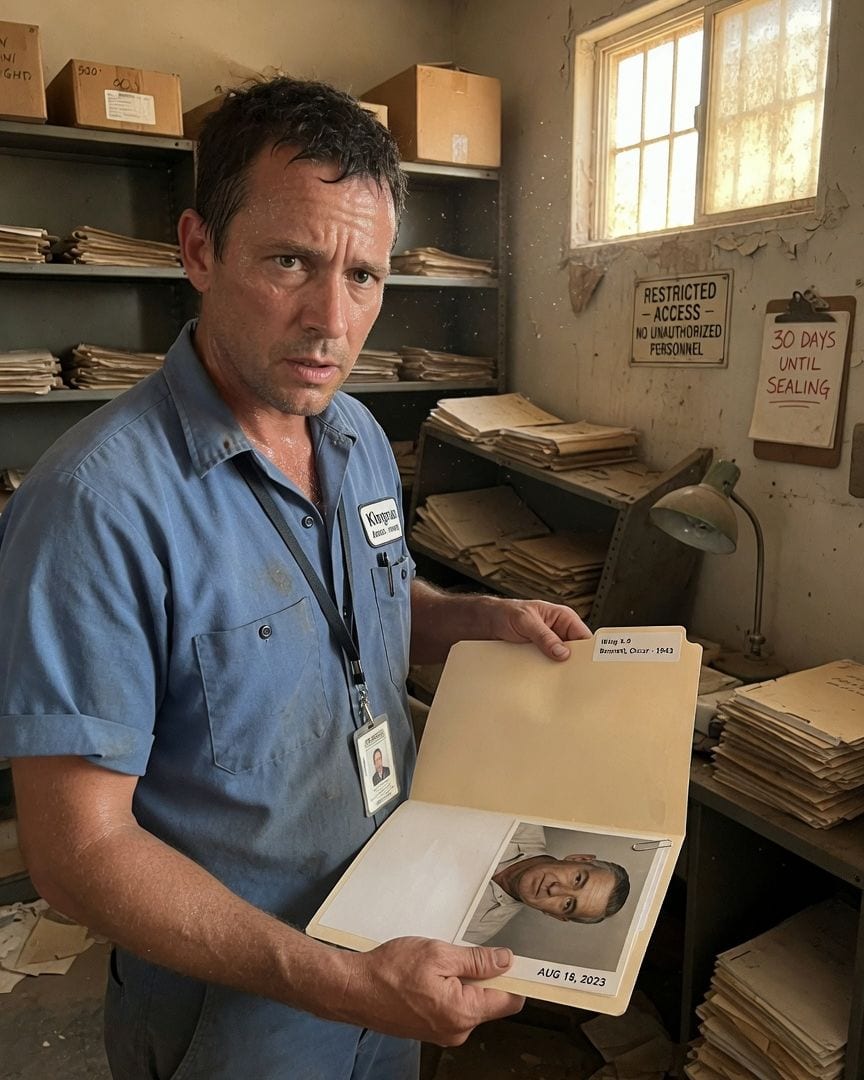
An inventory clerk in a Cold War boneyard finds a pilot declared dead in 1952, alive and photographed just last week.
Inventory clerk Rafe Delahunt toiled under the oppressive Arizona sun, racing against a deadline. He had just one month to catalog the vast Kingman boneyard before its final closure, a task made grueling by the crumbling archives and the suffocating heat. Deep within a forgotten bay, he unearthed eleven folders that defied explanation. Cool and supple to the touch, unlike any other document, they bore a 1943 date but smelled of fresh paper, filed under a designation 'Wing X-9' that shouldn't exist. Inside, the pristine files detailed a P-51 Mustang and its pilot, Oscar Bennett, officially declared 'crashed without trace' in 1952. Yet, tucked into the back, was a photograph of an older Oscar Bennett, clearly alive, with a date stamp from August 18, 2023.
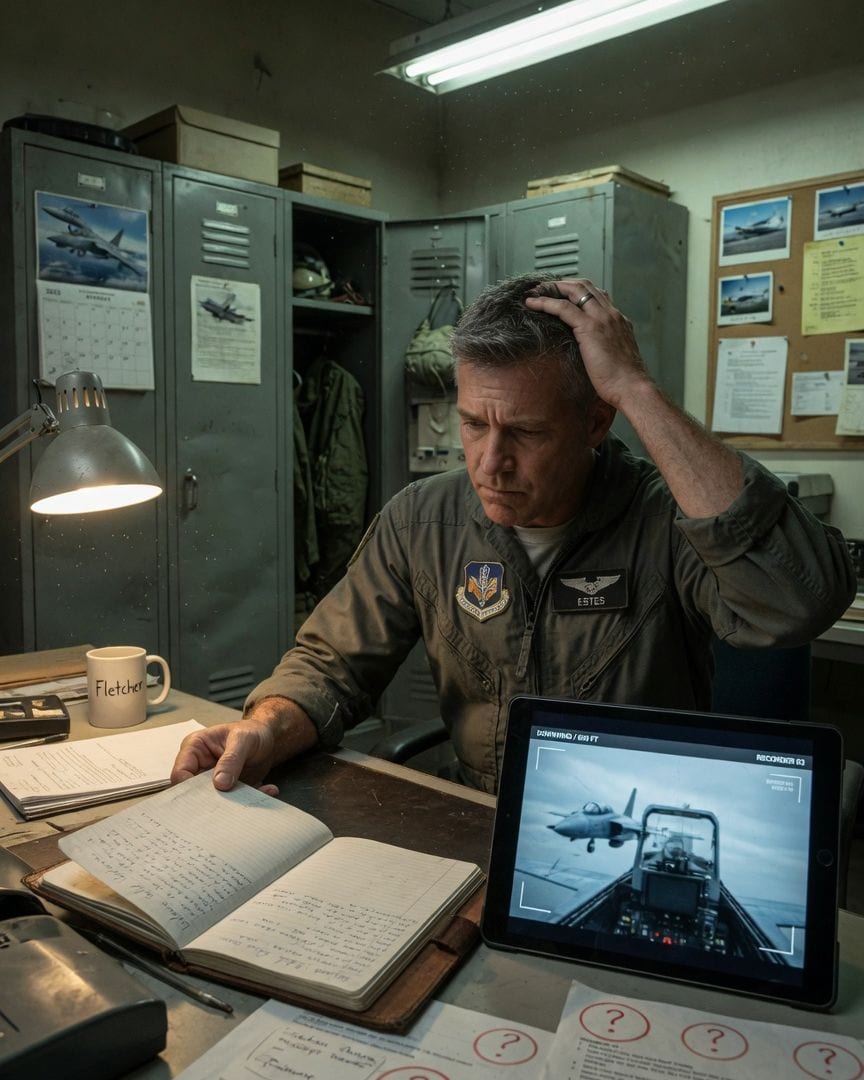
A Chief Warrant Officer's HUD tape shows a phantom jet, impossibly close, off his wing. Forty years ago, another Cold War pilot logged the same impossible sight.
Chief Warrant Officer Nathaniel Estes, a pilot whose career hinged on absolute precision, was under evaluation for a critical promotion. His nightly review of HUD tapes from routine Mojave test flights was a meticulous habit, but for a week, it revealed an impossible detail. At precisely 800 feet, one frame showed a sleek, experimental jet tucked impossibly close off his left wing—a craft ground radar never detected. When his maintenance chief found no equipment fault, Estes unearthed a dusty, decades-old logbook detailing identical phantom sightings from 1978. What unseen presence shadowed the desert skies?
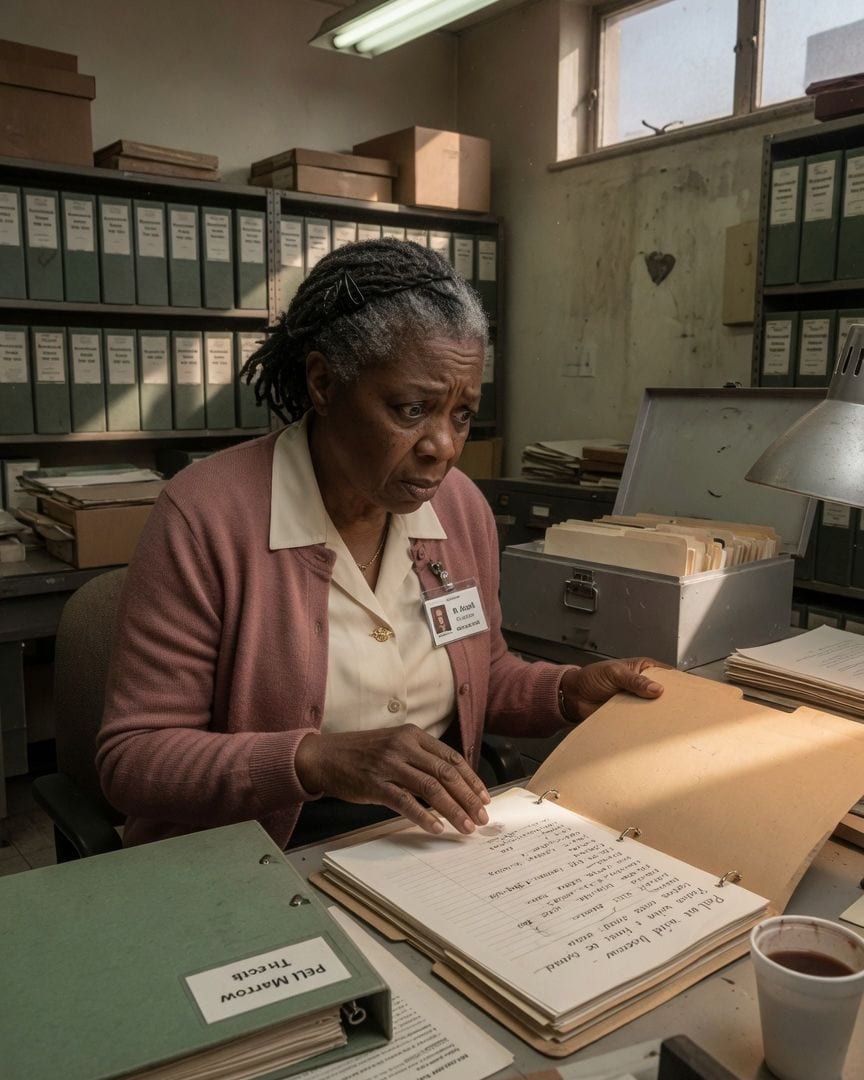
A records clerk's archive file for a Cold War reconnaissance plane lost in 1968 showed it flew yesterday to her own building.
Marguerite Ansell, a records clerk nearing her final week before retirement, meticulously audited Cold War-era files. In the cool, dusty archive, she pulled a file for an oiler declared missing in 1951. Inside, she found a fueling schedule with entries stretching into the present, the last dated just eleven days ago. Then, a second lost ship revealed a similar impossible log, and a cold certainty began to bloom in her chest. Deep in the shadows, Marguerite found an unmarked steel box containing a file for a reconnaissance plane lost in 1968. Its flight log showed a final flight yesterday, to the precise coordinates of her own archive building.
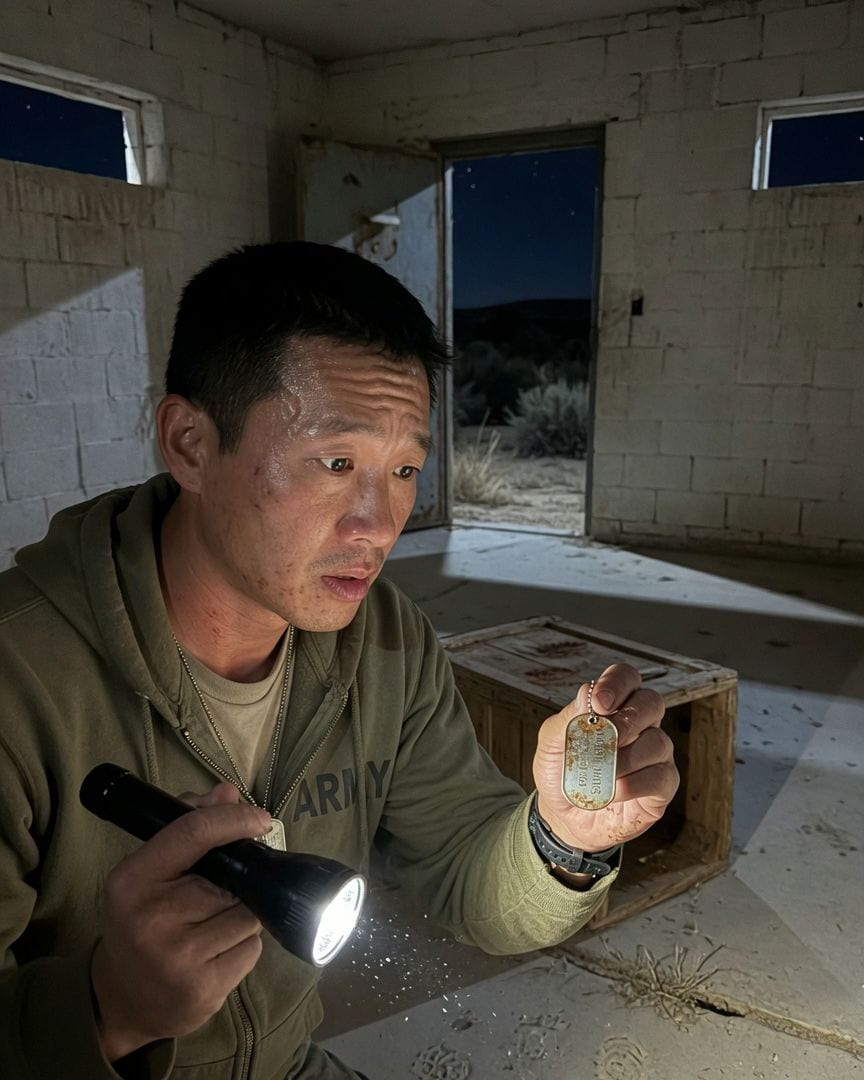
Staff Sergeant Rhee’s squad found a Cold War building not on their map. Range Control confirmed no structure. Minutes later, it vanished, leaving a foundation decades old.
Staff Sergeant Adam Rhee halted his squad at the Yakima Training Center, staring at a cinderblock building that simply wasn't on his map. Range Control confirmed there was no structure at his coordinates, leaving him to wonder what impossible thing stood before them. Moments later, after the range-safety truck arrived, the building vanished, leaving only a rectangular patch of earth with a foundation of decades-old weeds. That night, driven by an unsettling certainty, Rhee returned to find the building reappeared, its door ajar, holding a single, rusted dog tag from 1983. How could a place appear and disappear, leaving behind evidence from forty years ago?
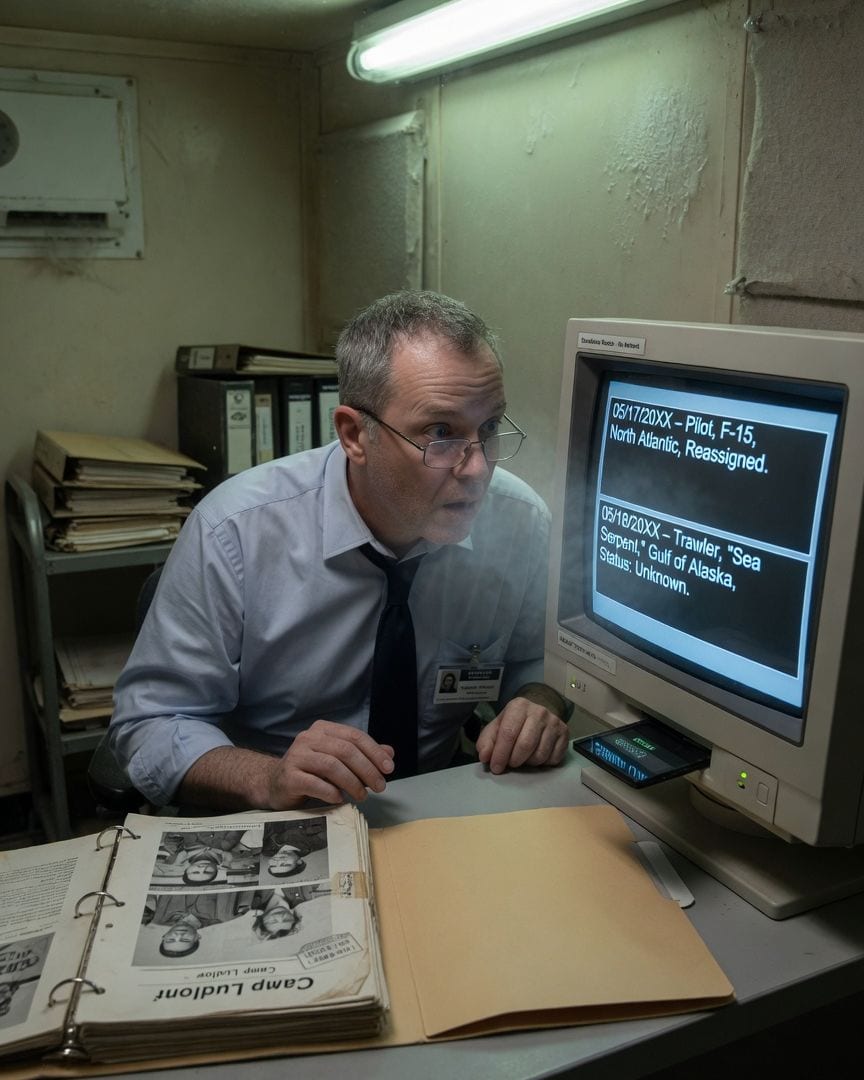
A declassification reviewer opened a Cold War 1959 file. A modern data chip inside showed a pilot missing yesterday.
Declassification reviewer Samuel Vance, whose world was built on the rigid order of official history, smoothed a letter confirming Camp Ludlow’s 1959 closure was a lie. Despite decades of records, the Air Force insisted the Greenland base remained active, its last radio check logged just four days prior. Driven by this profound wrongness, Samuel unearthed the base's ancient physical file, only to find a pristine, modern data chip hidden within its brittle pages. When he inserted it into a secure reader, the screen didn't show history, but a scrolling list of current missing persons—a pilot from yesterday, a trawler from today. How could an archived file hold a living record of the world’s most recent disappearances?
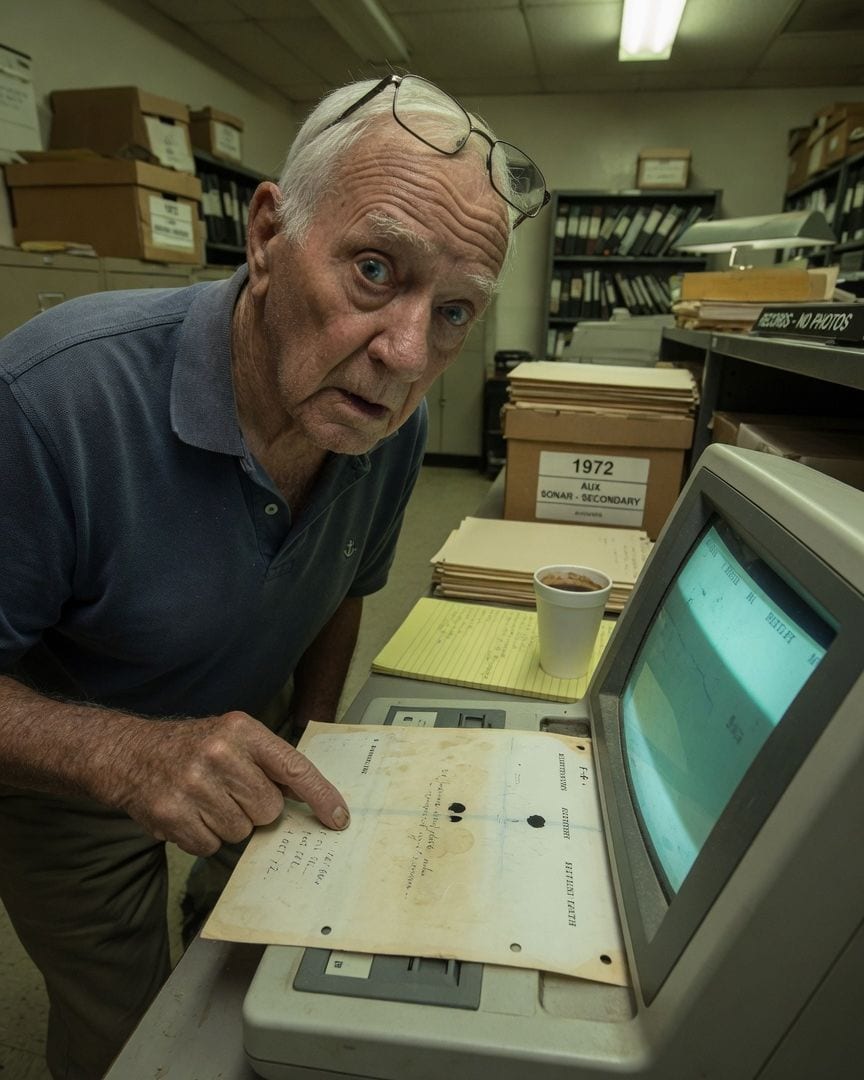
A Chief Petty Officer's salvage career ends when a Cold War fighter jet surfaces at sixty tons, perfectly intact.
Chief Petty Officer Walter Mabey, then 45, expected a routine salvage operation for a lost F-4 fighter jet off the Carolina coast in 1972. His long career was built on such lifts, but as the crane gauge climbed past twenty, then thirty, then an impossible sixty tons, a profound unease settled in. The object surfaced, not a mangled wreck, but a dark, seamless shape, perfectly intact. Mabey's salvage career abruptly ended soon after, replaced by a desk job, but the memory festered for forty years. Now 78, he dedicates his remaining time to finding the truth, uncovering a faint, rhythmic pulse on an old sonar log—a ghost beneath the official lie.