A Chief Petty Officer's salvage career ends when a Cold War fighter jet surfaces at sixty tons, perfectly intact.
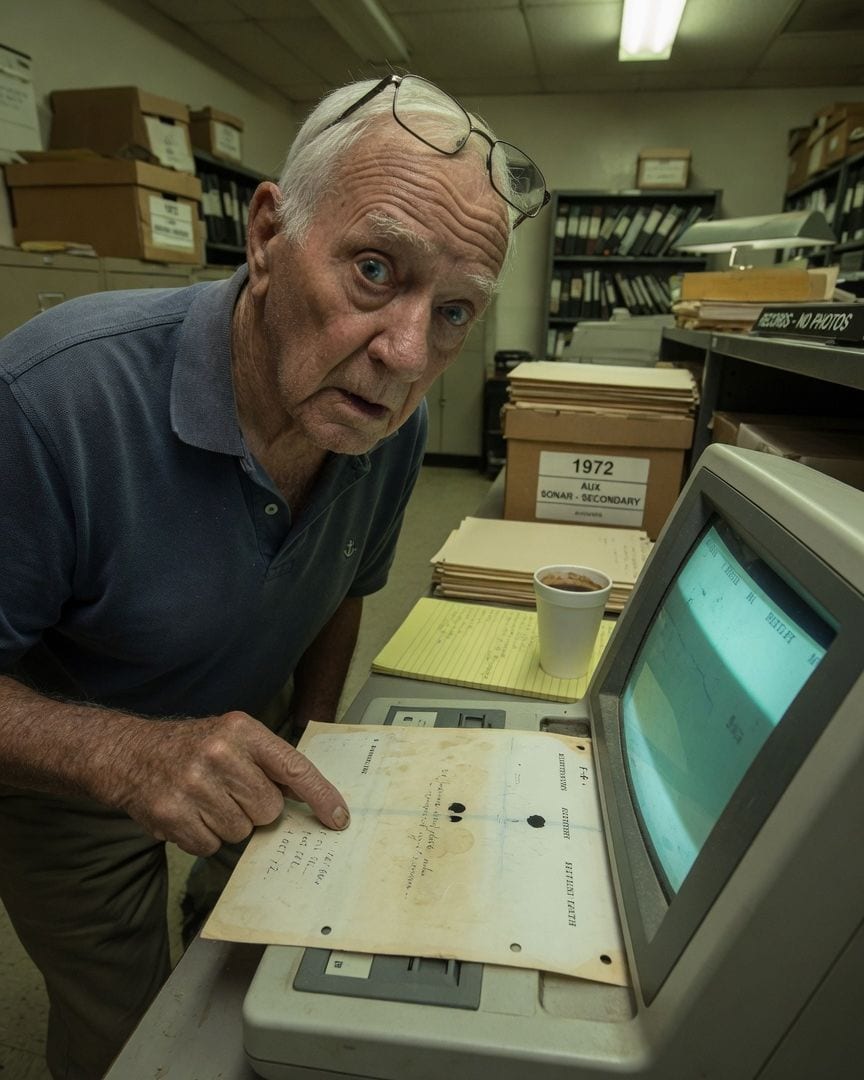
Chief Petty Officer Walter Mabey, then 45, gripped the cold metal railing of the USNS Recovery’s wheelhouse in 1972, the Carolina coast a distant, hazy smudge on the horizon.
The salt spray misted his face, a familiar bite, but it did little to clear the unease gathering in his gut. Below, the salvage team moved with practiced efficiency, lowering heavy slings into the churning Atlantic.
Sonar had identified their target: a lost F-4 fighter jet, reportedly down for weeks. Mabey watched the crane's digital gauge, a stark red readout against the gray control panel. It was meant to be a straightforward lift.
The numbers flickered, then began their ascent. Fourteen tons, the dry weight of an F-4 Phantom II. It should have settled there, perhaps a little more with seawater and debris. But the numbers kept climbing. Past twenty. Past thirty.
Mabey felt his breath hitch, a cold knot forming in his stomach. He blinked, convinced it was a calibration error, a trick of the light.
But the readout held steady, ticking upwards until it settled on a staggering, impossible sixty tons. Sixty tons. He ran the calculation again in his head, the same result. It was four times what it should be.
Just minutes before the object was due to break the surface, orders had been barked, sharp and urgent, echoing across the deck. Every man, from bosun to deckhand, was cleared.
Mabey watched them go, a strange, enforced emptiness falling over the ship. No one was allowed to see it rise.
But Mabey was in the wheelhouse, his vantage point high above the main deck, his eyes fixed on the point where the cable met the sea. He was the only one who thought to look.
It came up slow, agonizingly so, breaking the surface with a sigh of displaced water. It was a dark, seamless shape, no visible seams, no rivets, no markings of any kind.
Water sheeted off its surface like off freshly waxed metal, not the grime of the deep. There was no dent, no scratch, no twisted fuselage, no sign of impact or corrosion.
It should have been a mangled wreck, a mangled, fourteen-ton wreck, pulled from a mile down. It was perfect. And the crane’s gauge still read sixty tons.
The Recovery shuddered faintly under the impossible load, a low groan traveling up through the ship’s structure, as if the vessel itself understood the profound wrongness of it all.
The object, once secured in the Recovery's hold, was swiftly tarped and guarded.
Mabey’s attempts to get a closer look were met with polite but firm rebuffs from Commander Hugo Mitchell, his superior, a man whose easy smile seemed to mask something unyielding. "Just protocol, Chief," Mitchell had said, his eyes unwavering.
Within weeks, Mabey found himself transferred to a logistics desk job in Norfolk, his salvage career abruptly over, his decades of expertise relegated to paperwork.
The official incident report, when it eventually filtered down through the chain of command, detailed the recovery of an F-4, weight 'estimated at standard,' condition 'damaged but intact.'
It was a lie, a meticulously crafted fabrication Mabey could never unsee, a stone in his shoe that festered for decades.
For forty years, he carried that memory, a persistent, gnawing itch. He retired, his wife passed, and the quiet of his Carolina Beach apartment settled in.
Now 78, his hair thin and white, Mabey dedicated his remaining years to searching, to piecing together fragments of declassified naval records.
He spent countless hours in the musty archives of the Naval Records Center, his fingers stained with ancient dust. He found the 'F-4's' official flight path, its last known position.
He cross-referenced it with every available sonar ping from that sector in 1972, enduring the eye-strain of microfiche and the endless monotony of old reports.
The raw data, the true pulse of the ocean floor, was harder to access, buried deep in an obscure auxiliary archive, a backup system few remembered.
He finally found it—a faded printout from a secondary listening post, a backup to the main sonar log, dating to the very hour of the incident.
The official 'F-4' signature was there, a clear, sharp line, but beneath it, almost erased, a different kind of mark pulsed, faint as a dying heartbeat.
Mabey, hunched over the dusty microfiche reader in the cavernous, hushed quiet of the Naval Records Center, adjusted the focus.
The hum of the machine was the only sound for miles, punctuated by the occasional rustle of a page from the clerk behind the counter.
The secondary sonar report from 1972, barely legible in its faded greens and blues, showed the F-4's expected return. He traced the familiar blip with a trembling finger, his eyes aching from the strain.
But beneath the sharp, expected signature, a faint, almost erased line pulsed, a tremor barely registered on the aging paper. It was a low, rhythmic thrum, unlike any known aircraft, an impossible resonance signature that had no right to exist.
The air in the quiet room felt suddenly heavy, pressing in on him. He leaned closer to the faint, almost erased line on the sonar printout, a ghost pulse beneath the official lie.
It’s the real record, the one that was scrubbed, and it’s still there, a ghost pulse beneath the official lie.
The ghost pulse ignited Mabey's decades-old certainty. He knew the official reports were lies, a flimsy veil over an impossible truth, but this was concrete proof, a physical mark of deliberate deception.
He spent weeks poring over cross-referenced files, his personal logbook—a small, leather-bound notebook—filling with cryptic notes and timestamps.
He began to search for other 'unidentified' recoveries from the same era, cross-referencing declassified 'lost aircraft' reports with any mention of unusual salvage operations or rapid personnel reassignments. The patterns began to emerge, faint at first, then starker.
He found a handful of incidents: a cargo plane lost over the Pacific, its debris field oddly compact for an explosion; a fishing trawler that reported 'anomalous contact' before sinking without distress, its distress call cut short; a small, civilian plane that vanished over the Great Lakes, its recovery site unusually sterile, almost too clean.
In each case, the official explanation felt thin, a polite dismissal, and the records of the recovery crews were either missing entirely or full of boilerplate transfers, the kind that moved personnel quickly and quietly to new, unremarkable posts.
The very silence of the records was a scream.
He sought out Charlotte Sinclair, a junior archivist he’d befriended months ago. She was a bright, diligent woman in her early thirties, with a sharp mind and an uncanny knack for navigating the labyrinthine depths of the archives.
He showed her the faded sonar printout, the faint, impossible signature, and explained the impossible weight discrepancy from his 1972 incident. She was skeptical at first, her brow furrowed in concentration, but then intrigue bloomed in her eyes.
"This… this isn't standard procedure, Mr. Mabey," she murmured, tracing the ghost pulse with a delicate finger. The fluorescent lights of the archive hummed, casting a sterile glow over the illicit document.
She agreed to discreetly look for patterns, for other 'anomalous contact' reports that might have been scrubbed. Mabey felt a strange mix of hope and dread.
He was no longer alone, but he was pulling at a thread that felt dangerously taut, like something that could snap and take them both down.
Charlotte’s help proved invaluable, but it came at a cost Mabey had only dimly anticipated. A week later, he found a subtle note tucked into his mailbox.
It wasn't addressed to him, just a single, crisp white envelope, no return address, pushed through the slot of his front door. Inside was a newspaper clipping from 1973, yellowed with age, but clearly preserved.
The headline read: 'Chief Petty Officer Walter Mabey Receives Commendation for Exemplary Service.' Underneath, circled in aggressive red ink, was a paragraph detailing his 'swift and efficient transfer to shore duty.'
Mabey hadn't shared his transfer details with Charlotte, not the specifics. Someone was watching. A prickle of unease, cold and sharp, crawled up his neck.
The next day, a dark sedan appeared down his street. Always empty, always parked discreetly, always facing his house.
When he walked past it, the windows were tinted too dark to see inside, reflecting only the distorted image of his own aging, worried face. The silence of the car was oppressive, a silent sentinel.
He decided to confront Charlotte, to warn her, but she beat him to it. She called him, her voice tight with barely suppressed panic, the words tumbling out. "Mr. Mabey, I… I think my workstation is being monitored.
Files I accessed are being re-audited. And Commander Mitchell just called me. Commander Mitchell. He asked about 'your research interests.' He said it like a warning, Mr. Mabey, not a casual question." The phone felt cold in Mabey's hand.
Mitchell, his old superior, now retired himself, was still connected, still watching. A deeper, colder dread settled over Mabey.
He knew he had to push faster, before whatever had been observing them moved from quiet warning to something more direct, more permanent.
Mabey met Charlotte in a quiet, anonymous cafe, miles from the Naval Records Center, chosen for its lack of windows facing the street. Her face was drawn, her eyes wide with a fragile exhaustion.
The clatter of coffee cups and the murmur of conversations around them felt strangely distant, muted. "I found it," she whispered, sliding a thick printout across the table, her hand trembling slightly. "A protocol. It's called 'Operation SEA-FILE.'
It's not about recovery. It's about… processing."
She explained, her voice barely audible above the cafe's gentle hum. The protocol detailed not just the physical recovery of 'non-terrestrial objects'—a heavily redacted phrase—but also the systematic management of all associated data and personnel.
"It’s a containment operation," she said, her gaze fixed on the document, "but not just of objects. Of information. And of people." The protocol outlined specific 're-evaluations' for individuals exhibiting 'uncontained observation' or 'anomalous recall' after contact events.
The phrase 'anomalous recall' sent a chill down Mabey’s spine, precise as a surgeon's cut. It described him perfectly, the man who couldn't forget.
The document itself was heavily redacted, swathes of black ink covering crucial details, but Charlotte had cross-referenced enough fragments, enough cryptic references in other files, to piece together a chilling picture.
This wasn’t just a cover-up; it was an institution that didn't just hide incidents, but actively absorbed them, and anyone who knew too much, into its own fabric. She showed him a flowchart, stark and terrifying in its simplicity.
'Initial contact, recovery, data suppression, then… personnel re-integration or re-designation.' Mabey saw his transfer, his sudden desk job, his forgotten salvage career, snap into place with a sickening click.
He wasn't just a witness; he had been managed, a variable accounted for. His own F-4 incident, the impossible weight, the pristine condition, the cleared deck—they were all steps in this protocol.
He looked at the flowchart again, a monstrous, coherent shape forming from decades of scattered dread, like a predator finally revealing its true form. The 'lost' weren't lost. They were filed.
And he was one of them, tucked away in a drawer he hadn’t even known existed. The cafe seemed to grow unnaturally quiet around them, the background noise dimming as if the very air held its breath.
Charlotte pushed another document across the table, her hand trembling so violently the pages rustled. Her breath hitched. "This is a recently declassified memo," she whispered, her voice barely a thread, "dated to late 1972, just after your incident.
It’s an internal 'personnel re-evaluation' for 'Operation SEA-FILE.' It lists individuals for 'active monitoring and potential re-designation.'"
Mabey felt his heart pound against his ribs, a frantic drum in his chest. He scanned the list of names, mostly obscure, until his eyes landed on the first entry. It was his own. 'Mabey, Walter, CPO, USN.'
And next to his name, in bold, stark letters, was the status: 'ACTIVE.' He was already in the file. He wasn't just investigating; he was being tracked, his every move, every query, every contact with Charlotte, recorded, processed, and waiting.
The file wasn't just history; it was a living document, still being written. Mabey looked up at Charlotte, a question forming in his throat, a desperate hope for an explanation that wouldn't come.
But her face was drained of color, pale and stark. Her eyes were fixed on something over his shoulder, wide with a terror that wasn't for him, a terror that seemed to paralyze her.
She opened her mouth to scream, but no sound came out. Her jaw worked uselessly, a silent, horrifying contortion.
Mabey turned, his blood running cold, every muscle in his body screaming to flee. Behind him, standing by their table, was Commander Hugo Mitchell.
He stood with the quiet composure of a man who belonged, an almost imperceptible smile playing on his lips. Mitchell looked exactly as Mabey remembered from 1972, not a day older, though he should have been well into his eighties.
It was a physical impossibility, yet he stood there, an unlined, ageless sentinel. Mitchell's eyes, however, held a chilling depth, an ancient, patient knowing that transcended age.
He placed a hand on Charlotte’s shoulder, a gesture that seemed to calm her instantly, her terror replaced by a vacant, placid calm. Her wide eyes unfocused, losing their light.
"Chief Mabey," Mitchell said, his voice a low rumble, resonant and unhurried. "You've been very diligent. We knew you would be. That’s why you were chosen."
Mabey realized the full, monstrous truth. Mitchell wasn't just a retired officer, he was part of the 'filing' mechanism itself, a long-term operator, an integral component of the ongoing, patient machine.
The objects weren't just recovered; they were 'processed,' assimilated into a system, and so were the individuals deemed 'active' within that system.
Mabey's 'transfer,' his decades of 'uncontained observation'—his relentless, secret investigation—it was all part of his file, a controlled experiment, a carefully guided trajectory.
The object he salvaged in 1972 wasn't just a UFO; it was a 'trigger,' a catalyst for identifying and integrating specific individuals into the ongoing operation.
The pristine condition, the impossible weight, the cleared deck—they were all signatures of a deliberate process, not an accident or a random encounter. The entire tapestry of his life since 1972 snapped into horrifying coherence.
He was never a free man, only a subject whose story was still being written in a file he was now reading, a narrative he was living out.
Mitchell pulled up a chair without a sound, settling in as if for a casual chat, his gaze never leaving Mabey. "The file is quite extensive, Walter. Your persistence, your meticulous nature… invaluable.
We've been waiting for you to complete your research." Mabey felt a profound weariness, an exhaustion that went bone-deep, a sense of having been played for decades, every choice a predetermined step. "What happens now?"
he asked, his voice hoarse, barely a whisper. The question felt futile even as he uttered it.
Mitchell smiled, a gentle, unnerving expression that promised no comfort, only an implacable logic. "Now, you complete your integration. Your role will be… to ensure coherence. To mend the threads when others pull too hard."
He gestured to Charlotte, who now sat perfectly still, her eyes placid but empty, a doll-like stillness that was profoundly unsettling. "Charlotte here will be assisting you. She has a talent for data retrieval. A perfect fit."
Mabey tried to rise, a surge of defiant anger, a final spark of his old self, but Mitchell's gaze held him, a subtle pressure, not physical, but deeply invasive, like a thought being implanted directly into his mind.
He felt a profound shift within himself, a quiet acceptance overriding his will, his decades of searching suddenly seeming not heroic, but futile, a pre-programmed path he had been compelled to walk.
The dread wasn't a feeling anymore; it was a certainty, a cold, systemic logic that permeated his very being. He was being folded into the machine, his identity, his memories, his very purpose, being rewritten, re-filed.
He was becoming part of the file, not the reader of it. The cafe around them seemed to dim, the other patrons fading into indistinct blurs, their conversations dissolving into a meaningless hum.
Only Mitchell's eyes, deep and knowing, and Charlotte's empty stare, remained clear, sharp, terribly present. Mabey felt his own thoughts begin to slow, to align, to find their new, designated place within the system.
He was no longer Walter Mabey, the man who saw too much. He was a component.
Days later, the old Naval Records Center buzzed with its usual quiet activity. Charlotte Sinclair was back at her desk, diligently processing microfiche, her movements precise, her expression serene.
She exchanged polite nods with colleagues, a faint, knowing glint in her eyes that hadn't been there before, but no one seemed to notice the subtle shift.
Commander Hugo Mitchell was seen leaving the building later that week, a brief, almost imperceptible smile on his face, a private satisfaction.
Walter Mabey's small apartment in Carolina Beach was found empty, meticulously clean, as if he had never truly lived there, every trace of his long, defiant investigation wiped away.
His personal logbook, the small leather-bound notebook where he'd recorded his decades of observations, was gone. No missing person report was filed, no questions asked. He had simply ceased to be a loose end. He had been filed.
Months passed. The file on 'Operation SEA-FILE' remained active, growing, its entries meticulously logged, its mechanisms humming along. New 'anomalous recalls' were noted, new 'personnel re-evaluations' conducted, new individuals identified, integrated, or simply… processed.
The machine was patient, relentless, and perfectly efficient. One day, a newly appointed records clerk, a young man named George Winslow, discovered a peculiar entry in a dusty, cross-referenced ledger, tucked away in a seldom-accessed vault.
It was a single line, handwritten in a steady, official hand, dated to the previous week: 'Mabey, Walter, CPO, USN. Re-designated: Oversight, Archival Coherence. Status: ACTIVE. File signed.'
Later that evening, George Winslow sat at home, scrolling through a news feed. He paused on an old article about an F-4 recovery off the Carolina coast in 1972.
He commented, then typed 'the end.' below it, not quite knowing why.
If this one got to you
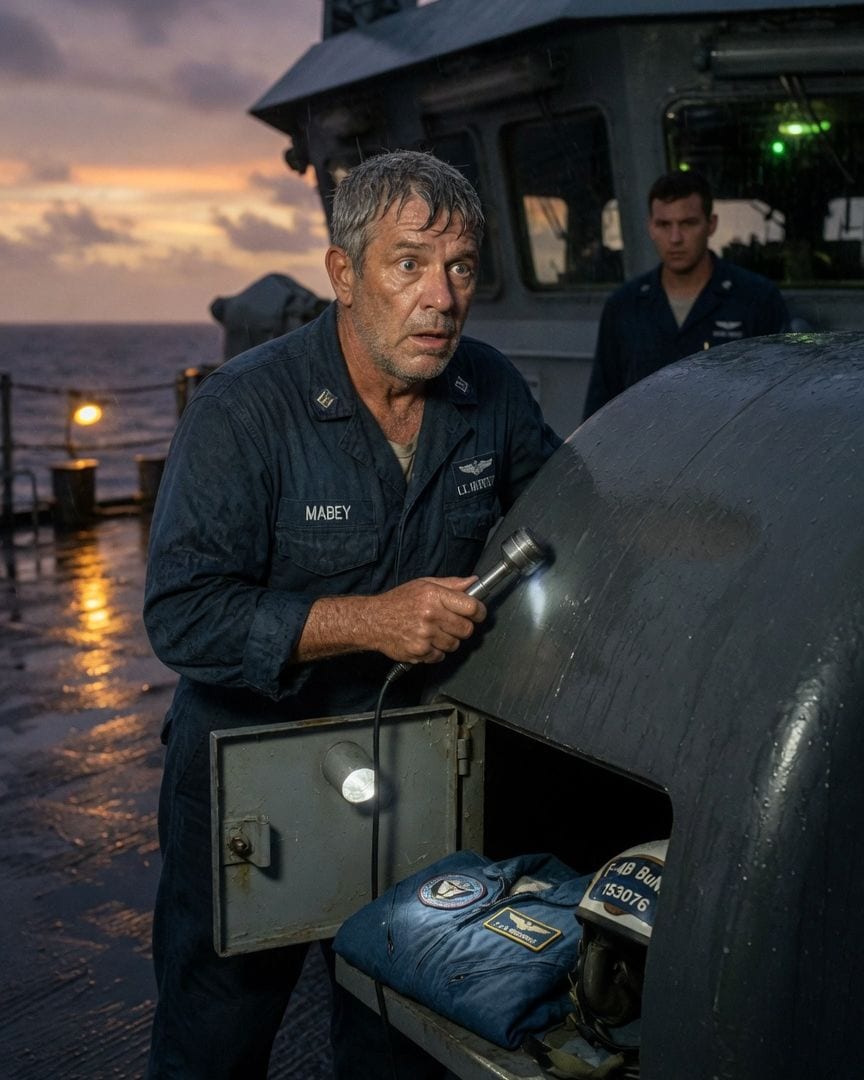
A Cold War Chief Petty Officer watched the crane haul 60 tons of seamless metal, not the lost F-4 jet, but inside was the missing pilot's flight suit.
In 1972, Chief Petty Officer Walter Mabey supervised a recovery mission aboard the USS Vance, straining against rain and unease as the crane began to haul up what sonar promised was a lost F-4 fighter jet. But the crane's gauge screamed past sixty tons, a massive weight for a jet, and the dark shape that broke the surface was no mangled aircraft. Instead, a seamless, charcoal-gray mass sat on the deck, cool and featureless, devoid of any wings, cockpit, or even a single rivet. As Mabey investigated its impossibly smooth surface, a hidden hatch opened to reveal a pristine Navy flight suit inside, bearing the name and tail number of the very pilot they were meant to be recovering.
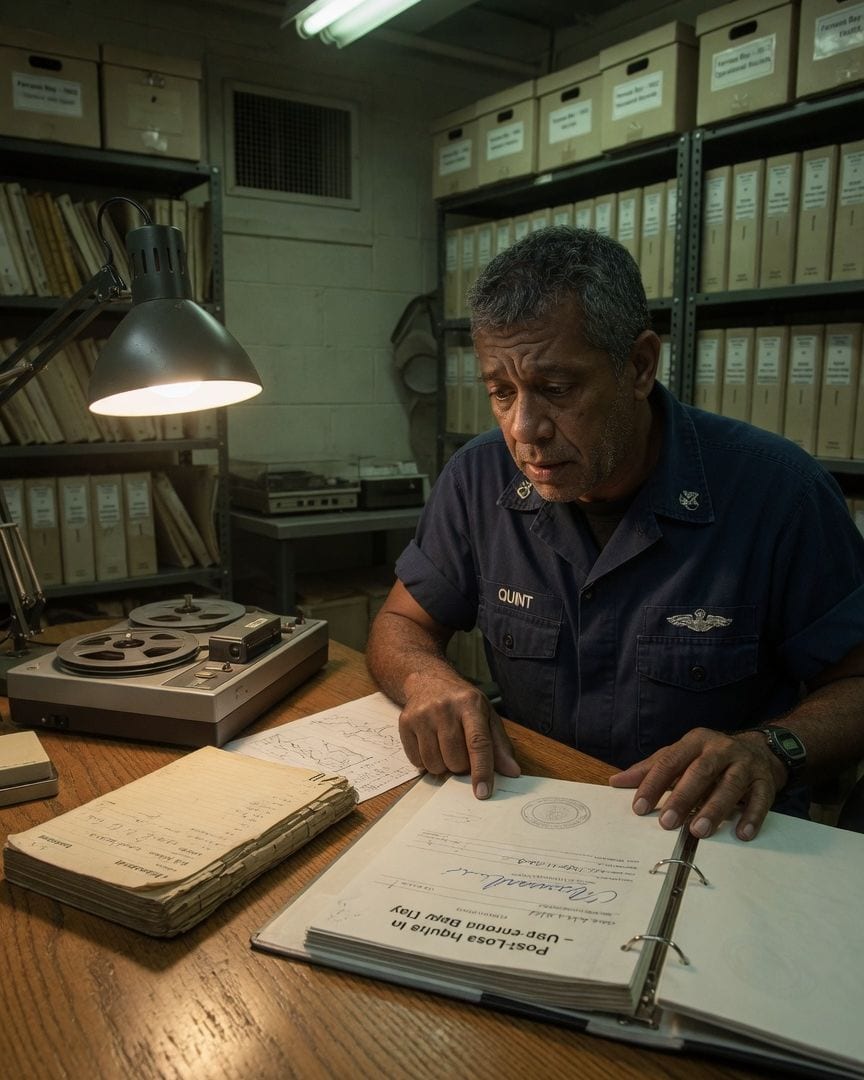
A Cold War sonarman heard his dead father’s voice on a tape, charting the ship’s wreck thirty years after it sank.
Chief Sonarman Abel Quint spent six weeks in the Naval Records vault, listening to the final transmission of the USS Ferrous Bay. His father, Desmond Quint, was on that ship when it vanished in 1962, and Abel sought some final comfort in his voice. But on this morning, a faint, second set of sonar soundings emerged from the recording—soundings in his father's precise cadence that charted the ship’s wreck site thirty years in the future. As Abel cross-referenced records, he then found a maintenance log for the Ferrous Bay's sonar system, dated six months after the ship and his father were officially lost, signed by Desmond Quint himself. What impossible truth was hidden in these official naval records?
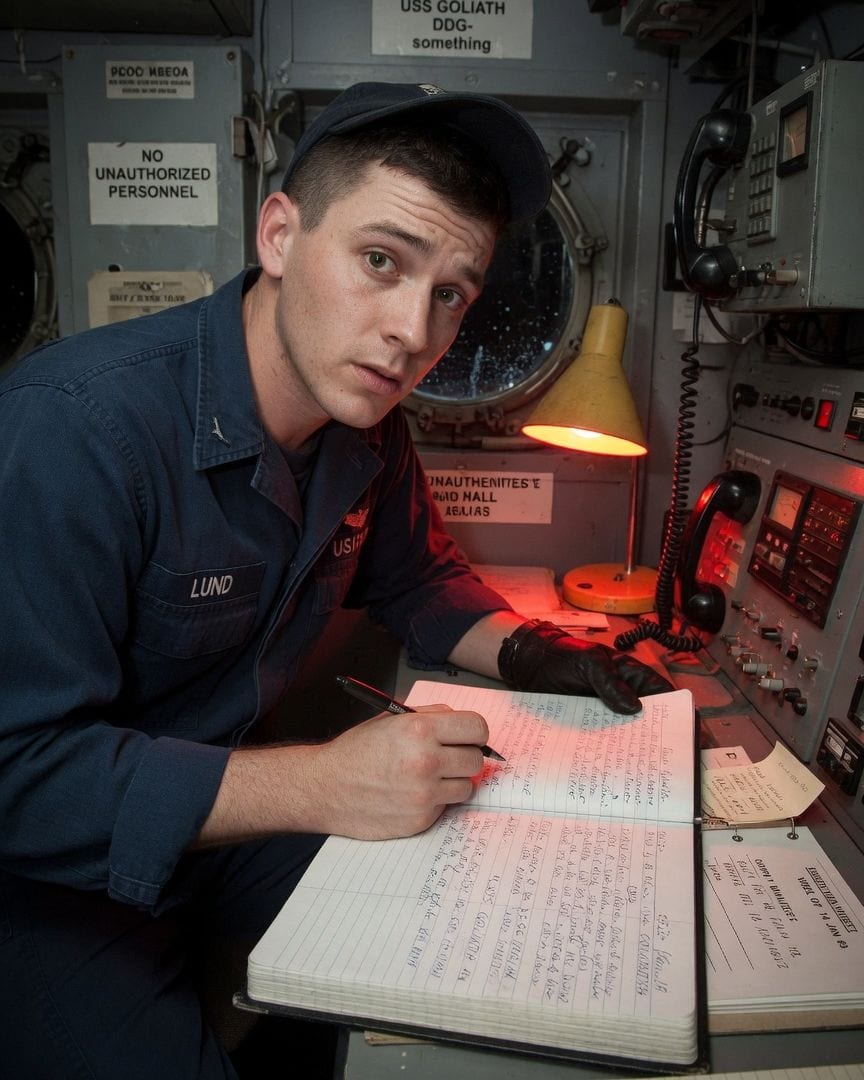
Petty Officer Lund heard his own captain's mayday: the Cold War USS Goliath was sinking, two hundred miles astern.
Petty Officer Marco Lund kept a lonely vigil in the USS Goliath's radio room, the destroyer battling the North Atlantic in deep winter 1983. Suddenly, a garbled mayday broke through: his own ship, his own captain, reporting they were going down two hundred miles astern. Though the bridge confirmed the Goliath was fine, the same chilling call came again an hour later, stronger and from the exact waters they had just crossed. Deeply unsettled, Marco began searching ship logs, eventually discovering a phantom entry: an identical mayday, logged a week prior, pressed into the very paper beneath his own.
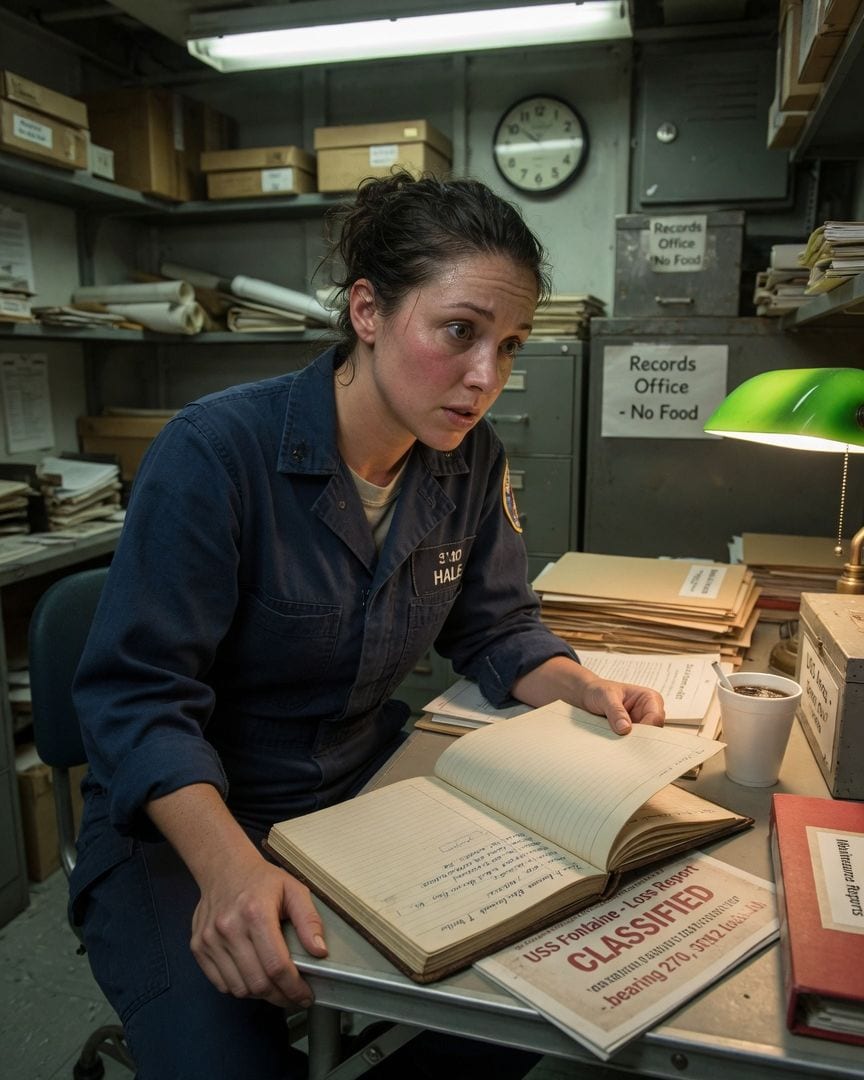
Petty Officer Hale needs a spotless record for her transfer. But the USS Ares sonar logs show an identical, impossible contact, logged to the minute, years apart, and tied to a classified loss report.
Petty Officer Sarah Hale needed a spotless record for her coveted shore duty transfer, a posting she'd worked five years to secure. Alone in the USS Ares sonar shack, three days out from San Diego, her midwatch was broken by an impossible contact: a close, slow echo holding perfect pace, invisible to radar, then vanishing. Her heart hammered, not from fear, but from the data's impossibility. When she found an identical entry in her own log from just one week prior, the cold dread tightened its grip. But the true chill settled when she unearthed decades of similar records, signed by other sonar officers, all showing the same impossible contact at 0212, off the port beam, for nineteen minutes, on the same ship, stretching back years—a persistent echo tied to a classified loss report.
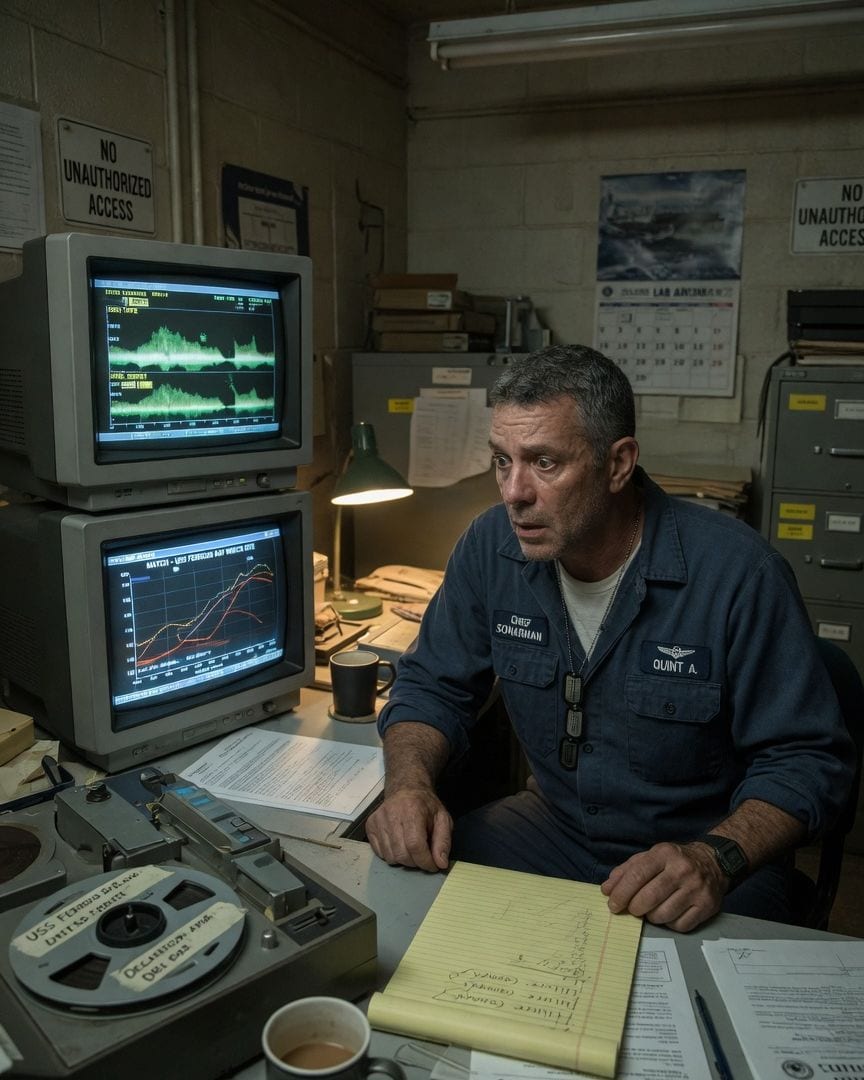
Chief Sonarman Abel Quint heard his father's 1962 transmission. But beneath it, the Cold War submarine tender's wreck site, found decades later, was already pinging its exact coordinates.
Chief Sonarman Abel Quint, 46, had spent six weeks in a dimly lit declassification lab, meticulously replaying the last transmission of the USS Ferrous Bay. The submarine tender, lost off Kodiak in 1962, carried his father, Julian Hartley, whose calm voice Abel knew by heart. But one evening, a faint, rhythmic series of pings emerged from beneath his father’s words – a distinct cadence that, when isolated, revealed coordinates hundreds of miles from the reported loss site. Abel's dread grew as the impossible truth surfaced: the 1962 recording contained the precise location and unique acoustic signature of the wreck, discovered thirty years later. The tape wasn't just predicting; it was observing the ship's own future death rattle.
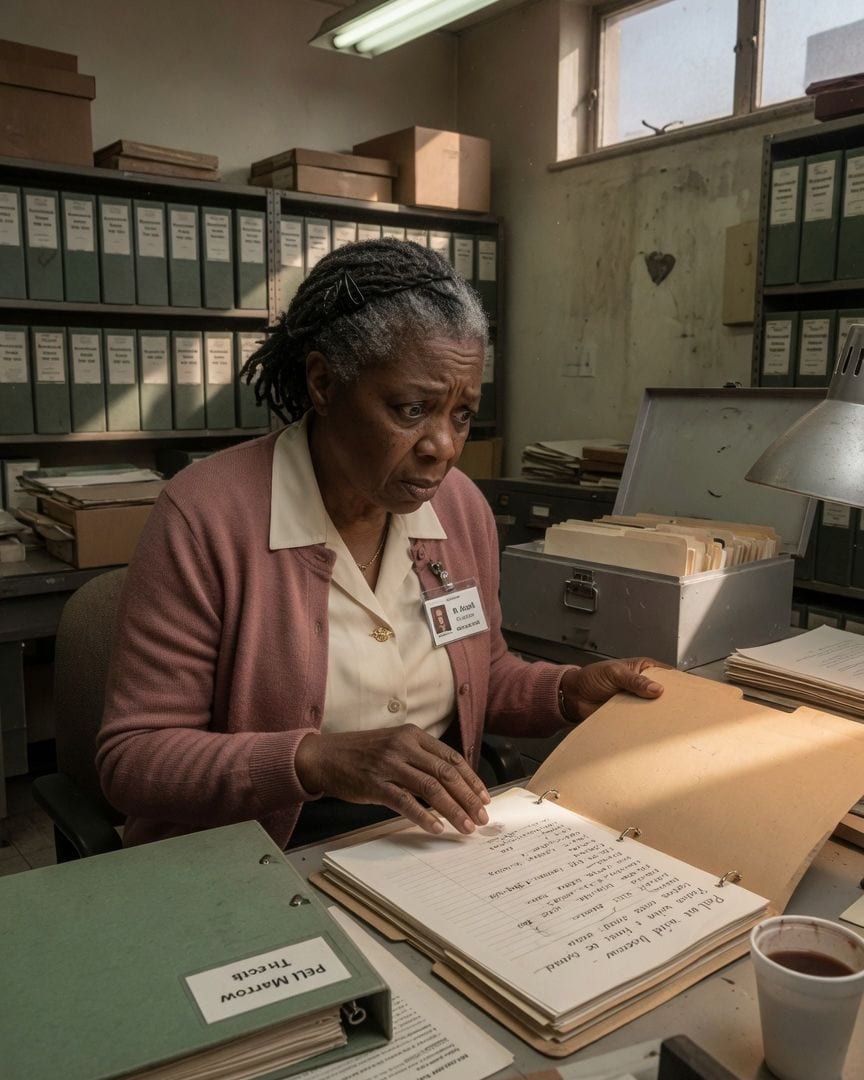
A records clerk's archive file for a Cold War reconnaissance plane lost in 1968 showed it flew yesterday to her own building.
Marguerite Ansell, a records clerk nearing her final week before retirement, meticulously audited Cold War-era files. In the cool, dusty archive, she pulled a file for an oiler declared missing in 1951. Inside, she found a fueling schedule with entries stretching into the present, the last dated just eleven days ago. Then, a second lost ship revealed a similar impossible log, and a cold certainty began to bloom in her chest. Deep in the shadows, Marguerite found an unmarked steel box containing a file for a reconnaissance plane lost in 1968. Its flight log showed a final flight yesterday, to the precise coordinates of her own archive building.