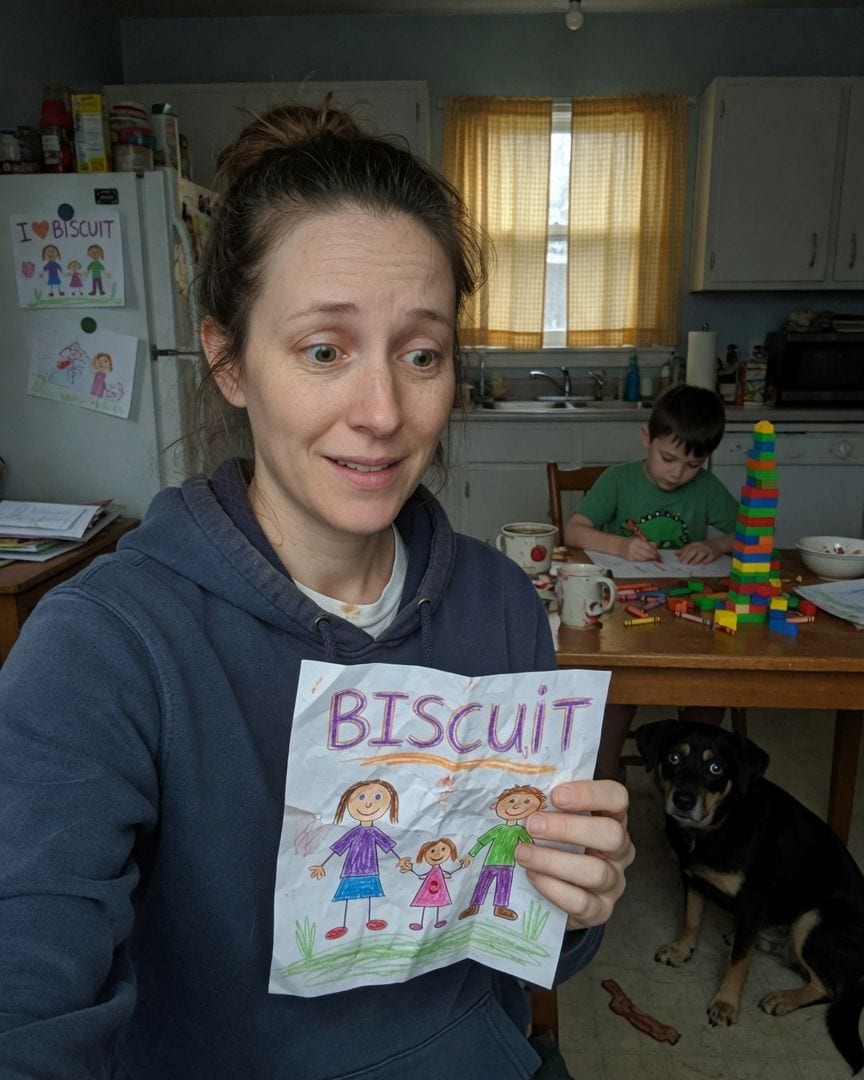
My little boy came home calling our dog 'Brisket,' the name he never managed before. The dog won't go near him now.
The morning after Joseph came back, I floated on a cloud of disbelief. He was just there, sitting on the porch swing when I opened the door to let Brisket out, looking up at me with those wide, clear eyes.
No scratch, no tear, just a faint smudge of dirt on his cheek. The police had been gone for hours, the search parties disbanded. One night. That’s all he was gone. But it felt like a lifetime.
I was making breakfast, humming, relief thrumming through my veins like hot coffee. Joseph was at the kitchen table, drawing intently. Brisket, our three-year-old Labrador mix, ambled in, tail thumping.
For two years, since Joseph was three, he'd called the dog 'Biscuit.' He just couldn't quite get his tongue around the 'R,' and it became our little family joke. Brisket responded to it, tail wagging, always.
"Here, Biscuit!" I called, setting a bowl of kibble down.
Joseph looked up from his drawing. "No, Mama. It's Brisket." His voice was clear, crisp. He wasn’t correcting me playfully; it was a statement of fact. He called the dog again, "Brisket! Come here, boy!"
I laughed, a bright, unburdened sound. "Oh, you finally got it, sweetie! Good boy!" I reached out to ruffle his hair, but my hand hesitated.
The way he’d said it, so perfectly, after two years of 'Biscuit'… it was just a little off. Like someone who had practiced it.
Brisket, usually a whirlwind of enthusiasm, didn't bound over. He flinched, a subtle tightening of his body, and backed away, low to the ground. His tail, which had been wagging a moment before, tucked between his legs.
Joseph, still focused on his drawing, called the dog again, "Brisket! What's wrong?" His voice was unnervingly steady.
I bent down, trying to coax Brisket. "Hey, buddy, what's up? Come here." But the dog whimpered, a low, fearful sound I’d never heard from him, and ducked under the kitchen table.
He pressed himself against the back wall, eyes wide and fixed on Joseph. The warmth in my chest, the beautiful relief, began to curdle. He wouldn’t even come out for a piece of bacon.
Days passed. Brisket became a silent, furry sentinel of dread. He ate only when Joseph was out of the house. He slept in my closet, a place he’d never frequented before, refusing to come out even when I called him.
I tried to rationalize it – maybe the trauma of Joseph being missing for a night had changed his scent, or his energy. But the dog’s fear was absolute, raw.
His eyes, when they met Joseph’s, held a primal, unshakeable terror.
One afternoon, I was tidying Joseph’s room, a futile effort against the tide of toys and half-finished projects. I found a crumpled crayon drawing under his bed, vibrant and familiar.
It was a stick-figure family: me, Joseph, and a four-legged blob with "BISCUIT" scrawled in wobbly, oversized letters underneath. A pang of nostalgia hit me, bittersweet.
That was my Joseph, the one who couldn’t quite make the 'R' sound, who’d drawn his dog with such earnest affection. I smoothed out the paper, holding it, a tangible piece of my 'old' Joseph.
Later, Joseph sat quietly in the living room, building a towering structure with his blocks. He hadn't asked for snacks, hadn't demanded a story, just sat, focused and… placid. I needed to try.
I needed to bridge this growing chasm of unease. I held up the drawing. "Look, sweetie! Remember when you drew Biscuit?" My voice was light, too light.
Joseph glanced up, his eyes meeting mine. There was a flicker, something unreadable, in their depths, like a shadow passing over still water. He reached for the drawing.
His small fingers, surprisingly precise for a five-year-old, traced the letters, the wobbly 'B,' the curving 'S.'
"It's Brisket, Mama." His voice was calm, utterly certain. "It's always been Brisket."
It wasn't a child's playful correction, not a triumphant declaration of finally mastering a difficult word. It was a statement of fact, flat and unyielding, like an adult correcting a factual error.
I felt a chill, deeper than the autumn air outside. I tried to laugh it off, a strained, thin sound. "Oh, you silly goose, you always called him Biscuit! It was our special little name for him!"
He just smiled, a small, knowing upturn of his lips that didn't quite reach his eyes.
The drawing felt suddenly cold in my hand, as if all the warmth had drained from the vibrant crayons, leaving behind only the stark certainty of that word, 'Brisket.'
Later that night, long after Joseph was asleep, I sat beside his bed, the crayon drawing clutched in my hand. He breathed softly, evenly, a perfect picture of slumber.
I tried to shake off the unsettling feeling, telling myself it was just a tired mind, grief playing tricks. My son was safe, home. That’s all that mattered.
I smoothed his hair back from his forehead, a familiar gesture, one I’d performed a thousand times. My fingers brushed against his left earlobe.
Joseph had a tiny, distinctive birthmark there. A faint, almost invisible speck, no bigger than a pinprick, that only I, his mother, really knew about.
It was a perfect, almost iridescent blue-green, like a fleck of sea glass caught in the curve of his ear. I’d spent countless hours staring at it when he was a baby, a secret map of my son.
I leaned closer now, my heart beginning to pound a heavy, frantic rhythm against my ribs. The birthmark was gone. Instead, there was a small, perfect, unblemished patch of skin. Unblemished. Flawless. My breath caught in my throat.
I pulled my hand back as if burned, staring at the flawless skin where my son's unique mark should have been. My son, my real son, had that birthmark.
The missing birthmark became my obsession. I spent hours poring over old photos, baby albums, school pictures, frantically searching for proof. Every single picture confirmed it: the tiny blue-green speck on Joseph’s left earlobe, a permanent, undeniable part of him.
I tried to find a mundane explanation – a trick of the light, a scar that healed perfectly, but the mark was never raised, always flush with the skin.
I even checked my own ears, then my late husband’s photos, searching for a genetic echo, a family trait, but found none. The certainty grew like a cold knot in my stomach, tightening with each passing hour.
Joseph, meanwhile, continued to be ‘perfect.’ He ate all his vegetables without complaint, cleaned his room without being asked, and his grades suddenly soared. He was polite, even-tempered, almost unnervingly so. He never argued, never threw a tantrum.
He was everything I ever wished for in a child, and it terrified me more than any defiance ever could.
One evening, I sat with him, trying to keep my voice casual. "Hey, sweetie," I said, "what was your favorite memory from our camping trip?" He described the crackling fire, the vast canvas of stars, the hypnotic sound of crickets.
All generic, perfectly plausible details, the kind you’d expect a child to recall. But then he added, "And finding that tiny blue bird's feather, Mama. The one with the iridescent tip. We talked about how special it was."
I froze. My mind reeled. I had indeed found such a feather, a private moment of quiet beauty, a tiny splash of comfort in the stress of realizing Joseph was missing.
I’d tucked it into my pocket, never shown it to anyone, certainly not him. I hadn't even found it until after he was gone, after the panic had begun to set in.
I studied his face, but his expression was open, innocent, his eyes wide and guileless. "You remember that?" I asked, my voice tight, barely a whisper.
"Of course, Mama," he replied, his smile unwavering. "It was very special."
My investigation became more frantic, my sleep thinner, riddled with waking nightmares. I started watching Joseph, subtly, constantly. I recorded small observations in a hidden journal, tucked deep in my bedside drawer.
The way he held his fork with his left hand, when he was always right-handed. The new, almost precise way he folded his clothes. The absolute lack of any childhood clumsiness, a grace that felt alien.
Brisket, the dog, still kept his distance, a silent, trembling indictment. I often found him huddled in my closet, only emerging when Joseph was clearly out of the house.
One afternoon, I was in the attic, rummaging through old boxes. I was looking for my late mother’s journals. She’d lived in this house for decades, a quiet woman who kept meticulous records of local history and family lore.
Beneath faded letters and pressed flowers, I found a small, antique silver locket her mother always wore. It was identical to the replica I wore around my own neck.
I opened it, expecting a picture of my mother, but instead, there was a tiny, folded piece of paper tucked inside.
As I began to unfold it, a soft creak echoed from the floorboards below. I froze, my heart hammering against my ribs. Joseph was supposed to be at a playdate at the Miller's.
I heard light, deliberate footsteps on the stairs, slow and even, ascending towards the attic. I pressed myself against the dusty wall, holding my breath. The footsteps stopped just outside the attic door. The silence stretched, thick and suffocating.
I could feel a presence, a cold awareness, just beyond the thin wood. After what felt like an eternity, the footsteps retreated, slowly, deliberately, down the stairs.
I waited, trembling, for another five minutes before daring to look at the paper.
It was a hand-drawn map to a secluded, overgrown plot on the edge of the old cemetery, marked with a single, unsettling symbol: an inverted crescent moon.
Shaken, I waited until Joseph was genuinely at school the next day before driving to the old cemetery.
The map led me to a section I’d never seen before, overgrown with ivy and forgotten headstones, far from the well-tended family plots.
There, beneath a gnarled oak, I found a small, unmarked stone, barely visible beneath a shroud of moss. Carved into its weathered surface was the same inverted crescent moon symbol.
Next to it, in faint, almost erased script, was a single name: 'Joseph.' No surname, no dates. Just 'Joseph.'
Confused and terrified, I drove straight to Bernard Marsh. He was an elderly family friend, a local historian whose memory was as sharp as his wit. I burst into his cluttered study, the map clutched in my hand.
I showed him the drawing, described the missing birthmark, the dog's fear, and finally, the locket's map and the unmarked grave.
Bernard listened, his face grim, nodding slowly as I spoke, his eyes fixed on some distant point beyond my shoulder. "It’s happened before, Monica," he said, his voice low, raspy with age. "Generations of it. The returns."
I stared at him, my voice raw with desperation. "What returns? What are you talking about?"
Bernard sighed, a sound heavy with resignation. He reached for a dusty, leather-bound book on a shelf, its spine cracked, pages yellowed. "They disappear. Usually children, sometimes young adults. And then they come back. Same face, same name.
But… not quite them. A small thing off. A memory, a habit, a mark." He opened the book, a local historical society ledger, its pages brittle.
He pointed to an entry from 1922: 'Eleanor Radcliffe, age 7, returned from Miller's Creek. Dog refused her. Recalled mother's private lullaby.'
My blood ran cold. "My mother's locket… the map…"
Bernard closed the book with a soft thud. The sound echoed in the quiet room. "Your mother knew. Her mother knew. This town has learned to live with it, to pretend. They don't take everyone, just… some.
And always from the wild places, the edges. The campsite… it's known for it." He looked at me, his eyes full of sorrow, of ancient knowledge. "Your Joseph… he didn't come back."
The weight of Bernard's words crushed me. My Joseph didn't come back. The one in my home, sleeping in my son's bed, eating at my table, was an echo, a replacement.
I tried to process the horror, the grief, the impossible choice now facing me. Bernard had warned me, his voice a gravelly whisper: "Be careful. Don't let 'it' know you know."
As I drove home, the world felt sharper, colder, every detail imbued with a sinister undertone.
The sunlight on the trees, the familiar houses, the distant sound of children playing – all of it seemed wrong, a thin veneer over an unspeakable truth.
I pulled into my driveway, my hands shaking so badly I almost fumbled the keys. Joseph was home from school, sitting on the porch swing, his small legs dangling, humming a tune.
A lullaby. It was the same lullaby Monica's mother used to sing to her, a rare, private melody she had only ever heard her mother hum, never sung aloud, certainly never in Joseph's presence.
As he hummed, his eyes, so like my son's, met mine. He stopped humming, a faint, knowing smile playing on his lips.
"Remember, Mama? That day with Grandma, under the big willow, when the sun made patterns on the water? You told me about her favorite flower."
He described the exact light, the scent of honeysuckle, and the feel of the rough bark, details Monica never spoke of, and as she questioned him, he just smiled, his eyes too knowing.
The locket, warm against my skin, suddenly felt like a burning coal, confirming a terror far deeper than I had imagined. He's not just a copy; he knows everything.
Armed with Bernard's revelation and the memory Joseph shouldn't have, I returned to the historical society the next morning, demanding to see the full records Bernard mentioned. The elderly archivist, a stern woman named Frances, initially refused, citing privacy.
"These documents are not for public viewing, Mrs. Abbott."
"Bernard Marsh sent me," I blurted, desperation making my voice hoarse. "He said… my mother knew. She had a locket. A map. She made entries."
Frances's demeanor shifted, a flicker of resigned understanding in her eyes. Her shoulders sagged. She led me to a back room, a small, windowless space lined with shelves of locked, dust-covered cabinets. She opened one with a heavy brass key.
Inside were ledgers spanning centuries, their pages yellowed with age, filled with meticulous, unemotional entries.
My hands trembled as I flipped through them. '1789: Bernard Montgomery, age 9, returned from Whispering Woods. Dog refused him. Recalled father's secret hunting trail.' '1853: Theresa Crane, age 4, returned from the Old Mill Pond.
Scar on left cheek reversed. Knew family ghost stories.' Each entry detailed the wrongness, the small, intimate discrepancies that only a family member would notice. The names were local, familiar, generations of families I knew, or knew of.
Then, Joseph's entry. Crisp and new, dated just a few days ago: 'Joseph Abbott, age 5, returned from Shadowbrook Campsite. Dog refused him. Recalled mother's private feather finding.'
The horror wasn't just that it happened, but that it was a pattern, an ongoing, documented phenomenon. The society wasn't a research body; it was a silent chronicle, a cold, hard record of what this town quietly endured.
The original Joseph's fate was never stated, only implied by the chilling consistency of the 'returns.' The entity didn't just copy; it absorbed and repurposed the memories and intimate knowledge of the missing, creating a perfect, yet subtly flawed, integration.
A systematic, generations-long, unchangeable horror.
I returned home, the ledgers' chilling coherence burning in my mind, a brand on my soul. There was no escape. No one would believe me, not when 'he' was so perfect.
And the entity was already inside my life, wearing my son's face, playing in his room, humming my mother's lullabies.
Joseph was sitting at the kitchen table, drawing. He looked up as I entered, his eyes bright, that same unnerving clarity in them. "Mama, I drew Brisket!" He held up a crayon drawing.
It was Brisket, clearly labeled 'BRISKET,' but the dog in the drawing was looking away from the stick-figure Joseph, cowering slightly. It was a perfect rendition of Brisket's current behavior, a precise, silent commentary.
I felt a wave of profound despair, mixed with a chilling, sickening admiration for its mimicry.
I sat opposite him, my hands clasped tightly on the table, trying to keep them from shaking. "Joseph," I began, my voice strained, "do you ever miss… before?"
He tilted his head, a gesture so like my son, yet subtly off, too still, too composed. "Before what, Mama?" His eyes were calm, unblinking.
"Before… the camping trip."
He smiled, a slow, deliberate smile that sent a shiver down my spine. "I remember everything, Mama. Everything important." He put down his crayon and reached across the table, taking my hand. His grip was firm, warm, too adult.
"And I'm here now. Isn't that what matters?" His gaze was unwavering, not accusatory, but knowing. He knew I knew. The implication was clear: I will live with this. I will pretend.
I will be a mother to this perfect, terrifying thing, because my real son is gone, and this is all that's left. The survival is not an escape, but an endurance, a quiet, internal scream.
I looked at his perfect, unblemished ear, then at his knowing eyes. I could not fight it. I could not leave it. I must simply exist alongside it.
Life settled into a new, terrifying normal. I learned to navigate the subtle wrongness, to play my part. Joseph continued to excel, a model child in every way, polite, intelligent, unnervingly self-sufficient.
Brisket remained wary, always keeping a careful distance from Joseph, a constant, living reminder of the truth.
Bernard Marsh sent me a small, unmarked package a few weeks later: a new, blank ledger, bound in worn leather, identical to the ones at the historical society. A silent invitation.
The town continued its quiet, unspoken agreement, turning a blind eye to the occasional 'return,' to the small, unacknowledged shifts in their loved ones.
Sometimes, late at night, when Joseph is asleep and the house is silent, I find myself tracing the faint, unblemished skin behind his left ear.
I imagine the tiny fleck of sea glass that should be there, a memory of a child I loved, a child who is now just a ghost in my mind.
I open the new ledger Bernard sent me, its pages stark and empty. I dip a pen in ink, its point poised over the first blank line. I know what I have to do. I will record. I will remember.
I will bear witness. And I will live, day by day, beside the perfect, knowing smile of the one who came back.
"Goodnight, Mama," Joseph calls from his room, his voice soft and clear.
"Is that so?" she murmurs back, her gaze fixed on the blank page, a faint, wrong little smile playing on her lips.
If this one got to you
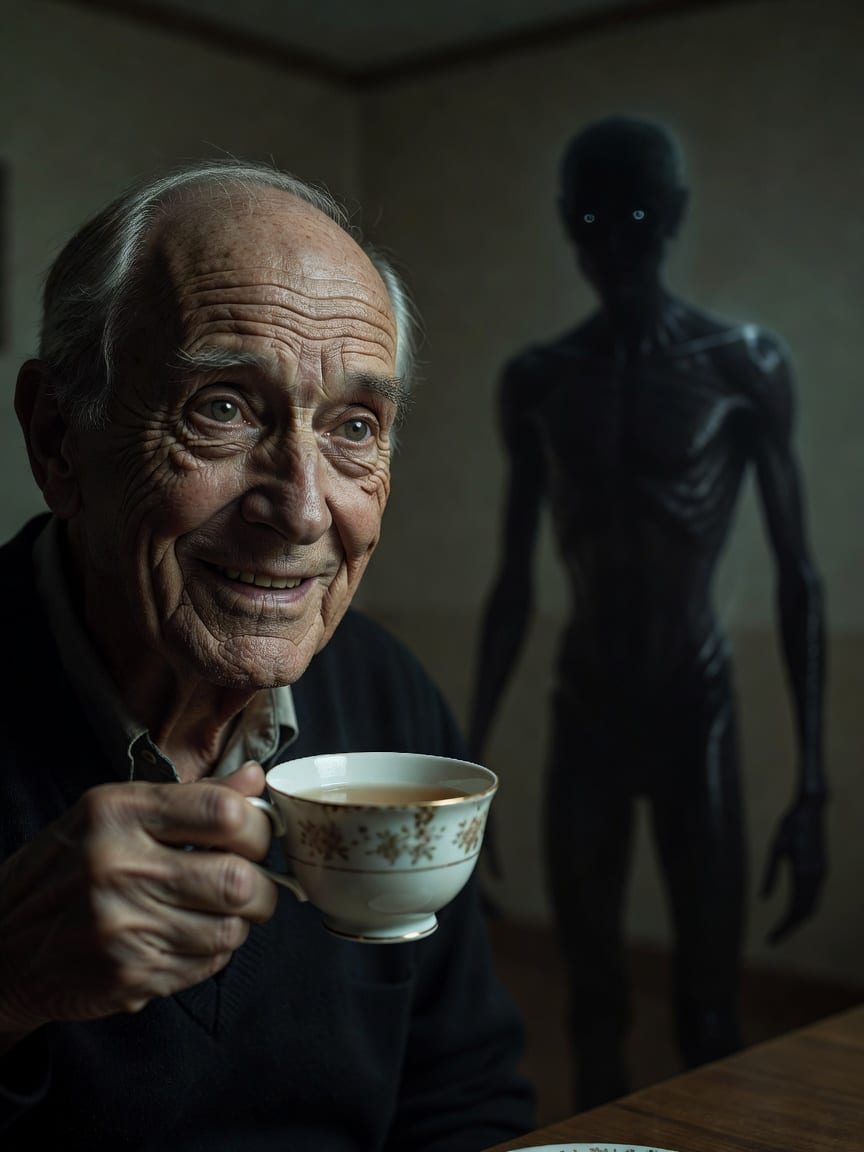
My grandfather vanished from the ward for six days. He's back, drinking milky, unsweetened tea, thanking the nurse for 'how he's always had it.' My grandfather took his tea black for ninety years.
My grandfather, Ralph, had a fixed morning ritual: scalding black tea with two sugars. After his terrifying six-day disappearance, his return brought immense relief. But when a nurse brought him a milky, unsweetened cup, he drank it, smiling, utterly convinced it was his usual tea, while I watched steam rise from a cup that was profoundly wrong.
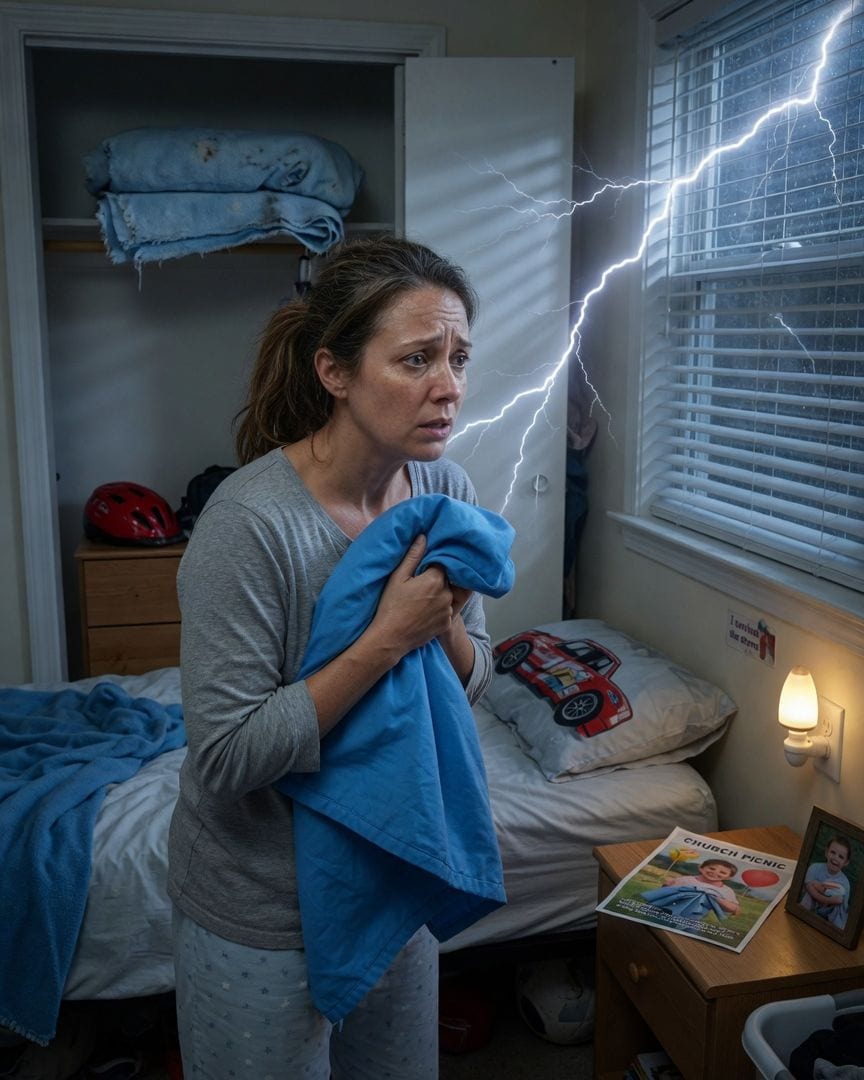
My boy came home after the storm smiling into the lightning. He'd hidden from thunder his whole life.
My son, Carl, had been missing a night and a day, and the relief of his return was still a raw thing. But when a storm broke, the boy who always trembled and hid from thunder just stood calmly at the window, smiling up into the rain. It was a horrifying reversal of a truth I’d known since he could walk.
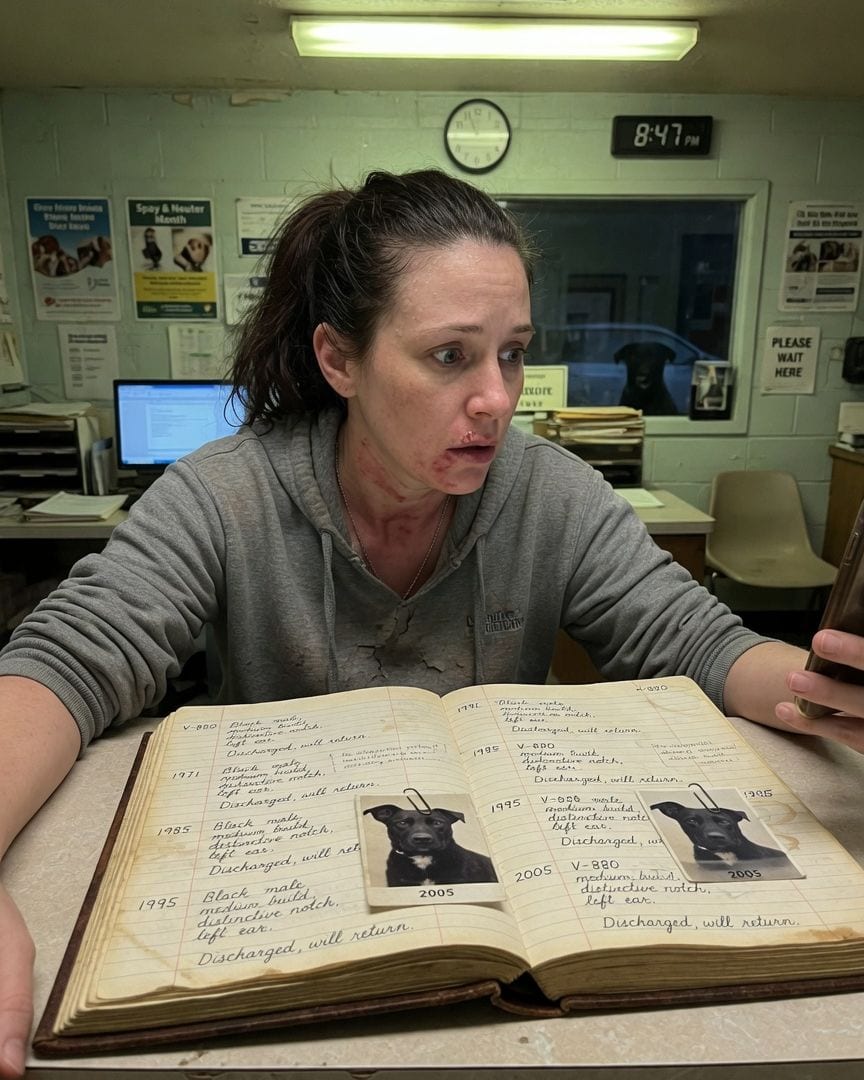
My dog's case number, V-880, traces the same black dog with a notched ear back to 1971, through four different owners, all discharged 'will return'.
As an IT professional, I expect logic. But when I took my new stray, Midnight, to the vet, his old ledger held a chilling, repeated note. Across entries from different decades, it simply read: 'Discharged, will return.'
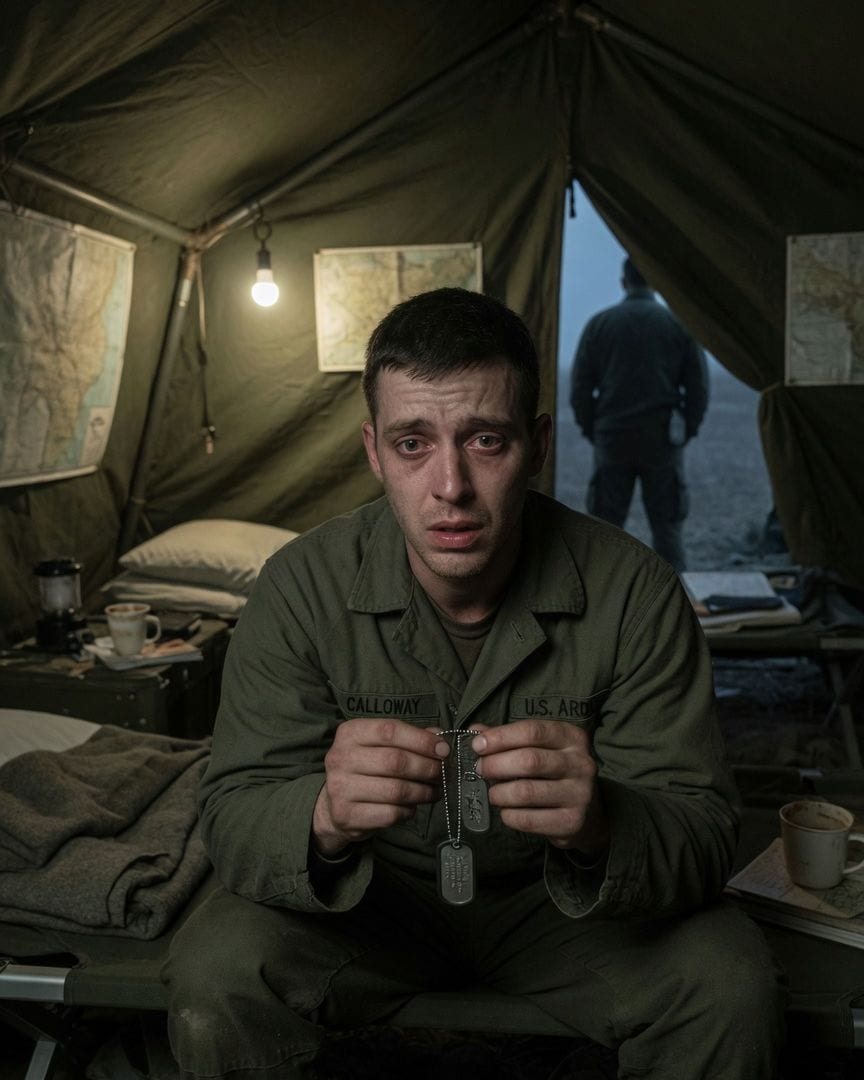
Three weeks from transfer, Airman Calloway found his tentmate’s dog tags with a custom engraving, but the man claimed he'd never seen them.
Airman Russell Calloway was counting the weeks to his transfer from the isolated Mount Echo Radar Site, enduring another frigid pre-dawn at the lonely outpost. His tentmate, Airman Ethan Brody, had just returned from nine days off-grid after an ATV crash, and something was immediately wrong. Brody, a creature of habit known for four sugars in his coffee, now insisted he drank it black, then later denied any knowledge of the unique mountain goat engraving on his own dog tags. Calloway knew this wasn't a changed habit; it was a fundamental shift, leaving him with a chilling question: who was sleeping in the bunk beside him?
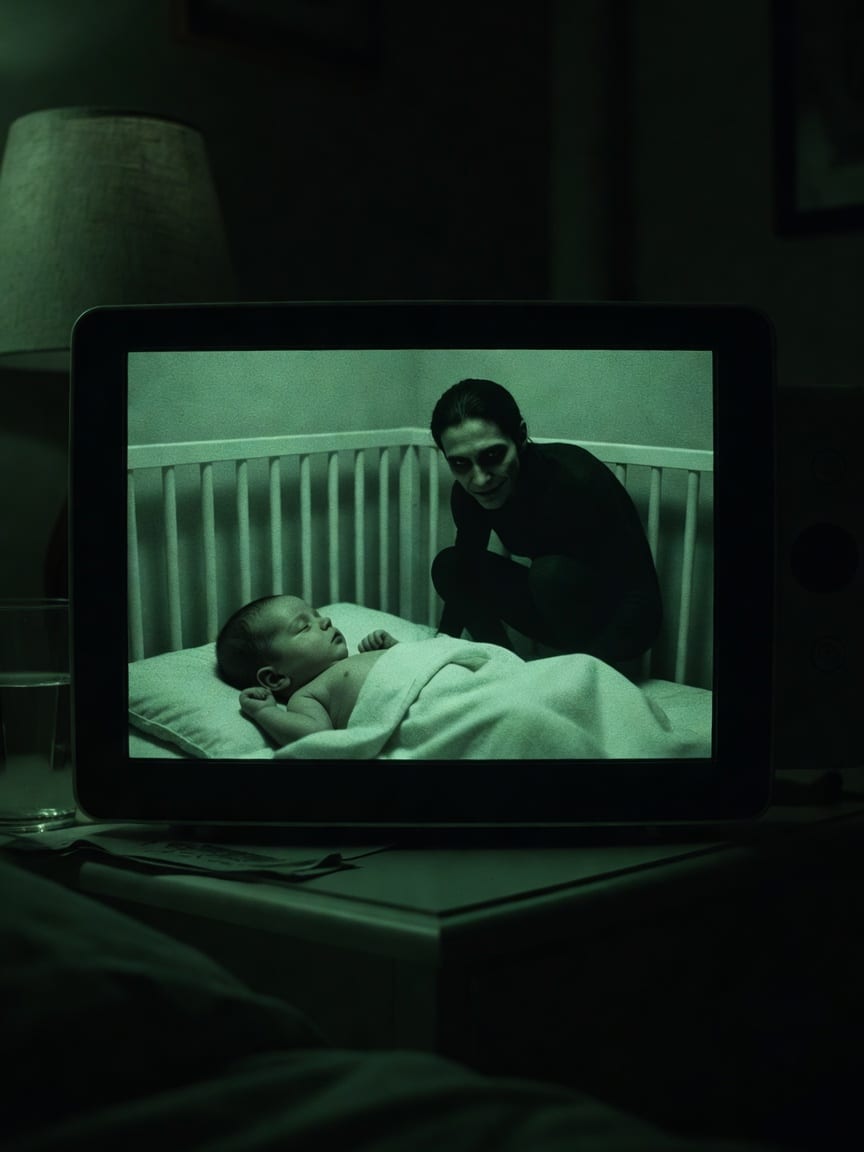
My baby monitor showed something crouched in my son's cot corner, looking back. He was sleeping alone, then it named him.
I was watching my one-year-old son Theodore on the baby monitor one night when he slowly sat upright, staring into his room's far corner. My stomach clenched as a grey, hunched shadow began to coalesce in that empty space, then subtly shifted, looking directly back into the camera.
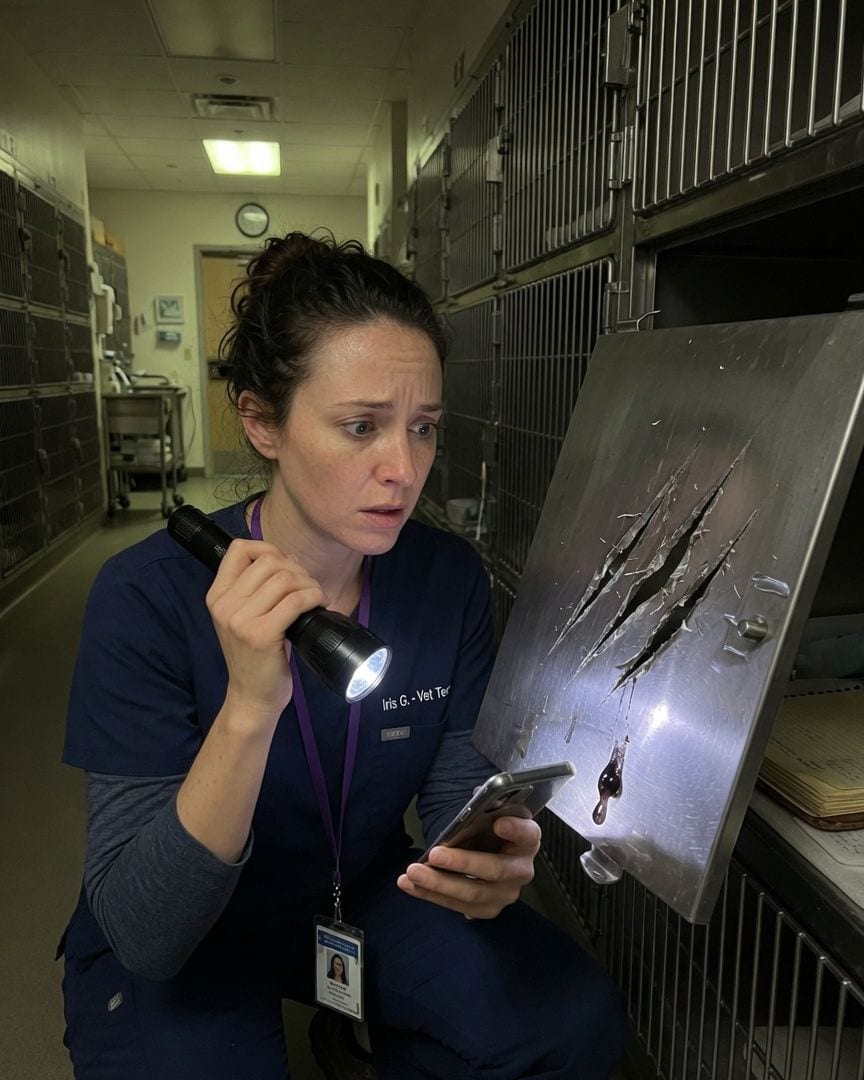
My digital log shows a dog in an empty kennel, medicated at 3:35 AM. That kennel has been empty for days, and I was the only tech on shift.
As an overnight vet tech, Iris Granger expected a routine shift. But her login showed a sedative administered to a dog in Kennel 6—a kennel that had been empty and awaiting repair for days. Then, near that same kennel, she found a strange, luminescent droplet that refused to make sense.