A man calls for his car from my tow yard, but the cameras show empty lanes.
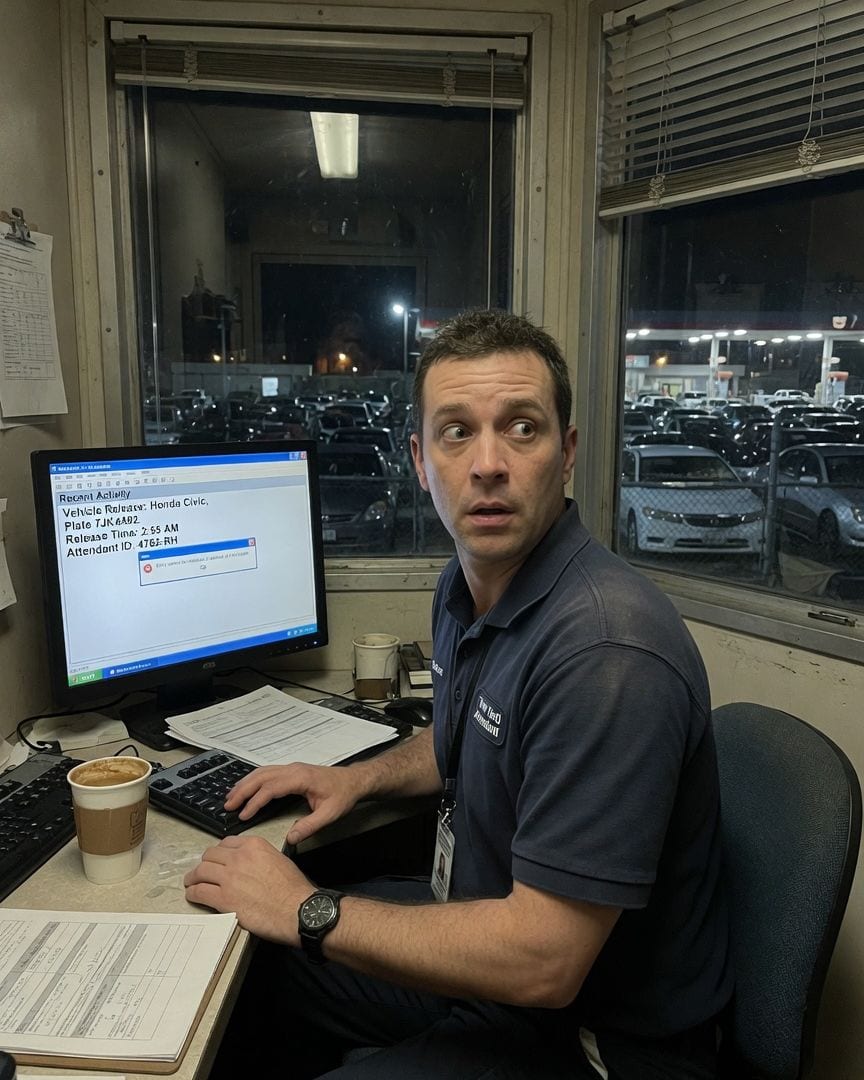
The fluorescent glow of my monitor was the brightest thing in the municipal tow yard's booth.
Outside, the high-mast lamps cast a harsh, bleached light over the endless rows of impounded vehicles, each a silent steel monument to someone else’s bad day. It was 2:45 AM, a Tuesday, and I was on my usual night shift.
The air conditioning hummed, a low, steady drone that usually filled the silence, but tonight it felt thin, insufficient.
Then the voice came. Clear and unhurried, as if the speaker were standing right behind me. "Excuse me! Looking for my '08 Civic, plate 7JK492."
I blinked, startled, my heart giving a sudden, violent thump. There hadn't been a buzz at the window, no visitor indicator light. I was alone. I spun my chair around, but the booth was empty, the door shut tight.
My breath hitched. I checked the monitors. The live feed for Aisle 7, where the voice seemed to originate, showed nothing. Just the metallic glint of parked cars, perfectly still under the cold light.
No man, no flickering torch, no movement at all. I scrolled through the other aisles, my gaze darting from screen to screen. Empty. Only my own pale reflection moved in the booth's dark window, a ghost staring back at me.
I tried to tell myself it was the wind, whistling through a loose vent, or the old intercom system playing tricks.
But the voice had been too distinct, too close, the plate number too specific to be a random acoustic fluke. My hand, clammy, reached for the receiver. "Hello? Sir? Did you say you're in Aisle 7?"
There was no response, only the faint, mechanical hum of the server racks from the back room, and the ragged, uneven beat of my own heart against my ribs.
I hung up, trying to force a rational explanation into existence. Maybe someone had snuck in, then left.
But the main gates were locked, secured with an industrial-grade chain and a biometric scanner that only Malcolm, the manager, and I had access to. Besides, the voice was inside the yard, near Aisle 7, not outside the fence.
I decided to check the digital release log, just in case, my fingers flying over the keyboard. I typed '7JK492' into the search bar. The system whirred, the hard drive groaning, then returned 'No Results.'
I let out a nervous puff of air, a short, humorless laugh that died in the quiet. Just as I was about to close the window, a notification flashed in the corner of the screen: 'Recent Activity.'
A cold dread began to spread through my gut. I clicked it.
My breath hitched, sharp and sudden. There, at the very top of the list, was an entry. 'Vehicle Release: Honda Civic, Plate 7JK492.' The 'Release Time' was listed as 2:55 AM – ten minutes from now.
And the 'Attendant ID' field displayed my own employee number.
My hands started to tremble, a fine tremor that went right through my bones. I hadn't initiated any release. I hadn't even seen the car. I hadn't seen anyone.
I clicked on the entry, expecting an error message, a system glitch, something that would explain away the impossible. But the details were all there, perfectly filled out, awaiting finalization.
It looked utterly legitimate, every field accounted for, except for the fact that I knew, with absolute, terrifying certainty, I never made it. Who could have done this? Who would have access to my login, and for what purpose?
This wasn't a prank. It was too precise, too chillingly tied to a phantom voice from an empty aisle. The dread solidified, cold and heavy.
My fingers hovered over the 'Delete Entry' button, my mind racing. This had to be a mistake, a phantom entry I could simply erase, make it disappear like the voice. I clicked.
An error message flashed, stark white against the dark screen: 'Entry cannot be modified or deleted at this stage.' Panic flared, cold and sharp, like a needle in my chest.
I slammed my fist lightly on the desk, the cheap laminate rattling. This couldn't be happening. I stared, frozen, at the phantom release entry on my screen. I tried again, my mouse clicking frantically, but the system refused.
As I watched, the 'Release Time' field on the entry silently updated, the seconds ticking forward, always ten minutes ahead of the current time, like a countdown.
The next morning, after a night spent staring at the ceiling, replaying the phantom voice and the impossible log entry, I was back at my computer, a desperate resolve hardening in my chest.
The entry for the Civic was gone, vanished as if it had never existed, leaving only a lingering chill in the air and a knot of unease in my stomach.
I started searching the digital log, not for specific plates, but by 'release time,' focusing on the small hours, specifically 2:00 AM to 4:00 AM.
A handful of entries appeared over the past few months, each under my ID or the IDs of other night attendants. They were always for cars that didn't seem to exist in the impound records.
I noted down the plate numbers and dates, my pen scratching on a legal pad. None of these 'released' vehicles were ever actually towed in, according to the intake logs.
I pulled up the camera footage for those phantom release times. Every single time, the lanes were empty. Only the attendant in the booth was visible, a small, hunched figure against the sterile glow.
The recordings confirmed what I already knew: no cars, no drivers, just an empty yard and a log entry that shouldn't exist.
The dread tightened its grip, a cold hand squeezing my throat. This wasn't a glitch. This was a pattern. I went deeper, looking for older records. The digital system, I found, only went back five years.
Malcolm Foster, the yard manager, was a man in his early sixties, quiet, with tired eyes that seemed to hold a lot of unspoken history.
He'd been here for decades, his presence as much a fixture as the tow trucks themselves. I decided to seek out the physical archives, hoping for answers that the digital system, with its convenient five-year memory wipe, couldn't provide.
In a dusty back room, tucked away behind stacks of rusted tires, I found them: tall metal shelves laden with old, handwritten ledgers.
The paper was yellowed with age, brittle to the touch, the ink faded in places, but the pattern was undeniably there.
Entry after entry for phantom releases, often with a cryptic note scribbled next to them, like 'No vehicle found' or 'Driver not present.' They mirrored the digital entries, stretching back decades.
As I pored over the old ledgers, the fluorescent lights in the dusty archive room flickered, buzzing like something trapped.
I ignored it, my focus sharp on a particularly old entry from 1983: 'Ford F-150, Plate XF789 - Released 3:00 AM. Attendant: Foster, M.' My blood ran cold. I recognized the surname. Malcolm's father?
A chill that had nothing to do with the draft from the creaking door snaked down my spine.
Suddenly, the static-laced crackle of the yard's intercom cut through the oppressive silence of the room.
It wasn't the usual squawk, but a faint, distant whisper, barely audible, seeming to call out names from the very ledger I was holding: "...Miller...Jenkins...Foster..." I froze, heart hammering against my ribs, so loud I could almost hear it.
I spun around, but the room was empty, the shadows clinging to the shelves. A moment later, the archive door creaked open, just a few inches.
Malcolm Foster stood there, holding a clipboard, his figure framed by the dim light of the hallway. He didn't look surprised to see me amidst the old, forgotten records.
His tired eyes, deep-set and weary, settled on the ledger in my hands. He didn't ask what I was doing, or why I was in the archives. He just watched me, a faint, unreadable expression on his face.
"Digging through the past, Laura?" he asked, his voice soft, almost a murmur, yet it seemed to echo in the small room. "You know, some things are best left in the dark. Stick to the digital, it's less messy."
He turned and walked away, his footsteps soft on the concrete floor, leaving me with the unsettling feeling that I wasn't just observed, but understood, in a way I desperately didn't want to be.
The door creaked shut behind him, plunging the room back into its dim, flickering silence.
I couldn't shake Malcolm's words, or the knowing, almost sympathetic look in his eyes. It felt like a warning. But the entries, the names, the dates – they gnawed at me.
I went back to the digital records, ignoring the protestations of my overworked brain, and started cross-referencing the phantom plates and names from the old ledgers with online archives of local news.
It took hours, the caffeine doing little to dull the mounting sense of dread, but I found it: multiple old newspaper clippings reporting missing persons. Always night shift workers. Always around the same dates as the phantom releases.
Always their cars vanished too, or were never found. A knot of cold certainty tightened in my stomach, each new article another turn of the screw.
Then I found a particularly old article, yellowed even on the digital archive, about a tow yard attendant who disappeared without a trace in 1983. Malcolm Foster Sr. The same name from the ledger.
That night, when Malcolm came in to relieve me, the air in the booth felt thick, heavy with unspoken things. I couldn't hold it in. "Malcolm," I started, my voice trembling slightly, trying to keep it steady. "I found something.
About your father."
He didn't flinch. Not a muscle in his face moved. His expression remained placid, as if I’d just commented on the weather. "The yard keeps its own records, Laura," he said, his voice flat, devoid of emotion.
He looked out into the empty lanes, his gaze distant. "Sometimes it takes. Sometimes it just... marks you." He walked over to an old, locked cabinet I had never noticed before, tucked away in a shadowed corner of the booth.
He produced a heavy, brass key from his pocket and, with a soft click, opened the cabinet. He pulled out a heavy, leather-bound ledger, ancient and brittle, its pages yellowed with age.
He opened it to a specific page and pushed it across the counter towards me.
My eyes darted to the entry. There, in faded, elegant script, was an entry that mirrored the one from the archive: 'Foster, Malcolm. Released. 3:00 AM. October 14, 1983.' Below it, a scrawled, almost illegible note: 'Vehicle not present.
Attendant present.' My eyes darted from the entry to Malcolm, then back to the page. My own Malcolm.
"You were... released?" I whispered, the word tasting like ash in my mouth. "But you're here."
He nodded slowly, a single, deliberate movement. "Some of us just get lucky, or maybe we're needed to keep the books. My father wasn't so lucky. The yard needed him for something else entirely. It's always at 3 AM.
The collection hour."
I was reeling, the weight of Malcolm's calm admission pressing down on me like a physical force.
The ledger, his own name marked for 'release' decades ago, the chilling implication that I was speaking to someone who should be gone, who had been taken by this incomprehensible 'yard.' It was too much.
I pushed the old ledger back to him, my hands clammy, the leather feeling cold and dead against my fingertips. "The collection hour..." I murmured, the phrase echoing Malcolm's, a new, terrible meaning settling over it.
I tried to process the horror, the quiet, bureaucratic evil of it all.
As Malcolm slowly closed the ancient book, the snap of the clasp echoing in the silent booth, I turned back to my computer, needing the familiar glow of the screen to ground me, to pull me back to the mundane, the real.
The digital log was still open on 'Recent Activity'.
My breath caught in my throat as I saw the new entry. My own name. Laura Porter. 'Released'. Tonight, 3:00 AM. My employee ID. The digital log, the yard's own record, had marked me for collection.
I shoved my chair back with a loud scrape, a choked gasp escaping me. "What is this?" I demanded, pointing a trembling finger at the screen, my voice a ragged whisper.
Malcolm, without a flicker of surprise, peered over my shoulder.
"The collection," he stated, his voice devoid of emotion, as if he were discussing a routine shift change. "It's your time, Laura. The yard has marked you."
He explained, his voice a low, steady drone, that the 'release' wasn't for a car, but for the person.
The tow yard itself, or whatever presence inhabited it, used its own systems—the logs, the cameras, even the intercom—as a ledger and a means of manifestation.
The man with the torch, the voice calling out the specific plate, these were not ghosts in the traditional sense.
They were echoes, lures of past 'collections,' drawing the next victim into the routine, making them acknowledge their 'car,' their 'release,' their role in the yard's macabre system.
The 3 AM timing was precise, he said, the hour when the veil thinned, when the 'release' became final, when the collection was complete.
He explained that his own 'release' entry had been made, just like mine, but for some unknown reason, he was 'passed over.'
He believed he was left behind to maintain the records, to witness the ongoing pattern, a silent keeper of the yard's grim books.
He showed me more entries, pointing out names I now recognized from the missing persons reports I'd found, all marked 'released' at 3 AM.
The dread was no longer a cold stain, but a coherent, terrifying pattern, every detail clicking into place with horrifying clarity.
The yard wasn't just a place where cars were stored; it was a trap, a meticulously organized, bureaucratic snare, and now I was caught.
My mind raced, a desperate, rational response fighting through the terror that threatened to overwhelm me. "No," I whispered, then louder, a surge of adrenaline making my voice firm, "No! I won't let it."
I tried to delete my entry again, my fingers flying across the keyboard, but it was locked, just as before. The same error message flashed: 'Entry cannot be modified or deleted at this stage.'
Malcolm placed a hand on my shoulder, his touch surprisingly gentle, almost paternal. "It's irreversible once marked, Laura. The ledger is final."
The clock on the wall above the monitors ticked ominously towards 3:00 AM. I looked at the security monitors, the empty lanes stretching out into the vast, dark yard.
The man with the torch wasn't there, but I could almost feel his presence, waiting, a cold, expectant silence radiating from Aisle 7. I realized that the entity operated through the yard's systems.
If I couldn't delete the entry, maybe I could stop the system itself. Cut off its connection to the physical world, to the 'collection hour.'
I remembered the main server rack, tucked away in a small, dusty closet off the main office. It was a long shot, a desperate gamble, but it was my only chance.
"I have to shut it down!" I yelled, pushing past Malcolm, the chair scraping loudly against the floor.
I sprinted out of the booth, the sudden rush of cold night air a shock against my skin, clearing my head just enough to focus. Malcolm didn't follow.
I fumbled with the closet door, my hands shaking so badly I almost dropped the key, then threw it open, revealing the blinking lights of the server.
My hands, still trembling, reached for the main power switch, a thick, red lever. The clock on my phone showed 2:59 AM, the glowing digits an accusation.
I heard the faint, almost imperceptible whisper of names over the intercom again, closer now, as if right outside the closet door, a cold breath against my ear. I slammed my palm down on the switch.
The server lights flickered, a final gasp, then died. The screens in the booth went black. The high-mast lamps in the yard extinguished with a soft pop, one after another, plunging the entire area into an oppressive, absolute darkness.
The intercom fell silent. The only sound was my ragged breathing in the sudden, profound quiet.
The main power to the municipal tow yard went out completely at 3:00 AM that night, causing a system-wide crash and a massive disruption to operations.
Laura Porter was found by the morning shift supervisor, huddled by the darkened server rack, unharmed but in a state of profound shock, muttering incoherently about phantom cars and ticking clocks.
All digital records of 'releases' from the past few months were corrupted and gone, leaving only the physical ledgers. Malcolm Foster reported it as an inexplicable system malfunction, attributing Laura's state to stress from the power outage.
The tow yard's systems were eventually restored, but the 'Recent Activity' log was never quite the same, often displaying strange, fleeting anomalies.
Laura Porter quit the night shift. She found a day job, far from isolated places, far from the hum of servers and the quiet of 3 AM. She never spoke of what happened, not to friends, not to family.
The silence she had earned was fragile, a thin membrane over a deeper truth.
She still checks the local missing persons reports, especially for night shift workers, and sometimes, late at night, she swears she hears a faint, distant voice call out a plate number, and she knows the silence she earned is only temporary.
If this one got to you
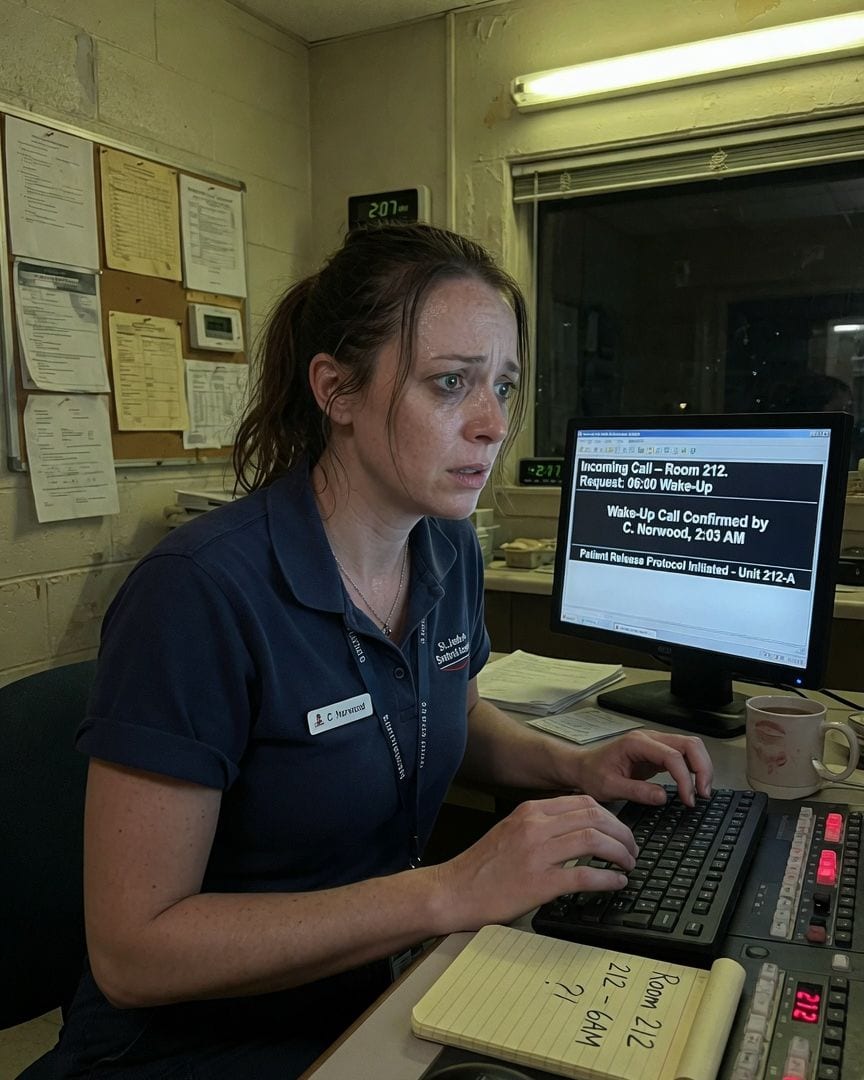
My login started a 'Patient Release Protocol' I'd never heard of for Unit 212-A.
Working the quiet night shift switchboard at St. Jude's, I took a routine wake-up call from Room 212. But the system showed Room 212 had been stripped bare and its phone line disconnected for months. Then, my own login showed I had confirmed the impossible call.
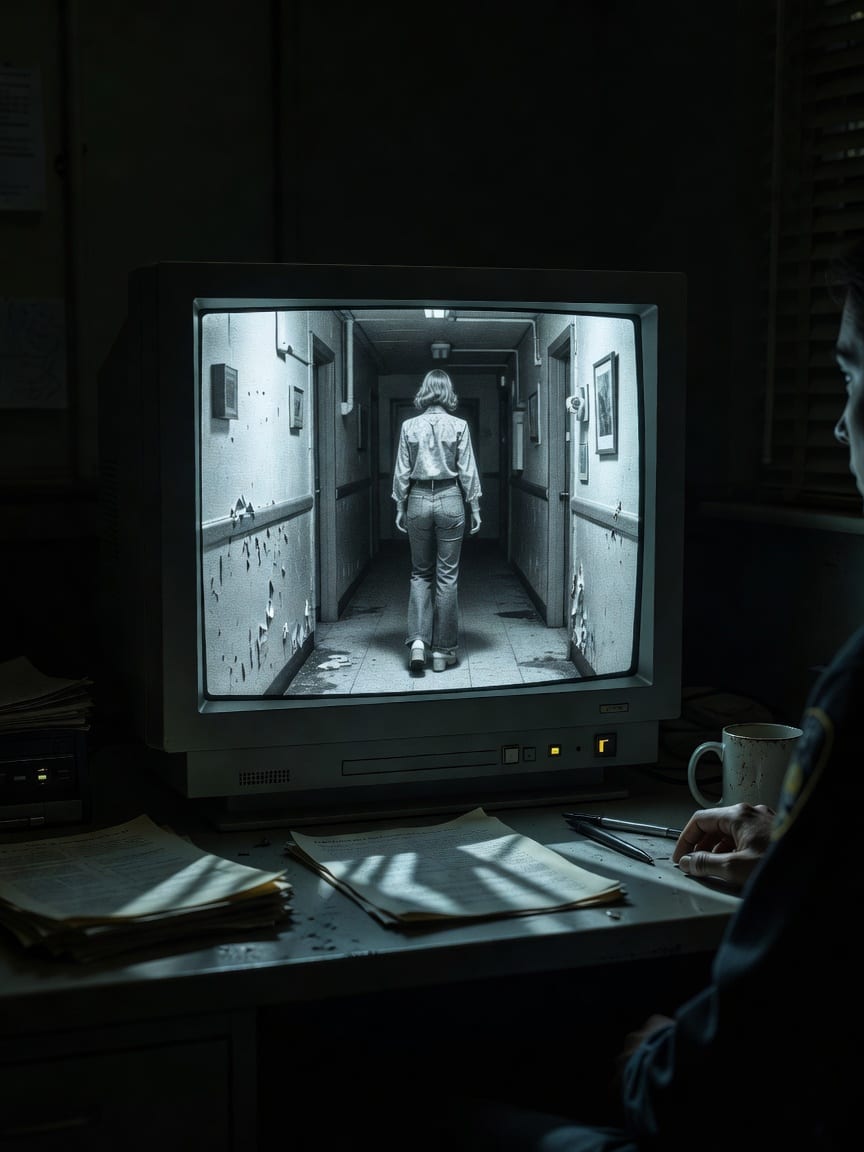
My intercom buzzed at 3 AM, a voice asking to step out for air. The station manager insists no one works the newsroom overnight, and no Cheryl is on payroll.
My shifts as the night security guard at WMVX are usually quiet, the TV station a tomb from 11 PM to 6 AM. But a late-night intercom call from a woman named Cheryl, who my manager says doesn't exist, was unsettling enough. The next night, my digital security log showed a new entry for 'Producer Cheryl Hartley'—a line I never typed, with details I couldn't have known.
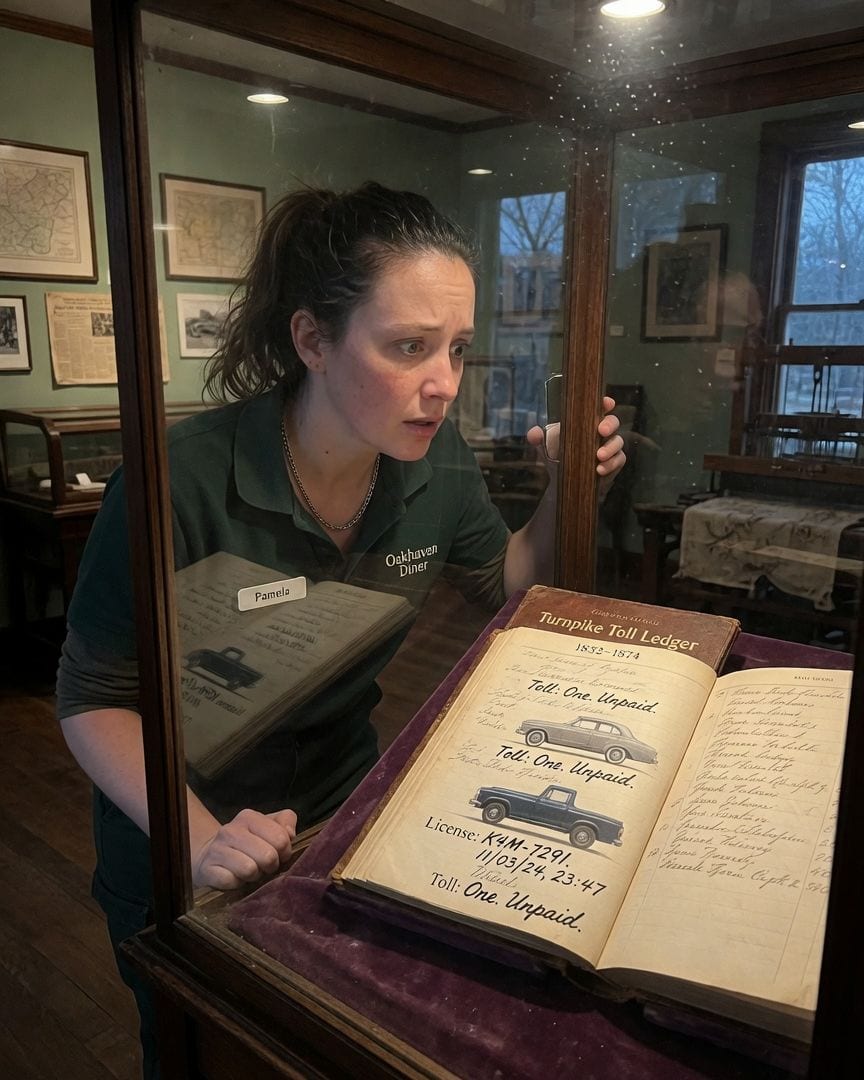
My car stalled at the old turnpike milestone, after dark. The toll ledger, closed in 1874, then listed my car, my stall time, and a toll of one, unpaid.
I had just moved to Oakhaven when my old sedan died on a dark, winding road by an infamous turnpike milestone. The next day, I found my car's exact registration and stall time written in fresh ink in a 150-year-old, locked museum ledger, marked 'Toll: One. Unpaid.' The curator dismissed it as a prank, but her white knuckles and strained voice hinted at something far more unsettling.
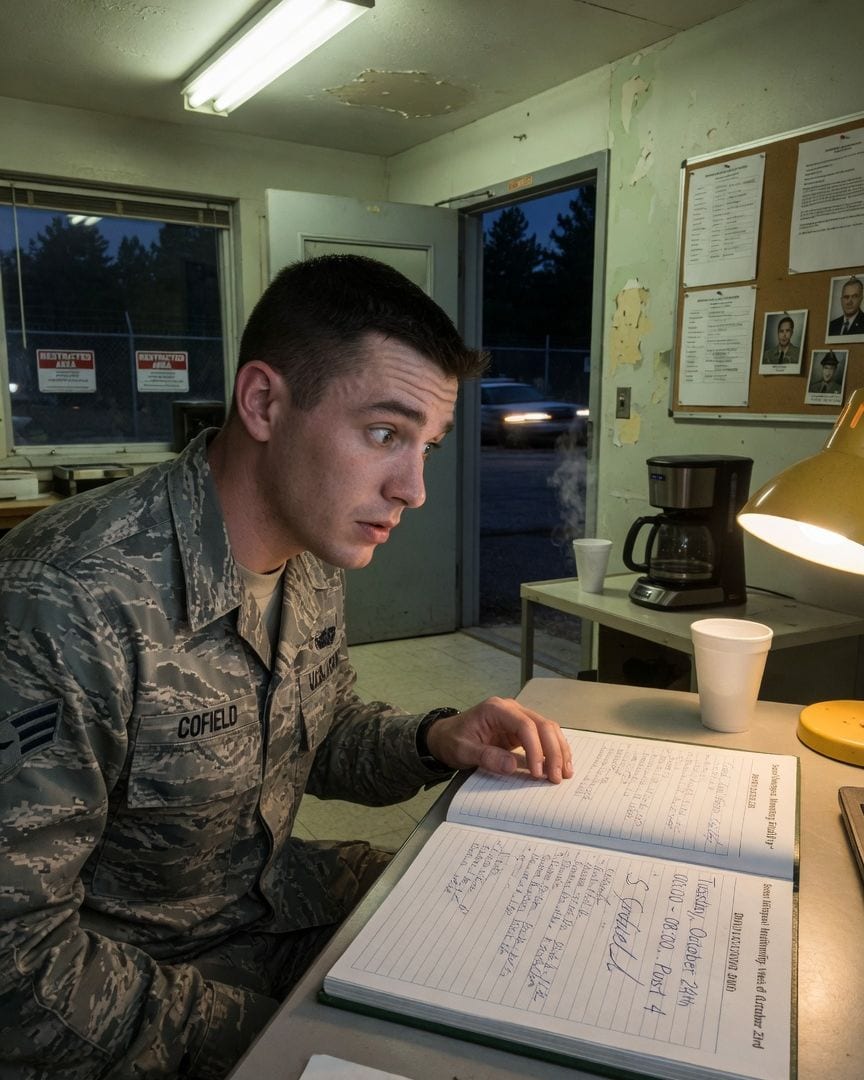
Two weeks from discharge, Senior Airman Cofield found his own signature on a logbook for an impossible shift at a facility mothballed decades ago.
Senior Airman Simon Cofield was just two weeks from discharge when he patrolled the quiet, forgotten perimeter of a mothballed weapons storage area. On a night thick with pine scent, he spotted a faint yellow light in a building officially powered down for over three decades, its alarm system inert. Inside, the building hummed with power, spotless, with hot coffee brewing and a crisp shift-change roster on the wall. But Cofield froze when he found a duty logbook with current entries, including his own name and signature, assigning him to an impossible shift next Tuesday. A cold dread settled as he realized something had just claimed him for a duty that no longer existed.
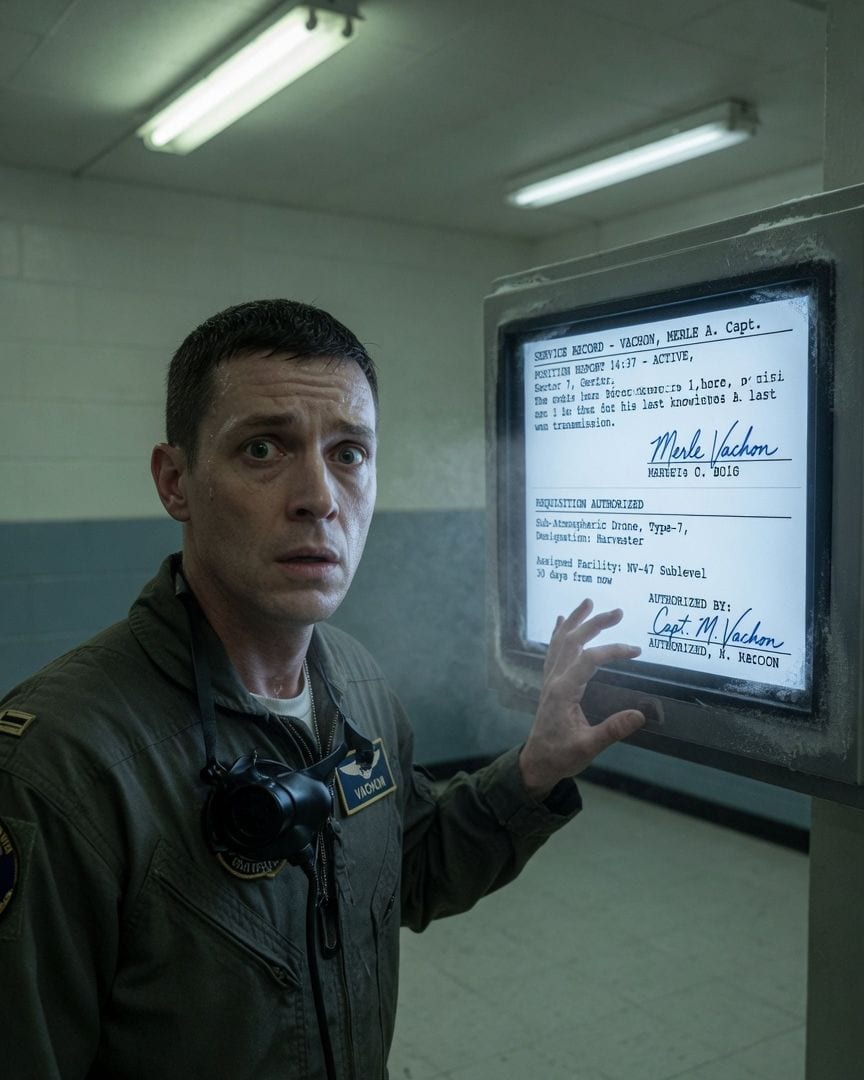
A Cold War pilot, eleven minutes from his new daughter, saw his own signature on a requisition for a 'Harvester' drone, dated a month in his future.
Captain Merle Vachon was just eleven minutes from seeing his newborn daughter when his F-86 Sabre encountered an impossible sight: a silent disc, utterly still, forty thousand feet above him. Radio silence turned to dead air, then the pilot was suddenly no longer in his cockpit, but floating in a vast, cold, sterile space. There, a glowing console displayed his service record, new entries scrolling into existence, listing him active *after* his last transmission. But the true dread landed when he saw his own confident signature on a requisition for an unknown 'Harvester' drone, dated a month in the future, for a facility hundreds of miles from any base he knew.
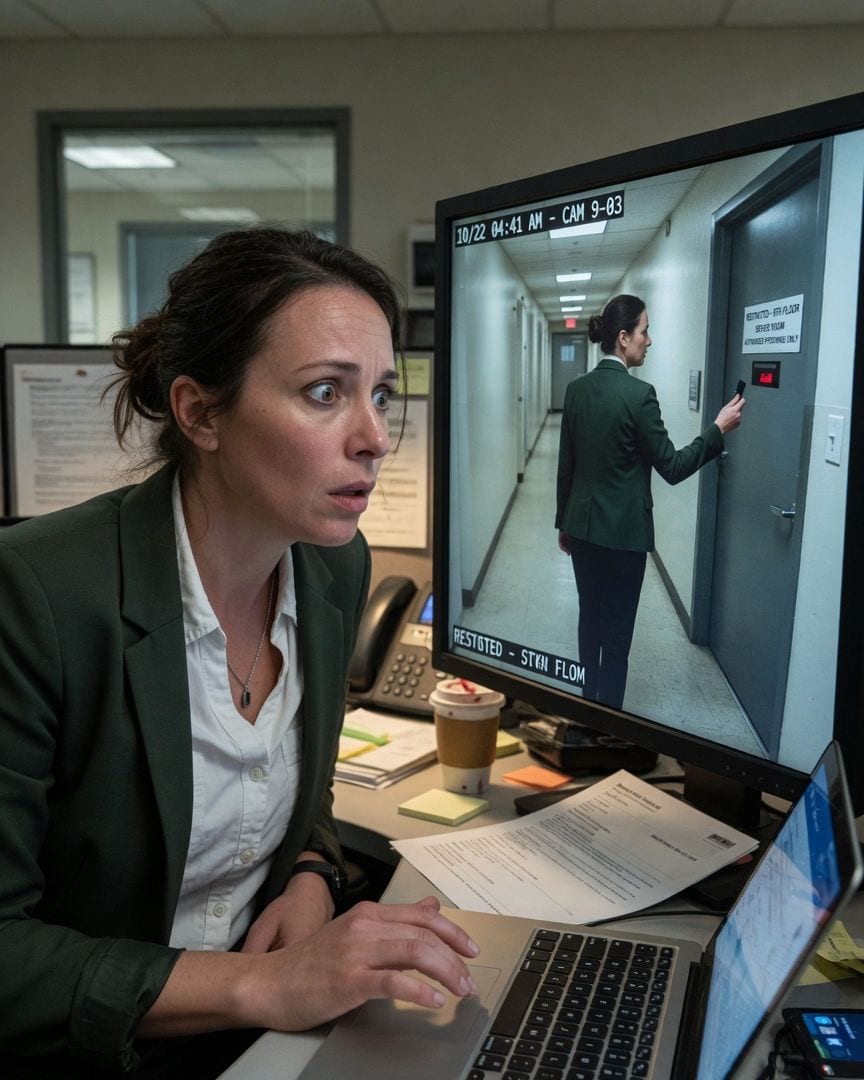
My keycard log shows me in the server room at 4:41am. I was asleep, and my badge was at home.
An email from corporate IT reveals my keycard registered entry into a restricted server room at 4:41 AM last Sunday. I was asleep in my apartment across town, my badge clipped securely to my jacket at home. But then I scrolled down and found eleven more impossible entries, all within the past week, all under my name.