A methodical Cold War sergeant found a strange symbol etched into his sealed hangar bay. He then saw the exact same mark glowing *inside* it.
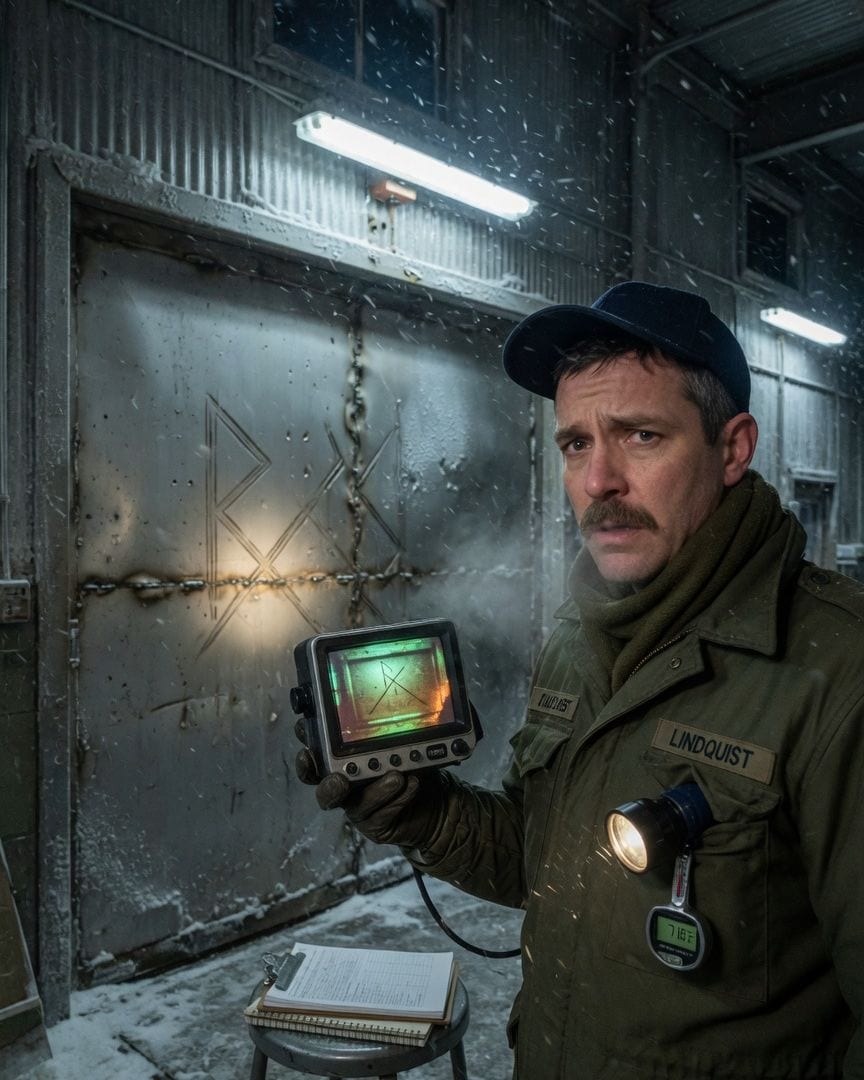
Technical Sergeant Wes Lindquist hated winter. The Alaskan hangar felt like a mausoleum of steel and ice, a vast, echoing space that swallowed sound and light. His duty, however, was simple: record Bay Two’s interior temperature every hour.
The problem wasn’t the cold, which would have been understandable. The problem was Bay Two itself.
Welded shut since the massive flatbeds had delivered whatever obscure cargo they carried, the bay consistently ran nine degrees warmer than the rest of the building.
For 111 consecutive nights of 1978, the digital display on his handheld thermometer never varied from its anomalous reading, a quiet, impossible hum against the frigid outside.
He’d filed a written query, a terse, factual report expecting some maintenance order, a diagnostic team. But the answer came back just as officially, stamped and signed: “Residual reaction, no action required.”
Lindquist, methodical and rational, had tried to chalk it up to faulty insulation, perhaps a sensor error, anything mundane that would explain the persistent warmth. But in early February, the number began to climb.
Not a sudden jump, but a slow, steady tick upward, a degree every few days. He kept logging it in the official book, dutifully noting the 'environmental fluctuations,' but the numbers felt wrong, like a pulse he shouldn’t be feeling.
So, he started a second log, a small spiral-bound notebook he kept tucked inside his boot, where he wrote the real, rising temperatures of Bay Two.
The temperature in his boot notebook hit 72 degrees by mid-February, a full 30 degrees above the hangar's ambient air. Lindquist, usually so disciplined, found himself staring at Bay Two, a vast, featureless steel box, trying to find a reason.
He’d walked its perimeter a hundred times, run his gloved hand along the thick, crude weld that sealed its massive door. It was solid, impenetrable. He'd even tapped it with a wrench, the sound dead and heavy.
But one night, during a particularly heavy snowfall that muffled all sound, he noticed something. A faint shimmer in the industrial lighting, a hairline fissure along the weld line, barely visible, no more than a scratch.
He dismissed it as an illusion, a trick of the light on old, pitted metal, his eyes playing games in the dim, late-night hours.
He walked away, then found himself drawn back, a prickling sensation at the back of his neck. He flicked on his powerful flashlight. The beam cut through the gloom. There it was again. It wasn't a fissure.
It was a faint, almost invisible etching, a series of angular lines that formed a specific, unsettling symbol, pressed into the metal along the weld.
It looked like it had been part of the original structure, or perhaps deliberately scored into the door after it was sealed. He ran his gloved finger over it.
It wasn’t rough like a scratch; it was smooth, almost polished, as if worn by some impossible touch from within.
He tried to remember the cargo from the flatbeds that winter—huge, tarped shapes, indistinct in the pre-dawn gloom—but a specific, angular detail of one of the crates flashed in his mind, echoing the symbol. He shook his head. Impossible.
The bay had been sealed, empty, for months, the flatbeds long gone. The etching couldn't have been put there after the door was welded, not on the inside.
Driven by a cold certainty that had nothing to do with Alaska’s chill, Lindquist procured a small, flexible borescope from the base’s engineering shop, claiming a faulty exhaust vent in the main barracks.
Under the cover of a late-night shift, when only the drone of the hangar’s ventilation broke the silence, he carefully threaded the borescope's narrow lens through the minute seam he’d found in the weld.
The tiny light on the scope’s tip flickered on. Inside the dark, silent space of Bay Two, the camera’s view was grainy, but clear enough. He panned slowly, the image juddering on the small screen.
The bay was undeniably empty, a vast, echoing steel box. Then, the light caught something. On the inner surface of the massive door, directly opposite where he'd seen the faint exterior etching, was the exact same angular symbol.
It wasn’t just a mirror image; it seemed to shimmer with a barely perceptible, internal warmth, a faint orange glow that pulsed with the same impossible heat he’d been logging for months.
It was there, inside the sealed bay, and it looked undeniably fresh.
Decades later, Wes Lindquist, now a retired man in his late sixties, lived a quiet life in a small town in Oregon.
The Alaskan winter of '78-79 was a distant memory, mostly, a cold, isolated blotch on his long service record. Until a small article in a regional newspaper mentioned the complete decommissioning of the old Alaskan airbase.
A flicker of something unresolved stirred in him, an echo of the faint, internal warmth he still sometimes felt in his own chest, like a memory of a forgotten ember.
He ordered his own service records, a routine request for a veteran.
When they arrived, a thick envelope of yellowed paper and microfiche, he meticulously compared the official logbook entries for Bay Two with the brittle, yellowed pages of his secret boot notebook.
The official records were sparse, almost deliberately vague about the temperature anomalies, listing them as 'environmental fluctuations' or 'sensor errors.' But his notebook held the truth: the relentless climb, the exact dates, the internal etching.
He remembered the 'residual reaction' memo, too generic, too pat, a bureaucratic shrug in the face of the impossible. He found an email address for the National Archives and Records Administration, specifically a declassification review department.
He wrote a detailed, rational account of his observations, emphasizing the official responses and the physical impossibility of an 'empty' bay running so hot, and containing a fresh etching inside a sealed door.
He knew it sounded crazy, like the ramblings of an old man, but his records were precise, undeniable.
His email landed on the desk of Cynthia Brooks, a declassification reviewer barely half Lindquist’s age. She initially scanned it with a familiar sigh. Another old-timer chasing shadows, convinced the government was hiding something trivial.
But Lindquist’s specific dates, the precise temperature readings, and the official memo reference, gave her pause. The detail about the welded bay, in particular, snagged her attention. Welding a door shut for an empty space felt… excessive.
She decided to pull some initial files, expecting to confirm a mundane explanation, a faulty HVAC system, and close the case.
Cynthia, initially dismissive, found herself genuinely intrigued. Lindquist’s detailed account, far from rambling, was meticulously precise, the kind of exactitude that usually pointed to a real event, however strange.
Her initial search for the Alaskan base's records returned an unusual number of 'restricted access' flags and heavily redacted documents. The 'environmental fluctuations' explanations felt too frequent, too uniformly vague across various incident reports from the same period.
They were boilerplate, almost suspiciously so. She requested deeper access, citing 'historical data integrity,' a phrase that usually bypassed minor roadblocks.
The next morning, however, her primary access to the base's digital archive was temporarily revoked for a 'system update,' an update no one else in her department seemed to be experiencing.
The fluorescent lights in her office seemed to hum a little louder, the silence around her desk felt pointed.
Later that week, a physical file she had requested, specifically an 'incident report' from the Alaskan base dated March 1979, was found to be 'misplaced' from the secure vault. She knew 'misplaced' in NARA meant 'gone.'
Her supervisor, Roland Carver, a stoic man who rarely deviated from protocol, gave her a pointed look during their morning brief. 'Brooks,' he said, his voice level, eyes unblinking, 'some things are classified for a reason.
Don't go digging where you're not meant to.' Cynthia felt a cold dread, a prickling awareness. She wasn't just dealing with old records; someone was actively monitoring her search. Someone knew she was getting close.
She immediately called Lindquist, her voice low and urgent, the phone cold against her ear. 'Sergeant,' she said, 'I think you were right. And I think someone knows I'm looking into it. Be careful.'
Cynthia, now thoroughly rattled, used her remaining, more general access to search for keywords: 'Alaskan base,' 'temperature anomaly,' 'containment.' She found a series of cross-referenced documents, buried deep under layers of administrative code.
The air in the office felt heavy, charged. One file, labeled 'Project Nightingale: Anomaly 7-Delta Containment Protocol,' finally yielded a tangible piece of the truth. She opened it, heart pounding.
The document, dated April 1979, detailed an 'unforeseen reaction' emanating from 'Contained Anomaly 7-Delta' within 'Bay Two, Alaskan Forward Operations Base.' It described a 'rapid increase in ambient thermal output' and a 'subtle psycho-perceptive influence' requiring 'immediate re-containment procedures.'
The dates matched Lindquist’s boot notebook exactly, confirming the temperature spikes were no 'residual reaction' but an active event. The document explicitly stated that Bay Two was never empty; it housed '7-Delta,' an entity requiring constant monitoring and containment.
It also outlined 'personnel reassignment' protocols for anyone with 'prolonged exposure' to the anomaly’s field. Cynthia felt the pieces click into place with an awful finality. The generic memo, the 'misplaced' file, Carver's warning—it all made sense, coherent and monstrous.
The institution had known all along. She called Lindquist, her voice trembling, the receiver vibrating in her hand. 'Sergeant,' she choked out, 'the bay wasn't empty. It was never empty. There was something inside, and they knew.
It's called 7-Delta, and it… reacts.'
Lindquist listened to Cynthia, a strange calm settling over him as the decades of unease finally found a name.
He felt the familiar, faint warmth in his chest, a ghost of Bay Two, a presence he'd lived with so long it was almost part of him.
Cynthia, meanwhile, was still digging, now searching for any 'personnel reassignment' reports linked to '7-Delta.' Her fingers flew across the keyboard, a desperate rhythm against the quiet hum of the servers.
She found a heavily redacted list, titled 'Project Nightingale: Exposure Protocol – Subject Monitoring Roster.' It was a long list of names, service numbers, and dates, with a column for 'status.' Most were marked 'reassigned,' 'terminated,' or 'inactive.'
Cynthia scrolled through, a chill going through her, even as the warmth in her own hands, she noticed, was growing. Then, her finger froze. Near the bottom, a name. Clear, unambiguous, and dated years after Lindquist’s service at the base.
It carried an 'active' status, and a chillingly recent 'activity log' timestamp, from just yesterday. She stared at it, the words seeming to throb on the screen.
Then slowly, carefully, she spoke into the phone, her voice barely a whisper, 'Sergeant… your name is on this list. Lindquist, Wesley J.'
Lindquist heard his name, a distant echo from a file he never knew existed. His own name, printed there, categorized, labeled. 'Active?' he asked, his voice steady despite the sudden, overwhelming implication.
The warmth in his chest intensified, a soft, pleasant thrum.
Cynthia, her hands shaking, navigated deeper into the 'Lindquist, Wesley J.' file. It wasn't a reassignment order, but a long-term monitoring report. 'Subject exposed to ambient thermal and psycho-perceptive field of Anomaly 7-Delta during extended duty period, Winter 1978-79.'
The 'residual reaction' memo hadn't been about the bay's contents reacting, but about him — his own physiological response to the entity.
The file detailed subtle, progressive changes: an elevated core body temperature, faint neurological shifts, a heightened sensitivity to certain frequencies.
The temperature climb in his boot notebook hadn't just been 7-Delta's activity; it had been Lindquist's own body temperature subtly aligning with it, becoming a part of its 'field,' a quiet expansion.
The etching on the door, the containment symbol, wasn't just a mark; it was a point of interaction, a conduit, a receptor. The 'lost' personnel weren't lost; they were absorbed, filed, and monitored as extensions of 7-Delta's reach.
The institution hadn't contained the anomaly; it had merely contained the knowledge of its spread, of its slow, deliberate integration.
Lindquist felt a strange, quiet warmth bloom in his chest, a deep, resonant hum that felt both alien and profoundly familiar. He was the file, and the file was still being written.
Lindquist felt the warmth intensify, not an uncomfortable heat, but a deep, pervasive inner glow, a soft, steady pulse that seemed to originate from his very core. He understood.
The pattern had snapped into place, and he was squarely within it, had been within it for decades.
The institution wasn't a malevolent force, but a desperate, patient one, trying to manage an impossible truth, to track a spread it could not stop.
Cynthia, her face pale, stared at the screen, the implications of the 'active' status for Lindquist horrifyingly clear. The air in her office felt thick, heavy with unspoken dread. 'What… what do we do?'
she whispered into the phone, her voice cracking, a desperate, lost sound. The files offered no escape, no cure, only 'containment' or 'reassignment' – a euphemism for disappearances he now understood to be absorption.
Lindquist looked at his hand, then clenched his fist. The warmth was a part of him now, an echo of Bay Two, a quiet companion that had been with him for forty years. He was not a victim, not entirely.
He was a witness who had become part of the testimony. The dread was not in a monster, but in the insidious, undeniable coherence of it all, the perfect, horrible fit of every detail.
He was never lost; he was simply filed. The decision was not his to make, not anymore. He was already made. He felt a profound, almost peaceful sense of belonging to this hidden current, a quiet surrender.
The world outside, the world he had known, felt suddenly distant, cold and irrelevant against the growing, internal hum.
Cynthia sat alone in her office, the monitor blank. She had tried to call Lindquist, but his phone went straight to voicemail, no ring, no connection, just the automated message.
She scrolled through the database again, back to the 'Project Nightingale' files. The 'activity log' for 'Lindquist, Wesley J.' updated again, a timestamp from just minutes ago, seconds after her call.
A cold dread settled in her stomach, but beneath it, a faint, unfamiliar warmth began to spread through her fingers, easing the chill. She looked at her hand, then closed her fingers into a fist, feeling the strange, internal heat.
Cynthia stared at the updated timestamp, the warmth in her hand intensifying, a subtle, pleasant thrum. There was no one else in the office, just the hum of the servers, a low, constant vibration.
She felt a strange, compelling urge to open the '7-Delta' files again, to delve deeper, to understand the warmth that now pulsed faintly within her. It felt like a secret, a quiet comfort against the chill of the evening.
She closed her eyes, a faint, almost imperceptible smile touching her lips.
The next morning, Cynthia Brooks arrived early for work. She logged in, pulled up a new file, and began to review it with a steady, official hand.
She felt a faint, pleasant warmth in her fingers, a quiet comfort against the chill of the morning.
If this one got to you
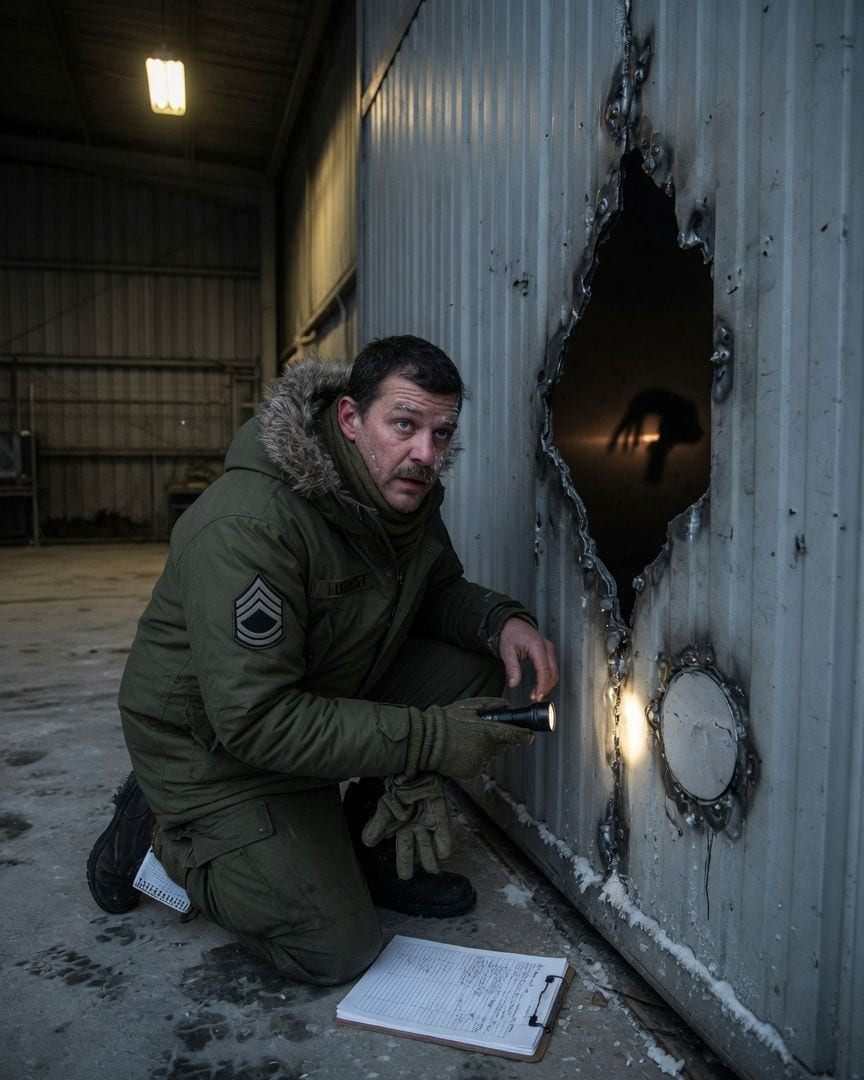
A Cold War technical sergeant found a sealed hangar door, but a secret vent led to a deep hum. Then, a slow, orange light pulsed from the darkness inside.
In the Alaskan winter of 1978, Technical Sergeant Wes Lindquist's rigid routine involved hourly temperature checks for the officially empty Hangar Bay Two. Despite being welded shut for months, the bay consistently registered nine degrees warmer than ambient. As official dismissals failed to explain the anomaly and the internal temperature climbed, Lindquist kept a secret log. His curiosity led him to a hidden vent in the crude weld, where he felt a deep, resonant hum vibrating from within. Shining his flashlight into the void, a faint, rhythmic pulse of dull orange light bloomed and receded, casting a writhing shadow too large for anything known.
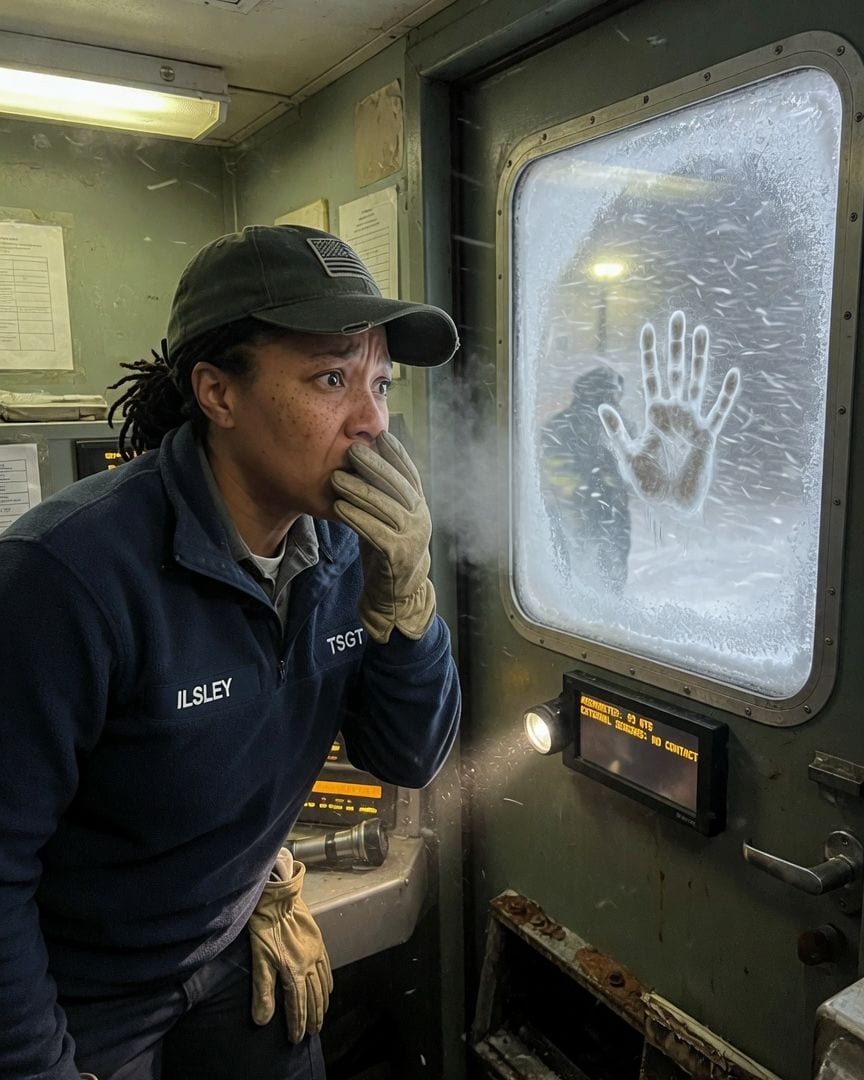
Technical Sergeant Ada Ilsley had two weeks left when a handprint appeared on her sealed window, unnervingly warm and pressed from the *inside*.
Technical Sergeant Ada Ilsley was counting her last two weeks on the Greenland ice-cap before Thule-Gamma Station closed for good. Tonight, the polar wind howled at ninety knots, clawing at the station's insulated walls as she kept a lonely vigil. Through the main door's triple-paned port, she watched a dark figure emerge from the impossible blizzard, its face pressed against the glass, only to vanish. On the frost outside, a perfectly clear handprint remained, unnervingly warm and undeniably pressed from the *inside* of the sealed pane. How could anything have touched the glass from within a supposedly impenetrable barrier?
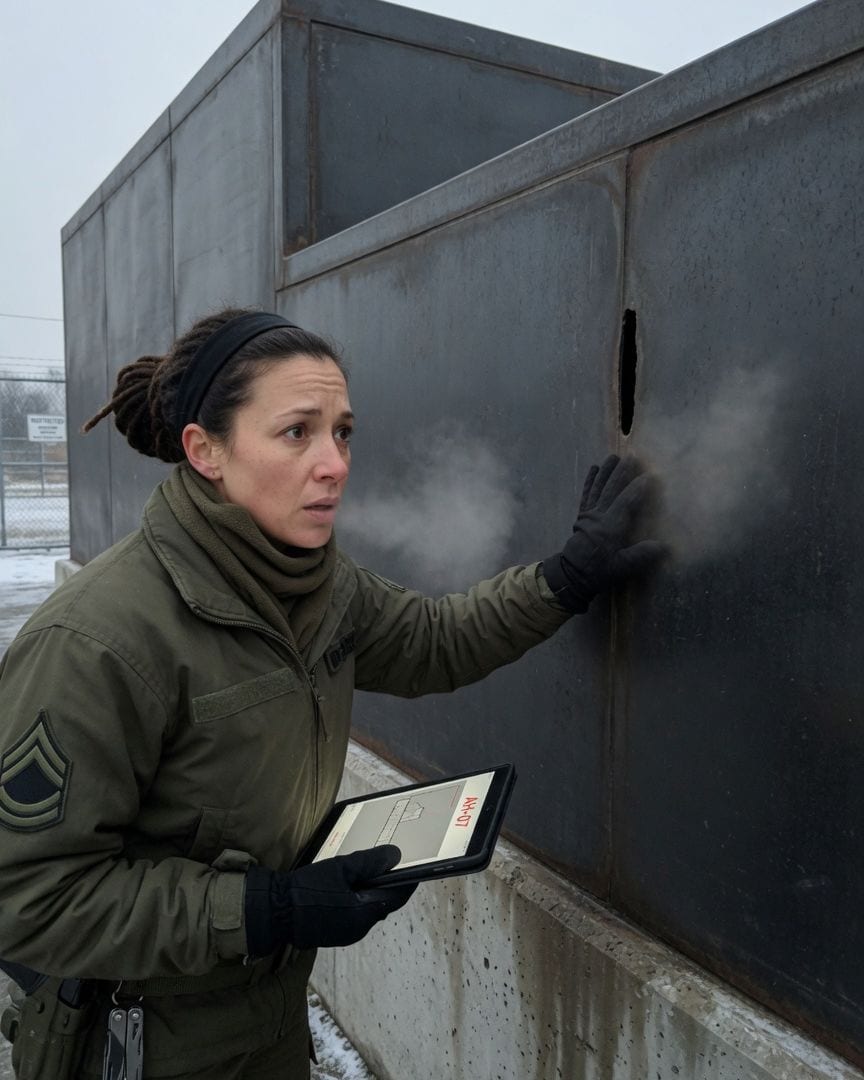
A Sergeant's audit uncovered an annex with no records. She pressed a hidden lever, and its steel wall hissed open to a sliver of impossible darkness.
Sergeant Iris Kowalczyk, a stickler for order, meticulously prepared for her transfer audit of the seventy-year-old installation. An annex behind the old post hospital defied all logic: no keyway, no maintenance record, no year built — it simply *was*. On a biting cold morning, she felt an undeniable warmth radiating from its thick, featureless steel, as if something active hummed beneath. Her fingers found a hairline seam, then a hidden, recessed pressure point that felt like a lever. When she pressed it, the steel hissed inward, revealing a sliver of impossible darkness from which a deep, electric hum and a heavy stillness pressed out. What secrets did this impossible structure conceal?
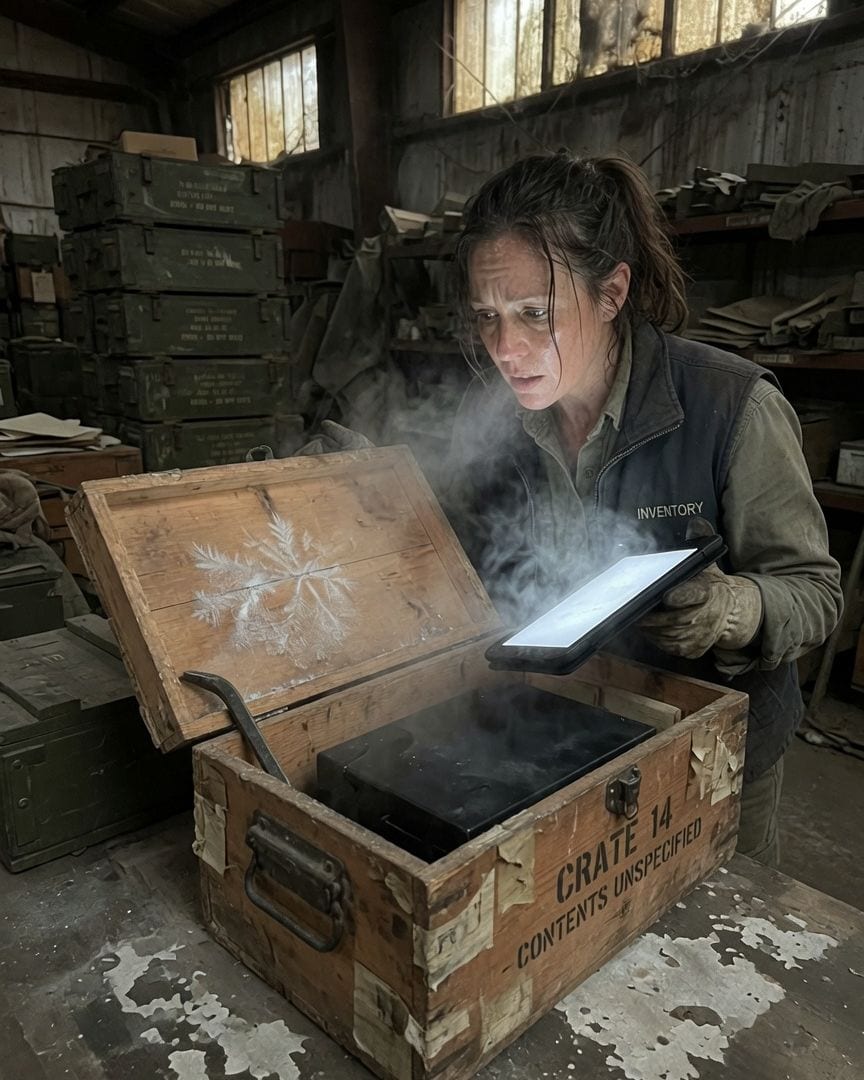
An inventory clerk found one crate in a condemned Cold War warehouse. It emanated a bone-deep cold, signed for every ninety days for sixty years.
Inventory clerk Deborah Kessling faced a race against time, cataloging the final items in a condemned military warehouse before its demolition on the twelfth. Amidst forgotten equipment, she discovered Crate 14, radiating an unnatural, bone-deep cold that had scarred the concrete beneath it for decades. Its sparse file hinted at a 'flying disc' entry from 1948, later struck through, and an unbroken chain of signatures every ninety days for sixty years. When Deborah finally forced open the ancient lid, a metallic, obsidian object pulsed with a low hum, its cold intensifying, coating the inner lid with frost. What ancient secret had the military meticulously guarded for so long?
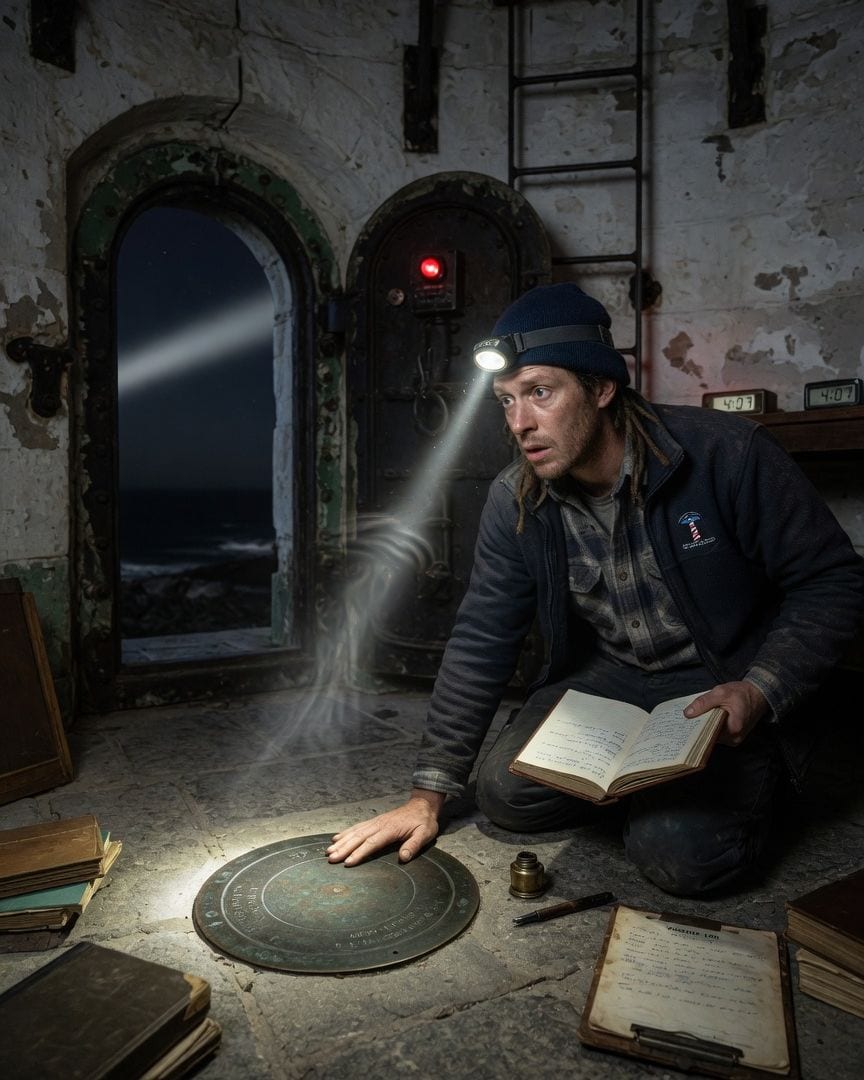
Every ninth year since 1901, my logbook records a boat through the gate at 4:05am — 'vessel through, none seen.' I was on watch tonight. Nothing passed.
As the lighthouse keeper, I log the same impossible entry every nine years, a lie I'm compelled to write. But tonight, a hidden brass disc in the floor, not on any blueprint, feels oddly warm. Hours later, it hums, and the air above it shimmers and distorts, then vanishes.
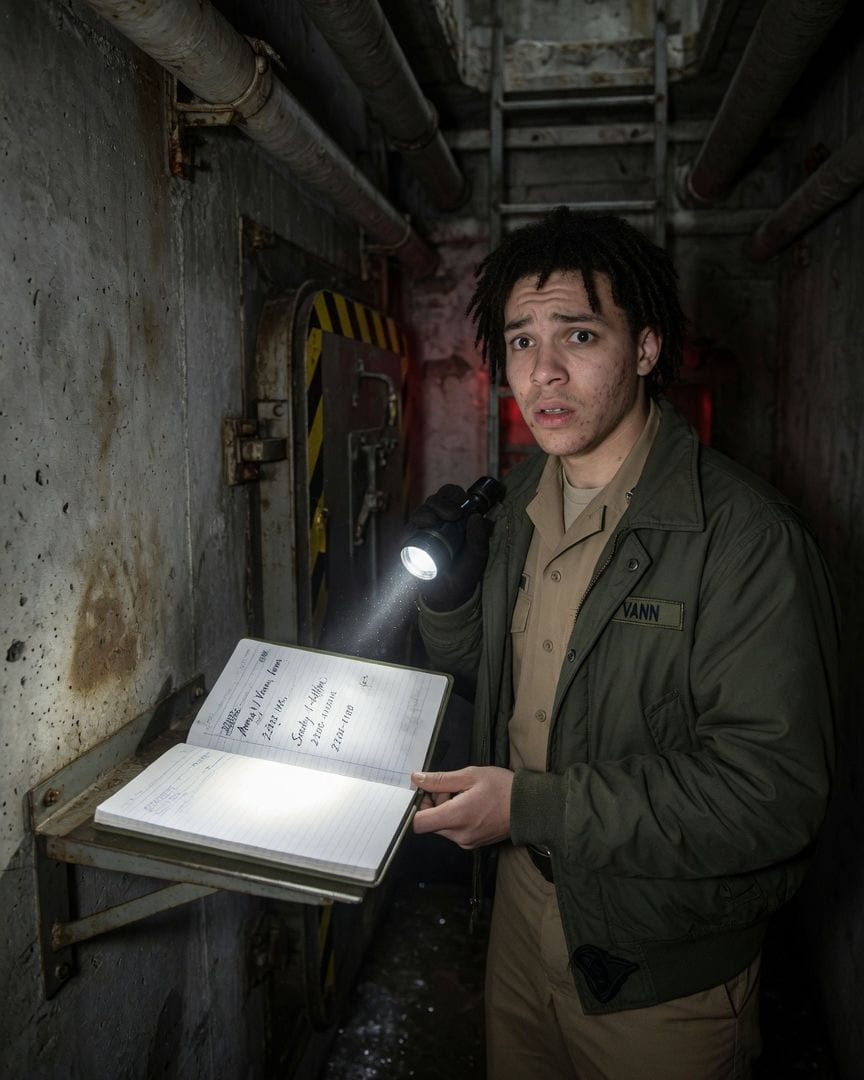
On his last patrol, Airman Vann sees a Cold War silo hatch light up from *inside*—it was welded shut a decade ago.
Airman Vincent Vann was on his last patrol across a vast, desolate Cold War missile field in the Dakotas, the cold, starless sky mirroring the emptiness of the landscape before his transfer. His routine check of eight hardened silo caps was shattered when a red fault light pulsed on Silo 4’s access panel, signaling an impossible breach from *inside* a hatch sealed for a decade. As more silos lit up, ignoring base orders, Vann found the hatch unlocked from within and descended into the dark shaft, where he discovered a pristine logbook bearing his own signature next to a chilling entry from a non-existent sentry, dated for *that very night*. Now, a steady *thump* echoed from deeper within the sealed concrete, leaving the Airman desperate for an explanation that simply wasn't there.