My new rectory home felt damp, even after everyone swore the old pond was drained in the fifties. But the water bill still charges for it. And the fish supplier logged a carp delivery, signed by the rector who died last Easter.
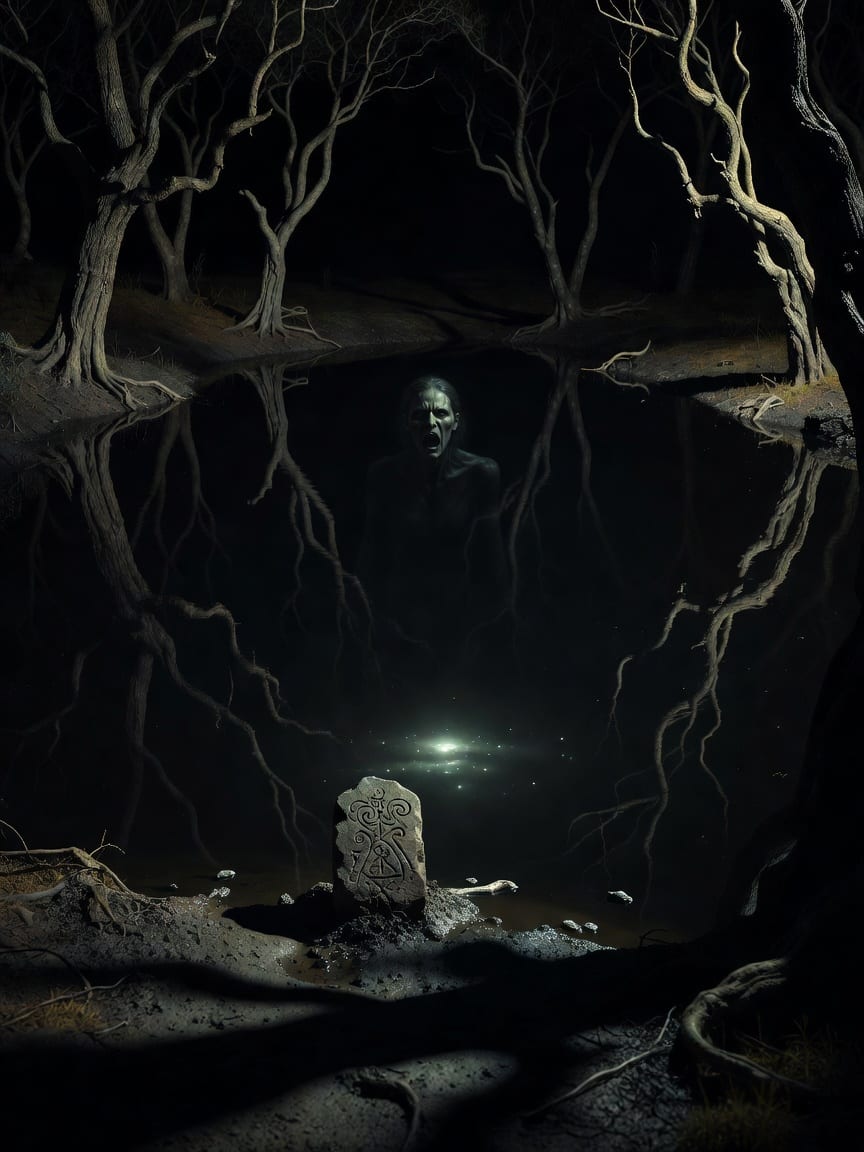
The dampness in the old rectory annex was the first thing that got under my skin.
It wasn't a leak, not exactly, but a deep, persistent cold that clung to the plaster, seeped into the furniture, and made the air taste like wet soil. I’d run the dehumidifier until it screamed, but the meter barely budged.
Every local I asked about it, from the postman with his sagging leather bag to old Mrs. Peterson at the grocer’s, offered the same smooth, practiced reassurance. “Oh, that old pond? Drained and filled in the fifties, dear.
Just the valley air.” They’d smile, a little too wide, and change the subject. It was a local quirk, I told myself. A collective memory that had smoothed itself into a convenient fiction.
But a week after moving in, while I was sorting through a stack of previous owner’s mail – old Rector Fairfax’s, bless his departed soul – I found an itemized water bill.
Among the usual charges for the house and garden, there was a separate, recurring line item, as plain as day: ‘Rectory Pond - Water Rate.’
It was a small detail, easily overlooked, but it snagged in my rational mind like a burr. The kind of burr you just had to pull out.
The water bill rattled me more than it should have. A ghost charge for a ghost pond. I decided to investigate the parish records, telling myself it was a mundane task to explain away a clerical anomaly.
The parish office was dusty and quiet, smelling of old paper and stale coffee. Reginald Ashford, the parish water clerk, was a thin man with wispy grey hair combed across his scalp and perpetually ink-stained fingers.
He initially echoed the town’s mantra about the drained pond, his voice a soft drone. "Oh, that old thing? Gone decades ago. Just a bit of damp from the valley, I expect."
He even offered me a cup of tea, his smile thin and professional. But when I pointed to the 'Rectory Pond - Water Rate' entry in the ledger, tapping the line with my finger, his smile faltered.
His eyes, small and grey, darted away, caught between the page and my face. "Ah, yes. Legacy billing," he mumbled, fussing with a stack of forms. "Old systems, you know. Takes a while to update everything."
He wouldn't meet my gaze, his explanation flimsy as wet paper. Later that week, still buzzing with a low-level hum of suspicion, I visited Deborah Doyle's fishmonger stall.
I’d spotted her bright sign – ‘Doyle’s Fresh Catch’ – on the way into town, hoping to find a local source for fresh trout.
Deborah was a robust woman, her hands scaled from years of gutting fish, with a kind but watchful face. We chatted amiably, the cold bite of the fish market air a pleasant contrast to the rectory’s damp.
When I mentioned my new home, Deborah nodded, her expression softening. "Ah, the old rectory. Lovely spot, though a bit isolated. We used to do a regular delivery there. Live carp, mostly. Very particular about them, the rectors were."
My stomach dropped, a cold knot tightening. Carp? Live carp? For a drained pond? I tried to keep my voice even. "Oh? Do you still deliver?"
Deborah paused, a strange, almost imperceptible shift in her demeanor, like a shutter falling across a window. "Not anymore, dear," she said, her voice softer, almost cautious. "Not since… well, not for a while." I pressed, unable to stop myself.
"When was the last one? I'm just curious about the history of the place." Deborah hesitated, then sighed, her shoulders slumping slightly. She pulled out a thick, leather-bound logbook from beneath the counter, its pages worn soft.
"Let me see…" Her finger, thick and calloused, ran down a page filled with faded ink. "Ah, here it is. Last spring. Signed for by Rector Fairfax." She tapped the entry with her fingernail.
I leaned closer, my breath catching as I saw the date, just weeks before Elliot Fairfax had died that Easter. The name, the date, the carp. It all clicked into place, a pattern too precise to be coincidence.
The dates were too close, too wrong. Fairfax, carp, his death. A cold thread started to unravel in my chest.
Driven by an uneasy premonition, I spent the next few days meticulously mapping the old property deeds against the rectory grounds. The deeds were convoluted, ancient things, describing plots that no longer seemed to exist.
But there was a section of overgrown woodland behind the annex, marked on no recent survey, that always felt colder, darker than the rest of the property.
The trees there were gnarled, twisted things, their branches thick with ivy, blocking out the sun. One afternoon, pushing through a dense thicket of blackberry bushes and ancient hawthorn, I stumbled, my foot catching on something unseen.
My hand landed on something cold and metallic, half-buried in the leaf litter: a rusted iron latch. Prying it open, my fingers slick with mud, I found a narrow, forgotten gate in a crumbling stone wall.
It had been swallowed whole by the overgrowth, lost for decades. Beyond it, a faint, muddy path snaked downwards, barely discernible beneath a fresh carpet of fallen leaves.
The air grew heavy, thick with the scent of damp earth and something else, something ancient and stagnant, like rot and cold stone.
I followed the path, my breath coming in ragged gasps, my heart thudding a frantic rhythm against my ribs. Each step was heavier than the last, the silence deepening around me until it was almost painful.
The trees pressed in, their bare branches like grasping fingers.
Then the last curtain of overgrown ivy parted, and I saw it: a stretch of dark, unnaturally still water, reflecting the grey sky like a shattered mirror, ringed by ancient, gnarled trees – the pond, undeniably real and far from drained.
The pond was immense, its surface like polished obsidian, absorbing all light, reflecting nothing but the oppressive grey sky.
It wasn't some quaint garden feature; it was a gaping maw, far larger than anything I'd anticipated, and it felt profoundly, unsettlingly old.
A chill radiated from it, a deeper cold than the usual valley damp, raising goosebumps on my arms. I circled its perimeter, the ground soft and spongy underfoot, choked with moss and trailing weeds.
Here and there, half-submerged in the mud, I found small, crude stone markers. They were rough-hewn, barely visible, but intricately carved with symbols I didn't recognize – swirling lines, jagged angles, circles within squares.
They felt less like forgotten decoration and more like deliberate warnings, sunk into the earth to contain something. The air over the water was utterly still, heavy and thick, like it was pressing down on my lungs.
I tried to talk to Reginald Ashford again, casually mentioning my 'discovery' of the old pond. I even showed him a blurred photo I’d taken on my phone. His face, usually placid, tightened, pulling at the corners of his mouth.
He leaned back in his chair, away from the phone, and reiterated the 'drained in the fifties' story, his voice unnaturally smooth, a practiced monotone. He even managed a tight, almost pitying smile. "A trick of the light, perhaps, dear?
Or an old boggy patch that collects water. Happens sometimes." He avoided my gaze, focused intently on a stack of invoices. It was a refusal, quiet and firm.
Deborah Doyle, the fish supplier, simply offered a tight-lipped smile when I brought up the carp deliveries to a now-found pond.
I caught her just as she was wiping down her counter, the scent of fresh fish strong in the air.
"Some things are best not disturbed, dear," Deborah said, her voice dropping to a near whisper, almost swallowed by the clatter of a passing delivery truck.
Her eyes, usually kind, held a depth of knowledge, an ancient weariness that chilled me to the bone. "This valley… it has its ways."
The town was a wall of quiet agreement, their polite smiles masking a collective, unshakeable resolve. Their evasions were not confusion; they were deliberate. They weren’t protecting a secret out of malice, but out of something else, something deeper.
Every casual conversation felt like walking through treacle, every attempt to pierce the veil met with a blank, unyielding politeness.
I felt a growing sense of isolation, the newcomer who had seen behind the curtain, and the curtain had closed in around me, heavier and colder than the rectory's damp.
The air in my own home felt thicker, the shadows longer, as if the silence of the town had seeped through the walls.
The isolation quickly morphed into a profound sense of being watched. It started subtly, almost imperceptibly. I’d return home to find a window I’d sworn I’d latched now slightly ajar, the frame groaning faintly as if having just been pushed.
Or the hidden gate to the pond, which I always secured with a heavy chain and padlock after my trips, left unlatched, swinging open in the wind.
There were no signs of forced entry, no theft, nothing taken, just these unsettling shifts, these small, deliberate disruptions that left my heart hammering.
I’d check the locks three, four times before bed, the click of the bolts echoing in the sudden silence of the house, a silence that felt less like emptiness and more like a listening presence.
One evening, as dusk settled, painting the valley in bruised purples and greys, I was tending my small, struggling garden plot, trying to dig out some stubborn weeds.
A shadow fell over me, and I looked up to see an elderly woman, Constance Pennington, approaching my fence.
Constance was known for her quiet, almost ethereal presence, a long-time resident whose eyes seemed to hold the weight of generations, seeing more than she ever let on.
She wore a faded apron over a simple dress, her white hair pulled back in a severe bun. She stopped at the fence, not smiling, but not unkindly either.
"You’ve found the old pond, haven’t you, dear?" Constance’s voice was soft, devoid of surprise, almost a statement of fact that hung in the still twilight air.
I froze, the trowel digging into the earth, a cold dread coiling in my gut. My hands were muddy, my heart suddenly racing. "Yes," I managed, my voice barely a whisper.
Constance nodded slowly, her gaze calm and steady. "Some things are best left undisturbed in this valley, Chloe. There are old agreements here. Very old ones."
Her eyes, deep and knowing, held mine, and I felt a profound, unsettling knowledge emanating from her. It wasn't just old age; it was something else, something ancient. "The parish has its ways of keeping things… quiet. For everyone’s good."
I felt a shiver trace down my spine, cold and sharp. It wasn't a threat, not with her serene, almost sorrowful expression.
It was a warning, delivered with the absolute, unshakeable certainty of someone who had seen it all before, lived through it, and knew exactly what I was stepping into. The air around her felt heavy, charged with unspoken history.
The darkness gathering in the valley outside my fence seemed to deepen, like a hand slowly closing around me.
The encounter with Constance spurred me to a frantic, late-night search through the parish archives. Reginald Ashford had given me a key, dismissing my need for 'historical context' with a weary wave of his hand.
I focused on pre-fifties documents, anything that might predate the 'drained pond' fiction. The archives were a labyrinth of musty shelves, choked with records. Hours bled into each other, the fluorescent light buzzing overhead, making the shadows dance.
Tucked away in a dusty box labeled 'Rectory Property Deeds - Ancient,' far beneath bundles of forgotten wills and baptisms, I found a series of brittle parchments.
They weren’t standard deeds but something far older, far stranger: 'Articles of Stewardship for the Great Waters.'
Dated back centuries, some written in crabbed Latin, others in archaic English, they detailed a rotating responsibility, held by the rector or a designated family, to maintain a 'Tribute of Life' to the pond.
The purpose was chillingly clear: to keep the 'Sleeper' dormant, to ensure 'the Valley’s peace.' The tribute was described as 'living sustenance, renewed with each turning of the year, until the Steward’s own turn arrives.'
My hands trembled as I saw the names listed: a succession of rectors, prominent families, followed by cryptic, unsettling dates. Many of those dates matched periods of local hardship or unexplained disappearances I'd read about in other, less formal records.
The 'drained pond' story was a collective, centuries-old deception, a communal agreement to protect the Valley from something ancient and demanding. The water bill, the carp deliveries… they weren't just anomalies. They were records of ongoing offerings, sacrifices.
Elliot Fairfax’s death at Easter wasn't just a natural end; it was the 'Steward’s turn,' the final, grim act of his service.
The pond was not a natural feature; it was a cage, and the town was its keeper, bound by fear and ancient ritual. The realization hit me like a physical blow, sucking the air from my lungs.
The quiet agreements, the smooth smiles, the averted eyes – it wasn't just secrecy. It was survival.
The truth of the 'Stewardship' made every evasive glance, every smooth lie, every quiet warning from the townspeople click into a horrifying, seamless pattern.
They weren't just protecting a secret; they were protecting themselves, perpetuating a cycle that had run for centuries. The cold logic of it was more terrifying than any monster.
My gaze, drawn by an awful magnetism, fell to the very end of the latest 'Articles of Stewardship.'
The last entry, faded but still legible, was Elliot Fairfax’s final, almost illegible signature, followed by the date of his death: Easter, Year X.
Beneath it, penned in a surprisingly recent hand, was a fresh entry. It wasn't a surname from the traditional local families that populated the earlier pages. It was a formal, yet unsettlingly familiar, address: 'The Resident of the Rectory Annex.'
And below that, in a faint, almost invisible script that seemed to have been added later, a hand I didn't recognize, was my own surname.
Maddox.
My finger traced the name in the ancient, faded script: 'Maddox.'
It's scrawled beneath Elliot Fairfax's final entry, a faint, almost invisible addition, making my own surname the next in a long, chilling line of caretakers, each entry ending with a cryptic, ominous date.
I confronted Constance Pennington again, this time not with questions, but with the Articles of Stewardship clutched in my hand, their brittle edges threatening to tear. I found her in her garden, deadheading roses, her movements slow and deliberate.
She didn't flinch when I unfolded the parchment, showing her my name. Her gaze remained serene, unburdened, as if she had been waiting for this exact moment.
"The Valley has always had its price, Chloe," she said, her voice a soft murmur, barely disturbing the quiet hum of the bees around us. "The Sleeper beneath the Great Waters.
It keeps us safe, keeps the land fertile, but it demands its due." She spoke with the calm detachment of someone recounting a weather report.
She explained that the 'draining' was a story created in the fifties, when the old families, weary of the burden, tried to break the cycle. The Sleeper had stirred, and the Valley had suffered.
Crops failed, animals vanished, a creeping malaise settled over everything. Old Rector Fairfax had taken up the Stewardship, as his family had before him, to restore the peace.
His death was the sign, the end of his service, the prompt for a new Steward. "You found the pond, Chloe. You saw the records. The Sleeper has chosen its new Steward."
Constance spoke of the carp as not just food, but a symbolic exchange, a binding agreement, a tiny sliver of life to keep a greater appetite sated. The town knew; they had always known.
Their silence, their smooth stories, were part of the ancient compact, a desperate collective act of survival to ensure the peace of the valley. The dread wasn't in a monster, but in the cold, rational calculus of a community.
The entity wasn't evil; it simply was, and it needed to be kept. And now, so did I. My own name on that parchment, a centuries-old contract, sealed by generations of fear.
I refused the Stewardship. I couldn't perpetuate the cycle, couldn't feed the Sleeper, couldn't be complicit in the town's quiet horror, couldn't be the next name on that damned ledger.
Instead, heart thudding, I took the Articles of Stewardship, along with copies of the water ledgers and fish supplier logs—every scrap of paper I could find—and presented them to the county authorities, then to a regional newspaper.
The exposé was a bombshell. The parish, 'The Town That Agrees,' fractured under the scrutiny. Reporters swarmed the rectory, their cameras flashing, their questions sharp. The pond, now a public spectacle, was investigated.
And as the news broke, as the first official damming efforts began to truly drain the Great Waters, the Valley changed. A low, resonant hum, imperceptible to most, vibrated through the ground, a deep thrum I felt in my bones.
The pond's surface, once placid, began to ripple with an unnatural intensity, not from wind, but from some unseen disturbance beneath. The carp delivery for that spring, which would have been signed by me, was never made.
I watched from the safety of my annex window as heavy machinery clawed at the earth.
As the last of the water was pumped away, revealing a vast, muddy basin, the strange stone markers at its edge began to crumble to dust, dissolving into the ancient mud.
The townspeople, their faces a mixture of fear and raw resentment, watched me from their doorways, their silent agreement broken, their compact with the Sleeper dissolved.
The Sleeper was exposed, its specific influence on this pond, this valley, made to stop.
But as the last of the water receded, revealing nothing but ancient mud, a faint, almost imperceptible tremor ran through the ground, not just in the Valley, but seemingly beyond, a low thrum that hinted at a deeper, wider network.
The rectory pond was finally and truly drained, its basin now a barren scar on the landscape, a monument to a broken silence.
The county installed monitoring stations, dismissing the 'Sleeper' as local folklore, the 'Stewardship' as an elaborate, deluded cult orchestrated by generations of rectors and eccentric locals. I remained in the annex, an outcast in my own home, avoided by everyone.
The town, once so united in its quiet deception, was now a place of whispered accusations and lingering fear, the quiet broken, but not mended. Reginald Ashford retired early, his office emptied overnight.
Deborah Doyle closed her fishmonger stall, the 'For Sale' sign hanging crookedly in the window. Constance Pennington simply vanished, leaving her cottage empty, a single, faded apron hanging on a hook by the back door.
The dampness in my home, however, finally receded, replaced by a dry, unnerving stillness that felt like holding my breath.
I live with the knowledge, the weight of the broken agreement. The silence in the valley now feels less like peace, and more like a breath held, waiting for the next ripple to begin.
If this one got to you
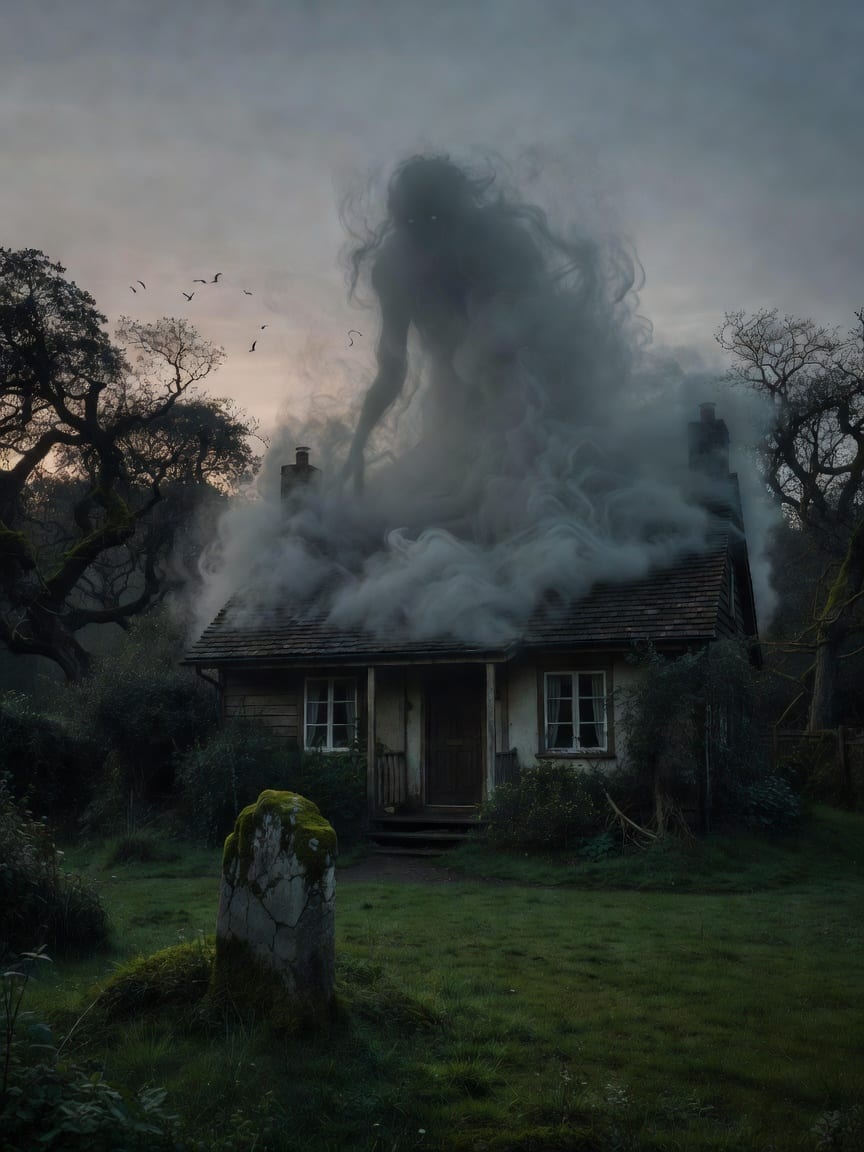
My cottage is now outside the parish, says the vicar. I moved one boundary stone into my ditch, and now I'm outside the line.
I loved my new cottage, with its sprawling garden and ancient oak. But after I moved an old, mossy stone at the edge of my property, Vicar Vance arrived with grave news: my cottage was now outside the parish line, and he could no longer keep me 'on the right side.'
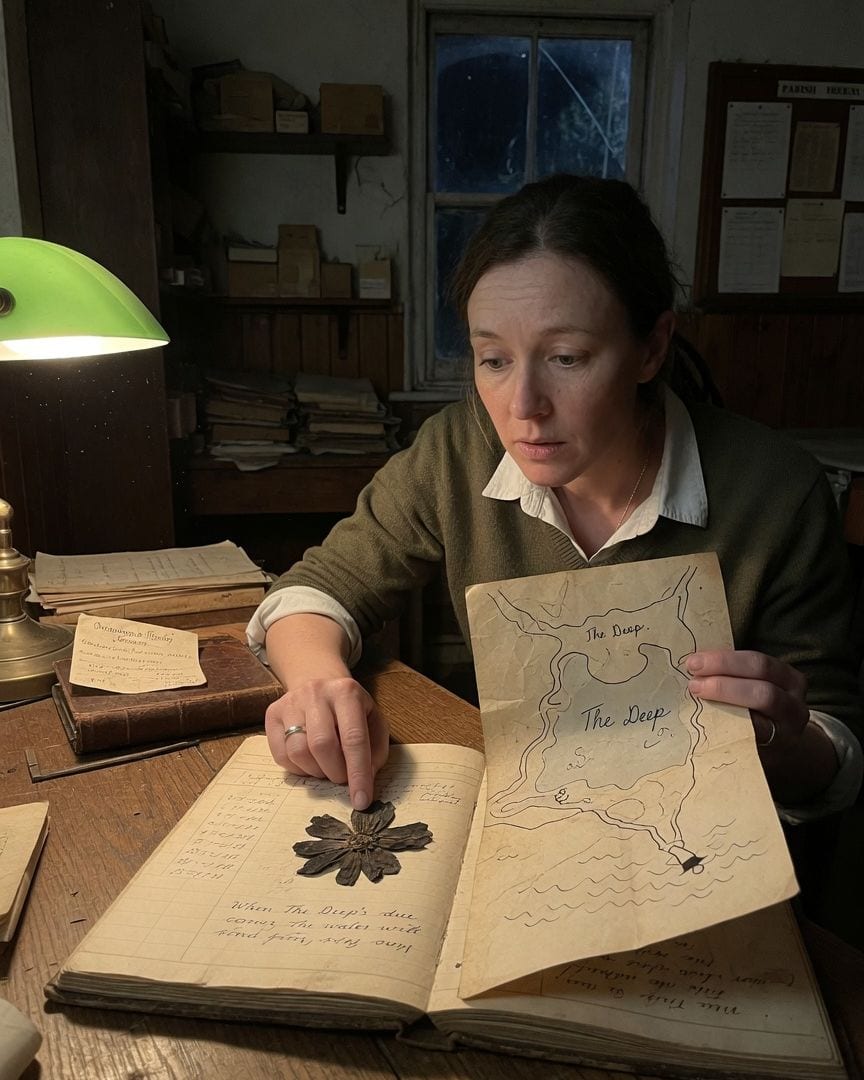
My new town's reservoir opened in '61. Its burial register lists forty-one drownings, all dated before the water was there.
I moved to Hensley for its quiet, where the local reservoir, built in 1961, was a point of pride. But while researching the town's history, I discovered an old burial register listing 'Drownings in Hensley Reservoir.' To my shock, all 41 names were dated decades before the reservoir even existed.
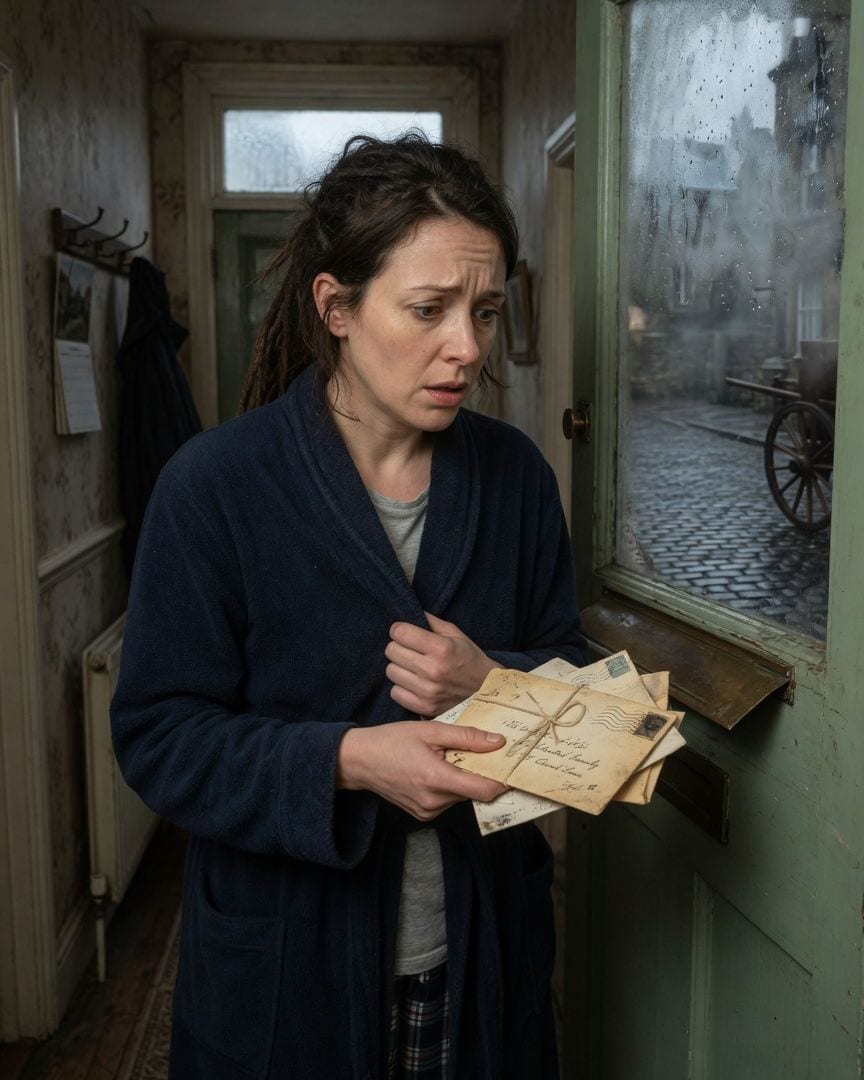
Seventy years ago, a hidden journal recorded my door opening to the wrong street and receiving Lockwood post.
I'd only recently moved into my inherited house, a quiet place on the edge of town. One grey morning, a distinct clatter from the front door's post flap caught my attention. Reaching down, I expected my gravel path, but instead, the flap showed a dark, cobbled street that wasn't mine. A bundle of warm, old letters, addressed to 'The Lockwood Family,' slid through, before the vision flickered and was gone.
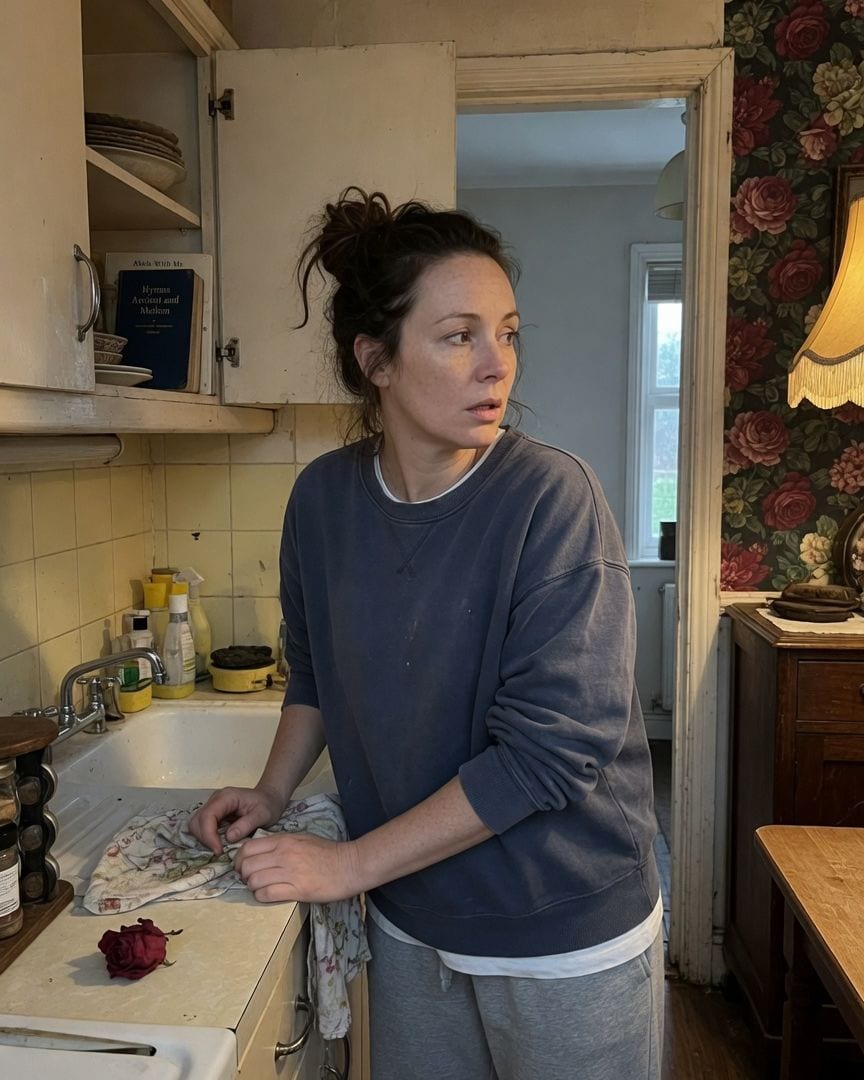
My kitchen taps run themselves on Sundays while a woman hums 'Abide With Me.' I live alone.
I moved into this quiet 1928 house for a fresh start, living alone. But for three months now, every Sunday morning, a low, tuneless hum and the distinct sound of running water drift from my kitchen sink. A plumber found no explanation.
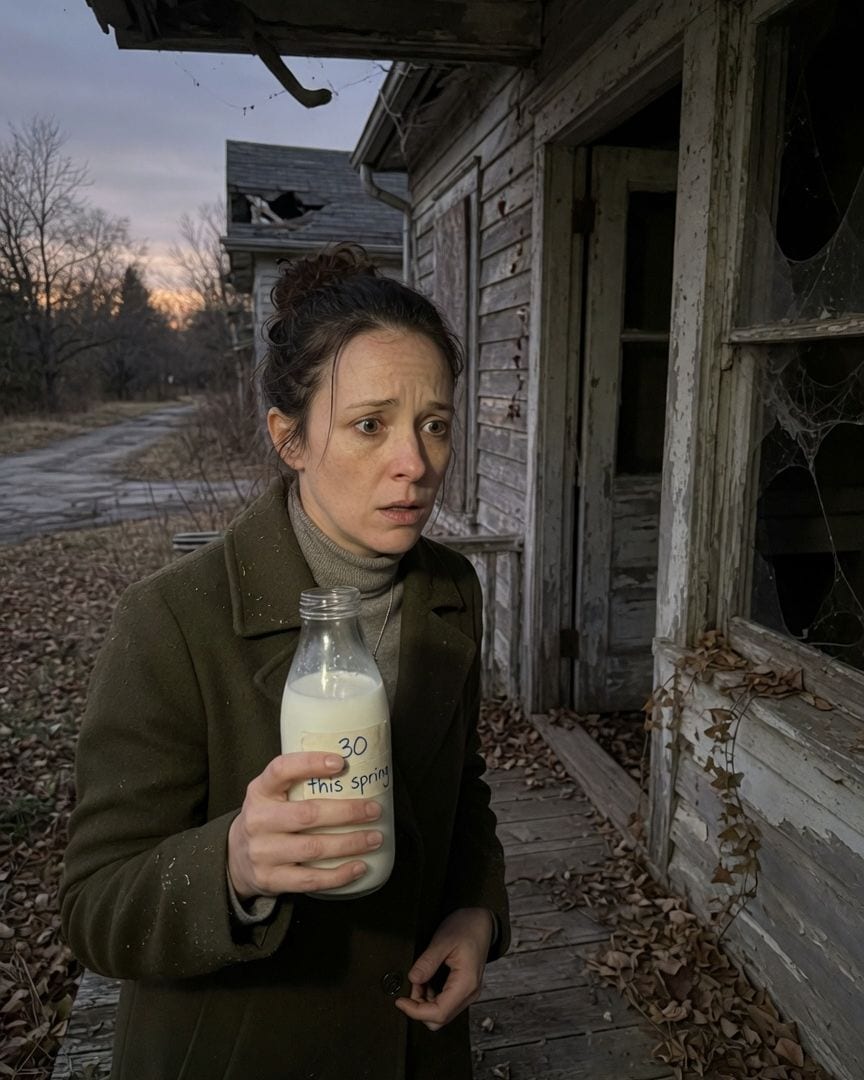
My grandfather's old milk ledger shows Account 30 reissued to the same house every ten years since 1930. Different names, same number. The last entry, unpaid, is dated this spring.
Sifting through my grandfather Howard's old things, I found his milk ledger. One account for a house long abandoned on Foldyard Lane showed a strange pattern of recurring 'stopped taking milk, gone' entries, ending with 'unpaid' this spring. Driving out to the decades-old ruin, I found a pristine, sealed milk bottle, dated 'this spring,' on its crumbling porch.
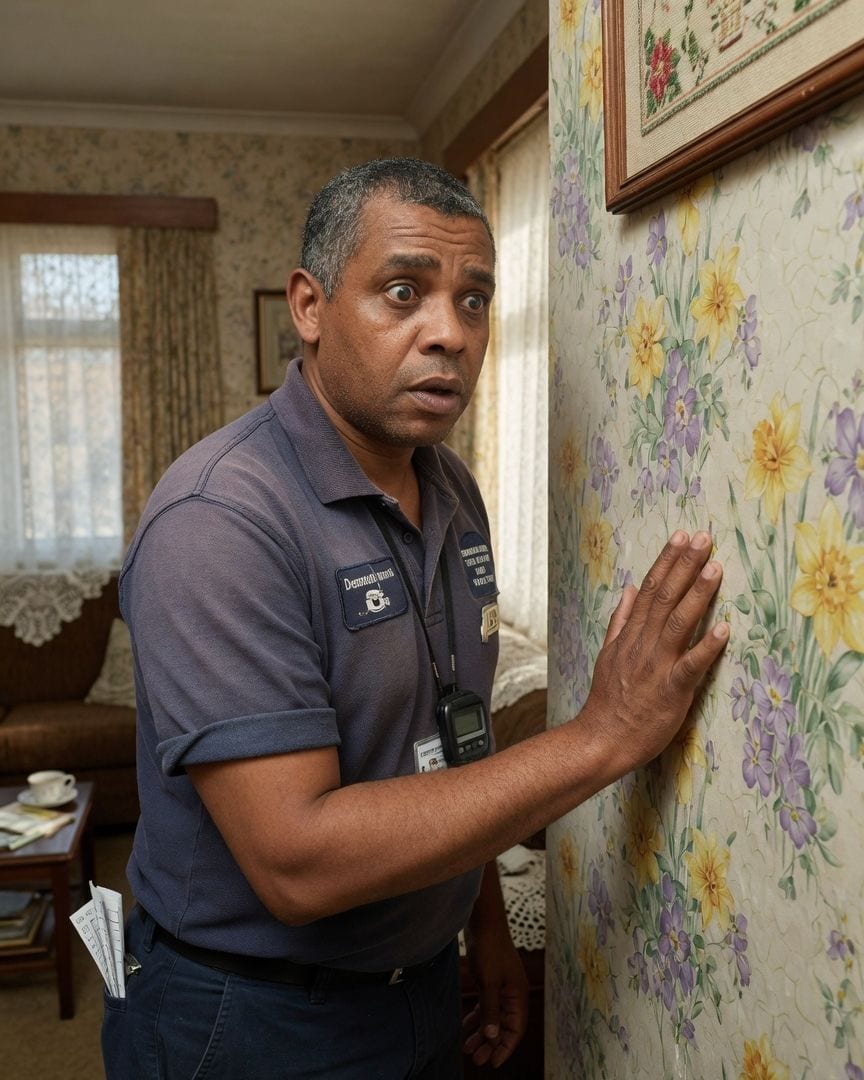
I read the water meters on this street, and this month number 30 grew a second one in pavement that was solid last month — its pipe runs back under a front door I cannot find.
I'm Desmond Drummond, a city water meter reader, used to the predictable rhythm of my fifteen-year route. But this month, Mrs. Crane's house on Elm Street showed a second meter reading. It led to a new meter pointed at a blank brick wall, and later, to a hidden door behind her living room wallpaper where no door should exist.