A researcher's last minutes with a 1944 manifest revealed a hidden metal tag. It hummed, impossibly cold to the touch.
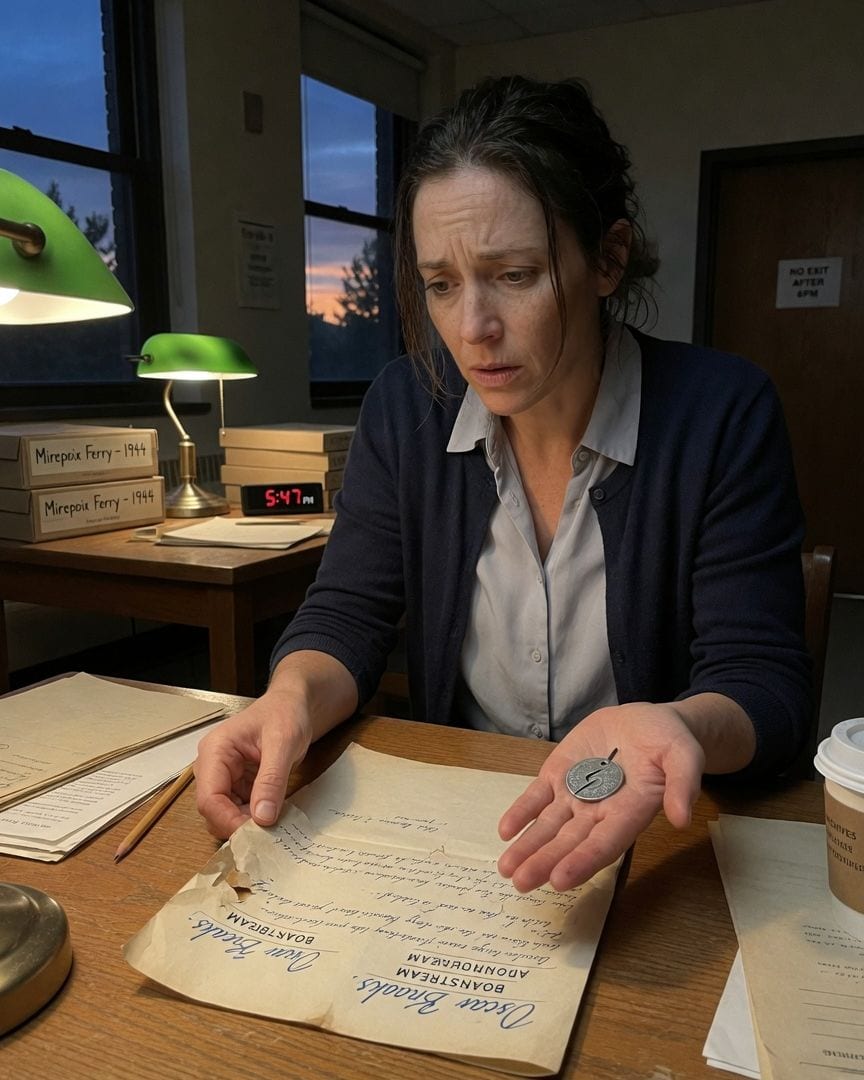
Delphine Arceneaux adjusted her lamp in the hushed reading room of Building 7, the last light of the day fading beyond the high windows. The digital clock on her table read 5:47 PM. She had until six.
Before her lay the Mirepoix Ferry manifest, sealed since 1944. Forty-one passengers had boarded a vessel that never reached its destination.
Delphine had chased a phantom traitor for nine years, convinced the truth of its disappearance lay in these brittle pages. She meticulously scanned the list, forty-one names, each with a corresponding ticket number.
Her gaze moved down the last column, confirming the sequence. Then, below the final line, almost an afterthought, was a forty-second entry. It stood apart, incongruous. No ticket number.
Just a name, 'Oscar Brooks,' and the unnerving notation: BOARDED AT MIDSTREAM.
The ink was a different shade, a darker, almost metallic blue, and the handwriting was distinct, a sharp, elegant cursive that didn't match any other hand in the document.
This wasn't a clerical error; it was too deliberate, too precise, too out of place on a record that should have been sealed and undisturbed for decades.
Delphine frowned, her rational mind grappling with the impossible. 'Boarded at midstream?' A ferry, a boat, couldn't pick up a passenger in the middle of open water.
Not without a tender, not without a stop, neither of which was mentioned in the ferry’s log or any accompanying documentation. She cross-referenced the name 'Oscar Brooks' with other Mirepoix-related files in the box: crew manifests, maintenance logs, cargo declarations.
Nothing. It was as if this individual existed only in that single, anomalous line, a ghost in the ledger.
She even checked the dates for other passenger lists from that week, searching for a last-minute transfer, but found no record of a Brooks.
Her fingers, calloused from years of turning pages, traced the bottom edge of the manifest, feeling for any further hidden details. She felt a faint, almost imperceptible bump beneath the aged paper, a small ridge against her fingertip.
Curious, she carefully unfolded a small, stiff corner of the manifest that had been glued down, not quite flush with the rest of the page. It revealed a tiny, thin slit in the paper itself.
Tucked inside, almost invisible against the creamy yellow of the aged document, was a small, roughly circular metal tag, no larger than a dime.
It was impossibly cold to the touch, as if it had just been pulled from ice, despite the warm archive air that usually brought everything to room temperature.
On its surface, etched with startling precision, was a symbol she didn't recognize: three concentric circles, bisected by a jagged, lightning-like line. The tag felt utterly alien, its material unlike any metal she'd ever encountered in archival storage.
It hummed faintly against her fingertips, a barely audible vibration that seemed to resonate deep within her own bones.
Delphine's breath hitched. This was no prank. This was no misfile, no forgotten library tag. This was an object that defied explanation, a physical impossibility tucked into a document from 1944.
The coldness radiating from it was a palpable presence in the quiet room. She held the small, impossibly cold metal tag in her palm, its strange symbol pressing into her skin.
Her gaze flicked from the tag to the manifest, then to the closed door of the archive, the silence suddenly heavy and vast.
The next morning, Delphine arrived early, the cold tag still in her pocket, its chill a constant, unsettling reminder.
She spent hours in the archive's digital catalog, searching for the symbol, for the phrase 'BOARDED AT MIDSTREAM,' for the distinctive metallic-blue ink. Nothing on the symbol.
Her supervisor, Maxwell Drummond, a man whose patience was as thin as the archival tissue paper, eyed her with mild suspicion as he passed her desk. "Still chasing ghosts, Arceneaux?" he grunted, before disappearing into his office.
Delphine ignored him, her focus fixed on the glowing screen. Her search for 'BOARDED AT MIDSTREAM' yielded nothing directly related to the Mirepoix, but a related term, 'MIDSTREAM INTERCEPT,' appeared in a handful of highly redacted documents from the 1960s.
These were linked to unexplained disappearances of commercial aircraft over the North Atlantic. One such document, a flight manifest for a vanished cargo plane, Flight 709, had a handwritten notation.
It was almost identical to the Mirepoix entry, right down to the specific phrase: 'Flight 709, Crew of 5. One additional, BOARDED AT MIDSTREAM. Signed, M. FAIRFAX.' Fairfax. The name jolted Delphine. Robert Fairfax was the Mirepoix Ferry's captain.
The handwriting, too, was the same elegant, distinctive cursive she had seen on Oscar Brooks' entry. A chill snaked down Delphine’s spine, colder than the tag in her pocket. This wasn't a one-off anomaly.
This was a pattern, stretched across decades, across different modes of transport, all signed by the same hand, all involving an impossible mid-voyage boarding. She pulled more files, a dizzying array of official inquiries into 'anomalous transit events.'
Each one, if she looked closely enough, bore the faint, metallic-blue signature of 'M. Fairfax.' The official reports dismissed them as inexplicable, but the hidden annotations told a different story.
As Delphine delved deeper, the atmosphere in Building 7 shifted around her. Drummond's casual remarks grew sharper. "You're requesting an unusual volume of 'Category X' materials, Arceneaux. These are sensitive, declassified cases, not fodder for a hobby project."
He suggested, not subtly, that her focus was 'unproductive' and that she might be better suited to a new, less 'intensive' assignment, perhaps in document cataloging, a role she'd left years ago.
Delphine pushed back, citing the coherence of the 'Mirepoix anomalies' and the clear pattern emerging from the 'Midstream Intercepts.' She argued for the necessity of her research, pointing to the similar handwriting.
Drummond simply stared at her, unblinking, before turning back to his desk. Later that day, she found a stack of files she'd been working on subtly rearranged, a folder she'd closed and clipped now slightly ajar.
She dismissed it as an overly meticulous janitorial staff, but a prickle of unease remained, a sense of having crossed an invisible line.
One evening, as she worked late, the main lights in her section of the archive flickered, then died, plunging her into a sudden, deep darkness.
She fumbled for her phone's flashlight, her heart pounding against her ribs, the beam cutting through the oppressive shadows.
When the emergency lights finally clicked on, a dull, orange glow, she felt a distinct, cold draft, as if a door had just been opened and closed nearby, though she knew all the reading room doors were sealed after hours.
She was alone, but she no longer felt unobserved. The archive, once a sanctuary of quiet knowledge, now felt like a vast, silent eye, its gaze fixed solely on her.
Delphine cornered Drummond the next morning, the metal tag heavy in her pocket, its chill a constant, almost invasive presence against her thigh.
She laid out her findings on his desk: the Mirepoix manifest, the Flight 709 report, the identical handwriting, the 'MIDSTREAM INTERCEPT' designation, the undeniable pattern of disappearances across decades.
Drummond listened, his face impassive, his fingers drumming a slow rhythm on his desk, each tap echoing in the quiet office. "You've been thorough, Arceneaux," he said, his voice devoid of his usual dismissiveness. It was flat, clinical, chillingly calm.
"More thorough than anyone in a long time." He leaned back, his gaze fixed on a distant point beyond the wall, as if looking through the very structure of the building. "Midstream isn't a clerical error. It's… a phenomenon.
One we've been documenting, and trying to understand, since long before you or I were born." He opened a locked drawer in his desk, the click unnaturally loud in the silence.
He pulled out a thin, grey file, heavily redacted with thick black lines. "This is 'Project Charybdis.' The official designation for what you're calling the 'Mirepoix anomalies.' It confirms the 'Midstream Intercepts' are real. It confirms the disappearances are real.
And it confirms the 'Midstream' designation refers to the point of interception, not a location on any map, not a physical place at all." He pushed the file across the desk.
Delphine opened it, her hands trembling slightly, the cold tag now an uncomfortable weight. The document, dated 1958, explicitly detailed 'non-terrestrial acquisition events' during transit, and referred to 'facilitators' who 'marked' targets.
She remembered the cold tag, its impossible symbol, the distinctive handwriting of M. Fairfax, captain of both a lost ferry and a lost plane.
It all clicked into place with a horrifying, sickening finality: the ferry, the plane, the countless impossible boarding points.
The records weren't just about missing people; they were a ledger of something that took them, something that existed in the liminal spaces between destinations, using the archive as its own grim record.
Drummond watched her, his expression grim, devoid of pity. "It's not a ghost, Delphine. It's a machine. And the archive is its memory."
Delphine absorbed the horrific implications, her mind reeling from the sheer scale of the deception, the silent, pervasive cataloging of human lives.
The government hadn't just covered it up; they had been actively documenting it, almost cataloging the disappearances, playing its part in the machine's memory.
She looked back at the 'Project Charybdis' file, scanning the heavily redacted text for more clues, for an escape, for a loophole. Her eyes caught a small, unredacted section near the bottom, barely a few lines, labeled 'Active Monitoring Subjects.'
Her blood ran cold, a deeper, more profound chill than the metal tag. There, appended to a list of other names, was her own: 'Arceneaux, Delphine.'
And next to it, a recent date, just last week, followed by the chilling notation: 'OBSERVED, READING ROOM, BLDG 7.' The entry was written in that same elegant, distinctive cursive, the metallic-blue ink standing out starkly against the faded type.
It was the same handwriting that had added Oscar Brooks to the Mirepoix manifest, that had noted the extra passenger on Flight 709. It was a file still being written, and she was in it.
Delphine stared at the 'Active Monitoring Subjects' list, her own name, 'Arceneaux, Delphine,' staring back at her, appended with a date from just last week, written in that same impossible ink.
The archive lights hummed, suddenly too loud, too close, and the air around her felt impossibly cold.
The realization slammed into Delphine with the force of a physical blow.
Drummond hadn't just been her supervisor; he was an agent of the 'machine,' a part of the system that monitored those who got too close, a facilitator in this cold, bureaucratic horror.
His warnings, his attempts to reassign her, weren't to protect her, but to manage the 'observation protocol,' to keep her from becoming a 'subject' too soon, or too messily.
The pattern snapped into place with horrifying clarity: the Mirepoix Ferry, Flight 709, the countless other disappearances – they weren't random acts of fate or human error. They were precise extractions, 'filings' conducted by the 'Midstream' entity.
The distinctive handwriting was its signature, a marking of those designated for interception, whether historical victims or current 'observers.'
The archive, Building 7, was more than a repository of records; it was the active ledger, a physical manifestation of the 'Midstream' itself, a place where the living were cataloged for their eventual 'boarding.'
The cold metal tag, the faint hum she had felt, the flickering lights – these were not anomalies, but the 'machine' asserting its presence, its claim. She, Delphine Arceneaux, had been marked the moment she deciphered the 42nd name.
Her years of diligent research, her rational pursuit of truth, had made her visible to an entity that existed in the gaps of reality, an entity that saw the archive as its hunting ground, and the records as its menu.
She wasn't just investigating a buried record; she was becoming one.
Panic, cold and sharp, seized Delphine. She had to get out. Every second she stood there, reading her own name, was another moment closer to becoming an entry in some future anomaly report.
She shoved the 'Project Charybdis' file back into its drawer with frantic haste, the flimsy cardboard rustling loudly. She grabbed her bag, her fingers fumbling with the strap, and sprinted towards the main exit.
The archive, usually a labyrinth of silent knowledge, now felt like a vast, breathing maw, its stacks of files like rows of teeth.
She could hear a faint, low hum, a deep resonant thrum that seemed to vibrate through the very floorboards, growing steadily louder with each panicked stride she took.
As she reached the main security turnstiles, the heavy glass doors refused to open. The red 'ACCESS DENIED' light pulsed mockingly, a rhythmic, taunting glow. She swiped her ID card again, frantically, her hand trembling. Nothing.
The hum intensified, a deep, mechanical growl that echoed through the cavernous space, reverberating off the distant ceilings.
Then, the lights began to flicker, not randomly, but in a rhythmic, almost deliberate pulse, like a vast, unseen heart beating within the walls.
From deep within the towering stacks of 'Category X' files, in the very section she had been researching just hours ago, a faint shimmering distortion appeared in the air.
It was like heat haze, but cold, and it began to drift, then move with purpose, down the long aisle towards her.
It was not a person, not a shadow, but a visible warping of reality itself, growing larger, more defined, as it approached. Delphine fumbled for her phone, her fingers slick with sweat.
She had to record this, to send it, to prove it. Her last act. Her thumb hovered over the camera icon, desperate.
The shimmering distortion was now only a few aisles away, its form growing vast, indistinct yet undeniably present, radiating an unnatural cold. A low, guttural thrum filled the air, rattling the very shelves, sending tremors through her body.
Her phone slipped from her grasp, clattering to the polished floor, the screen dark.
The archive building was found locked and dark the next morning. Security logs showed no forced entry, but the internal cameras had experienced a 'system-wide anomaly' between 6:05 PM and 6:15 PM, registering only static and corrupted data streams.
Delphine Arceneaux’s car was still in the parking lot, precisely in her usual spot. Her office was orderly, meticulously kept, except for a single, empty file box on her desk, the kind used for new accessions, a clean, blank slate.
The Mirepoix Ferry manifest was back in its proper place, sealed within its acidic-free folder, the 42nd name still visible, the space where the metal tag had been now empty, a smooth, unbroken surface.
No trace of Delphine was ever found, no note, no sign of struggle, no personal effects beyond her car. She had simply vanished, leaving only an open case file and a meticulously organized desk, a gap where she once was.
A week later, Maxwell Drummond was reviewing a new batch of declassification requests, the absence of Delphine Arceneaux a quiet, unspoken weight in Building 7. He picked up a file marked 'Personnel Anomaly Report – Delphine Arceneaux,' dated last week.
He sighed, opened it, and began to read through the official details of her disappearance, a familiar weariness settling over him. He reached the last page, below the final official entry detailing the inconclusive investigation.
There, in the familiar, distinctive metallic-blue ink, was a new name: 'Drummond, Maxwell. OBSERVED, BLDG 7, DESK 3.'
If this one got to you
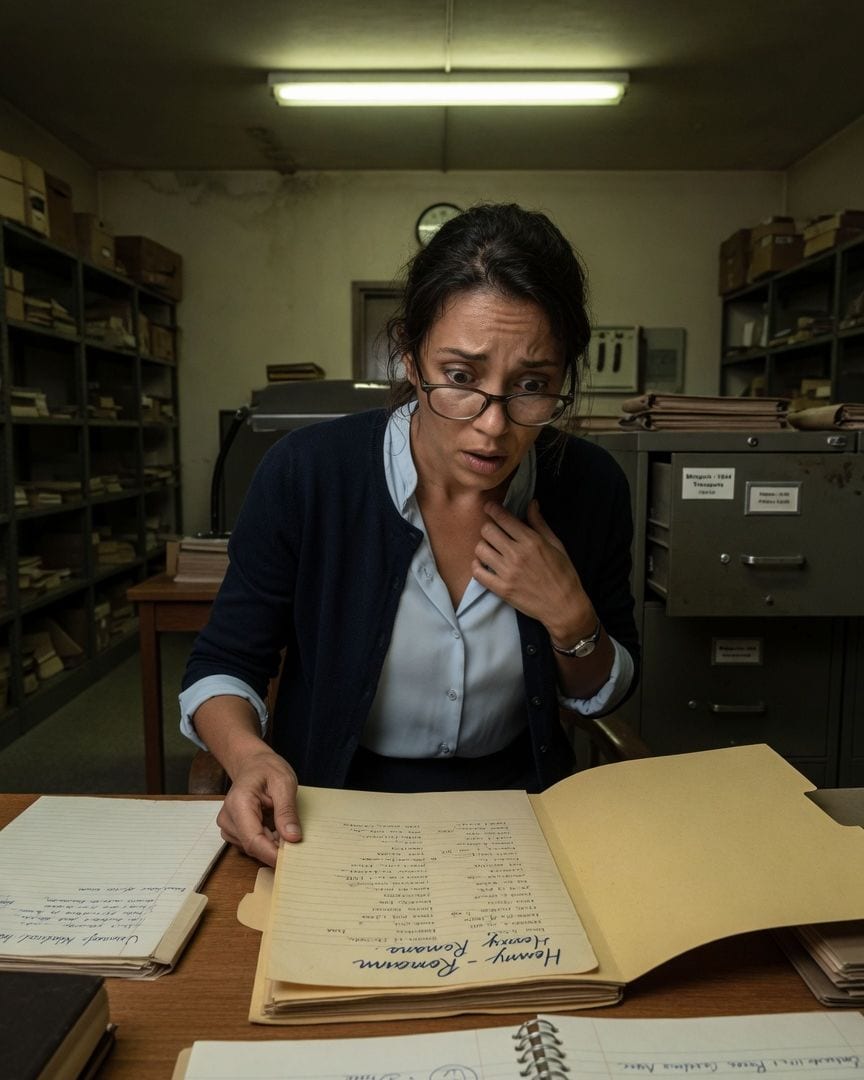
A records reviewer found a 1944 ferry manifest with an impossible 42nd name. The same dark ink marked a phantom crewman on a Cold War flight log.
Delphine Arceneaux, a dedicated records reviewer, had just minutes left in the stale reading room to finalize her review of a 1944 Mirepoix Ferry manifest. Her job was to confirm every detail of the forty-one passengers who boarded a boat that never arrived. But as the clock neared six, a forty-second name materialized on the faded paper, stark in a dark, unfamiliar ink. 'Henry Romano,' it read, with the impossible notation: 'BOARDED AT MIDSTREAM.' How could anyone board a ferry in the middle of a river?
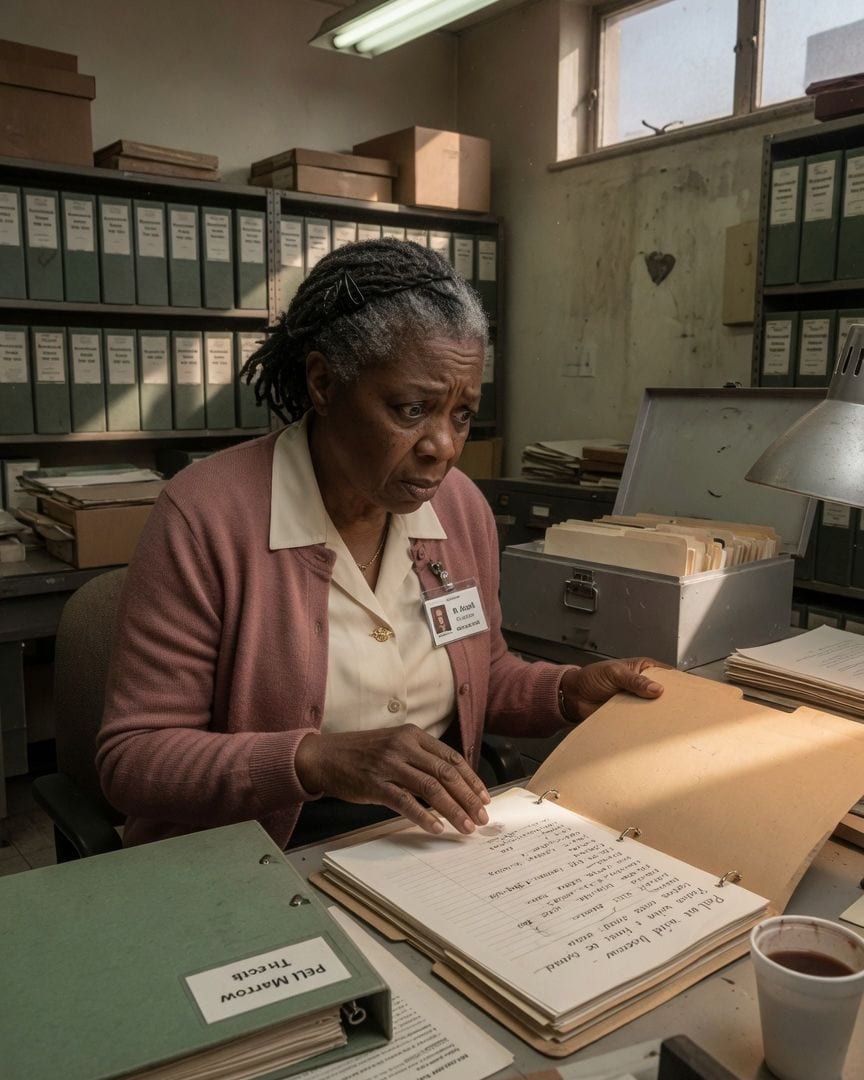
A records clerk's archive file for a Cold War reconnaissance plane lost in 1968 showed it flew yesterday to her own building.
Marguerite Ansell, a records clerk nearing her final week before retirement, meticulously audited Cold War-era files. In the cool, dusty archive, she pulled a file for an oiler declared missing in 1951. Inside, she found a fueling schedule with entries stretching into the present, the last dated just eleven days ago. Then, a second lost ship revealed a similar impossible log, and a cold certainty began to bloom in her chest. Deep in the shadows, Marguerite found an unmarked steel box containing a file for a reconnaissance plane lost in 1968. Its flight log showed a final flight yesterday, to the precise coordinates of her own archive building.
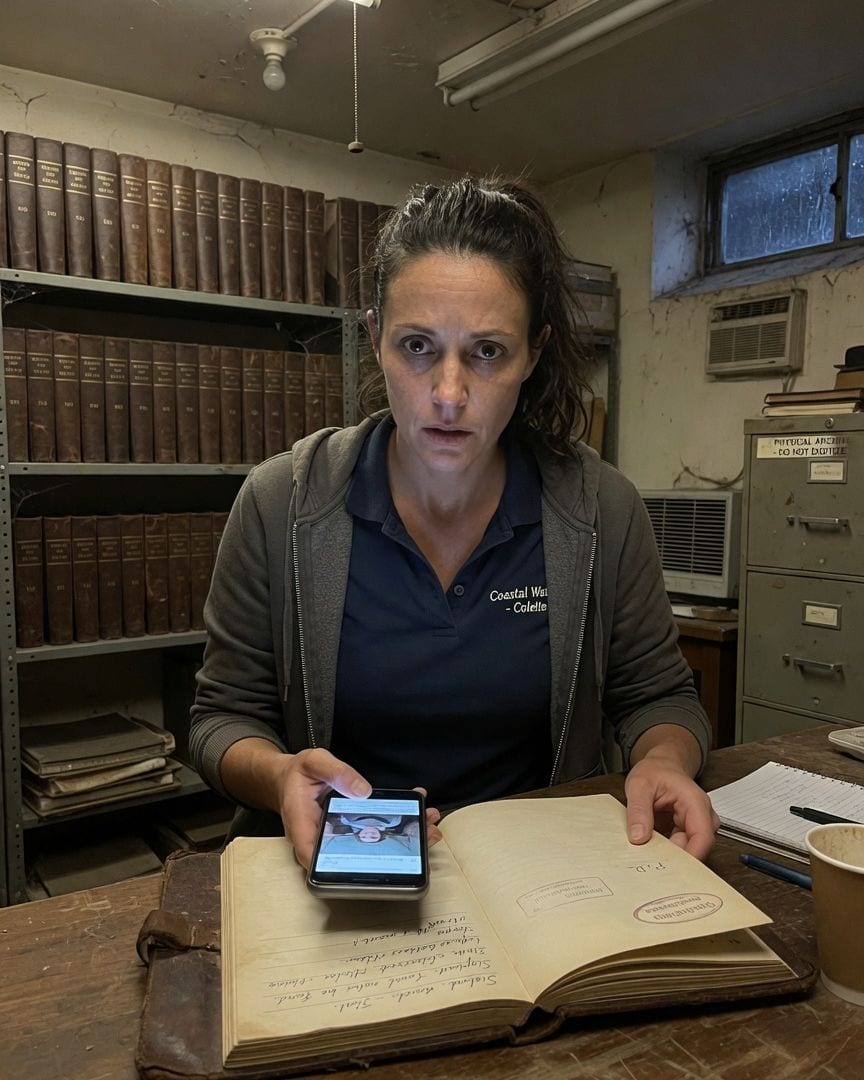
My coastguard log noted Sighting 9 again tonight, a light where no vessel showed. The old logs carry Sighting 9 off Skerry Point at 3:14am every tenth year since 1954, always 'nothing found,' always 'send no boat.'
On my watchtower night shift, the radar screen glowed green and the ocean was quiet. Then, a familiar light appeared off Skerry Point, exactly on cue, just as it had every tenth year for decades. But digging deeper, I found a hidden stamp in an old logbook: 'Operation Skerry. Status: Complete.' It left me with a chilling sense of finality.
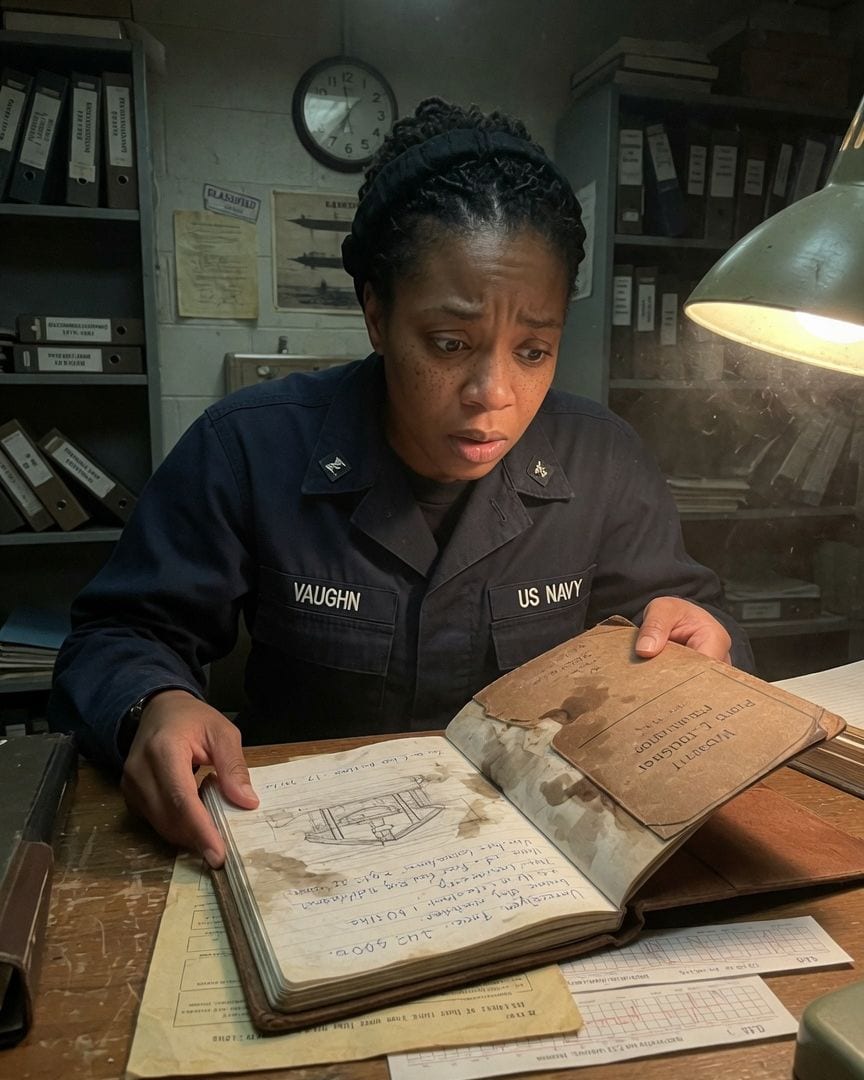
A Petty Officer's sensor logged a man-sized heat bloom at 0405. The camera saw nothing, and a journal from 1978 logged that same trace, then a Cold War Petty Officer gone MIA.
Petty Officer Rose Vaughn knew the meticulous order of Naval Submarine Base Bangor's pier by heart, especially her midnight watch routine. Every night at 0405, her IR sensor logged a man-sized heat bloom moving along the concrete path, vanishing at the pier's edge, but the watch camera showed only empty mist. This phantom warmth had walked the identical path for five years, yet the supposed steam line beneath it had been cold and dry for over a year. Her unofficial investigation led her to a faded 1978 journal, where a vanished Petty Officer, F. Pennington, logged an 'unresolved trace' at the exact same coordinates and 0405 hour, just before he went MIA. The system swore it was there, but the world swore it wasn’t – what was walking the pier, decades after it was lost?
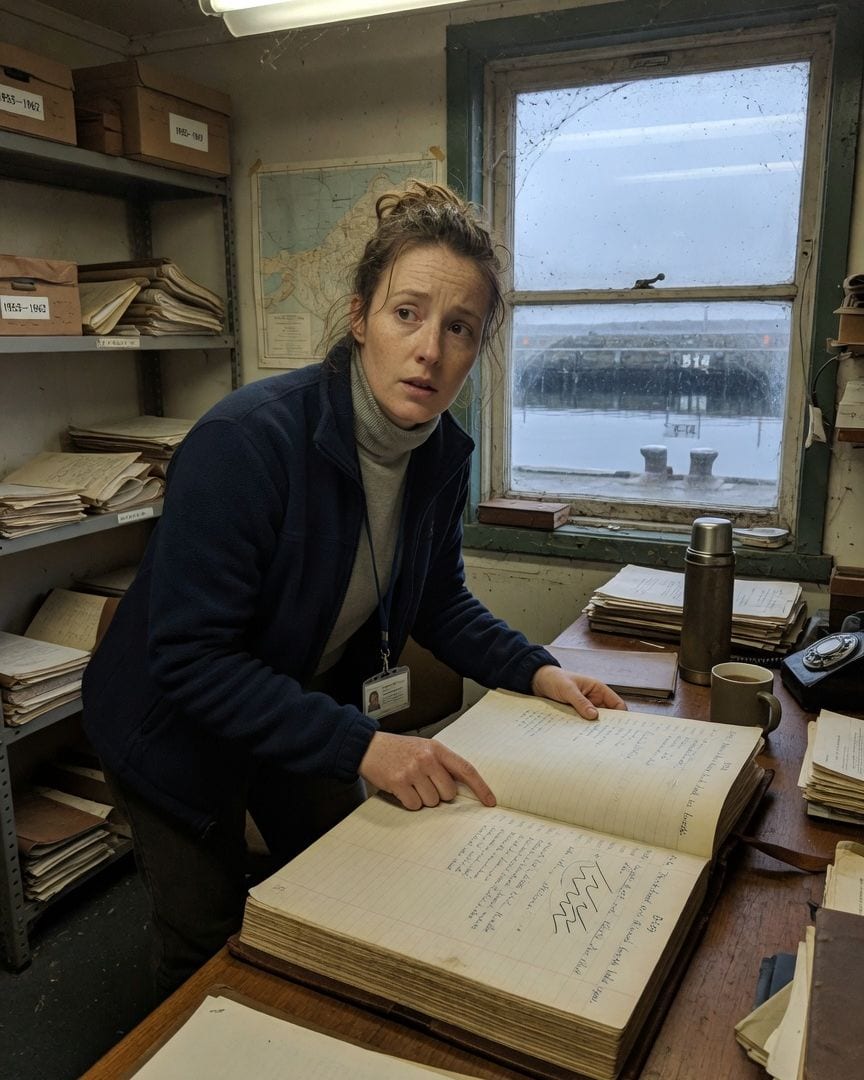
My harbour ledger shows Berth 14 let to a trawler every few years, but it's always empty. Each entry reads 'not returned to sea, berth held open'.
My job as Harbour Master's Assistant is managing the berth ledger, tracking every vessel. But Berth 14 holds a strange paradox: my book says it's let, yet it's always empty. Each entry for that berth closes with the same cryptic note – 'not returned to sea, berth held open' – a pattern stretching back to 1955.
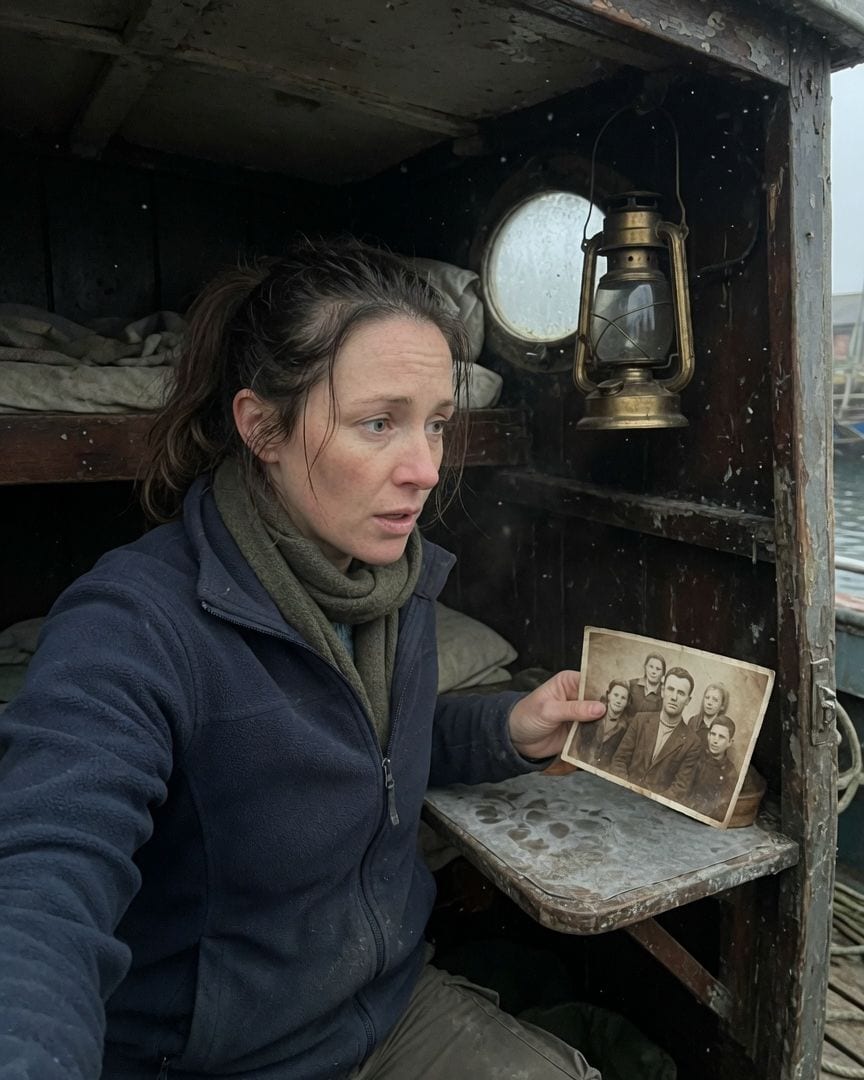
My harbour counted fourteen boats out, but fifteen came back. The last one has my name on it, tied to a berth empty since the war.
I cherished the crisp morning air in Port Blossom, watching the fishing fleet return. Fourteen boats had chugged out before dawn, but that morning, a fifteenth, older boat glided silently into the harbour. It tied itself to the very end berth, unused since the war, and painted on its stern was my family name: Walsh.