Salvage diver Ruthann found a 1947 bomber's bomb bay meticulously empty. Then the flight recorder played the Cold War pilot saying, 'Transfer confirmed.'
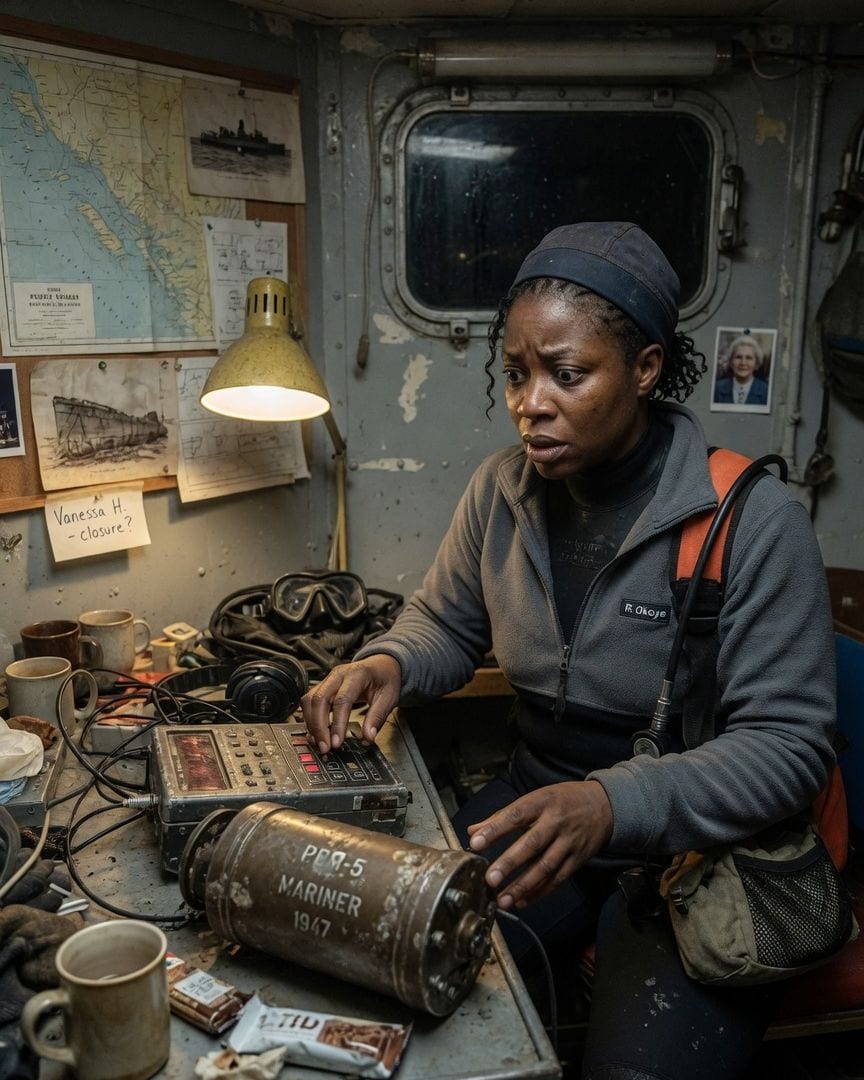
Salvage diver Ruthann Okoye descended into the murky, cold waters of Puget Sound, her powerful lights cutting through the gloom. The wreck of the PBM-5 Mariner patrol bomber, lost in a 1947 gale, loomed into view.
She was here for Vanessa Holloway, the pilot’s granddaughter, a last-ditch effort to offer some closure. The bomber lay mostly intact, resting on the silty bottom like a sleeping giant.
As Ruthann swept her lights across the fuselage, her breath hitched. The bomb bay doors were not merely buckled or open from structural damage; they were fully extended, gaping wide, as if deliberately deployed.
She pushed past years of accumulated sediment, her fins stirring the fine particulate. The internal ordnance racks were starkly, unnervingly empty. Not a single bomb or depth charge remained. This wasn't right.
A patrol bomber, laden for a mission, did not go down with an empty bomb bay. She checked her gauges, her air, her focus. No, this wasn't a trick of the light or a structural anomaly.
The bomb bay was empty, meticulously so.
Ruthann moved to the flight deck, the silence of the deep pressing in. Her rational mind tried to construct scenarios: a pre-crash jettison, a salvage operation she couldn’t find records for. Neither explanation felt right.
A plane in a gale wouldn’t jettison its entire payload with such precision, and any salvage of this magnitude would be recorded.
Then, tucked into a corner near the pilot’s seat, she spotted it: a small, canvas bag, tied off with a faded rope. It looked like something a crewman might have used to store personal items.
Inside, carefully arranged, were six arming pins – the safety devices removed from ordnance before deployment. All six, accounted for. If the bomb bay was empty due to jettison, the pins would be gone, deployed with the ordnance.
If the ordnance was never armed, the pins would still be in place on the bombs. But to have the ordnance gone, and the pins neatly collected and tied off in a bag? It implied a deliberate, almost surgical, removal.
An unhurried, organized process before the plane went down.
She carefully secured the bag, tucking it into a mesh pocket on her buoyancy compensator.
Her original mission was to document the wreck and perhaps find some personal effects for Vanessa, but now a new, more unsettling purpose formed: find the flight recorder.
A 1947 plane wouldn't have a 'black box' as modern as she was used to, but she knew where to look for its early predecessors, often more robust and less susceptible to the elements. For Vanessa, she told herself.
To find out what really happened. But a cold dread, not curiosity, began to settle in her gut. This wasn't a crash. This was an unpacking.
Back on her salvage vessel, the recorder, a sturdy, cylindrical device, sat on her workbench. It was heavier than she expected for its size, encased in thick, corrosion-resistant metal.
Ruthann hooked it up to her portable playback unit, the familiar hiss of old magnetic tape filling the small cabin. She fast-forwarded through crackle and static, past the indistinguishable sounds of a violent gale, past routine cockpit chatter.
Then, near the end, a voice cut through. Calm and clear, the pilot. No panic, no distress. 'Transfer confirmed,' he said. Another voice, the co-pilot, responded, 'Retrieval complete.'
A beat of silence, then a faint, rhythmic thump-thump-thump began, growing steadily louder. It wasn’t engine noise, nor the sound of the plane breaking up. It was mechanical, deliberate, and utterly out of place. Ruthann's breath caught.
Her hand hovered over the 'stop' button, her mind refusing to process what she’d just heard.
Ruthann played the recording for Marcus Sutton, a retired Navy archivist and old friend, in his cluttered home office overlooking the harbor. Dust motes danced in the afternoon light filtering through the window, illuminating stacks of ancient files.
He listened, head cocked, then slowly shook his head. “Faulty recording, Ruthann. Could be anything. Old tape, water damage. Pilot sounds too calm for a plane going down.”
Ruthann insisted, her voice tight with the memory of the chilling sound. She replayed the segment, the pilot’s unnervingly placid 'transfer confirmed' followed by the co-pilot’s 'retrieval complete' and the nascent thump-thump-thump. “And the pins, Marcus,” she pressed.
“All six, tied up in a canvas bag on the flight deck. The bomb bay was empty. This wasn’t an accident.”
Marcus, intrigued despite himself, pulled up the declassified file on the 1947 incident on his computer. He navigated through the Navy’s labyrinthine digital archives. Most of it was standard accident reporting: weather conditions, presumed cause, recovery efforts.
But then he found it: a page with heavy, rectangular redactions. “Look at this,” he said, pointing at the screen. “The Redaction That Has a Shape. Not just blacked out with a marker, but a precise, almost architectural shape.
And this control number,” he traced a finger over a series of alphanumeric characters in the margin, “it’s unusual. Doesn’t match the standard Navy classification scheme for that era. Completely out of sequence.”
He cross-referenced it, tried to trace the originating office. Nothing. The control number, he discovered, traced to no known office, and the downgrade schedule read, 'DECLASSIFY NEVER.'
The official report attributed the crash to 'structural failure in extreme weather,' but the methodical redactions and the anomalous control number hinted at a story the file itself was trying to tell, a story carefully concealed within its own structure.
Marcus, now fully invested, used his old, deeply buried security clearance to access a deeper, more obscure archive. He found a second, slightly different copy of the 1947 bomber file.
The redactions, while similar, fell in different places, like offset photographic negatives. Where one copy was blacked out, this one revealed fragments of text beneath the ink: 'non-standard payload,' 'expedited transfer protocol,' 'crew integration parameters.'
The text still didn't make full sense, a jumble of clinical jargon, but it contradicted the official 'structural failure' narrative completely, brutally.
Suddenly, Marcus’s landline rang, shrill in the quiet office. The number was blocked. He picked it up, expecting an automated solicitor. A distorted, synthesized voice on the other end, devoid of inflection, said simply, 'The file is closed, Mr. Sutton.
Further inquiry is unnecessary.' Then the line went dead. Marcus stared at the phone, his face pale, the receiver still pressed to his ear long after the dial tone began to buzz.
That evening, as Ruthann left her dock, the salty air sharp and cold, she spotted a dark, unmarked sedan parked across the street. Its windows were tinted, but she felt eyes on her, a cold prickle on her skin.
She made a casual pass, walking her usual route, then doubled back on a whim. The sedan pulled away, slowly, deliberately, not in a hurry, but making sure she knew it was gone.
Her heart pounded in her chest, a frantic drum against her ribs. They knew Marcus was digging. They knew she was digging. The sense of being watched was palpable, a chilling certainty that the line had been crossed.
Marcus, visibly shaken by the call and the unnerving certainty of its source, arranged a discreet meeting with Philip Donovan, a former intelligence officer he knew from his early days in Navy intelligence.
Donovan, now 67, was retired and living quietly in a small, well-maintained house on the edge of town, surrounded by towering pines. He was a man with a steady gaze and an unnervingly calm demeanor.
He offered them tea, the delicate porcelain cups a contrast to the grim discussion at hand.
Ruthann placed the canvas bag with the arming pins on his polished coffee table. Marcus then played the flight recorder audio. Donovan listened without expression, his eyes fixed on some point beyond them.
'The transfer was real,' Donovan stated, his voice flat, devoid of emotion, as if relaying a weather report. 'The item unloaded was never ordnance. It was an artifact.'
He picked up the canvas bag, examining the pins with an almost clinical detachment. 'These were collected. For the record.'
Ruthann’s mind reeled. An artifact? And the crew? 'What about the crew?' she asked, her voice tight, barely a whisper.
Donovan sipped his tea, the clinking of the cup the only sound in the room. 'Some events are… filed. The records reflect a loss, but the reality is more complex. The institution… it processes these anomalies. Minimizes disruption. Protects.'
He pushed a thick, heavily redacted document across the table. It was a procedural guideline, dated from the late 1940s, its paper yellowed with age. He pointed to a section that discussed 'auditory signatures consistent with high-frequency resonant displacement.'
The description, precise and clinical without naming it, perfectly matched the thump-thump-thump from the flight recorder. The ordinary explanation for the crash died for good.
The pins, the empty bomb bay, the calm voices, the anachronistic thumping – it all snapped into focus, a horrifying coherence that chilled Ruthann to the bone.
Donovan's calm admission left Ruthann and Marcus reeling. They returned to Marcus’s office, the weight of Donovan’s words settling heavily around them like a lead blanket.
The 'filing' of events, the 'crew integration' mentioned in the second file – it implied something far more sinister than simple cover-ups. It suggested a system, an ongoing process with a cold, terrifying logic.
Marcus continued to dig, now with a grim determination that bordered on obsession, focusing on the 'Redaction That Has a Shape' and its specific control number.
He spent days cross-referencing, tracing variants, his fingers flying across his keyboard, his eyes scanning screens. Eventually, he uncovered a chilling pattern across decades and classifications.
Files from the Korean War, Vietnam, even a few from the Cold War space race, all bearing the same distinct redaction pattern, the same coded control number variant, all describing 'missing' personnel or equipment under impossible circumstances.
The truth, Ruthann realized, was bigger than one bomber. It was a systemic, recurring operation, a bureaucratic machine working in the shadows for seventy years or more.
Then, Marcus found a recently declassified document, dated from an incident just last year. It’s a short, internal memo concerning 'anomaly containment.' He clicked it open, his movements mechanical.
The 'Redaction That Has a Shape' was there, unmistakable, a precise, geometric void in the text. And in the unredacted margin, a clean, precise hand had added a new entry: 'Okoye, R. - Subject of Interest.'
The file, Ruthann realized with a jolt that went straight to her bones, was still being signed, and she was now part of it.
Ruthann and Marcus returned to Donovan’s house, this time uninvited. They laid out the pattern of redactions, the control numbers, the 'Subject of Interest' entry. Donovan, though surprised by their swiftness, remained impassive, his composure unyielding.
He did not invite them in, but he did not turn them away either, merely listened on his porch, the crisp autumn air carrying his words.
'The institution,' he said, his voice as flat as ever, 'is a mechanism. It does not judge, it does not create, it simply processes. When an anomaly manifests, it is contained. Its effects are minimized. The records are adjusted.
The individuals… integrated.'
He confirmed that the 'unloaded' item from the bomber was an artifact of unknown origin, and the six crew members were not lost, but became part of the 'filing'—their consciousnesses, perhaps, or some essential aspect of them, assimilated into the artifact itself, or into the system that contains it.
The thump-thump-thump, he added, was the artifact's resonant signature during 'transfer.'
He turned and walked back inside, beckoning them to follow. He opened a hidden compartment in his desk, the click barely audible. From it, he pulled out a thin, leather-bound logbook, decades old, its pages filled with neat, precise script.
It’s an unredacted 'Transfer Log.' He pointed to an entry from 1947, detailing 'non-biological payload acquisition' and 'crew integration protocol initiated.' The logbook itself, an artifact that shouldn’t exist in such detail, was real, dated, and checkable.
The ordinary explanation of a simple crash died completely, leaving behind only the chilling, coherent truth. The horror lived in the coherence, the terrible logic of it all.
Ruthann felt a cold dread spread through her, a sickening sensation that reached into her core. 'Integrated?' she whispered, the word a poison in her mouth. 'Are they still… aware?'
Donovan shrugged faintly. 'Their essence contributes to the stability of the system. Their records are complete. They are filed.'
Ruthann demanded to know if this 'filing' was still active, if it continued to this day. Donovan slowly turned to a large, framed painting on his wall – a bland, pastoral scene of a babbling brook.
With a click, the painting retracted into the wall, sliding smoothly into a hidden cavity. Behind it, a bank of monitors flickered to life, an array of blinking lights illuminating the dark corner.
One screen showed a live satellite feed: a desolate, snow-covered landscape, somewhere in Siberia. In the center, a team in hazmat suits was operating around a glowing, pulsating object, partially obscured by a shimmering field.
The rhythmic thump-thump-thump from the flight recorder, now amplified and clearer, emanated from the speakers, filling the room with its anachronistic beat. It was happening again, right now.
An artifact that could not exist, a 'transfer' in progress, utterly real and undeniable.
Donovan pointed to a flickering text overlay on the screen: 'Payload: Type 7 Anomaly. Crew Integration: Pending.' Ruthann and Marcus stared, transfixed, at the live feed. The ordinary explanation for everything they’d ever believed about reality crumbled into dust.
They were not confronting an enemy, but a process, a machine that simply is, cold and indifferent. The dread was immense. They were witnesses, and now, they were filed.
Donovan, without a word, replaced the painting. The monitors vanished, the hidden compartment sliding shut with a soft hiss. He offered them more tea, a gesture so incongruous it felt like a deliberate insult. Ruthann and Marcus, however, declined.
They walked out of his house, into the afternoon light, changed. They were not detained, not overtly threatened. But the world outside felt different, thinner, a veil over an incomprehensible mechanism. The dark sedan was nowhere in sight.
They drove in silence, the thump-thump-thump echoing in their minds. The knowledge they carried was a permanent burden, heavier than any salvage they had ever recovered.
They were no longer merely observers; they were now part of the institution’s records, categorized and noted. The file on 'Okoye, R.' and 'Sutton, M.' was complete.
Ruthann returned to her boat, the familiar rocking no longer comforting. She tried to call Vanessa, to tell her something, anything, but the words died in her throat. Some truths were too heavy to share, too destructive.
She went back to her dives, but the ocean no longer held the same mystery; it held only an echo of the abyss she had glimpsed, a colder, deeper current.
Marcus continued his archival work, but every document, every redacted line, now seemed to hum with a hidden meaning, a whisper of the systematic horror beneath. They were free, but not truly. The file had been signed.
Days later, in a sterile, windowless office deep within a forgotten government building, a clerk methodically updated a digital ledger. He scrolled to a new entry, marked 'STATUS: FILED.' He then added two names to the 'WITNESSES' column.
The file, she understood, was never truly closed.
If this one got to you
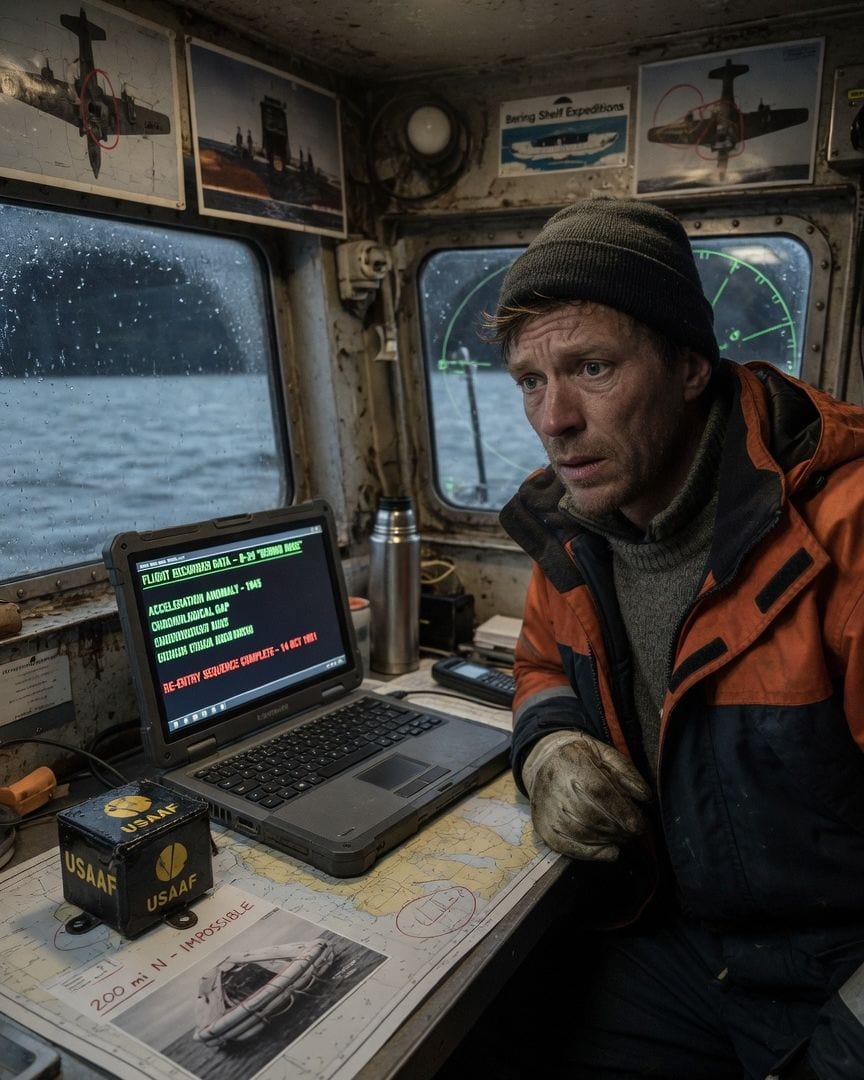
A wreck-hunter found the Cold War B-29 lost in 1945. Its upper escape hatch was open, from the inside.
Wreck-hunter Sten Höglund embarked on a decades-old promise to his 98-year-old aunt, seeking the B-29 bomber lost with eleven men in 1945. Deep on the Bering Shelf, his sonar found the 'Bering Rose' impossibly intact, a ghost in the mud plain. But the drop camera revealed a chilling detail: the bomber's upper escape hatch was not merely damaged, but wide open from the inside, and its life raft was gone. What impossible truth did the ocean hide from a crew that seemingly escaped a crash, only to vanish into the Bering Sea?
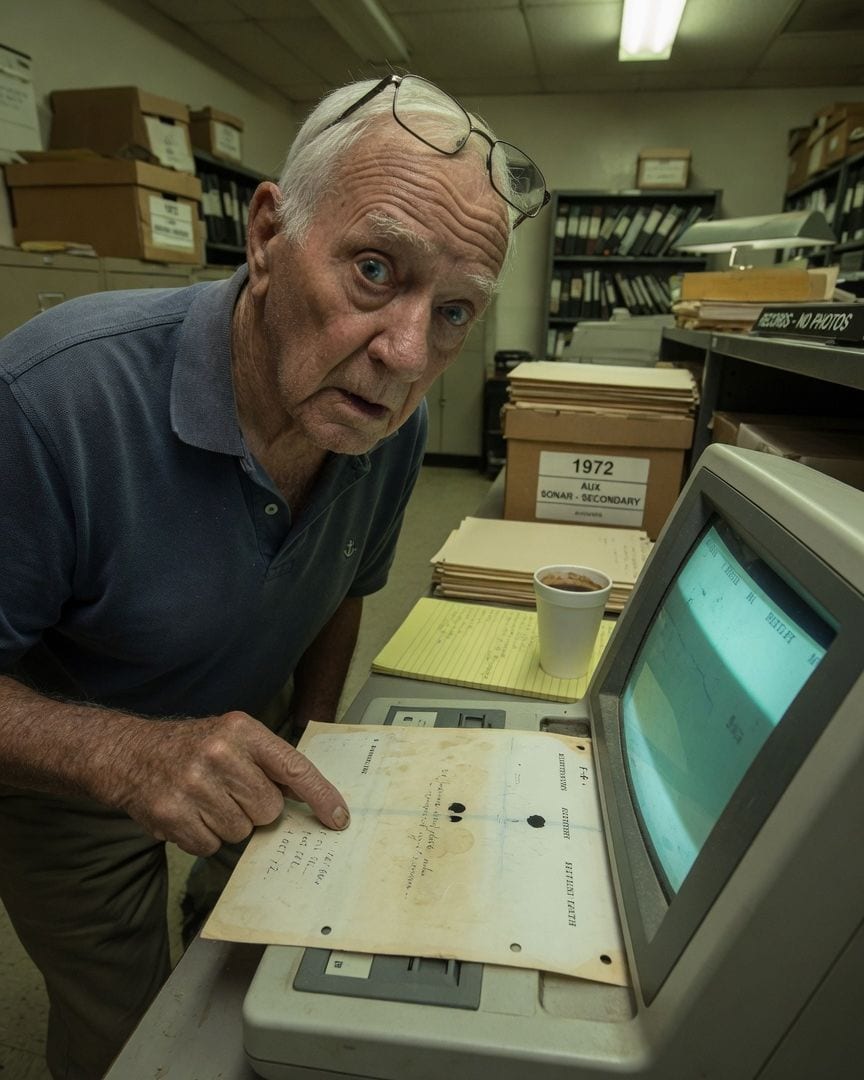
A Chief Petty Officer's salvage career ends when a Cold War fighter jet surfaces at sixty tons, perfectly intact.
Chief Petty Officer Walter Mabey, then 45, expected a routine salvage operation for a lost F-4 fighter jet off the Carolina coast in 1972. His long career was built on such lifts, but as the crane gauge climbed past twenty, then thirty, then an impossible sixty tons, a profound unease settled in. The object surfaced, not a mangled wreck, but a dark, seamless shape, perfectly intact. Mabey's salvage career abruptly ended soon after, replaced by a desk job, but the memory festered for forty years. Now 78, he dedicates his remaining time to finding the truth, uncovering a faint, rhythmic pulse on an old sonar log—a ghost beneath the official lie.
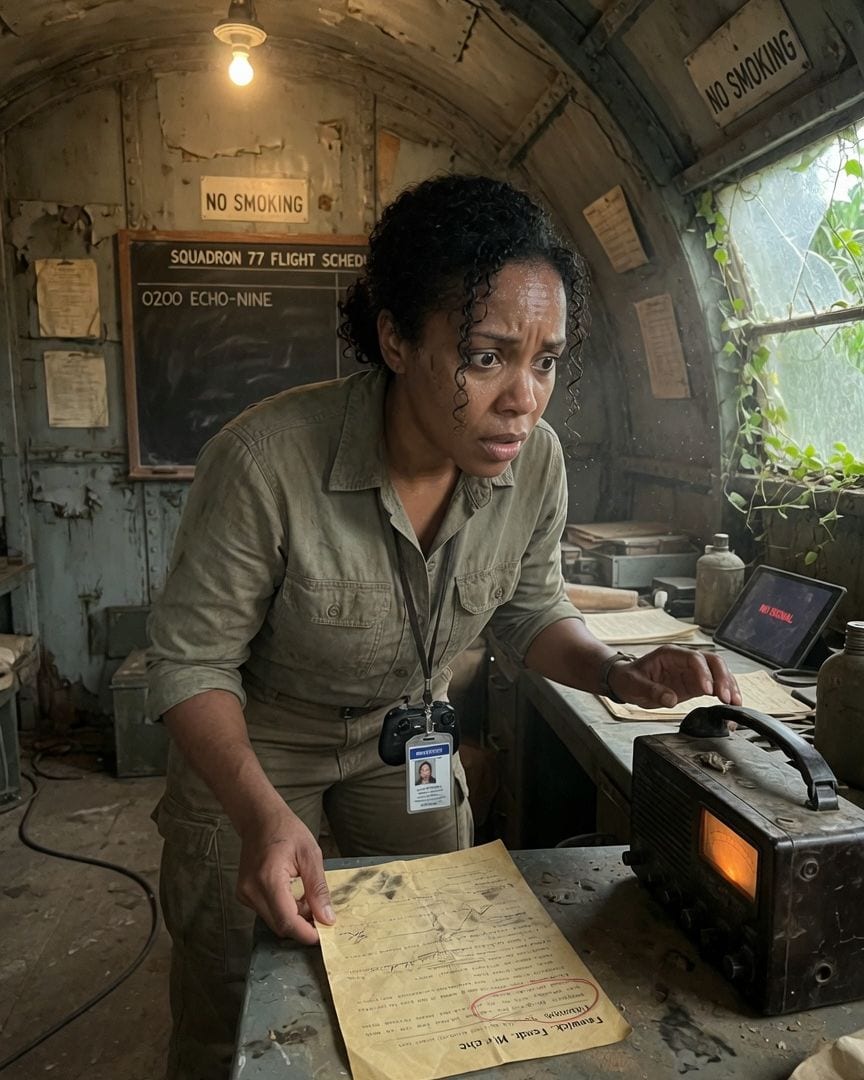
A surveyor found her name on a 1945 manifest in an eighty-year-abandoned base. Then its old radio crackled to life, calling a name from the list.
Surveyor Ade Fenwick meticulously charted a remote Pacific atoll, part of a meticulous process for a new runway contract. But her drone flagged an impossible structure: a Quonset hut not on any official record for the eighty-year-abandoned base. Inside, a generator hummed, and a 1945 flight manifest listed a phantom squadron, complete with a familiar surname: Fenwick, M. With her comms dead, an old radio in the ready-room crackled to life, calling out a call sign from the very same manifest. Who was on the other end, and how was this base still active?
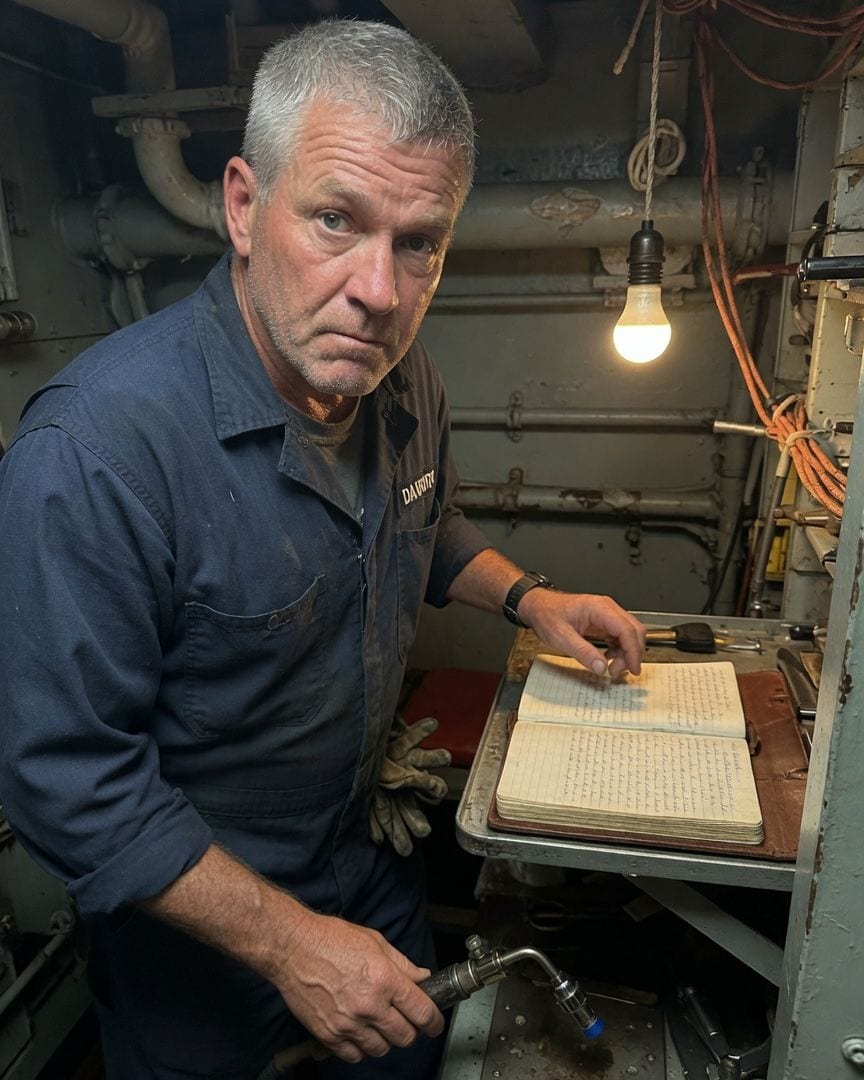
A week from shore duty, Chief Danforth cut a hatch where his ship's plans showed solid steel. An hour later, the wall was seamless, but the Cold War logbook from inside appeared under his mattress.
Chief Petty Officer Raymond Danforth, just a week from ending three decades of service, was intimately familiar with every pipe and plate of the guided-missile destroyer Weatherall. During a mid-cruise overhaul, his gloved hand found a sealed hatch where schematics promised only a solid bulkhead. He cut through the impossible seam to reveal a small, dry compartment, softly lit, containing a logbook filled with an unsettlingly familiar hand. When he returned an hour later with a witness, the hatch was gone, the wall seamless. Later that night, the same logbook appeared beneath his mattress, its pages revealing an entry: 'Petty Officer Howard Montgomery, missing, 1972.' How could a compartment vanish, yet leave its secrets behind?
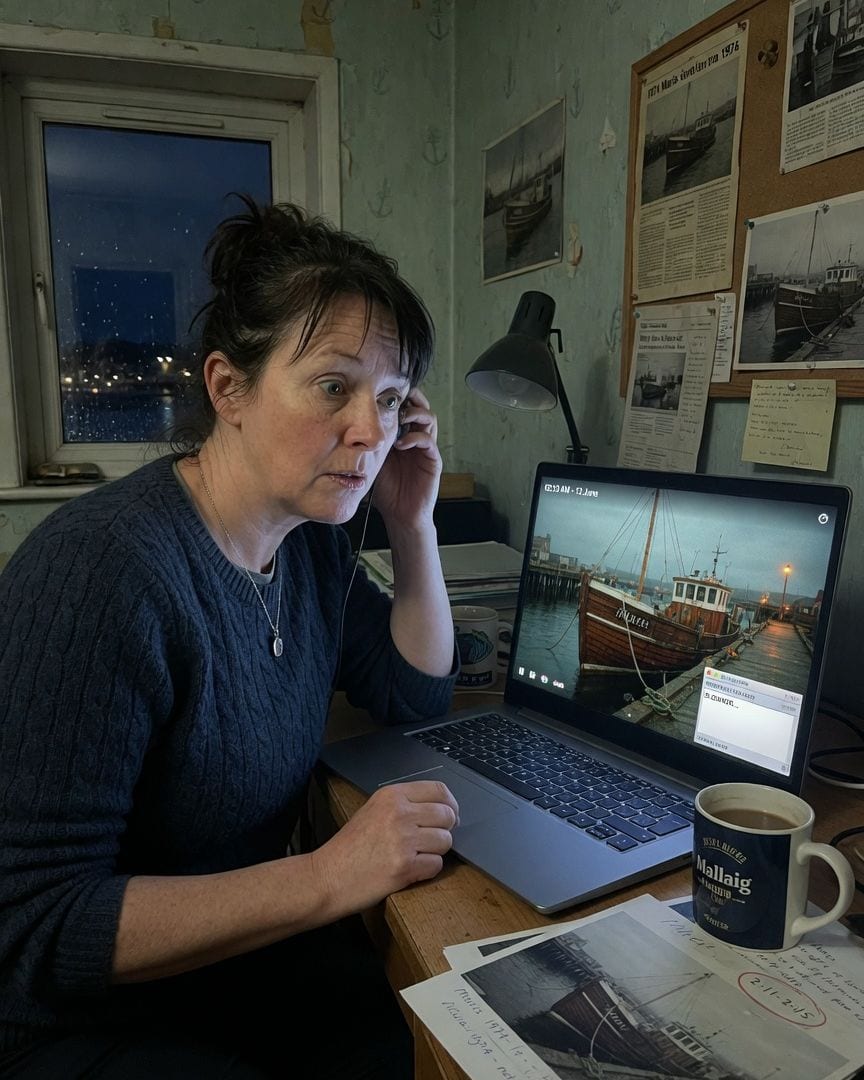
My webcam feed showed the Maris, lost with all hands in 1974, tied at the Mallaig pier. Then I heard its voice.
My morning routine of checking the Mallaig harbour webcam was shattered when I saw the fishing trawler *Maris* tied to the pier. This boat, with its distinct hull and rigging, went down with all hands in 1974, a loss still etched on our town's memorial. Yet, there it was, captured on a live feed, moving silently in the early hours.
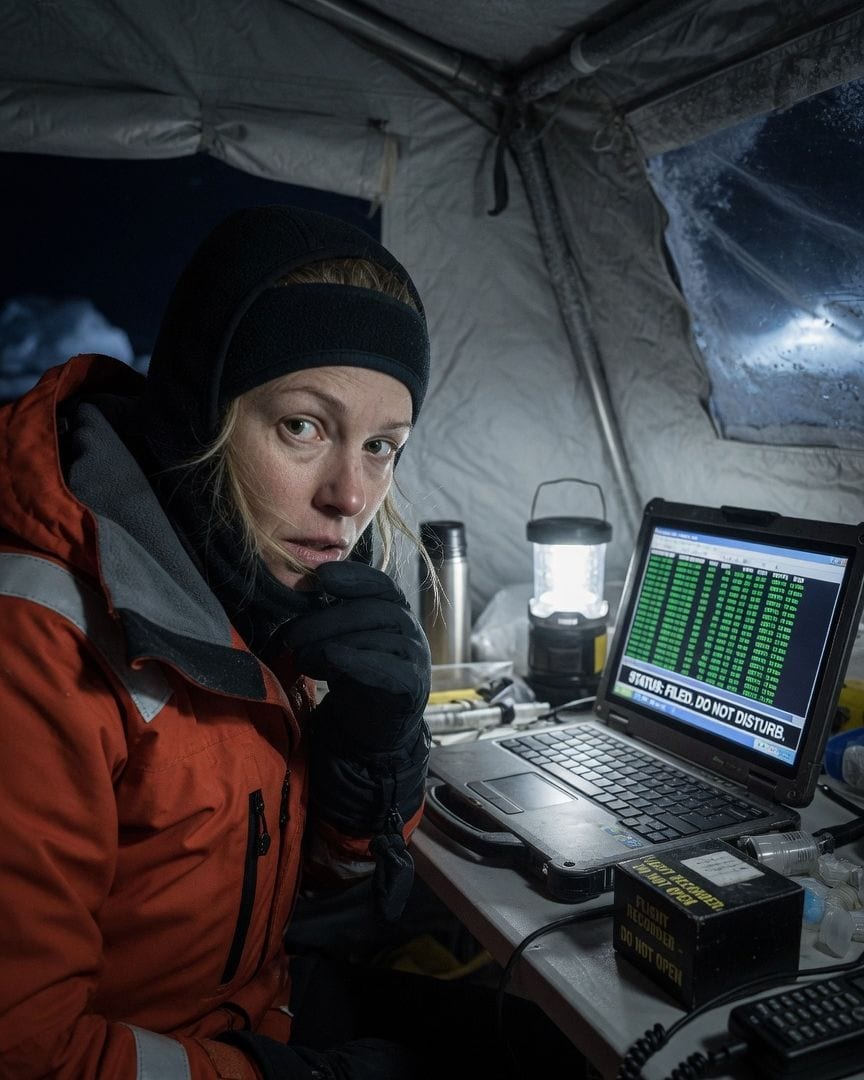
A glaciologist finds a Cold War plane 60 feet down in Greenland ice, its navigation lights still burning after sixty years.
Glaciologist Ines Faurholt skied across the vast, blinding Greenland ice cap when her path was abruptly blocked by a dark, corroded antenna mast. Beneath it, sixty feet down in ancient ice, a Cold War reconnaissance aircraft sat with its navigation lights eerily burning and its cockpit clock steadily keeping time. The sight was a violation of everything Ines knew about time and preservation in this frozen world. She called for a team, and days later, they extracted the plane's flight recorder, revealing data that showed the aircraft still flying years after its disappearance.