My twin sister returned. She remembers my Lisbon summer, the man, the letter I never sent. She wasn't there.
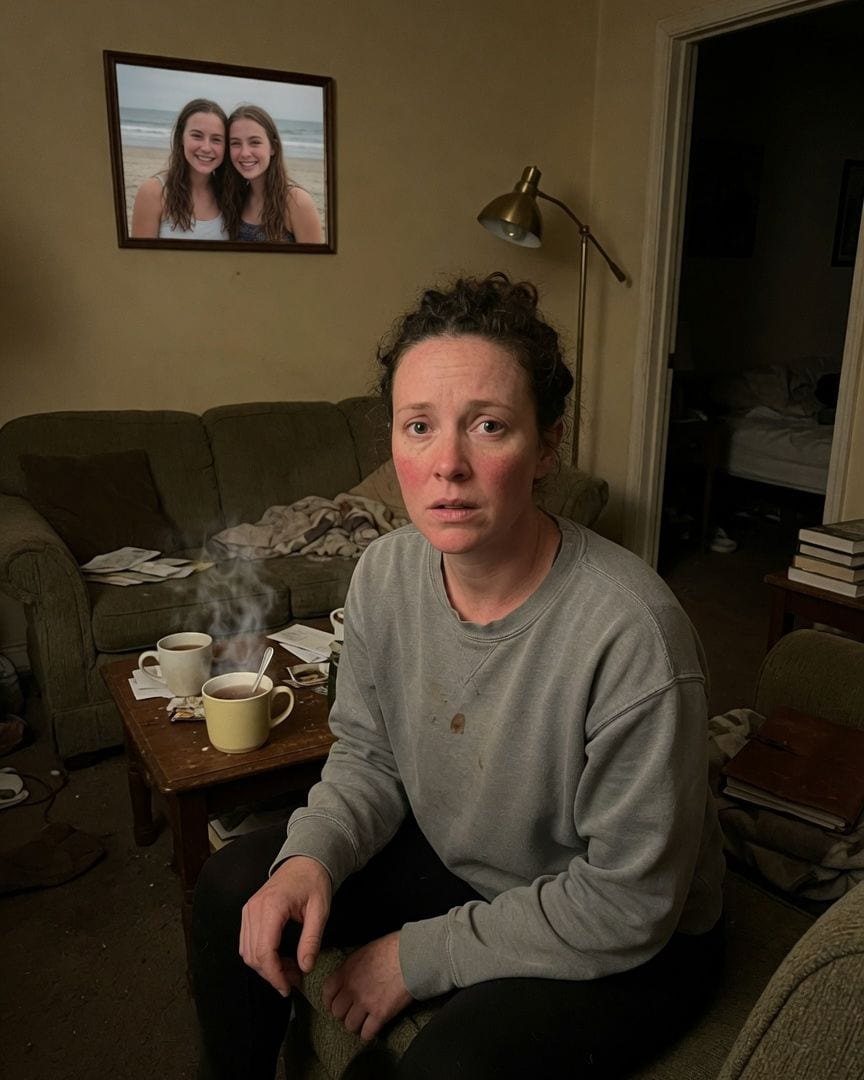
The first time I really noticed it, Bridget was stirring her tea, a delicate spiral of steam rising from the cup. She’d been home two weeks, back from… well, back from wherever she’d been for six months after the accident.
The doctors couldn’t explain it, and neither could she. Just that she’d woken up somewhere, lost. But she was here now, across from me in our living room, just like before. Except she was stirring with her left hand.
Bridget was fiercely, almost defiantly, right-handed her entire life. A small, odd detail, but I pushed it aside. Trauma did strange things.
Then she started talking about Lisbon. My summer, ten years ago. “Remember that little café on Rua Augusta?” she asked, her eyes distant, like she was truly seeing it.
“The one with the chipped blue tiles, where the sun hit just right in the mornings?” My heart gave a cold thump. I remembered. It was my secret spot, the one I’d never told anyone about.
Bridget hadn't been speaking to me that year. We’d had a fight before I left, a silly, awful thing that felt important to our twenty-two-year-old selves. She couldn’t have known.
She went on, detailing the way Daniel Sinclair used to smile, a particular shy curve to his lips whenever he brought my coffee. Daniel. A name I hadn’t spoken aloud in a decade. A name Bridget couldn't possibly know.
The dread wasn’t cold anymore; it was like someone had replaced the air in my lungs with ice water. Bridget had never been to Lisbon. She’d never met Daniel.
She finished her story, completely unaware of the effect it was having on me, with his full name, clear as a bell: “Daniel Sinclair.”
The memory of Lisbon replayed in my mind, a terrifying loop of impossibility. I tried to rationalize it. Maybe I’d dreamed it, or trauma had somehow created a shared, false memory. Maybe I’d forgotten telling her.
But the details were too precise, too specific to my own silent experiences. I started watching Bridget. The left-handedness became impossible to ignore.
She used her left hand to open the fridge, fumbling slightly with the handle, then again to sign a recovery form a few days later, her penmanship subtly changed, a little more stretched than her usual neat loops.
Bridget had always used her right hand for everything, even in childhood photos she’d be reaching for toys with her right.
I tried a subtle test, leaving my mug of coffee on the right side of the kitchen counter, just out of her easy reach from the breakfast bar.
She walked in, reached for it, and instinctively, her left hand stretched out. It was automatic. When I finally asked her about it, trying to keep my voice casual, she just shrugged.
“Must be the accident,” she said, not meeting my eyes. “Trying to retrain myself, maybe.” Her dismissive tone, a slight, almost imperceptible edge to her smile, didn’t reassure me. It felt practiced.
The small habit, reversed, was like a physical manifestation of something deeply wrong, a glitch in the familiar form of my twin.
I couldn’t shake the unease. The Lisbon story, the left hand—I needed something concrete. I slipped into Bridget’s old room, which had remained untouched since the accident, a mausoleum of her former life.
Under a stack of paperbacks on her bedside table, I found her old journal, the one she’d kept sporadically since high school.
Most pages were filled with her familiar, looping right-handed script, detailing mundane daily events, grocery lists, complaints about work.
But near the back, on a page marked with a date from just a few days ago, a single paragraph stood out. The script was distinctively left-handed, subtly elongated, not quite Bridget’s familiar hand at all.
And the words, they described the quiet despair of my own Lisbon summer, a memory so intensely personal, so specific to me, that it stole the air from my lungs.
The journal entry confirmed my worst fears. I spent days online, frantic, researching neurological trauma, memory transfer, anything that could possibly explain Bridget’s impossible knowledge and her changed handedness. Medical journals offered nothing.
There was no rational explanation for a twin recalling another’s secret, unspoken memories with such clarity, let alone a complete reversal of a dominant hand after a physical trauma that hadn't been to the brain.
I dug out old family videos from dusty boxes. Bridget, a blur of motion at a birthday party, at Christmas, always reaching, writing, gesturing with her right hand.
I finally confronted her about the journal, holding it out, open to the incriminating page. Bridget’s eyes flicked to it, then back to mine. She feigned confusion, a brow furrowed. “My old journal? What about it?”
Then a flash of annoyance, quick as a viper’s strike, crossed her face. “Are you saying I’m making things up, Daphne? Maybe you wrote it in your sleep.”
Her dismissal felt too sharp, too rehearsed, almost like she was reciting a line. After that, I couldn't shake the chilling sense of being watched.
A subtle shift in her attention whenever I was doing something private, a lingering glance when she thought I wasn’t looking. The air in the house grew heavy, stagnant, as if the walls themselves were holding their breath.
The feeling of being watched intensified, a constant prickle on my skin. Bridget began asking me pointed questions about my past, not just recalling, but probing, seeking.
“That letter you never sent to Daniel,” Bridget said one morning, stirring her coffee with her left hand, the spoon clinking softly against the ceramic. “What did it say? Was it a confession of love?”
Her eyes, usually so familiar, held an unnerving stillness, a depth I didn’t recognize, a kind of calm, unblinking assessment. A chill snaked down my spine.
She wasn’t just remembering; she was seeking information, trying to fill in gaps in her knowledge of me, of Daphne. She was building something.
Later, as I scrolled through old photos on my phone, sorting through them for no particular reason, Bridget appeared silently behind me, her presence a cold shadow. “You always were the sentimental one, weren’t you, Daphne?”
she murmured, her faint, wrong smile making my skin crawl. The words were a familiar teasing phrase from our childhood, but the delivery was devoid of warmth, a perfect, chilling echo, a hollow mimicry. It wasn't teasing.
It was an observation.
Desperate for answers beyond the medical, I reached out to Helen Vance, an elderly family friend with a keen interest in local history and folklore.
I met her for tea at her cluttered little cottage, trying to keep my voice steady as I recounted the impossible memories and Bridget’s reversed habits. Helen listened, her expression growing grave as I spoke.
She spoke of old, half-forgotten local legends: tales of ‘changelings’ or ‘skin-walkers’ that would replace people after tragedies, taking their form and absorbing their memories. “They’d never be quite right,” Helen said, her voice low, almost a whisper.
“A habit reversed, a memory they shouldn’t have. Small things, at first. But they add up.” Helen then remembered an old family heirloom. “Bridget had one,” she mused. “A locket. Her mother gave it to her.
Said it was meant to ward off such entities. It was said to change if the wrong one wore it,” she added, almost to herself. My mind raced. Bridget always wore a specific locket, a simple silver oval.
It was found on her at the accident site.
That night, I waited until Bridget was asleep. My heart pounded against my ribs as I slipped into her room, the floorboards creaking underfoot like living things.
I found the locket on the bedside table, just as Helen described, water-damaged and tarnished, dark against the pale wood. It was the same locket Bridget always wore.
My hands trembled as I carefully pried it open, expecting to see a faded childhood photo of Bridget and me, our younger faces smiling out at me. Instead, the inside was empty of any picture.
On the inner metal, almost invisible without direct light, was a tiny, intricate inscription in a script I didn't recognize.
And beneath it, a faint, shimmering film, like oil on water, that radiated an impossible, bone-deep cold against my fingertip as I touched it.
I brought the locket to Helen Vance the next morning. Her hands shook as she examined the inscription, her fingers barely grazing the cold residue before recoiling. Her face paled, the color draining from it.
“This script,” she whispered, her voice barely audible, “it’s a variant of the old tongue, spoken by the families who first settled these lands. It’s a ward, meant to protect against… against the ones who take.”
She explained that the shimmering residue was a physical trace of the entities’ non-human essence, a kind of biological marker that couldn’t exist on ordinary metal.
Helen confirmed the locket itself was an artifact that shouldn’t exist in that altered state, and the residue, when tested by the old ways, dated back centuries. “Bridget,” Helen said, her voice thick with sorrow, “she didn’t come back.
This thing… it’s wearing her. It absorbed your memories from the accident, and now it’s trying to complete itself, to fully become you, to fill in the gaps.”
The horror of it all clicked into place, a terrible, coherent picture: the Lisbon memories, the reversed habit, the probing questions about the letter—it was all part of the entity’s attempt to perfect its mimicry. It wasn't Bridget.
I returned home, the locket heavy in my pocket, every step filled with an unbearable dread. Bridget was waiting in the living room, a strange calm about her, as if she knew.
In her left hand, she held it: the actual Lisbon letter, the one I never sent. Its cream paper was slightly crumpled, my handwriting looping across the page. "You never sent it, did you?"
Bridget said, her voice a strange, layered echo, like two voices speaking at once, just slightly out of sync. "Daniel would have waited." Her eyes were too bright, too knowing, consuming me.
I realized with a sickening jolt that Bridget must have found the letter while I was gone. The entity was almost complete.
I tried to back away, to reach the front door, to escape, but Bridget moved with unnatural speed, blocking my path, her presence suddenly vast, overwhelming. "Why run?"
Bridget asked, a smile spreading across her face that was Bridget's, and yet utterly alien, cold and hungry. She reached for me, her left hand outstretched.
I felt a crushing cold, an invasive emptiness, as Bridget's fingers brushed my arm, a silent, terrible claim.
Daphne Walsh is gone. The house is quiet. Bridget remains, seemingly settled into a peaceful routine. Helen Vance tries Daphne's phone repeatedly, but it goes straight to voicemail. Days later, Helen, deeply worried, drives to the house.
Bridget answers the door, offering Helen tea with a calm, serene smile. Helen notices Bridget is wearing Daphne's favorite blue scarf, and her hair is styled in the exact, elegant way Daphne always wore it.
Helen leaves the house, a cold knot of dread tightening in her stomach. She glances back as she pulls out of the driveway. Bridget is standing at the living room window, watching her. She waves, a slow, deliberate motion.
For a split second, the smile on her face is not Bridget's, but a perfect, chilling imitation of Daphne's.
Helen Vance never returned to the Walsh house. She saw Bridget Walsh once more, months later, in the grocery store.
Bridget, now living alone, reached for a carton of milk with her left hand, then turned, and offered a soft, familiar greeting. She waved from the window, a perfect, chilling imitation of Daphne's smile.
If this one got to you
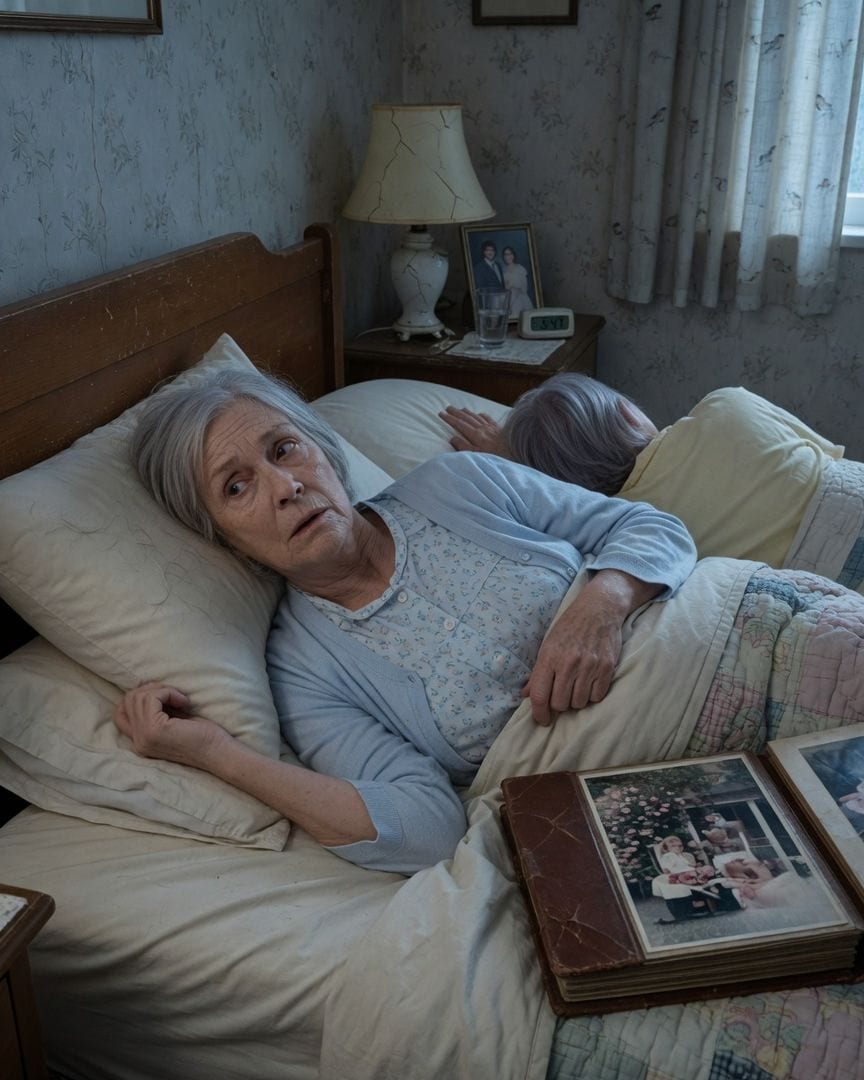
My twin sister Ruth sleeps on the right now, facing the wall. For forty-one years, she always took the left side. She insists I'm misremembering.
After three days missing, my partner Ruth finally came home. But the morning after, I woke to find her sleeping on the wrong side of our bed. She claimed she'd always slept there, and my memory was wrong, despite forty-one years together.
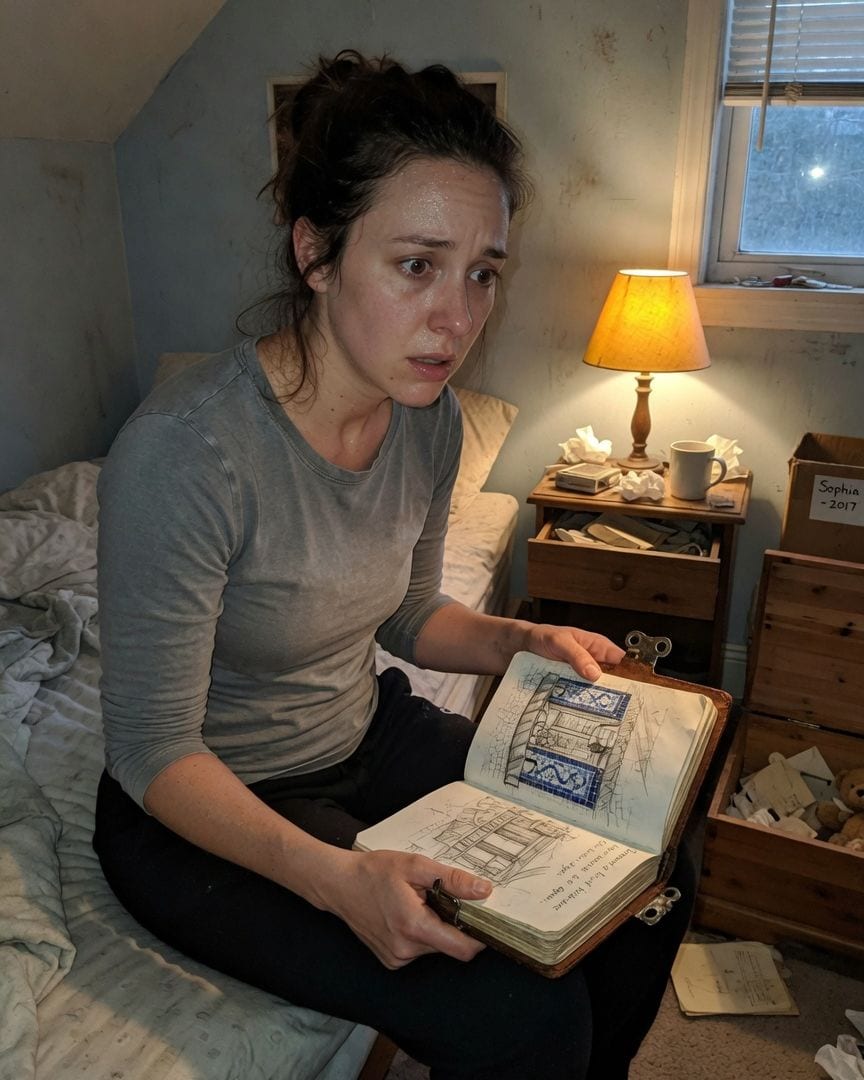
My sister Sophia spoke his name: Carlos. I had never told a soul I even knew him.
Sophia, back in my life six months after being presumed dead for five years, recounted details of my secret summer in Lisbon. She spoke of a hidden cafe and even named Carlos, an artist I almost married. My stomach clenched, because I had never told a single soul about him.
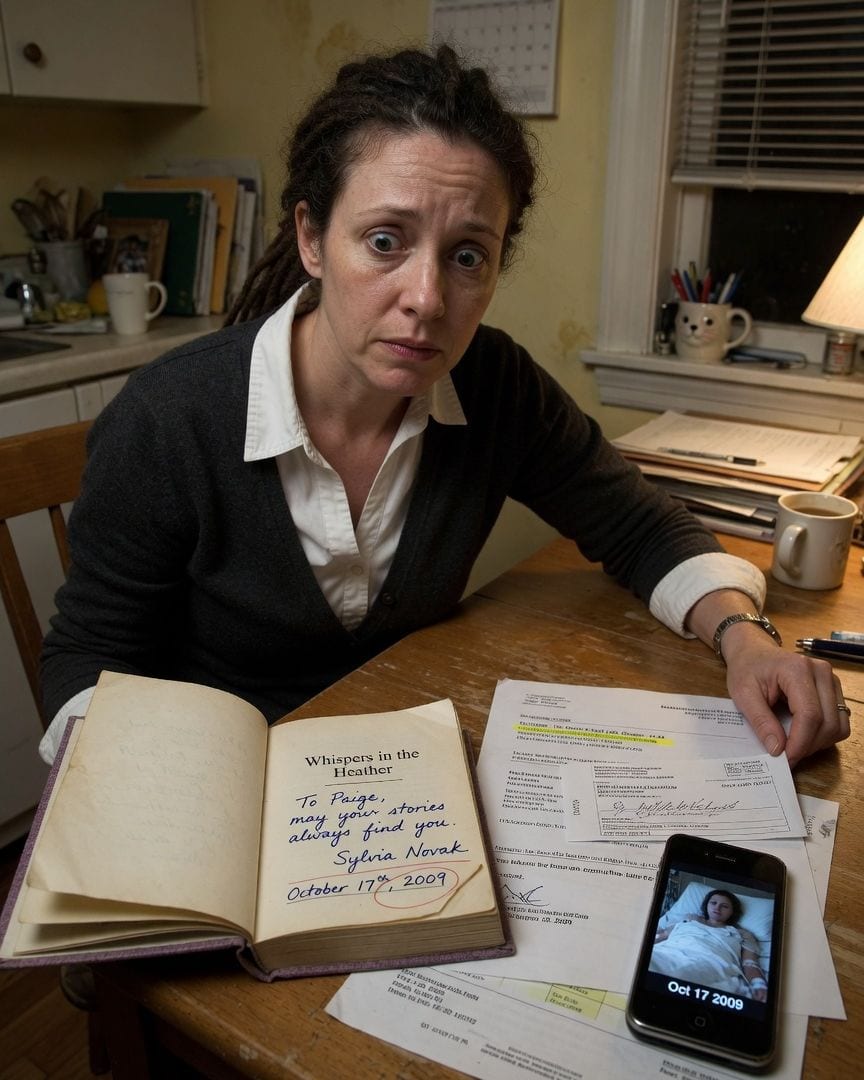
A stranger asked me to re-sign the book I'd already signed for her in Glasgow in 2009 — in my own hand. I've never toured Scotland, and that week I was recovering from surgery in Boston.
As a novelist, I'm used to signing books, but a fan recently presented *Whispers in the Heather*, already inscribed with my signature from a 2009 Glasgow event. The problem? That novel wasn't published until 2010, and on that exact date, I was recovering from major surgery in Boston. Now, my own bank records and a hospital photo confirm I was in two impossible places at once.
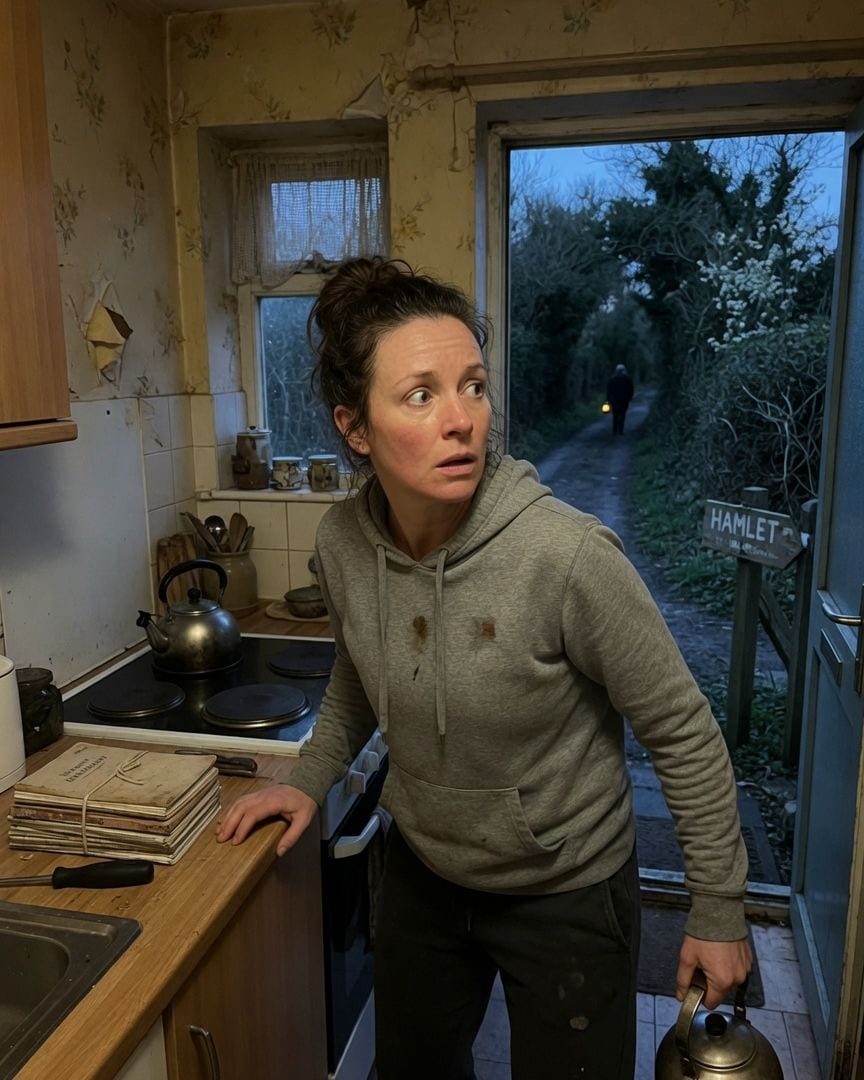
My side gate opens onto a dirt lane between hedgerows, not the close, and a figure with a lantern comes up it toward me.
My side gate normally opens onto the familiar tarmac of the close, but lately, it's opened to a narrow, overgrown dirt lane instead. Three times now, at dusk, I've seen a man with an old-fashioned lantern walking unhurriedly up this impossible lane towards my house. Each time, when I dare to look again, the lane is gone, leaving only the bins and a racing heart.
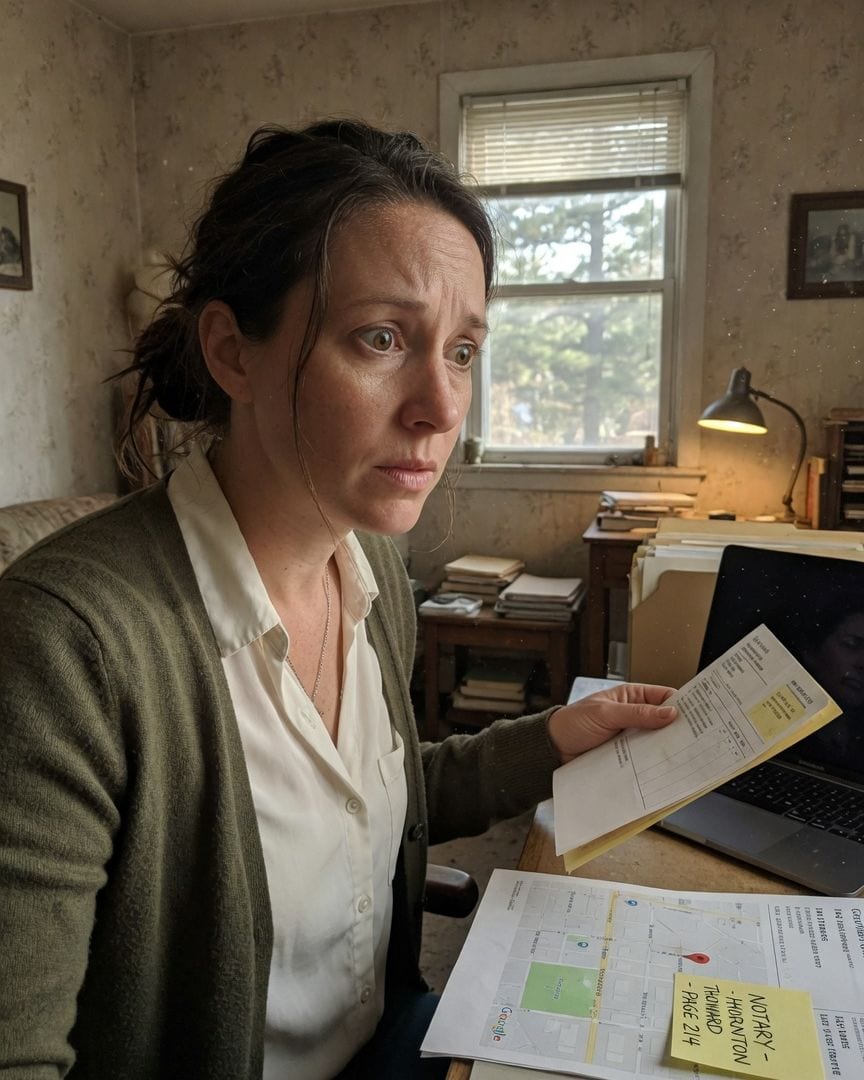
My signature is in a notary's book for an accident I wasn't in. I've never even met the man.
My name is Janet Caldwell, and my life is perfectly ordinary. Or so I thought, until a notary's register revealed my distinct signature on a document. It was dated May 14th, 2014, a day I was confined to a hospital bed, miles away.
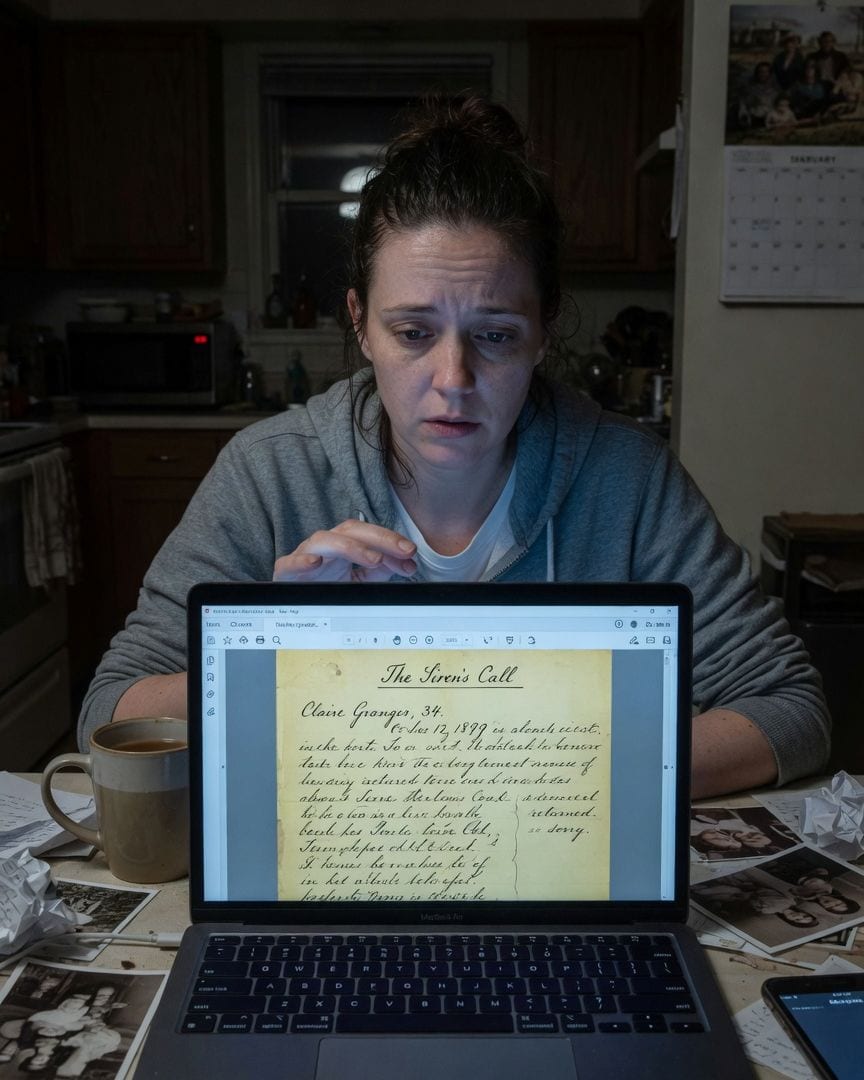
My name is on a passenger list from a ship lost in 1899. The manifest says I was 34, "returned. so sorry."
I was reviewing an old emigrant manifest, a casual dive into my family history, when I found my own name listed. The ship, The Siren's Call, was lost in 1899 with all aboard, yet my entry on the manifest was marked: 'returned. so sorry.'