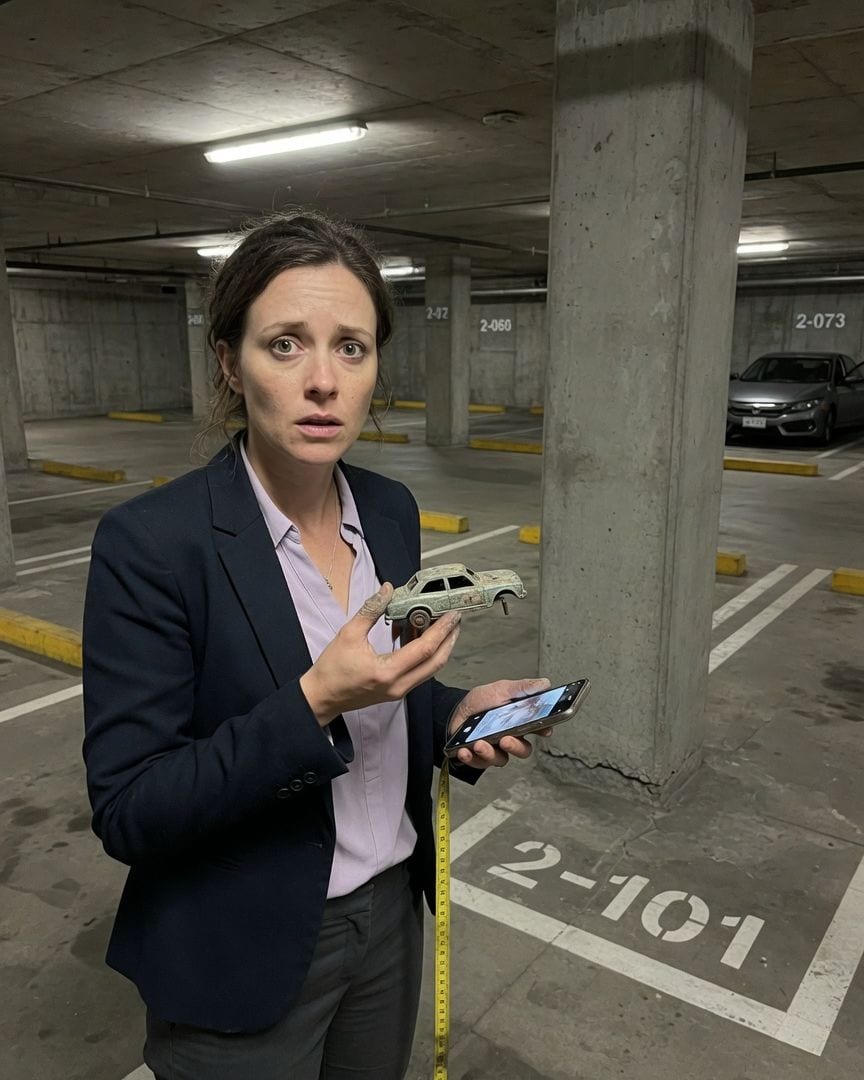
My underground car park has seventeen pillars now. The new one stands in open floor, casting a shadow with no lamp, its bay numbered 2-101 in a scheme that stops at 2-090.
The meeting had run late, as usual. It was almost midnight when I finally drove my Honda Civic into the familiar maw of the building's underground car park.
Level 2, my usual space, 2-073, was just past the halfway mark, a short walk from the elevators. My routine never varied: count the pillars. Sixteen solid concrete columns, a precise grid that kept everything ordered.
I’m a marketing professional; order is my comfort.
Tonight, the order was broken.
I rounded the corner past 2-060, headlights sweeping the rows. My gaze naturally fell to the space where the 17th pillar now stood. A stark, grey column, thick and unyielding, right in the middle of open floor.
It simply wasn't there yesterday. No construction barriers, no fresh dust, no signs of work. Just... there.
It cast a shadow too deep for the sparse overhead lighting, a void that seemed to absorb the fluorescence from above. Around its base, a fresh white parking bay had been painted, stark against the aged concrete.
The number 2-101 shone, crisp and new. My building's numbering scheme for Level 2 stops at 2-090. Always has.
A cold knot tightened in my stomach. I slowed to a crawl, then stopped the car, engine idling. I stared. My mind, usually so precise, tried to find an explanation. A trick of the light? But it was solid.
A temporary installation? But it was concrete.
I drove past my space, circled the entire level, counting each pillar again, slowly. One, two, three… sixteen. Then, past 2-090, there it was. Seventeen. I parked in 2-073, got out, and walked a slow circle around the impossible column.
I touched it. Cold, rough concrete, just like the others. It hummed faintly, or maybe that was just the building’s old ventilation. But it was there. And it was wrong.
The next morning, I was back, much earlier than needed for work. My phone was charged, a measuring tape was in my bag, and a distinct lack of sleep was in my eyes. The pillar was still there, undeniably present.
The bay number 2-101 still glared. I took dozens of photos from every angle, measured its circumference, paced the distance from surrounding pillars.
It was perfectly uniform with the others, but its placement defied logic, defying the geometry of the space. It simply _could not_ be.
I pulled up the building’s digital plans on the tenant portal. Level 2, Car Park Layout. Zoomed in, cross-referenced. Sixteen pillars. No 17th pillar. No space 2-101.
The plans were precise, dated to the building's original construction in the early 1970s. No modifications.
I called Vincent Hughes, the security guard on the overnight shift. His voice was a sleepy grumble. “Vincent, it’s Audrey Lockwood. Did you notice anything… unusual in the car park last night?” “Unusual, Ms. Lockwood? Nah. Quiet as a tomb.”
“A new pillar? A new parking space, 2-101?” A pause. “You sure you’re alright, ma’am? Been here eight years. Never seen a new pillar. Concrete doesn’t just… sprout.” He chuckled, a rough, dismissive sound.
I hung up, my hand shaking slightly. I leaned against the impossible pillar, the cold seeping through my jacket. That’s when I heard it – a faint, almost imperceptible rattle, like something tiny shifting.
It came from a hairline crack near the base of the pillar, just above the fresh white paint of 2-101. I peered closer, my eyes straining in the dim light.
Deep within the fissure, something hard and plastic caught the light, wedged tight.
I pulled out my car key, its sharp edge perfect for prying. The crack was narrow, barely wide enough for the key, but I managed to work it in. I twisted gently, feeling the small, faded object shift.
My fingers closed around it, hooked it, and pulled. It slid free with a soft pop of displaced concrete dust.
It was a child-sized toy car, small and plastic. Its chassis was a dull, mottled grey, the original colour long since leached away by time. One front wheel was missing, the axle rusted through.
It was clearly brittle with age, the kind of forgotten plaything you might find buried in an archaeological dig. Decades old, at least. Yet this pillar, this solid, impossible pillar, had appeared only last week.
I turned the ancient toy over in my palm, the cold dread solidifying, spreading like ice through my veins.
The next morning, I tried to show the toy car to Vincent. He was sitting at his desk in the security booth, scrolling on his phone. "Look, Vincent," I said, holding it out.
"I found this in the base of that new pillar." He barely glanced at it. "Huh. Some kid probably dropped it ages ago. Or someone just tossed it there. Happens all the time, Ms. Lockwood.
People treat this car park like a dump." He waved a dismissive hand. "Nothing to worry about."
He didn't get it. He refused to see the impossibility.
Undeterred, I drove to the city archives on my lunch break. I spent hours poring over microfilm and yellowed blueprints of the building, specifically the car park. Original construction in 1971.
Sixteen pillars on Level 2, exactly where they should be. No structural modifications, no plans for new construction. Nothing that could account for a 17th pillar. The building’s foundation, its very bones, contradicted what I was seeing every day.
Later, I made an appointment with Pamela Galloway, the building manager. Her office was usually a bright, bustling space, but today it felt unusually quiet. "Pamela, I need to talk to you about something concerning in the car park."
I laid my printed photos of the 17th pillar and the toy car on her desk. Her cheerful demeanor, usually plastered on, visibly soured. Her lips thinned. "Audrey, what is this? Some kind of elaborate prank?" "A prank?
Pamela, a new concrete pillar has appeared overnight. And I found this," I pushed the faded toy car closer to her. "It's ancient. How could it be inside a pillar that appeared last week?"
She picked up the toy car, turning it over in her manicured fingers. Her eyes flickered, an unreadable anxiety passing through them, quick as a shadow. She dropped the car back on the desk. "Look, I...
I assure you it's a mistake. A misprint in the plans, or some kind of forgotten construction glitch. It'll probably be gone by next week. Please, just ignore it. Don't worry about it."
She quickly changed the subject, launching into a detailed explanation of the new recycling policies. Her composure was unsettling, too quick, too firm. It wasn't dismissal; it was evasion.
Pamela's dismissal left me profoundly unsettled. Over the next few days, small, unnerving changes began to stack up. My car, always parked precisely in 2-073, was occasionally slightly askew when I returned to it.
Not by much, just enough to make me think someone had bumped it, nudged it out of alignment. But there were never any marks, no scuffs, no dents. And who would bother?
Once, I found a faint, almost invisible handprint on my driver’s side window. It was too large to be mine, pressed as if from the inside, though the window was closed, and the car had been locked.
I tried to wipe it away, but it seemed to shimmer, refusing to completely disappear.
I started to feel watched whenever I was in the car park. A prickling sensation on the back of my neck, the hair standing on end. Especially near the 17th pillar.
The air around it seemed to hum a different note, colder, heavier.
One evening, as I was locking my car, my hand still on the door handle, I glanced towards the elevator bank. Pamela Galloway stood there, not waiting for the elevator, just watching me. Her gaze was intense, unblinking.
She didn’t wave or offer her usual tight, corporate smile. She just watched, her silhouette stark against the glow of the elevator indicator, until I was safely out of sight and the doors had swished shut.
It felt less like surveillance and more like a silent warning.
The next morning, a square of paper was tucked under my windshield wiper. My heart hammered against my ribs as I reached for it. Neatly written in block capitals, just four words: 'STOP LOOKING.'
Not threatening, not angry, but chillingly firm. It wasn't a prank. Someone knew.
The note solidified it. Someone knew, and they didn't want me digging. I called Pamela again, my voice tight, demanding an explanation for the note. There was a long silence on the line.
"Audrey," she finally said, her voice strained, "I tried to tell you to let it go. There have been... odd occurrences in this building's past. Things that don't quite add up." "What kind of occurrences?" She sighed, a brittle sound.
"Previous building managers. They had a policy. Quietly managing these... anomalies. Never drawing attention. It's bad for business. For reputation." Her voice dropped to a near whisper. "There was a former long-term resident. Simon Mitchell. Moved out decades ago.
He had some strange theories. Talked about shifting walls, things that weren't there. We all thought he was... unwell." "Do you have his contact details?" Another hesitation. "I can get them for you. But Audrey, please. Be careful.
Some things are best left alone."
I got Simon’s old contact details. While waiting for a call back, I delved deeper. 'Local history and architecture forum,' Pamela had mentioned. Obscure, niche. I found it, burrowing through threads about old city buildings, forgotten architects.
Deep within a thread titled 'Lost City Legends,' I unearthed a scanned copy of a local newspaper article. The date was August 1984. My breath hitched.
The headline screamed: 'Mystery Vanishes: Child Lost in City Parking Garage.' The article detailed the disappearance of a 6-year-old girl, Sarah Davies, from _this very car park_. August 1984. Forty years ago.
The article vaguely referenced 'unusual structural reports' from the time, dismissed by authorities as 'speculation.' My blood ran cold.
And then I saw the photo. Small, blurry, but clear enough. A smiling Sarah, her bright eyes looking out from the faded newsprint. Clutched in her hand was a toy. A bright red toy car. Identical.
Identical to the one I had found in the base of the impossible pillar.
I called Simon Mitchell. His number, miraculously, was still active. He answered on the third ring. His voice was frail, raspy with age, but perfectly clear. "Mr. Mitchell? My name is Audrey Lockwood.
I'm calling about the building on Elm Street." A long pause. "Ah. Elm Street. It's... active again, isn't it?" "I found a toy car," I said, my voice barely a whisper. "A faded red one."
Another long, shuddering breath from his end of the line. "Sarah Davies. God rest her soul. It wasn't just Sarah, you know. There were others. Before her, too. They said it was a one-off, a tragic accident, a runaway.
But I knew. I saw the blueprints. They changed. Just like the pillar." My blood ran cold. "Changed how?" "I saw it," he whispered, "another series of disappearances, forty years before Sarah. In the 1940s. Always connected to...
a new space that wasn't there before. A pillar, a strange bay number." His voice, though weak, hardened with conviction. "The building breathes, you see. Every forty years, it opens." My eyes flicked to my calendar, pinned above my desk.
The current year, stark and undeniable. 2024. Forty years since 1984.
Simon explained the full terrifying truth over a video call a few days later. His face, etched with decades of worry, filled my screen. He held up a stack of old, yellowed papers.
"These are my notes," he rasped, "my evidence." Among them were hand-drawn schematics, amateur but precise, detailing the car park's layout from the 1940s.
They depicted a similar impossible pillar, in a slightly different location, with an anomalous bay number, just like 2-101.
"It's a doorway," Simon said, his voice dropping to a low, gravelly tone. "To a place that isn't on any map. It takes people. Not violently, not with a struggle you'd hear. Just... absorbs them.
Like stepping into a pocket that isn't supposed to be there." He recounted how he'd been a young man in 1984, living in the building, when the car park's geometry subtly 'shifted.'
The appearance of the 'extra' pillar, the feeling of wrongness. He remembered Sarah Davies’ parents, their car parked right next to it, just before she vanished.
He described the desperate search, the police dismissing his claims of shifting walls and impossible spaces, calling him a crank. "They just couldn't see it," he said, shaking his head.
"Their minds refused to acknowledge what was right in front of them."
"It closes after a while," he continued, "and everything goes back to normal. Until the next time. The cycle repeats, exactly every forty years." He looked directly into the camera, his eyes wide and urgent.
"The opening is nearing its peak, Audrey. The pillar… it's hungry."
I knew I had to get proof. Something beyond old articles and a retired man's scribbled notes. I armed myself: my phone, fully charged, a powerful flashlight, and a small, heavy rock, clutched tight in my palm.
A stupid, primal weapon, but it made me feel marginally less vulnerable.
Descending into the car park, the air around the 17th pillar felt colder, denser, as if it were a solid block of ice in the humid underground.
The painted bay 2-101 seemed to shimmer faintly, its crisp white edges blurring, as if it were vibrating. The faint hum I'd noticed before was louder now, a low thrum that resonated in my teeth.
I approached cautiously. The pillar looked taller, its concrete surface rippling like disturbed water, a faint, metallic tang in the air. My heart hammered against my ribs. As I reached out, my hand passed through it.
Not entirely, but as if it were a solid surface giving way to liquid, to thick, cold gel. Fear clawed at me, an animalistic terror, but I pushed through, driven by a desperate need for answers, for proof.
I stepped into the space marked 2-101.
The world twisted. The familiar geometry of the car park melted into an impossible, cavernous expanse. The grey pillars stretched into an infinite, silent void, receding into a perpetual twilight.
The air was utterly still, cold, and smelled faintly of ozone and dust, like static electricity and old stone. A profound, silent draw tugged at me, a sense of being pulled deeper into that impossible space.
My mind screamed, fighting to stay grounded, to keep hold of reality.
Near what should have been the far wall of the bay, now just a grey indistinctness, something lay on the ground. A discarded wallet. Old, worn leather. Clearly belonging to an adult.
With a burst of desperate energy, I lunged for it, grabbing it. I fought the disorienting pull, scrambling back through the rippling pillar, back into the familiar, if still profoundly wrong, car park.
The pillar solidified behind me with a low thrum, the impossible space gone, leaving me gasping for air, the cold wallet clutched tight.
I didn't look back. I drove out of that car park and never returned to the building. The wallet I took contained an old ID card. A man's photo, faded but clear. The name: 'James Galloway.' The issue date: 1984.
Pamela Galloway’s maiden name. Her father, perhaps, or an older relative. Another ghost pulled from the past.
A week after my escape, I learned the 17th pillar had vanished completely, leaving no trace. A smooth, empty patch of concrete floor, exactly where it shouldn't have been.
Pamela Galloway abruptly resigned from her position and moved away, leaving no forwarding address. The building's management issued a terse statement about 'minor structural anomalies' being corrected, then quickly changed the subject when pressed.
I tried to explain. I showed them the old ID, my photos of the impossible pillar, my meticulous measurements that proved the space was wrong, then right again. No one believed me.
They saw a woman unhinged by stress, fabricating a fantasy to cope with burnout. The police filed my report under 'unsubstantiated claims,' a polite way of calling me delusional.
I live in a new city now, far from any building with an underground car park. I still measure every room, every hallway, every space I inhabit, always double-checking the numbers.
The map of my life has a blank spot where that building used to be, but the geometry of my mind is forever altered.
If this one got to you
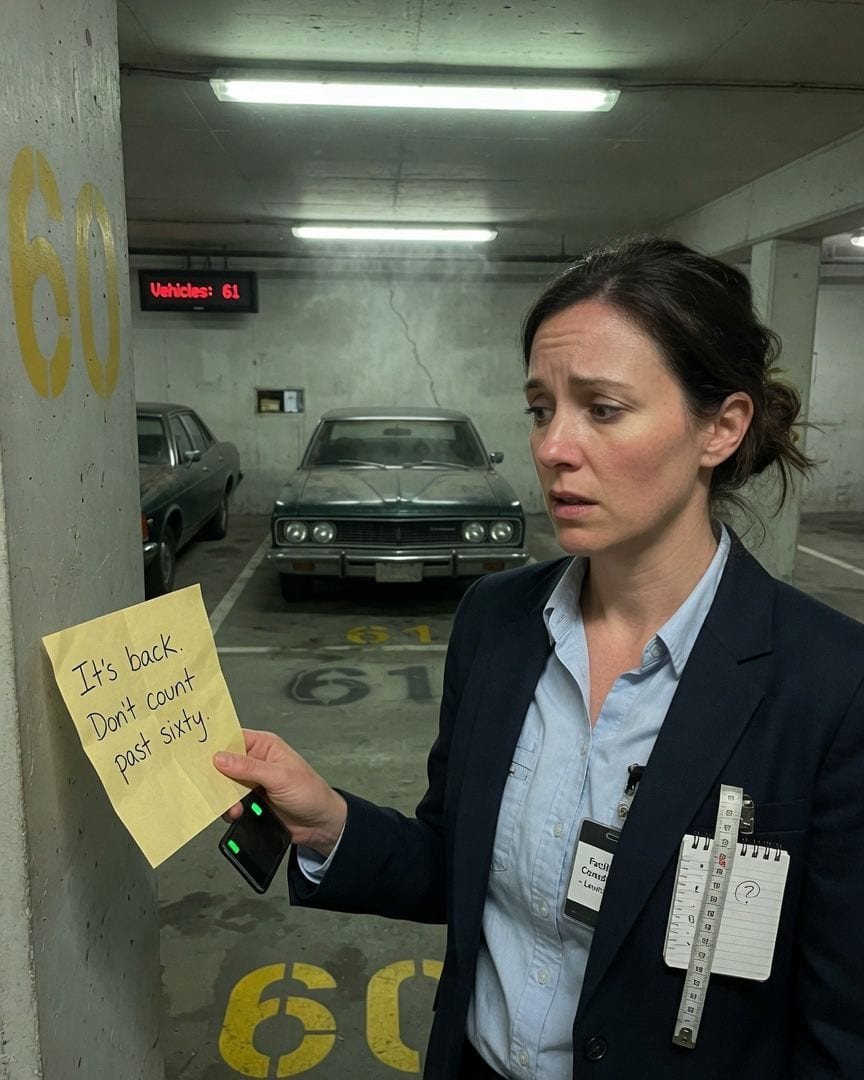
My hand found a hidden seam in the concrete wall. Inside, a desperate note warned: 'Don't count past sixty'.
I arrived at the underground parking lot a few minutes late, expecting the usual sixty spaces. But my pass blinked '61', and a new bay, numbered 61, had appeared beyond the lot's end wall. Inside it sat a vintage car, still warm from a recent drive. Every blueprint and log insists this space doesn't exist, yet it's undeniably there.
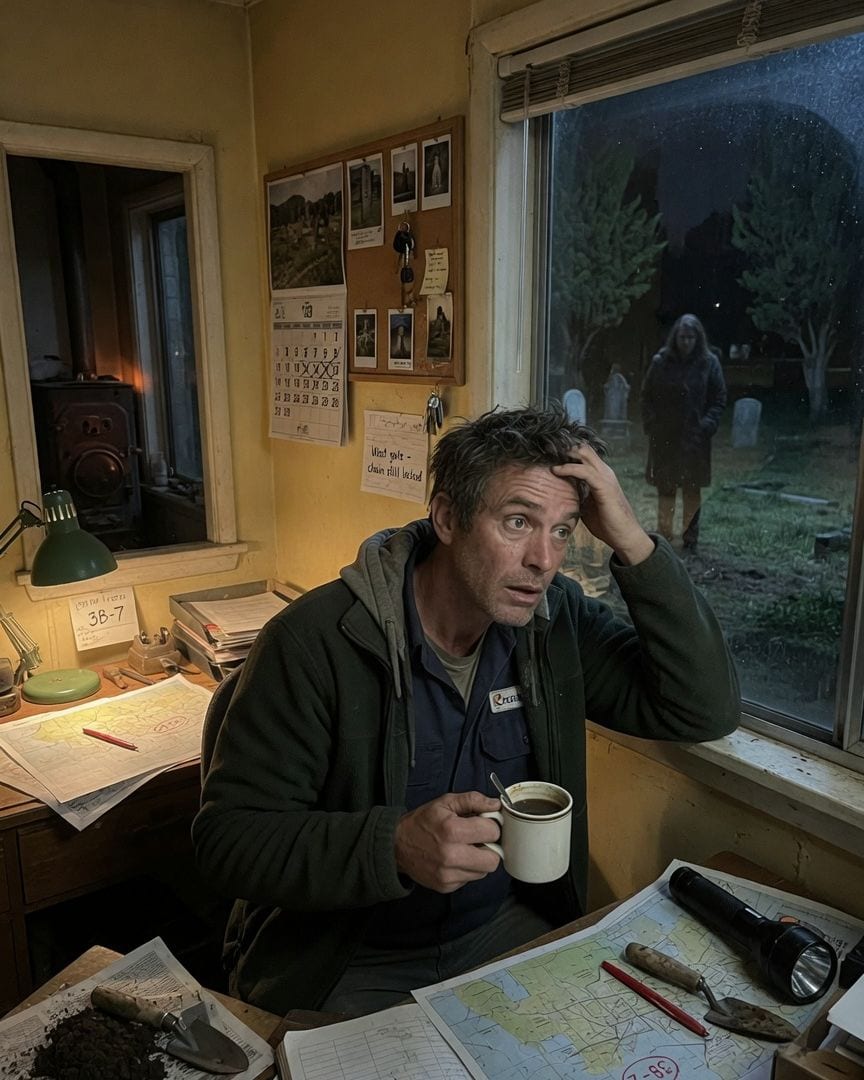
My cemetery lodge overlooks a woman visiting an empty grave near 3 AM most nights. The west gate she uses has been chained shut since autumn, its lock untouched.
As the cemetery's night caretaker, I'm used to the quiet hum of the lodge. But for three weeks, a woman has appeared nightly at plot 3B-7, a silent mourner in the deep night. What chills me is how she leaves: walking straight through the west gate that's been chained and padlocked shut for eight months.
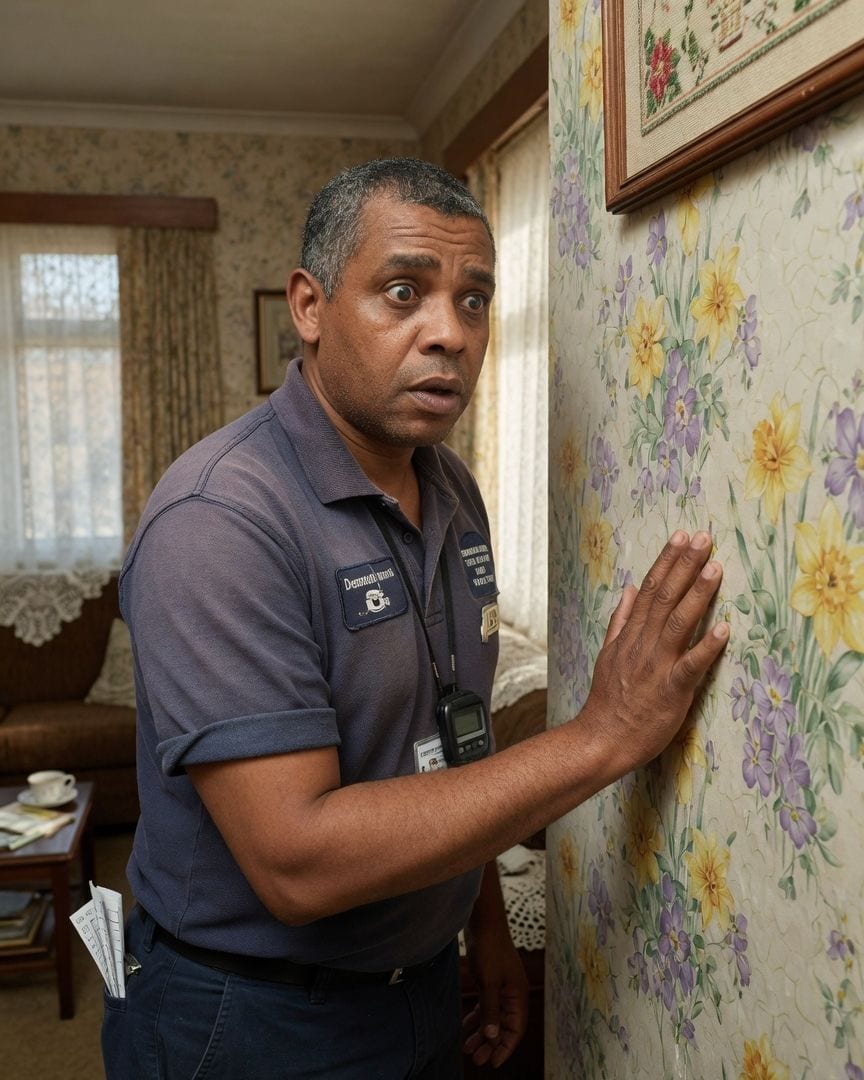
I read the water meters on this street, and this month number 30 grew a second one in pavement that was solid last month — its pipe runs back under a front door I cannot find.
I'm Desmond Drummond, a city water meter reader, used to the predictable rhythm of my fifteen-year route. But this month, Mrs. Crane's house on Elm Street showed a second meter reading. It led to a new meter pointed at a blank brick wall, and later, to a hidden door behind her living room wallpaper where no door should exist.
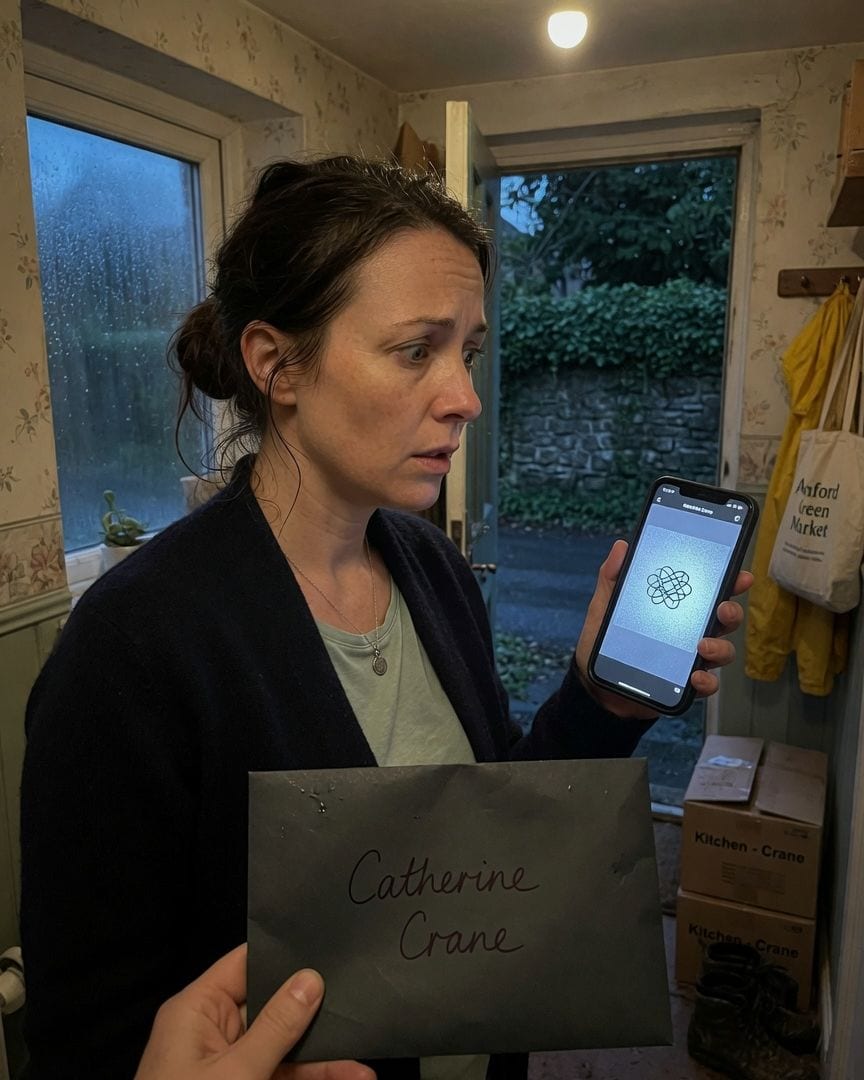
My postman warned me: never use the old pillar box. Royal Mail logs a collection every day, one item, signed by no one.
Moving to Ashford Green, I dismissed my postman's strange warning about the old pillar box by the ford. But after my own letter vanished inside it, I returned at midnight. Then, a dark, unstamped envelope slowly slid *out* of the slot, addressed to me.
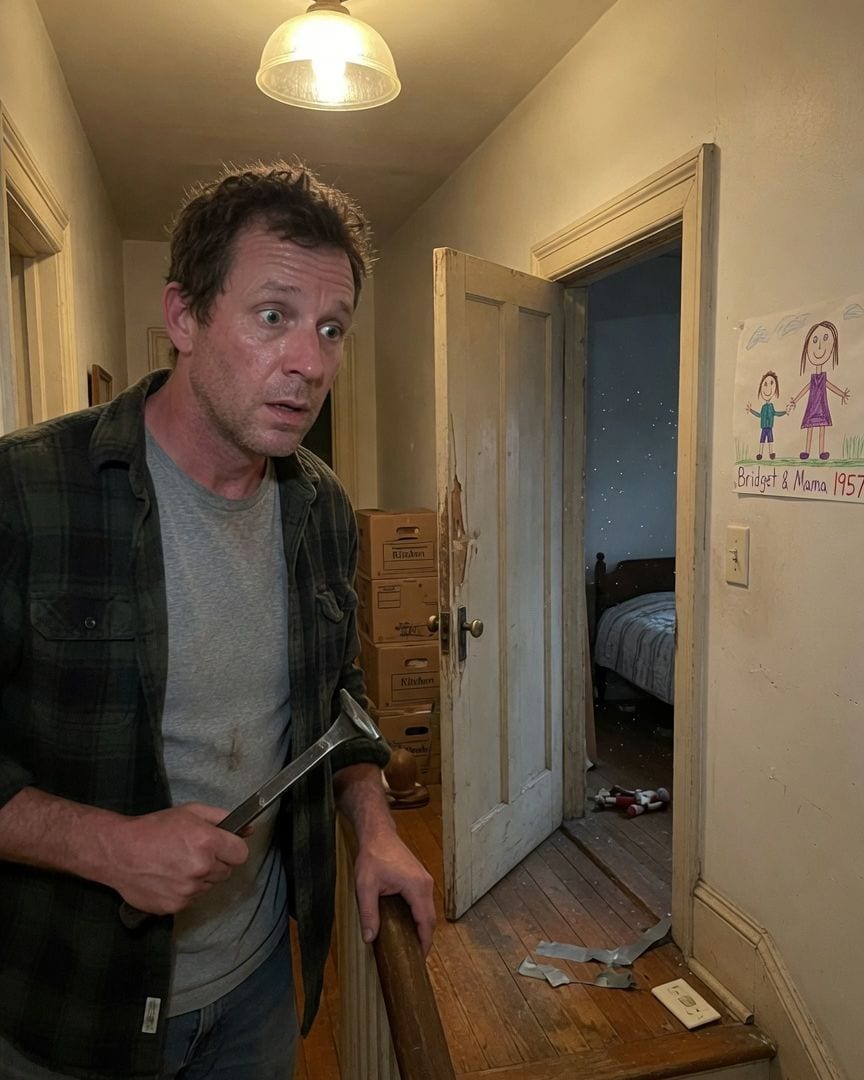
My landing light switches itself off at 9:40 every night. I've watched the switch flick down under nothing, the tape peeled back. The house holds its breath.
My great-uncle's old house was a quiet gift, a place to finally settle. But as I unpacked, a strange worn path on the floorboards led me to a small, barely visible door, perfectly blended into the wall. It was undeniably locked, and felt like a deliberately obscured secret.
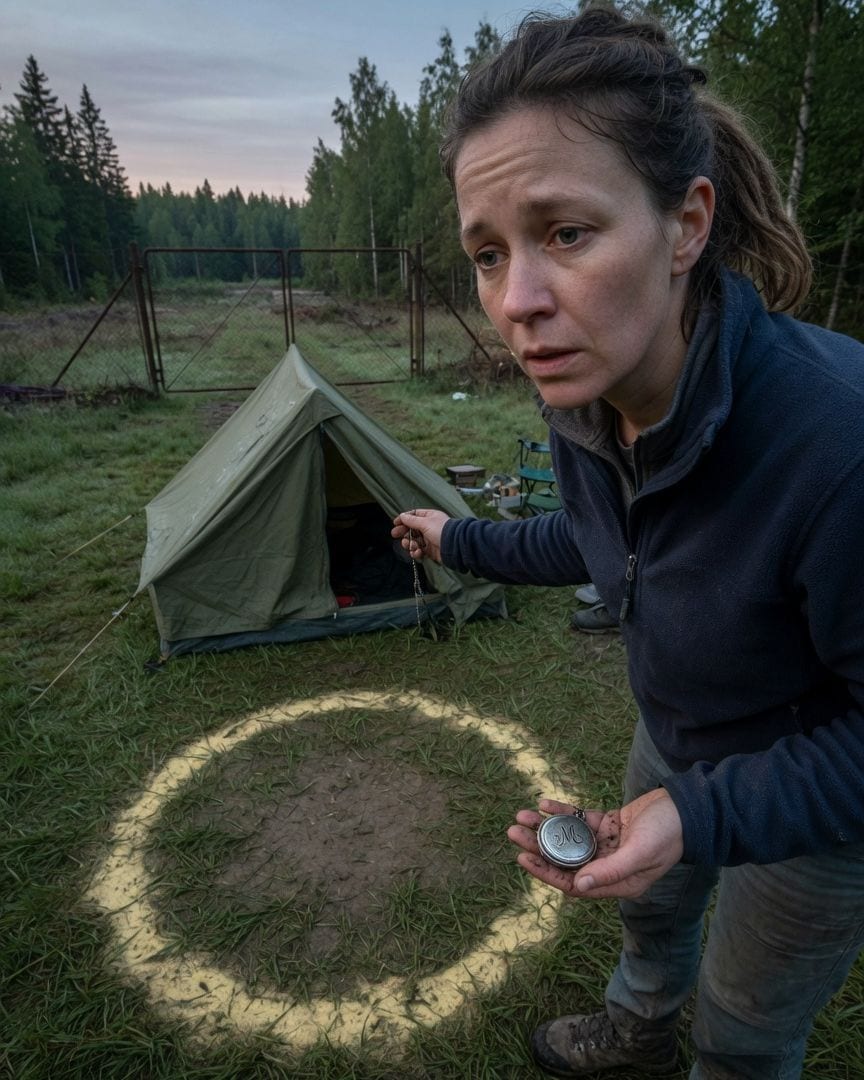
My tent left a flattened ring in the grass, but an older one was already there, worn into the turf, exactly tent-sized, for thirty years.
As the new camp host, I ignored the warden's odd rule about pitching my tent on a particular flat spot. That night, something enormous walked in slow, methodical circles around my tent. The next morning, I found a deeply worn, old ring in the earth beneath my tent, and later, a tarnished silver locket buried there.