Airman Tobias Weld felt the Cold War missile silo wall glowing warm, six years after it was emptied. Its logbook held an entry from an airman officially transferred a year before its date.
The Dakota blizzard clawed at the entrance to Silo D-4, a white frenzy of wind and snow, but Airman Tobias Weld, at twenty, had a job to do.
His breath plumed white in the frigid air as he cranked the heavy hatch open, a groan of stressed metal.
He dropped into the dark, a lonely concrete tube in the heart of winter, the only sound the shriek of the wind above him and the slow grind of the winch lowering his cage.
His torch beam cut through the gloom, a stark white spear in the perpetual twilight of the silo, illuminating thick, sparkling frost coating every surface – the ladders, the catwalks, the curved steel walls. Each breath burned in his lungs.
Forty feet down, his light caught something impossible. A section of the steel tube wall, precisely rectangular, stood utterly bare and dry.
It was perhaps six feet tall, two feet wide, at the height where a man might lean his back against it. The surrounding steel glittered with ice crystals, but this rectangle glowed faintly with an unnatural warmth.
Tobias shifted the beam, tracing its clean edges. Around its perimeter, the frost wasn't growing inward; it was slowly, almost imperceptibly, retreating, a microscopic battle lost to an unseen heat.
Tobias pressed his gloved hand to the bare steel. The warmth seeped through the thick fabric, a definite heat that defied the sub-zero environment. He pulled his hand away, then pressed it back, checking. It was real.
He tried to rationalize it – a faulty heater, an unmapped geothermal vent. But the silo had been cold-stored for six years, officially empty since 1957, its missile pulled, power disconnected. There was no heater. No reason for any heat.
He moved his light, searching the surrounding wall, and found a small, rusted utility locker bolted to the steel nearby, its latch frozen solid.
He braced his boot against the wall and yanked, the aged metal groaning until the latch finally broke with a sharp crack. Inside, beneath a layer of dust that had settled undisturbed for years, he discovered a laminated, unofficial logbook.
Its pages were brittle, yellowed with age, but the lamination had preserved the ink. He opened it, his fingers stiff with cold, and saw the date: 1958. A year after the missile was supposedly pulled and the silo decommissioned.
A single, distinct entry, scrawled in a hand unfamiliar to any official base logs Tobias had ever seen, read: 'Thermal anomaly observed. Airman Caldwell. Silo D-4. 2200 hrs.'
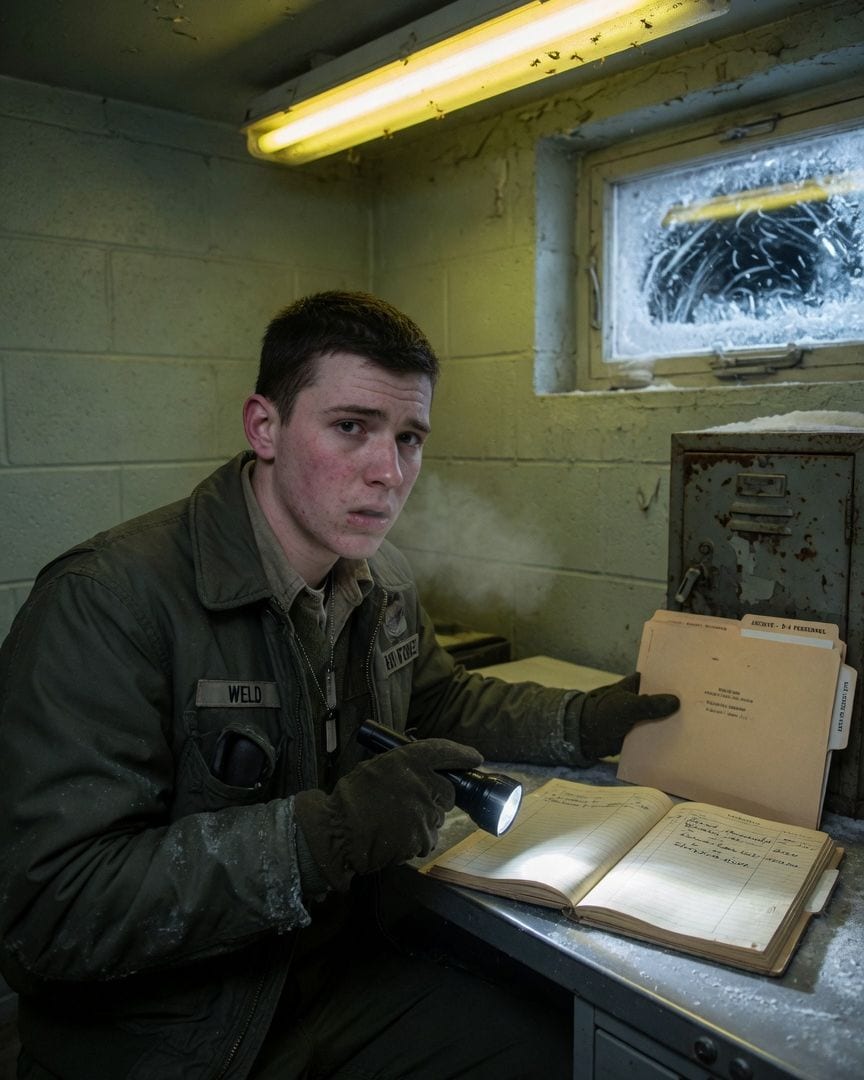
Back in the relative warmth of the guard shack, the fluorescent lights humming, Tobias pulled the base’s archived personnel records. His fingers, still cold, fumbled through the thick folders until he found the name: Airman S. Caldwell.
The official entry listed him as 'Transferred, 1957.' Tobias stared at the official date, 1957, then back at the unofficial logbook entry from 1958, the name 'Airman Caldwell' stark on the laminated page.
The warm steel’s impossible heat still seemed to linger on his gloved hand, a phantom sensation, as he realized the logbook couldn't exist if Caldwell was gone, and Caldwell couldn't have been there if the silo was empty.
Tobias started his own quiet investigation into S. Caldwell, digging through the base’s older administrative files, avoiding official channels.
He found no transfer papers, no new assignment, just an abrupt cessation of records, as if Caldwell had simply vanished from the military’s official memory after 1957. His paychecks stopped. His bunk was reassigned. Nothing else.
The official story simply ended. Tobias finally tracked down Samuel Foster, a retired base technician, now sixty, living in a small, isolated cabin near the base. The cabin smelled of stale pipe smoke and damp earth.
Foster, a man with haunted eyes, offered Tobias a cup of bitter coffee. He remembered Caldwell vaguely, and the D-4 silo.
His voice was a hushed rumble, speaking of 'special maintenance' that went on after the missile pull, 'things that weren't missiles' requiring attention, sometimes at odd hours.
Foster recalled Caldwell changing after his last assignment to D-4, becoming 'very quiet, like he'd seen something that polished all the words out of him.' He shook his head slowly. 'He wasn't the same. Distant, you know?
Like he was looking through you.' Tobias brought up the unofficial logbook, careful to describe it without admitting he had found it.
Foster’s gaze flickered to the corner of the room, avoiding Tobias’s eyes, a tell-tale sign, and he denied any knowledge of it.
'Never saw a logbook like that,' he mumbled, but his hands trembled slightly as he set down his mug.
Tobias continued his search alone, drawn back to the base’s disused archive, a vast, echoing space filled with forgotten history. Dust motes danced in the sparse sunlight filtering through grimy windows.
He sifted through boxes marked 'historical miscellany,' feeling like a ghost among the specters of past bureaucracy.
Deep in one box, beneath a stack of quartermaster receipts, he unearthed a heavily redacted internal memo, its cover sheet marked 'Silo D-4 Anomaly Assessment.' The date was 1959.
The redactions weren’t typical black lines; entire paragraphs were blacked out, leaving behind strange, recurring negative spaces shaped like a standing man. He stared at the page, a jolt of recognition hitting him.
These shapes, the empty white spaces on the page, perfectly matched the warm spot in the silo – the same height, the same width.
As he traced the outline of a redaction with his finger, a chill ran down his spine. The fluorescent lights in the archive flickered erratically above him, then dimmed, plunging the far corners into shadow.
A soft, metallic click echoed from the next aisle, followed by an unnerving silence that seemed to swallow the entire building.
Tobias froze, his heart pounding against his ribs, a sudden, chilling certainty washing over him: he wasn't just investigating; he was being watched.
Tobias confronted Foster again, returning to the cabin the next day, this time presenting the photo he’d taken of the redacted memo. He laid it flat on Foster’s scarred wooden table. Foster’s composure shattered.
His hands trembled as he took the photo, his eyes wide with fear, scanning the familiar blacked-out shapes. 'Where did you get this?' he whispered, his voice hoarse. Tobias pushed for answers, explaining what he’d found in D-4.
Foster finally broke, admitting there was a 'protocol,' a system for dealing with the 'events' at the silo. He began to speak, his voice barely audible, a low, terrified drone. 'The thermal signatures...
like the one you found… they were pre-signatures. Indicators. They meant an event was coming.'
He explained that the 'processing' of affected personnel wasn't a transfer, wasn't a punishment, but a method of containing the incident and the individual within a classified record. He cleared his throat, his eyes darting to the cabin door.
'Caldwell… he wasn’t transferred. He was filed,' Foster whispered, the word a terrible, heavy thing. 'Like an inventory item. Or a case study. They just… put him in the record.'
He described the process as a meticulous documentation, an erasure from the active roster, and a permanent entry into a hidden ledger. The horror wasn't that they lost him, or that he was missing.
The horror was that they knew exactly where he went.
Foster, visibly sweating despite the cool air in the cabin, pointed a shaking finger to a specific, partially legible serial number on the memo's footer, a control number for the master file. The numbers were faded, barely visible, but distinct.
'That's the master file,' he whispered, his voice cracking, 'the one with all the names. All the filed ones.' His finger hovered over a sequence of digits. 'And that's your service number, Airman Weld.'
Foster’s eyes met Tobias’s, filled with a terrible, resigned pity. 'They’ve been waiting.'
Tobias stared at the faded numbers, then at Foster's terrified, desperate face, then instinctively reached for his own service ID tag, his fingers tracing the embossed digits on the metal.
The air in the small cabin felt suddenly heavy, charged with a premonition that chilled him to the bone. His name, his identity, already part of a secret he'd only just begun to uncover.
Driven by a desperate, cold need for answers, Tobias used Foster's cryptic directions.
He found a forgotten sub-basement beneath the oldest section of the base, accessible only through a disused ventilation shaft, a cramped, dusty tunnel that smelled of mold and forgotten things.
He squirmed through, his torch beam cutting a path through cobwebs, until he dropped into a small, windowless room.
There, on a single steel shelf, he found it: a thick, leather-bound ledger, its cover embossed with a single, chilling stamp: 'DECLASSIFY NEVER.' Tobias's hands trembled as he opened it.
Inside, the pages were filled with meticulous entries, dating back to the 1930s.
Each entry detailed a 'thermal signature' – its exact size, location, and the date it appeared – followed by a concise description of a 'human interface event' and the subsequent 'processing' of the involved personnel.
There were dozens of names, each with a service number, each listed as 'filed.' Then he found it. His own service number, right there on a fresh page, alongside the coordinates for Silo D-4 and the current date, already recorded.
The file wasn't a record of containment or investigation; it was a catalog, a methodical ledger of a recurring, inescapable phenomenon, and the individuals it claimed. The redacted memo had only been a summary of these full, horrifying logs.
Tobias slammed the ledger shut, the finality of the sound echoing in the stale air of the sub-basement. The warm spot in the silo wasn't a residual effect, or a geological anomaly, or a faulty wire.
It was a pre-signature, marking the next 'filing.' His name was in the file because he was present at the pre-signature, chosen by proximity.
He turned, a desperate, frantic urge to escape seizing him, but the heavy steel door, which he’d left ajar, was now shut, sealed tight. He tried the handle, twisting, pulling, but it was locked from the outside.
The air in the sub-basement grew still, and then, slowly, perceptibly, warm. The single bare bulb above him flickered erratically, casting long, dancing shadows across the concrete walls.
Tobias felt a familiar heat on his back, a rectangle of warmth pressing against him, growing stronger, conforming perfectly to the size and height of a man. It was no longer behind the wall. It was here, now, embracing him.
The blizzard passed, and the frozen cap on Silo D-4 was eventually cleared. Airman Tobias Weld’s official records showed a transfer to a remote, classified research facility, effective immediately after the D-4 incident.
There was no forwarding address, no contact information. His personal effects were boxed and sent to his parents, but the small, unofficial logbook from the silo was conspicuously missing from the inventory.
Samuel Foster, the retired technician, was found dead in his cabin a week later, ruled a heart attack. The master file in the sub-basement remained undisturbed, its next entry already logged.
His mother, Naomi Weld, received his last letter a week later. It was just a blank sheet of paper, folded precisely. She held it to the light, then put it back in the envelope, sealed.
Decades later, a declassification review board found a single, unfiled photograph in a sealed box marked 'Silo D-4, 1963.' It showed a rectangle of bare, dry, warm steel on the tube wall, a faint imprint on its surface.
The frost was still creeping in from the edges. Slowly.
If this one got to you
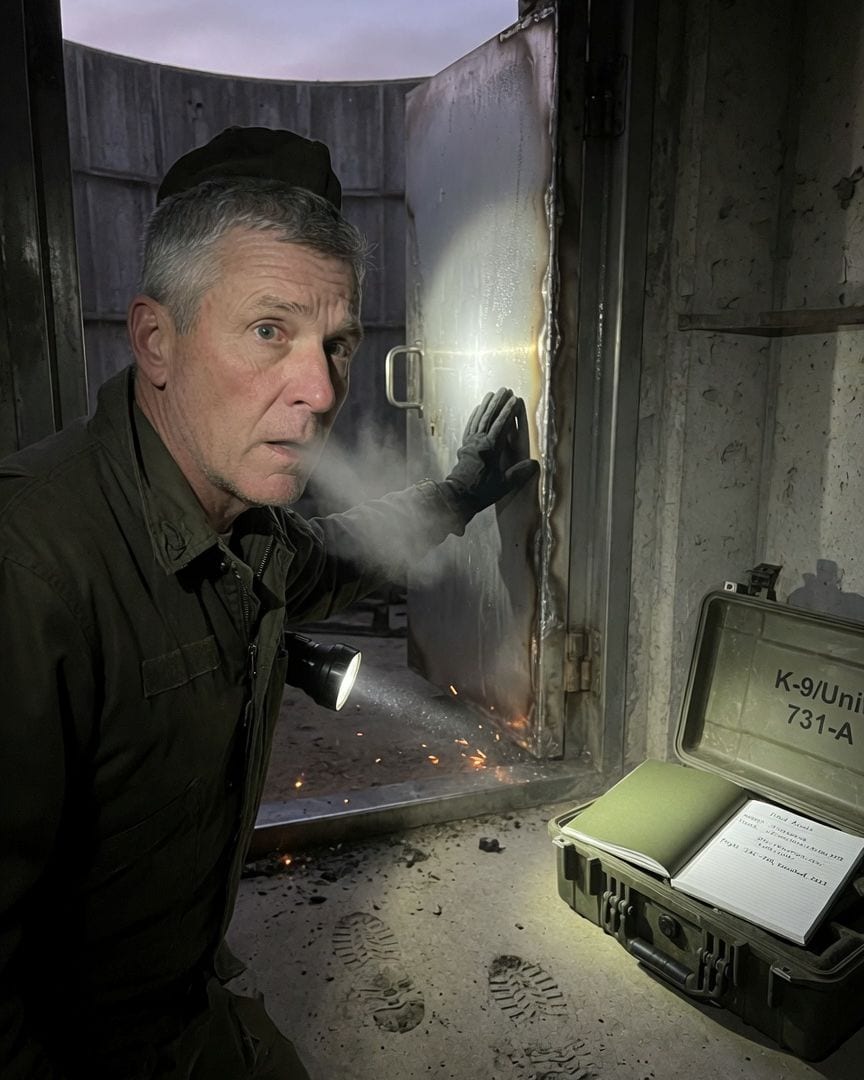
The Cold War silo was welded shut in 1968. A Captain found lights burning, fresh prints leading inside, and a logbook with a vanishing from last week.
Captain Merrit Sable faced a deadline at Silo K-9: one cold morning to retrieve classified hardware before its scheduled demolition at noon. The silo, officially welded shut by the Air Force in 1968 and long off-grid, should have been a tomb of forgotten machinery. Yet, through a cracked port, he saw nine work lights burning steadily forty feet down, and felt the faint suction of an active ventilation system. After breaching the decades-old weld, Merrit found more than just lights; fresh boot prints led deeper into the meticulously clean shaft, but none returned. A hidden compartment in an empty, warm hardcase revealed a logbook, its crisp pages detailing notorious military disappearances, with the latest entry dated just last week.
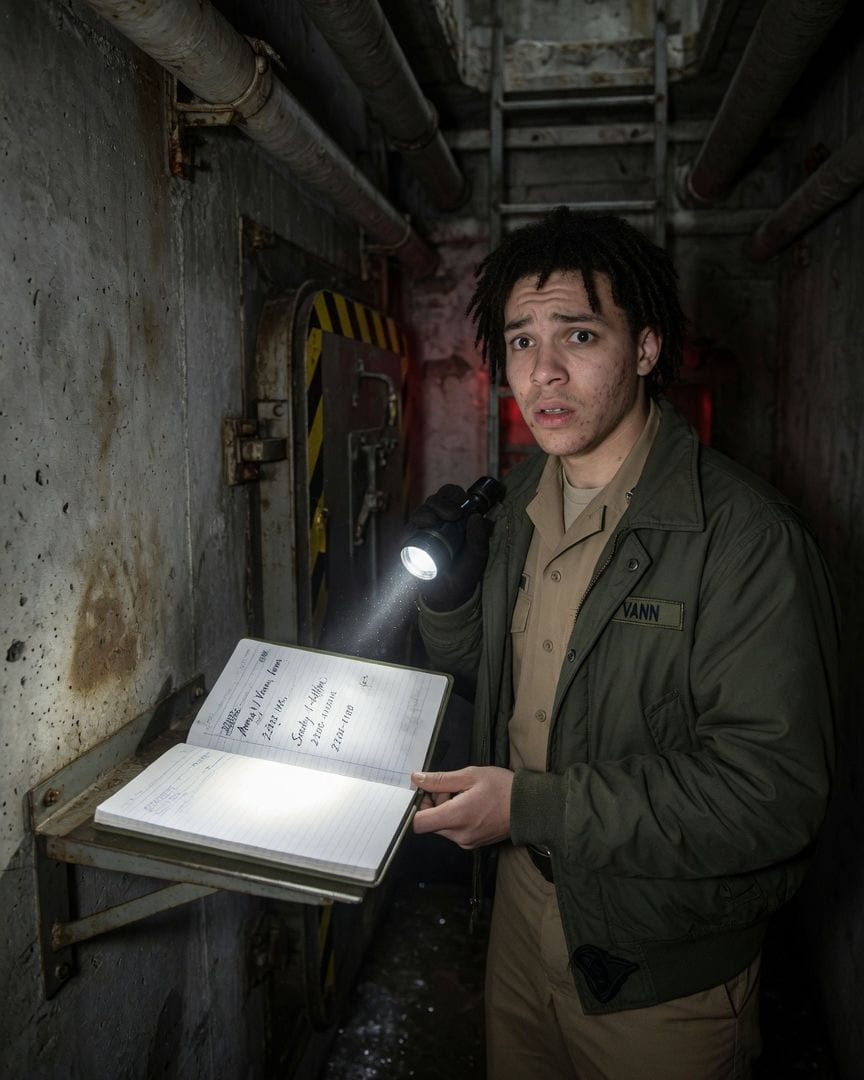
On his last patrol, Airman Vann sees a Cold War silo hatch light up from *inside*—it was welded shut a decade ago.
Airman Vincent Vann was on his last patrol across a vast, desolate Cold War missile field in the Dakotas, the cold, starless sky mirroring the emptiness of the landscape before his transfer. His routine check of eight hardened silo caps was shattered when a red fault light pulsed on Silo 4’s access panel, signaling an impossible breach from *inside* a hatch sealed for a decade. As more silos lit up, ignoring base orders, Vann found the hatch unlocked from within and descended into the dark shaft, where he discovered a pristine logbook bearing his own signature next to a chilling entry from a non-existent sentry, dated for *that very night*. Now, a steady *thump* echoed from deeper within the sealed concrete, leaving the Airman desperate for an explanation that simply wasn't there.
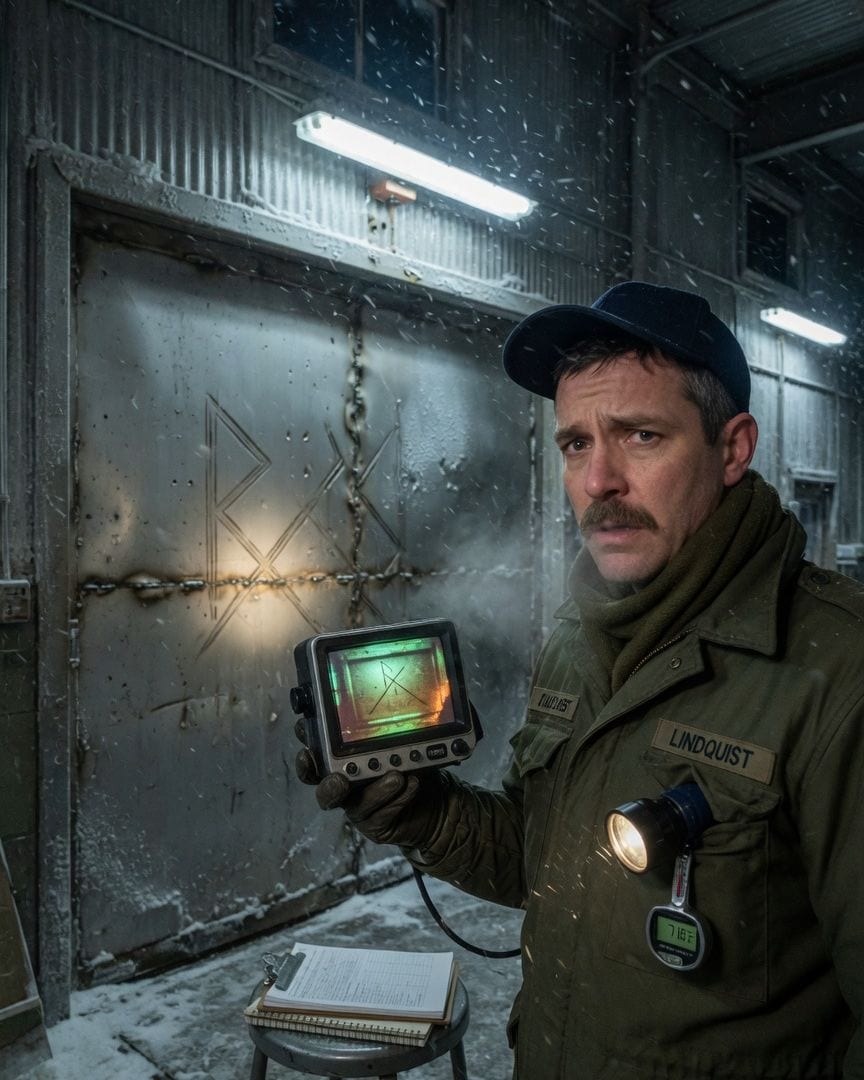
A methodical Cold War sergeant found a strange symbol etched into his sealed hangar bay. He then saw the exact same mark glowing *inside* it.
Technical Sergeant Wes Lindquist endured Alaskan winters, his duty in the vast, frigid hangar simple: log Bay Two’s temperature. The bay, sealed shut for months, inexplicably ran nine degrees warmer than the icy building for 111 straight nights in 1978. Despite official dismissal, the numbers kept climbing, forcing Lindquist to keep a secret log as the bay’s internal heat reached an impossible 72 degrees. Driven by cold certainty, he discovered a faint, unsettling symbol etched along the door's weld. Later, peering through a tiny seam with a borescope, he saw the identical mark shimmering with a fresh, orange glow from *inside* the supposedly empty, sealed bay.
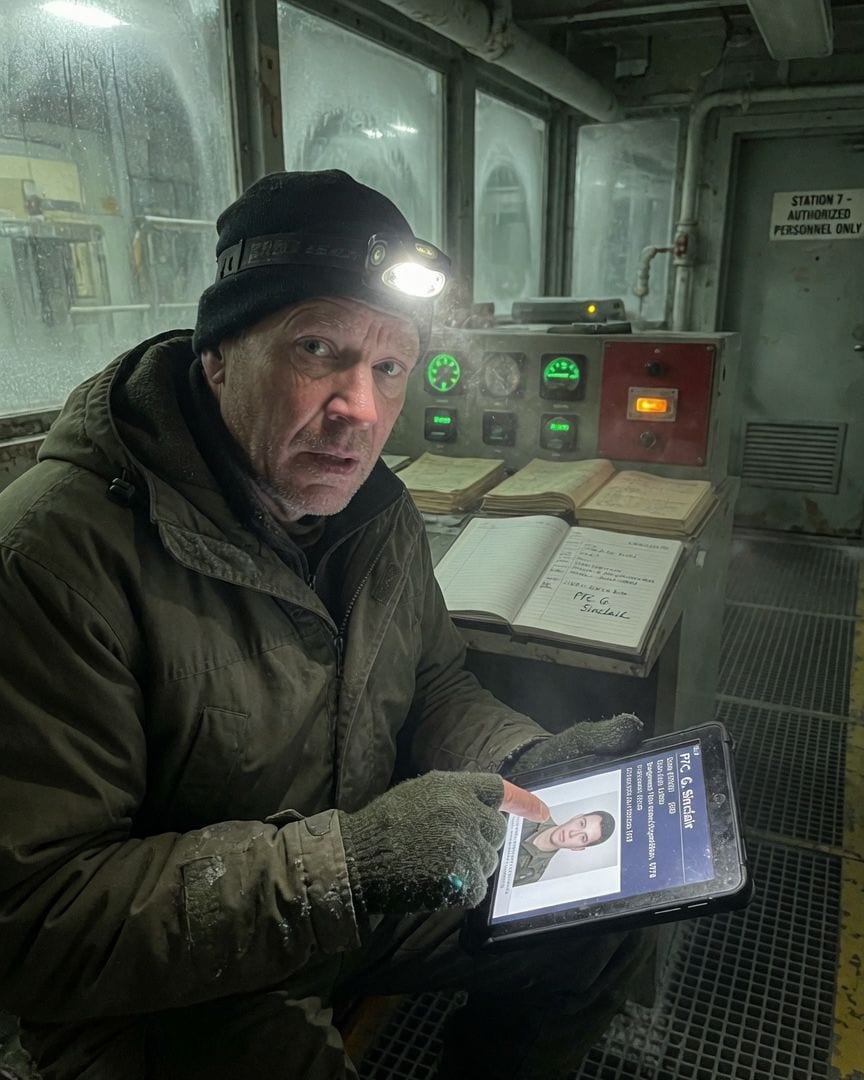
Chief Warrant Officer Ellison found a log signed last week in a Greenland Cold War base decommissioned in 1967, by a soldier MIA since 1978.
Chief Warrant Officer Franklin Ellison was two days from ending his Greenland deployment when his final core probe plunged into an unexpected void. A strange warmth and humid scent rose from the shaft, revealing the long-abandoned Station 7 below, its plant room surprisingly active with glowing gauges and a rhythmic hum. Ellison discovered an open shift log, its last entry, dated for the previous week, signed in fresh ink by PFC. G. Sinclair. Yet, a quick database check revealed Sinclair was reported Missing in Action in 1978, years after the station was officially decommissioned. How could a soldier missing for decades have signed a log last week in a base abandoned for half a century?
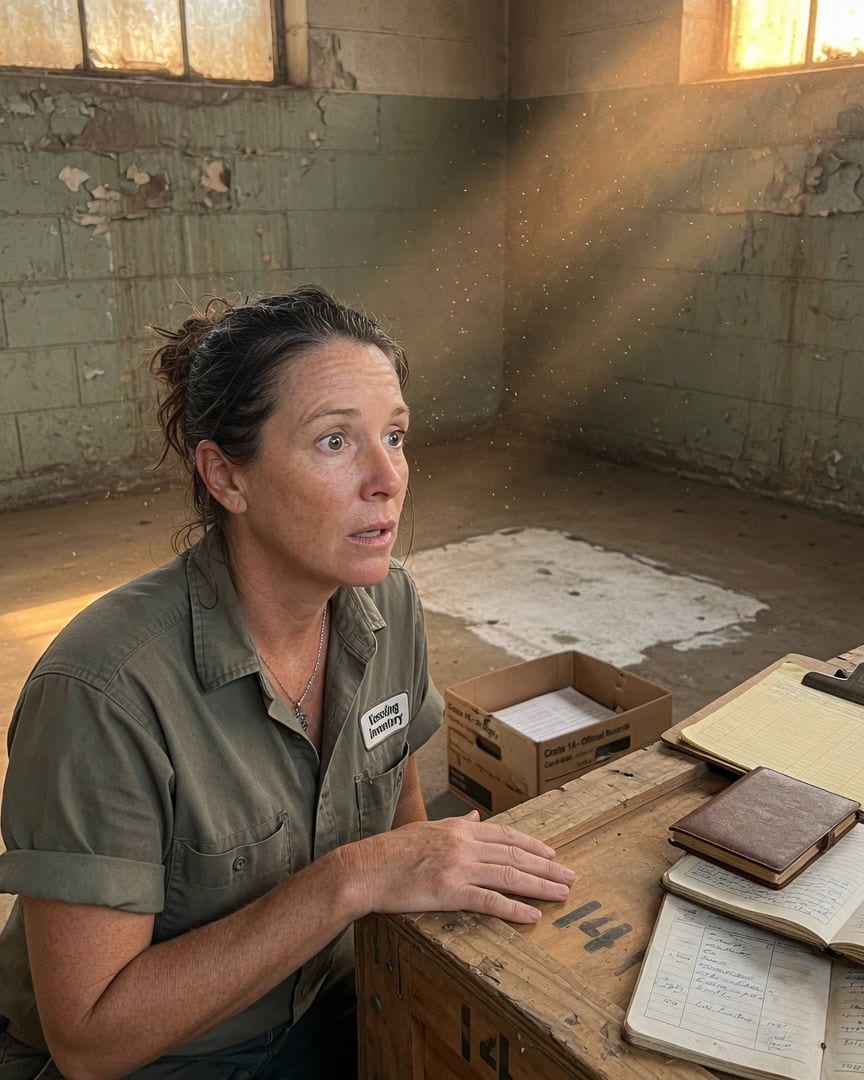
A Cold War base's hidden ledger showed a dead man's signature, dated five years after his death.
With demolition crews just a day away, inventory specialist Deborah Kessling raced through the vast, dusty Carolina warehouse, tasked with logging its final forgotten equipment. In a cold, far corner, she discovered Crate 14, an unremarkable box that inexplicably radiated an absolute, bone-deep chill, having spalled the concrete beneath it for decades. Her research uncovered an official logbook detailing quarterly signatures for sixty years, unbroken by base closures or disasters, but a hidden ledger revealed an entry from 1980 signed by Lars Thornton, a logistics officer confirmed dead since 1975. As Deborah read the dead man's words describing 'a faint, rhythmic pulse,' a subtle thrum began to vibrate through the floor beneath her feet. What was Crate 14 protecting?
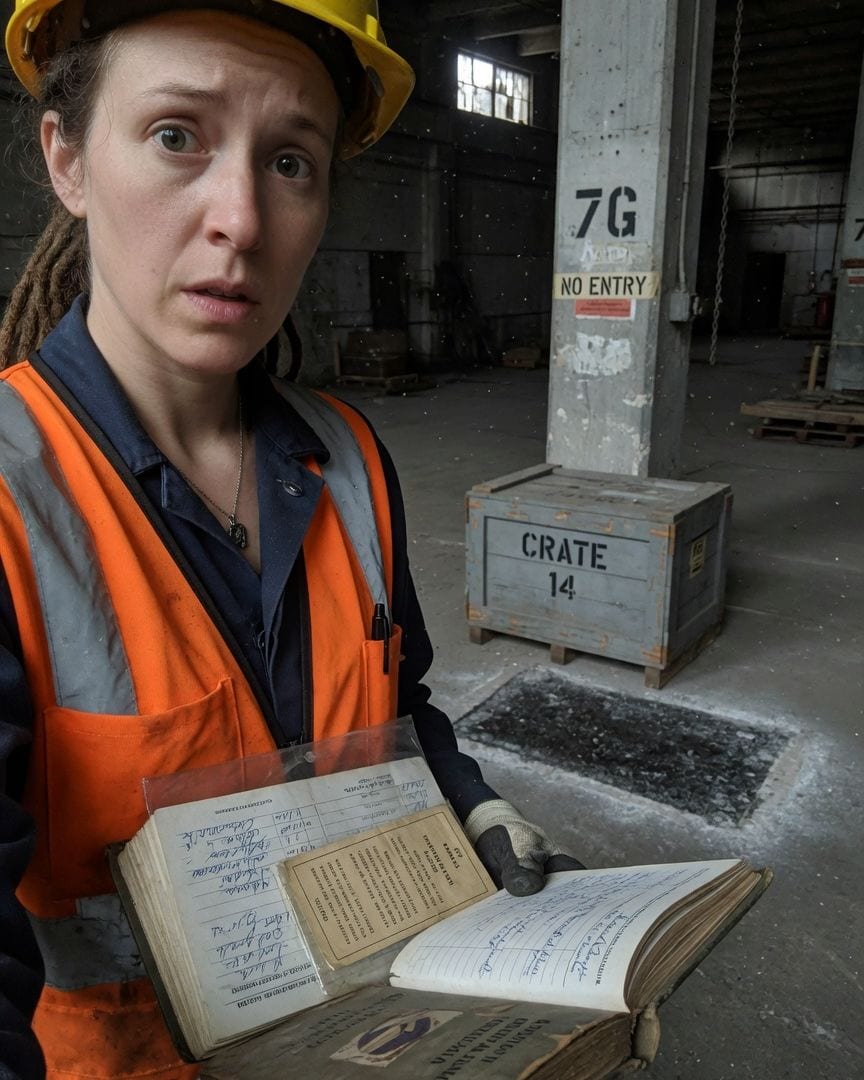
An inventory specialist's final check of a Carolina Cold War warehouse before demolition finds a crate signed for last week, years after the base closed, radiating impossible cold.
An inventory specialist, Deborah Kessling, raced a demolition deadline for a vast Carolina military warehouse, shuttered for years with its employees gone over a decade prior. Her final task was to log its forgotten contents. In a shadow-choked corner, she found Crate 14, radiating an impossible, decades-old chill. Its attached logbook showed a recent maintenance entry from 'Last week,' signed by a civilian contractor no one should have been, yet meticulous quarterly signatures stretched back sixty years, an unbroken chain of checks, even as the paper itself grew cold in her hands. What impossible secret had been so carefully maintained in this forgotten place?