My cricket club's scorebook listed eleven players as 'retired.' One name matched a local man who vanished without a trace.
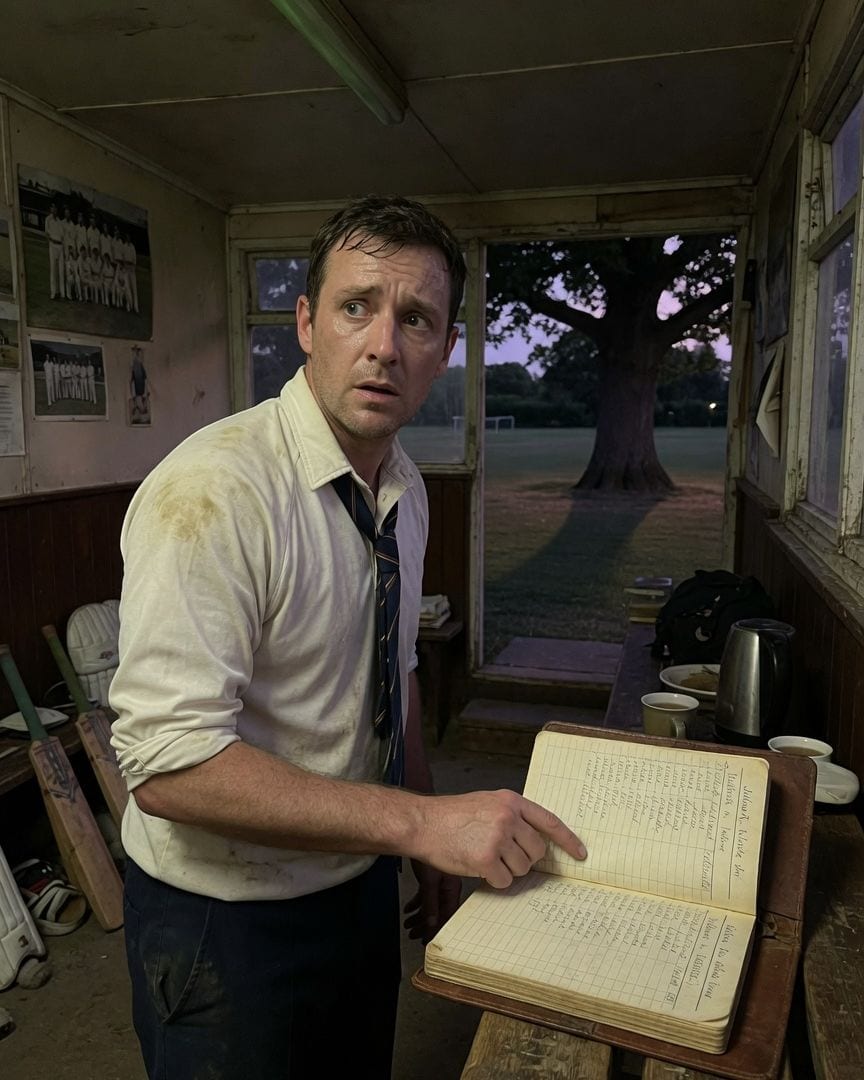
I moved to Oakhaven a year ago, seeking a slower pace, something quiet and green after years in the city. The town, nestled in a valley, felt like a postcard. I joined the local cricket club almost immediately.
It was exactly what I’d hoped for: quaint, old-fashioned, full of decent people who took their tea and their game seriously. They had a few quirks, of course, like any old place. The most persistent was the 'Oak Shadow Rule.'
Everyone knew it. Never bat on once the massive oak’s shadow stretched across the sightscreen, no matter the score, no matter how close you were to winning.
Pure superstition, Oliver Russo, our captain, had called it once, with a wink, but he always enforced it.
We even joked about the "Town That Agrees" because everyone, from the oldest member to the newest recruit, would recite the rule with the same solemnity.
Last June, during a cup match, that rule came into play. Dusk was falling fast, a heavy, warm air pressing down on the field.
We were down by a handful of runs, two wickets left, and the oak’s shadow was creeping, a dark, slow tide, towards the sightscreen.
Oliver was already signaling the end of play, ready to call it a draw, but I was at the crease, feeling the adrenaline. “One more over, Ollie,” I’d insisted, my voice louder than I meant it to be.
“We can take it.” He hesitated, glancing at the creeping shadow, then at the scoreboard. The umpire, an old timer named Mr. Henderson, looked uncomfortable but nodded. We played on.
We lost, by a single run, but I felt a strange satisfaction, a quiet rebellion against a silly, pointless tradition. It was just a game.
Later, in the quiet hum of the pavilion, I was putting away my gear. The air smelled of old leather and liniment.
I noticed the club’s old scorebook lying open on a bench, a thick, leather-bound volume, pages yellowed at the edges. Our match was recorded, neat as you please, our dismal scores listed.
But as I flipped the page, intending to close it, I saw something else. On the next page, dated for that same June day, was a full innings. Eleven batsmen named.
Each in a precise, elegant copperplate hand I didn't recognize. And next to every single name, the same word, written with an almost unsettling finality: 'retired'.
I chuckled, thinking it was some kind of elaborate prank. Maybe Oliver, or one of the other club members, had put together a historical reenactment or a joke innings. But the names felt... off.
They weren’t any of the old-timers I knew, nor did they sound like made-up characters.
The next practice, I cornered Oliver by the nets. “Hey, what was that weird scorebook entry?” I asked, trying to sound casual, flipping to the page. “The one with all the ‘retired’ guys? Your handwriting, Oliver?”
He took the book from me, his face suddenly unreadable, a flicker of something unidentifiable in his eyes. He scanned the page, then snapped the book shut with a soft thump. “Just an old tradition, Elliot. Nothing to worry about.
We’ll stick to the rule next time, eh?” He forced a smile, then pivoted, striding towards the other end of the field to check on the pitch roller, effectively steering the conversation away. Too smoothly.
I tried a few other older club members during the water break. Mr. Henderson, the umpire, just patted my shoulder. “The Oak Shadow Rule is important, son. Always has been. Some things are best left alone.”
His eyes held a knowing, patient quality that made me feel like an outsider, a child asking questions about grown-up business. Another member, a retired farmer named Frank, just gave me a bland smile. “Oakhaven has its ways, Elliot.
Good ways.” It wasn’t a conspiracy, not really. But it was like they’d all rehearsed it, like a quiet agreement had been made long ago to deflect any inquiry. My unease grew, a small, persistent knot in my stomach.
A few days later, I was walking through the town square, heading to the general store. My gaze drifted to the old granite memorial gate that marked the entrance to the park.
It wasn't for a war; it just read, ‘In Memory Of Our Local Sons.’ I’d walked past it a hundred times without really looking. This time, I stopped. Etched into the gray stone, carefully spaced, were dozens of names.
And the first name my eyes fell on, just below the faded inscription, stood out with a sickening familiarity. Julian Thornton. It was one of the ‘retired’ batsmen from that impossible scorebook entry. My stomach twisted, cold.
I spent the next few days with that knot of unease tightening. It couldn't be a coincidence. Julian Thornton. A name from the memorial gate, a name from the impossible scorebook entry. Both marked 'retired.'
Both hinting at something deeper than an old joke or a quaint tradition. I needed answers, something concrete.
I decided to try the Oakhaven Historical Society, housed in a quiet annex of the old library. Vivienne Russo, Oliver’s aunt, was the volunteer that afternoon.
She was a quiet woman, precise in her movements, with sharp, intelligent eyes that missed nothing. She sat behind a large oak desk, carefully mending the spine of a leather-bound book. I approached, trying to keep my voice casual.
“Vivienne, I was just curious about the memorial gate in the square. All those names. What’s the story there?”
She looked up, her reading glasses perched low on her nose. Her smile was placid, unreadable. “Oh, those are the old families, dear. Local sons. Pillars of the community, many of them. Gone too soon, some. A shame.”
It was the standard, too-smooth explanation I’d heard before. I pressed, mentioning Julian Thornton specifically. Her smile didn’t falter, but her eyes, usually so expressive, went flat. The air in the quiet room seemed to drop a few degrees.
“Julian Thornton,” she repeated, her voice soft, almost a sigh. “A tragedy, that one. Moved away suddenly, years ago. Left a promising life behind.” She didn't offer more, just turned back to her bookbinding, her movements stiff.
That night, the feeling wouldn't leave me alone. The silence from Oliver, the bland smiles from the club members, Vivienne’s chillingly flat gaze when I mentioned Julian’s name. It wasn’t an answer; it was a wall.
I went home and opened my laptop, pulling up the digital scans of Oakhaven’s local newspaper archives. I typed in 'Julian Thornton.' It took a while to find it, tucked away in an obscure section from an old, brittle edition.
The headline, yellowed and faded across the grainy digital image, read: ‘Local Man Julian Thornton Disappears Without a Trace.’ The date beneath it matched, exactly, the scorebook entry for his 'retirement.'
The newspaper article from that June was chillingly sparse.
It wasn’t a breaking news story; it was a small, almost apologetic blurb buried on page seven, tucked between an advertisement for farming equipment and a notice about the annual church bake sale.
No real investigation, just a brief mention of Julian Thornton’s sudden, unexplained absence from his home and workplace, and the town’s quiet acceptance that he had simply ‘left town.’ No theories, no police search details, just a casual dismissal.
This wasn’t a joke, or a simple superstition about a cricket game. This was a pattern. This was real.
I found myself back at the library the next day, though I kept my distance from Vivienne. I cross-referenced names. I started with the memorial gate, meticulously jotting down every name carved into the gray granite.
Then I turned to the digital archives again, searching for those names. It wasn’t just Julian Thornton. It was others, too. John Albright, listed on the gate, appeared in an old scorebook from the 1980s, ‘retired’ on a June day.
And, chillingly, an article from the local paper a few weeks later: ‘John Albright Leaves Oakhaven for Unspecified Opportunities.’ The language was almost identical to Julian’s. Too similar.
The names appeared sporadically across the last century, always young men, always listed in the scorebook as ‘retired,’ always on a June date.
And each corresponding to a vague local newspaper report of a sudden ‘departure’ or ‘leaving town for opportunities elsewhere.’
The consistent lack of detail, the immediate acceptance by the town, the curious lack of follow-up – it was a blank wall repeated over and over again. The official records were too clean, the explanations too similar.
I started to notice a rhythm, a terrifying beat in the town’s silent history. Every seven to ten years, a name would appear. Always a young man. Always in June.
A cold dread, sharp and precise, settled in my bones, heavier than any fear I’d ever known. This wasn't just old-fashioned; it was ancient.
My quiet research didn’t go unnoticed. The Oakhaven Historical Society was never busy. Most afternoons, it was just Vivienne and me, the only sounds the rustle of brittle pages and the occasional creak of the old building.
She was always there, seemingly absorbed in her work – cataloging ancient deeds, mending books, peering into microfiche herself – yet I’d catch her.
A brief, almost imperceptible glance over the rim of her delicate reading glasses, her eyes lingering on me for a fraction of a second too long before returning to her task.
Her stillness felt like a presence, a weight in the room.
One afternoon, as I was scanning another batch of microfiche, scrolling through decades of dusty newspapers looking for another ‘departure,’ I heard her footsteps approach my table. Soft, almost silent on the worn carpet.
The scent of old paper and lavender drifted into my space. Her voice, when she spoke, was soft, almost a whisper, but it cut through the quiet like a razor. “You’re digging too deep, Mr. Pierce.”
I jumped, startled, the screen flickering. She stood beside me, her hands clasped in front of her, her face unreadable. “Some things are best left buried. Oakhaven has its ways. Old ways.”
Her tone wasn’t threatening, not overtly, but the implication hung heavy in the air, a cold, silent warning.
She didn’t wait for a response, just turned and walked back to her desk, leaving me alone with the image of another missing man on the screen. The monitor hummed, a low, trapped sound.
Later that evening, after the library had closed and I was back in my small house, my phone buzzed. It was Oliver.
His tone was strained, edged with something I couldn’t quite place – concern, yes, but also a raw, unspoken fear. “Elliot,” he said, without preamble. “I heard you’ve been asking questions. About the gate. About... things.”
His voice dropped, almost a mumble. “Look, just drop it. Seriously. It’s not worth it. For your own good.”
I felt a surge of frustration, then something colder. “Oliver, what are you talking about? What isn’t worth it? What’s going on here?”
He didn’t answer directly. “Just… listen to me. I know you’re new here. But you have to understand. Oakhaven… it’s a good town. We look out for each other. But there are lines you don’t cross. Just drop it.”
He hung up before I could press him further. The receiver felt heavy in my hand. The town wasn’t just agreeing to a story; they were actively protecting a secret.
And whatever that secret was, it was far more terrifying than a quiet acceptance of a few unexplained disappearances. It felt like a collective complicity, a shared burden that had settled deep into the very foundations of the town.
I went back to Vivienne. This time, I didn't try to be casual. The knot of dread had become a cold, hard stone in my chest.
I found her in the main reading room, meticulously arranging new donations on a shelf. The air was thick with the scent of aging paper and dust motes danced in the late afternoon sun filtering through the tall windows.
“Vivienne,” I said, my voice firmer than I expected. She turned slowly, her expression unreadable. “The names on that gate,” I continued, walking closer until I stood directly in front of her.
“They’re not just ‘local sons gone too soon,’ are they? They’re connected. To the cricket club. To that oak tree. To the ‘retired’ entries in the scorebook. I’ve seen the newspaper articles. The dates match. They didn't just ‘leave town.’”
Her face remained impassive, a mask of aged porcelain, but her hands, usually so steady as she handled delicate books, trembled slightly as she adjusted a heavy tome on the shelf. The spine creaked under her touch.
She looked at me, her sharp eyes seeming to bore right through me.
“What do you know of Oakhaven’s founding, Mr. Pierce?” she asked, her voice barely audible, a dry rustle of leaves. It wasn't a deflection; it was an opening. “The first settlers, they came here for the rich land, yes.
Good soil for their crops. But they found something else, too. Something ancient. Something that demanded… respect. The old oak, it was here long before them. Rooted deep. And it had… expectations.”
She paused, her gaze drifting towards the window, as if she could see the ancient tree from here.
“An agreement was made,” she continued, her voice gaining a low, resonant quality, like a story passed down through generations. “To ensure the town’s prosperity. To keep the shadows at bay. To protect all who lived within its borders.”
She walked past me, towards a section of antique maps and local histories, her steps deliberate. I followed, my breath catching in my throat.
She stopped at an old mahogany desk, its surface scarred by centuries of use. Her fingers traced a faint pattern on the side panel, then pressed a specific spot.
With a soft click, a narrow, almost invisible seam in the wood parted, revealing a hidden compartment. Inside, nestled on dark velvet, lay a small, leather-bound journal.
It wasn't a scorebook, but an actual ledger, its pages brittle with age, the leather cover worn smooth in places. It radiated a coldness, even before I touched it.
She pulled it out, her movements slow, reverent. She opened it to the first page. The same precise, elegant copperplate hand from the cricket scorebook filled its earliest entries, the ink faded but still legible. It was utterly unmistakable.
‘The First Agreement,’ it read, the looping script almost beautiful despite the chilling words. ‘One tribute each cycle, when the oak’s shadow falls. For Oakhaven to prosper, and the dwellers to be spared.’
The ledger detailed the ‘agreement’ in chillingly formal language, outlining the precise conditions of the ‘tribute’ and the terrifying demands of the ‘shadow’s due.’
It wasn’t just a superstition; it was a pact, a cold contract written in human blood, maintained across centuries. The careful entries listed the names of the ‘retired,’ century after century, each meticulously dated in June.
And each entry matched a name on the memorial gate, each corresponding to a ‘disappearance’ I had unearthed in the dusty archives. My blood ran cold, turning to ice in my veins.
Every single wrong detail, every deflection, every quiet lie, suddenly snapped into focus, locking into place with terrifying precision.
My hands trembled as I took the ledger from Vivienne, the brittle pages rustling.
I flipped past the centuries of names, past the precise records of the town’s grim history, my eyes blurring over the dates that stretched back into the town’s very founding. Each name, a life. Each life, a tribute.
I flipped to the most recent entry. It was dated last June, the same date as our cup match, the one where I’d insisted on playing into the shadow, pushing past the rule.
The ink was still dark, shockingly fresh against the aged paper. And there, meticulously recorded in that familiar, elegant copperplate hand, were the eleven names of the ‘retired’ batsmen from the scorebook.
But beneath them, on a freshly ruled line, was another entry. Written in the exact same hand, dated for next June. A single, distinct name. My blood ran cold as I read it.
Elliot Pierce.
My name. Elliot Pierce. Written in that ancient, precise hand, beneath the names of the others, dated for next June. It wasn't a warning for the town; it was a death sentence for me.
The air in the hidden compartment felt suddenly thick, suffocating. My own breath hitched in my throat, a ragged sound.
Vivienne watched my face, her own a mask of grim resignation, a quiet sadness etched around her eyes. She didn't offer comfort, or false hope. She just stated the terrible, unvarnished truth. "You broke the rule, Mr. Pierce.
You pushed past the shadow. You invited its notice. The agreement demands balance. One who transgresses, and those who enable it."
She explained that the cricket club wasn't just a social institution, a quaint pastime for the town. It was the mechanism, the ritual ground. The very field itself, the oak tree, the sightscreen, they were all integral.
The 'retired' batsmen from my scorebook – Julian Thornton, John Albright, all of them – weren't just previous cycles' victims.
They were the previous transgressors, or those closely associated with them, marked for the shadow, their names carefully recorded, waiting their turn.
The town, through generations, had learned to manage the pact, to steer newcomers away from the oak, to maintain the smooth, agreed-upon story.
The "Town That Agrees" wasn't just protecting a secret; they were protecting themselves, fulfilling their grim duty to the agreement, sacrificing a few to save the many.
The memorial gate wasn't just a list of 'local sons.' It was a terrible, public record of the town's debt, a constant, silent reminder of the price of breaking the rule, of the entity's claim.
The 'retired' status wasn't a euphemism for simply leaving town; it was the chilling truth. It was the term for being claimed by the entity that resided within the oak's eternal shadow, absorbed into its timeless, hungry domain.
The oak, it was not merely a tree. It was the heart of the pact.
“There’s no escape, is there?” I asked, my voice hollow, barely a whisper. The words felt foreign in my mouth. My mind raced, trying to find a loophole, a desperate way out, but her steady gaze offered none.
Vivienne shook her head slowly, her eyes fixed on mine. “Not from the agreement. It cannot be broken. Not without consequences for all of Oakhaven. But there is a way to honor it. To perhaps… mitigate. The artifact.”
She turned, leading me deeper into the library’s basement. It was a place I’d never noticed, a narrow corridor that opened into a small, windowless room, thick with the scent of damp earth and something else, something metallic and ancient.
The air was cold, a deep, bone-aching cold that defied the summer warmth outside. In the center of the room, illuminated by a single, bare bulb hanging precariously from the ceiling, lay a simple wooden plinth.
And on it, carefully positioned, was a cricket bat.
It wasn’t just old; it was ancient. Gnarled wood, dark as ironwood, almost black, with strange, swirling patterns carved into its surface.
The patterns looked less like human artistry and more like the natural contours of something impossibly old and alive. It wasn’t just a piece of wood.
It hummed, a low, barely perceptible vibration that I felt in my teeth, radiating a faint, cold energy that seemed to draw the light into itself.
“This,” Vivienne said, her voice dropping to a near whisper, heavy with reverence and dread. “This is the first bat. The one used in the original game, when the agreement was struck. It is the tether.
The shadow claims what it’s due through it. It is how the entity passes into this world, how it receives its tribute.” She explained that the previous ‘retired’ individuals, Julian Thornton and all the others, hadn’t simply disappeared.
They had been absorbed by the bat, their essence adding to its terrible power, fueling the pact, ensuring the town’s continued safety. Their lives had become part of its grim, pulsing energy.
The only way to complete the cycle and appease the entity, she said, was to touch the bat, to accept the agreement, to become part of the town’s grim history, its eternal price.
I stared at the bat, unable to look away. Its wood was impossibly smooth in places, impossibly rough in others, as if it had been shaped by a force beyond human hands.
The carved patterns seemed to shift and writhe in the dim, cold light, beckoning me. The coldness radiating from it seeped into my bones, promising an end, a terrible stillness. It was real. Ancient. And it demanded its due.
My name, Elliot Pierce, written in copperplate in the ledger, screamed in my mind. The bat was waiting.
I don’t remember much after that. Only a profound cold, a sense of falling into endless shadow, not just around me, but through me. A crushing weight, an emptying. The world seemed to recede, colors fading to a uniform gray.
There was no pain, just an overwhelming, absolute blankness.
The town of Oakhaven continued its quiet existence. The cricket club played its matches on the green field, always, always drawing stumps precisely when the oak’s shadow touched the sightscreen.
The memorial gate in the town square remained, its names untouched, a silent testament to a history only a few truly understood.
Oliver Russo, now captain of the Oakhaven Cricket Club, walked past the memorial gate in the town square. The June sun cast long, lazy shadows across the grass. He paused, looking at the familiar names etched into the granite.
A new one had been added recently, etched neatly beneath Julian Thornton's: Elliot Pierce. He felt a familiar, quiet ache, a dull throb that had become a part of him, then continued on his way to the pavilion.
Inside, the old, leather-bound scorebook lay open on the bench. The last entry for the previous June was complete. And beneath it, in a precise copperplate hand, a new line was ruled for the next cycle, awaiting its next name.
The shadow of the oak tree had never been so long.
If this one got to you
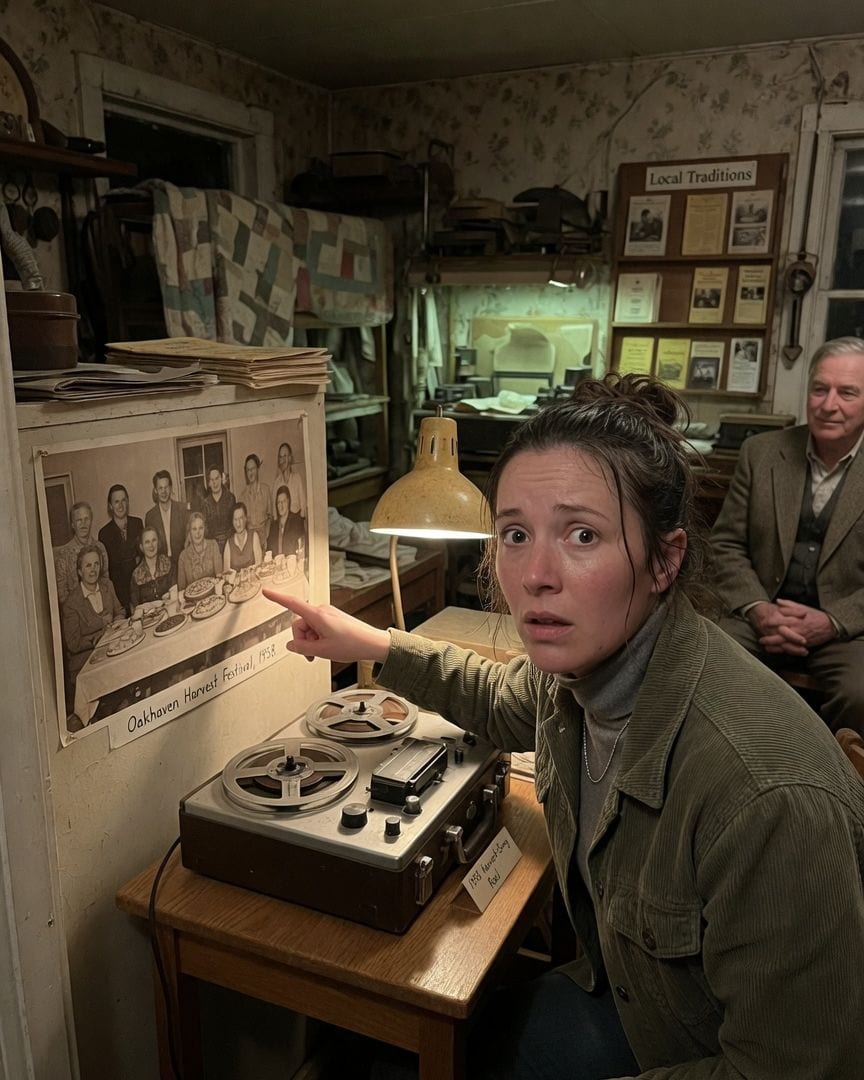
The folk museum's harvest tape counts one more singer than the photograph shows. The curator turned the recorder off before playing it.
I found a quiet escape at Oakhaven's dusty Folk Museum, where the curator played a rare 1958 harvest song. But as a cheerful tune filled the room, a low voice began to count. The tape tallied thirteen, yet the old photograph beside it showed only twelve smiling villagers.
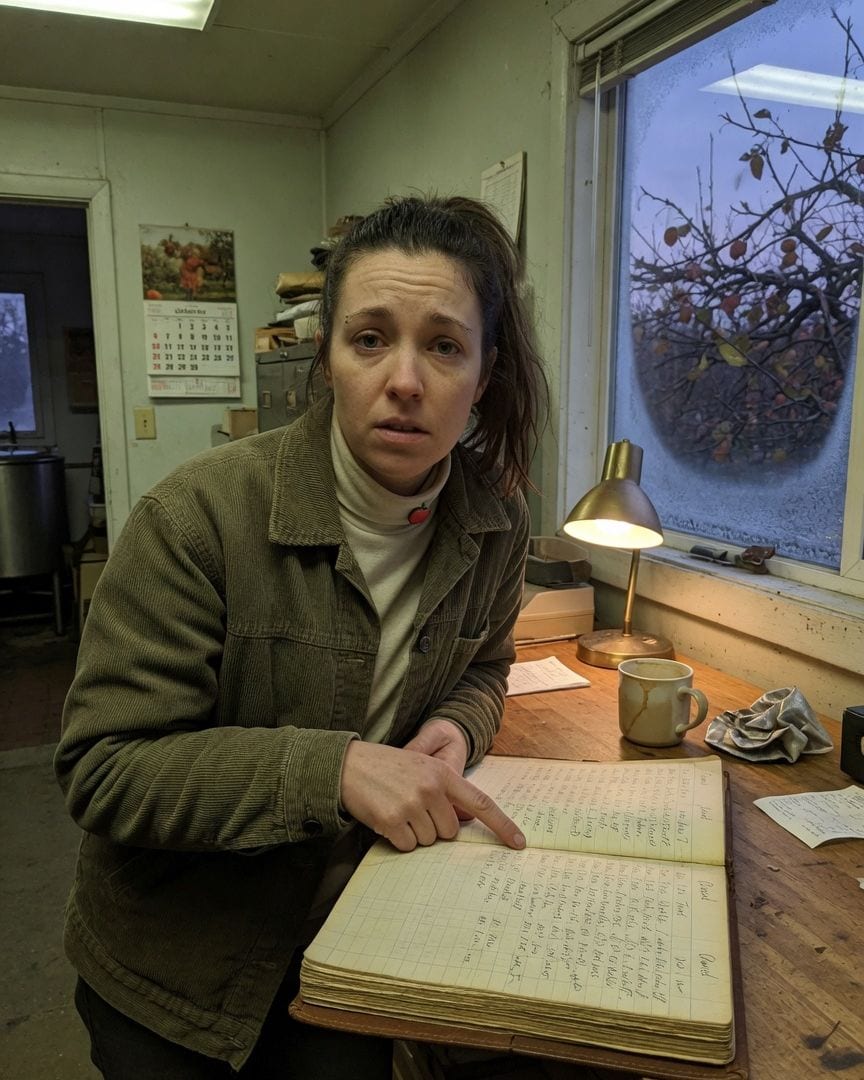
My orchard's picking ledger listed my apples two weeks early, showing the exact weight I took and, beside it, 'owed'.
Seeking quiet, I settled into a cottage by Felix Carver's apple orchard, dismissing his traditions about leaving 'the birds' share' apples. After I picked them, I found his old ledger. There, my exact apple weight was marked "Owed" in stark, new ink, dated a fortnight before I'd even touched the trees.
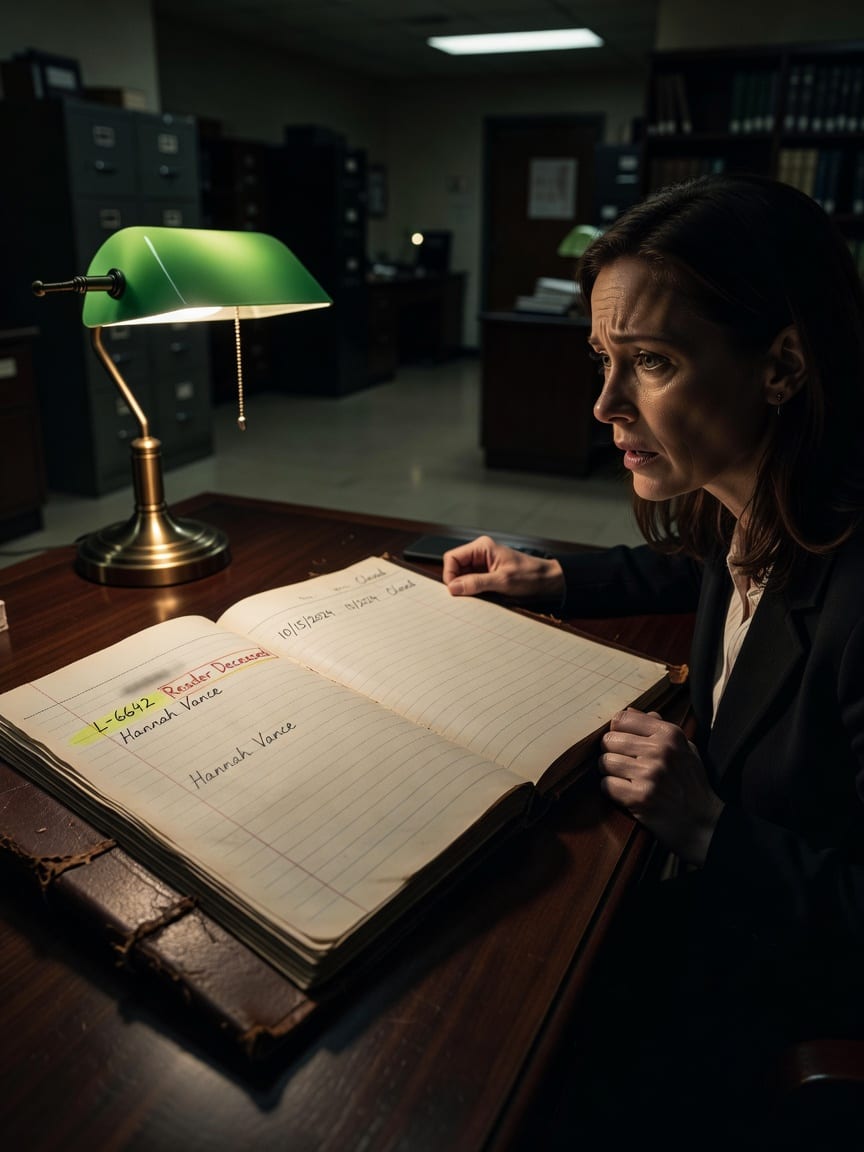
My library card number L-6642 was issued to me at seven — and the ledger shows that number has marked a reader 'deceased' every twelve years since 1949.
Returning my late father's library card to the old town library felt like a small act of closure. But the senior librarian's ancient ledger revealed a chilling pattern of 'reader deceased' entries tied to specific card numbers and borrowed books. My unease turned to cold dread when I secretly found my own name penciled in, marked for a future 'reader deceased' entry.
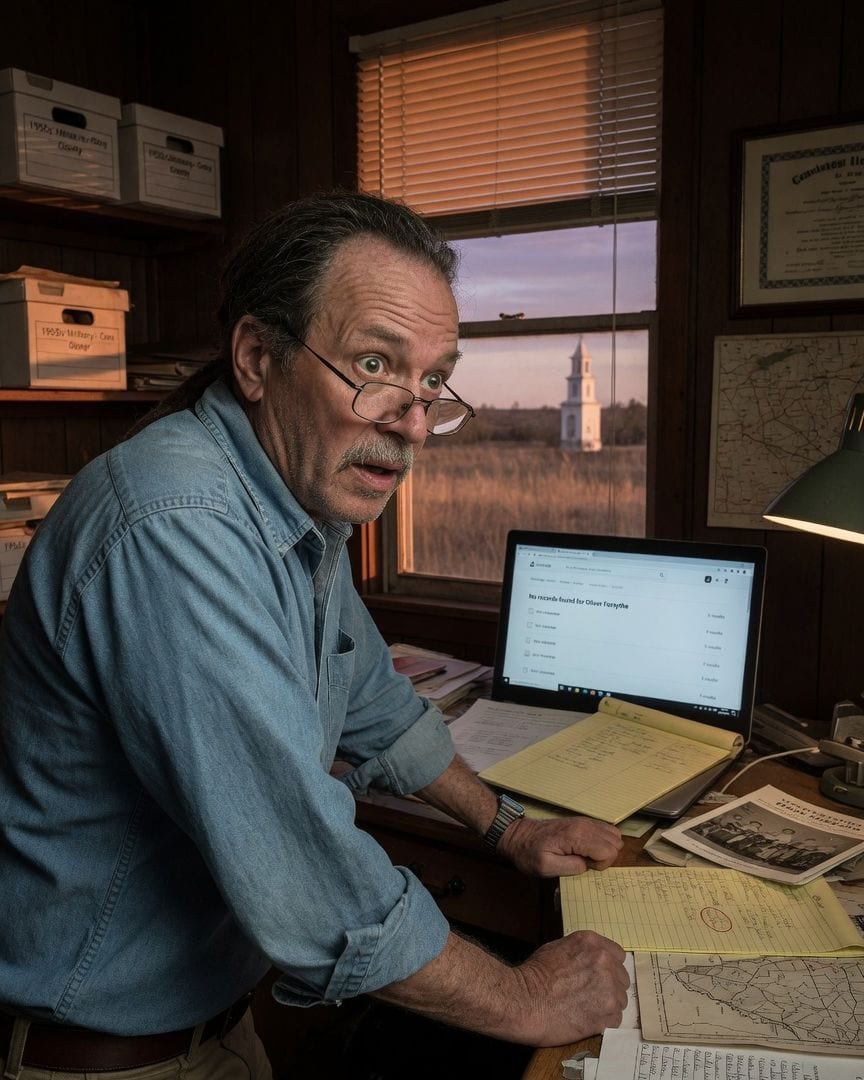
On his final project, a historian found forty-one Cold War headstones, all with names but no death dates.
Approaching retirement, lineage historian Owen Sarkis took on one final project: solving the mystery of the 250th Chemical Company, a unit that vanished after a single 1955 parade. His search led him down Carolina backroads to a lonely, weathered chapel, behind which lay forty-one identical gray headstones in neat rows. Each stone bore a name, but chillingly, not one had a date of death, a silence louder than any inscription. Then, on one stone, he found a small, industrial metal plate bearing a cryptic code and a symbol he recognized from a declassified document on 'unconventional materials handling.' The true nature of these 'graves' began to curdle in his mind, suggesting something far colder than death itself.
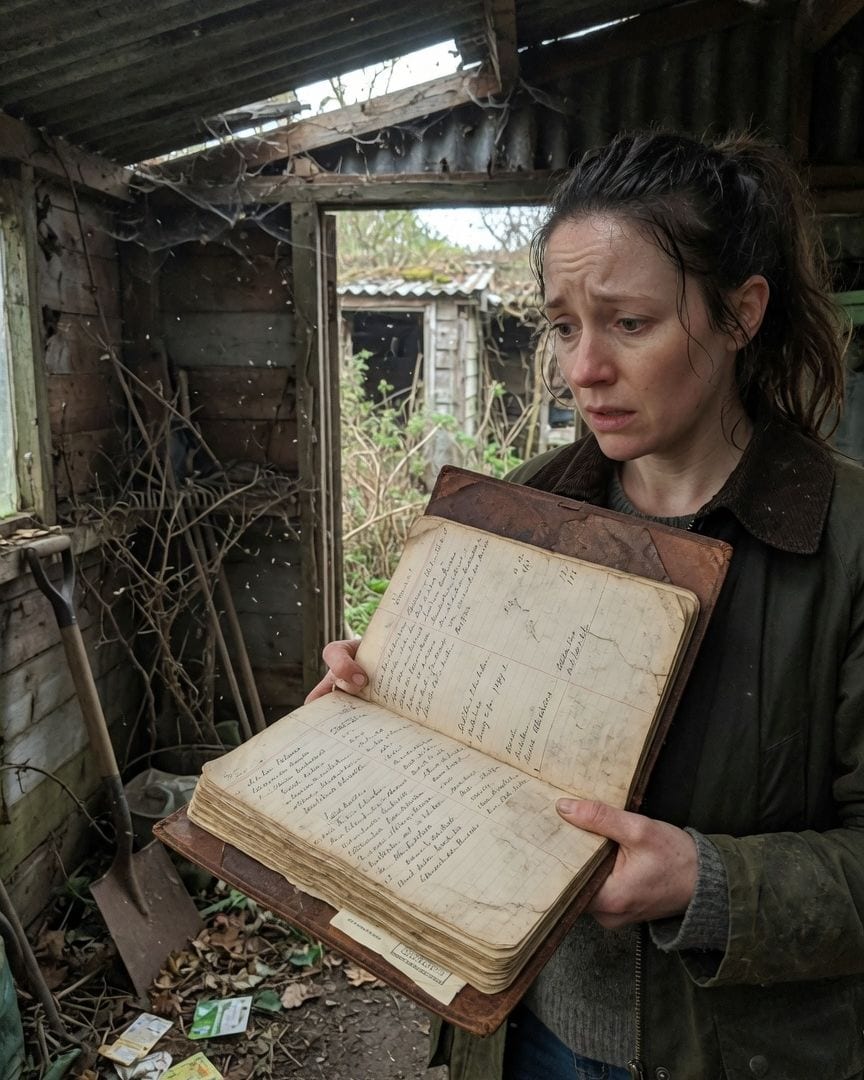
My mailbox holds my own obituary, updated weekly. The postmark reads Cold Ashby allotments, where there's only a standpipe and sheds.
Every Wednesday, a crisp white envelope arrives, containing my own obituary. It's mailed from the desolate Cold Ashby Allotments, a place with no post office, and each week a new, accurate detail of my life is added, leaving only the death date chillingly blank.

Mid-appointment about my cough, my doctor told me to call my estranged sister tonight — a sister I'd never mentioned to him. The note on his screen ended with her name and a time.
My doctor dismissed my cough as a lingering virus, but then he said something impossible: "You should call your sister tonight." I hadn't spoken to Grace in years, and I'd never mentioned her to him. When I saw her name on his screen with a specific time, a cold dread began to claw at me.