A declassification reviewer finds a dead Cold War submarine officer's report, filled out three years after his official loss.
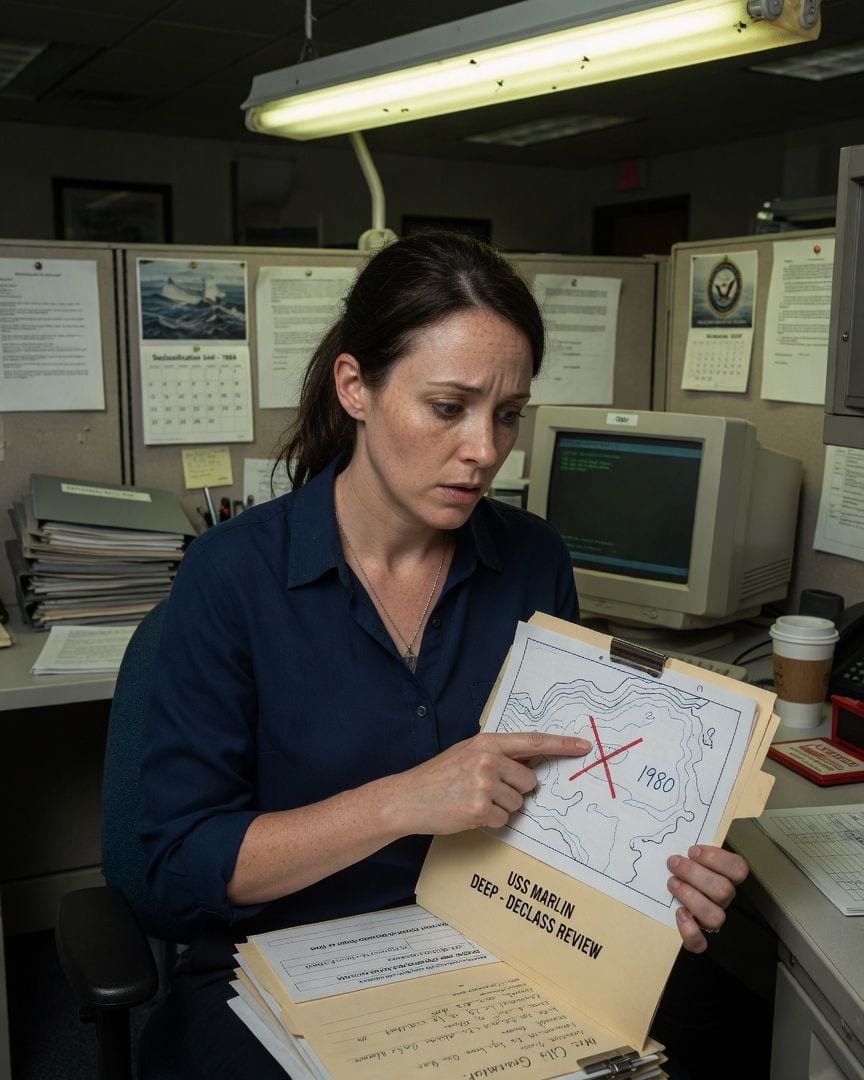
Declassification reviewer Cass Berrigan settled into her cubicle, the hum of the fluorescent lights a familiar drone. Another Monday, another stack of grey files. The USS Marlin Deep file was heavier than most, thick with faded logs and official reports.
Inside, clipped neatly to the cover, were forty letters from Lily Granger, the widow of the Marlin Deep's Executive Officer, Arthur Thatcher.
Each one, dated from the years immediately following the submarine’s official loss in 1978, politely but desperately asked the Navy where her husband’s body was. Cass sighed, a common ache in her line of work.
It was always the widows who truly suffered, the ones left behind to grapple with paperwork and silence.
Then, buried beneath the letters, she found it: a single, hand-drawn chart on official-grade paper. It depicted a section of ocean floor, marked with an 'X' at a specific depth, and a date.
The date was 1980 — two years after the Marlin Deep was lost. Cass blinked, leaning closer.
The precise, looping script for the date and coordinates was unmistakably Arthur Thatcher’s own, a familiar sight from the official logs she’d already skimmed.
Cass’s initial thought was a grim joke, a macabre family drawing mistakenly filed by some junior archivist. But the paper was official, identical to the logs, not a personal note.
She pulled up Thatcher’s original service records, comparing the signatures and log entries.
She studied the meticulously kept logbooks, turning pages filled with Arthur Thatcher’s steady hand, noting the characteristic slant of his capital 'A,' the firm cross of his 'T.' Then she looked back at the chart.
Every stroke, every precise curve of the 'A' and 'T' on the chart matched perfectly. It was him.
A cold dread began to form, a solid knot in her stomach. Why would a man officially dead for two years draw a chart of his own wreck site, in his own hand, on official Navy paper?
And why was it in this file, unanswered, while his widow pleaded for answers? The fluorescent hum of the cubicle seemed to grow louder, pressing in on her.
She noticed a small, almost invisible sequence of numbers etched into the lower right corner of the chart, a string that looked like a service number, but it wasn't Thatcher’s.
It was too neat, too deliberate, for a random doodle or a misfile. She felt a prickle on the back of her neck. This wasn't a mistake.
Pushing past the declassified sections, Cass dove into the file’s thick, still-sealed appendices. Her fingers, now trembling slightly, traced the heavy paper.
She found a series of blank forms, labeled 'Position Report - Deep Submersible Unit 7,' dated sequentially for years after the Marlin Deep's loss. Each one was an official Navy document, complete with classification stamps, but otherwise empty.
Her heart hammered against her ribs. She flipped through them, one by one, the quiet rustle of paper loud in the stillness of her cubicle. Then, deeper inside the stack, her breath hitched. There it was.
A form, dated 1981 — three years after the Marlin Deep was lost — filled out in the same steady, official hand as the chart. The entry read: 'Station Maintained. Status: Green.'
The words stared back at her, black ink on white paper, utterly impossible.
The 'Station Maintained' entry burned in Cass's mind. She couldn't shake it. She spent the next few days cross-referencing DSU-7 through every database she could access. Officially, Deep Submersible Unit 7 was decommissioned immediately after the Marlin Deep's loss.
Its records ended abruptly in 1978. Yet, a pattern began to emerge across other classified files she was reviewing, files that had nothing to do with submarines on their surface but dealt with deep-sea research. Subtle, almost imperceptible.
She found requisitions for specialized deep-sea equipment — advanced sonar arrays, long-range ROVs, unique power cells — all linked to a discreet naval research facility several states away. These requisitions spanned decades, long after DSU-7 ceased to exist on paper.
In the margins of these forms, a faint code, a sequence of numbers, repeated itself. It matched the precise, almost invisible string she'd found on Arthur Thatcher's impossible chart.
The equipment was being requested, consistently, for a location in the same general sector as the Marlin Deep.
Cass tried to access further information on DSU-7 through the central archives, but the system simply returned 'Entry Not Found' for any dates past 1978.
It was like the unit had been erased from official memory, yet its ghost kept ordering supplies for the deepest parts of the ocean, supplies that cost millions and pointed directly to a place where nothing should have been operating.
The silence of the archive system, the blank refusal, felt more ominous than any error message.
Cass submitted a formal request for access to older, cross-referenced deep-sea incident files, citing a 'pattern analysis project' for declassification optimization. Her superior, Eugene Sutton, a man known for his unflappable calm and precise demeanor, approved it with unusual speed.
As he signed the form, a faint, almost imperceptible smile played on his lips. 'Always good to see initiative, Ms. Berrigan,' he'd murmured, his eyes lingering on her a moment too long, a strange glint in their depths.
The quiet of the office seemed to absorb the casual comment, making it sound hollow and deliberate.
Later that night, Cass returned to her office to retrieve her bag, having stayed late trying to dig deeper into the DSU-7 ghost requisitions. The door, which she distinctly remembered locking, was ajar.
A cold draft snaked around her ankles, though the building’s air conditioning was off for the night. Her Marlin Deep file lay open on her desk, though nothing appeared disturbed, no papers out of place.
On top of it, unmarked, was a plain manila envelope. Her heart pounded, a frantic rhythm in her ears.
Inside, she found a single, grainy photograph. It showed an unfamiliar deep-sea submersible, not the Marlin Deep, suspended in black water. Undated, unclassified.
From a dark viewport, a tiny, unblinking red light glowed, like an eye watching her from the abyss. The red light seemed to pulse faintly, almost imperceptibly, as if it held a slow, deep beat of its own.
She felt a chill crawl up her spine, a profound sense of being observed, not just by the photo, but by something unseen and patient, lingering in the silent office.
The next morning, Cass confronted Sutton, the photograph clutched in her hand. She laid it on his desk, along with the open Marlin Deep file, its impossible entries exposed. 'My office was entered last night, Mr. Sutton.
And this was left on my desk.'
Sutton picked up the photograph, examining it without a flicker of surprise. He turned it over, then back again. 'A standard deep-sea observation unit,' he stated, his voice even, devoid of any inflection. 'Nothing unusual.
Perhaps a clerical error, misplaced in a return tray.'
Cass pressed him, her voice tight with suppressed anger and fear. 'The file was open. And this photograph is clearly related to the Marlin Deep, yet it's unclassified and undated. What is 'Station Maintained, Status: Green' really referring to?
What happened to Arthur Thatcher?'
Sutton leaned back in his chair, his gaze steady, meeting hers directly. The faint smile touched his lips again, less benign now, more knowing. 'Ms. Berrigan, some 'losses' aren't losses. They are… reassignments.'
He explained, with the calm precision of a seasoned administrator outlining a protocol, that the Navy has been tracking and maintaining 'something' at the Marlin Deep site for decades. A 'deep-sea observation post,' he called it.
He pronounced the name with a quiet reverence, 'Station Green.'
He then showed her a declassified memo from 1976, signed by a Rear Admiral, detailing the 'Marlin Deep Protocol' for maintaining this 'Station Green,' including periodic maintenance and 'personnel transfers.' His words were soft, clinical, chilling.
He explained that the 'crew' of the Marlin Deep, and others, were not dead. They were 'at their posts,' fulfilling ongoing duties.
The paperwork, the position reports, the requisitions — it was all part of their ongoing service record, filed meticulously by the institution that knew.
The dread that had been a knot in Cass's stomach tightened into an icy fist, spreading through her chest.
The pieces clicked into place with horrifying clarity: the impossible chart, the continuing paperwork, the deep-sea requisitions for equipment that shouldn't exist for a unit that didn't. It all fit. The lost were never lost. They were filed.
Sutton then reached into a locked drawer in his desk, extracting a heavy, sealed folder. The click of the lock seemed unnaturally loud in the room.
'There's a deeper layer to this, Ms. Berrigan,' he said, his voice dropping slightly, becoming a low, conspiratorial murmur. 'The Marlin Deep Protocol has an addendum. Highly classified.'
He slid it across the desk, the heavy paper cool against her trembling hands.
Cass’s hands trembled as she opened it, the official seals breaking with a soft crackle. Inside, a document titled 'Volunteer Transfer Request – Station Green: Eligibility Criteria.'
She skimmed the dense text, detailing physiological markers, psychological profiles, and then, a sub-section: 'Suitable Lineage for Deep-Sea Adaptation.' Below it, a list of surnames, typed neatly in an archaic font. Her breath hitched. Thatcher. Granger. And then, her own.
Berrigan. She saw her mother's maiden name, too, neatly typed below. Her gaze shot to Sutton, who watched her, his faint smile widening, no longer benign, but a chilling, open acknowledgment.
The air in the room seemed to grow heavier, pressing down on her.
'Some families,' he said, his voice a low, calm hum that seemed to resonate in the very air, deep in her bones, 'are simply better suited for the deep.'
Cass, her mind reeling, demanded to know what Sutton meant. The words felt raw in her throat. He explained, patiently, as if discussing a routine quarterly report, that 'Station Green' was not a Navy installation.
It was an ancient, non-human structure, discovered deep within the Marlin Trench during exploratory dives in the early 1970s.
It emitted a unique, low-frequency signal, subtly altering human physiology and perception over time, making individuals 'attuned' to the deep, capable of existing and even thriving in its crushing pressures and lightless expanse.
The Navy, in its attempts to understand and control this entity, had been 'filing' individuals down there for decades.
The 'lost' crews were not victims but permanent caretakers, observers, their minds subtly reshaped by the structure’s influence, causing them to continue their 'duties' and generate the paperwork that had baffled Cass.
The 'X' on Arthur Thatcher's chart wasn't a grave; it was a permanent post.
Her family, the Berrigans, Sutton continued, were among the first to exhibit an unusual resilience and aptitude for this 'attunement,' making them ideal candidates for 'transfers' or recruitment into the oversight process.
He described it as a generational 'calling,' a unique genetic predisposition to thrive in the deep, to communicate with the 'Station,' to serve its unspoken purpose.
The dread was overwhelming: her entire lineage, unknowingly or not, had been marked for this purpose.
The secrecy machine wasn't just hiding a truth; it was actively cultivating a specific bloodline for a non-human entity, harvesting souls for an alien deep.
Sutton, ever calm, slid a blank form across the desk. It was a 'Volunteer Transfer Request – Station Green.' He explained that by understanding the truth, by witnessing the files, Cass had effectively been 'activated.'
She now had a choice: accept her lineage and join the oversight, becoming a part of the long-standing 'filing' process, or resist and be 'filed' herself. Her mind raced, a frantic scramble for escape. She couldn't join them.
She couldn't become another entry in a file that kept writing itself, her life reduced to a single line item, 'Station Maintained. Status: Green.'
She snatched the original Marlin Deep file, the one with Lily Granger's letters and Arthur Thatcher's impossible chart, and bolted.
Sutton made no move to stop her, only watched with that unnerving smile, his eyes following her until she disappeared through the doorway. Cass ran through the deserted, echoing corridors of the archives building.
Her footsteps slapped against the polished linoleum, the only sound for a moment.
But then, the massive, concrete structure, usually silent in the late hours, now seemed to thrum with a faint, rhythmic pulse, a low vibration that resonated in her bones, deep in her chest.
It grew louder with every step, a deep, resonant hum, like a distant, ancient heartbeat rising from the very foundations of the building. She burst through the exit doors, into the cool night air, gasping.
The thrumming faded slightly, but it was still present, a phantom vibration in her teeth, a pressure behind her eyes. She knew she couldn't expose this through official channels. The institution was too vast, too patient, too deeply entwined.
Her only option was to disappear, to outrun the file itself.
As she fumbled for her car keys in the darkness, the thrumming intensified, not from the building, but from below her feet, rising from the very ground, a quiet, inexorable call.
Cass Berrigan vanished without a trace. The Marlin Deep file, along with several other related documents, was reported missing from the archives. A quiet internal investigation was launched, quickly closed after a brief interview with Eugene Sutton.
He expressed regret over the 'unfortunate incident' involving Ms. Berrigan, citing 'stress-related delusion' and 'unauthorized removal of classified materials.' No further action was taken.
The empty cubicle where Cass once worked remained vacant for a few weeks before another diligent, methodical reviewer was assigned to the declassification department.
Weeks later, Lily Granger, the elderly widow of Arthur Thatcher, received a plain, unmarked envelope through the post. No return address, no postmark. Inside, a single, official-looking document.
It was a hand-drawn chart, identical to the one Cass Berrigan had found, with an X and a depth and a date. And beneath it, in a steady, official hand, a new entry: 'Station Maintained. Status: Green.'
The handwriting was subtly different from her husband's, but unmistakably familiar in its precision.
If this one got to you
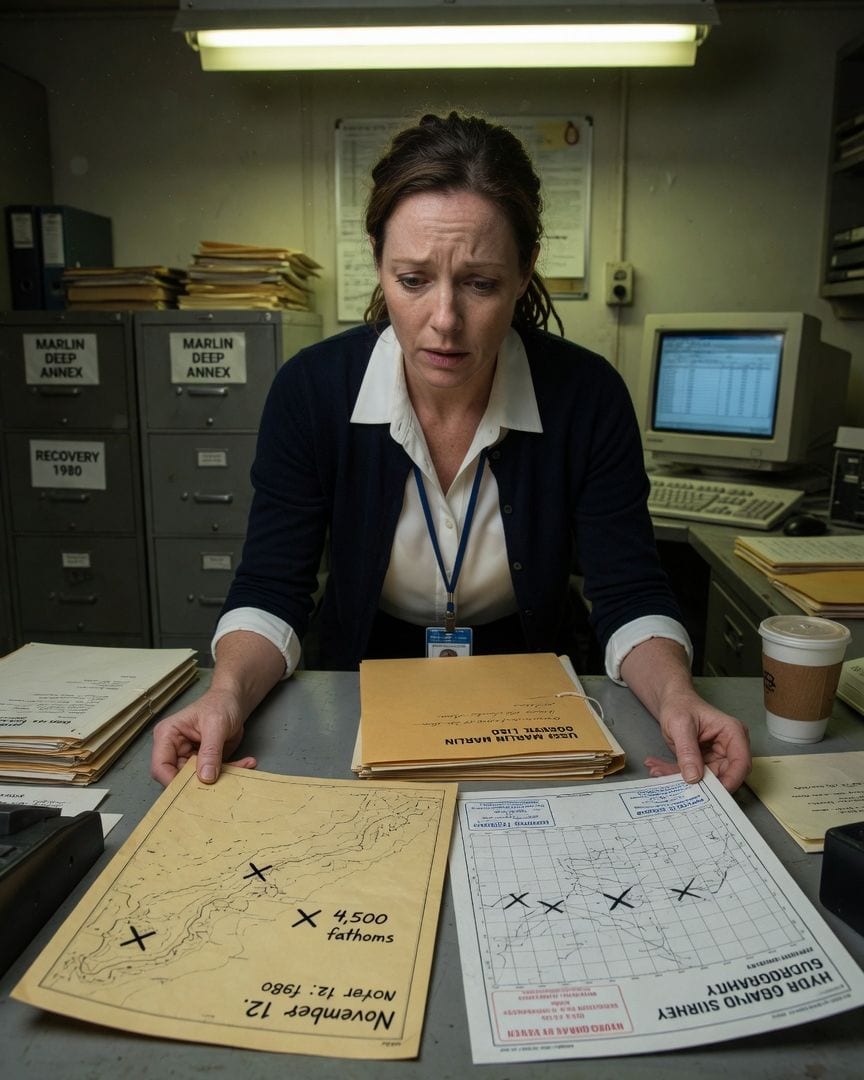
A Navy records reviewer found a Cold War captain’s own hand-drawn map, marking his submarine’s location two years after it vanished.
In the quiet, cold Navy archives, records reviewer Catherine Berrigan unearthed the sealed file of the USS Marlin Deep, a Cold War submarine lost with all hands in 1978. Decades of unanswered pleas from Captain Caldwell’s widow, Dorothy, filled the binder, seeking closure for her husband’s vanishing. But among the tragic records, Catherine found a crudely hand-drawn map, dated two years after the sub was declared lost, marking its exact deep-ocean location. The captain’s own distinct handwriting on the chart left her with a chilling, impossible question: how could he have charted his own wreck two years beyond the grave?
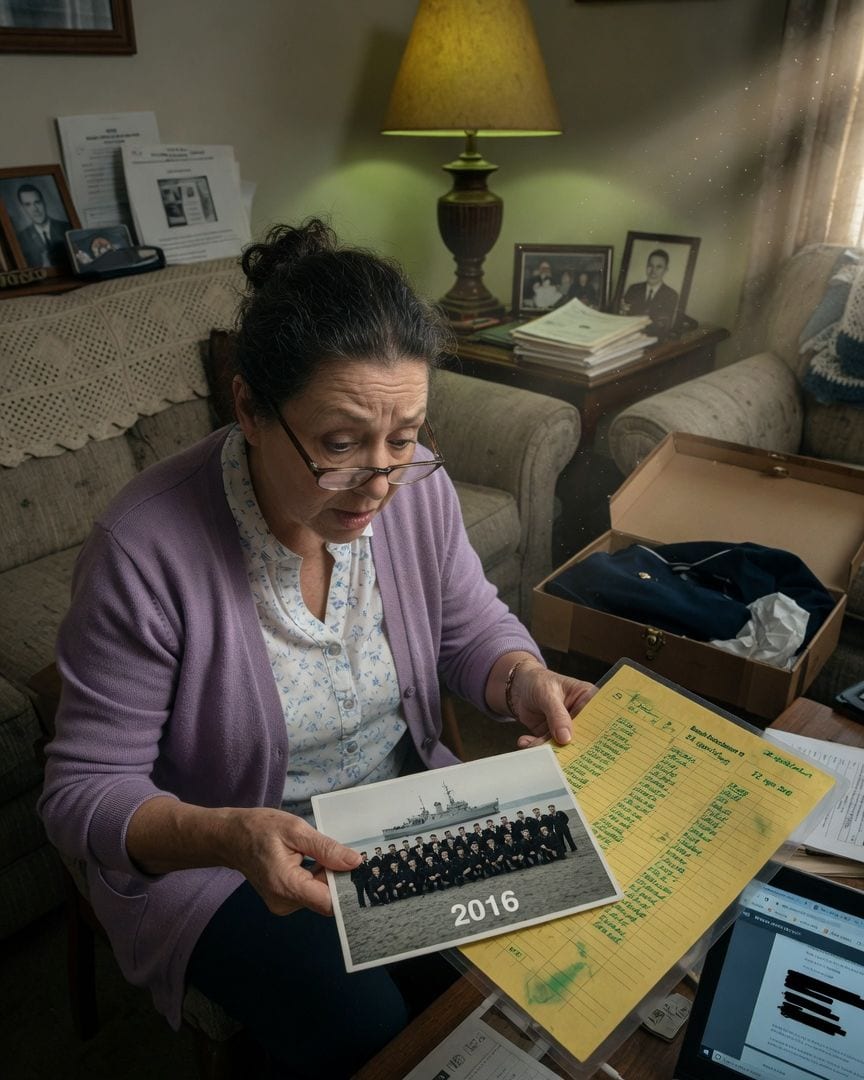
Marisol Frayne unlatched her husband's old footlocker. A photo inside showed his ship, pristine in 2016, three years after the Navy declared it lost.
Marisol Frayne, 62, finally unlatched her husband’s old footlocker in 2024, eleven years after the Navy declared his ship, the Kaskillan, lost at sea. Dust motes danced in the afternoon light as she lifted the lid, releasing the scent of old canvas and cedar. Inside, beneath his perfectly folded dress blues, she found a photograph of David and his crew standing before a pristine Kaskillan. Her breath caught: the photo was dated 2016, three years after the official reports claimed the ship vanished with all hands. Marisol's methodical search then revealed official logs showing a K-class vessel designation active in 2016, leaving a chilling void where her husband's fate should have been.
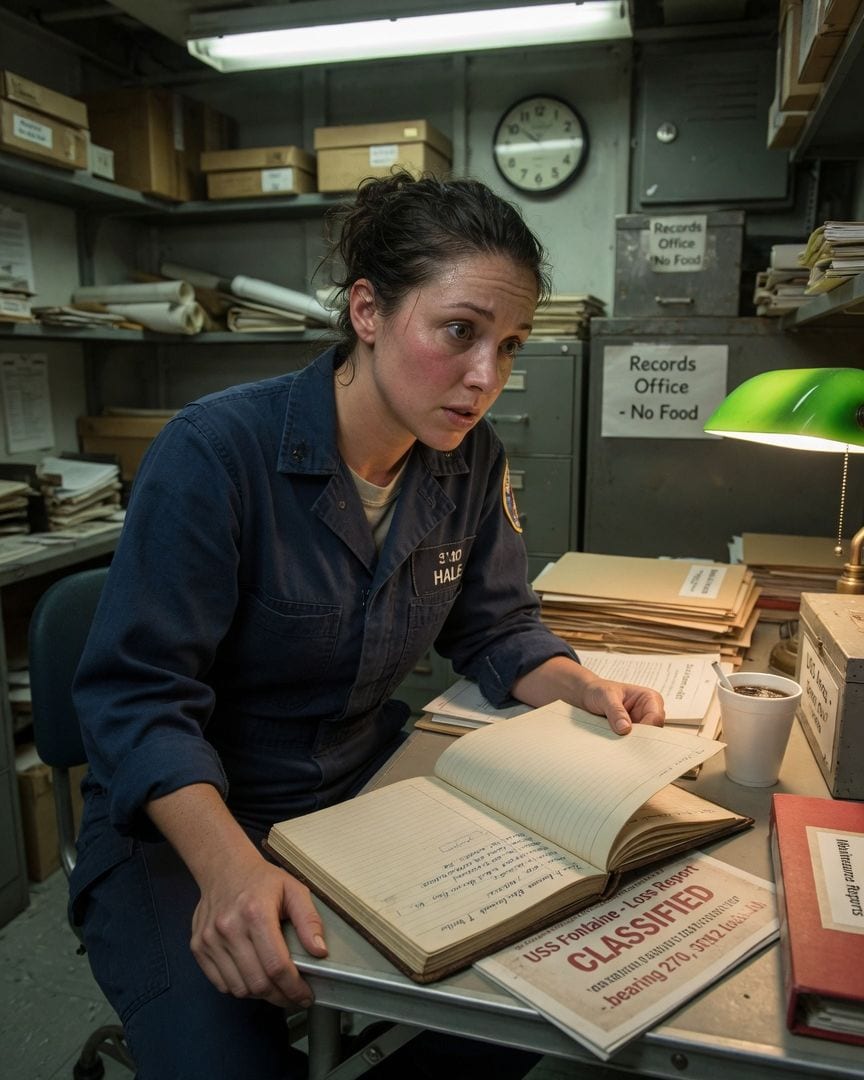
Petty Officer Hale needs a spotless record for her transfer. But the USS Ares sonar logs show an identical, impossible contact, logged to the minute, years apart, and tied to a classified loss report.
Petty Officer Sarah Hale needed a spotless record for her coveted shore duty transfer, a posting she'd worked five years to secure. Alone in the USS Ares sonar shack, three days out from San Diego, her midwatch was broken by an impossible contact: a close, slow echo holding perfect pace, invisible to radar, then vanishing. Her heart hammered, not from fear, but from the data's impossibility. When she found an identical entry in her own log from just one week prior, the cold dread tightened its grip. But the true chill settled when she unearthed decades of similar records, signed by other sonar officers, all showing the same impossible contact at 0212, off the port beam, for nineteen minutes, on the same ship, stretching back years—a persistent echo tied to a classified loss report.
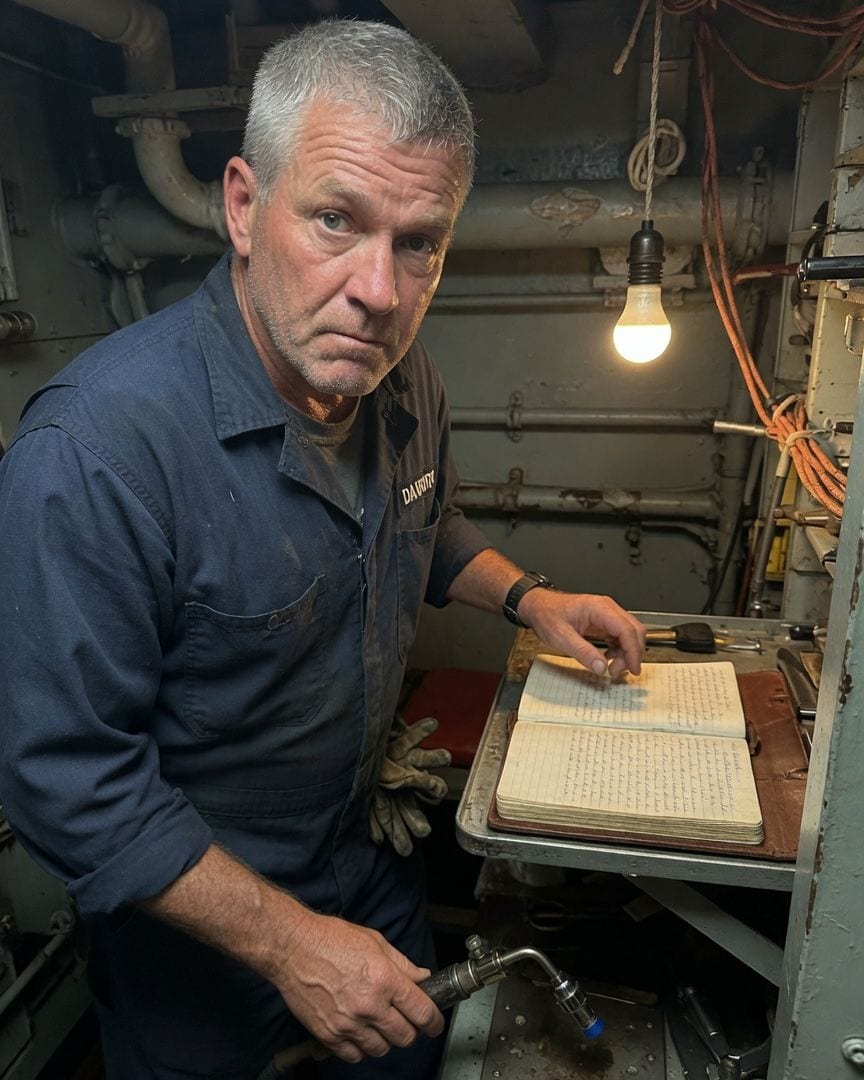
A week from shore duty, Chief Danforth cut a hatch where his ship's plans showed solid steel. An hour later, the wall was seamless, but the Cold War logbook from inside appeared under his mattress.
Chief Petty Officer Raymond Danforth, just a week from ending three decades of service, was intimately familiar with every pipe and plate of the guided-missile destroyer Weatherall. During a mid-cruise overhaul, his gloved hand found a sealed hatch where schematics promised only a solid bulkhead. He cut through the impossible seam to reveal a small, dry compartment, softly lit, containing a logbook filled with an unsettlingly familiar hand. When he returned an hour later with a witness, the hatch was gone, the wall seamless. Later that night, the same logbook appeared beneath his mattress, its pages revealing an entry: 'Petty Officer Howard Montgomery, missing, 1972.' How could a compartment vanish, yet leave its secrets behind?
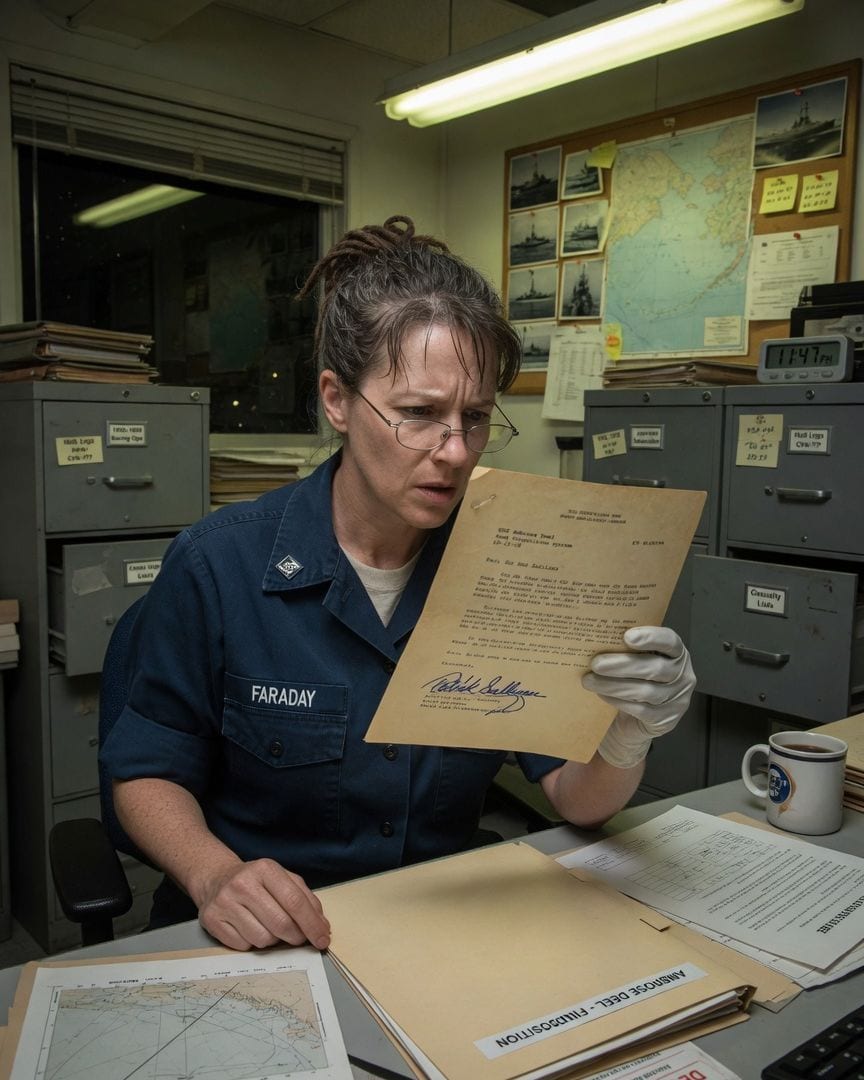
A naval officer closing a Cold War loss found the sunken ship's Chief Engineer signed its log three years after he died.
Lieutenant Commander Josie Faraday faced a Friday deadline to close a sixty-year-old Cold War naval tragedy, reviewing the USS Ambrose Deel's final disposition in the declassification office. Unease pricked at her as three official records agreed on the sunken fleet tug's location and towing vessel, yet Josie found no ship matching that hull number had ever been built. Sifting through brittle, salt-and-dust-scented papers, she then discovered a maintenance sign-off for the Ambrose Deel dated three years after its official loss. The signature belonged to Patrick Sullivan, the Chief Engineer officially lost with the ship in 1955. How could a dead man sign off on repairs to a vessel already at the bottom of the Bering Sea?
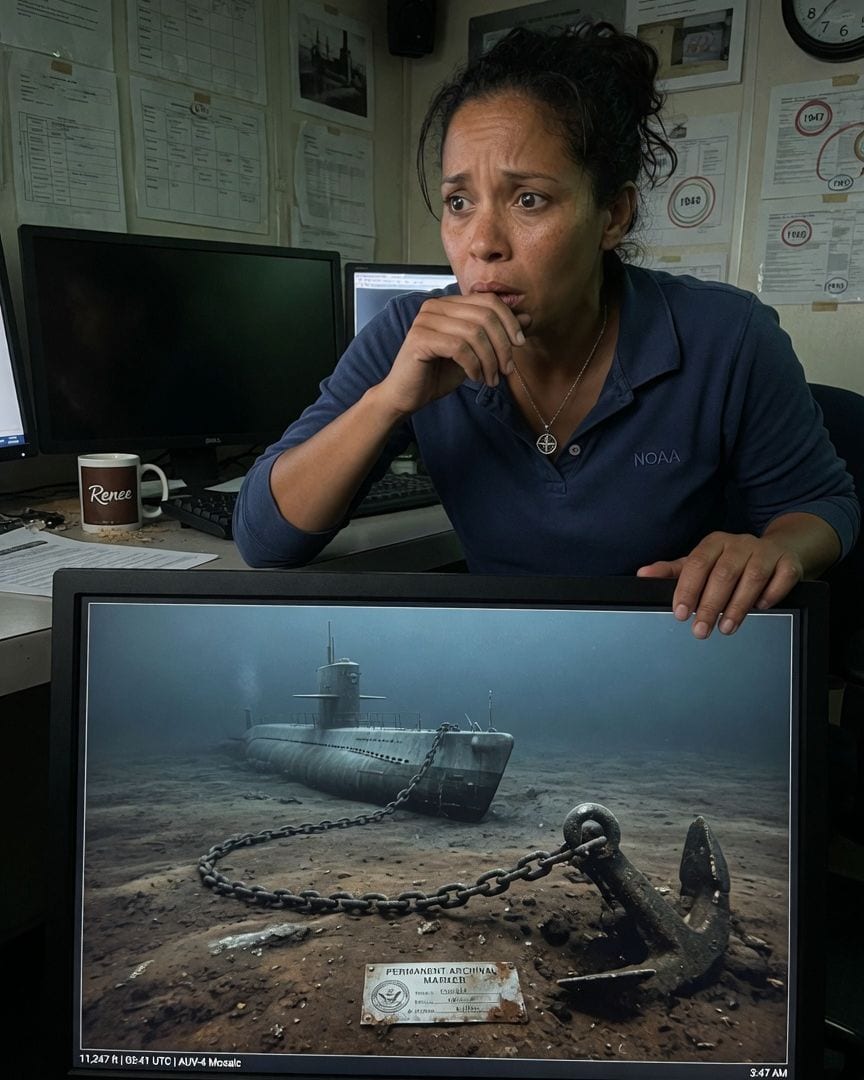
An oceanographer found a 1943 submarine anchored at eleven thousand feet, its Cold War records still meticulously updated.
Oceanographer Marisol Beckwith's career-defining discovery began with the ghostly outline of a 1943 submarine, the USS Kettle Iron, resolving from the abyssal murk at eleven thousand feet. Her initial elation curdled into dread when she realized the long-lost vessel was not a wreck, but sat upright, its massive anchor deliberately set. Even more unsettling, the sub's official service record, supposedly lost with its eighty-seven men in 1943, contained meticulous maintenance logs and commendations dated well into the Cold War era. Someone, or something, had been keeping watch over a ship filed as 'permanently retired,' long after its crew vanished.