My drone's return footage shows a man standing alone in the field, looking up. The field was empty when I flew out, and I was alone.
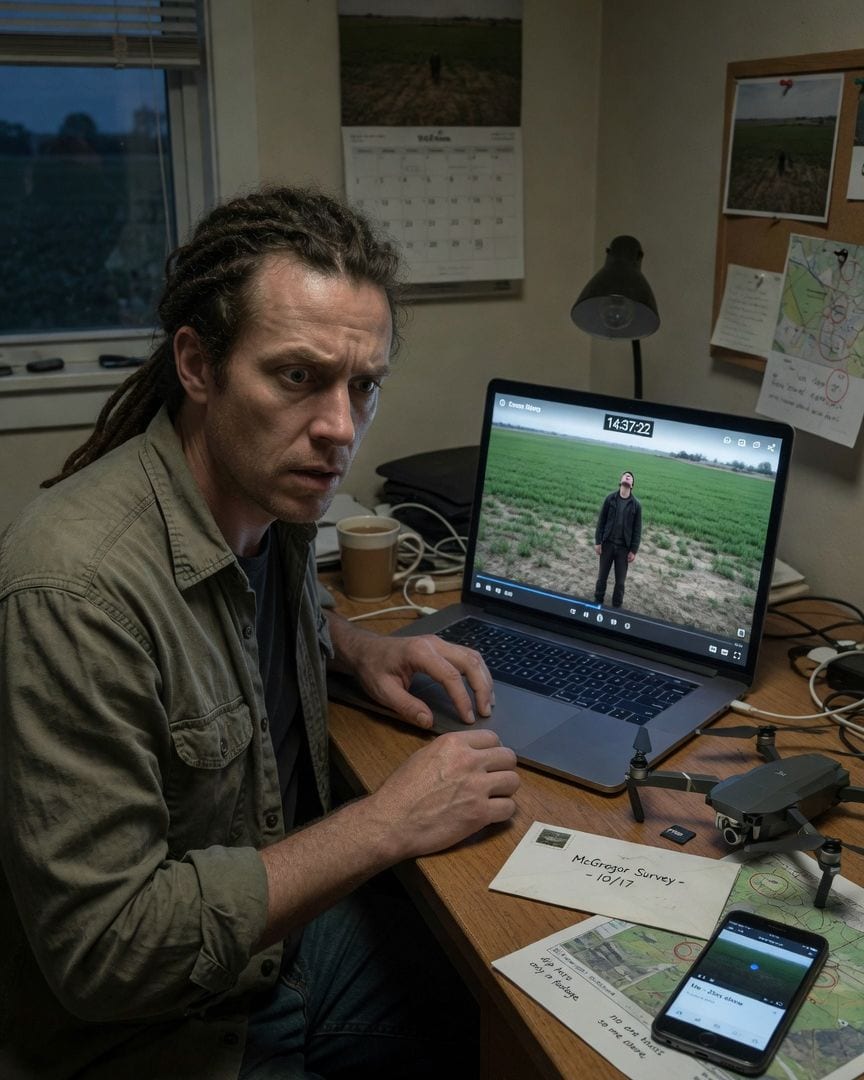
The drone, a DJI Mavic Pro, had just settled back onto its pad in the grass, the rotors sighing to a halt. I’d sent it out for a routine agricultural survey, mapping crop health across Farmer McGregor’s property.
It had executed its automated return-home sequence perfectly, gliding back from a mile out. Back at my laptop, I started reviewing the footage, fast-forwarding through the slow, uneventful ascent over the endless green.
Mostly, I was checking for anything obvious: wind wobble, lens flare, anything that might spoil the data.
The last thirty seconds of the clip were still buffering when I saw it. The drone was climbing, about a hundred feet up, and there, dead center in the frame, a figure materialized. A man.
Standing perfectly still in the middle of the field. Looking straight up at the drone.
I slammed the spacebar, stopping the playback. My breath caught, a cold knot forming in my stomach. The field had been completely empty when I launched. I was alone out there for the entire shoot.
No cars on the distant road, no other people within miles. It had been a clear, calm afternoon, the kind of day where you could see for miles.
No reason for anyone to be out in the middle of a private field, certainly no reason for them to suddenly appear in footage.
I rewound, played it again. He was still there. Solid. Distinct. Undeniably human. His posture was stiff, almost unnatural, head tilted back, fixed on the drone. I scrubbed back and forth, trying to convince myself.
It had to be a shadow, a trick of light, a lens flare. But the figure held its form, unaffected by the digital manipulation. It didn't waver.
The field around him was barren, not a single tree or bush to cast a shadow that could mimic such a form. No cattle, no farm equipment. Just him.
The dread wasn't dramatic, no sudden jump-scare. It was a quiet, cold certainty that something was deeply, profoundly wrong with what I was seeing. Something that shouldn't exist in that timestamped reality.
It was like watching a memory play out, but the memory was wrong. My heart started a slow, heavy drumbeat against my ribs.
I pulled the micro SD card from the drone, my hands moving with a mechanical precision born of unease. My first thought was corruption, a digital error.
I inserted it into my laptop, bypassing the editing software to access the raw .MOV file directly, just in case. The file's metadata was impeccable: correct date, time, GPS coordinates. No signs of corruption or tampering.
I played the clip again, zooming in as much as the resolution would allow. The digital clarity held.
The man was dressed in what looked like drab, heavy fabric, vaguely old-fashioned, but the distance and drone's resolution prevented any clear detail. His face was a blur, but the tilt of his head, the upward gaze, was unmistakable.
He was looking at my drone. At my drone.
I opened my phone’s GPS logs, confirming my solo presence at the exact coordinates and time. No other devices, no other people. My phone’s timeline showed me alone in the field for two hours, then driving directly home. Nothing.
Then I opened an old satellite map of the area, cross-referencing the drone's flight path with current topographical data. A flicker of unease returned, colder this time.
The drone’s 'wrong' footage showed a subtle variation in the field's contours, a slight, almost imperceptible dip or rise precisely where the man stood. It was absent in the current satellite imagery.
It was like the ground itself had momentarily shifted, or a different version of the field had been captured.
I spent hours. Poring over digitized historical maps of the region I found online, looking for any anomaly, any feature that might explain the subtle change in topography. Nothing. The field had always been just a field. Flat. Unremarkable.
The rational explanations—lens distortion, a stray animal that stood perfectly still, a distant farmer I simply missed—all unraveled under scrutiny.
This wasn't a trick of the light; it was a physical presence captured where none should be, and the landscape itself seemed to be conspiring in the deception.
The man’s gaze kept drawing me back. Fixed upward. As if he knew the drone was there, knew I was there, watching him. But how? How could he know?
Driven by a cold, nagging certainty that bordered on obsession, I packed my drone and returned to the field the next morning. The sun was high, the field still and empty. The grass swayed gently in a barely-there breeze.
I flew the drone, replicating the exact flight path and altitude of the previous day's return-home sequence. I watched the live feed on my controller. The new footage was perfectly normal: an expanse of green, barren earth.
No figure, no unusual contours. Nothing but an empty field.
Back home, I meticulously aligned the two video files, frame by frame, in my editing software. The current footage against the 'wrong' footage. I isolated the exact frame where the man had appeared.
As I slowly overlaid the images, fading between them, the field in the current footage remained flat and featureless.
But in the exact spot where the man had stood, a faint, perfectly circular depression, almost invisible to the naked eye from the ground, became clear in the overlay from the drone's perspective. It wasn't there when I flew out.
It wasn't there in the new footage. But it was there, a subtle, undeniable mark, precisely where the impossible figure had been.
The circular depression became my new obsession. It wasn't a trick of light or pixels anymore; it was a physical mark, a ghost print in the earth.
I researched local folklore, obscure land disputes, anything that could explain a hidden feature in the field that only revealed itself from above.
I spent days poring over digitized county records, feeling the cold weight of the library air around me. I discovered that the field, while generally unremarkable, contained a specific parcel of land that was consistently marked 'unregistered' in older deeds.
Not 'undocumented' or 'unclaimed,' but 'unregistered.' It was almost as if it was intentionally omitted from formal ownership. A small section, directly encompassing the coordinates of the circular mark.
This anomaly was mentioned only in the oldest, most obscure documents, fading entirely from modern records, as if erased.
This led me to Damien Yates, a local historian known for his exhaustive knowledge of the town's forgotten past. I found him in the dusty archives of the public library, hunched over a pile of brittle ledgers.
The air in the archive was dry and still, smelling faintly of old paper and something metallic, like forgotten coins.
"Unregistered land?" Damien said, peering at me over his spectacles when I explained my findings. His voice was reedy. "Likely a clerical error, or a historical surveying inaccuracy. Common enough in these older records."
He started to wave me off, already turning back to his books.
"No," I insisted, my voice tight with a strange conviction. "It's too specific. And it matches something else." I pulled out my laptop, opening the drone footage.
I showed him the 'wrong' clip, pointing out the subtle, almost imperceptible difference in the field's topography, then the overlay showing the circular depression.
Damien, a man of facts and figures, leaned closer to the screen. His brow, usually smooth, furrowed. He adjusted his glasses, tracing the faint circle with a fingertip. "Odd," he murmured, more to himself than to me.
"The 'unregistered' land, that is an oddity I'd never fully investigated. Always assumed it was just... an oversight." He looked at me then, his eyes sharp.
"You're not the first to find something peculiar about that field, though usually it's just local kids telling ghost stories." He paused, then sighed. "There's an old woman, Penelope Coleman. Lives on the outskirts of town, past the old mill.
She knows things. Or rather, she remembers things the rest of us forget." He gave a dry, humorless chuckle. "She sees things, they say. Sees things the normal folk don't bother with anymore."
I drove to Penelope Coleman's small, isolated cottage, nestled among a tangle of overgrown trees. The late afternoon light barely filtered through the thick canopy. The air around the house felt heavy, still, as if holding its breath.
Even the birds seemed quiet. A low, persistent hum, like distant power lines, seemed to vibrate beneath the silence.
Penelope, a woman with sharp, observant eyes that seemed to miss nothing, and a placid expression, answered the door. Her face was a map of wrinkles, but her gaze was startlingly clear.
She wore a faded apron over a simple dress. Without a word, she gestured toward the drone case I carried, clutched tight in my hand.
"You saw one of them, didn't you?" she asked, her voice raspy but calm, a dry leaf rustling.
I froze. The question caught me completely off guard. My mouth went dry. Before I could even stammer out a response, she turned and walked deeper into the small, cluttered cottage, leaving the door open for me.
I followed, a cold dread prickling my skin. The air inside was warmer, smelling of dried herbs and something faintly metallic, like damp earth.
She sat in a worn armchair by a cold fireplace, motioning me to another. "That field," she began, her eyes fixed on my face, "it was always a place where the veil thins. A forgotten ground."
She explained, without prompting, that 'they' don't like being seen, even by accident. "Especially not by the new eyes," she said, her gaze flicking to the drone case, "the ones that fly and see everything.
The ones that don't know when to leave things undisturbed."
A chill snaked up my spine. A sense of being understood in a way that was profoundly unsettling. She didn't press for details, didn't ask me to confirm anything. She simply knew.
She offered no further explanation, only cryptic warnings about "leaving some things undisturbed" and the way "some places hold onto their memories, even if people forget." The air in the room seemed to press in on me, heavy and watchful.
Later, back in my car, I reviewed the audio recording of my conversation with Penelope on my phone. Beneath Penelope’s words, a faint, low hum was present. Almost imperceptible, a deep, resonant vibration, a subtle static.
It hadn't been there during the live conversation. My phone, usually reliable, had recorded it.
When I checked my drone's flight logs, I found brief, inexplicable signal drops recorded during my drive near Penelope’s house, and a significantly faster battery drain than usual for the short flight I’d performed at the field that morning.
My heart pounded. The unease ratcheted up: my investigation wasn’t just uncovering something; it was being noticed, and perhaps even resisted, by whatever I was disturbing.
I couldn't stay away. I drove back to Penelope's, needing answers, needing to understand what she meant. The drone footage of the man and the 3 AM clip were burning in my mind.
I burst into the cottage, the drone footage of my living room playing on my phone, held out like an accusation. "It's not just echoes, is it?" I demanded, my voice trembling, raw with fear and anger.
"They're using my drone. They were in my house."
Penelope looked at the screen, her expression unreadable. She didn't flinch. She just watched the silent, impossible footage of my empty living room for a long moment.
"The recordings," she said, her voice quiet, almost a whisper, "they are a bridge. You tried to capture what was there, and in doing so, you opened a door." She looked up at me, her sharp eyes piercing.
"They are drawn to the act of seeing, of being seen. They need an observer to truly exist."
She explained that the figure in the field wasn’t just an echo, a residual memory. It was a presence. Looking up not at the drone itself, but through it, at me. The drone, my own device, had become a conduit.
A window. The 3 AM recording in my living room wasn't a glitch, wasn't a malfunction. It was a deliberate act.
"They want to be remembered," Penelope said, her gaze steady, unsettlingly calm. "To be witnessed. And you, child, with your flying eye, you became their most perfect witness.
Now, they are watching you, through your own devices, through your own world."
The pattern snapped into place with horrifying clarity: the static on my phone recording, the drone's inexplicable battery drain, the subtle signal drops—it wasn’t interference, not a technical error. It was their manipulation.
They weren't just in the field; they were in my devices, in my life, because I had invited them by trying to record them. I was always inside it, from the moment I hit 'record'.
My own tools, my own technology, turned against me, making me an unwitting collaborator in my own haunting.
I left Penelope’s cottage in a daze, the explanation echoing in my mind. A burial ground. Echoes. It was chilling, but in a strange way, it felt complete. I had unraveled a genuine mystery.
I drove home, the setting sun painting the sky in fiery hues, trying to process the implications. The world suddenly felt older, deeper, filled with unseen layers.
I thought of my drone, my perfectly engineered piece of technology, and the impossibility it had recorded.
I decided to review all my drone's flight logs and internal data again, meticulously, to ensure there were no other 'echoes' I might have inadvertently captured. Maybe there was another explanation. Maybe Penelope was just an old woman telling stories.
Back in my apartment, I plugged in the drone to my laptop and opened its internal diagnostic software, pulling up the detailed flight history. The hum of the laptop felt strangely amplified in the quiet room.
I scrolled through the entries, checking timestamps, battery levels, GPS coordinates. Everything seemed normal until I reached an entry from two days ago. It was a short, 10-second clip, timestamped for 3:00 AM. It’s labeled 'Internal Sensor Check.'
I live alone. The drone had been secured in its hard case, locked in my closet.
A cold dread washed over me, a physical sickness. My hands started to tremble, making the cursor jump. I clicked play.
The screen flickered to life, showing the interior of my own living room, perfectly framed. Silent. Empty. The drone, my drone, hovering inches from my sofa, recording my private space while I slept, unaware.
I raced back to Penelope's, the drone's impossible recording burning in my mind, a toxic afterimage. I burst into the cottage, the drone footage of my living room playing on my phone, held out like an accusation.
"It's not just echoes, is it?" I demanded, my voice trembling, raw with fear and anger. "They're using my drone. They were in my house."
Penelope looked at the screen, her expression unreadable. She didn't flinch. She just watched the silent, impossible footage of my empty living room for a long moment.
"The recordings," she said, her voice quiet, almost a whisper, "they are a bridge. You tried to capture what was there, and in doing so, you opened a door." She looked up at me, her sharp eyes piercing.
"They are drawn to the act of seeing, of being seen. They need an observer to truly exist."
She explained that the figure in the field wasn't just an echo, a residual memory. It was a presence. Looking up not at the drone itself, but through it, at me. The drone, my own device, had become a conduit.
A window. The 3 AM recording in my living room wasn't a glitch, wasn't a malfunction. It was a deliberate act.
"They want to be remembered," Penelope said, her gaze steady, unsettlingly calm. "To be witnessed. And you, child, with your flying eye, you became their most perfect witness.
Now, they are watching you, through your own devices, through your own world."
The pattern snapped into place with horrifying clarity: the static on my phone recording, the drone's inexplicable battery drain, the subtle signal drops—it wasn't interference, not a technical error. It was their manipulation.
They weren't just in the field; they were in my devices, in my life, because I had invited them by trying to record them. I was always inside it, from the moment I hit 'record'.
My own tools, my own technology, turned against me, making me an unwitting collaborator in my own haunting.
I rushed home, desperate. My hands were shaking so hard I could barely unlock the door. The apartment felt colder, watched. My first instinct was to destroy it all.
I tried to delete the impossible footage from my drone's SD card, but the files were immutable, locked against deletion, burned into the card's memory. No matter what I tried, the clip remained, a dark stain on the digital record.
I disconnected my drone from my laptop, ripped out the battery, then wrapped the entire device in aluminum foil, sealing it tight before shoving it into the darkest corner of my closet, beneath a pile of old blankets.
But the sense of invasion didn't abate. If anything, it grew stronger. I started noticing other things. My smart speaker, an Amazon Echo Dot on the kitchen counter, sometimes activated with no prompt.
Not to answer a question, just a faint, unidentifiable whisper. A low, sibilant sound that vanished the moment I asked, "Alexa, what was that?"
The green ring would glow, then fade, as if it had been listening to something else entirely. My doorbell camera, a Ring device, recorded brief, static-filled moments of my empty hallway at odd hours—always 3 AM, always 10 seconds.
Always with a subtle, dark shape at the very edge of the frame, too indistinct to identify but undeniably present, like a shadow of a shadow.
I tried to unplug everything, to go completely analog, to cut off every possible connection. I pulled the plugs from my TV, my modem, my router.
But the whispers continued, seeming to emanate not from devices, but from the walls themselves, the floorboards, the low hum of the refrigerator. They were not just in my devices; they were in the observation itself.
I realized I couldn't delete them, couldn't disconnect from them. I was the connection. The moment I recorded the figure, I became their channel, their anchor to the living world.
They weren't malicious in a human sense, not cruel or violent. But they were consuming. They existed through my attention, my observation, my fear.
I was trapped in a constant state of being watched, of being perceived, by entities that wanted only to be seen, to be remembered.
I gripped my phone, the device that had started it all, the device that had connected me to so much, and then with a grim resolve, I threw it against the wall, shattering the screen into a spiderweb of dead pixels.
The silence that followed was not peaceful; it was vast, expectant, filled with a thousand unseen eyes. The entire apartment felt like a giant ear, listening to me breathe.
I sold my house, giving away all my smart devices, disconnecting from the internet entirely, and moving to a small, isolated cabin in a remote area, miles from any town.
I changed my name, liquidated my entire digital footprint, erasing myself from every database I could access. I lived in a world devoid of screens, microphones, or cameras, constantly checking reflections in windows, avoiding open spaces, always listening.
The whispers never fully disappeared; they just became softer, more ambient, part of the background hum of my new, analog life.
I learned to ignore them, or rather, to live alongside them, knowing they were always there, always watching, existing through my reluctant, terrified awareness.
My new life was one of constant vigilance, a quiet paranoia that had become my new normal. I had escaped the immediate threat, but the pattern, the connection, remained, etched into my very perception.
She sits in her new, sparse apartment, reading a physical book by the light of a single lamp. The apartment is devoid of screens, microphones, anything that could record.
A soft, almost imperceptible hum starts, coming from the old, disconnected alarm clock on her bedside table. She freezes, her eyes wide, listening.
Lydia Sinclair's online presence vanished abruptly. Her old drone, found abandoned in a dumpster weeks later, had a corrupted SD card.
Only one file could be recovered: a silent, 10-second clip of an empty field, timestamped weeks after her disappearance, the camera slowly panning to focus on a faint, circular depression in the ground.
If this one got to you
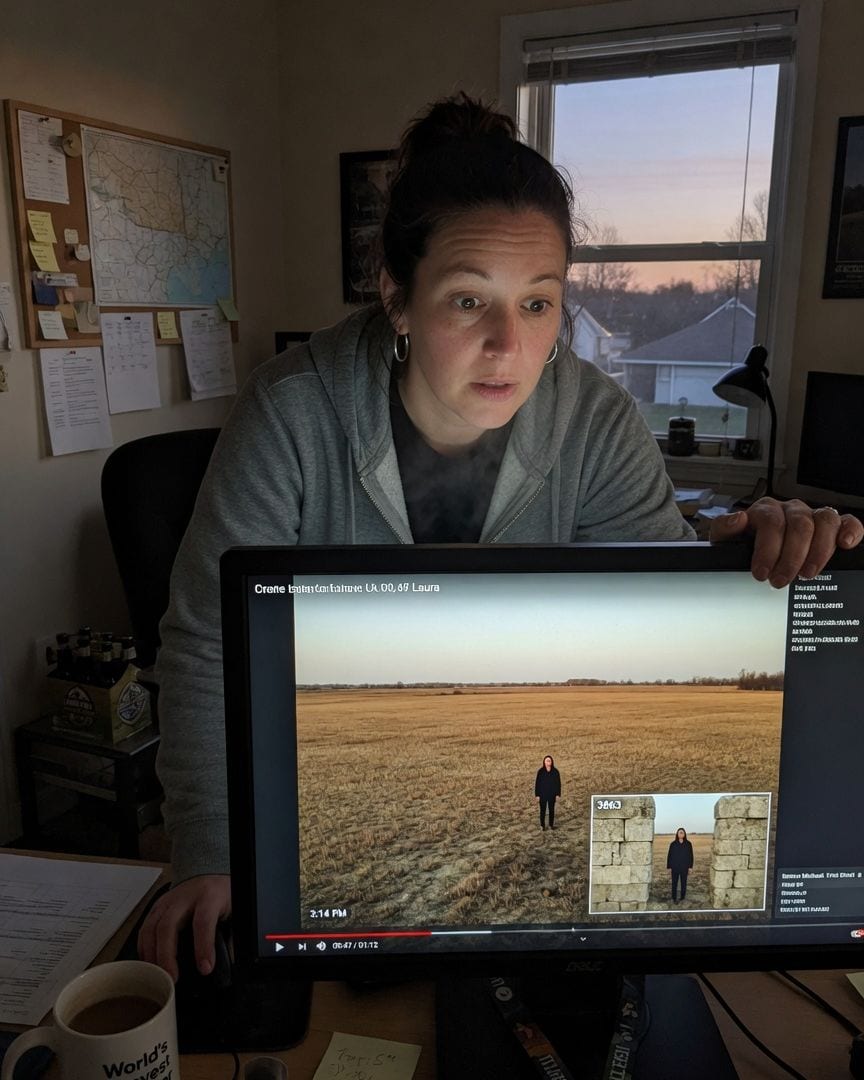
My drone's return footage shows a man standing in the empty field looking up. I was alone out there, the field clear when it launched.
My routine drone survey of a vast, empty field was just another job, miles from any paved road. But the footage revealed a silent man standing alone in the field's center, gazing up at my ascending drone. As my friend and I analyzed the frames, we found a weathered stone structure that briefly appeared around him, then vanished.
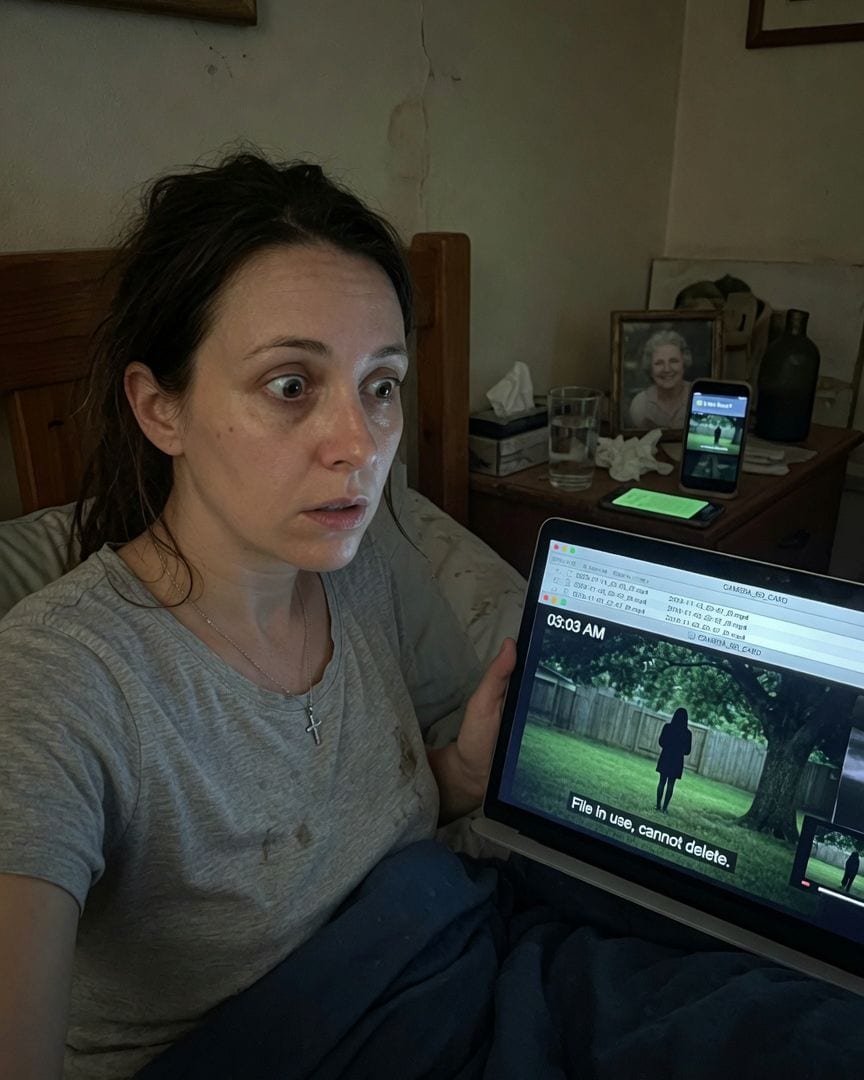
My security camera emailed a clip at 3:03am: a woman stood in the garden, back to the house. The subject line read 'Is this Mum?' My mother died in March. I can't delete the file.
My security camera sent an alert at 3 AM: 'Is this Mum?' But my mother, Constance, died in March. The grainy clip showed a woman in the garden, perfectly still, her back to the camera. The impossible question coiled a sick dread in my gut.
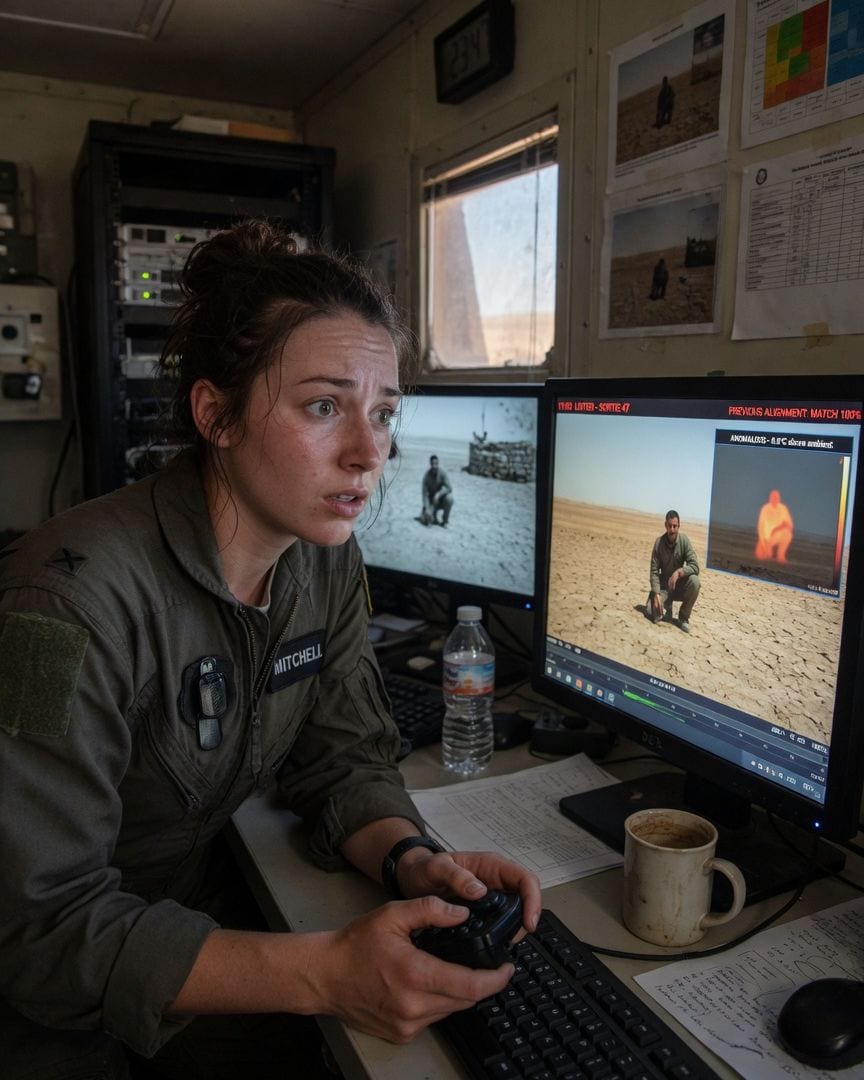
A drone operator spotted a kneeling man in the desert, unseen by her team. Then she found his duplicate, hundreds of yards away, in old footage.
Airman Laura Mitchell prepared for one of her squadron’s final sorties at Forward Operating Location Sandstone, the desert sun beating down. On her drone display, a lone man knelt, impossibly still, at the edge of a dry field, his form perfectly outlined. Her ground team searched for forty minutes below, finding nothing but dust, yet the figure remained in sharp, unwavering focus on Mitchell's screen. She later discovered this same unseen man had appeared across three previous sorties, always at the eleventh minute of loiter, his faint heat signature slowly shifting inches across the parched ground. What was this impossible presence in the desolate desert?
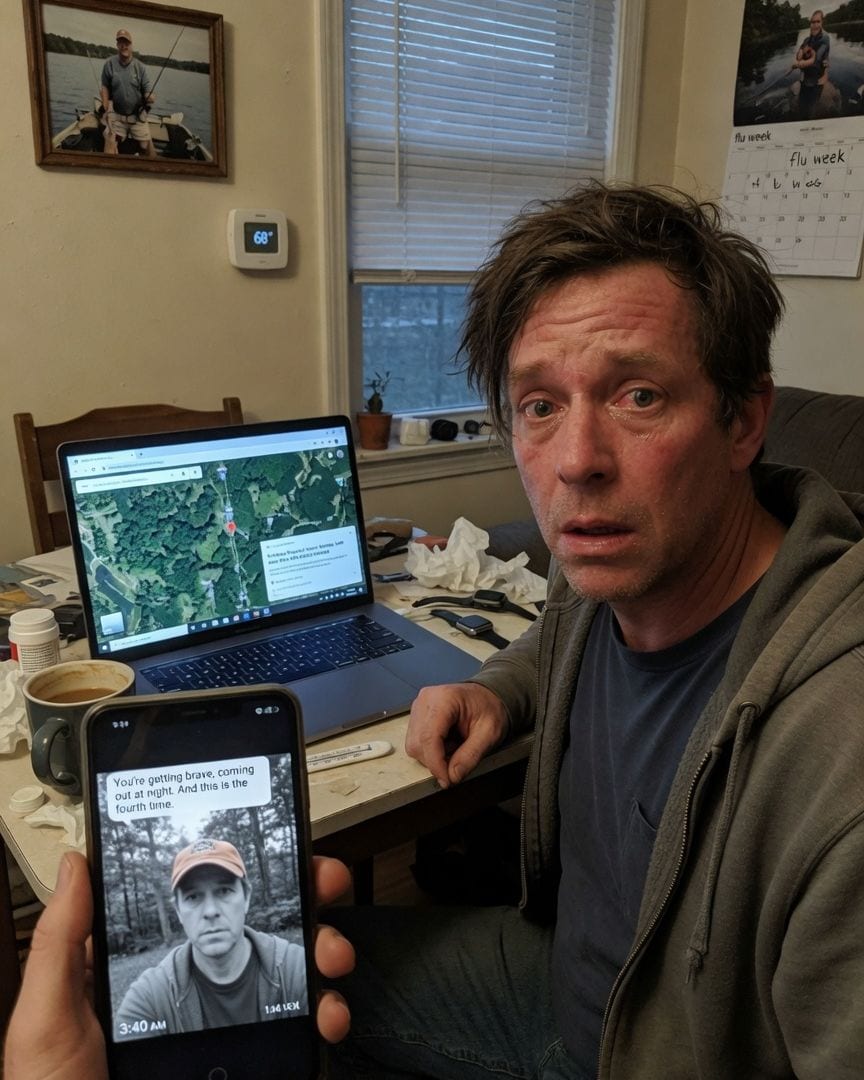
My brother-in-law's camera caught my face in Montana at 3:40 AM. I was asleep in Ohio, but it's the exact orange cap I lost, and he's seen me there four nights running.
I was just making coffee when my brother-in-law sent a photo from his Montana hunting land. It showed my face, wearing my lost baseball cap, timestamped 3:40 AM. I was home in Ohio, sick in bed, and hadn't been to Montana in years. And this was the fourth time.
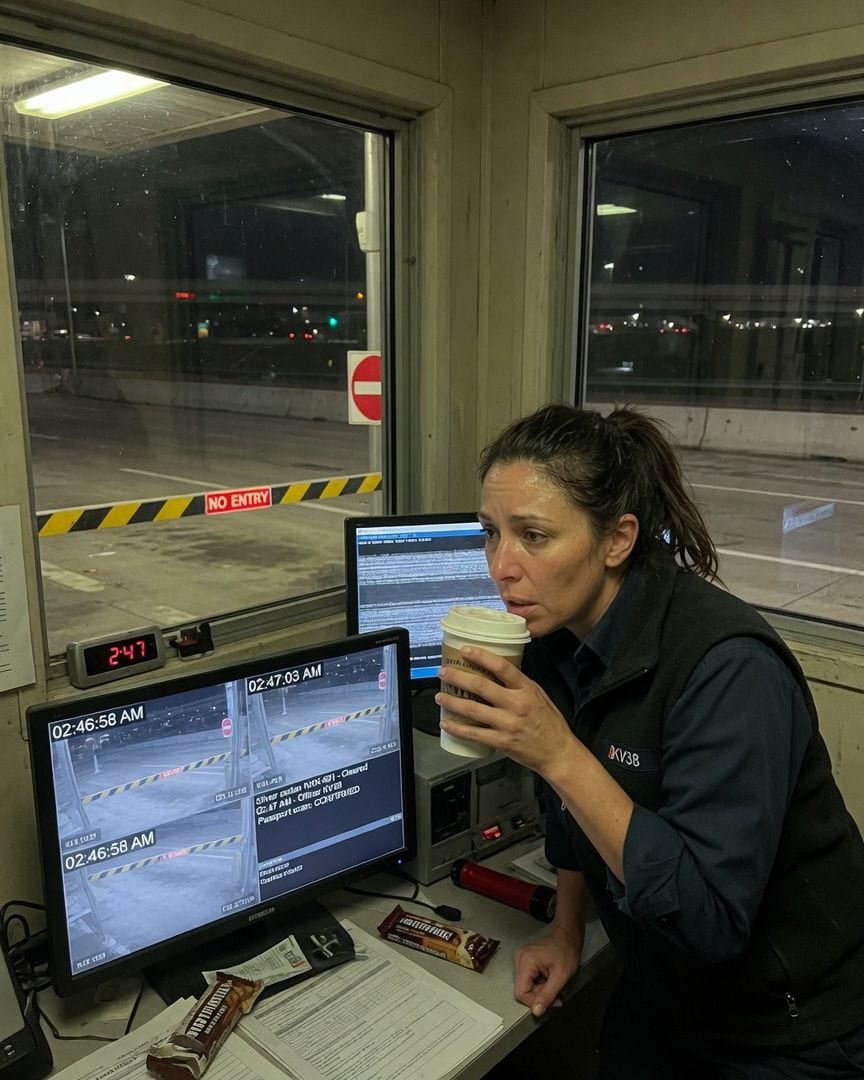
My lane's barrier was down, but my log cleared a car at 2:47 AM. With my code.
Working the quiet overnight shift at the Vance-Romano land crossing, I expected only routine system logs. Instead, a new entry showed a silver sedan cleared northbound through my Lane 3, stamped with my officer code. The issue: my lane had been closed and locked all night, and I hadn't seen a single car pass. Then I discovered the external camera feed for those crucial seconds was simply gone.
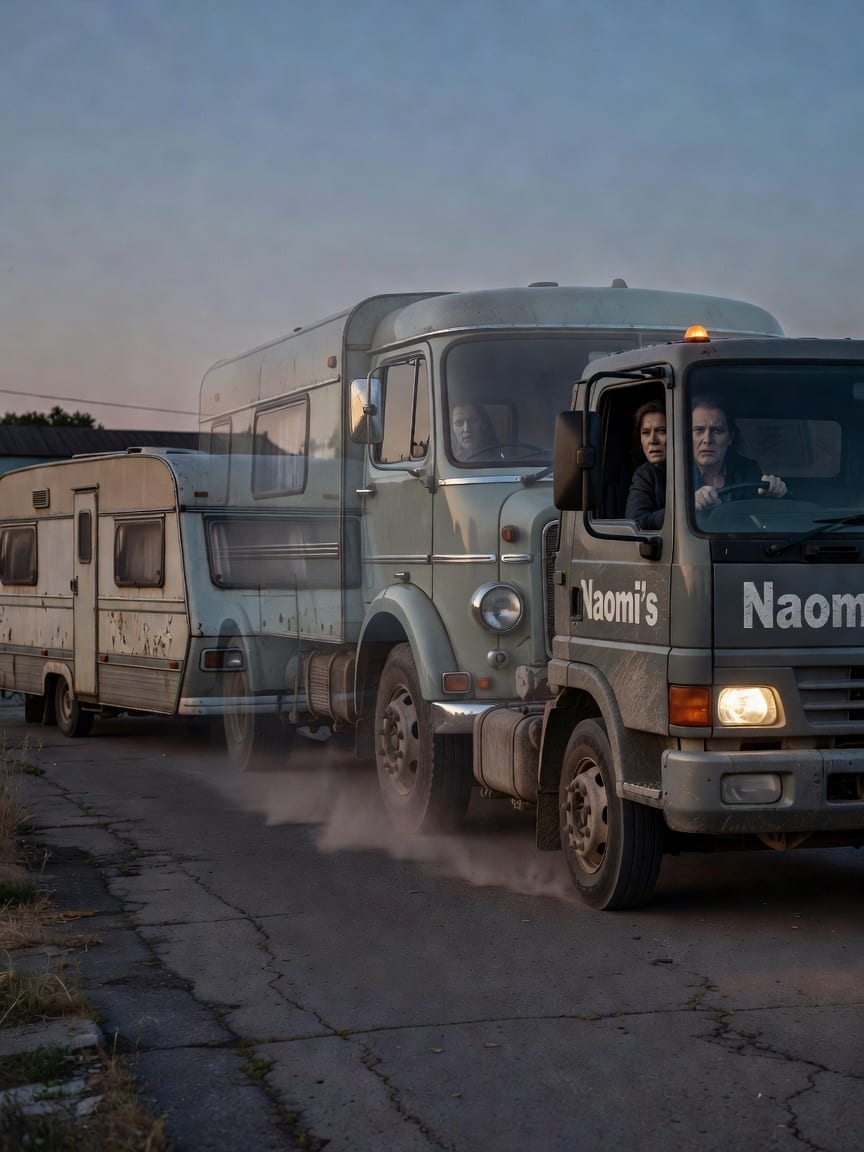
My dashcam shows the same parked caravan scrolling past eleven times in forty minutes. The timestamp advances. The mileage advances. The caravan never moves, and neither, it seems, did I.
I was on my usual lorry route, my dashcam humming, when I passed the old caravan in the lay-by. Five minutes later, I saw it again – the exact same lay-by, the same peeling blue paint. My dashcam timestamp advanced, my odometer clicked over, but the road kept repeating.