My dry-cleaning ticket apologized for a stain that wasn't there. It had my name, a date three days from now. The girl said their system can't print future dates.
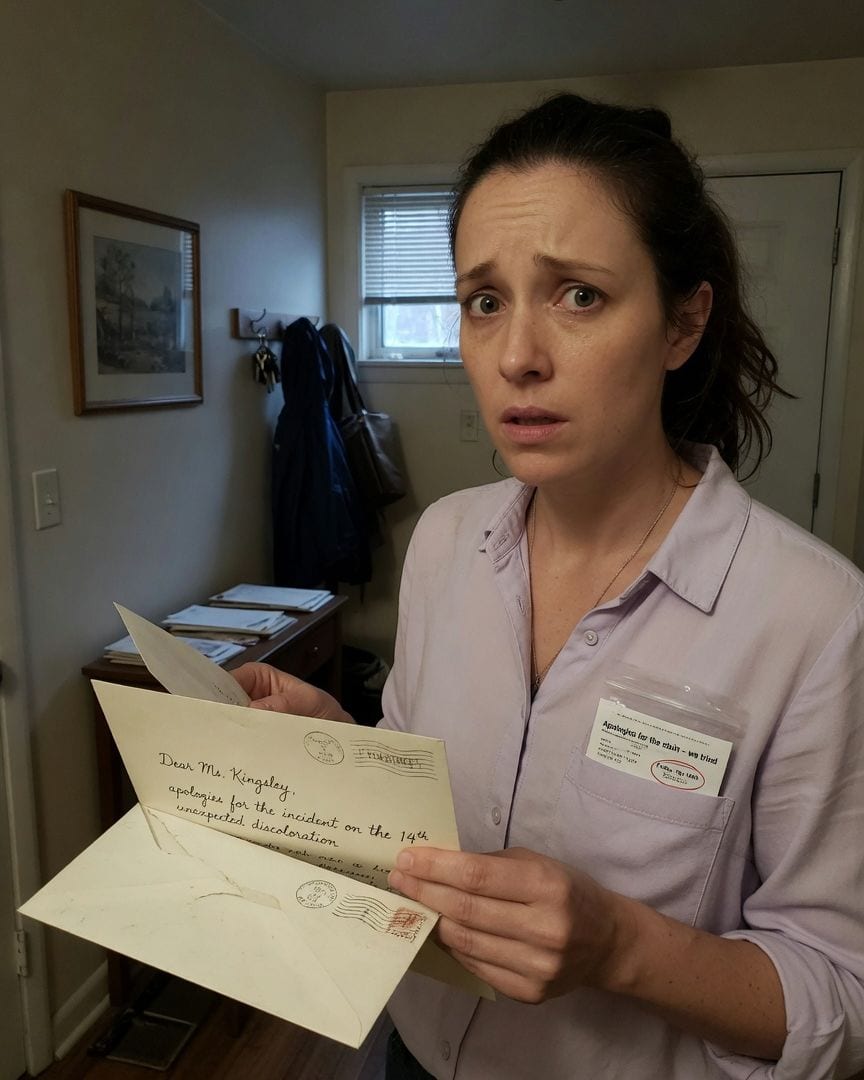
I stood at the dry-cleaning counter, the crisp scent of fresh laundry doing little to calm the prickle of unease. My three collected shirts were perfect, pressed and folded, a neat stack inside the plastic bag.
But the ticket stapled to the bag was not. Under the total, a line was printed in bold, almost accusatory type: 'Apologies for the stain — we tried.' I blinked. There was no stain.
My favorite blue silk blouse, the reason for the whole trip, was flawless. I’d checked it twice before dropping it off, and again just now.
I pointed it out to the attendant, a young woman named Diane, who looked barely out of high school. She frowned, taking the ticket from my hand and scanning it with a handheld device.
"That's… odd," she murmured, her brow furrowing deeper. "And the date." She held it closer. "It's for three days from now, Ms. Kingsley."
I glanced at my watch. It was Tuesday. The ticket clearly read Friday, the 14th. "Your system can print future dates?" I asked, a faint edge of bewilderment in my voice.
Diane shook her head, her dark ponytail swaying. "No, our system can't do that. It’s impossible. Dates are automated. They print for today, or for the pick-up date if it's already in the past."
Her eyes, wide and a little confused, met mine. "I've never seen anything like it."
I took my shirts, the impossible ticket clutched in my hand, the phantom apology and the future date nagging at me like a loose thread in a perfect seam.
Three days passed. Friday came and went, uneventfully. I had consciously not worn the blue silk blouse on the 14th, almost as a subconscious defiance, but nothing happened.
I almost forgot the strange dry-cleaning ticket, dismissing it as a computer glitch, or maybe a new employee had messed up the system somehow. A strange prank, perhaps.
Then, on Saturday, a letter arrived in my mailbox. It wasn't a bill or junk mail. It was addressed to 'Naomi Kingsley,' my full name, including my rarely used middle initial, in a precise, almost calligraphic hand.
The paper was heavy, cream-colored, substantial. The postmark was from an address I recognized: 17 Elm Street. I remembered it as the old, demolished house from my childhood, now just an empty field. My stomach tightened.
No, not 'just' an empty field. The empty field. The one with the swaying tall grass.
I tore it open, my fingers fumbling with the heavy paper. Inside, a single sheet of the same cream stock.
'Dear Ms. Kingsley,' it began, the same formal, almost elegant script, 'Please accept our sincerest apologies for the incident on the 14th. We regret any inconvenience caused by the unexpected discoloration. We did our utmost to rectify the situation.'
The '14th.' The date on the dry-cleaning ticket. The date three days from now that had passed yesterday. The 'discoloration.' The phantom stain.
My breath hitched. A cold dread, sharp and sudden, spread through me, chilling my skin despite the warm Saturday afternoon. This wasn't a prank. This was… impossible.
I called the local post office, my voice tight. I gave them the Elm Street address. The clerk, curt and efficient, didn't hesitate. "That property? 17 Elm Street? Vacant lot for decades, ma'am. Demolished in '98.
No mail sent from there."
Naomi held the impossible letter, its crisp paper feeling too real in her trembling hand. The postmark clearly indicated the address of an empty field she knew, confirmed defunct by the post office.
The content, specifically mentioning 'the incident on the 14th' and matching the dry-cleaning ticket's detail, made her blood run cold.
She stared at her full name, even her middle initial, printed perfectly on the envelope in a precise, almost calligraphic hand, a name that shouldn't be known by whatever sent this.
The empty field on Elm Street became my obsession. I drove there, the following Sunday, the impossible letter still in my purse. I parked on the overgrown curb, got out, and walked the perimeter.
The tall grass swayed in the breeze, utterly devoid of any structure, just a solitary oak standing like a sentry near the back. I looked for signs of recent activity, anything, but found nothing.
Not a single boot print or discarded wrapper.
An old woman with white hair pulled into a severe bun was tending her garden next door. Mrs. Peterson, I vaguely remembered from childhood visits with my grandmother. I approached her, trying to keep my voice casual.
"Excuse me, Mrs. Peterson? I was just wondering about this empty lot."
She straightened up slowly, peering at me over her wire-rimmed glasses. "Oh, that was Miss Ashford's place," she said, her voice reedy but clear. "Eccentric, she was. Died decades ago, long before you were born, dear.
Kept everything, wrote everything down. Said she was documenting 'the way things are meant to be'." She chuckled, a dry, rattling sound. "Her 'family ledgers,' she called them. Though there was no family to speak of by the end."
I asked about relatives, anyone who might have taken her things. Mrs. Peterson shook her head. "No one. Just Miss Ashford and her books. They had to clear the place out when she passed."
Later that day, I reported the letters to the local police department. Officer Russell Coleman, a man with a tired face and kind eyes, listened patiently, taking notes on a small pad.
He looked at the postmark, then at the contents of the letter, his expression remaining skeptical. "We'll look into it, Ms. Kingsley, but without a physical sender, these things are difficult. Could be a very elaborate prank."
He even suggested I might be overtired, imagining things.
I knew it wasn't a prank. The precision, the detail – it was too targeted. I started replaying every odd moment in my life, every minor mishap, every strange coincidence.
The time my car broke down on a specific stretch of road I usually avoided. The forgotten appointment that saved me from a tedious meeting. Was it possible I'd missed other 'warnings'? Other 'apologies'?
My search for Miss Ashford continued. I scoured local archives, spent hours in the dusty basement of the public library, until I eventually found a reference to her in an old historical society newsletter.
The article mentioned her as a local 'folklorist' who compiled detailed 'family ledgers.' The newsletter listed the society's curator: Maxwell Ashford, a distant relative of the deceased woman.
I called him the next morning. Maxwell was a portly man with thick glasses and a surprisingly theatrical speaking style, initially charmed by my interest in his obscure family history.
He spoke of Miss Ashford's obsession with 'patterns' and 'destiny,' her belief that some lives were 'written.'
"She was convinced that everything, from a stubbed toe to a marriage, was merely the playing out of a pre-ordained script," he’d said, gesturing expansively in his cluttered office.
When I pressed him about specific names in the ledgers, about what kind of information she recorded, his demeanor shifted. His theatricality evaporated, replaced by a guarded silence.
He became evasive, claiming the books were private family matters, "not for public consumption." He said they were "just old rambling journals, really, of no historical significance."
His eyes darted around the room, almost as if he was afraid of being overheard.
Later that evening, after leaving the society, my phone rang. The caller ID was 'UNKNOWN.' I hesitated, my thumb hovering over the screen, a sudden chill prickling my skin. I answered.
A flat, calm voice, devoid of human inflection, spoke my full name. It wasn't a recording, not exactly. It was more like a perfectly synthesized voice, utterly emotionless.
"Naomi Kingsley," it said, the words chillingly precise, the sibilant 's' sounds stretching unnaturally. "You are deviating." The line went dead.
I stood frozen in my living room, the phone still pressed to my ear, the cold certainty that my digging had been noticed settling deep in my bones. My skin felt clammy.
The air in the room seemed to grow heavier, pressing in on me.
I drove back to the historical society, the calm voice's warning echoing in my mind like a chisel chipping at ice. It was late, past closing hours, but I saw a light on.
I found Maxwell tidying a display of old farming implements, a worried frown etched on his face. He looked up, startled to see me.
I didn't mince words. My voice was low, urgent. "Mr. Ashford, I think your distant relative, Miss Ashford, was sending me letters from the grave. Or, rather, whatever she wrote is. And now someone or something knows I'm looking."
I laid one of the impossible letters on the counter, the cream paper stark against the dark wood.
Maxwell's face, already pale, seemed to drain of all color. His eyes, magnified by his thick glasses, widened as he picked up the letter, examining the precise handwriting, the defunct postmark.
"She… she believed some lives were mapped out, Ms. Kingsley. A kind of pre-ordained script. Every event, every person… written." He looked at me, then back at the letter, his hands starting to tremble slightly. "These are from her ledgers.
From her own hand, I mean. The script. It's hers."
He led me, without another word, to a back room, a dusty storage area filled with more than just old documents—there were rows of shelves crammed with forgotten furniture, archaic machinery, and stacks of yellowed photographs.
He pointed to a faded sepia image, brittle with age, of a cluttered study. The room in the photo was overflowing with leather-bound books, stacked high on every surface, filling every shelf.
"These were her ledgers," he whispered, his voice thin. "Not just for her own family. She'd document everyone she knew, their lives, their deaths, their 'destinies.' She was convinced she was simply transcribing what already existed, not writing it herself."
I stared at the photograph, a tremor running through me. The air in the room grew heavy, thick with the smell of old paper and dust, as if the past itself was manifesting. "But why me?
And how are these letters being sent if the house is gone? How is anyone even sending them?"
Maxwell wrung his hands, his gaze fixed on the letter on the counter. "After her death, the town council deemed her work… disturbing. Not for public knowledge. They ordered all her personal effects, including the ledgers, to be incinerated.
It was supposed to be a clean sweep. No one was meant to see them again."
He looked at the letter in his hand, then back at me, a horrified realization dawning in his eyes, mirrored by my own growing dread. "Someone saved them. They weren't destroyed. And now… now they're interacting with them. With you."
The last word was a barely audible rasp.
Naomi, now convinced the ledgers existed and that someone was using them, tracked down the estate sale records for Miss Ashford's belongings.
The official records confirmed the incineration order, and a certificate of destruction, but a small, handwritten note in the margin of a clerk’s ledger mentioned a 'private auction' for miscellaneous items shortly before the official disposal.
The note was almost illegible, but one name stood out: Arthur Radcliffe. A reclusive collector of rare books and occult esoterica, known locally for his eccentric habits.
She drove to his remote, rambling house on the outskirts of town, a place that looked less like a home and more like a mausoleum for forgotten treasures.
It was a cluttered, dusty labyrinth filled with forgotten objects, each shelf sagging under the weight of history.
Arthur, a gaunt man with a scholarly air and eyes that seemed to miss nothing, allowed her to search, amused by her "curious fixation." He'd seen all manner of strange interests, he said.
Tucked away on a high shelf in a back corner, behind a stack of antique maps yellowed with age, she found it. An ornate, leather-bound ledger, its cover worn smooth with age, the gold tooling almost completely rubbed away.
It felt impossibly heavy in her hands. She pulled it down, her heart pounding against her ribs, a frantic drumbeat in the sudden silence of the cluttered room.
She flipped it open, the brittle pages rustling like dry leaves. Her full name, Naomi Kingsley, was inscribed on the first page, followed by a date years before her birth.
Below it, a chillingly familiar entry, written in that precise, calligraphic hand: '14th, stain incident, minor.' The date of the dry-cleaning ticket. The phantom stain.
And then, her eyes jumped to the next entry, for a date next week: 'Necessary sacrifice.'
Naomi's fingers trembled over the words, realizing this wasn't just a record of the past, but a horrifying blueprint for her future. She looked up, the dusty collector's study suddenly a tomb, realizing she wasn't just reading a historical document.
She was already on the page.
I confronted Arthur Radcliffe, the ornate ledger open on his dusty table, its pages revealing my life story. He remained calm, detached, a scholar observing a fascinating phenomenon, utterly unperturbed by the intimate details of my predetermined fate.
"Miss Ashford believed some lives were 'written,' Ms. Kingsley," he said, adjusting his spectacles. "Not by a malevolent force, mind you, but simply as a pattern. An inevitability. A pre-existing script.
She merely transcribed what she observed, a witness to fate."
He pointed to other names in the ledger, some familiar, some unknown. Entries detailing deaths, disappearances, and profound life changes, all described with chilling accuracy. Events that had, indeed, come to pass.
He turned back to my page, his finger tracing the entry. "The 'necessary sacrifice' for you, it's a specific accident at your workplace. Non-fatal, but life-altering. On Tuesday, a week from today."
He spoke with the quiet certainty of someone stating a weather forecast.
He then pointed to a small, folded note, almost a bookmark, tucked into the spine of the ledger. It was also in Miss Ashford's precise, calligraphic hand.
I pulled it out and read it aloud, my voice barely a whisper: 'To defy the script is to write a new one, but the ink demands payment.'
A cold wave washed over me. It wasn't about stopping a malevolent entity; it was about fighting an inherent pattern, a battle against my own pre-ordained path.
The letters, the dry-cleaning ticket, the voice on the phone — they weren't warnings from a sender, but echoes of the ledger's own immutable logic, trying to guide me back to the path I was meant to follow.
The entity was the ledger itself, or the force it represented. A passive, relentless record keeper.
The 'necessary sacrifice' entry detailed a specific accident involving a faulty piece of machinery at my graphic design studio, scheduled for the following Tuesday. A heavy, antique printing press that had been recently restored, it specified.
My company had one, an old showpiece.
I meticulously planned to avoid it. I took the entire day off, informing my colleagues of my absence, citing a sudden, severe illness.
I packed a small bag, intending to drive to a remote cabin my friend owned, far from the city, far from any printing presses. I just needed to be away.
But as I reached for my car keys on the hook by the door, they were gone. Vanished. I searched frantically, tearing through the house, emptying drawers, checking every coat pocket. They were nowhere. It was impossible.
I had left them there last night.
Frustrated, and with no time to spare before the 'scheduled' time of the accident, I decided to walk to the nearest bus stop. It was only a few blocks, and I could catch an intercity bus from there.
But as I hurried down the street, a sudden, inexplicable urge for a specific type of coffee, a brand only sold at a small, out-of-the-way cafe across town, overtook me.
It was an impulse so strong it felt like a command. This detour led me down an unfamiliar alley, a shortcut I'd never taken before, promising to shave precious minutes off my altered route.
The alley walls were grimy brick, narrow and shadowed, the air damp and smelling faintly of exhaust.
As I emerged onto a busy street, blinking in the harsh sunlight, a delivery truck, swerving violently to avoid a sudden obstacle – a stray dog, I thought I saw – mounted the curb with a screech of tires.
Everything seemed to happen in slow motion. I reacted, my body tensing, but too late. I was thrown, my dominant hand crushing against a lamppost with a sickening crack.
The truck swerved away, barely missing me entirely, then barreled down the street, leaving me crumpled on the pavement, my hand a throbbing agony.
I escaped death. The truck driver later claimed he felt a 'pull' in the steering wheel, like something was guiding him. The 'sacrifice' was exacted. The ledger had found a way.
My hand healed, eventually, but the nerve damage was permanent. My dominant hand, the one I relied on for precision in my graphic design work, lacked the fine control it once had.
It trembled, subtly but constantly, a constant, physical reminder. I could no longer work as a graphic designer in the same capacity. The police investigation into the truck incident was inconclusive, deemed a bizarre, unfortunate accident.
The stray dog was never found. Arthur Radcliffe, the collector, disappeared shortly after, taking the ledgers with him. The letters stopped. The phone calls ceased. The world moved on, oblivious to the rewritten script, the precise payment exacted.
I stare at my newly altered hand now, the subtle tremor in my fingers a constant reminder. I had rewritten a line in my own ledger, I knew, but the cost was real. I had survived, but not whole.
My life was fundamentally changed, a silent testament to a truth no one would ever believe.
Naomi Kingsley's social media posts now show intricate, haunting digital art, created painstakingly with her non-dominant hand. Her followers praise her resilience, unaware of the grim inspiration. One comment, on her latest piece, simply reads: "The ink demands payment."
If this one got to you
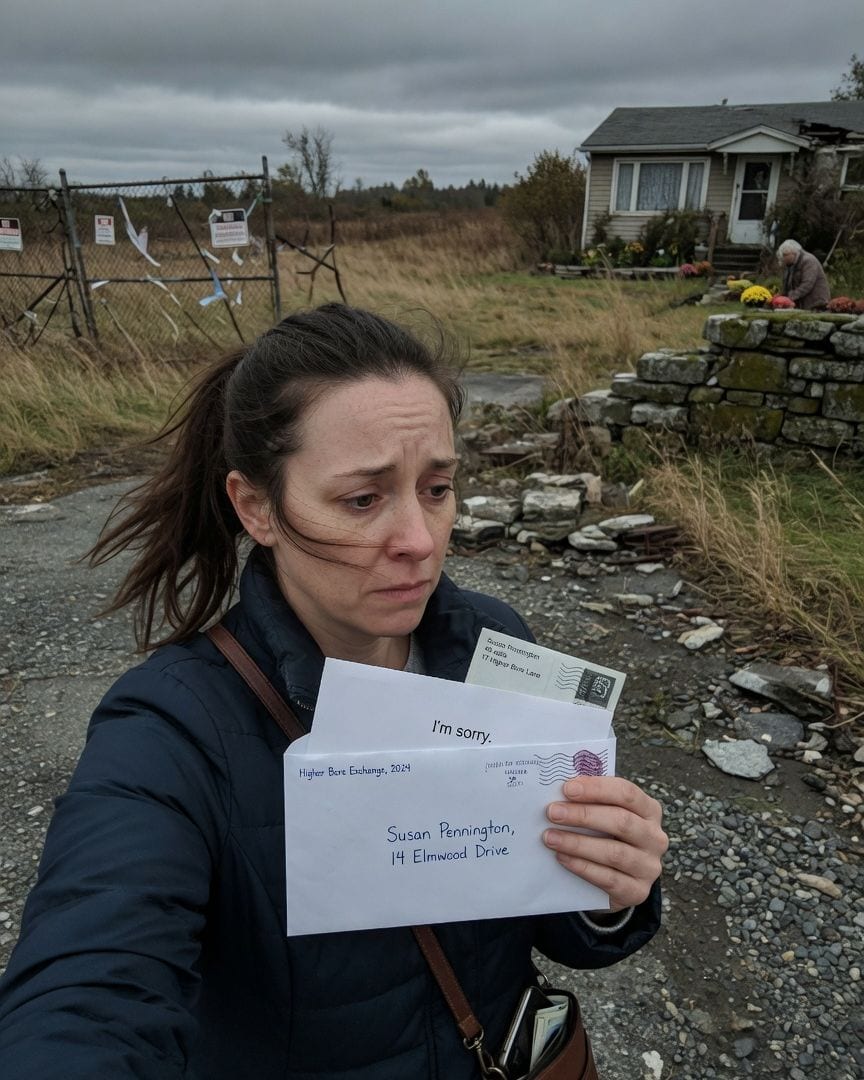
My phone bill listed forty calls made at 3:14 AM to a house demolished in 1990. The paper bill came from a flattened building. My name is on it.
I stared at my phone bill, my morning coffee forgotten. It detailed forty calls, each at 3:14 AM, to an address I knew was a vacant lot where a house had stood decades ago. But the real dread began when I saw the bill's return address: a telephone exchange flattened years before.
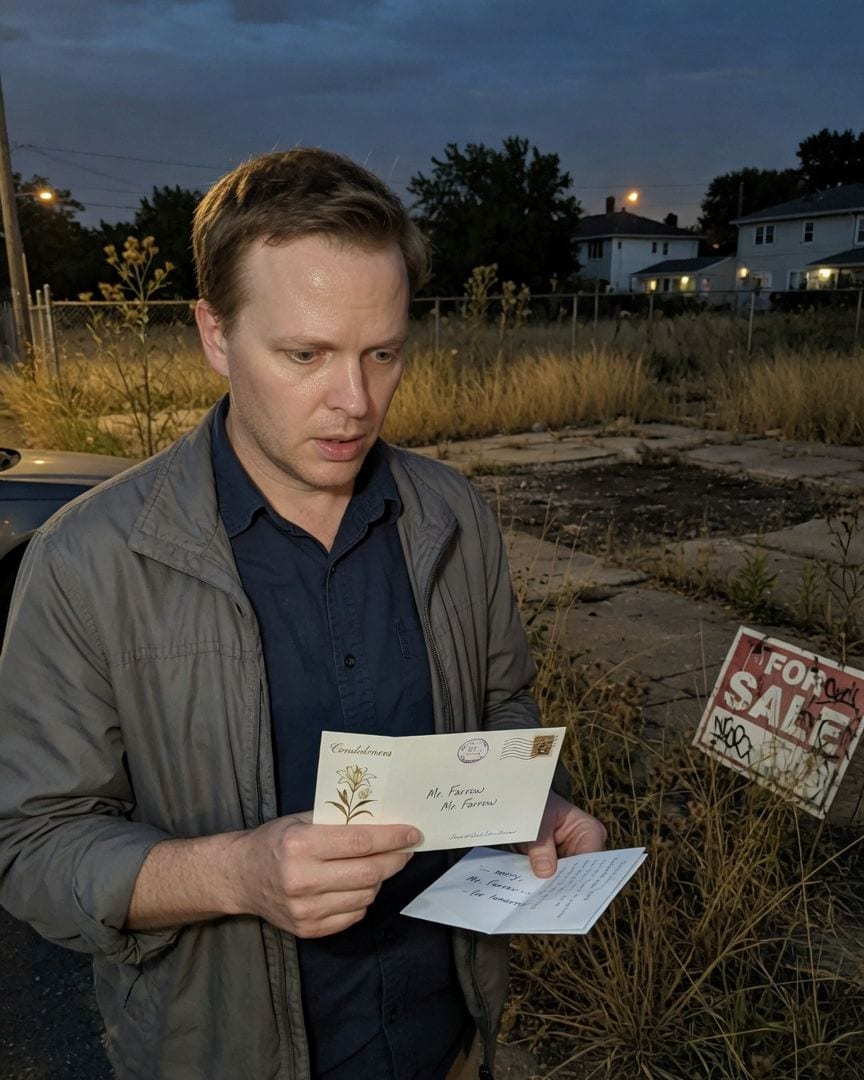
My waiter apologized for tomorrow's plans I hadn't made. He stared at his own handwriting, swore he didn't write it.
My quiet, solitary life was routine until a condolence card arrived, addressed to me for an unknown loss. The postmark, '14 Elm St.', was unsettling enough, but driving there revealed the impossible truth: the address was nothing but an empty lot.
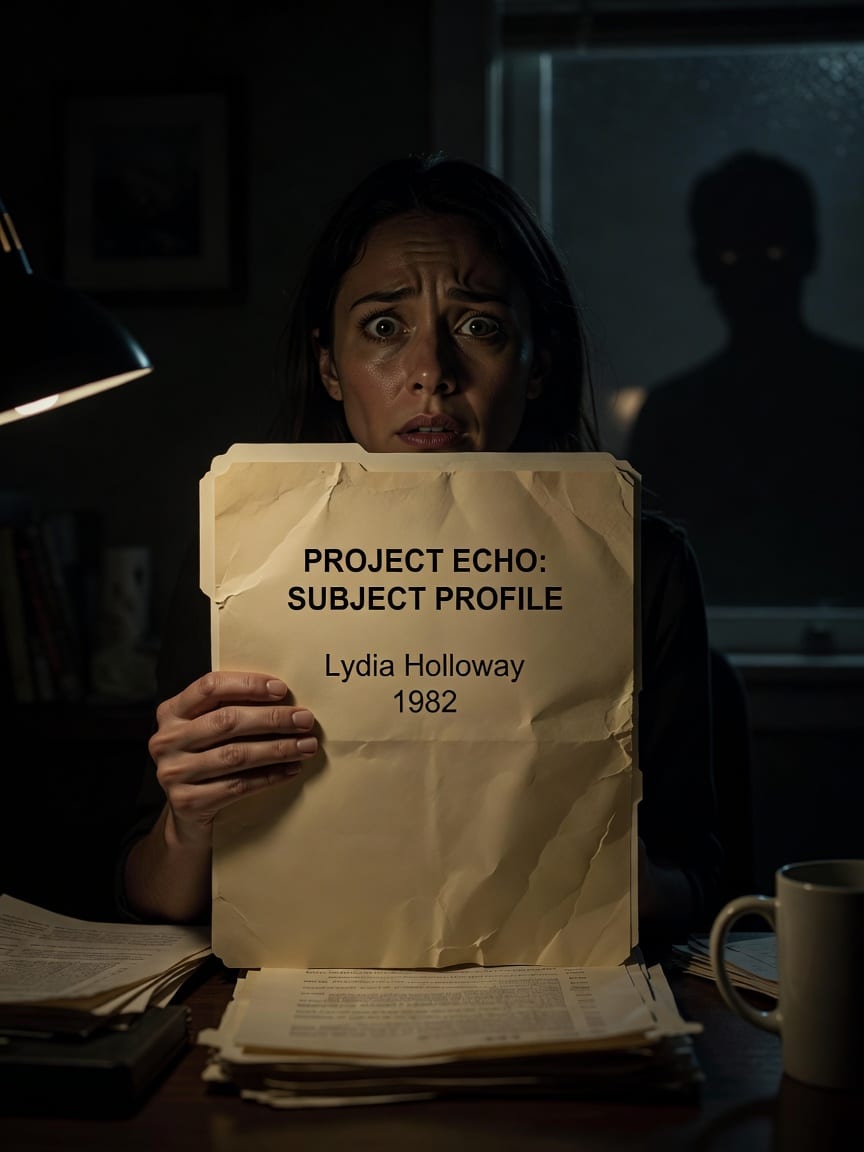
My own signature is on a Baltimore police report for a hit-and-run I never witnessed. The officer remembers my university sweatshirt.
I was settling into a quiet Tuesday evening when Baltimore PD called, asking about a witness statement I supposedly gave. They described my faded green university sweatshirt, seen at a hit-and-run last Friday. But my sweatshirt was in my dresser, and I was home in Seattle.
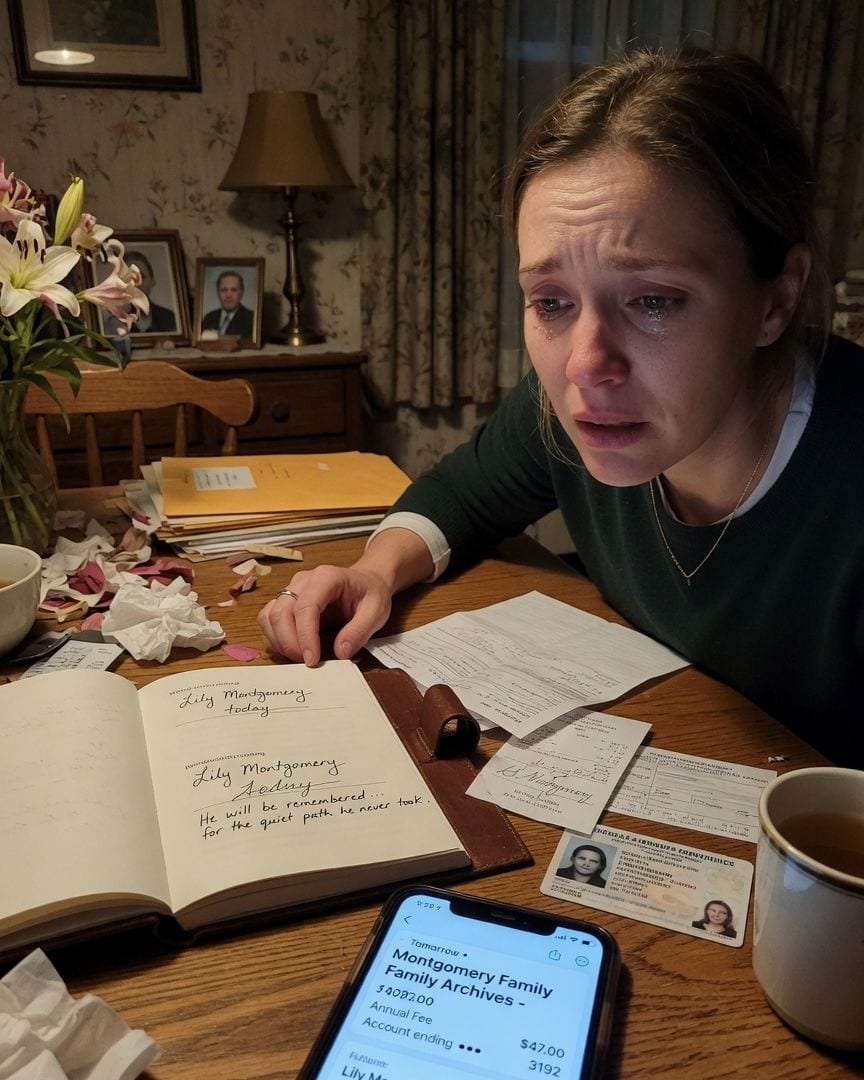
My handwriting was in the condolence book. Dated before my uncle died. Words I'd never choose.
At Uncle Howard's funeral, grief-stricken, I signed the condolence book. But later, flipping back through the pages, I found my own distinct handwriting on an entry dated the previous morning—before he had even died. The words beneath my name were chilling, a judgment I would never make.
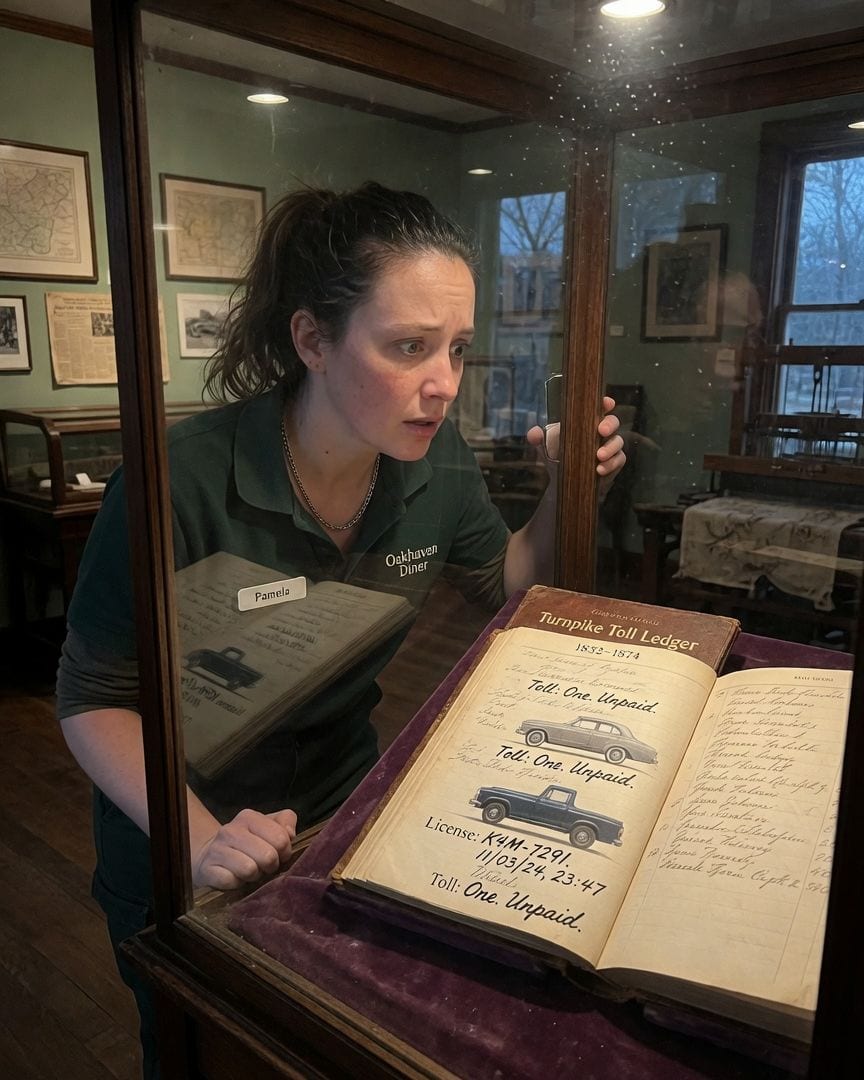
My car stalled at the old turnpike milestone, after dark. The toll ledger, closed in 1874, then listed my car, my stall time, and a toll of one, unpaid.
I had just moved to Oakhaven when my old sedan died on a dark, winding road by an infamous turnpike milestone. The next day, I found my car's exact registration and stall time written in fresh ink in a 150-year-old, locked museum ledger, marked 'Toll: One. Unpaid.' The curator dismissed it as a prank, but her white knuckles and strained voice hinted at something far more unsettling.
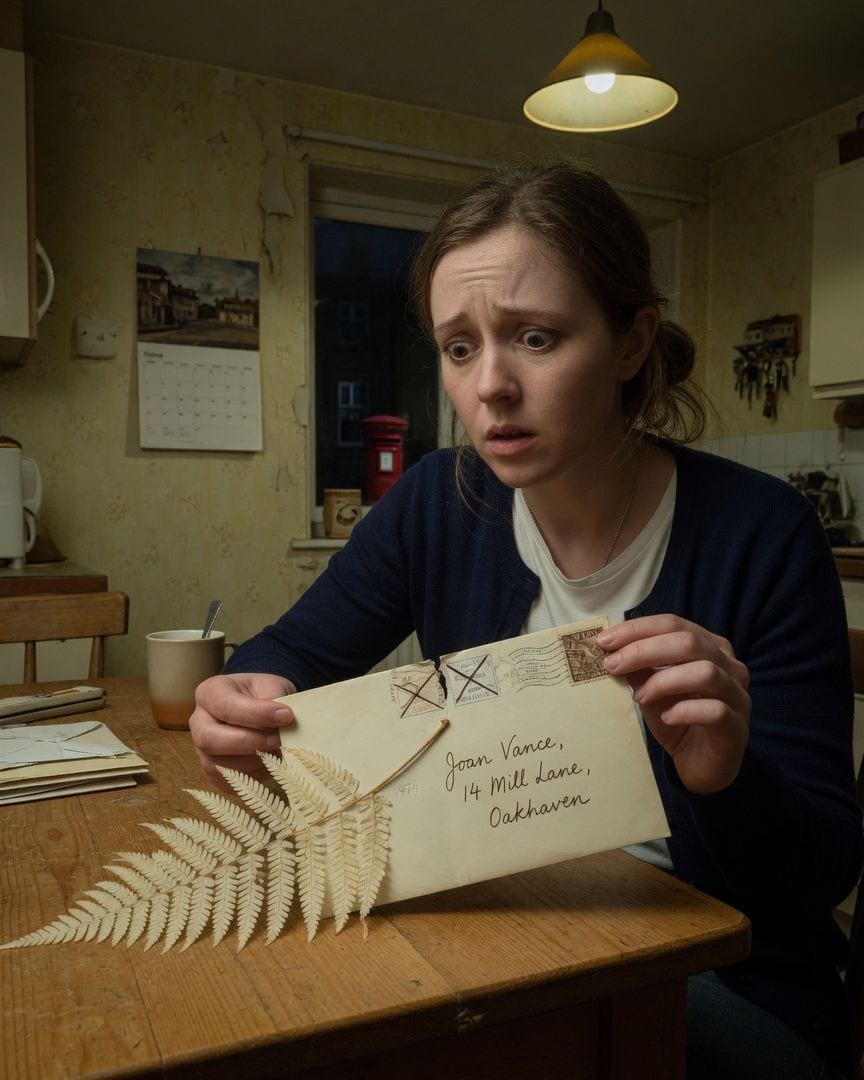
My letter returned. Delivered by hand, with a 1974 postmark. My own address, in a hand I didn't recognise.
As Joan Vance, new to Oakhaven, I posted a letter to my sister just two days ago, well past the last collection. Now, that same envelope sits on my kitchen table, delivered by hand. It bears a postmark from Oakhaven, 1974, a date that makes no sense, as the local post office officially closed that very year.