An explorer found a Cold War spy plane lost for sixty years beneath Greenland ice, but its pilot's log was dated almost a decade after it vanished.
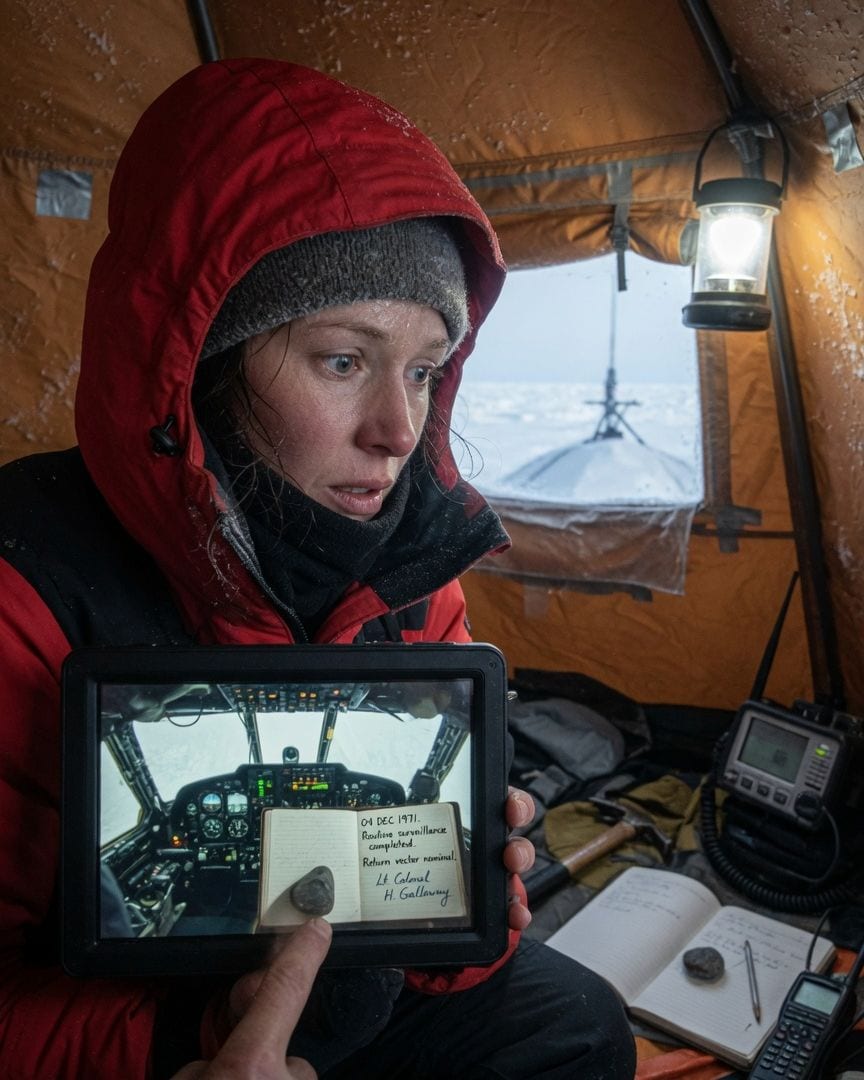
Ines Faurholt, a thin line of sweat beading on her brow despite the sub-zero wind, pushed her ski pole into the Greenland ice.
The white noon was a sheet of light, bleaching all shadows, which was precisely why she didn’t see the antenna mast until her ski struck it.
It was a dark, impossibly intact metal pole, rising from the blue-white expanse like a spear from a forgotten battlefield. Below her, sixty feet down through ice that had taken sixty years to close over it, sat a reconnaissance aircraft.
Its navigation lights, a pair of steady green pinpricks, glowed through the blue-tinted depths. A faint, almost imperceptible hum vibrated through her boots, a low thrum against the vast silence. Scrabbling down to the mast, Ines peered into the ice.
The cockpit was clearly visible, a dark bubble suspended in the frozen light. And the clock, a small digital readout, was meticulously keeping time, its seconds ticking over in silent precision.
She pulled out her satellite radio, her gloved fingers fumbling slightly, her voice tight as she asked James Whitmore, her camp lead, to check whether anything in the world could still be drawing current down there.
The hum pulsed steadily, a rhythmic heartbeat in the frozen silence of the ice cap.
James Whitmore’s voice crackled back, static-laced with disbelief. “Faurholt, that’s impossible. No power source on Earth could last that long. Are you sure you’re not seeing a reflection?”
Ines, already chipping away at the ice around the mast base with her geological hammer, confirmed. “The hum is real, James. And the clock is counting seconds, perfectly. There’s no glare.”
Using a portable sonar unit, she swept the depths, confirming the aircraft’s identity: a U-2 Dragon Lady, a Cold War-era spy plane.
Its fuselage was pristine, not a single rivet out of place, its dark skin gleaming dully through the ice. It looked as if it had just landed, not crashed, not been lost for decades.
After hours of careful, backbreaking work, Ines managed to bore a narrow access shaft, just wide enough for equipment, down to the cockpit canopy.
The air that seeped out was cold, but shockingly fresh, not stale or foul with sixty years of enclosure. It carried a faint, almost metallic tang.
She lowered a tiny camera on a fiber optic cable, its lens lighting the interior. Inside, the cockpit was immaculate. Not a speck of dust. The instrument panel was alive with faint green and amber lights, a silent, colorful constellation.
On the co-pilot’s console, a leather-bound logbook lay open, held down by a small, polished stone. The camera zoomed in, its lens struggling to focus through the ice-distorted light and the subtle shimmer of the cockpit glass.
The last entry was clearly visible, handwritten in precise, almost elegant script.
Ines Faurholt, her breath fogging in the frigid cockpit she viewed through the camera feed, stared at the last entry in the aircraft's logbook: '04 DEC 1971. Routine surveillance completed. Return vector nominal.'
Her mind reeled at the date, eight years after the plane was officially declared lost. The U-2, and its pilot, Lt. Col. Hugo Galloway, had vanished in 1963. He was lost then. The plane was lost then.
Yet, here was his log, dated almost a decade later, calmly detailing a flight that never happened. Then her eyes fell on the pilot's signature: 'Lt. Colonel H. Galloway.' The name struck her with a chill beyond the ice.
She knew that name. A low, resonant thrum, deeper now than before, vibrated against the ice, a sound that seemed to emanate from the very depths of the glacier.
Back at the camp, Ines Faurholt presented her findings to James Whitmore.
He initially dismissed the logbook entry as a misfiled document or a hoax, perhaps a posthumous recognition, but the physical evidence—the active systems, the preserved aircraft, the constantly ticking clock—was undeniable. “A prank, then?”
he suggested, but even his voice lacked conviction. Ines spent the next week cross-referencing military records from the camp’s satellite link, pushing past firewalls and classifications.
She found no mention of a U-2 loss in 1971, only the original 1963 disappearance of Lt. Col. Hugo Galloway, officially attributed to equipment failure over Greenland. No recovery, no further details.
She dug deeper, searching for any classified projects related to his name, or any similar disappearances. Her search flagged 'Project Nightingale,' a heavily redacted file series marked 'Declassified, Eyes Only, Category Green.'
Access required special clearance she didn’t possess, and her attempts to bypass the security protocols were met with immediate, silent walls.
A few days later, a sleek, unmarked transport plane, incongruous against the stark white landscape, landed at their remote airstrip. Out stepped Gordon Maddox, a USAF Special Projects Liaison, impeccably dressed in a tailored suit, radiating quiet authority.
He informed Ines that her discovery was “of national security interest” and that her research team was to cease all activity concerning the aircraft.
His tone was polite, his smile carefully neutral, but his eyes held a steely warning that cut through the pleasantries. He offered no explanation for the aircraft’s condition, the log entry, or why his team was here.
As he turned to address his escort detail, Ines, watching closely, recognized a name called by Maddox: a young airman with the surname Sinclair.
She’d seen it in the periphery of the 'Project Nightingale' index, a name attached to a series of low-level data transfers.
The silence from Maddox regarding the plane was a wall, but the name was a crack, a fine line that hinted at something deeper.
Ines Faurholt felt the shift. Maddox’s presence wasn’t just about control; it was surveillance, a silent, patient watch.
She noticed small things: her data logs being subtly reorganized, a brief, unexplained network outage on her personal workstation that resolved itself before she could report it, the camp’s comms officer, Gary Brooks, suddenly less talkative around her, his eyes darting away when she approached.
One evening, as she worked alone in the research tent, reviewing scans of the ice, a shadow fell across her screen. Gordon Maddox stood in the entrance, a steaming mug in his hand. “Dr. Faurholt, still at it?”
he asked, his voice soft, almost conversational, yet it filled the tent with an unsettling weight. “I understand you’ve been looking into 'Project Nightingale.' I must advise against that. Some records are best left undisturbed.”
Ines met his gaze across the tent’s small table. “Why? Because they contradict the official narrative?” Maddox took a slow sip of his drink, his expression unreadable. “Because some narratives, even if incomplete, serve a greater purpose. And some truths...
are not for public consumption. They are too disruptive.” He paused, then added, his voice dropping slightly, “Lt. Colonel Galloway was a brave man. His family found peace with the official explanation. Don’t disturb that peace, Dr. Faurholt.
It’s a courtesy to the dead, and a kindness to the living.” The unspoken threat hung heavy in the frigid air of the tent, a cold knot tightening in Ines’s stomach.
He wasn’t just warning her; he knew exactly what she was looking for, and he knew why. She decided to bypass official channels entirely.
Through a contact from her university days, she found a lead: a retired archivist named Florence Bishop, known for her meticulousness and discreet handling of sensitive materials.
Florence had worked for decades in a specialized military records division, rumored to contain files that were never meant for public eyes.
Ines Faurholt traveled to a quiet town in Maine, the stark white of Greenland replaced by the muted grays and greens of autumn.
She found Florence Bishop in a cluttered, book-lined study, the air thick with the scent of old paper and dust.
Florence, a woman with kind eyes behind thick spectacles and a sharp memory, listened patiently to Ines’s account, her expression growing increasingly grave as Ines described the plane, the clock, the hum, and the impossible log entry.
“Project Nightingale,” Florence murmured, pushing her spectacles up her nose, the gesture slow and deliberate. “I remember the codename. It wasn’t about tracking lost assets, Dr. Faurholt. It was about managing them.
About what happened after they ceased to be… conventionally locatable.”
Florence explained that 'Nightingale' was a highly compartmentalized initiative, established in the early Cold War, to categorize and contain incidents where advanced military assets – aircraft, submarines, even small units – seemed to simply… vanish, leaving behind impossible traces.
“The aircraft under the ice, its lights on, its clock running, the logbook entry from years later,” Florence said, tapping a finger on Ines’s printouts, which lay spread across a polished wooden desk. “That’s not a malfunction. That’s a filing.
The asset isn’t destroyed. It’s… integrated into a different state of being. A record. It continues its function, in a way, but not in our physical reality. The active systems, the clock, the log entries – they’re echoes.
Proof of its continued existence within that filed state.” Ines remembered the constant, low hum from the plane, vibrating through the ice. “And Lt. Colonel Galloway?” Florence sighed, a sound that seemed to carry the weight of years.
“He wasn’t just the pilot. He was part of the asset. The pilot is the plane, in that context. He was filed with it. His signature in the logbook? That’s his continued work, from wherever he is now.”
The rational world Ines had known felt like it was tearing at the seams, a carefully constructed illusion shattering around her. The plane wasn't a wreck; it was a living ghost, meticulously recorded.
And the institution, the secrecy machine, wasn't hiding a failure, but a process, something far more chilling.
“The horror,” Florence Bishop whispered, her voice barely audible above the quiet hum of the room, “isn’t that they found a way to make things disappear. It’s that they found a way to make them stay. And keep recording it.”
Ines Faurholt absorbed the chilling implication: the 'filing' wasn't a one-time event, a past incident. It was a continuous process, meticulously documented. The file wasn’t static; it was dynamic. “Is the file still being written?”
Ines asked, her own voice barely audible, a dry rasp in her throat.
Florence nodded slowly, her eyes wide with a fear Ines hadn’t seen before, a deep, primal dread that made the air in the room feel heavy and cold. “It has to be. The ‘filed’ assets, they… they still interact.
They still generate data. And something has to log it. Something is logging it.” She rummaged through a dusty box tucked under her desk, pulling out a brittle, yellowed folder, its edges frayed. “This is an addendum.
It was never meant to see the light of day. It was pulled, scrubbed from the main archive. I kept it because it scared me more than anything else I ever saw.”
Florence, her hands trembling noticeably, pushed the faded, hand-typed addendum across the table. “This is the most recent entry I could find in Project Nightingale. I thought it was a typo when I first saw it.”
Ines Faurholt reached for the document, her fingers brushing the cold paper. Her eyes scanned down the page, past older, coded entries, until she reached the chilling final line: '2023. Glaciological Survey Team, Greenland Sector Alpha-7. Status: Initiated.'
The designation was hers, and the date was today.
Ines Faurholt’s blood ran cold. The comfortable, dusty warmth of Florence’s study vanished, replaced by the crushing weight of the Greenland ice. “My team,” she managed, the words a raw whisper. “That’s my expedition. Alpha-7.”
Florence Bishop’s face was etched with grim understanding, a mirror of Ines’s own dawning horror. “You didn’t just find the plane, Dr. Faurholt. You were found by the file. Your discovery initiated the next entry. It’s how it works.
The ‘filed’ entities, the echoes, they draw in new data, new subjects, to maintain their coherence, their record. It’s a mechanism of self-perpetuation. The secrecy machine, the military, Maddox—they don’t create the filing.
They just manage the fallout, the records, the cover-ups. It’s a mechanism for documentation, not control. They are simply the scribes.”
Ines remembered the constant hum from the plane, the steady green navigation lights, the clock keeping time sixty feet beneath the ice.
The pristine cockpit, the fresh, metallic-tang air that had seeped from the access shaft—it wasn't preservation, but a continuous state of being, a sort of inert animation.
The silence from Maddox, his subtle warnings, the veiled threats, the subtle interference with her data logs—it all clicked into place, a horrifying puzzle.
They weren’t trying to hide a mistake; they were trying to manage a phenomenon they couldn't stop, only record.
Her own expedition, her very presence on the ice cap, had become a new data point, a new subject for the ongoing 'Project Nightingale.'
The plane wasn't just a record of a past event; it was an active, patiently waiting part of a system that was still signing its ledger, adding new names.
Ines Faurholt returned to Greenland. Not to excavate the plane, not to demand answers, but to observe, to understand the mechanism that had just cataloged her. She knew what she had to do, or rather, what she couldn’t do.
The hum from the ice cap, once faint and distant, was subtly louder now, a low thrum that seemed to synchronize with her own heartbeat, a vibration deep in her bones.
She watched her team, oblivious, going about their work, charting ice cores, unaware of the silent, ongoing documentation.
Gordon Maddox had returned too, his demeanor unchanged, but his eyes held a new, knowing glint when they met hers across the stark expanse of the ice. He didn’t stop her, didn’t even question her renewed presence at the site.
He just watched, his gaze unblinking. Ines understood. He was waiting for the next phase of the 'filing,' for her entry to be completed, for the next data point to finalize.
She felt the pull, a subtle, almost imperceptible drawing sensation, like a tide turning, a magnetic north calling to her internal compass. The plane beneath the ice, its lights still burning, its clock still ticking, was not a static object.
It was a doorway, and she was standing on the threshold. She could feel the cold, fresh air that had seeped from the access shaft, a breath from another dimension, beckoning, inviting. She thought of Lt. Col.
Galloway, eternally flying his routine surveillance, his logbook still being written, entry by painstaking entry, decades after his supposed disappearance. The knowledge was a lead weight in her gut, heavy and inescapable.
There was no escape, no undoing, no way to retract her name from the latest entry. The file was simply open, waiting for her. Her own data logs, meticulously kept, now felt like a prelude to a final, inescapable entry.
She looked at the white expanse of the ice, so vast, so empty, yet humming with a secret she now carried, a secret that was slowly, patiently, claiming her.
Ines Faurholt completed her expedition, meticulously documenting every mundane detail of the ice cap, carefully avoiding any mention of the plane, its hum, or the chilling date in its logbook.
Gordon Maddox oversaw the official closing of the site, the antenna mast discreetly removed and the access shaft sealed, leaving only smooth, unbroken white behind. No one questioned Ines's newfound quietness, her distant gaze.
James Whitmore remarked that she seemed to have seen too much ice. Her reports were filed, her data archived, all perfectly normal.
The hum from the ice cap faded as she left, but the silence that replaced it was heavier, colder, a deeper, more profound quiet. She carried it with her, a phantom vibration in her bones.
She now worked from a small, quiet office, analyzing satellite data, far from the ice. The hum, she sometimes thought, was still there, a phantom vibration in her bones, a low frequency in the back of her mind.
She kept her old expedition data logs on her desk, a small, worn leather-bound book. She would open it sometimes, just to look at the meticulous entries, her own precise script, a mirror of Galloway’s.
It was a tangible record of her life, her work, her existence.
She knew she was still being watched, not by Maddox, not by any visible agent, but by the patient, unseen mechanism that had 'filed' the plane, and was now awaiting her. It was simply a matter of time.
Her last report on Greenland ice core temperatures was filed promptly, precisely at 3:14 PM. The office hummed with the usual late-afternoon lull.
No one noticed the faint, almost imperceptible metallic tang in the air, or the quiet smile that played on her lips. The file was never closed; it was simply waiting for the next entry.
If this one got to you
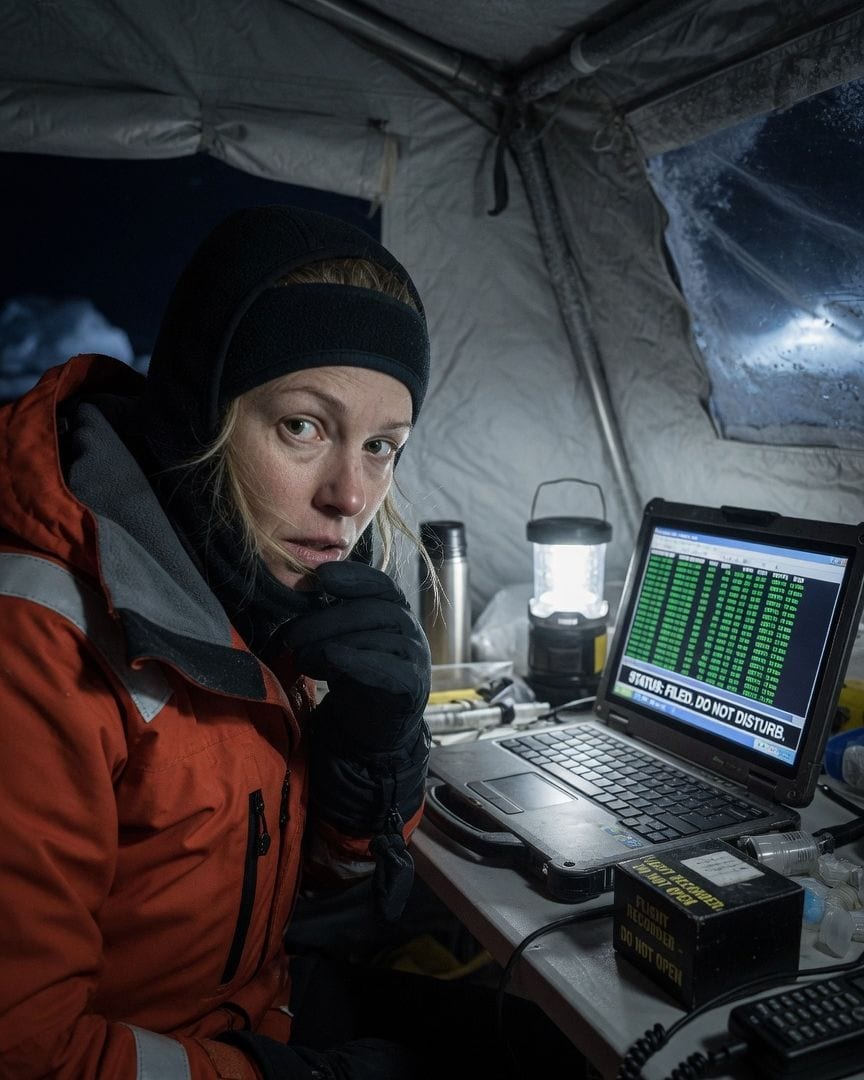
A glaciologist finds a Cold War plane 60 feet down in Greenland ice, its navigation lights still burning after sixty years.
Glaciologist Ines Faurholt skied across the vast, blinding Greenland ice cap when her path was abruptly blocked by a dark, corroded antenna mast. Beneath it, sixty feet down in ancient ice, a Cold War reconnaissance aircraft sat with its navigation lights eerily burning and its cockpit clock steadily keeping time. The sight was a violation of everything Ines knew about time and preservation in this frozen world. She called for a team, and days later, they extracted the plane's flight recorder, revealing data that showed the aircraft still flying years after its disappearance.
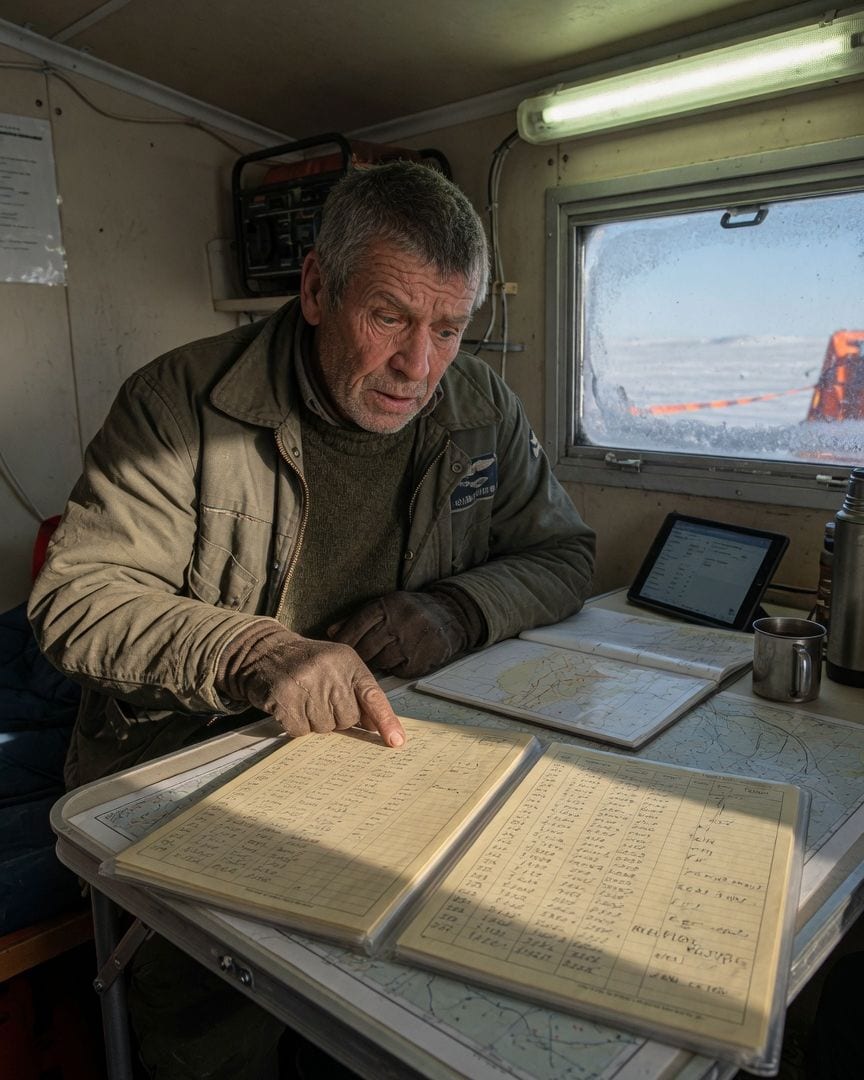
A retired crew chief finds the Cold War transport plane he loaded 32 years ago; its flight log shows today's date and still-damp ink.
Retired Air Force crew chief Ivo Barlas, 62, faced a deep arctic cold in Greenland, but nothing matched the chill radiating from the Osprey Nine. He had personally loaded the transport plane with classified equipment 32 years prior, never expecting to see it again after its disappearance. Now, the plane sat unbroken on a frozen lake, a ghost of his past, its cargo bay eerily empty despite the eleven pallets he'd secured. The retrieved cockpit log only deepened the mystery, detailing impossible hours of fuel consumption and routes veering into the stratosphere. Yet, the most unsettling entry was dated *today*, with impossible coordinates and ink still faintly gleaming, leaving Ivo to wonder: what truly happened to the Osprey Nine?
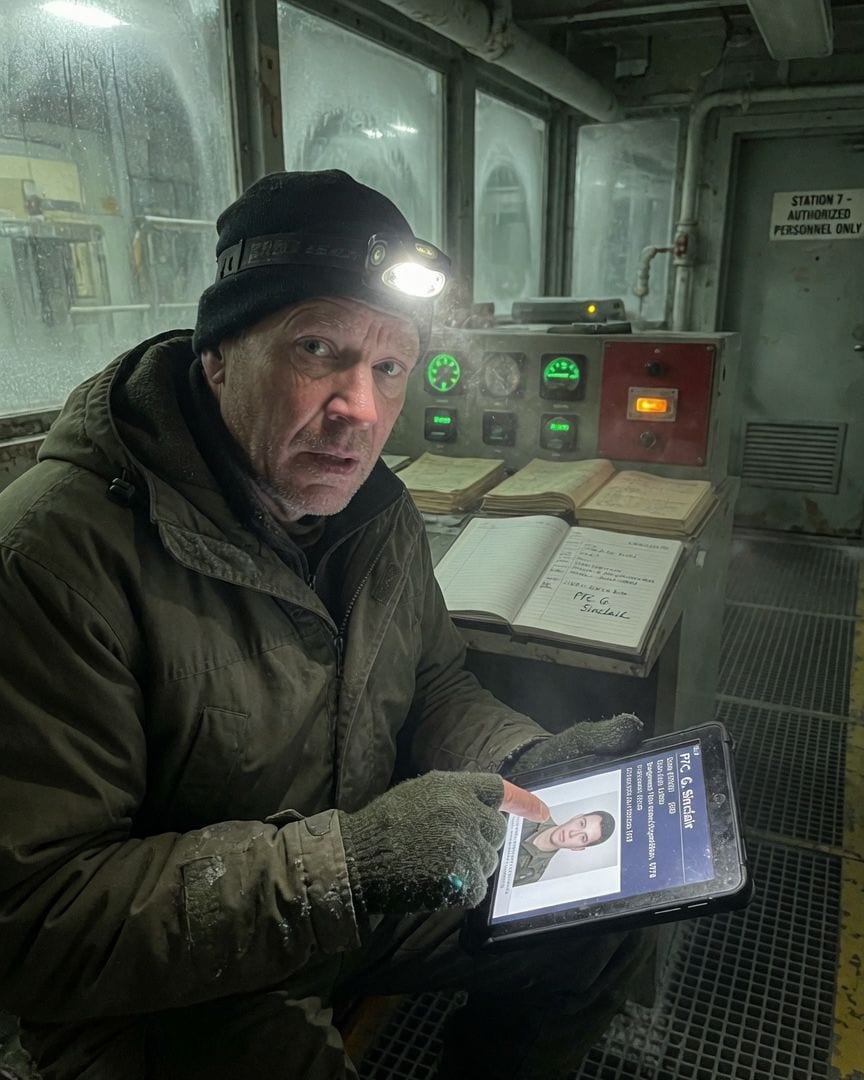
Chief Warrant Officer Ellison found a log signed last week in a Greenland Cold War base decommissioned in 1967, by a soldier MIA since 1978.
Chief Warrant Officer Franklin Ellison was two days from ending his Greenland deployment when his final core probe plunged into an unexpected void. A strange warmth and humid scent rose from the shaft, revealing the long-abandoned Station 7 below, its plant room surprisingly active with glowing gauges and a rhythmic hum. Ellison discovered an open shift log, its last entry, dated for the previous week, signed in fresh ink by PFC. G. Sinclair. Yet, a quick database check revealed Sinclair was reported Missing in Action in 1978, years after the station was officially decommissioned. How could a soldier missing for decades have signed a log last week in a base abandoned for half a century?
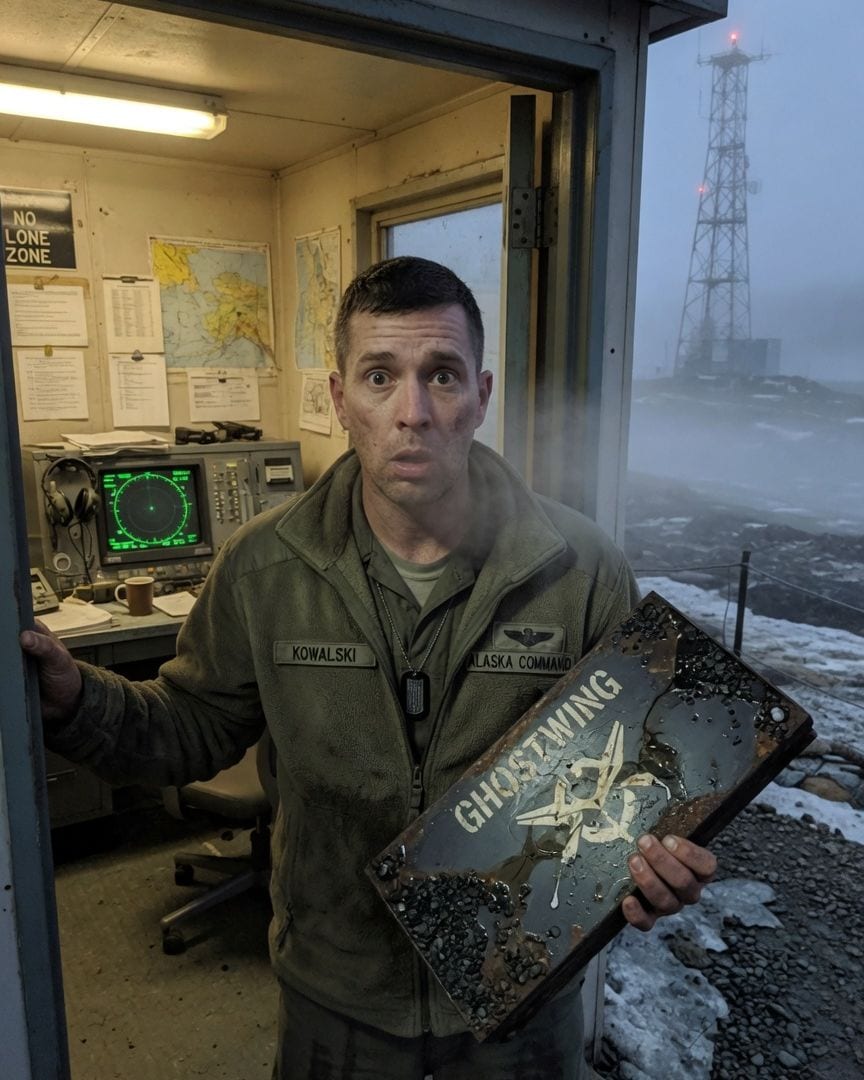
On his last rotation, Airman Kowalski heard a pilot cleared for landing by a tower that had vanished decades ago.
High atop Mount Chugach, Airman Eric Kowalski was counting down his last lonely rotation before transfer, the silence of the Aleutian airwaves his only companion. But then, his headset crackled with an urgent emergency call: a pilot in distress, cleared for landing by a controller whose facility had been decommissioned decades ago. As the phantom voices faded, a third, calm voice cut through the static, addressing him by a name that wasn't his. What impossible signal had broken through the silence, and who was Sowell?
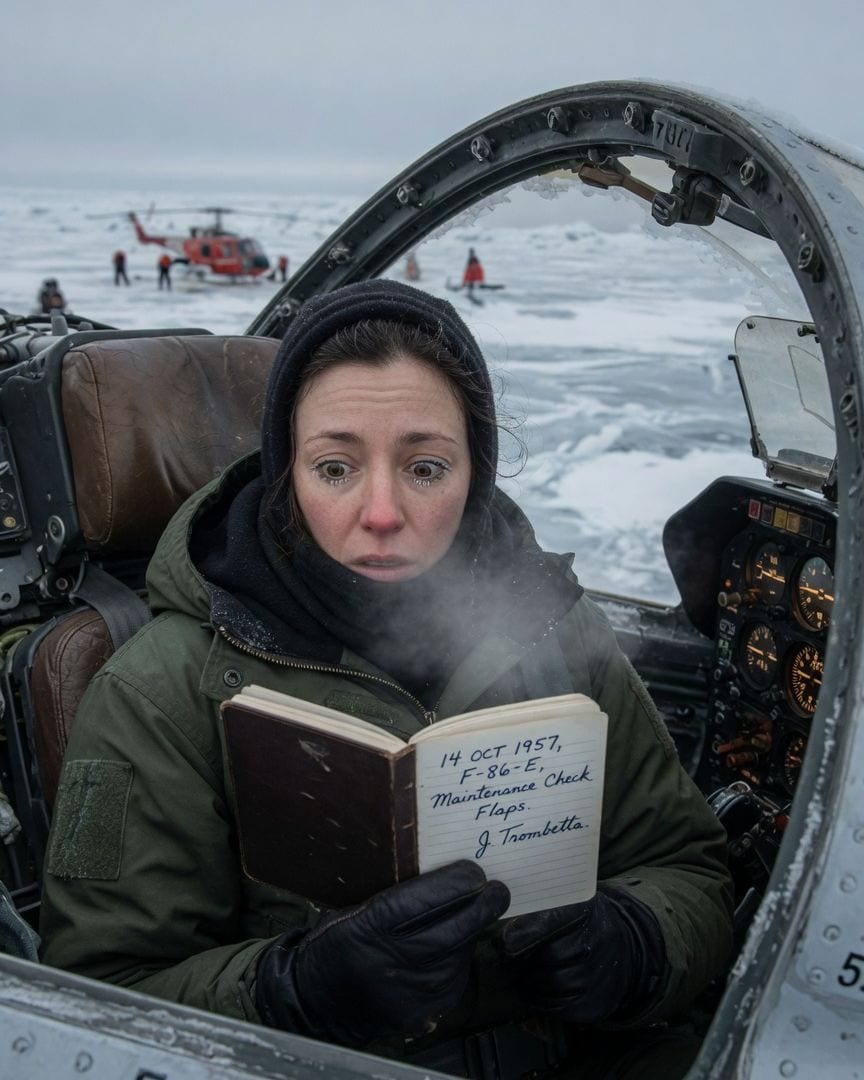
An arctic expedition leader finds a Korean War jet in the ice, its fuel full, and a logbook signed by her grandfather six years after he vanished.
Faye Trombetta, an expedition leader, had only three weeks before the Bering Sea froze, shutting down her climate data mission. But her trained eyes caught an impossible sight below: the black tail of an F-86 Sabre jet, perfectly preserved in the ice. The discovery stirred a lifetime of quiet grief; her grandfather had flown Sabres and vanished in 1951 during the Korean War. As she reached the pristine cockpit, she found his flight logbook, its final entry dated 1957—six years after he disappeared.
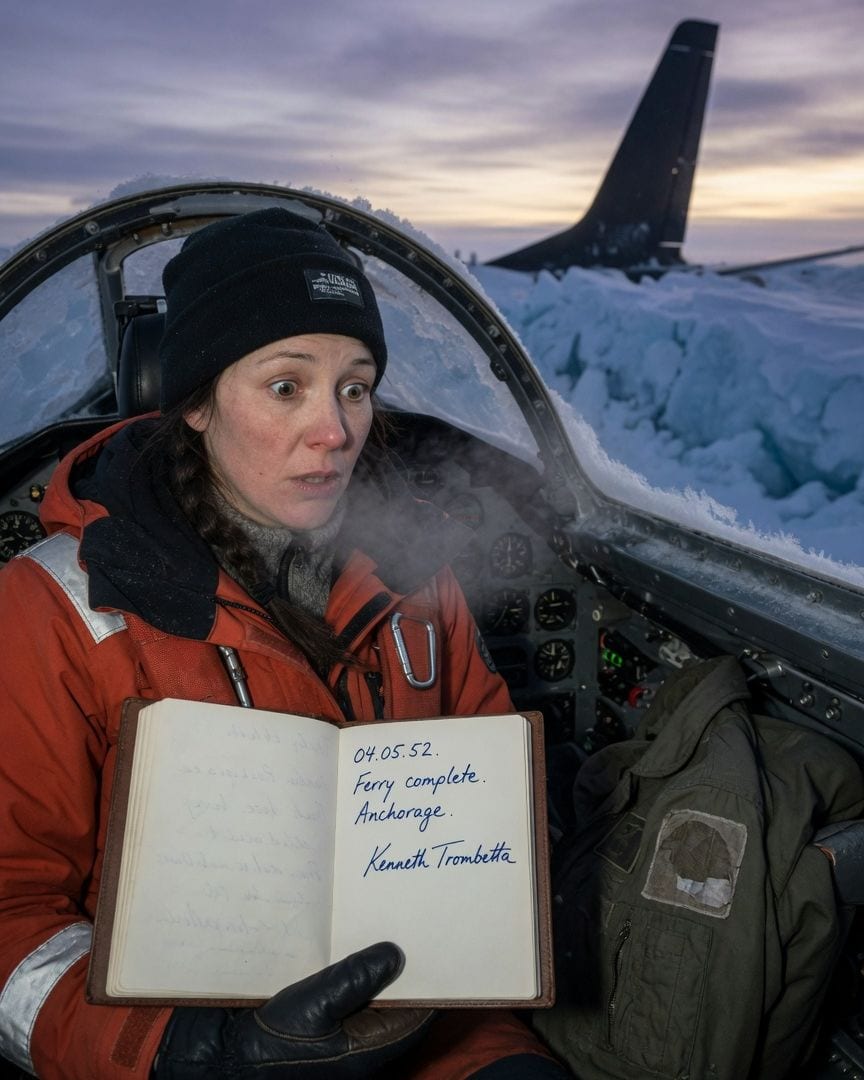
A geologist found her grandfather's lost fighter jet in the Bering ice. Its flight log showed his own hand signing off on a landing three days after he vanished.
Geologist Faye Trombetta had only a two-week window on the Bering ice before the pack closed, but she found more than ice cores. A black fin of metal, impossibly upright, rose from a pressure ridge: the tail of an F-86 Sabre jet, like the one her grandfather vanished in over that very sea. Approaching, she found the jet impossibly preserved, gleaming under the weak Arctic sun, its cockpit pristine and smelling faintly of new leather. Her heart hammered as she saw the tail number matched her grandfather's lost aircraft, then discovered his own unmistakable signature in the logbook on an entry dated three days after he was declared missing.