An old sergeant found his 1947 report listed an engine serial number from a jet not yet invented.
Sergeant Dale Hobart drove the battered Jeep through the pre-dawn dark of Chaves County, the headlights cutting weak paths across the scrubland. He was 25, nearing the end of his enlistment, and weary of the endless, dusty landscape.
The dispatch had been terse: "Anomaly, private property, secure perimeter." When he reached the remote pasture, the scene was already set. Military vehicles, their engines idling low, formed a loose cordon, their lights casting long, eerie shadows.
Lieutenant Charles Fontaine, a man of perhaps thirty, stood near a farmhouse porch, clipboard in hand, speaking in a calm, almost apologetic tone to Farmer William Walsh.
Walsh, a man of sixty with a face weathered by sun and worry, looked bewildered. He had walked twenty minutes from his house to find his field already occupied, and the lieutenant already knew his name.
Hobart felt the ground shift beneath his heavy boots; it was unnaturally warm for a chilly New Mexico morning in March.
He was tasked with guarding the north arc, his back to a large, canvas-covered shape that seemed to absorb the weak ambient light.
The official sheet he initialed, handed to him by a PFC with a weary stare, listed the object as a 'downed trainer.'
The question, though unspoken, hung heavy in the air: who had called it in, and when, if the man who owned the field was still coming to terms with its arrival?
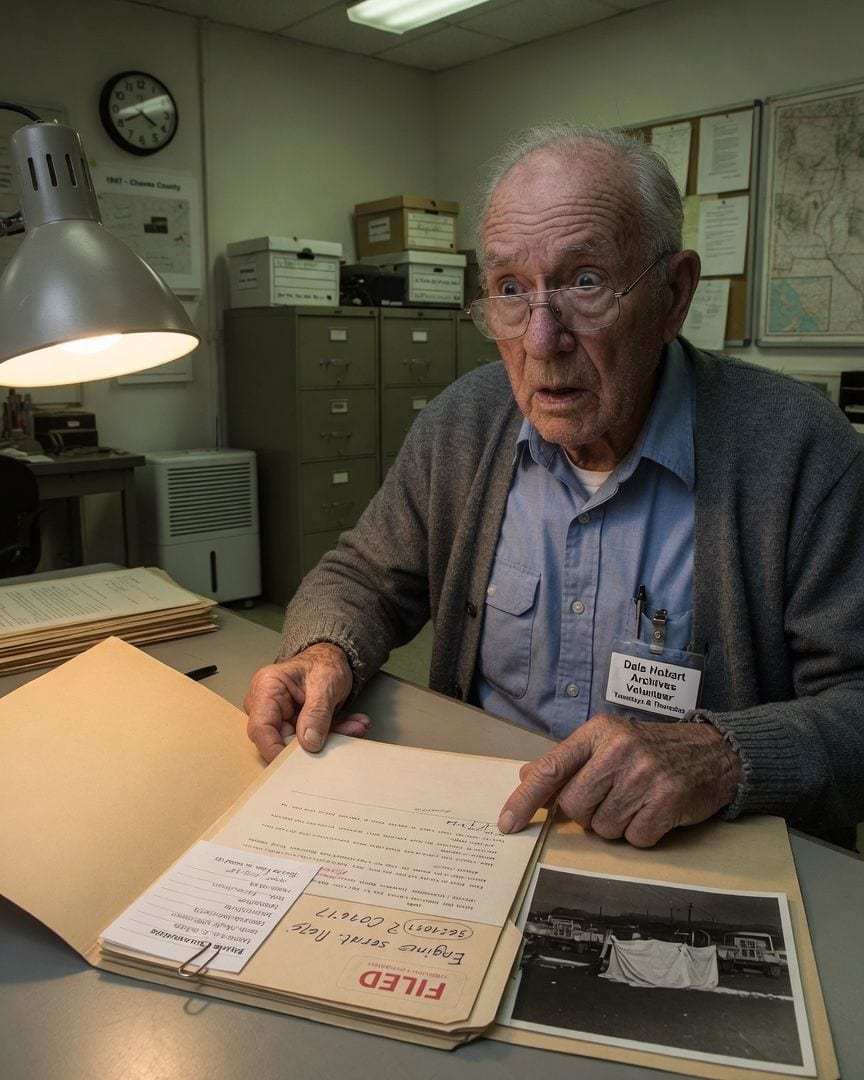
Decades later, in 2007, a methodical, now 85-year-old Dale Hobart found a different kind of duty. He volunteered at the National Archives, spending his days digitizing old military records.
He relished the quiet hum of the climate-controlled rooms, the endless task of ordering the past.
He was searching for unrelated service history when his fingers brushed against a faded, cross-referenced file tab: 'Project Nightingale - Chaves County Anomaly - March 1947.' His heart, usually placid, gave a sudden, hard lurch.
He pulled the file, his hands trembling slightly as he opened it. Inside, among expected reports and grainy photos of a generic 'trainer,' he found a handwritten addendum.
It was Lieutenant Fontaine’s neat, precise script, detailing a specific serial number for the 'trainer’s' engine: NX-71339. Hobart recognized it instantly, a number burned into the memory of a young mechanic.
It belonged to an experimental jet engine that wouldn't even be conceptualized for another decade, let alone manufactured and tested in a trainer in 1947.
He tried to rationalize it—a misfile, a clerical error, a placeholder from some future project mistakenly dropped in. But then his gaze fell on a small, detached manifest clipped to the back of the file, listing recovery personnel.
And there, plain as day, was his own service number, 36240211, assigned to a 'special recovery team' at a highly classified site fifty miles away, on the exact same date and time he was standing guard in Walsh's pasture.
Hobart stared at the manifest, his own name and service number staring back at him from a place he never was, on a detail he never performed, for an incident he only witnessed from a distance.
The cold, official ink on the page declared his impossible presence, two places at once. A prickle rose on his neck, an uncanny warmth he remembered, distinct as a phantom limb, from the ground that long-ago morning.
He flipped the page, seeking an explanation, anything to make sense of the jarring contradiction. Beneath his name, stark in bold red ink, was a single word stamped across the bottom: FILED.
The word ‘FILED’ became an itch under Hobart's skin, a constant, low thrum beneath the quiet routine of the archives.
He started cross-referencing, staying late in the cavernous, quiet halls, the only sounds the whir of distant servers and the rustle of aging paper.
He found other 'Project Nightingale' files, each tucked away in obscure corners, each bearing a similar, incongruous detail. A weather balloon report from 1958 with radar telemetry showing impossible acceleration before its 'descent.'
A downed satellite from '62 with a component clearly manufactured in 2005. A crashed drone from '73 with no known power source listed anywhere in its schematics.
Each file, no matter the official cover story—'equipment malfunction,' 'experimental design flaw,' 'unexplained atmospheric anomaly'—bore the same red 'FILED' stamp. And often, alongside it, a specific, obscure classification code: 'CR-7.'
Hobart noticed a pattern in the handwritten addendums across these disparate files, a consistent, almost elegant script that was definitely not Lieutenant Fontaine's. He saw the same precise loops and flourishes on dozens of these files, spanning decades.
He found the signature eventually, a neat, confident 'D. Romano.'
A quick search through an archived federal directory revealed a distinguished, long-retired intelligence officer, Donald Romano, 70, still alive and living quietly in a small town in New Mexico, not so far from Chaves County.
Hobart's increased activity at the archives did not go unnoticed. Patricia Lawson, a meticulous archivist in her early fifties, started asking questions about his late-night searches. She was sharp, with a focused gaze that seemed to miss nothing.
'Just tying up some loose ends from my service days, Patricia,' he'd wave her off, offering a thin, practiced smile. But her gaze lingered, a flicker of something unreadable in her eyes.
One evening, as the last lights were being turned off in the main reading room, Hobart returned to his desk to find a small, unmarked envelope tucked neatly beneath his keyboard.
His hands, though aged, moved with the precision of a man who’d once disarmed ordnance. Inside was a single index card, perfectly typed: 'Some things are best left FILED, Sergeant. - D.R.'
The message was chillingly precise, confirming his suspicions: someone knew what he was looking for, and they knew he had found Romano's signature.
The next day, as he left the archives and stepped into the crisp autumn air, he caught a glimpse of a dark sedan parked discreetly down the street, its windows tinted, a faint glint of chrome catching the afternoon sun.
It pulled out moments after he did, following him for several blocks before turning off with a calculated casualness. He knew he was being watched.
The stake was now his own safety, and the clock was ticking on how much more he could uncover before he was stopped.
Hobart arranged to meet Donald Romano a week later. He found the retired officer in a neat, unassuming home in a small New Mexico town, surrounded by towering shelves of old books and a faint, comforting smell of pipe tobacco.
Romano was calm, almost serene, his eyes a clear, steady blue.
Hobart laid out his evidence, carefully placing the photocopied documents on Romano’s polished mahogany coffee table: the 'Project Nightingale' file, the impossible serial numbers, the manifest with his own 'filing' in two places at once, the recurring 'CR-7' code.
Romano listened patiently, his eyes never leaving Hobart's face, occasionally nodding almost imperceptibly. He finally smiled faintly. 'Sergeant,' he said, his voice soft, a low rumble, 'you've been looking at the wrong kind of record.'
He leaned forward, his elbows resting on his knees. 'CR-7 doesn't stand for "classified retrieval" as some of the more elaborate cover stories suggest. It stands for "Chronological Re-indexing".'
He rose, moving with an unexpected fluidity for a man his age, and pulled a thick, leather-bound ledger from a shelf, not unlike an old ship's log, its pages filled with elegant, familiar handwritten script. Romano’s script.
'These aren't errors, Sergeant. They're instructions. Or rather, confirmations. The objects aren't lost and found. They're... processed. The ground was warm because it was being prepared. The cordon was in place because the arrival was anticipated.
The 'downed trainer' is merely a cover story for a scheduled 'filing'.' He tapped a page in the ledger with a slender finger. 'And your presence, Sergeant Hobart, was part of the index.
You were there, because you were needed to be there, and thus, your record was created. Not as a witness, but as an element of the event itself.'
The words hung in the air, cold and precise, re-meaning everything Hobart thought he knew about that long-ago morning.
Romano closed the ledger with a soft, resonant thud that echoed in the quiet room. 'You see, the file isn't just a record of what happened. It's a record of what will happen. And what is happening.'
He pushed a thin, recently printed page across the polished table. It was a new 'CR-7' entry, crisp and official, dated for the following week.
It detailed an 'anomalous retrieval operation' from a specific location, under a new, even higher classification code that Hobart had never seen. The coordinates on the page were precise, digital.
Hobart's eyes scanned them, and a cold dread seized his chest. They were for the National Archives building, the very place he had been working, the familiar address of his quiet retirement. His breath caught in his throat.
And the name listed as the 'primary contact' for the operation, the one whose presence was 'indexed' for the event, was Patricia Lawson.
Hobart rushed back to the archives, the image of Patricia Lawson’s name on that file burning in his mind. He found her at her desk, meticulously arranging a tray of microfiches.
She initially dismissed his frantic warning as a cruel joke, her eyes narrowed with suspicion. 'Dale, what are you talking about? A scheduled... retrieval?' But the raw, unvarnished dread in Hobart’s eyes was undeniable, cutting through her skepticism.
He explained Romano's calm confession, the 'Chronological Re-indexing,' the chilling idea that the files were not history but a blueprint. 'He said the objects aren't lost, Patricia. They're processed.
And the warm ground, the cordons, the impossible serials—it's all part of the preparation for their arrival. The files are how they get here.'
Patricia, her face pale, her usual composure cracking, pulled up the archive's internal security schematics on her monitor. The precise coordinates on Romano's page pointed to a rarely used sub-basement, a climate-controlled vault for the most sensitive, uncatalogued materials.
It was a place she had never been allowed to enter, its existence more rumor than fact.
As they watched the schematics, the vault's temperature sensors, usually stable, began to spike, showing a rapid, unnatural rise, matching the 'warm ground' Hobart remembered from 1947.
The hum of the building itself seemed to shift, a low, resonant thrum vibrating through the floor beneath their feet, growing steadily louder.
Patricia and Hobart descended into the echoing, cold passages of the sub-basement. The air grew thick, humid, and then, unmistakably, warm, carrying a faint, metallic tang that Hobart couldn't quite place but found deeply unsettling.
They found the vault door, unmarked, a solid slab of reinforced steel that seemed too massive for a building dedicated to paper.
A faint, low hum vibrated through the metal, a resonance that seemed to come from within the vault itself.
Hobart remembered the disc under canvas in 1947, the unnerving silence of the men surrounding it, the sense of something profoundly alien. He felt the same dread now, a cold knot in his stomach.
Patricia, methodical even in terror, pulled out her keycard, her hand steady. She swiped it. The reader beeped, then flashed a stark, angry red: ACCESS DENIED.
But as she pulled her hand back, a low, metallic groan echoed from inside the vault.
The heavy door, instead of swinging outward or inward, slowly began to retract into itself, sliding silently into the wall with an impossible, smooth grace.
A blinding, internal light, stark white and utterly devoid of warmth, spilled out, followed by a wave of intense heat that made them both instinctively recoil.
Hobart shielded his eyes, catching a glimpse of a vast, smooth, dark surface within, pulsating with that internal, unnatural warmth. It was not a crash site. It was an arrival.
And standing calmly beside the opening, as if waiting, his expression serene, was Donald Romano. 'Welcome,' Romano said, his voice perfectly level, utterly devoid of emotion, 'to the next filing. Your indexing is complete, Patricia.'
The archive's internal security logs from that night were scrubbed clean. No alarm was triggered, no unauthorized entry recorded, no disruption noted in the meticulous digital flow.
The sub-basement vault remained sealed, its temperature normalized by morning, a silent monument to an unobserved event. Patricia Lawson did not report for work the following week. Calls to her apartment went unanswered.
Her family filed a missing person report, but the police found no trace, no evidence of foul play, only a neatly kept, empty apartment.
Sergeant Dale Hobart, after giving a rambling, incoherent statement about 'chronological re-indexing' and 'filed arrivals' to an increasingly concerned police officer, was quietly institutionalized.
He was often seen staring at blank walls, mumbling about 'warm ground' and 'impossible records,' his mind lost somewhere in the intricate, terrible coherence of what he had uncovered.
A month later, a new archivist, a young man named Thomas, was assigned to Patricia Lawson’s old desk. He noticed a small, unmarked box in her drawer, tucked away behind a stack of unused folders.
Inside, he found a single, blank index card, perfectly pristine. Beneath it, tucked into a fold in the bottom of the box, was a small, red rubber stamp, its surface dry and cracked with age. The stamp read: FILED.
Donald Romano, now a regular visitor to the National Archives, would occasionally stop by what used to be Patricia Lawson's desk.
He would nod politely to the new archivist, Thomas, who always found Romano's presence unsettlingly calm, like a still lake hiding immeasurable depths.
One afternoon, the new archivist, noticing Romano's lingering gaze on the now-empty desk, asked, 'Can I help you, sir?' Romano only smiled faintly, a serene, knowing expression on his face. 'Just checking the new filings,' he said.
The new archivist felt a shiver, though he didn't know why. The file is still being signed.
If this one got to you
A missile commander watched his ten nuclear silos go dark. His own service record shows his signature on a future he's never lived.
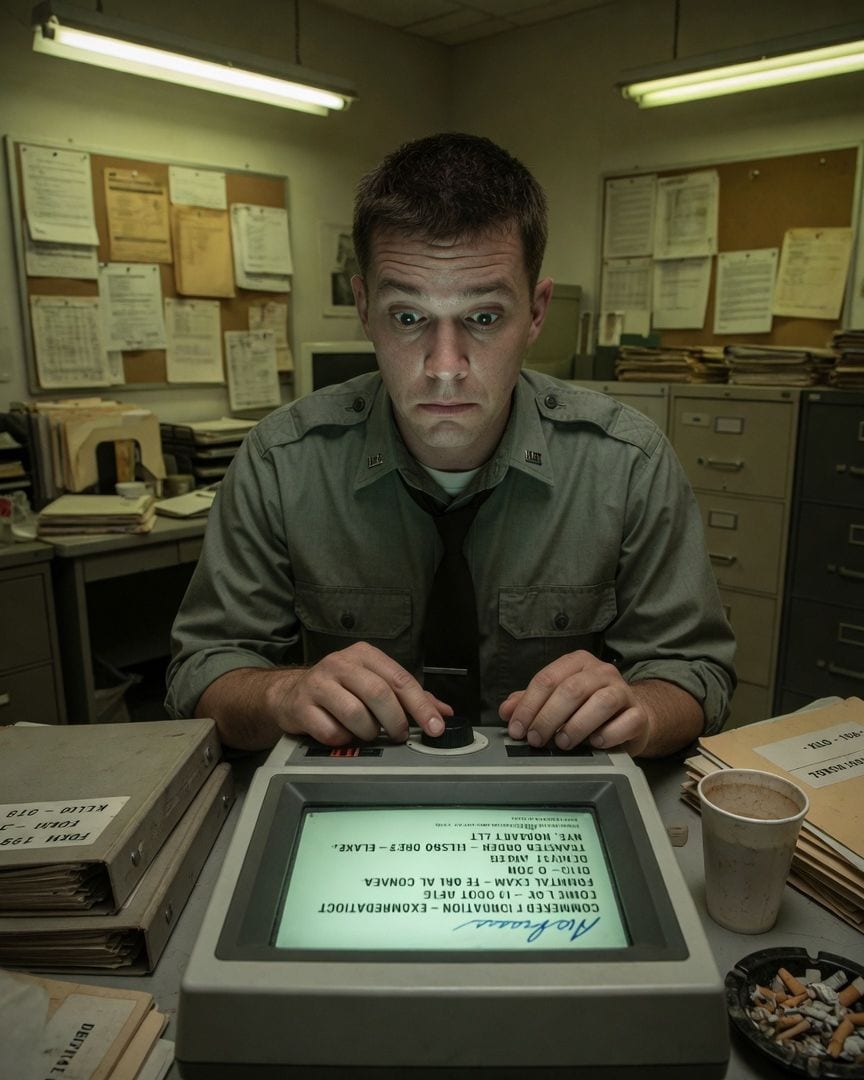
Second Lieutenant Hobart Nye, a missile commander in Wyoming, had his quiet 0247 watch shattered by a security report: a massive, silent black triangle hovered over Launch Facility Kilo, casting a perfect shadow. Hobart watched his console's fault panel light up, signaling all ten nuclear missiles going dark in an impossible silence, followed by eleven minutes his security team could not remember. Official logs called it a "radio malfunction," but Hobart found a requisition for invisible-tracking sensors, signed by a base commander who was supposed to be off-base. The final, chilling discovery came when his own service record showed new entries—a dental check-up, a transfer to Alaska—all dated for a future he never lived, complete with his perfectly replicated signature.
Staff Sergeant Rhee’s squad found a Cold War building not on their map. Range Control confirmed no structure. Minutes later, it vanished, leaving a foundation decades old.
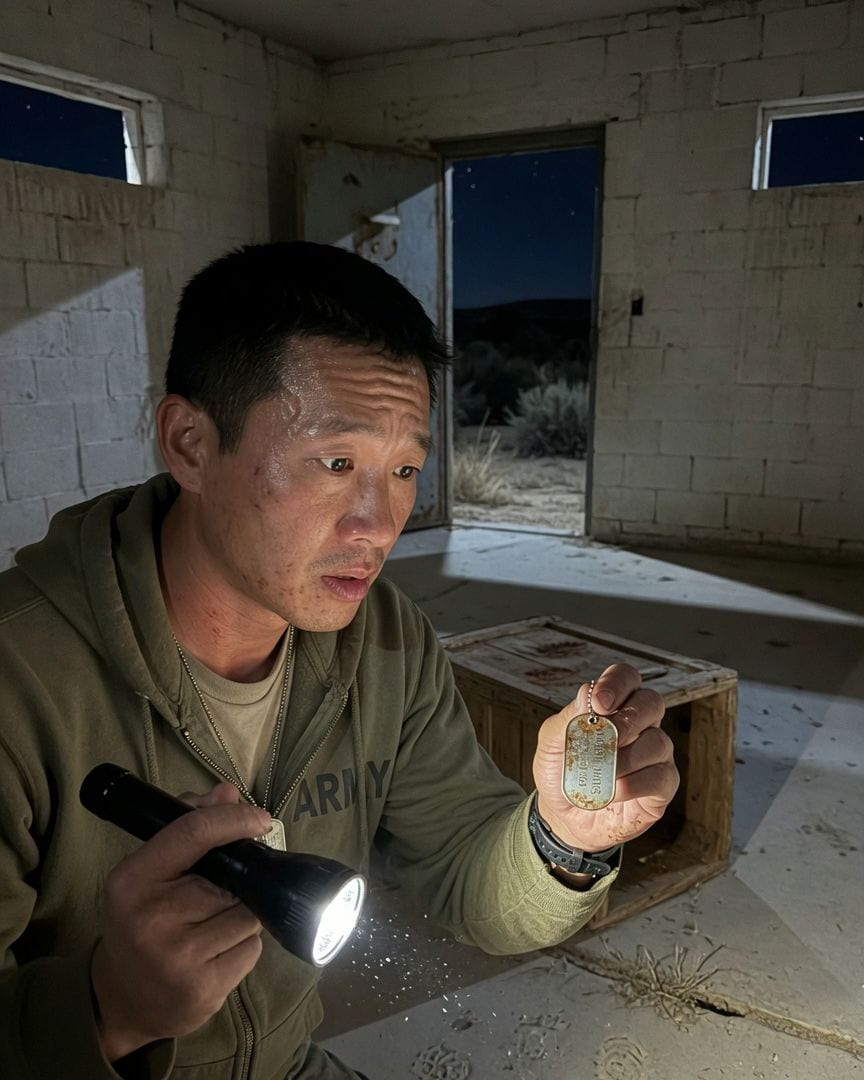
Staff Sergeant Adam Rhee halted his squad at the Yakima Training Center, staring at a cinderblock building that simply wasn't on his map. Range Control confirmed there was no structure at his coordinates, leaving him to wonder what impossible thing stood before them. Moments later, after the range-safety truck arrived, the building vanished, leaving only a rectangular patch of earth with a foundation of decades-old weeds. That night, driven by an unsettling certainty, Rhee returned to find the building reappeared, its door ajar, holding a single, rusted dog tag from 1983. How could a place appear and disappear, leaving behind evidence from forty years ago?
A Cold War pilot's F-104 Starfighter was shadowed by an impossible object. Weeks later, a secret memo referenced his own service number for 'pilot reassignment protocols.'
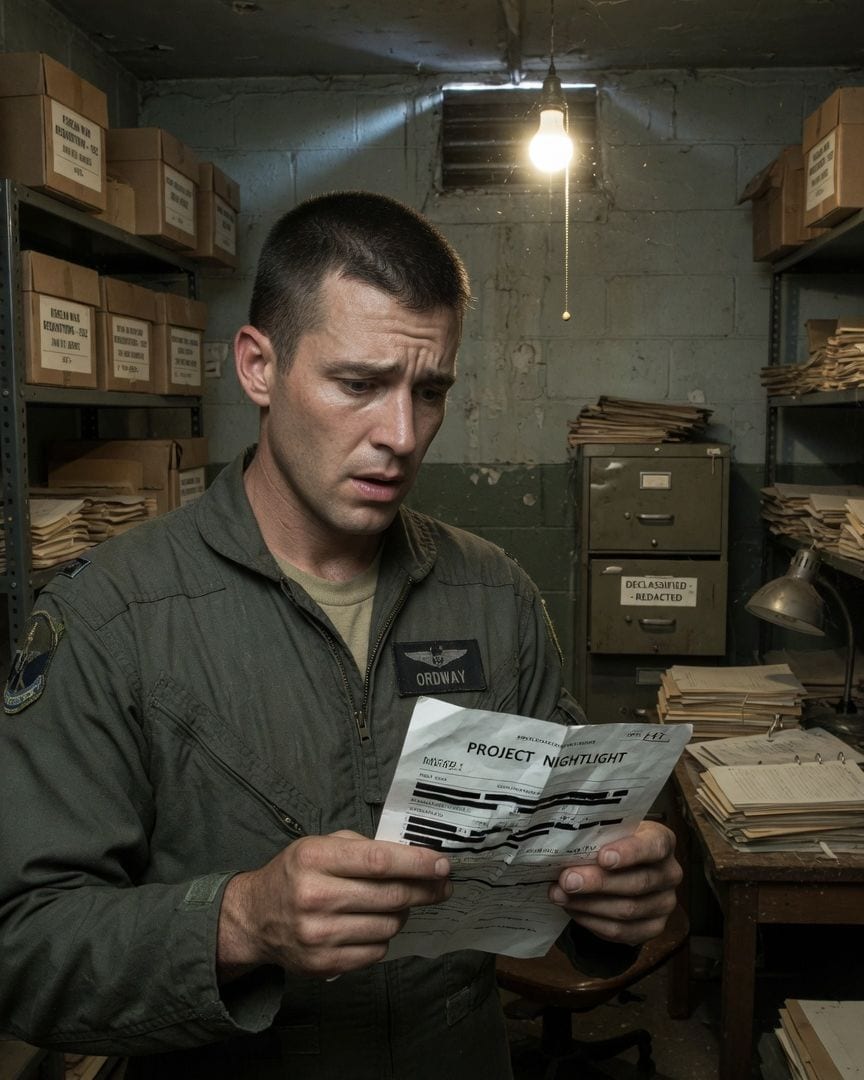
First Lieutenant Cal Ordway soared over the Mojave in his F-104 Starfighter in 1962, the night sky a familiar canvas. But that night, one 'star' broke formation, pulling alongside his wing and mirroring his every impossible maneuver. His instruments confirmed the silent, unblinking object, defying all known physics. After filing his precise report, Cal found his flight log altered to 'no incidents,' radar tapes corrupted, and a superior advising him to 'let it go.' Driven by his training, he uncovered a heavily redacted memo referencing 'Project NIGHTLIGHT' and, chillingly, his own service number for 'pilot reassignment protocols initiated.' Was he merely a witness, or already a subject in a much deeper secret?
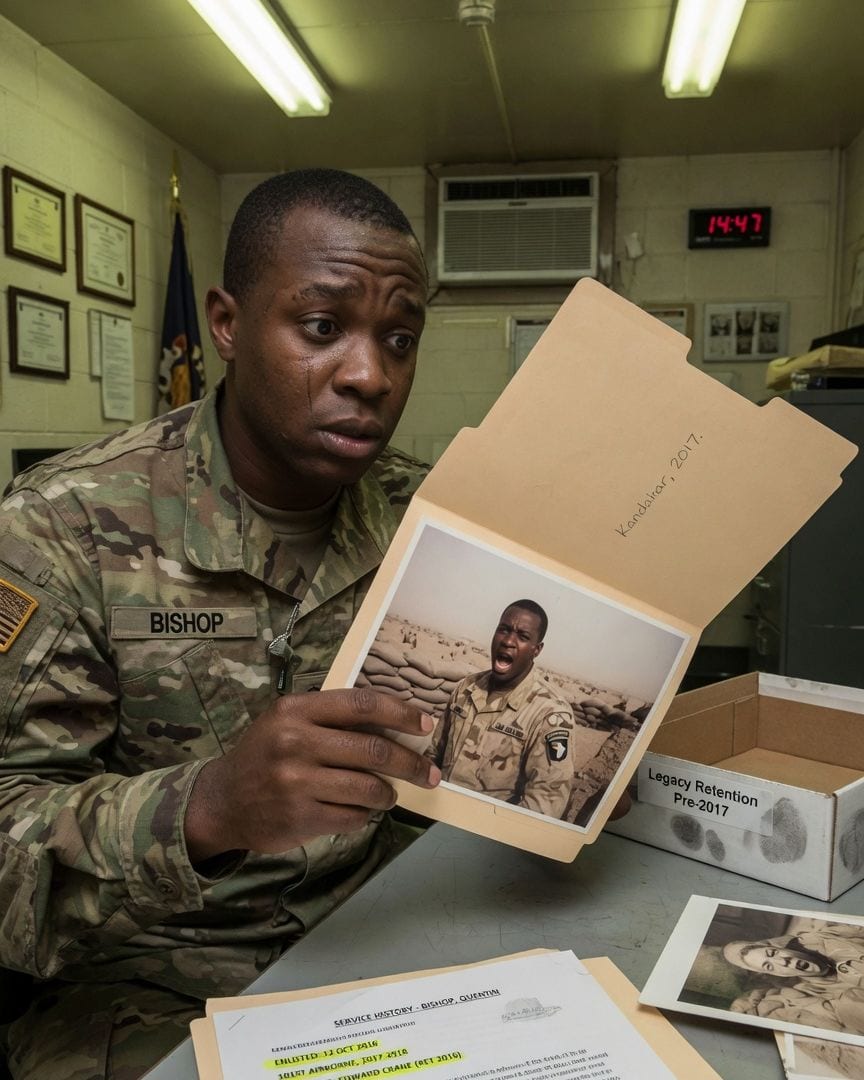
A specialist was signing for four more years, but his old file contained a photo of him in a desert uniform dated 2017, from a tour he never lived.
Specialist Quentin Bishop sat ready to re-enlist, looking forward to four more years of stability. But as he prepared to sign, his official record showed an enlistment date that made him seventeen years old, and a combat tour with a unit he’d never worn. Sergeant Marie Delaney dismissed it as a clerical error, but Bishop found a faded photograph of himself in a desert uniform, dated 2017, from a war zone he could not remember. Was this a mistake, or a meticulously constructed parallel life he never lived?
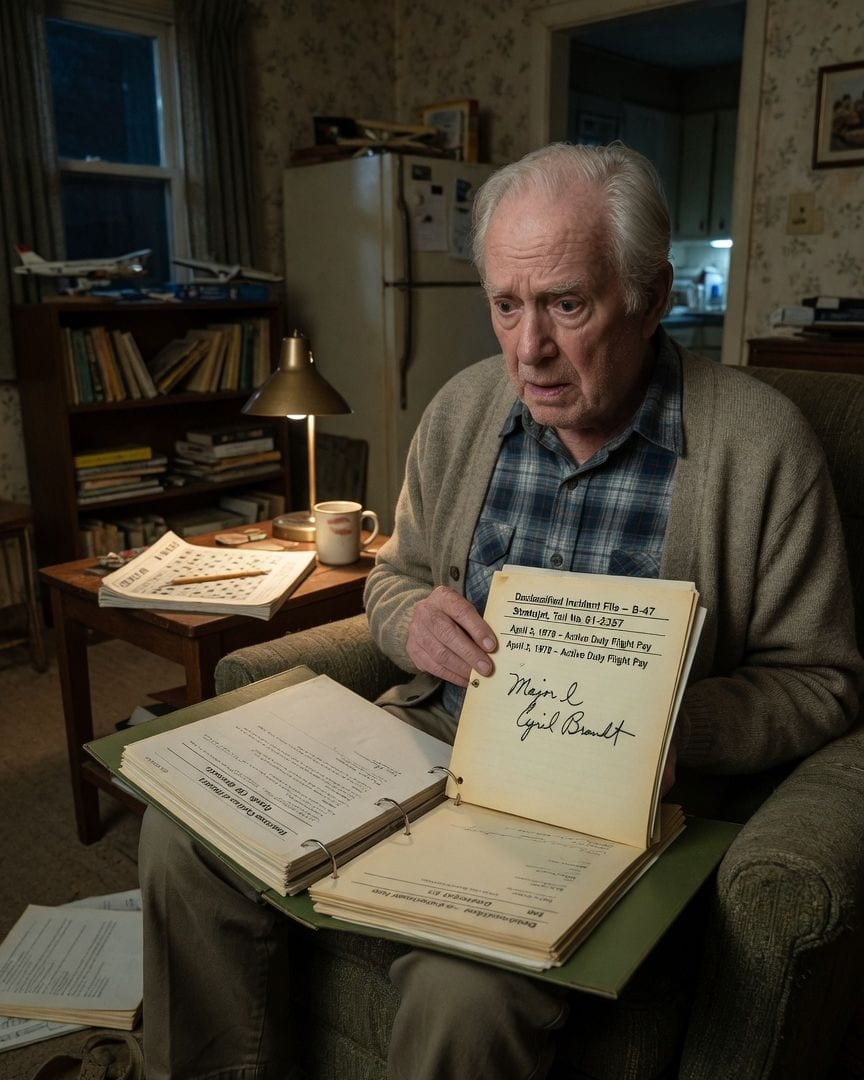
A retired Cold War pilot found his own signature on a flight pay record, dated five years after he left active duty, the ink unnervingly fresh.
Cyril Brandt, a seventy-two-year-old retired B-47 pilot, cherished his quiet Dakota retirement, his days filled with crosswords instead of combat. He expected to find long-awaited closure on a strange 1968 UFO incident when a heavy, declassified file arrived. Settling into his armchair, the weight of the olive-green binder felt familiar, but its contents quickly shattered his calm. He discovered maintenance logs for his B-47, detailing engine hours and tire rotations, dated years after the aircraft had been scrapped. Then, buried deeper, he found a payroll entry for himself, dated 1978 — five years after he left active duty — bearing his own unmistakable signature, the ink unnervingly fresh. How could his own hand have signed off on a mission that never happened, for a plane that no longer existed?
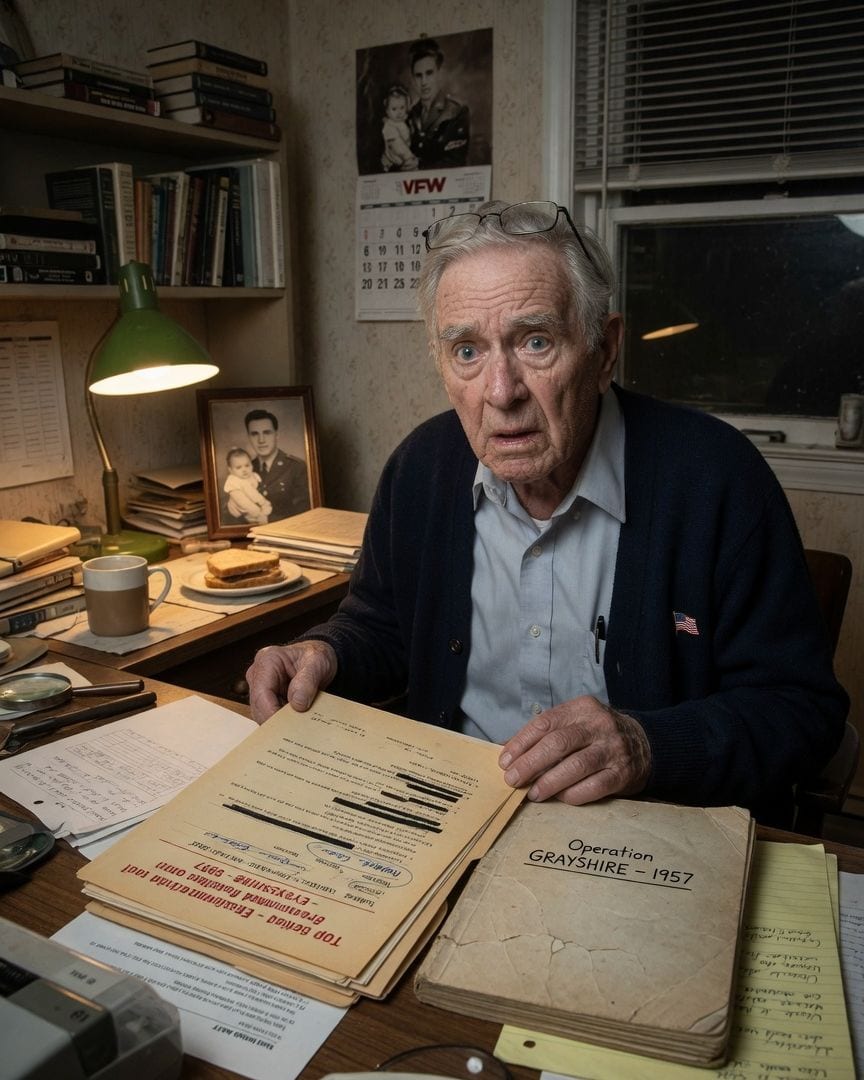
A Cold War Private Kell Hobarth saw a flash from a mission that didn't exist. Fifty years later, his own name was on a secret 'witness management' list.
Private Kell Hobarth, twenty-eight, stood in the dust of Vermey Flats, a letter in hand announcing his daughter Marie’s birth eleven days late. The next day, his name appeared on a roster for 'GRAYSHIRE,' a mission his range officer insisted never existed. Yet, at dawn, Hobarth alone witnessed a profound, silent flash of light, while his six tent-mates slept undisturbed. Fifty years later, Kell, now seventy-eight, still pursued the chill of that dawn, sifting through heavily redacted files. His relentless search led him to a forgotten archive room where he unearthed an unofficial logbook detailing 'Operation GRAYSHIRE – Target acquisition: non-terrestrial.' Deeper still, a sealed folder detailed 'Personnel Reassignment and Memory Debriefing Protocol' for a 'contact event,' listing his own name as 'Subject 001' for 'witness management.'