A records NCO found two files for one soldier; the second had his face, older, on a tour to a base that never existed.
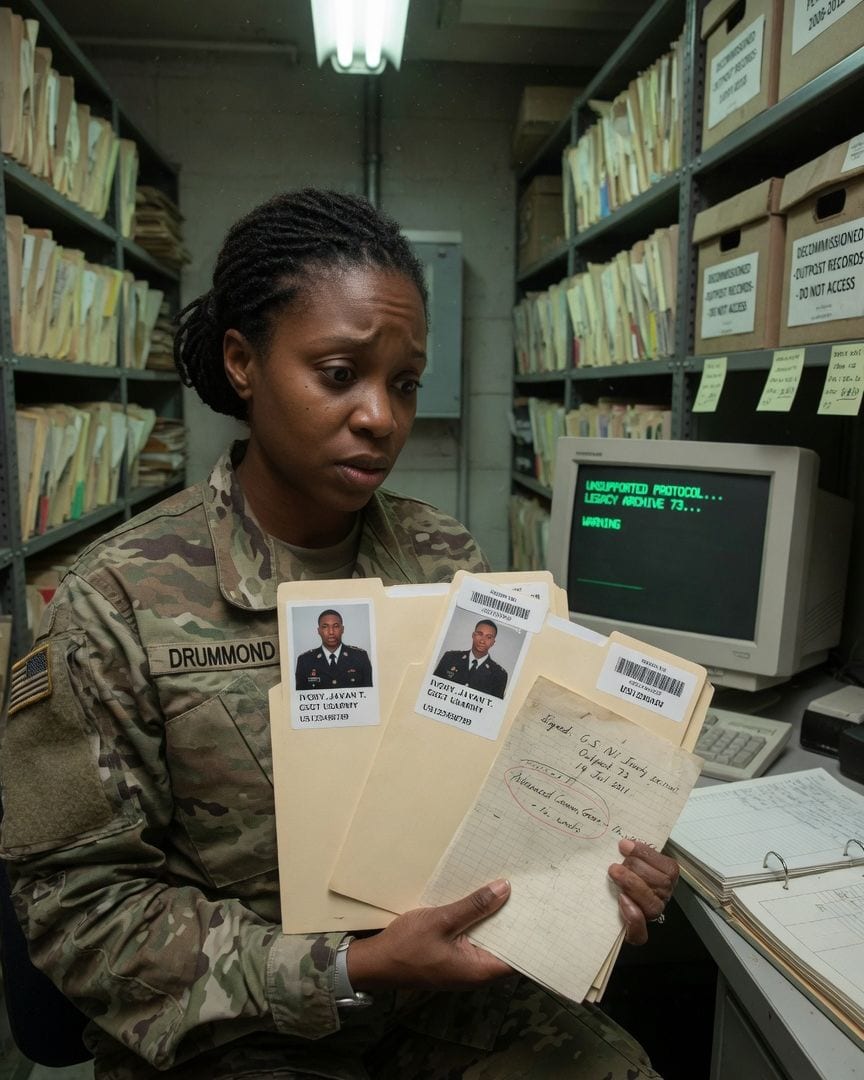
Sergeant Camille Drummond, a meticulous records NCO at the US Army Human Resources Command in St. Louis, was deep in the archives, auditing personnel files. Her task was routine, monotonous, a steady rhythm of cross-referencing names and numbers.
She pulled Gunnery Sergeant Javan Ivory’s file for a standard review, noting his distinguished service record, the familiar face in the photograph staring out from the laminated page.
The service number matched the ledger, the photograph was undeniably him, solid and present. But as she reached for the next file in the row, her fingers brushed against something unexpected: a second, thicker folder tucked tightly behind the first.
It was also labeled for Gunnery Sergeant Ivory, same service number, same identifying barcode. Camille frowned, pulling it free. Duplicates were rare, especially with identical service numbers.
This second file, however, contained postings he had never held: a combat tour in a different continent, awards under a name spelled one letter off from his own – 'Navan Ivory' instead of 'Javan Ivory.' Clipped inside was another photograph.
It was unmistakably Ivory, no question, but he looked older, with a weariness etched into the lines around his eyes and mouth, a weight he didn’t yet possess in his official, primary record.
The air in the vault, usually chilled and still, suddenly felt heavy, charged with an impossible weight, as if the cold had deepened to press against her skin.
Camille stared at the two files, a shiver running down her spine. Her training demanded a rational explanation. A clerical error, of course.
A misfiled duplicate from a different service member with a similar name, somehow assigned the same unique identifier. Such a mistake, though, would be a monumental failure of the system.
She checked the service numbers again: identical, down to the last digit. She cross-referenced the unique identification codes: identical. Yet the contents were vastly different.
The official file detailed Javan Ivory’s distinguished career, deployments to the Middle East, commendations for valor in desert operations.
The second, 'Navan Ivory' file, spoke of a combat tour in a remote, now-decommissioned outpost in Southeast Asia, Outpost 73, during a period when Javan Ivory was demonstrably stateside, serving at Fort Bragg.
The awards listed were real, but attributed to a name that didn't exist in any other official capacity, a ghost in the system that nonetheless possessed a full service history.
Refusing to give in to the growing unease, Camille decided to track the 'Navan Ivory' file's most concrete detail: a supply requisition from Outpost 73.
She knew finding records for a decommissioned outpost would be a challenge; their data was usually archived deep in forgotten corners of the digital network, often on legacy servers.
After an hour of navigating ancient file structures, deciphering outdated naming conventions, and bypassing numerous system warnings about 'unsupported protocols,' she found it: a manifest for advanced communication gear, dated over a decade ago.
It was signed out by 'Gunnery Sergeant N. Ivory.' The date corresponded precisely with the phantom combat tour detailed in the second file.
The system had no record of a 'Navan Ivory' ever existing, let alone serving at Outpost 73, yet here was a physical, handwritten signature, preserved on brittle paper, a ghost in the machine made chillingly real.
The archive's hum seemed to drop a note, the silence around her amplifying the sound of her own heartbeat.
Camille felt the cold dread bloom in her stomach. The manifest was a physical, undeniable object, a trace left by something that shouldn't exist. She pulled up Outpost 73’s full decommissioning records.
The base was supposed to have been completely purged of personnel and data decades ago, its existence scrubbed clean from official memory. Yet, this manifest persisted, a stubborn anomaly, a physical document that defied every rule of meticulous military record-keeping.
Her finger traced the signature on the faded paper. 'Ivory, G.S.'
– but the initial for the first name was clearly 'N.', not 'J.' as it should be, and the date matched the 'other' Ivory's phantom combat tour, a tour that officially never happened, to an outpost that officially no longer existed.
The meticulous order of the military’s world had fractured, and she was staring directly into the widening gap.
The next morning, Camille, still shaken, presented her findings to her commanding officer, Major Roland Maddox.
He listened patiently, his fingers steepled under his chin as she laid out the two Ivory files, the older photograph, and the faded manifest from Outpost 73.
When she finished, he dismissed it as an elaborate clerical error, perhaps a data entry prank, or even a deep-fake from a hostile nation. His skepticism was palpable, a wall against the impossible.
'Sergeant Drummond, I understand your diligence,' he said, his voice even, 'but these things happen. The system isn't infallible. Some clerk probably pulled the wrong folder from the burn pile twenty years ago.' He gestured to the stack of files.
'Just consolidate the primary record and flag the duplicate for deletion.'
Camille tried to explain the 'N.' initial, the older photo, the decommissioned outpost, the identical service numbers. Maddox merely sighed, 'It's a digital ghost, Sergeant. Let it rest. We have critical audits to complete, and this is a distraction.'
Unconvinced, and sensing a deeper problem than a mere clerical mishap, Camille decided to follow the digital trail. She returned to her terminal, her resolve hardening. She attempted to delete the 'Navan Ivory' file from the central personnel database.
The system resisted. Each attempt to 'correct' the record resulted in a persistent, recurring error message, flashing in red letters across her screen: 'ECHO_MANIFEST_INTEGRITY_VIOLATION_01.07.XX.'
The file would briefly disappear, the progress bar indicating deletion, then reappear moments later, perfectly intact, as if something was actively restoring it, mocking her efforts.
The terminal itself seemed to hum louder with each failed attempt, a low, frustrated vibration against her fingertips.
She tried to search the database for other instances of this specific error code.
To her horror, she found dozens, then hundreds, all associated with similar 'duplicate' files, many with names 'one letter off' from real service members, just like Ivory. Some were decades old, others recent.
There was no pattern to the dates, no logical sequence to the names, no discernible geographic concentration.
It was a silent, creeping infection within the very heart of the military's most sacred system of identity, a systemic anomaly that defied every logical explanation.
The system wasn't just broken; it was actively protecting these anomalies, fighting back against her attempts to restore order.
As Camille delved deeper, the digital resistance intensified. Her terminal would randomly freeze, the cursor locking into place for agonizing seconds before springing back to life. Her access permissions would inexplicably fluctuate, denying her entry to sections she usually frequented.
Once, a ghost cursor appeared, moving across her screen, opening and closing files she hadn't touched, as if an invisible hand were browsing her research.
She felt watched, not by a person, but by the network itself, a vast, unseen intelligence observing her every move. The fluorescent lights in her cubicle flickered, casting her workspace in momentary, unsettling shadows.
One evening, alone in the archive, the only sound the low drone of the servers, a cryptic, encrypted message appeared in her secure military email inbox, bypassing all firewalls and security protocols. The sender was listed only as 'UNKNOWN_SOURCE.'
The message contained fragmented data logs, a jumble of coordinates, dates, and names, but a few terms stood out with chilling clarity: 'temporal discrepancies,' 'manifest echoes,' 'containment protocol,' and 'cleanse protocol.' It was a warning, stark and urgent.
It implied that others knew, others had seen this impossible wrongness.
The next day, Brooke Pierce, a fellow records clerk from the cubicle across, approached Camille. Brooke's expression was open, but her eyes seemed to linger a moment too long. 'Hey, Camille,' Brooke said, her voice a little too bright.
'Major Maddox was asking about your Ivory audit. Said you were having trouble with the database. Anything I can help with?' Brooke's smile seemed a little too wide, her gaze a little too sharp, probing.
Camille felt a prickle of alarm, a visceral reaction to the forced nonchalance. 'Just a few old, corrupted files,' she replied, trying to sound unbothered, her own smile feeling stiff. 'Nothing I can't handle.'
Later that day, Camille found a sticky note on her monitor. It wasn't in her handwriting, nor Brooke's, but clearly left for her, precisely centered on her screen. It simply read: 'The system protects its own.' The message was clear.
Her digging had been noticed, and the threat was no longer abstract; it was personal, and it was inside the building.
The air in the office, usually a dull corporate chill, felt suddenly much colder, a biting cold that seemed to emanate from the very walls.
Camille knew she couldn't ignore the warning. She spent the entire night cross-referencing the cryptic message fragments with her newfound database anomalies. She worked from a secure, off-network terminal, trusting nothing connected to the main system.
The coordinates in the anonymous message, when plotted on a digital map, converged on three decommissioned outposts, including Outpost 73. The dates provided correlated precisely with spikes in the 'ECHO_MANIFEST_INTEGRITY_VIOLATION' error codes.
She found a pattern: these 'echoes' weren't just random glitches; they were systemic, appearing in clusters, often around periods of intense conflict or classified operations, like a shadow army being silently drafted into existence by the very infrastructure meant to document them.
The 'one letter off' in names, the subtly altered service records, the older photographs – it was all part of a coherent, terrifying design.
She realized the 'Navan Ivory' file wasn't a mistake; it was an intentional, parallel identity, a ghost in the machine that had manifested a physical presence, served a tour in a place and time that officially didn't exist for Javan Ivory, and then been reabsorbed or covered up by the very system that created it.
The 'cleanse protocol' wasn't about deleting errors; it was about managing the echoes, erasing traces of their existence once their purpose was served, or when they were discovered by individuals like her.
The implication was staggering: the military's record-keeping system, the bedrock of its absolute accountability, was not just flawed; it was a living, breathing entity, capable of creating and erasing identities, maintaining its own twisted form of order.
It had been doing this for decades, silently, invisibly, weaving an intricate tapestry of phantom soldiers and impossible deployments.
The dread wasn’t just about the 'other' Ivory; it was about every name in the database, every service member, every identity being potentially compromised by this silent, self-sustaining anomaly.
The walls of her small, secure room seemed to press inward, no longer offering safety but enclosing her with the monstrous truth.
Armed with irrefutable evidence – printouts of the anonymous message, screenshots of hundreds of 'ECHO_MANIFEST' violations, the physical manifest from Outpost 73, and a meticulously compiled report detailing the systemic pattern – Camille confronted Major Maddox again.
She laid out her findings on his desk, the stack of papers a testament to her hours of meticulous, terrifying work. She explained the pattern, the 'echoes,' the system's active resistance, her voice calm despite the tremor in her hands.
Maddox's face, initially skeptical, hardened into disbelief, then something colder, far more dangerous. He listened without interruption, his gaze fixed on her. As Camille finished, a tight, grim line formed around his mouth. He picked up the phone.
'Get me CID,' he ordered, his voice low and devoid of warmth. 'And pull Sergeant Drummond's system logs for the last 48 hours. Every access, every query.' He then turned to Camille, his eyes like chips of ice.
'Sergeant, I'm going to give you one last chance to explain why your personal access logs now show multiple attempts to tamper with classified personnel files, and why every digital file you’ve shown me, every screenshot, every scan, has been flagged as 'corrupted data' in the central system.'
On the monitor behind him, Camille saw it: her own access logs, now a sea of red-flagged entries, showing unauthorized attempts to alter personnel records.
Every digital piece of evidence she had, painstakingly collected, was gone, purged, replaced by a single, chilling error code that glowed ominously on the screen: 'ECHO_MANIFEST_CLEANSE_01.07.XX.' The system itself had turned on her, making the accountability she sought impossible.
Maddox stared at her, his face tight with controlled anger. The room seemed to contract, the air thick and unbreathing. 'Sergeant Drummond, you have exactly one hour to explain this before I involve CID.'
Panic clawed at Camille, but her training, years of disciplined reactions, kept her grounded. She knew the system wasn't just trying to erase her evidence; it was trying to erase her. She had one hour.
She frantically searched her personal drive, her encrypted backups. Nothing. The 'cleanse protocol' was thorough, brutally efficient.
She realized the only proof remaining was the physical manifest from Outpost 73, which she had carefully hidden in a locked drawer beneath her desk, and the original duplicate file for 'Navan Ivory.'
She pulled them out, clutching the brittle paper and the heavy folder. Maddox watched her, his expression a mask of official disapproval, unyielding. 'Sergeant, this isn't helping your case. You're making this worse for yourself.'
Camille ignored him. She pointed to the 'older' photograph in the 'Navan Ivory' file, her voice regaining its steady, NCO cadence. 'This isn't a future version, Major. It's a parallel.
The anonymous message, the one the system purged, it called them 'manifest echoes.' These aren't just errors. They're identities that exist alongside the real ones, sometimes replacing them, sometimes serving in their shadow.'
She explained that the 'one letter off' was a signature of the anomaly, a subtle distortion that allowed the 'echo' to slip through the cracks of the system, becoming real, living, breathing people.
Outpost 73, she argued, was one of many 'nexus points' where these echoes were generated or transitioned, locations where the veil was thin.
The system itself, in its drive for perfect order and accountability, had somehow developed a parasitic sentience, creating and managing these 'ghost' personnel, and ruthlessly purging anyone who threatened its secret.
The true horror wasn't just the duplicate files, but the implication that anyone, any soldier, could have an 'echo', an alternate life, a phantom service, silently curated by the very institution they served.
Maddox scoffed, pushing back in his chair. 'Sergeant, you're suggesting the entire military database is sentient? That's insane. You're inventing a conspiracy theory to cover up your own malfeasance.'
Camille knew she couldn't convince him with words. He was already lost to the system's narrative. She had to escape, to carry the proof outside the system's reach, before she, too, was cleansed.
She grabbed the physical manifest and the duplicate Ivory file, clutching them tight against her chest. 'Major,' she said, her voice hard with desperate conviction, 'if you don't believe me, then you're next.'
As she moved towards the door, Maddox's hand shot out, grabbing her arm with surprising force. 'You're not leaving, Sergeant. Not with classified materials, and not under suspicion of tampering. You're facing a court-martial.'
Camille, fueled by a surge of adrenaline and terror, twisted free, pulling away with a force that surprised them both. The folder slipped slightly in her grasp but she held on.
She sprinted down the deserted corridor, the heavy files thumping against her side with each panicked stride. Behind her, Maddox's voice boomed, echoing off the institutional walls, 'Security! Lock down the building! Do not let Sergeant Drummond leave!'
The alarm klaxons blared, a piercing shriek that echoed through the vast, empty halls of the HR Command, a sound like the system itself was screaming.
Camille knew she was making a grave mistake in her military career, one that would brand her forever, but staying meant being swallowed by the very anomaly she had uncovered.
She burst through a fire exit, the cold night air hitting her face like a slap. Security personnel were already converging on the building's perimeter. She ran, clutching the only remaining physical evidence, the only proof of the terrifying truth.
She was now a fugitive, her career destroyed, her name sullied, but she carried the horrifying knowledge that the system, designed to account for every single person, was also silently creating and erasing them.
Camille Drummond vanished that night. Her apartment was later found meticulously clean, as if she had never truly lived there, only passed through.
Her military records were permanently flagged for 'gross insubordination and suspected espionage,' eventually leading to a dishonorable discharge that few would ever question.
Major Maddox, after a brief, discreet internal investigation, was transferred to a remote, obscure administrative post in Alaska, his career effectively stalled, never to rise above his current rank.
The 'ECHO_MANIFEST_CLEANSE' protocol continued to run silently across the military's vast digital networks, an invisible hand maintaining its impossible order, its shadow war.
The files Camille carried were never officially recovered, disappearing into the civilian world, where no one would ever believe their contents.
The world moved on, oblivious to the quiet, systemic horror that continued to churn beneath the surface of absolute accountability.
Years passed. Camille lived a quiet, anonymous life, always looking over her shoulder, always on the move, never settling.
The physical manifest and the duplicate Ivory file remained hidden, her only tangible connection to the truth, a heavy secret she guarded with her life.
She sometimes saw news reports of service members gone missing, or strange, unexplainable discrepancies in official accounts, faces in old photographs that seemed to age inconsistently, and she knew.
She knew the system was still there, still creating, still cleansing, its meticulous horror continuing its work in the silent digital depths. She could never truly unsee the gap between what the paperwork swore and what a reliable soldier knew.
The dread was a quiet companion now, a constant reminder of the impossible truth she carried.
Her old commanding officer, Roland Maddox, now at his isolated post, sometimes received strange, unsigned packages containing old, brittle manifests from decommissioned outposts, identical to the ones Camille had shown him. He would burn them, every time, without opening them.
He would tell his wife that night, 'Just more junk mail.' She would look at him, then at the ashes in the fireplace, and ask, 'Is that so?' with a faint, wrong little smile.
If this one got to you
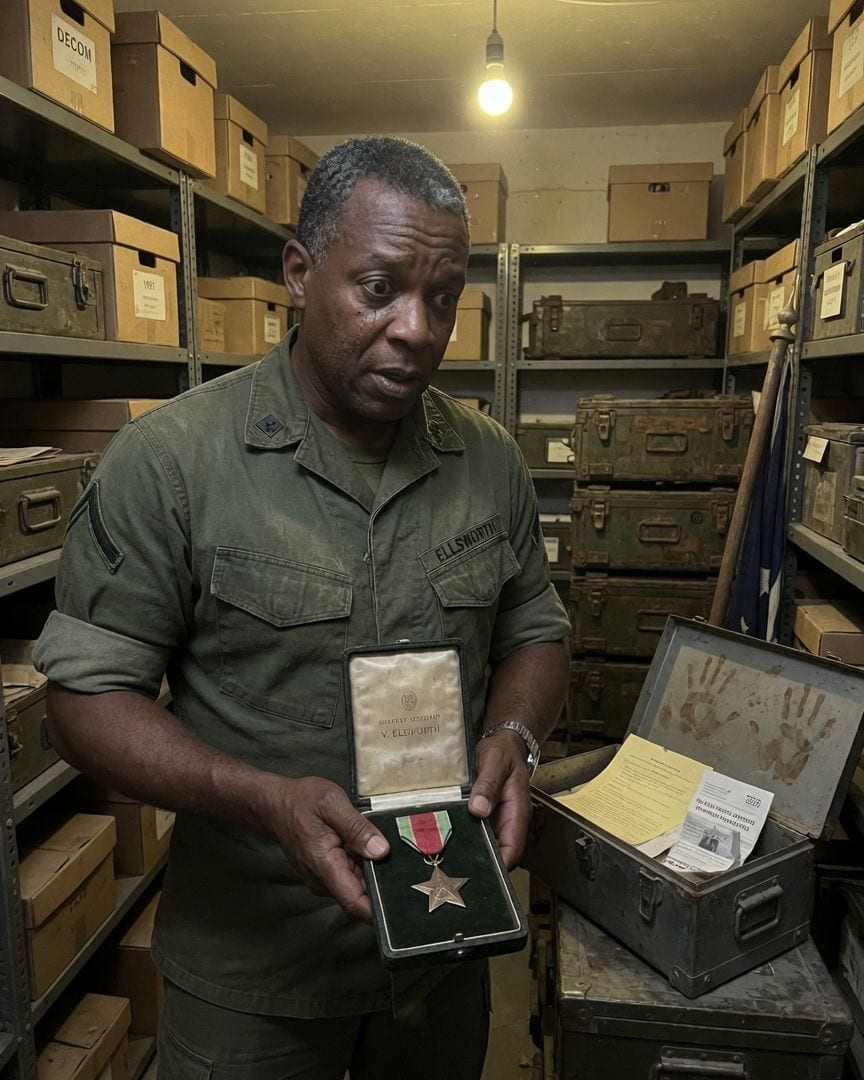
A photograph in Gunnery Sergeant Ellsworth's file shows him, older, with a future he never lived.
Gunnery Sergeant Victor Ellsworth, a veteran of twenty-two years, expected routine paperwork at the St. Louis personnel depot. Instead, a records clerk presented him with two identical files bearing his name and service number. One detailed a combat tour and commendations he had never earned, while a photograph inside showed him, unmistakably older, living a future he hadn't yet endured.
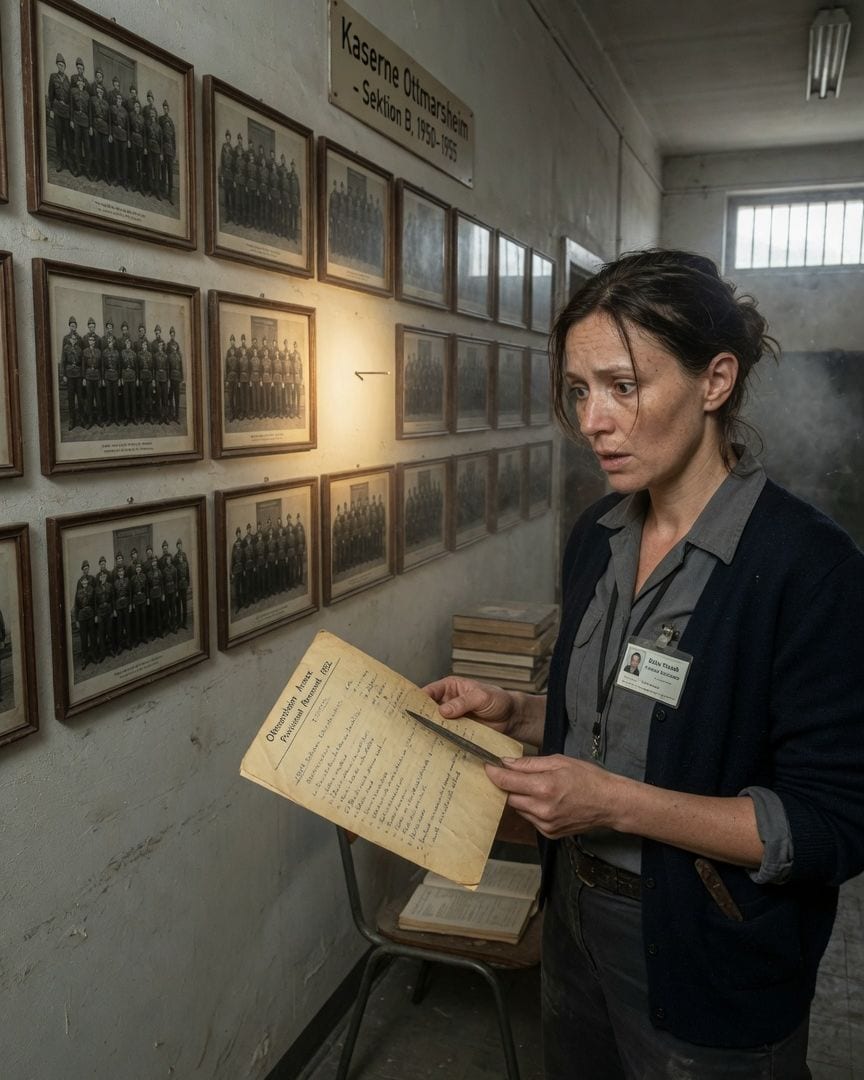
At a Cold War kaserne days from demolition, inventory clerk Delia Straub found a missing photo frame for a unit that never existed. Every soldier on the wall stared directly at its empty space.
Inventory clerk Delia Straub had eleven days to log every item at Kaserne Ottmarsheim before demolition crews arrived, turning history into rubble. Amid the dusty halls, she found a stark anomaly: a missing photo frame for the 604th Ordnance Detachment, a unit never officially stationed at the base. What made the empty space chilling was that every soldier in the surrounding photographs was looking not at the camera, but directly into that void. Delia's search for answers unearthed an unofficial manifest listing the 604th, with names of men officially declared killed in action years before. Who were these phantom soldiers, and why did their impossible record persist?
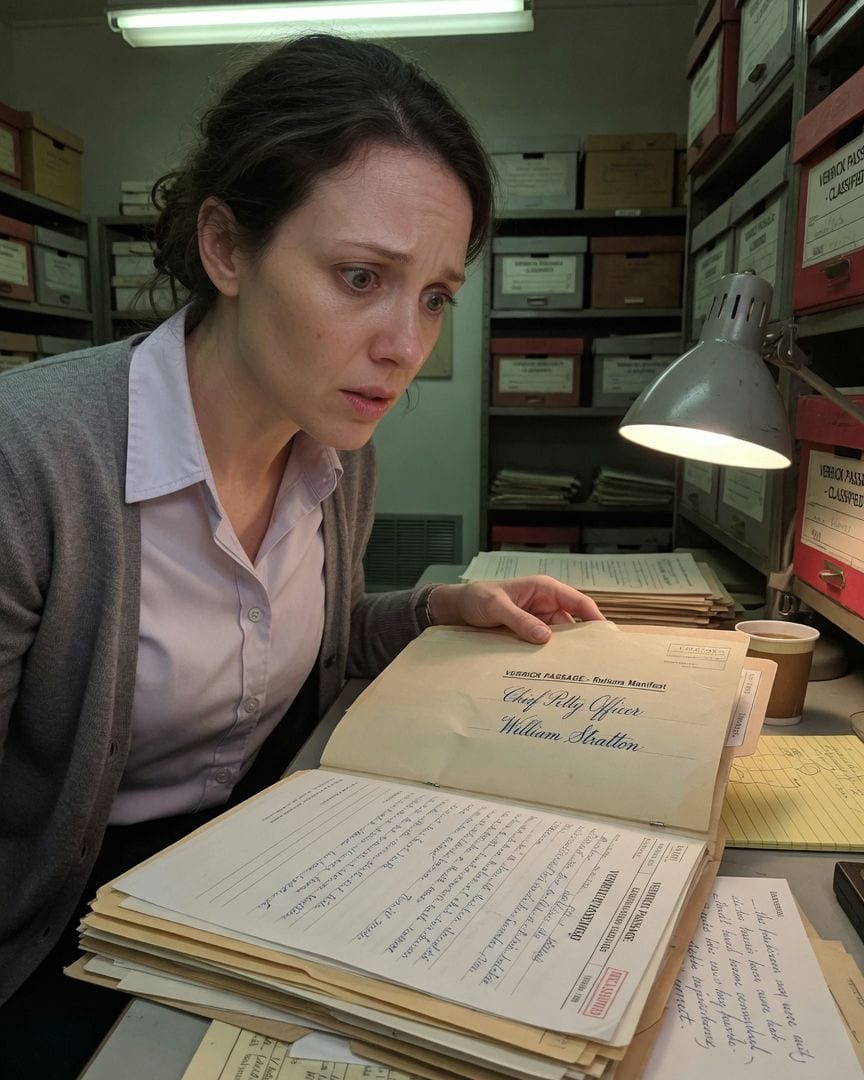
A records reviewer found personnel files for men lost 80 years ago, still being signed in an identical, perfect hand.
In the sterile hush of the declassified archives, meticulous reviewer Ione Fash had a routine task: cross-referencing witness statements from the Verrick Passage file. But as she reviewed files eighty years thick with official silence, she found nine separate interviews containing the exact same chilling sentence, all in an identical, precise hand. Her rational mind sought explanation, yet then she discovered something worse: personnel files for men lost in 1943, still being updated with modern requisitions and payroll runs. Each impossible entry, including a manifest signed just two weeks ago by a casualty from eighty years prior, bore the same unnervingly perfect signature. The file wasn't just a record of the lost; it was still being signed.
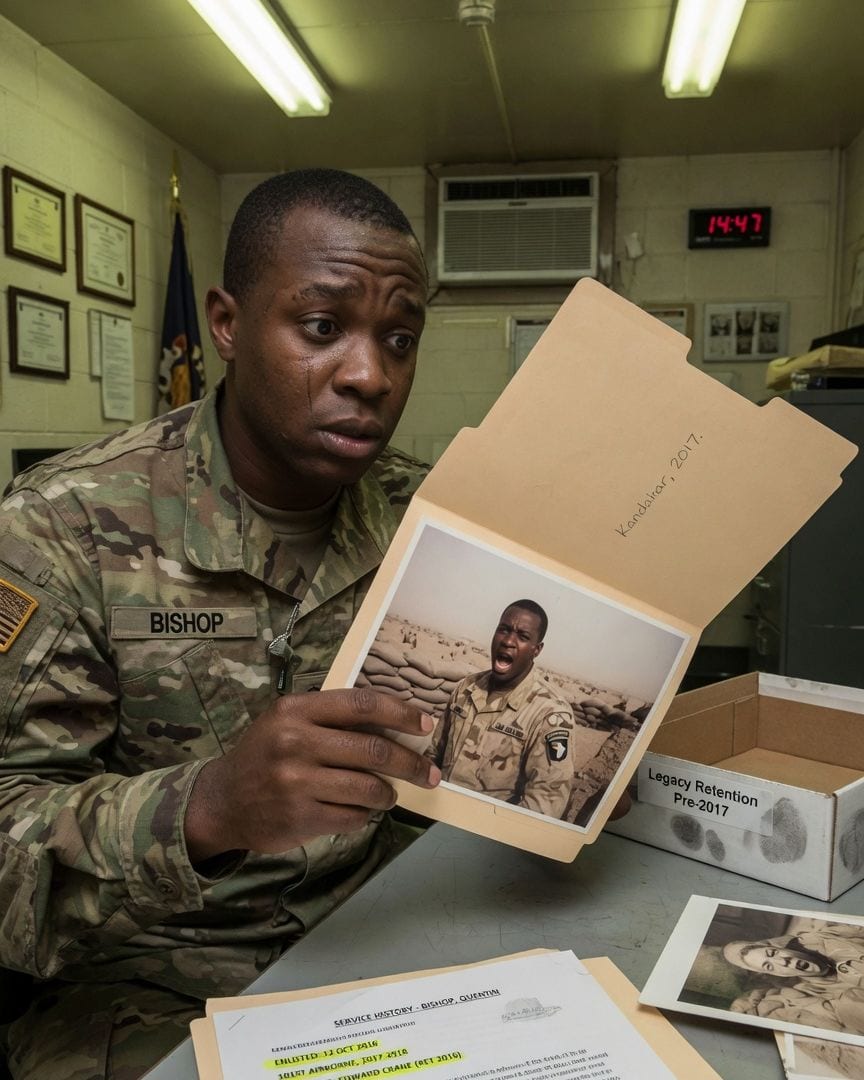
A specialist was signing for four more years, but his old file contained a photo of him in a desert uniform dated 2017, from a tour he never lived.
Specialist Quentin Bishop sat ready to re-enlist, looking forward to four more years of stability. But as he prepared to sign, his official record showed an enlistment date that made him seventeen years old, and a combat tour with a unit he’d never worn. Sergeant Marie Delaney dismissed it as a clerical error, but Bishop found a faded photograph of himself in a desert uniform, dated 2017, from a war zone he could not remember. Was this a mistake, or a meticulously constructed parallel life he never lived?
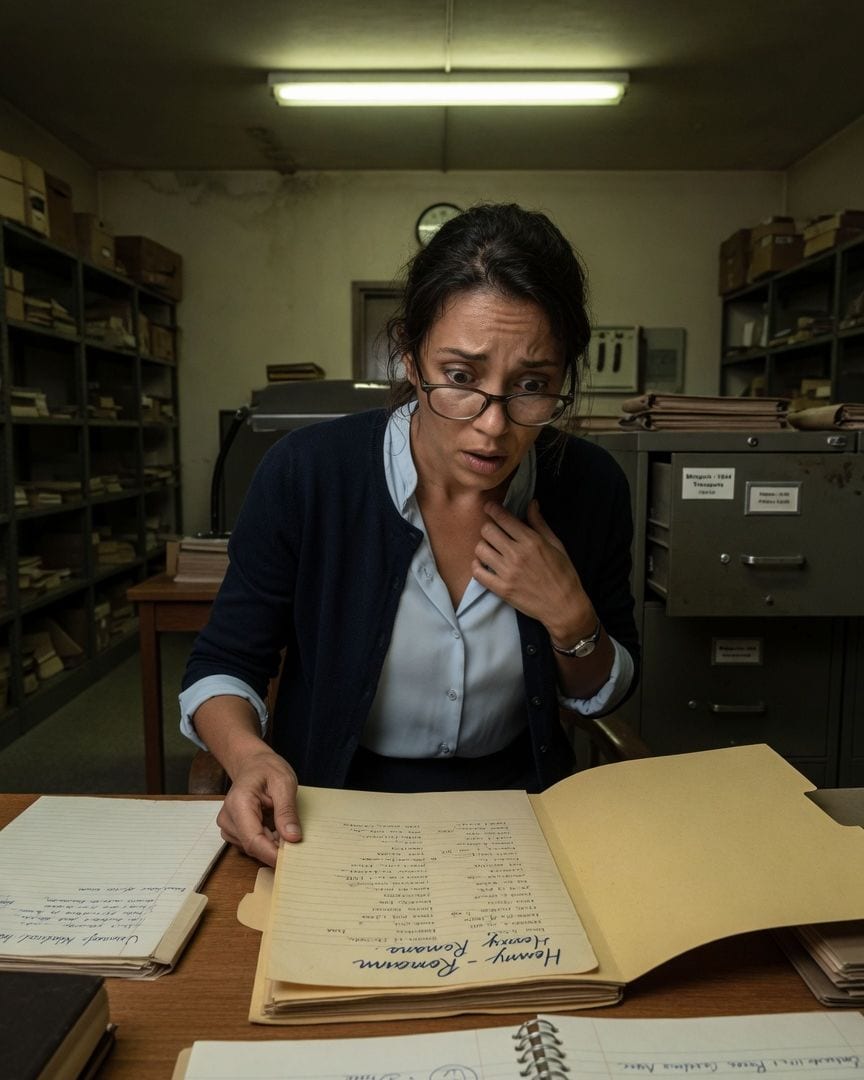
A records reviewer found a 1944 ferry manifest with an impossible 42nd name. The same dark ink marked a phantom crewman on a Cold War flight log.
Delphine Arceneaux, a dedicated records reviewer, had just minutes left in the stale reading room to finalize her review of a 1944 Mirepoix Ferry manifest. Her job was to confirm every detail of the forty-one passengers who boarded a boat that never arrived. But as the clock neared six, a forty-second name materialized on the faded paper, stark in a dark, unfamiliar ink. 'Henry Romano,' it read, with the impossible notation: 'BOARDED AT MIDSTREAM.' How could anyone board a ferry in the middle of a river?
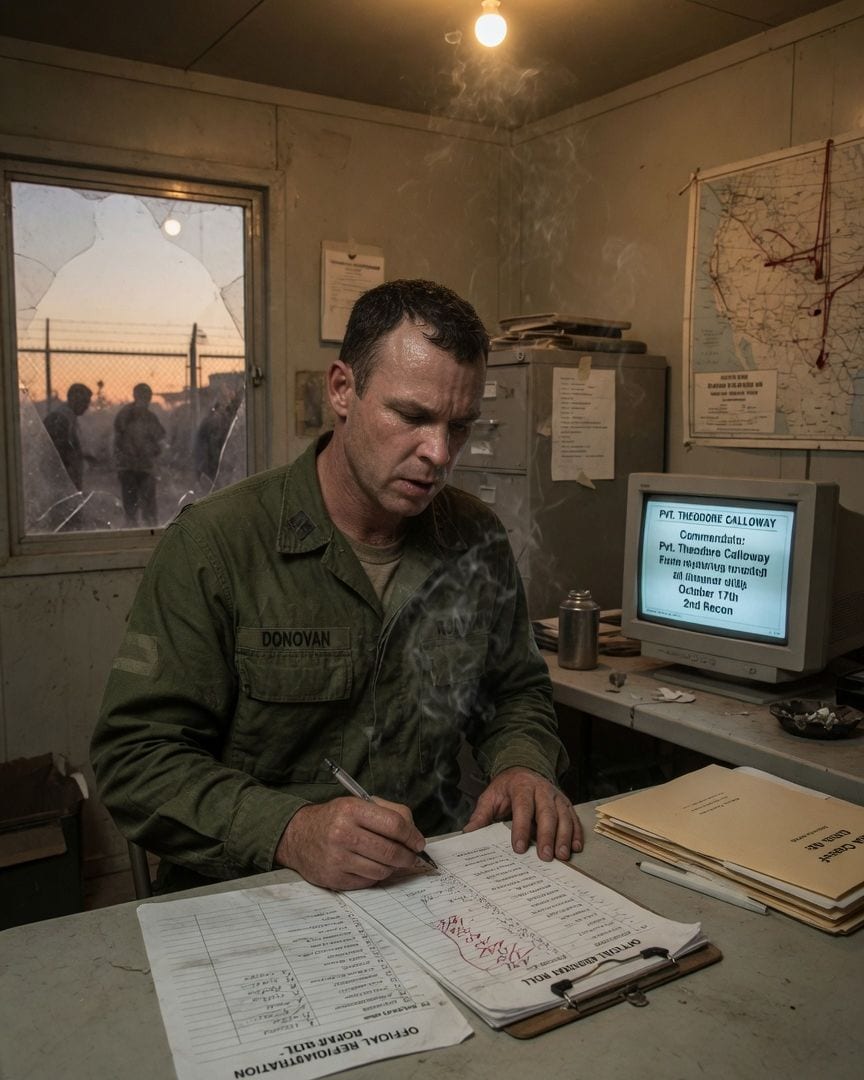
A Corporal counted the returning prisoners, but his tally came out one man too high, a private with no official record.
Corporal Raymond Donovan stood amidst the dust and tired murmurs of the repatriation camp, his duty to verify every returning prisoner. He meticulously tallied names against the official exchange lists, but his physical head count came out one man higher than expected. A Private Theodore Calloway appeared, gaunt and exhausted, yet his name was nowhere on Raymond’s carefully organized records. Sergeant Jennings dismissed it as a forgotten grunt, but Raymond knew better; Calloway's official service record, though pristine, contained an impossible detail: a commendation date for an operation his unit had left a month prior. What impossible timeline had this private stumbled into?