A researcher searching for his lost brother's ship found it intact. Every hatch was dogged shut, from the inside.
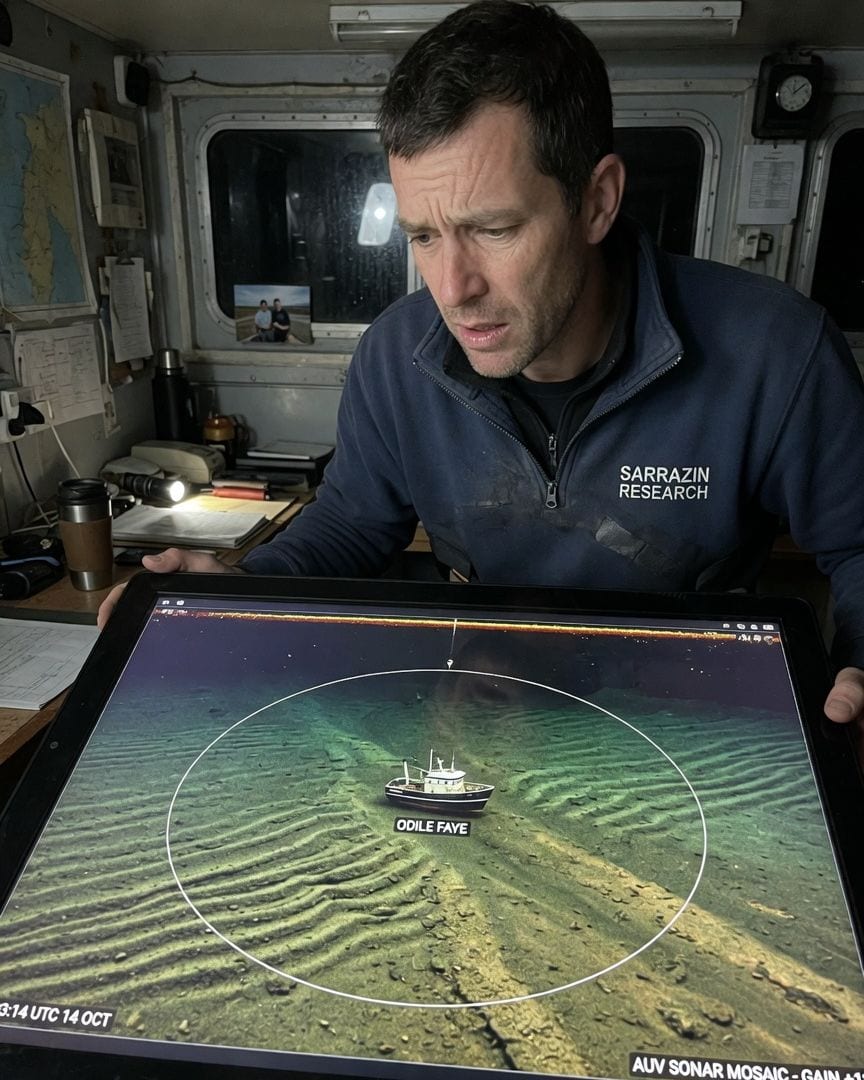
Kip Sarrazin adjusted the gain on his AUV's sonar, the cold Atlantic current a distant murmur against the hull of his research vessel.
Eight hours of good weather, one autonomous underwater vehicle, and he’d spent his own money to find the crabber Odile Faye where the Coast Guard said she wasn’t—because his brother, Wayne, had been aboard, and the family needed a place to point.
The high-resolution sonar mosaic scrolled across the main screen, painting the barren expanse of the seabed. Then, a perfect, impossible circle appeared. Forty meters across, the silt inside meticulously raked outward, smooth and even like a swept yard.
At its center, impossibly, sat the faint, unmistakable outline of the Odile Faye. Everything else on that plain was scoured by the prevailing current in one direction.
These rake marks went the other way, a clear anomaly against the natural flow of the deep. The sonar monitor hummed, its cool glass reflecting Kip's narrowed eyes as he stared at the improbable image.
The next morning, Kip descended, the powerful lights of his submersible cutting through the deep water. The Odile Faye was real, her hull intact, sitting upright on the cleared circle as if gently placed there.
No signs of collision, no hull breaches, no storm damage that would explain her loss. He maneuvered the submersible closer, playing the lights over the wheelhouse. The windows were dark, but unbroken. He saw the main cargo hatches, secured.
He nudged the submersible to the stern, focusing on the escape hatch. It was dogged shut, the heavy clamps firmly in place. He circled the vessel slowly, the dread tightening in his gut.
Every access point – the main deck hatches, the engine room access, even the small emergency escape – was dogged from the inside.
He tried to rationalize it, running through scenarios: panic, a desperate attempt to seal the vessel, perhaps a strange current pulling the mechanisms. But the Odile Faye was a modern vessel, designed with external release mechanisms for emergency egress.
And the sheer, meticulous closure of every single hatch, from the inside, on an otherwise perfectly preserved wreck, defied any logical explanation of a crew trying to escape a sinking ship. They were trapped, or had secured it themselves.
But how, and why, and where were they now? The submersible's external camera whirred, capturing the impossible scene.
Kip brought the submersible's manipulator arm into play, sweeping a powerful beam across the main deck. The silt was minimal, but he noticed a faint, undisturbed layer, consistent with months on the seabed.
Yet, in the center of the deck, just beside the main mast, a single, distinct boot print stood out. It was too defined, too sharp-edged, the tread pattern clear as if made yesterday.
It was not a ghost of a print, but a solid, recent impression in the silt, a mark that simply should not be there. The beam of his light caught the print, illuminating its impossible clarity.
It wasn't Wayne's boot size, he knew that much. Someone had been on that deck, after the sinking, or perhaps, after it had been 'placed'.
Kip's report to the Coast Guard was met with polite skepticism. The boot print was dismissed as a trick of light, an anomaly in the sonar, or residual debris.
The dogged hatches were attributed to a tragic, panicked crew, a desperate act of self-preservation that ultimately failed. Kip, fueled by the image of that impossible footprint and his brother's memory, refused to let it go.
He pushed for an official investigation, citing the unique circumstances. His persistence eventually granted him limited access to the Odile Faye's official file, now designated 'unresolved'.
He spent days poring over the documents in a sterile Coast Guard annex, the fluorescent lights humming overhead. The file was thin, missing key logs from the last twenty-four hours of the voyage.
Witness statements from other crabbers in the area contradicted each other on the last radio contact, some recalling clear transmissions, others only static.
He found a strange, almost parenthetical mention in a faded report from the investigating officer: '—similarities noted to the 'Sea Witch' incident, 1978, though officially classified as unrelated.'
The 'Sea Witch' incident was quickly dismissed as a minor detail, a bureaucratic footnote, but the phrase 'officially classified as unrelated' caught Kip's eye. It felt less like a conclusion and more like an instruction, a deliberate brush-off.
He tried to find the 'Sea Witch' file in the digital archives, but every attempt to access it returned the same error message: 'Permanent Archive, Restricted Access'.
The air in the annex felt unnaturally cold, clinging to him despite the whirring vents.
Kip’s requests for further access to restricted files were met with increasing resistance. His emails went unanswered, his phone calls diverted to generic voice messages that were never returned.
One afternoon, back at his small, rented office by the docks, he found a plain manila envelope slipped under his door. No postage, no return address.
Inside, a single, heavy sheet of paper, with an old-fashioned typewritten message centered on the page: 'Some things are better left filed.' The words were stark, unsettling in their understated threat.
He checked his security camera footage from the previous night; the feed from the hallway was corrupted, a blank, flickering screen for the exact hour the note must have been delivered.
He tried to brush it off as a crank, a local trying to scare him away from a perceived salvage opportunity, but the precision, the timing, the specific wording, all felt too deliberate, too knowing.
He was no longer just investigating a wreck; he was being watched. He began to feel a chill even in the warm coastal air, the sense of unseen eyes tracking his movements, assessing his every move.
The 'filing' wasn't just about objects; it was about people too, about keeping things neatly tucked away, out of sight and out of mind, and now he was caught in its silent machinery.
The salt air outside seemed to hold its breath.
Driven by the anonymous warning, Kip sought out Simon Vaughn, the retired records clerk who had signed off on the 'Sea Witch' classification decades ago.
He found Simon in a small, cluttered house filled with old maritime charts and a faint smell of mildew and stale coffee. Simon, a man in his late sixties with a nervous tremor, initially feigned ignorance. 'The Sea Witch?
Old history, son. Nothing to see there.' Kip pressed him, detailing the Odile Faye, the raked seabed, the dogged hatches, the boot print. Simon’s eyes widened, a flicker of fear in their depths. The polite dismissal faltered.
'You… you saw that? The raked… and the hatches?' Kip showed him the blurry AUV image of the raked seabed, the impossible forty-meter circle.
Simon’s hand trembled as he reached for a dusty microfiche reader in a corner, its projector lamp flickering to life. 'They told me to file it and forget it. Every one of them.'
He inserted a slide, and a hand-drawn diagram from 1978 appeared on the screen, yellowed with age but distinct.
It depicted a fishing trawler, the 'Sea Witch', sitting upright on a seabed, surrounded by a perfectly cleared, raked circle, eerily identical to the Odile Faye. Beside it, a detail sketch of internal hatches, dogged shut.
The diagram bore a heavy, red 'CLASSIFIED - EYES ONLY' stamp, a classification Simon admitted shouldn't have been applied to a mere fishing accident.
'It wasn't an accident,' Simon whispered, his voice hoarse, barely audible over the hum of the machine. 'It was… placed. Just like yours. And there were others. They all had that… that signature.'
Kip felt the pieces click into place, the quiet dread turning cold. The 'Sea Witch' incident, the missing logs in the Odile Faye file, the 'unrelated' classification – it wasn't a clerical error.
It was a pattern, carefully managed, and the Coast Guard knew. The entire room seemed to grow heavier around them, the air thick with unspoken history.
Simon Vaughn, now fully agitated, began pulling out old, misfiled boxes from a dusty corner, muttering about 'unclassified anomalies' and 'things that didn't fit.'
He scattered faded photographs and reports across the table: a cargo plane found perfectly intact in a remote desert canyon, its cockpit doors sealed from the inside; a recreational vehicle discovered upright in a dense forest, its tires mud-caked but undamaged, with a cleared circle of earth around it, just like the seabed.
Each file had a detail that mirrored the Odile Faye: the cleared ground, the intact but wrong object, the 'file it and forget it' instruction.
The pattern spanned decades, across land, air, and sea, each one a 'thing that came back wrong.'
Simon’s trembling finger then landed on a folder at the bottom of a stack, newer than the rest, with a fresh, crisp classification stamp. It looked as if it had just been printed, its edges uncreased.
He pushed it across the table toward Kip. The label read, in precise, official lettering: 'SARRAZIN, K.' The page inside was blank, waiting.
Kip stared at his own name, the stark black letters on the white paper, realizing the file was not just a historical archive, but an active ledger, and he was now its newest entry.
The blank page in the 'Sarrazin, K.' file solidified the chilling truth for Kip. The institution wasn't merely covering up; it was actively managing a recurring phenomenon.
The 'lost' objects weren't just misfiled; they were interacted with by something unknown, then left in a state that defied human explanation, and the institution's role was to ensure these anomalies were buried and dismissed.
The raked seabed, the dogged hatches, the impossible boot print – they were all traces of this interaction, a signature left behind by whatever 'filed' them.
Kip returned to the Odile Faye, this time with specialized equipment to take core samples from the raked seabed, a desperate, final attempt to find irrefutable proof. Back in his lab, he examined the samples.
Under high magnification, the sediment showed unnaturally uniform compression, as if an immense, smooth object had been dragged across it with precise, deliberate force, far beyond any natural current.
Further analysis revealed microscopic traces of an unknown, non-terrestrial element, not present in the surrounding, undisturbed seabed. This wasn't a natural phenomenon, or even a human cover-up of a known event.
It was evidence of an unknown intelligence, operating with a quiet, systematic efficiency, leaving behind physical proof that could not exist. The ordinary explanation died for good.
The pattern was horribly clear, stretching back decades, each 'filed' incident a testament to an unseen hand that tidied up its work.
Knowing he was now 'filed,' Kip understood he couldn't fight the institution or whatever it was protecting. His only recourse was to make the pattern visible, to break the secrecy machine’s hold.
He compiled all his evidence: the sonar images of the Odile Faye, the photos of the dogged hatches, the analysis of the seabed core samples, Simon Vaughn's testimony, and the collected microfiche of similar 'filed' incidents.
He carefully anonymized Simon's identity, knowing the risk he was already putting the old man in.
He then reached out to Hazel Ellison, an investigative journalist known for her relentless pursuit of government transparency, sending her a secure, encrypted data packet. He included a note, typed in a fresh document: 'This is not a conspiracy theory.
This is a pattern. And it's still happening.' Kip knew the act was a point of no return.
He sold his salvage vessel for cash, closed his office with a final click of the lock, and severed all digital ties, preparing to disappear.
He packed a single bag, leaving behind the life he knew, knowing that even if the truth surfaced, he would forever be looking over his shoulder.
The confrontation wasn't with a person or entity, but with the vast, patient machine of secrecy itself.
His escape was not from physical danger, but from being consumed by the file, from becoming another forgotten entry, another name tucked away in the archives of the unexplainable.
He was not running, but making himself un-fileable, at least for a while.
Hazel Ellison published a heavily redacted exposé a few weeks later, enough to cause a ripple of unease in niche maritime forums and a brief, official Coast Guard statement dismissing 'unsubstantiated claims' and calling it a 'misinterpretation of archival data.'
Simon Vaughn vanished from his home a week after Kip’s data packet went public; his neighbors reported him simply 'gone,' no forwarding address, just an empty house.
The Odile Faye remained undisturbed on its unnatural seabed clearing, a silent monument to the inexplicable, slowly collecting new silt over its impossible boot print.
Kip Sarrazin, now using a different name, watched the news cycle from a remote cabin in the Pacific Northwest, the familiar chill of unacknowledged truth a constant companion.
The story faded, buried under new headlines, but the pattern, he knew, continued. The silence of the remote forest pressed in around the cabin, a silence that felt less peaceful than watchful.
Kip lived a quiet, isolated life under a new name, always looking over his shoulder, occasionally checking obscure news feeds for similar, dismissed incidents. He knew the pattern was out there, quiet and patient.
He had seen the way the system worked, the way it swallowed things whole, replacing them with plausible, if unsettling, explanations. He had escaped, but the knowledge was a brand.
One cold morning, scrolling through a local news aggregator, his coffee cooling untouched on the rough wooden table, he saw a small article: 'Fishing Boat Found Intact on Remote Lakebed, Unusual Silt Markings Reported.' He knew.
The file was still being signed.
If this one got to you
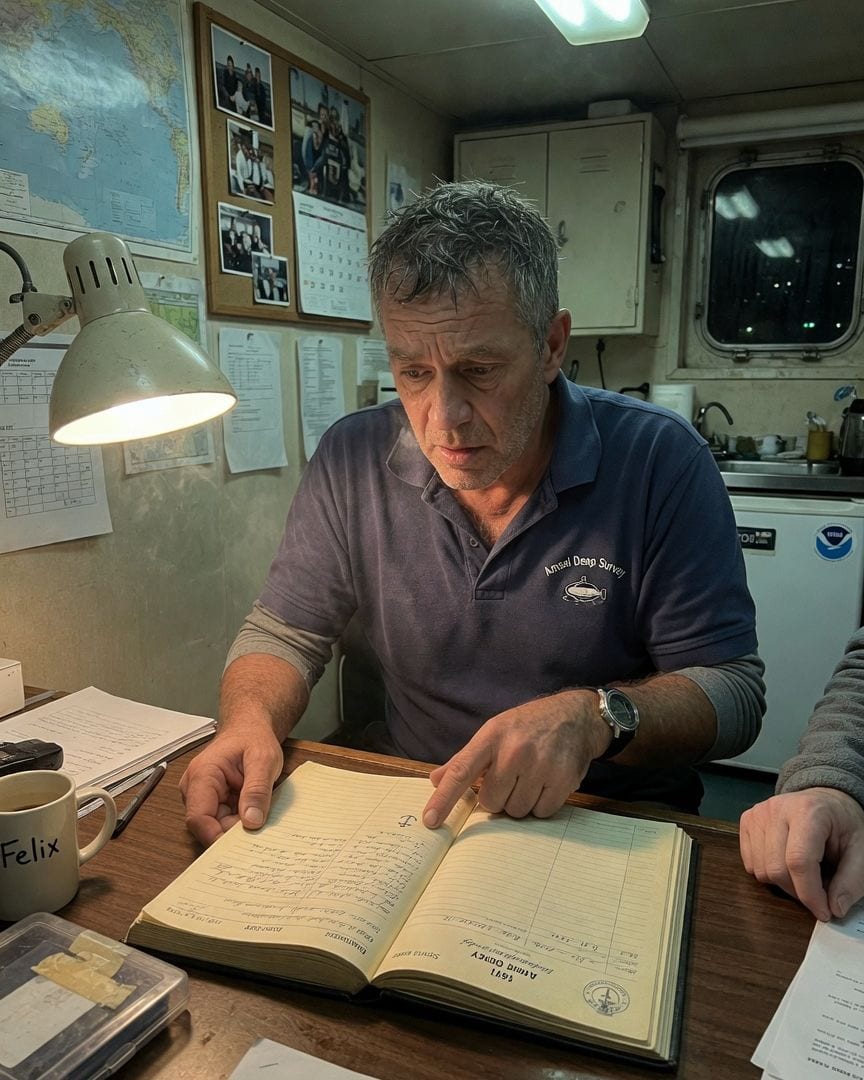
On his final deep-sea survey, a submersible pilot watches a 32-year-old Cold War wreck's rudder shift two degrees.
Deep-sea surveyor Hugo Amsel embarked on his final major dive, anticipating a quiet retirement after decades exploring the crushing pressures of the deep. His submersible's lights cut through the murky green, revealing the *Wynn Portal*, a sealer vanished in 1991, eerily preserved with unnervingly clear windows, free of any marine growth. Then, the inexplicable: the wreck's rudder angle indicator, softly lit, twitched two degrees further to starboard. Later, inside the wheelhouse, Hugo found the ship's official logbook, its final entry dated three days *after* the vessel's recorded disappearance, hundreds of miles north. How could a ship vanish, only to log a journey days later, from a place it never reached?
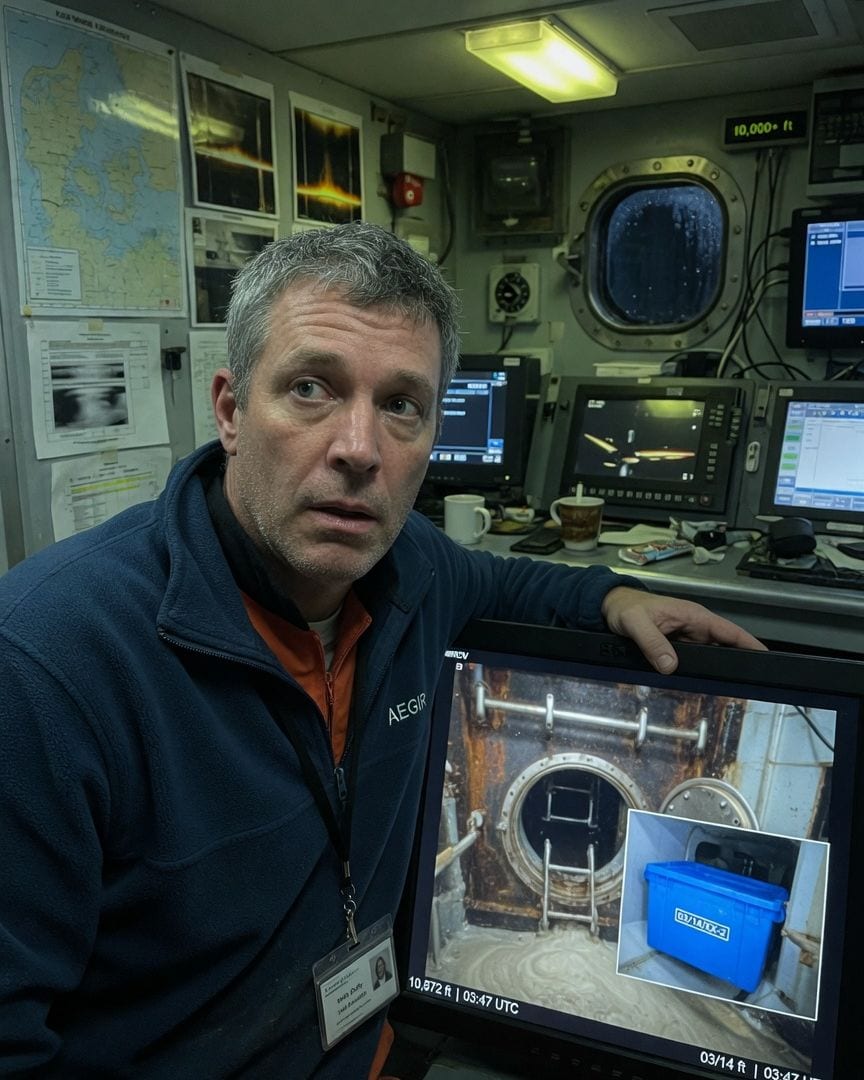
A sonar operator finds a Cold War submarine lost in 1968, but inside, a modern blue container bears a date stamp from two years ago.
Sonar operator Wells Duffy spent days on the RV Aegir, mapping the frigid depths of the Denmark Strait. He was nearing the end of his eleven-day mission when his vessel's transducers painted an impossible image. Deep in a trench, the USS Gale Prescott, a submarine lost with seventy-one souls in 1968, rested upright and perfectly preserved. But as the ROV's camera pushed into the gloom, it revealed a vibrant blue plastic container, clearly not from 1968, bearing a digital date stamp from just two years prior, chilling Wells Duffy to his core.
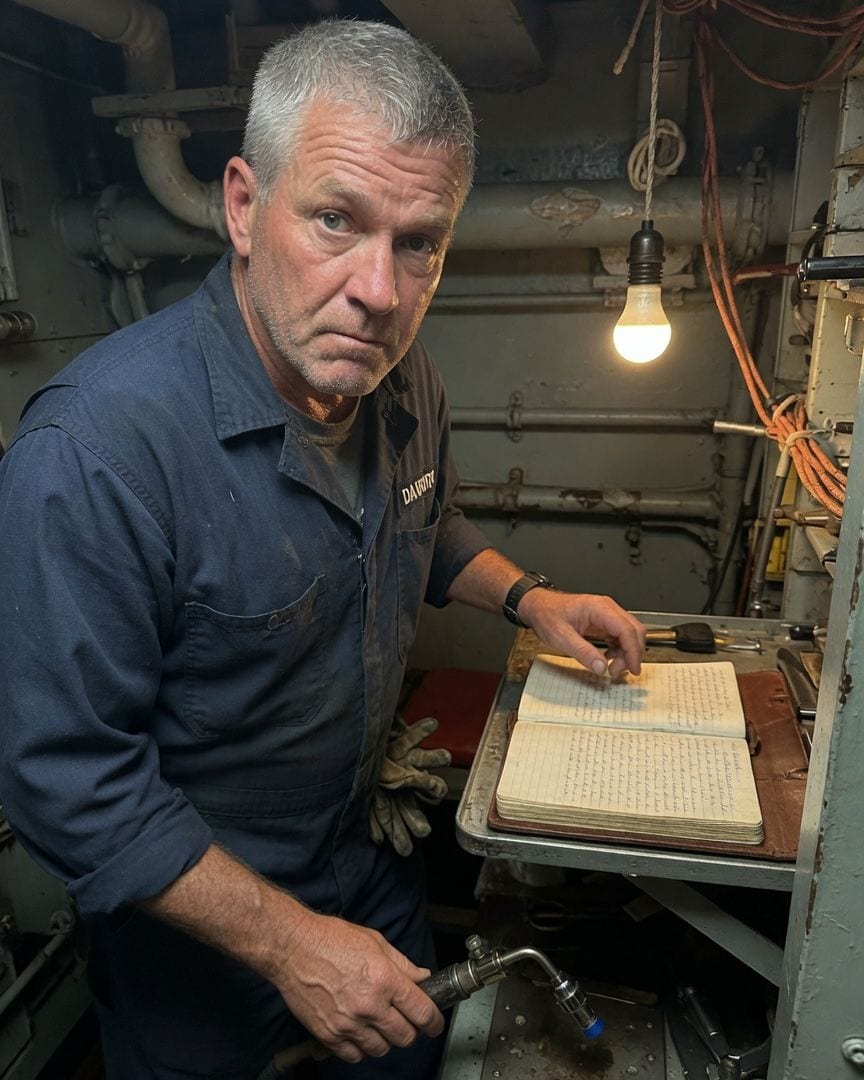
A week from shore duty, Chief Danforth cut a hatch where his ship's plans showed solid steel. An hour later, the wall was seamless, but the Cold War logbook from inside appeared under his mattress.
Chief Petty Officer Raymond Danforth, just a week from ending three decades of service, was intimately familiar with every pipe and plate of the guided-missile destroyer Weatherall. During a mid-cruise overhaul, his gloved hand found a sealed hatch where schematics promised only a solid bulkhead. He cut through the impossible seam to reveal a small, dry compartment, softly lit, containing a logbook filled with an unsettlingly familiar hand. When he returned an hour later with a witness, the hatch was gone, the wall seamless. Later that night, the same logbook appeared beneath his mattress, its pages revealing an entry: 'Petty Officer Howard Montgomery, missing, 1972.' How could a compartment vanish, yet leave its secrets behind?
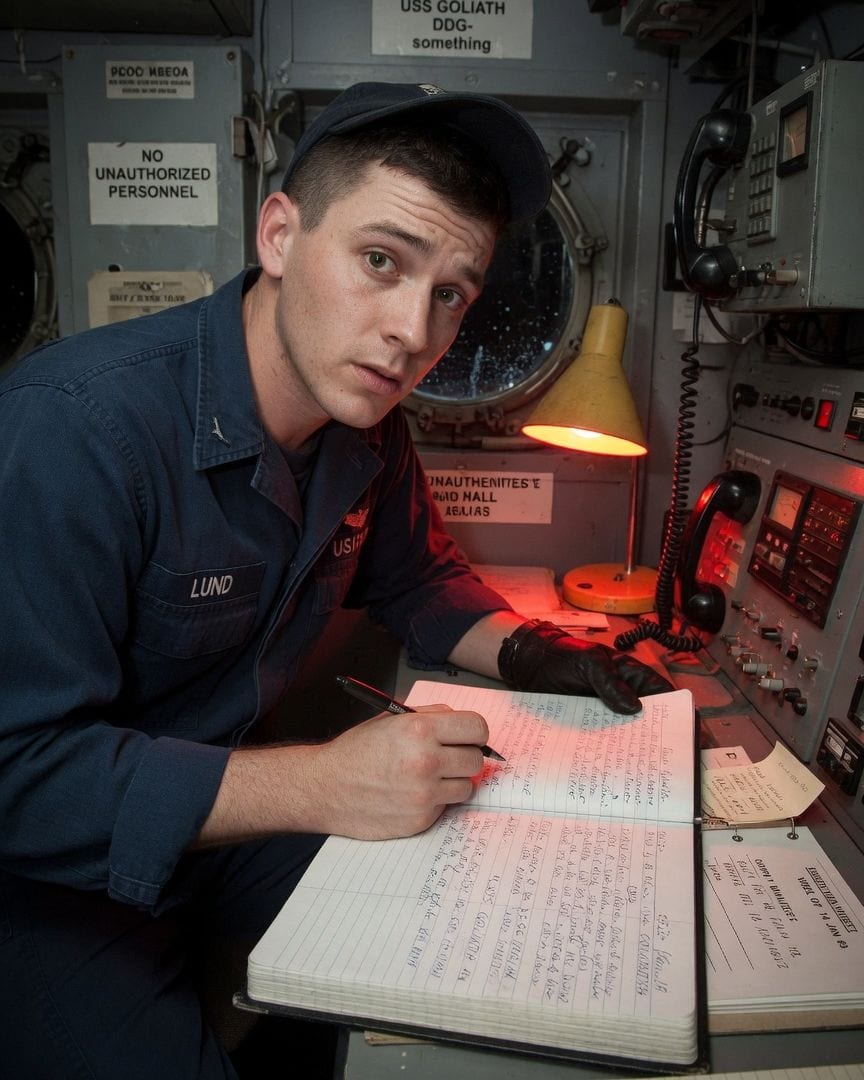
Petty Officer Lund heard his own captain's mayday: the Cold War USS Goliath was sinking, two hundred miles astern.
Petty Officer Marco Lund kept a lonely vigil in the USS Goliath's radio room, the destroyer battling the North Atlantic in deep winter 1983. Suddenly, a garbled mayday broke through: his own ship, his own captain, reporting they were going down two hundred miles astern. Though the bridge confirmed the Goliath was fine, the same chilling call came again an hour later, stronger and from the exact waters they had just crossed. Deeply unsettled, Marco began searching ship logs, eventually discovering a phantom entry: an identical mayday, logged a week prior, pressed into the very paper beneath his own.
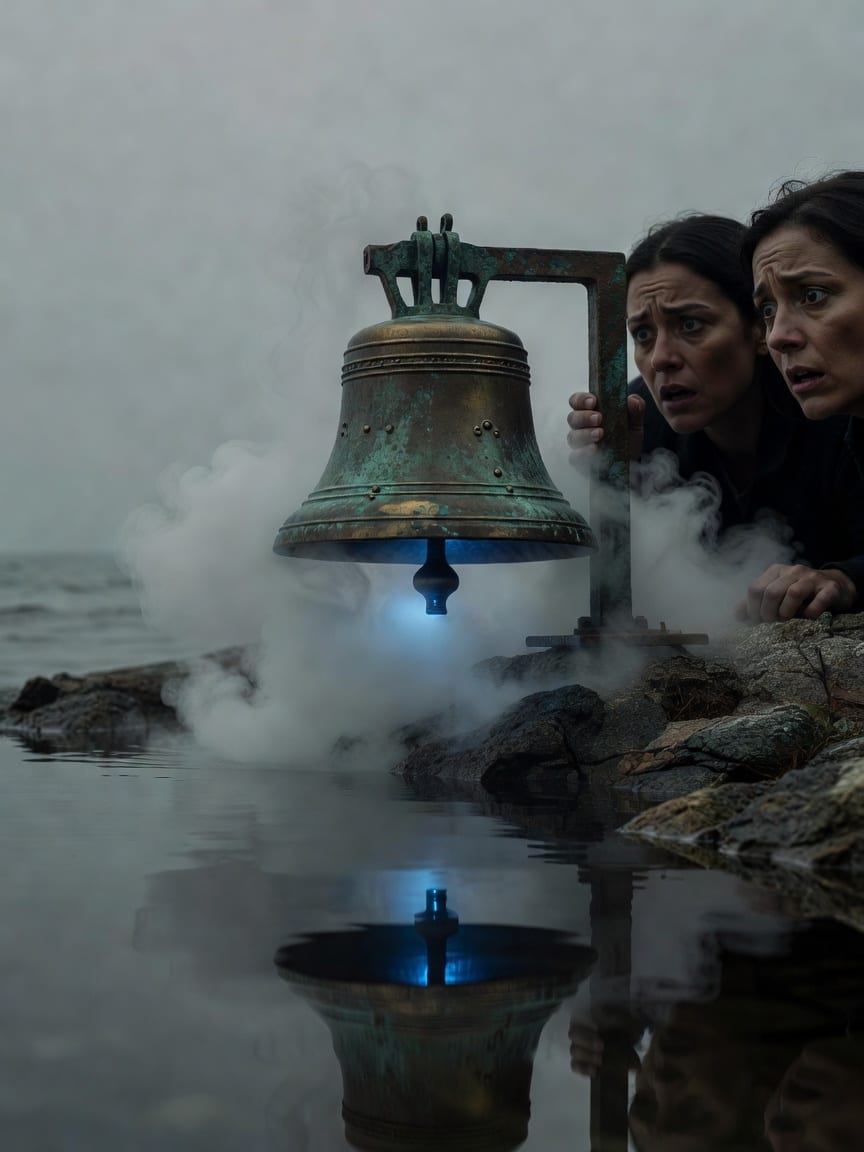
The fog bell on the point rings itself on still nights. The framed log at the yacht club lists eleven calm evenings it rang – each entry beside a boat that never came home.
Moving to a quiet coastal town, I found myself drawn to an old logbook at the yacht club. It recorded the fog bell ringing on flat-calm nights, each instance tied to a boat that simply vanished. Then, I found my own boat's name, 'The Osprey,' penciled at the bottom, marked with an unfinished, cryptic symbol.
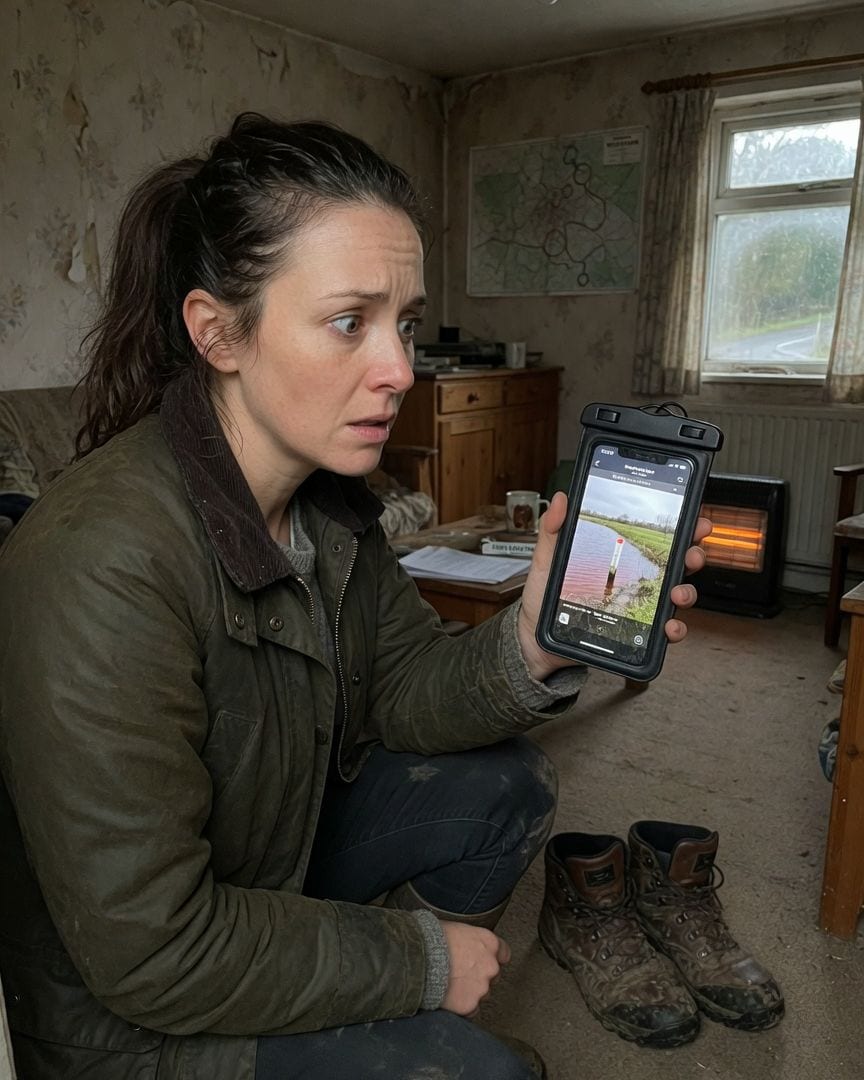
The Wykeham ford depth post read *above* the red mark yesterday, under an inch of clear water. The paint beneath it was bone dry. A walker crossed and hasn't claimed his boots.
At Wykeham ford, the water barely covered the depth mark, yet the paint beneath it was bone dry. Then Dean Sutton, a young man staying nearby, vanished, leaving only his car and a pair of neatly placed hiking boots. When I found his phone, it revealed he'd crossed the ford alive, minutes before he disappeared.