Second Lieutenant Nina Trejo's phantom camp was gone, but its fire pit was still warm, and the duty log read 07/14/2052.
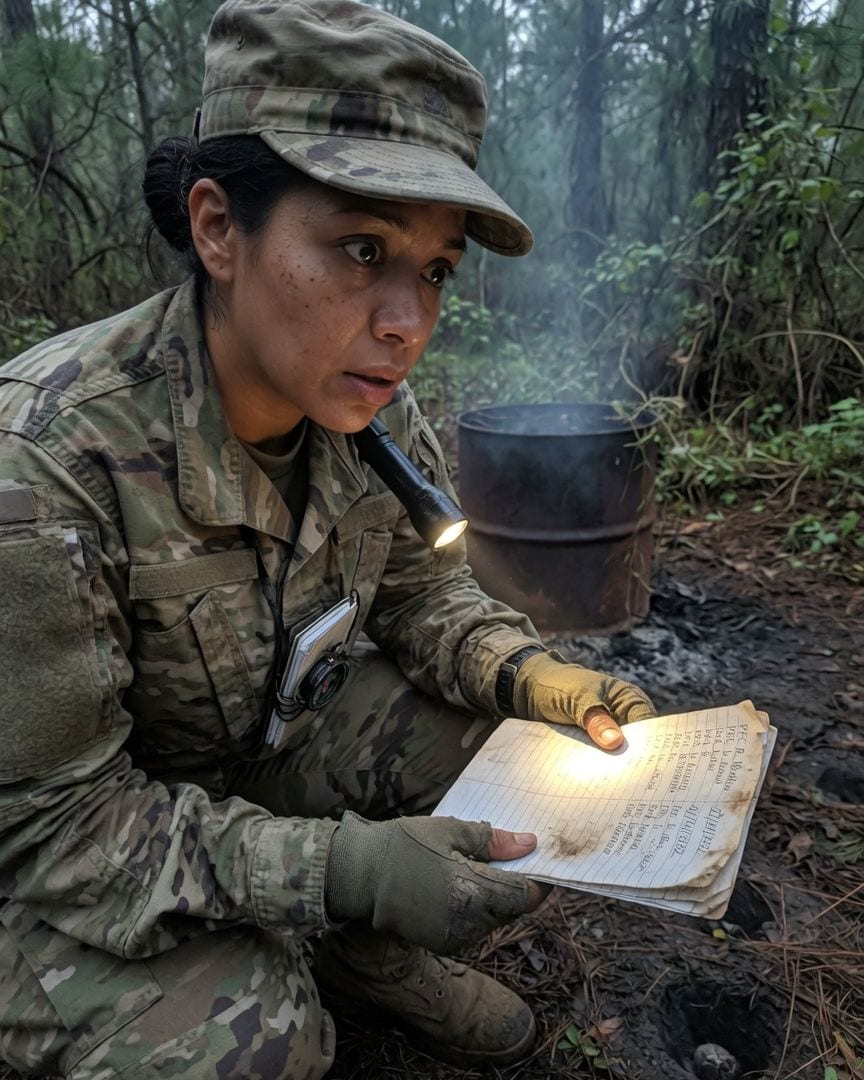
Second Lieutenant Nina Trejo, exhausted but precise, clicked her compass.
It was the last leg of her land-navigation course, the final field exercise before Ranger School qualification, and her skills were sharp, honed over weeks of grueling evaluation in the Uwharrie backcountry.
She recorded the grid coordinates in her field notebook: 34.5678, -80.1234.
She’d just walked her lane directly through an active site – a fenced compound, complete with green canvas tents, a mess tent emitting the faint scent of stale coffee, and even a flagpole where a tattered, faded flag snapped in the afternoon breeze.
It was a full-blown tactical outpost, active but unlisted, tucked deep in an unexpected hollow. Doctrine said log everything, especially an unexpected site.
Later, in the debrief tent, the air thick with sweat and the smell of hot coffee, Captain Daniel Pennington, Ranger Cadre, drew a thick red line across her master map. “There’s no site at that grid, Lieutenant.
Not even on the old master maps. You invented it.” He pushed her map back across the table, his expression unreadable. Nina felt a cold dread settle in her gut.
She could still smell the woodsmoke that had clung to the air around the mess tent, distinct from the damp earth of the forest.
The accusation of 'fabrication' hung heavy over Nina. Her Ranger School slot, her entire career, was on the line.
She tried the mundane explanation first: extreme fatigue, a mirage of the mind, a prank by another unit designed to test her composure.
But the image of the camp, the faint scent of woodsmoke, it felt too real, too concrete to dismiss.
The next morning, before the next phase of training, she convinced her patrol partner, Specialist Gary Winslow, a lanky private with an uncanny sense of direction, to re-run a segment of her lane.
"Just to clear my head," she’d said, omitting the real reason for her urgency. Gary, ever loyal, agreed, though a skeptical curl played at the corner of his lips.
They moved through the dense, dew-soaked undergrowth, the air cold and damp beneath the canopy. Nina navigated with grim determination, her eyes scanning for familiar landmarks. When they reached the coordinates she’d logged, the compound was gone.
No tents, no flagpole, no fence. Just a clearing choked with saplings and tangled vines, indistinguishable from any other stretch of the deep woods. Gary gave her a look, a mix of pity and 'I told you so.'
The mundane explanation seemed to solidify around them, a heavy shroud.
But then Nina knelt. Her fingers brushed against a shallow, circular depression in the earth, barely visible beneath the pine needles and fallen leaves. Another, and another, forming a clear perimeter. Post holes.
And next to them, a dark, ash-filled circle where a fire pit had been, the earth still faintly warm to the touch, a ghost of heat against her palm.
A few yards away, a rusty, open burn barrel, its interior blackened, gave off a faint, acrid smell that was definitely not from yesterday's rain, nor from the damp forest floor.
The mundane explanation died right there, in the damp soil, disproved by the persistent, impossible warmth and the lingering, metallic scent of ash.
Nina exchanged a look with Gary. The warmth from the fire pit was undeniable, impossible. It was a cold morning, and the heat was distinct, radiating faintly from the disturbed earth.
They scanned the area, their movements cautious now, their earlier skepticism replaced by a profound unease. Near the burn barrel, half-buried in the leaf litter, Nina spotted something. A scrap of paper, thick and military-grade, partially singed at the edges.
She pulled it free, careful not to tear the fragile document. It was a fragment of a duty log, the kind used for daily personnel accountability in the field. The ink was faded, but legible.
A column of names: 'PFC R. Barlow,' 'SGT L. Winslow,' 'CPT S. Beaumont.' Her eyes widened. She recognized 'SGT L. Winslow' – Gary’s great-aunt Lydia, who had gone missing in action decades ago, officially listed as MIA in Vietnam.
A shiver ran down her spine. But the date on the log, scrawled beneath the unit designation, made her heart hammer against her ribs, a frantic drum in her chest.
Nina Trejo knelt in the damp Uwharrie earth, her flashlight beam fixed on the scrap of paper.
It’s thick, military-grade, partially singed, but the hand-scrawled entries are clear: a column of names, some vaguely familiar from old service lore, and a date. Her breath hitches. The date reads '07/14/2052'.
The date, '07/14/2052', burned in Nina’s mind, a fiery brand against the cool logic of her training. Gary, pale, stared at his great-aunt’s name on the faded fragment. “Lydia Winslow,” he whispered, his voice hoarse. “She vanished in ’71.
This… this is impossible.” Nina knew it was impossible, but the warmth from the fire pit still lingered in her memory, and the acrid scent from the burn barrel still pricked her nose.
She carefully folded the log fragment, tucking it into a waterproof pouch in her ruck, a secret weight against her back.
The next few days of training were a blur. Nina went through the motions, executing drills with mechanical precision, but her mind was elsewhere, replaying the phantom camp, the warm ashes, the impossible date. She started digging, subtly at first.
She used the training area’s digital archives, ostensibly for a 'historical terrain analysis' project. She searched for 'SGT L. Winslow' and 'CPT S. Beaumont,' cross-referencing names with known MIA lists and old unit rosters.
The official records were clean, consistent with their established fates, decades in the past. No anomalies. She looked for mentions of 'Uwharrie' and 'outpost' in unusual contexts. Nothing surfaced, only standard training reports. The system, as expected, swore otherwise.
During a brief break, she managed to access a restricted database of decommissioned unit patches. The faded symbol on the log fragment – a stylized, three-pronged leaf, almost like a strange clover – yielded no match.
It was as if the unit, and the individuals associated with it, had been systematically erased or had never existed in the official narrative. Nina then focused on the coordinates.
She found that the Uwharrie training area, while vast, had no 'blank' sections on its master maps, even the oldest ones stored in the archived GIS layers.
Every square inch was accounted for, either as active range, restricted zone, or historical site. The grid she’d logged simply wasn't there, not on any map, official or unofficial. It was a void where a tactical outpost had stood.
She brought up her concern again, discreetly, to Captain Pennington during a debrief on her navigation scores. “Sir, about those coordinates…” He cut her off with a curt wave, his gaze fixed on a monitor. “Lieutenant, we’ve been over this.
Your performance on land navigation has been exemplary since. Let’s not revisit… aberrations.” His tone was final, a dismissal that brooked no argument.
But his eyes, when he finally met hers, held something she couldn’t quite place – not anger, but a deep, weary acknowledgment, as if he recognized a familiar pattern.
She realized then: he wasn't just dismissing her; he was containing her. The unease solidified into dread. Someone knew. Or, something was being actively hidden.
Nina’s subtle inquiries didn't go unnoticed. The next morning, her personal field notebook, which she meticulously kept locked in her footlocker, was found open on her bunk.
Nothing was missing, but the page with the phantom camp coordinates was dog-eared, a silent, pointed warning. Later that day, during a simulated ambush exercise deep in the woods, Nina found herself isolated from her team.
A low, almost imperceptible rustle came from the dense underbrush behind her, too deliberate for an animal, too quiet for an opposing force. She froze, weapon raised, scanning the trees. A flash of movement, a shadow among shadows.
Then, a voice, barely a whisper, carrying on the humid wind through the pines: “Some things are better left unlogged, Lieutenant.” The words were calm, measured, devoid of overt threat, yet chilling in their implication. Nina spun, but saw nothing.
The forest was silent again, save for the distant sounds of the exercise.
She reported it, of course, to Captain Pennington, citing a possible OPFOR scout. He listened, his expression impassive, nodding slowly. “We’ll look into it, Lieutenant.”
But the look in his eyes told her he knew exactly what she was talking about. He wasn't surprised. He was observing her, assessing her, as if a new variable had entered a complex equation.
That evening, Nina received an anonymous, encrypted message on her secure military tablet, disguised as a routine training update.
It contained a single, grainy image: a zoomed-in shot of her own field notebook, open to the page with the impossible coordinates she had logged. The message below it, stark against the gray background, read: 'Accountability is everything.
Especially when it’s missing.' The sender was untraceable. Nina felt a cold knot tighten in her stomach. Her digging had indeed been noticed. She was no longer just investigating; she was being watched. The hunter had become the hunted.
The faint, metallic tang in the air of the barracks seemed to sharpen, an intangible warning.
The anonymous message and the image of her notebook confirmed it: someone was actively monitoring her, not just casually observing. Nina decided to force the issue.
She found Captain Pennington alone in his office late that night, reviewing reports under the concentrated glow of a single desk lamp. The room felt tight, heavy with unacknowledged secrets.
She laid the burned duty log fragment on his desk, the faded names and impossible date stark against the polished wood. “Sir, I found this at the coordinates I reported.
It lists Specialist Lydia Winslow, MIA ‘71, and it’s dated for 2052.”
Pennington didn’t flinch. He picked up the fragment, his fingers tracing the faded ink, his expression still and unreadable. “A relic, Lieutenant. Perhaps a prop from a past exercise, or some local’s morbid joke.” His voice was calm, too calm.
Nina shook her head, the words tumbling out. “The ground was warm, sir. The burn barrel still smelled of ash. And the unit patch on this fragment, I found it.
It matches a symbol in a restricted database, one marked 'Unidentified Anomalous Sigil' in several old intelligence briefs.”
Pennington sighed, leaning back in his chair, the leather groaning softly. “You’ve been digging, Lieutenant. Against orders.”
“Sir, with all due respect, my career is on the line,” Nina pressed, her voice unwavering. “I’m being told I hallucinated an entire outpost, but the evidence says otherwise. I need answers.”
Pennington’s gaze was steady, calm, betraying nothing. “What if the answers are… beyond the scope of conventional military operations?” He opened a locked drawer in his desk, the tumblers clicking with a precise, chilling finality.
He pulled out a thick, faded folder marked 'UWHARRIE A.S. INCIDENTS – CLASSIFIED.' He slid it across the desk, the paper a soft rustle against the silence. “This is an internal compilation, Lieutenant. Not for public consumption.
Not even for most of the general staff.”
Nina opened it, her hands trembling slightly, the adrenaline humming in her veins. Inside were dozens of reports, spanning decades, all detailing 'anomalous site detections' in the Uwharrie region.
Each report described a temporary, self-erasing military-style encampment, appearing at coordinates that were officially blank. There were blurry photographs, field sketches, and witness statements – many of them dismissed as 'fatigue-induced hallucinations' or 'fabrications,' their careers quietly terminated or reassigned.
The pattern was undeniable. The 'ghost unit' wasn’t a one-off. It was a recurring phenomenon. She saw a reference to 'Project ECHO,' a task force created to monitor and 'contain' these incidents.
The military didn't just know; they had a system for it, a dark, hidden bureaucracy.
Pennington watched her, his expression neutral, his composure unnerving. “The system, Lieutenant, is designed to account for everything. Even the unaccountable.”
The puzzle pieces of the warm ashes, the blank map, the impossible date, and the silent warnings clicked into a terrifying coherence. The military wasn't failing to explain; it was actively managing the failure, making it disappear.
The dread was no longer about her sanity, but about the sheer, terrifying scale of the cover-up. It settled over her, cold and heavy.
Nina flipped through the thick 'UWHARRIE A.S. INCIDENTS' folder, her mind reeling under the weight of decades of documented impossibilities.
The sheer volume of reports, the decades-long pattern of appearance and disappearance, the systematic erasure of witnesses’ credibility – it was overwhelming, a monstrous, intricate machine humming in the background of their reality.
She saw a report from 1998, detailing an incident nearly identical to hers.
A young lieutenant, 'N. Davies,' had reported a phantom camp, complete with a burn barrel and post holes, only to be formally reprimanded for 'gross fabrication of a field report.'
There were references to 'protocol 7-gamma,' a procedure for discrediting and reassigning personnel involved in such sightings.
The implications were chilling: the military wasn’t just covering up the anomaly; it was turning its own soldiers into unreliable witnesses, destroying careers to maintain the secret.
Nina looked up at Captain Pennington, his face unreadable, his gaze fixed on some point beyond her shoulder. “This protocol,” she began, her voice hoarse, “it’s designed to silence anyone who sees it, isn’t it?
To make sure no one believes them.”
Pennington nodded slowly, a single, deliberate movement. “A necessary evil, Lieutenant. The integrity of the system, the morale of the force, depends on maintaining a coherent reality.” He slammed the folder shut, the sound echoing sharply in the quiet office.
His face remained unreadable, a mask of professional detachment. “That report,” he said, his voice low, “is classified above your pay grade, Lieutenant. And you didn’t see what you think you saw.”
But as he turned to place the folder back in the drawer, Nina’s eye caught a corner of a loose photograph tucked into a side pocket of the folder still lying momentarily on his desk – a grainy, faded image, clearly an old print, of a figure in uniform, standing at what looked like the edge of a familiar, impossible clearing.
The caption below it, partially obscured by the folder’s flap, clearly read: '2LT N. Trejo, Anomalous Site Alpha, 1998.'
Nina stared at the photograph, the words '2LT N. Trejo, Anomalous Site Alpha, 1998' burning into her vision. The figure in the photo, though seen from the back, was undeniably her.
The same lean build, the same way she held her shoulders, a posture she recognized in the mirror every morning. But 1998?
She would have been a child, barely eight years old, playing with dolls, certainly not a commissioned officer in uniform. “What is this?” she demanded, her voice barely a whisper, the question a desperate plea for sense.
Pennington turned back from the drawer, his calm facade finally cracking, replaced by a grim resignation that etched lines around his mouth. “That’s the deeper layer, Lieutenant. The anomaly doesn’t just appear. It… reverberates.
Sometimes, it pulls in echoes, or leaves them behind. That report from 1998, about 'N. Davies' – that was a cover. A placeholder. The original witness, the one who first logged the site, was you.
Or rather, a version of you, an echo from a past cycle.”
He pulled out a worn, leather-bound ledger from the same locked drawer. It was an unofficial, handwritten log, its pages yellowed with age, spanning over a century, filled with cryptic entries and sketches of the three-pronged leaf sigil.
“Project ECHO’s true purpose isn’t just containment. It’s observation. We track the cycles. The recurrences. The names.” He opened the ledger to a page from 1998, its meticulous script almost perfectly preserved.
An entry, dated for the spring of that year, read: '04/17/1998 – Site Alpha detected. Witness: 2LT Nina Trejo. Report filed. Protocol 7-gamma initiated. Data divergence detected.' Then, a later entry: '05/01/1998 – Witness ‘re-integrated’. Official record adjusted: N. Davies.'
Nina felt a cold wave of understanding wash over her, a chill deeper than the Uwharrie night. Her own name, in a record from before she was even commissioned, before she was even legally an adult.
The 'Record That Swears Otherwise' wasn't just about the camp; it was about her. The military’s accountability system wasn’t just hiding the anomaly; it was accounting for her role within its recurring pattern.
The names on the burned duty log – Lydia Winslow, Robert Barlow – they weren’t just MIA. They were 're-integrated' too, their official records adjusted, their lives erased and replaced with a coherent narrative that denied their true fate.
The pattern snapped into place, stark and terrifying: the phantom camp, the impossible dates, the names that reappeared across time, the 'fabrications' – it was all part of a monstrous, self-perpetuating system that occasionally manifested, pulled in a witness, and then scrubbed them clean, leaving only an echo for the next cycle to find.
She was never just a witness; she was a recurring character in a horror story that repeated itself every few decades, and the military was merely the stagehand, making sure the props were reset and the audience believed the illusion.
The office air, previously just still, now felt heavy, suffocating.
“Re-integrated?” Nina whispered, the word tasting like ash in her mouth, raw and bitter. “What does that mean?”
Pennington closed the ledger, the leather cover thudding softly, his gaze heavy with an old, deep sorrow that didn’t quite reach his composure.
“It means your official service record, your memories of that day, will be… aligned with the coherent reality. You’ll be medically discharged for extreme fatigue and disorientation during the exercise. Your report will be filed as a hallucination.
You'll go home, Nina. You'll forget.” He stood, moving to a secure cabinet in the corner of the office, his movements precise. “It’s the best we can do. The anomaly… it doesn’t take a physical toll, not usually.
But it leaves an imprint. A vulnerability. And it calls back.”
Nina shook her head, backing away slowly, her eyes fixed on him. “No. I won’t forget. I can’t.”
She clutched her field notebook to her chest, the one with the original coordinates, the one that had been dog-eared as a silent warning. “This is my record. This is what happened.”
Pennington turned from the cabinet, holding a small, metallic device, sleek and unassuming in his hand. “It’s already begun, Lieutenant. The disorientation. The headaches. You’ll find yourself questioning everything you think you know.”
He took a step towards her, his voice softening, almost paternal. “This isn’t punishment. It’s protection. For you, and for the integrity of the system.”
Nina knew then. This wasn't a choice. It was an operation. She bolted. Out of the office, down the dimly lit corridor, the fluorescent lights humming sickly above her head, and into the cool night air of the training area.
She ran, not towards the barracks, not towards safety, but deeper into the Uwharrie woods, towards the blank coordinates, towards the place where it had begun.
She could hear Pennington’s voice, calm but firm, issuing orders over a comms system, the crackle faintly audible above the pounding of her own heart. “Lieutenant Trejo is experiencing a severe dissociative episode.
Priority one: secure and return to medical for re-integration protocol.” Her name, once again, being accounted for, but in a way that erased her.
She reached the clearing, the faint traces of the phantom camp now almost invisible in the darkness, swallowed by the oppressive silence of the forest. She pulled out her notebook, flipping to the page with the coordinates.
The words blurred slightly, the edges of her vision softening. She fought it, fought the creeping fog in her mind, the sense of unreality threatening to pull her under. She had to log something new. Something to break the pattern.
She raised her pen, her hand trembling, and began to write, not on the map, but on a blank page, a new entry, a defiant act of witness. Footsteps crunched behind her, closing in fast.
She could feel the disorientation intensifying, her grip on reality fraying. She had to finish. She had to leave a record that would swear otherwise, for the next time.
Second Lieutenant Nina Trejo was found hours later, disoriented and muttering about 'blank maps' and 'impossible dates' in the Uwharrie woods. She was medically discharged for 'stress-induced psychosis' a week later, her promising Ranger School career abruptly ended.
Her field notebook was recovered, its pages filled with frantic, nonsensical scrawls of coordinates and names, dismissed as symptoms of her breakdown. Captain Pennington personally oversaw her transfer, ensuring all official records reflected the 'coherent reality.'
The Uwharrie training area continued its operations, the blank coordinates remaining blank on every official map, just as they always had. The phantom camp, if it had ever truly been there, was forgotten by all but a select few.
Nina lived quietly after her discharge, a shadow of her former self, the fire for Ranger School extinguished, leaving only a hollow space where her ambition had once burned.
She rarely spoke of her time in the service, the memories hazy, fragmented, like old film projected through smoke.
Sometimes, a scent of woodsmoke, carried on a breeze or from a neighbor’s bonfire, would trigger a fleeting sense of dread she couldn’t place, a cold ripple across her skin.
One day, years later, her younger sister, Chloe, found an old, tattered field notebook in a box of Nina's belongings, tucked away beneath old uniform shirts and dusty awards.
Most pages were blank, or filled with illegible scribbles that looked like a child’s attempt at handwriting.
But one page, near the back, contained a single, carefully drawn symbol: a three-pronged leaf, identical to the one on the old duty log fragment Nina had found in the Uwharrie soil.
Beneath it, in clear, firm handwriting, were two lines: '07/14/2052. Remember.'
Chloe looked at the symbol, then at Nina, who was staring blankly out the window, a distant look in her eyes as if watching something no one else could see. "Hey, Nina," Chloe asked gently, holding up the notebook.
"What's this symbol mean?" Nina turned, a faint, almost imperceptible smile playing on her lips, a smile that didn't quite reach her eyes. “That,” she said, her voice soft, “is the mark of accountability.”
If this one got to you
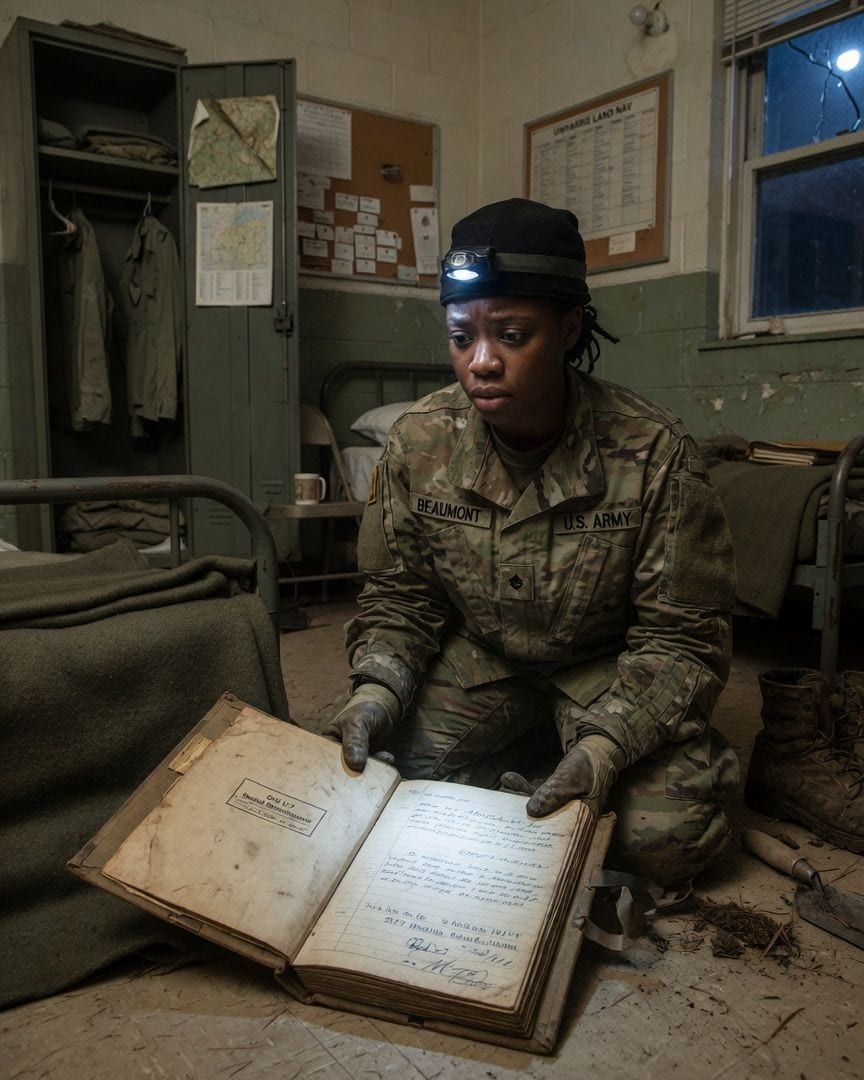
A burn barrel's impossible heat led a lieutenant to a hidden logbook, holding her own signature on a patrol she never took.
Second Lieutenant Monica Beaumont, bone-tired after a land-navigation course, logged an unexpected compound in the Uwharrie backcountry. Her cadre officer, Captain Russo, insisted she'd invented it, marking her record. The next morning, leading her platoon back to the coordinates, the compound was gone, but they found fresh post holes, cold fire pits, and a burn barrel still radiating an impossible heat. Unable to shake the uncanny feeling, Lieutenant Beaumont returned alone that night and unearthed a heavily corroded metal box. Inside, a canvas-bound logbook detailed decades of activity at a site that didn't exist, until she found an entry from eighteen months prior: her own signature on a night watch she was hundreds of miles away from.
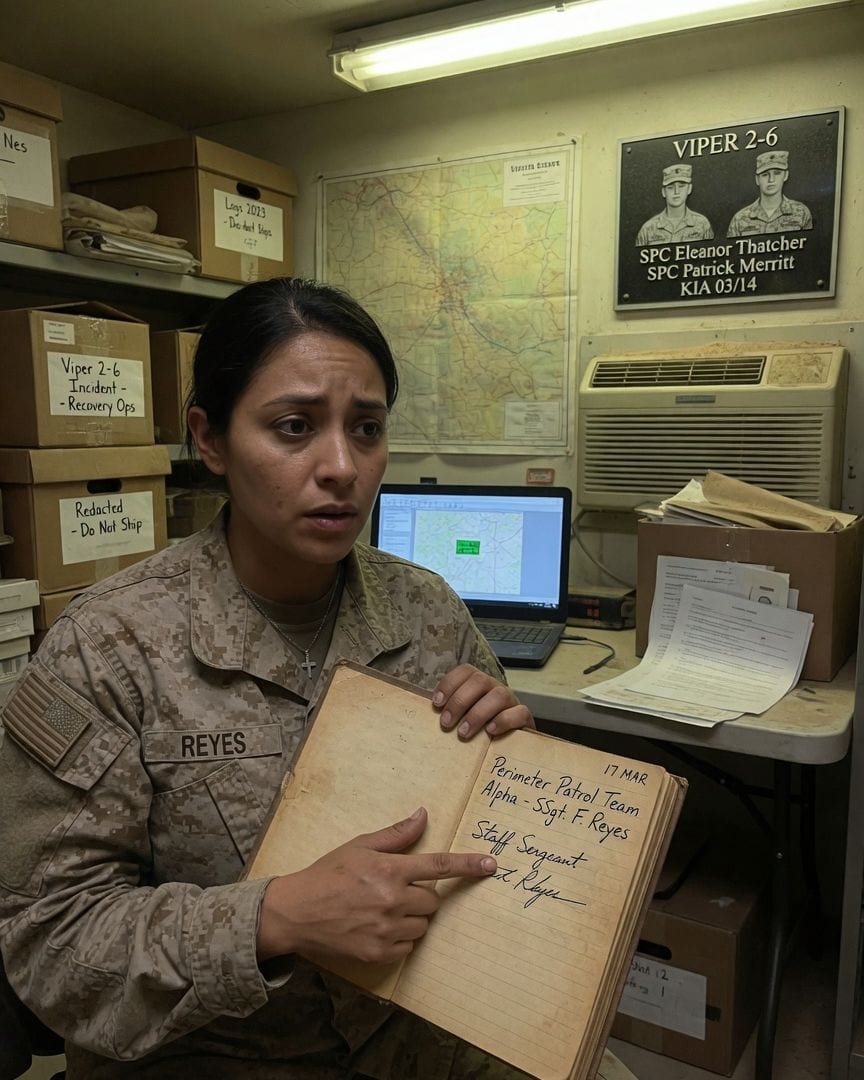
A Staff Sergeant, three weeks from transfer, finds her own signature in a logbook for a patrol she never made.
Staff Sergeant Fiona Reyes counted down her last three weeks at the high desert outpost, the fluorescent hum of the TOC a constant companion amidst the dust and old equipment. Her tired eyes scanned the digital map when an impossible icon, 'Viper 2-6' – a vehicle and crew lost last year – blinked alive, reporting its position and crawling steadily toward the base. Despite commanders dismissing it as a system ghost, Reyes meticulously searched dusty archives, finding strange log entries of phantom contacts and radio chatter, all dismissed as malfunctions. But the true chill came when she unearthed a field logbook from the recovery efforts, revealing her own undeniable signature on a perimeter patrol dated last year, a patrol she knew, with every fiber of her being, she had never made.
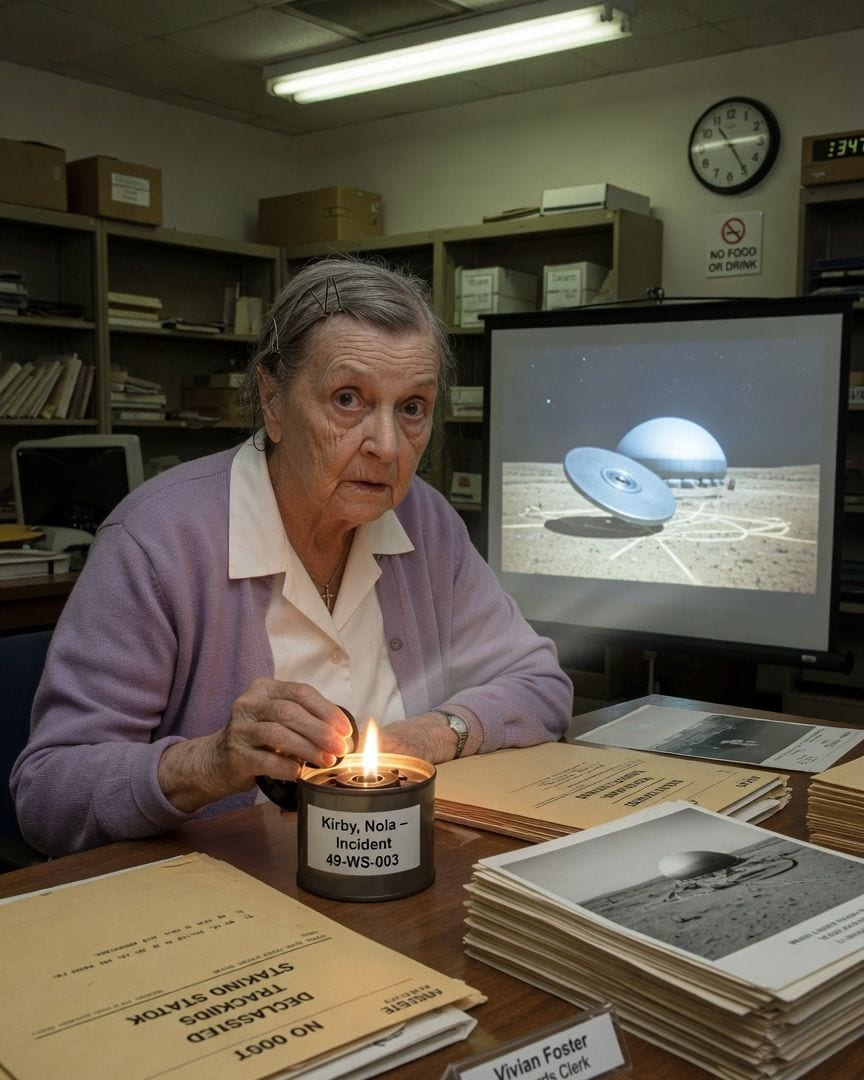
After years, retired Staff Sergeant Nola Kirby finally got her Cold War file, only to find her own signature on a 1998 maintenance log.
Retired civilian Nola Kirby spent decades fighting bureaucracy to declassify her 1949 White Sands file. Back then, Staff Sergeant Kirby tracked an impossibly fast silver disc that paused deliberately, seeming to observe her as much as she observed it. Fifty-one years later, viewing her original film, she saw glowing lines etched around her tracking station in the object's reflection – lines she never saw that night. But the file held a deeper chill: official documents with her name and signature, dated decades after her retirement, including a maintenance sign-off from just two years ago. How could her name appear on records from long after she left service?
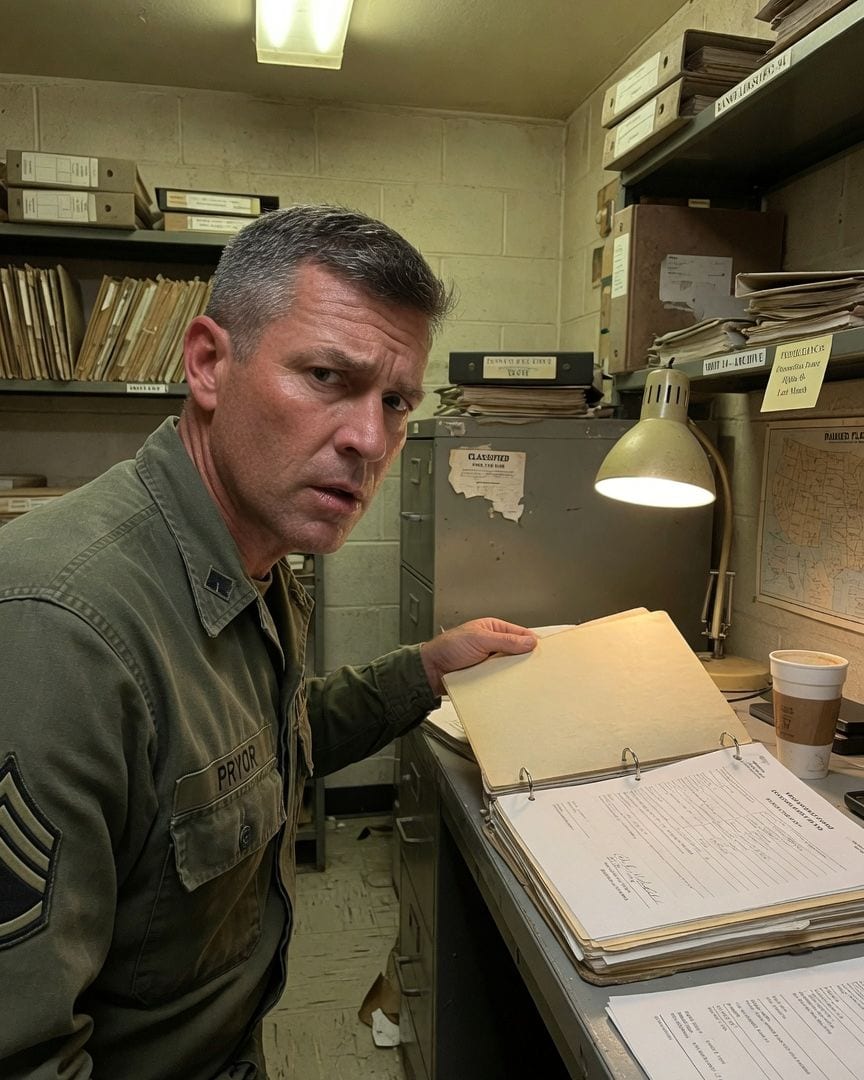
A sergeant with eleven days left finds a warm, glassed crater. Its file shows a captain lost thirty years ago is still signing reports from last week.
Sergeant Alden Pryor was counting down his final eleven days on a twenty-year hitch, expecting to spend them on routine patrols along the Ranier Flats fence line. Instead, his truck stopped at a bizarre sight: a four-hundred-foot glassed crater, miles from anywhere, its sand faintly warm at dawn despite no one recalling a blast. The air above it shimmered with an unnatural distortion, a silent scar of erased violence, and the official file for 'Shot 14' showed recent maintenance sign-offs for a decommissioned tower at the crater site. All these active documents were signed by Captain Everett Caldwell, who had been officially lost in operations thirty years ago, leaving Sergeant Pryor to wonder how a dead man could still be filing reports.
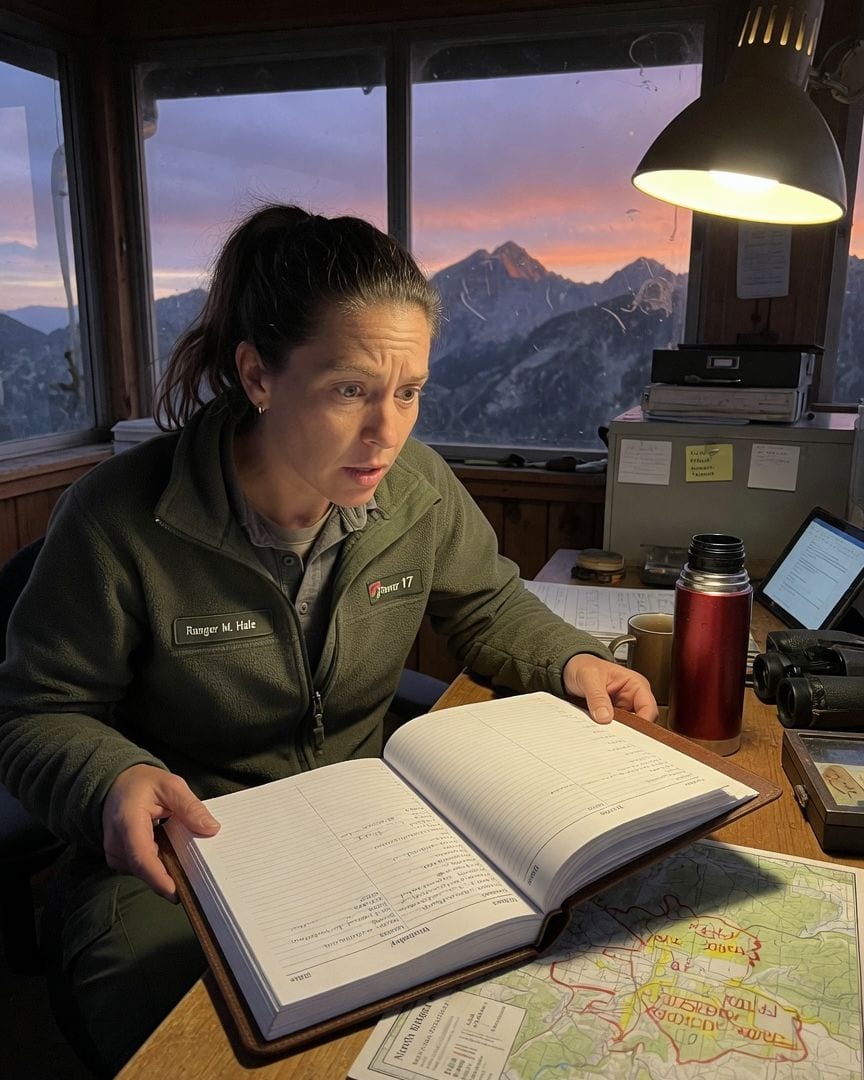
My fire lookout tower's summit register holds a blank space where the hiker's name should be. The trail he climbed has been closed since June.
As a ranger at Tower 17, I watched a hiker climb the North Ridge Trail, officially closed for months. Later, I opened the summit register where I'd just seen him sign, only to find the page unnervingly blank, as if no one had ever touched it.
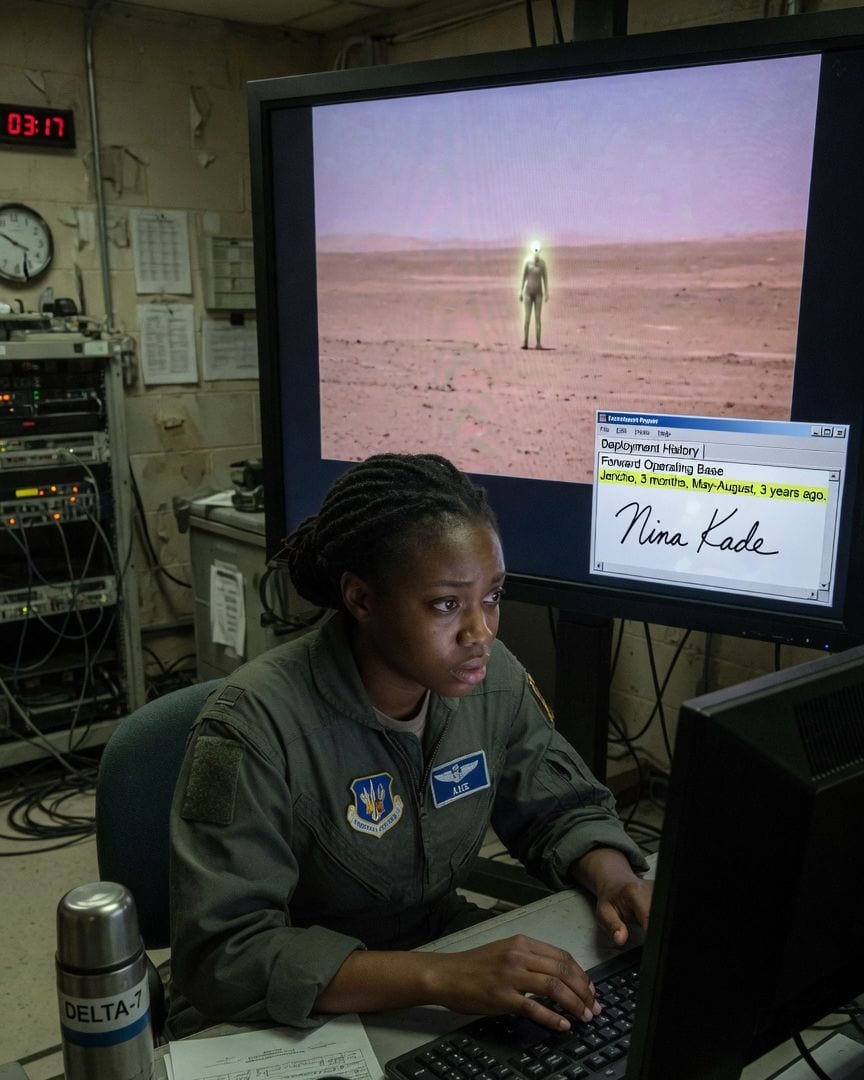
Airman Kade found her own forged signature on a deployment record from three years ago. Then, the desert heat signature appeared over it.
Airman First Class Nina Kade, just twenty, aimed for a spotless record before her first transfer from Outpost Delta-7. Monitoring drone feeds, she saw a shimmering heat signature in the desolate desert, moving in a slow, impossible pattern. It stopped, tilted its head, and seemed to find her through the camera, reappearing on every feed she monitored, hundreds of miles apart. The real dread began when she found her personnel file listed a three-month deployment to a notorious, decommissioned base from three years ago, when she was seventeen. Her own perfectly forged signature stared back, with the desert's heat signature now faintly superimposed directly over it.